
2016 MLB Draft Picks: Live Team-by-Team Day 1 Grades and Analysis
The 2016 MLB draft has officially arrived, as the next wave of high school and college talent is set to join the professional ranks.
The three-day event kicks off on Thursday night with the first two rounds, and 77 selections total.
All 77 of those picks are laid out team-by-team in the following article, with expert scouting reports, pick analysis and draft grades provided for each selection.
Things get going again tomorrow with rounds 3-10 beginning at 1 p.m. ET, but for now let's dive into who each team picked on the first day of the 2016 MLB draft.
*Due to signing a pair of qualifying offer players in John Lackey and Jason Heyward, the Chicago Cubs do not have a Day 1 pick. Their first selection will come in the third round, No. 104 overall.
**Note: Parts of this slideshow repeat analysis from B/R's final Round 1 mock draft.
Arizona Diamondbacks
1 of 29
Lottery Round A (No. 39 Overall): OF Anfernee Grier, Auburn
Anfernee Grier had some late helium going into the draft, due in large part to a lack of college bats in general, but specifically in the outfield.
His tremendous athleticism plays well in center field, and he should develop into a plus defender up the middle as a pro.
After leading Auburn in batting average (.323) and runs scored (41) as a sophomore, he hit .366/.457/.576 with 12 home runs and 41 RBI this spring, adding 19 stolen bases and 56 runs scored.
Grade: A-
Some thought Grier might sneak into the first round, so this is a good value pick for the Diamondbacks with their first selection of the night. A college outfielder doesn't necessarily fit the needs of the system, but this is a best-available pick.
Second Round (No. 52 Overall): C Andrew Yerzy, York Mills Collegiate Institute, Toronto
The only Day 1 selection out of Canada, catcher Andrew Yerzy was ranked outside of the top 100 prospects by both MLB.com (No. 157) and Baseball America (No. 248).
MLB.com gave the backstop 55-grade power from the left side of the plate, a rare commodity among prep catchers, and that's likely the reason for the reach here.
Grade: D
With Brett Cumberland, Logan Ice and Ben Rortvedt all still on the board, this was a big reach. Cumberland and Ice are both solid offensive backstops coming from major college programs, while Rortvedt has the best power potential of any of the prep catchers and perhaps of any catcher outside of Zack Collins.
Day 1 Grade: C
With only two picks on Day 1, reaching big for a catcher when there were better options available hurts the grade here. Grier was a nice value at No. 39 overall, and he has a chance to develop into an everyday center fielder.
Atlanta Braves
2 of 29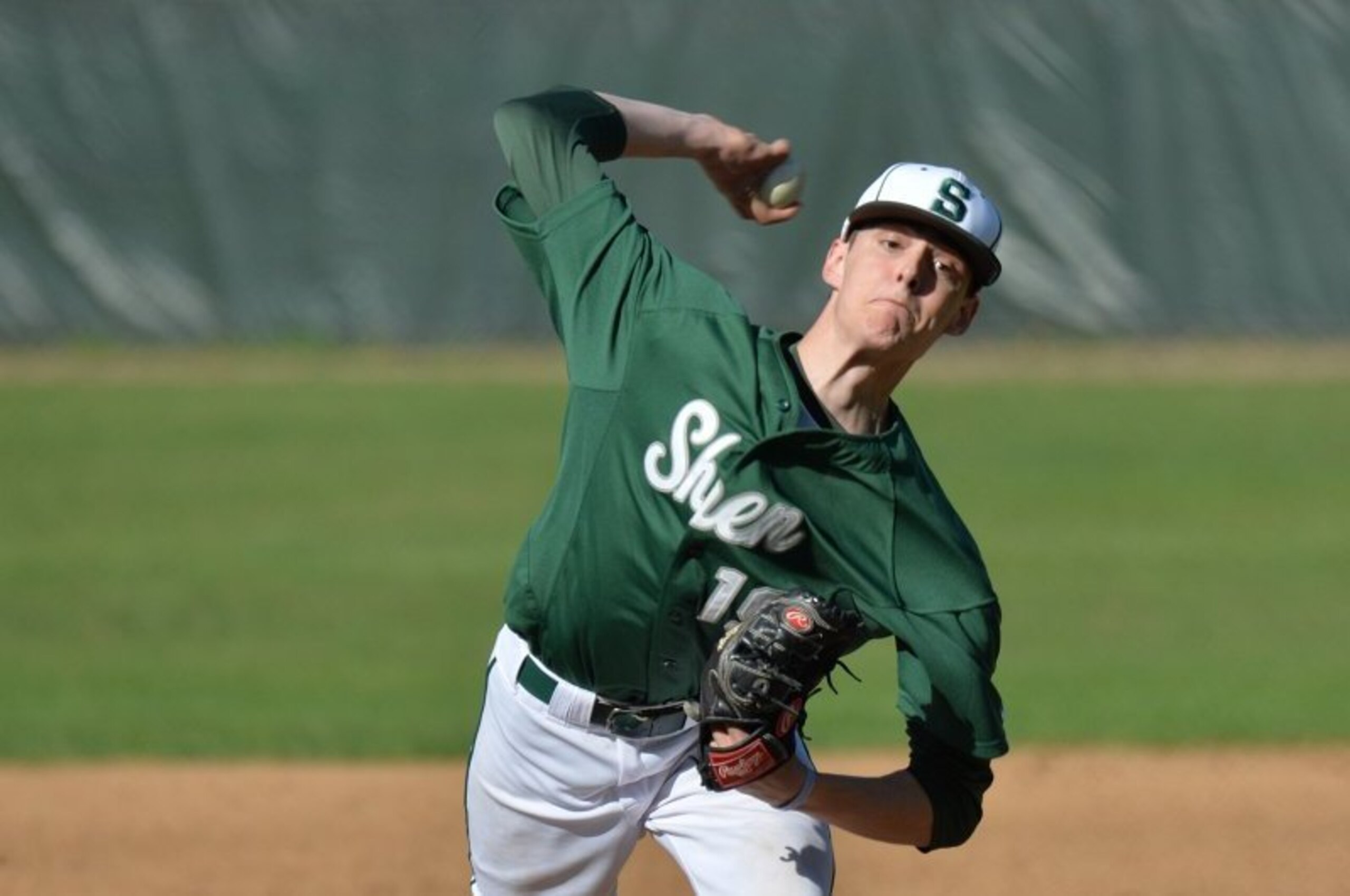
First Round (No. 3 Overall): RHP Ian Anderson, Shenendehowa HS (N.Y.)
Few would have guessed a few weeks ago that Ian Anderson would be the first pitcher off the board, but MLB.com's Jesse Burkhart reported the Braves had "a deal in place" leading up to the draft, and he is the pick at No. 3.
As J.J. Cooper of Baseball America pointed out, this is a move that should "save them some money" on top of their already hefty bonus pool, which will make the Braves serious players for more high-end talent that might slip to Nos. 40 and 44.
That being said, Anderson has tremendous upside in his own right, and he's one of the more projectable arms in this year's class at 6'3", 170 pounds and with a fastball already in the mid-90s.
Here's the MLB.com scouting report:
"Tall and projectable with the ability to add strength, Anderson throws his fastball in the 91-95 mph range with good downhill angle. His breaking ball can be plus at times, getting swings and misses. It has slurve action at this point, but could tighten up and become a true slider in time. Anderson has good feel for an average changeup as well. He's generally around the strike zone and attacks hitters.
"
Anderson shooting up to No. 3 overall should lure him away from his commitment to Vanderbilt.
Grade: B+
The overall grade for this selection will be tied to what the Braves do with their next two picks, but in terms of talent the Braves got a projectable arm with a very high ceiling, so it's hard to argue with the pick.
Lottery Round A (No. 40 Overall—via MIA): LHP Joey Wentz, Shawnee Mission East HS (Kan.)
Last summer, Joey Wentz played first base exclusively as he dealt with a bout of dead arm, but his stuff took off upon returning to the mound this spring, and his draft stock skyrocketed along with it.
There's more projection left in his 6'5" frame, and he already touches 95 with his fastball and backs it with a good curveball-changeup combination. He also has clean mechanics, especially for his size.
Wentz is expected to be one of the toughest players to sign, but the Braves have the funds to pull if off, and they'll put the money they saved with the Anderson pick to good use here.
Grade: A+
Wentz was looking like a potential top-10 pick until concerns rose about his asking price. If the Braves truly think they can sign him, this is a great pick.
Second Round (No. 44 Overall): LHP Kyle Muller, Jesuit College Prep (Texas)
The Atlanta Braves are not messing around, folks.
By adding Kyle Muller to their Day 1 haul, they've now taken three of the consensus top 10 prep arms in this year's class.
Muller was the Gatorade National Player of the Year at Jesuit Prep.
On the mound, he was 8-0 with a 0.46 ERA and 133 strikeouts in 76 innings, allowing just 26 hits and 15 walks on the year. At the plate, he batted .396 with 15 home runs and 52 RBI in 44 games, even flashing some wheels with 20 steals in 21 attempts.
There's not much projection left in his 6'6', 240-pound frame, but there doesn't need to be as he already has plus stuff. It's simply a matter of refining his repertoire, and he could be a solid middle-of-the-rotation workhorse with upside.
Grade: A
If the Braves can find a way to sign this trio of pitchers, they'll be the biggest winners of the draft. If not, this will be a squandered opportunity with three picks in the top 50. This grade is banking on the former.
Lottery Round B (No. 76 Overall via BAL): C Brett Cumberland, California
The ninth and final catcher selected on Day 1, Brett Cumberland put together a huge season for the University of California that netted him Pac-12 Player of the Year honors.
Cumberland hit .344/.480/.678 with 10 doubles, 16 home runs and 51 RBI, which also earned him a spot as a third-team All-American.
Like first-rounders Zack Collins and Matt Thaiss, the question is his defensive game and whether or not he'll catch long term. His bat gives him a chance to reach the majors regardless, though.
Day 1 Grade: A+
The Braves entered the day looking to target high-upside talent, and they wound up with three of the best high school pitchers in the draft. This grade only plays if they can find a way to sign all three guys, but for now they look like the big winners of Day 1.
Baltimore Orioles
3 of 29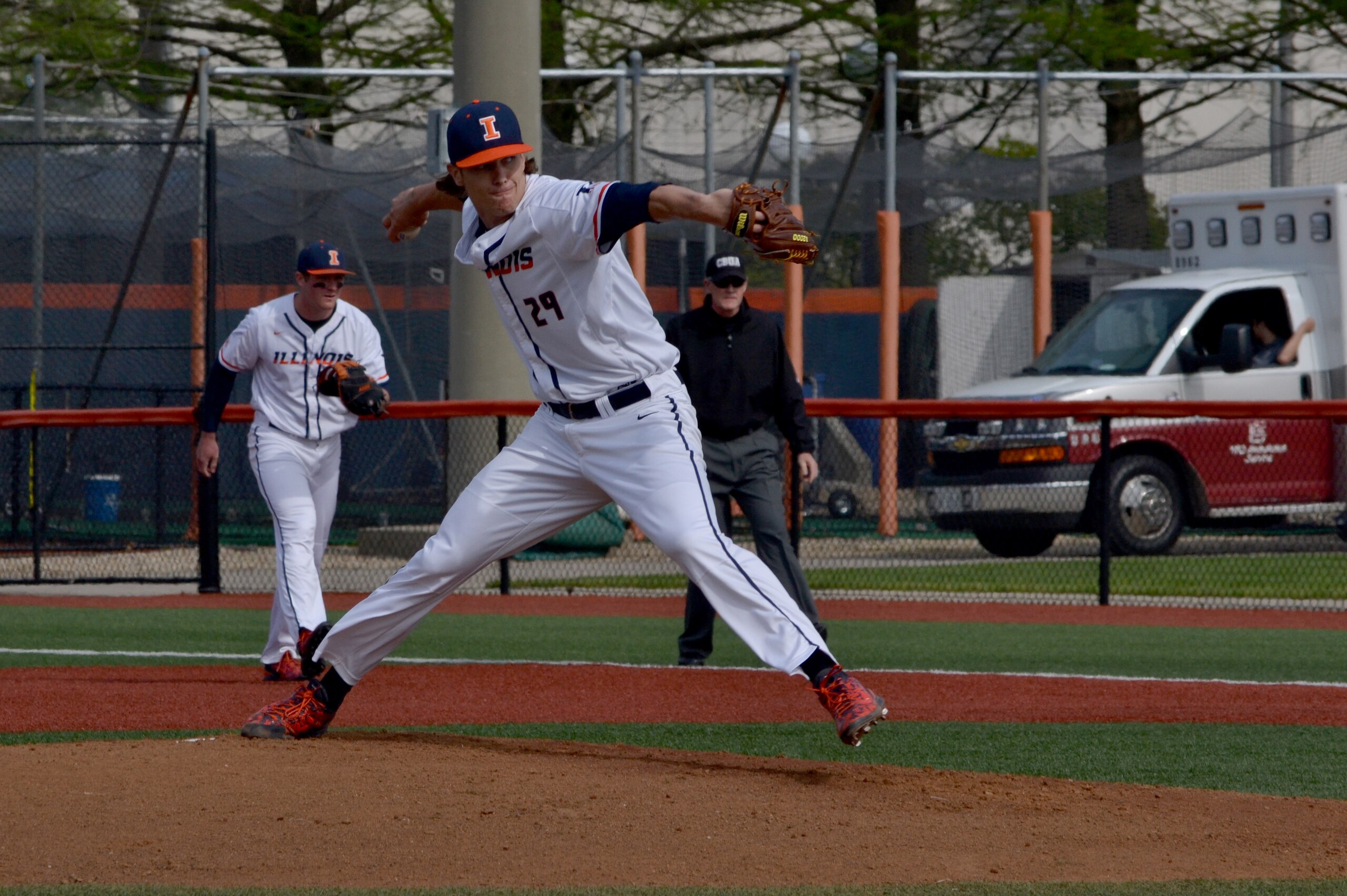
First Round (No. 27 Overall—Wei-Yin Chen comp): RHP Cody Sedlock, Illinois
For the second consecutive year, a University of Illinois pitcher goes off the board in the first round.
After taking a backseat to Tyler Jay and Kevin Duchene last season, Cody Sedlock took over as the team's Friday starter this spring and wound up winning Big Ten Pitcher of the Year honors.
He finished the season 5-3 with a 2.49 ERA, 1.100 WHIP and a school-record 116 strikeouts in 101.1 innings of work.
Here's what MLB.com wrote in its predraft profile:
"Though Sedlock was primarily a reliever on a deep Illinois pitching staff in his first two college seasons, he has all of the ingredients to start. He throws four pitches, fills the strike zone, generates a lot of groundouts and has a strong 6-foot-4, 210-pound frame.
Sedlock's best pitch is his heavy sinker, which sits at 91-93 mph when he starts and can reach 96 in shorter stints. He also can miss bats with his low-80s slider. Sedlock's curveball and changeup aren't as effective, but they have their moments as well.
"
All four of his pitches received a 50-grade or better in that scouting report, as did his overall command. He's the kind of pitcher who could be in Baltimore in the near future, and that's certainly an area of need.
Grade: B+
Someone like Dakota Hudson might have offered more upside and Anthony Kay was probably a safer pick, but overall this is a good get for the Orioles.
Second Round (No. 54 Overall): LHP Keegan Akin, Western Michigan
The highest draft pick in the history of Western Michigan, left-hander Keegan Akin went 7-4 with a 1.82 ERA, 0.936 WHIP and 133 strikeouts in 109 innings.
In almost any other season he would have been a shoo-in for MAC Conference Pitcher of the Year honors, but unfortunately found himself match up against first-round pick Eric Lauer (Kent State) for that award this year.
Akin has the three-pitch mix to stick as a starter, despite an undersized 6' frame. He can touch 96 with his fastball and complements it with a slider and changeup that are both above average.
Grade: B
After the elite early options, Akin was one of the better college southpaws on the board. This may have been a bit of a reach, but he has a high floor and should find some way to contribute at the MLB level, whether it's as a starter or in the bullpen where his stuff could play up.
Second Round (No. 69 Overall): RHP Matthias Dietz, John A. Logan College
Matthias Dietz was far and away the best JUCO player in this year's draft, and he turned in a dominant season for John A. Logan College in Illinois.
After growing an inch and a half and adding 15 pounds of muscle in the offseason, Dietz went 12-1 with a 1.22 ERA, 0.747 WHIP and a 11/117 BB/K ratio in 103 innings of work this spring.
Now standing 6'6", he's a player on the rise who should continue to get better as he refines his improved stuff.
Grade: B+
It's always tough to judge JUCO talent, especially on the pitching side of things, but Dietz has everything you look for in a big, power arm. This pick came after the team failed to sign Jonathan Hughes at No. 68 last year.
Day 1 Grade: B
The Orioles need help on the pitching side of things, and they need it sooner rather than later. That was abundantly clear in their Day 1 strategy, and they picked up three quality arms. Dietz has the highest upside of the group, while the other two both have high floors and should move through the minors quickly.

.png?w=2560)
Boston Red Sox
4 of 29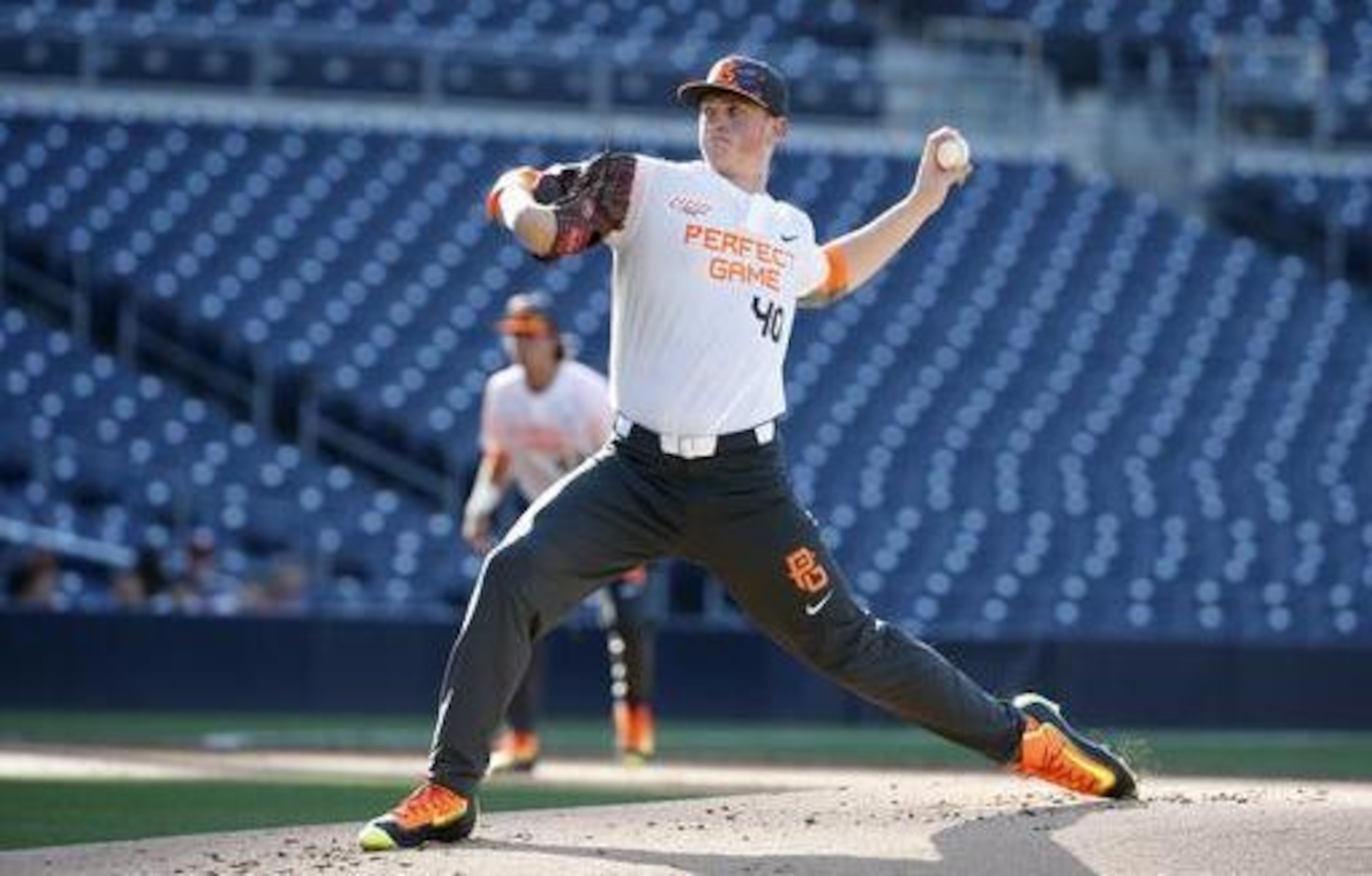
First Round (No. 12 Overall): LHP Jason Groome, Barnegat HS (N.J.)
The No. 1 prospect in this year's draft according MLB.com (and No. 3, per Baseball America), Jason Groome winds up slipping all the way to No. 12 where the Boston Red Sox are able to add another potentially elite piece to what is already one of the best farm systems in baseball.
Tim Casey wrote a full profile on Groome for Bleacher Report that's worth a read, and MLB.com had the following to say in its predraft report:
"Groome has everything to be a top-of-the-rotation left-handed starting pitcher, from his 6-foot-6 frame to the potential to have three above-average to plus offerings. The fastball is already there, up to 96 mph and sitting 92-93 mph over the summer, and in the 90-94 mph range in the early stages of the spring.
Groome features a nasty curve as well, with tight rotation and bite. He doesn't throw his changeup often, but he's shown some feel for it, with some sink. Groome is generally around the plate and has clean mechanics, with a pretty good overall feel for pitching.
"
One GM told Jon Heyman of MLB Network that Groome "might be the best high school pitching prospect since Clayton Kershaw." If that winds up being true, this could be the steal of the draft.
Grade: A+
Signing Groome is probably going to mean going well over the $3,192,800 bonus assigned to the No. 12 pick, so expect the Red Sox to reach for a below-slot college player with a few of their upcoming picks. That being said, getting arguably the best prospect in the draft at No. 12 is an absolute coup.
Second Round (No. 51 Overall): SS C.J. Chatham, Florida Atlantic
With many of the top college middle infielders expected to wind up sliding to second or third base, C.J. Chatham quickly emerged as the top option to actually stay at the position.
The Conference USA Player of the Year, Chatham hit .357/.422/.554 with 17 doubles, eight home runs and 50 RBI while continuing to show the defensive chops necessary to stay at the premium position.
Grade: A
Shortstop doesn't figure to be a need for quite some time in Boston thanks to Xander Bogaerts, but shortstop talent has become one of the most valuable currencies in today's game.
Day 1 Grade: A
After having Groome fall into their lap at No. 12 overall, the Red Sox managed to pick up the top college shortstop in this year's class at No. 51 overall. This probably isn't how they expected things to play out, but it was a great first day as the rich got richer in an already loaded system.
Chicago White Sox
5 of 29
First Round (No. 10 Overall): C Zack Collins, Miami
The Chicago White Sox were tied to Zack Collins for a while leading up to the draft, and they get their guy.
Whether or not he sticks behind the plate remains to be seen, but the University of Miami slugger can flat-out hit, and he turned in a huge junior season with a .358/.534/.631 line that included nine doubles, 13 home runs and 53 RBI.
He also lowered his strikeout rate (20.6 to 19.1 percent) while significantly improving what was already a solid walk rate (18.4 to 27.5 percent), and his advanced approach could put him on a path similar to the one Kyle Schwarber took with the Cubs.
Baseball America wrote the following:
"Collins has plus power, and does a good job of getting to it in game action. He has excellent plate discipline, working counts and waiting for pitches that he can drive. He has walked twice as often as he has struck out this spring.
Coming into the year, many doubted Collins' ability to stay behind the plate as a professional. But he has shown marked improvement this spring. While it's unlikely he'll ever be an above-average defender, he has enough catch-and-throw skills to give him a chance to catch as a professional.
"
The White Sox grabbed a player in Collins who should be able to help in the very near future.
Grade: A
The White Sox had the top college arm in the draft fall into their lap the past two years in Carlos Rodon and Carson Fulmer, and now they get the guy they've been targeting for some time. Another strong first pick for the South Siders.
First Round (No. 26 Overall—Jeff Samardzija comp): RHP Zack Burdi, Louisville
After landing their top target in Collins at No. 10, the White Sox were expected to pick through what was left of the college arms here, and they had to be thrilled to see Zack Burdi among them.
The younger brother of Minnesota Twins prospect and 2014 second-round pick Nick Burdi, Zack followed in his brother's footsteps by attending Louisville. Like his brother, he routinely touches triple digits with his fastball.
Armed with that elite velocity, the younger Burdi saved 11 games this season with a 2.20 ERA, 0.767 WHIP and 46 strikeouts in 28.2 innings.
On top of his velocity, Burdi hides the ball well with a funky setup from the stretch, as Baseball America described: "Burdi pitches from an extremely closed setup. Working exclusively from the stretch he sets up on the far right-hand side of the rubber with his front foot pointed back toward shortstop as he begins his delivery. Using a very modest leg lift, Burdi generates exceptional velocity because of a very fast arm."
Grade: A
Whether he's groomed as a future closer or given a chance to start, Burdi joins the aforementioned Fulmer as a project of sorts that could pay huge dividends.
Second Round (No. 49 Overall): RHP Alec Hansen, Oklahoma
A candidate to go 1-1 at the start of the spring, Alec Hansen struggled to the point of being demoted to the bullpen as he wound up pitching to a 5.40 ERA with a 6.8 BB/9 walk rate over 51.2 innings of work.
That said, he may have the best pure stuff of anyone outside of Riley Pint, as Baseball America noted, who can touch 99 with has fastball, shows a plus curveball and slider at times and even has a changeup that is capable of being an average offering.
Grade: A
After getting two safe college players with the first two picks, the White Sox grabbed the biggest risk-reward player on the entire board here. He might wind up being a tough sign, as a return to school and to form could make him a top-10 pick, but if he does sign, his development will be worth monitoring closely.
Day 1 Grade: A
The White Sox had as successful a first day as any team in the league, grabbing an elite college bat (Collins), flame-throwing college arm (Burdi) and a reclamation project that could wind up being the best of the bunch (Hansen). Well-played.
Cincinnati Reds
6 of 29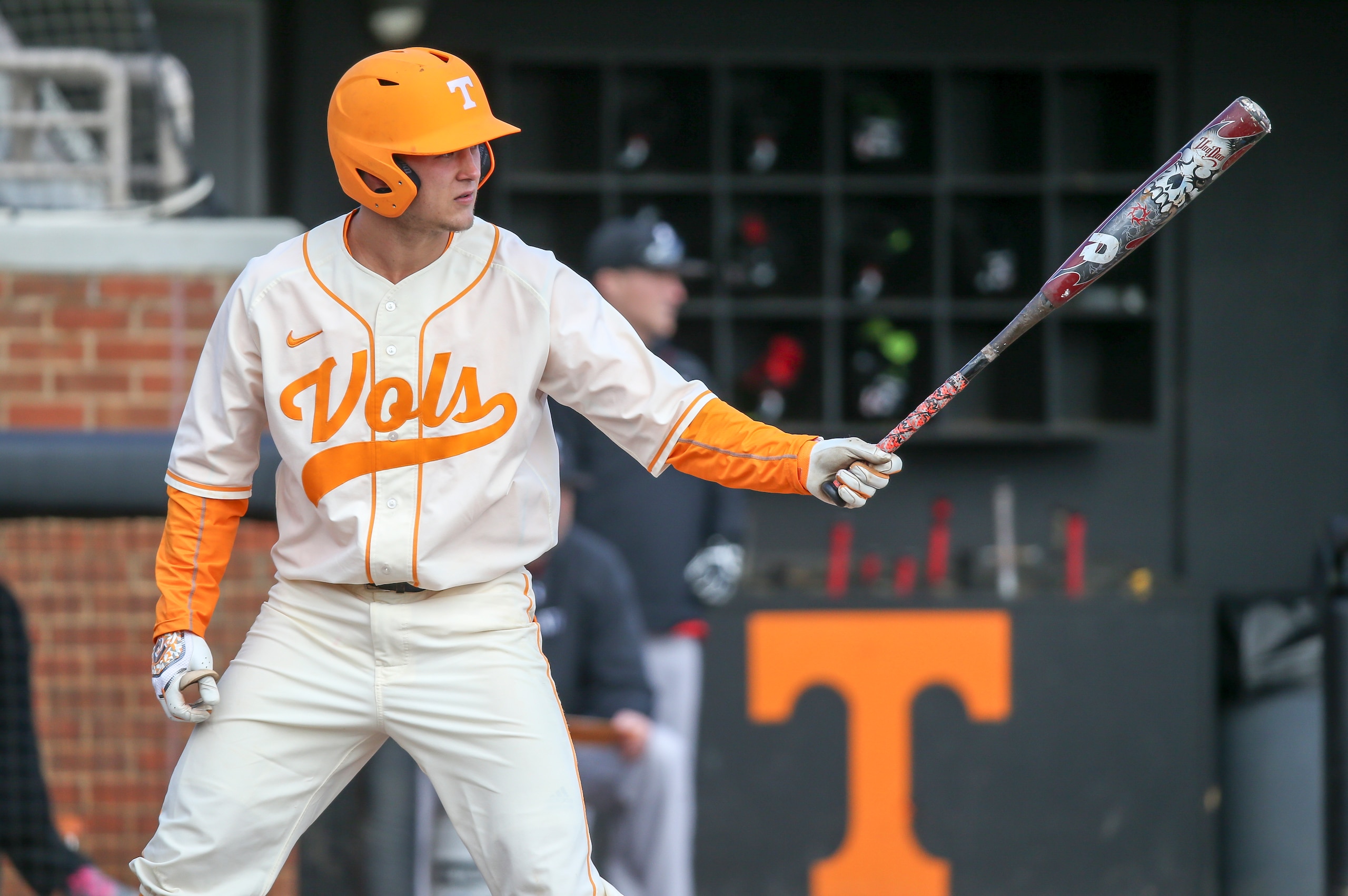
First Round (No. 2 Overall): 3B Nick Senzel, Tennessee
Senzel established himself as one of the elite prospects in this year's draft class by winning Cape Cod MVP honors last summer, and he continued to impress all spring.
A .352/.456/.595 line with 25 doubles, eight home runs and 59 RBI solidified his place as a top-of-the-draft talent and earned him third-team All-American honors as well.
Here's the full scouting report from Baseball America:
"Senzel shows the ability to drive the ball with authority to the opposite field or to his pull-side gap. He hits more for doubles than home runs at this point, but he can show raw power in batting practice when he's asked to, leading some evaluators to believe that he will develop more game power as he continues to mature.
This spring, Senzel has shown significantly improved defense in the infield, shifting to shortstop later in the season from third base. He reacts quickly and shows solid first-step quickness. Senzel has average arm strength and projects to stay in the left side of the infield.
"
Senzel was undoubtedly one of the more polished bats among the college crop, and with his improved defense he's the best all-around college hitter in the class.
Grade: A
Senzel is a great pick here for a Reds team in need of high-end position-player talent down on the farm. This should also give them some wiggle room to perhaps target an above-slot option at No. 35 overall, depending on who slips.
Lottery Round A (No. 35 Overall): OF Taylor Trammell, Mount Paran Christian School (Ga.)
Probably the best athlete in the entire draft, Taylor Trammell won Georgia Class 3A Offensive Player of the Year honors when he rushed for 2,479 yards and 36 touchdowns in the fall, per MLB.com.
Trammell is the classic upside pick as an athlete who had split his focus between two sports and could take off once he turns his full attention to the baseball diamond.
Speed is his best tool at this point and should help him turn into a plus defender in center field. His offensive game is still raw, but he has a good feel for hitting and some intriguing power potential in his 6'2", 195-pound frame.
Grade: B+
After going with one of the safest picks in Senzel at No. 2 overall, the Reds make an upside play here with Trammell. Outfield is one of the few areas of depth in their system, but his ceiling was too good to pass up here, and he could take off in the next couple of years.
Second Round (No. 43 Overall): C Chris Okey, Clemson
The late helium of Louisville catcher Will Smith took some of the wind out of Chris Okey's sails, as he looked like a potential first-round pick before Smith took over as the No. 3 catcher on most boards.
That being said, he's probably the most polished all-around backstop in the class and after hitting .339/.465/.611 with 16 doubles, 15 home runs and 74 RBI, he has the bat to be a standout offensive catcher.
Grade: A
Between his stellar track record at Clemson and time with the U.S. Collegiate National Team, Okey is the most MLB-ready catcher in this class and one with legitimate All-Star potential. Great pick, especially with Devin Mesoraco's long-term status up in the air.
Day 1 Grade: A
The strength of the Reds farm system right now is on the pitching side of things, so going with three bats makes sense. They got the best college hitter (Senzel), best all-around athlete (Trammell) and most polished catcher (Okey). Not a bad day.
Cleveland Indians
7 of 29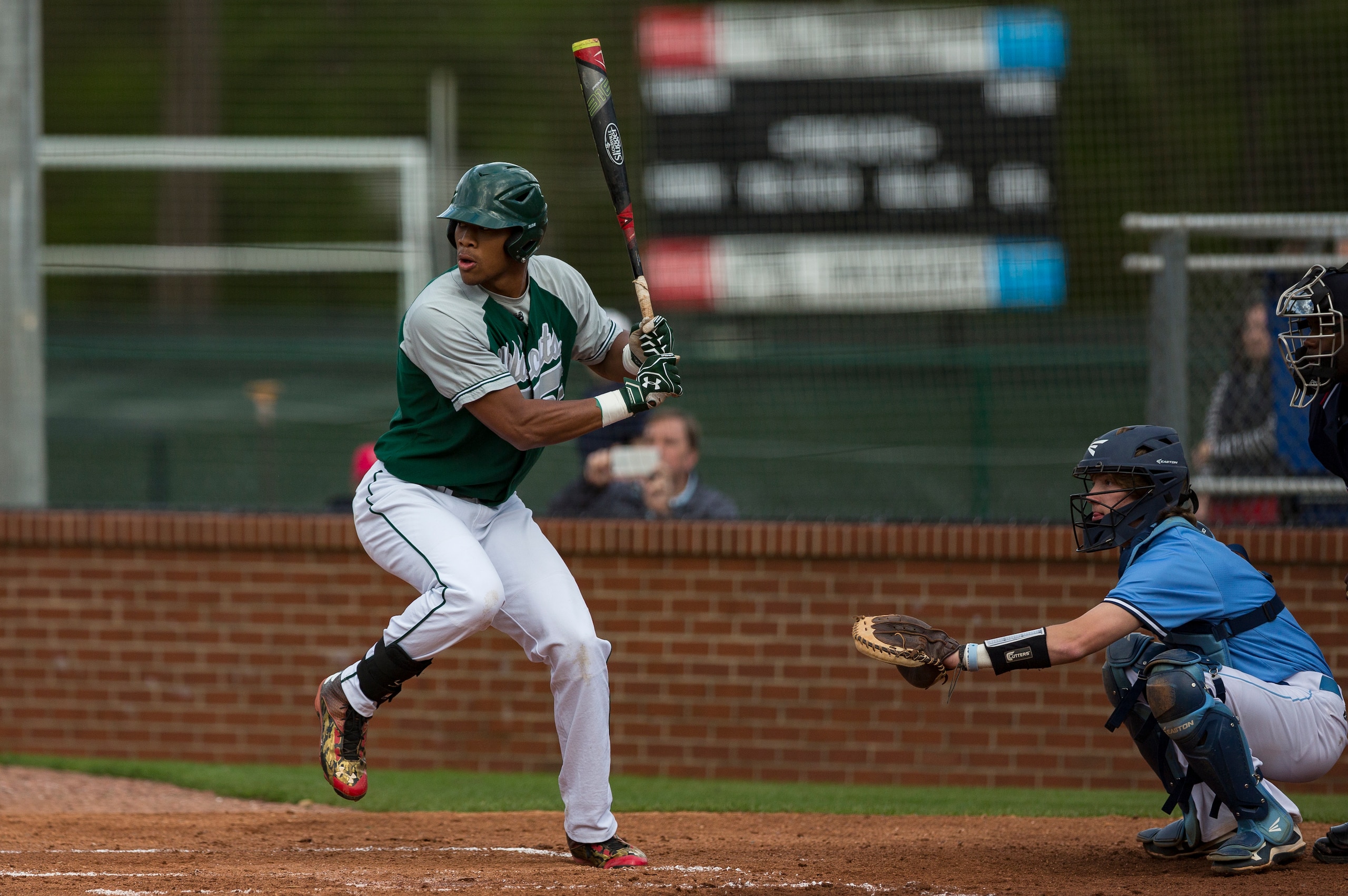
First Round (No. 14 Overall): OF Will Benson, The Westminster Schools (Ga.)
An imposing physical specimen at 6'6" and 220 pounds, Will Benson has as much raw power as you would expect from someone his size. He's far from a polished hitter, though.
Baseball America laid out the positives and negatives of his offensive game, ranking him as their No. 30 overall prospect:
"Benson has arguably the best bat speed in the class, prep or high school. He's a left-handed hitter with a deep load and a barred lead arm in his swing. Benson showed plus-plus raw power throughout the summer, though his ability to get to his power is still a question due to concerns that some scouts have about his hitting ability.
Benson does not consistently use his lower half, forcing him to commit to swinging at pitches early. His bat path can be a bit steep, leading to a tendency to roll over pitches and hit them on the ground with topspin.
"
With a strong throwing arm, he's headed for right field, and if he can tap into his power potential, he'll be a middle-of-the-order threat for years to come.
Grade: C
Benson has huge upside, but why not Blake Rutherford here? He's a safer pick and has just as high of an overall ceiling as Benson, if not higher.
Second Round (No. 55 Overall): 3B Nolan Jones, Holy Ghost Prep (Pa.)
The Cleveland Indians may have a tough time signing Nolan Jones away from his commitment to Virginia after he fell out of the first round, especially if Will Benson winds up commanding an above-slot deal.
That being said, if they can find a way to sign Jones, they'll be getting tremendous value here at No. 55.
Both MLB.com (No. 20) and Baseball America (No. 19) had him ranked well inside the first round, as he has one of the best hit tools among prep bats and should also develop the necessary power to be an everyday third baseman.
Grade: B+
The Indians have a relatively small bonus pool at $7,499,600, which ranks 16th in the league, so it's hard to see how they sign both Benson and Jones. If they can find a way to make it happen, this is one of the best values of the draft.
Lottery Round B (No. 72 Overall): C Logan Ice, Oregon State
Following a pair of signability risks with their first two selections, the Indians play it much safer here as they grab Oregon State catcher Logan Ice.
After a quiet first two years on campus, Ice was one of the Pac-12's breakout stars this season as he hit .310/.432/.563 with 13 doubles, seven home runs and 39 RBI.
A three-year starter, Ice should have no problem staying behind the plate as a pro, and if his offensive breakout is for real, this could be a great pick at the end of Day 1.
Day 1 Grade: C-
It's tough to understand the Indians strategy with drafting both Benson and Jones, but if they're going to make it work, Ice is the kind of player they'll need to select for the next several rounds as a high-stock college prospect who will likely sign below slot. Still having a hard time with the Benson-over-Rutherford move, too.
Colorado Rockies
8 of 29
First Round (No. 4 Overall): RHP Riley Pint, St. Thomas Aquinas HS (Kan.)
Riley Pint was clocked as high as 102 mph this spring and consistently sat in the 95-97 range after he added 15 pounds of muscle during the offseason.
It's his complete arsenal of pitches that makes him such an attractive prospect, though.
His changeup is one of the best in the draft, and he throws a curveball and slider that both have a chance to develop into solid offerings at the MLB level.
"In a best-case scenario, he becomes a Justin Verlander-esque front-line ace," Baseball America wrote. "Like Pint, Verlander had problems with a stiff front side and control issues as an amateur, but the Tigers were able to clean it up."
There are some things to smooth out, but in terms of pure stuff, Pint is the best arm in this year's class, and he has a legitimate front-line ceiling.
Grade: A+
The Rockies need pitching in a bad way, and they have for the better part of their existence as a franchise. Pint is far from a sure thing, but his ceiling is unmatched in this class, and they have to be thrilled he fell to them here as his sinking fastball could be a great fit in Coors Field down the road.
Lottery Round A (No. 38 Overall): RHP Robert Tyler, Georgia
After taking the best arm in the draft at No. 4 overall, the Rockies wisely stay on the pitching side of things and take the best college arm still available in Robert Tyler.
Tyler also possesses elite velocity as he works in the mid-90s and has touched 99, and he pairs that with a terrific changeup. His breaking ball needs a lot of work, but he made strides with it during his junior season.
The ace of the Georgia staff posted a 4.10 ERA and 89 strikeouts in 74.2 innings.
Grade: A
Tyler is more of a project than you'd like out of a college arm, but the upside is worth the risk.
Second Round (No. 45 Overall): LHP Ben Bowden, Vanderbilt
Ben Bowden will get a chance to start as a pro thanks to a three-pitch repertoire that includes mid-90s and a curveball-changeup combination.
He began this spring in the rotation, but struggled to maintain his stuff and was eventually returned to the bullpen. He provides some upside as a starter, but if that doesn't work, he's a quality left-handed arm who could help out in a big league bullpen soon.
Grade: B
It's a low-risk, moderate-upside pick—a good move here in the second round.
Day 1 Grade: A
The Rockies targeted pitching, which is a good strategy since they're usually pretty awful at that. They got a potential stud in Pint, a project in Tyler and an upside play in Bowden with a high floor. Quality haul, but this whole draft will ride on Pint's development.
Detroit Tigers
9 of 29First Round (No. 9 Overall): RHP Matt Manning, Sheldon HS (Calif.)
According to Jim Callis of MLB.com, Matt Manning is looking for a $5 million bonus, or he'll consider honoring his commitment to Loyola Marymount.
It makes sense then that a Detroit Tigers team that doesn't have picks in the second or third round would make an effort to sign him.
The slot bonus at No. 9 overall is $3,505,800, so they'll need to go well-over-slot, but Manning has the projectability to be well worth the investment.
Here's the scouting report MLB.com provided:
"A premium athlete, Manning uses every inch of his frame to his advantage on the mound. Though he started late because his basketball team made a deep postseason run, Manning was nonetheless up to 96-97 mph with his fastball in early outings. He combines that with hard, power curve that has very good bit to it. His changeup will be his third pitch, but he's shown some feel for it and it should be a viable option in the future.
"
The Tigers are infatuated with right-handed pitchers who throw hard, and they get another one here.
Grade: A+
There were a handful of teams that made sense for Manning with his expected bonus demands, and the Tigers were atop that list. They take advantage of the fact they won't be on the clock again for a while by grabbing a supremely talented arm that should immediately take over the No. 1 prospect slot in their organization.
Day 1 Grade: A+
With just one Day 1 pick after signing a pair of qualifying-offer recipients in Justin Upton and Jordan Zimmermann, the Tigers knocked it out of the park with their lone selection.
Houston Astros
10 of 29First Round (No. 17 Overall): RHP Forrest Whitley, Alamo Heights HS (Texas)
According to the Houston Chronicle's Jake Kaplan, the Houston Astros were considering a number of prospects with this pick, but with one of the upper-tier prep arms still on the board, they grab right-hander Forrest Whitley.
The 6'7", 225-pound Whitley drew rave reviews across the board in his MLB.com scouting report:
"Whitley has a complete three-pitch arsenal, starting with a 92-97 mph fastball with some cutting action at the lower end of that range and some running life at the upper end. His power curveball tops out in the low 80s with tight spin and good depth, and he'll sometimes turn it into a harder slider. He has upgraded his changeup and used it more this spring, and it drops at the plate and shows flashes of becoming a third plus offering.
Scouts also have liked how Whitley has firmed up his large frame, which looked soft at times in 2015. He has good body control for a big kid and does a nice job of repeating a delivery that doesn't feature much effort.
"
Given his combination of size, strength and pitchability, there's not as much projection with Whitley as with most high school pitchers. Even if he is essentially a finished project, his future looks bright.
Grade: B+
It might take some maneuvering in the rounds to follow to come up with the money to sign Whitley, who has a commitment to Florida State. The Astros found a way to sign Daz Cameron at No. 37 overall last year, though, so they know what they're doing.
Second Round (No. 61 Overall): OF Ronnie Dawson, Ohio State
In a draft thin on college bats, it's somewhat surprising to see Ronnie Dawson stick around until No. 61 overall as he looked like someone who could potentially push his way into the first round.
Following a disappointing sophomore campaign, Dawson hit .331/.419/.611 with 25 doubles, 13 home runs, 51 RBI and 21 stolen bases in 25 attempts.
Grade: A
He'll be relegated to left field as a pro, and there's considerable swing-and-miss to his game, but the plus power tool is reason enough to scoop him up here at No. 61.
Day 1 Grade: B
The Astros had to be happy to see Whitley still on the board when they picked at No. 17, and they should have no problem signing him with a below-slot candidate in Dawson as their only other Day 1 pick. So this is what it's like not picking at the top of the draft?
Kansas City Royals
11 of 29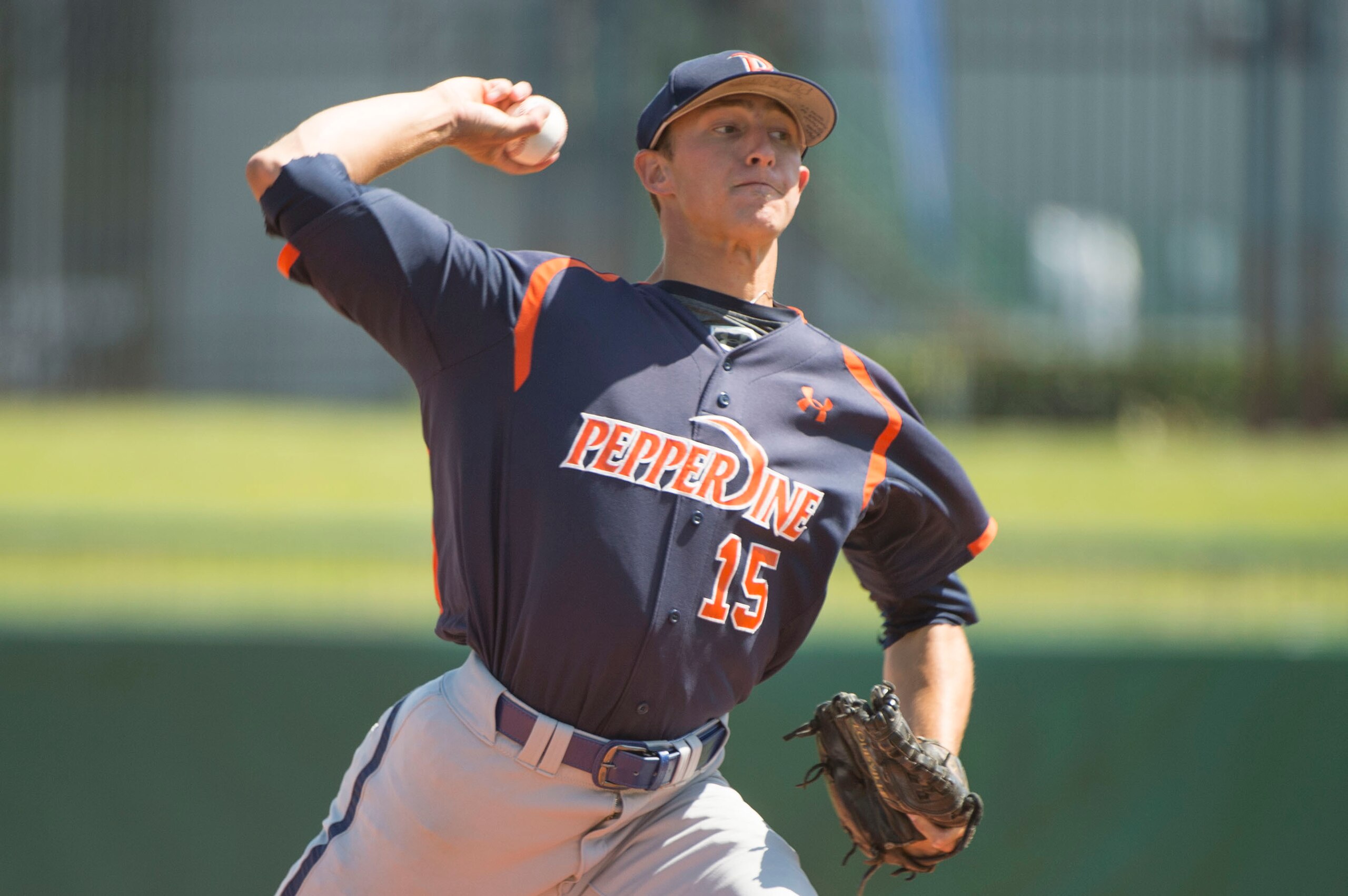
Second Round (No. 67 Overall): RHP A.J. Puckett, Pepperdine
The Kansas City Royals gave up their first-round pick to sign Ian Kennedy, and considering their rotation's instability so far this year, that's been a solid move as Kennedy is 4-4 with a 3.44 ERA and 1.209 WHIP on the year.
With their lone selection coming at No. 67 overall, they still managed to grab a quality college arm and a player who had some late helium leading up to the draft in A.J. Puckett.
The West Coast Conference Pitcher of the Year, Puckett went 9-3 with a 1.27 ERA, 0.916 WHIP and 95 strikeouts in 99.1 innings.
Here's what Baseball America wrote while ranking him as their No. 73 prospect:
"Puckett has a pitcher's body at 6-foot-4, 200 pounds, and while he has a high elbow in his delivery, he repeats his arm action and pounds the strike zone with three pitches. His fastball command and velocity have improved in 2016, as he locates his low 90s heater that touches 94-mph regularly. His upper-70s curveball made strides this spring, flashed above-average, though at times it's loopy and in the low 70s.
Puckett trusts his changeup and sells it well, and his feel for pitching and improved confidence helped produce a 45 2/3 innings scoreless streak at one point this spring.
"
Grade: B+
With only one Day 1 pick, the Royals did well to get a quality college arm with impressive on-field results.
Day 1 Grade: B+
The Royals badly need high-end pitching talent down on the farm, and while Puckett doesn't have the highest ceiling, he gives them a quality arm that should move relatively quickly.
Los Angeles Angels
12 of 29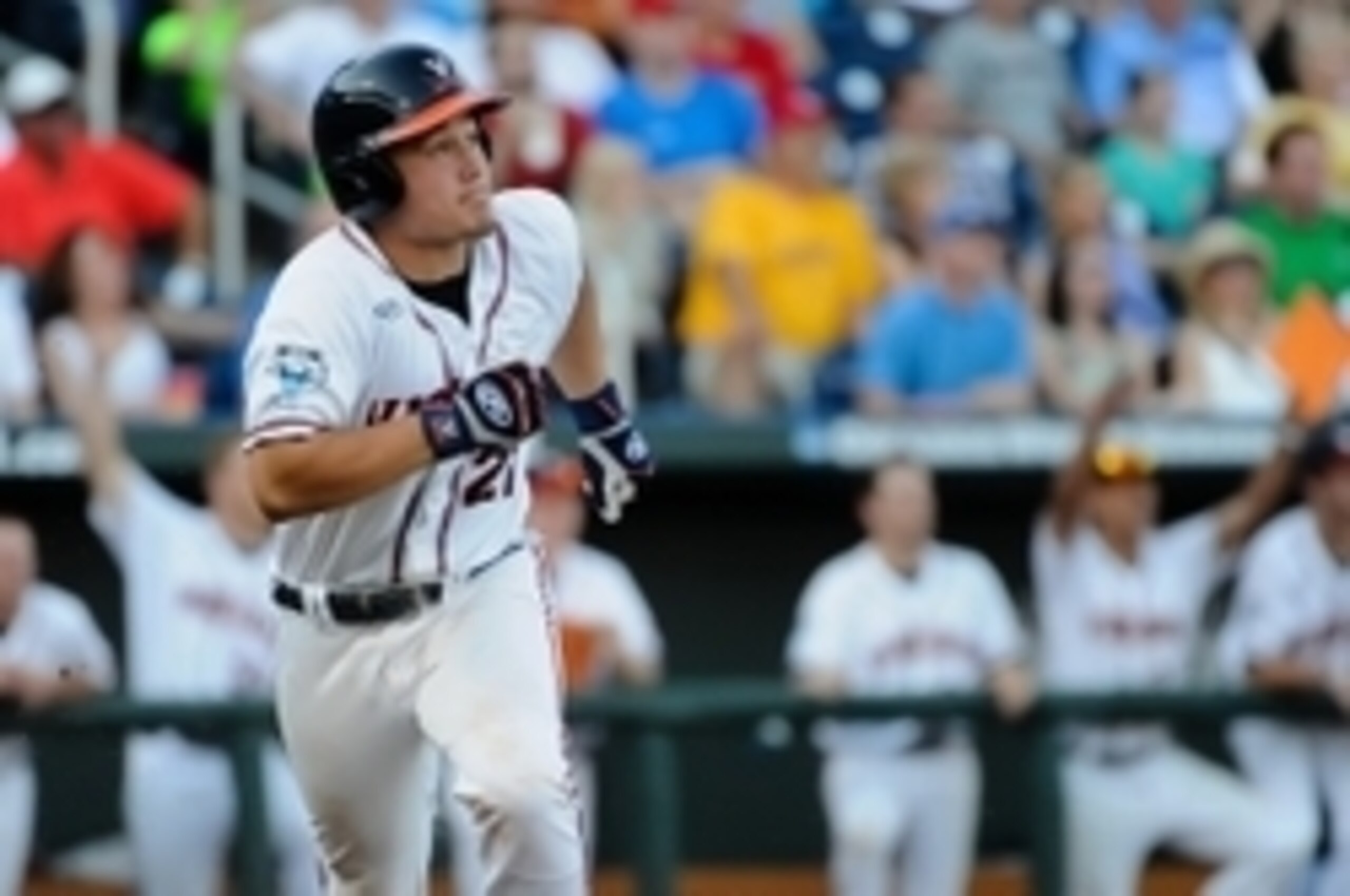
First Round (No. 16 Overall): C Matt Thaiss, Virginia
The Los Angeles Angels have the worst farm system in baseball, so going with a relatively safe college bat in Matt Thaiss makes sense as they simply need to add quality talent to the system.
A catcher at the University of Virginia, Thaiss is in a similar position to fellow first-round pick Zack Collins in that his bat is his carrying tool, and there are questions as to whether or not he'll stay behind the plate.
MLB.com's scouting report:
"Thaiss has long impressed with the bat. His 10 home runs as a sophomore, while playing in a pitching-friendly home park, led the Cavaliers as they won the College World Series. He has an advanced approach at the plate and solid power, especially on the extra-base front, though he should have some over-the-fence pop at the next level.
He's continued to be very consistent at the plate as a junior, though there are many questions about his ability to stay behind it as a pro. His catching skills are quite raw, with a fringy arm and rough receiving skills.
"
Thaiss closed out his junior season with a .375/.473/.578 line that included 13 doubles, 10 home runs and 59 RBI. He also carried a 14.0 percent walk rate, compared to a 5.7 percent strikeout rate.
Grade: A
Thaiss was probably the safest college bat on the board at this point, and that's exactly what the Angels needed. Good pick.
Second Round (No. 60 Overall): OF Brandon Marsh, Buford HS (Ga.)
"His measurable tools are loud; he is a plus runner with a bazooka for an arm. Some evaluators are all-in on Marsh, believing in his ability to hit," wrote Baseball America.
Marsh was perhaps the most overlooked prep bat in the class, and as a good football player who had been splitting his time between two sports, he has a chance to really take off once he turns his full attention to baseball.
Grade: A+
This is my favorite pick of the second round, and the Angels' perfect pick here. After going with a safe college bat in the first round, they go with big upside here, and Marsh has a chance to deliver well above his draft spot.
Day 1 Grade: A+
No one needed a strong first day of the draft more than an Angels team with a decimated farm system. Terrific job with its two picks.
Los Angeles Dodgers
13 of 29First Round (No. 20 Overall): SS Gavin Lux, Indians Trails HS (Wis.)
In a draft thin on middle-infield talent, Gavin Lux was shooting up boards in the weeks leading up to the draft, and he finds a place inside the first round here at No. 20 overall.
A rare prospect out of Wisconsin, Lux has all the tools to stay at shortstop long term, but it's his offensive upside that makes him a worthy selection here.
Here's what MLB.com had to say:
"Lux has advanced instincts in all phases of the game. His tools are catching up, as he has improved his strength, swing, speed and arm in the last year. He has worked to eliminate a hitch in his left-handed stroke, which has enough bat speed and leverage to produce 15 homers per year.
After previously seeming destined for second base, Lux now should be able to remain at shortstop. His arm strength and speed are at least solid -- some evaluators grade them as pluses -- and he has reliable hands.
"
You can never have too much middle-infield talent, and Lux has a chance to be a valuable asset.
Grade: B+
The Dodgers farm system is stacked, so more so than any other team, it won't be drafting for need. Chances are, Lux would have been gone by the Dodgers' next pick at No. 32, so if he was high on their board, grabbing him here was the right call.
First Round (No. 32 Overall—Zack Greinke comp): C Will Smith, Louisville
Probably no one in the entire draft had as much helium heading into draft day as Louisville catcher Will Smith, and it wound up vaulting him into the first round.
After playing sparingly as a freshman, Smith took over as Louisville's starting catcher last season and hit an uninspired .242/.333/.331 with two home runs and 15 RBI in 206 plate appearances.
He looked like a viable late-round draft prospect at the start of the spring on the strength of his plus receiving skills and strong arm, but an offensive breakout has caused his stock to soar as he's hit .380/.476/.573 with eight doubles, seven home runs and 43 RBI.
Zack Collins and Matt Thaiss were off the board before him, but Smith is the first true catcher to be drafted, and he could be the future at what is a somewhat-thin position in an otherwise deep Dodgers farm system.
Grade: A+
Love this Dodgers pick, as it gives them one of the best players available at a premium position, and it should also allow for some flexibility down the line as Smith is a prime below-slot candidate.
Lottery Round A (No. 36 Overall): RHP Jordan Sheffield, Vanderbilt
The latest in a long line of talented starting pitchers to come out of Vanderbilt, Jordan Sheffield didn't emerge as the top-10 talent many expected him to during his junior season, but he had a solid year nonetheless.
Sheffield had 113 strikeouts this season in 101.2 innings of work, going 8-6 with a 3.01 ERA and 1.200 WHIP while also walking 40 batters.
He's undersized at 6'0" and has already undergone Tommy John surgery following his senior year of high school, but his stuff is hard to ignore as he can touch 98 with his fastball and pairs it with a plus slider-changeup combination.
Grade: A
I had Sheffield going to the Dodgers at No. 20 in my mock draft, so this is a good value for them with the compensatory pick they received for failing to sign Kyle Funkhouser at No. 35 overall last year.
Second Round (No. 65 Overall): RHP Mitchell White, Santa Clara
Baseball America's No. 138 prospect and absent from MLB.com's top 200, White is a big reach here, as he has a medical history after undergoing Tommy John surgery in high school.
That said, he impressed in his return to starting this spring with a 3.72 ERA and 118 strikeouts in 92 innings. He can throw four pitches for strikes and touches 96 with his fastball, so this is an intriguing upside play despite his short track record of success.
Grade: B
The Dodgers obviously saw something they liked in White, and this should set them up for a significant over-slot move on Day 2.
Day 1 Grade: B+
The Dodgers managed to get a high-ceiling shortstop prospect (Lux), one of the best college arms in the nation in terms of pure stuff (Sheffield) and two-way catcher (Smith), as well as one of the more intriguing late risers among college arms (White). It wasn't what I expected, but overall it was a nice first day.
Miami Marlins
14 of 29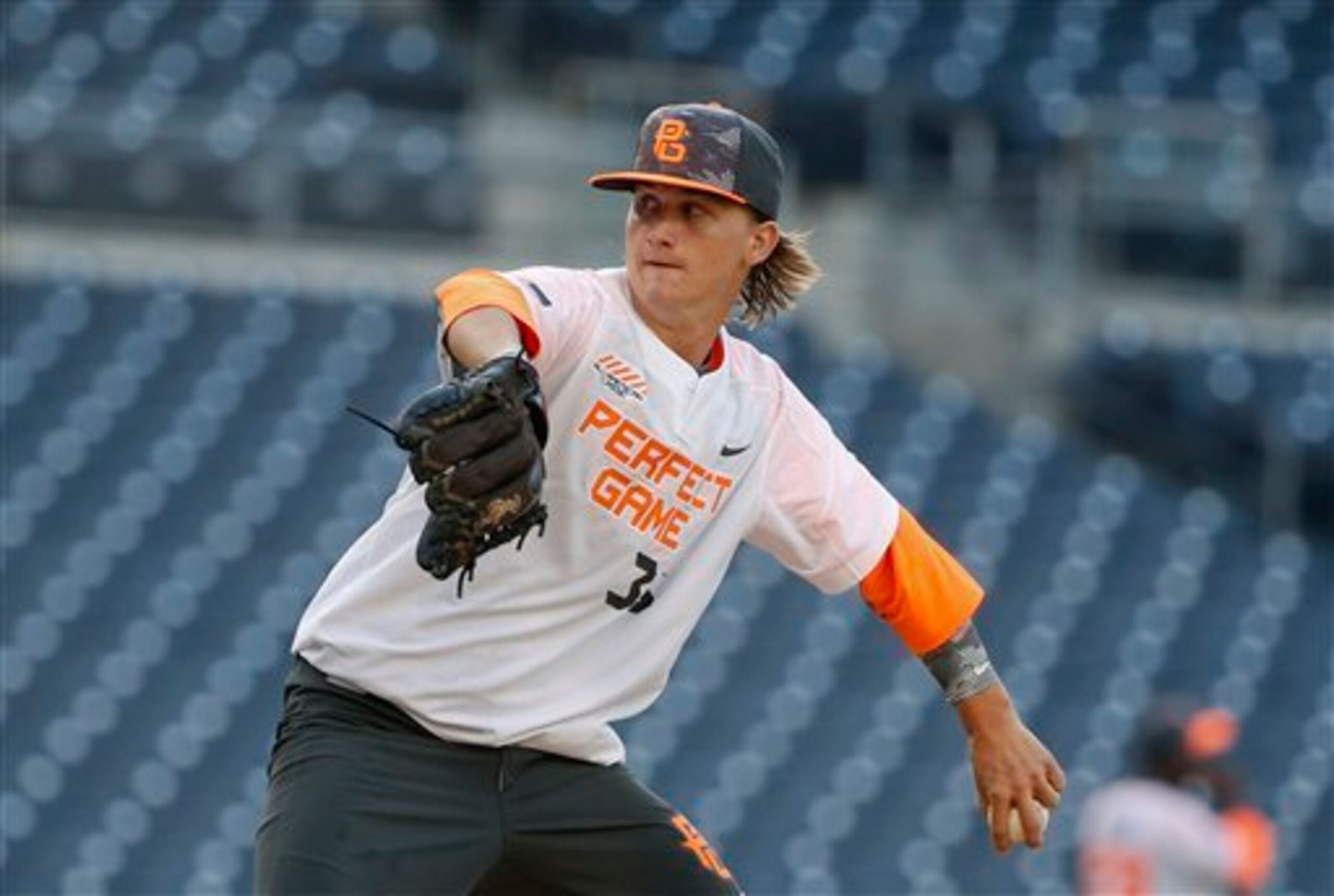
First Round (No. 7 Overall): LHP Braxton Garrett, Florence HS (Ala.)
Braxton Garrett might not have the same ceiling as Jason Groome and a few other prep arms still on the board like Matt Manning and Kyle Muller.
However, he's incredibly polished for a high school pitcher and has as high a floor as any prep arm in recent years.
Baseball America offered up the following scouting report:
"His curveball is his best pitch, earning easy plus grades for its tight spin and late 11-to-5 break. He is able to command his breaking ball, allowing him to throw it for strikes or make it a chase pitch to both right handers and left handers.
Garrett's fastball sits in the low 90s and his changeup shows excellent promise, giving him the potential for three above-average or better offerings. He has a balanced, easy delivery that he repeats extremely well, allowing him to fill the zone with quality strikes.
"
That's the type of scouting report you read for a college pitcher, not an 18-year-old.
Grade: A+
This is a terrific pick for a Miami Marlins team that rolled the dice on Tyler Kolek at No. 2 overall two years ago, as Garrett is a safe selection with a ton of upside. The Marlins could regret passing on Groome, but going the safer route here made sense for an organization that badly needs to build the farm system back up and only has one Day 1 pick.
Day 1 Grade: A+
The Marlins only had one pick, and they nailed it. Would have been interesting to see if Garrett still would have been the pick here if Delvin Perez had not failed that drug test.
Milwaukee Brewers
15 of 29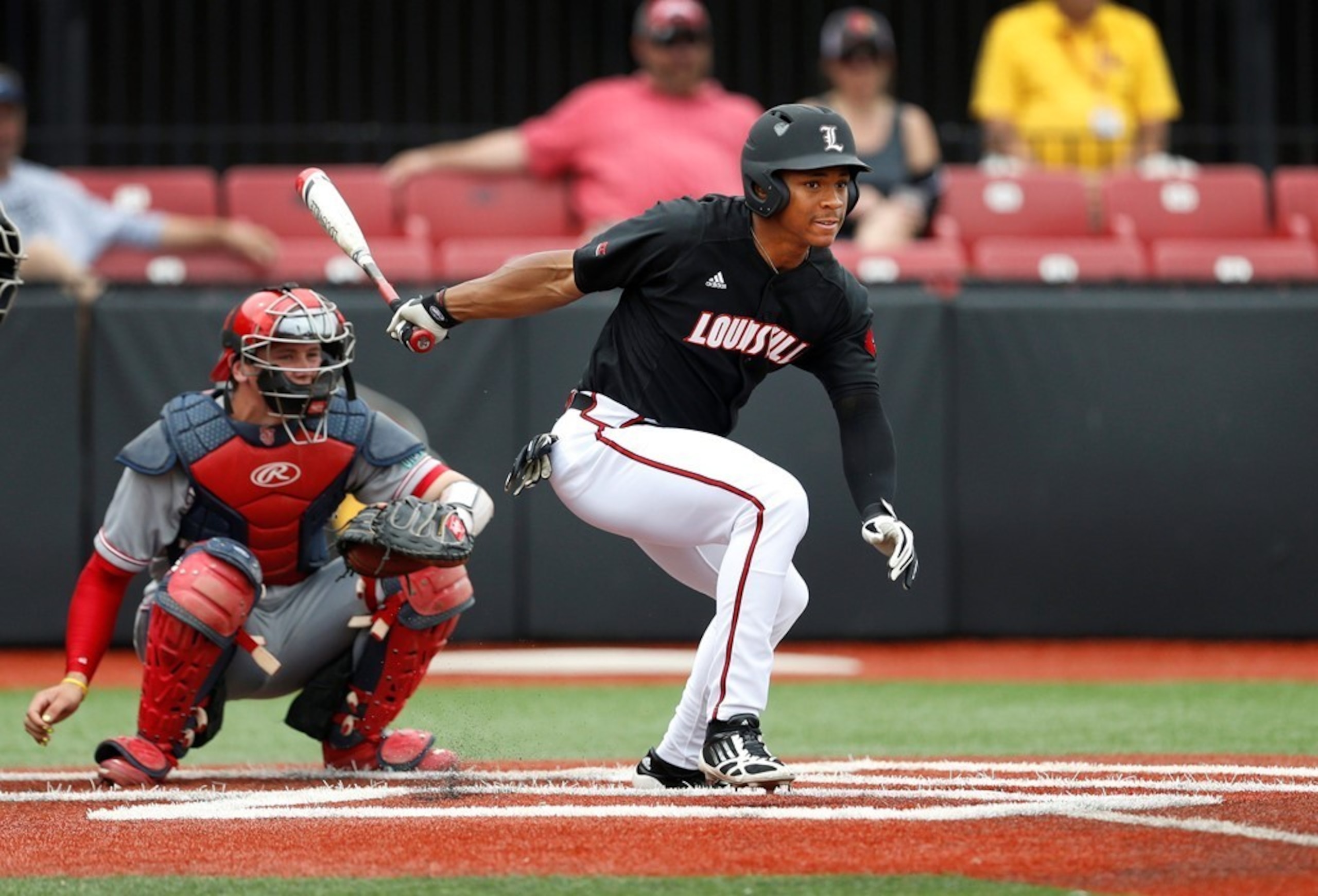
First Round (No. 5 Overall): OF Corey Ray, Louisville
Corey Ray led the U.S. collegiate national team in OPS (.971), extra-base hits (nine) and steals (11) last summer, and he followed that up with a terrific junior season that earned him second-team All-American honors.
Ray hit .319/.396/.562 with 16 doubles, 15 home runs, 60 RBI and 55 runs scored while going 44-for-52 on stolen-base attempts, as his power played up and he maintained his game-changing speed.
Here's Baseball America's scouting report:
"Ray shows plus raw power and projects to hit 15-18 home runs as a pro. He's a plus runner with the eye for stealing bases–he's topped 30 steals for a second consecutive year and he's done it with an 85 percent success rate. The questions with Ray revolve around his eventual defensive position.
"
If he's not able to stick in center field, Ray will need to continue his development in the power department, but he'll get every chance to remain up the middle to being his pro career.
Grade: A-
The Brewers have done a great job building up their farm system in recent years, and Ray gives them another quality piece that should move quickly. If they didn't feel A.J. Puk or Jason Groome had future ace potential, they did well to grab the best college bat on the board.
Second Round (No. 46 Overall): 3B Lucas Erceg, Menlo College
My favorite sleeper pick in this year's draft, Lucas Erceg might have been one of the top college bats on the board if troubles in the classroom hadn't forced him to transfer from the University of California to Menlo College.
Erceg hit .303/.357/.502 with 11 home runs and 42 RBI against Pac-12 competition as a sophomore, and continued to flash plus power with a .990 OPS, 15 doubles and 20 home runs 227 at-bats against NAIA competition.
Grade: A
Erceg has everything you look for in an everyday third baseman. It would have been nice to see him hit better than .308 against lesser competition, but this has a chance to be a major steal.
Lottery Round B (No. 75 Overall): C Mario Feliciano, Carlos Beltran BB Academy (PR)
The third prep catcher off the board, Mario Feliciano is part of a deep crop of talent out of Puerto Rico this season that included three Day 1 picks.
Feliciano has a plus hit tool and a good arm, though there are some question about his overall receiving ability. He's a quality athlete for a catcher, though, and could move elsewhere if needed with a bat that should play.
Grade: C
If the Brewers wanted a catcher with questionable receiving skills and a good bat, why not Brett Cumberland here?
Day 1 Grade: B+
The Feliciano pick was a reach, but the Brewers grabbed what many considered to be the top college bat (Ray) and one of the draft's biggest sleepers (Erceg) so all in all it was a good first day for a rebuilding franchise in need of all the young talent it can get.
Minnesota Twins
16 of 29
First Round (No. 15 Overall): OF Alex Kirilloff, Plum HS (Pa.)
Alex Kirilloff was the Gatorade Player of the Year for the state of Pennsylvania, as he played his high school ball about 15 miles northeast of PNC Park in Pittsburgh.
He was a standout two-way player as a prep, but it's his offensive game that made him the No. 15 overall selection, as MLB.com explained:
"Teams interested in Kirilloff will be buying the bat. While there is a little length to his swing, he's shown the ability to barrel the ball consistently and has considerable raw power, which he put to use while winning the Perfect Game All-American Classic home run derby over the summer.
He's more athletic than one would think given his size and plays center field for his high school team. He'll have to move to a corner spot at the next level, but moves more than well enough to stay there.
"
Assuming Miguel Sano moves back to third base at some point, he could be the future in right field for the Twins, especially if his power continues to develop.
Grade: C
Another high school bat off the board with Blake Rutherford still available, though I do like Kirilloff better than Will Benson who went one pick higher. A college pitcher seemed like the right approach for the Twins here.
Second Round (No. 56 Overall): C Ben Rortvedt, Verona Area HS (Wis.)
The second high school catcher drafted, Ben Rortvedt has a chance to be the best catcher of this year's class if Zack Collins and Matt Thaiss both move out from behind the plate.
He has a smooth left-handed swing and a plus hit tool, and he has the raw power to be good for 20-plus home runs once he matures. His overall defensive game is still a work in progress, but the tools are there, and he has a very strong arm.
Grade: A
The Twins made the right choice going with Rortvedt over college backstops like Logan Ice and Brett Cumberland who were still on the board. Those two were no doubt safer picks, but Rortvedt has a significantly higher ceiling.
Lottery Round B (No. 73 Overall): SS Jose Miranda, Leadership Christian Academy (PR)
Another player from this year's talented crop out of Puerto Rico, Jose Miranda may ultimately have to move off shortstop as he continues to fill out.
However, the 17-year-old "has an advanced feel for hitting" and "shows some pop and projects to hit for average power as he physically matures," according to Baseball America.
Grade: C
After going with high school prospects with their first two picks, reaching for a project here is a questionable move. Grabbing a college arm like Jon Duplantier (Rice) or Zach Jackson (Arkansas) would have made more sense.
Lottery Round B (No. 74 Overall): OF Akil Baddoo, Salem HS (Ga.)
Another high school pick for the Twins, who continue to go with high-upside plays with their four Day 1 selections.
Baddoo is a good value here, as he was ranked No. 54 by Baseball America who praised his speed and overall feel for hitting. He's not a lock to stick in center field, but he'll likely get a chance to begin his career there.
Grade: B-
Another project of sorts on the high school side as opposed to going with a college arm when the team is thin on pitching talent in the minor league ranks. Not sure the approach makes sense, but good value nonetheless.
Day 1 Grade: C
Grabbing Kirilloff over Rutherford is a move that will be monitored closely as those two players make their way through the minor leagues, and it's a decision that could come back to haunt the Twins. Love the Rortvedt pick, but really would have liked to see them go with one of the available college arms with their back-to-back lottery-round selections.
New York Mets
17 of 29
First Round (No. 19 Overall): RHP Justin Dunn, Boston College
Justin Dunn had as much late helium as any player in the draft, and Seattle at No. 11 in particular was a popular rumor, according to MLB.com's Jim Callis.
However, with Kyle Lewis and Jason Groome falling to this spot, Dunn winds up slipping to No. 19 where the New York Mets get one of the most intriguing arms in the entire draft.
The Boston College closer to start the season, Dunn saw his draft stock take off after moving to the rotation in April, where his four-pitch repertoire played as well as scouts—many of whom had always pegged him as a future starter—had envisioned.
All told, Dunn finished his junior season at 4-1 with two saves and a 1.49 ERA, 1.028 WHIP and 66-16 K-BB ratio in 60.1 innings.
He's the second college right-hander off the board after Cal Quantrill, and he offers similar upside as he's only scratching the surface of his potential as a starter.
Grade: A
Per Callis, the Mets were interested in Wake Forest slugger Will Craig, but Dunn was too good to pass up here; they made the right choice. Similar to what the Craig pick would have done, this also gives them some wiggle room at No. 31 as they could look to go over-slot.
First Round (No. 31 Overall—Daniel Murphy comp): LHP Anthony Kay, UConn
Anthony Kay finished his junior season at 9-2 with a 2.65 ERA, 1.143 WHIP and 111 strikeouts in 119.0 innings, earning American Athletic Conference Pitcher of the Year and second-team All-American honors.
MLB.com provided the rundown of his stuff:
"Kay succeeds by filling the strike zone and keeping hitters guessing, albeit with the lack of a true out pitch. He'll top out at 94-95 mph with his fastball, though he pitches more effectively at around 91 mph. He has a consistently reliable changeup, though he telegraphs it at times by lowering his arm slot. His breaking ball is fringy.
"
Kay could wind up in a race with fellow collegiate left-hander Eric Lauer to be the first to reach the majors among this year's first-round picks, as he has the polish and pitchability to move quickly.
Grade: A
Dunn's upside play and Kay's safe play were a great use of their two first-round picks by the Mets' two first-round picks. Getting a bat would have been nice given the current state of the franchise's current state, but it's hard to argue with the direction they went.
Second Round (No. 64 Overall): 1B Peter Alonso, Florida
After hitting nine home runs in 395 plate appearances during his first two years on campus, Peter Alonso emerged as a serious power threat in the middle of the Florida lineup this year.
He's hitting .368/.464/.632 with 15 doubles, 12 home runs and 55 RBI this spring, and that was enough to make him the top draft-eligible first baseman on the college side of things.
Grade: B-
Alonso is a below-average athlete who will strictly play first base, so his bat will need to play for him to make it. That being said, there's no reason to think his raw power won't continue to translate in games.
Day 1 Grade: A
The Mets scored big when Dunn slipped to them at No. 19, and they backed that pick by taking perhaps the safest arm in the draft in Kay. Bonus points for the fact Kay is a local kid. Don't love the Alonso pick, but overall a very nice first day for the Mets.
New York Yankees
18 of 29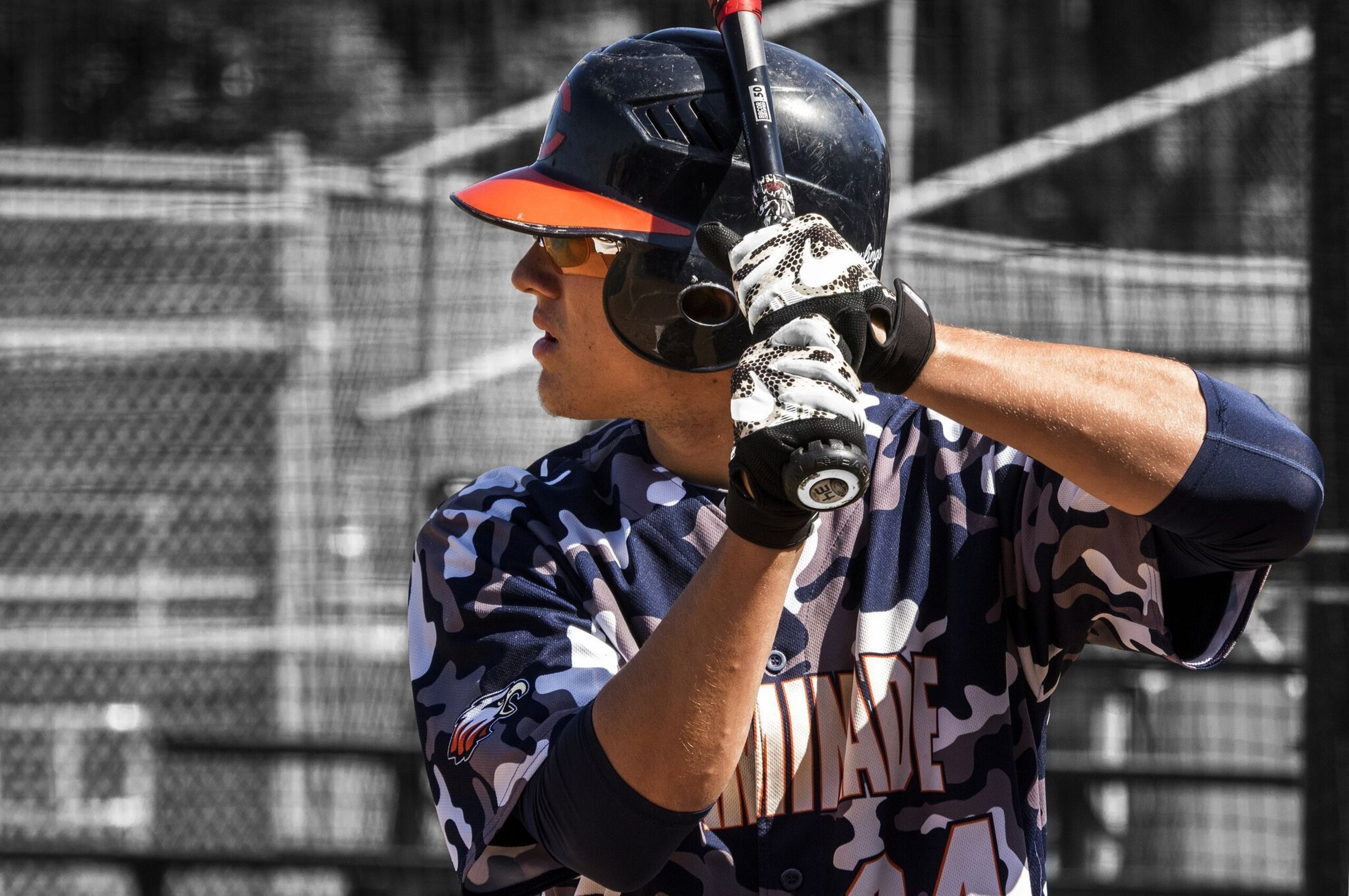
First Round (No. 18 Overall): OF Blake Rutherford, Chaminade Prep HS (Calif.)
Blake Rutherford was widely regarded as the top prep hitter in the 2016 class heading into the spring.
He still has the potential to develop into an All-Star-caliber outfielder, but an inconsistent spring and lack of further development caused his stock to slip.
Here's what Baseball America had to say in their predraft scouting report while ranking him as the No. 9 overall prospect:
"Rutherford has size, strength, athleticism and power potential for scouts to dream on, and would likely be the consensus top prep bat in the class if he had a more consistent spring or if he were a year younger.
Rutherford turned 19 as the calendar turned to May, offering less projection than other prep outfielders, with a physically mature 6-foot-2, 195-pound frame. Scouts have to project on Rutherford's home run power; he's produced this spring after being the biggest bat last summer for USA Baseball's 18U team.
However, he hasn't taken the next step with his power, at times trying too hard to pull and yank balls for power. When he stays with his approach, he's as impressive as any prep hitter in the class, with power to all fields, a line-drive swing path that covers the plate and the athleticism for center field.
"
Enough questions arose that he was something of a risk inside the top 10, but at No. 18 overall he has a chance to be an absolute steal.
Grade: A+
So after kicking the tires on a number of college bats and prep pitchers, the New York Yankees wind up with one of the top prep hitters falling in their lap. You just never know how things are going to shake out. Great pick, he has a chance to be a star.
Second Round (No. 62 Overall): 2B Nick Solak, Louisville
College second basemen are generally not a hot commodity on draft day, but Nick Solak has shown enough with the bat that there's value here even if he is limited defensively.
A .347/.443/.487 hitter in his three years on campus and a .380/.474/.576 hitter this season when he tallied 20 extra-base hits and nine stolen bases, Solak simply knows how to hit.
Grade: B
This is a nice below-slot move that should assure the Yankees are able to sign Rutherford.
Day 1 Grade:
The Yankees could have fallen asleep and forgotten to make a pick at No. 62 overall, and I still would have given them an "A." Rutherford may have failed to wow scouts this spring, but his ceiling is still just as high as No. 1 overall pick Mickey Moniak and his slipping to No. 18 was easily the biggest surprise of Day 1.
Oakland Athletics
19 of 29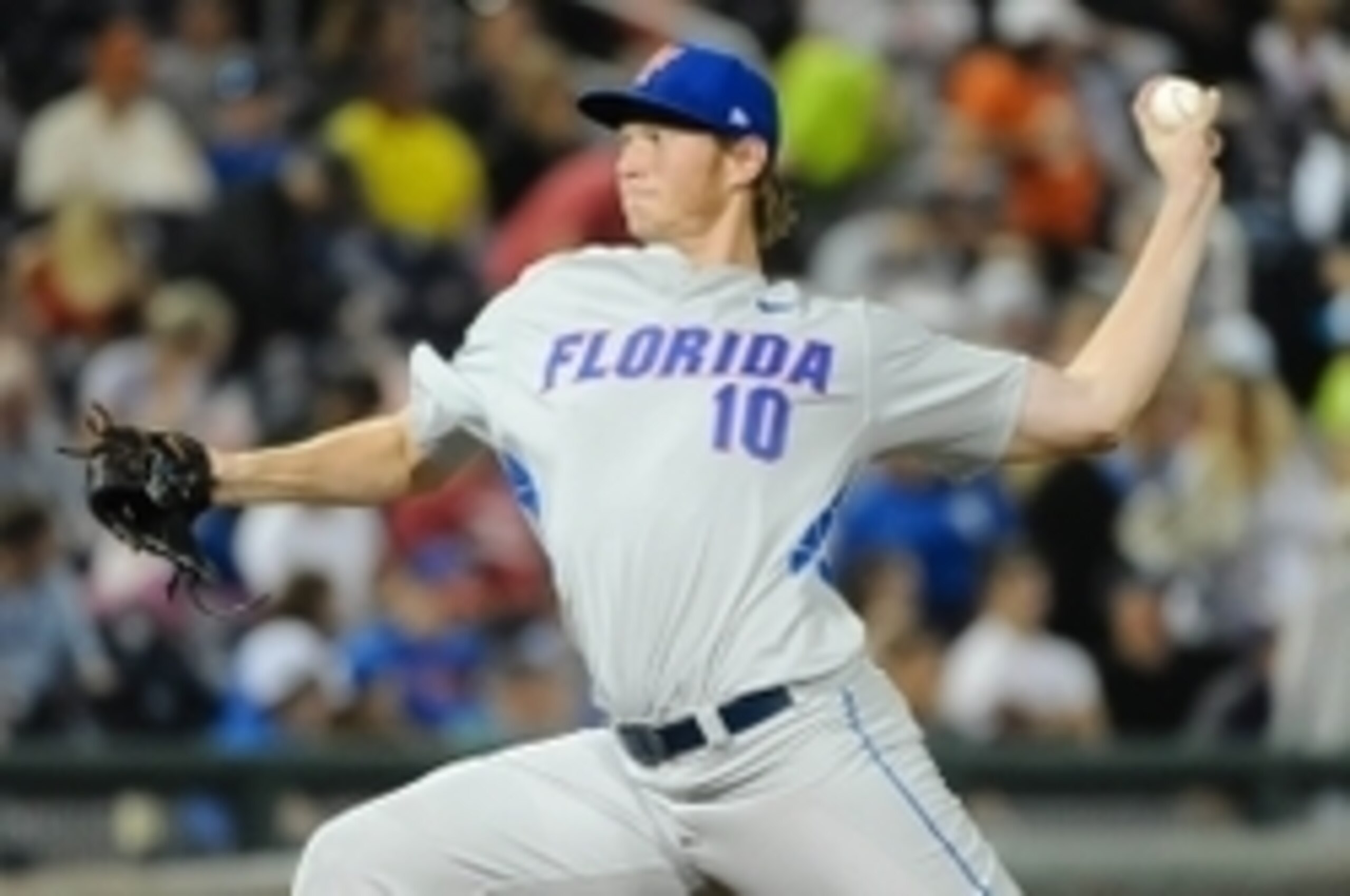
First Round (No. 6 Overall): LHP A.J. Puk, Florida
There was a lot of talk of the Oakland A's possibly targeting Nick Senzel here, but, instead, Senzel is off the board and a guy many viewed as a potential No. 1 overall pick in A.J. Puk falls into their lap.
Puk was the consensus top prospect heading into the spring, but an inconsistent junior season at Florida caused him to slip out of the top spot.
Here's what MLB.com wrote in their predraft rankings:
"Puk arguably has the best raw stuff of any arm in the class, with the chance to have three plus pitches. He's capable of touching 96-97 mph with his fastball regularly...Puk's biggest stumbling block has been his control and command, something that has kept him from dominating college competition consistently.
"
The 6'7" southpaw went 2-3 with a 3.21 ERA, 1.157 WHIP and 95 strikeouts in 70 innings, and while his 12.2 strikeouts-per-nine-innings rate was impressive, his 4.0 walks-per-nine-innings mark remains concerning.
Towering lefties with quality off-speed stuff don't come around everyday, and if Puk can refine his command, he has a chance to be an ace. If not, he could wind up taking a similar path to Andrew Miller and eventually making the transition to late-inning relief work.
Grade: A+
It was all but certain that the A's were going to take a college player here, and they have to be happy getting a guy in Puk who has as much upside as anyone in this class. He's more of a project than most college pitchers, but the payoff could be well worth it.
Lottery Round A (No. 37 Overall): RHP Daulton Jefferies, California
A fast riser at the start of the spring, Daulton Jefferies was sidelined for two months with a shoulder issue, but he returned to throw eight scoreless innings over two outings at the end of May so that helped salvage his draft stock.
He might have the best changeup in the draft, and he plays it well off a fastball that sits in the 93-94 range. He also throws a slider that has a chance to be a third quality offering, and it will be the development of that pitch that determines how good he can be.
Grade: B+
Robert Tyler might have been the better pick here, but after having Puk fall to them in the first round, the A's decided to take a chance on a pitcher who might have been a top-10 selection if he had stayed healthy. It's a move that could pay off big.
Second Round (No. 47 Overall): RHP Logan Shore, Florida
Hopefully Logan Shore and A.J. Puk got to be good friends during their time together on the University of Florida pitching staff, because they'll be kicking off their pro careers in the same organization as well.
While Puk is a power pitcher who offers big-time upside, Shore relies on his plus-plus command and one of the better changeups in the class to get hitters out and eat up innings.
Despite being the third Gators pitcher off the board, Shore was in fact the team's Friday starter, and he went 29-10 with a 2.46 ERA and 1.057 WHIP in his three years on campus. His 1.5 BB/9 walk rate as a junior speaks to his impressive control.
Grade: B
This is a safe pick, and after going the college route with their first two selections, a high-upside prep arm of some sort might have made more sense here. That's not how the A's operate, though, and they were no doubt thrilled to see Shore on the board.
Day 1 Grade: B
Puk and Jefferies could turn into legitimate front-line starters or they could both wind up relegated to the bullpen if they can't refine their command and stay healthy, respectively. Then again, the draft is always a crapshoot, and the A's getting Puk at No. 6 could wind up being the steal of the draft.
Philadelphia Phillies
20 of 29
First Round (No. 1 Overall): OF Mickey Moniak, La Coast Canyon HS (Calif.)
There was no clear-cut No. 1 prospect in this year's class, but the Philadelphia Phillies seemed to zero in on Moniak in the days leading up to the draft, and he is indeed the pick at 1-1.
Moniak might be the draft's most well-rounded position player, and if he improves his power stroke, he could possess five plus-or-better tools.
Here's MLB.com's scouting report:
"Moniak makes consistent hard contact against high levels of competition. He has a good approach at the plate and can spray line drives to all fields. Moniak has more doubles power now, but there's room in his frame to add strength.
His above-average speed works on both sides of the ball, and some see a future Gold Glove caliber center fielder. Moniak gets high marks for his baseball instincts and effort.
"
It's not often that a high school bat can be called a "safe" pick, but Moniak is as close as you're going to get—and there's still a ton of upside as well.
Grade: A
This is a good pick for a Phillies team on the rise, as clearly it wasn't sold on any of the arms being worthy of that top selection. Moniak has a chance to be a cornerstone piece of the Phillies' rebuilding efforts, and while he still has some growing to do physically, he should move fairly quickly thanks to his advanced hit tool.
Second Round (No. 42 Overall): RHP Kevin Gowdy, Santa Barbara HS (Calif.)
The definition of projectable with a 6'4", 170-pound frame and a fastball that already sits in the 90-93 range, Gowdy was right alongside Jared Horn as the top prep arm in California this spring.
He could be a tough sign with a strong commitment to UCLA, but this is still early enough that it shouldn't be an issue, and the Phillies have the money to go over-slot here if they need to.
Grade: B+
After passing on the available arms at No. 1 overall, the Phillies get one of the more intriguing long-term projects in this year's class. It's a great upside play, but there's a lot of risk-reward here.
Day 1 Grade: A
The Phillies got their guy in Moniak at 1-1 and then grabbed a pitcher who could wind up being one of the top arms in the class 10 years from now if everything breaks right. Good first day for the new front office.
Pittsburgh Pirates
21 of 29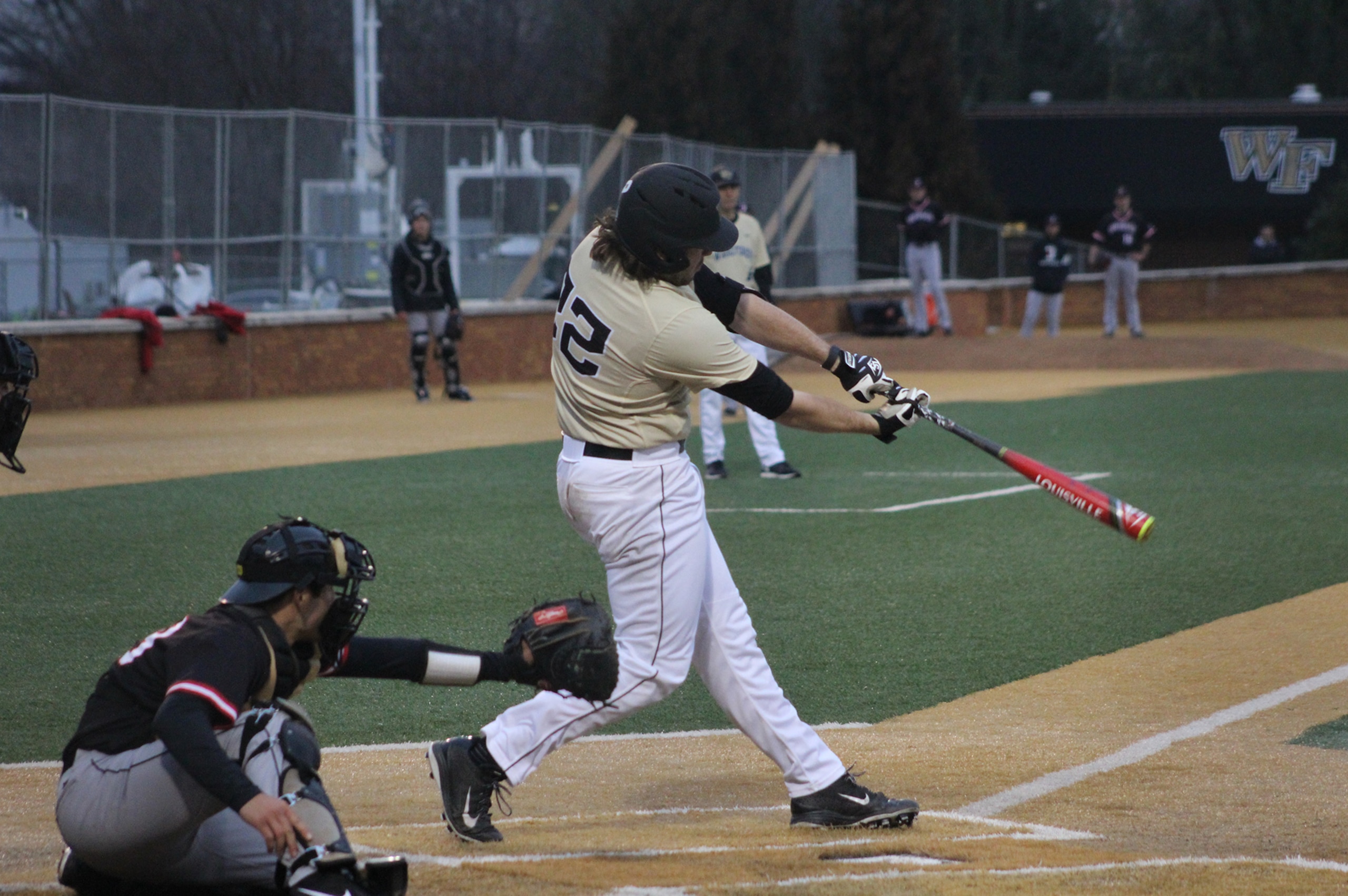
First Round (No. 22 Overall): 3B Will Craig, Wake Forest
Right-handed power is always a hot commodity, and with Kyle Lewis off the board, the Pittsburgh Pirates grabbed the best remaining righty power bat in Will Craig.
Craig earned first-team All-American honors on the strength of a .392/.537/.766 line that included 16 doubles, 16 home runs and 65 RBI. In his three years on campus, he put up a 1.097 OPS with 42 doubles and 37 home runs.
"If he was body beautiful, he'd be the first player taken," MLB.com quoted one scout as saying.
It's true he's not the most athletic guy at a burly 6'3" and 235 pounds, but he should be able to stick at third base where he has a plus arm and actually served as the Wake Forest closer this season.
Grade: A
The Pirates were almost certainly going to go with a hitter here, considering their farm system is loaded with pitching talent. They got a great bat in Craig, and he could be one of the first from this class to reach the majors.
Lottery Round A (No. 41 Overall): LHP Nick Lodolo, Damien HS (Calif.)
"Looking for a high-risk, high-reward proposition? Then Lodolo, the tall lefty from southern California, just might fit the bill," wrote MLB.com.
The Pirates got one of the safer picks at No. 22 with Will Craig, so why not gamble on a projectable prep arm here with their lottery-round pick?
The 6'6" Lodolo works 92-93 with has fastball and throws a curveball and changeup that both need work.
Grade: B-
The Pirates are as good as anyone at developing pitchers, and if Lodolo is willing to be a blank canvas of sorts he could be molded into one of the better arms of this class. Still feels like a reach, though.
Second Round (No. 68 Overall): RHP Travis MacGregor, East Lake HS (Fla.)
Baseball America provides the report here on one of the bigger Day 1 surprises:
"MacGregor is yet another high school pitcher who looked to be better the later scouts saw him. A pop-up prospect who didn't commit to Clemson until this spring, MacGregor had developed from a righthander with promise because of his athletic delivery and a high-80s fastball into one that now sits 90-92 mph and touches 94.
His potentially average changeup is improved as well, as it flashes average. His breaking ball is his third pitch for now but he does have some feel for locating his curveball.
"
Throw in a 6'3", 180-pound player who still has some projection, and this is another interesting high school pick for a Pirates team that knows what it's doing on the pitching side of things.
Grade: B
This is a reach on paper as MacGregor was Baseball America's No. 186 prospect, but with his arrow pointing up, it could be a good reach.
Day 1 Grade: B+
Craig should move as fast as any bat in this class, while the other two prospects are long-term projects with significant upside. It's a nice mixed-bag approach by the Pirates, who should have a good chunk of money to work with on Day 2.
San Diego Padres
22 of 29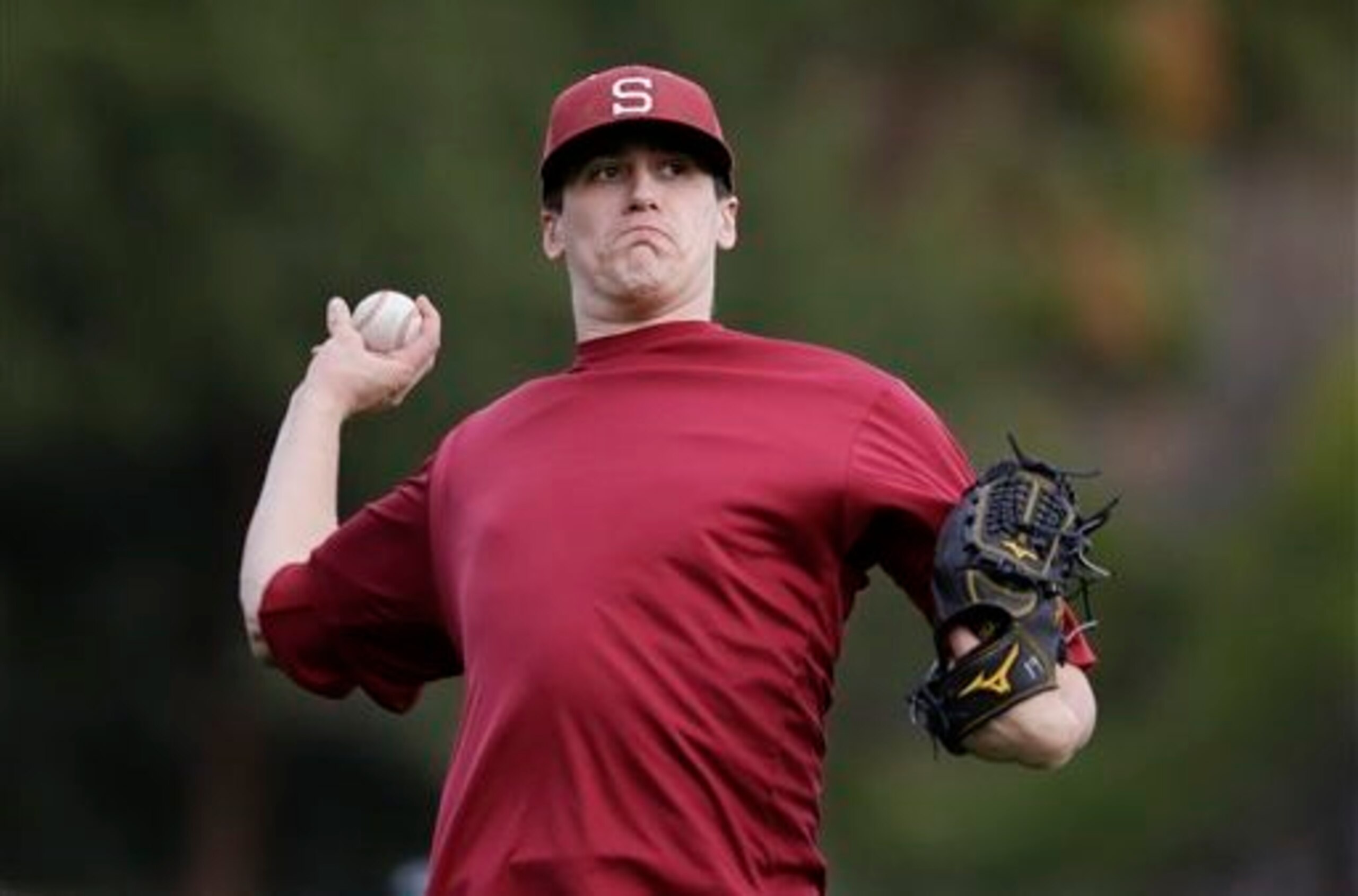
First Round (No. 8 Overall): RHP Cal Quantrill, Stanford
Per Callis, the San Diego Padres had interest in Cal Quantrill, and ideally they would have been able to scoop him up with one of their other picks at the end of the first round.
As the draft pushed closer, though, it looked less and less likely that he'd make it that far so the Padres reach a bit here and grab the son of former big leaguer Paul Quantrill.
Quantrill made an immediate impact at Stanford, becoming the first true freshman since Mike Mussina to start on Opening Night. He went 7-5 with a 2.68 ERA, 1.120 WHIP and 98 strikeouts in 110.2 innings on the year.
Had he been healthy, the younger Quantrill might have made a push to go No. 1 overall, but instead he missed most of his sophomore season and all of his junior year recovering from Tommy John surgery.
That's an obvious red flag, but not one that scares teams off like it used to as evidenced by the recent first-round selections of Erick Fedde and Jeff Hoffman.
Grade: C
Quantrill has a chance to be a great pitcher, but the Padres are in a tough spot as a rebuilding team with a weak farm system. Rolling the dice here makes sense if they can cash in with their other two first-round picks, but at No. 8 overall this is a huge risk.
First Round (No. 24 Overall—Justin Upton comp): 3B Hudson Sanchez, Carroll HS (Texas)
We have our first real reach of the first round, at least based on predraft rankings.
MLB.com (No. 91) and Baseball America (No. 108) both had Sanchez well outside of first-round range, but the Padres saw enough in his power potential to grab him here at No. 24 overall.
A shortstop in high school, he's likely headed for third base or a corner outfield spot as a pro, so his bat will need to play up. The potential is there, though, as MLB.com explained:
"Sanchez repeatedly hit the ball with authority on the showcase circuit last year, blasting the first homer of the Area Code Games (a 419-foot shot with 101-mph exit velocity) and standing out as one of the top offensive performers at the World Wood Bat Association World Championship. He has a quick right-handed bat and has done a good job of adding strength to his 6-foot-3 frame. He could hit for average and power and profile at a number of positions.
That helps his cause, because few scouts think Sanchez can stay at shortstop at the next level. His hands, arm and instincts are fine, but he lacks the quickness to be a middle infielder in the big leagues.
"
It will all come down to whether or not his bat continues to play, but he showed enough against high-level competition to catch the Padres eye.
Grade: C-
I understand the Padres not wanting to break the bank on someone like Carter Kieboom or Drew Mendoza if they were targeting a high school bat here, but why not someone like Bo Bichette or Joe Rizzo? It just seems there were better options, and they might be trying to get a little too cute with their bonus pool here.
First Round (No. 25 Overall—Ian Kennedy comp): LHP Eric Lauer, Kent State
After a questionable risky decision one pick earlier, the Padres grab maybe the safest arm in the entire draft in Eric Lauer. Suppose that's the benefit of having three first-round picks.
Lauer may not have ace upside, but it's impossible to ignore what he did this spring on his way to Louisville Slugger National Player of the Year honors.
He went 10-2 with a 0.69 ERA, striking out 125 hitters and allowing just 49 hits and 28 walks in 104.0 innings for a 0.740 WHIP.
His 0.69 ERA was the lowest by a Division I starting pitcher since Chris Rich posted a 0.62 ERA over 57.2 innings for St. John's back in 1979, according to CBS Sports' Mike Axisa.
Lauer's ceiling is probably a No. 3 starter, but he has a high floor and shouldn't need much time in the minors.
Grade: A+
Based on what the Padres did with their first two picks, Lauer was the perfect selection to round out their trio of first-round picks.
Second Round (No. 48 Overall): OF Buddy Reed, Florida
A potential top-10 pick at the start of the spring, Buddy Reed saw his draft stock slip considerably this spring with a sub-par .255/.358/.397 for the Gators.
"A tendency to be tentative at the plate has plagued him, and while he had some good stretches, he didn't drive the ball consistently this spring," wrote MLB.com.
Grade: B-
If he can refine his approach, Reed can definitely outperform his draft position here. This is another risk-reward play for the Padres, a theme of the night for them outside of the Lauer selection.
Lottery Round B (No. 71 Overall): RHP Reggie Lawson, Victor Valley HS (Calif.)
An uneven spring that included an oblique injury that cost him some time caused Reggie Lawson to slip to the second round, but he has everything scouts look for in a high school pitcher.
His fastball touches 94, and he pairs it with a curveball-changeup combination that has potential. That all comes from an athletic 6'4", 185-pound frame that has room to pack on a ton of good weight going forward.
Grade: A
Lawson looked like a lock for the first round at the start of the spring, and he has the most upside of anyone on the board here at No. 71 outside of the guys who had slipped due to signability.
Day 1 Grade: B
I'm really not sure what to make of the Padres draft so far, but I think I like it. Sanchez was a huge reach, but the potential is there for that to look a lot better if his bat plays. Quantrill is the draft's biggest wild card, and Reed was perhaps the best buy-low college player. Lauer is as safe as it gets, and Lawson is the definition of projectable. There's a little something for everybody here, and for better or worse the Padres farm system has been restocked.
San Francisco Giants
23 of 29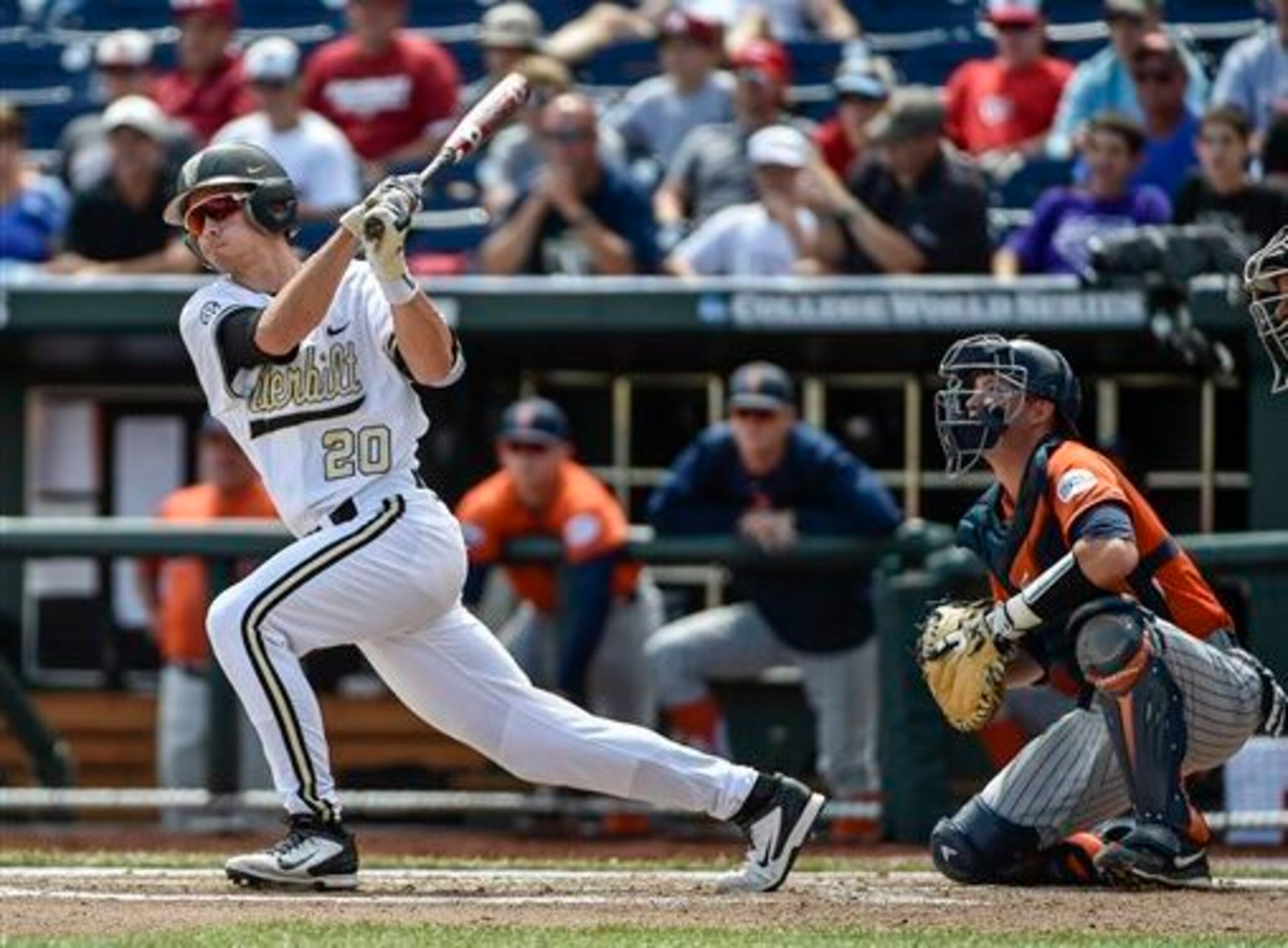
Second Round (No. 59 Overall): OF Bryan Reynolds, Vanderbilt
With just one Day 1 pick, the Giants managed to land one of the top college bats in this year's class and someone more than capable of outperforming his draft position.
Both Baseball America (No. 31) and MLB.com (No. 23) ranked him well ahead of where he was selected, and MLB.com said the following in his predraft profile:
"Reynolds doesn't have a standout tool, but his offensive potential and his solid speed and defensive skills make him one of the more well-rounded college position players in the 2016 Draft class.
A switch-hitter, he has a smooth swing and feel for the barrel from both sides, though scouts do have some concerns about swing-and-miss issues. He has driven the ball much more consistently this spring while continuing his penchant for drawing walks.
"
A three-year starter who spent time with the U.S. Collegiate National Team and hit .346 over 81 at-bats in the Cape Cod League, Reynolds did nothing to hurt his stock this spring.
His .330/.461/.603 line included 16 doubles, 13 home runs and 57 RBI.
Grade: A
The Giants only had one pick, and they made the most of it, getting a potential long-term answer to a left field position that has been a revolving door for years.
Day 1 Grade: A
The Giants know what they're doing on draft day, and they proved that again with a smart, safe pick here at No. 59 overall.
Seattle Mariners
24 of 29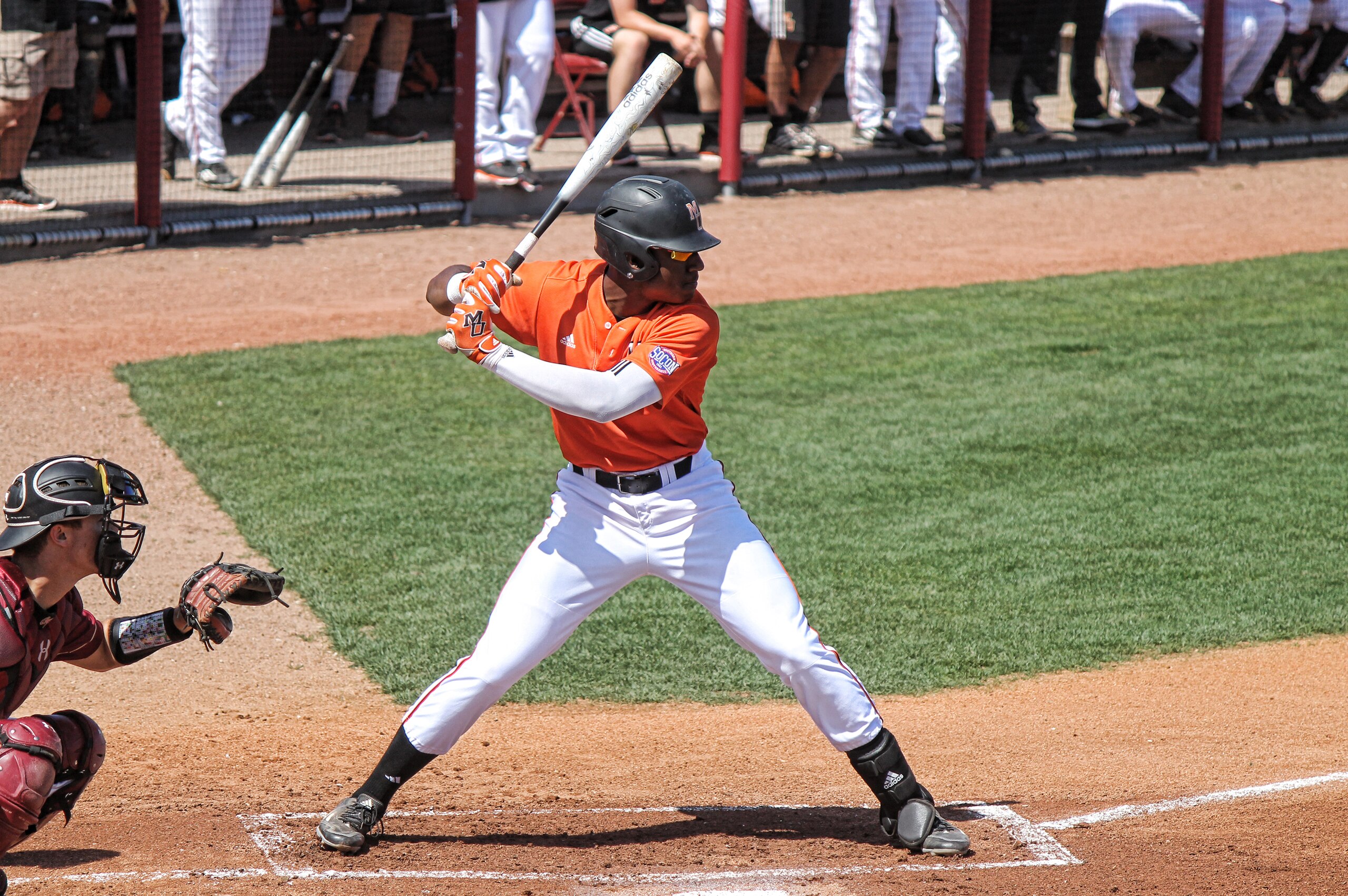
First Round (No. 11 Overall): OF Kyle Lewis, Mercer
After going undrafted out of high school, Kyle Lewis has been one of the most productive college hitters in the nation the past two seasons while playing for Mercer University.
Any questions about the level of competition he's facing were quickly put to rest last summer when he hit .300/.344/.500 with seven doubles, seven home runs and 24 RBI in 150 at-bats against the best college baseball has to offer in the Cape Cod League.
That was followed by an absurd .395/.535/.731 line this spring that included 11 doubles, 20 home runs and 72 RBI, earning him Southern Conference Player of the Year and first-team All-American honors.
His swing has been called "busier than most scouts would like," according to MLB.com, but there's no ignoring the power he generates with his 6'4" frame, and his willingness to take a walk will serve him well at the next level.
Grade: A
Lewis was in the conversation to go No. 1 overall, so the Seattle Mariners have to be ecstatic that he was still on the board at No. 11. One way or another Seattle was going to grab a bat, and getting perhaps the best power threat in the class is a big win here.
Second Round (No. 50 Overall): 3B Joe Rizzo, Oakton HS (Va.)
Part of the second tier of prep bats, Joe Rizzo has impressed with his hit tool, but his long-term outlook is tough to nail down.
He's undersized with little in the way of projectability at 5'9", 194 pounds, and he may not have the power profile to stay at third base. At the same time, he might not be athletic enough to handle left field, so he's tough to peg.
Grade: B-
Rizzo has one of the draft's best hit tools, so he's worth a gamble here at No. 50. There were better all-around options on the board, though, and better upside plays as well.
Day 1 Grade: A
Even with the questionable selection of Rizzo with their second-round pick, the Mariners are one of the big Day 1 winners after Lewis slipped to them at No. 11 overall. Picking up the top power bat in the class gives them the perfect replacement for 35-year-old Nelson Cruz in a few years.
St. Louis Cardinals
25 of 29First Round (No. 23 Overall): SS Delvin Perez, International BB Academy (PR)
The biggest storyline of the first round—outside of who would go No. 1 overall—was how far Delvin Perez would slip after failing a drug test earlier in the week.
The answer: No. 23 overall, where the Cardinals simply couldn't pass on a player who was a consensus top-10 talent.
"His defense is obviously there," one scout told Alyson Footer of MLB.com. "It'll take time to see how much he hits. It's the hardest thing to project, because it's the hardest thing to do. But he's where he needs to be with his speed and defense."
I compared him to Francisco Lindor heading into the draft, at least in respect to where both players were at on their respective draft days.
If he reaches that ceiling, the Cardinals may have gotten the steal of the draft.
Grade: A
If you believe in the "Cardinal Way," there's not a better place Perez could have landed to get his career headed back in the right direction.
First Round (No. 33 Overall—John Lackey comp): OF Dylan Carlson, Elk Grove HS (Calif.)
While Baseball America ranked Dylan Carlson as their No. 92 prospect heading into the draft, he was absent from MLB.com's top 200 list, so it's fair to say opinions were split on the California high schooler.
Baseball America referred to him as a "baseball rat" in their profile, noting he has the combination of makeup and tools that scouts love.
Apparently the Cardinals scouts were among those who fell in love with him, because this was a significant reach, especially with so many quality college arms still on the board.
Grade: D
Considering the Cardinals have the 10th-highest bonus pool this year at just over $9 million, going off-board like this will have to be a precursor to a bigger move down the line. Otherwise this is a major reach, as he likely would have been available at No. 70 and perhaps even later.
First Round (No. 34 Overall—Jason Heyward comp): RHP Dakota Hudson, Mississippi State
This was more the kind of move the St. Louis Cardinals were expected to make with their two selections at the back of the first round, as they scoop up one of the top college arms left on the board in Dakota Hudson.
The ace of the Mississippi State staff, Hudson went 9-4 with a 2.62 ERA, 1.247 WHIP and 109 strikeouts in 106.2 innings, earning second-team All-American honors in the process.
Hudson throws in the mid-90s and has maybe the best slider of any pitcher in the draft. He also throws a curveball and changeup, both of which should develop into usable pitches.
Combine that repertoire with his strong 6'5", 205-pound frame and he has all the tools necessary to be a starter long term.
Grade: A+
I was admittedly higher on Hudson than most, but this is the steal of the first round for me. Throw him in the Cardinals' developmental system, and he has a chance to be their next significant homegrown piece.
Second Round (No. 70 Overall): RHP Connor Jones
A potential top-10 pick at the start of the spring, Jones was passed by a handful of other college arms on the rise, but MLB.com (No. 21 prospect) and Baseball America (No. 24 prospect) still viewed him as a potential first-round pick.
Jones was 11-1 with a 2.34 ERA and 1.186 WHIP in 103.2 innings. He throws in the mid-90s with good sink and backs that with three off-speed pitches that should all be usable at the next level.
Grade: A+
His ceiling may not be better than a No. 3 starter, but Jones should be one of the first pitchers to reach the majors from this class, and he's one of the biggest Day 1 steals at No. 70 overall.
Day 1 Grade: A
The Carlson pick still doesn't make sense, but the Cardinals draft better than any team in baseball so I won't question them. After grabbing the sliding Perez about 15 spots lower than he was expected to go before his positive PED test, they picked up two of the more polished college arms in the draft in Hudson and Jones. There's money to spend in Day 2, even if they have to go over-slot with Perez.
Tampa Bay Rays
26 of 29
First Round (No. 13 Overall): 3B Josh Lowe, Pope HS (Ga.)
The top two-way player in the 2016 draft, Josh Lowe would likely still have been a Day 1 pick if he were strictly a pitching prospect, as he sits in the mid-90s with his fastball and has clean mechanics—all from a projectable 6'4" frame.
However, it's his bat at third base that made him a first-round selection, as MLB.com explained:
"It's hard to ignore what Lowe brings to the table as a position player. He can be streaky at the plate but his quick, controlled left-handed swing and the leverage in his long frame produce considerable raw power. The Florida State recruit also has plus speed and arm strength, which should translate into solid defense at third base or in center field.
"
Mickey Moniak and Blake Rutherford got the bulk of the attention among this year's crop of high school bats, but when all is said and done Lowe has a chance to be the best of the bunch.
Grade: A
One of the few picks I got right in my mock draft, Lowe is a good fit for a Tampa Bay Rays team that always needs help in the offensive side of things. By the time he's ready for the majors, Evan Longoria will likely be playing first or providing designated hitting "DH-ing" if he's even still with the team, so there's no reason to think he's blocked.
Second Round (No. 53 Overall): OF Ryan Boldt, Nebraska
A three-year starter at Nebraska, Ryan Boldt saw his numbers dip a bit this season when he hit .288/.344/.416 with 21 extra-base hits and 20 stolen bases.
A torn meniscus in high school cost him a chance to be a first-round pick, and he's not the same explosive player he was as a prep star. However, he still possesses a plus hit tool and has the defensive prowess to stay in center field, so there's value here.
Grade: C
Not sure I understand taking Boldt over Bryan Reynolds and Ronnie Dawson, even if they're both likely limited to playing left field.
Lottery Round B (No. 77 Overall): OF Jake Fraley, LSU
Another three-year starter at a major college program, Fraley hit .324/.407/.459 with 28 stolen bases and more walks (36) than strikeouts (32).
He doesn't have one true standout tool, but he's a gamer and fits well atop the lineup where he uses his patient approach and good speed to set the table. He should get a chance to play center field.
Grade: B
This is a bit of a doubling down after taking Boldt at No. 53, but I like the Fraley pick a lot better, and he should be a good fit in the Rays organization.
Day 1 Grade: B-
The Rays got a high school bat with legitimate All-Star upside in Lowe, so that offsets an uninspiring rest of their draft so far. They need bats; there's no question, but I'm not sold on Boldt or Fraley being true impact prospects.
Texas Rangers
27 of 29First Round (No. 30 Overall—Yovani Gallardo comp): LHP Cole Ragans, N. Florida Christian HS
Cole Ragans didn't get the same attention as some of the other prep arms in the class, but he's right there as part of the second tier behind Jason Groome and Braxton Garrett.
Here's his Baseball America scouting report:
"He stands out for his overall package and advanced understanding of his craft. He throws his fastball in the low 90s, reaching 93 mph at times. His curveball is his best offspeed offering and has above-average potential. He has worked to develop his changeup, which could be an average pitch in time.
Listed at 6-foot-4, 190 pounds, Ragans is at his best when he uses his height to throw his fastball with a downhill plane and is spotting it low in the zone. He doesn't do that consistently yet, but his athleticism gives him a chance to improve his command as he matures.
"
This was a bit of a reach based on both MLB.com (No. 49) and Baseball America (No. 55) both ranking him well outside of the first round, but this has a chance to be one of the better under-the-radar picks of Day 1.
Grade: B+
Ragans didn't come with the same signing-bonus concerns of some of the other prep arms still on the board, and he has plenty of projectability and a high floor. Solid pick.
Second Round (No. 63 Overall): RHP Alex Speas, McEachern HS (Ga.)
"Speas owns an explosive 92-96 mph fastball with riding life, and he should add more velocity once he adds more strength. His hard curveball gives him a second potential out pitch, and his stuff and lanky frame have earned him some lofty comparisons to Dwight Gooden," wrote MLB.com.
The development of his changeup will determine if he makes it as a starter, but if not he has legitimate closer stuff.
Grade: A
Speas had by far the most upside of anyone still on the board at No. 63, signability sliders aside, and the Rangers add another electric arm.
Day 1 Grade: A-
We'll split the difference on the two grades, but I like the approach here of going with high school pitchers with both picks. The top end of the Texas Rangers' system is loaded, so going with more developmental prospects makes sense.
Toronto Blue Jays
28 of 29
First Round (No. 21 Overall): RHP T.J. Zeuch, Pittsburgh
T.J. Zeuch was slowed by a groin injury this spring. However, he was impressive once he finally took the mound in going 6-1 with a 3.10 ERA, 1.148 WHIP and 74 strikeouts in 69.2 innings.
Baseball America provided the following breakdown of his stuff:
"Zeuch's best pitch is his fastball, which sits at 92-94 and sometimes touches higher. Zeuch's extra large, 6-foot-7 frame allows him to generate solid extension towards home plate, making his pitches even more difficult for hitters to pick up out of his hand. His fastball also shows both sink and arm-side run, making it an effective ground ball-inducing pitch.
His offspeed pitches, a slider and changeup, receive fringe-average grades from scouts, but he has solid command of his arsenal and repeats his delivery well. The development of his offspeed pitches will dictate his ultimate ceiling.
"
Zeuch has come a long way since stepping foot on the University of Pittsburgh campus and provides as much upside as any of the college arms still on the board at this point.
Grade: A
The Toronto Blue Jays have depleted their farm system with a number of big trades in recent years, but they did well to add another quality college arm at the top of their draft after taking Jon Harris last year.
Second Round (No. 57 Overall): OF J.B. Woodman, Ole Miss
A rough showing in the Cape Cod League last summer (.242 BA, 51 Ks in 128 AB) raised some red flags for J.B. Woodman, but he put together a terrific season this spring.
He wrapped up his junior year hitting .323/.412/.578 with 15 doubles, 14 home runs and 55 RBI. He's not the most athletic center fielder, but his instincts allow his tools to play up defensively, and he has a chance to stay up the middle.
Grade: B
This was a reach based on rankings, as MLB.com (No. 83) and Baseball America (No. 119) both had him as a Day 2 pick. Not the worst reach, though, in a weak year for college bats.
Second Round (No. 66 Overall): IF Bo Bichette, Lakewood HS (Fla.)
With their second pick in second round, the Blue Jays grabbed the first notable legacy prospect in this year's class.
Bo Bichette is the son of former Colorado Rockies slugger Dante Bichette, and with some of the best power among all prep hitters, he has a chance to be a dangerous slugger in his own right.
Defensively, he's likely headed for second base or left field as his days at shortstop are over. There's also a good deal of swing-and-miss to his game, so he'll need to refine his approach.
Grade: B+
There are question marks with Bichette, but the power is for real, and he's a good value at the back of the second round.
Day 1 Grade: B
A quality college arm (Zeuch), a quality college bat (Woodman) and a risky, high-ceiling prep bat (Bichette). That's a solid approach to having three Day 1 picks for a team that needs to restock the farm.
Washington Nationals
29 of 29
First Round (No. 28 Overall—Jordan Zimmermann comp): 3B Carter Kieboom, Walton HS (Ga.)
Carter Kieboom's brothers Spencer (Washington Nationals prospect) and Trevor (University of Georgia third baseman) have already made names for themselves, but the youngest brother looks like the best of the bunch.
He's one of the top pure hitters in the draft, prep or otherwise, and he's shined against high-level competition on the showcase circuit.
MLB.com provided the following report:
"Thanks to excellent hand-eye coordination and a mature approach, Kieboom barrels balls repeatedly. He had the best at-bats of anyone at the Under Armour All-America Game in July, including an opposite-field single against a 98-mph fastball from Riley Pint, the top-rated high school right-hander. Factor in Kieboom's quality bat speed and the loft in his right-handed swing, and he should have at least average power once he fills out.
A shortstop in high school, Kieboom has the actions, soft hands and solid arm strength to get the job done at third base in pro ball, and he has some experience behind the plate.
"
As his 6'2", 185-pound frame continues to fill out, Kieboom could emerge as the prototypical power-hitting third baseman and one with a good hit tool and solid defensive skills to boot.
Grade: A
Drew Mendoza was also an option here, but Kieboom hasn't made the same bonus demands and at the end of the day I think he winds up being the better of the two players. Solid pick for the Nationals here and likely a precursor to a college arm with their next pick.
First Round (No. 29 Overall—Ian Desmond comp): RHP Dane Dunning, Florida
Nailed it with the college pitcher prediction, but certainly not the one most people would have expected.
Both MLB.com (No. 59) and Baseball America (No. 60) ranked Dane Dunning outside of the first round, as he spent much of his spring overshadowed by teammates A.J. Puk and Logan Shore.
In 68.1 innings of work over five starts and 24 relief appearances, Dunning went 5-3 with a 2.50 ERA, 1.010 WHIP and an 11-79 BB-K ratio.
MLB.com's scouting report was full of positives:
"He has a plus fastball, up to 95 mph, sitting 92-93 mph and with outstanding movement. He has a very good feel for his changeup as well. His breaking ball is fringy, but shows glimpses of being an average offering. Dunning's arm is so quick that he sometimes struggles with keeping the ball down in the zone, an issue most feel is correctable.
"
With more exposure as part of a team's weekend rotation, Dunning might have solidified himself as a first-round pick. Instead, this pick is based more on potential and upside than actual results.
Grade: B-
Dunning has solid upside, but with college arms like Dakota Hudson, Anthony Kay, Jordan Sheffield and Robert Tyler on the board, this still felt like an unnecessary reach.
Second Round (No. 58 Overall): 3B Sheldon Neuse, Oklahoma
Here's what MLB.com had to say about Oklahoma third baseman Sheldon Neuse:
"Scouts long have admired Neuse's right-handed swing, and he upped his production this year by improving his approach and plate discipline. A three-time first-team all-Big 12 selection, he's keeping his bat in the hitting zone longer and staying on pitches better, allowing him to tap into what should be average power. He's an average runner who shows good instincts on the bases and in the field.
"
His stock has been trending up all spring thanks to a .369/.465/.646 line that included 15 doubles, 10 home runs and 48 RBI. If his power continues to develop, he has a chance to make it as an everyday third baseman.
Grade: B+
The college infield crop was incredibly thin, and Neuse was one of the few worth grabbing on Day 1, so nice job by the Nats go find value at a position of scarcity.
Day 1 Grade: B
I don't love the Dunning pick with so many other proven college arms on the board, as his upside isn't high enough to offset his lack of a track record. That said, the Kieboom pick was great, and the Nationals hedged those two early selections with a safe college bat in Neuse in the second round. Can't complain about that approach.
All college stats courtesy of The Baseball Cube, unless otherwise noted.
.jpg?w=2560 "Giants Extend Jameis Winston")
.jpg?w=2560 "NFL Extends Roger Goodell")
.jpg?w=2560 "Top 10 2027 NFL Free Agents")
.jpg?w=2560 "Puka Likely to Play Week 1")
.jpg?w=2560 "Projecting NFL Win Totals 🔮")
.jpg?w=2560 "Sunday Night's Main Event Updates 📝")