Fantasy Baseball 2016: Early-Season Buy-Low, Sell-High Trade Advice
Two weeks is too soon to panic. At least that's what worried fantasy baseball managers tucked down the standings will try to remember before blowtorching their rosters.
It's human nature to fret when things go poorly. When a lineup that seemed perfect before Opening Day can't buy a hit, even an experienced player will get antsy. The savvy gamer, however, will ultimately stay calm and instead test his or her peers' nerves.
Everyone inevitably jumps to faulty conclusions in April, when the sample sizes are smaller than a scaled-down Jose Altuve. We'll look back and laugh at these premature conclusions, but the benefit of hindsight doesn't exist yet. What does exist are players batting over .500 and pitchers with an ERA below 1.00.
For now, let's assume the competition doesn't consist of complete idiots. If someone is foolish enough to worry about Mike Trout, great. Nobody will fault an opportunistic owner for checking the pulse of whoever rosters the superstar, but it'd take a real novice to panic-trade him.
Let's also give them enough credit not to offer Jeremy Hazelbaker for an All-Star. While the St. Louis Cardinals outfielder should be owned by now, that doesn't necessarily mean he'll fetch a strong return on the trade market. Also, anyone expecting a Trevor Story sell-high slide should click here first.
Proactive managers looking to make early moves should target these guys as buy-low and sell-high candidates.
Buy Low: Kyle Seager, 3B, Seattle Mariners
1 of 6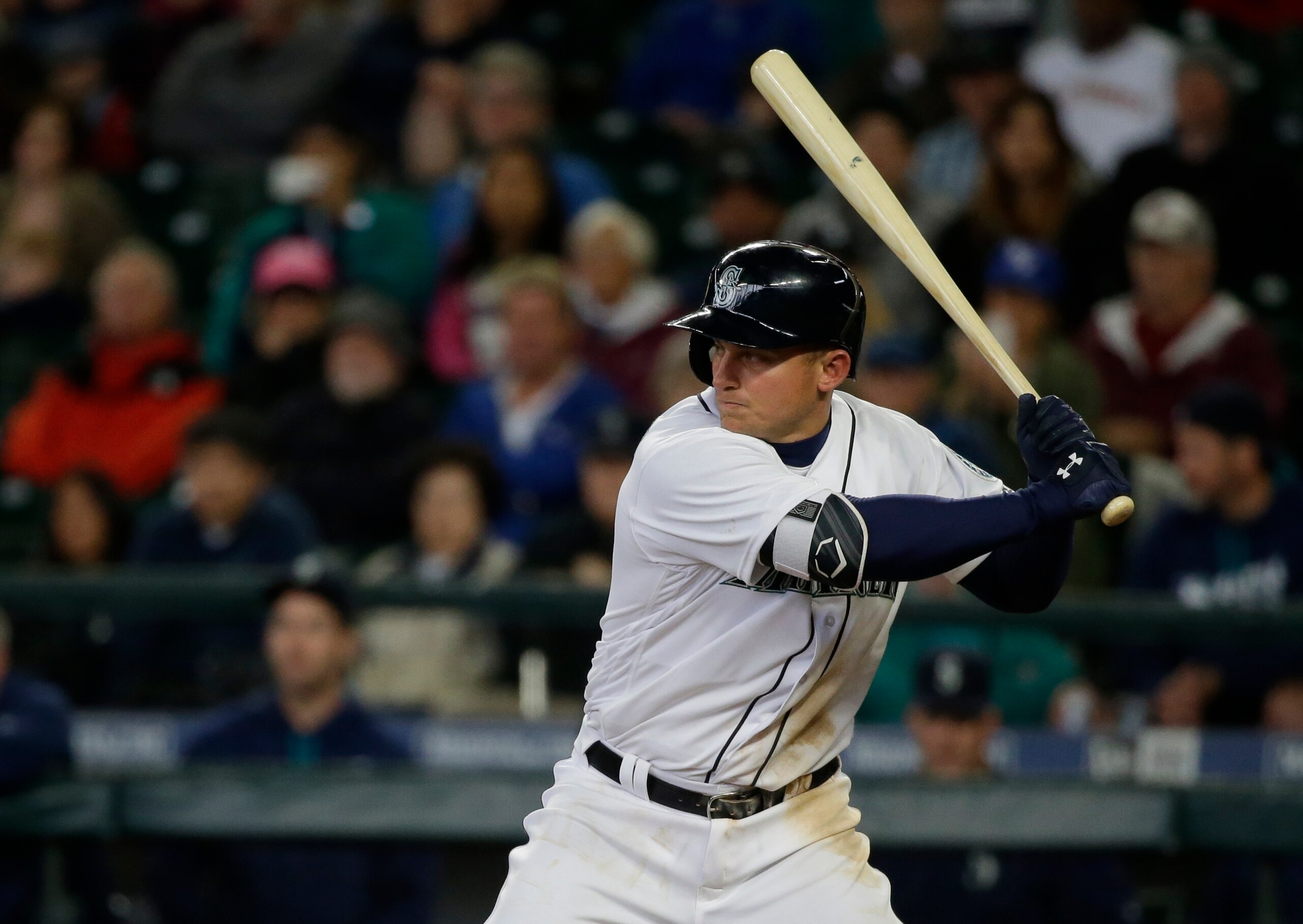
Taxes, a Game of Thrones wedding ending in death, and Kyle Seager hitting in the .260 range with 20-25 homers and reliable counting numbers.
Sure things don't exist in baseball, but Seager is as close as it gets. The steady Seattle Mariners third baseman has logged at least 650 plate appearances in each of the last four seasons, gradually increasing his home run tally from 20 in 2012 to 26 last year. The career .261 hitter has never batted below .258 in a full campaign.
Drafters chose Seager for safety, so it's especially frustrating to see him stumbling with a dismal .152/.264/.326 line. His 20.8 strikeout percentage is higher than usual, and he's making less contact than ever before.
Trust four full years of consistent production over 12 shaky games. While the 28-year-old lefty hasn't hit well against anyone, the Seattle Mariners have also faced an inordinate amount of southpaws, which has caused Seager to log 23 plate appearances against same-handed pitchers and 30 versus righties. Over his career, he opposed righties in 64.9 percent of his trips to the batter's box.
He's not a leading character who gets the cool lines and major storylines, but he's an underappreciated piece to the grand picture. Like Davos Seaworth or Lord Varys, he'll quietly take care of business while his higher-status companions take credit.
Seager is far too valuable for a sensible manager to drop, but he's also someone a fussy owner will get bored of easily. Now is the time to get the top-10 third baseman below his draft-day cost.
Sell High: Ian Kinsler, 2B, Detroit Tigers
2 of 6
Hey there, Ian Kinsler. Where did this power come from?
The second baseman has not hit 20 or more home runs in a single season since banking his second 30-30 campaign in 2011. Last season, he recorded a career-low 11 homers in 675 plate appearances. A goose egg occupied his box score until finally going deep on May 30. Home runs No. 4 and No. 5 did not follow until July 20.
This April, he already has four in 12 games—not to mention his .345 average, 10 RBI and 12 runs scored.
He had not levered an ISO above .145 in any of the past three seasons, but he is currently credited with a .236 clip. Perhaps this is a sign that the Kinsler who hit .325 with eight deep flies after last year's All-Star break will stick around for all of 2016.
The more likely scenario? A really good player is enjoying a great hot streak. Per Baseball Savant, his average exit velocity (86.58 mph) is nearly identical to last year's mark, and his four blasts have traveled an average distance of 376.68 feet. While this outburst could help him reach 15 dingers again, he won't keep slugging at this torrid pace.
Kinsler is a worthwhile fantasy contributor, but he's one who has lost his burst on the basepaths and traded pop for enhanced contact. A guy nobody was enthused about taking in March will now garner more hype on the trade market.
He's still a top-10 second baseman, but a hot start may trick someone into grading him as a top-tier option.
Buy Low: Brian Dozier, 2B, Minnesota Twins
3 of 6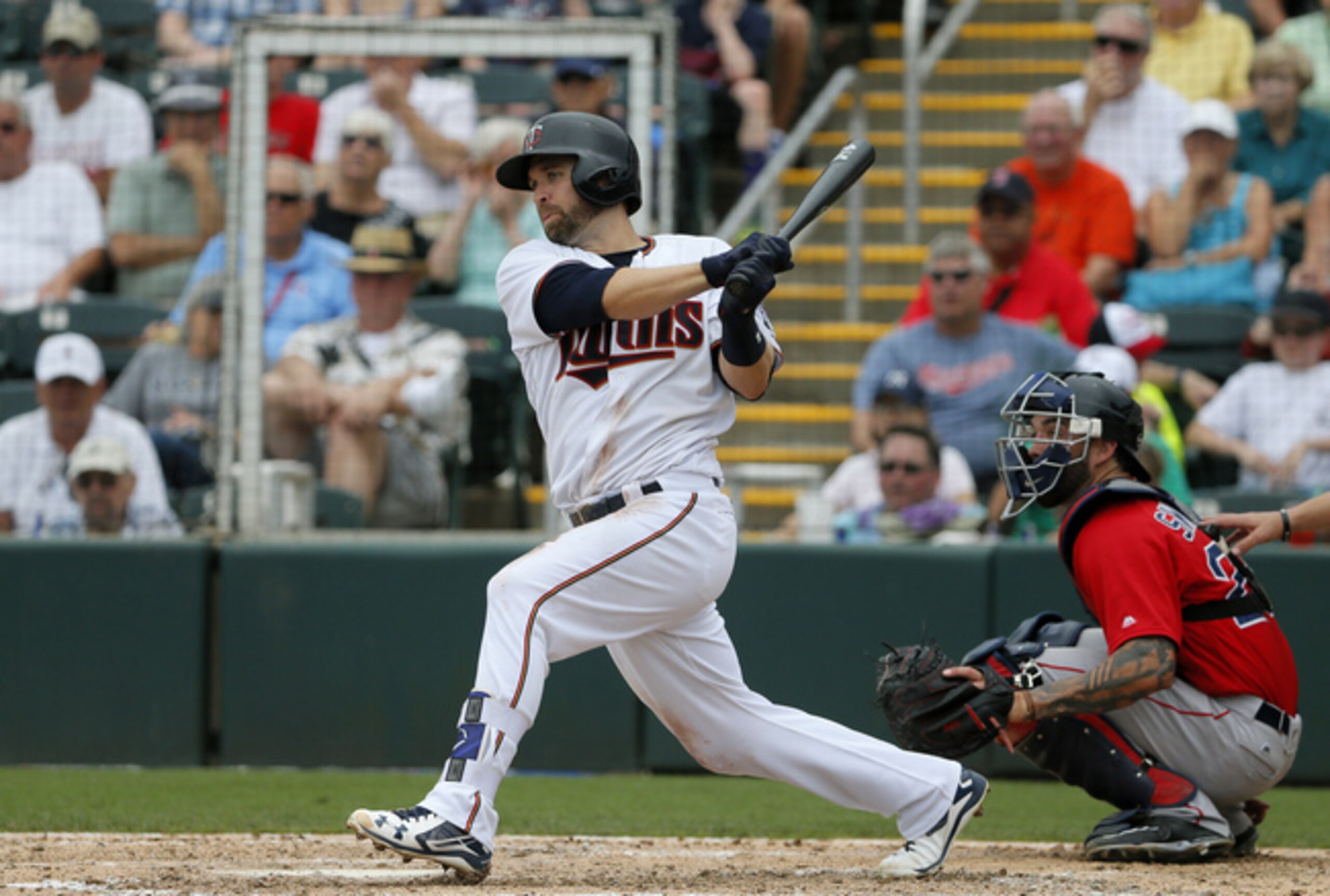
Brian Dozier is who he is. Despite a poor batting average, he pulls his keep with 20-plus dingers, double-digit steals and a bunch of runs atop the Minnesota Twins' batting order.
"Poor batting average" meant inside the .235-.245 range, not his current .200 clip. A year after comfortably leading all second basemen in long balls, he has accrued one and sports a grotesque .300 slugging percentage.
Dozier has made a bad habit of slumping in September, but he's not much better at the beginning. Over his career, he holds a .681 OPS in April (and March regular-season games) before finding his rhythm in May and June.
There's a small silver lining to his poor start, even if it's probably the product of a limited sample size. The 28-year-old has routinely generated many easy outs with a 16.0 career pop-up percentage. This year, it's down to 5.0. So what if they're mostly just flyouts instead?
He's not striking out at an inordinate rate, and he's too well-tenured for anyone to start worrying about playing time. Dozier will get his home runs in due time, but he's in the Seager category of being too boring to earn patience from casual players.

.jpg?w=2560 "MLB Draft")
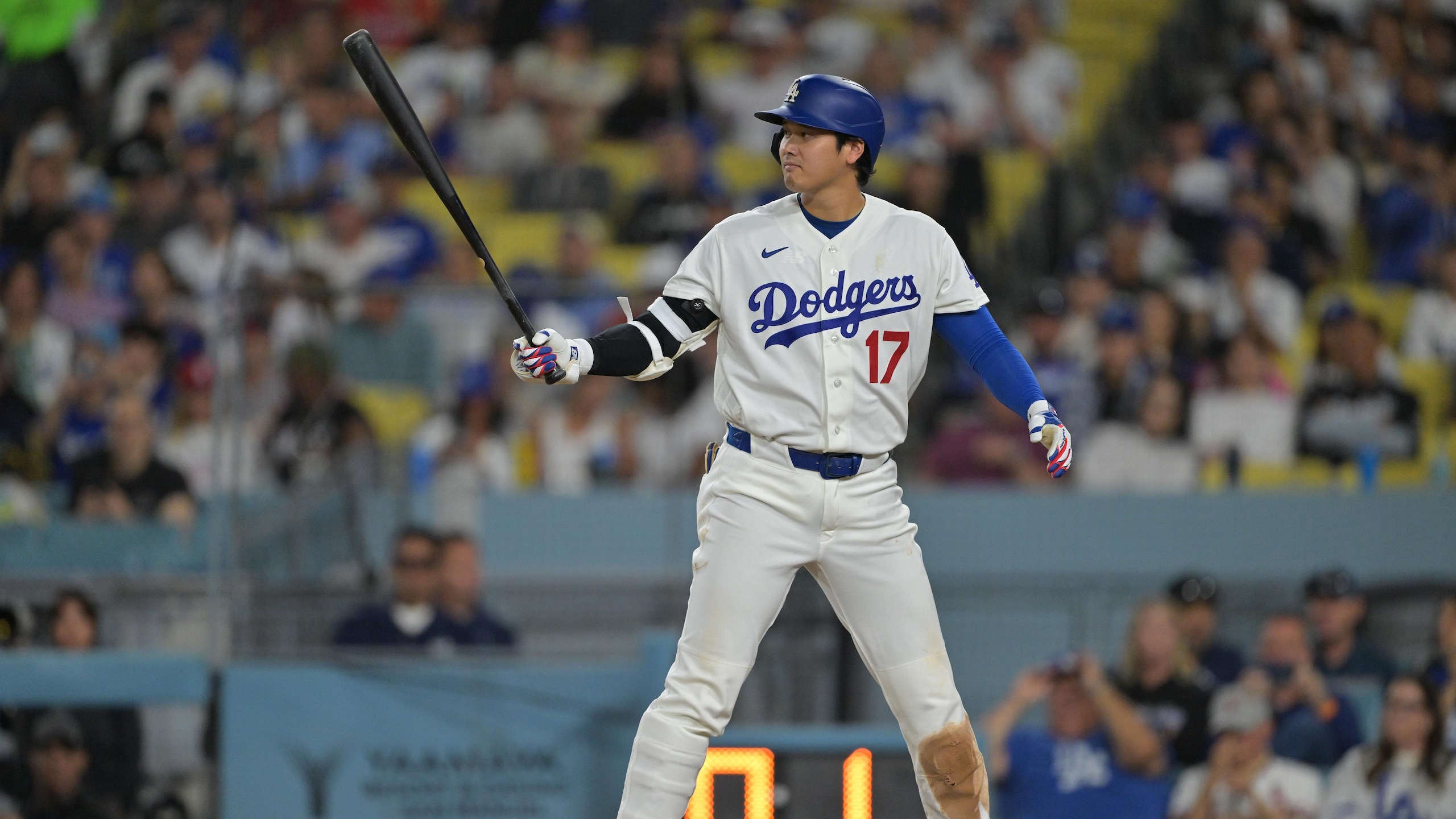
Sell High: Felix Hernandez, SP, Seattle Mariners
4 of 6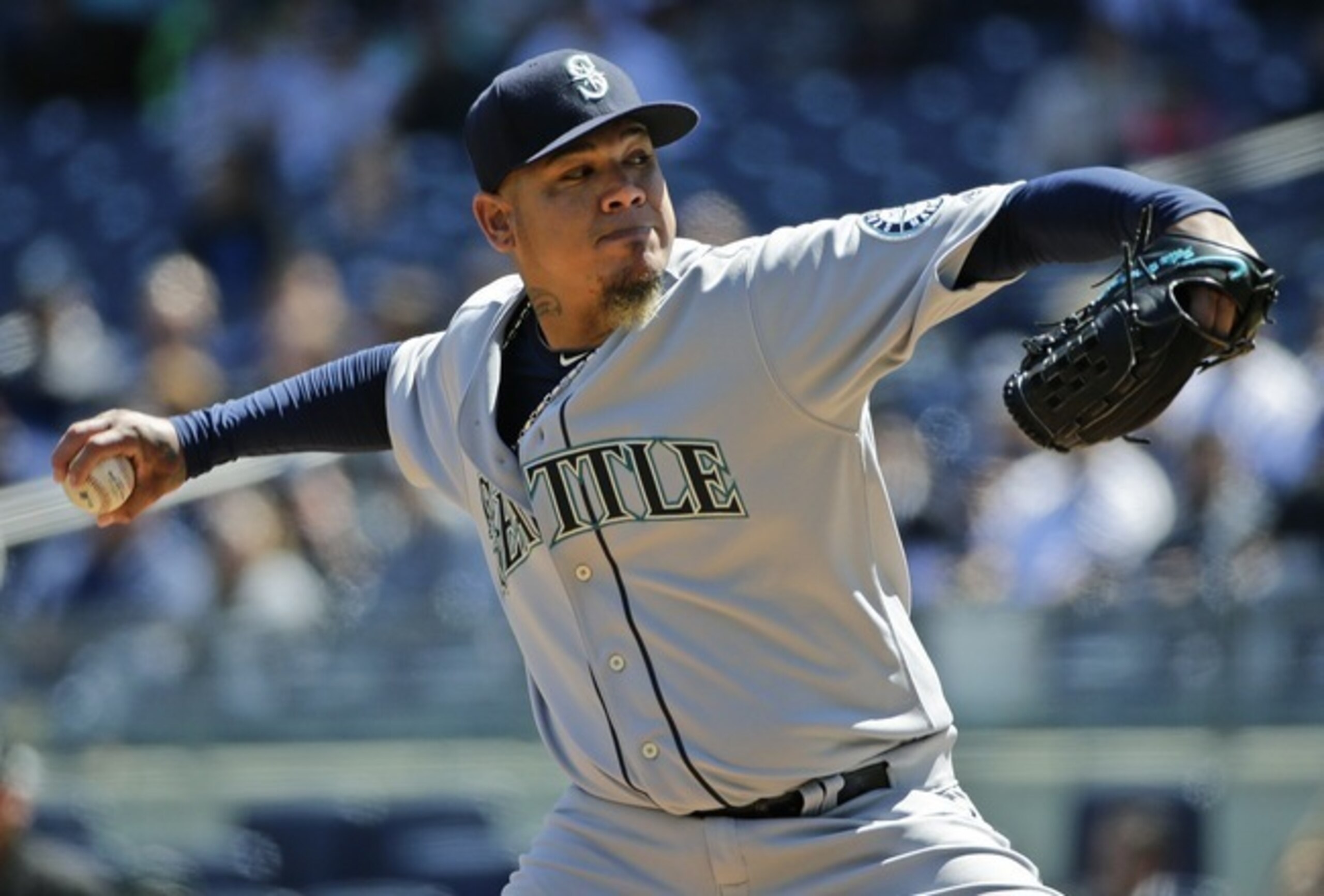
At first glance, Felix Hernandez has quelled any concerns over last season's second-half swoon. In his first three starts, Seattle's ace has survived Globe Life Park in Arlington and Yankee Stadium to post a 1.00 ERA and 20 strikeouts in 18 innings.
King Felix, who recently turned 30, has also induced a 64.3 ground-ball percentage, which is a sterling mark indicating tons of weak contact for his infielders to convert into outs. Stop there, and he appears poised to reclaim a spot in the pantheon of fantasy hurlers.
Here's where the trouble begins. His velocity is trending downward on every pitch, including a fastball down from 91.8 to 89.5 mph. While he's still spawning whiffs, he's also struggling to locate the strike zone.
Hernandez has already issued 13 walks and thrown strikes on just 58.7 percent of his offerings. After gifting the New York Yankees six free passes on Saturday, the six-time All-Star acknowledged his control issues to the Seattle Times' Ryan Divish.
“You aren’t going to believe me, but in the bullpen I was painting—every pitch,” Hernandez said. “When I got into the game, it wasn’t there. There was a lot of movement on the ball. The ball was going everywhere. It was mechanics. I was behind the ball a little bit. I was all over the place.”
Among active and employed pitchers, only CC Sabathia, Bartolo Colon and John Lackey have amassed more career innings pitched than Hernandez's 2,280.1. Three starts isn't enough to fear the end, but he showed signs of decay by registering a 4.48 ERA and .785 opposing OPS after 2015's All-Star break.
See if his strong surface numbers cover the stench of his command issues enough to package him as a top-15 starter.
Buy Low: Corey Kluber, SP, Cleveland Indians
5 of 6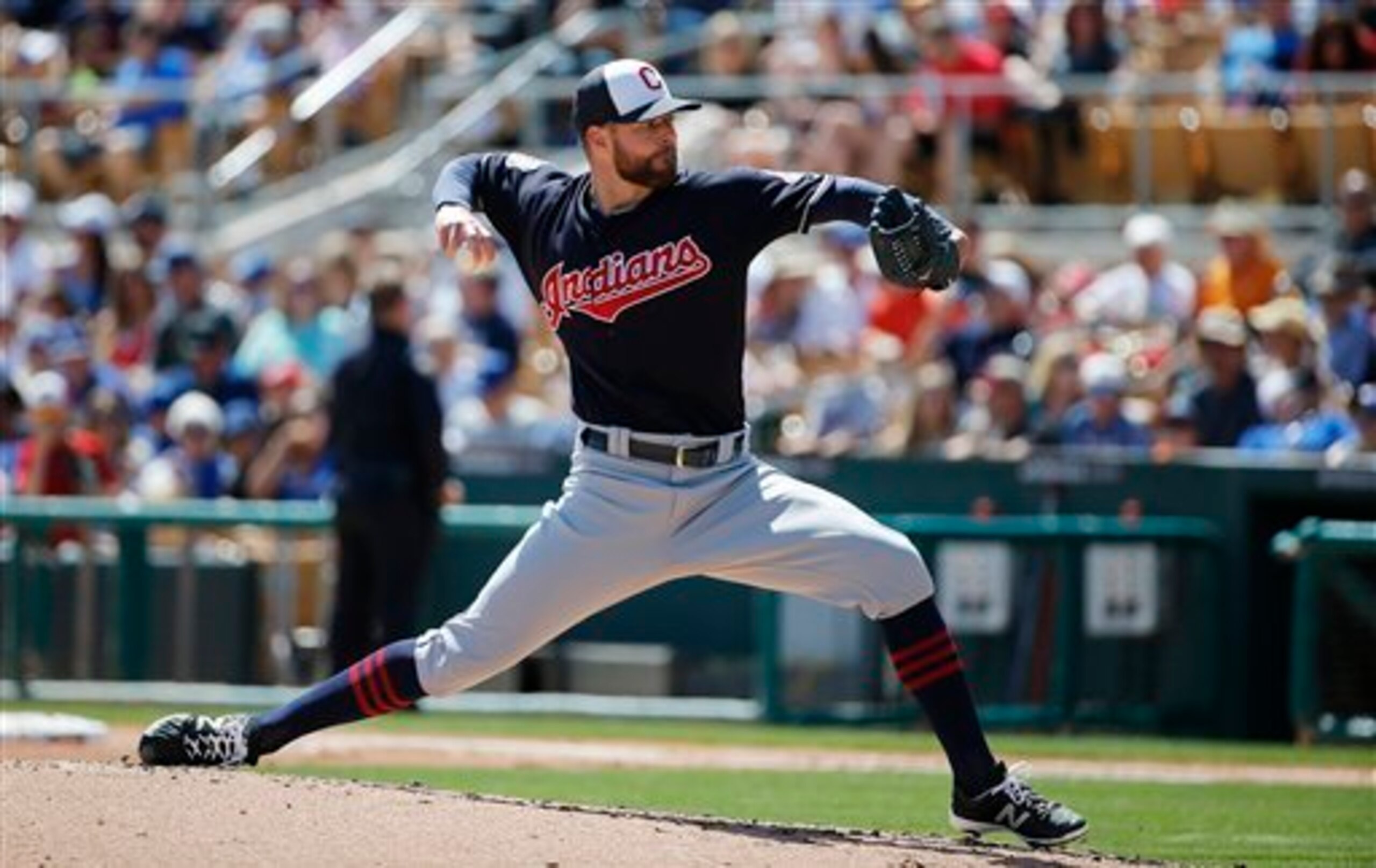
The Cleveland Indians have strung together three runs during Corey Kluber's three starts, but the ace has earned his 0-3 record by allowing 22 hits and 13 runs in 19 innings.
He surrendered six runs to the New York Mets on Sunday, but only half were truly on him. Discrediting those who espouse the importance of getting sunshine, center fielder Rajai Davis lost two fly balls in the sky, causing the second inning to unravel.
Take away those three runs, and his 6.16 ERA drops to 4.74. Every mistake is magnified in April—especially when it involves a premier player hand-picked by most drafters as his or her No. 1 starting pitcher.
Kluber allowed six runs in three separate starts last year, but he still finished with a 3.49 ERA and 1.05 WHIP. He also accumulated 245 strikeouts, and the 30-year-old righty has fanned a batter per inning this April.
He's not entirely in the clear, as a velocity dip poses concerns of him becoming more hittable and vulnerable to more blowup outings. Don't expect him to match 2014's 2.44 ERA, and the velocity is enough of a red flag to balk at acquiring him at retail value.
Given Kluber's bloated ERA and eye-sore record, the hope is his owner is even more concerned and willing to sell the Cleveland ace for three quarters on the dollar. If he's available at a discount, gamble on the velocity returning and his teammates purchasing better sunglasses.
Sell High: Kenta Maeda, SP, Los Angeles Dodgers
6 of 6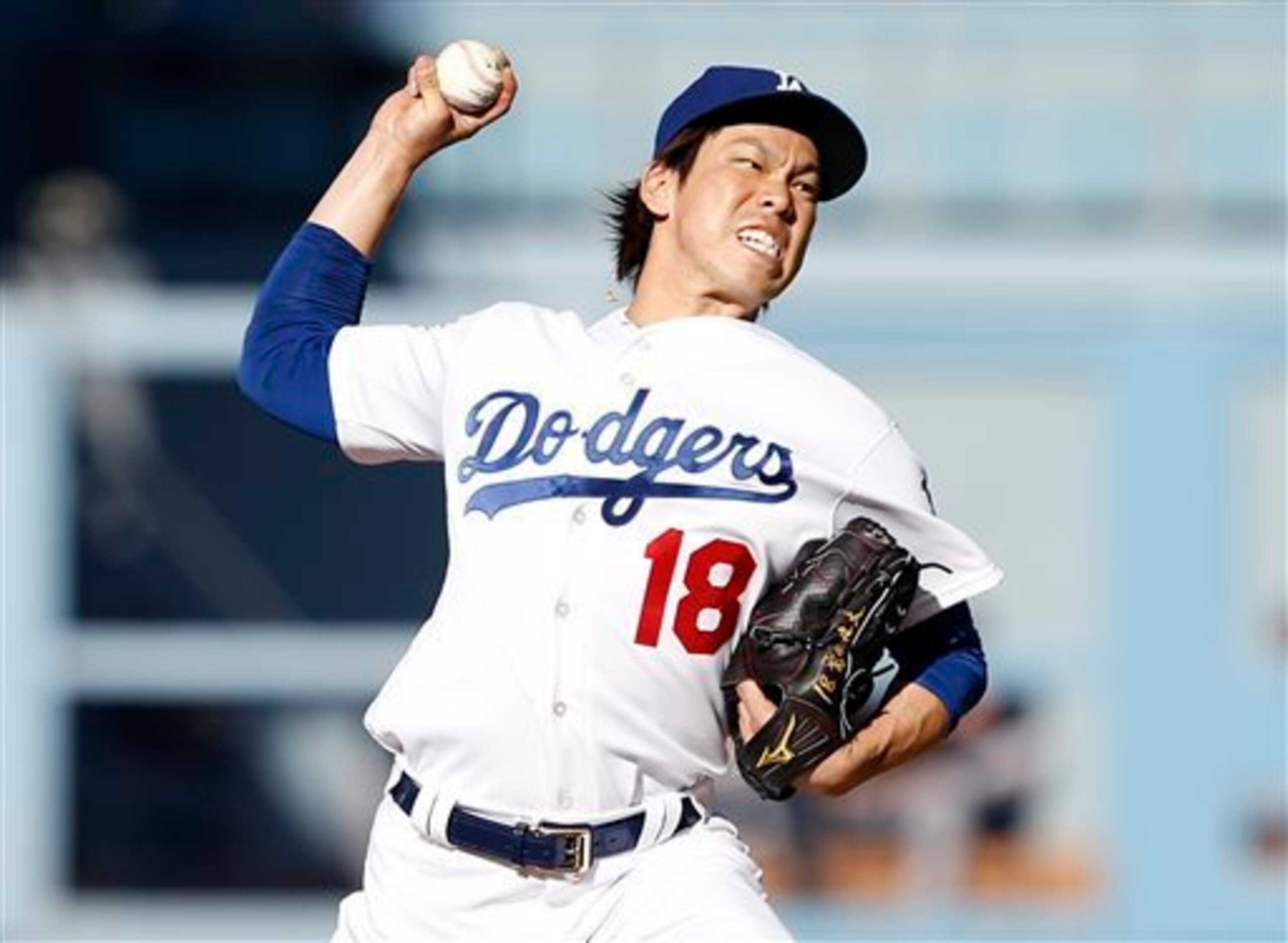
Let's be clear: Kenta Maeda's start is not entirely a fluke. The Japanese newcomer looks poised to outperform his draft position and comfortably finish as a top-50 starter.
His 0.47 ERA, however, will oversell the 28-year-old's upside. Without any previous numbers in larger sample sizes, giddy managers will have a tougher time keeping their excitement in check. A Cy Young campaign seems unlikely, but there's also no past precedent to effectively shut down such buzz.
Obviously no human being is going to yield fewer than a run every nine innings. Maeda has left all 17 runners on base, only succumbing a solo homer to Joe Panik on Sunday night. That will change.
Hitters will adjust to the unfamiliar foe, who relies on location and deception of his four pitches with average velocity. A limited strikeout ceiling also caps him as a serviceable No. 3 fantasy starter in standard mixed leagues.
It's possible a leaguemate will overact and expect a Cy Young Award push. ESPN.com's Mark Simon noted some similarities in style between Maeda and Los Angeles Dodgers predecessor Zack Greinke.
"Maeda has kept nearly 75 percent of his pitches on the outer half of the plate or off the outside corner," Simon wrote. "That’s the highest such rate by any starting pitcher this season and a near match for Greinke’s rate last season, which was second among ERA-title qualifiers."
With this in mind, it's important not to deal him just because he's a sell-high prototype on paper. If someone views him as a top-20 option, make the move. Don't deal him for the sake of doing something, as he could offer a low-three ERA and strong WHIP with a solid strikeout total.
Note: All advanced stats courtesy of FanGraphs unless otherwise noted.





.jpg?w=2560 "CP3 RIPS Clippers")