
MLB Players in Danger of Having Their Superstar Statuses Revoked in 2016
Sooner or later, the lights go out on every MLB superstar.
At the height of a player’s peak, fans can’t picture him ever falling from the throne. Yet the likes of Joe Mauer, Josh Hamilton, Tim Lincecum and CC Sabathia offer cruel reminders that the unforgiving Father Time transforms All-Stars into overpaid veterans who are trying to contribute however slightly.
MLB is enjoying an insurgence of young superstars who hopefully won’t go anywhere anytime soon. Mike Trout, Bryce Harper, Carlos Correa, Manny Machado, Kris Bryant, Noah Syndergaard and Jose Fernandez will still all have difficulty renting a car. The game is in good hands, but there’s a finite amount of real estate at the top.
These All-Star veterans are not about to wither away into useless or even below-average players. Yet there’s enough writing on the wall to envision their fall from elite to adept. Don’t pen their farewells just yet, but keep an eye on these guys showing signs of deterioration.
Carlos Gomez, OF, Houston Astros
1 of 6
Some skeptics might question if Carlos Gomez ever warranted a superstar label outside of fantasy leagues. His blend of power and speed has delighted rotisserie investors, but his .259/.313/.417 career line doesn't exactly beckon Cooperstown.
For two years, however, he was more than an aggressive speedster. A credible MVP candidate in 2013, his 7.4 WAR ranked No. 5 among all position players. Combine that year and the next, and the center fielder hit .284/.347/.491 with MLB's fourth-highest WAR (13.1) behind Mike Trout, Andrew McCutchen and Josh Donaldson.
Last year, he reverted to pre-breakout form, batting .255/.314/.409 with a dozen homers in 115 games. Before the Houston Astros acquired him from the Milwaukee Brewers, his physical sent the New York Mets running.
Perhaps Houston should have followed suit.
Since the trade, Gomez is posting a ghastly .272 on-base percentage. He has magnified his swing-first approach during the early stages of 2016, amassing 11 strikeouts and one walk in 39 plate appearances. Even fantasy owners are disappointed as well; he has yet to go long or swipe a bag.
Along with spending time on the disabled list due to a hamstring injury, he also dealt with a mild intercostal strain with the Astros. This is a 30-year-old who swings out of his helmet and kicks outfield walls, and the aging curve is often unkind to full-throttle speedsters with lacking plate discipline.
He needs to turn the corner soon to avoid 2013 and 2014 becoming the outliers instead of the norm.
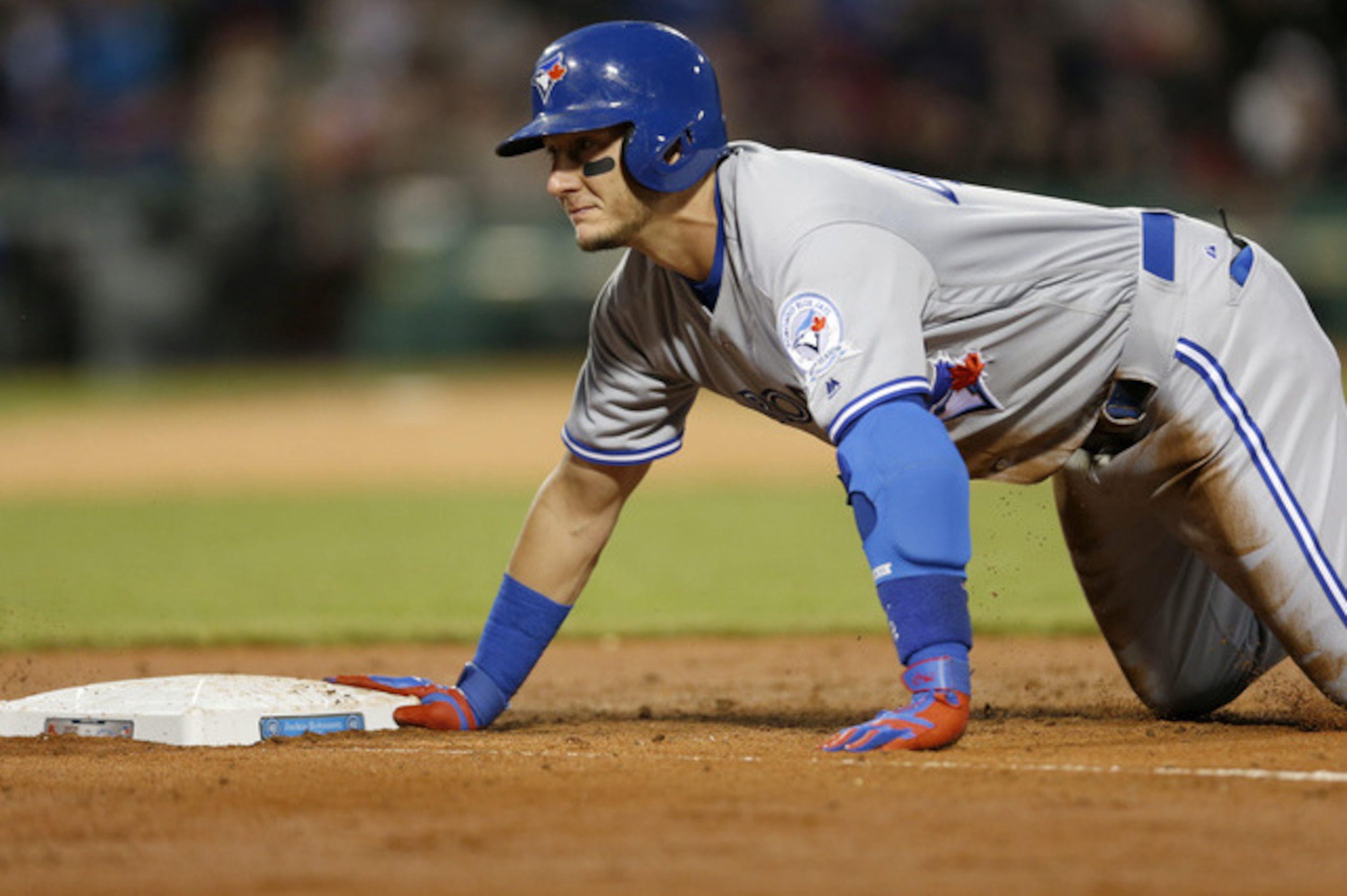
Troy Tulowitzki, SS, Toronto Blue Jays
2 of 6
If Troy Tulowitzki stays healthy, he'll hit. Or so the line has always gone. MVP production too often interrupted by injuries defined the shortstop's career with the Colorado Rockies.
Suddenly, the productive part is no longer guaranteed. Marred in an early slumber, the 31-year-old has accumulated five hits and 13 strikeouts through 11 games. Since joining the Toronto Blue Jays late last July, he's hitting .219/.303/.363 with seven homers.
The knee-jerk reaction is to blame his separation from Coors Field. While Denver's high altitude certainly inflated his numbers, he still notched a .356 weighted on-base average (wOBA) on the road from 2007 to 2014. Only Hanley Ramirez fared better among shortstops with at least 1,000 plate appearances.
Regardless of the venue, Tulowitzki has stood tall as an elite shortstop. Moving to the Rogers Centre, another hitter-friendly locale, can't take all the blame for his struggles.
The veteran showed some alarming signs at the plate last year, posting his worst contact percentage (79.2) and swinging-strike percentage (9.4) since a 25-game 2006. He has exacerbated those woes during a small April sample size, making contact on 72.7 percent of swings and whiffing at an 11.3 percent clip.
“If you look at our strikeout numbers as a team, they’re a little high. Myself included," Tulowitzki told Sportsnet's Arden Zwelling. "And, yeah, we’d like to cut down on those. But you just keep on grinding. It’s a long season.”
A position long lacking in talent suddenly has a deep crop of young stars poised to push Tulowitzki down the food chain. If he can't fix his swing—assuming he also honors the "if healthy" part of the equation—the veteran will fall further below the burgeoning batch of young phenoms.
Johnny Cueto, SP, San Francisco Giants
3 of 6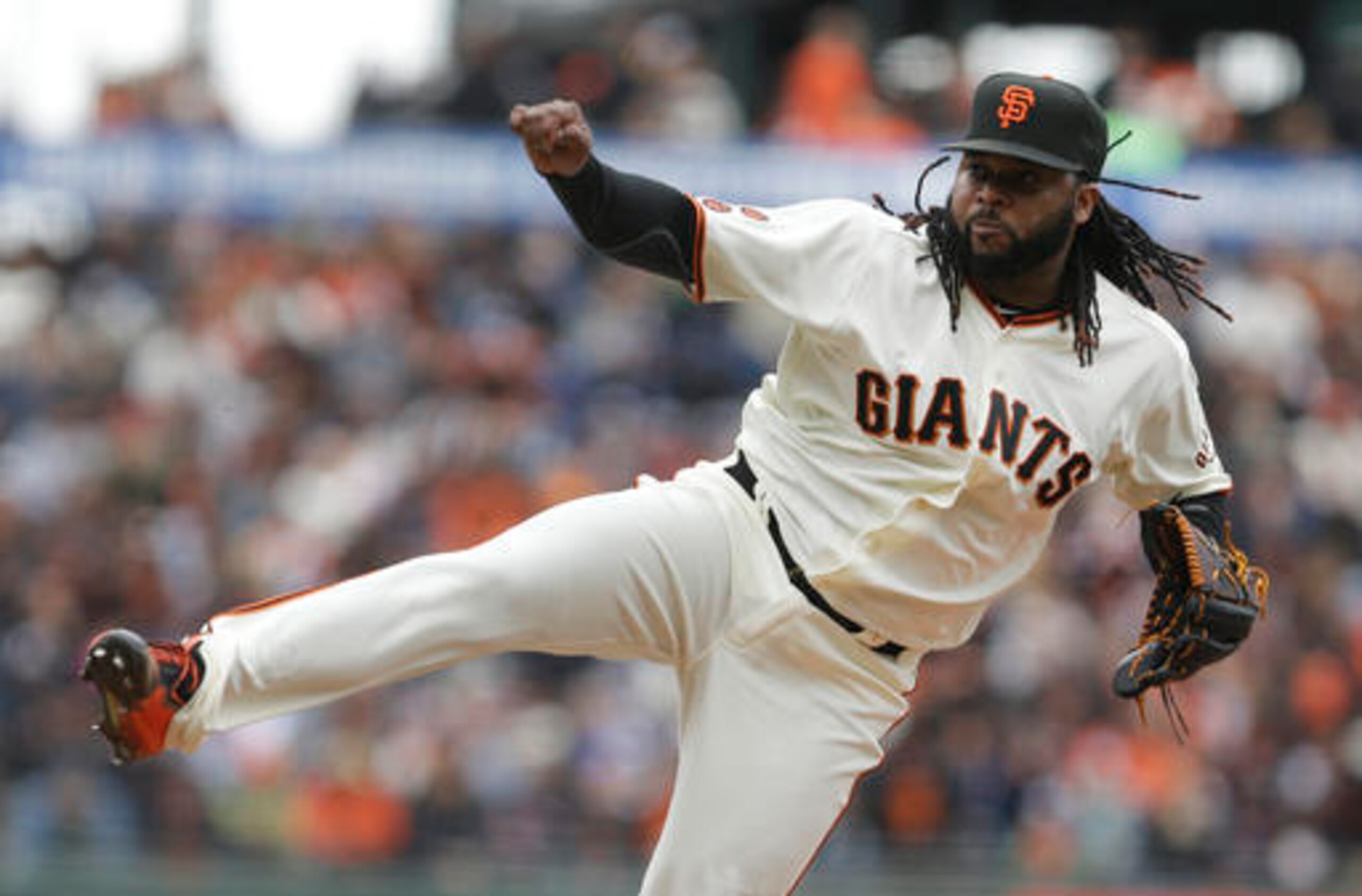
From 2011 to 2015, Johnny Cueto netted a 2.71 ERA despite his less than favorable peripherals. Among starting pitchers who threw at least 450 innings, only Clayton Kershaw issued a lower ERA during those five seasons.
Even after surrendering 10 hits and six runs to the Los Angeles Dodgers last weekend, the new San Francisco Giants hurler has submitted 12 strikeouts and two walks in 14 innings. The panic meter shouldn't emit too much noise yet.
His contrasting two starts, however, have personified his late 2015 struggles. After allowing five runs combined through six starts, he then permitted 28 earned runs in the next five. Before silencing the New York Mets with a complete-game gem in the World Series, he nearly cost the Kansas City Royals the American League by coughing up eight runs to the Toronto Blue Jays.
Such polarizing inconsistency is concerning for a 30-year-old ace who is now paid like one. Per Cot's Baseball Contracts, 12 pitchers have a higher average annual salary than Cueto ($21.67 million), who would probably reside in the top 10 with a steadier 2015 summer and fall.
He hasn't routinely garnered elite strikeout numbers, only once exceeding 200 punchouts in a single season. While he could fend off a further dip by moving back to the National League, Brooks Baseball has documented an early velocity dip, which is not ideal after he struck out just 6.08 batters per nine innings following last year's All-Star break.
Playing in a pitcher's park will cover some blemishes, but Cueto won't return to a sub-3.00 ERA if he keeps getting shelled on occasion.

Adam Jones, OF, Baltimore Orioles
4 of 6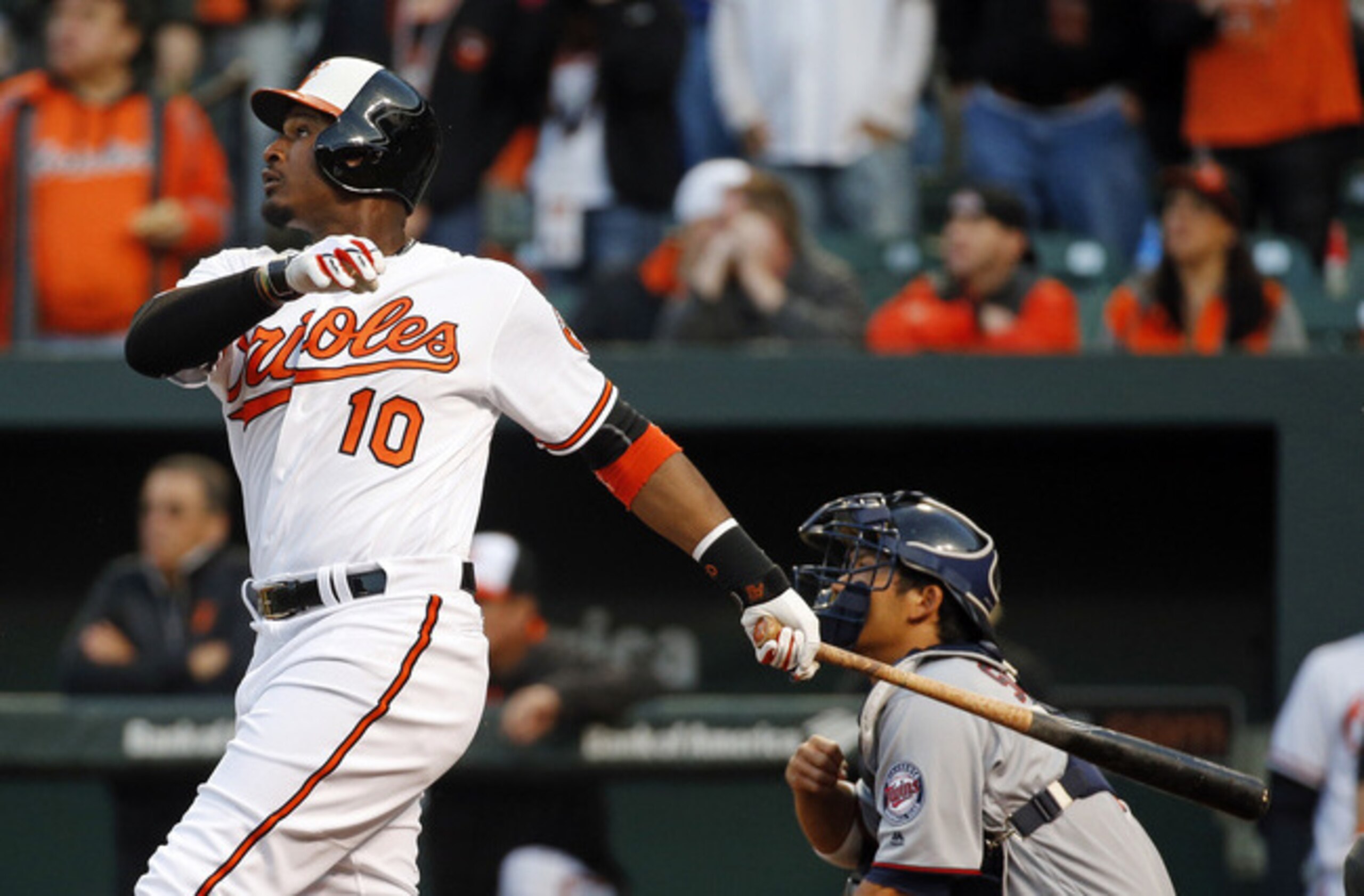
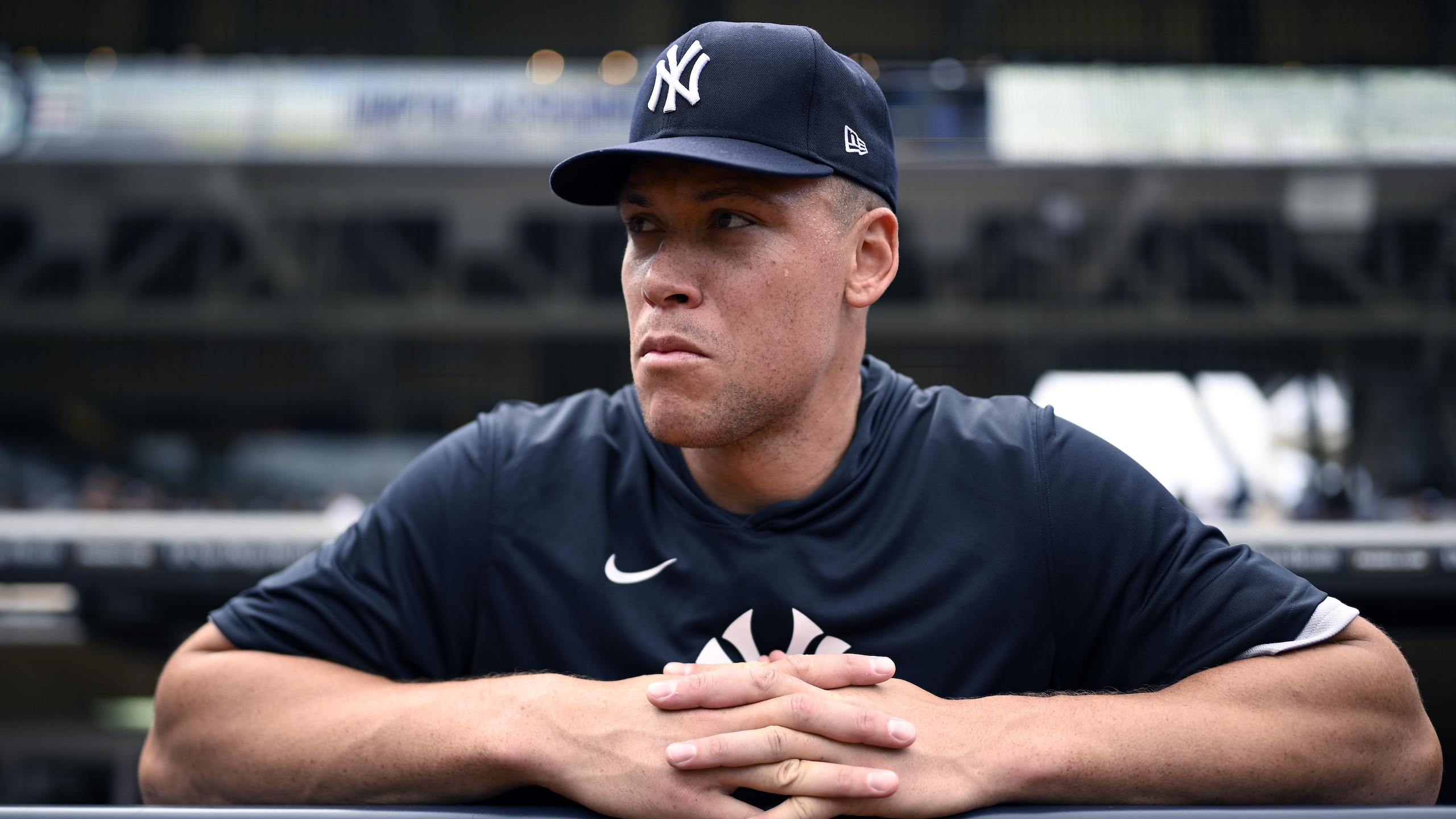
For what Adam Jones lacks in plate discipline, he makes up for with consistency. From 2011 to 2014, the Baltimore Orioles outfielder hit at least .280 with 25 or home runs each season, topping 600 plate appearances each time.
Father Time, however, gives no free passes. In 137 games last year, his lowest tally since 2009, the 30-year-old hit .269. While the power stayed (27 home runs, .474 slugging percentage), his average contact paired with a 4.1 walk percentage led to a pedestrian .308 on-base percentage. He was still a highly productive player but not quite a superstar.
Jones also missed four starts due to a rib cage strain and was twice utilized as a defensive replacement before returning Thursday. When on the field, he's 4-for-19 with no walks and six strikeouts. Not an ideal start for one of the game's most dependable players.
Don't sound the panic bells just yet. A few games isn't enough to form any conclusions, and the defensive metrics have warmed to his glove work over the past two years. Now, it's a matter of maintaining his power, contact and improved defense into his 30s as his speed and batting eye sag.
He's far from finished, but an injury setback or prolonged slump would force Orioles fans to worry about the organization's steady rock.
Adam Wainwright, SP, St. Louis Cardinals
5 of 6
Expected to miss all of 2015 with a torn Achilles tendon, Adam Wainwright defied the odds and returned in time for the St. Louis Cardinals' playoff push. Not only did he beat the timetable, but he limited the opposition to two runs during 8.1 innings of relief work.
His return to the starting rotation has not gone as smoothly. Through two shaky starts, the 34-year-old has allowed eight runs in 11 innings. More alarmingly, he has issued eight walks while collecting five strikeouts.
The Pittsburgh Pirates and Atlanta Braves took turns annihilating his sinker. According to Brooks Baseball, opponents have notched a 1.077 slugging percentage off the pitch, which hasn't generated a single whiff in 54 tries.
It therefore shouldn't come as a surprise to see him throwing the pitch at a career-worst average velocity of 89.8 mph. His curveball remains a potent weapon, but the veteran has seemingly entered the stage of his career where he must outsmart batters as a savvy finesse hurler.
Luckily for his staying power, he was never a power pitcher. There's a big difference, however, between throwing 91 and 89 mph, especially when the typically sharp righty struggles to command the strike zone.
He has a way to go before approaching Jered Weaver territory, but don't be surprised if Wainwright takes a backseat to Michael Wacha and Carlos Martinez.
Albert Pujols, 1B, Los Angeles Angels
6 of 6
Those who have paid close attention to the grand picture will say Albert Pujols lost his superstar status years ago. From 2013 to 2015, the future first-ballot Hall of Famer hit an underwhelming .258/.319/.464. That's not bad, unless it's from a veteran first baseman who received $63 million over those three seasons, per Cot's Baseball Contracts.
The astute observer noted Pujols' career-low .307 on-base percentage last season, but the casual fan likely reveled over his return to glory after blasting 40 dingers. Entering 2016, the 36-year-old needed another 40 to reach 600 career homers.
He's stayed stuck at 560 before ending the drought Friday night, but he's still hitting .216/.293/.324. Sure, he exited last April hitting .208 before smashing 21 deep balls in May and June. It may just be 10 bad days rather than the end of days.
Yet an uneasy worry has existed in the pit of fans' stomachs for years. As walks decay into strikeouts and an annual batting-title candidate morphs into a dead-pull hitter, one of this generation's premier legends keeps playing with fire.
One of these days, he's going to bottom out. And it's going to happen well before his Los Angeles Angels contract expires in five years.
Behind his deep funk lurks a 29.0 soft-hit percentage, causing reasonable doubt of him rushing back from offseason foot surgery. Pujols will pick things up enough to make the Angels slightly less miserable over paying him so much, but he'll never hit 40 homers or sniff an MVP ballot again.
Note: All advanced stats courtesy of FanGraphs unless otherwise noted.


.jpg?w=2560 "Report: Pats' Gonzalez to Be Highest-Paid CB")



-(1).jpg?w=2560 "Grading WWE Raw 🔠")