NFL Draft 400: Ranking the Top Tackles for 2016
The 2016 NFL draft class doesn't feature two Heisman Trophy-winning quarterbacks at the top like last season's did with Jameis Winston and Marcus Mariota, but that doesn't mean you shouldn't be excited about this year's class. With this draft set to be dominated by defensive linemen and small-school studs, not many people know as many names as they did last offseason.
The goal of the NFL Draft 400 series is to change that.
The top 400 players were tracked, scouted, graded and ranked by me and my scouting assistants, Marshal Miller and Dan Bazal, along with intern Jerod Brown. Together, we viewed tape of a minimum of three games per player (the same standard NFL teams use). Often, we saw every play by a prospect over the last two years. That led to the tackle grades, rankings and scouting reports you see here.
Players were graded on positives and negatives, with a pro-player comparison added to match the player's style or fit in the pros. The top 400 players will be broken down position by position for easy viewing before the release of a top-400 big board prior to the draft.
In the case of a tie, players were ranked based on their overall grade in our top 400.
Matt Miller NFL Draft Grading Scale
1 of 26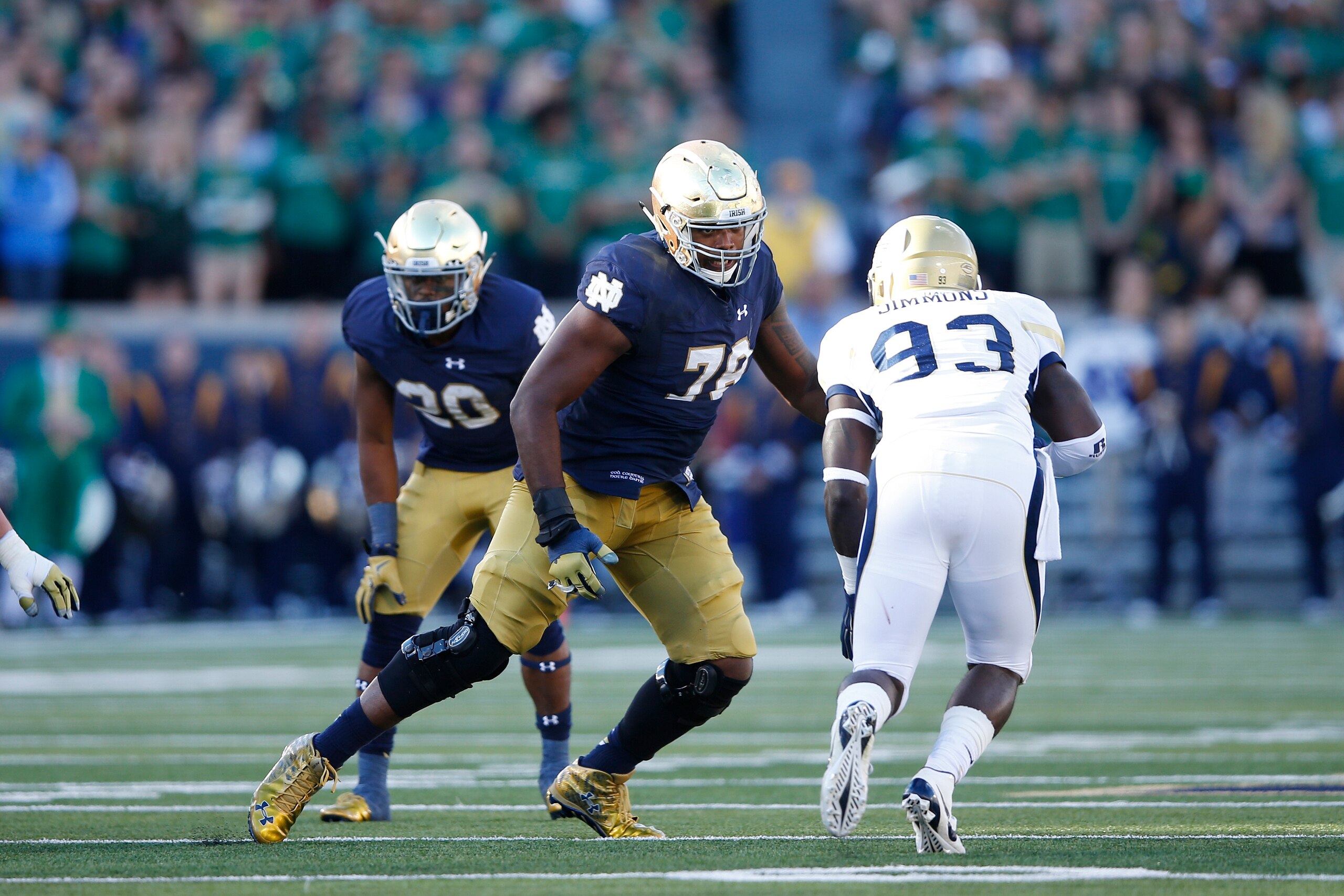
At the end of each scouting report, you'll see a final grade that falls somewhere between 4.00 and 9.00. This scale comes from the teaching I received from Charley Casserly, Michael Lombardi and other former and current front-office personnel in the NFL. I tweaked it this year to be more transparent. As a result, each player received a number grade as well as a ranking.
This applies to all positions across the board.
| Grade | Label |
| 9.00 | Elite—No. 1 pick |
| 8.00-8.99 | All-Pro—Rare Talent |
| 7.50-7.99 | Round 1—Pro Bowl Potential |
| 7.00-7.49 | Round 1—Top-15 Player Potential |
| 6.50-6.99 | Round 2—Rookie Impact/Future Starter |
| 6.00-6.49 | Round 3—Rookie Impact/Future Starter |
| 5.80-5.99 | Round 3-4—Future Starter |
| 5.70-5.79 | Round 4—Backup Caliber |
| 5.60-5.69 | Round 5—Backup Caliber |
| 5.50-5.59 | Round 6—Backup Caliber |
| 5.40-5.49 | Round 7—Backup Caliber |
| 5.00-5.39 | Priority Free Agent |
| 4.50-4.99 | Camp Player |
25. Tyler Johnstone, Oregon
2 of 26
| Height | Weight | 40 Time | Arm Length | 3-Cone | Short Shuttle |
| 6'5" | 301 lbs | 5.21s | 34" | 7.31s | 4.60s |
POSITIVES
A high-ranking player entering his senior season, Tyler Johnstone battled injuries and a struggling offensive system in his final year.
Johnstone was a complete player at left or right tackle in the Oregon scheme. With 34-inch arms, he has the range to protect the outside edge and moves his feet well enough to shuffle and slide off the corner. He also added bulk and lower-body strength, which allows him to better anchor against strong pass-rushers. Johnstone could benefit from adding another 10-15 pounds to his frame.
A versatile player on the line, Johnstone can help at either tackle spot and has the athleticism to play guard. If he gets back his explosion and flexibility after more time is removed from his 2014 ACL injury, Johnstone could be a steal in this draft. He’s an ideal candidate as a swing tackle and future starter if that ability comes back 100 percent.
NEGATIVES
An ACL injury suffered in the 2013 Alamo Bowl caused Johnstone to miss the entire offseason, and upon returning to the field, he tore the ACL again in August 2014. He didn’t show the same snap and explosion moving off the ball once back on the field.
Johnstone was responsible for hurries and pressures coming off the left side of the line too often in 2015. Sack and hurry numbers can be inflated by poor quarterback awareness or a lack of help from a guard, but Johnstone has to better sustain his blocks. His initial contact was fine, but his resets and quickness to redirect were below average.
Johnstone still plays like he’s light in his lower body when encountering a true bull rush, and that has to be addressed no matter where he lines up in the pros.
If Johnstone passes the medical exam for teams, they’ll be excited about his versatility and potential. But if he’s not going to progress further after the two ACL injuries, the player who is left is below the line for NFL talent.
PRO COMPARISON: Sean Hickey, New York Jets
FINAL GRADE: 5.00/9.00 (Priority Free Agent)
24. Jordan Swindle, Kentucky
3 of 26
| Height | Weight | 40 Time | Arm Length | 3-Cone | Short Shuttle |
| 6'7" | 313 lbs | 5.4s | N/A | 8.29 | 4.97 |
POSITIVES
A left tackle at Kentucky, Jordan Swindle has ideal size and length to make an NFL roster. He needs work, but late in the draft a team could take a chance on him because he has pro-caliber tools.
Swindle can run out defensive ends and outside linebackers when they crash the edge. He’s at his best when he can latch on and take a pass-rusher for a ride. With quick feet while moving laterally, Swindle can match a defender’s feet and mirror them in pass protection.
Playing in a two-point stance at Kentucky, Swindle is comfortable in space and will get down the line with enough quickness to help spring inside runs and backside cuts. He shows good awareness and play speed on the move.
NEGATIVES
Swindle’s greatest flaw is that he too often looks like a finesse player lined up in a power position. He doesn’t want to make contact and drive through blocks at the point of attack and would rather shuffle and slide to mirror a defender.
A lack of speed out of the snap holds Swindle back and accentuates his high pad height and lack of flexibility in his core and hips. Without power in his hands, his lack of leverage makes Swindle almost unusable in his current technique.
A project, Swindle has the raw goods to be molded into a player.
PRO COMPARISON: Ulrick John, Miami Dolphins
FINAL GRADE: 5.00/9.00 (Priority Free Agent)

.jpg?w=2560 "Cardinals Giants Football")
23. Halapoulivaati Vaitai, TCU
4 of 26
| Height | Weight | 40 Time | Arm Length | 3-Cone | Short Shuttle |
| 6'6" | 320 lbs | 5.26s | 34 ¼" | 8.26s | 5.0s |
POSITIVES
A versatile left or right tackle prospect from the uptempo TCU offense, Halapoulivaati Vaitai started his junior and senior seasons and is now ready to take on the NFL. That versatility will be a selling point when his name comes up in draft rooms.
A high-motor player with long arms and big hands, Vaitai is at his best kick-sliding off the snap and mirroring pass-rushers long enough for a quick pass to come out. He’s poised in conflict and will look for ways to beat his man without panicking or giving up too much ground. In a fast-paced, pass-heavy offense, we charted just one sack allowed from Vaitai in 2015.
On the hoof, Vaitai looks the part with the length and build you want in a tackle prospect.
NEGATIVES
Good luck getting Vaitai involved in the run game. At TCU, he was more spectator than blocker on first and second down. Because of the TCU offensive scheme and an overwhelming lack of agility, he’s not prepared for life at tackle in the NFL.
Even though he played some left tackle in college, Vaitai is not a left tackle prospect for the NFL. He lacks the flexibility, body control and overall athleticism to handle NFL rushers on the blindside. Without great power in his hands to kick-start the run game, he also doesn’t project well to the right side—especially now that teams are deploying athletes from both the left and right sides of the defense as pass-rushers.
Vaitai had a memorable college career, but a lack of athletic tools make his projection limited. Football IQ and work ethic unfortunately only go so far.
PRO COMPARISON: Cameron Fleming, New England Patriots
FINAL GRADE: 5.40/9.00 (Round 7—Backup Caliber)
22. Keith Lumpkin, Rutgers
5 of 26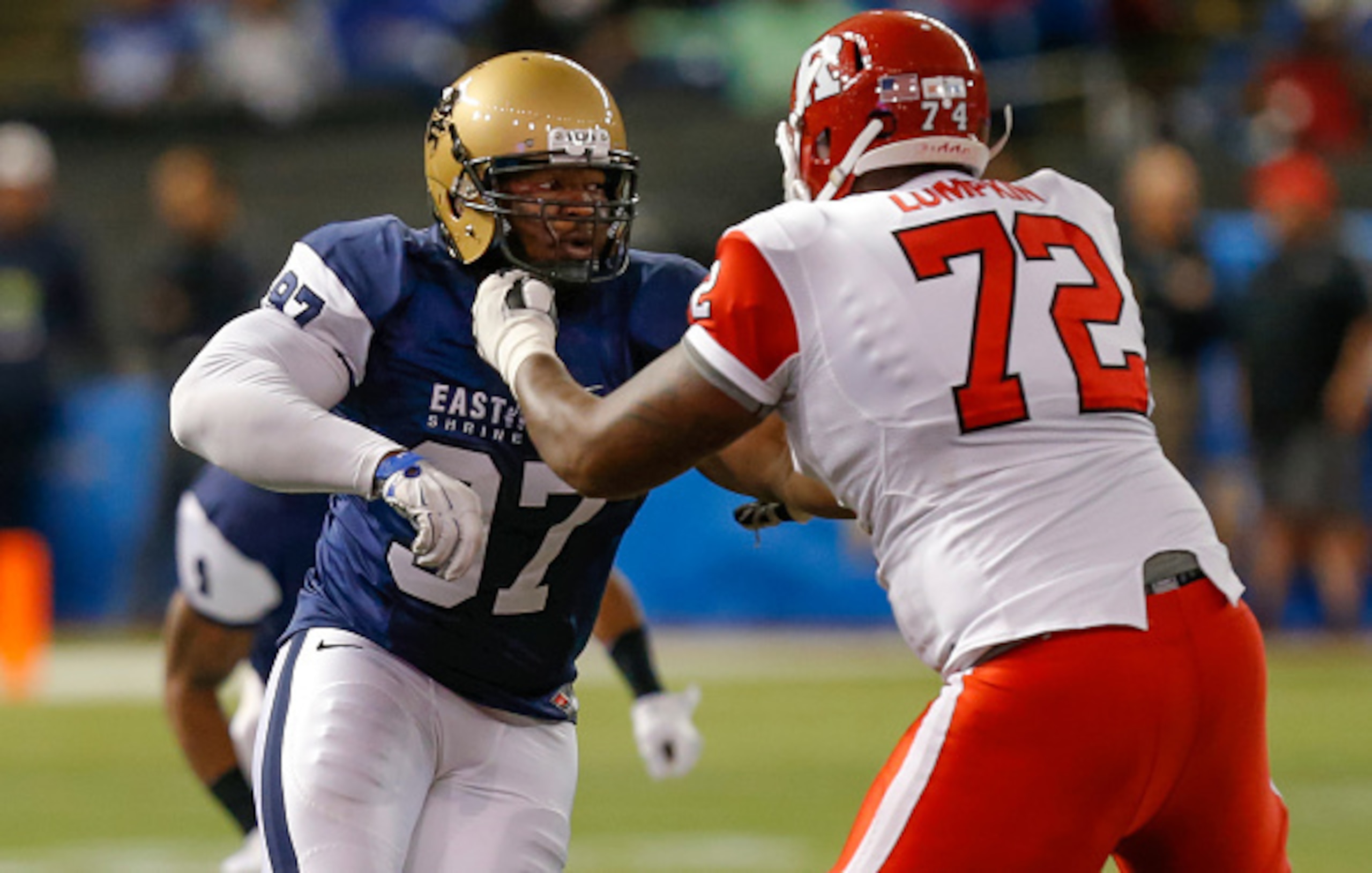
| Height | Weight | 40 Time | Arm Length | 3-Cone | Short Shuttle |
| 6'8" | 320 lbs | n/a | 34 ¾" | 7.74 | 4.76 |
POSITIVES
A three-year starter at left tackle for Rutgers, Keith Lumpkin has the raw tools, length and power to excite teams late in the draft.
Lumpkin is an intelligent player who knows how to use his strengths and a defender’s weaknesses to win the play. He’ll let a defender take himself out of the play by charging upfield or using his momentum to drive him out of harm’s way.
A patient pass protector, Lumpkin also has the size to dump defenders when he locks horns. His long arms are beneficial in the passing game because he can reach many pass-rushers without having to slide or reset his base. He’s aware and poised on his perch and won’t let stunts or twists throw him off his game.
An ideal fit at right tackle, Lumpkin has a lot of work to do before he's ready to see the field.
NEGATIVES
Lumpkin doesn’t dominate, despite having the size to do so. His play mentality doesn’t match his size, and smaller players outmaneuver him too easily. His preferred method of winning a block in the passing game is to put his body weight on the defender after getting him hooked, but that won't work against NFL rushers who can combine speed and power. A strong rip move will beat that every time.
In the pass game, his hands come out low and late. He’s more of a “catch-and-hold” blocker than an attacker or puncher. In the run game, he struggles to win with leverage and is slow-footed and lackadaisical in pursuing his target.
Lumpkin has the size and length, but his lack of balance and aggressiveness stand out as issues keeping him from being an NFL-ready prospect.
PRO COMPARISON: Reid Fragel, Kansas City Chiefs
FINAL GRADE: 5.50/9.00 (Round 6—Backup Caliber)
21. Stephane Nembot, Colorado
6 of 26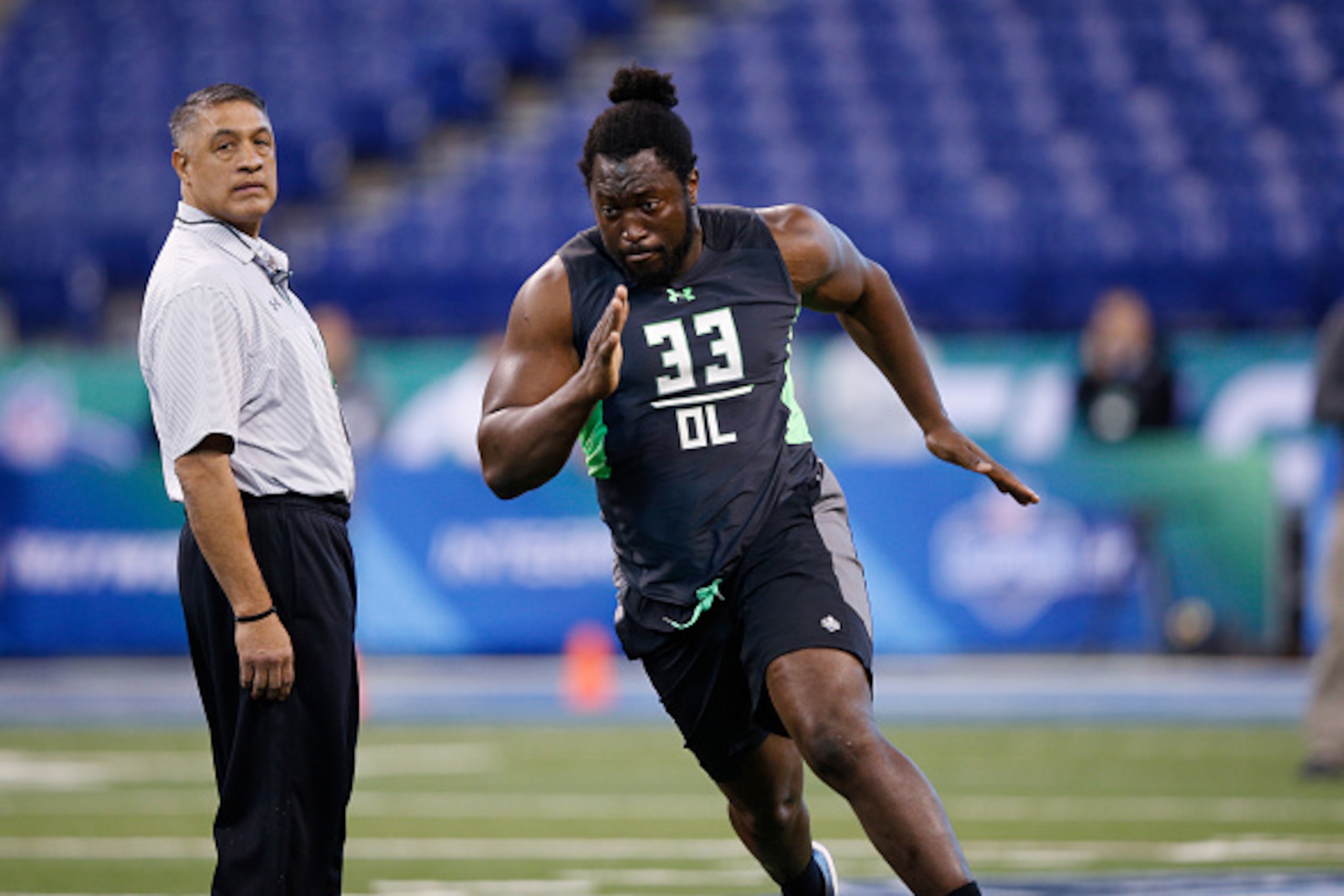
| Height | Weight | 40 Time | Arm Length | 3-Cone | Short Shuttle |
| 6'6" | 322 lbs | 5.39s | 34 ⅝" | 8.55s | 5.15s |
POSITIVES
A tall, long four-year starter at right tackle, Stephane Nembot has the bulk to hold up against power and speed rushers. A relative newcomer to football after moving to the U.S. from Cameroon, Nembot didn’t start playing football until his junior year of high school.
Length is not a problem for Nembot with his 34 ⅝” arms and 10 ¾” hands. He has the mits to lock up defenders both in the pass and run game and hold his leverage against rip and swim moves. Nembot's experience on the field over the last four seasons has prepared him for any and every move a defender can throw at him. He’s aware, and he uses his length well to combat counter measures used by rushers.
A former defensive end in his freshman season at CU, Nembot is still learning the position and filling out his frame. He has the right aggressiveness for the NFL and definitely has the physical tools to dominate in the run game, but he needs patience as he develops further.
NEGATIVES
Per the team at College Football Focus, Nembot allowed 23 hurries in 2015 and a total of 32 pressures—too many for a balanced offense like the one at Colorado. Continuing to add strength and spending time running rope ladders will be key for Nembot’s success.
As a pass-blocker, Nembot has to be stronger. Bull-rushers will have their way with him despite his length and size advantage. Learning to use his base and sinking his hips to generate an anchor will be enormous. Playing with a stiff back and straight legs doesn’t help his cause.
In the run game, his footwork can be all over the map. There isn’t proper alignment throughout his shoulders, hips and feet to drive defenders out of the hole. He’s at his best when the play lets him wall off a defender instead of asking him to dip and drive. Pad height is an issue for his 6’7” frame.
PRO COMPARISON: Erik Pears, San Francisco 49ers
FINAL GRADE: 5.50/9.00 (Round 6—Backup Caliber)
20. Tyler Marz, Wisconsin
7 of 26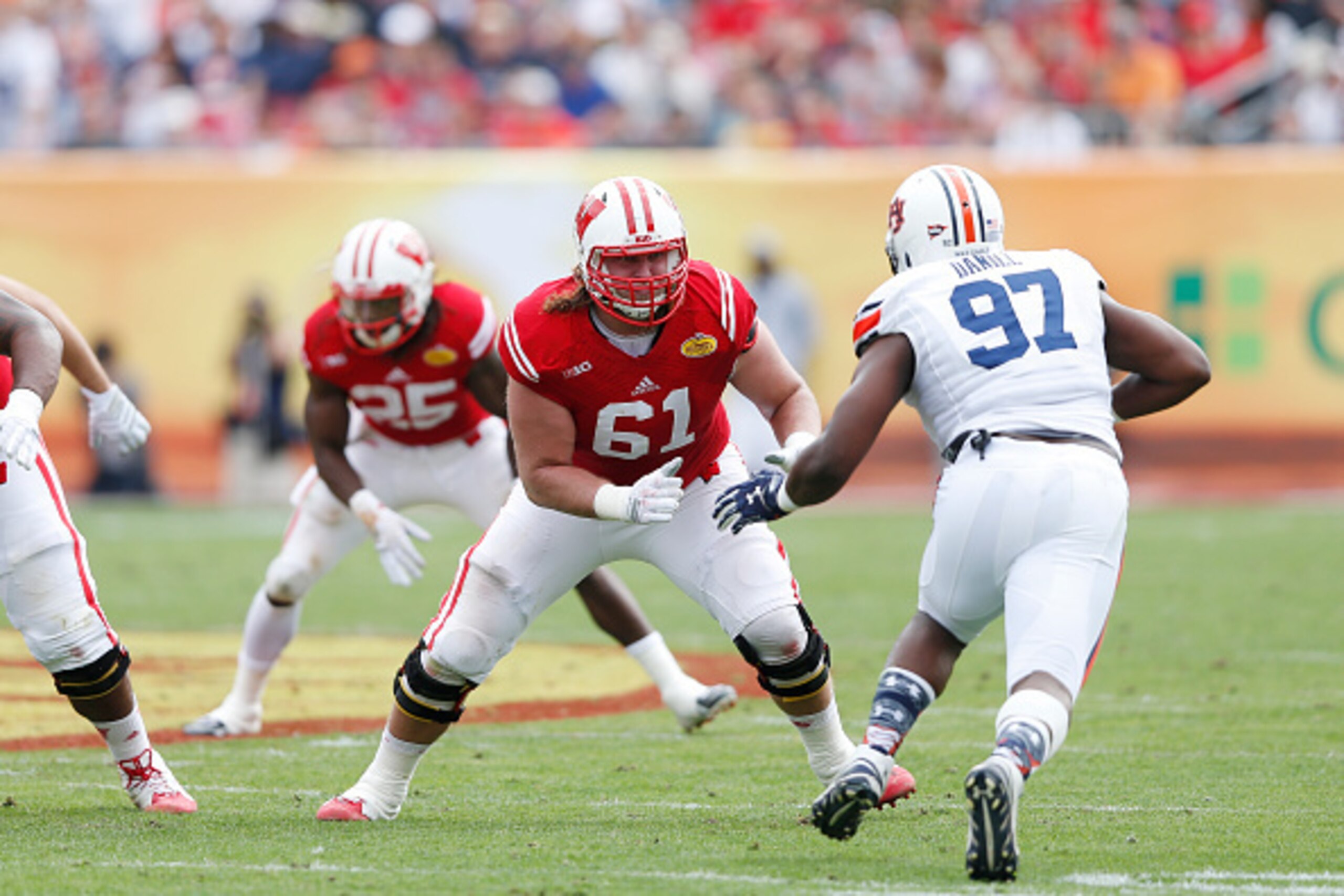
| Height | Weight | 40 Time | Arm Length | 3-Cone | Short Shuttle |
| 6'7" | 316 lbs | 5.54s | 33 ½" | 8.38s | 4.97s |
POSITIVES
A three-year starter at left tackle in a highly productive rushing offense, Tyler Marz has the height and length (33 ½” arms) teams want. But can he move well enough for the pros?
Marz’s experience is a huge boost to his draft stock. Manning the left side of the line for three seasons gives him knowledge and poise few tackle prospects can match. He’s urgent, active and can be aggressive in the run game. Marz looks for contact and won’t shy away from a hard-hitting or powerful defensive lineman when working in the run game.
As a pass protector, Marz has good contact off the snap and will engage pass-rushers first instead of waiting to catch or react to their first movement. He uses his hands well and will slide to mirror off the edge.
NEGATIVES
A lack of functional athleticism hinders Marz from being a higher-ranked prospect. He struggles to get out of the gate with fluid movements and is a question mark to get to the second level in the run game.
His 5.54 speed in the 40-yard dash may seem irrelevant, but when combined with poor numbers in the broad jump (99”), three-cone drill (8.38 seconds) and 20-yard shuttle (4.97 seconds), you get a picture of his lack of explosive ability.
Marz struggles to bring a plan to the run game. He makes that good initial pop but then struggles to follow it up with anything. His hip drive and footwork are often inconsistent, and he has poor pad height and leg bend.
Speeding up everything about his game is the only way Marz gets into a starting lineup, and even then, it would be at right tackle.
PRO COMPARISON: Austin Shepherd, Minnesota Vikings
FINAL GRADE: 5.50/9.00 (Round 5—Backup Caliber)
19. Fahn Cooper, Ole Miss
8 of 26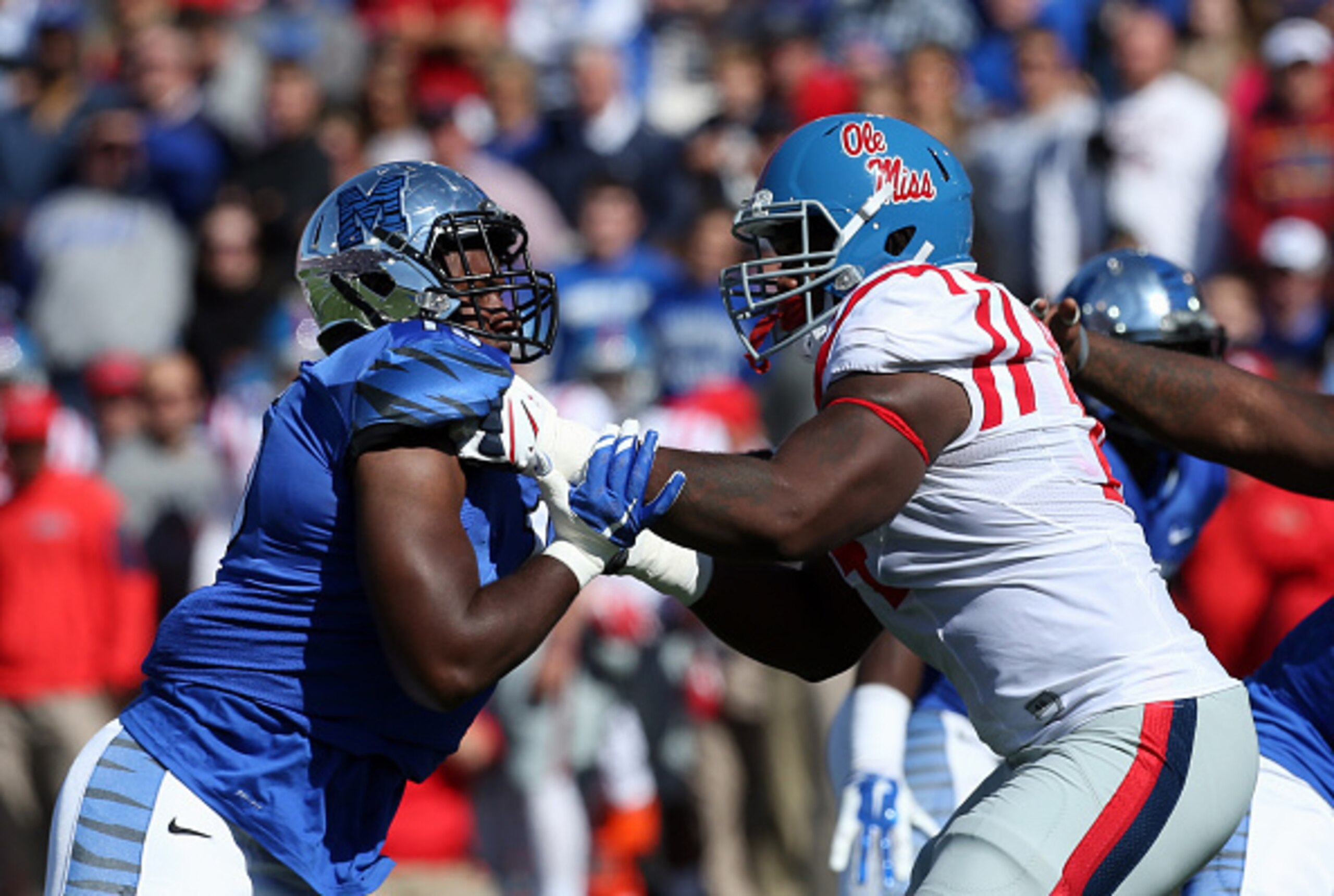
| Height | Weight | 40 Time | Arm Length | 3-Cone | Short Shuttle |
| 6'4" | 303 lbs | 5.17s | 34 ¾" | 7.85s | 4.89s |
POSITIVES
A starter at both left and right tackle in the Ole Miss offense, Fahn Cooper has to excel in the run game to stay on the field in a punishing Rebels offense. His length, size and on-the-line agility make him an intriguing mid-round prospect.
Ole Miss had a reputation for soft players in the past, but Cooper and linemate Laremy Tunsil will end that. Cooper is capable of playing nasty in the trenches and will rock defenders back with strong hands. He likes to play in tight spaces and can win in a phone booth. When defenses moved their pass-rushers to Cooper’s side to keep them away from Tunsil, he held his own against top-tier athletes.
Cooper’s versatility is a big selling point. He’s played left tackle in nine games replacing Tunsil when he was out with injuries and a suspension, and he held his own there. At right tackle, he has the pop and toughness to match up with NFL talent.
NEGATIVES
Cooper could stand to attack more in every facet of his game. He’s often content to wait for a defender to make a move and try to counter him instead of initiating contact out of the snap. This will work against most SEC left ends, but it won’t fly against NFL starters.
In his footwork, Cooper can look heavy. He doesn’t slide or mirror well laterally at either tackle spot and can play high despite only being 6’4”. When he has to move to protect the corner, Cooper is often standing straight up and turning his hips away from parallel. Once he gets turned, defenders will eat on spin moves and shoulder dips.
A lack of high-end athleticism is something that can’t be added after the fact, and Cooper didn’t impress on film or in workouts. He has poor hip flexibility and lacks the explosive movements out of his stance to take over in the run game or match speed in pass protection.
PRO COMPARISON: Mike Remmers, Carolina Panthers
FINAL GRADE: 5.60/9.00 (Round 5—Backup Caliber)
18. Brandon Shell, South Carolina
9 of 26
| Height | Weight | 40 Time | Arm Length | 3-Cone | Short Shuttle |
| 6'5" | 324 lbs | 5.22s | 34 ¾" | n/as | n/as |
POSITIVES
The great-nephew of NFL Hall of Famer Art Shell, Brandon Shell can hold his own too. A versatile lineman who played both left and right tackle at South Carolina, Shell has the potential to see the field in the pros.
In the run game, Shell is a bully. He’ll lock on to defenders and take them for a ride. He fires out of his stance with leverage and power and will get to the second level with success. Shell uses his length well both in the run and pass games to reach defenders. He’s accurate and poised when attacking linebackers on the edge or in the middle of the field as a run-blocker.
A naturally powerful athlete, Shell isn’t using great technique to win battles and is still getting the job done in the SEC. He needs some polish, but he has athletic upside.
NEGATIVES
Shell can be overaggressive in initiating contact, which leads him to mistime his punch and throws off his body lean and balance. Without great footwork, he often is caught shuffling his feet instead of using a kick-slide to meet edge defenders on the corner.
A lack of fundamentals is one major area affecting Shell as a prospect. He’s not fluid or natural in his movements and shows heavy feet and stiff limbs when on the prowl. He’s been able to win with length for so long in college that he’s become a lunging player without the base to withstand countermoves or true speed.
One might expect Shell to be a beast given his size, but poor feet and an absence of technique hold him back.
PRO COMPARISON: Isaiah Battle, Los Angeles Rams
FINAL GRADE: 5.60/9.00 (Round 5—Backup Caliber)
17. John Theus, Georgia
10 of 26
| Height | Weight | 40 Time | Arm Length | 3-Cone | Short Shuttle |
| 6'6" | 313 lbs | 5.22s | 34 ½" | 7.9s | 4.78s |
POSITIVES
A starter at right tackle coming right out of high school, John Theus moved to left tackle for the 2014 and 2015 seasons. His strength, versatility and production in the SEC all combine to make him a draftable prospect.
Theus looks the part at tackle with good length, big, strong hands and the athleticism to seal off the edge and reach linebackers. The fact that Theus started for four seasons has him prepared for life in the NFL, and some of the holes he opened for Todd Gurley, Keith Marshall and Nick Chubb were ridiculous. He’s able to get his hands on a defenders and ride them out of the play in the run game and uses those same strong hands to win in pass protection.
Theus is aware and instinctive when coiled up in his pass set. He plays with good quickness to catch countermoves and can slide his feet to adjust to speed or power. He has the strength to sit down and anchor a bull rush.
Theus projects as a mid-rounder, but don’t rule out early playing time for him. His technique is refined for a rookie prospect.
NEGATIVES
Inconsistency is the major negative on Theus’ scouting report. He has a string of plays where he looks like a Round 2 prospect, but then he’ll struggle to move his feet and redirect pass-rushers while looking uncoordinated and unbalanced. Finding harmony in his movements will be a key for Theus.
Something that popped up often on film was Theus watching the play—and usually watching it with his back turned. You want Theus to be much better as a finisher, and it’s frustrating because he shows that ability; it’s just not consistent. It may sound impossible, but Theus is the softest tough dude in this tackle class. He looks like The Hulk one play and Bruce Banner the next.
Learning technique will be the hurdle to get Theus in a lineup early. Coaches can teach him to finish blocks better, but things like proper stepping in zone blocks and getting the right angle when firing out to spring the run game will ultimately decide when he can play. The baseline athleticism is there; he only needs polished.
PRO COMPARISON: Rob Havenstein, Los Angeles Rams
FINAL GRADE: 5.70/9.00 (Round 4—Backup Caliber)
16. Alex Lewis, Nebraska
11 of 26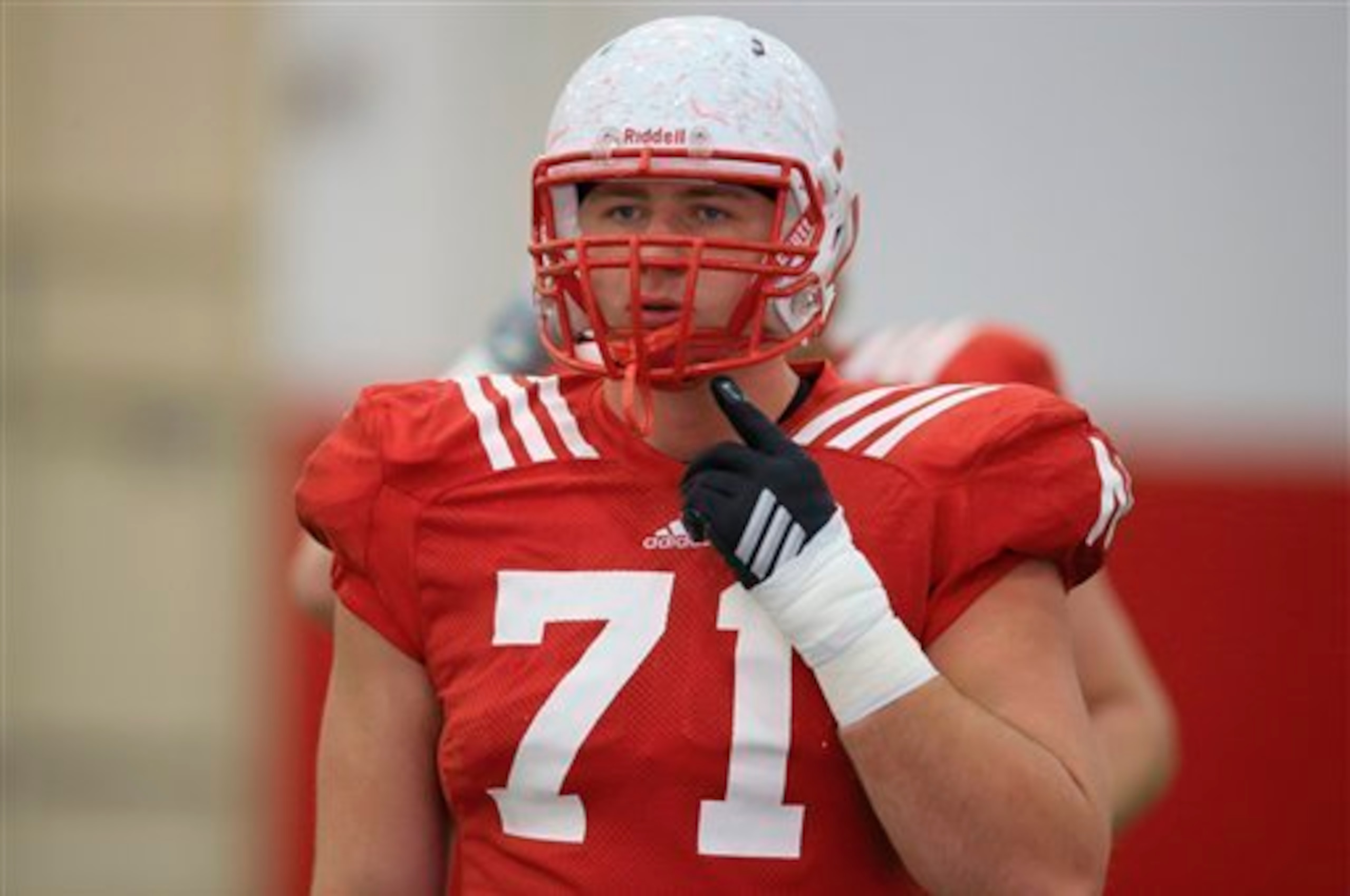
| Height | Weight | 40 Time | Arm Length | 3-Cone | Short Shuttle |
| 6'6" | 312 lbs | 5.22s | 34" | 7.94s | 4.72s |
POSITIVES
The son of Nebraska legend and former NFL offensive lineman Bill Lewis, Alex earned his own stars at Nebraska while becoming an All-Big Ten performer and team captain during his 26 starts as a Cornhusker.
Lewis, who began his career at Colorado before transferring home to Nebraska, started at left tackle right out of the gate. He’s a smart player with the hand placement to shock defenders and the mentality to never lose a rep. In pass protection, Lewis has poise and balance and knows how to use his length to his advantage.
The fundamentals of the game are there for Lewis, who shows an even stance and has the anchor to squat on bull-rushers. Lewis didn’t allow a single sack in 2015, and he held opponents to 15 hurries, according to College Football Focus.
NEGATIVES
Lewis does not dominate his assignment and too often has a lackadaisical approach to his blocks. Without the quick feet needed to recover if he misses a blitz look or a hard inside rush, Lewis can struggle to protect his inside shoulder. His feet and hands are too often slow to react, and he doesn’t win with powerful punches.
Given his physical limitations, Lewis is not likely to excite teams that want to stretch the field laterally in the run or pass game. Zone-blocking schemes or anything involving read-option plays will be a struggle for Lewis.
A lack of fire will show up first when watching tape, but Lewis also struggles with read-and-react plays. A slow processor and slow feet and hands keep Lewis from projecting as a starting-caliber prospect. If that can be coached up with more reps, he has the length and body control to become a starting right tackle.
PRO COMPARISON: LaAdrian Waddle, New England Patriots
FINAL GRADE: 5.70/9.00 (Round 4—Backup Caliber)
15. Dominique Robertson, West Georgia
12 of 26
| Height | Weight | 40 Time | Arm Length | 3-Cone | Short Shuttle |
| 6'5" | 324 lbs | 5.36s | 36" | 8.42s | 4.83s |
POSITIVES
A former JUCO transfer who landed at Texas Tech in 2014, Dominique Robertson dominated folks at Riverside Community College before becoming a Red Raider. And while he would only see the field for four games in his lone season at Tech, Robertson proved he’s athletic enough for FBS ball.
Robertson’s length is a major asset to his game, but he also uses strength in his lower body to anchor. Coming out of his stance, Robertson can be explosive and play with better leverage than you’d expect from a 6’5” frame. When he gets underneath a defender, Robertson can drop his hips and drive them all over the field.
With a mean streak to match his length and size, Robertson is intriguing as an athlete and as a prospect.
NEGATIVES
Three colleges in four seasons (2012-13—Riverside CC, 2014—Texas Tech, 2015—West Georgia) will raise a lot of eyebrows from NFL teams. If Robertson couldn’t hang at Tech, can he in the pros where the pressure and opposition is that much better?
Robertson was easily the best player on the field at Riverside and West Georgia, but he’s raw in terms of fundamentals. Robertson is athletic, but he knew he was more athletic than the competition and was able to slide his feet and throw a punch with 36-inch arms to win every down. That won’t work in the NFL, and Robertson has a massive learning curve before he’s ready to counter pass-rushers.
A true project, Robertson needs patience and coaching. He has the size, length and lateral movement of a right tackle after a bit of pro-level technique coaching.
PRO COMPARISON : Seantrel Henderson, Buffalo Bills
FINAL GRADE: 5.70/9.00 (Round 4—Backup Caliber)
14. Spencer Drango, Baylor
13 of 26
| Height | Weight | 40 Time | Arm Length | 3-Cone | Short Shuttle |
| 6'6" | 315 lbs | 5.27s | 33 ¾" | 7.88s | 4.66s |
POSITIVES
A four-year starter with the natural strength and football IQ scouts crave, Spencer Drango’s production in the passing game will be his calling card in the NFL.
A super-intense left tackle, Drango fits best as a guard or right tackle in the NFL, and his mean streak suits those positions well. Too often people want to move a less athletic left tackle to guard or right tackle when they don't have toughness, but Drango has it.
In the run game, Drango shows he can move off his spot and seeks out contact at the first and second levels. In a down block, which is a key to the Baylor offense, Drango attacks dudes. He’s violent at the point of attack. That nastiness is matched with a football IQ that allows him to make quick decisions and reads on the field. Drango can spot his defender and has a high rate of accuracy blocking in space.
NEGATIVES
Drango allowed no sacks and just six pressures in 2015, according to College Football Focus. So why are those numbers under the negative header? Because the Baylor scheme completely protected Drango. In the run-pass option offense, Drango rarely had to hold a block for more than three seconds. If put on an island against NFL defenders, Drango is completely unaccustomed to protecting a pocket.
Great aggressiveness can be an asset, but Drango plays over the top at times and can get caught lunging at defenders. In the passing game, he’s all chest and doesn’t reach pass-rushers with length or a strong punch. Drango plays coiled up and doesn’t look 6’6” when trying to reach an edge defender.
Skinnier legs and a broad chest keep Drango from being a great mover in space. He’s not shown himself to be capable pulling, which hurts a possible projection to guard. When asked to reset his feet and counter a defender, Drango struggles to re-establish his base.
PRO COMPARISON: Marcus Cannon, New England Patriots
FINAL GRADE: 5.70/9.00 (Round 4—Backup Caliber)
13. Kyle Murphy, Stanford
14 of 26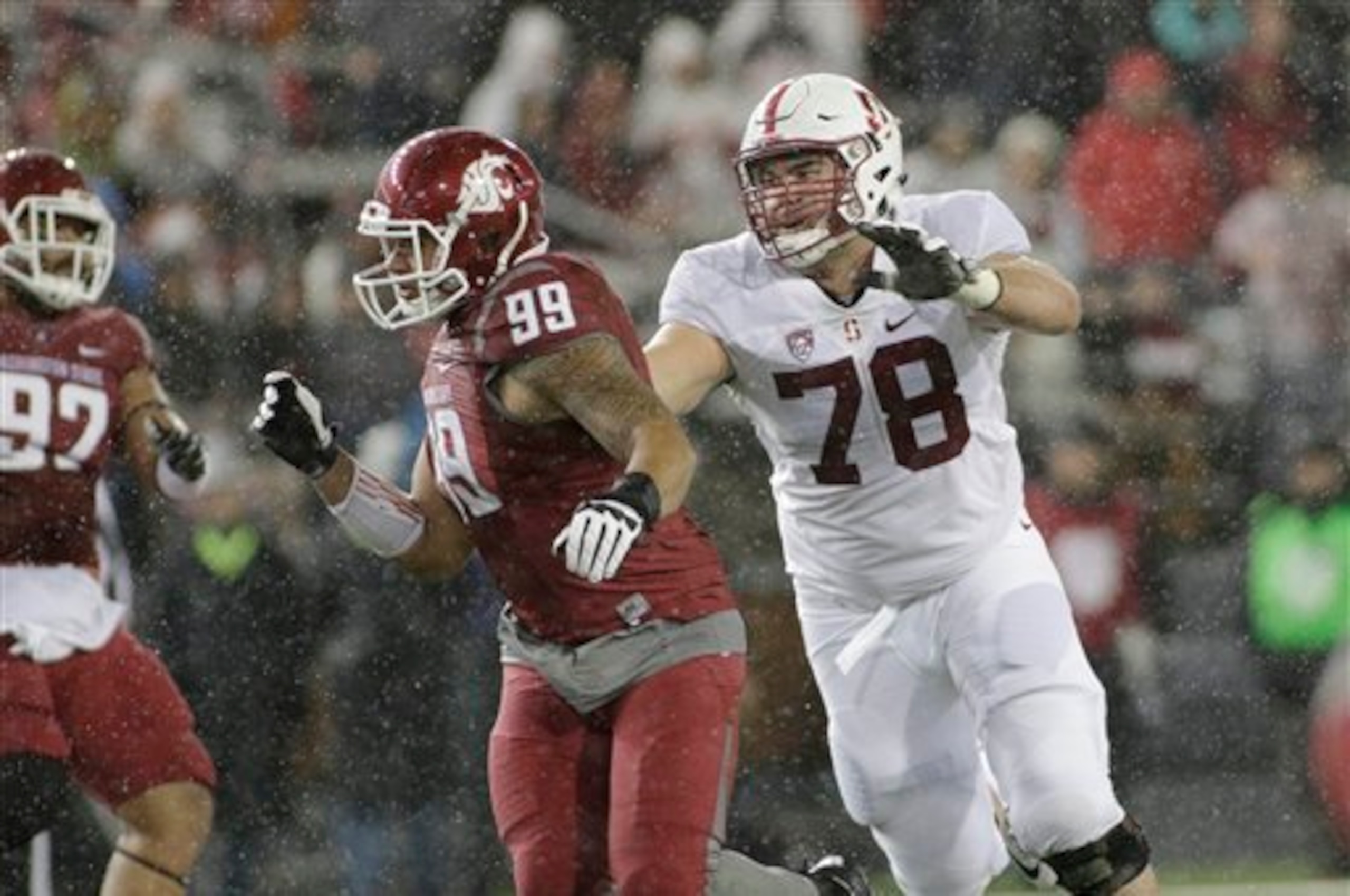
| Height | Weight | 40 Time | Arm Length | 3-Cone | Short Shuttle |
| 6'6" | 305 lbs | na/s | 33 ½" | na/s | na/s |
POSITIVES
During the 2015 season, no guard-tackle combination was more fun to scout than Stanford’s Kyle Murphy and Joshua Garnett on the left side. Formerly a right tackle, Murphy jumped from a late-rounder in the summer to Round 4 by season’s end.
Murphy is agile enough to get out in space and reach outside linebackers on the weak side. He’s effective at recognizing stunts and delayed blitzes and can adjust his feet and balance to react. Murphy takes pitter-patter steps to set up off the snap and never looks out of control.
Explosive ability out of the gate is there for Murphy. He’s quick enough to stun defenders with his initial steps and can roll through a chip to the second level with ease.
Murphy’s production in 2015 has to be noted after he allowed just 13 total pressures, per College Football Focus, while playing in a pro-style offense.
NEGATIVES
Adding strength will be the biggest goal for Murphy when he gets into an NFL program. He currently lacks the power to win at the point of attack playing either left or right tackle in the pros.
Triangle numbers (height, length, hand size) for an offensive tackle get overanalyzed at times, but for Murphy, the lack of length and hand size (9 ¾") does show up on film. He struggles to reach defensive ends in close quarters because they can out-reach him and use that leverage to keep his blocks from getting home.
In the run game, Murphy’s awareness is questionable when working through double-teams and different looks up front. He has the quickness for a zone-blocking scheme, but adapting to that offensive style may be rough for him given his struggles to read the defense.
PRO COMPARISON: James Hurst, Baltimore Ravens
FINAL GRADE: 5.75/9.00 (Round 4—Backup Caliber)
12. Willie Beavers, Western Michigan
15 of 26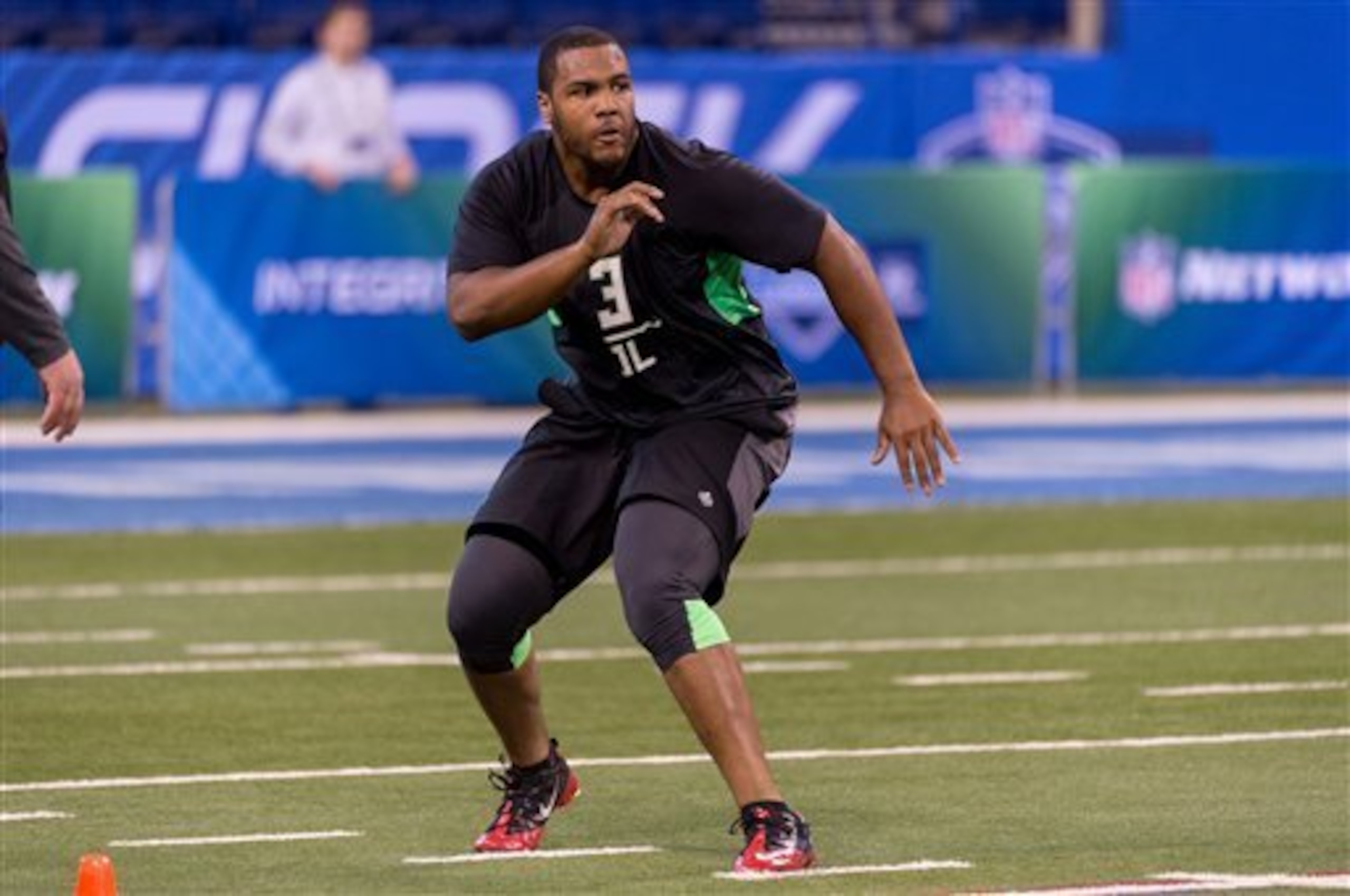
| Height | Weight | 40 Time | Arm Length | 3-Cone | Short Shuttle |
| 6'4" | 324 lbs | 5.28s | 33 ½" | 7.96s | 4.71s |
POSITIVES
A 40-game starter at left tackle, Willie Beavers has the experience and motor to draw the notice of NFL scouts.
The drive and effort from Beavers are as good as his footwork and agility. He’s a fighter and a finisher at the point of attack, often going right to the whistle in both run- and pass-blocking situations. A confident lineman with a stout, strong body, Beavers is able to position his feet to counter his lack of length. Choppy feet and great balance are the highlights of his tape. He’s rarely beaten with speed to the outside because he’s able to slide and cut off the corner.
With fast hands and an equally fast processor to read and react on an island, Beavers can handle inside pass-rush moves. He can also contain linebackers crashing the run game. That fire that fuels his game shows up on rushing downs. Beavers wants to win, and he wants to dominate, and that is seen when he’s sustaining blocks throughout the play.
NEGATIVES
Beavers moves like a tackle, and he has the bulk of one, but his production was subpar as a pass protector. Beavers’ 39 pressures allowed were the most of any ranked tackle prospect this year, per College Football Focus. By comparison, Notre Dame's Ronnie Stanley allowed 14 pressures on three more snaps against better competition.
Despite good athleticism, Beavers doesn’t play strong. Powerful rushers will dump him, and defenders who know how to use their own length to drive through him will lock him out too easily.
Because Beavers is so amped up, he’s often tipping his hand as a blocker in pass protection way before he needs to. NFL pass-rushers would have a field day reading his body and hands and then reacting to them, because he gives up this information immediately off the ball.
Once Beavers is on an NFL roster, his best move would be to spend his free time in the weight room. With impressive feet and toughness, Beavers has the look of a future starter if he takes to pro-level coaching and conditioning.
PRO COMPARISON: Ja'Wuan James, Miami Dolphins
FINAL GRADE: 5.99/9.00 (Round 4—Future Starter)
11. Caleb Benenoch, UCLA
16 of 26
| Height | Weight | 40 Time | Arm Length | 3-Cone | Short Shuttle |
| 6'6" | 305 lbs | 5.22s | 34" | 7.94s | 4.72s |
POSITIVES
A 4-star recruit from Katy, Texas, per 247Sports, Caleb Benenoch is the first person in his family to play football. The UCLA product started nine games as a true freshman at right tackle and would go on to start every game in the rest of his career playing both right tackle and guard.
An impressive athlete with the easy lateral movement skills of a guard, Benenoch is an ideal zone-blocking-scheme lineman. He gets down the line with good quickness and the vision to find his target and attack. He’ll pounce on a defender outside his frame and can reach outside linebackers without struggle.
Benenoch is good in combination-blocking situations from inside at guard. He knows how to gain leverage and help an outside blocker get free to move up the field.
Benenoch’s experience at both tackle and guard will add to his draft stock. His most natural position is right tackle, but a move inside long term is an option.
NEGATIVES
A lack of strength may be the biggest issue when projecting Benenoch forward—especially since he’s looked at playing two power positions (right tackle and guard). At only 305 pounds, NFL teams could ask him to redshirt for a season while he gains power and size.
Flexibility doesn’t come naturally to Benenoch. His hips and ankles look stiff on film and don’t flash as explosive areas of his body. Because he’s not rocketing his hips to power blocks, Benenoch ends up being a waist-bender and a lunger. This causes him (and every blocker) to lose power and leverage.
Production as a blocker isn’t something Benenoch can hang his hat on. In 2015 he surrendered 31 total pressures, per College Football Focus.
PRO COMPARISON: Oday Aboushi, Houston Texans
FINAL GRADE: 6.00/9.00 (Round 3—Future Starter)
10. Joe Haeg, North Dakota State
17 of 26
| Height | Weight | 40 Time | Arm Length | 3-Cone | Short Shuttle |
| 6'6" | 304 lbs | 5.16s | 33 ¾" | 7.47s | 4.47s |
POSITIVES
Joe Haeg is a story of hard work paying off. A former walk-on, he went on to start an unreal 60 games at North Dakota State while collecting five FCS championship rings.
A versatile blocker, Haeg played two seasons at right tackle and two seasons on the left side, and he handled the move without any issues. This is great for coaches in the NFL who see the big man as more of a right tackle-level athlete.
Haeg shows NFL-level agility and positioning. He understands leverage and alignments and plays with a poise and balance seen only in confident athletes. Part of Haeg’s comfort level at tackle means he’s always in control when pass protecting. You won’t see him get beat on his inside shoulder off a countermove because of his control and patience.
In the run game, Haeg can be special. He gets cleanly to the second level and has the awareness to spot and track down linebackers.
NEGATIVES
A lack of experience against top-tier competition will be the biggest question evaluators raise. Haeg was able to physically dominate the defenders he saw at NDSU, but that allowed him to win without great technique consistently.
The smaller-framed Haeg has limited play strength. Spending time gaining both size and strength—notably in his lower body—will be crucial whether he plays at right tackle or guard in the pros.
Shorter arms and smaller hands (9 ⅝”) on a 6’6” body will only add to talk that Haeg’s frame is an issue. He can’t get longer or grow bigger hands, but adding more knee bend and more power in his punch will aid in covering these limitations up.
PRO COMPARISON: Kelvin Beachum, Jacksonville Jaguars
FINAL GRADE: 6.00/9.00 (Round 3—Future Starter)
9. Le'Raven Clark, Texas Tech
18 of 26
| Height | Weight | 40 Time | Arm Length | 3-Cone | Short Shuttle |
| 6'5" | 316 lbs | 5.16s | 36 ⅛" | n/as | n/as |
POSITIVES
Long, long, long. Le’Raven Clark’s 36 ⅛" arms are exactly what NFL scouts want. If you put 10 scouts in a room and asked them to design a left tackle, Clark’s measurables are what you’d get. His 51 starts in college don’t hurt either.
Clark’s athleticism pops off the tape. He easily moves to reach linebackers in the run game and is a master of movement in zone-running situations. With a strong lower body, Clark can anchor against bull-rushers but will also lock horns and drive defenders out in the run game.
In the passing game, Clark is poised and controlled in his movements. He doesn’t panic and instead relies on his length and huge hands (11 ⅞”). Clark's instincts are on point and allow him to recognize what’s happening in front of him. Timing, combined with great length and elite athleticism, suggest Clark might be ready to play sooner than later.
NEGATIVES
Can NFL coaches take an athlete and turn him into a technician as a blocker? That’s the experiment with Clark, who has almost no blocking fundamentals coming into the league. He’s long and athletic, but can he actually block?
Clark’s lack of strength will be a negative for any team that values the run game. He has to add the power in his hands to stun defenders and take full advantage of his excellent length. It’s rare to see an athlete of this level, but his play power is below the line.
Watching him in pass protection, Clark’s hand placement is inconsistent. He’s not accurate at hitting the chest or shoulder to rock back a pass-rusher, and there are multiple plays per game when he flat-out misses with his outside punch.
The last impression of a prospect is sometimes the greatest, and LSU’s pass-rushers abused Clark in the team’s bowl game. He was beat inside and out, surrendering his inside shoulder play after play.
PRO COMPARISON: Ereck Flowers, New York Giants
FINAL GRADE: 6.00/9.00 (Round 3—Future Starter)
8. Jason Spriggs, Indiana
19 of 26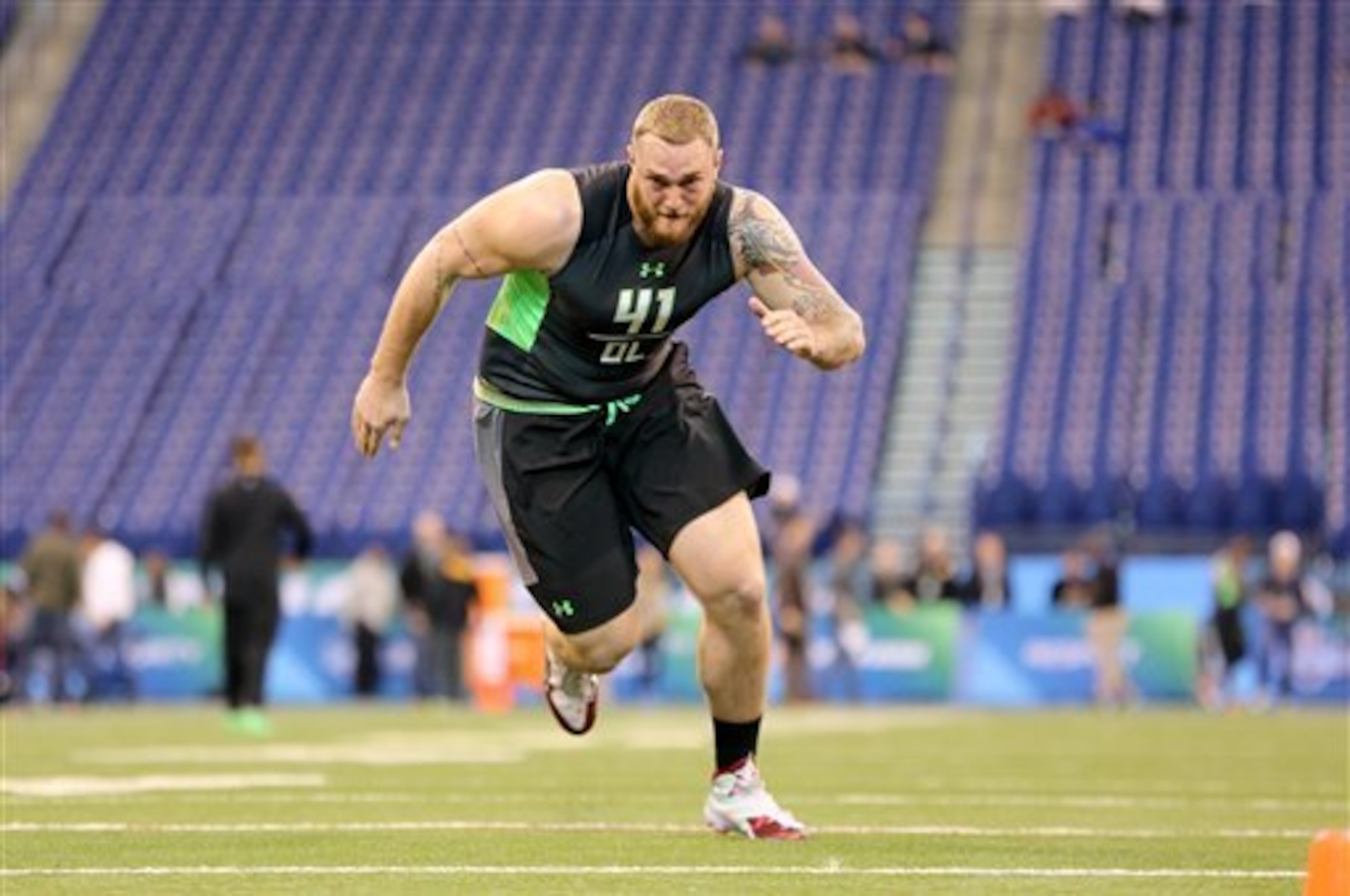
| Height | Weight | 40 Time | Arm Length | 3-Cone | Short Shuttle |
| 6'6" | 301 lbs | 4.94s | 34 ⅛" | 7.7s | 4.44s |
POSITIVES
A four-year starter at Indiana, Jason Spriggs capped off his career with a fantastic senior season and an eye-opening performance at the NFL Scouting Combine.
Spriggs is a top-tier athlete at left tackle, but he’s also strong as an ox when asked to sit down and anchor against pass-rushers. He’s able to lock on to defenders and ride them out of the play with power and lateral agility.
When asked to down block, pull or get out in space, Spriggs will impress. He’s an easy mover with excellent body control and accuracy at the second level. With an ideal body and athleticism for the left tackle position in the NFL, Spriggs’ upside and readiness in the run game could impress a team enough for a Day 1 selection.
NEGATIVES
Spriggs has the athletic testing numbers and size to wow scouts, but his play is uneven. He doesn’t move his feet well when asked to recover from an outside speed rush and lacks the fundamentals to kick-slide and cover the edge.
As a bit of a waist-bender when attacking pass-rushers, Spriggs can be overeager. This leads to poor form in his back and his head dipping when engaging a bull rush. Despite good lower-body strength, Spriggs will get rocked back onto his heels because he’s trying to catch a defender instead of meeting him with a punch.
At the college level, Spriggs could win with athleticism and length, which allowed him to develop bad habits with his pad height, timing and stance. He’s a classic over-setter and consistently gives up his inside shoulder. A decent NFL defender will be all over that. There is an amazing amount of potential in his game, but he’s not as NFL-ready as his workouts suggest.
PRO COMPARISON: Taylor Lewan, Tennessee Titans
FINAL GRADE: 6.00/9.00 (Round 3—Future Starter)
7. Shon Coleman, Auburn
20 of 26
| Height | Weight | 40 Time | Arm Length | 3-Cone | Short Shuttle |
| 6'5" | 307 lbs | n/as | 35 ⅛" | n/as | n/as |
POSITIVES
Shon Coleman has already beat cancer, so what’s an NFL defensive end to him? In 2010, Coleman was diagnosed with acute lymphoblastic leukemia and would spend two years fighting it off. Once he returned to the field in 2013—after redshirting in 2012—Coleman was the backup left tackle. Since replacing Greg Robinson, he’s been among the best players in the SEC.
As an athlete, Coleman is an easy mover with great length and big hands (10 ⅝”). He’s an elite run-blocker with an excellent mean streak to lock onto defenders and dump them at the end of the play. On both down blocks and reach blocks, Coleman has the strength and agility to clean house. He’s smart on the prowl and takes the shortest path to his assigned man. He’s patient and poised at all times.
Coleman uses his length well and improved throughout the 2015 season with his timing and footwork. He has the strength to win with a punch and will play with nimble feet and good pad height when engaging pass-rushers using inside and outside moves.
With constant tests over the last two seasons in the SEC, Coleman proved his worth. He has the look of an early starter in the NFL.
NEGATIVES
It’s unfortunate to bring up medicals as negatives for Coleman, but that’s the reality of the NFL. A cancer diagnosis will cause questions from NFL scouts and team doctors. A knee injury suffered late in the season will cause Coleman to miss all predraft workouts and is expected to sideline him until mid-summer. As a rookie who turns 25 in November, Coleman will be flagged as an older prospect.
On the field, Coleman has to be more consistent. His mean streak seemed to come and go and didn’t click until late in his final season. His pad height can go from good to bad in a single game, and he’ll revert back to old habits of ducking his head and lunging at defenders with a bent back.
Fixing Coleman’s pad height will be the first chore of his NFL coaches, but that is a coachable issue.
PRO COMPARISON: Russell Okung, Denver Broncos
FINAL GRADE: 6.50/9.00 (Round 2—Future Starter)
6. Jerald Hawkins, LSU
21 of 26
| Height | Weight | 40 Time | Arm Length | 3-Cone | Short Shuttle |
| 6'6" | 305 lbs | 5.23s | 34 ¼" | 8.19s | 4.89s |
POSITIVES
A two-year starter at right tackle, Jerald Hawkins moved to the left side in 2015 to replace La’el Collins. The three-year star at LSU left for the NFL after his redshirt junior season.
A long, lean tackle prospect built in the mold of former first-rounders Luke Joeckel and Jake Matthews, Hawkins uses his length and agility well to protect the edge. Unlike Joeckel, Hawkins has power in his punch and can roll back pass-rushers with his timing and impact. Hawkins doesn’t give up his inside shoulder thanks to his poise and length, and he’ll slide his feet to reset and counter secondary pass-rushing moves.
Hawkins explodes out of his snap with first-step quickness, flashing the ability to play in either a power or zone-blocking scheme. He can handle double-teams and is fine playing in a scheme that asks him to attack at the second-level.
Hawkins’ production in the LSU offense should catch the eye of teams, as he allowed just 13 total pressures in 2015, per College Football Focus. With a best fit at right tackle in the NFL, Hawkins could be a swing tackle right away with a future starter projection.
NEGATIVES
Improving his play strength will be the first order of business for Hawkins in the NFL. His smaller lower body and lack of a bubble will definitely be mentioned when his card is discussed in draft rooms. With an hourglass build, Hawkins just doesn’t have the hips or rear-end to generate big power.
Hawkins doesn’t show up as a natural bender in pass protection. He plays straight-up and likes to rely on his length and ability to move his feet to beat SEC pass-rushers. That works some of the time but is an issue that pro-level talent will pick up and exploited.
The speed of Hawkins’ punch will be addressed early in his career, as he doesn’t have the quick jab to rock back a pass-rusher right out of the gate.
PRO COMPARISON: Donald Stephenson, Denver Broncos
FINAL GRADE: 6.50/9.00 (Round 2—Future Starter)
5. Jack Conklin, Michigan State
22 of 26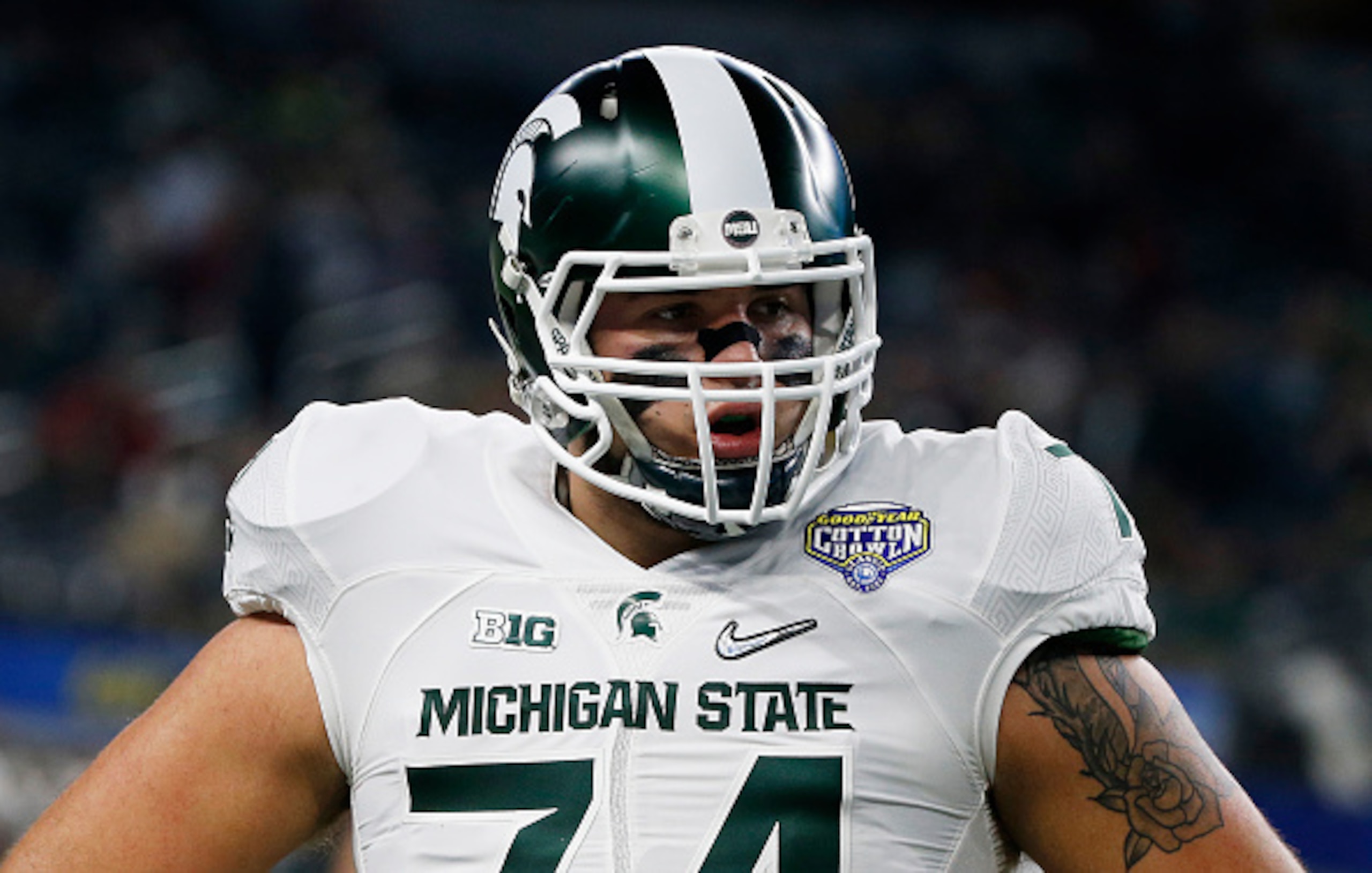
| Height | Weight | 40 Time | Arm Length | 3-Cone | Short Shuttle |
| 6'6" | 308 lbs | 5.00s | 35" | 7.63s | 4.57s |
POSITIVES
A walk-on at Michigan State, Jack Conklin went from unwanted to unstoppable as an All-American left tackle. A starter for three years as a Spartan, Conklin’s tape was good enough to send him to the NFL a year early as a redshirt junior.
Conklin is a bully in the run game. With 10 ⅜" hands, Conklin can lock horns with a defender head-up and drive him out of the play. Once he has his hands on you, they’re not coming off. When working from the snap to the second level, Conklin shows excellent body control and balance. He arrives at linebackers ready to strike and never looks out of control with his hands or his weight.
The pass game is where Conklin has made plays that wow you. He’s a heavyweight puncher and will stun dudes with his jab. Conklin is the Mike Tyson of this year’s tackle class when it comes to knocking rushers out of the play with his hands. He’s also a stout player against a bull rush, showing that he can sink his feels and arch his back to absorb 300-plus-pounders.
During the last two seasons, the only offensive tackle I’ve seen slow down Joey Bosa and DeForest Buckner is Conklin. He’s improved greatly over the last two seasons, and it would be easy to see NFL teams betting on his continued development early in the draft.
NEGATIVES
Conklin is an impressive player both on film and in person, but a lack of top-tier athleticism could cost him on draft day. With heavy, sluggish feet moving through traffic and when sliding to cut off the edge, Conklin can be late to protect. While he’s almost unmovable when bull rushed, a hard outside speed move beats him often.
Two years of charting Conklin’s play leaves you wanting more actual NFL technique from him. The Michigan State offense helped him with a lot of down blocks and double-teams (see the 2015 Oregon game) to handle any pressure on his inside shoulder. Without a smooth kick-step and recovery athleticism, Conklin will often overset on the edge, which opens up inside moves for crafty rushers.
Conklin’s footwork is surprisingly a mess given his success at State. He needs to work on staying balanced and not crossing his feet in his slide and shuffle. Short, controlled, choppy steps will become the goal for him. Because of this, Conklin may start his career at right tackle and could even stay there if his footwork can’t be improved.
PRO COMPARISON: Bryan Bulaga, Green Bay Packers
FINAL GRADE: 6.99/9.00 (Round 2—Rookie Starter)
4. Germain Ifedi, Texas A&M
23 of 26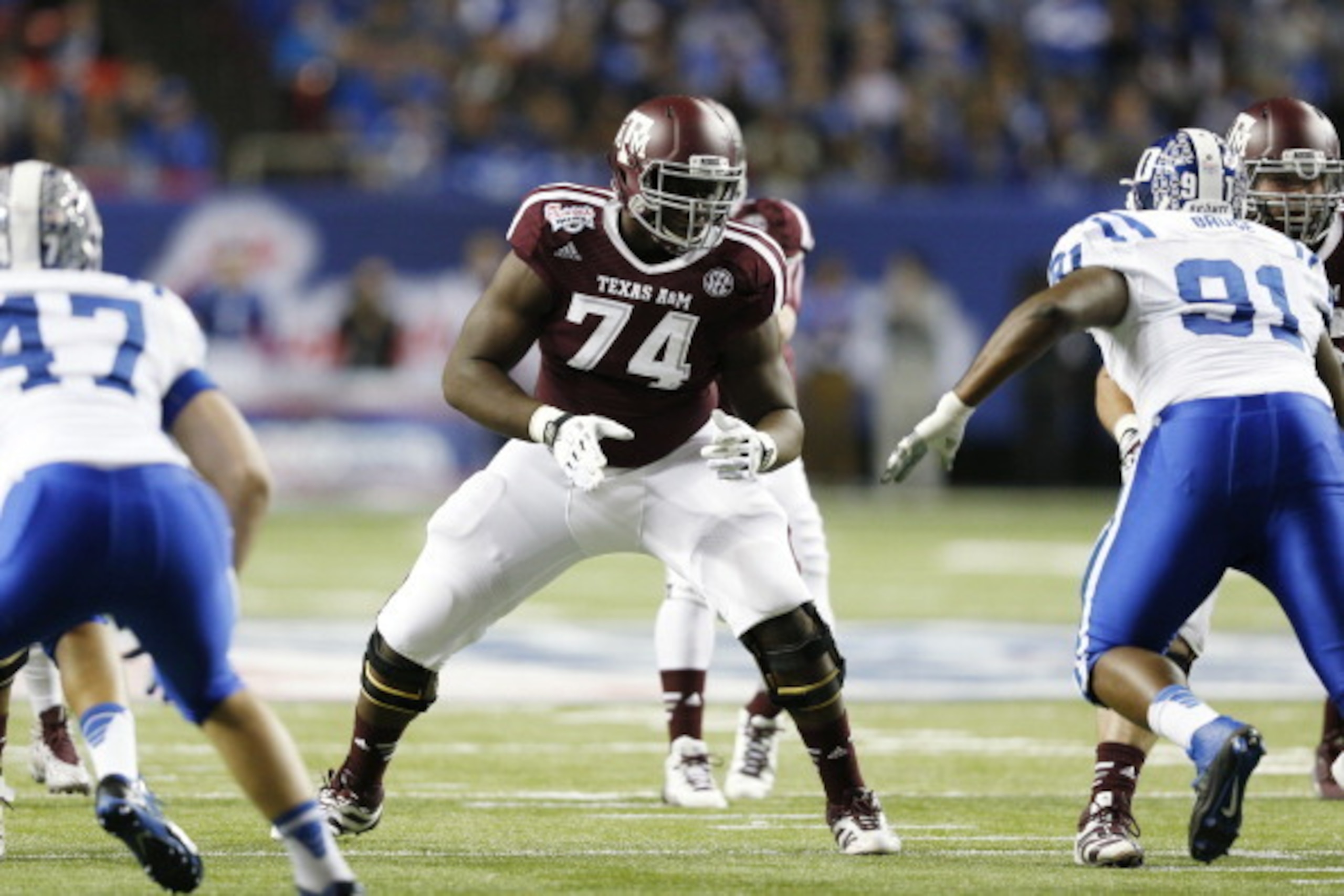
| Height | Weight | 40 Time | Arm Length | 3-Cone | Short Shuttle |
| 6'6" | 324 lbs | 5.27s | 36" | n/as | 4.75s |
POSITIVES
A versatile, three-year starter at Texas A&M, Germain Ifedi follows in the footsteps of former first-rounders Luke Joeckel, Jake Matthews and Cedric Ogbuehi with day one expectations.
On the hoof, Ifedi is exactly what you want with a tall, long, lean, powerful frame. Having played both guard and right tackle at A&M, Ifedi brings a variety of tools to the table as a blocker having protected both inside and on the edge and for scramblers like Johnny Manziel and more pocket-based passers like Kyle Allen.
Ifedi has a well-timed punch with power behind it. He can stun a rusher and knock him off his path with his right hand. He has that country strength that allows him to whip defenders around with his hands once he’s locked on.
And with 10 ¾" mits, Ifedi can lock on like a pitbull. He’s a mean finisher in the run game and isn’t against pancaking a defender to teach him a lesson. His experience playing guard and tackle gives him an edge when it comes to timing and footwork of combo blocks.
Ifedi has natural quickness and is able to shuffle and slide to reach the corner. At A&M, he faced elite pass-rushers in practice every day and each Saturday in the SEC. He’s quick enough to recover, but he also brings power and bulk to the position.
NEGATIVES
Like his predecessors, Ifedi comes out of a wide-open scheme and must learn how to block with pro technique. At A&M, the offensive linemen are spread out and allowed to be athletes because the ball comes out so fast. This limits Ifedi’s knowledge and experience when it comes to firing out of his stance, making contact and maintaining the block. And without the agile feet of Joeckel or Matthews, Ifedi’s best position could eventually be at guard.
Body control is an issue for Ifedi in pass protection. He too often gets caught leaning on defenders with his upper body angled and a poor base below him. NFL defenders are smart enough to shed his weight and let him fall to the ground. Until Ifedi can learn to move his feet and reset his base, he’ll be a lunger and waist-bender.
There’s no doubting the potential that Ifedi brings to the table, but it will take some faith in the offensive line coaches to select him early in this draft. His length and hand power are impressive, but his technique needs an overhaul.
PRO COMPARISON: James Carpenter, New York Jets
FINAL GRADE: 6.99/9.00 (Round 2—Rookie Starter)
3. Taylor Decker, Ohio State
24 of 26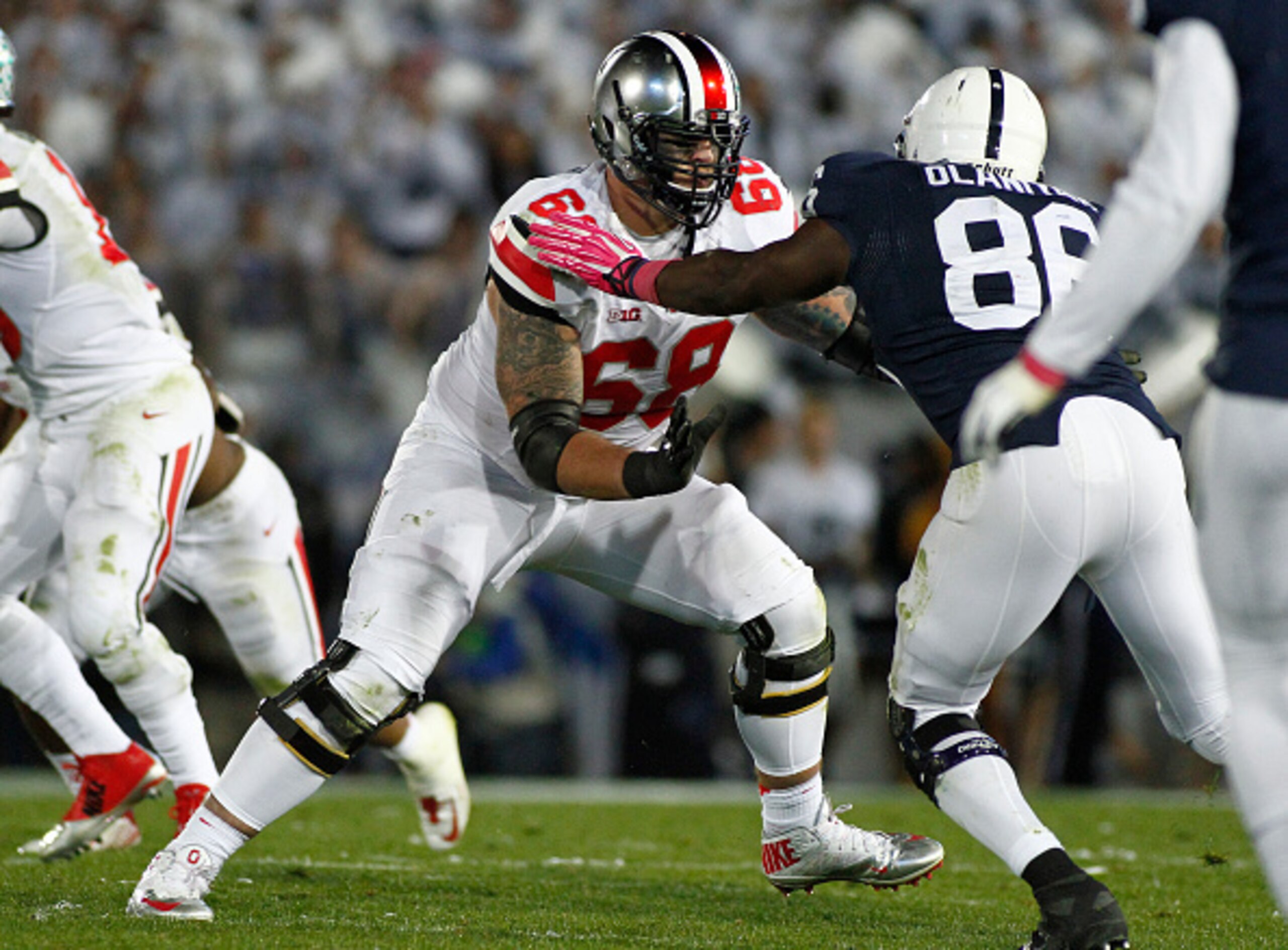
| Height | Weight | 40 Time | Arm Length | 3-Cone | Short Shuttle |
| 6'7" | 310 lbs | 5.23s | 33 ¾" | 7.70s | 4.76s |
POSITIVES
The 2015 Big Ten Offensive Lineman of the Year, Taylor Decker has been mentioned as a potential first-round pick after his fantastic 2014 season as a junior. A three-year starter, Decker started 42 times at Ohio State and finished his career as a co-captain.
A natural left tackle, Decker spent the last two seasons manning the blindside at Ohio State. He has the height and hand size (10”) teams go crazy for. Decker impresses on film as an easy, balanced mover with the strength to get physical and become a bully.
His toughness traits in the run game are some of the best of any offensive lineman in the entire class. Whether it’s a power scheme or a zone-blocking system, Decker has the strength and athleticism to be a fit. The Ohio State offense loved down blocks, and Decker was deadly there.
Playing with three different quarterbacks behind him, Decker had to be consistent in his steps and footwork to match whatever type of offense they were playing. With Braxton Miller and J.T. Barrett, he had to be prepared for scrambling, but with Cardale Jones, it was more five-step drops and downfield passing.
Decker excelled with them all because of his natural, fluid pass sets. He’s poised and in control as rushers try to get into his space and cross him up.
Decker may not have flashy athletic testing numbers, but his pro-readiness is high, and he brings big upside to the table as a technician on the left side.
NEGATIVES
Decker is not without his flaws, but they’re more of the fundamental type and not a physical limitation. That’s good news for his next team.
The first fix Decker must make is adjusting his pad height in pass protection. He’s often playing straight-up with a stiff back. That works for some tackles, but you’d like to see more knee bend and a little more spring in his step. Making that fix will allow Decker to better lock out his arms and control defenders with leverage and power.
Some may look at his movement skills and see a right tackle, which would require re-learning a completely new position while working on existing technique issues. If that’s the route his NFL career goes, Decker will have to learn to take his pass sets opposite of how he’s been doing them the last two seasons.
PRO COMPARISON: Nate Solder, New England Patriots
FINAL GRADE: 6.99/9.00 (Round 2—Rookie Starter)
2. Ronnie Stanley, Notre Dame
25 of 26
| Height | Weight | 40 Time | Arm Length | 3-Cone | Short Shuttle |
| 6'6" | 312 lbs | 5.2s | 35 ⅝" | 8.03s | 4.90s |
POSITIVES
A three-year starter at Notre Dame, Ronnie Stanley played 13 games at right tackle in 2013 before moving to left tackle and locking down the blindside for his final two seasons. A natural athlete blessed with great length and feet, Stanley is a true left tackle.
Over the last two seasons, Stanley has seen some of the best pass-rushers in college football, and he’s held up remarkably well, surrendering just three sacks in 458 pass block snaps, per College Football Focus. With inexperienced quarterbacks behind him in every game during that time span, that Stanley could keep their jerseys clean is impressive.
An easy, fluid mover, Stanley gets to the second level before anyone else on the offensive line. He’s easy to confuse for a tight end in warm-ups because of how agile he is moving around the field. He’s a smart technician with great hand placement and timing on his punch.
With 35 ⅝" arms, Stanley can outreach defenders and keep them from ever turning the corner on him. A poised, confident blocker, Stanley is almost never beat around the corner and has the recovery speed to shift inside or outside to truly protect his spot.
There isn’t much Stanley can’t do. He’s agile, smart, flexible and understands the fundamentals of the position at a high level.
NEGATIVES
A lack of power in his punch is the first issue that NFL scouts mention when you talk to them about Stanley. His lean, long frame doesn’t have the core strength to anchor against bull-rushers, and he’ll need to consider adding both bulk and power as a professional. This shows up more in the run game where Stanley doesn’t dump defenders or get a big push off the line.
By adding power and slightly improving his technique to churn his feet through run blocks, Stanley can become both quick and strong in the run game.
Stanley’s 11 penalties on the season are on the high end for a premier blocker. He got caught holding on the corner several times, which may be in response to a lack of power to rock back edge-rushers. Doubters will point to an easy schedule of pass-rushers on Notre Dame’s schedule.
PRO COMPARISON: D'Brickashaw Ferguson, Retired
FINAL GRADE: 7.15/9.00 (Round 1—Rookie Starter)
1. Laremy Tunsil, Ole Miss
26 of 26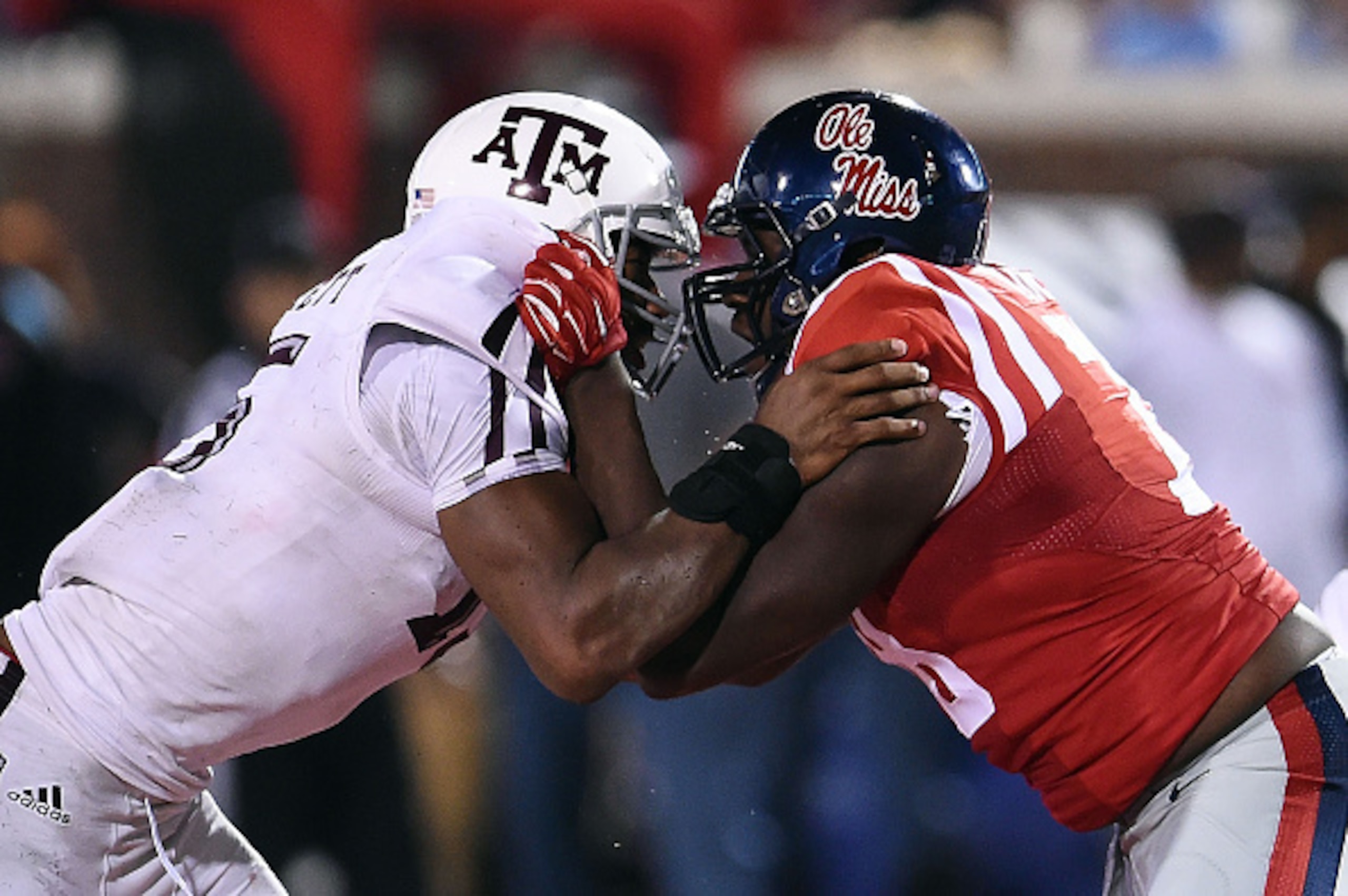
| Height | Weight | 40 Time | Arm Length | 3-Cone | Short Shuttle |
| 6'5" | 310 lbs | n/as | 34 ¼" | n/as | n/as |
POSITIVES
If everything looks easy for left tackle Laremy Tunsil, that’s because playing football is what he was born to do. A smooth, powerful, athletic player on the edge of the line, Tunsil is among the most prepared tackle prospects to enter the draft in the last five seasons.
Words like “elite” and “blue chip” get thrown around a lot in scouting, but Tunsil is truly an elite pass protector with blue-chip potential. He didn’t allow a sack in 2015 despite going against top-notch SEC competition and was rarely ever beaten for a pressure on the quarterback.
Tunsil is always in control, always poised and always shuffling his feet and keeping his hands loaded to strike. His length is a major asset in pass protection, and unlike many athletes with recovery speed at left tackle, Tunsil can also stun and stop defenders with his punch. He’s the total package.
The run game is a playground for Tunsil, who has unnatural quickness coming out of his stance. He gets to the second level with ease, and once there, he can do damage thanks to his balance, agility and toughness. He’s a finisher who will latch on to linebackers and ride them to the sideline.
If Tunsil doesn’t become a top-tier left tackle in the NFL, it will be because of injuries or work ethic. All the tools are in place for him to step right in and become a dominant player on par with the best tackles in the game today.
NEGATIVES
NFL teams must look into the off-field issues with Tunsil. He was suspended for the first seven games of the 2015 season because he received “impermissible benefits,” such as a free rental car and plane ticket, but the league won’t care about that.
Another off-field issue had Tunsil and his stepfather filing charges against each other after a fight last summer. Tunsil was arrested, but the charges were later dropped. Teams I’ve talked to aren’t concerned here, as they feel Tunsil was protecting his mother.
But that’s not all. At the combine, Ole Miss teammate Robert Nkemdiche dropped a bombshell during his press conference when he mentioned Tunsil was in the room with him when he fell out of a fourth-floor hotel window in Atlanta.
Nkemdiche, who was charged with possession of marijuana, told the media crowd at the combine that there were others in the hotel room (name-dropped "Laremy" as one of the people in the room), said that he (Robert) was only drunk and that the drugs in the room weren’t his. Easy dot-connecting has Nkemdiche pinning the drugs in his room on Tunsil, or at minimum, implying that Tunsil was involved.
Focusing purely on the field, there is little to worry about. Tunsil broke his leg and dislocated an ankle in the 2014 Peach Bowl, but he returned to form immediately once the NCAA cleared him to play again. Tunsil also missed two games in 2014 due to a torn bicep, which means he’s never played a complete season in college.
PRO COMPARISON: Tyron Smith, Dallas Cowboys
FINAL GRADE: 7.50/9.00 (Round 1—Top 10 Pick)
Matt Miller covers the NFL draft for Bleacher Report
.jpg?w=2560 "Cardinals Giants Football")
.jpg?w=2560 "Titans Ravens Football")

.jpg?w=2560 "OBJ Calls Out Giants 😳")
.jpg?w=2560 "Tyreek Deal May Come Soon")