

Projecting MLB's Most Dominant Pitching Rotations in 2020
We could talk about Major League Baseball's most dominant starting rotations going into 2016, but that's too easy. Instead, let's gaze waaaaaaaaaay into the future.
As in, all the way to the year 2020.
A wise green man once said that always in motion is the future, so we're not going to pretend to know how all 30 MLB rotations will line up over the next five seasons. Short of a detailed map of space time or a time-traveling DeLorean, nothing can help us solve such a complex equation.
What we can do, though, is use our imaginations with a few teams in particular.
We rounded up a list 10 clubs that should have dominant starting rotations come 2020, based on the established pitchers they have locked up, the prospects they have waiting in the wings and/or any future spending flexibility that could help them afford any additional impact talent.
As far as how we determined our rankings, let's just say that we'll be working toward the team whose theoretical 2020 rotation is both easy to imagine and easy on the imagination's eyes.
10. Cincinnati Reds
1 of 10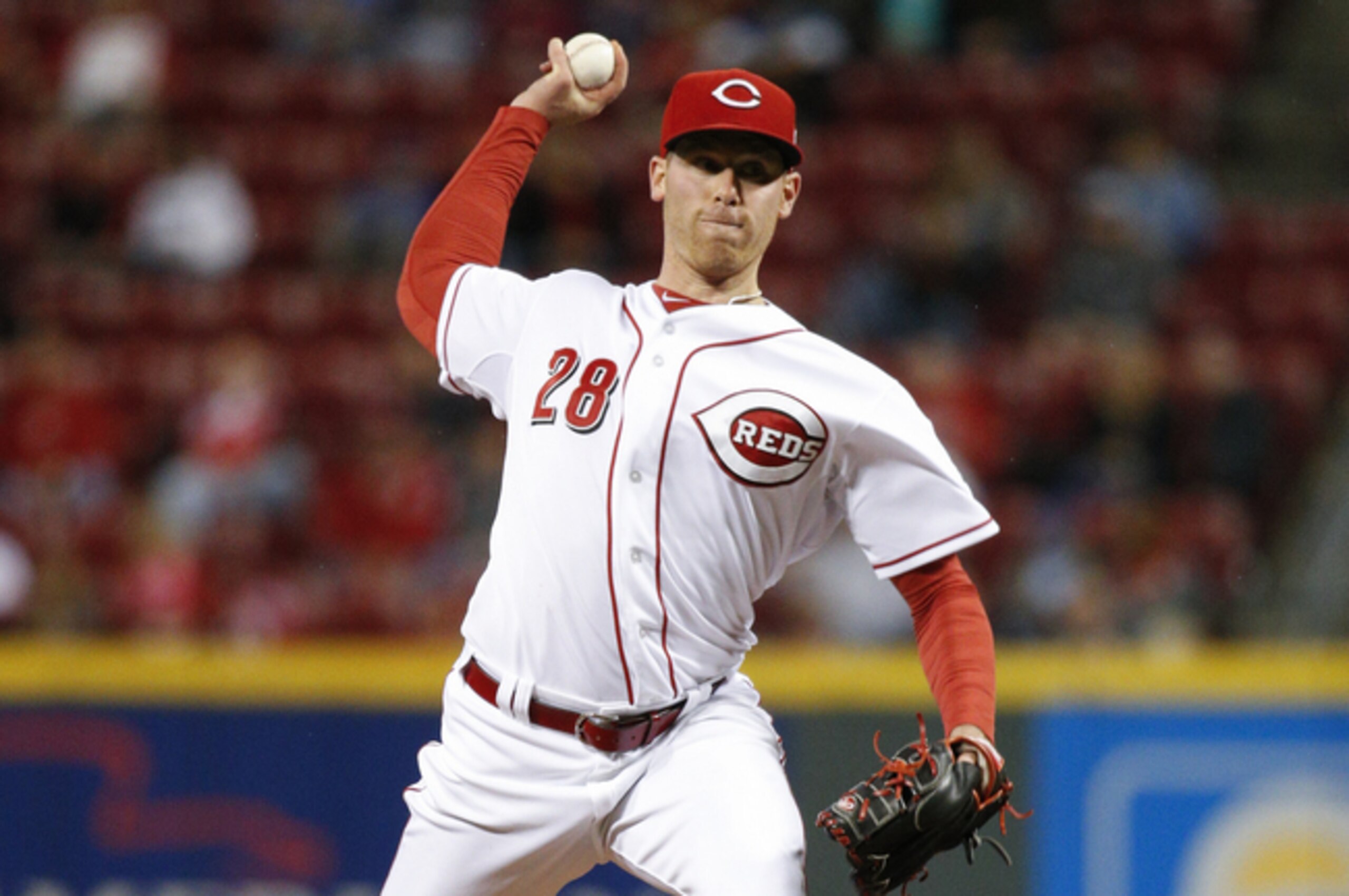
After their starting rotation devolved into a pile of "meh" in 2015, the Reds may seem like an odd choice. But upon closer inspection, the future of their rotation begins to look a lot better than its present.
The Reds finished 2015 by using a rookie starter in a record 64 straight games. Among the bunch were Anthony DeSclafani, Michael Lorenzen, John Lamb and Brandon Finnegan, all former top prospects. There was also Cuban import Raisel Iglesias, who struck out over one batter per inning. In those five guys, Cincinnati has the makings of a rotation that could at least become respectable before long.
And there's even more pitching talent down on the farm. According to MLB.com, right-hander Robert Stephenson and left-handers Cody Reed and Amir Garrett are top-100 prospects. Stephenson should be ready to debut sometime in 2016, and Reed and Garrett could be ready by 2017.
The Reds' plan for their young arms? As Jonah Keri wrote at Grantland, it's nothing they haven't done before: "The goal with all of this pitcher stockpiling is to eventually build a young rotation that resembles the one fielded in 2010, when the Reds won their first division title in 15 years, thanks in part to precocious contributions by Cueto (then 24), Bailey (24), Travis Wood (23), and Leake (22)."
The Reds' efforts could pay off within the next couple of years, in which case little would stand in the way of the party continuing into 2020. DeSclafani, Lorenzen, Lamb, Finnegan and Iglesias are controlled through at least that year, and none will be older than 30. If one or more of them make way for Stephenson, Reed and/or Garrett, they'll only be in their late 20s come 2020.
Keeping us from rating the Reds even higher is the nagging reality that all their rotation has right now is potential. But with this much potential, they should figure something out in the next few years.
9. New York Yankees
2 of 10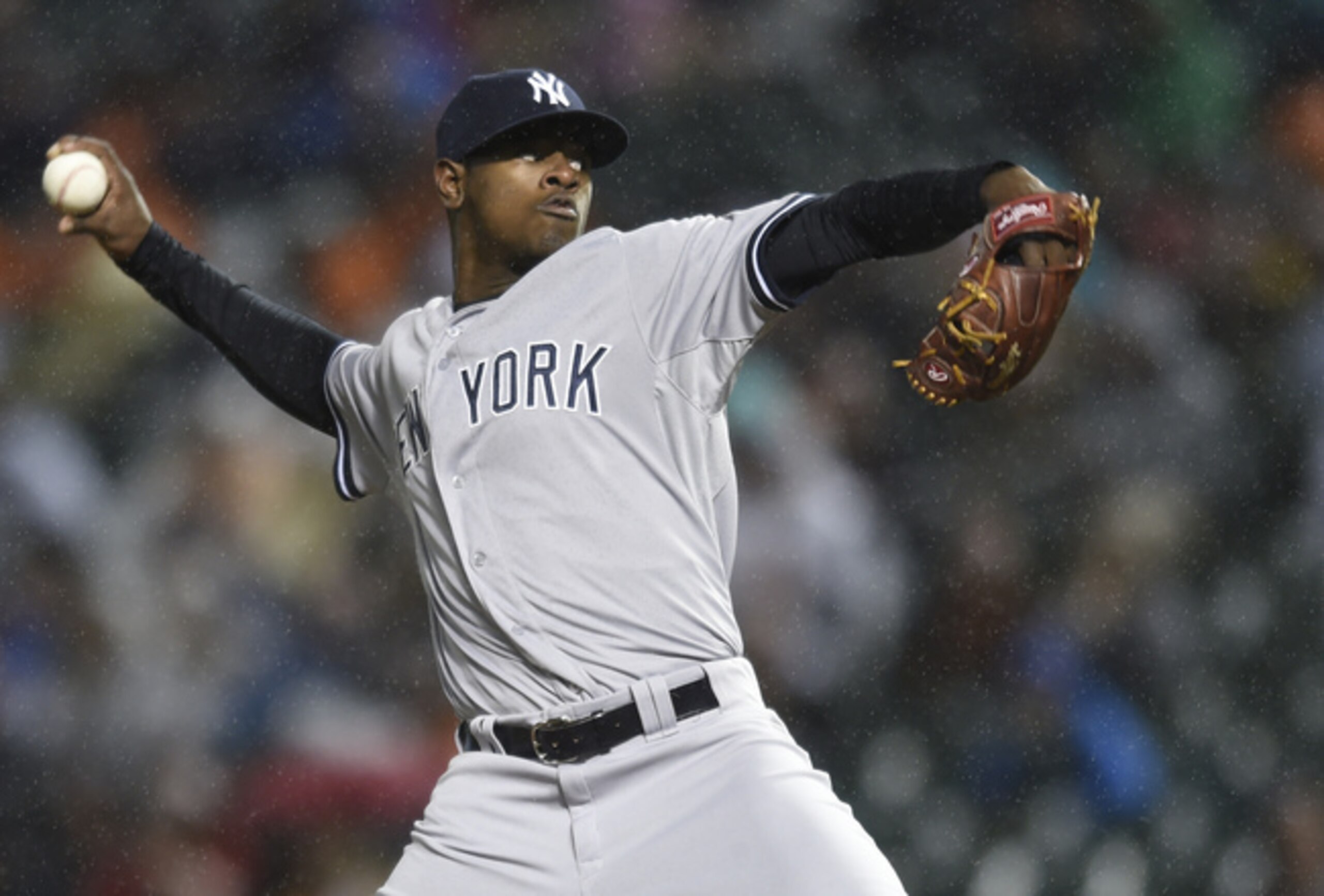
Among the starters the Yankees have in-house, only Masahiro Tanaka and Luis Severino are controlled through 2020. And based on appearances, that's only half good news.
Because Tanaka is already a fragile pitcher who will be 31 in 2020, it's best if nobody gets too excited about what he'll be doing by then. Severino, on the other hand, will only be 26, and his electric stuff makes it a fair bet he'll be established as an ace by then.
How are the Yankees going to get the rest of their rotation? Surely, the old-fashioned Yankees way.
They're well-positioned to make it rain in free agency in the coming years. They'll be free of Mark Teixeira, Carlos Beltran and CC Sabathia following 2016, and finally free of Alex Rodriguez following 2017. And for 2020, they currently have less than $50 million in guaranteed salary commitments.
This could be the Yankees' ticket to target Stephen Strasburg in free agency next winter or perhaps Jake Arrieta or Tyson Ross after 2017. Alternatively, they could extend Michael Pineda and/or Nathan Eovaldi rather than let them hit free agency after 2017.
Or, the Yankees could wait until after 2018 to go wild. Jeff Passan of Yahoo Sports tells us (rightfully) that Bryce Harper will be their big target that winter, but they could also look at Matt Harvey, Jose Fernandez, Dallas Keuchel, Adam Wainwright, Garrett Richards, Shelby Miller and Patrick Corbin. If Clayton Kershaw and David Price opt out of their contracts—Spoiler: They will—they'll also be out there.
Or, the Yankees could just wait until after 2019. That's when Chris Sale, Michael Wacha and Carlos Martinez are slated to hit free agency.
Whatever floats their boat, really. Though we can't say for certain how the Yankees will flesh out their rotation for 2020, it's definitely going to involve surrounding Tanaka and Severino with some combination of expensive store-bought talent.
8. Atlanta Braves
3 of 10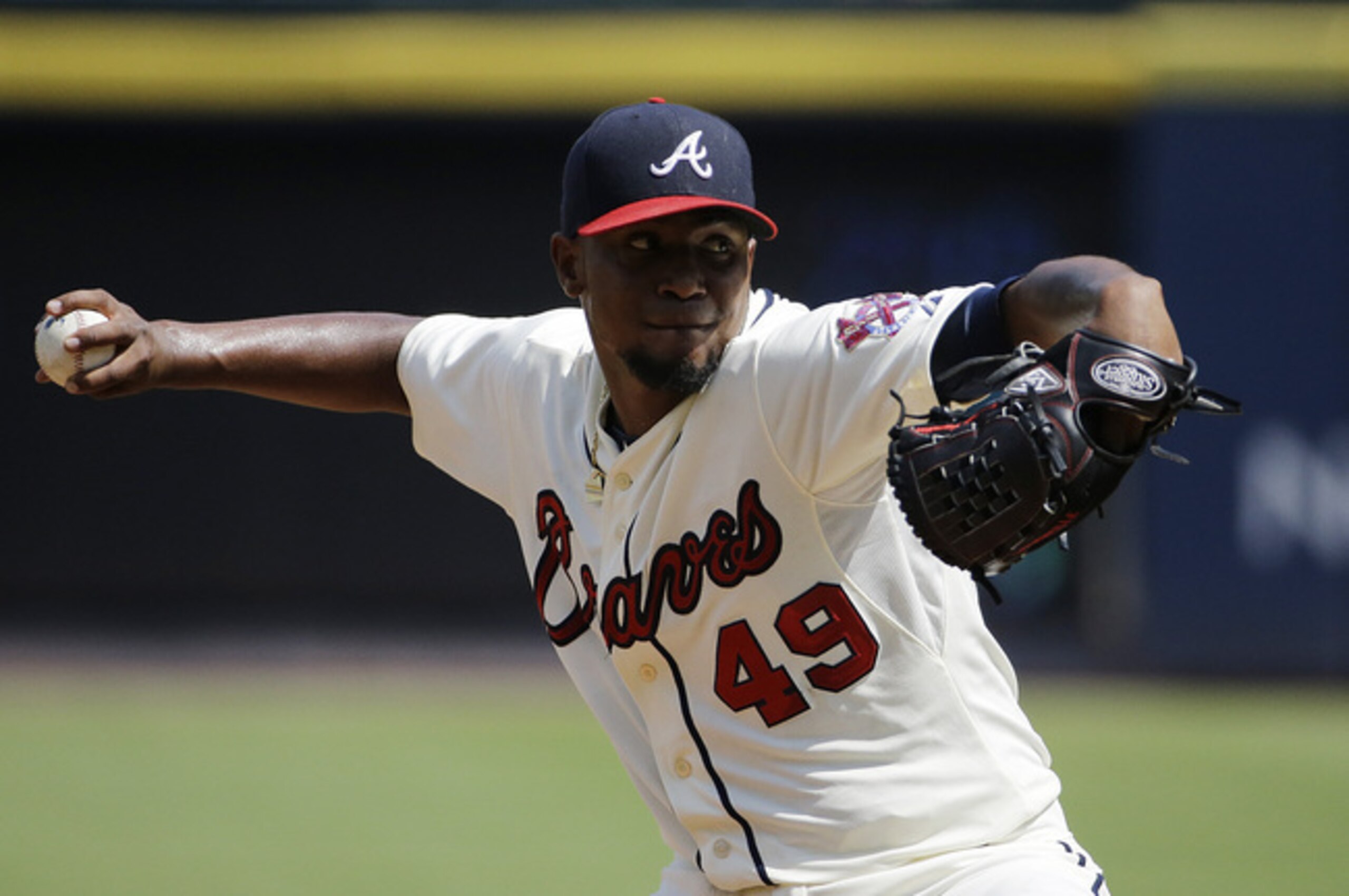
Poor starting pitching is just one of many things that went wrong for the Braves in 2015, but the good news is that their rotation's future looks even better than that of their fellow rebuilders in Cincinnati.
Atlanta's rotation features three starters in Julio Teheran, Matt Wisler and Mike Foltynewicz who will be 25 or younger in 2016 and are all former top prospects with power arms. They'll only be in their late 20s in 2020 and could establish themselves as a top pitching trio well before then.
The Braves also aren't hurting for pitching prospects. Keith Law of ESPN.com rates Atlanta's farm system as the best in baseball, and the arms fairly stand out. Hard-throwing lefty Sean Newcomb is MLB.com's No. 21 prospect, and fellow lefty Kolby Allard and right-hander Aaron Blair are also top-100 prospects.
With all this going on, the Braves have what they need to replicate the pitching backbone of their NL East dynasty in the 1990s and early 2000s. And before long, they'll be in a position to compete financially as well.
The Braves will move into a new stadium in 2017, and most everyone expects that to help turn around the organization's long-running mediocrity at the gate. With the extra revenue, the Braves could look to augment their homegrown rotation with an impact signing or two.
They may not wait long to do so. It wouldn't be surprising to see the Braves go after a new star for their new stadium by targeting Strasburg next winter. If not, they could go for Arrieta, Ross, Pineda or Eovaldi following the 2017 season.
Whatever the case, the Braves won't rest until they have one of the league's top rotations. From appearances, that's the whole idea.



7. Philadelphia Phillies
4 of 10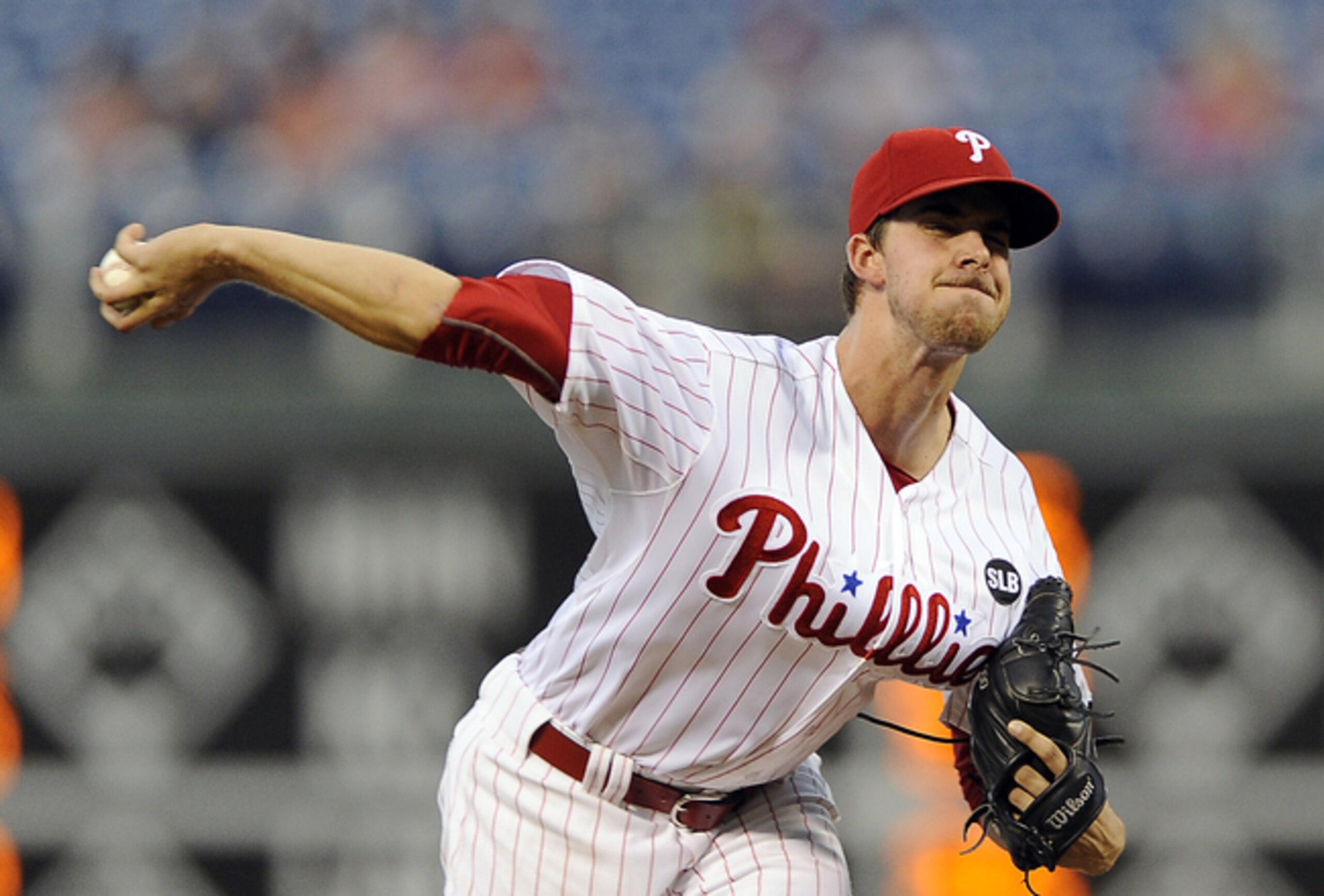
Though the Phillies are likely going to be terrible once again in 2016, make no mistake that they are working on something special. And starting pitching is very much part of it.
After a promising breakthrough in 2015, Aaron Nola is ready for his first full major league season. So is a fellow former top prospect, Vincent Velasquez. If his hard fastball works as well as Nola's control and general pitching know-how, the Phillies will have a bright young pitching duo to build around.
And build on it they can. The Phillies have two young right-handers in Jake Thompson and Mark Appel who rank among MLB.com's top 100 prospects; both could join Philly's rotation in 2016. That could turn Philly's bright young duo into a bright young foursome.
If it turns out there's no ace in the bunch, well, that probably won't be a problem. One way or another, the Phillies are likely to add at least one from outside the organization.
Though the Phillies have put a hold on their spending in recent seasons, their sheer financial might must not be forgotten. This is an organization that used to push its payrolls close to $200 million and has yet to make good use of the $2.5 billion TV contract it signed in early 2014.
That's likely to change soon. The Phillies will be done with all their expensive contracts after 2017, giving them a huge amount of payroll flexibility. It won't be the least bit surprising if they celebrate by going after Strasburg ahead of time next winter, or if they go after Arrieta or Ross after 2017.
If they choose to be patient instead, well, fine. They're another team that could be in on Price, Harvey, Fernandez, Keuchel or any of the other top free-agent starters after 2018. And given the young talent they already have, it could only take one big signing to cement their rotation as one of the best in baseball.
6. Boston Red Sox
5 of 10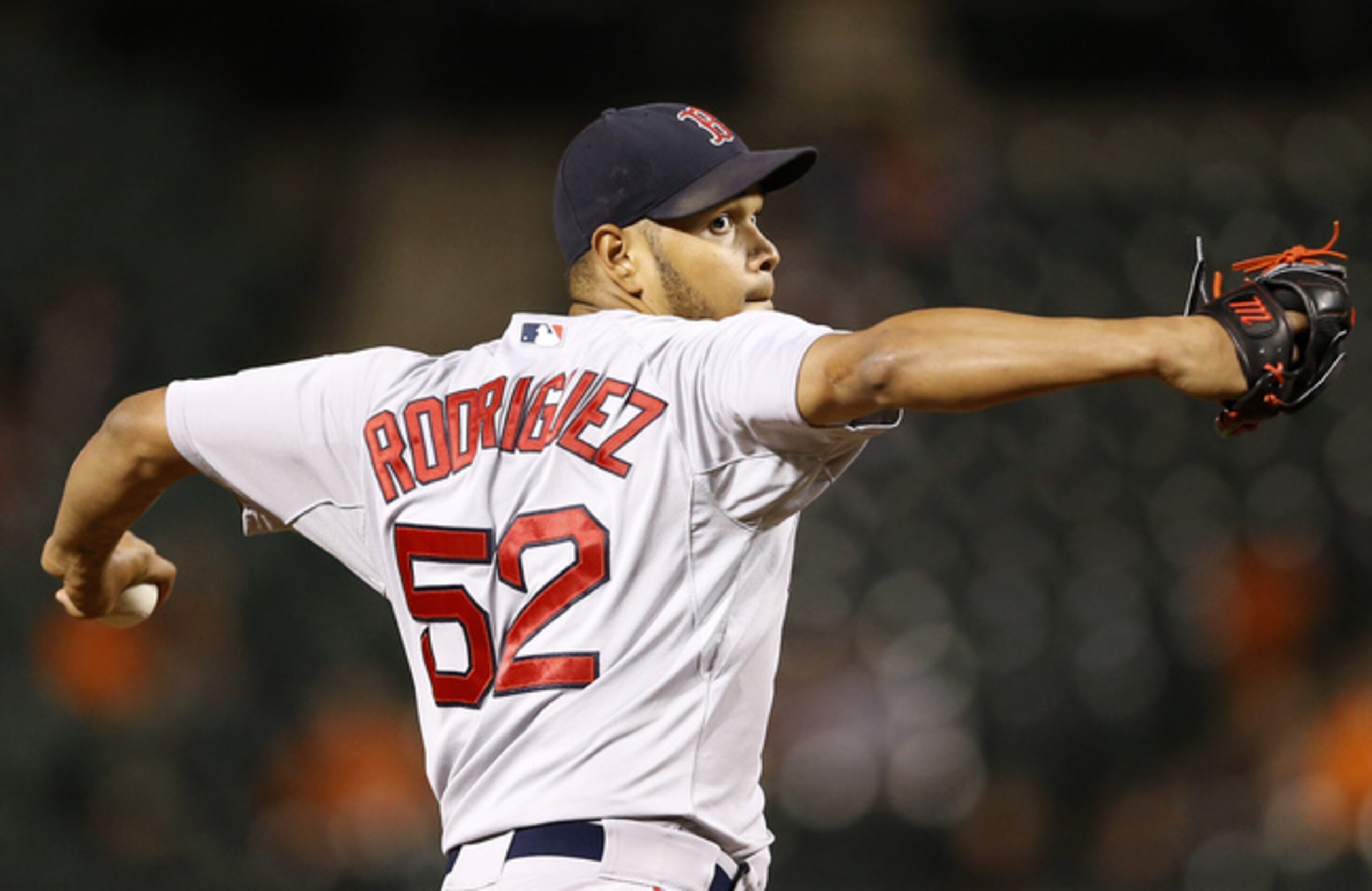
In our present day, Red Sox fans are excited at the prospect of watching David Price doing David Price-y things every five days. But in the future, the spotlight will shift to the youngsters.
Hard-throwing left-hander Eduardo Rodriguez stands out the most. He was occasionally dominant as a 22-year-old rookie in 2015, and he has the goods to establish himself as an ace in the coming years. And come 2020, he'll only be in his age-27 season.
So will fellow left-hander Henry Owens. He's something of a forgotten man in Boston's pitching depth, but it was only a year ago that he was rated as highly as a top-20 prospect. He may break through in 2016 and ultimately cement himself as a dependable starter.
Down on the farm, the Red Sox have Anderson Espinoza. He's Baseball America's No. 20 prospect after carving up the low minors as a 17-year-old in 2015 and is drawing comparisons to Pedro Martinez.
"[Martinez's] velocity hadn't spiked to where this kid's is at the same age," Goose Gregson, the Red Sox's Latin American pitching coordinator, told Alex Speier of the Boston Globe. "Their size was very comparable. The ease of their delivery, both Pedro and this kid, made them anomalies. Each one of those kids had perhaps the easiest deliveries and most comfortable deliveries I've seen in such young kids."
Espinoza could join Rodriguez and Owens in Boston's rotation by 2018. If he establishes himself, that would only make it easier for the Red Sox to say goodbye to Price when he inevitably exercises the opt-out clause in his contract at the end of the year.
That could be no harm, no foul. If Price comes off the books, Boston could easily replace him with any of the top talents who will be available alongside him that winter. Combined with its homegrown trio, one of them could help elevate Boston's 2020 rotation from very good to great.
5. Chicago White Sox
6 of 10
If our target year was 2019, we'd be rating the White Sox even higher. By then, their southpaw trio of Chris Sale, Jose Quintana and Carlos Rodon could be the envy of the American League.
But since our target year is 2020, there's a kinda-sorta-very significant complication: The White Sox only control Sale through 2019. After then, his absurdly team-friendly contract—Dan Szymborski of ESPN.com rates Sale as a top-10 club-controlled asset—will be out of options.
That wouldn't mean the end of all hope for Chicago's rotation, though. The White Sox will still have Quintana and Rodon, who will be 31 and 27 years old, respectively. The hugely underrated Quintana should still be an effective pitcher, and it'll be an upset if the White Sox don't figure out how to make an ace out of Rodon and his electric stuff.
The White Sox could also get a boost from Carson Fulmer within the next few years. The young right-hander was their No. 8 pick in 2015 and is rated by MLB.com as the No. 38 prospect in baseball. His high-effort delivery has some thinking he may be best suited for relief work, but Chicago's success in turning Sale into an ace despite his own high-effort delivery allows for a healthy dose of optimism.
If Fulmer does indeed live up to his potential, the White Sox should have at least an excellent front three in their starting rotation come 2020. And if Sale does walk, it's at least possible they could fill his shoes with an adequate replacement.
With virtually no guaranteed dollars ($1.5 million) on the books for 2020, Chicago could go after Wacha or Martinez in free agency after 2019. Either one should be cheaper than Sale and be a fine complement to the club's impressive in-house trio.
4. Cleveland Indians
7 of 10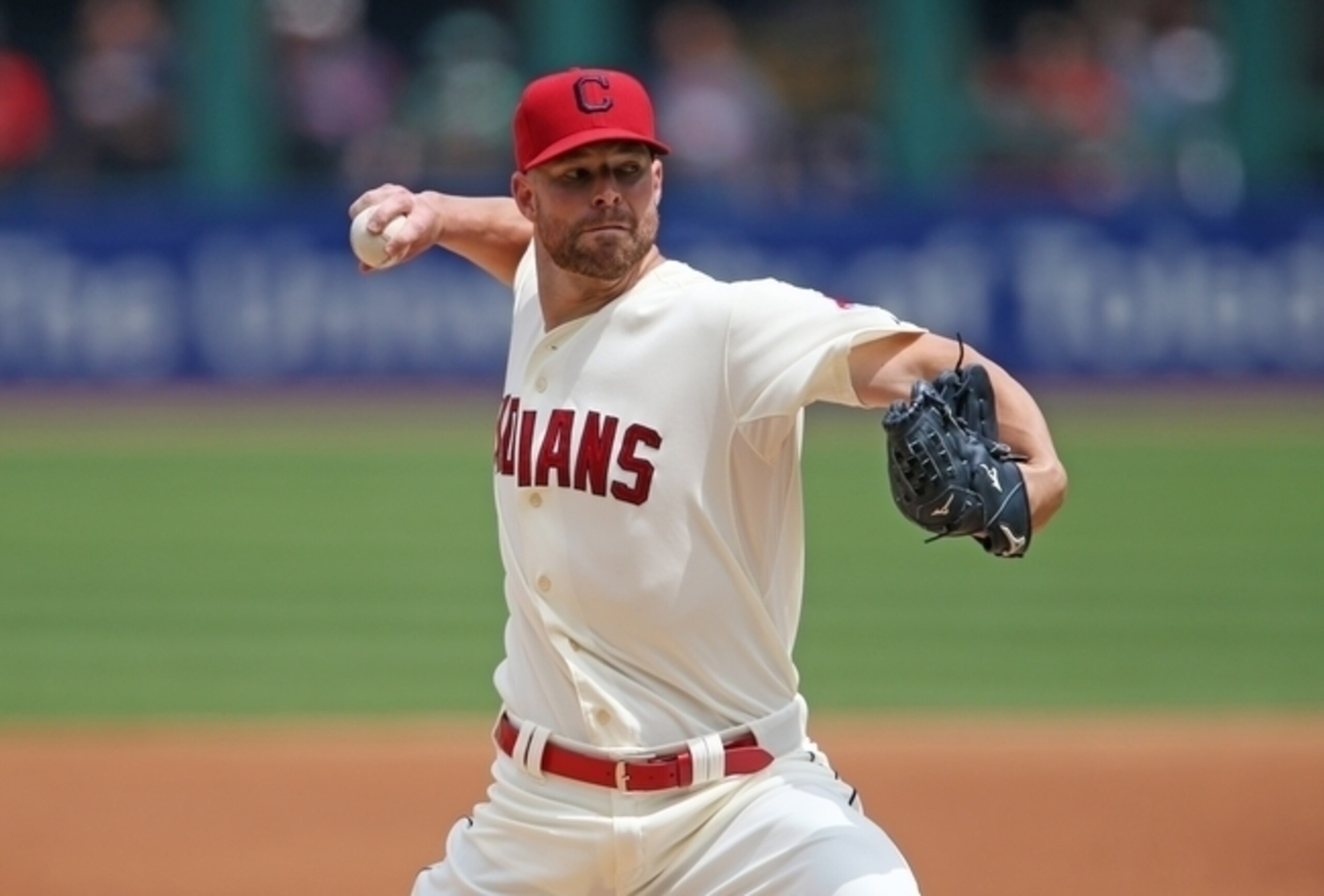
Though it wasn't reflected in the rotation's collective ERA, the trio of Corey Kluber, Carlos Carrasco and Danny Salazar helped the Indians enjoy some of the American League's best starting pitching in 2015.
And it's still somewhat hard to believe that the Indians have all three locked up through 2020. That will be Salazar's last year of club control, and Cleveland holds affordable 2020 options for Kluber and Carrasco.
If he finally figures out how to turn his considerable natural talent into consistent results, Trevor Bauer will also still be around. And as far as he's concerned, the Indians rotation could take its place alongside the old rotations of the Braves and Oakland A's if the key members pitch to their potential.
"You start looking at those numbers and say, 'Is that within the realm of what we can do?' Yeah. Probably so," Bauer told Jeff Passan of Yahoo Sports last summer. "If everyone stays healthy, I would expect over the next four or five years, we have a chance."
Granted, Bauer might never break free from his roller-coaster existence as a major leaguer. It also stands out that Kluber and Carrasco will be in their mid-30s in 2020 and that Salazar will be 30.
However, it should help that Kluber and Carrasco are late-bloomers who don't have as many innings on their arms as most pitchers in their age range. And if the rotation does find itself in need of the cavalry, the farm system could lend a hand.
There's Brady Aiken, whom the Indians nabbed with the No. 17 overall pick in last year's draft. If he makes a strong recovery from Tommy John surgery, he could reclaim the Clayton Kershaw-esque talent that made him the No. 1 pick in 2014. Justus Sheffield, Cleveland's No. 31 pick in 2014, could also make an impact.
The rest of the American League should get used to the Tribe having dominant starting pitching. Things are likely to stay that way for a while.
3. Washington Nationals
8 of 10
The Nationals have one of the top starting rotations in baseball right now, but its best days are likely ahead of it.
The Nats control ace right-hander Max Scherzer and young right-hander Joe Ross through 2020. Though he'll be 35 by then, Scherzer's 6'3" and 215-pound frame and relatively well-preserved arm could allow him to age better than most power pitchers. Ross will be a 27-year-old who may have more going for him than just a sneaky-good sinker/slider combination by then.
Then there's Lucas Giolito. He's considered the top pitching prospect in baseball by MLB.com, Baseball America and Baseball Prospectus, with the latter saying he has "top-of-the-rotation demigod" potential. Most everyone thinks he's just about ready for the big leagues, including the man himself.
"My goal is definitely to reach the big leagues," Giolito said in spring training, via Chelsea Janes of the Washington Post. "There are certain aspects—baseball's a business—but at the same time I feel like if I progress the way I want to, I'll have a good shot."
Giolito will only be 25 years old in 2020, and he may not be the only former top prospect in Washington's rotation. Fellow right-hander Erick Fedde, a top-100 prospect in his own right, will be 27 in 2020.
The Nationals might also add an impact arm from outside the organization. Scherzer is the only big-money player they have controlled past 2019, and their spending power will improve dramatically if they can solve their television dispute with the Baltimore Orioles within the next few years.
Surely, the Nationals would prefer to use that spending power to extend Harper. But since Scott Boras isn't likely to advise Harper to bow out of a legendary bidding war following the 2018 season, the Nationals could use whatever cash they have earmarked for him to grab a free agent to be the finishing touch on an already stacked rotation.
2. New York Mets
9 of 10
Nobody wanted to face the Mets' starting pitching by the end of 2015, and the league is in for more of the same in the years to come. Jacob deGrom, Matt Harvey, Noah Syndergaard and Steven Matz still anchor arguably the best rotation in baseball.
Of the four principals, deGrom, Syndergaard and Matz are controlled through 2020. Syndergaard and Matz, who is MLB.com's No. 15 prospect, will only be in their late 20s by then. They'll probably still be throwing gas. And though deGrom will be 32, the lack of mileage on his arm could mean he'll also still be throwing gas.
Only Harvey isn't locked up through 2020, as he's slated to hit the open market after 2018. However, that doesn't necessarily mean the Mets can't extend him. David Wright's contract will get cheaper in 2019 and 2020, and all the other rich contracts the Mets have on their hands at present will be long gone by then.
"I think whatever comes up is going to come up," Harvey said of the possibility of an extension last month, per Adam Rubin of ESPN.com. "I've never shied away from it. I've never said I wouldn't consider it. But I haven't heard anything considering that."
If not Harvey, don't count out the Mets extending Zack Wheeler instead. He's due to return from Tommy John surgery this year and is locked up through 2019.
Another option would be for the Mets to take the financial flexibility they're going to have in the future and use it on a fresh face instead. They could go for one of the top arms on the 2018-2019 free-agent market if they don't extend Harvey or purse Sale, Wacha or Martinez the following winter if they don't extend Wheeler.
However they play it, the Mets should at least have a dominant trio leading their rotation in 2020. Assuming they do extend or add a fourth arm, their rotation will look just as good then as it does now.
1. Los Angeles Dodgers
10 of 10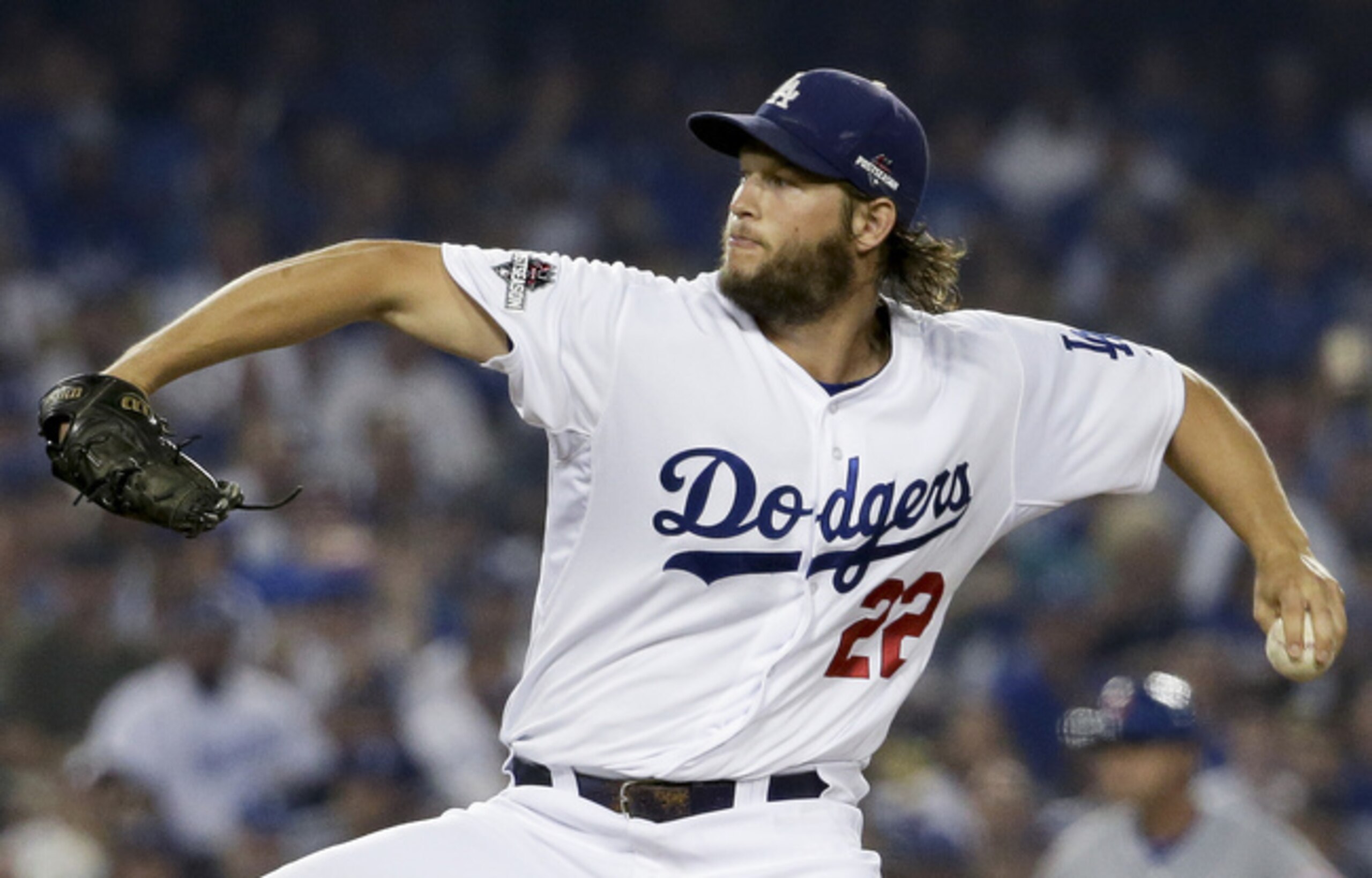
The one guy the Dodgers know they have locked up through 2020 is freshly signed Japanese ace Kenta Maeda. And while we have yet to see how well he's going to help fill in for Zack Greinke, at least one Dodger is already comparing him to Greinke.
"The reason I compare him to Greinke is that he's got a four-pitch mix," Dodgers catcher Yasmani Grandal said after catching Maeda's batting practice session on Monday, per Ken Gurnick of MLB.com. "Obviously, they are two different pitchers. But you can build a game plan around four pitches and be creative, that's the comparison."
This will do for a sign of optimism that Maeda can cut it as a major league starter over the long haul. But certainly, the more pressing question is what will become of Clayton Kershaw. Though his $215 million contract technically runs through 2020, he can opt out after 2018.
Will he? Probably, yeah. But will the Dodgers retain him either way? Same answer. They're slated to have a ton of payroll space following the 2018 season, and it's easy to see them committing a good chunk of that to retain one of the best left-handers of all time.
Because Kershaw and Maeda will both be 32 in 2020, though, the Dodgers will also need to make sure their rotation has some youth. Good thing they have that covered. And then some. And then some more.
In 19-year-old Julio Urias, the Dodgers have MLB.com's No. 1 left-hander and No. 4 overall prospect in their farm system. Right-hander Jose De Leon is also in the top 25, and fellow righty Grant Holmes gives the Dodgers yet another top-100 pitching prospect.
If the Dodgers assimilate all three of them into their rotation over the next few years, their 2020 rotation could consist of a legendary ace, one imported star and three homegrown stars. Fun times.
Stats courtesy of Baseball-Reference.com and FanGraphs unless otherwise noted/linked. Payroll and contract info courtesy of Cot's Baseball Contracts.

.jpg?w=2560 "Grading WWE Raw 🔠")

.jpg?w=2560 "Bijan's INSANE 1st Half 🤩")
.jpg?w=2560 "Viral Rams Coach Vid 🖕")
.jpg?w=2560 "Injury-stricken Seahawks signing veteran RB")


.jpg?w=2560 "2 NFL Officials Suspended")
