The Other Side of NFL Free Agency
When NFL free agency begins every year, we see a dance of names, numbers and dollar signs.
There’s an annual ritual to the proceedings. The marquee free agents are gobbled up first, and collectively they do the classic Donald Duck money dive. Some are dramatically overpaid, and the initial hype around their signings will turn into despair. But that’s a potentially franchise-crushing problem for later.
Then the second- and third-tier signings follow. That’s when teams find the glistening gems and bargain free agents who could later make significant contributions while occupying only a tiny slice of the salary-cap pie. The lower tiers are also where you’ll find journeymen clinging to their careers, hoping to be gifted another chance.
TOP NEWS
.jpg?w=2560 "49ers York Arrested")
York Responded to Ad on Prostitution Site Before Arrest
💀 McVay's Quote on CFB Returns

Sports World Honors Dolly Parton 🕊️
We watch that cosmic football ballet every March. Teams pluck each player from a shelf as they stroll by with their shopping carts, and the market dictates how much a purchase is worth as an NFL commodity.
The player then shows up on a field near you, playing for your team and wearing a new uniform. He’ll start making or breaking tackles, and scoring or preventing touchdowns, all while earning a hefty non-guaranteed salary. If he does his job, all parties involved—the player, his coaches, the fans—will enjoy a thriving partnership.
But something is lost even in the happiest version of that fairy-tale free-agency story. Something beyond the transaction between team and player. Something beyond the large sum of money exchanged. There’s an overlooked or entirely forgotten human element of free agency.
Acknowledging the human element doesn’t have to be done with a sarcastic eye roll. The lifestyle of an NFL player is lucrative and nomadic. It’s often both, as the free agents we’re set to scrutinize have little in common with the average person in their late 20s or early 30s.
That applies to their bank accounts, sure, but also the fundamental ability to establish firm long-term roots at one fixed address.
They have wives, young children, carefully selected schools for those kids to attend, connections with local churches and charitable causes they champion in each community. Then they have to take that life, move it across the country for a non-guaranteed contract and risk their health while trying to make a roster. They do it all with the threat of being released—and having to reboot the life-relocation process again—looming at any time.
Every player is living a dream, of course. When you speak to any impending free agent, it immediately becomes clear he's thankful for the opportunities so far and even more grateful for those yet to come.
But free agents make sacrifices as they zigzag across the country to become dollar signs and names on depth charts. Sacrifices that are, well, very human.
It all starts with family
Benjamin Watson finds himself in a unique situation as he prepares to hit free agency for the third time.
(Editor's note: Watson has reportedly agreed to a deal in principle with the Baltimore Ravens, according to Jeff Zrebiec of the Baltimore Sun.)
In fact, the tight end’s value on the open market—if he actually gets that far and doesn’t re-sign with the New Orleans Saints first—could be downright strange.
Normally, at the age of 35, a player at his physically demanding position starts to fade, or the fade is complete. In 2015, however, Watson enjoyed his best season, catching 74 passes for 825 yards and six touchdowns.
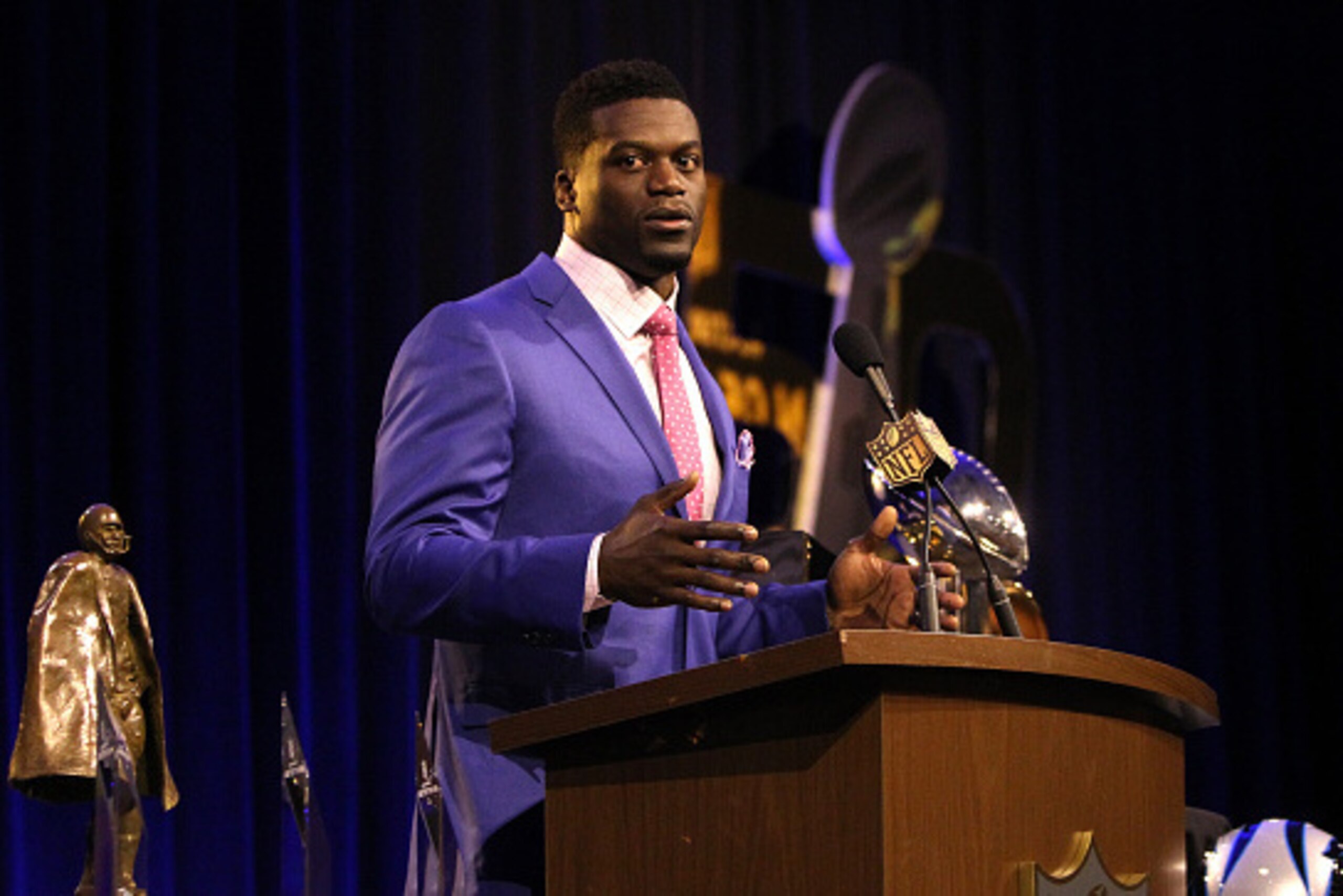
That’s who Watson is as a football player and why there will still be demand for his services should he make them available.
But Benjamin Watson the person has five children, the oldest of which is seven. He’s experienced and knows how to handle the life side of free agency. The Watsons have left New England for Cleveland and then jetted south to Louisiana for the past three seasons.
“It doesn’t get any easier,” Watson told Bleacher Report during a phone conversation. “But you’re more prepared.”
Watson’s family has continued to expand throughout his career. The exact timing of one childbirth added a few more tablespoons of crazy to an already chaotic experience.
“I was leaving Cleveland and had decided to sign with the Saints,” Watson said. “I came down to New Orleans and signed a contract on March 18, 2013. Then I flew back to Cleveland, and we had our fourth child on the 19th, the next day. My wife was nine months pregnant when I entered free agency.”
“Then I went back to New Orleans, and two weeks later, after I found a house, we moved an entire home with a newborn baby all the way down to start my time with the Saints. So it happens just like that. It’s kind of a whirlwind.”
Watson wants to stay in New Orleans, partly because of the non-football factors tied to family life and his comfort in the area, and mostly because catching passes from quarterback Drew Brees is a pretty sweet gig.
But as a veteran who's ridden the free-agency carousel twice before, he’s aware of the business realities. He knows that what a player wants may not always align with team needs or, more importantly, salary-cap restrictions.
So he’s prepared to move again, and his family has already made decisions to ensure future transitions are easier. For example, his kids are home-schooled, which provides more flexibility.
However, those young minds don’t always grasp what’s happening and why they’re moving to a strange new house in a strange new city. Clinging to memories is only natural.
“If we move again, this time, the hardest thing now will be that the kids are at a point where before only Grace, my oldest, really knew what was going on, and she was upset," Watson said. "For the first two years here, all she would talk about was the Browns. She didn’t want to talk about the Saints. The Browns were her team. I remember she was really tearful and would say things like ‘Daddy, you’re losing your team! I don’t want you to lose your team!’”
“She was only five years old, so Cleveland and the Browns were part of her first real memories. So now our oldest three will have a similar experience, and their first memories here in New Orleans. That starts to get hard when you see them and their faces when it’s time to move.”
There are some aspects of life that can’t move along with the furniture. They range from relationships grown through a local church to memories lingering in a child’s mind.
Those difficulties can come with any move, of course. But the stresses of relocation build when one family uprooting turns into two and then three over a short period of time.
Jasper Brinkley knows quite a bit about that, too. The 30-year-old middle linebacker has made four different NFL stops since 2013. He spent the first three seasons of his career with the Minnesota Vikings. Then he signed a two-year contract with the Arizona Cardinals, went back to the Vikings for 2014 and spent the 2015 offseason with the Dallas Cowboys before being released and landing with the New York Giants.
He’s dotted the country while bringing along four children who range in ages from 14 to an infant born just a few months ago. Brinkley is preparing to become a free agent again after a fine season in which he recorded 67 tackles and a sack over 15 games with the Giants.
As a football player, he wants to be wanted and to sign with a team that values his contributions. As a father, he wants to stop moving around so much. He wants to settle in somewhere and give his family a chance to become comfortable in an area while growing together.
Essentially, there’s a part of Brinkley that wants the typical existence of a 30-year-old, at least in terms of his family life. But experience has told him that’s a tough ask.
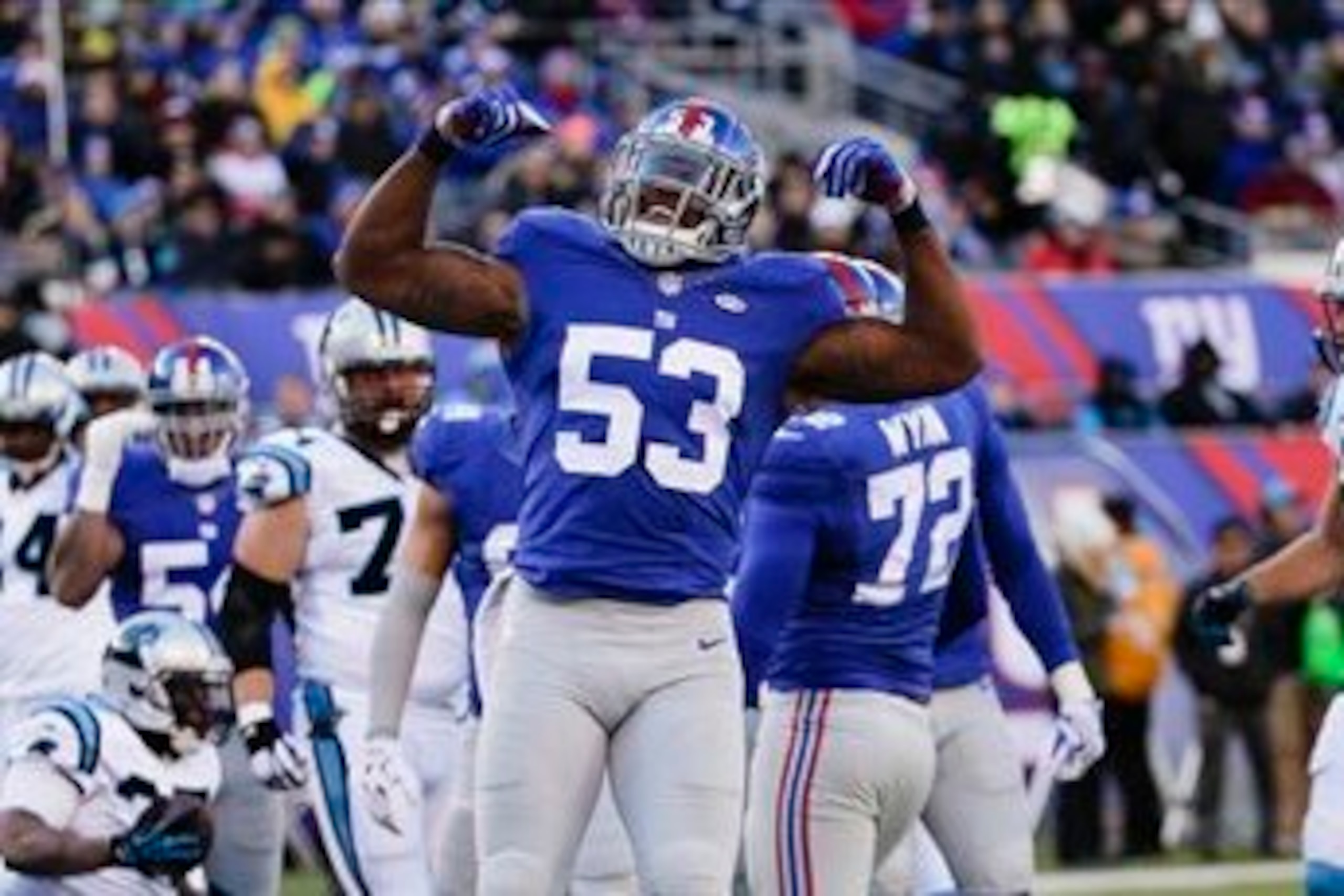
“Moving from city to city is something that comes with the job, but ultimately guys would rather have a city where they can establish their family roots,” Brinkley said. “It’s so hard on the family to pack up and move each and every year. The player can do it if he’s just by himself. But when you have a family, it brings a different element that you have to factor in.”
“Guys want stability, and sometimes the game doesn’t offer it to certain people,” he added. “I’d like to have a situation where I can be stable for a few years, and maybe have the kids become comfortable in one school system. But when it comes to work, you have to go where the work is.”
And often the work is wherever a contract offer takes you.
“There are a lot of things that people don’t see,” Brinkley continued. “Guys have to uproot their family and go to a different city. Then after they put those roots down in a new city, it could be that at the end of the season, you have to do it all over again. People look at the fame and fortune, and sometimes I even hear them say ‘Why are they complaining?’ We’re not complaining, but it’s a lot. You put your body on the line, and every week, you could be playing your last game. There are so many factors.”
For both Brinkley and Watson, there’s also another element involved. But in a way, this one is a gift they leave behind in each city.
Spreading generosity
After the Vikings selected Brinkley with their fifth-round pick in 2009 and he made the 53-man roster, the then-24-year-old rookie approached his new team with a question: How can I help out in this community?
He’s originally from Georgia and played his college football at the University of South Carolina. Minnesota wasn’t familiar to him, but he wanted to give back somehow.
The Vikings connected Brinkley with Rae Blaylark, whose son, Trey, was diagnosed with sickle cell disease when he was two weeks old. Trey is now 19 and has relied on blood transfusions throughout his life.
Brinkley participated in and helped to promote blood drives during his time in Minnesota.
“I had the opportunity to meet him, and he grew on me,” Brinkley said, describing his relationship with Trey. “After that, we did blood drives for three years straight.”
He still keeps in touch with Trey and his mother, but the same personal presence isn’t quite there.
“Moving almost each and every year, you build relationships like that and meet people different from yourself,” he said. “But then you have to be torn away from them.”
For Watson, his humanitarian efforts travel with him. The One More Foundation he started in 2008 made him a finalist for the 2015 Walter Payton Man of the Year Award. Although he remains focused on his immediate local area, Watson has planted a community-minded seed wherever his NFL travels take him.
“We still get letters, emails and text messages from people in Boston who we worked with,” Watson said. “We did a charity event for the homeless in Boston, and people still remember it. Now they tell us they’ve done something else because we did something for them. In Cleveland, it was the same way, and I know it will be in New Orleans, too. Giving is contagious.”
Even if personal roots don’t take shape in one city, players often embrace their surroundings as newly signed free agents. There’s a sense of charity and adventure.
But before arriving in that community, there are questions to answer. The football questions come first, followed by others tied to a life around football.
Answering questions
Cornerback Will Blackmon has answered plenty of football and non-football questions throughout his nine seasons, officially logging games with four teams. Including his two training-camp stints with the Seattle Seahawks, Blackmon has pinballed to five different NFL cities, doing it all while warmly welcoming his tourist status.
“My wife and I, we like to travel around and experience different cities,” said Blackmon, who spent 2015 with the Washington Redskins and is an impending free agent again.
“I never thought I’d be in Jacksonville, Seattle or Virginia. When I got drafted, I never thought I’d be in Green Bay. I’m experiencing our country and finding out what to do. My wife is always excited to check out historical stuff, like the Lincoln Memorial.”

Blackmon approaches free agency with an eye toward a new opportunity on the field and curiosity away from it.
For a time, he defined what it meant to be a journeyman. After spending the first four years of his career with the Green Bay Packers and then being on the Giants’ Super Bowl-winning team in 2011, he found himself buried deep in the free-agency wilderness. The now-31-year-old had battled through a knee injury, which limited interest on the open market.
He missed an entire calendar year of football, sitting out 2012. When desperation hit its peak, he signed with an Arena Football League team and nearly attended a regional combine. But he had one last phone call to make.
When he dialed the digits, Seahawks general manager John Schneider picked up on the other end.
“I took matters into my own hands,” Blackmon said. “I had a good relationship with the assistant to the general manager in Green Bay. He happened to be John Schneider, who had just gotten the GM job with the Seahawks.”
“I called him in February 2013 and said, ‘I’m just trying to get a workout.’ So he brought me in. He was trying to get me some buzz so teams knew I was out there.”
“In that situation, he gave me a heads-up and said, ‘We don’t need any corners, so you can be released any day.’ He was straight up about it. The whole point wasn’t making the Seattle Seahawks. The point was me letting everyone know that I can still play ball. So after getting cut, I was signed that same hour by the Jaguars because I put out good tape during the preseason.”
Blackmon still has that mentality of taking whatever he’s given and pouncing on every chance to be a difference-maker. But now, as his age advances and family circumstances change, running through the free-agency ringer again comes with more questions. Life questions.
Blackmon is now married with two children, a five-year-old son and a 13-month-old daughter, giving him a whole lot more to think about every time his services are available on the open market.
“Now it’s tricky because we have a whole household, and my son is going to start kindergarten in the fall,” he said.
“It’s a matter of do we get a home base? And what’s the best opportunity both for me in football and with him as far school is concerned? It’s such a huge production that comes along with free agency now. You definitely want to exercise all options and find the best opportunity both on the field and for the family as a whole off the field.”
Watson also knows that feeling well. He may have just posted career single-season highs in receptions and receiving yards, but the first-round pick from back in 2004 still knows the end is coming soon enough.
He’s always weighed the many outside factors in play while making a decision during free agency. Those decisions are becoming more critical now as his children grow older and his career slowly winds toward its conclusion.
“You weigh length of contract, cost of living and the distance away from your family,” he said.
“Most of our family is in the South. So we’ve been away from them for most of my career. But you weigh how far you want to move away and for how long. Are you going to move all the way across the country? You also weigh the commitment of the team. If we’re talking about a team that’s far away and the commitment is minimal, does a guy want to take that risk?”
Football usually remains the primary concern for the family men of free agency. But matters at home are an exceedingly close second.
“You do take all of that into account, including school and church,” Watson said.
“You’re the father, and you’re leading your family. You’re wary of what kinds of stresses you want to put on your family and how far you want to go. If you have certain options with different teams, maybe you want to stay closer to where you were before. Or maybe you stay with the team you’re on now simply because you don’t want to move all the way across the country for a short amount of time with an entire family. Those things factor into your decisions as you start to be more of a family and your kids get older.”
Athletes who are well aware of what they entered into—a career potentially filled with constant migration—still share a normal human instinct with the rest of us. As a family begins to take shape and then grows, there’s a natural desire to anchor down and search for comfort.
That comfort can dissolve fast. Just ask Lance Moore.
It all happens so fast
Moore was an undrafted wide receiver in 2005 out of Toledo. So the mere fact he’s played 129 NFL regular-season games while sticking around for 11 seasons is already an accomplishment.
Of those years, nine were spent with the New Orleans Saints. He owns a shiny Super Bowl ring from the Saints’ 2010 championship. At the peak of Moore's production while catching passes from Brees, he posted a career single-season high of 1,041 receiving yards in 2012.
One year later, he was gone.
“You spend so much time in a single place as I did in New Orleans, and you get really comfortable with not only what’s going on with the team but also the community and meeting people that you establish relationships with, the kind you’ll keep forever,” Moore said.
“Then next thing you know, you’re getting a text from a buddy, who’s saying he read on Twitter that you’re being shopped. Then you get a call saying you’ll be cut. It happens so fast, and you kind of have to do the best job you can to not take things personally.”
Moore is now set to enter free agency again after spending 2015 with the Detroit Lions. If he doesn’t re-sign with the Lions, he’ll join his third team in three years. His living arrangements during some of that time haven’t exactly reflected the sparkling life of NFL luxury most imagine.
Moore and backup quarterback Bruce Gradkowski were roommates during his lone season with the Pittsburgh Steelers. Then he took the wise, cautious and surely common approach after signing with the Lions. He didn’t want to settle into a new home until after being assured of a roster spot.
When he was in Detroit training during the 2015 offseason, Moore just needed a bed. The location of that bed? A Comfort Inn.
Now Moore’s days of roughing it by NFL standards may be coming to a close. That’s what happens when a tiny football enters your life.
With a six-month-old at home, Moore is in the early stages of balancing family and football, an act that’s easier long before his daughter is in school.
That is probably for the best right now, because his travels through the free-agency jungle have reinforced a reality. The NFL can be a cold and unforgiving workplace slanted against the players, with careers taking sudden detours.
“The fact we can literally be cut on any day makes you appreciate it when you are on a roster,” he said.
“It’s a weird dynamic where a guy can sign a five-year deal worth X amount of dollars, and then three years later, a team can say, ‘We don’t want to pay you that much now.’ Then they cut you. But if a player is outperforming his deal and he doesn’t want to report to camp because he thinks he should be paid significantly more, the player’s actions are frowned upon not only by the team and front office but also by fans and everybody who thinks they should be at work.”
Abrupt endings are common in the NFL for both roster spots and careers. But there’s more than just a player and a salary-cap number behind that update scrolling by on the ticker.
Beyond that name is a cornerback who was nearly done unpacking boxes in Seattle with an infant by his side, and days later, he’s in Washington.
Beyond that name is also a wideout sleeping in an economy hotel and a linebacker still in contact with a young man whose life he touched while playing for a different NFL team, in a different NFL city.
Beyond that name is more than a paycheck, depth at wide receiver or a tight end looking to still be productive as he winds down his career. Beyond that name is a family and life that’s regularly uprooted, all in the pursuit of a football dream.
All quotes obtained firsthand unless otherwise noted.

.jpg?w=2560 "Giants Camp Football")
.jpg?w=2560 "Sky Ban Enes Kanter Freedom from Home Games (AP)")