B/R NFL 1000: Ranking the Top 35 Right Guards from 2015
Now that we've reached the end of the 2015 NFL season, who was the best right guard in the game? We're not talking about who made the Pro Bowl or even who got the All-Pro votes. Who was really, truly, the best? Forget reputation and how much money each player makes. We want the sort of cold, hard analysis that comes from watching the games and grading the players.
That's what the B/R NFL 1000 is for, and it's back for another year.
The B/R 1000 metric is based heavily on scouting each player and grading based on key criteria for each position. The criteria are weighted according to importance for a best possible score of 100.
Potential is not taken into consideration. Neither are career accomplishments.
Right guards are judged on pass protection (45 points), run blocking (45) and the overall value of the position relative to the other spots on the field (seven points). The maximum score for this position is 97.
In the case of ties, our team asked, "Which player would I rather have on my team?" and set the rankings accordingly.
Subjective? Yes. But ties are no fun.
Each player was scouted a team of experienced evaluators (Dan Bazal, Luke Easterling, Cian Fahey, Duke Manyweather, Matt Miller and Marshal Miller) with these key criteria in mind. The following scouting reports and grades are the work of months of film study from our team.
All statistics from Pro Football Focus. Players' heights, weights and seasons played from NFL.com.
35. Billy Turner, Miami Dolphins
1 of 35
Pass Block
Billy Turner glides into his pass set, but he never really works to a spot to build his house in pass protection. His feet are all over the place, and he's rarely effective using his hands. He's often off-target with his punch and not in position to rework his hands to leverage.
Turner is at his best when he can throw hands at the line of scrimmage to stonewall defenders and use his base to stay in front of them and cover them up. Turner does a decent job of using his length to widen and shield defenders from attacking his edge when he is initially moved off his spot and shows good foot quickness and balance to mirror and stay in front of defenders.
Run Block
Turner maintains a functional base in the run game, which allows him to hold up and position. He doesn't play with leverage and overall strength, though. Instead, he settles for engaging, fitting and occupying with minimal movement.
The 2014 third-round pick is fairly decent at targeting to cut off the backside and shows he can dig heavier-shaded nose tackles out and off the point of attack. Turner is also effective on combo blocks and does a good job of securing the line of scrimmage, allowing his center to gain position by banging down A-gap players as he climbs to the second level.
When asked to pull, Turner displays good short-area quickness and agility to engage the block, and he usually keeps his legs driving to get movement.
Position Value
Overall
34. Matt Tobin, Philadelphia Eagles
2 of 35
Pass Block
A 2013 undrafted free agent out of Iowa, Matt Tobin hasn't made the strides the Eagles probably would have hoped to see. In 2015, he proved once again to be well below average in pass protection.
Tobin doesn't possess the size (6'6", 290 lbs) and strength to allow space and wait to punch and anchor on defenders. He relies on quick-setting, jump-setting and firm-setting flat to punch and latch immediately to gain inside hand placement. He runs into major trouble against defensive tackles with elite power, as he simply gets overwhelmed and cannot anchor.
Tobin does have the foot quickness and lateral agility to mirror and stay in front of defenders, though, and he displays the body control and balance needed to quickly redirect and recover. He's active in slide protection as well, and he has a good feel for giving help where needed.
Run Block
Tobin is an adequate run-blocker, and it has a lot to do with the Eagles' scheme, which complements his skill set and physical ability.
Tobin won't physically dominate defenders at the point of attack, but the scheme allows him to use his quickness, footwork and positioning to win where he needs to. Tobin is an outstanding puller who shows the ability to track moving targets well. His body control allows him to execute blocks in space with contact or by cutting.
Tobin explodes out of his stance in the run game and is able to quickly reach, flip, hook and seal defenders. When uncovered, he runs good track angles when climbing to the second level and is able to fit and engage linebackers quickly.
Position Value
Overall
33. J'Marcus Webb, Oakland Raiders
3 of 35
Pass Block
In his sixth year in the league, J'Marcus Webb still didn't show much improvement in pass protection. At best, the former Chicago Bears seventh-rounder was a wash for the Oakland Raiders in protecting Derek Carr in 2015.
Webb has the ability to set short or expand his set points off the line of scrimmage. When he sets short, he does a good job of using his outside hand to keep rushers off balance while saving his inside hand to take away the inside counter. However, he struggles to set his feet in one spot and build his house. There are times when he needs to stop kicking and make a stand, but he allows defenders right into his frame.
Webb fights with his hands to regain position, but that makes it difficult for him to consistently anchor, especially against power players. However, he does a nice job of using his frame to create presence and stay firm in slide protection, using his width to occupy and his length to help secure the backside of the slide.
Run Block
For all his faults in pass protection, Webb is much more able in the run game. He quickly engages and gains hand placement to control defenders right at the snap of the ball. He also shows the ability to create leverage to get under defenders and play with square power through his base.
Webb is always fighting to rework his hands, but he runs into trouble when his pad level raises on his second step. When that happens, defenders are able to leverage and get under him to stand him up, and a loss of leverage is a loss of power for the West Texas A&M product.
Webb understands when he needs to be "heavy" on combo and double-team blocks, but he doesn't always show the awareness to square up and fit on showing linebackers. In 2015, he was often out of position and looked to have his eyes in the wrong spot in many instances.
When the run goes away from him, Webb shows he can dig heavier-shaded nose tackles out of the hole and off the point to get vertical push. He is then able to seal them on the backside away from the ball-carrier.
Position Value
Overall
.jpg?w=2560)
.jpg?w=2560 "Rams Eagles Football")

32. John Jerry, New York Giants
4 of 35
Pass Block
John Jerry's length is an asset in pass protection. He has a smooth pass set that allows him to create space and work to expanded set points, and he plays with good weight distribution to maintain a functional base.
Jerry has the foot quickness and lateral agility needed to mirror and stay in front of defenders. He displays good patience and punch timing when delivering a strike, which allows him to create leverage with his hands and anchor, although there are times when he can be overwhelmed by defenders who play with explosive power and strength.
Jerry is active in providing help when he is uncovered, but at times he drifts a little too much, making it hard for him to work back to pick up late line games and pressures.
Run Block
Jerry isn't going to physically dominate defenders at the point of attack in the downhill run game. Instead, he settles for hand placement and positioning as opposed to delivering a jolting blow off the ball.
The former Ole Miss standout is effective at overtaking and slipping off zone combo blocks and can push the combo lateral when he stays on. He doesn't get much push when needing to take double-teams vertical, though, and he often plays with an inconsistent base that leaves his feet too close together.
Jerry doesn't possess short-area quickness or take good angles when climbing to the second level, which makes him ineffective in that regard. He is, however, effective as a pulling guard, generating enough momentum to forcefully kick out or lead-block on power runs.
Position Value
Overall
31. Tre Jackson, New England Patriots
5 of 35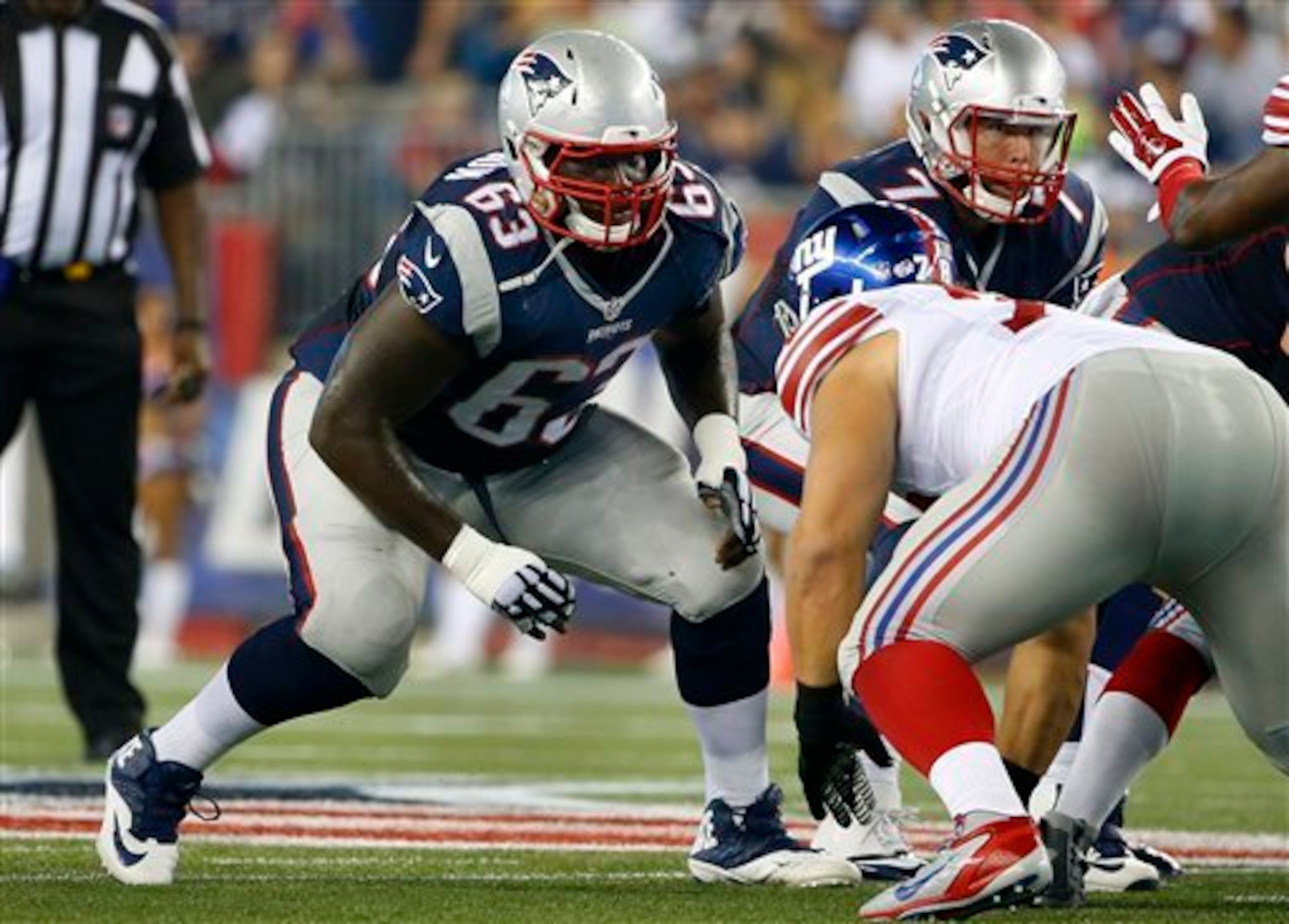
Pass Block
Tre Jackson has many fundamental issues in pass protection, and it all begins with his slowness getting into his pass set.
Jackson often allows defenders to get up the field while gaining momentum and, more importantly, gaining ground to move him off his spot. He's often late with his hands and leads with his head—exposing his chest when punching—which makes him susceptible to defenders getting into his frame and bull-rushing him to the point where they stand him up.
Jackson doesn't possess the strength to hold up and strain through to anchor. He's at his best when he can set short, latch on right away and anchor, but he runs into trouble when defenders quickly counter through him or to the inside. Jackson actively looks for work when he's uncovered, but he tends to drift too much. He ran into some issues working back to pick up line games and late pressures last season.
Run Block
Jackson has shown that he can quickly fire off the ball to engage defenders and gain inside hand placement to leverage and get initial push off the point of attack. However, he lacks the overall base needed to use strength and square power to sustain blocks, often raising his center of gravity and bringing his feet together.
Jackson often settles for position blocking and is inconsistent with his zone-blocking footwork, frequently stepping underneath himself and lunging head-first in an attempt to recover the block. He does show the short-area quickness and agility needed to pull and make forceful contact on defenders, but again, there are times his base narrows on contact and he cannot sustain blocks for long.
Position Value
Overall
30. Laurent Duvernay-Tardif, Kansas City Chiefs
6 of 35
Pass Block
Laurent Duvernay-Tardif is, at best, an inconsistent player with a lot of room for growth. 2015 was just his second NFL season, and the former sixth-round pick showed his inexperience early and often.
He is at his best in pass protection when he can eliminate space by jump-setting and anchoring immediately. When he has to expand his set points, he is inconsistent with his footwork, often stepping forward before driving back off the line. In doing so, he loses half-man leverage and misses with his hands, exposing his chest and allowing defenders into his frame.
Still, Duvernay-Tardif's ability to quickly recover when he is moved off his spot is fairly impressive. He displays the body control, balance, lower-body strength and mobility to quickly re-leverage and anchor. An offensive lineman's ability to recover is important but not always a given. He has not only shown he has the physical ability to do it but that he can also fight and battle in doing so.
Duvernay-Tardif actively looks for work when uncovered. He aggressively sets firm toward the slide when he knows he has help and shows the awareness and mental processing to regain depth relationship, working back to pick up line games and pressures.
Run Block
Duvernay-Tardif is a solid run-blocker who generates good power through his base at the point of attack. He has the footwork, leverage and hand placement to consistently step, latch and gain control of defenders. He also has the strength and power to sustain blocks and is able to rework his hands and re-leverage his hips to drive through stalemates.
On vertical double-teams or combo blocks, Duvernay-Tardif laterally squares up and vertically explodes, staying heavy through the half of the defender he combos on, which generates decent leverage and push. When runs go away from him, he has the short-area quickness and targeting to rip and run and cut off the backside.
Inconsistency again creeps in when getting to the second level, though. His base is erratic on contact, which leads to the inability to sustain after initial engagement.
Position Value
Overall
29. Vladimir Ducasse, Chicago Bears
7 of 35
Pass Block
Vladimir Ducasse continually ran into issues in one-on-one pass-protection situations in 2015, namely when he couldn't win with his firm set and immediate punch to stonewall defenders at the line of scrimmage.
If Ducasse is forced to expand his set points and stay in half-man leverage on defenders, he's inconsistent with his punch timing and often lunges forward and misses with his hands. When he's moved off his spot, he struggles to maintain the weight distribution and leverage needed to recover.
Ducasse does show he can mirror and get his hands on defenders to stay in front of them, though, and he is often able to use his lengthy arms to keep defenders at bay. He displays the awareness and mental processing needed to pick up line games and sort through pressures, and he does a good job of looking for work and giving help when he is uncovered.
Run Block
At this point in his career, Ducasse is what he is: a strong run-blocker whose work in the run game overshadows his deficiencies in pass protection.
He plays with square power and leverage through his base, allowing him to consistently get movement at the point of attack and sustain to power through stalemates. He has the short-area quickness, footwork, hand placement and overall strength to pin down and block A-gap defenders at the point of attack on power runs as well.
Ducasse proved to be an effective puller moving in either direction last season, using various pulling techniques to dip and explode through contact while using his hands to provide leverage. Still, there were times when defenders were able to get under him and stuff him at the point of attack.
Position Value
Overall
28. Cody Wichmann, Los Angeles Rams
8 of 35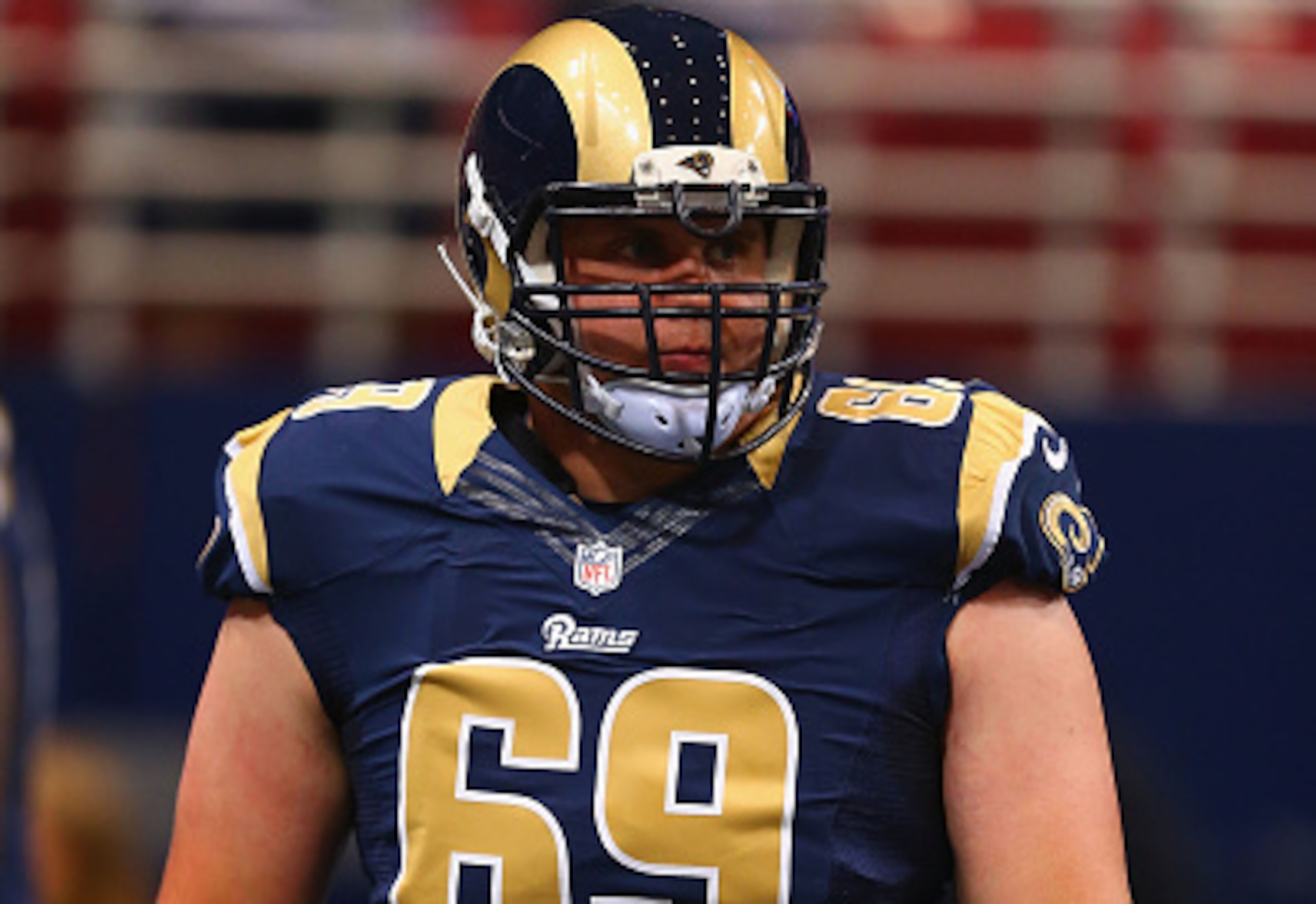
Pass Block
Despite being a sixth-round pick by the Rams in 2015, Cody Wichmann saw plenty of snaps during his rookie campaign. While it wasn't always pretty, he did show some promise and the ability to develop into a solid NFL guard in the near future.
Wichmann is active in pass protection and sets quickly, not allowing much space for defenders to work. He has explosive upper-body power when delivering a punch, but at times he misses with his hands and exposes his chest, which makes him susceptible to the bull rush.
Wichmann does maintain a functional base, which allows him to play with balance and decent weight distribution in his pass-pro demeanor, but he seems to run into the most trouble when recovering against defenders who can quickly throw multiple counters and escape while moving up the field.
Run Block
Despite inconsistent technique, Wichmann looks to get after it in the run game. His failures are never from a lack of effort.
He explodes off the ball and is able to generate power to effectively get push at the point of attack. He also shows the hand placement and upper-body strength necessary to engage and control defenders.
Still, Wichmann is inconsistent in terms of the footwork needed to reach or cut off the backside and often plays out of control, whiffing on blocks and trying desperately to throw his body across to gain position and execute.
Wichmann does effectively get vertical push when double-teaming, though, and is able to square his shoulders up to engage linebackers on the second level. When asked to do so, he is a decent puller up to the point of making contact, but he often falls off the block when his feet get too close together or stop moving on contact.
Position Value
Overall
27. Andrew Tiller, San Francisco 49ers
9 of 35
Pass Block
Andrew Tiller's struggles in 2015 can be credited to two things: inconsistent technique and lack of exceptional functional strength. While he was not deficient in many areas, he simply wasn't proficient in enough last season.
In pass protection, Tiller is often able to quickly short-set and cover up defenders off the snap. He also has a tight hand carriage and shows a powerful, quick and violent strike on defenders, jolting them enough to stop their charges.
While Tiller shows the strength to leverage and anchor when he wins quickly, he struggles to regain position when he is moved off his spot or gets overwhelmed with power because his pad level rises. And while he is able to use his length and quick feet to mirror and stay in front of defenders, he sometimes drifts too far, making it difficult for him to recover against quick countermoves.
Run Block
Tiller explodes out of his stance and is able to jolt defenders back, but he does not play with much leverage or strength at the point of attack. He often fails to sustain and drive and sometimes settles for his initial contact and positioning to shield defenders away from the ball-carrier in the downhill run game.
Though Tiller struggles in the power downhill run game, he does make up for it with his sound combo-blocking ability and pulling ability. As a puller, he has the agility and body control to short-trap or kick out and is able to wrap tightly leading up to second-level blocks on linebackers.
Position Value
Overall
26. Ted Larsen, Arizona Cardinals
10 of 35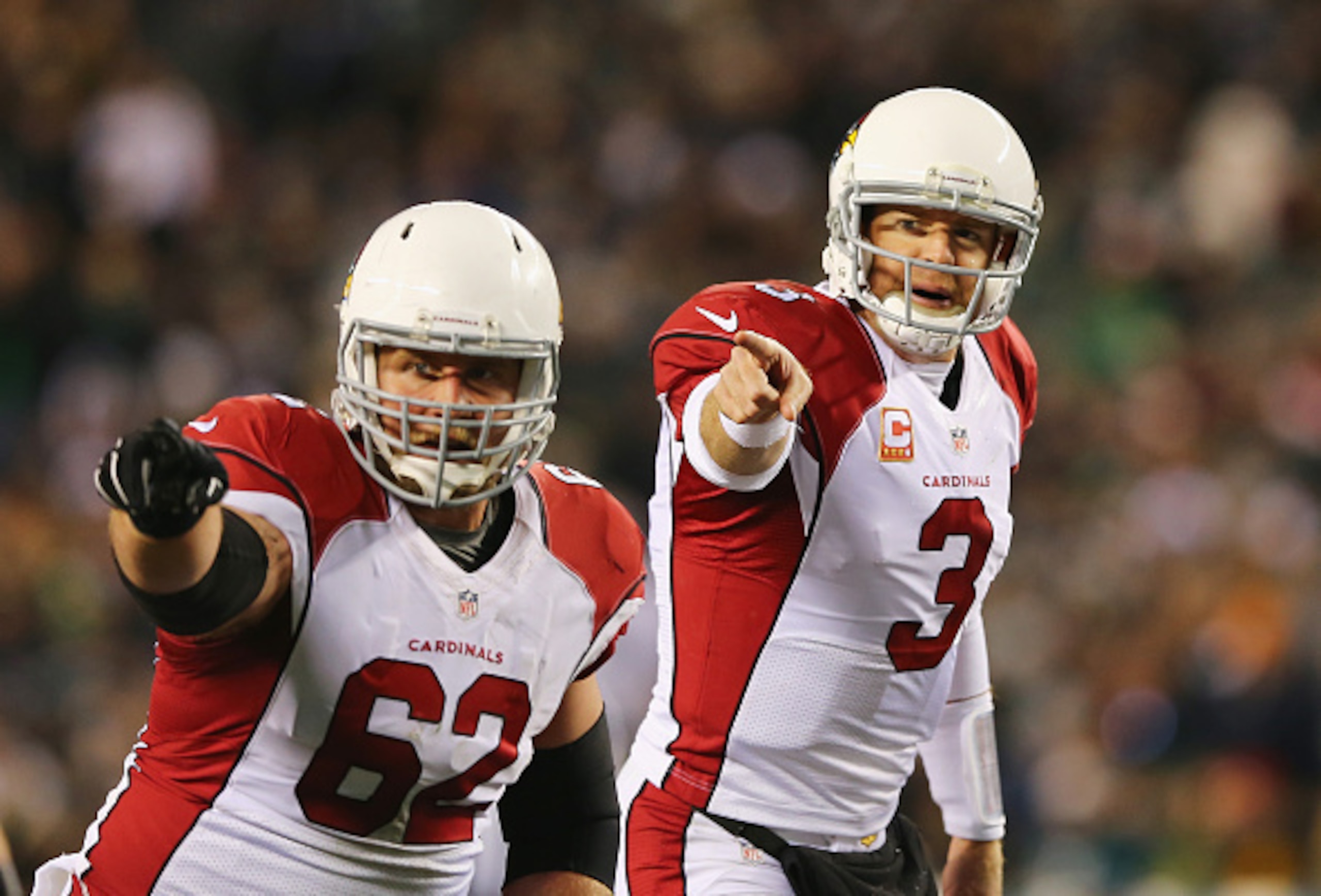
Pass Block
Ted Larsen is an efficient mover in pass protection, snapping into his pass set and creating space to cover up defenders while maintaining half-man leverage. He's often able to get to his spot and set his feet to build his house and deliver a well-timed, explosive punch while latching and anchoring.
Larsen is effective with his overall hand usage, showing good punch timing and hand placement. He's usually able to keep defenders off balance and get rushers to the turf with independent hand usage.
In 2015, he also showed that he could set aggressively to stop up-the-field defenders, though he did run into issues when lengthy defenders were able to quickly counter and get back up the field. In fact, that's one of the ways he gave up a few pressures last season.
Larsen has a functional base in his pass-pro demeanor, which allows him to maintain even weight distribution, balance and body control. He's also active looking for work when uncovered and always seems to catch defenders with rib shots when exposed.
Run Block
Larsen plays with strength and immediate square power in the run game, allowing him to get push at the point of attack. He fires off the ball and engages often, gaining inside hand placement to control defenders.
Larsen usually maintains a functional base and a low center of gravity, which allows him to re-leverage and get under defenders to drive and break through stalemates. He also understands the footwork, hand placement and targeting needed to cut off the backside when runs go away from him.
The six-year vet understands the principles of sound combination blocking, almost always knowing when to disengage and get to the second level. He takes good angles in that regard, but he sometimes brings his feet too close together before contacting linebackers, resulting in poor balance and falling off blocks.
Larsen is effective as a puller and is usually able to hit and fit with the correct shoulder for the direction he is pulling. While not a mauler in this regard, Larsen's blocking in space is not necessarily a negative of his run-blocking game.
Position Value
Overall
25. A.J. Cann, Jacksonville Jaguars
11 of 35
Pass Block
Jacksonville's A.J. Cann is a polished pass-blocker who relies more on finesse than raw power. It works to his advantage in pass protection, but the same can't be said for his average run-blocking skill set.
Cann shows an explosive pass set to drive and create space off the line of scrimmage. When he reaches the expanded set points needed to stay in half-man leverage, he's especially skilled at taking on 3-technique defensive tackles without the advantage of position.
Cann maintains a low center of gravity in his pass-pro demeanor and plays with good lower-body mobility, which allows him to maintain even weight distribution when he is battling in pass protection. Once he is on his spot, he is able to drop his hips, rework his hands and create leverage to anchor.
Despite playing with leverage, there are times when Cann just doesn't have the raw strength to avoid getting walked back, and he simply can't anchor against defensive tackles who have elite power when they bull-rush. Still, Cann combats those shortcomings with patience, quickness and upper-body explosion, often delivering a well-timed punch to stop the charge of defenders.
Run Block
The young South Carolina product is an ideal fit for a zone-blocking scheme. His footwork, quickness, targeting and hand placement are ideal, allowing him to hook and work his hips around to seal defenders.
When uncovered, Cann takes good angles climbing and tracking to the second level and is able to fit on linebackers, although there are times when his feet go dead and he falls off blocks, even ending up on the ground sometimes. He makes up for that with his combo-blocking abilities, though.
He understands how to effectively work zone combos. He knows exactly when to stay on heavy and keep pushing or when to overtake when he has leverage. He also realizes that he should simply slip off when his combo mate secures the block.
Cann plays with sound hip explosion, plus the strength and power to hit, lift and drive defenders, consistently moving the point of attack in the downhill run game. He is also a good pulling guard, whether it be a short trap, a long kick-out or leading up on power runs.
Position Value
Overall
24. Kraig Urbik, Buffalo Bills
12 of 35
Pass Block
The first word that comes to mind when describing Kraig Urbik's pass protection is "steady." He doesn't try to do too much. He understands what he is good at and continues to position himself to do it.
Urbik shows good patience in pass protection and sound strike-zone recognition and punch timing to deliver an on-target strike. He also has impressive lower-body strength to consistently anchor.
In slide protection, Urbik stays firm toward the slide and actively provides help, yet he stays in control to work back to pick up any late pressure. He's adept at keeping square and using his width and base to stay in front of defenders when mirroring. He also shows the ability to use his hands and arm length to keep defenders within his frame.
Run Block
Urbik is a strong downhill run-blocker who plays with more square power and raw strength than explosion at the point of attack. He generates ample force through his insteps, which allows him to strain and drive through to break stalemates.
The seven-year NFL vet generates good leverage when stepping same-foot-same-shoulder, violently standing up 3-technique defensive tackles on "deuce-block" double-teams, which allows his offensive tackle to collapse and get vertical push. Urbik shows he can dig defenders out at the point of attack to prevent them from pursuing when the run goes backside.
While he isn't a devastating puller, he does generate enough leverage through sound technique to make blocks in space.
Position Value
Overall
23. Ali Marpet, Tampa Bay Buccaneers
13 of 35
Pass Block
Ali Marpet had his struggles in pass protection throughout his rookie season, but he did improve in some areas as the season progressed.
His issues stemmed mostly from inefficiency with his feet.
When he needed to expand his set points, he'd drive back and create space with his first kick. However, he would then kick forward and out, wasting the initial space he created and allowing defenders to gain ground, attack his edge or get into his chest. Once defenders got into Marpet's frame, he was unable to rework his hands and re-leverage his hips to recover.
As the season went on, Marpet began to figure out what he was good at: getting to his landmark, latching and mirroring. He regularly picked his spots to set aggressively, which got him into trouble at times, but he never failed to battle in those situations. He isn't afraid to take risks in pass protection, and for a rookie from a Division III school, taking risks and getting beaten is simply a reality.
Marpet is active when uncovered and always looks for work. He shows the feet to mirror and stay in front of defenders and is consistently able to take away the inside with quickness and a strong inside hand. He shows good depth relationship and awareness to pick up line games and to be in position to pick up pressures.
Run Block
Marpet quickly fires off the ball in the run game and gains inside hand placement to leverage and get under defenders, but he doesn't play with the overall strength or the raw power to consistently push the point of attack right at the snap in downhill run situations.
The Hobart College product plays with a good base (with his insteps dug into the ground), which allows him to generate enough force to strain and sustain and eventually get movement once he re-leverages his hips.
Marpet does a nice job of stepping down and striking the hip of the nose tackle to collapse and widen the point of attack on down blocks, allowing his center to pull. If he gets a shaded nose tackle, he shows the quickness to pin the point of attack, allowing his center to get out.
Marpet uses his quickness and targeting to cut off the backside when runs go away from him and shows the footwork and hand placement to reach 3-technique defensive tackles. He understands how to secure the line of scrimmage to get push on combo blocks and double-teams, staying heavy to keep pushing the combo and knowing when to overtake.
If anything, there are times when he could come off on linebackers, but instead he keeps pushing the combo.
Marpet showed he could effectively pull, fit and accelerate through contact on defenders last season, but at times he would fall off blocks because he narrowed his base on contact. Marpet's overall technique, speed and physicality are all things that cannot be taught and are factors that allowed the rookie to progress through the season, despite lacking the strength and power needed to complement his skill set.
Position Value
Overall
22. Manuel Ramirez, Detroit Lions
14 of 35
Pass Block
It almost seems unfair to evaluate and grade Manuel Ramirez as a guard when center has been his best pro position throughout his career.
Ramirez never looked comfortable in 2015 when needing to expand his set points and create space to stay half-man on defenders who attacked his edge. He often did not get to his landmark to settle his feet and, as a result, would miss with his hands and expose his chest. He did show great balance and body control to quickly recover in many instances, though.
Ramirez seemed to be at his best when he could set short and get his hands on defenders immediately to stonewall them at the line of scrimmage. The veteran worked well in slide protection, always knowing where he had help so he could play aggressive and stay firm toward the slide.
He also showed good awareness and an understanding of depth relationship when he needed to pass off line games and sort through pressures, and he looked for ways to help when he was uncovered.
Run Block
Just like in pass protection, Ramirez's in-line angles, targets and landmarks all looked off in the run game, and it was especially evident when he climbed to the second level on outside zone plays.
His struggles with cutting off the backside when runs went away from him also seemed to be a result of short targeting and an inability to work to expanded in-line angles. When covered, he did a nice job of stepping to blocks, fitting, positioning and leveraging to gain control. He also showed he could play with enough square power to drive through stalemates.
There was no drop-off in Ramirez's ability to work double-teams and zone combos in 2015, though, as he proved he could work to get vertical push and square up to fit on linebackers. And because he knows exactly when to keep pushing, he can overtake or come off on linebackers.
Position Value
Overall
21. Hugh Thornton, Indianapolis Colts
15 of 35
Pass Block
The Indianapolis Colts offensive line takes a lot of abuse for its pass-protection issues, but Hugh Thornton probably shouldn't be taking the brunt of it. He was well above average in that area in 2015.
Thornton shows a quick pass set, driving back off the line of scrimmage while maintaining even weight distribution and a low center of gravity. This allows him to get to his spot to set his feet, build his house, punch and anchor. However, there were times last season when Thornton created too much space, which allowed defenders to build momentum to bull-rush and get into his frame.
The former third-round pick plays with good patience and punch timing, as well as solid strike-zone recognition, delivering heavy-handed, well-timed strikes. Thornton can also set firm to stonewall defenders at the line of scrimmage.
He has great body control and the balance needed to recover when he's moved off his spot or when he loses position. He also displays the ability to drop his hips and leverage with his hands to anchor against the bull rush.
In slide protection, Thornton understands where his help is and will set aggressively away from it to stay firm. He also looks to help when he is uncovered and uses his awareness to get back to the same depth levels to pass off line games.
Run Block
Thornton plays with tremendous physicality and strength at the point of attack. He absolutely gets after defenders in the run game.
With an explosive get-off allowing him to quickly engage, he gains inside hand placement to lift and knock defenders off the ball. He plays with an outstanding base, allowing him to have tremendous square power, and is able to sustain and strain to drive defenders off the point of attack.
Thornton gets strong push on double-teams and combo blocks, stepping same-foot-same-shoulder to generate tremendous vertical movement, yet he is able to get under control and square up when climbing to the second level to block linebackers. He is effective when pulling in-line, to the perimeter or out in space and has shown he is able to track and execute blocks on moving defenders.
Position Value
Overall
20. Chris Chester, Atlanta Falcons
16 of 35
Pass Block
While he's a highly effective run-blocker, Atlanta's Chris Chester is lacking as an NFL pass protector.
He shows the ability to change his set points and kick to maintain leverage versus outside rushers, but he has trouble when defensive tackles go from attacking his edge to playing straight through him. He often ends up losing patience and dropping his head, lunging forward to punch defenders with wiggle, which leaves him susceptible to quick countermoves such as a swim or hand swipe.
Chester sometimes mistimes his punch when trying to deliver a shot and exposes his chest, allowing defenders into his frame to bull-rush and escape with a push-pull move. He has the balance and weight distribution needed to quickly recover if compromised, though, and does show the suddenness to post down and take away the inside. Overall, he's active in pass protection when uncovered or in slide pro.
Run Block
What Chester lacks in pass protection, he makes up for in the run game.
The Oklahoma product has terrific physicality at the point of attack and displays the hip explosion, strength, power and hand placement to hit, lift and drive defenders off the point of attack. He also has the footwork, quickness, targeting and hand placement to effectively reach, hook and work his hips around to seal defenders.
In addition, he also knows when to keep running down the midline of defenders to keep them flat. Still, there were times last season when Chester worked his hips around so fast on reach blocks that defenders were able to come under him and impact the ball-carrier's path.
Chester shows good awareness and the timing needed to secure in-line defenders on speed "scoops" with the center on the backside of the outside zone. He's able to check for spikes on the front-side combo with the right tackle as he climbs to the second level. He also does a nice job of loading his hands and delivering blows on vertical "duo" blocks on inside runs, forcing vertical push at the point of attack.
Position Value
Overall
19. Jonathan Cooper, Arizona Cardinals
17 of 35
Pass Block
It took Jonathan Cooper a few years to come into his own as an NFL guard, due in part to some injuries in the infancy of his pro career. In 2015, he took a big step toward becoming a well-rounded mauler for the Arizona Cardinals.
In pass protection, he loves to set short and displays good weight distribution, lower-body mobility and balance in his pass-pro demeanor. This allows him to latch and create leverage with his hands to anchor.
Cooper maintains a functional base in establishing his post foot and shows the foot quickness and agility needed to mirror and post down on defenders, using a strong inside hand to cut them off from countering inside.
There are times when Cooper misses with his hands, exposing his chest and allowing defenders into his frame to push or pull him, but he displays the body control and balance needed to quickly recover when he is moved off his spot or loses position.
The North Carolina product has the ability to work in either direction firmly in slide protection, giving a hand to the backside while maintaining vision and body presence in his gap. He also shows the awareness and range to smoothly slide out to the edge and pick up wide edge-rushers on "pop-out" protection.
Run Block
Cooper simply explodes off the ball when run-blocking, engaging and gaining inside hand placement to create leverage and lift and drive defenders once he uncoils his hips. He plays with the explosion, strength and power through his base needed to consistently strain and power through to get movement at the point of attack.
Cooper is especially outstanding when asked to pull and has excellent agility and body control to short-trap. He can dig defenders out on long traps, lead up and "fit accelerate" on power runs while also being able to log and wheel around on any "wrong-arm" defender at the point.
When runs go away from him, Cooper has the ability to lose ground to put him back on a track to cut off the backside by ripping and running across a defender’s face or by cutting the far knee. He's also an excellent combo blocker who understands the key elements of working with his center and tackle.
When he is uncovered, he takes good angles tracking up to the second level and is able to come under control to dip and explode on linebackers.
Position Value
Overall
18. Willie Colon, New York Jets
18 of 35
Pass Block
New York Jets right guard Willie Colon is as tough as they come in all aspects of the blocking game.
He shows a quick pass set that allows him to create space off the line of scrimmage, getting to his spot to build his house so that he is in position to make a stand and anchor. Once his feet are settled, he shows an explosive, well-timed, heavy-handed punch to stop the charge of defenders and the overall strength to anchor against the bull rush.
Colon is also capable of switching up his set by playing in a phone booth, setting firm to get his hands on defenders right away and stonewalling them at the line of scrimmage. When healthy, he displays the body control and balance needed to recover if moved off his spot or if he loses position. But with injuries taking their toll in 2015, he just didn't have it in him to quickly recover in that fashion.
Colon wastes little movement in pass protection, and his eyes always seem to be in the right place. That allows him to be in position to pick up pressures and twist games.
Run Block
Colon plays with tremendous strength and power at the point of attack in the run game, which allows him to consistently get movement on opposing defenders. It's impressive to see a man as massive as Colon (6'3", 315 lbs) with so much short-area quickness.
Colon is terrific at working with his center and tackle when asked to double-team or combo-block, and he knows exactly when to stay on the block, overtake the block or come off the block and fit on a linebacker. When asked to pull, he is at his best on short-trap plays that allow him to use his quickness and mass to generate jolting force, knocking defenders back on their heels.
However, Colon struggles when he needs to execute blocks in space on laterally moving targets. His saving grace in this area is that he excels at dipping and exploding when targets are committed to running downhill.
Position Value
Overall
17. Brandon Brooks, Houston Texans
19 of 35
Pass Block
Houston Texans guard Brandon Brooks truly excels as a pass-blocker, due in large part to his sound technique.
He smoothly gets into his pass set and creates space to reach set points to cover up 3-technique defensive tackles.
When you factor in the width of his shoulders and the wide base he maintains, this works well for him because he is "playing big" and occupying space. When he settles on his spot, he makes it difficult for defenders to gain enough ground to attack his edge or to counter back inside.
Once he's in position, Brooks is able to build his house and latch onto defenders to gain inside hand placement and control. Because he is more of a latch-and-hand-placement guy, though, he runs into trouble against defenders who are good with their hands and play straight through him with explosive power.
Brooks displays great awareness and the feel needed to pick off line games. He also does a good job of looking for work and giving help when he is uncovered.
Run Block
Brooks is solid as a zone-blocking guard and understands the nuances of the scheme: in-line angles, landmark timing and leverage.
He quickly gets off the ball to gain inside hand placement and control defenders, maintaining enough power through his base to drive through his insteps to move the point of attack. He has the footwork, targeting and hand placement to effectively reach, hook and work his hips around to seal defenders. He also knows how to keep defenders flat down the line of scrimmage when they have him out-leveraged.
There are times he loses some of his power when trying to re-leverage, though, because he brings his feet too close together and his pad level rises so defenders are able to get under him. Brooks generates good force to stand defenders up on combos and double-teams while staying hip-to-hip and getting vertical push. He knows when he needs to be "heavy" on the combo and when he can bang and go.
Position Value
Overall
16. Michael Harris, Minnesota Vikings
20 of 35
Pass Block
Michael Harris made the switch from offensive tackle to guard, and you can still see the remnants of that skill set in his pass protection.
Harris easily creates space off the line of scrimmage, getting to his landmarks and settling his feet on his spot to build his house so he can make a stand. When he settles, he shows the strike-zone recognition and punch timing needed to stop defenders and leverage with his anchor.
Where Harris struggles, though, is in combating defenders who want to play straight through him. It's not because of a lack of strength to hold up, though. It's because he plays with an inconsistent base and brings his feet too close together, which lands him on the ground more often than he would like.
Harris is effective in slide protection, showing he can work in either direction, and he has the ability to keep his eyes moving while securing the backside gap without drifting. He also has the awareness to identify line games and the range to make up depth relationship if he gets on different levels to pass off a twist.
Run Block
In the run game, Harris is solid in working the in-line angles needed to position and drive. He plays with the square power needed to consistently get movement at the point of attack.
Harris is consistently able to work through his base to re-leverage his hips and rework his hands to power through stalemates. He works well with his tackle and center on combo blocks and double-teams, knowing exactly when to keep pushing vertically, overtake the block or slip off the block to pick up a showing linebacker.
Harris is also outstanding when climbing and tracking to the second level, showing the ability to drop his hips, dip and explode on contact, which allows him to fit and accelerate once he engages linebackers. When asked to pull to the perimeter, he has the agility and body control to execute on moving targets fairly easily.
Position Value
Overall
15. Patrick Omameh, Chicago Bears
21 of 35
Pass Block
While not a liability in pass protection, Patrick Omameh stands out as a run-blocker for the Chicago Bears offensive line.
In pass protection, he explodes into his pass set. He creates vertical space, drives off his front leg and braces with his back leg to maintain even weight distribution and half-man leverage to get to his spot. Omameh is also able switch up and set firm, using his outside hand to keep defenders off balance.
There are times when this gets him in trouble, though. He sometimes gets beaten with a quick hand swipe or swim inside. When defenders attempt to cross his face and go inside, he shows the foot quickness and violence with his inside hand to take away the counter to the inside, but he does have issues recovering against the spin move.
Omameh displays good patience and punch timing when delivering his strike, and he's able to latch on, gaining inside hand placement. This allows him to use his strength to leverage with his hands to consistently drop his hips and anchor.
When uncovered, Omameh consistently looks for work. In slide protection, he shows the ability to set firmly and aggressively to the slide and understands when to give help to the backside while keeping his eyes on his gap when there is no immediate threat.
Run Block
In the run game, Omameh quickly engages off the ball to gain inside hand placement and leverage. He has the square power in his base to consistently create movement at the point of attack and the ability to re-leverage his hips to generate force through his insteps to power through stalemates.
On zone runs, Omameh has the footwork and range to quickly reach and seal 3-technique defensive tackles and can angle-drive those who keep him out-leveraged. He also shows the ability to rip and run to cut off the backside when runs go away from him.
Omameh is both effective and efficient when working combination blocks and when asked to pull. With natural instincts in the run game and the ability to process quickly, he shines in this part of the game.
Position Value
Overall
14. Brian Winters, New York Jets
22 of 35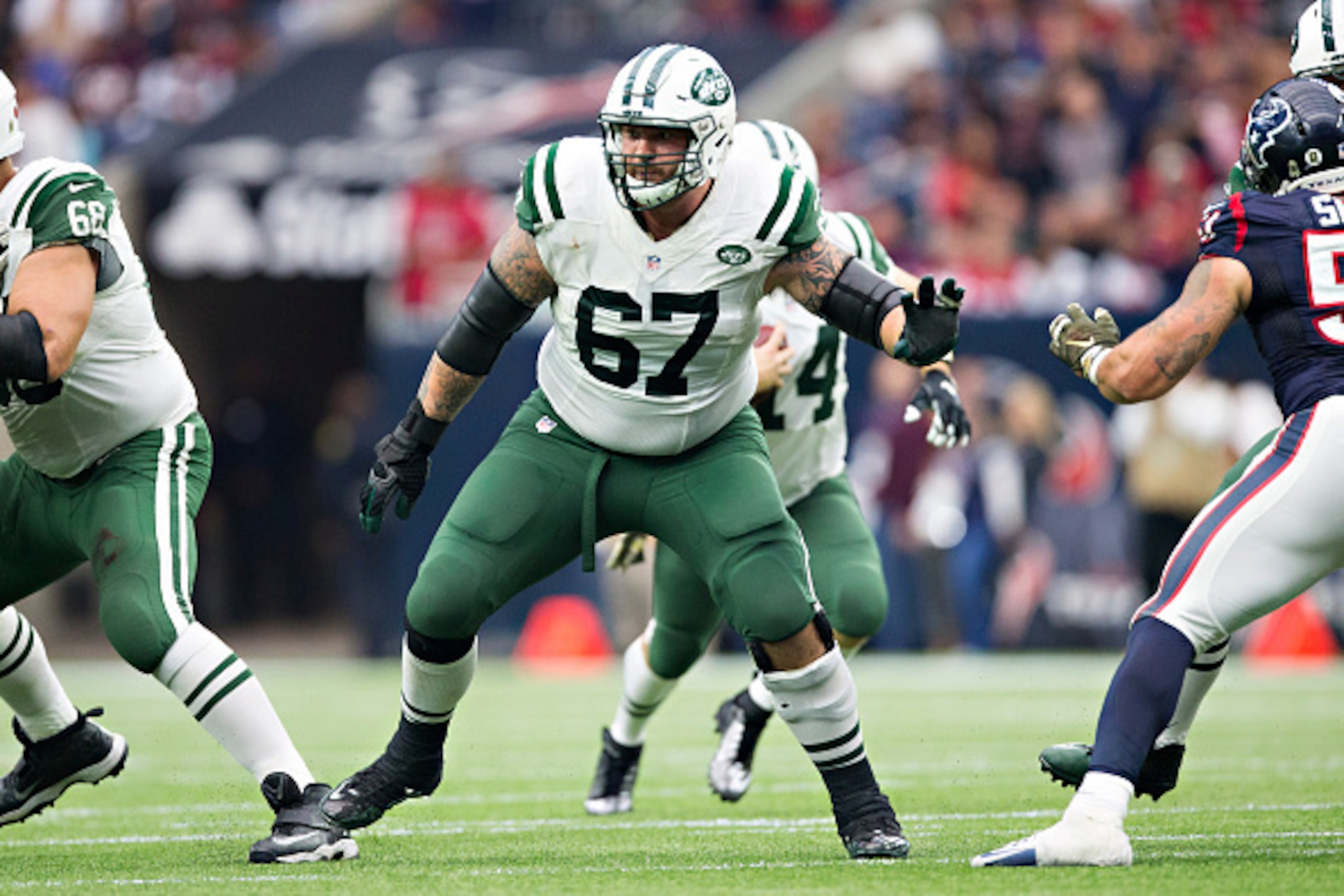
Pass Block
New York Jets right guard Brian Winters is one of the most balanced offensive linemen in the league. He isn't outstanding in any one particular area, but he does everything at a level well above average.
In pass protection, Winters is adept at keeping defenders off balance by switching up his pass sets from setting with depth to create space to setting firm versus tightly shaded defenders, stonewalling them immediately. He also displays the ability to maintain half-man leverage and even weight distribution in his pass-pro demeanor, which allows him to deliver a quick punch.
Once Winters gains inside hand placement, he creates leverage and uses his strength to anchor. He displays the awareness to keep the depth relationship needed to pass off line games and the foot quickness and agility to mirror defenders, although at times he's inconsistent at maintaining his post foot to take away the inside counter from defenders.
Run Block
Winters plays with good physicality and power in the run game and quickly explodes off the ball to engage defenders with inside hand placement to push the point of attack. On deuce-block double-teams, he creates excellent lift and drive in stepping same-foot-same-shoulder.
In 2015, Winters proved to be effective when he was asked to pull, showing agility and body control to short-trap or dig defenders out of the hole on kick-out blocks. When uncovered, he takes good angles climbing to the second level and is effective at gaining hand placement on linebackers, which allows him the control to fit and accelerate.
Winters also does a solid job of securing in-line defenders by colliding with the hip of "A-gap" defenders as he climbs, allowing his center to gain position. He also shows he can keep his shoulders square if rocked back against "B-gap" defenders, allowing his tackle to gain position. There were times last season when Winters didn't maintain his base and his feet would come together, causing his center of gravity to rise. This would result in him falling off blocks.
Position Value
Overall
13. Chance Warmack, Tennessee Titans
23 of 35
Pass Block
Former Tennessee Titans first-rounder Chance Warmack isn't quite as talented in pass protection as he is in the run game, but he's certainly in the top half of the league in both.
Warmack really snaps into his pass set and creates space off the line of scrimmage to reach his landmark, but he can also set firm and punch and anchor immediately versus those tightly shaded power players. When he maintains even weight distribution and is patient and on target with his punch, Warmack shows the strength and mobility to create leverage with his hands to sit and anchor on the bull rush.
There were times in 2015 when Warmack dropped his post foot against tightly shaded 3-technique defensive tackles and they would counter back inside against him. He isn't afraid of gambling with setting aggressively and going for the knockout punch, but when he's off-target and mistimes his punches, it leaves him susceptible to defenders getting into his frame.
Run Block
In the run game, Warmack fires low off the ball to gain inside hand placement. He has the hip explosion and power to lift and generate leverage, moving the point of attack, and he will get after defenders in the run game with violent finishes any chance he gets.
Warmack plays with good square power, generating force from the ground and up through his base, which allows him to sustain and strain at the point of attack. For a guy of Warmack's size (6'2", 323 lbs), he has good short-area quickness and the proper footwork to reach and hook wide-shaded defenders or latch and drive 3-technique defensive tackles who have him out-leveraged.
When a run goes away from him, Warmack is able to dig defenders out of the flow and is effective at cutting on the backside of zone runs. He is especially effective at pulling on power plays and running his feet through contact, using his hands to root out defenders off the point. When he is the post player on double-teams, Warmack generates outstanding force to lift defenders by stepping same-foot-same-shoulder and getting tremendous vertical movement when he is the push or collapse man.
Position Value
Overall
12. Brandon Scherff, Washington Redskins
24 of 35
Pass Block
Washington selected Brandon Scherff with the fifth pick in the 2015 draft, and expectations could not have been any higher. So far, he's lived up to them.
Scherff's pass protection early in the season wasn't always pretty—and at times it was flat-out bad—but as his rookie season moved along, his pass protection steadily improved. His skill set seemed to develop around his strong suits—quickness and power.
The rookie made the transition from playing left tackle at Iowa to playing guard in the NFL, and he learned early in training camp (after J.J. Watt bull-rushed and ran him over) that at guard, he needed to set and get to his spot to make a stand instead of kicking deep and allowing defenders to gain momentum. Scherff took that lesson in the season and began to pick his spots where he could expand his set points and keep defenders off balance by using his quickness and strength to jump-set and get hands on them immediately.
In looking at his rookie season as a whole, it's clear he was learning on the fly, but the improvement is undeniable. As he develops new tricks (and with additional reps), Scherff can be a terrific NFL guard.
Run Block
Scherff plays with controlled aggression in the run game. Once he latches onto defenders, he looks to finish blocks any way possible.
With explosion, power and strength needed to hit, lift and drive opponents at the point of attack, Scherff shows the ability to play with square power to sustain and strain through stalemates. When uncovered, he takes the proper angles to climb and track the second level and is relentless once he engages linebackers.
Scherff also plays with excellent agility and body control when asked to pull. There are times when he over-targets defenders on his reach blocks and allows them to come underneath and impact the play, though, and he will need to continue shoring up his targeting and finding landmarks with his feet. But as is the case with his pass-protection game, Scherff is a promising run-blocker who made marked improvement in 2015.
Position Value
Overall
11. John Greco, Cleveland Browns
25 of 35
Pass Block
John Greco is an underrated NFL guard, especially as a pass protector, as he excels at adjusting his pass set based on the defender he is playing against.
If Greco is playing against a wide-shaded 3-technique defensive tackle who is trying to attack his edge, he is often able to create space off the line of scrimmage and expand his set points while maintaining the half-man leverage needed to cover up defenders. When he plays versus heavier shades, he's able to pick his spots to short-set and throw hands to anchor immediately.
No matter what approach Greco takes in pass protection, he maintains even weight distribution and shows the patience, strike-zone recognition and punch timing to effectively strike and leverage to anchor. He had some issues recovering and adjusting to quick countermoves when he was moved off his spot, though, and often his pad level rises, allowing his base to become too narrow.
Greco is active looking for work when he is uncovered and shows, for the most part, that he can give help to the backside while occupying his gap in slide. There were times in 2015 when he became too involved away from his responsibility, though, and his shoulders and eyes moved away from the line of scrimmage, forcing him to miss late pressures.
Run Block
Greco does many things well in the run game thanks to his varied and technical skill set. He quickly uncoils out of his stance, gaining hand placement to effectively leverage defenders with hip explosion and square power to consistently move the point of attack or work in-line angles to reach landmarks.
Greco uses solid footwork and hand placement to reach, hook and seal 3-technique defensive tackles and knows when he needs to just re-leverage and drive defenders off the point. He showed the short-area quickness and targeting last season to cut off the backside when runs went away from him, and he also displayed the ability to drive off his back foot and open his hip enough to dig defenders out on the backside.
The Toledo product also plays well in space, both as a puller and in attacking the second level. His mobility is a plus trait, especially in the screen game.
Position Value
Overall
10. Jahri Evans, New Orleans Saints
26 of 35
Pass Block
Despite being released by the New Orleans Saints in February, Jahri Evans is still as solid as they come in pass protection. His size, strength and length allow him to aggressively jump-set defenders, stonewalling them at the line of scrimmage.
Evans shows the hand placement and raw power needed to create leverage to anchor versus the bull rush and is unique in his approach when needing to create space versus wider-aligned 3-technique defensive tackles. He first sets into the line of scrimmage, punching with his outside hand, and then drives back into his set to create space to work, all while maintaining half-man leverage.
When moved off his spot, Evans still has the body control, balance, mobility and quick reaction to recover, whether resetting his hands and dropping his hips to regain leverage or countering and using his length to widen rushers off the path. He always seems to have his shoulders square to the line of scrimmage and does an excellent job using his width, base and foot quickness to stay in front of defenders.
Run Block
Even in his 10th NFL season, Evans flashed the physical dominance that at one period of his career put him in consideration for the best-guard-in-the-game distinction.
He plays with a good base, generating force from the ground up through his insteps, which allows him to play with tremendous square power at the point of attack. Evans shows the targeting, footwork and range needed to quickly cut off the backside when runs go away from him and understands how to be crafty when a flowing defender has him out-leveraged and vulnerable.
When climbing to the second level, Evans often engulfs linebackers and accelerates through contact. He still moves extremely well in space for a man of his size (6'4" 318 lbs) and age (32).
Position Value
Overall
9. Larry Warford, Detroit Lions
27 of 35
Pass Block
Larry Warford battled injuries in 2015 that took away some of his mobility, body control and balance. When healthy, though, he looked comfortable in pass protection and was able to mix up his pass sets based on who he was playing against.
Warford is most effective when using his quick set, utilizing excellent punch timing and delivering a solid strike. Again, when healthy, he shows he can also expand his set points to maintain half-man leverage on defenders who attempt to attack his edge and that he can settle on his spot to build his house.
Warford's 2015 injuries started showing up when he was moved off his spot, and he didn't always have the suddenness to stick his foot in the ground and quickly change directions if he needed to recover. But despite those injuries, he used his awareness to his advantage and often utilized crafty technique to make up for limited mobility.
Run Block
Warford plays with a nasty demeanor in the run game and understands how to use his mass. He's also a sneaky athlete who possesses good overall mobility, body control and cat-like agility for a man of his size (6'3", 332 lbs).
Warford's surge off the ball allows him to deliver a violent blow, quickly engaging and gaining the hand placement needed to knock defenders off the ball and ultimately latch, leverage and control. He consistently maintains a functional base, which allows him to play with exceptional strength and the square power needed to consistently get movement at the point of attack.
When you turn on film of Warford, you can’t help but notice the rotational power output that allows him to generate tremendous torque, force and leverage, specifically turning defenders out of the hole. The Kentucky product can reach wide-shaded defenders with good targeting and footwork while hooking them with hand placement and wheeling his hips to seal. He is also an effective puller who builds the momentum to deliver forceful impact at the point, whether it be trapping, kicking out or leading up on power runs.
Position Value
Overall
8. Geoff Schwartz, New York Giants
28 of 35
Pass Block
Geoff Schwartz returned to the field in 2015 after an unfortunate 2014 season in which he suffered two freak injuries. Last season he provided a strong veteran presence to a young New York Giants offensive line group. He rounded out what many tagged as one of the best interior offensive lines in football before his season ended in Week 12 against Washington, when an opponent rolled onto his surgically repaired leg, causing another break.
Schwartz's combination of size (6'6", 340 lbs), strength and crafty technique makes him a wall in pass protection when he can set, create space, punch and anchor on defenders. He gains leverage and control with strong inside hand placement, oftentimes not allowing defenders to get off the line of scrimmage.
Schwartz did struggle a bit in pass protection when needing to redirect and take away the inside, though, which is to be expected from a player who was coming off a badly broken leg. It was admirable that Schwartz toughed it out weekly, but the lack of mobility was evident in certain aspects of his pass protection.
Run Block
Before being placed on season-ending injured reserve for the second time in as many years, Schwartz was one of the best run-blocking guards in the NFL (B/R research revealed he led the Giants line in pancake blocks through 12 weeks of the season).
In 2015, Schwartz excelled at moving the point of attack, whether it be movement on one-on-one base blocks in the downhill run game or reach-blocking to hook or keep defenders flat in zone. In addition, he always seemed to be in on massive double-team and combo blocks.
Schwartz doesn't always display picture-perfect, devastating pull blocks, but he finds ways to get the job done. Limited with his mobility in 2015, though, he just didn't always do the best job at getting to the second level, and his angles and landmarks came up short at times.
Position Value
Overall
7. Louis Vasquez, Denver Broncos
29 of 35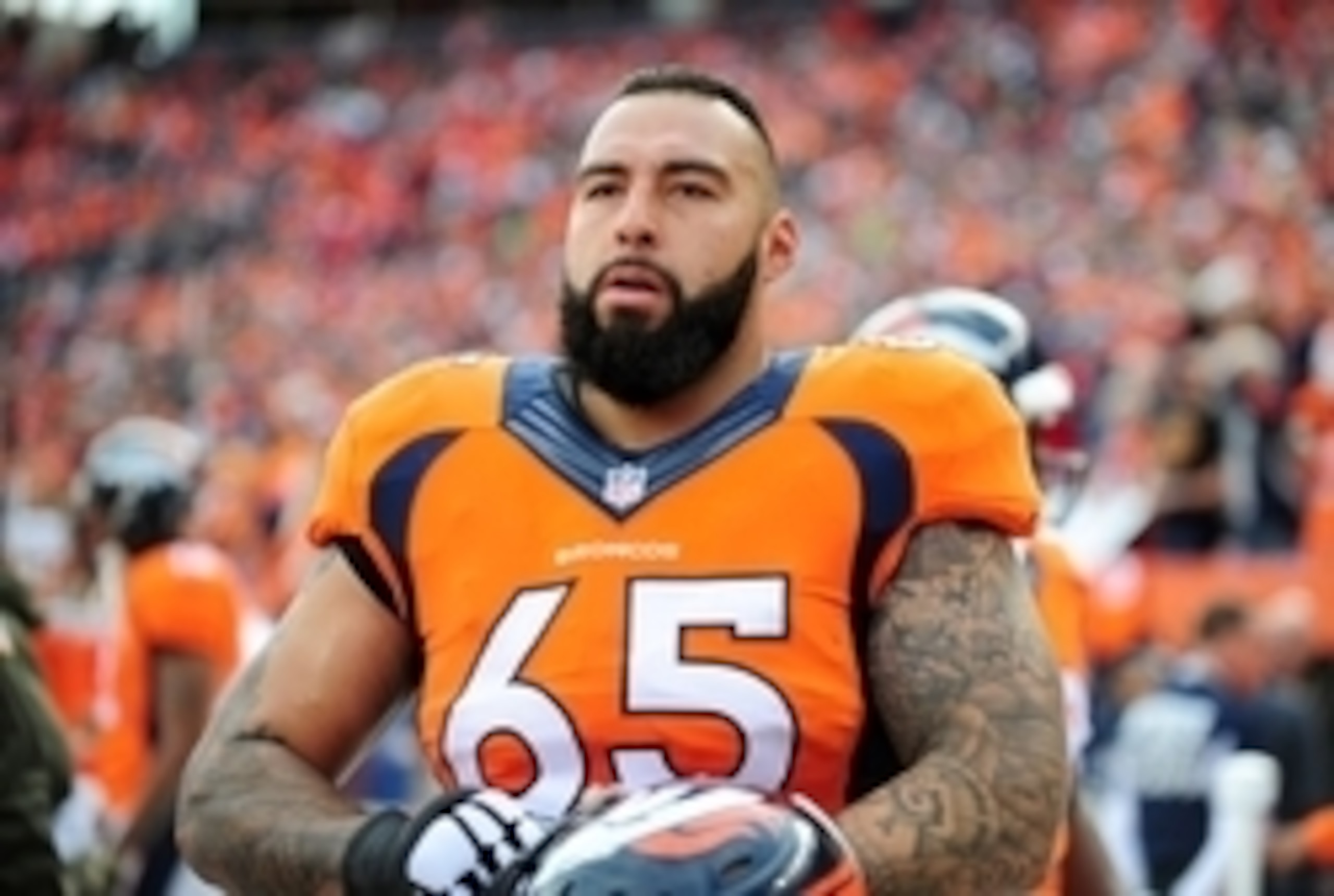
Pass Block
Louis Vasquez is one of the better pass-blocking guards in the NFL. He's efficient with his movement, and you can't help but notice the intent and deliberateness in his feet as he gets into his pass set or smoothly changes directions.
Vasquez glides into his pass set, creating the space needed to reach expanded set points. He excels at getting to his spot and building a house to make a stand. He is able to cover up defenders by staying in half-man leverage and maintaining even weight distribution and a good center of gravity in his pass-pro demeanor. This allows him to consistently be in position to deliver well-timed and on-target strikes.
There are times when Vasquez picks his spots to jump-set and stonewall defenders immediately, and he has the overall body control and balance to quickly recover when he is moved off his spot. He also shows superb strength and mobility to regain position when needing to re-leverage and anchor after he has recovered.
Vasquez maintains a functional base with an established post foot and shows the nimble feet to quickly mirror and post down to take away the inside. He always has his shoulders square with the line of scrimmage, giving him the vision to identify developing line games and pressures.
In slide protection, Vasquez is able to slide in either direction, staying square with eyes in his gap while giving a hand away from the slide.
Run Block
Vasquez fires off the ball in the run game and shows the strength, power and explosiveness to consistently get movement at the point of attack, playing both with square power and in working in-line angles.
He shows the ability to lose ground with his first step and gain ground with his second step to reach defenders on outside zone runs, and he is often able to gain enough leverage from hand placement to hook and seal on his third step. There are times when he re-leverages his outside hand and overwhelms defenders as well, and he has finished many defenders on reach blocks within the first three steps.
Vasquez has the short-area quickness to cut off the backside when runs go away from him, and he can effectively cut the far knee of defenders to get them on the ground. He works zone combos well, knowing exactly when to stay on heavy and keep pushing, when to overtake when he has leverage and when to slip off and climb.
When climbing to the second level, Vasquez runs good tracks to linebackers and is able to gain the position needed to square up and fit. But at times, he does bring his feet too close together or cross them over, which causes him to lose his base and fall off blocks on contact.
Position Value
Overall
6. David DeCastro, Pittsburgh Steelers
30 of 35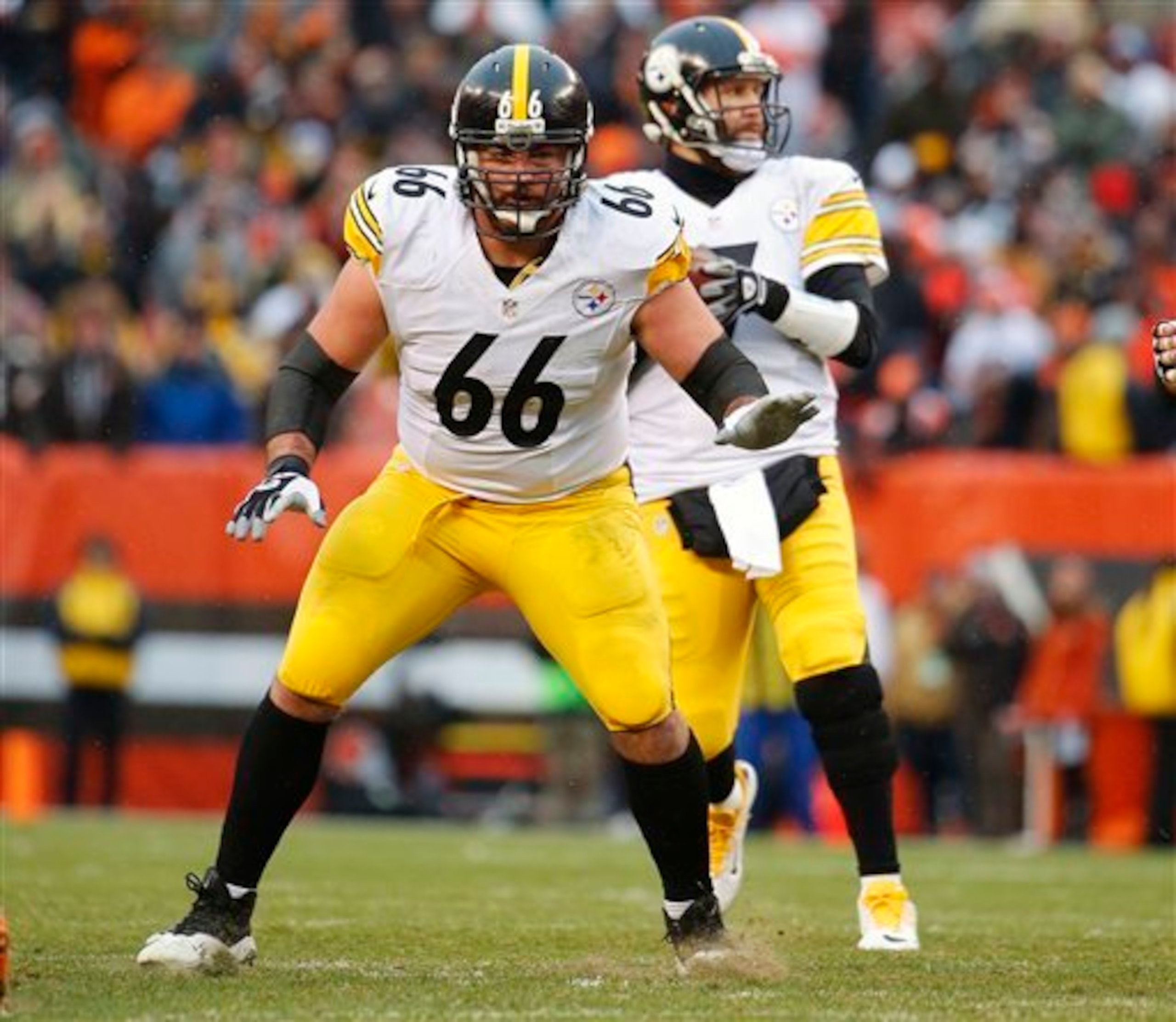
Pass Block
David DeCastro is at his best in pass protection when he is able to short-set and explosively use his hands to immediately stonewall defenders. When he gives space, he runs into trouble at times trying to fight the bull rush, relying on hand placement and upper-body strength. As a result, he can give up too much ground and get walked back into the backfield.
DeCastro has the foot quickness and agility to mirror defenders but doesn't always smoothly recover if he is moved off his spot or loses position, especially to the inside. In 2015, he showed the awareness to work back to good depth relationship to pass off line games and showed the mental processing to sort through pressures quickly.
DeCastro is also active when uncovered, looking for work in both directions. He has the ability to slide without drifting, keeping eyes in position to protect his gap while giving a hand to the backside for help.
Run Block
In the run game, DeCastro is effective and efficient in working zone combos, knowing exactly when to keep pushing and fully overtake or to slip off and climb to the second level. He does a nice job of securing the line of scrimmage and allowing his center to gain position by banging down "A-gap" players as he climbs, and he also shows he can keep his shoulders square if he rocks back against "B-gap" defenders.
DeCastro plays with the hip explosion, strength and power to hit, lift and drive defenders, consistently moving the point of attack in the downhill run game. He is also able to stand up defenders, stepping same-foot-same-shoulder and allowing his tackle to come down and get push on deuce-block double-teams.
At times, though, DeCastro can look lost when he is uncovered and working through the trash within the box. He stops his feet and then brings them together to restart if he sees a defender, which has tripped him up on occasion.
In general, DeCastro has the footwork, hand placement and targeting needed to cut off the backside when runs go away from him, and he shows that he can dig heavily shaded nose tackles out of the hole on the backside as well. He is outstanding when asked to pull and shows good agility and body control to short-trap.
Position Value
Overall
5. T.J. Lang, Green Bay Packers
31 of 35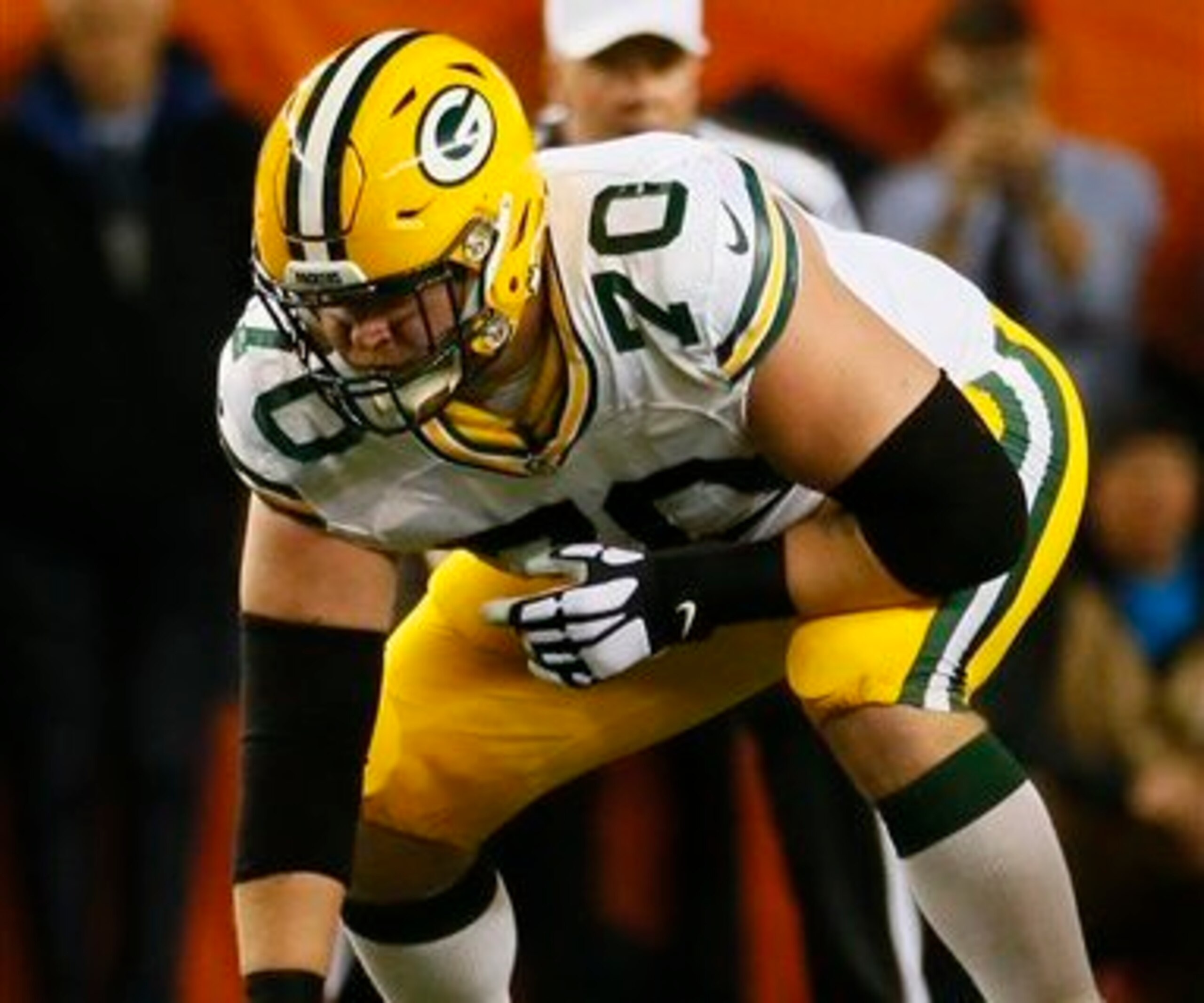
Pass Block
The Green Bay Packers found yet another mid-round gem in 2009 when they selected T.J. Lang 109th overall out of Eastern Michigan. There isn't a team in the NFL better than the Packers at scouting, drafting and developing starting offensive linemen outside of the first three rounds.
In pass protection, Lang is in defensive tackles' faces right at the snap. Rarely does he create space or even attempt to expand his set points at the line of scrimmage.
Lang varies his aggressive style with a number of approaches, including jump-setting defenders into the line of scrimmage (getting hands on them immediately), quick-setting defenders by covering them up half-man and short-setting defenders, which moves him "back and over," allowing him to use independent hands to keep defenders off balance.
No matter what set Lang uses, he does an excellent job of quickly punching, latching and dropping his hips to anchor on defenders. He does run into some issues setting too aggressively, though, especially when facing defenders who attack his edge and can quickly throw a counter-escape while working up the field.
Run Block
Lang has terrific hip explosion out of his stance in the run game, allowing him to quickly uncoil and engage defenders. He wins in the run game with efficient footwork, leverage, strong hand placement and good overall strength.
He isn't going to continually overpower defensive tackles but can get under them to sustain and strain the block. There were times in 2015 when his pad level rose and his base became narrow, which caused him to get thrown off blocks when engaged with stronger defenders, though.
When runs go away from him, Lang has the quickness, targeting and footwork needed to get to his landmark and cut off the backside. When uncovered, he always takes good angles climbing to the second level, which puts him on track to fit and drive linebackers.
On combo blocks, Lang is effective at securing the line of scrimmage to shove in-line defenders over to his center or tackle and shows the awareness and body control to quickly come off on linebackers. He's also an outstanding puller, getting out to the near perimeter or leading up on power runs in the opposite direction.
Position Value
Overall
4. Kevin Zeitler, Cincinnati Bengals
32 of 35
Pass Block
In pass protection, Kevin Zeitler sets smoothly off the line of scrimmage in reaching his landmark to settle his feet and build his house. He is adept at maintaining half-man leverage and the even weight distribution needed to cover up and anchor versus opposing defenders.
Zeitler displays good overall hand usage, delivering a quick strike and latching to gain the inside hand placement needed to control defenders. At times, though, he reaches out to latch instead of sitting back and striking, which often leads to him becoming overextended and susceptible to quick counters.
Zeitler's functional base allows him to maintain the strength and balance needed to sink his hips and leverage with his hands, creating the necessary leverage to anchor versus the bull rush. He also shows the ability to quickly recover if he loses position or is moved off his spot. He has the foot quickness and agility needed to mirror defenders and is able to cut them off from countering inside in most cases.
Run Block
Zeitler is a good technician who plays with enough strength, power and mobility to be effective in the run game.
He's quick to get off the ball and engage, gaining inside hand placement to control defenders at the point of attack. He also plays with a functional base that allows him to re-leverage and get under defenders to drive and break through stalemates.
Zeitler understands who he can play with square power and who he needs to position-block, which is an essential mental aspect of run blocking. He has the footwork, hand placement and targeting needed to cut off the backside when runs go away from him and shows that he can dig shaded nose tackles out of the hole on the backside as well.
Zeitler is able to slam down, shove over and secure in-line defenders on the line of scrimmage as he climbs to the second level. He takes good angles when climbing and tracking and is able to fit-accelerate on linebackers. He also displays the awareness to track when he sees linebackers start to creep up to shoot gaps. While not always devastating, he's effective as a puller as well.
Position Value
Overall
3. Trai Turner, Carolina Panthers
33 of 35
Pass Block
In just two seasons with the Carolina Panthers, Trai Turner has quickly become a favorite of many offensive line evaluators. His game is the perfect example of prototypical guard play in a gap scheme.
Turner employs an explosive pass set, working to the necessary set points to cover up wide or tight 3-technique defensive tackles while maintaining half-man leverage and even weight distribution. He's not always the most efficient with settling his feet once he gets to his spot in pass protection, but he has outstanding balance and body control, which allow him to recover and use his heavy hands to regain control and anchor.
Turner has excellent overall hand usage, good punch timing and strike-zone recognition in delivering a jolting punch. He's also active when replacing his hands to regain position and does an outstanding job of using his hands to create leverage, which consistently allows him to use his outstanding strength and mobility to anchor.
Still, Turner can get a little too aggressive at times and lunges with his two-hand strike against defenders who attack his edge, which actually shortens his edge and leaves him in situations where he has to quickly recover to widen defenders off the path of the quarterback.
Run Block
In the run game, Turner plays like a bull in a china shop, running through anything that gets in his path.
He shows dynamic hip explosion out of his stance, allowing him to quickly engage and gain inside hand placement to lift and knock defenders off the ball. The lift he creates by uncoiling his hips allows him to get under defenders, and since he plays with an outstanding base that allows him to have tremendous square power, he is able to sustain and strain, driving defenders off the point of attack.
Once engaged and driving, Turner is able to re-leverage his hips and narrow his base to finish defenders who start to lose balance after he has overwhelmed them. When he is the post player on double-teams, he generates outstanding force in lifting defenders by stepping same-foot-same-shoulder and getting vertical movement.
Whether coming off a double-team or uncovered, Turner is under control and able to square up when climbing to the second level to execute blocks on linebackers. He's a bulldozer as a puller, too, whether it be blasting a gap open on a short trap, digging out a "wrong arm" defender or logging them on long kick-out blocks. Turner is even vicious pulling to the perimeter or out in space in general and can track and execute blocks on moving defenders with ease.
Position Value
Overall
2. Zack Martin, Dallas Cowboys
34 of 35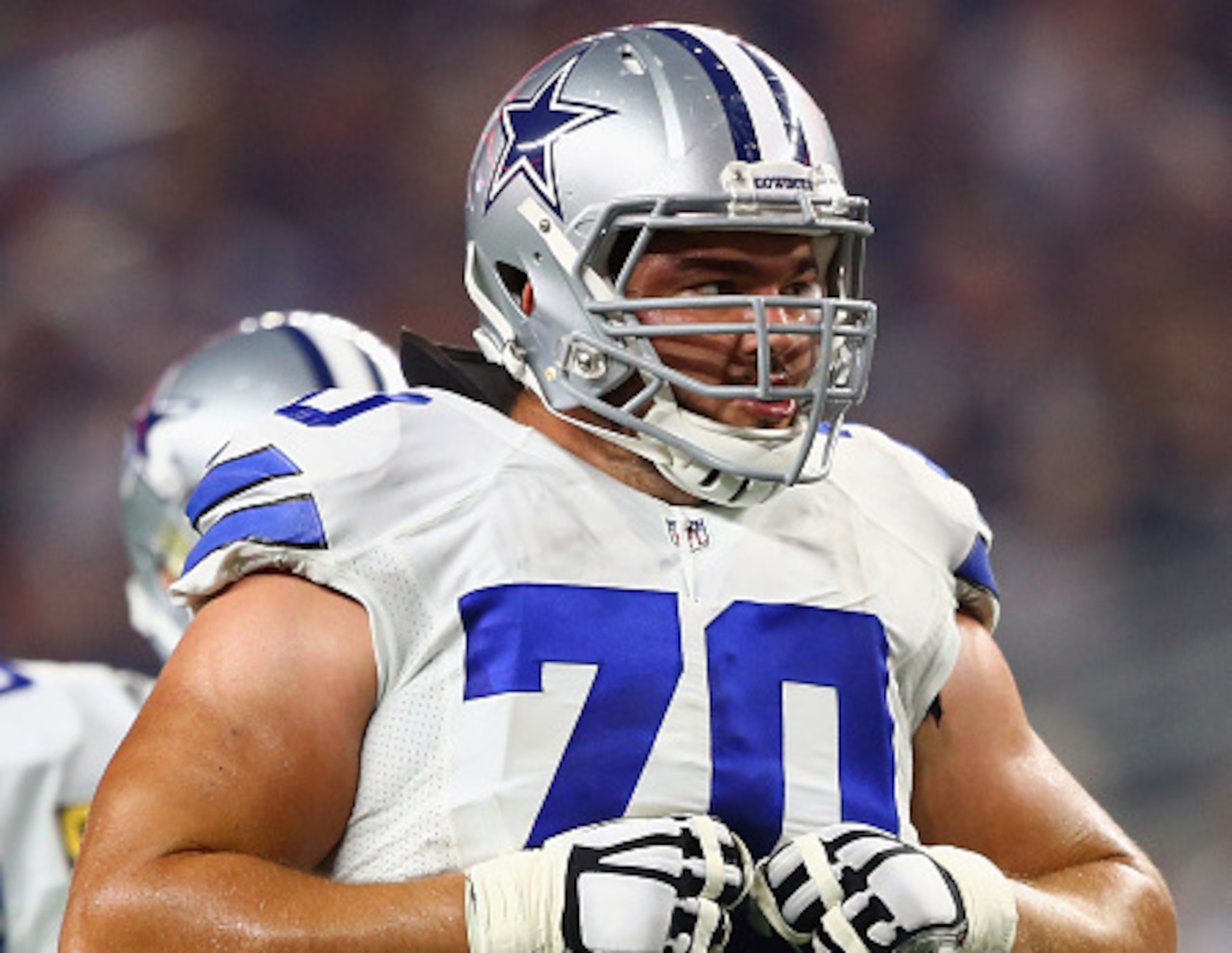
Pass Block
It's not common for an offensive lineman to be selected as an All-Pro in his rookie season, but that's what happened to Zack Martin. In 2014, as a rookie, he was among the best guards in the NFL. He has now started all 32 regular-season games for the Cowboys and put together an outstanding second season, which led to his second trip to the Pro Bowl in as many years.
In pass protection, Martin does a great job of maintaining leverage on defenders by explosively setting 45 degrees against wide 3-technique defensive tackles or jump-setting tighter-shaded defensive tackles. His ability to expand his set points and still build his house always has him in a position to anchor.
Martin maintains a functional base in pass protection and has the foot quickness needed to mirror and stay in front of defenders. Because of his base, hips, hands, strength and technique, he is able to anchor well against the bull rush.
The second-year pro is adept at taking away the inside by establishing and maintaining a solid post foot and inside hand. He's also excellent with independent hand usage. Martin did run into some issues with being a little impatient in 2015, leading to his punch timing and weight distribution being off, which made it difficult for him to sit back and deliver an on-target punch against defensive tackles with elite power and explosion.
Run Block
The strength, power, explosion and physicality Martin plays with in the run game are special. It doesn't matter if it's pulling on power plays or reaching, cutting off or climbing on zone runs. He simply has all the fundamentals you look for in an NFL guard.
Martin has a powerful base, good hip explosion and violent hands that allow him to explode off the ball, engage, drive and lift defenders once he uncoils his hips at the point of attack. He plays with good square power, but he also shows the footwork, hips and hand placement to reach and hook 3-technique defensive tackles consistently.
Martin displays the ability to reach landmarks with his foot quickness and to get his head across to cut off or throw cut blocks against backside shades when a run goes away from him. He effectively combos with his tackle or center to get push and lift defenders while keeping his shoulders square, which allows him to come off on linebackers at the second level. In addition, he displays exceptional body control, agility and awareness when pulling or when getting out in space on screens.
Position Value
Overall
1. Marshal Yanda, Baltimore Ravens
35 of 35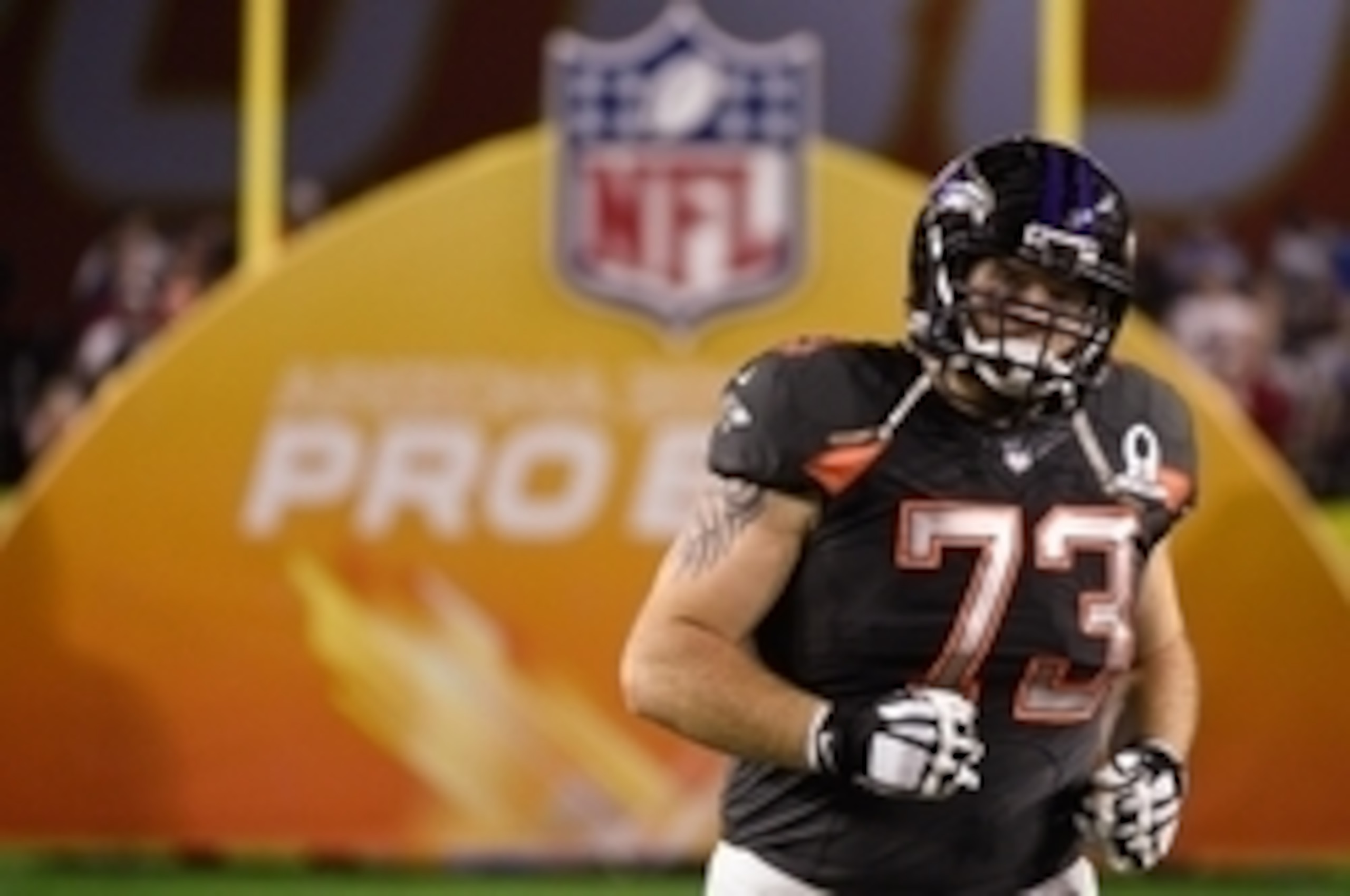
Pass Block
Marshal Yanda was an offensive tackle at the University of Iowa, and you can still see signs of his tackle days in the way he approaches pass protection.
Yanda explosively sets, creating space and gaining vertical ground while maintaining even weight distribution, which consistently puts him in position to settle on his spot and build his house. When playing versus wider-aligned defensive tackles, he shows he is able to expand his set points while maintaining half-man leverage (this kind of creates his own edge as if he were a tackle) and once again get to his landmark to build his house.
There were times in 2015 when Yanda picked his spots to jump-set defenders and stonewall them at the line of scrimmage, but there were times his aggressive set allowed defenders to quickly counter inside. He shows tremendous patience and good punch timing, delivering an on-target punch allowing him to gain inside hand placement to leverage and anchor. He also shows good overall hand usage, often using independent hands to punch near strike zones of defenders, keeping them off balance.
Yanda has the strength and mobility to quickly make a stand and drop his hip to anchor versus the bull rush. The body control and balance he plays with allows him to always be in a situation to recover when he is initially moved off his spot, and he shows the foot quickness and lateral agility to mirror and post down to take away the inside with his post foot and inside hand.
When sliding in either direction, Yanda always knows where his help is and consistently looks to give help when uncovered in slide or in man protections.
Run Block
When it comes to the mesh between fundamentals and physical attributes such as explosion, strength and power, it gets no better than Yanda as it relates to what he is asked to do in the run game.
He displays explosiveness off the ball and shows the footwork, quickness, targeting and hand placement to effectively reach, hook and work his hips around to seal defenders, often knocking them so far off balance that he is able to drive and finish them. When a run goes away from him, he shows that he can lose ground to put him back on a track to cut off the backside by ripping and crossing a defender’s face or by cutting the far knee, getting him on the ground.
When uncovered, Yanda takes good angles climbing to the second level, which puts him on track to cut off fast-flowing linebackers. He knows exactly when to keep pushing zone combos, when to overtake them and when to slip off and climb. He also shows excellent agility and body control in tracking and executing blocks in space.
.jpg?w=2560 "Commanders Football")



.jpg?w=2560 "Tennis Player Gets 24-Year Ban for Match Fixing (AP)")