
Analyzing Every Impact Deal of the 2015 MLB Winter Meetings
FRIDAY AFTERNOON UPDATE: We told ourselves we were only going to deal with transactions during the winter meetings, which ended Thursday afternoon. But some things are too big to ignore, so with the news that free-agent outfielder Jason Heyward has chosen the Chicago Cubs (first reported by Gordon Wittenmyer of the Chicago Sun-Times), we've added an 11th transaction.
The 2015 MLB winter meetings included one trade so big you could write a whole column about it. In fact, I did.
The winter meetings didn't include the largest free-agent contract (by annual value) in major league history, but the Arizona Diamondbacks did make Zack Greinke's signing official during them.
These weren't the most active winter meetings of all time. Officially, 45 players changed teams between Monday morning and Thursday afternoon, the exact same number that moved at the 2014 meetings.
Some deals were small. Did you know the Oakland A's traded pitcher Evan Scribner to the Seattle Mariners in exchange for pitcher Trey Cochran-Gill?
Perhaps that has a significant impact on the 2016 season, but right now we're guessing it won't. So we'll stick to what we'll call the 10 impact deals (some in combination) of the 2015 MLB winter meetings.
If there's another deal announced Friday, don't blame us for missing it. The meetings ended Thursday afternoon.
So here we go.
Los Angeles Angels Acquire Infielder Yunel Escobar from the Washington Nationals
1 of 11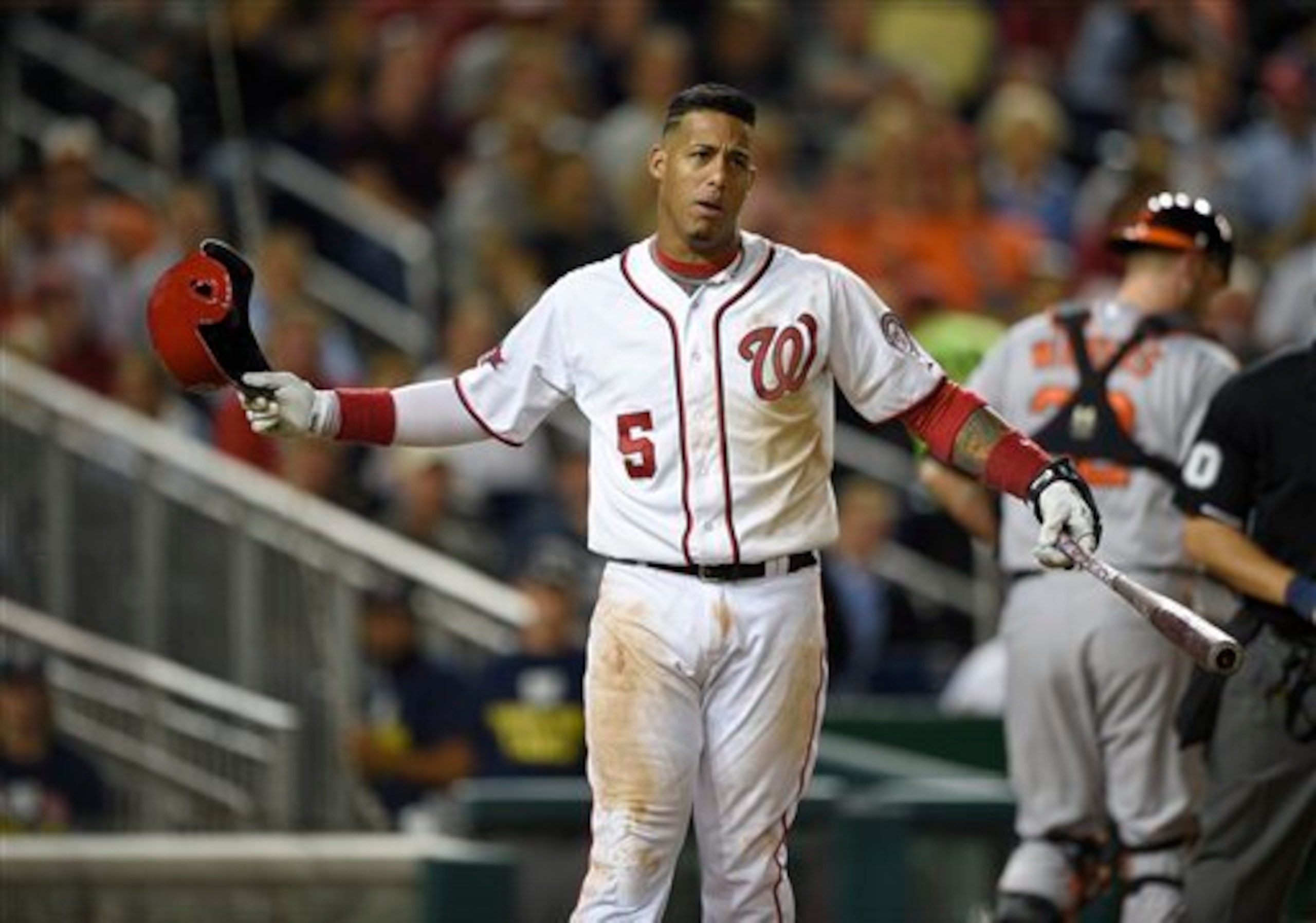
This one got done late Thursday (and was first reported by Jon Heyman of CBS Sports), and while it's not a huge trade, it is an interesting one, especially from the Angels' end.
Yunel Escobar isn't the impact bat they still need to add, but he is coming off his best season (.314 batting average, .790 OPS). He's not a shortstop anymore, but that's OK because the Angels already traded for Andrelton Simmons. Escobar played third base in 2015 for the Nationals, and the Angels either keep him there or move him to second base if they re-sign free agent David Freese.
What do the Nationals get out of it? They get 23-year-old pitcher Trevor Gott, a hard-throwing right-handed reliever, and 28-year-old Michael Brady, a right-handed pitcher who has spent six years in the minor leagues without making it to the big leagues.
Oh, and they save $8 million of guaranteed money left on the contract of Escobar, a player they didn't need once they decided to move Anthony Rendon back to third base. They can no doubt find a better use for that money, especially since they're now pursuing Jason Heyward (according to Heyman).
We'll call it a mildly good deal for the Angels, with the Nationals' final grade dependent on their ability to spend the saved money wisely.
Seattle Mariners Acquire First Baseman Adam Lind from the Milwaukee Brewers
2 of 11
My friend Larry Stone of the Seattle Times pointed out Jerry Dipoto has already added 17 new players to the Seattle Mariners roster in less than three months since taking over for the fired Jack Zduriencik as the Mariners general manager. Stone compared it to the housecleaning Pete Carroll did upon becoming the Seattle Seahawks head coach, which Dipoto should certainly take as a compliment.
I'm not sure which Seahawk Adam Lind compares to, but the new Mariners first baseman arrives at a lot lower cost than the guy Zduriencik acquired to play there. That would be Justin Smoak, who showed up as the centerpiece of the 2010 Cliff Lee trade and departed four years later, having accomplished nothing close to what Zduriencik expected.
Dipoto told reporters (including Ryan Divish of the Times) that he has coveted Lind from the day he took over, valuing his ability to make contact (100 strikeouts in 572 plate appearances in 2015) and his strong numbers against right-handed pitchers (.883 OPS in 2015). While Lind was a cleanup hitter in his one year in Milwaukee, the Mariners have Nelson Cruz for that spot.
Lind is 32, so he didn't really fit with the rebuilding Brewers. New Milwaukee general manager David Stearns turned him into three minor league right-handers—Carlos Herrera, Daniel Missaki and Freddy Peralta.
How good are they? It's hard to know, because Herrera is just 18, and Missaki and Peralta are 19. What we do know is none had yet made any of the top-prospect lists.
That may have been the best the Brewers could expect to get for Lind, but it's still a reasonable price for the latest part of the Dipoto rebuild.
Chicago White Sox Acquire Third Baseman Brett Lawrie from the Oakland A's
3 of 11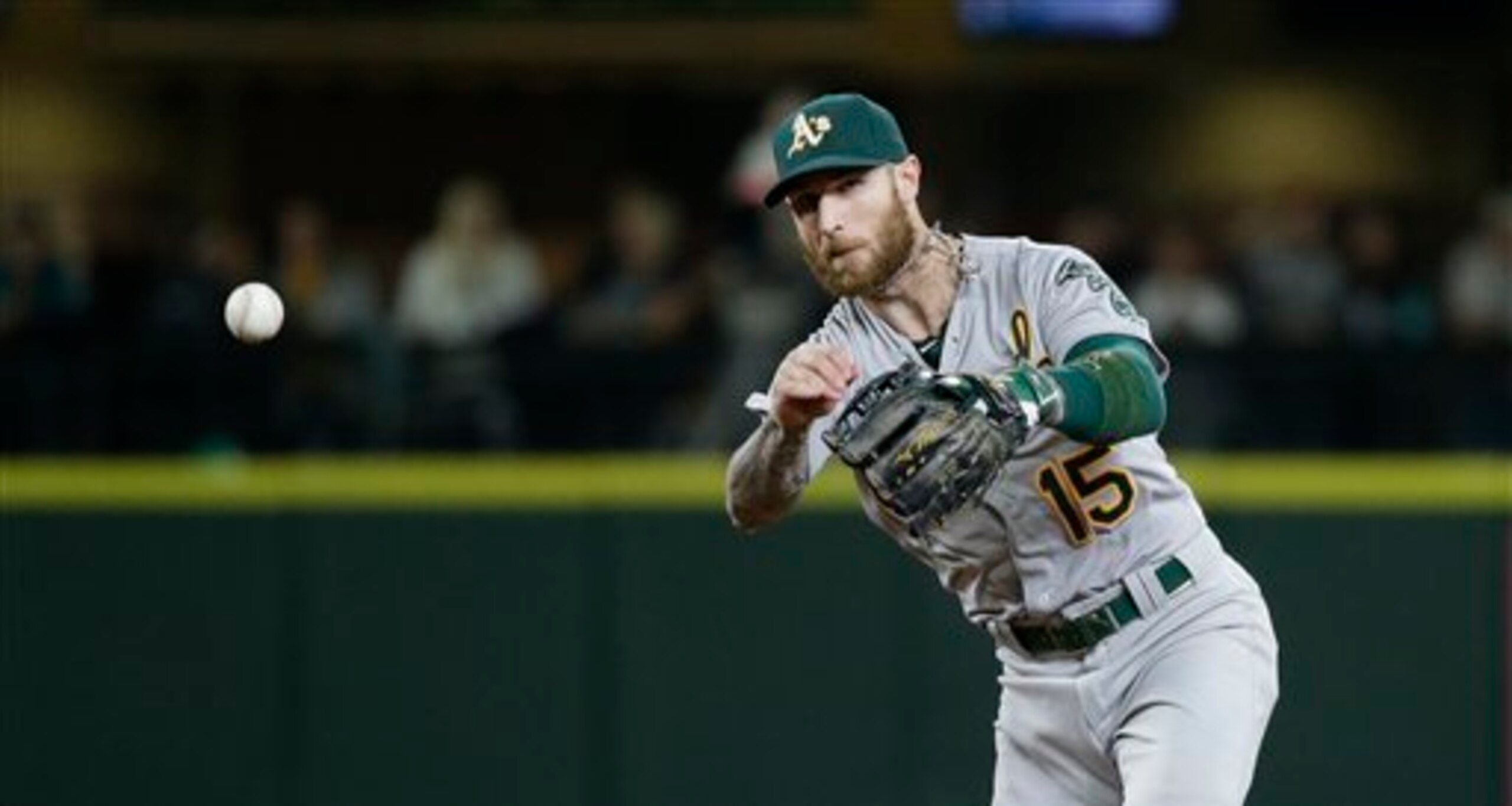
The last time Oakland A's executive vice president Billy Beane traded a third baseman, the guy went on to become the American League's Most Valuable Player.
Brett Lawrie isn't Josh Donaldson.
Too bad for the A's, who took him back as part of the package that sent the future MVP to the Toronto Blue Jays last winter. Too bad for the Chicago White Sox, who became Lawrie's latest team in this deal for minor league pitchers Zack Erwin and Jeffrey Wendelken.
Lawrie should be better than the other options the White Sox had at third base, and he didn't cost the Sox any of their top 30 prospects, according to MLB.com. Maybe now that he's with his fourth organization, the 25-year-old Lawrie can show why he was a first-round draft pick (by the Milwaukee Brewers).
It didn't happen with the A's, and when they reacquired infielder Jed Lowrie from the Houston Astros last month, Lawrie had to go—and not just to avoid confusion about their similar names. The A's will take the two young pitchers and move on, while the White Sox will hope Lawrie becomes their best third baseman since...well, maybe since Robin Ventura played there.
He wouldn't need to become an MVP to do that.


Detroit Tigers Trade for Justin Wilson and Sign Mark Lowe as a Free Agent
4 of 11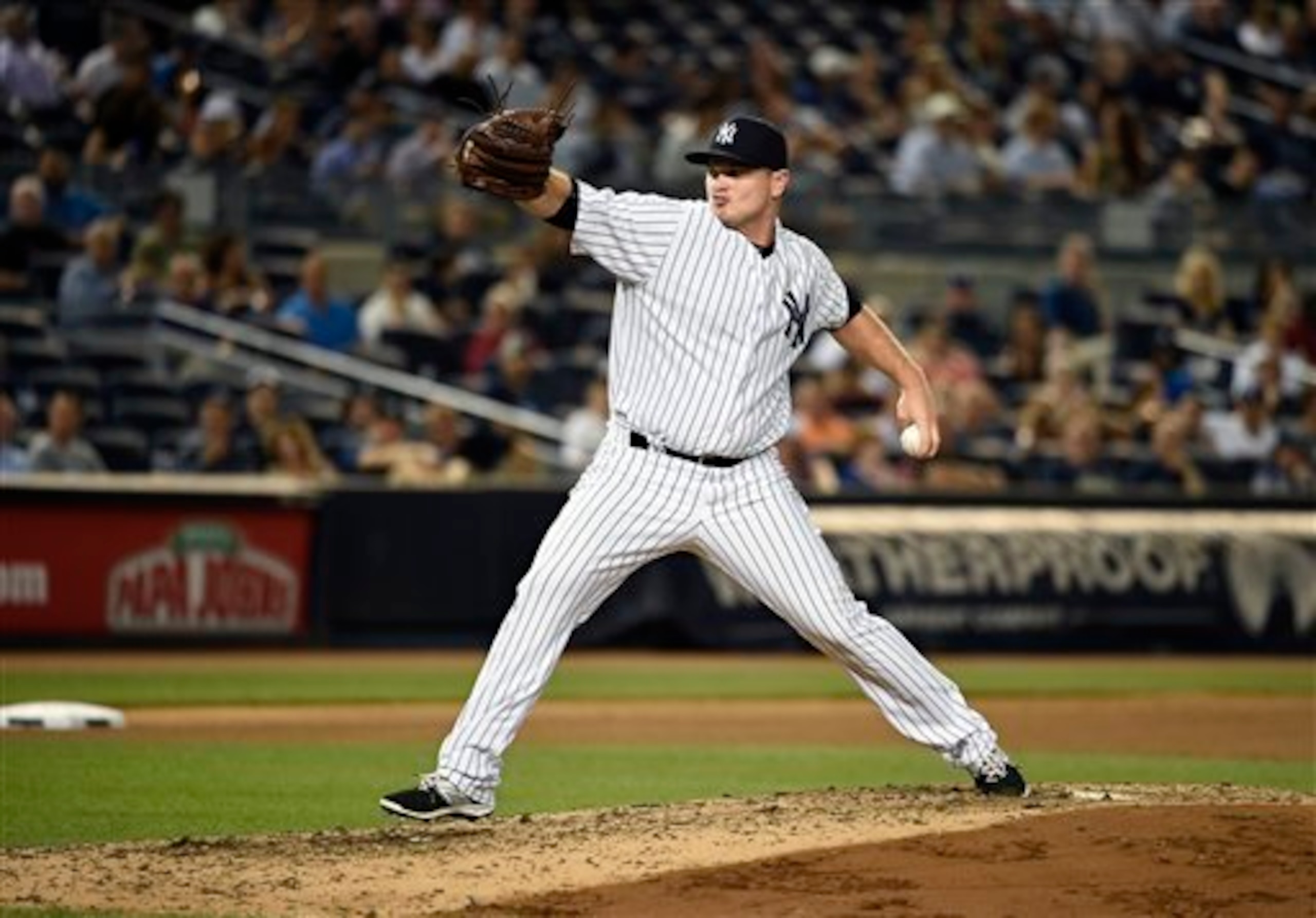
In his last four years running the Detroit Tigers, Dave Dombrowski never did get the bullpen figured out. Now, in Al Avila's first winter as Tigers general manager, Avila has given it a try.
Bullpen acquisitions are notoriously hard to judge, but for now Avila gets decent marks for his effort. He traded for closer Francisco Rodriguez well before the winter meetings began, and this week he added a pair of setup options who should be significantly better than what Brad Ausmus had in 2015.
The cost wasn't outrageous, with Lowe getting a two-year deal for a total of $11 million, and Wilson coming in a trade that sent two mid-level minor league pitchers to the New York Yankees. The Yankees were happy to get the pitching depth Luis Cessa and Chad Green will give them, but there's a good chance they'll miss Wilson, a hard-throwing left-hander who allowed 49 hits in 61 innings.
Los Angeles Dodgers Sign Hisashi Iwakuma as a Free Agent
5 of 11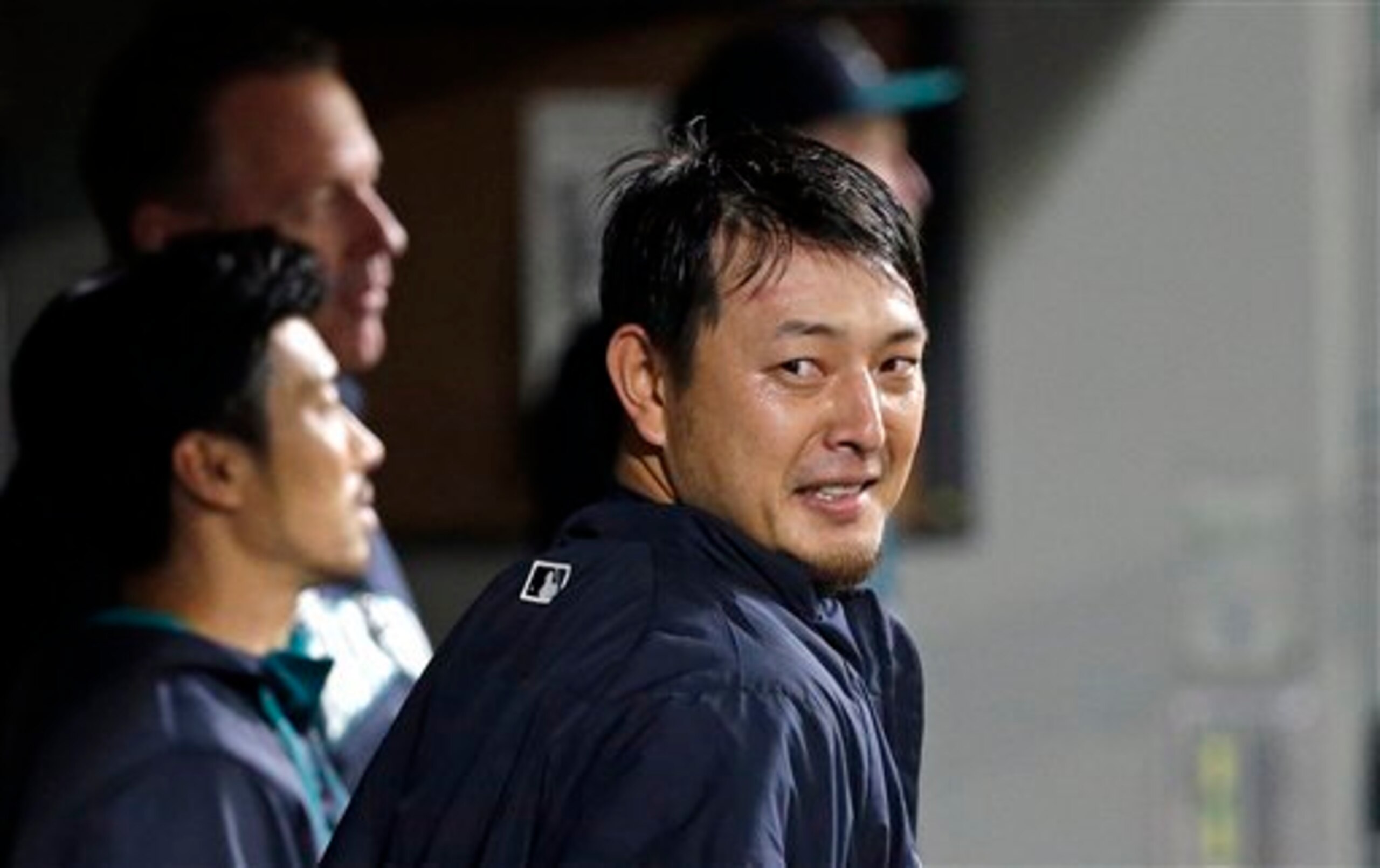
Yes, the Los Angeles Dodgers signed Hisashi Iwakuma a couple of days after they lost Zack Greinke. No, he's not the replacement for Greinke.
For one thing, he cost a lot less ($45 million for three years), although it's worth noting that a team that balked on paying Greinke into his age-37 season turned around and signed Iwakuma to a deal that runs through his age-37 season.
Remember, though, the Dodgers didn't just need to replace Greinke. Remember that even with Greinke, their rotation was exposed as woefully thin in the division-series loss to the New York Mets.
Iwakuma, who had a 3.17 ERA in four seasons in the American League, should help provide some depth. The Dodgers can look elsewhere for a co-ace to replace Greinke and team with Clayton Kershaw (with Jon Heyman of CBSSports.com reporting Thursday that they're interested in Johnny Cueto).
Boston Red Sox Acquire Carson Smith and Roenis Elias from the Seattle Mariners
6 of 11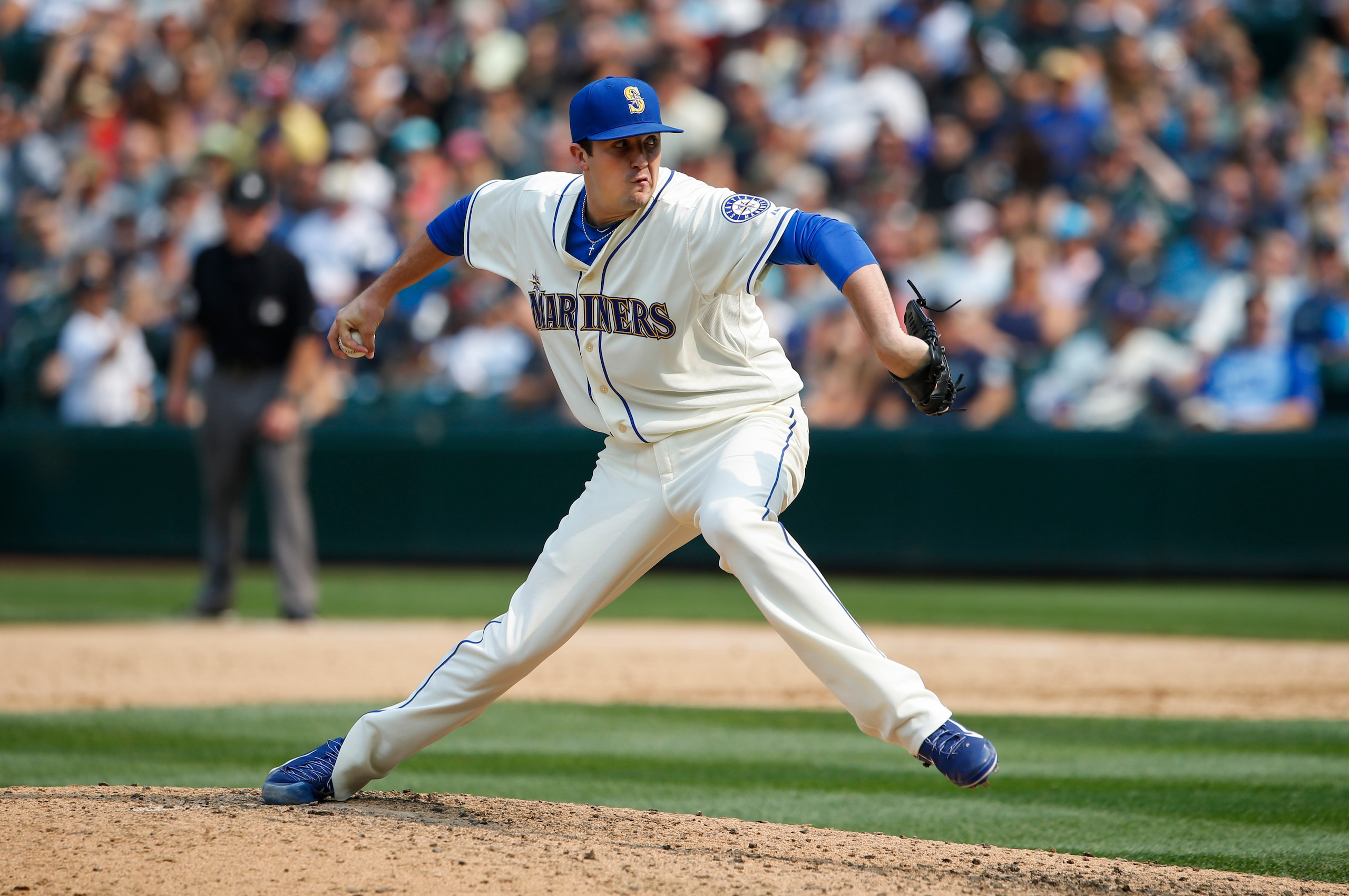
As part of his remake of the Seattle Mariners, new general manager Jerry Dipoto needed rotation depth more than he needed a strong-armed reliever (especially after losing Hisashi Iwakuma as a free agent). So Dipoto figured Wade Miley, who has averaged 198 innings a season over the last four years, had more value to him than Carson Smith, who was very impressive but still only logged 70 innings as a rookie.
Over in Boston, new general manager Dave Dombrowski had rotation depth (especially after signing David Price) but needed to continue to remake the bullpen (even after trading for Craig Kimbrel). Smith, whose 11.83 strikeouts per nine innings ranked 10th among pitchers with 50 or more innings in 2015 (according to the Baseball-Reference.com Play Index), was a great fit.
So Dipoto gave up Smith and pitcher Roenis Elias, and got back Miley and pitcher Jonathan Aro, in a deal that could well help both teams. At the very least, you can easily understand why each new GM agreed to the trade.
Houston Astros Acquire Closer Ken Giles from the Philadelphia Phillies
7 of 11
"Years of control" has become one of the most overused phrases to explain and extol baseball trades. But in this case, it was a nice selling point for the Houston Astros that they would have Ken Giles for five years of control.
What was even nicer was that in his first half-season as a major league closer—he didn't take over the job until the Philadelphia Phillies traded Jonathan Papelbon in late July—Giles had a 1.71 ERA, 33 strikeouts in 26.1 innings and 15 saves in 17 chances. While there's no guarantee the 25-year-old Giles will succeed while closing for a team now expected to win, his ability to miss bats (another popular phrase) makes you want to believe he will.
The Astros have a young core that got them to the postseason in 2015, and Giles is exactly the kind of pitcher who can stick around and give them what they badly lacked for the foreseeable future (where the five years of control come in). He's not nearly as proven as Aroldis Chapman or Andrew Miller, the two other closers the Astros looked heavily into (according to league sources), but Giles came at a lower price.
The Phillies didn't get any big-name prospects, but according to MLB.com's Todd Zolecki, the reported return in a deal not yet officially announced is decent for a rebuilding team—pitchers Vincent Velasquez, Thomas Eshelman and Brett Oberholtzer, and outfielder Derek Fisher.
The Phillies could have kept Giles, but they saw an opportunity in a winter where the free-agent market was short on impact relievers.
New York Mets Trade for Neil Walker and Sign Asdrubal Cabrera
8 of 11
We'll take these two deals as one, because they represented the New York Mets' plan B after losing out on free-agent second baseman Ben Zobrist. And while the Neil Walker trade with the Pittsburgh Pirates has a better chance of working out than the Asdrubal Cabrera free-agent signing, it's the two moves together that should help the Mets in 2016.
Walker was winning praise from rival scouts Thursday as a good replacement for Daniel Murphy, who will leave the Mets as a free agent. He might even be a better replacement than Zobrist, even if the Mets clearly preferred Zobrist as their first choice.
Walker did cost the Mets left-handed pitcher Jon Niese, who had value as a back-end starter or even as a reliever—and should help the Pirates fill out their rotation.
Cabrera had a nice bounce-back season with the Tampa Bay Rays, but scouts still see him as a below-average defensive shortstop. The Mets might have preferred a better shortstop option, but the free-agent and trade markets were both weak at that spot this winter.
If nothing else, adding Walker and Cabrera to an infield that already includes first baseman Lucas Duda, third baseman David Wright and Wilmer Flores and Ruben Tejada gives the Mets depth they didn't have in the first half of 2015. It also should leave them with money to spend later this winter (on a center fielder, perhaps) or at the trading deadline next July.
Chicago Cubs Sign Ben Zobrist, Trade Starlin Castro to New York Yankees
9 of 11
Remember when Joe Maddon was the only guy who really understood Ben Zobrist's value?
Now everyone does, which is why Zobrist was one of the more sought-after free agents of the winter. The New York Mets, San Francisco Giants and Washington Nationals all seemed to want him a lot, but the guy who got him was Maddon, his former manager with the Tampa Bay Rays and now the manager of the Chicago Cubs.
Zobrist was a great fit for a lot of teams, but he really fits the Cubs, adding a veteran hitter and a professional bat to a team that already had young powerful stars. His versatility could eventually help, too, even though the Cubs agreed to his request to sign as a full-time second baseman.
They made sure the position was open by trading Starlin Castro to the New York Yankees, who saw Castro as another young and talented player along the lines of Didi Gregorius, the shortstop the Yankees acquired from the Arizona Diamondbacks last winter. Castro has a lot more big league time than Gregorius—he already has 3,524 major league at-bats and won't turn 26 until March—but he also brings a reputation for not getting the most from his ability. With or without Zobrist, the Cubs weren't exactly committed to Castro, having offered him around in trades last spring, according to league sources.
To get Castro, the Yankees had to give up valuable right-hander Adam Warren, who can certainly pitch in middle relief and at times in 2015 looked like an effective starter, too.
Arizona Diamondbacks Acquire Pitcher Shelby Miller from the Atlanta Braves
10 of 11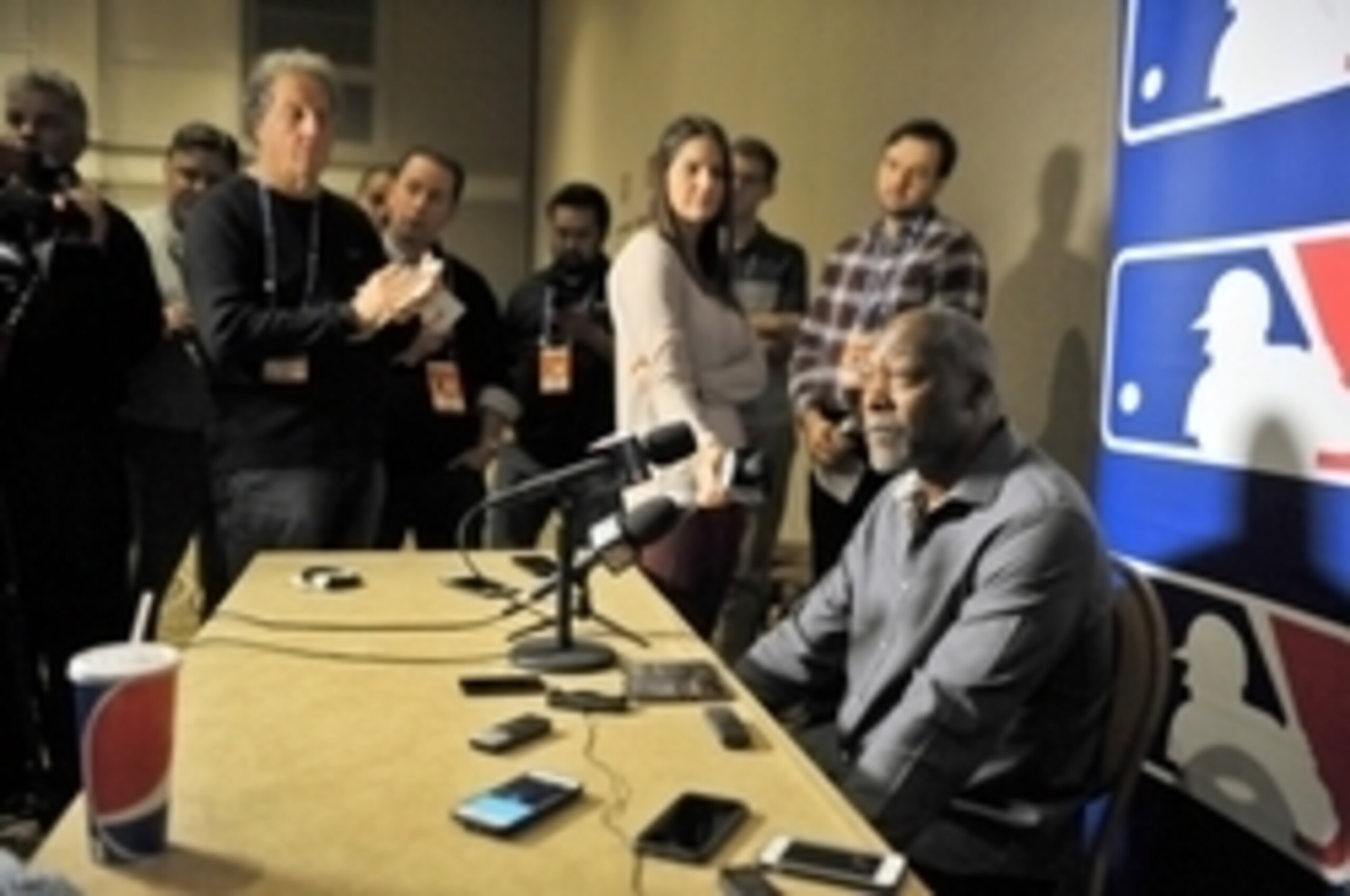
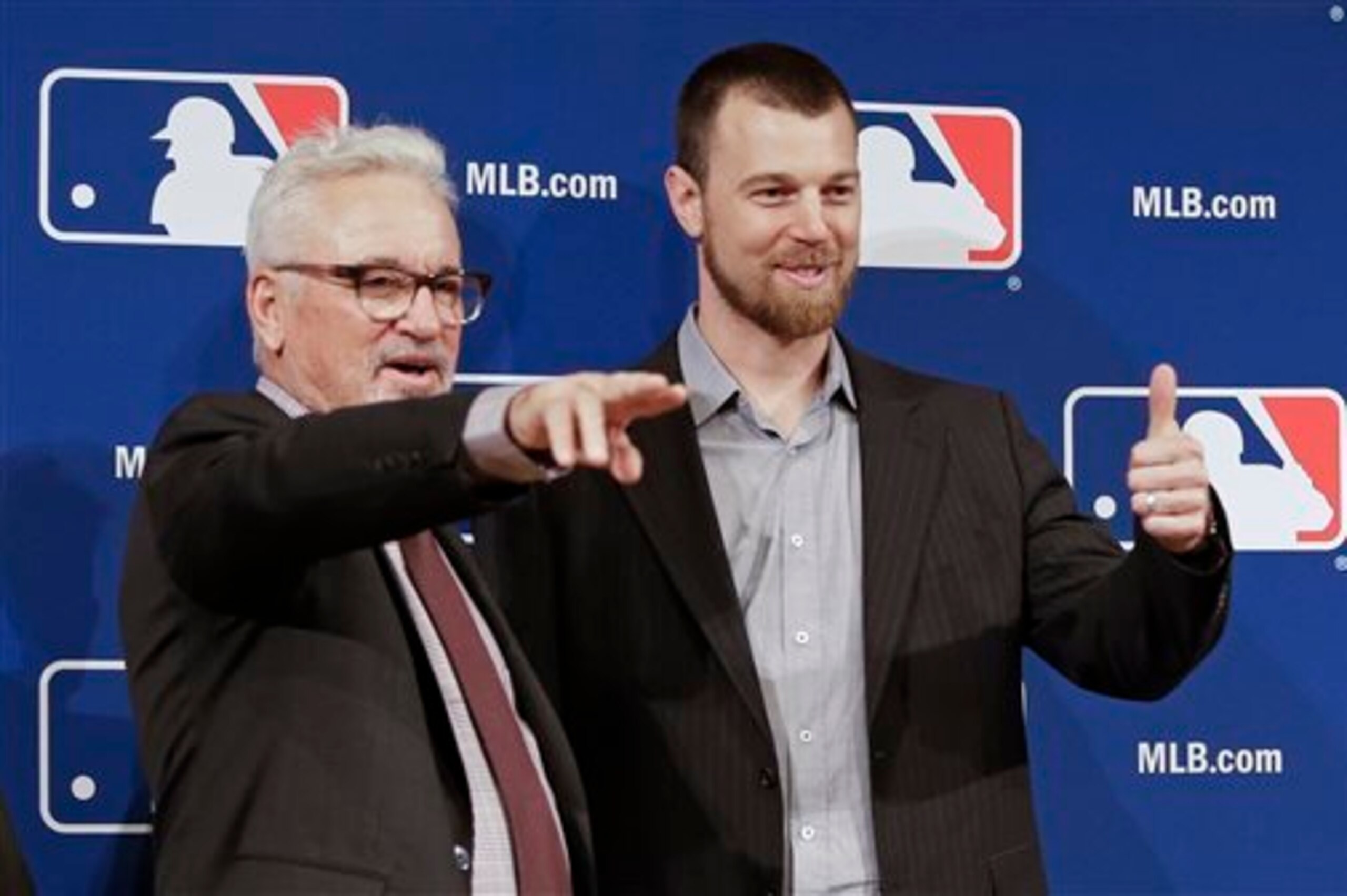
This was the one that had everyone talking—the one Arizona Diamondbacks general manager Dave Stewart (above) explained by saying, "We're in the business here to win" (via Nick Piecoro of the Arizona Republic).
To have a chance to win, the Diamondbacks needed quality pitching—and plenty of it. Zack Greinke only cost money ($206 million of it), but getting Shelby Miller from the Atlanta Braves cost the D-Backs dearly in prospect terms. They gave up shortstop Dansby Swanson, the top overall pick in last June's draft, as well as promising pitcher Aaron Blair and major league outfielder Ender Inciarte.
There's enough to say about this trade to fill a full column.
Just remember that as with any prospect-heavy deal, we won't know for a few years how much the Diamondbacks really gave up to get Miller, who slots in with Greinke and Patrick Corbin to give the Diamondbacks a rotation front three that should make them National League West contenders. The screaming from the prospects-first crowd was no worse after this trade than it was when the Kansas City Royals included Wil Myers in their December 2012 trade with the Tampa Bay Rays for James Shields.
Myers and Shields are both now in San Diego, and the Padres might well trade you both of them if you ask nicely.
The other interesting part of this Diamondbacks-Braves trade is that we don't really know yet how good the 25-year-old Miller could be. He was a first-round draft pick and big prospect with the St. Louis Cardinals (who traded him to Atlanta last winter to get Jason Heyward). He got better in his year with the Braves, and even old-time stats lovers will discount his 17 losses on the basis of incredibly bad run support.
The Braves put him on the market because they put everyone but Freddie Freeman on the market. They were thrilled to get the return the Diamondbacks offered them, and they hope all three players they received can play a big part in the team they're hoping to build for their new ballpark, which opens in 2017.
By then, the Diamondbacks hope Miller has helped get them to the postseason.
Chicago Cubs Sign Free-Agent Outfielder Jason Heyward
11 of 11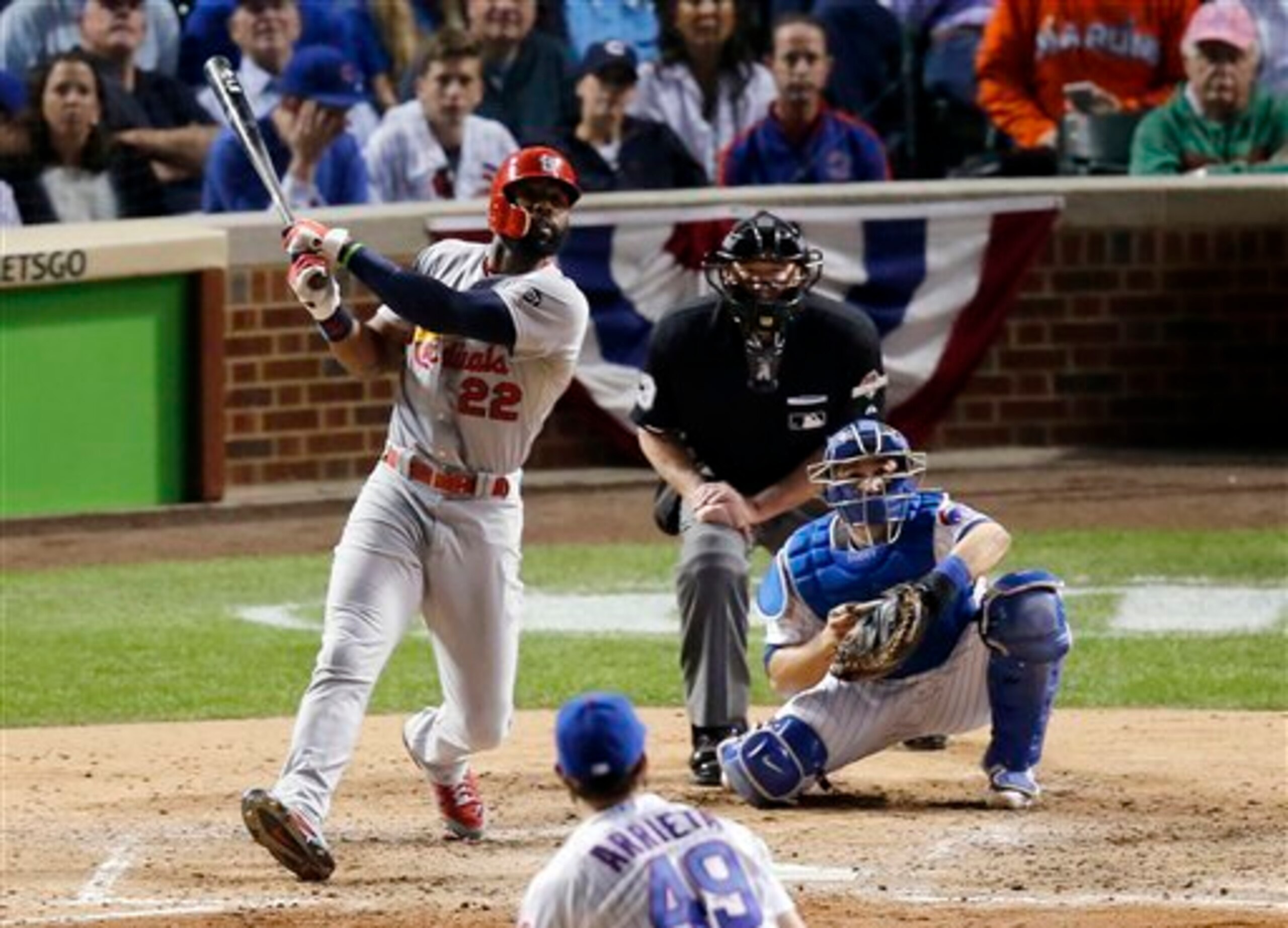
For years, the St. Louis Cardinals had it so nice in their often-competitive but never-daunting National League Central. For years, the Cardinals spent what they wanted to spend and for the most part kept the players they wanted to keep.
And if there was royalty in the Central, the Cardinals were definitely it.
This is the winter when the balance of power shifted—in the Central, and perhaps in the entire National League.
The Cardinals certainly aren't done, and there are plenty of other pitchers and outfielders they can still sign. Immediately after the news broke that Heyward was heading to Wrigley Field (first via Gordon Wittenmyer of the Chicago Sun-Times), Bob Nightengale of USA Today reported on Twitter that the Cards had shifted their focus to signing Alex Gordon.
Gordon is a nice player, but he's not Jason Heyward. The Cardinals lost Heyward to the Cubs, just as they lost John Lackey to the Cubs earlier this winter. What has to be even harder to take is that, according to Jon Heyman of CBSSports.com, Heyward may have actually accepted a discounted price to join the Cubs (just as Ben Zobrist apparently did, according to Susan Slusser of the San Francisco Chronicle).
So the Cubs have great young talent, a manager everyone seems to want to play for (Joe Maddon), plenty of money and an attraction that convinces players to still take discounts to sign there.
Heyward is a nice fit, because the Cubs can even play him in center field if they need to. He's one of the best defensive outfielders in the game when he plays in right field, but he does have some limited big league experience (32 games) in center.
Plus, with his ability to get on base (.359 OBP last year) and his speed (23 steals), he's a nice fit in a lineup that already includes plenty of mashers.
He fits the Cubs. They took him away from the Cardinals.
It's hard to complain about that signing—unless you're a Cardinals fan.
Danny Knobler covers Major League Baseball as a national columnist for Bleacher Report.
Follow Danny on Twitter and talk baseball.

-(1).jpg?w=2560 "Grading WWE Raw 🔠")


.jpg?w=2560 "Waiver-Wire Pickups 👀")


.jpg?w=2560 "Week 1 Rankings 📊")
.jpg?w=2560 "Best Fantasy Team Names")