What Struggling Young Quarterbacks Must Improve Upon to Find Success
An NFL quarterback's life is not only glamourous, but it's also incredibly difficult. Not only has media become obsessed with the position, but teams have also placed an extraordinary amount of stress on them. Far too often football analysis boils down to whichever team has the better quarterback.
The rush to anoint the next great quarterback and bury any struggling ones creates an idea that the position's future is doomed. Young quarterbacks can continue developing for years, even if their production has somewhat peaked. We don’t have to look far for examples.
All of the best quarterbacks in 2015 are older veterans. Aaron Rodgers, Tom Brady, Carson Palmer and Philip Rivers are well into their 30s. Injured stars Tony Romo and Ben Roethlisberger are also 30-somethings with a a lot of good football left in them.
It’s a good thing their respective teams didn’t write them off too early. Patience is required for young and talented quarterbacks. Not all will pan out, but surrounding them with good talent can create the perfect situation. Games are not decided by just the quarterback, and some need more help than others.
We’ll be looking at several young quarterbacks who are statistically struggling this season. Each of these players is still on a rookie contract and was drafted in 2012. All evaluations are meant to be fair and reasonable in terms of upside and expectations.
Andrew Luck, Indianapolis Colts
1 of 5
No young quarterback has struggled as much as Andrew Luck. The 2012 No. 1 overall pick has been dealing with shoulder and rib injuries, according to Fox Sports' Jay Glazer, and it’s clearly affected his play. His throwing accuracy and velocity on passes has greatly diminished.
Entering Week 8, Luck had completed just 52 percent of his passes. His touchdown rate dropped from 6.5 percent to just 5.2 percent from 2014 to 2015. Meanwhile, his interception rate is at a career-high pace of 4.3 percent of his throws.
Luck has been tough enough to play through the pain whenever possible. But he needs to rest to reclaim his status as the clear top young quarterback. He’s been crowned the next great thing throughout his career, but injuries can quickly take a toll.
Once Luck is healthy, his decision-making must improve. He puts the ball into tight coverage too often, and his turnovers have sunk the Colts in the playoffs in consecutive years. He’ll need to find the balance between reckless and calculated risks.
Russell Wilson, Seattle Seahawks
2 of 5
Few young quarterbacks have faced as much scrutiny as Russell Wilson has, despite the success he and the Seattle Seahawks have seen in his first four seasons. Wilson’s been a lightning rod for fans because he’s largely benefitted from an elite defense and running game. This probably isn’t a fair criticism, as any quarterback would love to be surrounded with other great players.
Punishing Wilson for the high performance level of his team is ridiculous. For his first three seasons, Wilson properly executed much of what was asked of him. He’s also proven capable of creating game-breaking moments that propel his team to victory.
2015 has been rough for Wilson, though. His rushing game has significantly dropped, and the Seahawks’ defense isn’t quite as dominant. Wilson hasn’t played well behind a bad offensive line, either.
In order to maximize his efficiency and cut down on sacks, Wilson must stay patient in the pocket. His size makes him feel as if he must escape the pocket early, but too often he creates extra pressure on himself. He must develop into a more patient and aware player while standing tall in the pocket.
Ryan Tannehill, Miami Dolphins
3 of 5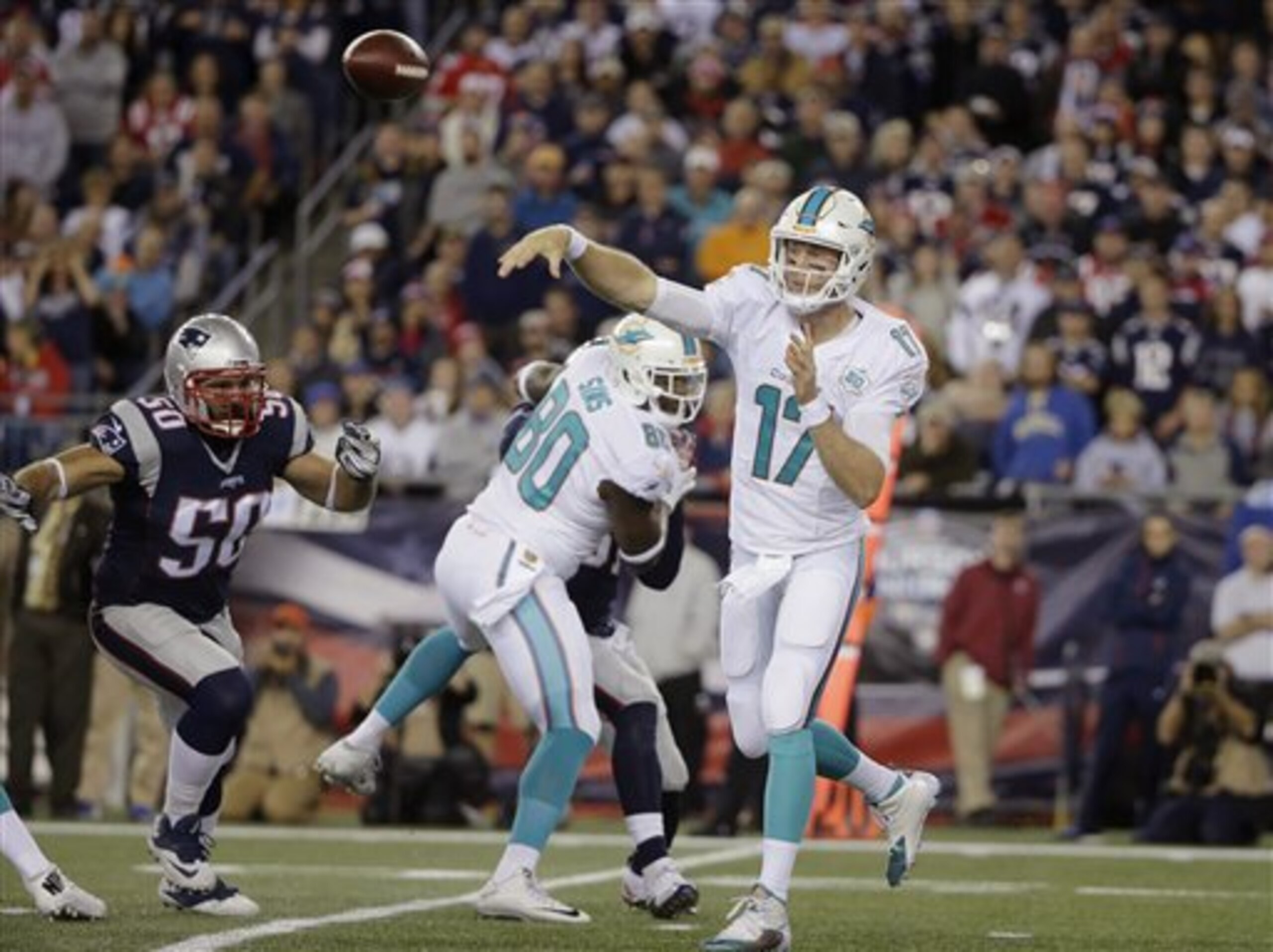
If you’re just looking at the raw numbers, then you’d believe Miami Dolphins’ quarterback Ryan Tannehill has regressed. That isn’t really the case, although Tannehill hasn’t played especially better than he did in 2014. His drop in numbers is a result of bad coaching and his team always playing from behind.
The Dolphins have thrown the ball 66 percent of the time, which is the NFL's fourth-highest clip. This number was as high as 74 percent of all plays a month ago. Very rarely can an offense maintain that type of play-calling, let alone one without an elite quarterback.
Tannehill is not elite, as he lacks the pocket presence and consistent improvisational ability a select few have. But he has still shown positives even though his offensive line is again ranked in the bottom seven in terms of pass-blocking efficiency, according to Pro Football Focus. His offensive line finished 31st last year, and it’s clear he isn’t good enough to transcend that limitation.
What Tannehill can do to mitigate his porous offensive line and leaky coaching situation is to show better situational awareness. Too often he’ll lock onto a receiver on a critical down and force a bad pass into coverage. He’s willing to make tough throws, but he must be quicker to move on to his next target.
.jpg?w=2560 "Super Bowl Football")
.jpg?w=2560 "49ers Eagles Football")
.jpg?w=2560 "Vikings Football")
Nick Foles, St. Louis Rams
4 of 5
A third-round pick in 2012, St. Louis Rams’ quarterback Nick Foles is looking to make sure his second team can’t afford to let him go elsewhere. Foles famously had 27 touchdowns and two interceptions in 2013, but his success wasn’t sustainable. His consistency on a play-to-play basis will be what determines whether he takes the next step or not.
Even in Foles’ big statistical outbreak, there were a lot of warning signs that he’d badly regress. His accuracy is a mess, oftentimes due to his lower-body movement. His heavy feet and slow eyes are not a good pairing.
Until Foles can quickly diagnose defenses and improve his footwork in the pocket, his performance will be shaky. His tendency to throw high and behind is what plagued most failed NFL quarterbacks. Fixing accuracy is incredibly rare, so we’ll have to wait and see whether Foles can improve his 61 percent career completion rate.
Kirk Cousins, Washington Redskins
5 of 5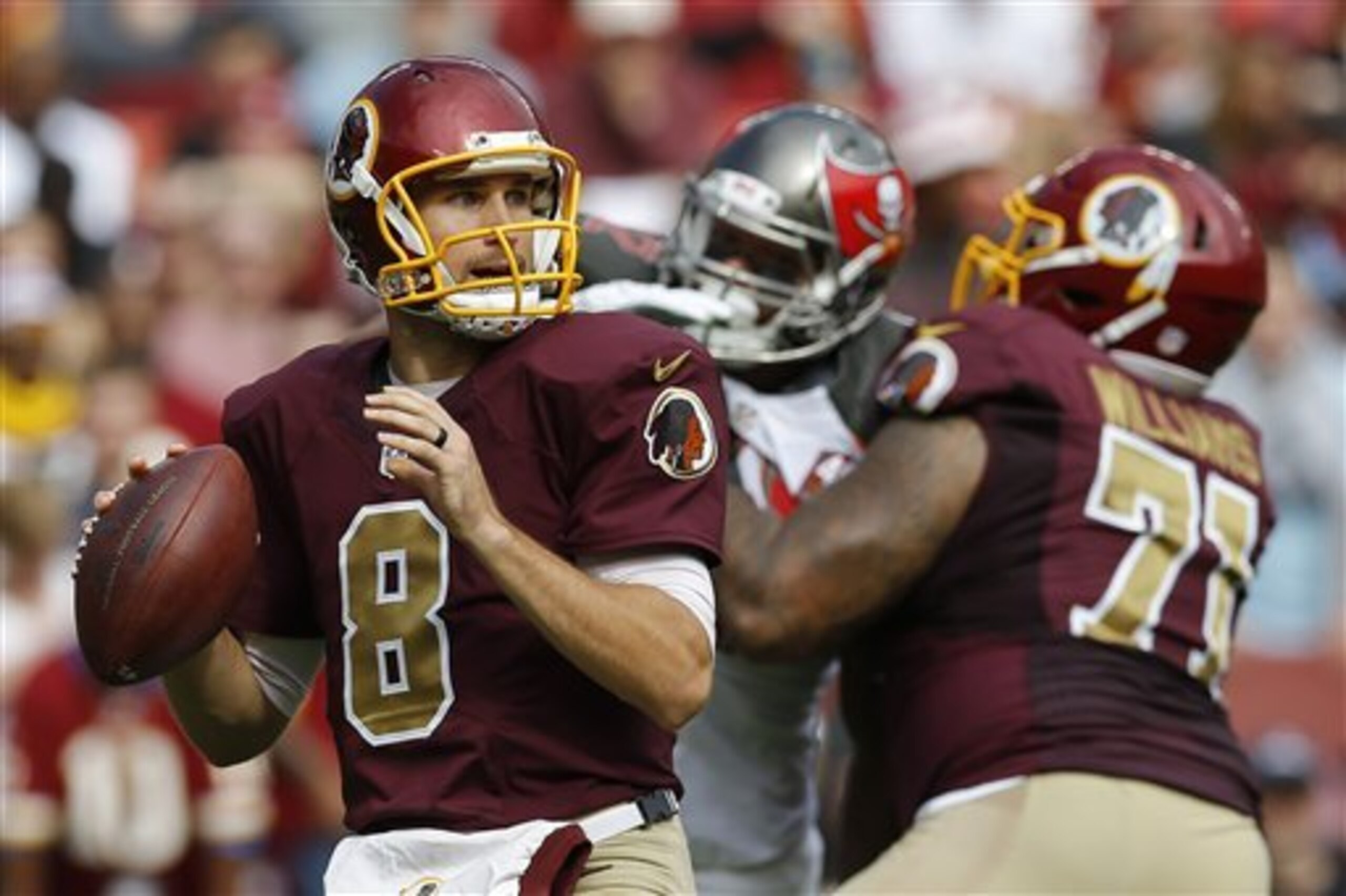
A fourth-round pick in 2012, Washington Redskins quarterback Kirk Cousins has finally received his chance to earn a starting job. Through seven games, Cousins hasn’t been able to show much growth. He continues to be a low-impact player with the penchant for turning the ball over.
Cousins’ career 1:1 touchdown to turnover ratio is one of the uglier numbers you’ll see on his stat sheet. In just 21 games played, Cousins has an absurd 27 interceptions. His key to improving is clearly cutting down the turnovers.
Not every interception is made the same. Cousins is willing to force the ball into double coverages, but is prone to staring down one receiver for seconds at a time. His eye manipulation is almost non-existent, as well.
Cousins has a long way to go to be an acceptable starting quarterback. His deep accuracy is second-worst in the NFL, per Pro Football Focus. That only compounds his issues throwing into crowds underneath, as defenses don’t respect his deep game.
All stats used are from Sports-Reference.com.
Ian Wharton is an NFL Featured Columnist for Bleacher Report.
.jpg?w=2560 "Eagles Football")
.jpg?w=2560 "NFL Meetings Football")
.png?w=2560 "Ranking the Best Shooters of All Time 🎯")