Pitchers Who Have Officially Graduated to Front-Line MLB Starters
It's not easy to gain entry into the MLB Brotherhood of Aces. You have to pay your dues, and then there's a rigorous inspection to pass before graduation.
On that note, who's ready to get their diploma?
It's still early in the 2015 season, but there are already starters who are fully deserving of the ever-elusive "ace" label. Five, to be exact.
TOP NEWS
Buzz: Skubal Asking Price 'Outrageous'
Buy or Sell for All 30 Teams 🤔
Report: Reds Give SP Historic Contract
Before we get to breaking them down, take a moment to read the ground rules that helped me narrow my list down to five. In order to be considered, a pitcher had to have:
- No prior All-Star appearances.
- No prior top-10 Cy Young finishes.
- Very recent success prior to 2015.
If you don't see one of your favorite pitchers listed below, odds are it's because he failed to meet these requirements. Keep that in mind before pressing the all-caps key and heading for the comments.
As for the guys who are listed below, we'll go in alphabetical order.
Chris Archer, Tampa Bay Rays
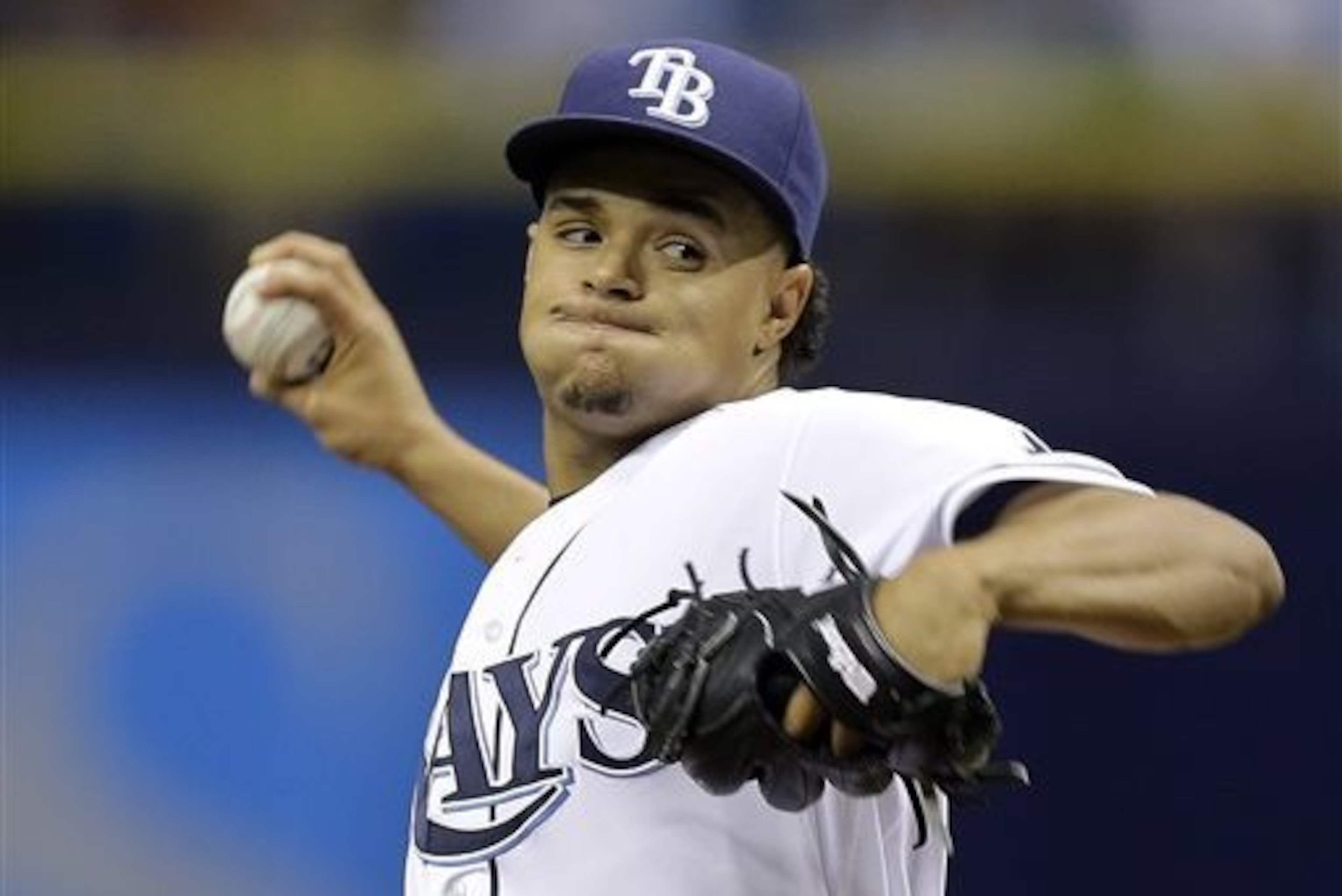
Chris Archer didn't enter 2015 as some back-end dud. Though not ace-like, the 3.28 ERA he posted across 323.1 innings in 2013 and 2014 qualified him as at least a solid No. 3 starter.
But he looks like more than just a No. 3 right now. Through his first five starts, the 26-year-old right-hander had racked up a 0.84 ERA and a league-best 37 strikeouts in 32.1 innings. Baseball-Reference.com WAR had him rated as the American League's third-best pitcher.
This is not a fluke. There's no better way for a starter to achieve ace status than by racking up strikeouts, limiting walks and getting ground balls, and Archer has drastically improved in all three departments.
To accomplish this, he hasn't had to change too much. He's still a fastball-slider pitcher, as he should be given the quality of those pitches. His fastball clocks in the mid-90s, and his sliders looks like this (courtesy MLB GIFs):
Rather than changing his stuff, Archer has changed how he uses it. He's putting significantly more trust in his slider, upping its usage from around the 30 percent mark to around 40 percent.
Even more significant, however, is where these extra sliders are being located.
Before, Archer used his slider pretty much exclusively as a swing-and-miss pitch, only throwing it outside the zone where hitters would chase it. The credit goes to Alec Dopp of Gammons Daily for noticing that Archer has switched up his attack to include more sliders in the strike zone, and that shows up in these figures from Baseball Savant:
| 2012 | 490 | 63 | 12.9 |
| 2013 | 2100 | 302 | 14.4 |
| 2014 | 3160 | 352 | 11.1 |
| 2015 | 476 | 97 | 20.4% |
Archer hardly ever threw sliders in the zone before 2015. Now, such pitches account for over 20 percent of all his offerings. That's helping his overall strike rate and is making it tougher for hitters to let fly when they see something ticketed for the zone.
But Archer's not the only hard-throwing right-hander who looks like an ace thanks to a renovated pitching style. In the National League, there's...
Gerrit Cole, Pittsburgh Pirates

Not unlike Archer, Gerrit Cole was hardly a bad pitcher before 2015. He posted a 3.45 ERA across 255.1 innings in his first two seasons in 2013 and 2014.
But now the 24-year-old right-hander looks like the ace the Pirates envisioned when they drafted him No. 1 overall in 2011. In five starts this year, Cole has a 1.76 ERA with 35 strikeouts and eight walks in 30.2 innings.
Where Cole differs from Archer is that this has been going on for a while. The 3.44 ERA he posted in the second half of 2014 undersells how good he was, as much-improved strikeout and walk rates resulted in some metrics placing him among the NL's most dominant pitchers.
This April, Cole picked up right where he left off, striking out over 10 batters and walking only 2.4 batters per nine innings. As a bonus, he also got a ton of ground balls.
If this sounds like a description of the pitcher Cole should have been from the get-go, well, you're not wrong. He was always regarded as having good command, and he has even better stuff with a four-seamer that can touch triple digits, a nasty sinker and a quality slider, curveball and changeup.
But even good stuff and command can only get you so far. You also need to have the right approach, and that's what Cole belatedly achieved last summer.
Turning again to a Gammons Daily writer, David Golebiewski noted in March how Cole found success from ceasing to throw his fastball exclusively low in the zone and transitioning to an approach that included both high and low fastballs.
Using some graphs from Brooks Baseball, we can see what he means by comparing Cole's previous fastball pattern:

To his new fastball pattern:

When you go from exclusively low fastballs to both high and low fastballs, you're making it harder for a hitter to simply target low pitches. Their eye levels get changed, and that makes everything a pitcher throws more effective. Obviously, Cole can vouch.
But hey, in case you don't feel like taking my word for it that Cole is awesome, maybe you'll take it from Pedro Martinez:
There's high praise, and then there's Pedro's praise. Hats off, Mr. Cole.
Now then, let's move back to the American League to find a pitcher who's getting more baffling by the day...
Sonny Gray, Oakland Athletics

Sonny Gray had his big breakout in the 2013 postseason when he outdueled Justin Verlander in Game 2 of the ALDS. He followed that up with a solid rookie season, posting a 3.08 ERA in 219 innings.
Full disclosure: I wasn't a big believer in Gray's ability to repeat that performance. He showed he could get ground balls, sure, but he was only average at getting strikeouts and limiting walks.
But some things make a man come around. Namely, a 1.98 ERA across 36.1 innings in five starts. That's an attention-grabber, and it's definitely believable.
One very, very good thing Gray has done is cut his walk rate in half. And though his strikeout and ground-ball rates have gotten worse, he's a rare case of a pitcher who can get away with that.
Despite his decreased ground-ball rate, Mark Simon of ESPN Stats & Information has data that shows Gray's pitch-to-contact style is producing a small percentage of hard-hit balls:
There's Gray at No. 12. And when you look past his ground-ball percentage and see that his line-drive rate is down and his infield-fly-ball rate is up, that actually makes a lot of sense.
How is Gray doing it? Mainly through a different mix of pitches.
When Gray first entered the league, he was a four-seam/curveball guy. But as this chart from Brooks Baseball can show, he now leans mainly on his sinker and also has a slider to go with his curveball:
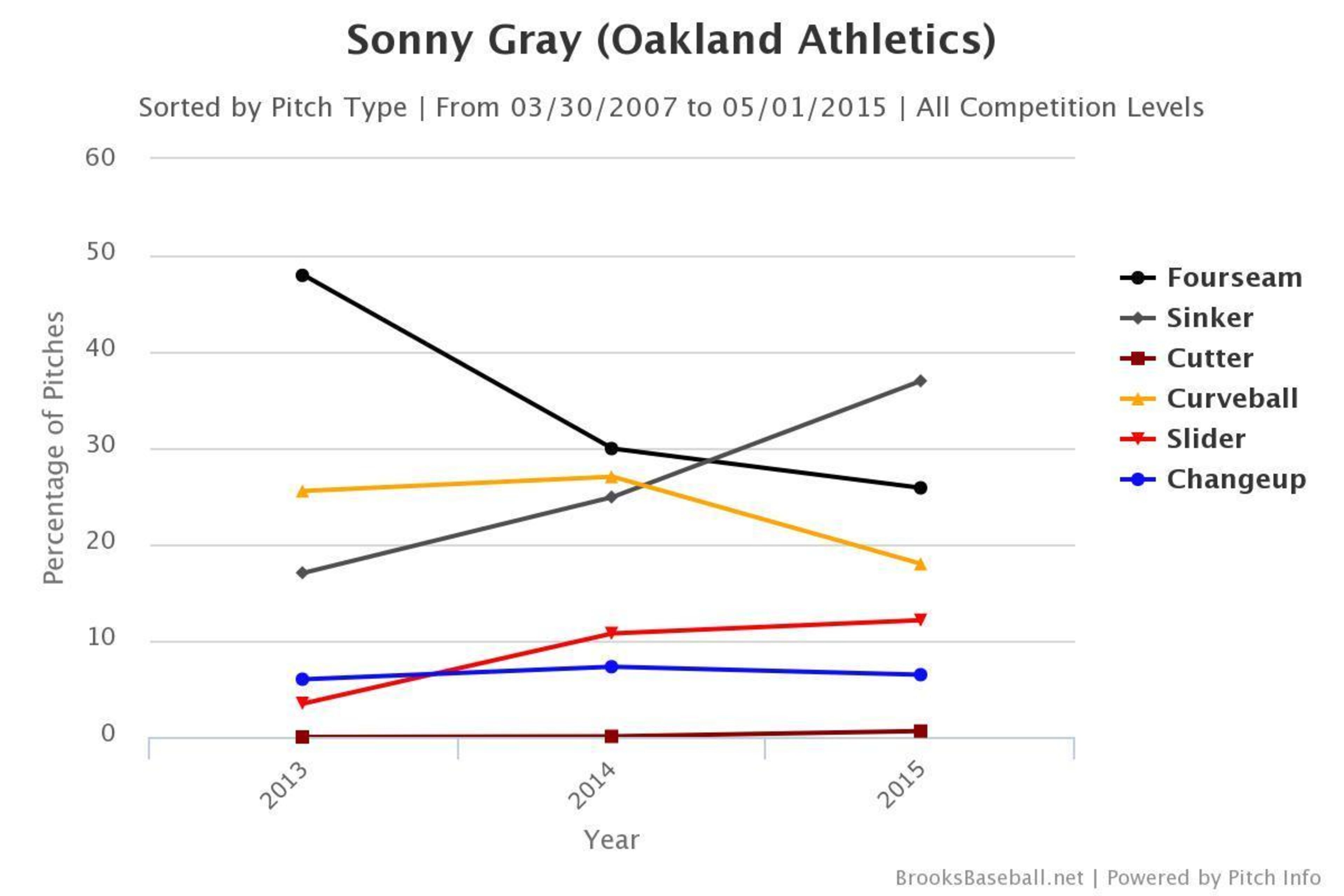
Beyond offering unpredictability, Gray's diverse arsenal has an increased nastiness factor as well. He throws his heat in the low-to-mid 90s, and Baseball Prospectus can vouch that both his slider and his curveball have elite glove-side run.
But Gray isn't the only ace arising in the AL West. There are two others who demand attention, and it so happens they play for the same team.
Dallas Keuchel, Houston Astros
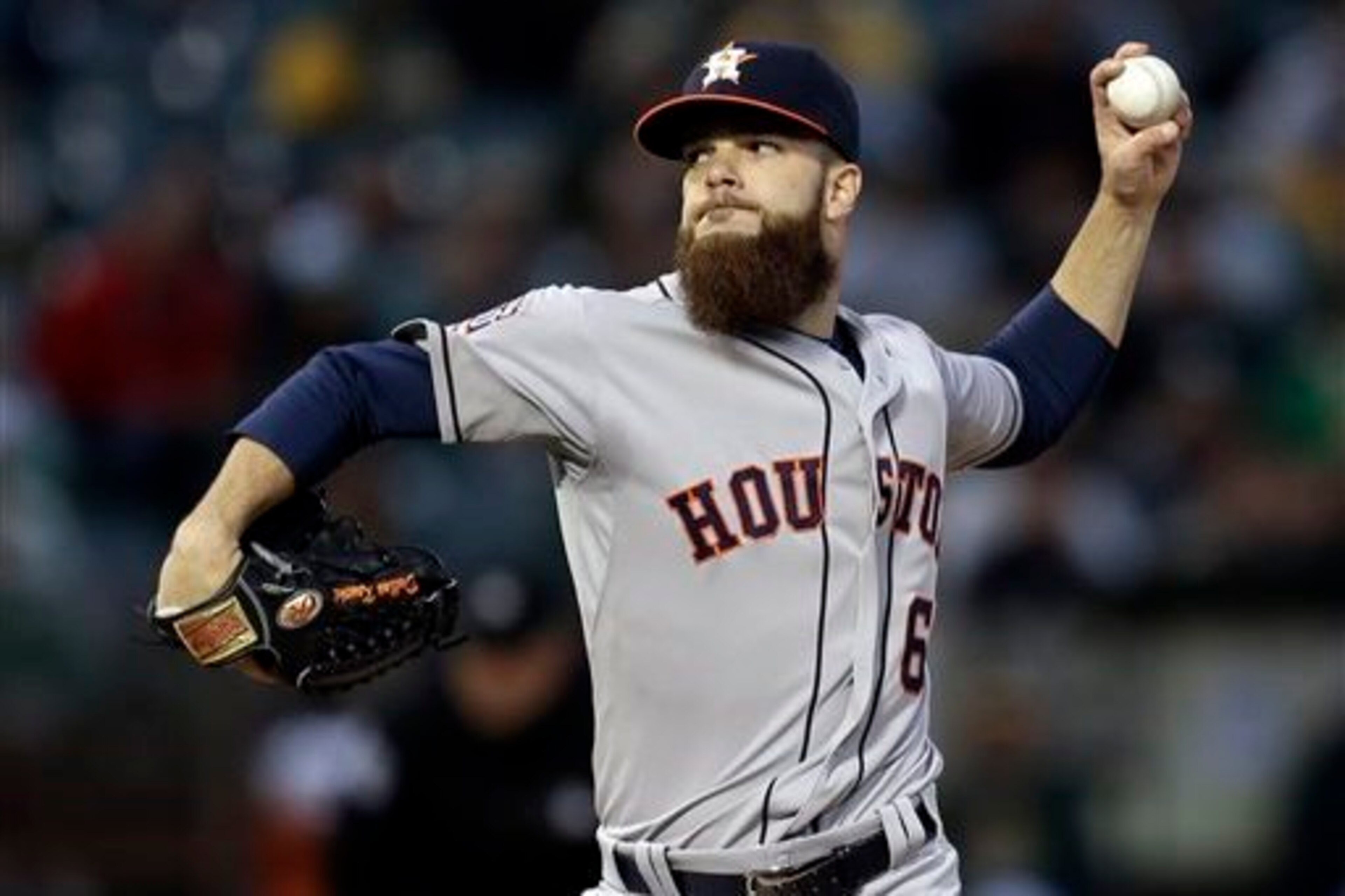
Now, I'm sort of cheating with this one. Dallas Keuchel pitched to a sub-3.00 ERA in 200 innings last year, and he had my approval as a top-secret ace by mid-June.
But the difference now is that he's no longer top-secret. After Keuchel was shut out of the All-Star and the Cy Young voting in 2014, people seem to be coming around. As for why, here's Richard Justice of MLB.com:
Those numbers are nasty. Like, literally nasty. Don't smell them. Don't taste them.
But they are also misleading to an extent. Keuchel's been awfully good, but he is bound for a course correction once the baseball gods realize he's been getting away with diminished strikeout and walk rates.
But said course correction shouldn't be too bad. Keuchel's lowered strikeout and walk rates mean he's putting a lot of trust in his defense, and he's better equipped to do that than most.
For one thing, Keuchel has elevated last year's MLB-best 63.5 ground-ball percentage to an even more impressive 65.3 percent. And though he doesn't brush to the top of Simon's hard-hit rankings, check out where he ranks in Baseball Savant's list of pitchers who allow the slowest batted-ball velocities:
| 1 | Chris Sale | CWS | 82.6 |
| 2 | Garrett Richards | LAA | 83.6 |
| 3 | Adam Wainwright | STL | 83.6 |
| 4 | Dallas Keuchel | HOU | 83.9 |
There you go. On average, opposing hitters are hitting the ball about as hard off Keuchel as they have off three guys who were all Cy Young contenders in 2014.
Not bad for a guy who only throws around 90 miles per hour. Let that be a lesson that movement and location can do just as much damage as velocity. That's especially true of Keuchel's slider, which does this to hitters (via the Astros):
But speaking of sliders, there's a teammate of Keuchel's who has a pretty good one of his own...
Collin McHugh, Houston Astros

Not unlike Keuchel, Collin McHugh also had an awesome under-the-radar season in 2014. Albeit in only 25 starts and 154.2 innings, he notched a 2.73 ERA that put him in the top five of the AL Rookie of the Year voting.
But McHugh really took off in the second half, posting a 2.12 ERA with 64 strikeouts and eight walks in 72.1 innings. And so far in 2015, that performance has carried over. Through his first four starts, the 27-year-old right-hander had a 2.92 ERA with 23 strikeouts and four walks in 24.2 innings.
That ERA undersells how good McHugh has been. He's once again striking out nearly a batter per inning, and he's cut his walk rate to about 1.5 per nine innings. His ground-ball rate, meanwhile, has shot up over 50 percent.
Where is all this dominant pitching coming from? See if you can spot it in this pitch selection chart from Brooks Baseball:
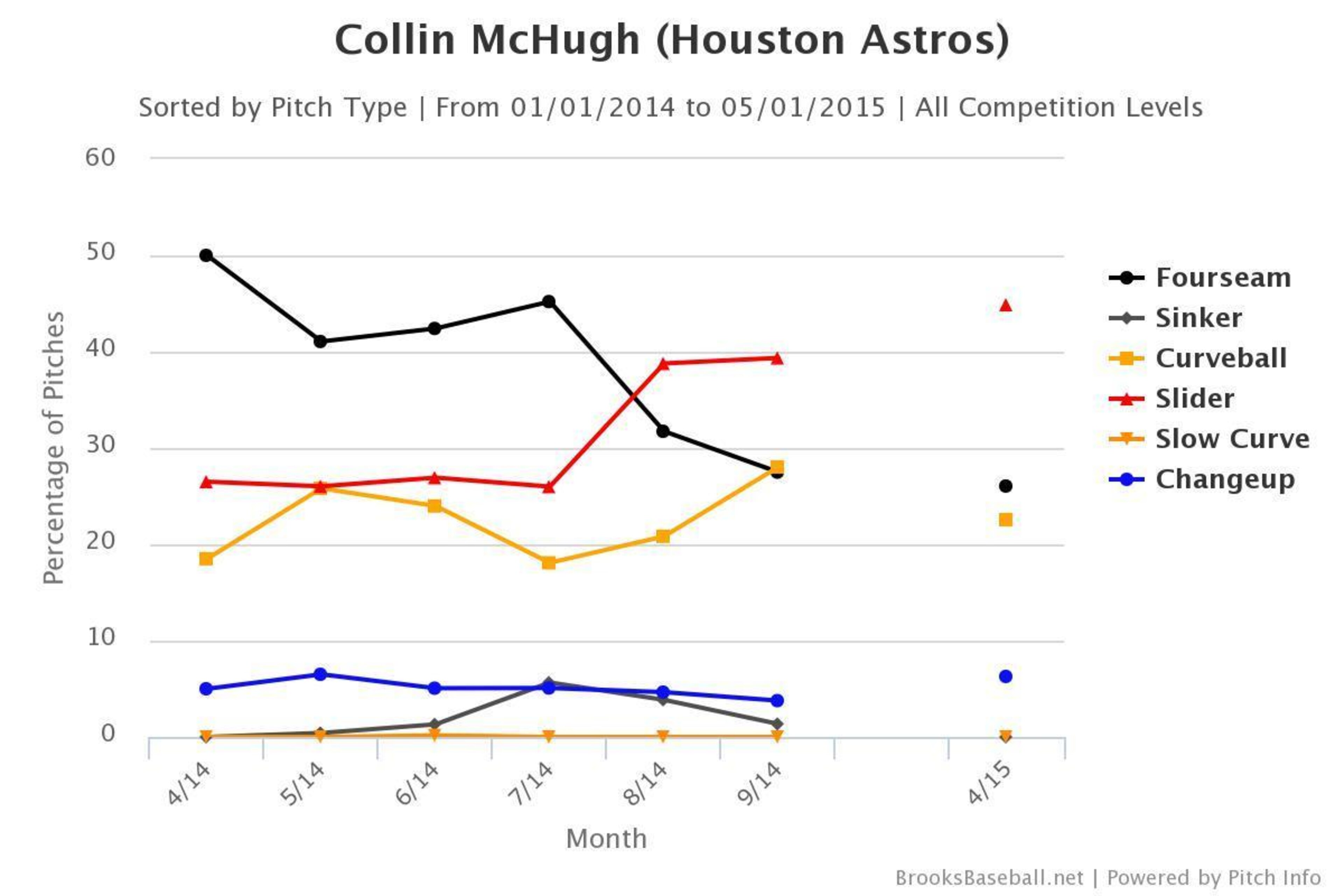
You want to focus on the red line. It shows McHugh's slider usage, which went from being pretty subdued before August last year to being his primary pitch ever since.
This is something we've seen Jake Arrieta do in the NL, and it's working about as well for McHugh as it has for him. Since last August, batters have hit just .227 with 10 extra-base hits against McHugh's slider.
Part of this is because McHugh's slider is simply a pretty good pitch, but he also has something in common with Archer. McHugh has gone from using his slider as a swing-and-miss pitch out of the zone to more of a get-me-over pitch in the zone.
This has helped make McHugh's fastball and curveball more effective, and there's nothing the least bit fluky about the results he's been racking up. His whiff rate is on the rise, and you can find him in the top 20 in the list of batted-ball velocity leaders. McHugh is as hard to square up as he is to hit.
Thus concludes today's ceremony. Everyone, give it up for the new graduates into the MLB Brotherhood of Aces.
Note: Stats courtesy of Baseball-Reference.com and FanGraphs unless otherwise noted/linked and are accurate as of May 1.
If you want to talk baseball, hit me up on Twitter.
.png?w=3840 "Every City's 2000s Mt. Rushmore 🤩")
.jpg?w=3840 "Watch: Jerry Rice Chases After Heckler")