Deep but Lackluster OT Crop Must Show Left Tackle Qualities at 2015 NFL Combine
Left tackle remains one of the most valuable positions in the NFL.
The average dollar amount of the top five contracts for a left tackle is $70.3 million. Only quarterbacks and defensive ends receive bigger contracts among the league's elite players.
The reasoning behind paying the game's best left tackles has changed in recent years, though.
.jpg?w=2560 "Seahawks Cardinals Football")

.jpg?w=2560 "Giants Rams Football")
It isn't simply about protecting the quarterback's blind side anymore. No team wants its franchise signal-caller blasted from behind, but right defensive end is also where most teams place their best athlete along their defensive front.
A left tackle's primary job is shutting down that athletic edge-rusher. If he does so effectively, it opens up the offense from a blocking perspective to attack the defense.
For example, a top-notch left tackle can shut down the right defensive end, which in turn allows the rest of the offensive line to slide to the right side. Defenses have taken advantage of the lesser athletes at right tackle in recent years.
Pro Football Focus' Pete Damilatis pointed out the league's best pass-rushers primarily do their damage over the right tackle:
While this should indicate an increased emphasis on placing better athletes at right tackle, it also shows the continued value of the left tackle position.
Elite left tackles like the Cleveland Browns' Joe Thomas, Dallas Cowboys' Tyron Smith and even the New England Patriots' Nate Solder can handle any pass-rusher one-on-one. Their ability to do so allows the offense to utilize more assets trying to block players like the Houston Texans' J.J. Watt or the Kansas City Chiefs' Justin Houston.
Defenses will attack whatever weaknesses they can find along an opposing offense. A premier left tackle helps mask those soft spots. This is why left tackles retain their value even in today's NFL, and they're usually selected near the top of the first round in the NFL draft.
As many as six offensive tackles could be selected in said area during spring's draft, but each has questions about his ability to play on the blind side.
Brandon Scherff, Iowa
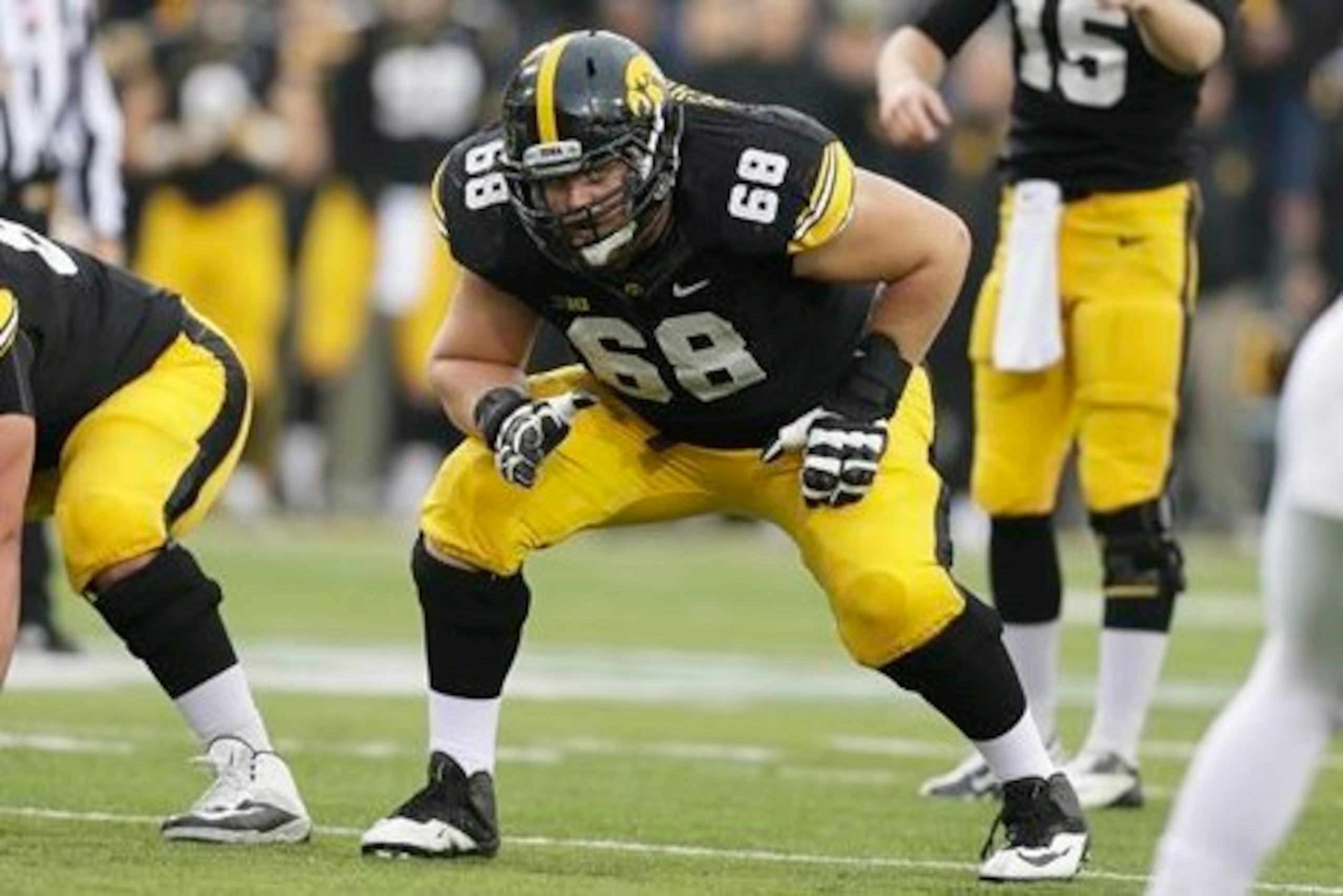
Is Scherff an offensive tackle or a guard at the pro level?
The reigning Outland Trophy winner as college football's best interior lineman is often compared to the Dallas Cowboys' Zack Martin.
Martin, who started at left tackle for the Notre Dame Fighting Irish, was selected by the Dallas Cowboys with the 16th overall pick in the 2014 NFL draft and was immediately converted to guard.
The rookie lineman immediately rewarded his new team with a dominating first year of play before being named first-team All-Pro.
Due to Scherff's physical style of play, body type and nasty disposition, he's often projected inside as well.
"... I believe he can play outside," NFL Network's Mike Mayock said, via Big Blue View's Ed Valentine. "However, I think his best position, because of his power, his toughness, his football sense, is inside. I think he's an All-Pro guard. But that doesn't mean he can't play tackle in the NFL."
Not everyone agrees with that assessment.
Duke Manyweather helps train offensive linemen, and he believes the comparison is off-base:
Manyweather agrees Scherff can be a fine guard at the NFL level, but he simply falls short of a player talented enough to become an All-Pro the day he enters the league.
The Iowa lineman still has an opportunity at the combine to prove he should be selected by a team with the intent of playing offensive tackle.
The first major question about Scherff was already answered when he was measured in Indianapolis. Length at the left tackle position is crucial, and the All-American fits the bill, as Draft TV's Shane P. Hallam tweeted:
Anything under 33-inch arms would have sealed Scherff's fate as a guard, but a good measurement shows he has adequate length to remain at tackle.
The next step is proving to NFL scouts that he possesses the movement skills necessary to remain on the blind side.
When watching Scherff, he appears a little tight in his hips, which restricts his movement in his pass set. He doesn't appear as athletic when he's asked to establish the edge against speed-rushers.
The Iowa tackle actually suffered a knee injury that required surgery before he was back on the field practicing a few days later. Not only does that speak to the lineman's toughness, but it's also a reason why he might not have looked as athletic later in the season.
The combine will provide the opportunity to look smooth in drills—particularly those that ask him to change direction and position-specific drills relating to his pass set—and prove he is more than capable of not only being the first offensive lineman off the board but the first left tackle too.
La'el Collins, LSU

Collins has been a popular man since he attended the Senior Bowl last month in Mobile, Alabama. According to NFL.com, the offensive lineman will meet with at least 22 teams during his combine experience.
Much like Scherff, those teams still haven't pegged Collins' exact position at the next level. The former Tiger even acknowledged his willingness to switch positions if his future team asks him to do so.
“(Left tackle or left guard) doesn’t matter to me,” Collins told NewOrleansSaints.com's John DeShazier at the Senior Bowl. “I’m just fitting in where I need to be, but I’m trying to get better at left tackle. You’ve just got to be ready to be able to fit in wherever you need to be. A guy like me, I feel I can play inside and outside so I look to fit in wherever they need me.”
Unlike Scherff, Collins didn't measure quite as big or as long at 6'4" and 305 pounds with 33.25-inch arms.
The issue with Collins as a potential left tackle prospect is his approach to the game. The offensive line prospect excels as an aggressive run-blocker, but he doesn't display consistent technique, particularly in his pass set. His hand play was inconsistent.
As a result, NBC Sports Network's Ross Tucker views Collins primarily as a right tackle:
Repetitive technique is key for any NFL offensive lineman, especially a left tackle. Thomas isn't the best left tackle in football because he's the biggest or the best athlete at the position. He's simply the most consistent.
While it will be difficult for Collins to show improved hand placement during drills, he can potentially display enough athleticism to overcome some of his shortcomings. Technique can be taught. Raw athleticism cannot.
If Collins gets on the field and moves through the drills with ease, thus showing the level of athleticism capable of playing left tackle, then he can overcome some of the concerns within other aspects of his game.
Ereck Flowers, Miami (Florida)

The junior entrant isn't in the same situation as the previously discussed draft prospects. Instead, Flowers' biggest issue is his lack of balance.
The Miami product has the requisite size to be an NFL offensive tackle when his measurements are considered, per Rotoworld's Josh Norris:
He is also a very powerful lineman at the point of the attack, as NFL.com's Gil Brandt noted:
Flowers plays top heavy, though, and his technique breaks down as a result.
The most crucial assessment for Flowers will come during change-of-direction drills.
Will he smoothly transition from one side to another, or will he start to lumber and lean forward?
Coaches call it "playing over your toes." Once an offensive lineman starts to lean too far forward, it becomes easier for defenders to use the lineman's momentum against him. A blocker as big and strong as Flowers needs to take advantage of his natural base.
Flowers has the size and length to play left tackle, but his movement skills need to stand up under extreme scrutiny.
Andrus Peat, Stanford
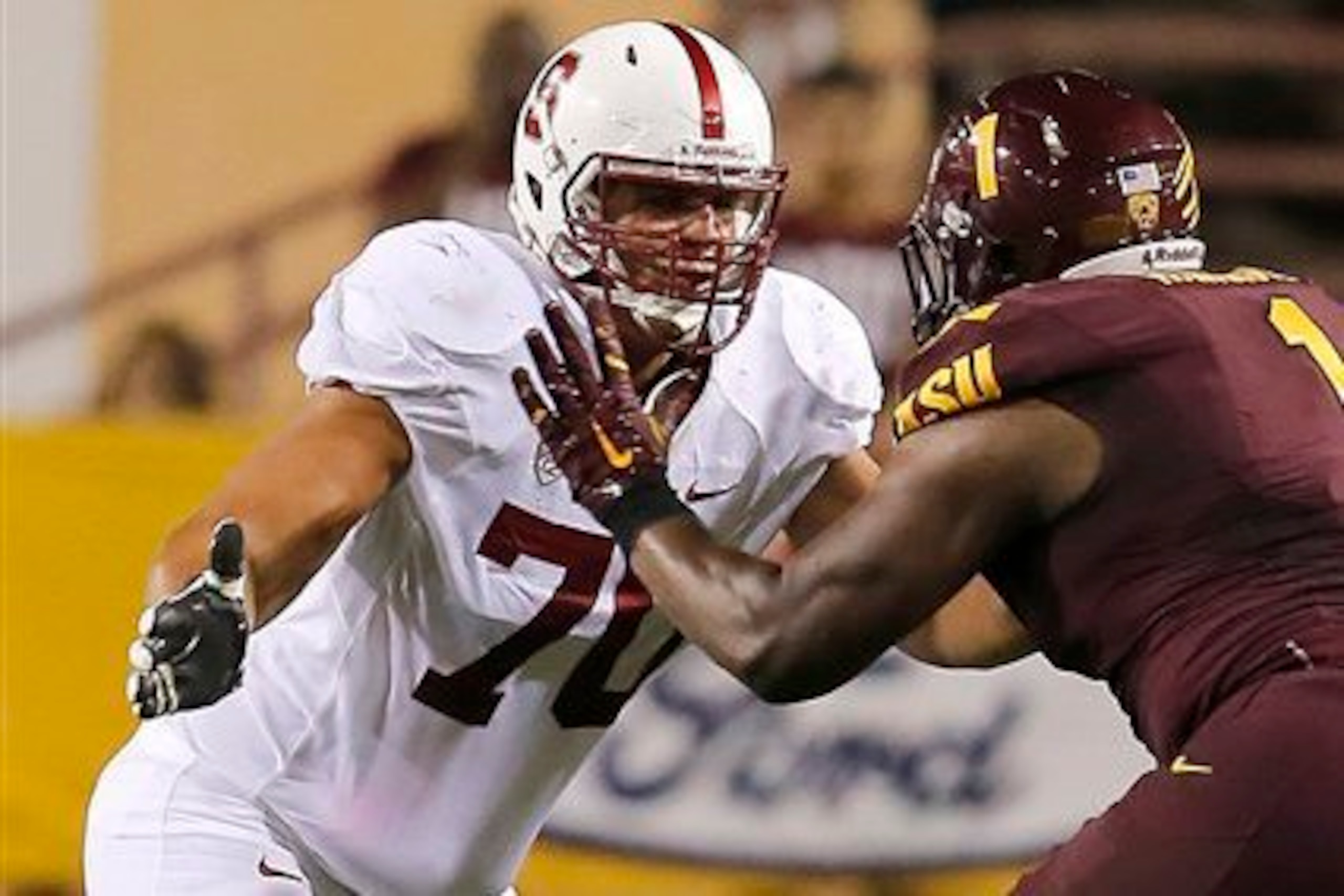
At 21 years old, Peat may have more upside than any other offensive lineman in this year's class. Upside, though, can only carry a prospect so far when more accomplished players are at the front of the line.
Once Peat's game starts to get broken down, more issues present themselves. Bleacher Report's Matt Miller was merely the latest to see the downside in the offensive tackle's game:
There is a lot to like about Peat, though. He stands 6'7" and weighs 313 pounds. The tackle prospect clearly has the type of frame that can add even more weight without losing any athleticism.
But two problems plague his game.
The first can't be answered at the combine. The early entrant isn't viewed as a typical Stanford offensive lineman. He doesn't play with the same nasty disposition as others.
Peat did address the issue with the media Wednesday.
"I beg to differ on that," Peat said, via Panthers.com's Max Henson. "I am a tough player. I play as hard as I can."
One aspect that teams will watch closely in Indianapolis is how Peat reacts during his workout once he gets tired.
At 6'7", it can be difficult to play with leverage. Peat doesn't help his case by naturally playing too high. His first step in his pass set is almost always straight up.
Once a player gets tired, bad habits tend to rear their ugly heads. As the offensive linemen go through all of their drills, Peat's lower-body flexibility and consistency in technique will be closely watched.
T.J. Clemmings, Pittsburgh

Clemmings could gain the most of any offensive tackle at this year's combine. In fact, the former Pitt Panther should put on a show.
It's with that in mind that his entire performance must be placed into context.
Clemmings is a tremendous athlete. He was offered scholarships to play basketball in the Big East Conference. Instead, he chose to play at Pitt as a defensive lineman. Clemmings eventually converted to offensive tackle as a junior. He's only played two seasons on the offensive side of the ball, but his growth at the position was extraordinary.
However, Clemmings was the Panthers' starting right tackle. He's never been on the left side.
Teams, though, will see a freakish athlete at 6'5" and 309 pounds with 35.125-inch arms and believe they can mold him into a left tackle. After all, he has all the necessary physical traits for the position.
“Wouldn’t consider before the second round, at this point,” a high-ranking AFC personnel executive told The MMQB's Jenny Vrentas. “The athleticism can be a tease.”
Clemmings' evaluation really isn't about what he can't do at the combine. He can do everything asked of him, and he'll probably excel. It's more about understanding his potential in context with how much more development he needs as a relative neophyte at the position.
Technique, angles and better understanding of his job will eventually determine whether Clemmings can play left tackle at some point during his NFL career.
D.J. Humphries, Florida
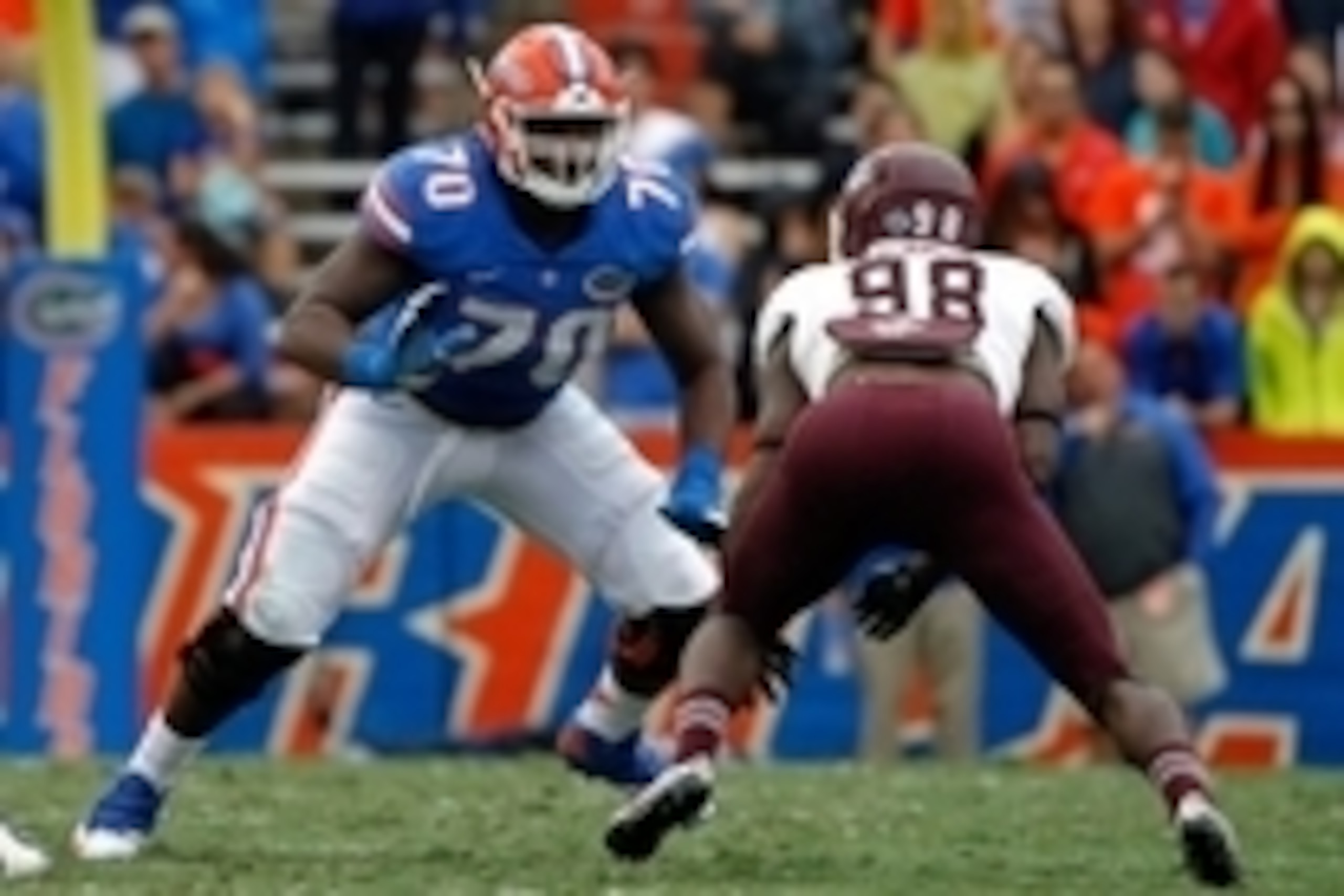
No offensive line prospect has ascended quite like Humphries since he declared for the draft as a junior.
Humphries admitted during his media session Wednesday that the NFL draft advisory board provided a "stay in school" recommendation, according to SI.com's Chris Burke.
The talented left tackle apparently made the right decision despite the unflattering grade. NFL Network's Daniel Jeremiah now ranks Humphries as his top tackle prospect:
Humphries was ranked as the No. 1 offensive tackle prospect in the nation before he chose to play for the Gators. His talent was always evident, and he's a very fluid athlete. But questions were raised about his size. Humphries played closer to 280 pounds before he weighed 307 pounds at the combine.
"[Teams] wanted to see if I could be 300-plus, because I haven't been in college, and that's very vital for the NFL," Humphries told Panthers.com's Max Henson.
"...the funny thing—I've actually shaved some time off my (40-yard dash). I'm moving pretty well still. I think my fluid athletic ability sets me apart from other guys. That's going to make me stick out—how quickly I can get to the second level."
The former Gator will now need to show he's still one of the best athletes at the position even adding the required weight.
Who is the top left tackle prospect?
The race to become the top left tackle for the 2015 draft is still wide open and available for the taking. There isn't a clear-cut elite prospect in the class. NFL teams have concerns regarding each.
Scherff remains the top offensive line option overall, but he's likely destined to play guard or right tackle. The same can be said for Collins and even Flowers.
The best overall athletes with experience on the blind side are Peat and Humphries. These two early entrants present enough upside to warrant selections as future left tackles.
The combine will serve an opportunity for one of these prospects to finally rise above the rest. Who that will be has yet to be determined, but it should be well-known after this weekend.
All contract information obtained from Spotrac.com. Brent Sobleski covers the NFL draft for Bleacher Report. Follow him on Twitter.
.jpg?w=2560 "Browns Buccaneers Football")
.jpg?w=2560 "Best Sports Families of All Time 🤩")