
Breaking Down Philadelphia Eagles' Recent NFL Draft Successes and Failures
In the salary-cap era, there’s no faster way to build up an NFL franchise than the draft. Free agency can be influential—just see the New England Patriots’ acquisition of All-Pro cornerback Darrelle Revis, who played a pivotal role in the team’s Super Bowl championship this year.
But the draft is what makes or breaks a team’s long-term success. Both Super Bowl teams, the Patriots and Seattle Seahawks, acquired their franchise quarterbacks via mid- or even late-round draft picks. Notable contributors such as Richard Sherman and Kam Chancellor were fifth-round selections, and wide receivers Doug Baldwin, Jermaine Kearse and Chris Matthews were all undrafted.
This year, Chip Kelly and the Philadelphia Eagles don’t pick until the 20th selection in the first round. After that, though, the Eagles have one pick in each round and an extra fourth-rounder, thanks to the Bryce Brown trade. Kelly will need to do better than he did in the 2014 draft, when he hit with second-rounder Jordan Matthews but seemed to miss with a slew of other players.
The following successes and failures have defined the team the most in recent years. You won’t find a player like Trent Cole on this list; despite being a steal as a former fifth-round pick, Cole was selected too long ago to be considered a recent draft hit. On the other hand, starting center Jason Kelce, a 2011 sixth-round pick, has proved to be an integral part of the roster.
Hitting on the ’15 draft will be crucial if Philadelphia looks to sustain long-term success as a serious contender in this league. That’s why previous mistakes like some discussed below can’t possibly be repeated.
Success: Jason Kelce, Round 6 (2011)
1 of 8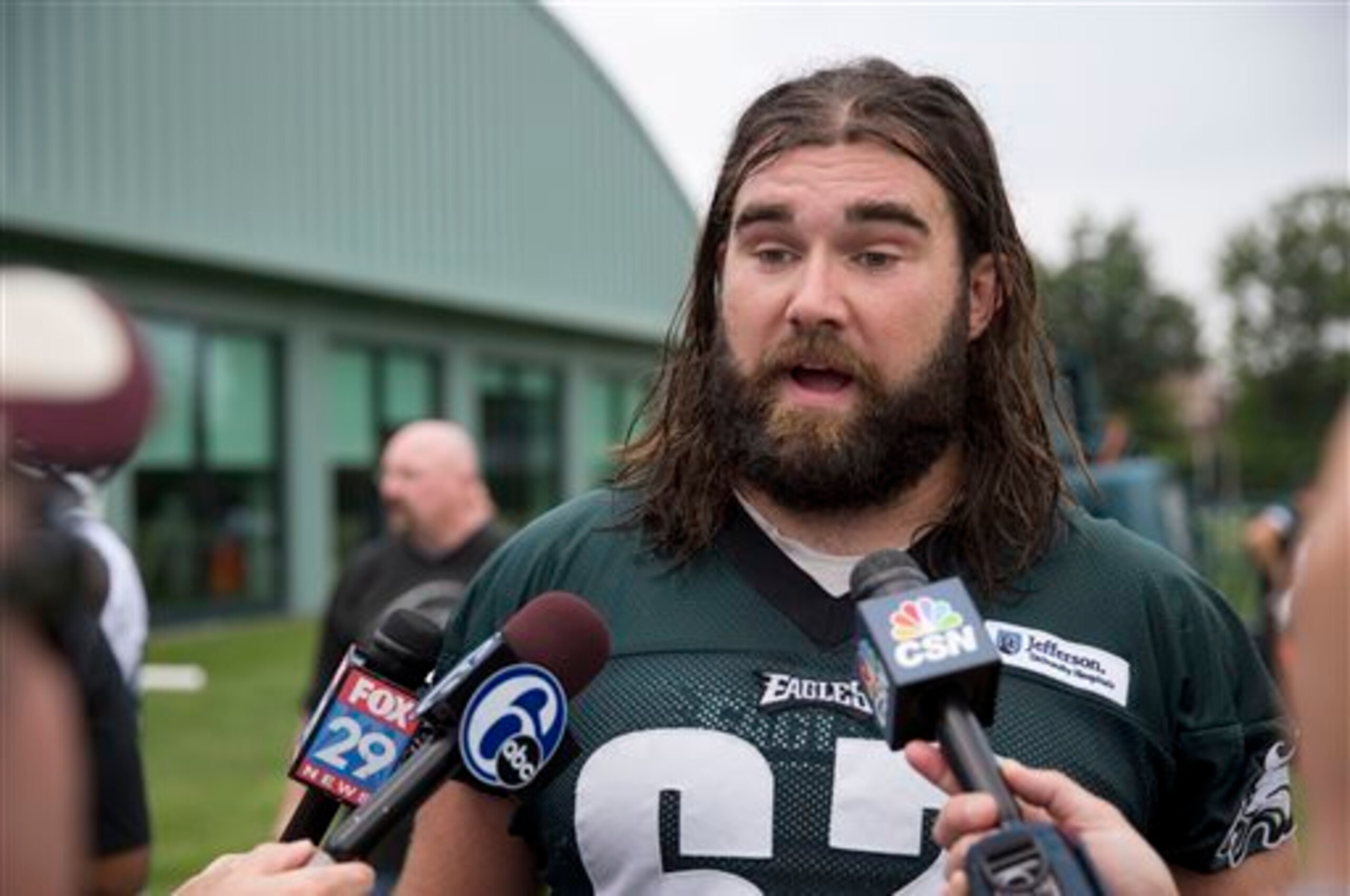
Not many sixth-round draft picks even start a game in the National Football League. But Jason Kelce is a rarity. Not only did he win the starting job as a rookie in 2011, but he’s blossomed into arguably the finest center in the league.
Kelce was recently inked to a six-year, $37.5 million contract extension that could keep him in Philadelphia through the 2020 campaign. It’s interesting that Kelce was an Andy Reid draft pick—and the lone pick who saved the 2011 class from being a colossal disaster—because Kelce is the perfect center for Chip Kelly’s offense.
Kelce has the athleticism to play the hurry-up system Kelly prefers. He’s undersized at 6'3", 295 pounds, but that makes him an ideal run-blocker. And he holds up pretty well in pass protection too.
Failure: Alex Henery, Round 4 (2011)
2 of 8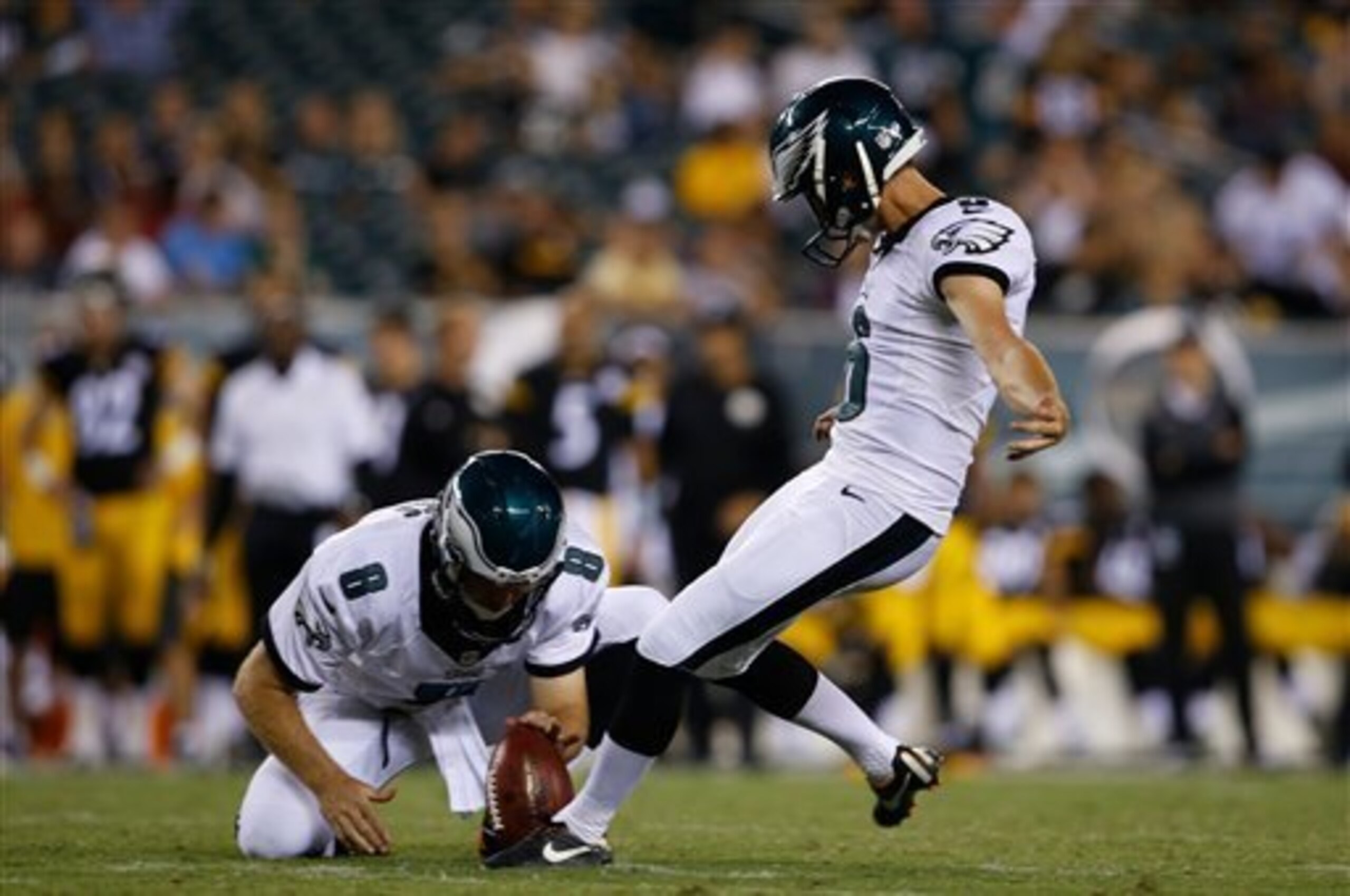
If you spend a fourth-round pick on a kicker, you better get a Stephen Gostkowski. Alex Henery had a successful rookie season and was fairly automatic within 40 yards, but he never displayed elite leg strength, didn’t get good distance on kickoffs and ultimately lost his job before the 2014 season started.
Fortunately for the Eagles, it all worked out: The team traded for undrafted rookie Cody Parkey from the Indianapolis Colts. Parkey won the job in preseason when he nailed a pair of 50-plus-yard field goals, and by season’s end, he had set an NFL-rookie record for points scored and earned a Pro Bowl berth.
Meanwhile, Henery is out of the league after flaming out in a short stint with the Detroit Lions.
Success: Fletcher Cox, Round 1 (2012)
3 of 8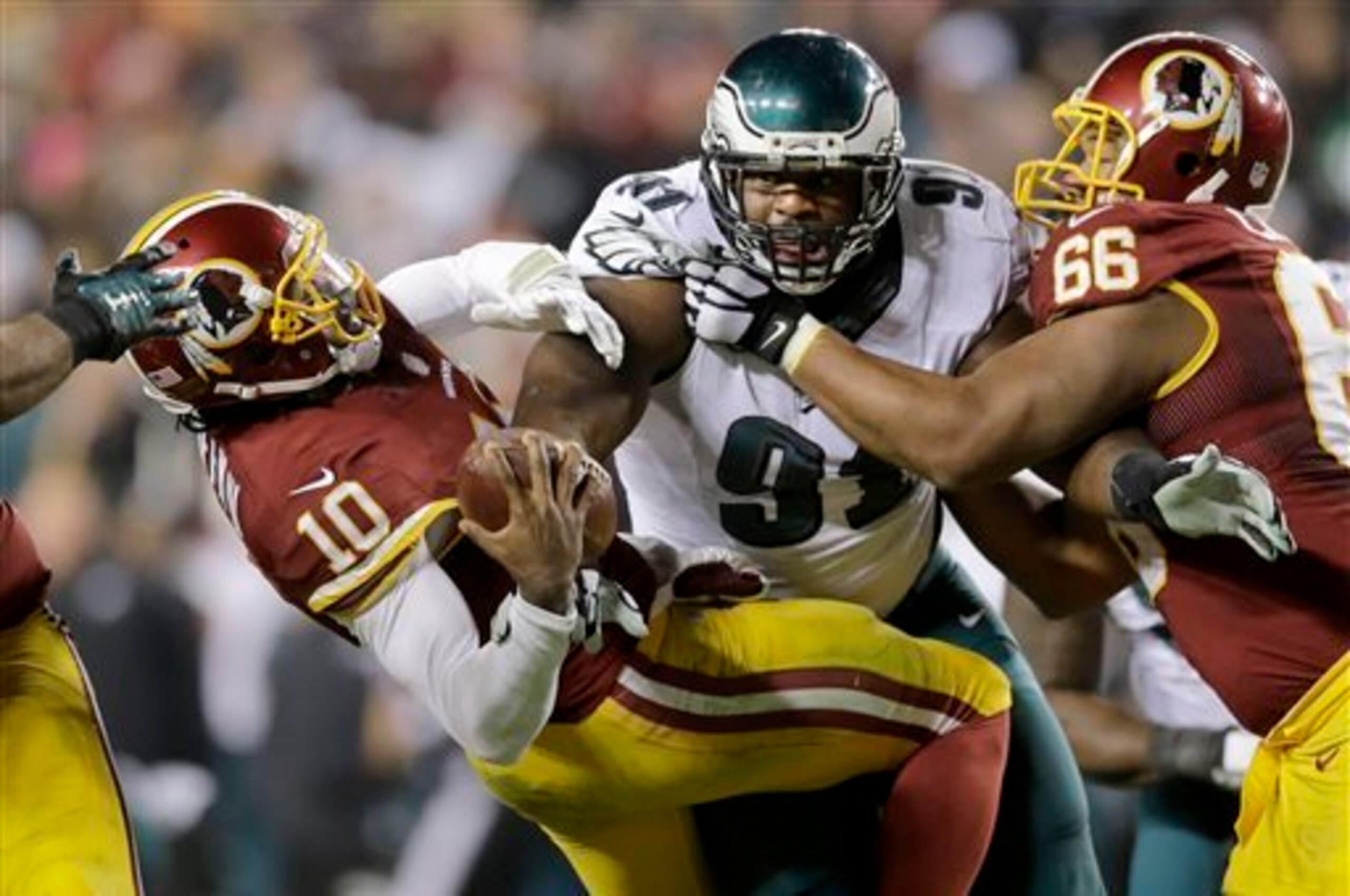
Andy Reid’s final first-round pick, Fletcher Cox, is an absolute stud on the defensive line. Cox had a solid campaign as a rookie 4-3 defensive tackle then transitioned well to a role as a 3-4 defensive end in 2013.
He emerged as a near-unblockable force in ’14, consistently beating opposing linemen and even double-teams. Cox’s numbers don’t do him justice—he had just four sacks, but his 39 quarterback hurries rated him as the 10th-best overall defensive player in the NFL, per Pro Football Focus.
Cox will get a long-term extension this offseason, likely in the mold of five years at $8-9 million per year. If the Eagles are going to turn their defense into a top unit, Cox will be one of the factors why.
.jpg?w=2560 "Nolan Wells Lawsuit")

Failure: Danny Watkins, Round 1 (2011)
4 of 8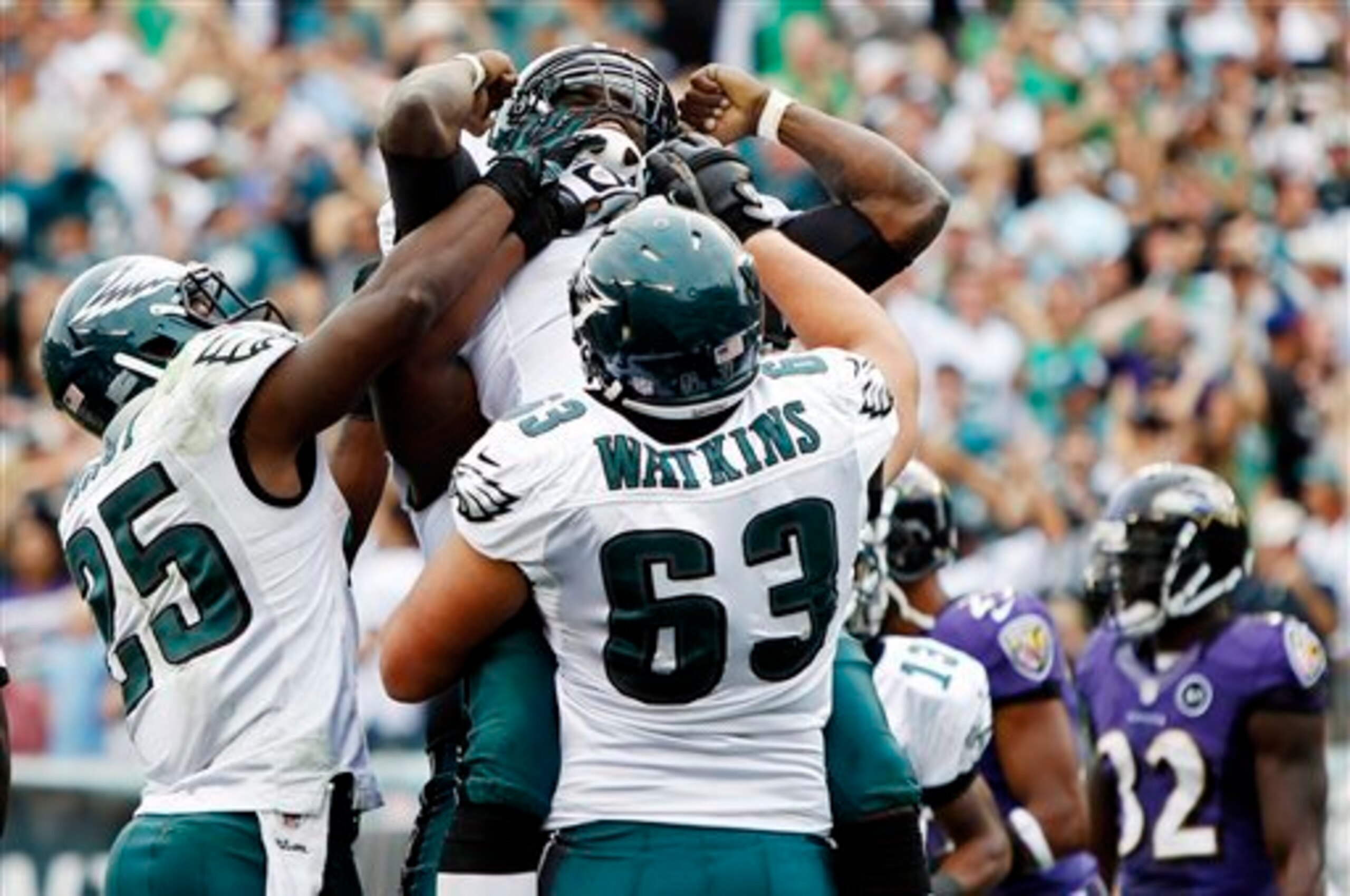
The 2011 NFL draft was one of the best in league history. The first seven picks—Cam Newton, Von Miller, Marcell Dareus, A.J. Green, Patrick Peterson, Julio Jones and Aldon Smith—have all made the Pro Bowl. So have J.J. Watt, Robert Quinn, Mike Pouncey and Ryan Kerrigan. That’s 11 of the first 16 overall selections, which is an unfathomable rate.
The Philadelphia Eagles drafted Danny Watkins with the 23rd pick.
Watkins went before Muhammad Wilkerson (No. 30), Colin Kaepernick (36), Rahim Moore (45), Randall Cobb (64), Justin Houston (70) and Richard Sherman (154), all of whom could have benefited the Eagles roster. It’s easy to look back at a draft and say what could have been, but all the warning signs were there with Watkins.
He was 26 years old. He never really liked football that much to begin with. As a result, Watkins was benched twice—once as a rookie then as a second-year player—and was subsequently released before his third campaign with the Eagles. He’s now out of the league. He’s the only one from the 2011 first-round draft class who didn’t even make it to his third season.
Success: Lane Johnson, Round 1 (2013)
5 of 8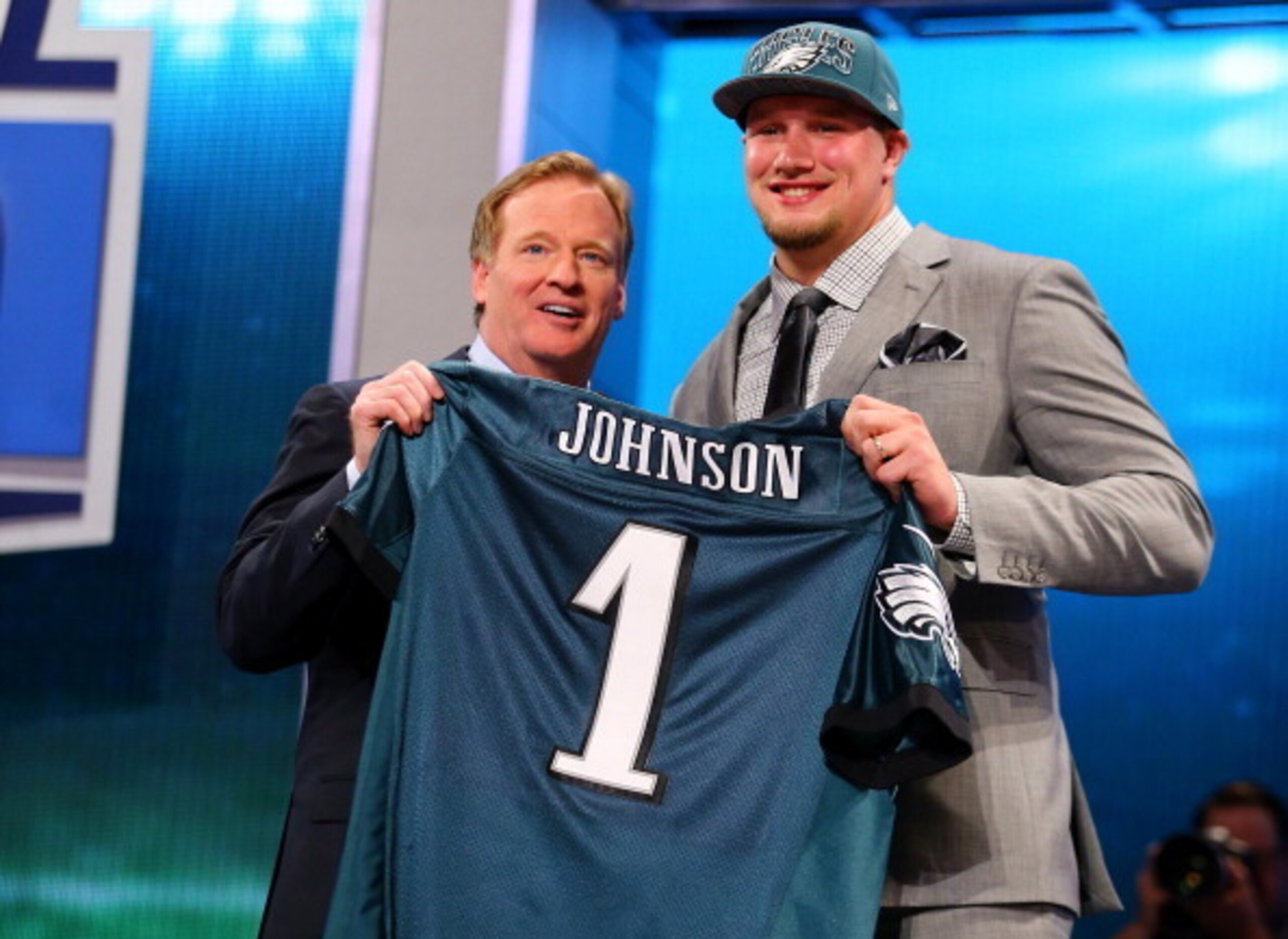
Chip Kelly’s first-ever NFL draft pick was arguably his best selection. He went with Oklahoma offensive tackle Lane Johnson, who has the freak athleticism Kelly covets for his offensive linemen.
Johnson’s 4.65 time in the 40-yard dash would be fast for a tight end. As it stands, Johnson is a former college quarterback, and that makes him an elite athlete who can get to the second level as a run-blocker with ease.
Johnson played well as a rookie starter and then overcame a performance-enhancing drugs suspension in 2014 to be rated by Pro Football Focus as the second-best right tackle in the NFL. His future seems to be bright, and it’s logical that he’s the franchise’s eventual long-term left tackle once Jason Peters retires.
Failure: Matt Barkley, Round 4 (2013)
6 of 8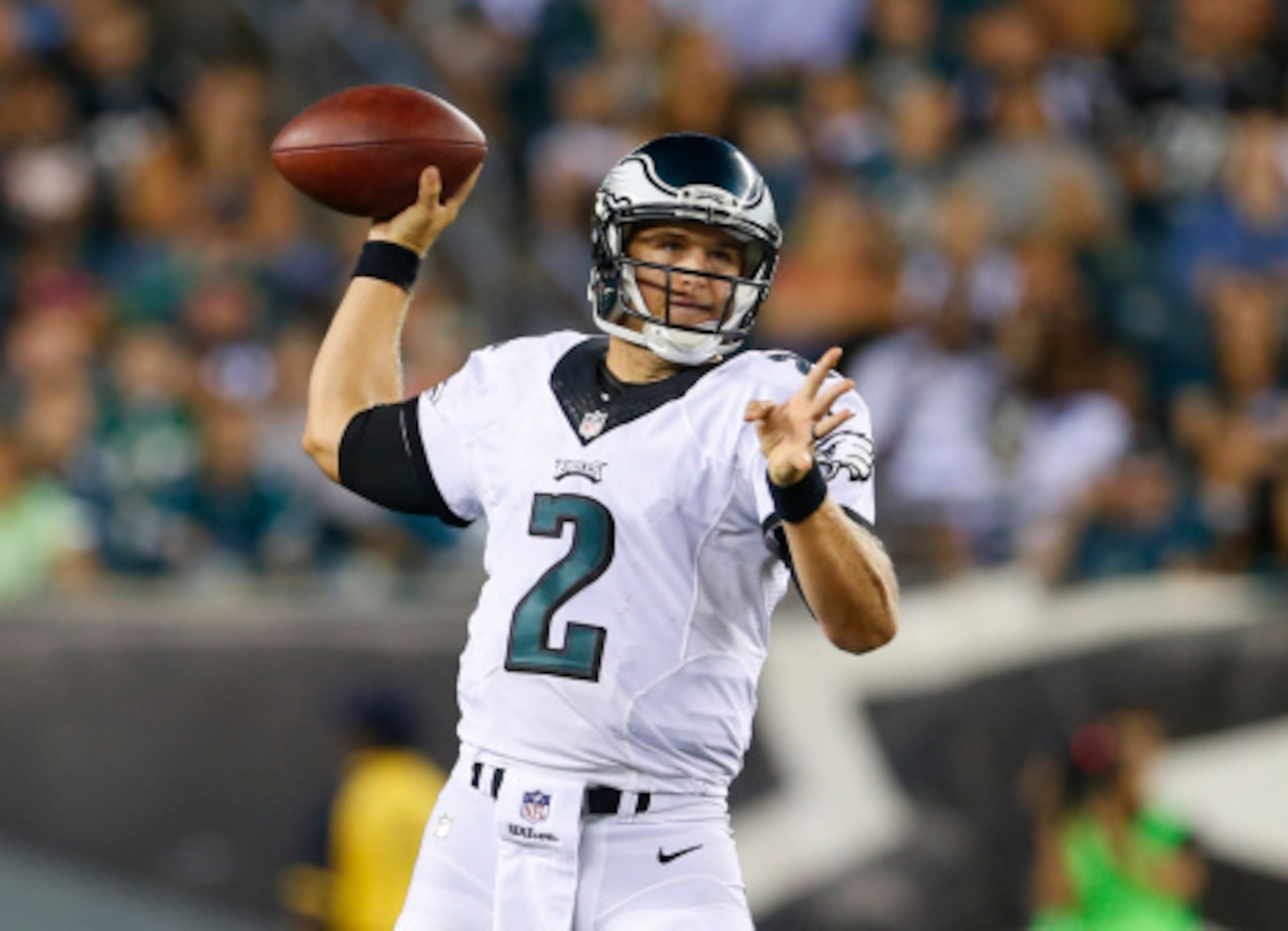
When Matt Barkley fell to the fourth round of the 2013 NFL draft, Chip Kelly thought he saw a sleeper in him.
So far, that couldn’t be more wrong. Barkley has shown nothing in two seasons to ever think he can be a successful quarterback in the National Football League. He’s attempted 50 passes. He hasn’t thrown a touchdown. He’s thrown four interceptions. His 43.7 passer rating is just four points higher than what a passer rating would be with all incompletions (39.6).
Barkley may not even make the ’15 roster. It’s difficult to see him being in the team’s long-term plans.
Success: Mychal Kendricks, Round 2 (2012)
7 of 8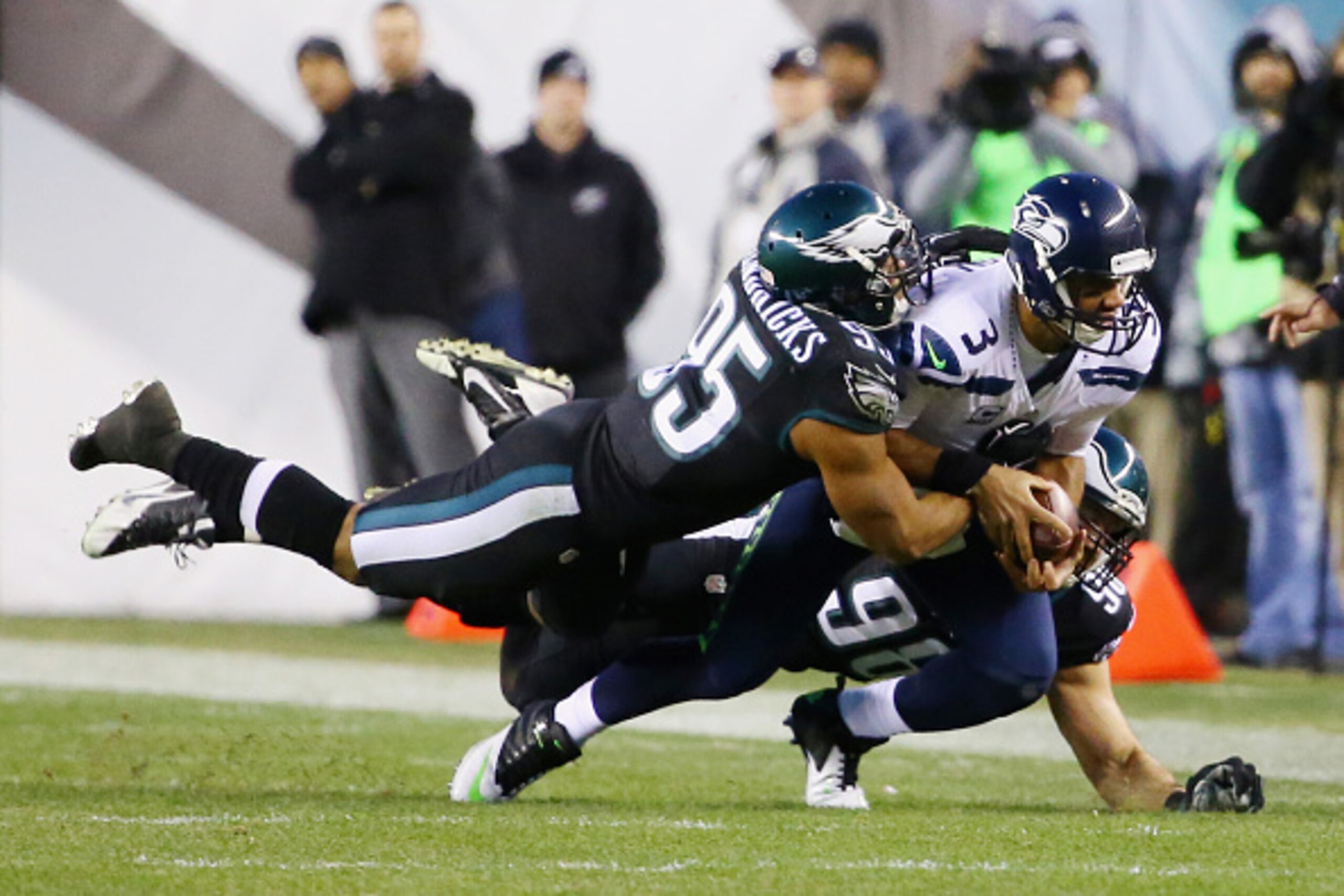
Draft picks like Mychal Kendricks are what the Philadelphia Eagles need to be contenders in the NFC.
Kendricks has started 42 games in three seasons, recording nine sacks, three interceptions, five forced fumbles and four fumble recoveries. He has sideline-to-sideline speed (4.47 40-yard dash) that allows him to cover tight ends and running backs out of the backfield. He can rush the quarterback and defend against the run.
He’s a future Pro Bowler and in line for a four- to five-year extension that will lock him up in Philly.
Failure: Marcus Smith, Round 1 (2014)
8 of 8
It’s too early to write Marcus Smith off permanently. But he sure hasn’t looked good when he’s played so far, which hasn’t been much.
Smith was seen as a stretch when the Philadelphia Eagles took him in the first round, and you can see why.
He offers very little as a pass-rusher. He didn’t have any sacks. He didn’t have any tackles. His own defensive coordinator doesn’t know where he’ll play him. His head coach wasn’t shy in calling him out this season. Recent Eagles coach Tra Thomas said on Philly Sports Talk that Smith has the "build of a high school athlete."
If it makes Smith and Eagles fans feel better, 2010 first-round pick Brandon Graham was awful in his rookie season. He’s now an underrated pass-rusher and will cash in big during free agency. The unfortunate aspect of Smith’s struggles in 2014 is that if he had done nearly anything as a rookie, there’s a good chance the 10-6 Eagles would have made this year’s playoffs.
Chip Kelly can’t possibly afford to make that first-round mistake in 2015.
.jpg?w=2560 "Chargers Bills Football")