

Clemson Pass-Rusher Vic Beasley Set to Blow Up at NFL Combine
From February 17-23, the NFL Scouting Combine will take place in Indianapolis. Draft prospects will run various drills and participate in on-field workouts. Among them are the bench press, vertical and broad jumps, and the 40-yard dash.
Vic Beasley, who's had more sacks in his Clemson Tiger career than any other ACC pass-rusher since 2005, according to Sports Reference.com, will need to have a big couple of days at Lucas Oil Stadium to make up for what could be a fatal flaw for teams looking to draft him: his size.
Despite putting up insane production over the past two seasons on top of flashing talent that had many thinking he could have declared early after his 2013 season, Beasley, who was a fifth-year graduate student at Clemson in 2014, still has to earn his stripes in the eyes of NFL general managers, as most prospects do.
TOP NEWS
.jpg?w=2560 "49ers York Arrested")
York Responded to Ad on Prostitution Site Before Arrest
Joey Porter Jr. Trade Packages 📦
.jpg?w=2560 "Rams Camp Football")
NFL Panic Meter for Every Fanbase's Anxiety Levels
The Tigers listed him at 6'3" and 235 pounds, but on NFL Draft Scout, he's listed at just a hair above 6'2". As a college defensive end, Beasley likely projects into the same type of role in the NFL: an edge-rusher.
One reason length and weight matters is the fact that those 3-4 outside linebackers and 4-3 defensive ends have to initiate contact with typically larger offensive tackles in an attempt to win inside hands on their breast plate. Their weight and speed combo determines how much of a "pop" that player can generate to start the bull rush, while the longer someone's arms are, the less one has be quick to win inside hands, as long arms make it more natural for a lengthier player to get home first.
There are three success stories of undersized pressure-creators getting drafted early in recent history. The first was Clay Matthews, who did well enough at the combine to test above average in every attribute possible on the relative scale of outside linebackers that Mock Draftable placed him in.
Two drafts later, Von Miller, a 6'3", 246-pound freak with 33.5" arms, good for the top 18 percent of outside linebackers at the combine, per Mock Draftable, burst onto the scene and went second overall. And finally the most recent, Bruce Irvin, also had long arms and overall athleticism to overcome his shortcomings at 6'2" and 245 pounds.
It was a bit shocking at the time when Pro Football Talk's Mike Florio informed the public that not only did the Seattle Seahawks, who picked him 15th overall, show interest, but that seven teams in the league graded him as an early first-round player.
As a rookie off the bench, he had eight sacks. In 2013, in part due to suspension, he had a down year, despite being a full-time starter. In 2014, he rebounded, ranking 13th in sacks for outside linebackers, with only one player younger than him ranking above him.
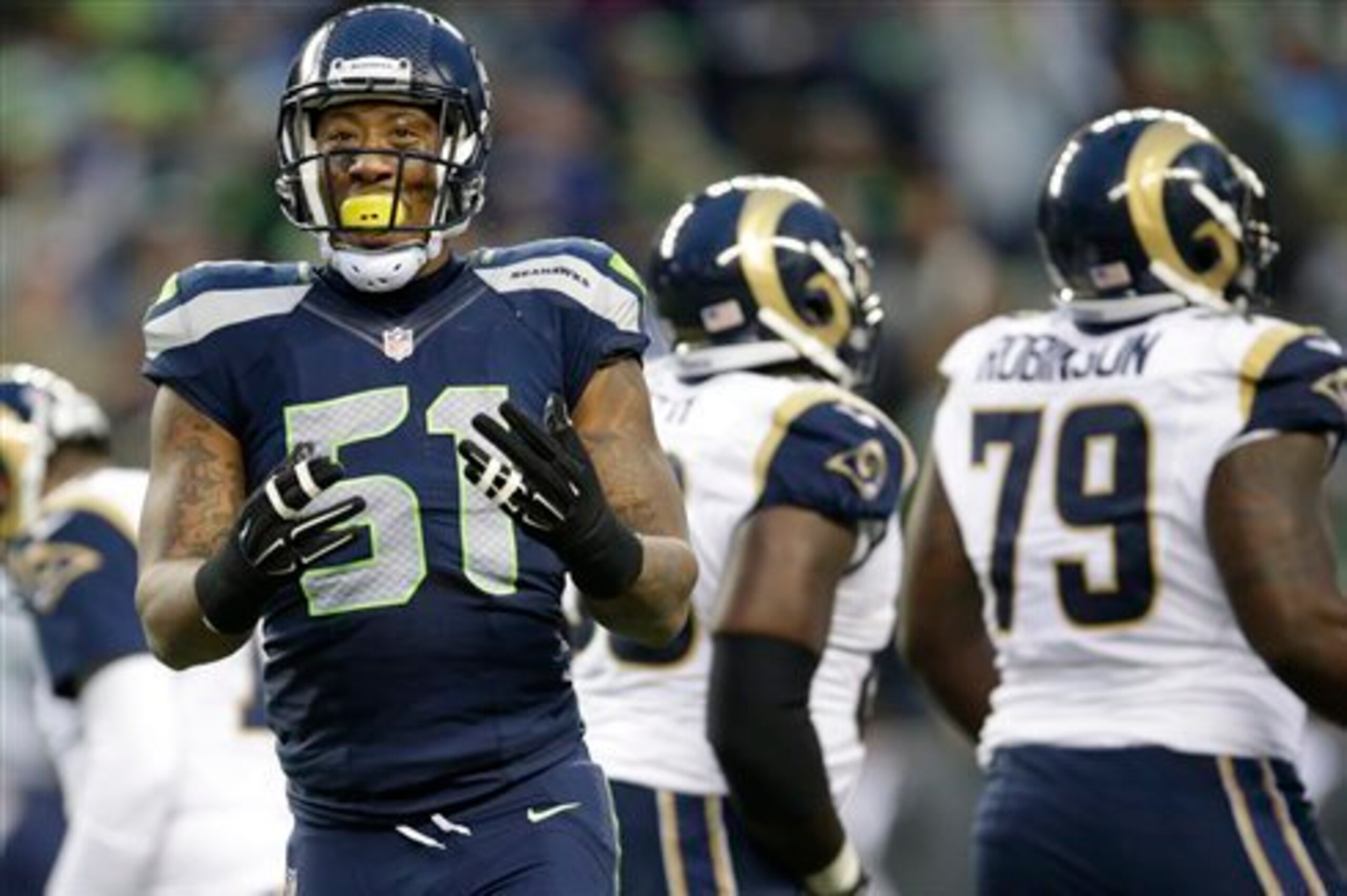
When looking at a mold or comparison for Beasley, Irvin's college tape should be looked at often. Even then, though, the two prospects are a bit different.
Irvin, like Beasley, played defensive end but in an unusual 3-3-5 stack defense, not a 4-3 defense that has been a staple in the NFL for decades. As an odd front defensive lineman, Irvin was asked to two-gap and be an edge defender at different times, making his evaluation a bit harder than most. You almost had to throw out his tape of two-gapping as a 245-pounder, because everyone knew that wouldn't be his role at the next level.
What did translate, though, were his skills as a pass-rusher, where he played one-on-one against left tackles every game.
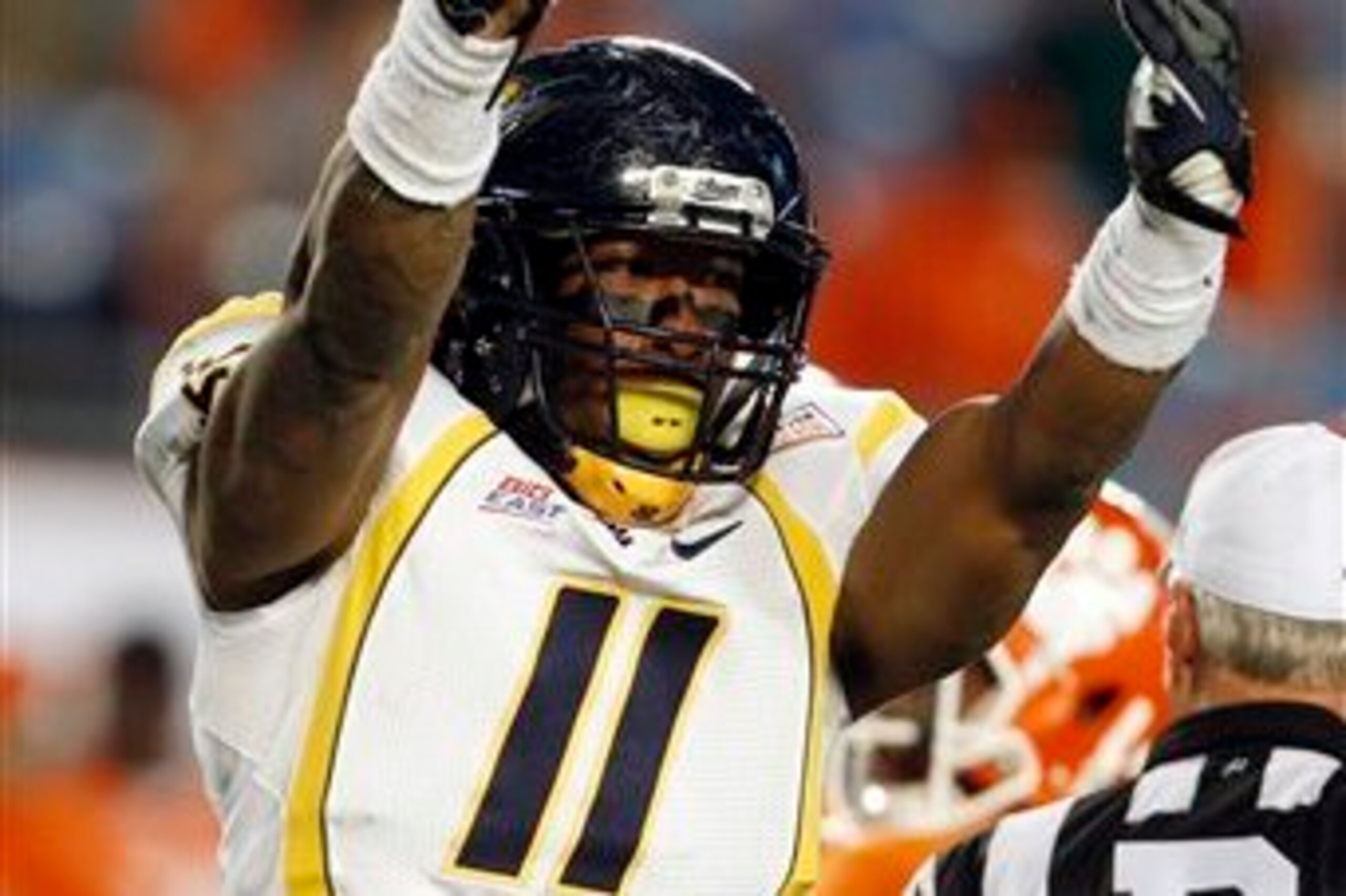
On this play, against Clemson, Irvin did what Beasley does best: game the tackle. If the West Virginia defensive lineman was good at one thing in college, it was breaking for the quarterback with tremendous speed and then countering inside if the tackle overcorrected. The tackle, Brandon Thomas, who was drafted by the San Francisco 49ers last season, did just that.
With his 4.4 speed, Irvin busted into the backfield, attempting to run the arch to get to quarterback Tajh Boyd, who was drafted last season by the New York Jets. Thomas then opened up his hips and chased him down. When Thomas did so, Irvin cut across his face and used his hand to redirect his route to the passer, throwing himself through what was the left B-gap.
That was essentially the entirety of Irvin's game, which combined with his combine, got his undersized body drafted 15th overall. What baffles me is that Beasley has so many more elements, even as a pass-rusher, than Irvin had, yet he is currently being projected to go lower than Irvin did in what many draftniks think was a stronger class.
ESPN's Todd McShay had Beasley as his 21st player off the board on Thursday, a good six spots behind Irvin. If you are to believe Draft Countdown's trade value chart, the difference between the value of the two picks is equivalent to an extra third-rounder. For a player who is not only as good as Irvin but better, that seems out of line.
One way the two prospects compare similarly is their speed-to-power attributes. Speed isn't only helpful when playing half a man, but for trying to go through a blocker. Each player shows the ability to get his hands inside of pro-level tackles, who have at least 60 pounds on him, and drive them further into the backfield than they would like. The plays weren't directly affecting the quarterback but showcased the potential to do so if the circumstances were right, such as the passer trying to step up in the pocket.
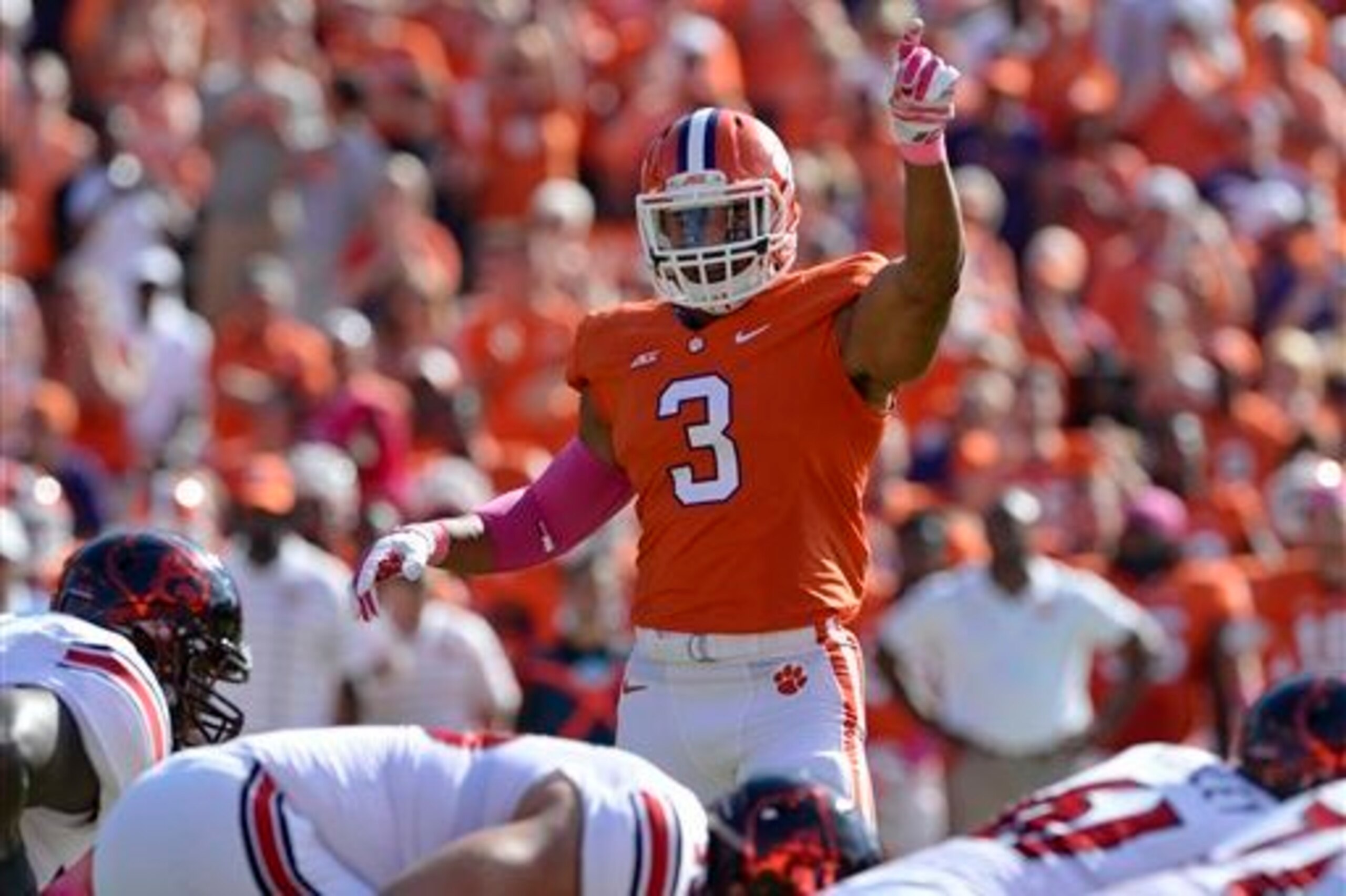
Even regarding speed-to-power, though, Beasley looks a notch above at times. Here he shows natural leverage along with well-timed hand placement to throw back Nick O'Leary, the John Mackey Award winner, to close in on a run tackle on Karlos Williams, another draftable talent, near the line of scrimmage.
Irvin and Beasley truly separate themselves in what they can do outside of their pure speed. Above is a play that really puts Irvin's flaws on the table. If the tackle doesn't make a mistake, Irvin will just overrun the arch to the quarterback, essentially running himself out of a play. Beasley doesn't do that.
For example, against Florida State, the reigning national champion at the time, Beasley threw out various techniques to get to its backup passer when Heisman winner Jameis Winston was suspended. Against Cameron Erving, who was mocked as a mid-third-rounder by Bleacher Report's Matt Miller recently, he flashed a fairly advanced move by a collegiate player. After flying off the line of scrimmage, he dropped his shoulder to bend around the tackle, limiting his surface area in the process. When passing him, he did a quick hand swat to limit Erving's impact through contact and then ripped through him to finish into the backfield and swallow the quarterback.
On a draft podcast with Rotoworld's Josh Norris, Washington pass-rusher and NFL hopeful Hau'oli Kikaha stated, "A man cannot block you if he doesn't have his hands." He's talking about that kind of well-timed hand swat by Beasley. Not only did the Clemson Tiger prove to the world that he had elite athleticism his last year in school but that he had developed as an overall lineman. Early on in the season, he was able to counter offensive linemen selling out with more than just Irvin's stop-and-start crossover technique.
Soon after the original play, Beasley ran the same move again, once more adding a sack to his stat sheet. He wasn't just flashing this talent but putting it out consistently. Even when the future NFL tackle had an idea of what the end could do, he wasn't able to prevent a sack from occurring the same way twice in the same quarter.
That's as big of an achievement as one can get.
As a linebacker, Beasley also shows spatial awareness and the ability to sort through trash. On this rep, he goes through two blockers before hitting the passer. Because of his freak ability in space, some might even look at the high school tight end as a weak-side linebacker in a 4-3 defense, making him more valuable to 4-3 teams than his projected nickel defensive end role, which he's likely limited to due to size.
With only days to go until the combine, Beasley is a safe bet to become a "riser." Based on past history of undersized pass-rushers with athleticism to spare, the week in Indianapolis seems to be the coming-out party for those players.
That held true for Von Miller, who was named NFL.com's "top player" of Day 3 during the event. Miller, who was viewed as too small to play an edge role at the NFL level, would go on to be the top defensive player selected in the 2011 draft. It's not out of the question that Beasley, too, could vault into the top-10 conversation with a great combine.
Two teams have ties to Seattle and its 4-3 under defense, which Irvin has thrived in: Atlanta, who just hired Dan Quinn as head coach—the Seahawks defensive coordinator in 2013 and 2014—and Jacksonville, who has Gus Bradley as its head coach, who was Seattle's top defensive mind from 2009 to 2012.
Both squads need weak-side edge help, and Beasley can fill that role as a plus version of Irvin in the same career path in the same defense for them, as a nickel or rotational defensive end in passing situations and a weak outside linebacker in base sets.
Jacksonville may be slated too high for Beasley's range, but if it trades back from third overall—maybe flipping with a team that is in need of a quarterback, a position that the Jaguars addressed in the first round last season with the selection of Black Bortles—the Clemson defensive end would become a real possibility.
Overall, Beasley is just a better pass-rusher than Irvin was out of college. He not only shows crazy burst off the jump of the snap that should show up at the combine in form of the 10-yard split, 40-yard dash and vertical jump, but he has the technique and patience to counter with various hand techniques, as opposed to Irvin, who would just continue to run, which made his presence one without value at times.
By next month, Beasley should be looked at as a top-15 lock, the same range Irvin was drafted coming out of West Virginia. Don't be shocked if he even gets talked about in the top-10 range, specifically to Atlanta, who picks eighth overall and only managed to string together 22 sacks in 2014.
The sleeping giant in this class in many ways is ironically one who most are overlooking because of his height and weight. With Beasley looking more explosive than Irvin based on college tape, that 4.4 40-yard dash mark may not be impossible for Beasley to match or even beat. If he does so, the scanned-over prospects will have eyes glued to him for the rest of the draft process.

.jpg?w=2560 "Players with Shocking Career Earnings 😳")
.jpg?w=2560 "WWE NXT Results, Winners, Live Grades, Reaction, Highlights Before Heatwave 2026")