MLB Offseason Moves That Should Be Giving Teams Buyer's Remorse
It's inevitable.
There will be more than one offseason transaction that won't work out in 2015. It happens every season, with B.J. Upton, Shin-Soo Choo and Josh Hamilton as recent examples.
It's a phenomenon that no team is immune to. Baseball is a game of failure, ultimately leading to larger fluctuations in production than in any other professional sport. You pay a player based off of what he's done, but those former numbers are often fool's gold in terms of future value.
Let's not get it mixed up; the following moves make plenty of sense. But the players on this list will carry a level of uncertainty into their new gigs. Whether it's injury concerns, an expected drop-off in production or a hefty price tag, the players that follow have serious bust potential.
Evan Gattis will play pepper with the windows of the Crawford Boxes in Houston, but what else can he really provide the Houston Astros?
Matt Kemp's arrival in San Diego has Padres fans excited for 2015, but can the former All-Star stay healthy enough to make a serious impact for the up-and-coming club?
Dee Gordon was acquired by the Miami Marlins to man the leadoff spot in its lineup, but did the Fish give up too much for a player with plenty of question marks? And will Nick Markakis be able to live up to his lucrative contract as he ages?
We'll try to answer these questions over the next few slides.
Let's get to it.
Evan Gattis
1 of 4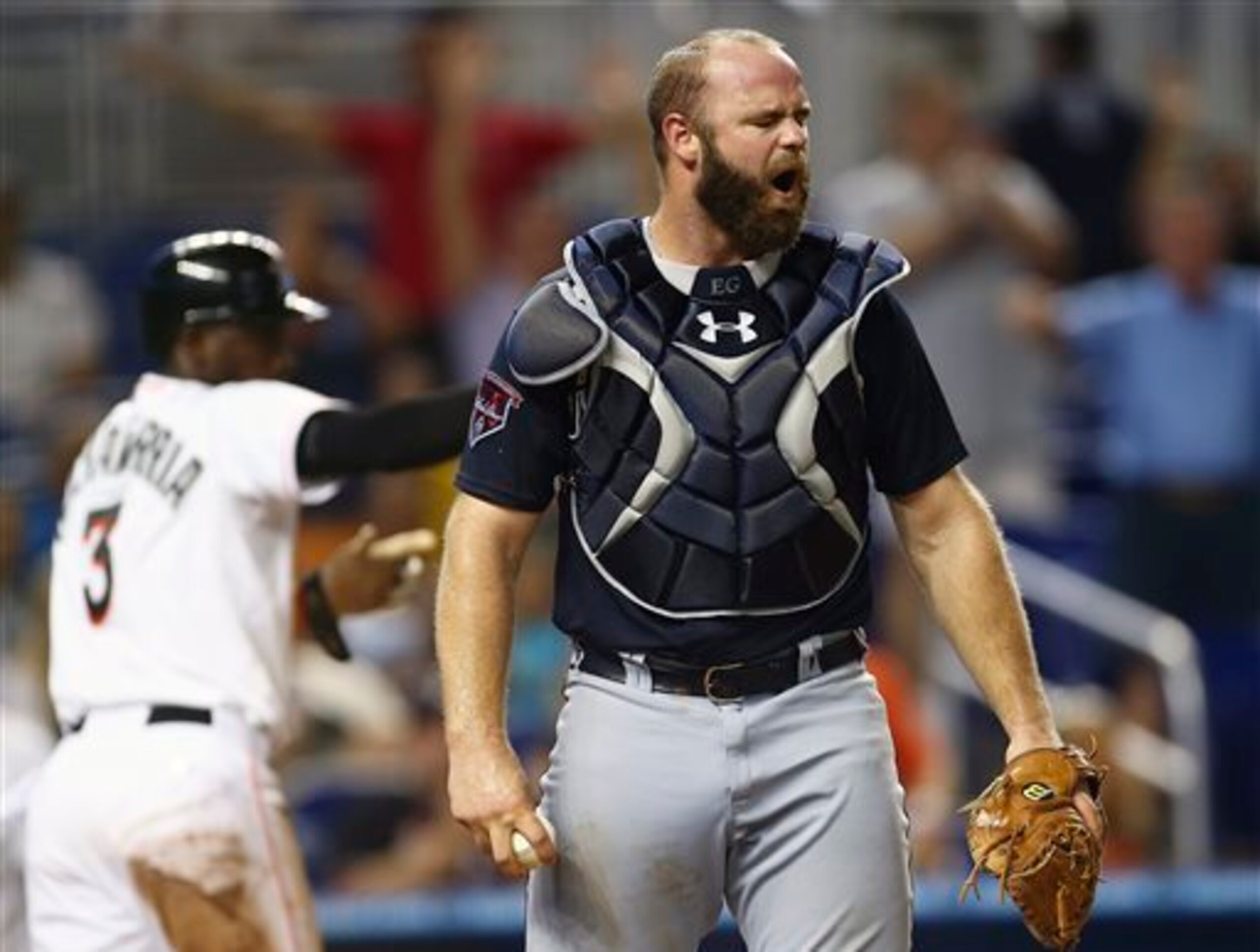
The Transaction
The Atlanta Braves traded C/OF Evan Gattis and RHP James Hoyt to the Houston Astros for RHP Mike Foltynewicz, 3B Rio Ruiz and RHP Andrew Thurman.
Why the Astros Should Be Worried
El Oso Blanco burst onto the scene in 2013 for the Braves, showcasing elite raw power in two full seasons in Atlanta. Gattis went deep 43 times during that span, while also driving in 117 runs.
Braves fans became accustomed to Gattis' tape-measure shots, but in the club's current rebuilding state, the 28-year-old's limited skill set became expendable. Atlanta traded Gattis to the Astros for three prospects whom we will get to in a moment.
As for Gattis, he'll head to the American League where he can DH, play a little outfield and fill in behind the dish. He lacks a true position, but he's capable of getting enough at-bats while playing at multiple spots.
The Astros have aspirations to contend over the next few seasons, and Gattis' right-handed pop provides the club with another major league-ready piece to pair with an emerging young core.
Nobody will criticize Houston for making positive moves to win now. It's just that Gattis' game presents some alarming flaws. When you consider what the Astros gave up to acquire the burly slugger, we may be talking about one of those moves that really hurt down the road.
A late bloomer, Gattis has only played two full seasons at the age of 28. As mentioned above, he's extremely limited defensively. He's passable behind the plate, but his outfield play is atrocious. In 2013 with former catcher Brian McCann still on the roster, Gattis posted a minus-10 defensive runs saved mark in the outfield.
Gattis isn't the first slugger to struggle with the leather, and he won't be the last. His job is to crush the baseball, something he's done in bunches when he's gotten a pitch he can really square up. But despite that power, Gattis lacks a complete offensive arsenal.
Thus far in his young career, he's yet to display the necessary plate approach that makes for a successful power hitter. His strikeout numbers aren't horrendous for a power-oriented player, but his inability to take walks really damages his on-base percentage. Gattis has career strikeout and walk percentages of 22.7 percent and 5.5 percent. respectively, leading to an ugly .304 OBP.
Another worry is an inability to hit right-handed pitching. Gattis has hit close to .300 in his career of lefties, but his average dips to .241 against right-handers.
Obviously, a move to the AL will enhance Gattis' value, but the Astros paid a pretty penny for his services. ESPN's Keith Law believes that Foltynewicz and Ruiz have the makings of future big league pieces and that they were a "heck of a return for a flawed player such as Gattis" (subscription required).
Houston's postseason ambitions are improving steadily, but the club is still a year or two away from being a viable contender. Trading away three valuable assets for a player who won't have much of an impact on the club's next winner is a head-scratcher.
Matt Kemp
2 of 4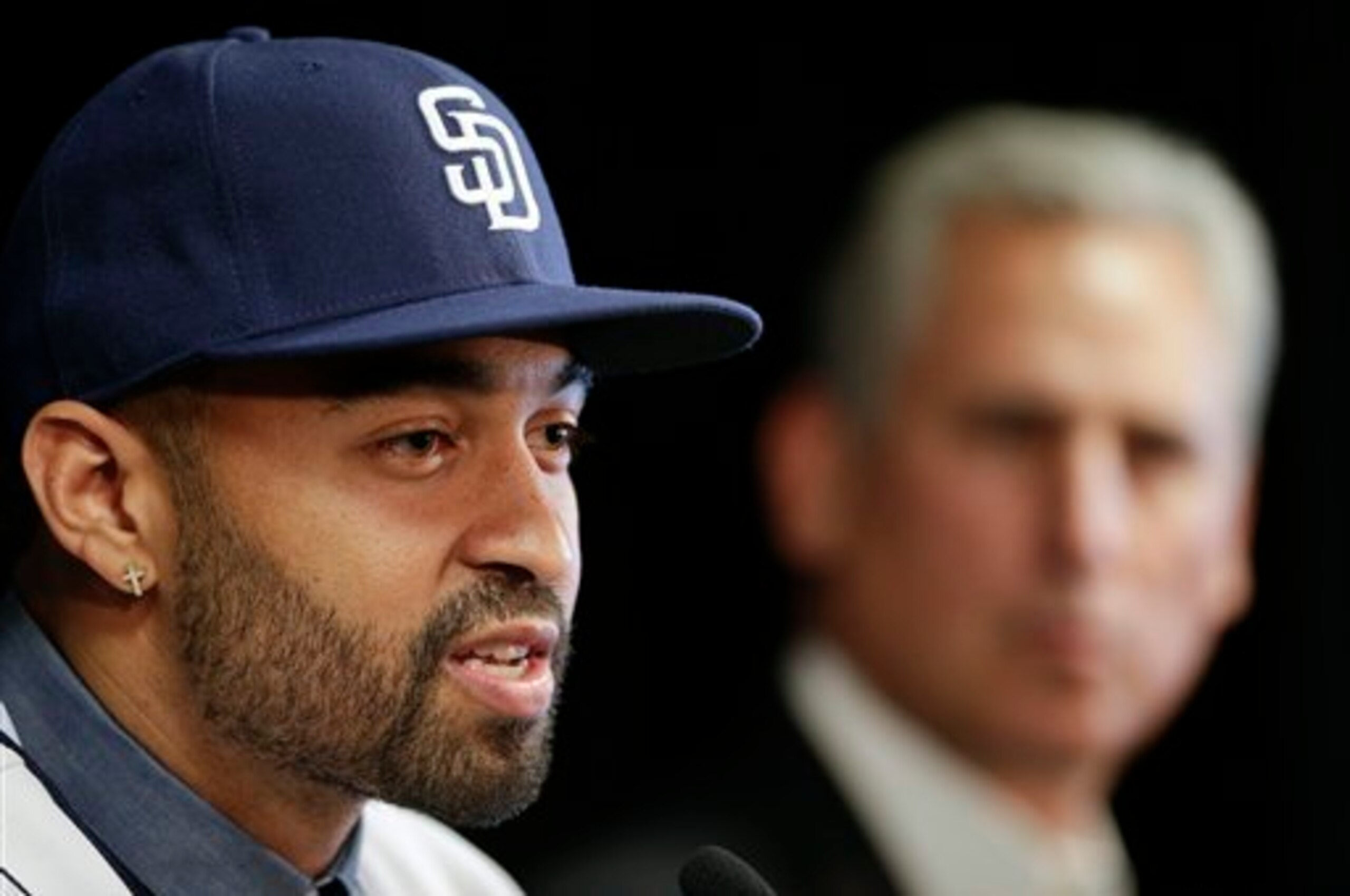
The Transaction
The Los Angeles Dodgers traded OF Matt Kemp and C Tim Federowicz to the San Diego Padres for C Yasmani Grandal, RHP Joe Wieland and RHP Zach Eflin.
Why the Padres Should Be Worried
The Padres have made it abundantly clear that they plan on making waves in 2015. With the additions of Justin Upton, Wil Myers and Matt Kemp, San Diego boasts a talented roster capable of competing in the NL West.
Kemp's move south from L.A. created one of the hottest offseason headlines, and boy, what an enigma he's become.
The outfielder's talent is unquestioned. Kemp is a career .292 hitter with 182 homers and over 600 RBI. Throw in nearly 200 stolen bases, and the Padres are inheriting one of the game's most complete offensive players.
On paper at least.
Kemp's well-documented injury problems have been his biggest detriment throughout his career. He managed to stay healthy in 2014 playing in 150 games, but participated in only 179 contests combined in 2012-13. For a 30-year-old player, a playing history filled with prior DL stints should raise serious eyebrows.
Kemp's arrival in San Diego was delayed by reports that the outfielder was diagnosed with arthritic hips. According to Bob Nightengale at USA Today, Kemp's arthritis is considered "severe" and that it nearly killed the trade.
I'm sorry, but that should terrify Padres fans.
Kemp did resemble his old self last season, so maybe he will put together back-to-back injury-free seasons for the first time since 2010-11. But with troubling results from his San Diego physical and a knack for being sidelined with nagging ailments, don't be surprised if Kemp misses extended time in 2015.
The Dodgers will be sending wheelbarrows of cash to San Diego to help finance Kemp's remaining deal, but the Padres are still taking on quite the commitment. He's owed $107 million over the next five seasons, which will make him 35 when his current deal expires.
L.A. is essentially paying Kemp to play for its division rival. Sure, the Dodgers had a surplus of outfielders and needed to make a move, but it should raise plenty of suspicions that the club was so eager to part ways with such an offensive force.
It's a calculated risk for San Diego, as a healthy Kemp will likely give the team a fantastic opportunity to reach the postseason in 2015. But getting in bed with Kemp for the next five years could leave Padres fans with a bad taste in their mouths.
Dee Gordon
3 of 4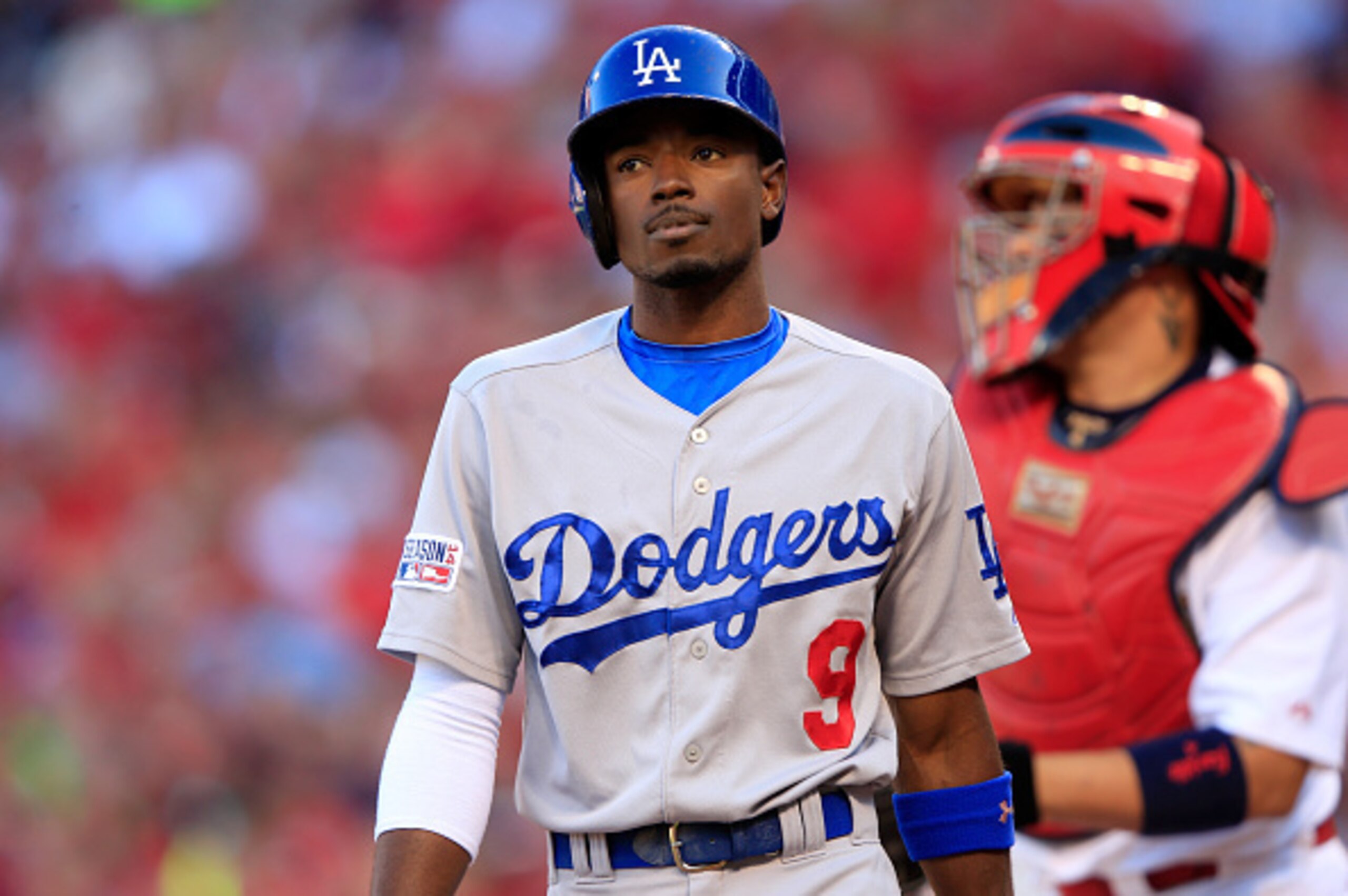
The Transaction
The Los Angeles Dodgers traded 2B Dee Gordon, RHP Dan Haren, IF Miguel Rojas and cash to the Miami Marlins for LHP Andrew Heaney, RHP Chris Hatcher, IF Enrique Hernandez and C Austin Barnes.
Why the Marlins Should Be Worried
The Marlins needed to find a second baseman before the start of the season, so the club moved for the speedy Dee Gordon in a multi-player deal earlier this winter.
Gordon is a quality piece, and he instantly makes the Marlins better in 2015. The infielder hit .289 with 64 stolen bases last season, as he finally began to play to his strengths. He recorded a near-60 percent ground-ball rate, while correcting his tendency to pop up.
However, the 26-year-old enjoyed a 20-point spike in his batting average on balls in play last season, which led to a markedly improved average in 2014. Before his career mark a year ago, Gordon had posted averages of .228 and .234 with the Dodgers.
An argument could be made that the improved approach Gordon showed last year should bode well for consistent success in the years to come, but it's likely that Gordon just enjoyed some better fortune on balls in play.
Another glaring deficiency in his game is his inability to draw walks. He's averaging a career walk percentage of 5.7 percent, and while he doesn't strike out in bunches, he's going to find it difficult to steal first base without walking from time to time. With relatively little pop to worry about, pitchers will continue to challenge him in the zone and make him earn his way on via base hits.
To make matters worse, Jeff Sullivan at FanGraphs notes that Gordon's expected WAR in 2015 is actually worse than Derek Dietrich and Enrique Hernandez, two players who would have been options for the Fish at second base if not for Gordon's arrival.
The Marlins may have acquired a bigger name, but did they really get that much better?
At best, Gordon may emulate the career of former Marlin Juan Pierre. But in its short-term haste to get better, Miami traded away one of the better left-handed pitching prospects in baseball.
I recently wrote an article about prospects who could make Opening Day rosters, and Andrew Heaney was at the top of the list. The lefty was regarded as the highest-rated left-handed pitching prospect in the minor leagues before the 2014 season by MLB.com. Heaney then proceeded to post a 3.28 ERA, earning a late-season call-up to Miami.
Heaney boasts three plus pitches, including an improving changeup that tied major league hitters in knots in 2014. The southpaw has shown quality command and has provided plenty of evidence that he's equipped with all the necessary tools to be a reliable MLB starter.
The Marlins believe they can win right away, and Gordon's arrival certainly increases their chances to do so. But question marks remain regarding the speedster's game, and with Heaney's potential, the Miami front office may be kicking itself for this move down the road.
Nick Markakis
4 of 4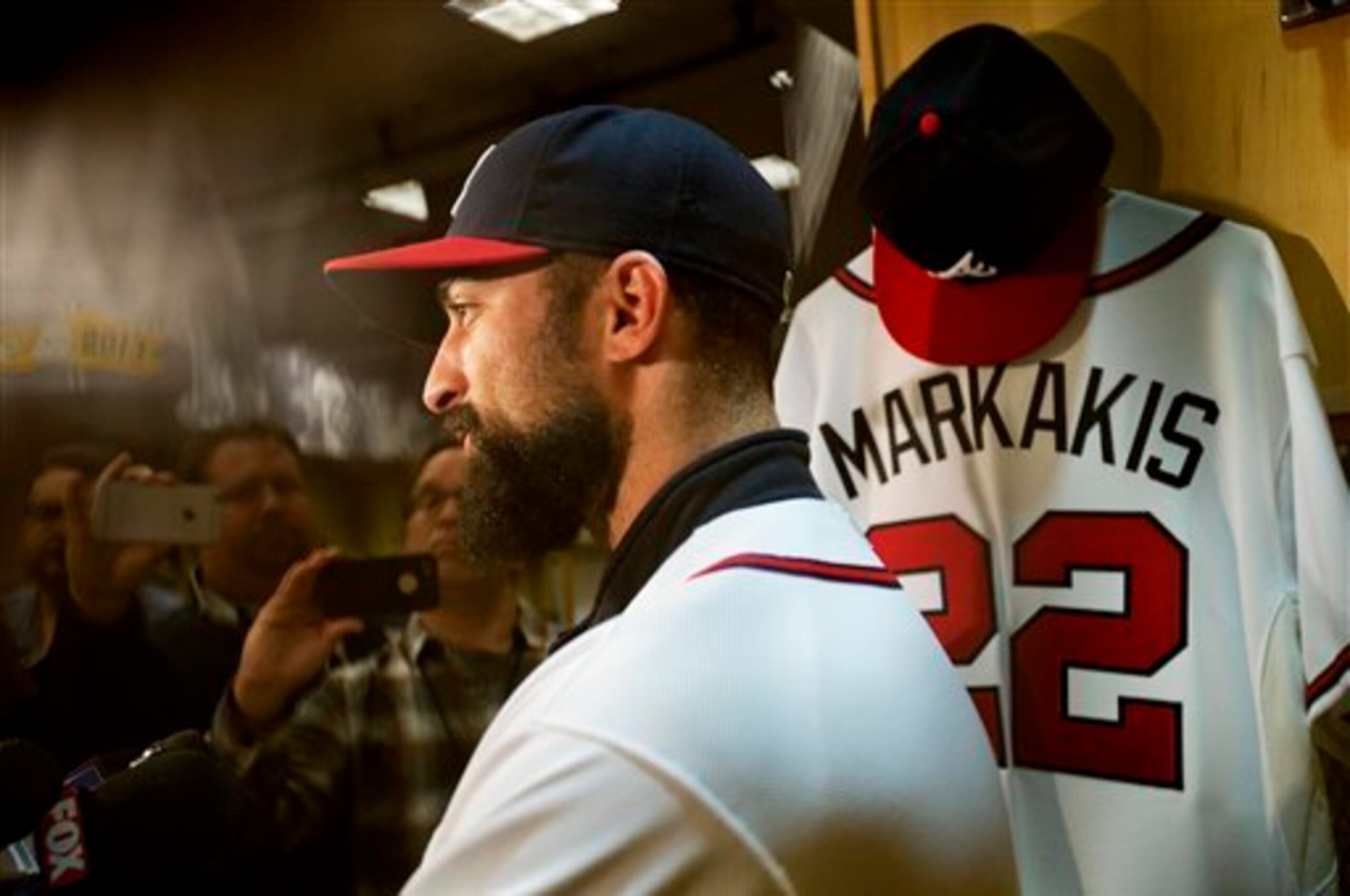
The Transaction
The Atlanta Braves signed OF Nick Markakis to a four-year, $45 million contract in December.
Why the Braves Should Be Worried
John Hart's vision for the future of the Braves has been evident from the get-go this winter.
After a disappointing 2014, Hart has utilized this offseason to completely restock the farm system by unloading some of the club's more attractive players. Gone are Justin Upton, Jason Heyward and Evan Gattis, three key cogs in the Braves lineup over the past few seasons.
Despite an offseason equivalent of raising the white flag in battle, the Braves aren't in a horrible position moving forward. Atlanta still has Freddie Freeman, Andrelton Simmons, Craig Kimbrel and a handful of young starters signed to multiyear contracts.
Hart's plan has been fairly easy to follow: get younger, acquire young pitching talent and reload for a serious run at contention when the Braves move into their new stadium in 2017.
That's what makes the signing of Nick Markakis so perplexing.
The 31-year-old is a really solid player, with a career .290 average and 141 homers. Markakis' biggest strength is his ability to make consistent contact, a trait that the Braves have sorely missed in recent times. His career strikeout percentage of 13 percent will provide Atlanta with a reliable hitter it can plug anywhere in the lineup. Markakis is also a very sure-handed outfielder, winning a Gold Glove in 2014.
So what's the big deal?
For one, Markakis recently underwent surgery to repair a herniated disk in his neck. While the outfielder is expected to fully recover before Opening Day, it's never a good sign when a player on the wrong side of 30 is required to go under the knife.
While Markakis has continuously put the ball in play throughout his career, that doesn't mean he's necessarily creating hard contact. His home run totals regressed during his tenure in Baltimore, as he's become more of a 10-15 homer guy at this stage of his career.
Mike Petriello at FanGraphs notes that Markakis' batted-ball distances have decreased 30 feet since 2009 and his MLB ranking in that category had plummeted from 71st to 228th. Oy.
When you take into account that those figures were recorded while Markakis was claiming the hitter-friendly Camden Yards as his home, the dramatic drop-off in power has to be a concern for Braves fans.
Again, Markakis isn't a bad player by any stretch of the imagination. His high-contact stroke was especially useful in the Orioles' power-laden lineup last season. He would be a valuable commodity on any contender needing a quality veteran to balance out its lineup.
But that's not what the Braves are. It's a confusing move for a team hell-bent on restructuring its roster. It feels like Atlanta overpaid for a different type of player in hopes of steering the club's offensive approach in a a new philosophical direction.
Atlanta also traded away the younger, more talented fan-favorite Heyward due to budgetary concerns, making the Markakis deal that much more baffling.
.jpg?w=2560 "Texans Sign Vet WRs")
.jpg?w=2560 "Grading SmackDown 🔠")

.png?w=2560 "Nuggets to Sign DeMar 🚨")