Detroit Tigers: Which Red Sox Outfielder Is the Best Trade Fit?
The Detroit Tigers are natural trade partners with the Boston Red Sox.
Detroit has a need in the outfield, and Boston has enough quality players at that position to fill starting outfields for three teams.
Boston has beefed up its batting order thanks to the acquisitions of Hanley Ramirez and Pablo Sandoval, but its starting pitchers could use some help. Clay Buchholz is the best of the bunch, but he posted an ugly stat line that included 11 losses and a 5.34 ERA.
The rumored target for Boston is Rick Porcello, according to Frank Pimentel of MLB Hot Corner.
There are pros and cons in dealing Porcello. He may grow too rich for Detroit’s blood, and the team could move on from him.
The downside in dealing him is that he could prove that his breakout season in 2014 was no fluke. If the Tigers don’t get a suitable replacement, they could find themselves in the same situation they found themselves in with Doug Fister last season.
Whether Porcello is dealt to the Red Sox, the Tigers still make ideal trading partners with Boston.
Through free agency and trades, Boston has stockpiled an abundance of outfielders. They include Ramirez, Yoenis Cespedes, Rusney Castillo, Brock Holt, Mookie Betts, Jackie Bradley Jr,, Shane Victorino, Allen Craig and Daniel Nava.
Ramirez, Castillo, Holt and Victorino can be crossed off as potential fits. Ramirez and Castillo were only recently signed, while Holt is better suited to a utility role.
Victorino would be an ideal fit, but he is in the final year of a three-year, $39 million deal. He’d be a fit with Detroit if Boston ate money in a trade.
That leaves Cespedes, Betts, Bradley Jr., Craig and Nava.
All stats courtesy of Baseball-Reference.com unless otherwise noted.
5. Jackie Bradley Jr.
1 of 5
Jackie Bradley Jr. is a superb defensive center fielder. However, he is still developing the offensive side of his game.
Bradley Jr. hit .198 in his first full big league season. He managed a single home run and wasn’t much of a threat to run thanks to a mere eight stolen bases.
Still, the outfielder would be a decent fit for a Detroit team in need of defensive help. The problem is that the Tigers already acquired a player with a similar skill set in Anthony Gose.
Gose may not be a finished product offensively, but with three major league seasons under his belt, he is more polished with a bat. The recent Tigers acquisition also showed more upside on the bases than Bradley Jr. with 34 steals in only 202 games played.
Despite the offensive deficiencies, Bradley Jr.’s defense and youth make him a valuable trade asset. Boston won’t give him away. He’ll likely cost too much to acquire simply as a defensive outfielder with no added value offensively.
4. Allen Craig
2 of 5
One of the talented outfielders stockpiled by Boston at the 2014 trade deadline, Craig is only one year removed from an All-Star season in St. Louis.
Acquired in a deal for John Lackey, Craig drove in 97 runs and hit .315 in 2013.
2014 was a different story for Craig as he regressed. The former Cardinals hitter drove in 46 runs and posted a .215 batting average.
While Craig provides value because he can play both corner outfield positions and first base, his age (30) could be a deterrent. The outfielder could be on the decline if he can’t recreate the form he displayed in 2011-13 (.312 batting average and 229 runs batted in across 328 games).
3. Yoenis Cespedes
3 of 5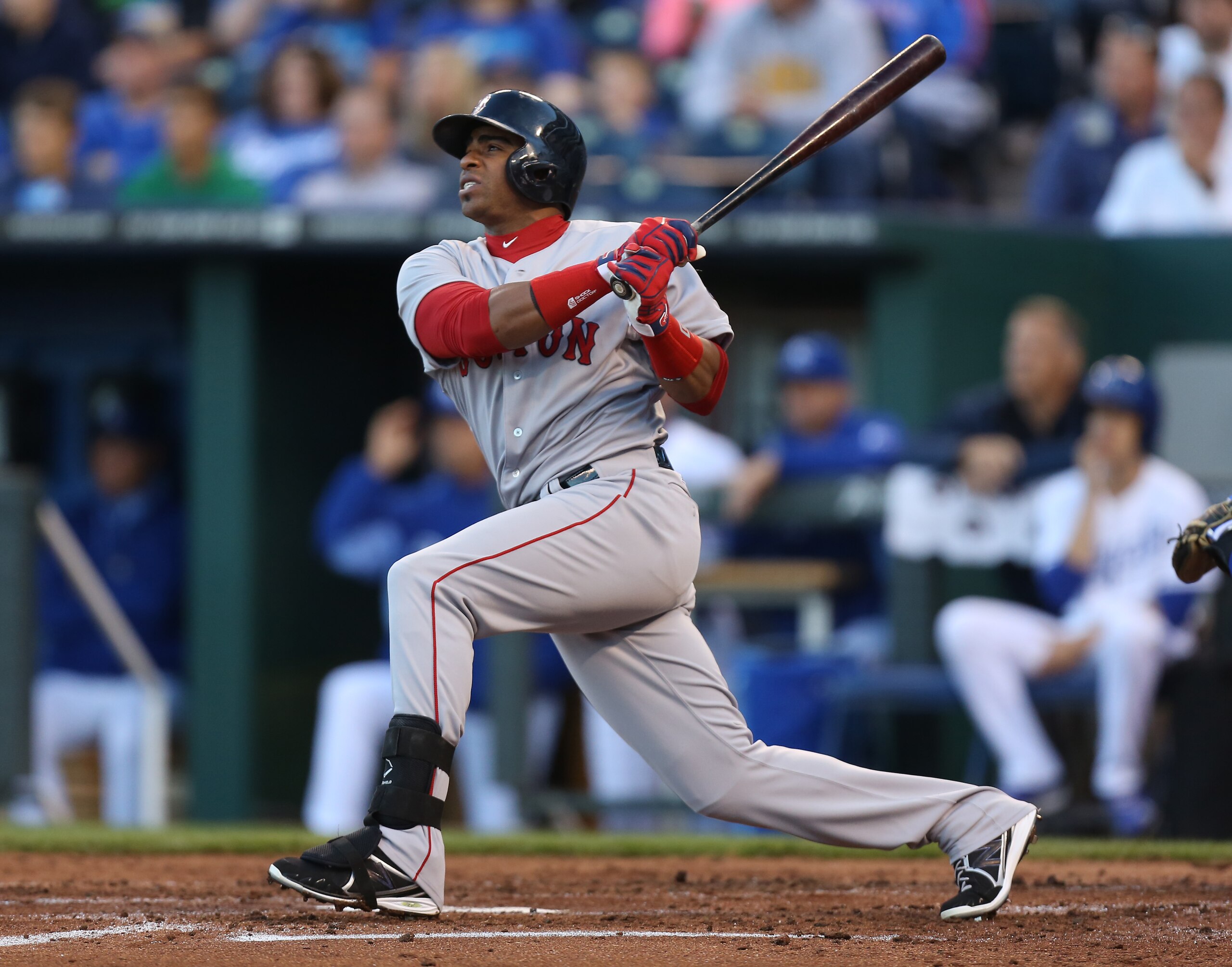
Cespedes, the former A’s slugger, is a true power hitter. He’s hit at least 22 home runs and 21 doubles in each of three big league seasons.
He also adds some speed, an uncommon trait for a middle-of-the-order bat. Cespedes stole at least seven bases in each of his first three seasons, with a career-high 16 in his rookie year.
Despite the power, Cespedes has some downfalls as a player. He posted a .751 OPS last year.
While it was above the league average, it wasn’t particularly outstanding. Torii Hunter’s OPS was .765, and free agent Melky Cabrera’s OPS was .808. Another potential trade target, Marlon Byrd, posted a .757 OPS. With Byrd being older than Cespedes, he would likely cost much less in a trade.
Another hallmark of Cespedes’ game happens to be his cannon of an arm. He had a major league-high 16 assists as an outfielder last season and had 35 in three seasons. Like the power and OPS numbers, the assists don’t tell the whole story. Cespedes' big league fielding numbers aren’t exactly eye-popping.
To further compound the point, Cespedes is a free agent after 2015 and would cost a monumental amount of money to re-sign.
In addition, Cespedes would likely cost the Tigers Rick Porcello. The outfielder owns a .300 career average in eight games at Comerica Park, but if acquired, he could be gone after only one season in Detroit.
.jpg?w=2560 "Zach Neto")
.png?w=2560 "MLB Power Rankings")
2. Mookie Betts
4 of 5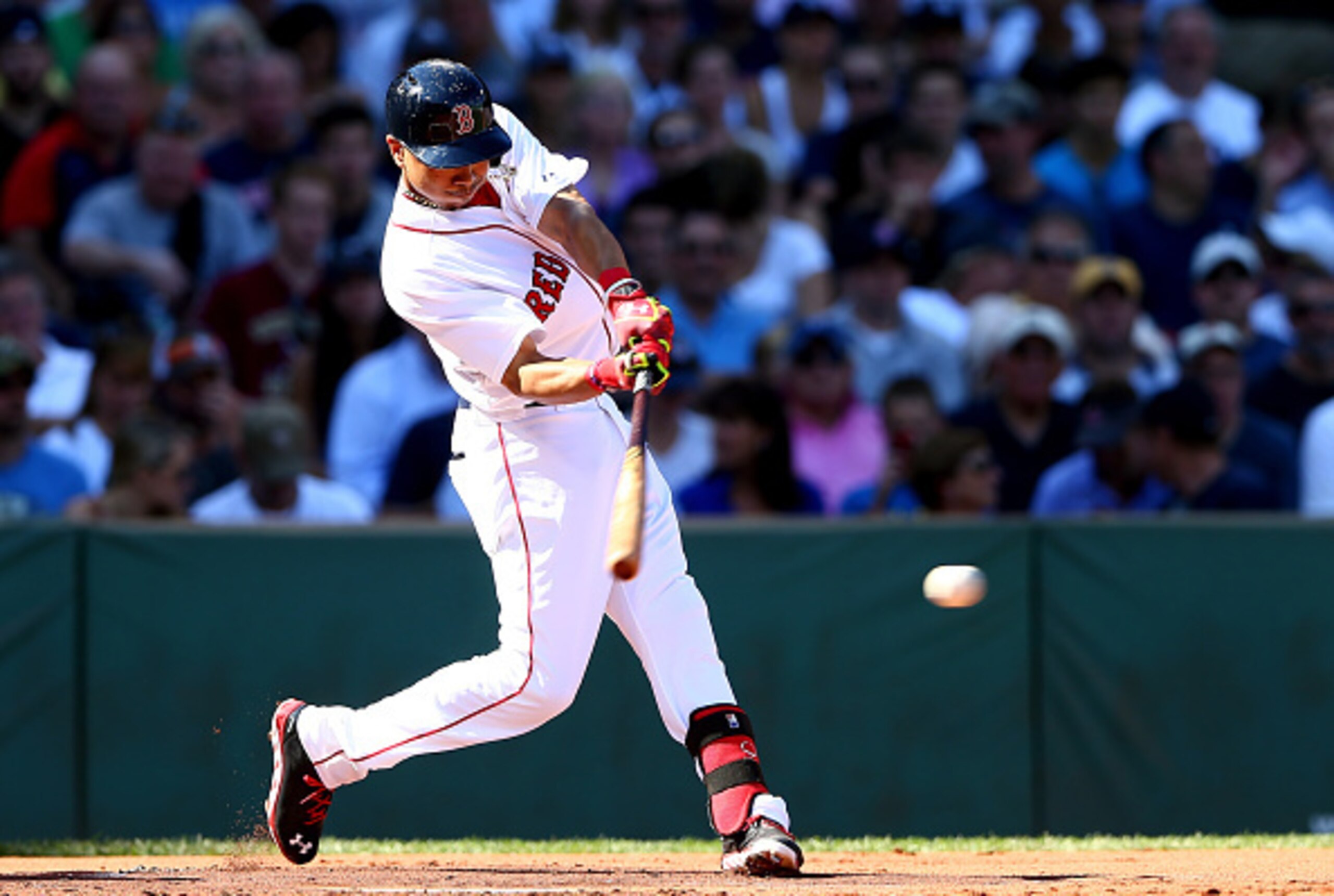
The youngest of the bunch, Betts is only 22 years old. Because of that, he may hold the best long-term potential for the Tigers.
Betts hit .291 in his first 52 games with five home runs, 34 runs scored, seven steals, 12 doubles and a triple. He also posted an .812 OPS. These numbers weren’t much of a surprise given Betts’ career minor league numbers.
The outfielder hit .315 on the way to the big leagues, including a .335 clip in his first crack at Triple-A and an absurd .355 batting average during his first go-around at Double-A. If anything, Betts has the potential to be a special hitter—one who would fit perfectly atop Detroit’s lineup.
In addition to his hitting acumen, Betts has experience at second base and could spell Ian Kinsler on occasion. The outfielder would take a substantial offer to pry away from Boston, but he would be worth it based on his potential.
1. Daniel Nava
5 of 5
While outfielders like Cespedes or Betts would succeed as full-time starters, Nava would need to be part of a platoon. The outfielder, who can also play first base, hit .209 against southpaws but has a .293 career batting average against right-handed pitchers.
Nava would be an extremely useful addition to the Tigers lineup because of his platoon dependency. Manager Brad Ausmus could platoon Nava with Rajai Davis (a .356 hitter against lefties in 2014) in left field.
Thanks to his inability to hit lefties, Nava would cost much less in a trade compared to full-time players. Because of this, he may be the best fit.
He also wasn’t too shabby defensively in 2014.
.jpg?w=2560 "Evaluating Every NFL Roster 📝")
.jpg?w=2560 "Grading Monday Night Raw 🔠")
.jpg?w=2560 "Vita Vea Requests Trade")
.png?w=2560 "Madden 99 Club Revealed")