

Which 2014-2015 MLB Free Agents Will Be This Year's Surprise Steals?
Perhaps there was a time when it was easy to find cheap talent on the free-agent market, but it's certainly not now.
Player salaries are always going up. Then there's how the extension craze has turned star free agents into a rarity, how the qualifying-offer system has upped the ante of signing said rarities and how spending limits elsewhere essentially force teams to invest Major League Baseball's riches in mediocrity.
In times like these, it's never been harder to dig up surprise free-agent steals. What we're here to do, however, is make like Eli Cash and presuppose...maybe it's not impossible?


Some lesser-known/less-appreciated players will come cheap, after all. Surely some of them will go on to outperform expectations. The question is which ones, and there are five names I have in mind.
Chris Young, OF
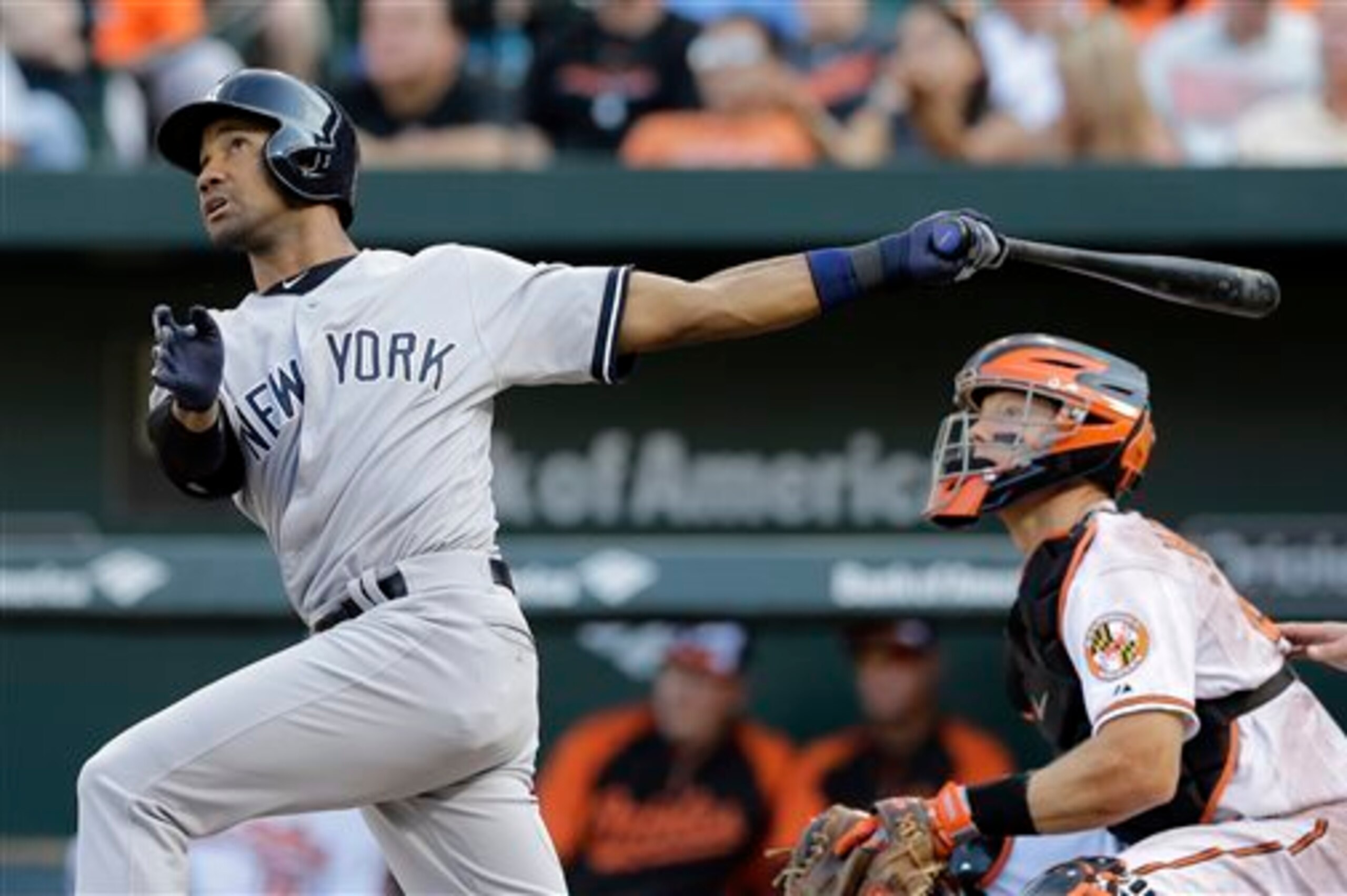
This, sadly, is the only hitter you're going to find here. At a time nobody can hit, those with offensive potential just don't come cheap anymore.
Except for Chris Young. He's already signed for cheap, re-upping with the New York Yankees for one year at $2.5 million guaranteed, and he'll easily earn that if he picks up where he left off in 2014.
Young started 2014 with the crosstown Mets and posted only a .630 OPS before they released him in mid-August. After the Yankees picked him up, he OPS'd .876 in 23 games.
You can see that small sample size and chalk Young's success up to luck, but there was an adjustment at play. As told to Daniel Barbarisi of the Wall Street Journal (subscription required), then-Yankees hitting coach Kevin Long knew exactly how Young needed to be repaired when he joined the team.
"He's syncing up his lower half with his hands," Long said. "Plain and simple, he was coming up off his legs, and his backside wasn't working down and through, like a lot of good hitters do. So he's worked real hard on that, felt real comfortable with it."
You can get a sense of how much Young's mechanics calmed down in this video of a dinger he hit in September. Specifically, notice how calm his hands are before he unleashes an explosive cut.
That this dinger came against a fastball is significant. More than anything, hitting the hard stuff is where Young's mechanical adjustment helped the most. As Brooks Baseball can vouch:
| With Mets | 753 | 169 | 5.6 | .178 | .249 |
| With Yankees | 157 | 46 | 6.6 | .326 | .630 |
What Young did with the Yankees was much more like him. He was many things before 2014, and one of them was a darn good fastball hitter.
Assuming Young can maintain the adjustment he made at the end of 2014, the bigger question is how much playing time he stands to get in 2015. With Brett Gardner in left, Jacoby Ellsbury in center and Carlos Beltran in right, Young signed up for a part-time job when he inked his modest deal.
But then again, maybe not. That Beltran shouldn't be an everyday right fielder at this point means Young should get his share of opportunities in right, and his career platoon splits should result in starts at designated hitter against left-handed pitching.
So don't try too hard to find the top bargain hitter on the free-agent market. The Yankees have already found him.
Brandon McCarthy, RH Starter
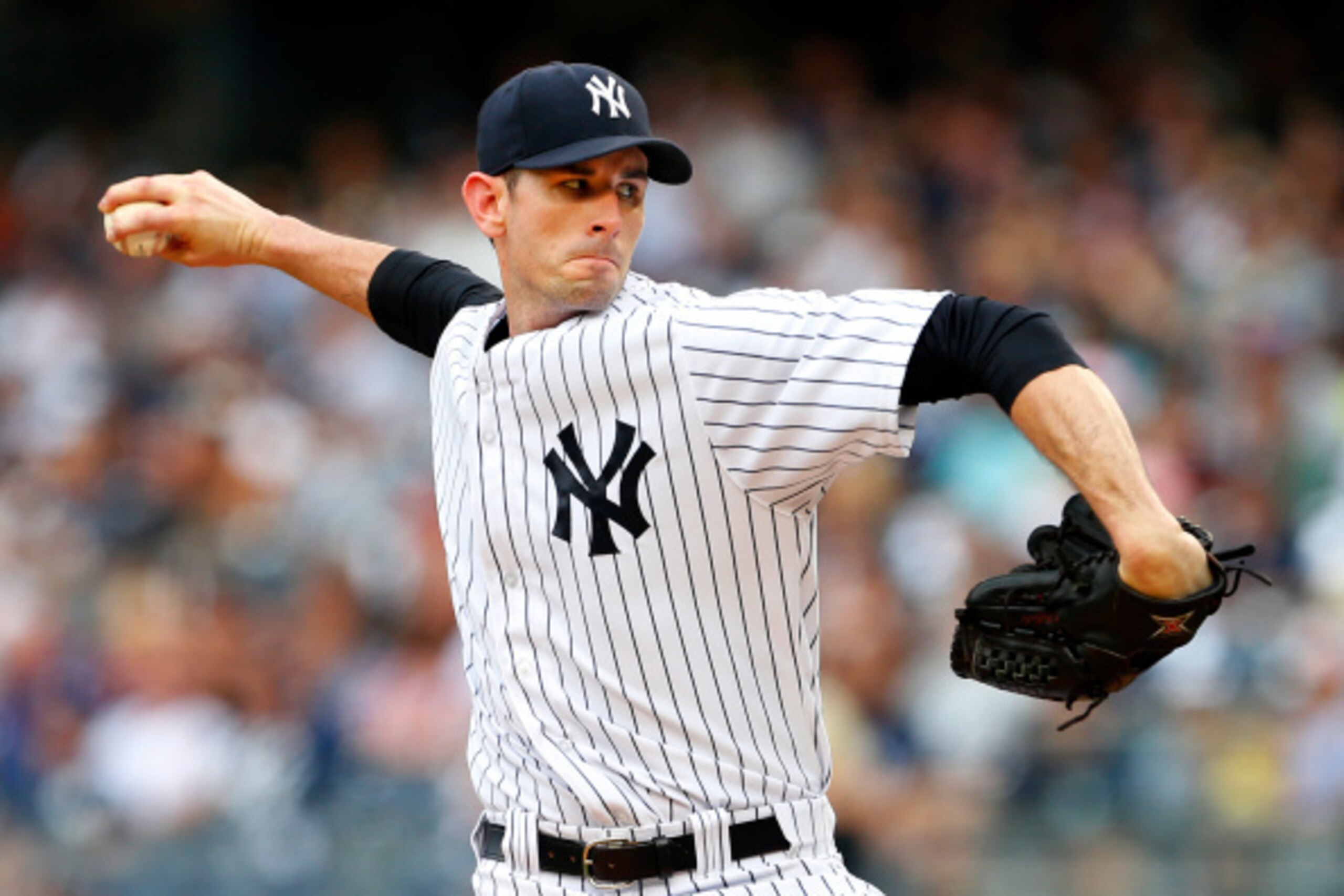
Speaking of Yankees reclamation projects, they fixed Brandon McCarthy, too.
Like, really fixed him. After posting an ugly 5.01 ERA in 18 starts with the Arizona Diamondbacks, McCarthy improved to post a 2.89 ERA in 14 starts with the Yankees.
The popular narrative is that the 31-year-old right-hander succeeded because the Yankees allowed him to use his cutter. In reality, his pitch selection got a larger renovation. From Brooks Baseball:
| With D-Backs | 6.7 | 54.5 | 1.3 | 26.1 | 10.3 |
| With Yankees | 24.2 | 36.0 | 0 | 20.9 | 18.8 |
With Arizona, McCarthy was basically all sinker and curveball. With the Yankees, he was four-seamer, sinker, curveball and cutter, thereby giving hitters a wider assortment of looks.
Jeff Sullivan of FanGraphs dug deeper and found that McCarthy's time with the Yankees also consisted of different locations, namely four-seamers high and pitching both in and out to lefties and righties instead of exclusively away from them.
This is one change McCarthy should be able to easily maintain, as he was one of the best spot-hitters around even before he joined the Yankees. If he continues to mix up his pitches as well, then he should be able to keep pitching like a No. 2 starter instead of a No. 5 starter.
That's the best part. McCarthy may have the goods to pitch like a No. 2, but Steve Adams of MLB Trade Rumors has the right idea in thinking that McCarthy will probably only find a three-year, $36 million deal.
Knowing that FanGraphs' WAR-based value system valued McCarthy at over $10 million in half a season with New York, the notion of his being worth $12 million per year is far, far from being, well, far-fetched.
Brandon Morrow, RH Starter
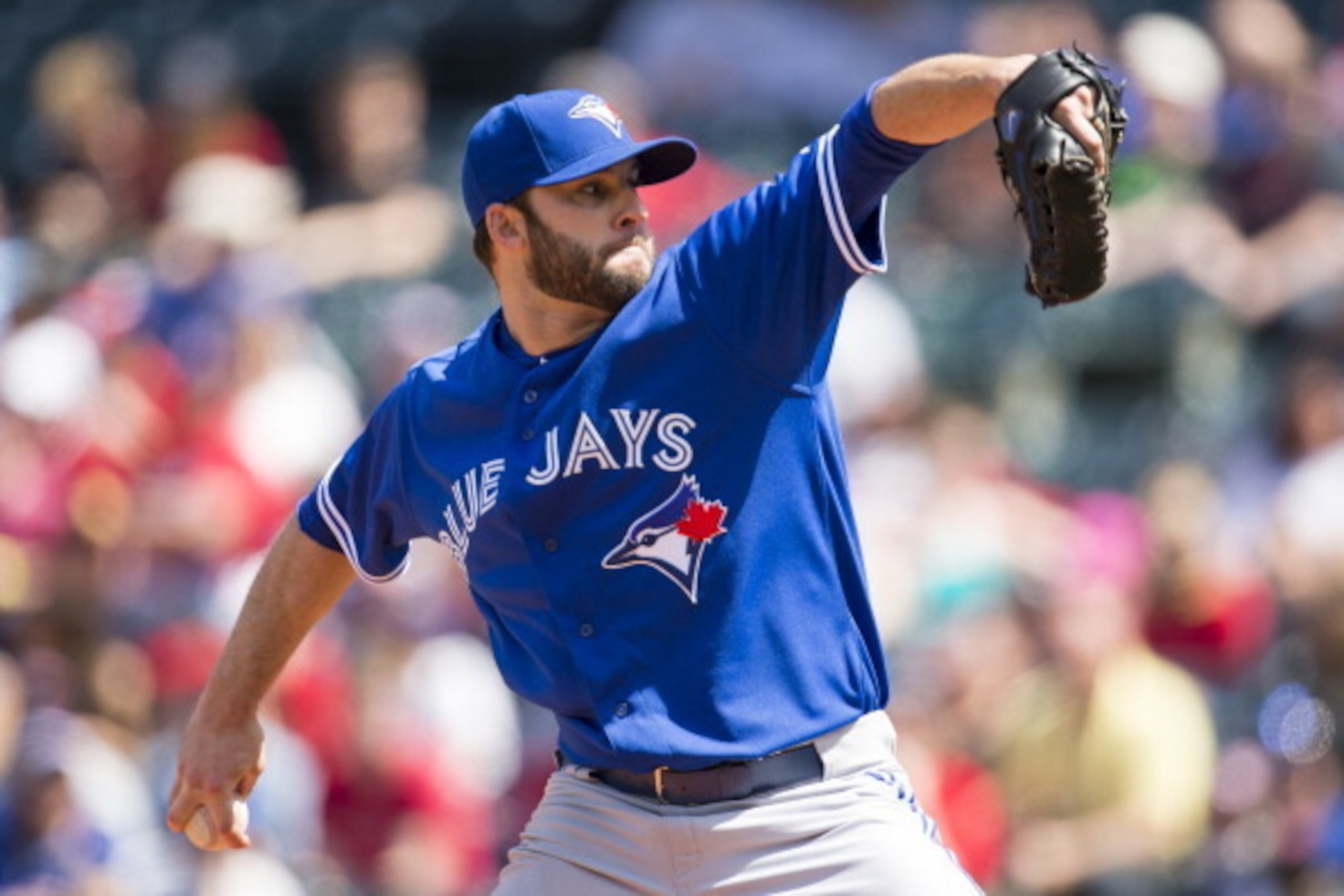
There are two injury-prone free-agent starters who stand out as high-reward reclamation projects. One is Brett Anderson, and the other is Brandon Morrow.
Yeah, guess which one of those guys I favor.
Morrow's recent injury history just isn't as rocky as Anderson's. Whereas Anderson hasn't made more than 20 starts since 2009, Morrow made over 20 starts as recently as 2012.
Also, at least Morrow was healthy at the end of 2014. Whereas Anderson threw his last pitch on Aug. 5, Morrow threw his on Sep. 25. If nothing else, we can look at that as a jumping-off point for a normal offseason that may result in good health throughout 2015.
As for why Morrow's potentially good health is worth investing in, MLB.com's Anthony Castrovince nailed it: "But Morrow's raw stuff is tantalizing, as is the 2.96 ERA he posted in 21 starts in '12. In '10 and '11, he struck out more than 10 batters per nine innings."
Indeed, and it's the stuff in particular that we're going to focus on.
In the six starts he made at the beginning of the season before he was sidelined for a long time with a finger injury, Morrow's four-seam fastball had its usual velocity, and his slider and splitter were both getting swings-and-misses. Once again, Brooks Baseball can vouch:
| 2007-2013 | 94.9 | 39.0 | 22.0 |
| Early 2014 | 94.6 | 35.2 | 36.4 |
This, truly, is nasty stuff. And while Morrow's control problems (career 4.2 BB/9) are a concern, you can look to Francisco Liriano for an example of how nasty stuff without command can still work wonders.
And said stuff need not be deployed in a starting role. Morrow teased Wade Davis-like potential in a relief role at the end of 2014, getting his fastball as high as triple digits.
As for how much a roll of the dice on Morrow will cost, FanGraphs' crowd-sourcing project suggests a one-year, $6 million contract. That's no big loss on a mistake, and a small price to pay to gamble on a guy with elite stuff.
Carlos Villanueva, RH Starter/Reliever
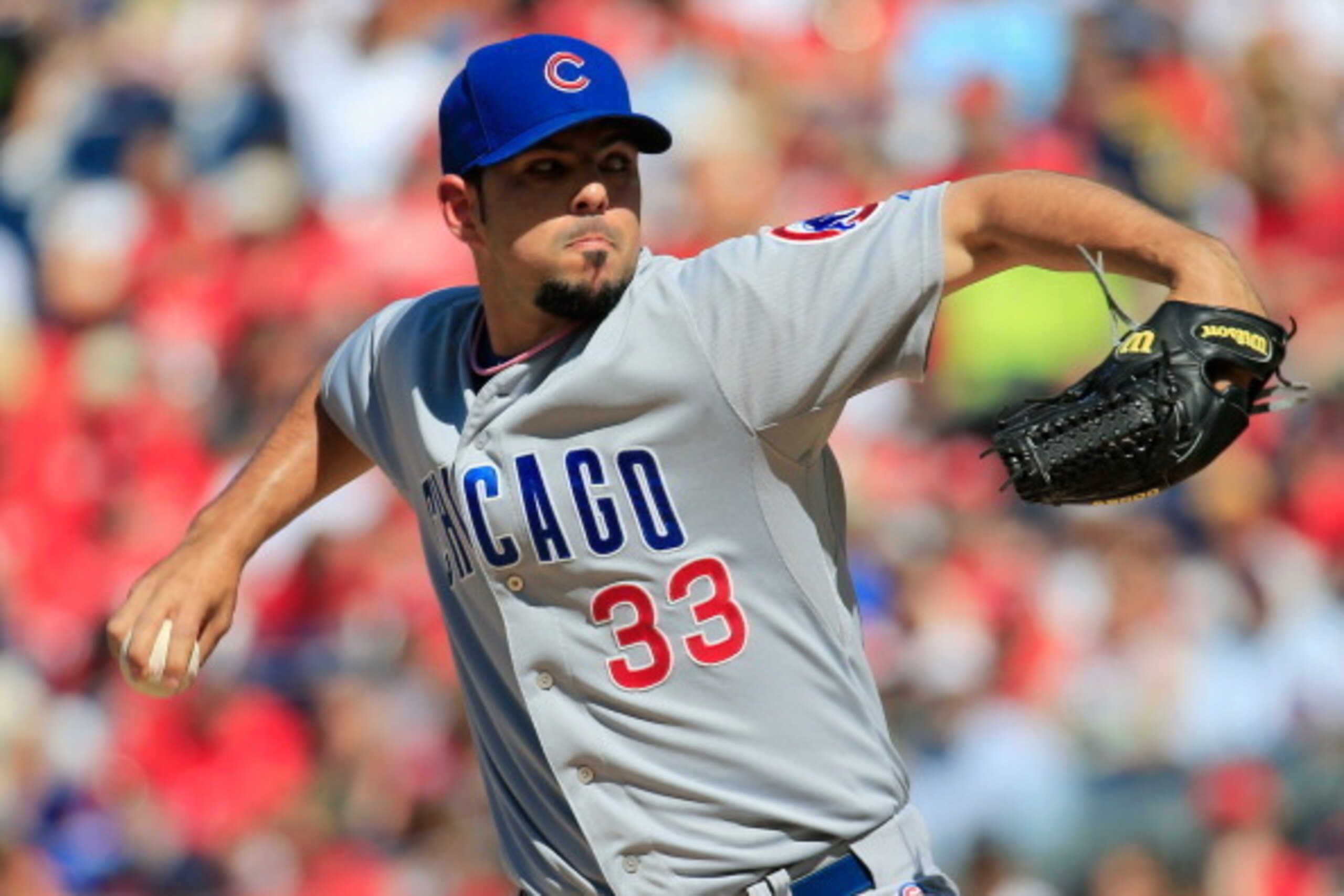
Anybody need a good Yusmeiro Petit-like swingman?
If yes, here's Carlos Villanueva for your consideration.
Villanueva definitely fits the swingman mold, as he's made 111 relief appearances and 49 starts in the last four seasons. That's one reason he's on our radar, with the other being how something clicked for him midway through 2014.
In the first half, Villanueva had a 6.18 ERA. In the second half, he had a 1.69 ERA. And lest you think that was all luck in just a 26.2-inning sample size, it was actually more a case of Villanueva's listening to hitters telling him what wasn't working.
Through the end of the first half, Villanueva had allowed a .387 career average against his sinker. So he scrapped it in the second half, choosing instead to trust his four-seamer as his primary fastball.
And, boy, did that do the trick:
| 1st Half | 30.0 | 16.4 | 6.1 | .250 | .462 |
| 2nd Half | 44.4 | 26.1 | 21.4 | .146 | .220 |
Note: PU/BIP stands for "pop-ups per palls in play."
With a release speed of just 90.5 miles per hour in the second half, Villanueva's four-seamer wasn't overpowering. But it did have good rise with 10.4 inches of vertical movement, and attacking the zone with it allowed him to set hitters up for a slider-curveball combo that became quite deadly in 2014.
After making only $5 million in each of the last two seasons, Villanueva might actually be in line for a pay cut after producing generally modest returns for the Chicago Cubs. So yeah. There's a versatile pitcher who was last seen carving his way through opposing hitters out there on the open market.
Better get on that, guys.
Zach Duke, LH Reliever
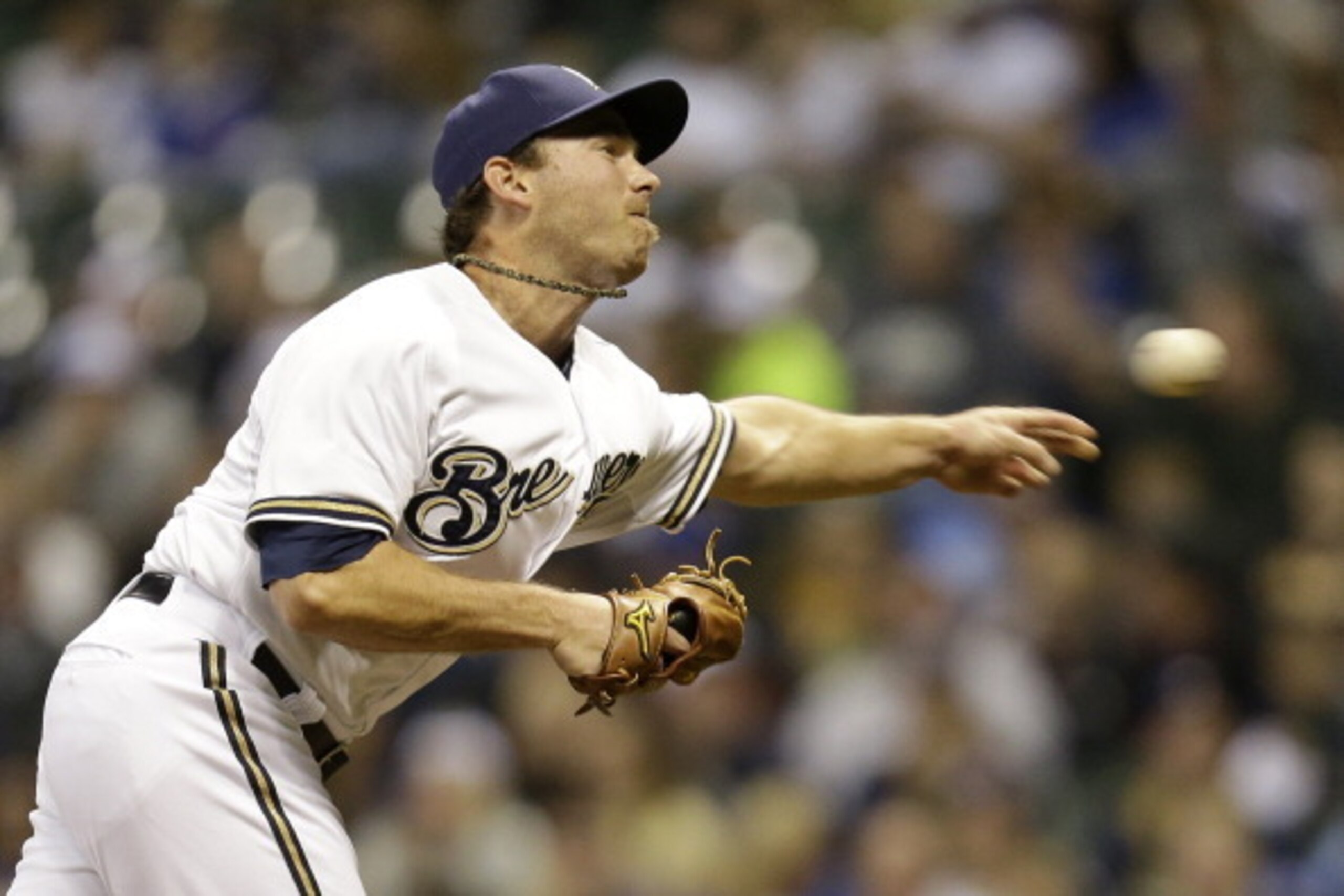
The ideal reliever is one who can come in and miss bats, limit walks and keep batted balls on the ground.
Basically, Zach Duke.
Relative to the league averages for relievers, check out what he did for the Milwaukee Brewers in 2014:
| Average RP | 8.5 | 3.3 | 45.3 | 3.58 |
| Duke | 11.4 | 2.6 | 57.7 | 2.45 |
Since Duke was so much more effective than the average reliever in 2014, that raises the question: Why isn't he being talked about as one of the top relievers on the market?
One reason likely has to do with his track record, but he's not the same pitcher who came into 2014 with a 4.57 career ERA. He's changed, most notably in how he now occasionally throws sidearm in addition to over-the-top. Hitters now really have no idea what kind of arm slot the ball will be coming from.
Another reason Duke is being overlooked likely has to do with his looking like a LOOGY—that's a "Lefty One-Out GuY"—on paper, but that's also a flawed perception. He actually faced more righties than lefties in 2014 and held them to a .586 OPS to go with a .569 OPS against lefties.
This is largely thanks to Duke's curveball. He threw it more than ever in 2014, drawing whiffs on nearly half the swings taken at it. Righties hit it at a .125 clip, and lefties hit it at a .188 clip.
Add in a sinker that got ground balls over 70 percent of the time it was put in play by lefties and righties, and you have a reliever with good deception, a go-to swing-and-miss pitch and a go-to ground-ball pitch.
As such, Duke isn't quite Randy Choate. He's more of a Jeremy Affeldt: a left-hander with deceptively good stuff that works against both lefties and righties.
The price to beat is the $850,000 salary Duke made in 2014. That's not a hard price to beat, and the promise of adding a shutdown reliever makes it well worth beating.
Note: Stats courtesy of Baseball-Reference.com and Brooks Baseball unless otherwise noted/linked.
If you want to talk baseball, hit me up on Twitter.
.jpg?w=2560 "Reports: A.J. in Walking Boot")

.jpeg?w=2560 "Predicting Every Week 1 Game 🔮")
.jpg?w=2560 "Grading AEW Dynamite 🔠")