
B/R MLB Offseason 100: Ranking Top 15 Relief Pitchers Available This Winter
After getting started with a look at the top starting pitchers available on the offseason market, the B/R MLB Offseason 100 will now continue with a look at the top relief pitchers.
Our list includes 15 relievers. Most of them will be available on the free-agent market, but a couple are trade candidates plucked from rumors and/or highly plausible speculation.
For starting pitchers, we used a scoring system that added up to 100. Since relief pitchers are baseball's ultimate part-time players, their scoring system only goes as high as 85:
- Talent Outlook: Out of 60. The idea is to look at how guys have performed recently, how they've gone about doing it and the outlook of their skills going forward. Think of 30 out of 60 as being a league-average reliever and 60 out of 60 essentially being Wade Davis.
- Durability Outlook: Out of 15. The idea here is to scan guys' track records and injury histories. Think of 15 out of 15 as signalling no worries whatsoever, with eight out of 15 signaling a toss-up as to whether a guy will remain durable.
- Value Outlook: Out of 10. The idea is to project what kind of contract or trade package it's going to take to acquire each reliever and determine whether it would be a good or bad deal. Think of five out of 10 as being a fair deal, with zero being a megabust and 10 being a megasteal.
In the event of ties, the nod will be given to the reliever we'd rather sign or trade for.
Along the way, you'll find plenty of links to relevant data at Baseball-Reference, FanGraphs and Brooks Baseball. Also, a shout-out is owed to Baseball Prospectus for keeping such detailed injury histories.
15. Casey Janssen, RHP, Free Agent
1 of 15
Talent Outlook
Through the first half of 2014, Casey Janssen had a 1.23 ERA, confirming he was still one of the best closers around. Then came a 6.46 ERA in the second half, during which he wasn't fooling anyone with his fastball or cutter. It's also possible he never recovered from a bad illness he suffered during the break.
Even still, Janssen should only be cut so much slack. His velocity is still declining from its 2011 peak, and that's not likely to stop given he's now 33. The issues he had missing bats this past season are very likely permanent. As such, he no longer fits the profile of a shutdown reliever.
Durability Outlook
Janssen has fallen short of 60 appearances and 60 innings in three of the last four seasons, in part due to injuries. Before he dealt with illness and a back problem in 2014, he dealt with a series of shoulder and arm issues in the prior three seasons.
A track record such as this doesn't look so good on a guy who's 33 years old, so whichever team picks Janssen up will have to do so with the expectation that his body probably isn't going to behave.
Value Outlook
Despite the warning signs that surround him, Janssen is still young enough with a good enough track record to attract a multiyear deal as a free agent. Something like Edward Mujica's two-year, $9.5 million deal could end up being a starting point for him.
If so, Janssen's new team would need him to shrug off what ailed him in 2014. That's not happening unless he finds some velocity and starts missing bats again, which likely isn't happening.
Total
14. Joba Chamberlain, RHP, Free Agent
2 of 15
Talent Outlook
Joba Chamberlain seemed to be in the middle of a rebirth with the Detroit Tigers early on in 2014, but things fell apart when his ERA went from 2.63 in the first half to 4.97 in the second half. It was no fluke, as his walks went up, his strikeouts went down, and he found himself allowing more hard contact.
Just as troubling is how Chamberlain's velocity fell from the 94-95 mph range to the 93-94 range. That leaves a lone bright side of his 2014 campaign: His reestablishment of his curveball next to his slider gave him two solid swing-and-miss breaking balls instead of one. That'll work for a silver lining.
Durability Outlook
Since he was able to avoid the disabled list for the first time since 2010, merely staying healthy was the real victory of Chamberlain's 2014 season.
Of course, that's the good news and the bad news. Chamberlain may still be relatively young at 29, but his track record suggests that one healthy year doesn't necessarily mean more are to come. That he's a bad-body pitcher who leans heavily on breaking stuff doesn't help.
Value Outlook
Chamberlain was able to get a $2.5 million contract from the Detroit Tigers as a mere reclamation project, so he should be able to do better this winter even despite his second-half collapse. It wouldn't be a surprise if he was able to get a two-year deal, perhaps for a total of $10-12 million.
A deal like that would be banking on Chamberlain getting back to what he was in the first half of 2014. Based on his lesser velocity, iffy command and injury red flags, that's asking a lot.
Total
13. Sergio Romo, RHP, Free Agent
3 of 15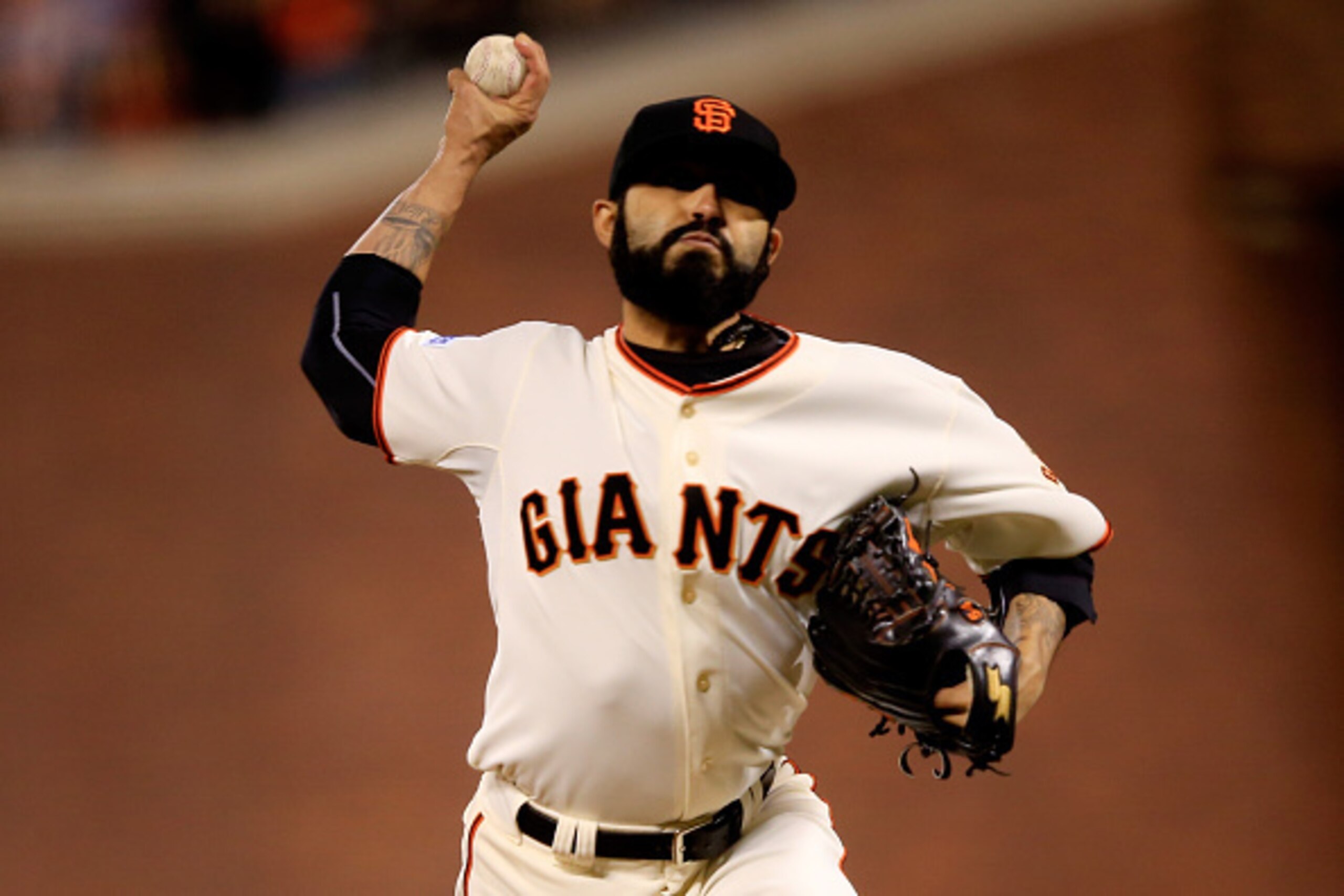
Talent Outlook
After an extremely rough first half, Sergio Romo looked more like himself in pitching to a 1.80 ERA after the break. Specifically, his trademark slider got back to getting whiffs and once again became borderline unhittable. And through all of it, he remained a very good control artist.
But Romo still comes with downsides. One is that his 2014 platoon splits suggest he's best off as a right-handed specialist. Another is that his "hard" stuff remained hittable even in his dominant second half. Given that he only throws 88 now with his age-32 season due up, there's nothing but downside there.
Durability Outlook
Romo has made over 60 appearances every year since 2010, and that's not counting the few extra appearances he's made in three separate postseasons. He's been more durable than his slight frame suggests he should be.
At the same time, Romo really hasn't been much for eating innings. He topped out at 62.0, and that was back in 2010. And even despite his track record, you can't help but worry about a slider-happy pitcher with a skinny frame breaking down in the near future.
Value Outlook
Here's thinking that no front office out there will be willing to buy into Romo's second half as proof that he can be a shutdown closer again. Nonetheless, it probably will end up earning him a multiyear deal. Something like two years and maybe as much as $12-15 million, most likely.
If so, it's not guaranteed to be money well spent. Rather than a dominant late-inning reliever, the most realistic portrait of Romo these days is as a good guy to have against right-handed batters.
Total
.png?w=2560)

12. Jason Grilli, RHP, Free Agent
4 of 15
Talent Outlook
Jason Grilli's 2014 season was a disappointment, but he did end it on a strong note. After posting an ugly 4.87 ERA with the Pittsburgh Pirates, he managed a 3.48 ERA with the Los Angeles Angels. This was largely because his slider went back to being an out pitch, holding batters to a .146 average.
It's a concern, however, that Grilli's slider continued to be an inconsistent swing-and-miss pitch even while it was more effective at getting outs in Anaheim. He still has a solid fastball-slider mix, but it's going to be tough for him to repeat the results he got as an Angel if that pattern keeps up.
Durability Outlook
Grilli has managed 60 appearances in two of the last three seasons but hasn't hit the 60-inning plateau in any one of them. Injuries have held him back the last two seasons, with a forearm strain sidelining him for a month in 2013 and an oblique strain sidelining him for a month in 2014.
Add in the reality that Grilli is in his late 30s and still riding a hard fastball-slider combination, and the odds of him turning into a durable pitcher are pretty slim.
Value Outlook
Grilli rescued his stock with his strong turn as an Angel and should draw interest from teams looking for late-inning relief help as a result. Given his age and initial struggles in 2014, however, he might only be able to get a one-year deal with an option, with annual salaries likely no higher than $5 million.
Such a deal would be a steal if he reverted back to the pitcher he was in 2013 and would at least be worth it if he were to be the pitcher he was with the Angels. But since his performance in Anaheim was a little fluky and he comes with durability red flags, don't count on it.
Total
11. Rafael Soriano, RHP, Free Agent
5 of 15
Talent Outlook
It was a tale of two seasons for Rafael Soriano in 2014, as he followed a 0.97 first-half ERA with a 6.48 second-half ERA. A lot of that was him simply not getting away with hard contact anymore, which was bound to happen given how much he pitches up in the zone with his diminished heat.
Still, I can't recommend a new approach for Soriano. Pitching up in the zone sets up his slider, which he used more often in 2014 and watched it get back to missing bats at its usual rate. As long as he has that pitch working, he has the goods to be close to an average reliever.
Durability Outlook
Soriano has logged at least 60 appearances and 60 innings in five out of six seasons since 2009, putting him on a short list of relievers who have managed to do so.
But while that bodes well for his durability, that he's a soon-to-be 35-year-old with past elbow issues who leans heavily on a slider does not. He's not as good a bet to remain durable as his track record suggests.
Value Outlook
Not surprisingly, the Washington Nationals chose not to pick up Soriano's $14 million option for 2015. And after his meltdown in the second half, the best he may be able to do on the open market is a two-year deal with an average annual salary worth half of what he could have made with his option.
And even that would be a stretch. Soriano's not as bad as he looked in the second half, but he only has the stuff to be a middle-innings reliever rather than an eighth-inning setup man or a closer.
Total
10. Luke Hochevar, RHP, Free Agent
6 of 15
Talent Outlook
Tommy John surgery kept Luke Hochevar sidelined in 2014. Before that, he authored a dominant season in 2013 that featured a 1.92 ERA and a 4.8 strikeout-to-walk ratio. The trick was him benefiting from a velocity increase and turning into a fastball-heavy pitcher with a truly outstanding cutter.
Of course, there is the question of whether Hochevar will go back to airing it out in his return from Tommy John in 2015. There's also the likelihood of his command being rusty. As such, expectations should be tempered.
Durability Outlook
Since Hochevar underwent his Tommy John operation in the middle of last March, there's a chance he'll be ready to pitch sometime in late April or early May of 2015.
Such is the best-case scenario, anyway. But knowing that it could take time for him to get into pitching shape, he may be along later in the season. Also, it's worth noting that a previous elbow issue sidelined him for half of 2010. Trusting his elbow to behave is not easy. Or advised.
Value Outlook
In a recent bit at GammonsDaily.com, Peter Gammons wrote there's at least one general manager who expects Hochevar to be "a big item" on the open market. That's no surprise given he was basically a Wade Davis prototype in 2013, and it could mean he makes out like Joakim Soria a couple winters ago by snagging a two-year deal worth around $10 million.
A deal like that would be justified based on Hochevar's upside. But given that his upside can't be considered a sure thing at this point in his recovery, it would still be a roll of the dice.
Total
9. Francisco Rodriguez, RHP, Free Agent
7 of 15
Talent Outlook
Francisco Rodriguez followed a solid 2.70 ERA in 2013 with a 3.04 ERA in 2014. His 4.1 K/BB is indicative of how his command was sharper while his curveball and changeup remained strong swing-and-miss pitches. That he gave up 14 homers, though, is indicative of how his stuff leaves him with a small margin for error.
That's probably not changing. K-Rod's heat declined from 91-92 the prior two seasons to 90-91 in 2014. Not surprisingly, that's where the bulk of the dingers he allowed came from. His curve and changeup are good enough to keep him reasonably effective, but he just can't make mistakes anymore.
Durability Outlook
That K-Rod isn't even 33 yet might come as a surprise, as he is indeed a guy who's been around for a long time. His workload reflects that, as no other reliever has pitched as many innings as he has since he broke into the league in 2002. He's had aches and pains along the way, but nothing too major.
Still, that many innings on a guy who's heading toward his age-33 season counts as a red flag. That Rodriguez is still using a high-effort delivery is another. His track record deserves some respect, but him remaining so durable is best considered a toss-up.
Value Outlook
After saving 44 games in 2014, conventional wisdom suggests K-Rod is in line for a big payday in free agency. But since teams are now too smart to be that dumb, it's more likely that his homer-proneness will force him to settle for a modest raise from his $3.25 million 2014 salary in a one-year deal. Say, something like $6-7 million.
If so, well, it's debatable that he was worth that much even while saving 44 games this past season. It's hard to imagine that changing with a higher salary.
Total
8. Burke Badenhop, RHP, Free Agent
8 of 15
Talent Outlook
A reliable reliever before he arrived in Boston, Burke Badenhop quietly posted a dominant 2.29 ERA across 70 appearances with the Red Sox in 2014. He wasn't actually that good, mind you, but his career-best ground-ball rate did mean an abundance of soft contact and career-high 14 double plays.
To this end, his performance may actually be sustainable. Badenhop's sinker isn't getting any worse at picking up ground balls, and going with a more even mix between his slider and changeup also aided his quest for ground balls. That he can already do all this without plus velocity is a good sign going forward.
Durability Outlook
Badenhop is one of the top relief workhorses of the last five seasons, racking up more innings pitched than all but eight other relievers. To boot, his last disabled list stint happened back in 2009, and he hasn't had any injuries since 2011.
Since Badenhop will be 32 in 2015, there is the question of whether his workload will catch up to him eventually. But since he has a clean injury history and a low-effort throwing motion, it's a relatively minor concern.
Value Outlook
As a reasonably young right-handed ground-ball specialist, it's possible Badenhop will follow Brandon League and Joe Smith and find a three-year deal on the open market. A safer bet, however, is more like a two-year deal with an option at around $5-6 million per year.
It would seem like a lot for a guy who doesn't fit the bill as a late-inning reliever, and Badenhop would definitely have to keep getting ground balls to earn it. The likelihood of him continuing to do so, however, is reasonably strong.
Total
7. Luke Gregerson, RHP, Free Agent
9 of 15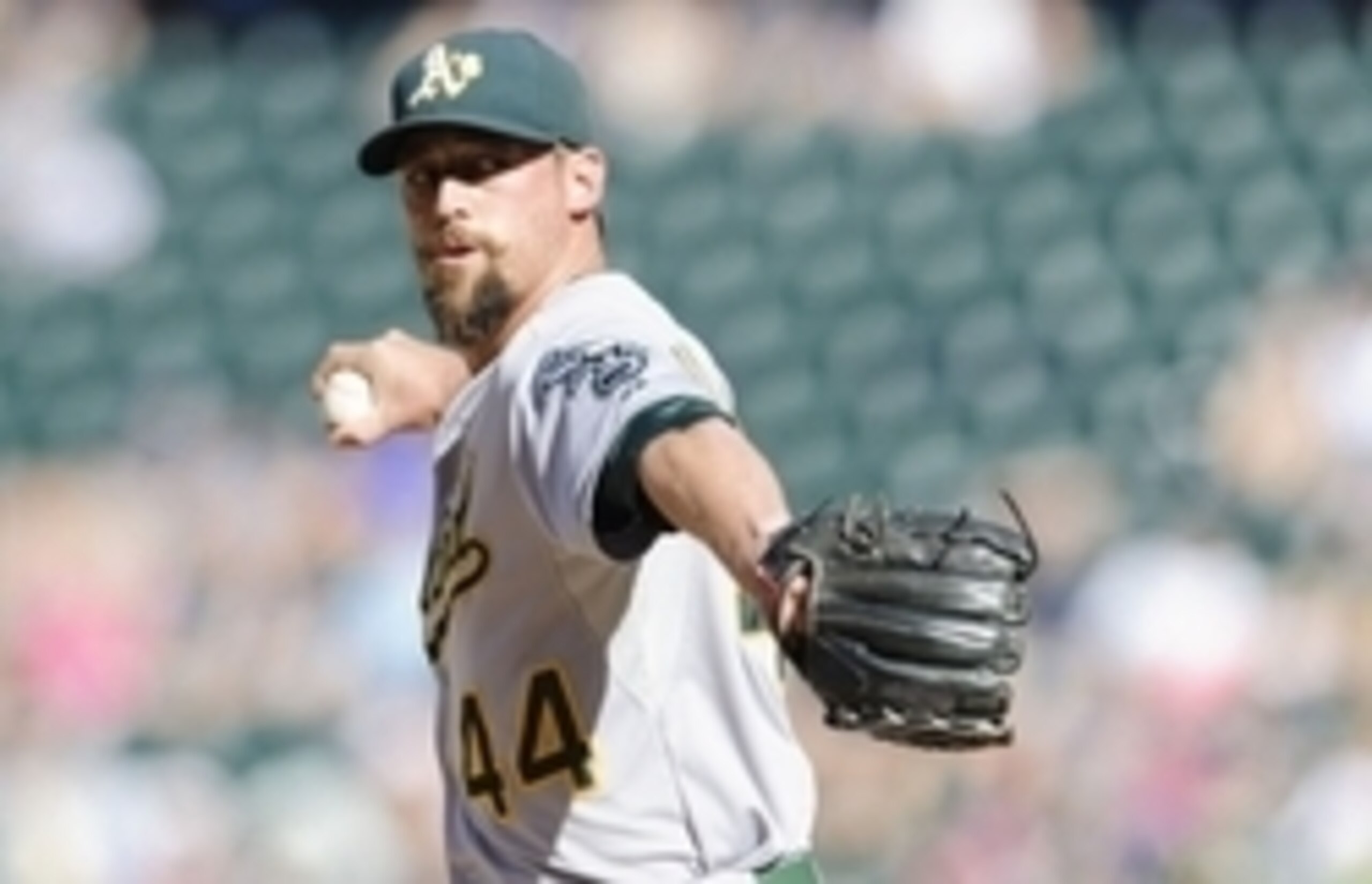
Talent Outlook
With a 2.12 ERA in 2014, Luke Gregerson notched his fourth straight season with a sub-3.00 ERA. That's pretty good for a guy who's not overpowering, and Gregerson's able to do it because he combines very strong command with a good sinker-slider mix that gets him swinging strikes and ground balls.
However, Gregerson's average velocity has already dipped under 89 miles per hour, and he's not leaning as heavily on his slider as he did at his peak. His sinker is good enough at inducing ground balls to justify that movement, but his days as a dominant setup man could be nearing their end.
Durability Outlook
The only reliever who's logged more innings than Gregerson since 2009 is Tyler Clippard. Obviously, you can't be worked that hard unless you have durability working for you.
The notion that Gregerson's past workload could catch up with him, though, isn't as big of a red flag as it probably should be. He doesn't have an alarming injury history, and his slow phasing out of his slider should help preserve his arm going forward.
Value Outlook
Given that he's not too old and has a very good track record to lean on, Gregerson should be in line for some multiyear offers this winter. Something in between what Edward Mujica and Joaquin Benoit got last winter sounds about right, and that would be two years for around $12 million.
That would be a solid value buy if Gregerson were to reproduce his 2014 results. And even if he declines slightly due to his weakening whiff habit, his command and ground-ball habit should keep him effective enough to earn it.
Total
6. Jonathan Papelbon, RHP, Trade
10 of 15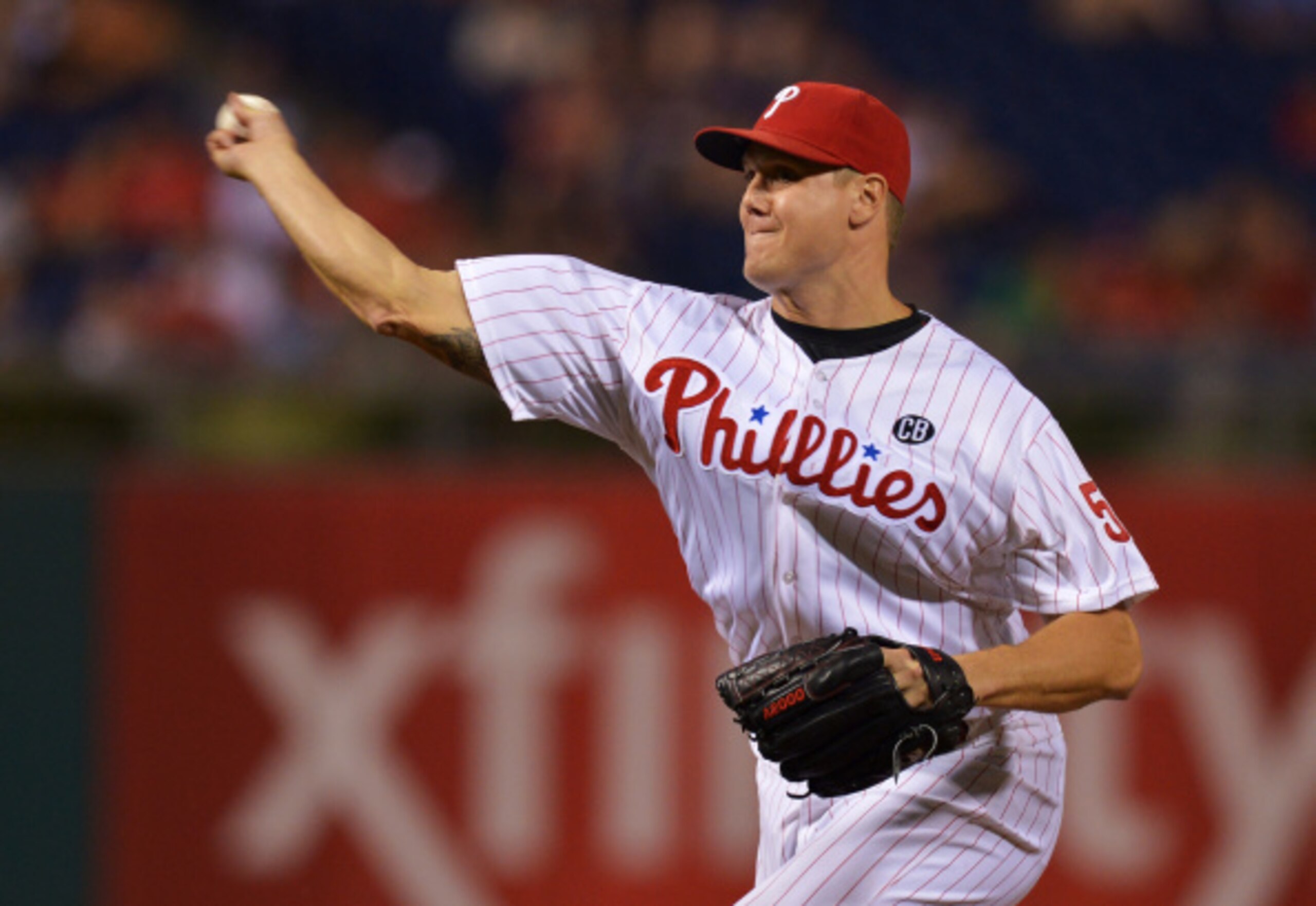
Rumor Source: Todd Zolecki of MLB.com
Talent Outlook
Jonathan Papelbon followed a 2.92 ERA—one that had everyone thinking he was declining—in 2013 with a 2.04 ERA in 2014. His diminished fastball velocity is still a concern, but he's making it less of one by toning down his reliance on his heat. This is allowing him to change speeds more effectively, which helps explain why his heater actually experienced an uptick in whiffability in 2014.
Even still, any team that trades for Papelbon has to figure he's not quite as good as his 2014 ERA says he is. He's done well to adjust for his declining velocity, but his margin for error is still smaller than it used to be.
Durability Outlook
Only one reliever has eaten more innings than Papelbon since his first full season in 2006. That's one big reflection of his durability. That he's never been on the disabled list is the other.
These shouldn't be taken as guarantees that Papelbon is going to remain healthy, however. He is 34 with a lot of mileage on his arm, and decreasing his fastball usage for more sliders and splitters probably won't do his arm any favors.
Value Outlook
In trying to deal Papelbon, the big hurdle for the Philadelphia Phillies is the money remaining on his contract. That's as much as $26 million over the next two seasons. Since no team is going to eat all that, the Phillies' best hope is that they eat a good chunk of it and get a good young player or two in return.
That would be a good deal for Papelbon's new team if he were to author a couple more seasons like his 2014 campaign. What's more likely, though, is that he'd only perform well enough to justify the deal.
Total
5. Zach Duke, LHP, Free Agent
11 of 15
Talent Outlook
You're looking at a guy who was a hidden gem in 2014. Zach Duke racked up a 2.45 ERA in 74 appearances without a set platoon role against left-handed batters. That's what you can do when you keep everything low with a sinker that gets grounders and a curveball that gets whiffs.
Hitters did catch on a little bit in the second half, however, as Duke had a harder time limiting walks and limiting hard contact. Even despite these things, he's a good candidate to fit the Jeremy Affeldt mold of a lefty who can be used against anyone for ground balls and strikeouts.
Durability Outlook
Duke was a starter before he was a reliever, so him remaining durable going forward isn't so much a question of whether he can handle a reliever's workload.
It's more a question of how many bullets Duke has left. He's a soon-to-be 32-year-old with over 1,100 innings on his arm, and he does have some elbow trouble on his medical record. With breaking balls accounting for nearly 50 percent of his pitches, he may be asking for more elbow trouble.
Value Outlook
Though Duke had a very strong season in 2014, it's not a given that his next contract will blow away the $850,000 salary the Milwaukee Brewers paid him. The best guess is that he'll have to choose from an array of one-year offers that likely won't go any higher than $5 million.
Given the perfect storm of things that made him effective in 2014, that means Duke is a solid setup man who won't necessarily be paid like one. He's a solid value buy.
Total
4. Pat Neshek, RHP, Free Agent
12 of 15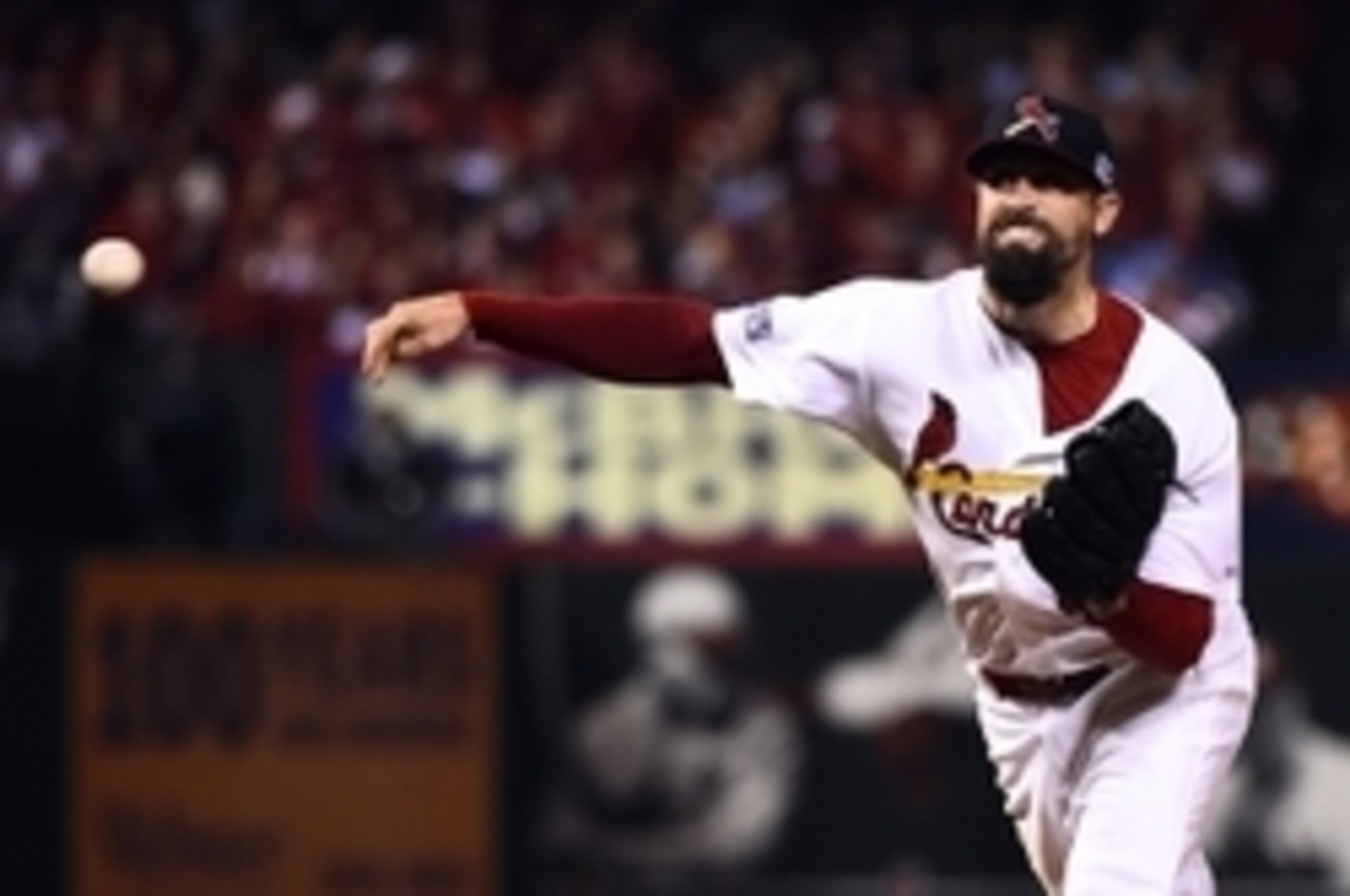
Talent Outlook
Pat Neshek emerged as a dominant setup man in 2014, posting a 1.87 ERA with an outstanding 7.6 K/BB ratio. That's reflective of how he carried out an all-out assault on the strike zone, and dialing back the use of his slider actually made it a more effective swing-and-miss pitch.
It's not going to be easy for Neshek to do that again, as him maintaining his 2014 velocity spike in his age-34 season is unlikely. His best hope lies in how his good command and more diverse pitch mix made him a very tough pitcher to square up—which, fortunately, is hardly a doomed hope.
Durability Outlook
Neshek got an awful lot of work in 2014, appearing in 71 games and racking up 67.1 innings. How he'll bounce back is a good question, as he's an older pitcher who hadn't had such a heavy workload since back in 2007.
Still, that Neshek hasn't had any injury issues since 2010 bodes well. Also, scaling back the use of his slider should help preserve a right elbow that underwent a Tommy John operation in 2009. He's not a sure thing to age well, but it could be worse.
Value Outlook
After earning just $1 million with the St. Louis Cardinals in 2014, Neshek is in line for a considerable pay raise after his excellent 2014 campaign. Even if teams only look at him as a specialist, he's a good bet for a two-year deal at around $5-6 million annually.
Since he was worth a lot more than that in his dominant 2014 season, he could surely at least live up to it even if he does regress in the next couple seasons.
Total
3. David Robertson, RHP, Free Agent
13 of 15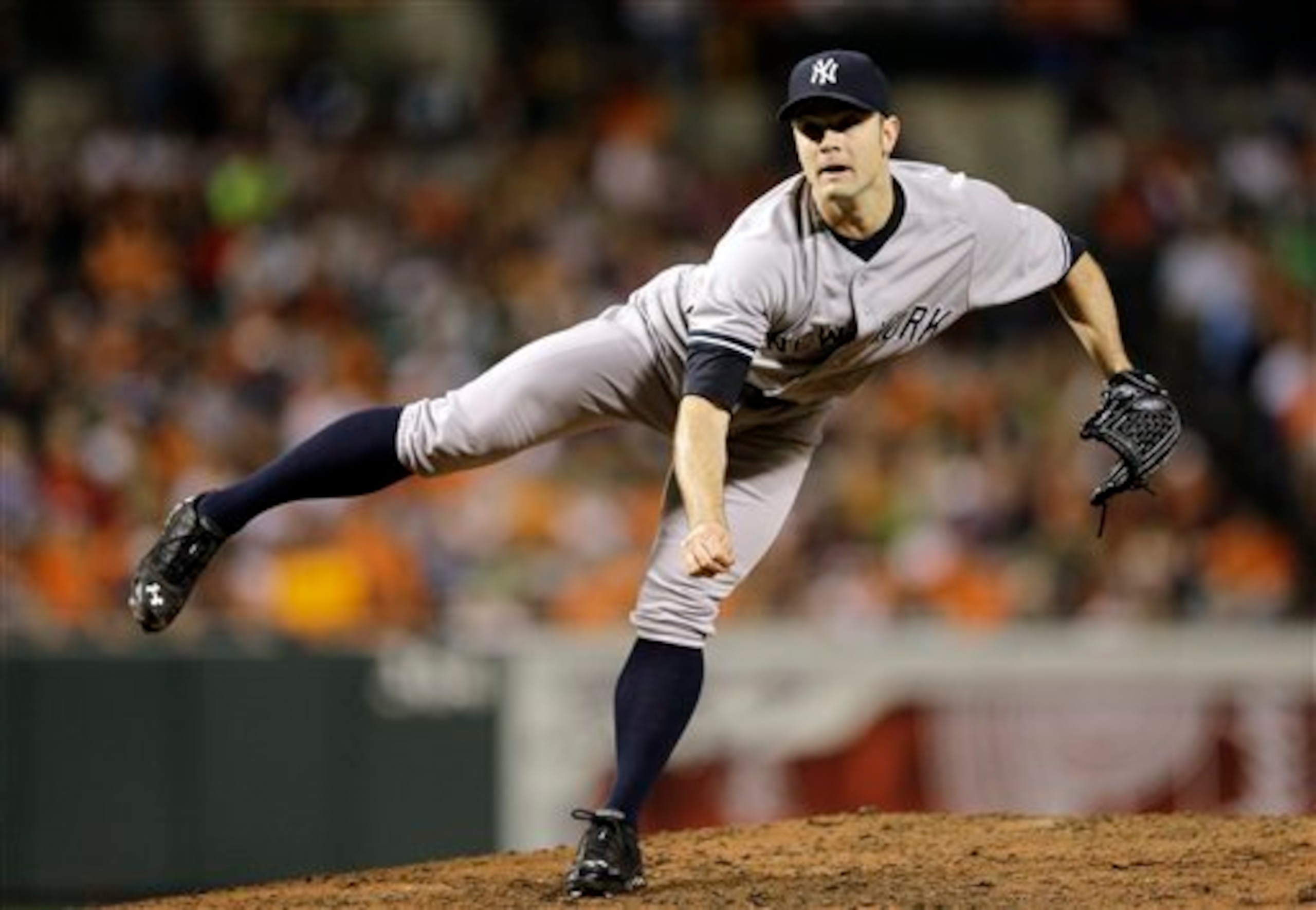
Talent Outlook
David Robertson had his share of misadventures in his first full season as a closer in 2014, including giving up a career-high seven homers and upping his walks per nine innings from 2.4 in 2013 to 3.2. This was no fluke, as he was less prolific than usual at pounding the zone and his cutter was quite hittable.
The bright side is that Robertson's velocity isn't showing a clear declining pattern as he approaches 30. He's also put himself in a position to rely less on his heat, as his excellent swing-and-miss curveball is becoming more of a featured weapon. He's not without faults, but his talent should age fine.
Durability Outlook
Robertson has topped 60 appearances and 60 innings in each of the last five seasons, making him one of only four relievers to do so. It feels like he's done it somewhat under the radar, but he's been one of the most reliable relievers in baseball over the last few seasons.
He hasn't been completely healthy the whole time, however. An oblique strain put him on the disabled list for a month in 2012, and a groin strain sidelined him for a couple weeks in 2014. Take these injuries into account with his heavy workload before the age of 30, and it's not quite a lock that he'll remain durable.
Value Outlook
Robertson could accept the $15.3 million qualifying offer the New York Yankees made him, or he could turn it down in hopes of landing a multiyear deal on the open market. If he does, he could probably get a three-year deal at around $10-12 million per year even with ties to draft-pick compensation.
Either way, Robertson looks like the next big-name reliever to get paid like a "proven closer." That rarely works out, and he hardly looks like a sure thing to be an exception to the rule.
Total
2. Andrew Miller, LHP, Free Agent
14 of 15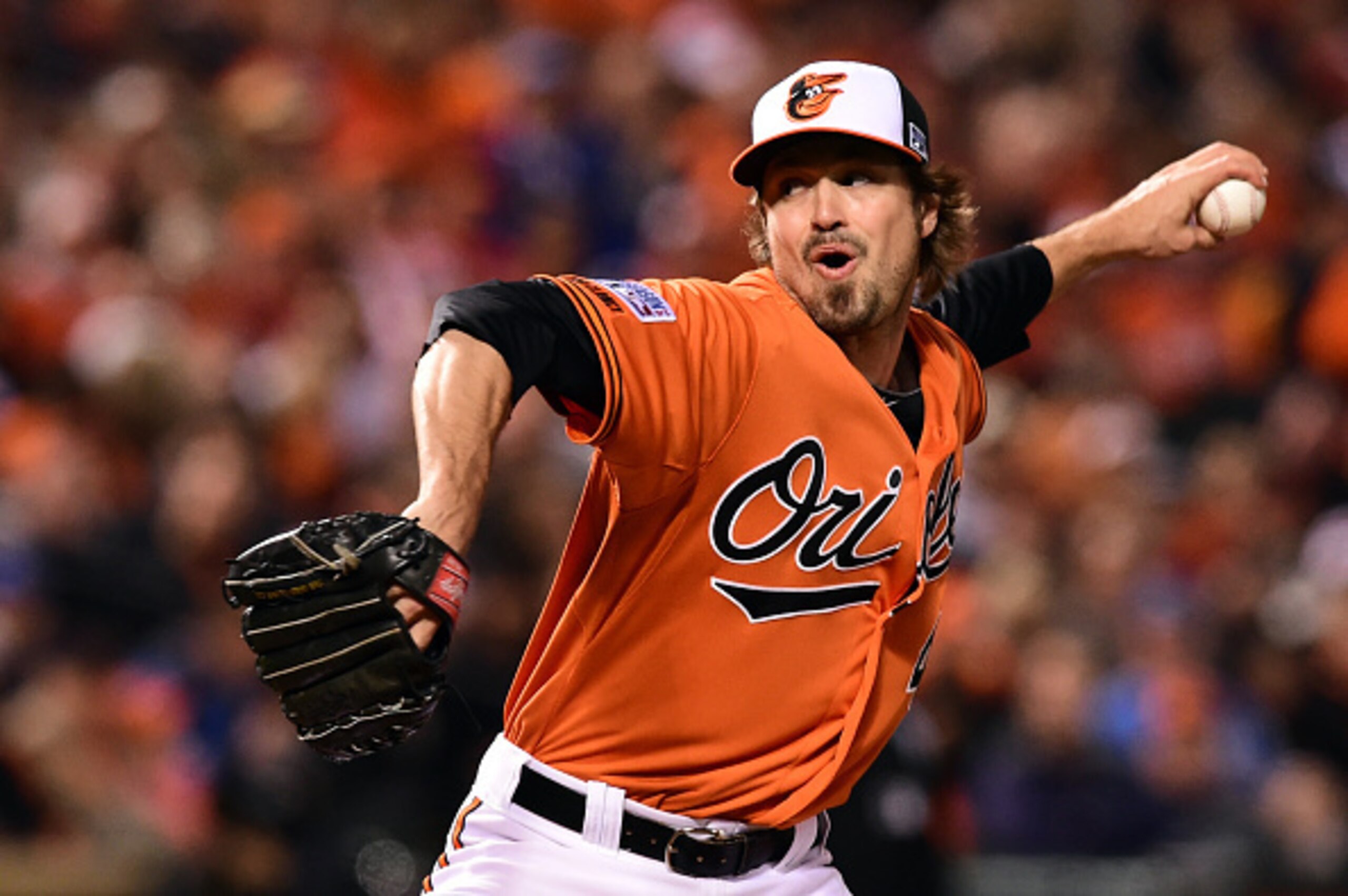
Talent Outlook
With a 2.02 ERA, an excellent 14.9 K/9 and only a 2.5 BB/9, Andrew Miller was one of the best relievers in baseball in 2014. He certainly looked the part, too, combining a 93-94 heater with a wipeout slider that drew whiffs on over half the swings taken at it.
Mind you, Miller's command really isn't as sharp as his walk rate makes it look. And though still good, his fastball velocity was down a mile per hour from where it was in 2012 and 2013. Whichever team signs him will need his slider to stay sharp, as he may only have above-average velocity for a couple more years.
Durability Outlook
Miller crossed the 60-inning plateau in 73 appearances in 2014, but his track record before 2014 is best described as hectic. He only became a full-time reliever in 2012, and a hamstring injury that year and a foot injury in 2013 delayed his emergence as a reliable bullpen arm.
Beyond these red flags lies the concern that Miller may be headed for an arm injury in the future. He doesn't have the smoothest delivery, and it's hard not to worry about a guy who throws his hard slider more than 40 percent of the time.
Value Outlook
That Miller was barred from the qualifying offer thanks to a midseason trade should mean a longer list of suitors for him to choose from this winter. Combined with his excellent 2014 campaign, the result could be something as large as a three-year deal worth somewhere in the $25-30 million range.
If so, he'd essentially be getting "proven closer" money. He could undeniably earn that with more years like 2014, but his 2014 represents the pinnacle of his talent more so than his actual talent level.
Total
1. Greg Holland, RHP, Trade
15 of 15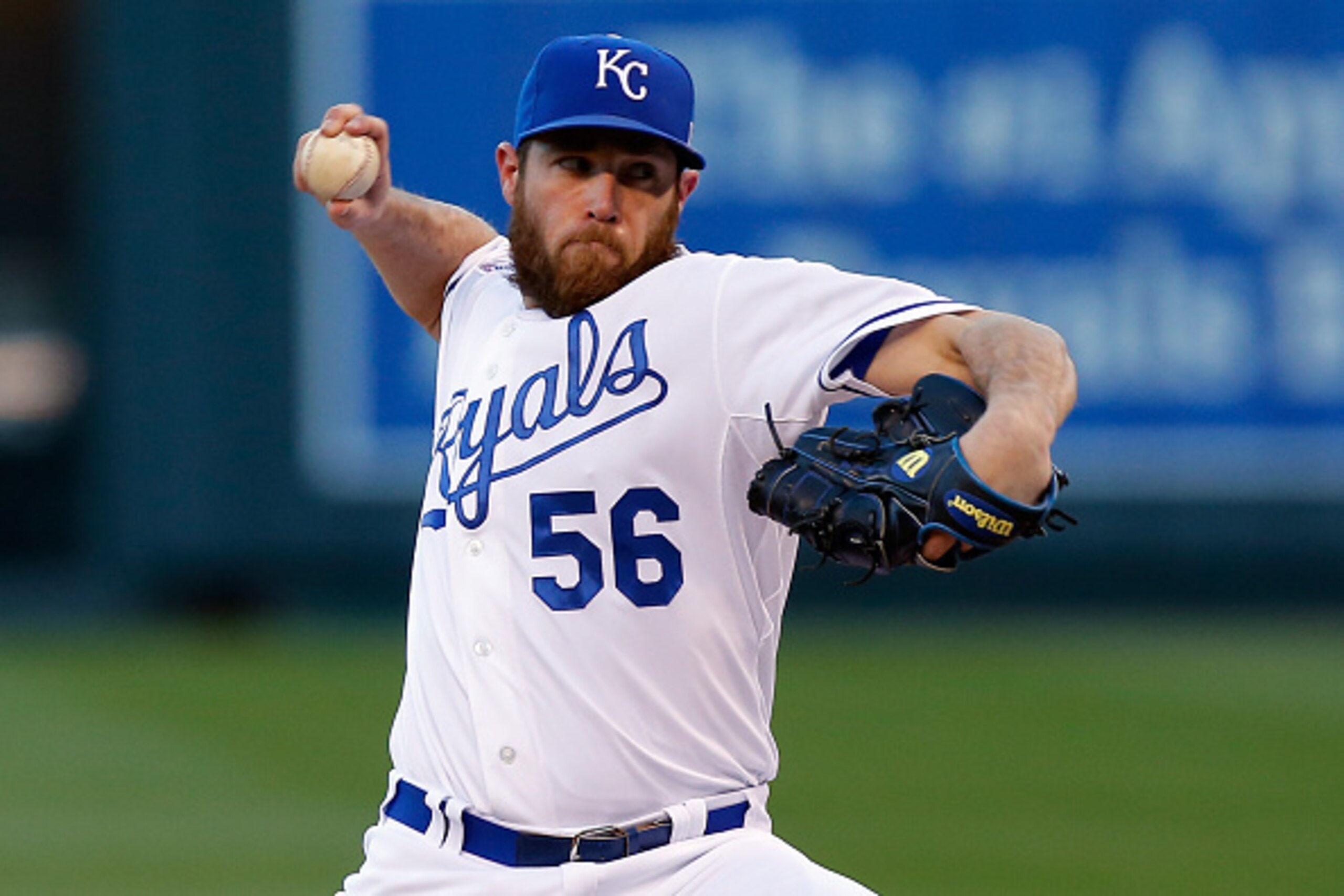
Rumor Source: Joel Sherman of the New York Post and CJ Nitkowski of FoxSports.com
Talent Outlook
The 93 saves Greg Holland has over the last two seasons are nice, but the 1.32 ERA and 5.1 K/BB ratio he's racked up are even better. Doing the job for him is better command than you'd expect for a guy with such a funky delivery and, of course, arguably the best fastball-slider combination in the business.
And that combination should still be good for a while longer. With Holland's average velocity right around 96 mph now, the soon-to-be 29-year-old has plenty of heat. His slider, meanwhile, is on an upward trend as a swing-and-miss pitch.
Durability Outlook
Holland only has three seasons of heavy work under his belt, logging 60 appearances and 60 innings in each of the last three years. He's also only hit the disabled list once, and it wasn't with an arm injury. And with only his age-29 season due up in 2015, he's younger than most players available.
But no pitcher comes without injury concerns. In Holland's case, his delivery doesn't appear to make things easy on his shoulder. Also, his mix of high velocity and a slider-heavy approach don't make it easy on his arm.
Value Outlook
If the Kansas City Royals follow CJ Nitkowski's advice and dangle Holland on the trade market this winter, they'll be dangling a top-10 reliever with two years of club control left. As such, he could probably bring back a young controllable starter or a solid bat.
That and the pay raises Holland is due in arbitration will make trading for him a costly investment. He's so good, however, that he could probably at least justify his new team bringing him aboard.

.jpg?w=2560 "Report: Saints Trade For 49ers RB")
.jpg?w=2560 "Jeanty Avoids Major Injury")
.jpg?w=2560 "Predicting Biggest NFL Names Who Could be Roster Cuts")
.jpg?w=2560 "NFL's Biggest Rumors Ahead of Roster Cuts Deadline")