

Is Roger Goodell Still Bulletproof?
Roger Goodell owns you, and he knows it.
You aren't going to boycott the NFL. You won't rip up your season tickets, stop watching your team on TV or abandon your just-drafted fantasy team.
No matter what Goodell and the NFL do—change the rules, charge refs with throwing flags seemingly at random, suspend and fine coaches and players with no consistency at all—you'll give them all the money you can, every time they want you to.
TOP NEWS
.jpg?w=2560 "Chargers Mack")
Every Trade's Best Trade Asset 🔁
.jpg?w=2560 "Green Bay Steelers Football")
Insiders: Cowboys Overpaid for Porter
.jpg?w=2560 "Seahawks Cardinals Football")
MHJ's Potential Trade Value 📉
Scandal after protest after "-gate," fans have risen up in outrage and then pretty much forgotten about it, as the excitement of the game they love and the passion for the team they follow overrides just about everything else. Through it all, Goodell has overseen a period of phenomenal growth and profitability; he's made a lot of very rich people much richer.
Does that make him bulletproof? Can anything, even the ongoing scandal over his suspension of Ray Rice, bring him down?
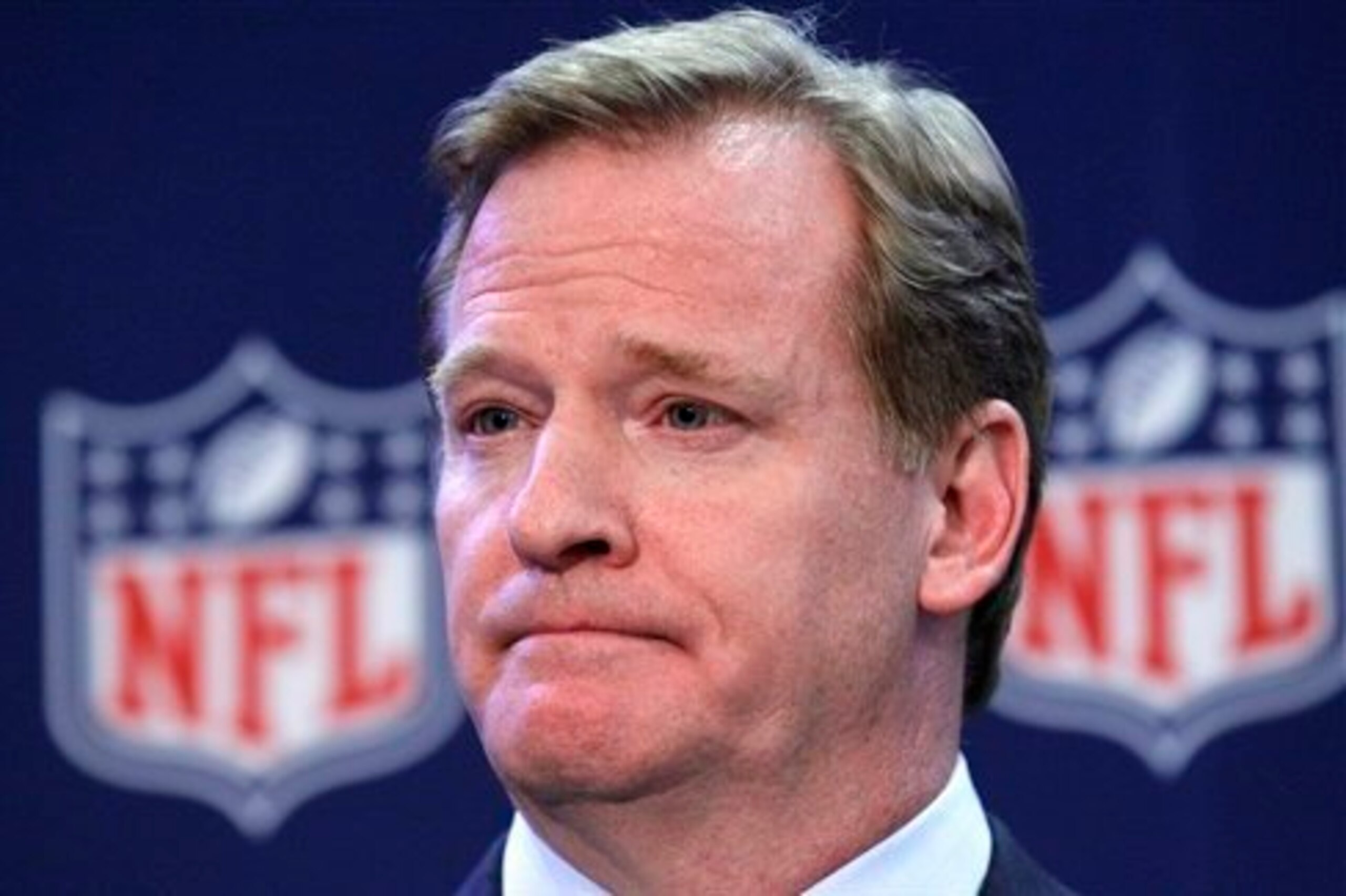
Per the NFL Constitution and Bylaws, the commissioner must be "a person of unquestioned integrity," whose job is to resolve league disputes, conduct the ordinary business of the league, establish policy and procedure and take action against league members or employees who engage in behavior detrimental to the league.
Or, as Goodell told the Rookie Symposium in 2010, per The Associated Press and via ESPN.com, his job is "protecting the shield." Shortly after taking office on September 1, 2006, he got to work.
In the spring of 2007, Goodell announced a beefed-up Personal Conduct Policy, granting him wide latitude to suspend and fine players, coaches and league employees for conduct he deemed detrimental to the league. He even granted himself the ability to forfeit draft picks and placed himself in charge of all appeals. The potential for abuse was, or should have been, obvious.
That offseason, long-term suspensions were doled out to criminal offenders like Pacman Jones, Tank Johnson, Michael Vick and the late Chris Henry, as well as Dallas Cowboys quarterbacks coach Wade Wilson. Suspension lengths were arbitrary and sometimes "indefinite," as in Ray Rice's case.
In September 2007, Goodell incurred the wrath of many around the NFL with his judgment against New England Patriots head coach Bill Belichick. Confronted with mounting evidence Belichick had been videotaping opponents' defensive signals for years, Goodell fined Belichick as much as he could without owner approval and docked the Patriots a first-round draft pick.
He did not, however, suspend Belichick—drawing the ire of Wilson, who, per Ed Werder of ESPN.com, decried the "double standard" applied by Goodell. Wilson had purchased human growth hormone for his own therapeutic use, while Belichick had been caught trying to gain an unfair competitive advantage.
Then, Goodell destroyed the tapes.
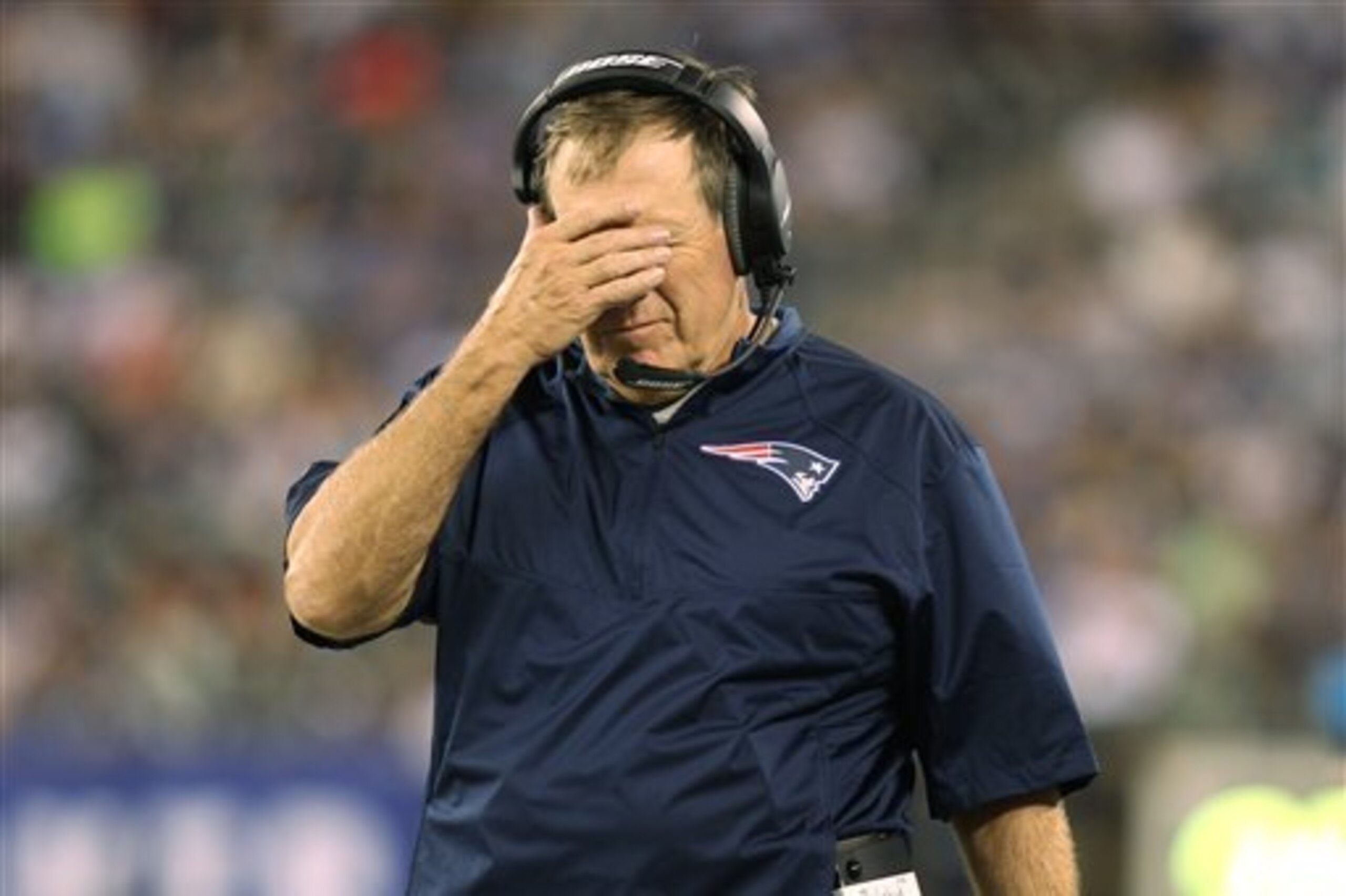
As Greg Bishop and Michael T. Schmidt of The New York Times wrote, the investigation was handled in a bizarre manner. From allowing the Patriots to self-report the evidence used to punish them to destroying the tapes, everything was done in a way more consistent with covering the infractions up than truly investigating them.
Books have been written and blogs maintained hashing out various "Spygate" conspiracy theories, but Goodell rose above it all.
It happened all over again in "Bountygate," only worse on both ends: The investigation was less credible and the punishments more wildly out of whack. Goodell made an example of the New Orleans Saints' participation in the traditional (yet prohibited) football practice of collecting and distributing cash based on on-field actions—up to and allegedly including injuring opponents.
As Houston-based attorney and well-regarded NFL blogger Stephanie Stradley wrote, Goodell kept "moving the goal line" as to what actions the Saints were being punished for and what evidence the league had to prove those actions.
Nevertheless, Goodell swung his hammer even harder: suspensions for four Saints players, including well-respected linebackers Scott Fujita and Jonathan Vilma, an indefinite suspension of defensive coordinator Gregg Williams and an unprecedented yearlong suspension for head coach Sean Payton. The coaches appealed, to no avail.
As Stradley wrote, "The Saints coaches participated in the flawed, secret evidence, bizarre due process appeal to the Commissioner, and got zero reduction of their suspension."
"Through this entire process," suspended defensive end Will Smith said in a statement, per ESPN.com, "the NFL never notified me of what I was being accused of, nor presented me with any evidence or reasoning for this decision."
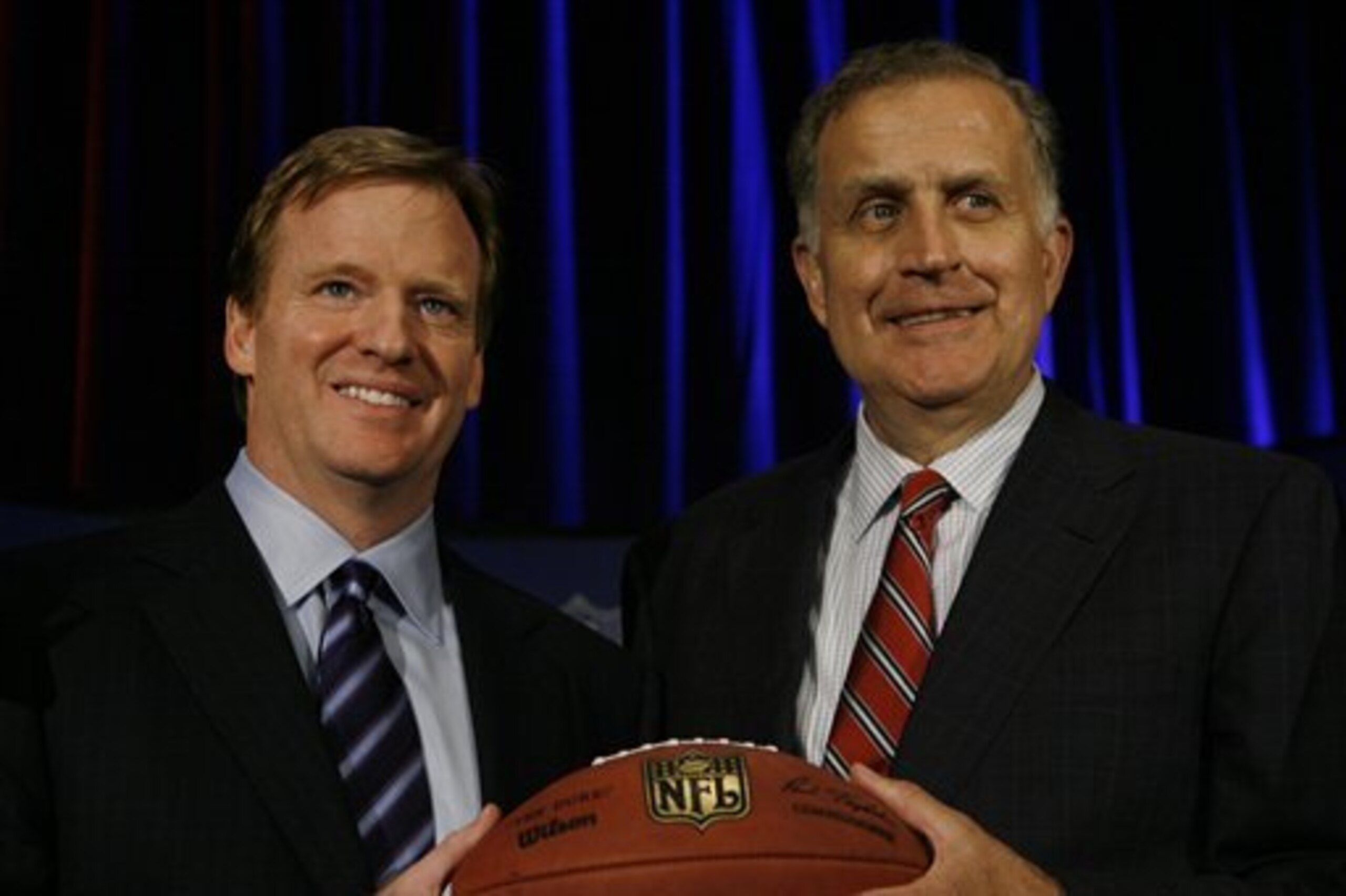
Goodell responded to the mounting criticism by appointing his predecessor, Paul Tagliabue, to review the players' appeals—and even Tagliabue, Goodell's mentor, thought Goodell had overstepped his bounds. Tagliabue, per Sean Gregory of Time, vacated the players' suspensions and gently rebuked Goodell.
"Rightly or wrongly," Tagliabue wrote, "a sharp change in sanctions or discipline can often be seen as arbitrary and as an impediment rather than an instrument of change. That’s what we see on the record here."
All the while, Goodell's filibustering on concussions and CTE—which progressed into marketing campaigns, lawsuit-settling and hypocritical calls for more football—prolonged personal crises for many suffering veterans and covered up the larger crisis, which could eventually bring down the game altogether.
Yet Goodell was paid $44.2 million in 2012, per Ken Belson of The New York Times, a 50 percent increase over his 2011 salary. Part of that came from payment he deferred during the 2011 lockout, but that wasn't a fluke: Per Daniel Kaplan of Sports Business Daily, the NFL kept Goodell's 2013 take-home pay around $44 million in with a $40.36 million bonus.
"As we have previously discussed with all owners," the NFL's compensation committee wrote in a memo to all owners, quoted via the Times article, "Commissioner Goodell’s compensation reflects our pay-for-performance philosophy and is appropriate given the fact that the N.F.L. under his consistently strong leadership continues to grow and is by far the most successful sports league."
Wait, how can Goodell get massive bonuses for "performance" and "consistently strong leadership" when the rest of the NFL world is scratching its head over his arbitrary, knee-jerk and inconsistent punishments? His secretive actions and apparent double-talk? His alleged cover-ups and cover-ups thereof?
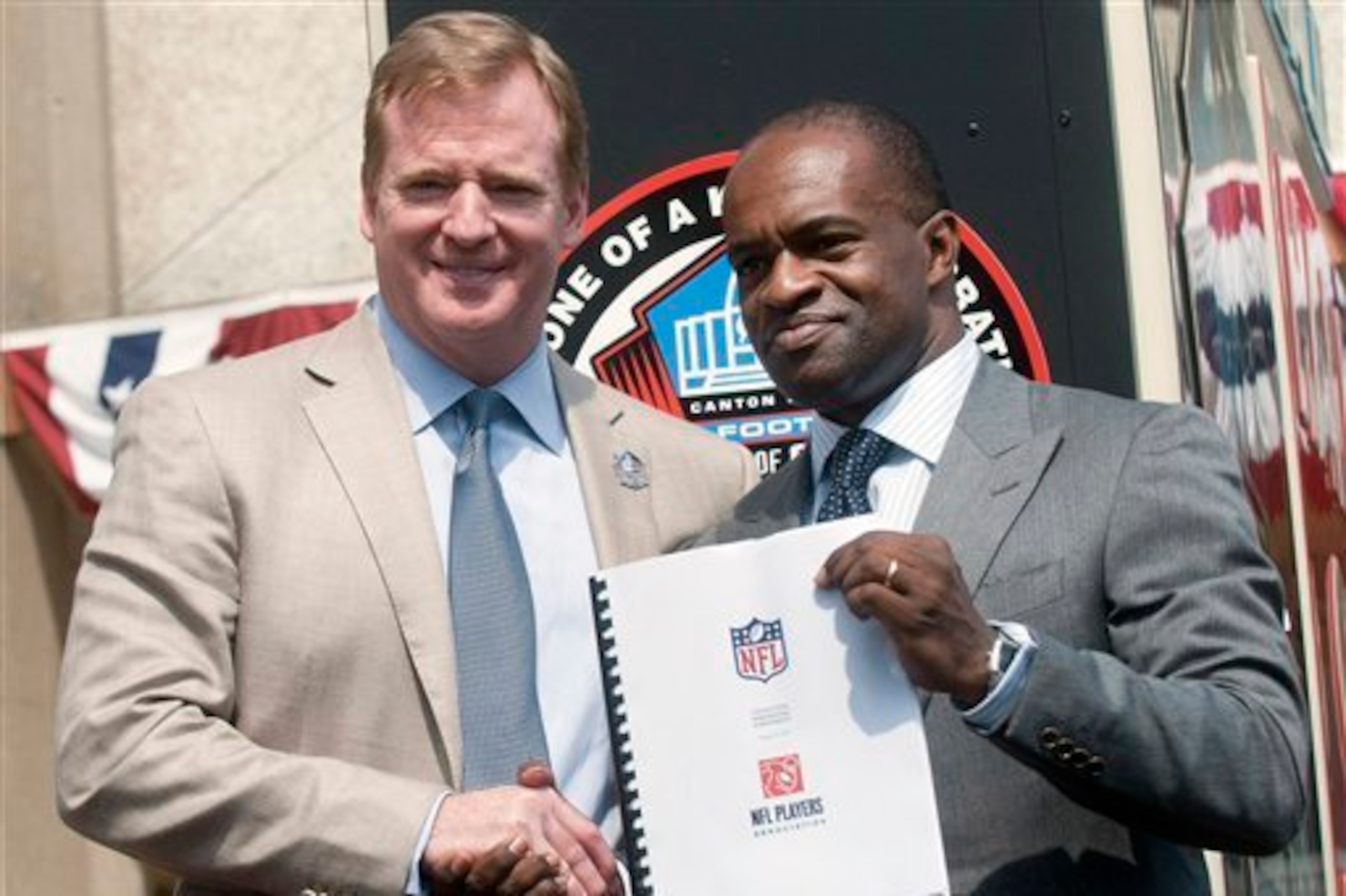
Remember that "lockout" thing?
When Tagliabue left office, he left a legacy of productive labor peace. He explicitly stayed on through 2005 and into 2006, per The Seattle Times, to ink a long-lasting CBA that would give Goodell plenty of runway to ensure smooth talks in 2011.
Instead, Goodell and the owners went on the offensive, locking out the players and demanding big financial givebacks. Negotiations were drawn out and acrimonious and racked up a slew of billable hours for the two sides' legal staffs. As Ben Volin of The Boston Globe wrote, the owners didn't just win, they "beat down" the players.
Meanwhile, Goodell has aggressively pursued all possible options to enhance revenue: From launching the NFL Network and a much more robust NFL.com, to aggressively merchandising and commodifying nearly every aspect of the game, to reaching for and catering to non-traditional fans, the NFL of 2013 has transcended sports and become mass-market entertainment.
The owners, in the process, have seen mind-boggling returns:
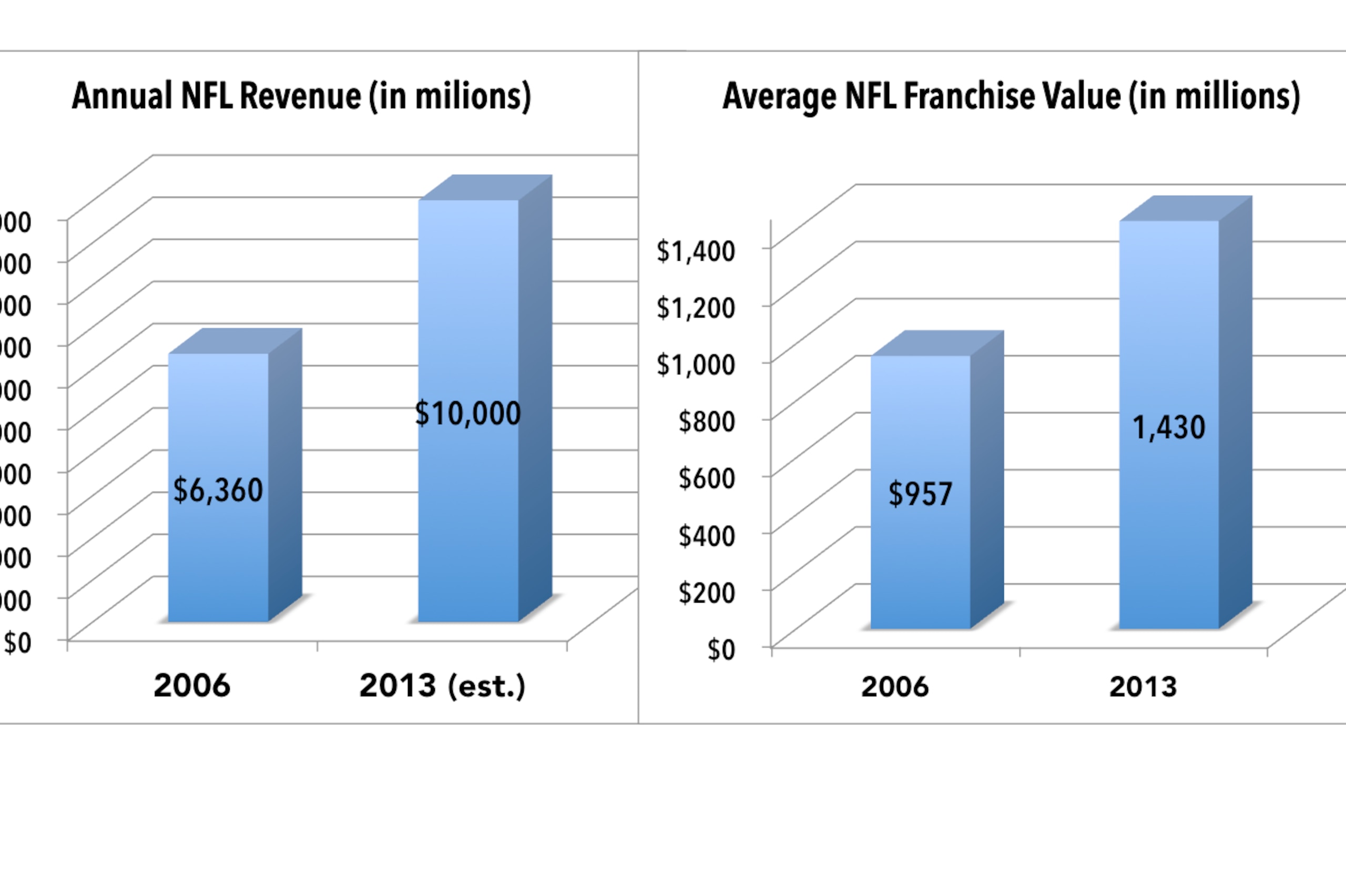
Since Goodell took over in 2006, annual revenue is up 63.6 percent. Average franchise values are up 66.9 percent. TV money is up 20 percent this year alone, per Sports Business Daily, and Sponsorship.com reports the NFL soaked up over a billion sponsorship dollars in 2013. Per Darren Rovell of ESPN.com, the total amount of shared revenue owners divvy up is as much as total revenue was when Goodell took over!
There's been complete franchise stability under Goodell; teams are not moving because they're getting fantastic stadium deals. Now, with an owner-friendly CBA locked in for a 10-year term and the NFL on the path for its goal of $25 billion in revenue by 2027, per Monte Burke of Forbes.com, there's never been a better time to be an NFL owner.
In the way the owners care about most, financially, Goodell's the greatest commissioner the NFL's ever had—and No. 2 isn't close.
But remember that "person of unquestioned integrity" thing?
As Don Banks of Sports Illustrated wrote for The MMQB, Goodell's job is safe—but his credibility is shot. His arrogant approach to covering up, rather than impartially investigating, league embarrassments has made the NFL look much worse than the video of Ray Rice's assault did.
Banks brought up Bountygate in his condemnation of Goodell:
"Goodell’s tough-guy stance was, If you didn’t know exactly what was going on in your program, that’s no excuse. You should have known. Case closed. Punishment dispensed.
Right back at you, Roger. The reality is: You should have known what was on that second tape. You should never have ruled on the Rice case to begin with until you did. You should have not rested until you found out exactly what happened in that elevator. In the case of Rice, where was that same motivation and dogged determination to get to the bottom of things that Goodell displayed during the Saints investigation?
"
Goodell might be bulletproof, but he might also have tied his own noose. By making one too many errors in judgement, one too many self-serving fibs, he might have finally undermined support amongst the only 32 people who matter: the NFL owners.
Bleacher Report Lead Writer Mike Freeman spoke to an anonymous NFL owner, who took a grim view of the ongoing scandal.
"If this report is true," the owner said, referring to the AP report that the NFL had viewed the in-elevator tape of Rice's assault despite Goodell's on-camera denial, "this is very bad for our league, and for Roger. No owner will support him if this is true. Not one."
As Freeman said, that might be an exaggeration—surely many owners are ready to forgive a man who's made them a fortune in less than a decade—but this is a much more serious threat to Goodell and the NFL than we've ever seen.
Repeated calls for Goodell's head are not new, but NFL sponsors making official statements about their relationship with the league is:
This could be the beginning of the end for Goodell. He and the owners know they've got their claws in us far too deeply for "just stop watching" to mean anything. If a billion dollars' worth of sponsor money begins to dry up, though, suddenly the idea of replacing him is all too real.
The ouster of disgraced NBA owner Donald Sterling—who, by many accounts, was not a pleasant or tolerant person for any of his time as owner—came quickly after he finally became more trouble than he was worth. For the moment, it looks as though Goodell still has the owners' support; Bears chairman George McCaskey issued a statement to that effect.
Still, that owners have to come out in his support seems like the dreaded vote of confidence in a losing head coach: He may not be fired yet, but he's under the gun.
.jpg?w=2560 "Chiefs Cowboys Football")
.jpg?w=2560 "Grading SmackDown 🔠")