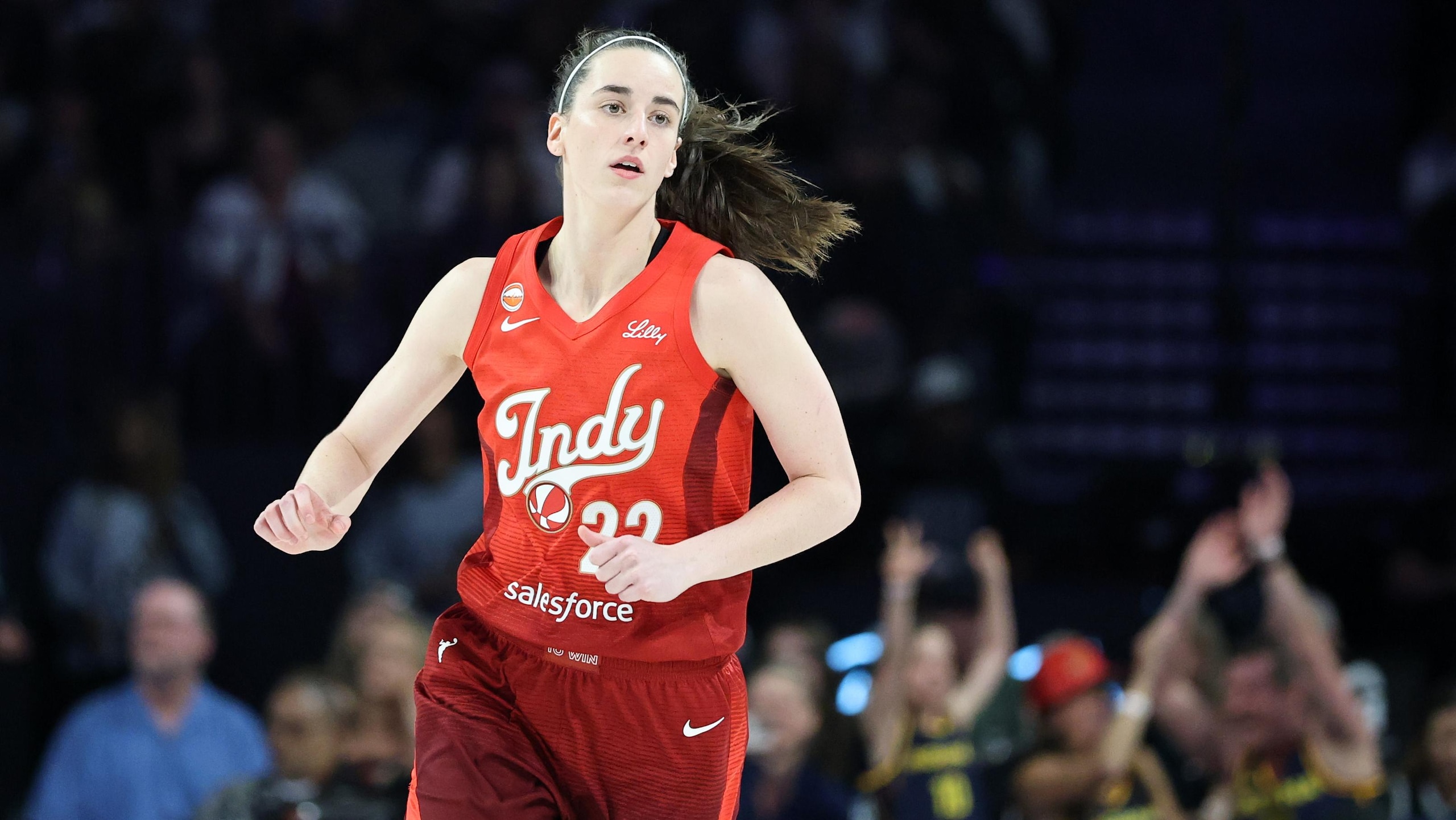
B/R MLB 500: Top 150 Starting Pitchers
After checking in with the guys behind the plate, the next stop for the B/R MLB 500 is the guys they do business with the most: starting pitchers.
We have 150 starting pitchers to get to, and they'll be scored like so: 30 points for Control, 25 points for Whiffability, 25 points for Hittability and 20 points for "Workhorse" factor for a total of 100 points.
The Control category mainly concerns how good guys are at finding the strike zone and limiting walks. But it also considers command within the zone and if pitchers are good at toying with the zone.
The Whiffability category considers how good guys are at missing bats. The focus will be on what kind of stuff they're working with and how good they are at using it to get hitters to swing and miss.
The Hittability category is a little different. Missing bats is great, but pitchers can also help themselves by manipulating contact. Guys who can get ground balls are ideal, but we'll also be looking at proneness to home runs and line drives and for guys who just seem to have a knack for not getting hit hard.
Lastly, the Workhorse category is what it sounds like. It evaluates pitchers' capacities for eating innings, which is not just a matter of endurance. Efficiency also helps. So does good health. And a track record.
On that note, we're not doing a separate category for health this year. Any injury concerns we have will be applied to the category (or categories) that stand to be impacted.
Also note that a score in the middle (i.e. 15/30 or 12/25) denotes average, not failing. And while the discussion will be centered on 2014, we also have one eye on 2015. B/R prospect guru Mike Rosenbaum has thus provided some scores and scouting reports for a couple MLB-ready starters, and we'll also be looping in a couple big-name pitchers who will be returning from injuries.
Lastly, any ties will be resolved with the following question: "If we could pick only one, who would it be?"
When you're ready, you can read on.
A Note on Links and Some Honorable Mentions
1 of 79
Before we begin, there are some things you should know about the links that lie ahead.
First and foremost is that CLICKING ON THE LINKS IS NOT MANDATORY. The links are there in case you're curious where a given point (or points) is coming from.
They're not all from the same place. The links will take you to Baseball-Reference.com, FanGraphs.com, BrooksBaseball.net, BaseballSavant.com and BaseballProspectus.com. All have different data to offer, the combination of which was the backbone for the researching of this project.
But don't worry. Just because this project was heavily informed by data doesn't mean that you're about to be hit over the head with a bunch of sabermetric jargon in this space. We'll keep things in plain English.
One last thing: This year's Tommy John curse has made some honorable mentions necessary. I had enough confidence in the 2015 comeback prospects of a couple of the surgery's recent victims to include them, but not so much with others.
Including Tyler Skaggs. I actually had the Los Angeles Angels lefty scored pretty high initially, but him being knocked out for all of 2015 basically disqualified him from making the final cut. Just know that he would have been at least a top-75 pitcher for 2015 in my book if he had stayed healthy.
Also worthy of honorable mentions: Patrick Corbin, Kris Medlen, Jarrod Parker, Brandon Beachy, Matt Moore, Bronson Arroyo, A.J. Griffin, Ivan Nova and Martin Perez. Here's wishing them the best of luck getting healthy.
150-126: Kingham-Cain
2 of 79
150. Nick Kingham, Pittsburgh Pirates
Control: 15/30; Whiffability: 10/25; Hittability: 12/25; Workhorse: 8/20
Nick Kingham doesn’t have the ceiling of fellow right-handers Gerrit Cole and Jameson Taillon, but his deep arsenal and ability to eat innings give him a high floor as a No. 3 or 4 starter—a ceiling he may reach sooner rather than later.
149. J.A. Happ, Toronto Blue Jays
Control: 15/30; Whiffability: 10/25; Hittability: 8/25; Workhorse: 12/20
J.A. Happ’s velocity is trending upward, to a point where he’s now sitting in the 92-93 mph range, and he’s still a guy who you can bank on for around 100 pitches. But improved velocity hasn’t made Happ any tougher to hit, and that’s true whether you’re talking contact or hard-hit balls. So despite there being hope in his increasing velocity, he still looks like a mere back-end innings-eater.
148. Shelby Miller, St. Louis Cardinals
Control: 15/30; Whiffability: 10/25; Hittability: 9/25; Workhorse: 11/20
Shelby Miller still throws 93-94 and hasn’t lost his solid ability to get hitters to pop out. His arm is still alive, which means there’s hope. It’s too bad his fastball command has devolved into him living in the middle of the zone, and he has yet to come up with an excuse to make hitters look for anything other than heat. His arm may still be alive, but his approach needs some serious tweaking.
147. A.J. Cole, Washington Nationals
Control: 15/30; Whiffability: 12/25; Hittability: 10/25; Workhorse: 9/20
A.J. Cole’s ability to pump strikes with his impressive fastball has fueled his rise through the minor leagues, but he won’t be able to get away with just the one pitch in The Show. Therefore, he’ll need to improve his breaking ball and changeup in order to avoid a long-term bullpen role.
146. Kyle Zimmer, Kansas City Royals
Control: 15/30; Whiffability: 14/25; Hittability: 14/25; Workhorse: 4/20
The sky is the limit for Kyle Zimmer if he can just stay healthy. Over two-plus years in the minors, his rash of injuries rather than on-field success has unfortunately defined the right-hander’s development. While he still has time on his side, Zimmer’s checkered medical history offers reason to question his overall potential.
145. Eddie Butler, Colorado Rockies
Control: 14/30; Whiffability: 13/25; Hittability: 12/25; Workhorse: 8/20
Eddie Butler was poised to spend a majority of the season in the Rockies starting rotation before suffering a shoulder injury. He still has the ceiling of a No. 2 or 3 starter at maturity, but he’ll now have to answer questions next season about his durability and ability to miss bats.
144. Rubby De La Rosa, Boston Red Sox
Control: 13/30; Whiffability: 10/25; Hittability: 12/25; Workhorse: 12/20
It’s clear that Rubby De La Rosa has work to do to get his fastball command up to speed, especially against lefties. And though his fastball/changeup combination looks pretty, it’s not as good at getting whiffs as it should be. So it’s a good thing that De La Rosa has shown he can get ground balls when he’s on, and it’s further encouraging that he’s been able to hold his velocity well in games.
143. Joe Kelly, Boston Red Sox
Control: 12/30; Whiffability: 8/25; Hittability: 16/25; Workhorse: 11/20
With a fastball that sits in the 94-95 range, there’s no question Joe Kelly has a live arm. He also has a sinker that’s good for getting ground balls, and mixing in his four-seamer more has helped him get more pop-ups. But until he improves his fastball command and/or develops a reliable option for missing bats, he’s not going to be anything more than an intriguing back-end rotation option.
142. Jordan Lyles, Colorado Rockies
Control: 12/30; Whiffability: 10/25; Hittability: 14/25; Workhorse: 11/20
Going heavier on hard stuff has helped Jordan Lyles find the zone more consistently than he did in 2013, and his sinker is still a very strong ground-ball pitch. But since his command is still far from good and he hasn’t completely ditched his problems with home runs and hard contact, he doesn’t look like anything better than a viable back-end starter.
141. Robert Stephenson, Cincinnati Reds
Control: 12/30; Whiffability: 15/25; Hittability: 11/25; Workhorse: 10/20
Robert Stephenson’s athleticism and arm strength suggest front-of-the-rotation potential, but he’ll need to improve his command and refine his changeup to remain a starter long term. The good news is the 21-year-old is still young and will be given ample time to address those issues.
140. Dillon Gee, New York Mets
Control: 15/30; Whiffability: 8/25; Hittability: 11/25; Workhorse: 14/20
Dillon Gee was sidelined for two months with a bad shoulder, the second time in three years his health has betrayed him. When he's been able to pitch, his command has been iffy—particularly his in-zone fastball command—and he’s had a hard time missing bats. But he’s also shown he hasn’t lost his ability to manipulate contact by mixing his pitches, and he’s hardly been hopeless as an innings-eater.
139. A.J. Burnett, Philadelphia Phillies
Control: 10/30; Whiffability: 10/25; Hittability: 13/25; Workhorse: 15/20
This is assuming A.J. Burnett returns to play another season, which he’s hinted is possible. Going off what’s happened this season, he should still be able to eat innings if he does come back. There’s value in a guy who can do that. But unless Burnett fixes the control problems he’s had this year while also finding some lost velocity and avoiding hard contact, eating innings could be the extent of his contributions.
138. Odrisamer Despaigne, San Diego Padres
Control: 12/30; Whiffability: 8/25; Hittability: 16/25; Workhorse: 12/20
The scouting report on Odrisamer Despaigne has gotten around by now, but it’s still hard not to be intrigued with his pitching style. Though not very efficiently, he throws a lot of different pitches and pretty much all of them move. A few of them are also good for getting ground balls, and the combination of them all can lead to generally weak contact. Good enough for a back-end type.
137. Braden Shipley, Arizona Diamondbacks
Control: 15/30; Whiffability: 14/25; Hittability: 12/25; Workhorse: 8/20
The polish Braden Shipley has shown in 2014 has been a pleasant surprise, especially considering his overall lack of experience on the bump. He still requires considerable projection for that same reason, but it isn’t difficult to envision the 22-year-old developing into a high-end No. 3 starter.
136. Aaron Blair, Arizona Diamondbacks
Control: 14/30; Whiffability: 14/25; Hittability: 12/25; Workhorse: 9/20
Aaron Blair doesn’t have huge upside like fellow D-Backs right-handers Archie Bradley and Shipley, but there’s a strong chance he will realize his potential and carve out a solid career as a mid-rotation starter.
135. Chi Chi Gonzalez, Texas Rangers
Control: 16/30; Whiffability: 11/25; Hittability: 14/25; Workhorse: 8/20
Chi Chi Gonzalez lacks a high ceiling, but I wouldn’t put it past him to blow past all expectations regarding his potential, especially when considering his overwhelming success this year in his first full season. He’ll have a spot waiting for him in the Rangers rotation once he’s ready.
134. Henry Owens, Boston Red Sox
Control: 12/30; Whiffability: 15/25; Hittability: 12/25; Workhorse: 10/20
Henry Owens still projects as more of a mid-rotation starter than staff ace due to his lack of a dominant pitch and slightly below-average command, but there’s still something to be said for his ability to miss bats during an accelerated rise through the minor leagues.
133. Aaron Sanchez, Toronto Blue Jays
Control: 13/30; Whiffability: 15/25; Hittability: 13/25; Workhorse: 8/20
Aaron Sanchez was rushed up the ladder this year due to the Blue Jays’ struggles in the major leagues; it certainly wasn’t because he was ready from a developmental standpoint. If he’s going to start for the club long term, then he’d benefit from more time in the minors to refine his command.
132. Dylan Bundy, Baltimore Orioles
Control: 15/30; Whiffability: 15/25; Hittability: 14/25; Workhorse: 5/20
Dylan Bundy reached the major leagues during his 2012 full-season debut, but Tommy John surgery cost the right-hander more than a year of developmental time. He still has the ceiling of a front-of-the-rotation starter, but he still has a ways to go before returning to his pre-surgery form.
131. Edinson Volquez, Pittsburgh Pirates
Control: 13/30; Whiffability: 8/25; Hittability: 15/25; Workhorse: 13/20
Edinson Volquez is still prone to wildness, and his ability to miss bats is on a clear downward trend. But while that’s a bad combination, the Pirates actually have tightened up Volquez’s command to a point where it’s at least passable, and his sinker is once again a good source of ground balls. He’s still not a good pitcher, but for now he’s at least a viable rotation option.
130. Ricky Nolasco, Minnesota Twins
Control: 18/30; Whiffability: 10/25; Hittability: 8/25; Workhorse: 13/20
Ricky Nolasco hasn't been able to miss bats like he did in 2013, in part because his splitter hasn’t been nearly as effective. He’s also paid dearly for throwing so many hittable fastballs. On top of all this, there was his absence with an elbow injury. But because he still mixes his pitches well and is able to avoid issuing walks, Nolasco isn’t completely lost as a pitcher. Some sort of rebound is in order for 2015.
129. Miguel Gonzalez, Baltimore Orioles
Control: 15/30; Whiffability: 12/25; Hittability: 10/25; Workhorse: 12/20
Miguel Gonzalez has benefited from mixing up his pitches more in 2014, in particular how he’s more regularly gotten whiffs with his secondaries while making his four-seam fastball a tremendous source of pop-ups. But mixing his pitches also hasn’t made him any better at finding the zone, and he still hasn’t solved his home run problem. As such, he still has improvements to make.
128. Bud Norris, Baltimore Orioles
Control: 16/30; Whiffability: 10/25; Hittability: 10/25; Workhorse: 13/20
Bud Norris came into 2014 with a reputation as a solid innings-eater, and it still holds. He’s also benefited more velocity, which has had a hand in him keeping fly balls from traveling too far. But there’s also been some overachieving going on. Norris has succeeded despite his slider continuing to decline as a whiff pitch, and he hasn’t felt the effects of a big increase in contact as much as he should have.
127. Taijuan Walker, Seattle Mariners
Control: 14/30; Whiffability: 14/25; Hittability: 14/25; Workhorse: 8/20
A strong case can be made that Taijuan Walker is the most projectable pitcher in the minor leagues thanks to his special combination of athleticism and stuff as well as his capacity to make adjustments. A shoulder injury delayed his breakthrough in the majors, but it’s safe to say that the right-hander’s time is coming soon.
126. Matt Cain, San Francisco Giants
Control: 16/30; Whiffability: 11/25; Hittability: 10/25; Workhorse: 13/20
Matt Cain's third trip to the disabled list ended his 2014 season. But he will be ready to go for spring training, and it actually wouldn’t be the worst thing if the Giants end up getting something similar to the 2014 Cain. Amid all his struggles, he still rode a four-seam-light approach to a career-high ground-ball rate while actually finding the zone more than he had since 2010.
125-101: Santiago-Paxton
3 of 79
125. Hector Santiago, Los Angels Angels
Control: 16/30; Whiffability: 10/25; Hittability: 13/25; Workhorse: 11/20
Hector Santiago’s neither as bad as he looked earlier nor as good as he’s looked recently. He’s somewhere in between. His spotty fastball command makes him prone to walks and hard-hit balls, but also helps him get pop-ups with his curve and cutter and other catchable fly balls to the outfield. That fly-ball habit can make things interesting, though, so it’s a good thing he gets to pitch at the Big A.
124. Roenis Elias, Seattle Mariners
Control: 10/30; Whiffability: 18/25; Hittability: 10/25; Workhorse: 12/20
Roenis Elias goes heavy on the changeups and curveballs, making it tough for him to hit the zone consistently and easy for hitters to sit back and wait for wayward fastballs. What allows him to survive is how his curve and change are both quite good at missing bats, and hitters surprisingly haven’t done much to solve the puzzle as the season has gone along.
123. Justin Verlander, Detroit Tigers
Control: 14/30; Whiffability: 11/25; Hittability: 10/25; Workhorse: 15/20
It’s not pretty. Justin Verlander hasn’t responded to his declining velocity by sharpening up his fastball command, as he’s been a little all over the place this year. Also, all his pitches have become easier to hit and easier to elevate, and he hasn’t been able to avoid long drives. Really the only thing he has left is his ability to eat innings, and even that’s compromised now thanks to his shoulder troubles.
122. Chris Tillman, Baltimore Orioles
Control: 17/30; Whiffability: 8/25; Hittability: 10/25; Workhorse: 15/20
Chris Tillman’s been getting results just fine in 2014, and he gets credit for cleaning up his command after a rocky start to the season. What scares me is how a dip in velocity has made his four-seamer that much easier to hit. That doesn’t craft a positive image of the future, and not just because even fewer whiffs could be in order. It could also become easier than it already is to take Tillman for a ride.
121. Noah Syndergaard, New York Mets
Control: 14/30; Whiffability: 17/25; Hittability: 11/25; Workhorse: 9/20
Noah Syndergaard has been victimized by the Pacific Coast League this year, so don’t read too far into his disappointing stats. Overall, the 22-year-old has held his own against older hitters while maintaining strong strikeout and walk rates. His command needs refinement, but the stuff and durability scream front-line starter.
120. Josh Collmenter, Arizona Diamondbacks
Control: 18/30; Whiffability: 9/25; Hittability: 12/25; Workhorse: 12/20
Predictably, the move from the bullpen to the rotation has cost Josh Collmenter some velocity and made his cutter/changeup combination more hittable. He is generally pretty good—especially against righties—about staying out of the fat part of the zone, however, and the majority of the fly balls he gives up don’t go very far. If the Diamondbacks keep him in the rotation in 2015, he’ll do fine as a back-end guy.
119. Aaron Nola, Philadelphia Phillies
Control: 18/30; Whiffability: 12/25; Hittability: 12/25; Workhorse: 10/20
The Phillies have Aaron Nola on the fast track to the major leagues, and if all goes as planned with the right-hander’s development, he should spend most of 2015 in the team’s starting rotation. There may be some bumps in the road along the way, but Nola has a high probability of reaching his potential—and soon.
118. Daniel Norris, Toronto Blue Jays
Control: 15/30; Whiffability: 15/25; Hittability: 14/25; Workhorse: 8/20
Daniel Norris is one of the game’s premier left-handed pitching prospects, both in terms of present ability and overall potential. However, he’ll need to thoroughly develop his changeup to become an impact starter in the major leagues.
117. Alex Meyer, Minnesota Twins
Control: 14/30; Whiffability: 17/25; Hittability: 11/25; Workhorse: 10/20
The next step in Alex Meyer’s development is a lengthy audition in the major leagues, which should occur in early 2015 since he's on the disabled list with right shoulder inflammation. There’s a realistic chance he’ll always walk too many guys, but there’s no questioning Meyer’s ability to miss bats as an impact front-end starter.
116. Archie Bradley, Arizona Diamondbacks
Control: 13/30; Whiffability: 16/25; Hittability: 15/25; Workhorse: 8/20
Granted he missed significant time due to injury, but Bradley’s performance this season has made it clear his command, particularly with his fastball, is still a work in progress. The right-hander’s overall development hasn’t progressed this season, but it hasn’t affected his ceiling of a No. 1 or 2 starter at maturity.
115. Dan Haren, Los Angeles Dodgers
Control: 24/30; Whiffability: 7/25; Hittability: 8/25; Workhorse: 13/20
The slight velocity revival Dan Haren experienced in 2013 hasn’t repeated itself in 2014, helping to make him even more hittable than he already was. And looking ahead to his age-34 season, no, that velocity likely isn’t coming back. He can still eat innings and put together the occasional good outing, however, and those should keep being possible as long as he can keep living on the edges with his hard stuff.
114. Jeremy Guthrie, Kansas City Royals
Control: 17/30; Whiffability: 10/25; Hittability: 8/25; Workhorse: 17/20
Living with Jeremy Guthrie still means living with the constant threat of home runs, as he’s still a fly-ball pitcher who asks for trouble by living in the middle of the zone. But hey, he’s still a good source of innings, and his increasing trust in his changeup is helping him limit the damage with whiffs and ground balls. He’s still only a back-end guy, but he’s one of the better back-end guys you’re going to find.
113. Scott Feldman, Houston Astros
Control: 15/30; Whiffability: 8/25; Hittability: 11/25; Workhorse: 14/20
The decline of Scott Feldman’s curveball has left him without a reliable pitch to get swings and misses, and it’s also been a part of a rise in hard contact against him. It’s a good thing that Feldman isn’t totally incapable of getting ground balls just yet, and he’s still a guy who’s going to give you six innings and 100 pitches when he takes the ball. That’ll have to do.
112. Drew Hutchison, Toronto Blue Jays
Control: 15/30; Whiffability: 15/25; Hittability: 10/25; Workhorse: 12/20
Drew Hutchison never was as good as he looked earlier in the season, and he’s since become what he really is: a back-end rotation guy who can be hit hard when he misses his spots. But he does have his merits, most notably a solid changeup/slider combination that help make it easier for him to throw his four-seamer past guys up in the zone. Nothing fancy, but he can execute it well enough to hold his own.
111. Tom Koehler, Miami Marlins
Control: 13/30; Whiffability: 13/25; Hittability: 13/25; Workhorse: 13/20
Now that Tom Koehler has a sinker and has increased the use of his slider, he has more to keep hitters guessing. As a result, he’s been able to help himself to more whiffs and soft contact. He still needs to sharpen up his command, however, as he’s still prone to walks and high pitch counts early even despite the more hard-heavy approach he’s taken in 2014.
110. Jon Gray, Colorado Rockies
Control: 15/30; Whiffability: 17/25; Hittability: 12/25; Workhorse: 9/20
The Rockies had Jon Gray working on different things this season, such as his fastball command and ability to expand the zone with his secondary pitches, so the numbers aren’t as impressive as expected. Regardless, his season-long successful in Double-A is very, very encouraging.
109. Jorge De La Rosa, Colorado Rockies
Control: 14/30; Whiffability: 12/25; Hittability: 15/25; Workhorse: 12/20
Though Jorge De La Rosa still can’t be counted on for six innings due to his inefficiency, the cutter he’s incorporated has probably saved him from oblivion. In addition to giving him an extra swing-and-miss pitch to go with his splitter, it’s also joined his splitter in being a ground-ball magnet. Those two things help a pitcher survive at Coors Field, and we should all appreciate how well De La Rosa does that.
108. Ryan Vogelsong, San Francisco Giants
Control: 21/30; Whiffability: 10/25; Hittability: 10/25; Workhorse: 12/20
Ryan Vogelsong needs AT&T Park to be at his best, as he’s prone to line drives and fly balls and isn’t particularly good at making sure the latter stay shallow. Fortunately, he’s regained the velocity he didn’t have in an injury-marred 2013 season and has gone back to living on the corners of the zone against both lefties and righties. As a result, he’s back to being reliable.
107. Chase Anderson, Arizona Diamondbacks
Control: 14/30; Whiffability: 18/25; Hittability: 10/25; Workhorse: 11/20
Chase Anderson has the right idea with his fastball command, but it’s pretty clear his execution needs some work. He’s also been prone to hard contact, be it line drives or hard-hit fly balls. What makes him attractive is his changeup and curveball. Both have had an easy time missing bats, and his changeup in particular is easy on the eyes. He has some things to figure out, but his stuff is definitely MLB-caliber.
106. Kevin Gausman, Baltimore Orioles
Control: 10/30; Whiffability: 15/25; Hittability: 15/25; Workhorse: 13/20
The results have been there for Kevin Gausman in his first real foray into starting at the big league level, and there’s no denying that he has the stuff (his splitter FTW!) to be an elite MLB pitcher. But he needs to get some fastball command before he can make that leap, and he’s made it clear there’s work required there.
105. Tsuyoshi Wada, Chicago Cubs
Control: 17/30; Whiffability: 14/25; Hittability: 12/25; Workhorse: 11/20
There are some concerns surrounding Tsuyoshi Wada. Specifically, how much he works in the middle of the zone with his modest heat and how hitters haven’t had much trouble elevating against him. At the same time, he has one of those fastballs that looks faster than just 89-90 mph, and his slider and changeup look like potentially legit swing-and-miss offerings. These are good reasons for optimism.
104. Aaron Harang, Atlanta Braves
Control: 15/30; Whiffability: 10/25; Hittability: 14/25; Workhorse: 15/20
Leave it to the Braves to take Aaron Harang’s smoke-and-mirrors pitching and make it better. He still really only flirts with the strike zone and is still far from his old self at missing bats, but he’s throwing his sinker more and generally doing a better job of mixing his pitches. This has helped him get ground balls and dial back the problem he had with home runs in 2013.
103. Travis Wood, Chicago Cubs
Control: 16/30; Whiffability: 8/25; Hittability: 16/25; Workhorse: 14/20
It’s putting it lightly to say that Travis Wood hasn’t been getting away with non-elite command and pitching to contact like he did in 2013. But things aren’t as bad as they look. He’s actually hitting the zone more often while still living largely on the corners, and he’s done a decent job getting pop-ups and catchable fly balls. He wasn’t as good as he looked in 2013, but he’s not as bad as he looks in 2014.
102. Michael Pineda, New York Yankees
Control: 20/30; Whiffability: 15/25; Hittability: 15/25; Workhorse: 5/20
No, it looks like we still can’t rely on Michael Pineda’s shoulder. And no, he hasn’t shown the same velocity he did back in 2011. What justifies his inclusion here, however, is how he’s attacked the strike zone, missed bats with his changeup and slider and induced a lot of soft contact when he has been able to pitch. The rest of the AL East should hope his shoulder problems aren’t over yet.
101. James Paxton, Seattle Mariners
Control: 16/30; Whiffability: 16/25; Hittability: 13/25; Workhorse: 10/20
A left shoulder injury sidelined James Paxton for three months, leaving us little to judge him by. What’s there is largely positive, though. His fastball command is still a work in progress, but he’s shown he can at least stay low and get ground balls. Even better is how hitters have had no answers for his curveball. It’s all still just potential for now, but said potential looks pretty legit.

100-76: Niese-Hendricks
4 of 79
100. Jon Niese, New York Mets
Control: 19/30; Whiffability: 8/25; Hittability: 16/25; Workhorse: 12/20
Health problems have continued to plague Jon Niese, and it’s because of those that workload expectations have to be kept low. Add in how he can’t miss many bats, and his potential is limited. He can be a good study on how to pitch, though, as he’s generally good at keeping the ball down and can induce both ground balls and medium-depth fly balls.
99. C.J. Wilson, Los Angeles Angels
Control: 10/30; Whiffability: 11/25; Hittability: 18/25; Workhorse: 16/20
Though he’s tried throwing more fastballs, C.J. Wilson’s still never had more trouble hitting the zone than he’s had this year. That’s saying a lot for a guy who’s known to have iffy command, and it’s contributed to Wilson’s struggles eating innings. The better news is that he’s gone back to being a good ground-ball pitcher, and in general, his wildness and wide array of pitches make him a hard guy to square up.
98. Jesse Hahn, San Diego Padres
Control: 10/30; Whiffability: 15/25; Hittability: 18/25; Workhorse: 12/20
A curveball-heavy approach and some serious movement on all his pitches makes it tough for Jesse Hahn to consistently throw strikes, and efficiency eludes him because of that. But while that barrier will be tough to overcome, that hitters have a devil of a time hitting and squaring up his stuff means there’s a home for him in a big league rotation.
97. CC Sabathia, New York Yankees
Control: 23/30; Whiffability: 13/25; Hittability: 10/25; Workhorse: 10/20
It’s still unclear how ready CC Sabathia will be to pitch in 2015. And given what happened when he was healthy, banking on vintage CC making a comeback is foolery. But his early season performance wasn’t all bad. He showed good command and an ability to get ground balls, and he actually missed bats better than he did in 2013. If he can stay healthy, Sabathia may still have some good pitching in him.
96. Jesse Chavez, Oakland A's
Control: 20/30; Whiffability: 14/25; Hittability: 11/25; Workhorse: 11/20
The A’s bumped Jesse Chavez to the bullpen when Jeff Samardzija and Jason Hammel arrived, but it wouldn’t be a surprise if he gets another shot to start in 2015. He earned it with his performance as a starter, mainly through good command that involved him working on the corners with his cutter and sinker against lefties and righties. His mistakes got hit hard, but they were relatively infrequent.
95. Jeremy Hellickson, Tampa Bay Rays
Control: 22/30; Whiffability: 10/25; Hittability: 13/25; Workhorse: 11/20
Since Jeremy Hellickson returned from elbow surgery in July, he’s shown he’s still an extreme fly-ball pitcher who asks much of his outfield defense. But we’ve also seen him keep everything down, with his fastball command consisting of working on the edges against lefties and righties. It’s also encouraging that his changeup has never been harder to hit. In all, it looks like he’s gotten over his lost 2013 season.
94. Jason Hammel, Oakland A's
Control: 17/30; Whiffability: 15/25; Hittability: 11/25; Workhorse: 13/20
Hammel’s season took a turn for the worse the minute he ended up in Oakland, and it was bound to happen given his spotty command of a fastball that’s losing some zip and a fly-ball style that he overachieved with in Chicago. That Hammel has at least stayed healthy is a silver lining, however, and there’s plenty to like about how this season has featured a complete rebirth of his slider.
93. Jarred Cosart, Miami Marlins
Control: 14/30; Whiffability: 8/25; Hittability: 21/25; Workhorse: 13/20
Jarred Cosart should be better at getting swinging strikes with the kind of arm he has, but there sadly hasn’t been much progress in that department in 2014. But he’s been far better at finding the zone than he was in his major league cameo in 2013, and he’s specialized in both ground balls and weak fly balls. So though he could be a lot better, he can do enough to pass for solid.
92. Carlos Rodon, Chicago White Sox
Control: 15/30; Whiffability: 17/25; Hittability: 15/25; Workhorse: 10/20
Carlos Rodon has everything one looks for in a potential No. 1 starter with a durable frame, three offerings with plus or better potential and the type of competitive mound presence that can’t be taught. As long as Rodon can stay healthy, it shouldn’t take him long to emerge as one of baseball’s premier left-handed pitchers.
91. Josh Beckett, Los Angeles Dodgers
Control: 18/30; Whiffability: 16/25; Hittability: 13/25; Workhorse: 10/20
Josh Beckett’s new curveball-heavy approach has largely worked wonders, namely helping to keep his swinging-strike rate steady and allowing him to more easily keep hitters off balance. It’s too bad that he’s still a homer-prone fly-ball pitcher even despite that, and three separate DL stints (the latest likely a season-ender) signal pretty clearly that he still can’t be counted on to stay healthy.
90. Justin Masterson, St. Louis Cardinals
Control: 10/30; Whiffability: 15/25; Hittability: 18/25; Workhorse: 14/20
If you focus only on Masterson’s sinker and slider, everything’s fine. The former can still get ground balls, and the latter can still get whiffs. But what was already suspect command has been made worse by right knee trouble, making him more prone to disaster outings. He’ll make a good reclamation project this winter, but for now he’s definitely lost his status as one of baseball’s top pitchers.
89. Jeff Locke, Pittsburgh Pirates
Control: 15/30; Whiffability: 13/25; Hittability: 15/25; Workhorse: 14/20
You still don’t know what Jeff Locke’s command is going to be like on days when he takes the ball, and he has a tendency to give up home runs. However, simplifying things to a sinker-changeup approach has helped his command become more consistent than it was in 2013. And aside from the home runs, he’s still a solid bet for ground balls.
88. Chris Young, Seattle Mariners
Control: 20/30; Whiffability: 7/25; Hittability: 18/25; Workhorse: 12/20
Maybe Chris Young’s greatest feat this season has been simply staying healthy, even if it’s required him to handle a pretty light workload. But he’s also shown that he’s still very much capable of doing his own thing. Namely, pitching up and away from both lefties and righties with good consistency and getting pop-ups and harmless fly balls thanks to equal parts location and impressive rise on his four-seamer. It’s a unique approach, but this year has been a reminder that he makes it work.
87. Trevor Bauer, Cleveland Indians
Control: 12/30; Whiffability: 17/25; Hittability: 15/25; Workhorse: 13/20
Trevor Bauer hasn’t figured it all out yet, as he hasn’t mastered minimizing walks and is basically incapable of keeping his fastball low in the zone. But progress has been made, as he’s at least been able to find the zone fairly consistently and has shown he can miss bats and induce shallow fly balls. This isn’t star-level stuff without efficiency, but Bauer’s showing he can at least survive in the big leagues.
86. Charlie Morton, Pittsburgh Pirates
Control: 15/30; Whiffability: 10/25; Hittability: 18/25; Workhorse: 14/20
The best thing Charlie Morton has going for him is his ability to induce ground balls, which happens when you throw as many sinkers as he does. He’s had some issues with walks this year, however, and it doesn’t bode well that his sinker has gotten a lot easier to hit on a line this season. And given his age (nearly 31), his season coming to a halt because of a sports hernia is another troubling development.
85. Brett Oberholtzer, Houston Astros
Control: 20/30; Whiffability: 9/25; Hittability: 15/25; Workhorse: 14/20
Brett Oberholtzer’s one of the more unheralded zone-pounders in the game right now, and he has a fly-ball style that works thanks to how he can keep hitters off balance with his curveball and changeup. Now he just needs to stop throwing his heat down the middle and develop a consistent way to get swinging strikes.
84. Vance Worley, Pittsburgh Pirates
Control: 25/30; Whiffability: 4/25; Hittability: 14/25; Workhorse: 15/20
Vance Worley still can’t miss bats worth a darn, and he still hasn’t fully cured his case of gopheritis. And yet he no longer looks like a throwaway starter. He still has the extremely hard-heavy approach that he had before, but his time with the Pirates has consisted largely of him assaulting the strike zone and holding lineups in check through sheer efficiency. That’ll do for a comeback.
83. Alfredo Simon, Cincinnati Reds
Control: 20/30; Whiffability: 9/25; Hittability: 15/25; Workhorse: 14/20
Alfredo Simon’s All-Star performance in the first half of 2014 was never built to last, as too much was built on a unsustainably low average on balls in play against him. Nonetheless, he’s shown that he has some merits, chief among them being good control and a solid ability to keep the ball on the ground.
82. Wei-Yin Chen, Baltimore Orioles
Control: 25/30; Whiffability: 10/25; Hittability: 9/25; Workhorse: 14/20
Wei-Yin Chen has issues with hard contact being made against him, with the biggest of them being the ease with which righties pull long fly balls off him. And even though he’s gaining velocity, his hard stuff is actually getting easier to hit. The reason we can forgive faults like these is because Chen now rarely goes outside the zone, allowing him to continue eating a decent amount of innings.
81. Wade Miley, Arizona Diamondbacks
Control: 16/30; Whiffability: 14/25; Hittability: 12/25; Workhorse: 16/20
You have to appreciate how consistently Wade Miley keeps his pitches down, and he reaps the benefits by getting ground balls and (more recently) swings and misses. But his stuff isn’t overpowering, and he’s becoming more and more hesitant to challenge hitters in the strike zone. I suppose anyone would if they had Miley’s problems with the long ball.
80. R.A. Dickey, Toronto Blue Jays
Control: 10/30; Whiffability: 17/25; Hittability: 14/25; Workhorse: 17/20
Though it only shows up so much in his strikeout rate, R.A. Dickey’s knuckleball has had a much easier time missing bats in 2014 than it did in 2013. He’s also still a great source of innings, putting in at least six and 100 pitches virtually every time out. But it doesn’t look so good that he’s having more and more trouble finding the zone and that it’s getting easier every year to hit his knuckler on a line.
79. Mat Latos, Cincinnati Reds
Control: 18/30; Whiffability: 12/25; Hittability: 13/25; Workhorse: 15/20
The start of Mat Latos’ season was delayed by injuries, and he’s just looked off ever since he returned. His velocity is way down from 2013 levels, and he’s also been more hesitant to use his slider. Related to these two things is how he’s had trouble missing bats and keeping the ball out of the air. He’s made it clear he still has the goods he needs to produce, but his usual dominance is nowhere in sight.
78. Shane Greene, New York Yankees
Control: 19/30; Whiffability: 12/25; Hittability: 15/25; Workhorse: 13/20
Though he doesn’t always hit the zone, Shane Greene has definitely shown he can keep the ball down. In doing so, he puts himself in line to get ground balls while also making stuff that’s not that overpowering look overpowering. It’s the kind of mix that could keep Greene in the Yankees rotation, not to mention potentially allow him to make this score look conservative (which it sort of is).
77. Jimmy Nelson, Milwaukee Brewers
Control: 18/30; Whiffability: 11/25; Hittability: 16/25; Workhorse: 14/20
Though he hasn’t logged a significant amount of action in the majors, Jimmy Nelson’s shown that his sinker is definitely cut out to get ground balls in the big leagues while also avoiding a repeat of the walk problems that plagued his 2013 season. If he can get his sinker down more consistently while putting more trust in his slider, he’ll have no trouble outperforming the score I’ve given him.
76. Kyle Hendricks, Chicago Cubs
Control: 20/30; Whiffability: 8/25; Hittability: 17/25; Workhorse: 14/20
Albeit in a small sample size, what Kyle Hendricks has shown since his arrival in the majors is encouraging. He doesn’t work in the zone as much as his walk rate suggests, but his ability to keep the ball low in the zone makes hitters protect and leads to ground balls. You don’t want to get too excited about a small sample, but these are the kinds of abilities that tend to play well for a while.
75. Matt Shoemaker, Los Angeles Angels
5 of 79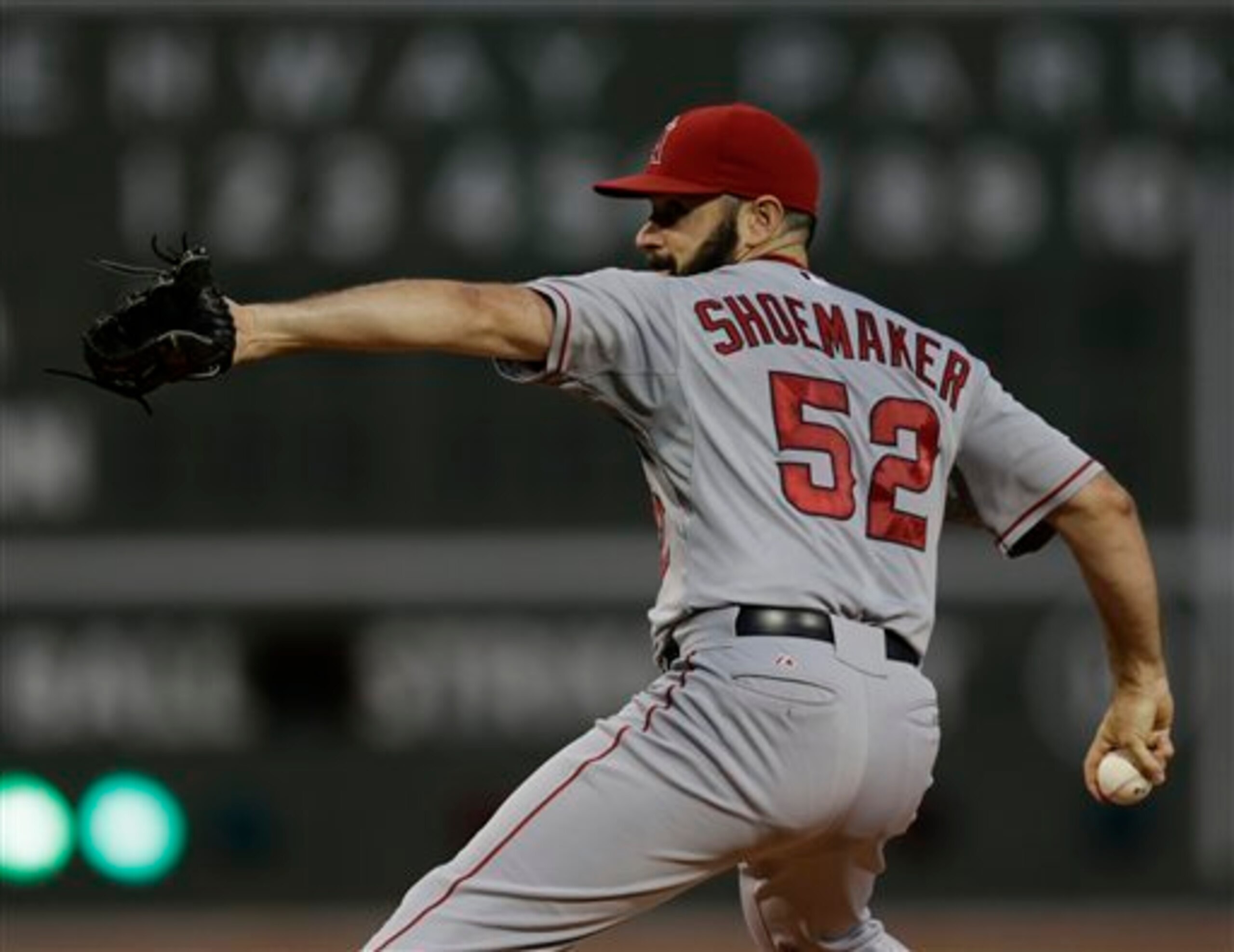
Control
Matt Shoemaker throws a four-seamer and sinker in equal tandem while also mixing in a healthy dose of sliders, splitters and curveballs, and when he pitches, you’ll see him keep everything down. Regarding his fastball command, he has little trouble setting up shop on the outside corner against lefties and pounding righties both in and out. So though he’s not especially adept at living in the zone, he’s able to get by because he toys with it extremely well.
Whiffability
With velocity that sits in just the 90-91 mph range, Shoemaker doesn’t have the arm to blow hitters away. But the command we just talked about is helpful in setting hitters up for his secondaries, and his slider and splitter are quietly dangerous pitches. They’re getting whiffs on easily over 30 percent of the swings taken at them, giving him two quality pitches to miss bats with.
Hittability
Though Shoemaker locates well and doesn’t rely heavily on his four-seamer, he still has issues getting ground balls. Hitters haven’t had trouble squaring up his four-seamer or sinker for line drives, which makes limiting hard contact tough. He also doesn’t get pop-ups, making him highly dependent on his outfield defense. And though he’s capable of keeping fly balls shallow, he doesn’t quite specialize in it.
Workhorse
In other words: We’re still finding out. Though they’ve been largely good, Shoemaker’s starts this year have been too sporadic for him to really settle in as a starter. That’s a factor in him averaging only around 90 pitches per start. That and the shakiness of his velocity after the first inning says we’re best off not setting the bar too high for Shoemaker.
Overall
Though Shoemaker hasn’t played too big a part in the Angels’ successful season, he’s definitely been one of the unsung heroes. His slider and splitter are good weapons, and he has the command to maximize their usefulness. And with the injuries to Tyler Skaggs and Garrett Richards, Shoemaker should be on the Angels’ rotation radar for 2015.
74. Drew Smyly, Tampa Bay Rays
6 of 79
Control
Drew Smyly’s return to starting in 2014 has involved him being at his best pounding the zone. He makes things easy on himself by throwing about 70 percent fastballs and cutters, with his main strength being hitting the outside corner against lefties. He does have a tendency to stray over the middle against righties, however. Knowing that he doesn’t have overpowering stuff, it’s imperative that he fix that.
Whiffability
With velocity that sits around 90, Smyly doesn’t have the kind of four-seam fastball that he can blow by hitters. But one thing that’s happened since he joined the Rays is that he’s put more trust in his cutter, which is a classic case of the Rays having the right idea. Smyly’s cutter is among the best at missing bats. Since his curveball is another solid whiff pitch, it’s likely his best whiffability is yet to come.
Hittability
Smyly is primarily a fly-ball pitcher. That’s usually the case with pitchers who rely heavily on four-seamers, and for the most part he's had trouble limiting long fly balls. His four-seamer does have the distinction of being very good at getting pop-ups, however, and there’s promise in how a better mix of his pitches with the Rays has helped him turn long fly balls into shallow flies and pop-ups.
Workhorse
Smyly has struggled with eating innings in 2014. He's only lasted six in about half his starts, and it’s notable that he was working with his best velocity in April and May. Though this year’s experience and assorted improvements should help in 2015, he’ll enter the season with a lot of work to do to establish himself as a reliable innings-eater.
Overall
Regardless of which specific aspect of his game you’re looking at, Smyly is best characterized as a work in progress. But he arrived in Tampa Bay with the command and stuff to be at least a solid mid-rotation starter, and it already looks like the Rays have helped him fine-tune some things to a point where he could be just that.
73. Jake Odorizzi, Tampa Bay Rays
7 of 79
Control
Jake Odorizzi has gotten better at limiting walks in the second half, but it’s still hard to get overly excited about his command. He has the right idea in trying to set hitters up to swing over his split-change by working up in the zone with his four-seamer. Trouble is he’s prone to both miss the zone and end up over the middle of it, so more fine-tuning is clearly needed
Whiffability
Odorizzi is flirting with 10.0 strikeouts per nine innings, and he has the swinging-strike rate to back that up. His four-seamer and split-change, ahem, split the credit for that. His split-change gets hitters with late movement, and the mere threat of it helps make his four-seamer better at blowing hitters away than most 90-91 four-seamers. If he continues to sharpen his command, this dynamic should only get better.
Hittability
Guys who pitch up in the zone with their heat tend to be fly-ball pitchers, and Odorizzi is no different. To this end, his four-seamer fortunately has some legit vertical movement to help it get pop-ups. It’s good that he gets those, because he has a tendency to give up long fly balls when he’s not keeping the ball in the infield. He’s probably lucky he hasn’t given up more home runs.
Workhorse
Odorizzi isn’t even averaging six innings or 100 pitches per start. That’s what happens when you’re spending much of your time mixing walks with strikeouts and fly balls, and it doesn’t help that his fastball velocity has started to leak a little. So even if we do him the kindness of assuming that this year’s experience will serve him well, he’ll still have a ways to go to establish himself as a workhorse in 2015.
Overall
Consistency has largely evaded Odorizzi in his first full season, and he’s brought that on himself with hit-or-miss command and hard-hit balls. But if he’s proved anything, he’s proved that his fastball/split-change combination is downright dangerous.
72. Matt Garza, Milwaukee Brewers
8 of 79
Control
The 2014 season has seen Matt Garza go heavy on the fastballs, but also pitch within the zone less frequently. That’s made him heavily reliant on swings at his slider. It’s a good thing he’s at least been decent at setting hitters up for those, primarily keeping his fastball low against both lefties and righties. It’s an approach that invites the occasional battle with wildness, but it’s one that he can make work.
Whiffability
A return to the National League surprisingly hasn’t made Garza a better strikeout pitcher or swing-and-miss magnet. That is, it’s surprising until you notice that his fastball velocity is down, and that his fastball’s whiffability is down with it. Things are only likely to get worse as he gets further into his 30s. It’s a good thing, then, that his slider is still among the nastiest swing-and-miss pitches out there.
Hittability
One thing Garza is doing better is inducing ground balls. He doesn’t use his sinker that much, but he has gone to it more this season and has benefited from it getting back to being the ground-ball pitch it was in 2012. What’s less trustworthy is Garza’s much-improved home run rate. Though he’s not bad at keeping hitters off balance, his fly-ball heat map can vouch that he hasn’t been immune to long fly balls.
Workhorse
Garza’s capable of eating innings when he’s healthy, as he’s averaged around six innings and 95 pitches this season even with a couple of disaster outings thrown in. But the “when he’s healthy” part is the tricky part. Garza has lost starts to the DL in each of the last four seasons. Now that he's getting older, not the best idea to expect his health to start cooperating so he can be a 200-inning guy again.
Overall
Garza’s first year with the Brewers has been more of an adventure than his solid ERA indicates, and this is also yet another season in which he hasn’t been able to stay healthy. But as long as he still has his wicked slider and good-enough control to go with it, he still has what he needs to be an effective mid-rotation starter.
71. Wily Peralta, Milwaukee Brewers
9 of 79
Control
Peralta has cleaned up the issue he had with walks in 2013, and he’s done it the easy way. He’s not throwing many more fastballs, but he is throwing more fastballs in the zone. They’re mostly good strikes, too, as he works primarily in the bottom two-thirds of the zone. He is better at working in the lower third against lefties, though, as his hard stuff can too often be over the middle against righties.
Whiffability
Though he sits in the 95-96 range with his hard stuff, Peralta hasn’t gotten any better than mediocre at missing bats. Really the only pitch he has that’s worth a darn getting whiffs is his slider. And though it’s hardly the worst slider at missing bats, it’s not good enough to elevate his whiffability all on its own. Knowing this, it’s not worth it to see if he becomes a better strikeout artist.
Hittability
With relatively few whiffs coming his way, Peralta settles for getting ground balls instead. That’s something he’s quite good at, mainly thanks to how his sinker and slider are both good ground-ball pitches. What’s less believable is that his four-seamer is really as good as a ground-ball pitch as it’s been in 2014. And that’s a scary thought, as a home run problem that already exists could get worse if hitters get back to elevating his four-seamer.
Workhorse
Peralta’s move to add some good command to his ability to get ground balls has helped make him more efficient, in turn allowing him to be good for six innings and 100 pitches when he takes the ball. But he’s not the kind of guy who’s going to go eight innings regularly, and him taking that leap in 2015 isn’t likely to happen if he does indeed regress as a ground-ball magnet.
Overall
As a guy who throws hard but can’t get whiffs and who gets ground balls and also gives up home runs, Peralta’s something of a hard guy to figure out. But he only needed to improve his command to make himself better than a mere back-end starter, and the 2014 season has seen him do that.
70. Bartolo Colon, New York Mets
10 of 79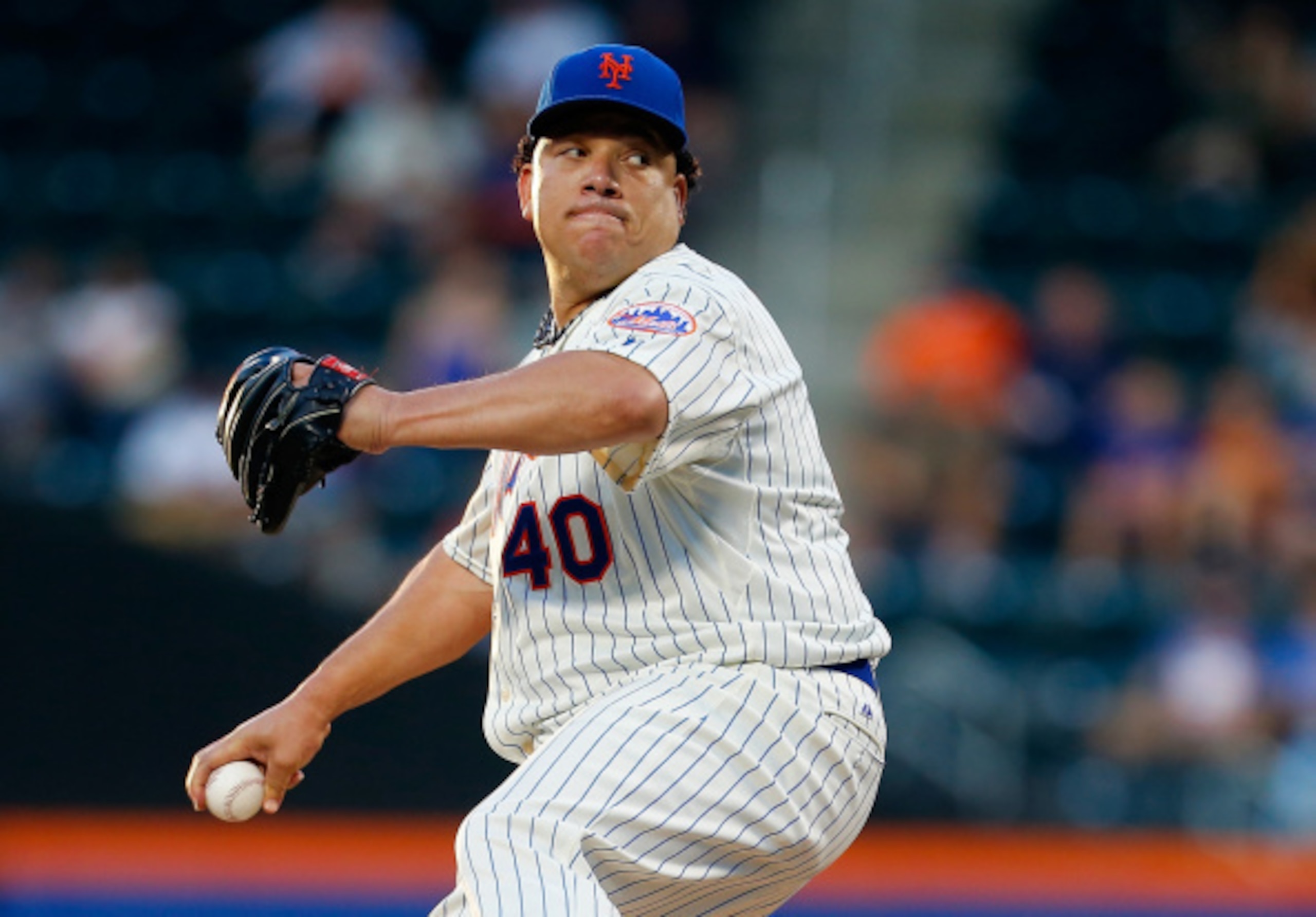
Control
All Colon does is throw fastballs in the strike zone, as over 80 percent of his pitches are heaters and he once again has a zone rate around 50 percent. And for the most part, he doesn’t just throw them up there. He lives on the outside edge against lefties, and mainly around the outside corner against righties. The only reason we say “for the most part” is because he’s also thrown more fastballs right down Broadway than anyone else.
Whiffability
Colon has been getting more strikeouts than he did with Oakland in 2013, but not because he’s been getting more swinging strikes. He hasn’t been, as there’s only so much you can do to blow hitters away when you’re throwing 88-89 and rarely changing speeds. And because he has lost about a mile per hour in average velocity from 2013 to 2014, odds are missing bats won’t get any easier next year.
Hittability
Not that Colon was much of a ground-ball pitcher before, but he’s even less of one now. He’s been surrendering more line drives and fly balls, and he’s needed Citi Field to help him contain the latter. No wonder, as many of the flies he’s given up have been well-hit. And if he does indeed suffer another velocity loss in 2015, it could impact him here, too.
Workhorse
I’ll avoid making a crack about Colon being good at eating innings and settle for noting that he’s been good for close to seven innings per start. This is despite the fact he’s only needed around 100 pitches each time he's on the mound, which speaks to his efficiency. Still, it is folly to count on a guy who’s already 41 years old to flirt with 200 innings, especially knowing that his stuff isn’t getting any sharper.
Overall
It’s been the same formula for Colon the last couple years: throw strikes, avoid walks, hope they don’t hit the ball too hard. Though this formula hasn’t been as effective in 2014 as it was in 2013, it still gets results. And come 2015, it should still be a good bet.
69. Collin McHugh, Houston Astros
11 of 79
Control
McHugh is the rare backwards pitcher, working off his curveball and slider rather than off his four-seam fastball. Unless you’re Bronson Arroyo, it’s hard to do that and avoid walks. But McHugh is actually better than most at finding the zone, largely because he throws more breaking balls in the zone than anyone else. It’s too bad he also throws more breaking balls down the middle than anyone else.
Whiffability
McHugh can vouch that a breaking ball-heavy style is better for the strikeout column than it is for the walk column. He’s gotten plenty, with plenty of swinging strikes being the driving force. His curveball has done the bulk of the work, ranking up there among the most whiffable curveballs in the league, but he’s also added some velocity to his four-seamer to make it a solid bet for missing bats in its own right.
Hittability
You’d expect a guy who throws so many breaking balls to be a good ground-ball pitcher, but McHugh isn’t. Hitters haven’t had trouble squaring him up for line drives and fly balls, and he hasn’t had the easiest time keeping the ball in the yard. Fortunately, though, most fly balls off him have mainly been shallow. There’s your reminder that driving a breaking ball in the air isn’t as easy as getting it in the air.
Workhorse
McHugh is off to a solid start building his track record as an innings-eater, averaging six innings and 100 pitches. Exactly how much better he can be while mixing a high strikeout rate with about an average walk rate and few-ish ground balls is a fair question, as is how his arm will hold up amid so many breaking balls.
Overall
McHugh’s 2014 season is one for the “Out of Nowhere” file, but that doesn’t mean it should be ignored and forgotten. Not too many guys can make an extreme reliance on breaking balls work like he does, and hitters have shown throughout the season that there’s only so much they can do to solve him.
68. Andrew Cashner, San Diego Padres
12 of 79
Control
With the kind of velocity he’s working with, you can’t blame Cashner for throwing more fastballs. And with so many fastballs, he’s had little trouble hitting the zone and putting more and more heaters at the bottom of the zone. The only real catch is that it’s his sinker he’s throwing more, and the pitch moves so much that he might have trouble cleaning up the wildness it’s led to on his arm side.
Whiffability
You’d think a guy who can sit 94-95 and touch the upper 90s with his fastball would be a big-time strikeout artist. But Cashner actually doesn’t throw that many fastballs by hitters, leaving it up to his slider to get whiffs. It’s good at doing so, but it plays too much of a second fiddle to his hard stuff to get him whiffs on a consistent basis. As such, it’s actually hard to have high hopes for Cashner’s whiffability.
Hittability
In lieu of whiffs, Cashner gets ground balls. Using his sinker more has helped, but his four-seamer has also had an easy time getting grounders. That’s typically unsustainable, but his four-seamer suddenly has almost as much horizontal movement as his sinker. Then there’s how many shallow fly balls he has gotten, completing the portrait of a pitcher who specializes in jamming batters.
Workhorse
This is still the big question where Cashner is concerned. He has a strong pitcher’s build at 6’6” and 220 pounds, but he just can’t stay healthy. It was true before 2013, and his old injury troubles came back when a shoulder injury put him on the disabled list for two months. He has all the goods to be a top innings-eater, but his injury track record makes it hard to count on him becoming one.
Overall
Cashner has always had terrific stuff, and he’s shown in the last two seasons that he can command the ball well enough and jam enough hitters with it to be a successful pitcher even without whiffs. But the big asterisk with him is still whether he can stay healthy, so he’s very much a tentative inclusion at the top of our starting pitcher totem pole.
67. Gerrit Cole, Pittsburgh Pirates
13 of 79
Control
Cole hasn’t been able to duplicate the rock-solid 2.15 BB/9 he posted in 2013, but it’s not because he hasn’t been able to find the strike zone. The bigger problem has been a lack of swings outside the strike zone. But you do have to earn those, and Cole needs to do that by doing a better job of setting hitters up. He can get his fastball in the zone just fine, but he’s not so great at putting hitters in protect mode by hitting the edges. Until he can do that, his command will be good, but well short of great.
Whiffability
A guy who can sit at 95-96 and touch 100 with his heater with a trio of mid-80s secondaries should be elite at missing bats. But that’s still more Cole’s potential than his reality, in part because his four-seamer is surprisingly mediocre at missing bats. His slider, curveball and changeup are all better, but he won’t be able to take full advantage of that until he’s ready or able (see above) to trust them to do so.
Hittability
One thing that’s stayed consistent from 2013 is Cole has had little trouble getting ground balls, with his four-seamer, sinker, curveball and slider all doing the work. And while that’s unusual for four-seamers, his is lethal enough both velocity- and movement-wise to be an exception. Said four-seamer can be taken for a ride, though, and that can happen when you misfire with velocity as much as he does.
Workhorse
This is us essentially giving Cole an “incomplete.” Though he’s been allowed to throw more pitches this season, he hasn’t been able to pitch deeper into games. Then there’s the reality that he hasn’t been able to stay healthy, losing two months to the DL with a bad shoulder. So when 2015 comes, we’ll still be looking for Cole to prove he can make his talent last throughout a whole season.
Overall
Cole hasn’t blossomed into the ace-level pitcher he teased he could be in 2013, in part because of his shoulder problems and in part because of various weaknesses that still exist in his game. But there’s no doubt that he still has the goods to be an ace pitcher, and he’ll be just that in 2015 if he can stay healthy while also fine-tuning his command.
66. Yovani Gallardo, Milwaukee Brewers
14 of 79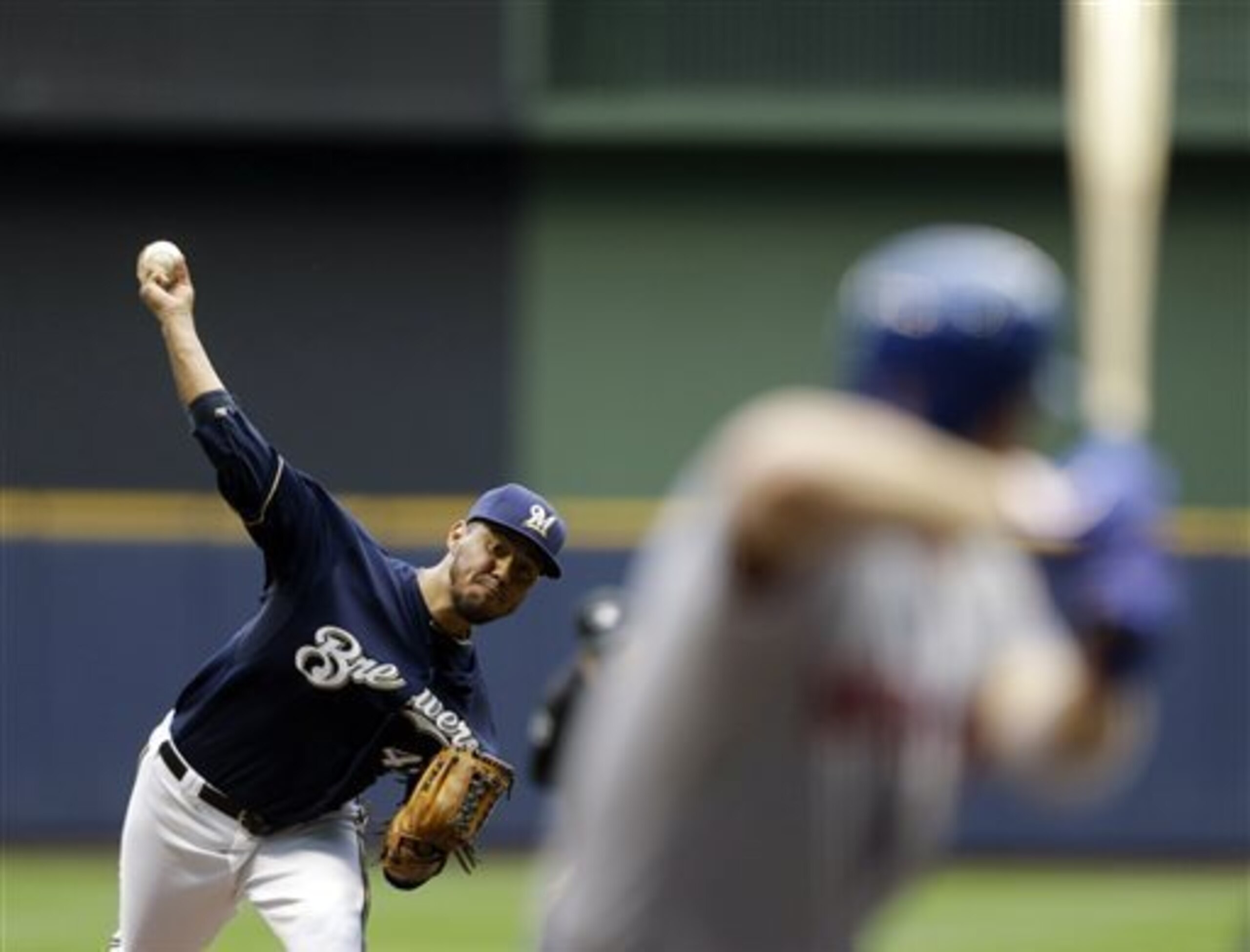
Control
Gallardo’s walk rate has recovered nicely from two rough seasons, and he’s done it the old-fashioned way: by being more aggressive in the zone. He doesn’t hit the zone as often as the average starter, but he’s helped himself by being more willing to go right after hitters with his heat rather than try to toy with them like he was doing in 2013. It’s been a good change.
Whiffability
Gallardo has turned around a downward trend with his fastball velocity, and in doing so has rescued his hard stuff’s whiffability from oblivion. Whether he can keep this up in his age-29 season is a good question, however, so it’s a good thing his curve and slider are still going relatively strong at missing bats. He’ll need that to continue, lest he start missing even fewer bats than he already is.
Hittability
Gallardo hasn’t ditched his problem with home runs yet, but things are looking up. He’s only getting better at inducing ground balls as the years go on, and there’s a strong correlation between that and how much he trusts his sinker. And with his trust in his sinker only growing stronger in the last couple months, it could be we’ll see even more ground balls in 2015.
Workhorse
Gallardo has essentially gone back to normal after struggling to average six innings and 100 pitches per start in 2013, which is what good command and an improved ground-ball rate can do for you. And while he may be as good as he’s going to get from a command standpoint, the potential for more ground balls moving forward means there should be more innings for him to work.
Overall
We can call it a comeback. Gallardo has responded to a rough 2013 season by doing what needed to be done: Throw the ball in the strike zone and aim to get ground balls. Though not as dominant as he was several years ago, this new Gallardo is pretty good.
65. Mike Minor, Atlanta Braves
15 of 79
Control
Walks have been more frequent for Minor than they were in 2013. Not so coincidentally, pitches in the zone have been less frequent. That he’s had trouble finding the zone with his hard stuff is a big factor. There are valid explanations, of course. Minor has had a hard time getting in a rhythm after injuries delayed the start of his season, and he’s also tried something new by throwing more sinkers. So though we can’t not punish him for his iffy command, it’s fair to assume it’s only temporary.
Whiffability
Minor’s velocity is still sitting in the 90-91 mph range, and both his four-seamer and his sinker have been missing bats. But he otherwise hasn’t been missing bats as frequently as he did in 2013. His spotty command hasn’t helped, but it’s also notable that his curveball and cutter have seen their whiffability go down the last two seasons after peaking in 2012. Such as it is, that’s not an encouraging trend.
Hittability
Minor’s been killed by home runs this year. That’s always a danger to happen to fly-ball pitchers, and that’s the direction he leans. The silver lining is that Minor has actually seen his fly-ball rate take a dive, and not by accident. That’s the work of his increased sinker usage, which is a good sign. If he elevates his use of his sinker even more in 2015, he should be able to avoid another home run barrage.
Workhorse
One way you can tell that Minor is in need of a normal offseason following his early-year shoulder problems is in looking at how much his velocity has fallen off after the first inning this year. But even despite that and some of the rougher outings he’s had to endure, he’s still averaged right around six innings and 100 pitches. Come 2015, he should be ready to make another run at 200 innings.
Overall
Largely due to home runs and less-than-pinpoint command, Minor’s season has been a rough one for the most part. His command is hardly bad, however, and his early shoulder problems have impacted him more from an endurance standpoint than from a stuff standpoint. He’ll be better come 2015. Perhaps even better than ever if he continues this year’s experiment with his sinker.
64. Zack Wheeler, New York Mets
16 of 79
Control
After showing flashes of good command potential in 2013, Wheeler hasn't improved a lot. He’s still having trouble with walks, and hasn’t gotten any better at finding the strike zone. His issues boil down to his fastball command. If he doesn’t miss the zone—which he often does—he’s prone to stray down the middle. There’s plenty of room for Wheeler to grow, but he needs to show he can.
Whiffability
Wheeler’s issues with his command haven’t barred him from missing bats better than he did in 2013. That he’s throwing a little harder has helped him throw his four-seamer past more hitters, and his curveball is emerging as an elite weapon. It’s among the best in the league at missing bats, and him trading in his slider for more curves in August could be an indicator of an exciting new direction.
Hittability
Another thing that’s helping Wheeler make up for his iffy control is his newfound ground-ball habit. That’s not happening by accident, as he’s traded in some four-seamers for sinkers and has reaped the benefits. His sinker gets ground balls roughly 50 percent of the time it’s in play. He’ll need to keep up this transition, as his fly-ball map isn’t the most encouraging thing.
Workhorse
Though ground balls are good for efficiency, poor control and lots of whiffs aren’t as good. It’s therefore no surprise that Wheeler hasn’t been much more reliable than he was in 2013, still barely averaging six innings per start despite also averaging over 100 pitches. He’s not going to do better until he learns efficiency, and that’s not a safe bet.
Overall
The biggest thing holding Wheeler back is his difficulty finding consistent fastball command, which will need to be fixed before he can become an elite pitcher. But he’s shown that he has the goods to get ground balls and whiffs, and that’s enough to make him a pretty good pitcher.
63. Derek Holland, Texas Rangers*
17 of 79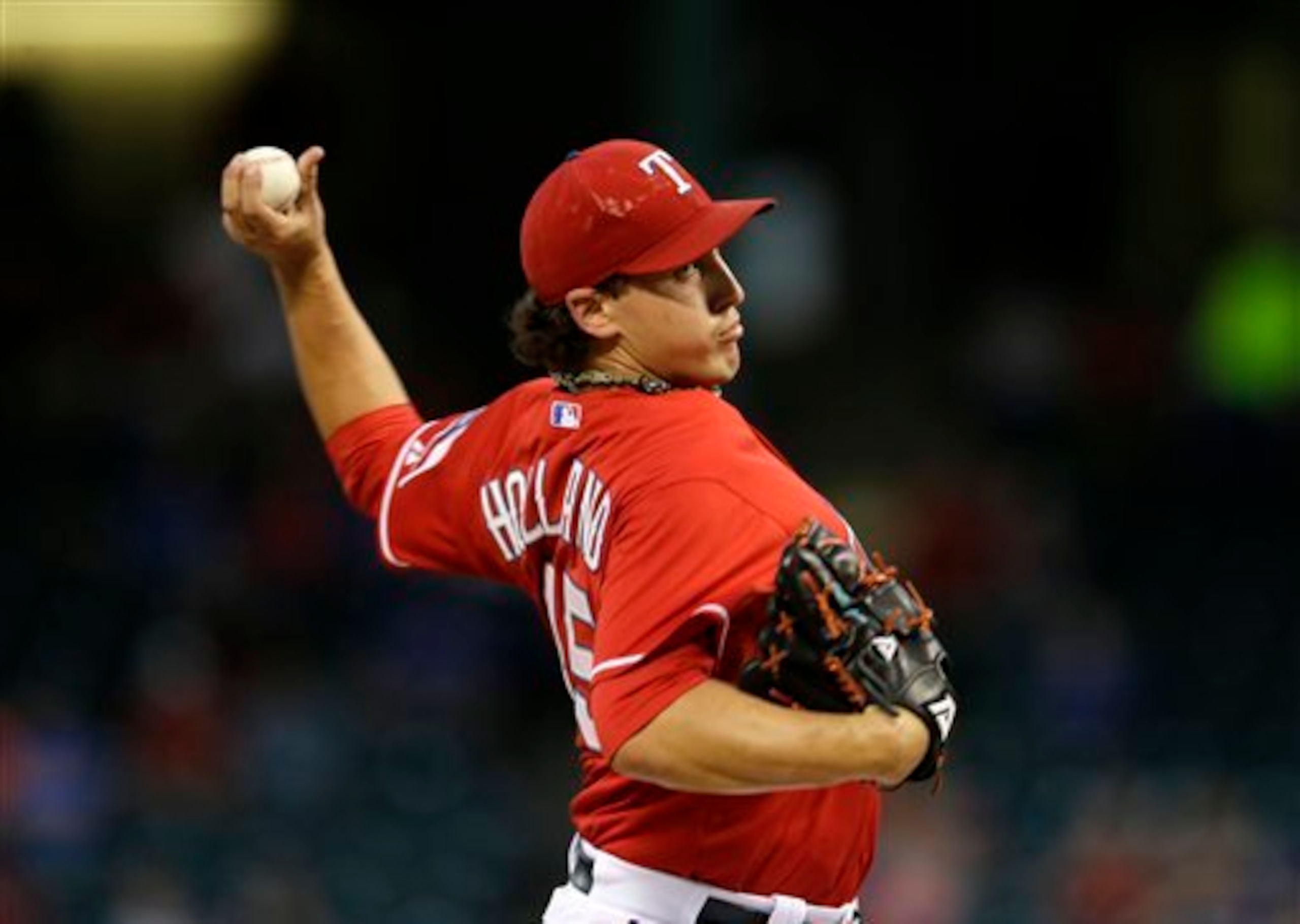
*Finally returned from offseason knee surgery on September 2, but the following analysis looking ahead to 2015 will be based on his 2013 season.
Control
In 2013, Holland posted a 2.70 BB/9 with a 46.8 zone rate. Solid, if not spectacular. That’s also a good way to describe his fastball command. When he wasn’t missing outside against lefties, he tended to miss down the middle. And while he was generally good at pounding righties in on their hands, he tended to stray over the middle against them, too. If Holland keeps it up in 2015, command will be merely a modest strength.
Whiffability
While his command was just OK, Holland did have a solid 7.99 K/9 and 9.9 swinging-strike rate in 2013. He wasn’t actually that good at blowing hitters away with his 93-94 heat, but he was good at using it to set up his slider. Few could hit it, as it ended up being one of the five most whiffable sliders thrown by starting pitchers last year. If he still has that pitch, he’ll miss his share of bats.
Hittability
Holland finished 2013 with just a 40.8 ground-ball percentage, which is what you risk when you pitch up in the zone with a four-seamer. In lieu of ground balls, everything he threw got easier to hit for line drives. And while he got his share of medium-depth fly balls, he didn’t get as many as his 8.8 home run-per-fly-ball rate indicated. When hitters could actually make contact, hitting Holland wasn’t too tough.
Workhorse
Holland’s knee injury interrupted his progress toward becoming a better and better workhorse. But though that’s an excuse to play it safe with this score, it should be kept in mind that his arm is fine and that he’s still only 27-going-on-28. Assuming he has no limitations—and I can't imagine why he would—he should be able to pick up where he left off in 2015.
Overall
Including Holland in this countdown despite him having only made one start in 2014 may seem, well, off. But remember, part of what we're doing here is focusing on who's going to be good in 2015. Holland's a good bet for two reasons: he's going to be healthy, and he was really good in 2013. Like, arguably top 12 in MLB good. Surely he'll be able to handle being top-65 good next year.
62. Kyle Gibson, Minnesota Twins
18 of 79
Control
Gibson’s done a good enough job of keeping his walk rate down, but he hasn’t done it by pounding the zone. He gets by more on hitters helping him out, mainly through playing with the bottom of the zone with his sinker. He’s better at doing that against lefties, frequently hitting the outside corner, but his style of burying sinkers around the knees of righties works well because of the swings he draws.
Whiffability
It’s not reflected in his strikeout rate, but Gibson’s not bad at drawing swings and misses. Though his 91-92 fastball velocity isn’t good enough to blow hitters away, he does have a changeup and slider that are solid, if not spectacular, whiff pitches. It’s doubtful that we’ll see him fully embrace these pitches and try to become more of a strikeout pitcher, but they’re there if he needs a whiff in a pinch.
Hittability
Gibson is very good at getting two very good things: ground balls and pop-ups. The ground balls are the work of his sinker, which gets grounders around 60 percent of the time it’s put in play. His four-seamer gets the pop-ups, a function of him using it to surprise hitters looking for his sinker. The book will get around about this, but it should continue being a mix that gets him plenty of soft contact.
Workhorse
With a relatively low-walk, low-strikeout and high-weak contact style, Gibson should have an efficient style that allows him to work deep into games. But while he’s shown he can certainly do that, the tightrope he has to walk to make it all work makes him prone to shorter outings. Hence the reason he’s had trouble averaging six innings per start this year, and he may only improve so much in 2015.
Overall
With his style of pitching, Gibson’s likely to never attract much attention or headlines. It’s not flashy, and it leaves him vulnerable to occasional bad starts. But starts like those should continue to only be occasional, as he’s proven himself to be capable of generally bamboozling hitters well enough to survive.
61. Francisco Liriano, Pittsburgh Pirates
19 of 79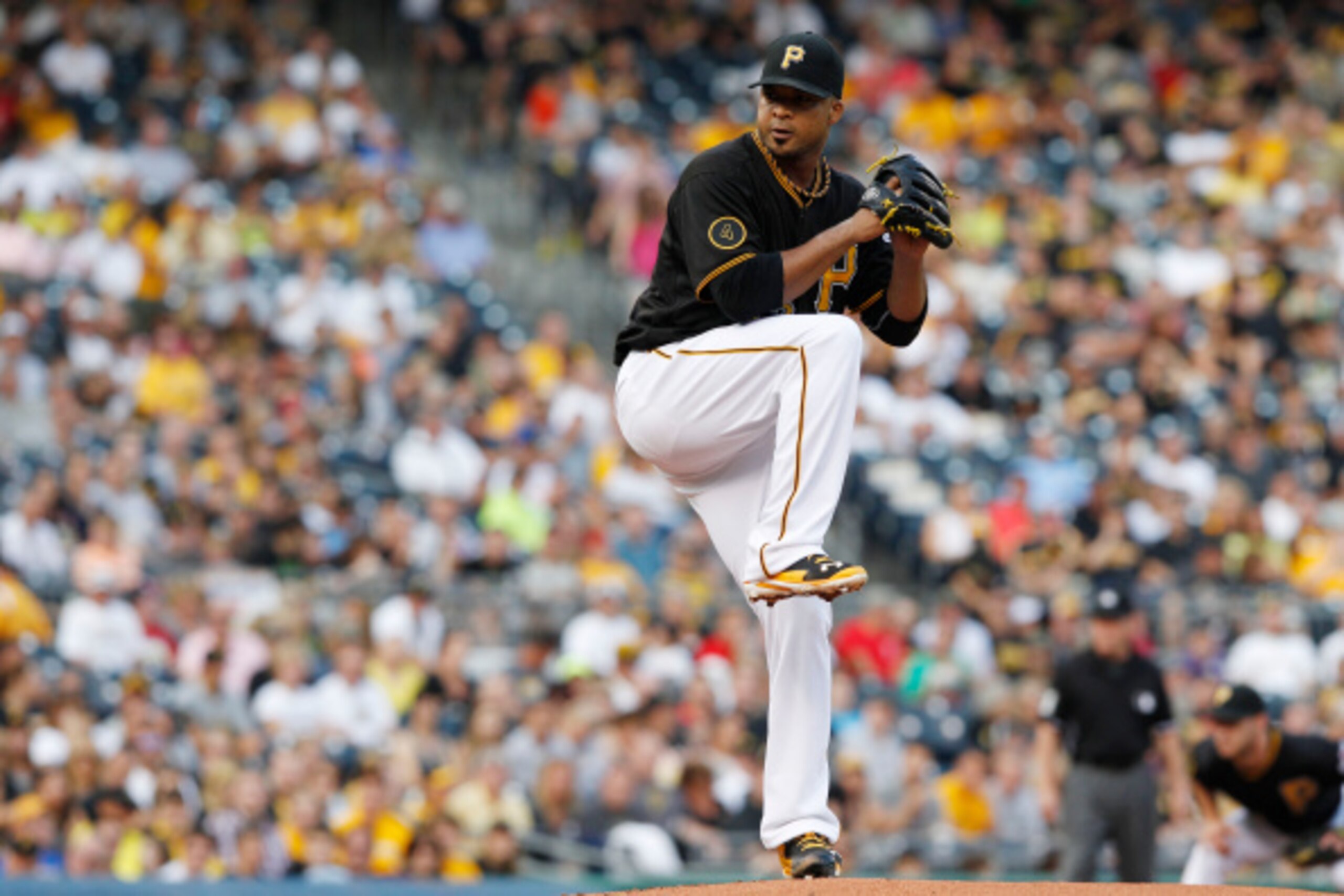
Control
When Liriano’s on the mound, you can’t count on seeing many pitches in the strike zone. That’s not his style, and he doesn’t seem too interested in upping his fastball usage to change that. And even if he did, things might not change all that much. Whether it’s against lefties or against righties, Liriano’s ability to spot his fastball is wildly inconsistent. In so many words: Tom Glavine he is not.
Whiffability
This is how Liriano gets strikes, and it’s thanks almost entirely to two pitches in particular: his changeup and slider. Both are getting whiffs on over 40 percent of the swings taken at them, giving him one of the game’s elite changeups and one of the game’s elite sliders. As long as those pitches keep working and he keeps throwing them more than his hard stuff, he’ll be able to subsist on a very strong whiff rate.
Hittability
It’s not just whiffs Liriano can get with his stuff. He’s also excellent at getting ground balls. That he’s all but ditched his four-seamer for a sinker since he arrived in Pittsburgh is still a factor, but his changeup and slider are good ground-ball pitches, too. The one catch is that he’s given up quite a few dingers in 2014, and he’s lucky he hasn’t thrown more knowing how many long fly balls he’s surrendered.
Workhorse
Injuries have barred Liriano from making 30 starts in three of the last four seasons (including this one), and it’s hard to count on injuries staying at bay now that he’s in his 30s. Also, his ability to induce ground balls only does so much to balance his tendency to run his pitch count up with walks and strikeouts. When he takes the ball, six innings is more like the goal rather than the expectation.
Overall
Liriano embodies the term “effectively wild” better than any other starter in the majors. Though he rarely goes in the strike zone, his stuff is so good that he’s able to get away with it. Specifically, he gets away with it because of whiffs and ground balls, two things that are ideal for pitchers.
60. Gio Gonzalez, Washington Nationals
20 of 79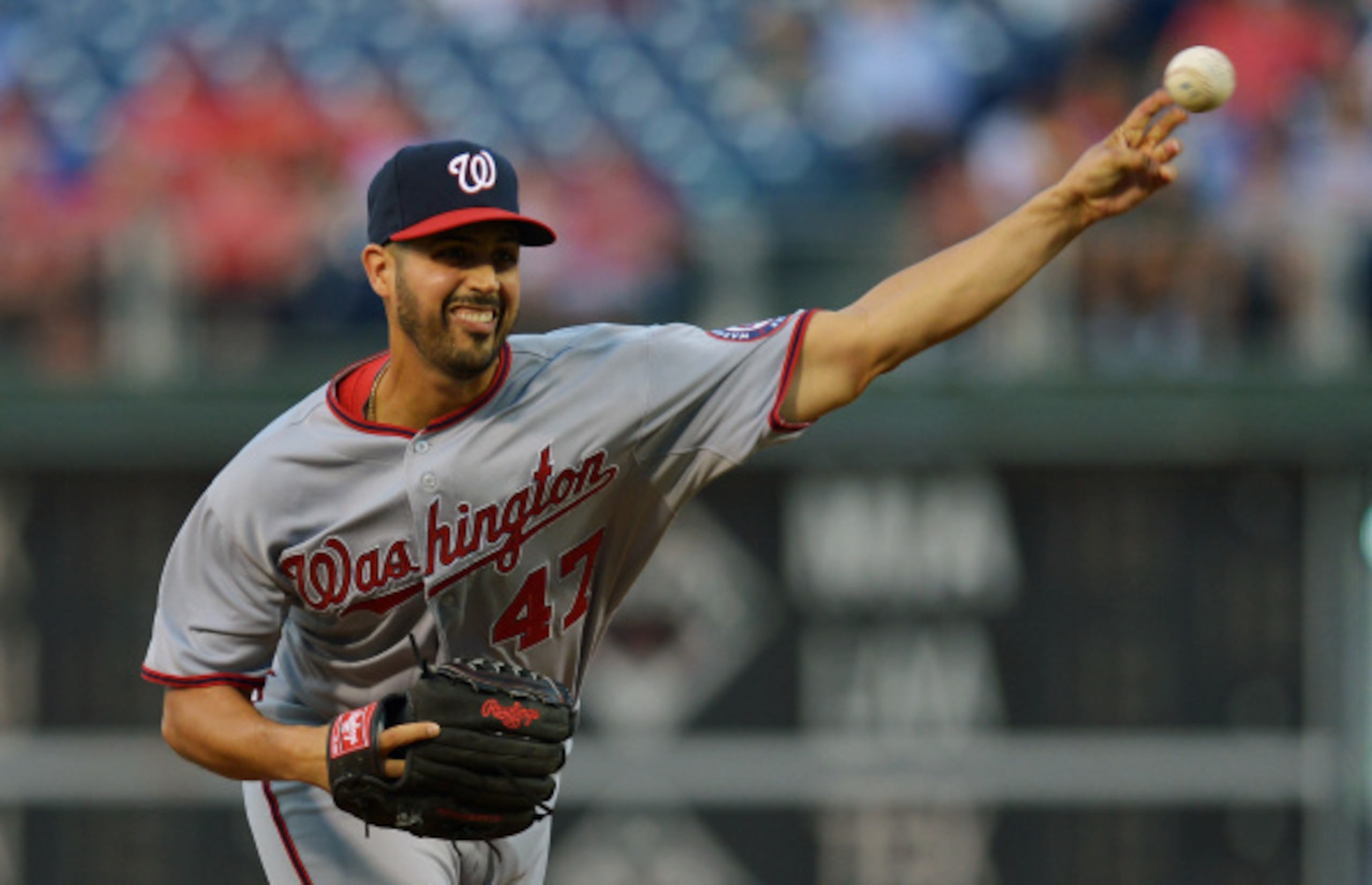
Control
Wildness is still part of the Gio Gonzalez experience. That’s evident in both his high walk rate and low zone rate this year, and it hasn’t helped that he’s continued to decrease his fastball usage from its 2012 peak. He also tries to be too fine with his fastball command against righties, missing in, out and down the middle as he tries to work on the edges. Given his track record, that's just how things are.
Whiffability
The main bright side of Gonzalez’s wildness is that it’s part of what helps him get swings and misses. He’s doing that better than ever in 2014, and another element outside of his inconsistency would be his increased trust in his changeup. It’s actually getting swings and misses more frequently than his trademark curveball, and has also helped make his hard stuff easier to swing through. That makes it easier to swallow Gonzalez’s slowly declining velocity.
Hittability
Because he’s going with more of a fastball-light approach, Gonzalez has been able to boost his ground-ball rate slightly from where it was in 2013. That’s a good sign, as it signals there will be more ground balls if he continues to phase out his hard stuff. And though he’s generally pretty good at keeping fly balls in the yard, one weakness is how easy it is for righty hitters to pull deep drives off him.
Workhorse
Gonzalez’s pitching style works for the most part, but issuing walks and racking up strikeouts is the quickest way to high pitch counts. He can vouch, as he’s generally been just a six-inning guy in his career and is struggling to be even that in 2014. Then we can factor in how he’s had some shoulder troubles and that he’s getting pretty close to 30 for an even iffier picture.
Overall
Gonzalez’s eternally iffy command can occasionally make him frustrating to watch, and it certainly limits his potential as an innings-eater. But nobody should lose sight of the fact he still has really good stuff, and it’s going to make up for his lack of command more often than not.
59. Mark Buehrle, Toronto Blue Jays
21 of 79
Control
Buehrle has visited the zone more frequently in 2014, in part because he’s relied on his “hard” stuff a bit more and in part because he’s put more changeups and curveballs in the zone. The latter is the important part, as his ability to keep his soft stuff down is what allows him to pitch up in the zone with his 83-84 fastball. It’s a risky venture, but the changing of the eye levels does help. And regardless of the specifics, it’s fun to watch Buehrle operate when his command is particularly good on a given day.
Whiffability
You’ll see Buehrle get the occasional hitter to swing over a changeup or a curve below the knees, but whiffs have never been a big part of his game and aren’t about to become one. He’s going light on both strikeouts and swinging strikes, with none of his pitches being especially good at missing bats. And with his fastball velocity inching closer to 80 miles per hour, missing bats is likely only to get tougher.
Hittability
Buehrle has been putting more trust in his sinker in recent years. But because it’s a poor ground-ball pitch by sinker standards, he still has to limit weak contact, mainly through generating off-balance swings. The good news is that he’s still pretty good at that. The less-good news is that line-drive rates on his key pitches are up, and long fly balls are hardly infrequent.
Workhorse
It’s written in the stars somewhere that Buehrle will make it to 200 innings no matter what year it is, which is what happens when you’re good for six innings like clockwork. His best days as an innings-eater are probably behind him, however. His ability to keep ticking with ever-diminishing stuff is admirable, but he can only do so much about said diminishing stuff making him prone to short outings.
Overall
Buehrle overachieved with a 2.04 ERA in his first 13 starts, though he has tapered off since. But because he can still spot the ball and keep hitters guessing, he hasn’t lost his reputation as one of baseball’s craftiest pitchers.
58. Yordano Ventura, Kansas City Royals
22 of 79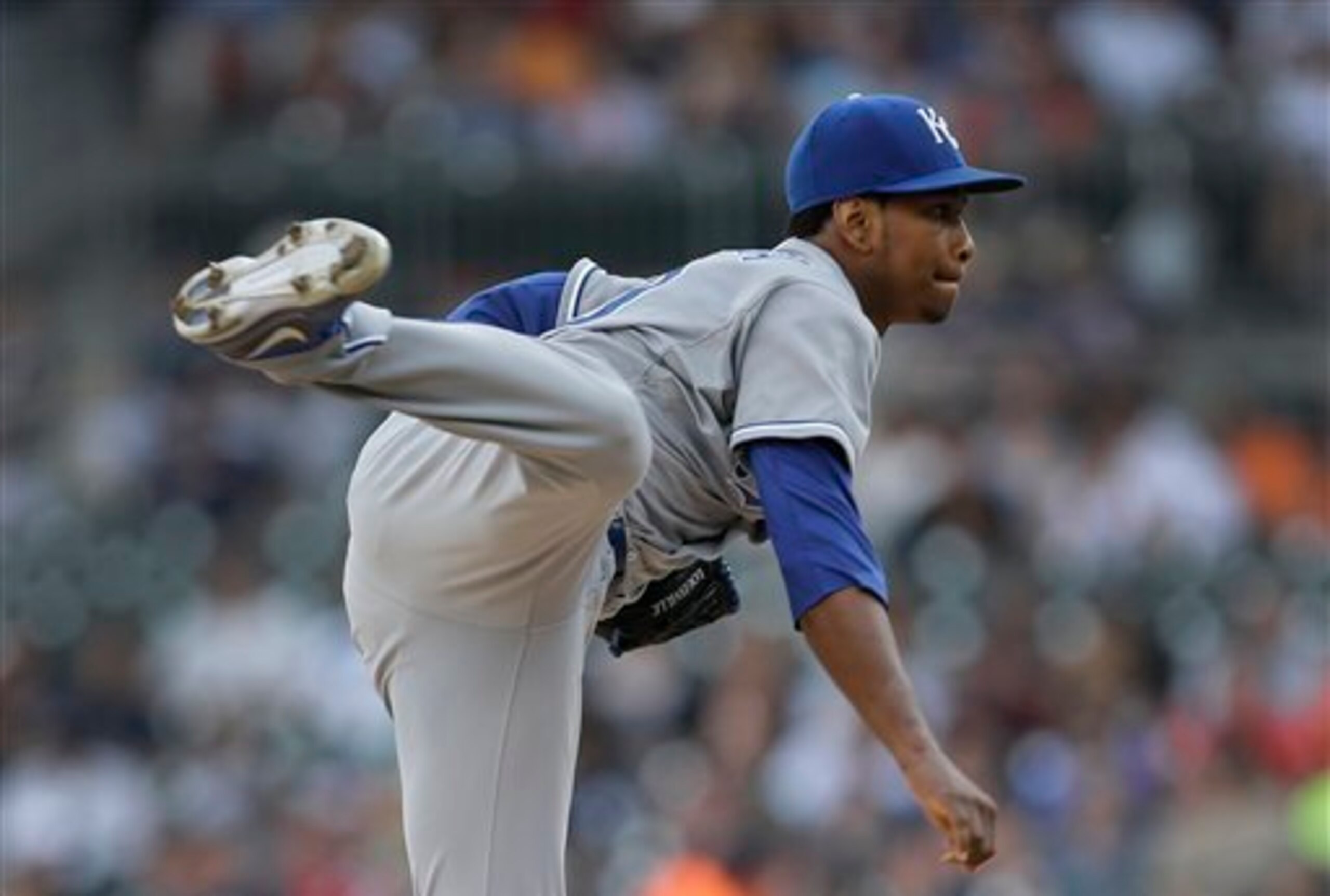
Control
Ventura makes things easy on himself by (rightfully) relying heavily on his hard stuff, and it’s to his credit that he’s better than the average starter at finding the zone. His fastball command still needs a lot of work, though. When he’s not all over the place, he tends to pitch in the middle of the zone against lefties and righties. He’s what you think of when you ponder a guy who’s a thrower rather than a pitcher.
Whiffability
With his stuff, Ventura should be a much better strikeout pitcher. But that’s as much a promise as an observation. Swinging strikes haven’t been hard for him to come by, in part because his 96-97 four-seamer has been elite at missing bats. With his curveball and changeup also being pretty good, there’s plenty of potential for his swing-and-miss stuff to start collecting strikeouts in the near future.
Hittability
Ventura has managed to be an above-average ground-ball pitcher even despite his heavy reliance on his four-seamer. It helps that it’s really the only pitch he throws that doesn’t get ground balls. He does have Kauffman Stadium to thank for limiting his home runs, however, and the reality is that he’s not immune to either line drives or well-hit fly balls. When the ball’s not on the ground, things are dicey.
Workhorse
Ventura has done OK at retaining his velocity in his first full season, holding it in games and recovering nicely from a lull in his velocity in May. But there’s still the concern of him being only 6’0” and 180 pounds, and then we can factor in how his inefficiency has restricted him to being about a six-inning guy. Though he’ll only be 24 next season, it’s still hard to imagine him being a big-time innings eater.
Overall
Ventura still has work to do to transform himself from a thrower into a pitcher, whether it’s regarding commanding the ball or generating more weak contact. There’s no question his arm alone makes him a special talent, though, and he’s shown that said arm can handle starting.
57. Jose Quintana, Chicago White Sox
23 of 79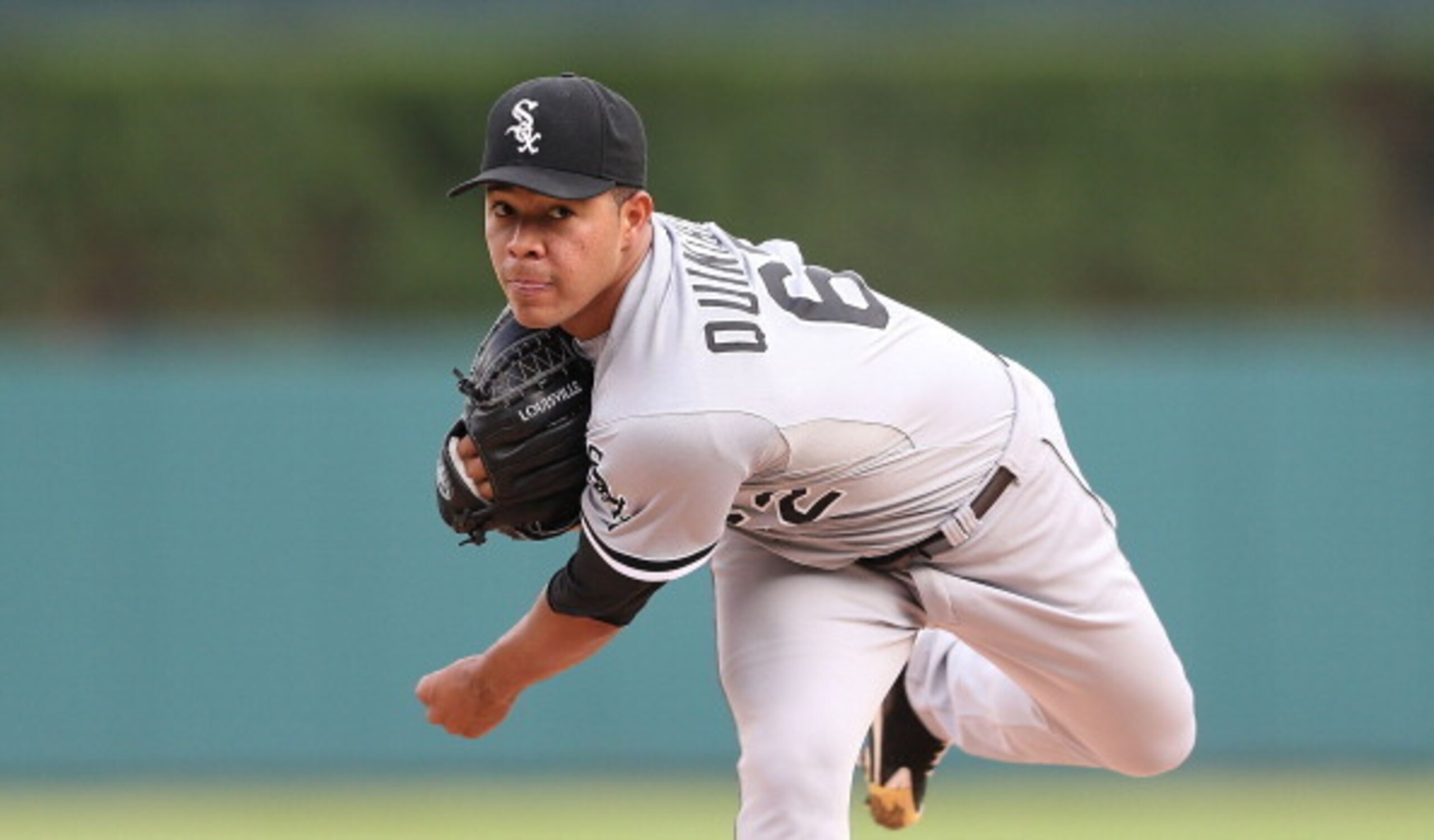
Control
Quintana has simplified things, phasing out his cutter and sinker in favor of more four-seamers. After visiting the zone relatively infrequently in 2013, he’s now there more often than the average starter. It’s too bad his fastball command within the zone has seen him go down the middle too often, which is not ideal given that he’s throwing a straight fastball pretty much exclusively.
Whiffability
Though Quintana can strike out batters more often, he’s actually getting swinging strikes less frequently. He doesn’t have much to overpower hitters, as his fastball velocity sits in the 91-92 range and his curveball and changeup are at best mediocre swing-and-miss offerings. Without a signature whiff pitch, his whiffability probably will remain stagnant.
Hittability
Quintana has maintained his status as about an average ground-ball pitcher, but the sustainability of that is suspect knowing that it’s partially owed to his four-seamer’s ground-ball rate taking a hike. His more believable skill is generating weak contact through off-balance swings. His home run rate coming down makes sense, as he’s mixed his pitches well enough to keep the medium-depth fly balls coming.
Workhorse
Quintana established himself as a six-inning guy on his way to pitching exactly 200 innings in 2013, and he hasn’t wavered in 2014. He’s still only about a six-inning guy, but he’s been good for more pitches per game. His velocity does tend to peak early in games, however. That and his non-elite command and ability to miss bats help conspire to make outings longer than six innings relatively infrequent.
Overall
Quintana’s not going to wow you most nights, as he possesses neither swing-and-miss stuff nor especially pinpoint command. But because he’s solid in those two departments and he can also pitch to contact effectively, he rarely fails to author respectable line scores when he takes the ball.
56. Hiroki Kuroda, New York Yankees
24 of 79
Control
Kuroda is well-established as a guy who can limit walks without pounding the zone that much, and his command of his sinker is what allows him to do that. He’s good at using it to toy with the bottom of the zone on his arm side, setting hitters up for sliders and splitters below the knees. That’s how he allows himself to consistently pick up strikes on swings outside the zone, making his system an effective one.
Whiffability
Kuroda’s downward trending strikeout rates mirror his declining velocity, a distressing trend knowing that he’s creeping up on 40. But while they may not lead to many strikeouts, he’s still pretty good at getting swinging strikes. That’s thanks mainly to how his slider and splitter aren’t seriously declining and swing-and-miss pitches. As long as he has those, he’ll be able to get the occasional whiff.
Hittability
Kuroda’s still a good ground-ball pitcher, but not as good as he used to be. Hitters aren’t hitting his sinker into the ground as much, and the way in which his four-seamer has helped pick up some of the slack is likely unsustainable. But even if ground balls do become more infrequent, it’s good to know that he’s shown he can get medium-depth fly balls. That’s him keeping hitters off-balance.
Workhorse
Though Kuroda’s velocity isn’t what it used to be, it’s a good look on him that he builds velocity as he goes along in games. That helps him keep the innings coming, and he’s done that well enough to average roughly six innings per start. But that’s probably as good as it gets knowing that he is mainly a smoke-and-mirrors pitcher now, and his arm may also have only so much gas left in it.
Overall
Granted, where Kuroda is even going to pitch in the majors again after this season is a good question. But he hasn’t—to my knowledge, anyway—definitively stated that he’s not coming back in 2015. If he does, he’s shown enough good command and general pitching know-how this season to prove he can make it even as a lesser version of his old self.
55. Anibal Sanchez, Detroit Tigers
25 of 79
Control
That Sanchez is operating with an improved walk rate over the one he had in 2013 is misleading. Rather than him getting significantly better at pounding the zone, what’s really going on is a big increase in contact. It hasn’t helped that his fastball command has been so inconsistent, as he’s been a little all over the place against both lefties and righties. In all, it’s not the most flattering picture.
Whiffability
Sanchez hasn’t been able to keep the whiffs coming like he did in 2013, with a main symptom being a velocity loss rendering his four-seamer more hittable. And with less of a consistent velocity differential, it’s no shock that his slider and changeup have also suffered. It should be granted that Sanchez is still a solid whiff pitcher, and he’ll be better if his velocity comes back. But now that he’s 30, don’t count on it.
Hittability
Sanchez’s stuff hasn’t been getting whiffs like last year, but his secondary pitches are still doing their part to keep the ground balls coming. And though he has been giving up more fly balls, most have struggled to make it deep into the outfield. This speaks to how effective his relatively fastball-light approach is at keeping hitters off-balance, and is one area where being more wild has probably helped.
Workhorse
Sanchez entered the year in search of his first 200-inning season. And for the umpteenth time, his health is going to keep him from getting there. He just can’t stay healthy, and expecting him to start at this point in his career is foolery. Factor in how he’s generally a six-inning guy anyway due to his tendency to rack up high pitch counts, and playing it very safe is the best course of action here.
Overall
There are legit reasons to worry about Sanchez, namely his health betraying him once again and both his stuff and control being diminished. But the reality that he’s still been effective despite these things will do nicely for a silver lining. This Sanchez isn’t as good as the 2013 version, but he’s still good.
54. Jered Weaver, Los Angeles Angels
26 of 79
Control
Fastballs barely account for 50 percent of Weaver’s pitches these days, and hitters dropping their swing rates at his slow stuff says they’re on to him. Without those swings, walks are happening. Weaver is still crafty, though. That shows up most in how he’s taken to putting more curveballs and changeups at the bottom of the zone, which helps open things up for him to pitch up in the zone with his heat.
Whiffability
Weaver’s descending trust in his hard stuff is largely out of necessity. At an average of 86-87 mph, he doesn’t have the heat to blow hitters away. But one way in which he’s adapted to that is to ditch his slider for two slower pitches in his curveball and changeup, which are still good swing-and-miss pitches. So though we’ve seen the end of him as a strikeout artist, he can still get a whiff when he needs one.
Hittability
Weaver’s been a fly-ball pitcher his whole career, and that much hasn’t changed this year. Between that and his diminished stuff, home runs are going to happen. Particularly away from the Big A. But when you take into account how many fly balls he gets, the amount of home runs he surrenders seems petty. That wouldn’t be the case if he wasn’t as good at getting as many medium-depth fly balls as he does.
Workhorse
Injuries have done their part to limit Weaver in the last couple years, and now we can factor in diminished efficiency and increased hittability. Where he once was a seven-inning, 110-pitch guy, now he’s more like a six-inning, 100-pitch guy. Add in how he’s 31-going-on-32, and it’s best if none of us expect him to return to being the workhorse that he used to be.
Overall
Weaver is on the decline, as he can no longer dictate at-bats and gets swings and misses like he used to. You have to hand it to him for remaining crafty, however, since he can still toy with the strike zone and keep hitters off-balance.
53. Chris Archer, Tampa Bay Rays
27 of 79
Control
Even in a year when Archer is throwing more fastballs, avoiding walks is still not a strength. Not so coincidentally, fastball command is a pretty big issue. In part because of how he doesn’t always finish his delivery and misses high and outside on his arm side, and in part because he struggles to get the ball down even when he is hitting the zone. Consider it an aspect where he needs some fine-tuning.
Whiffability
Fortunately, you don’t need pinpoint command when you have a fastball that goes 94-95 and a hard slider. Such things are the driving forces behind Archer being a good swing-and-miss pitcher, with his slider being particularly lethal. Unlike his hard stuff, he has little trouble keeping it down, and its 85-86 velocity and sharp break do the rest. Between that and his heat, he has what he needs to miss bats.
Hittability
Archer was a pretty good ground-ball pitcher to begin with, but he’s teasing that he can be even better. He’s thrown more sinkers than four-seamers in 2014, and that’s not a bad idea given that his sinker is easily the better ground-ball pitch. What his four-seamer is still good for, however, is getting pop-ups. He thus has two pitches that specialize at inducing weak contact, and he knows how to use them.
Workhorse
Archer can handle 100 pitches per start, but he’s only likely to go as far as six innings when he takes the ball. For all the weak contact he generates, that’s the drawback of mixing walks and strikeouts. Then there’s the matter of how his velocity can be inconsistent once he hits the fifth inning. So though he’s been a big league starter for a good year and a half at this point, he’s still taking baby steps here.
Overall
The issues Archer has had with his command this year go to show that he’s still more of an electric (sterling, even) arm than anything else. But since he features an elite slider and stuff that’s generally very hard to square up, there’s a place for him among baseball’s top starters.
52. Ian Kennedy, San Diego Padres
28 of 79
Control
Kennedy’s command has generally been more consistent than it was in 2013, and he owes that simply to getting back to pounding the zone more consistently. It’s also hard to take issue with his fastball command, as he lives away from both lefties and righties. He hasn’t been as sharp since the break, though, and that makes it hard to ignore how his release point has changed as the year has gone along. After all sorts of release point struggles last year, that’s an issue.
Whiffability
It’s easy to trace the strikeout spike Kennedy’s enjoyed to his spike in velocity, but his four-seamer’s whiffability has barely budged. The good news is his changeup and curveball have been missing more bats. Especially his changeup, which is persisting as one of the best swing-and-miss changeups there is. At least he’ll have that if he suffers a velocity loss in his age-30 season next year.
Hittability
Though he’s been getting a few more ground balls this year, Kennedy’s still primarily a fly-ball pitcher. He’s in a good park for that, but he actually hasn’t needed Petco Park to suppress his home run rate for him. Compared to 2013, well-hit fly balls haven’t been as frequent. That he’s mixed in his curve more has helped, as it’s much better for slowing bats down than his changeup is.
Workhorse
Kennedy’s been more consistent in 2013, but he’s still only managed to persist as a six-inning, 100-pitch guy rather than get back to the seven-inning guy he was in 2011. That his command is still hit-or-miss hasn’t helped, and his general inability to keep ground balls coming means things can get hairy in a hurry. Unless he overhauls his pitching approach, being a six-inning guy is as good as it’s going to get.
Overall
Kennedy still has his faults, chief among them being that there’s still no telling what kind of control he’s going to have from start to start. But to that end, there’s no denying that he’s at least been more consistent than he was in 2013, and the Padres also seemed to have taught him how to pitch again. All told, the Kennedy reclamation project has largely been a success.
51. Mike Leake, Cincinnati Reds
29 of 79
Control
With his four-seamer basically extinct and sinkers and cutters accounting for roughly 70 percent of his pitches, everything Leake throws moves. He gets by because he’s one of the best at playing with the edges. He’ll pitch in and out to both lefties and righties, and is adept at hitting the outside corner. This allows him to buy some swings outside the zone, allowing him to get strikes every which way.
Whiffability
Leake is striking more guys out, but that’s owed to his craftiness buying him more called third strikes. He’s not actually good at getting swinging strikes. He doesn’t have the velocity to blow anyone away at 90-91, and the only pitch he throws with legit whiffability is his little-used slider. Throwing his slider more might buy Leake more whiffs, but it’s hard to count on it knowing that whiffs aren’t his game.
Hittability
Leake’s game revolves more around inducing weak contact, a habit that’s gotten a boost by a career-best ground-ball rate this year. His sinker and cutter are both very strong ground-ball pitches. The catch, as always, is that it’s pretty easy to take Leake deep. He’s capable of getting can-of-corn fly balls, but the well-hit ones are also frequent.
Workhorse
Leake should finally top 200 innings this year, his reward for mixing good command with strikeouts and weak contact better than ever. But if we take it for granted that the strikeouts will be hard to repeat, it’s easy to see him go back to being what he was before: a guy who generally only had enough smoke and mirrors for six innings or so.
Overall
Leake’s stuff and general approach toward pitching doesn’t leave him with a large margin of error, and his troubles with home runs are basically a constant reminder of that. But he executes his game plan more often than not, which he owes to his criminally overlooked ability to spot the ball where he wants.
50. Kyle Lohse, Milwaukee Brewers
30 of 79
Control
Lohse’s reliance on his hard stuff is going nowhere but down, and his zone rate is going with it. That doesn’t mean his command is necessarily getting worse, though. He’s still spotting his hard stuff on the outside corner against lefties and righties well, setting the latter up for rarely misplaced sliders. He’s also finding the zone with more and more sliders. All told, Lohse is still crafty.
Whiffability
As Lohse’s reliance on his hard stuff has gone down, his reliance on his slider has gone up. That’s helping him increase his swinging-strike rate, though only to a modest degree. His slider is pretty poor at getting whiffs relative to other sliders, so it’s doubtful that he’s going to get that much closer to being even an average source of swings and misses and strikeouts even if he continues keeping the sliders coming.
Hittability
A guy who throws as many sinkers and sliders as Lohse does should be a good ground-ball pitcher. But that’s never been and still isn’t the case. He’s still mainly a fly-ball pitcher who relies on keeping hitters off-balance. He’s good at it, but not great. When you look at his fly-ball chart, you notice that deep flies are about as likely as shallow flies. Though he mostly avoids danger, it’s a high-wire act.
Workhorse
Efficiency has long been the name of the game for Lohse, and it still is. He’s averaged over six innings on not even 100 pitches per start this year. But at 35-going-on-36, he’s at an age now where skepticism over his workload is warranted. And I’d say even further skepticism is warranted in his case, as it’s a little concerning to see an older pitcher who had an elbow scare in 2013 throwing so many sliders.
Overall
There are plenty of gripes to raise with Lohse, mainly having to do with how mediocre he is at getting swings and misses and how much he relies on ballpark dimensions and his outfield defense. But there’s no knocking his command, and there’s no ignoring how it makes mediocre stuff look less mediocre.
49. Danny Duffy, Kansas City Royals
31 of 79
Control
You’d expect a guy who throws 70 percent fastballs to be good at finding the zone, and Duffy does do it better than his modest walk rate indicates. We can also give him credit for the consistency with which he pitches to the corner on his glove side with his four-seamer. That means avoiding the outside corner against righties, however, and he does stray over the middle of the zone more than he should.
Whiffability
For a guy who has such a good left arm, Duffy actually manages to disappoint in this department. Though he has good velocity at 93-94, he doesn’t blow hitters away. He also has a curveball, slider and changeup that are about equally mediocre at missing bats. That he has a live arm means there’s potential for more whiffs, but that’s admittedly me going out on a limb.
Hittability
Duffy is nothing if not an extreme fly-ball pitcher. That’s typically a recipe for a home run problem, but he's teased that he can be an exception to the rule. It helps that his four-seamer is pretty good at getting pop-ups, and in general his medium-depth fly balls far outweigh the deep fly balls he gives up. The key ingredient is the good rising action he gets on his four-seamer, which is among the best there is.
Workhorse
Duffy’s a relatively inexperienced starter who’s not that far removed from Tommy John surgery, and here’s where it shows. His velocity is at its best early in games, and on the whole he’s been good for only six innings and 96 pitches when he’s taken the ball. As such, what he’s done this year is only a good first step to what will hopefully be a bigger workload in 2015.
Overall
The most disappointing thing about Duffy is his merely modest ability to miss bats, but he’s done enough to establish himself as the kind of starter who can succeed even without whiffs. It will be all about pounding the strike zone and getting hitters to send the ball harmlessly skyward.
48. Alex Wood, Atlanta Braves
32 of 79
Control
Wood’s herky-jerky, funky-rific should make it tough for him to find the strike zone, but he’s actually pretty good at it. And for the most part, he’s also pretty good at keeping his stuff down. What makes that “for the most part” necessary is that he has a tendency to leave his fastball in the middle of the zone, which is not where you want to be when your fastball only pushes 90.
Whiffability
Wood’s best talent in this department is how well he hides the ball and how he brings it from a unique arm slot, making it tough for hitters to pick him up. It’s largely due to his deception that he’s able to pick up swings and misses at a solid rate. But he’s not without legit weapons, as his changeup is decent at getting whiffs and his curveball is better than decent at getting whiffs.
Hittability
Wood's surprisingly decent at getting ground balls for a guy who relies so heavily on his four-seamer, which itself is pretty good at racking 'em up. That's unusual, but that it happened in 2013 too means it's not necessarily a fluke. He's otherwise also good at keeping hitters off-balance, with one of his talents being his ability to get right-handed batters to hit harmless fly balls to center and right field.
Workhorse
For a guy who’s gone back and forth between the rotation and the bullpen in the last two years, Wood is pretty good at holding his velocity in games. He’s also drastically improved on last year’s starting performance, which saw him average just 5.1 innings and 89 pitches per game. He’s shown he can be a six-inning, 100-pitch guy, which is a good first step to being a reliable workhorse.
Overall
It’s hard to shake the feeling that Wood is a gimmick pitcher, but there’s plenty to like about how he pitches. He’s not great at spotting the ball, missing bats or limiting hard contact, but being reasonably good at all three things allow him to be an effective all-around hurler.
47. John Lackey, St. Louis Cardinals
33 of 79
Control
Lackey’s among the league’s most fastball-heavy starters, and they’re virtually all four-seamers. So it makes sense that his zone rate has skyrocketed, but it’s to his credit that merely getting in the zone isn’t his style. Against both lefties and righties, he can hit the outside edge about as consistently as any other starter. If you’re going to be a fastball-throwing machine who lives in the zone, that’s the way to go.
Whiffability
Going with a more fastball-heavy approach hasn’t made it any easier for Lackey to get swinging strikes, as his fastball whiffability has dropped while his average velocity has stayed right around 92. And be warned: his fastball velocity has dropped off from where it was at the start of the year. If that’s the 35-year-old Lackey showing his age, getting whiffs could soon become more difficult.
Hittability
Lackey doesn’t use his sinker much, so it’s a good thing that his ability to put his four-seamer on the edges helps make it a solid ground-ball pitch. But even with that, he’s only about an average ground-ball pitcher, and this year has seen him continue to struggle with home runs while also allowing more line drives. If his velocity continues to dive, those problems will be tougher to correct.
Workhorse
Pitching deep into games hasn’t been a problem for Lackey, as he’s once again been good for over six innings and 100 pitches. But if the various concerns we’ve addressed come to fruition, it’s going to be harder to Lackey to go deep into games consistently. If we also factor in his age, counting on him to keep carrying a major workload doesn’t come off as a great idea.
Overall
Lackey’s fastball command is quietly among the league’s better tools, as he could probably spot the ball on the outside edge in his sleep. But between his declining velocity, whiffs and soft contact highlight how the cracks are beginning to show. Looking ahead, those cracks are likely to be even more apparent.
46. Jason Vargas, Kansas City Royals
34 of 79
Control
Vargas’ already-changeup-heavy approach has gotten even more so in 2014, and he’s making sure that many of the extra changeups find the zone. That’s allowing him to be more aggressive in the zone with his hard stuff, and he’s also good at pitching to both sides of the plate. Especially against right-handers. So though he doesn’t exactly live in the zone, he knows what he’s doing.
Whiffability
Vargas’s bread-and-butter changeup is up there among the best in the league at getting swings and misses, but it’s not the kind of changeup that has the power to make his hard stuff easier to swing through. He only throws 87-88, and his four-seamer is getting easier to hit every year. That trend is likely to hold, especially if his fastball velocity drops below the 87 threshold in 2015.
Hittability
Though Vargas has also added a sinker while increasing his use of his changeup, he isn’t getting any better at inducing ground balls. Neither of those two pitches is a great ground-ball pitch, so he must persist as a fly-ball pitcher. This is fortunately a trick he’s pretty good at, as his ability to mix and match while hitting his spots allows for plenty of shallow fly balls to offset the deep ones.
Workhorse
Vargas’ health has been a bother in the last two seasons, but this season has seen him return to being a good bet to go deep into games. That’s what happens when you can be efficient with your pitches, and his ability to manipulate helps keep the disaster starts at a minimum. Whether he can be much more than a 200-inning pitcher is a question, though, especially if his health keeps betraying him.
Overall
Vargas has a place among the least-discussed pitchers in the league, and it’s hard to imagine that changing as long as his pitching style continues to be so unspectacular. It’s definitely effective, though, as good command and an ability to change speeds allow him to succeed as a fly ball pitcher.
45. Brandon McCarthy, New York Yankees
35 of 79
Control
McCarthy’s one of the best in the majors at hitting his spots, especially with his sinker/cutter combination. He’s very good at putting his sinker at the knees, and his cutter off the edge of the zone to his glove side. To boot, his revival of his four-seamer has been worth his while, as it’s come in handy when he needs strikes out on the outer third against lefties and outside corner against righties.
Whiffability
McCarthy has enjoyed a boost in both strikeouts and swinging strikes, mainly because his stuff has simply been nastier. He’s gained velocity on all his pitches, including about two miles per hour on his fastball. The sustainability of this is a good question, however. After all, this velocity is coming out of nowhere in what is McCarthy’s age-30 season.
Hittability
McCarthy is working on a career-best ground ball rate, a product of how his sinker, cutter and curveball can all get ground balls. He can be taken deep, though. And while that problem was never as bad as it looked in Arizona, it hasn’t been solved as much as it seems since he arrived in New York. He hasn’t quit surrendering long flies. The key to beating him is still finding a way to get underneath his stuff.
Workhorse
That McCarthy set a new personal best with his 26th start says a lot about how much trouble he’s had staying healthy. And knowing his track record, one healthy season shouldn’t be used as an excuse he’s going to stay healthy moving forward. Still, he’ll eat his share of innings when he can pitch. Even on days when he’s hittable, he’s efficient enough to make it through six innings and 100 pitches.
Overall
It’s easy to buy into McCarthy’s Yankees rebirth as a fluke, but he was never as rotten as his 5.01 ERA in Arizona said he was. Though it’s far from impossible to make good contact against him, his command is among the best there is and he further helps himself by mainly keeping the ball on the ground.
44. Doug Fister, Washington Nationals
36 of 79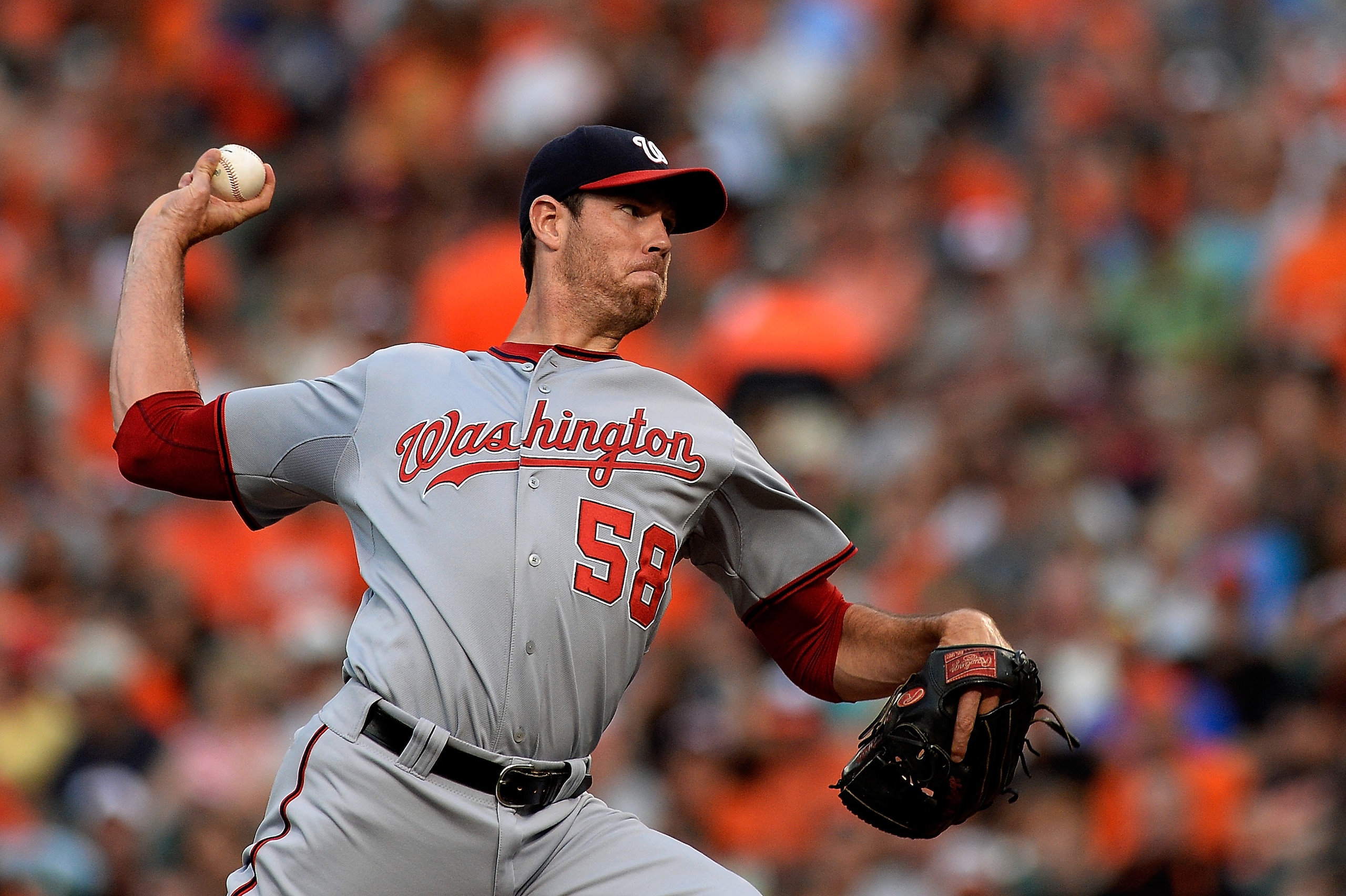
Control
Even by his standards, Fister is toying with an outstanding walk rate. That would seem to be related to his new NL surroundings, as he’s been more aggressive attacking the zone. The catch is that his walk rate is also built contact, and he makes it easy by pitching more up in the zone than most sinkerballers. Lower would be better, but maybe asking a lot for 6’8” pitcher with an over-the-top motion.
Whiffability
Fister doesn’t do strikeouts, and this year he’s not even doing swinging strikes. Him basically ditching his curveball has something to do with that. The only off-speed pitch he throws regularly now is his splitter, which, to put it lightly, just isn’t very good at getting swings and misses. Fister’s velocity is down across the board. With him now over 30, that’s likely not getting fixed.
Hittability
Fister has gone full sinkerballer this year, and it’s still getting ground balls over 50 percent of the time it’s in play. His overall ground-ball rate has taken a turn for the worse, however. And though he gets plenty of shallow fly balls, he’s given up his share of long ones, too. When you have lesser velocity, pitch in the middle of the zone and don’t have a curveball to keep guys honest, this is what you risk.
Workhorse
That Fister messes around with neither strikeouts nor walks makes it easy for him to pitch deep into games with a low pitch count. That’s been the case this year, as he’s averaging about six and a half innings on only 99 pitches. But because this is the second year out of three he’s had injury problems and a pitcher’s health doesn’t tend to stabilize in his 30s, we have to be at least a little cautious.
Overall
The results have definitely been there for Fister, and there’s no ignoring how he has some of the best command and one of the best sinkers you’re going to find. But his inability to miss bats is a complication here, and the reality that good contact hasn’t exactly been infrequent is another. It’s hard to escape the notion that Fister’s future might not be as bright as his present.
43. Michael Wacha, St. Louis Cardinals
37 of 79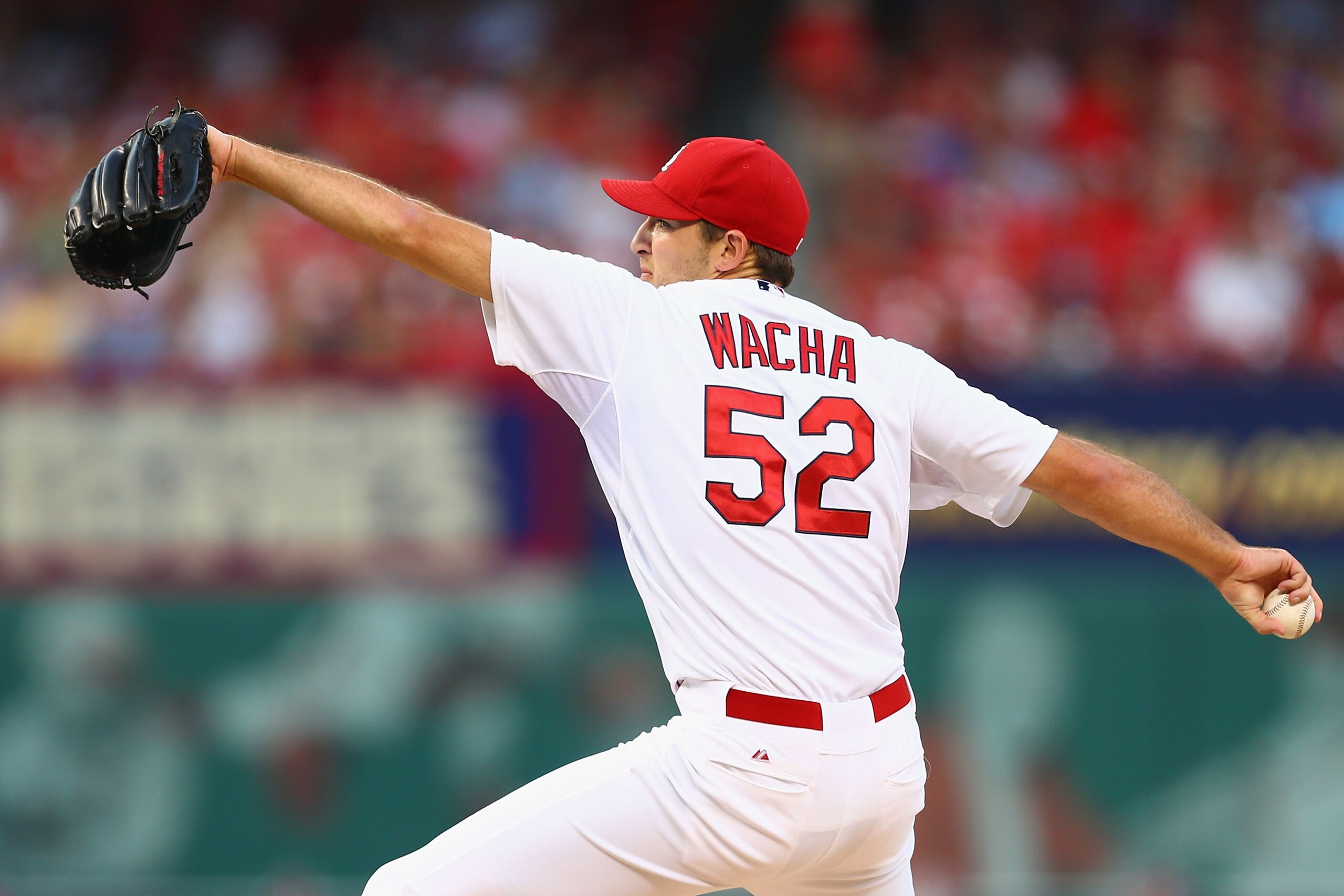
Control
We have a limited sample of Wacha starts to go off of, but what we’ve seen is him downright assault the strike zone. You also have to admire how frequently he spotted his fastball up and away against lefties, thereby keeping it out of their wheelhouse. He was also pretty good at working away from righties. That leaves just one catch: He strayed over the middle of the zone a bit too often against both.
Whiffability
Wacha’s changeup was a notable part of his rise to stardom, but that same changeup hasn’t missed bats at the same rate in 2014. The silver lining is that the increased whiffability of his four-seamer goes to show that his fastball and changeup are still a deadly combination. The only worry one has is if his 92-93 velocity might come down after his shoulder troubles this year.
Hittability
Wacha’s not great at getting ground balls. His changeup can induce them, but it plays too much of a second fiddle to his four-seamer. But it does make his four-seamer hard to square up, as it easily collects both pop-ups and shallow fly balls. But if we once again assume his velocity may be coming down, it’s fair to expect things to not be that easy in the future.
Workhorse
Wacha has everything he needs to be an efficient pitcher, but the Cardinals have limited him to merely six-inning duty on fewer than 95 pitches in his first full season. And that was before his shoulder acted up and sidelined him back in June. So looking ahead to 2015, it will basically be back to square one for Wacha.
Overall
It’s easy to focus on how Wacha’s shoulder season derailed his 2014 season, and that indeed shouldn’t be ignored. But he did look pretty good in his return to action September 4—Bernie Miklasz of the St. Louis Post-Dispatch will tell you about it—and overall he's continued to show how big a talent he is, displaying good command and strong abilities to miss bats and limit hard contact.
42. Jacob DeGrom, New York Mets
38 of 79
Control
Though deGrom hasn’t been great at limiting walks or at hitting the zone, his command hasn’t actually been that bad and has the potential to actually be quite good. He’s shown that he can target the outside edge against lefties and to both corners of the zone against righties. He’s been inconsistent at applying this approach, but also just consistent enough to show that he’s onto something.
Whiffability
Swinging strikes have been a main ingredient in deGrom’s success. He’s gotten a lot of them, which is what happens when virtually everything you throw can miss bats. That includes his 93-94 four-seamer, which has been among the hardest four-seamers to hit this year. So even if we assume that increased familiarity will knock deGrom down a peg or two, his stuff is definitely legit.
Hittability
Making contact against deGrom isn’t easy, but making hard contact is a different story. He’s operated with a high line drive rate, and all his pitches have played a part in that. The bright side that that deGrom is more in his element when he’s inducing fly balls, getting plenty of medium-depth fly balls to balance out the long ones. So though he’s far from unhittable, he at least has one tangible talent.
Workhorse
He may already be 26, but deGrom arrived in the majors with less than 325 minor league innings. His arm really hasn’t been built up that much, which could be what led to his August shoulder injury. Not that it’s all bad, as deGrom has averaged 102 pitches per start and held his velocity reasonably well. He’ll still be looking to prove himself as a workhorse come 2015, but he’s off to a decent start.
Overall
For all that’s gone wrong for the Mets in 2014, deGrom's one thing that has gone very right. He’s arrived in the majors and shown both plus stuff and good command that has potential to be even better. The thought of him and Matt Harvey in the same rotation is a scary one for NL East foes.
41. Homer Bailey, Cincinnati Reds
39 of 79
Control
Bailey’s walk rate doesn't match those of his 2012 and 2013 seasons, but he was actually more active in the zone despite throwing fewer heaters. But that’s only worth so much knowing that his command wasn’t as sharp, as he was prone to miss across the middle with his heat and also threw more hittable sliders. All around, he put his command in not-bad-but-not-good-either territory.
Whiffability
Also taking a step toward average was Bailey’s strikeout rate, but I wouldn’t be quick to read into that. He had little trouble getting swinging strikes, and his fastball velocity was still in the 94-95 range. And though his slider was actually mediocre at getting whiffs, his curveball and splitter are both stupendous. And with him still being just 28, his best stuff shouldn’t be in too much danger.
Hittability
Bailey’s slider isn’t great at whiffs, but it works well as a stand-in for a sinker. It got ground balls almost 60 percent of the time it was put in play, and helped his overall ground ball rate climb higher than ever. However, it’s not surprising to see his iffy fastball command jacked up the line drive rate on his four-seamer, and the irony of a guy named Homer being prone to homers still applies.
Workhorse
Because Bailey struggled with command and hard-hit balls, it’s not surprising that his workload consistency took a step back. Even with good health, him topping his 2012 and 2013 innings totals was a long shot. And we say “was,” of course, because of the injury that ended his season. That it's not a UCL injury is a relief, but surgery to repair his flexor mass tendon might complicate things going forward.
Overall
Bailey’s 2014 season looks a heck of a lot better if you take a bad April out of the equation, and it’s no wonder knowing that he didn't lose his swing-and-miss stuff while further enhancing his ability to keep the ball on the ground. But it is hard to ignore that he’s at times been more of a thrower than a pitcher, and his arm injury does complicate things a bit.
40. Ervin Santana, Atlanta Braves
40 of 79
Control
Going with less of a fastball-heavy approach has made Santana prone to missing the zone and dependent on hitters going fishing. The process generally works because of how consistent he is putting his slider and changeup at and just below the knees. His actual fastball command leaves something to be desired, though, as he works too much in the middle against both lefties and righties.
Whiffability
Santana has taken last year’s elevated swinging-strike rate and elevated it even more. Moving to the NL has helped, but the emergence of his changeup has too. He’s thrown it more than ever, and it’s worked well as a swing-and-miss pitch alongside his slider. With his velocity likely not long for the 92-93 range with his 32nd birthday due up, he picked a good time to become less reliant on his slider.
Hittability
Santana put himself on a path to become more of a sinkerballer in 2013, but hasn’t kept that up in 2014. His ground ball rate hasn’t plummeted as a result—his changeup has had a hand in that too—but his ability to limit hard contact hasn’t gotten any better either. The line drive rates on Santana’s four-seamer and slider are rising, and it’s easier to drive fly balls off him than his home run rate suggests.
Workhorse
It’s been a ho-hum season for Santana in this department, as he’s regularly given the Braves six-plus innings when he’s taken the ball. But he’s also at a weird sort of crossroads. Beyond next year being his age-32 season, becoming a pitcher who’s dependent on getting whiffs and the ball staying in the ballpark likely isn’t going to make eating innings any easier.
Overall
Even despite the gripes that can be aired about Santana’s general lack of pinpoint command and how he seems reluctant to become a full-time ground ball pitcher, he hardly has bad command and he’s better at limiting hard contact than he used to be. Add in how much better he’s gotten at missing bats, and you have a pretty good pitcher.
39. Jose Fernandez, Miami Marlins*
41 of 79
*Will return from May, 2014 Tommy John operation in 2015.
Control
Before Tommy John happened, Fernandez was working on a much-improved 2.26 BB/9. Him getting more swings outside the zone helped, but so did simplified fastball command. He took to challenging hitters up in the zone, a fine idea when you can throw 95-96. Though there’s bound to be some rust when hereturns in 2015—Newsday's Marc Carig has a piece on why command tends to come back slowly after Tommy John—it's a bright side that the rust won't be on command that was sloppy to begin with.
Whiffability
Fernandez ended 2014 with a 12.19 K/9 and a 14.2 swinging-strike rate. That’s what you can do when you have a wood-resistant curveball and a blistering fastball. But while he should still have these things when he returns, his likely lesser command means we’re probably going to see the fastball more than the curveball. That will help suppress what had been extreme whiffability.
Hittability
Assuming we do see Fernandez resort to his fastball more in 2015, that means we’re also likely to see fewer ground balls. It was mainly his curveball and changeup that contributed to his 48.8 ground ball rate, while his four-seamer tended to be hit in the air. But though Fernandez’s heater can be taken for a ride, the silver lining is that it more frequently got pop-ups and shallow flies earlier this season.
Workhorse
Fernandez was having an easier time working deep into games early in 2014 than he was in 2013, upping both his average innings per start and average pitches per start. But the big question here is when he’s going to be able to return in 2015, with the best hope being sometime in late June or early July. If so, he’s only going to be available for half the season.
Overall
Even if we assume a good recovery from Tommy John, we’re not going to see Fernandez on a major league mound again until 2015 is well underway. And if he does come back, he’s probably not going to be the same pitcher he was early in 2014. But as long as Tommy John doesn’t rob him of his glorious fastball-curveball combination, he’ll still have the goods to be one of baseball’s best pitchers.
38. Scott Kazmir, Oakland A's
42 of 79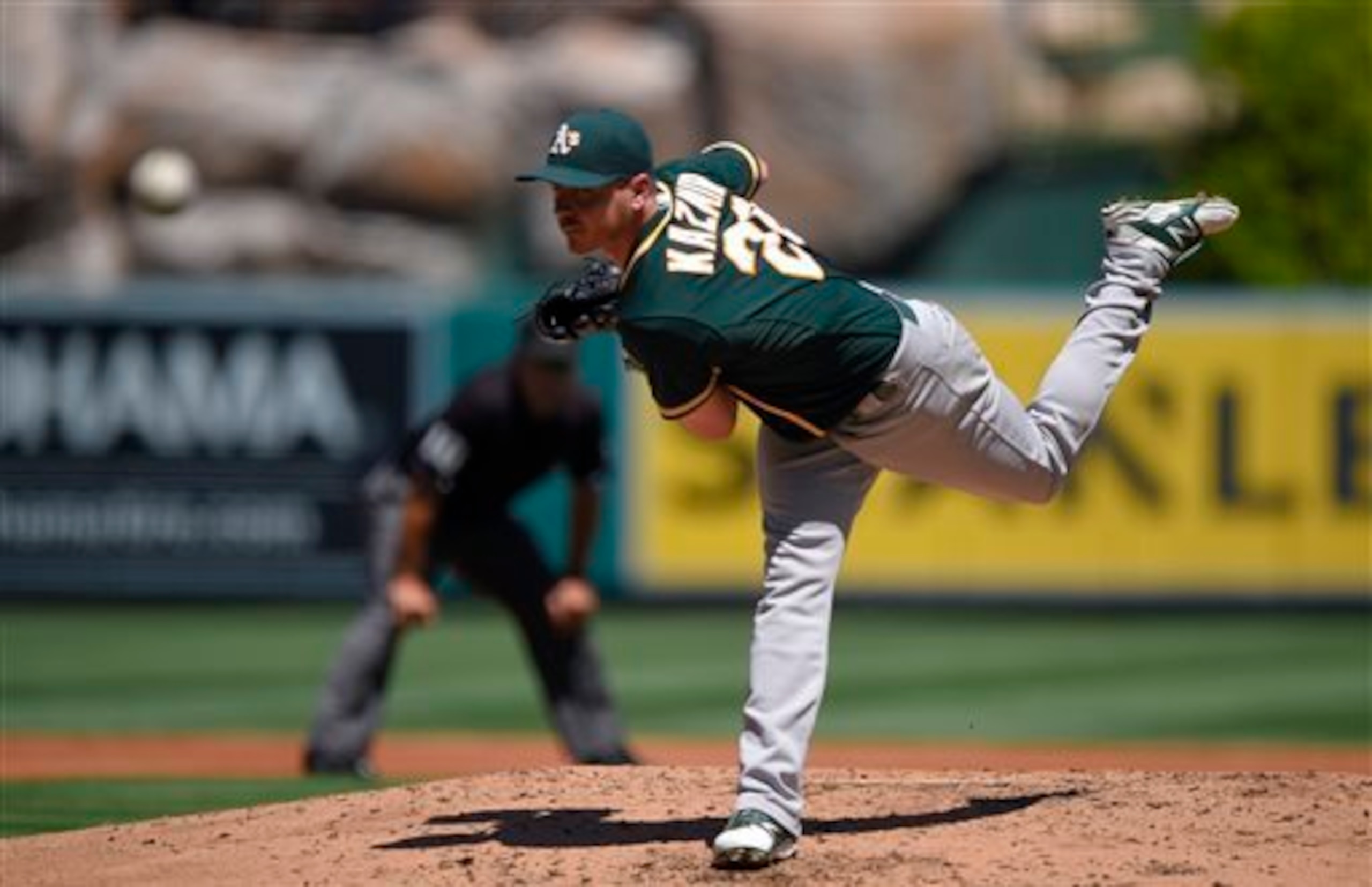
Control
Kazmir’s reputation as a control nightmare feels like ancient history. Limiting walks has become a strength, and he’s earned it by pounding the strike zone more often than the average starter. To that end, a new trick he’s trying out is an increased number of secondary pitches in the zone. What he needs to work on is fastball command against righties, as he too often finds himself working down the middle.
Whiffability
One thing that hasn’t kept up from 2013 is Kazmir’s strikeout rate. His fastball velocity hasn’t helped, as he’s lost over a mile per hour and has seen his fastball whiff rates suffer. Heading forward, the now 30-year-old lefty will need his secondaries to keep his still-strong whiff rate up. Because he trusts those secondaries—particularly his changeup and slider—more these days, maybe that’s not asking a lot.
Hittability
With Kazmir going to his four-seamer less and less, it’s no wonder he’s become a pretty good ground ball pitcher. There is a major caveat here, though, and that’s that his ground ball rate comes with a pretty major platoon split. He doesn’t get righties to hit the ball on the ground as well as he can with lefties, and righties also haven’t had much trouble taking him for a ride.
Workhorse
It’s been a long time since Kazmir has had to pitch as many innings he’s had to this season. That’s good news because it means he’s been able to stave off injury, and his month-to-month velocity chart looks fine. However, he’s only been about a six-inning guy, and he also hasn’t averaged 100 pitches per start. Given how this fits with his track record, it’s best not to expect too much from him.
Overall
Though he comes with platoon, swing-and-miss and workload question marks, the reclamation of Scott Kazmir can safely be deemed a success. Largely through command better than any he ever had when he was younger, he’s turned himself into more of a pitcher than he ever was when he was younger.
37. Hyun-Jin Ryu, Los Angeles Dodgers
43 of 79
Control
Good command was a primary staple of Ryu’s excellent rookie season, and it’s only gotten better this year. Beyond simply hitting the zone more often, he’s gotten better at playing with the outside corner against lefties and both sides of the plate against righties. Add in how he’s put more sliders, curveballs and changeups at the knees, and you get a lot to like.
Whiffability
With his command buying him more strikes, it’s no wonder strikeouts have come more frequently for Ryu in 2014. On the whole, though, his stuff isn’t much harder to hit than it was in 2013. At an average of 90-91, he doesn’t have the velocity to blow hitters away, and none of his three secondary pitches are good enough to miss bats. He can get enough whiffs to save par, but no better than that.
Hittability
Ryu’s ability to locate and mix his pitches make him a tough guy to hit. That much is reflected in his solid ground ball rate, and you’ll see him get his share of off-balance swings throughout the course of an outing. But hitters have generally had an easier time making good contact this year than they did in 2013. Line drives have been easier for them to come by, and long fly balls are not an impossible task.
Workhorse
After he averaged easily over six innings and 100 pitches per start in 2013, Ryu’s reputation as a workhorse has taken a step back. Beyond his increased hittability meaning some short outings, he’s landed on the DL twice. And though he’s still only 27, such issues serve as a reminder that he’s not a physical specimen and that he arrived in the states with plenty of miles already on his body.
Overall
Though injuries have done their part to wreck Ryu’s sophomore season, it’s been largely a success otherwise. What was already really good command of his pitches has gotten better, and he’s still mixed strong—if less than great—abilities to miss bats and limit hard contact.
36. Lance Lynn, St. Louis Cardinals
44 of 79
Control
Given that roughly 80 percent of Lynn’s pitches are fastballs, it’s odd that he’s not better at avoiding walks or pounding the zone. But this makes his fastball command look worse than it is. He’s pretty consistent about flirting with the outside corner against lefties, and he can flirt with both the inside and outside edges against righties. That he can do this makes his walks easy to forgive.
Whiffability
One thing that’s keeping Lynn’s fastball-heavy approach relevant is that his four-seamer is better at getting whiffs than his 92-93 velocity would indicate. He gets whiffs on basically a quarter of the swings taken at his four-seamer, making it one of the whiffiest four-seamers out there. He doesn’t have much else besides that, though, so it’s hard to imagine him reversing his declining strikeout habit.
Hittability
Lynn has kicked up his use of his sinker, and his reward has been more ground balls. And there may be more where those came from. His sinker is an outstanding ground ball pitch, and he’s more comfortable using it now than he was at the beginning of the year. Lynn’s four-seamer, meanwhile, is helping to drive his solid pop-up rate and has also made sure fly balls don’t go very far.
Workhorse
Lynn’s tendency to mess with walks doesn’t help keep his pitch counts low. But he’s only making progress as a workhorse, averaging more pitches per start every year. After hitting 200 innings for the first time in 2013, he now looks like a guy who should have 200 innings in him every year.
Overall
It hasn’t been an easy year for the Cardinals rotation, but Lynn’s emergence has been a quiet bright spot. He can still make things interesting with his command, but he’s gotten to a point where he can manipulate contact well while still getting his share of whiffs.
35. Sonny Gray, Oakland A's
45 of 79
Control
Gray has mixed up his pitches more than he did in his big league cameo in 2013, and that’s made it harder for him to find the zone. He’s been better at throwing strikes than his modest walk rate indicates, however. And he’s thrown largely good strikes, keeping his fastball low against lefties and righties. Though I wouldn’t call his command performance this year a great one, it’s definitely one to build off of.
Whiffability
Gray has basically been average at getting both strikeouts and swinging strikes. Though he can sit 93-94 hitters haven’t been swinging through his four-seamer. Since his changeup has also been modest at getting whiffs, that leaves his curveball as clearly his best whiff pitch. And while it’s good, it’s not elite. As such, what we’ve seen from Gray in this department is likely what we’re going to get.
Hittability
While Gray is just OK at missing bats, he’s very good at limiting hard contact. He has a high ground ball rate because basically everything he throws can induce ground balls, with his ability to keep his pitches low being a big reason why. It’s also a good look that he gets pop-ups as frequently as he gives up home runs, which makes it easier to forgive how fly balls off him do tend to travel.
Workhorse
For a guy listed at just 5’11” and 195 pounds, Gray has held up well. He’s averaged six and a half innings and 100 pitches per start, and the low for his velocity happened at the beginning of the year. His velocity within games has been shaky, however, and his non-elite command can lead to high pitch counts. Looking ahead, it’s best if we don’t mark him down as a good bet to blow away the 200-inning mark.
Overall
Gray hasn’t exactly been overpowering in his first full season, and it’s not the best sign that his command has been shaky as he’s tried to be more than just a fastball-curveball guy. But he’s also a case of how effective keeping the ball low and getting ground balls can be, and his assorted shortcomings have certainly done little to diminish his reputation as one of the game’s bright young pitchers.
34. Marcus Stroman, Toronto Blue Jays
46 of 79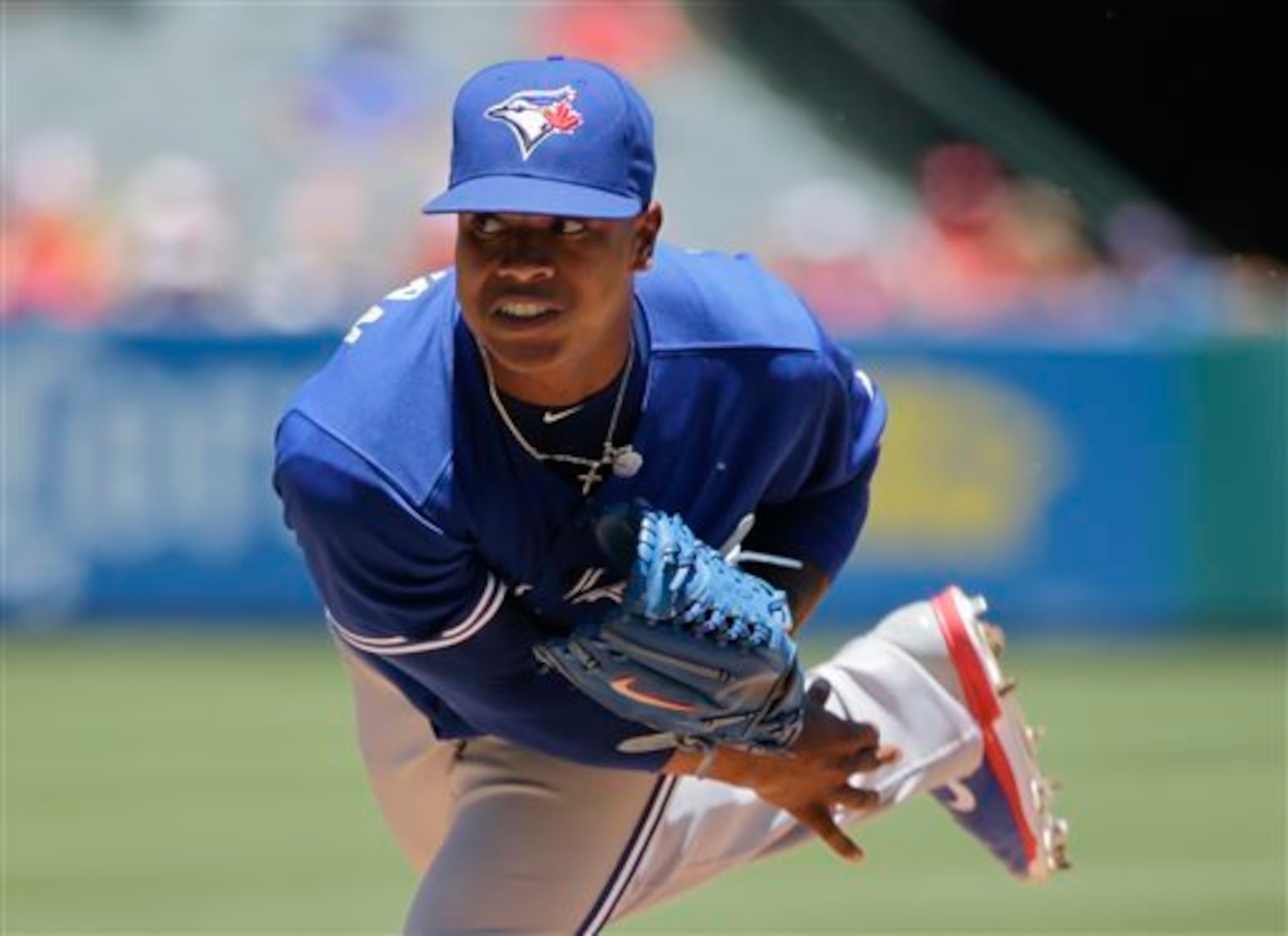
Control
Stroman has gone heavy on the hard stuff since he became a starter, with four-seamers, sinkers and cutters accounting for roughly 70 percent of his pitches. That’s helped him find the zone consistently. There’s potential in his ability to locate the ball, too, as he’s shown he can keep his heat low against lefties and on the outside corner against righties. All told, a good first step for the 23-year-old.
Whiffability
Stroman has been inconsistent getting whiffs since he became a starter. He’s had to deal with none of his pitches being particularly great at getting whiffs. But since his slider, curveball and changeup can be nasty when they’re working, and because his 93-94 velocity gives him heat that can blow hitters away, it’s a safe bet we haven’t seen Stroman’s best yet here either.
Hittability
Stroman’s been good at getting ground balls since he became a starter, but the potential is there for him to be great. His cutter is already a terrific ground ball pitch, and he’s worked in his sinker more as the year has moved along. He’s also shown he can specialize in getting medium-depth fly balls. All together, there’s enough here for high hopes for 2015.
Workhorse
Stroman doesn’t have a classic pitcher’s build at 5’9” and 185 pounds. That and the fact that he hasn’t worked deep into games or held his velocity especially well means expectations for his workload potential shouldn’t be too high. But if he does indeed make good on his command and hittability potential, he should at least be more than a five-inning guy in 2015.
Overall
It would be overstating things to say that Stroman has put it all together as a starter, and goodness knows he went through something of a reality check in August. What he’s shown has been largely positive, however. Looking ahead, he’s a guy who should be able to command the ball well while picking up his share of whiffs and keeping hard contact to a minimum.
33. Nathan Eovaldi, Miami Marlins
47 of 79
Control
You wouldn’t expect a 24-year-old with a 95-96 fastball to be a command specialist, but Eovaldi is an exception. He lives in the zone more than anyone not named Phil Hughes. He mostly throws good strikes with his heat, too, staying mainly low and away against lefties and righties. He’s not at a point where he can pound the corners consistently. But at the rate he’s going, it’s a good bet he soon will be.
Whiffability
Unfortunately, Eovaldi plays against type here too. He’s below average both at getting strikeouts and swinging strikes, as neither his hard four-seamer nor his slider are particularly great swing-and-miss pitches. Since that has more to do with insistence on living in the zone than the actual quality of his stuff, however, we can allow ourselves some hope that Eovaldi has room to grow here.
Hittability
Though he lives at the bottom of the zone with it, Eovaldi’s bread-and-butter four-seamer isn’t great at getting ground balls. As such, it’s no surprise that the majority of balls hit off him are line drives and fly balls, making him prone to hard contact. The silver lining is that how lefties and righties have trouble pulling fly balls off him. Given how hard he throws, that’s more than likely a sustainable skill.
Workhorse
Eovaldi has blown past his previous career high of 119.1 innings, and he’s done it while averaging around six innings and 100 pitches per start. His efficiency has been a factor, and he’s further helped himself by retaining his velocity well from inning to inning. As long as he can keep doing that, he should be able to continue building his reputation as a workhorse in 2015.
Overall
Results haven’t been easy for Eovaldi to come by as the season has moved along, but he’s done enough to establish himself as a potential star in the making. For as easy as it is to notice his fastball velocity, his command is just as impressive and the best is likely still to come regarding his whiffability.
32. Tim Hudson, San Francisco Giants
48 of 79
Control
It’s not by accident that Hudson is flirting with a career-best walk rate. He’s pounded the zone more frequently, and he’s been solid at getting hitters to chase. That he’s been ahead a lot has helped, but his extreme presence at the bottom of the zone has required hitters to protect it. He can miss up against lefties, though, and it’s also hard to ignore that he hasn’t been as sharp since the All-Star break.
Whiffability
This really isn’t Hudson’s game, as this won’t be his first year with a strikeout rate well below par. His M.O. is pitching to contact and only pick up whiffs when he needs them. In fairness, he’s not bad at doing that thanks to his cutter and splitter, which are halfway-decent whiff pitches. If either of those pitches wasn’t a distant second fiddle to his sinker, he might actually be a good strikeout artist.
Hittability
Maybe we’ll just start calling ground balls “Hudsons” one day. He’s been posting ground ball rates in the mid-to-high 50s his whole career, and is once again in 2014. That’s his sinker at work, as it’s good for ground balls on 60-70 percent of balls it puts in play. The catch is that all Hudson’s pitches have gotten easier to hit for line drives. Because that trend started in 2013, it’s probably not quitting.
Workhorse
Hudson’s efficiency generally allows him to breeze through six innings on easily less than 100 pitches, and he’s perfectly capable of going much further and still finishing with under 100 pitches. Even still, it’s probably not a good idea to expect too much out of a 39-year-old who last pitched 200 innings in 2011 going forward.
Overall
Watching Hudson pitch can be a joy, as it typically means watching a guy who hits the bottom of the strike zone pitch after pitch while racking up a ton of ground balls. Having such a subpar strikeout ability does leave him with a smaller margin for error, however, and there is the wonder of how much longer he can keep this up at his age.
31. Tanner Roark, Washington Nationals
49 of 79
Control
Roark teased a strong ability to hit the zone in 2013, and going for an even more hard-heavy approach has helped that ability get even stronger. And for the most part, he does a good job of keeping his heat low. But that’s more true of his battles against lefties than his battles against righties, who have gotten to see their share of meatballs. Roark’s control is good, but there’s room for improvement.
Whiffability
Because he relies primarily on his sinker and only throws 91-92, Roark’s oft-used heat isn’t for missing bats. So as long as he insists on being a fastball-heavy pitcher, he’s not likely to be a good strikeout artist. He’s not bad at getting swinging-strikes when he needs them, however, and that’s owed to how his curveball, slider and changeup are solid swing-and-miss pitches.
Hittability
With so many sinkers leaving his hand, you’d expect Roark to be a good ground ball pitcher. But he’s actually just OK at getting ground balls, in part because his sinker is a mediocre ground ball pitch. What allows Roark to survive is his ability to mix in his curve, slider and change about equally. That helps keeps hitters off-balance, which shows most in the frequency at which he gets catchable fly balls.
Workhorse
In limiting both walks and strikeouts while keeping hard contact relatively infrequent, Roark is pretty good at keeping his pitch counts low. That’s how he’s been able to average over six innings per start on less than 100 pitches. And though he’s already 27, his big league career is really just getting started. It would not be a surprise if he soon became the quietly reliable 200-inning type.
Overall
It’s easy to overlook Roark given that he’s come out of nowhere and is rubbing shoulders with Stephen Strasburg, Jordan Zimmermann, Doug Fister and Gio Gonzalez, but he looks like a legit big league pitcher. Though he’s not overpowering, his abilities to command the ball and keep hitters off-balance ensure he’s successful.
30. Garrett Richards, Los Angeles Angels
50 of 79
Control
Richards’ 2014 season came to an early end with him holding a 2.72 BB/9, putting him right at the league average for starters. He was no better than the average starter at hitting the zone, in part because of his wildness both outside and inside the zone with his fastball. He may not switch things up until he starts leaking velocity, and those days shouldn’t come for a while yet.
Whiffability
Given that Richards sat in the 96-97 range with his heat, it’s somewhat disappointing that he only compiled an 8.75 K/9 and a 10.7 swinging-strike rate. That was largely a function of how Richards’ heat was actually easier to hit than you’d expect. The (very) bright side is Richards’ slider, which he established as one of baseball’s best sliders this year. As long as he at least has that, he'll miss bats.
Hittability
This is where Richards really shined. He finished 2014 with a ground ball rate over 50 percent, largely thanks to a sinker that got ground balls more than 60 percent of the time it was in play. He also wasn’t easy to hit even outside of the ground balls, as he got plenty of pop-ups and didn’t have to deal with many well-hit fly balls. Basically, stuff designed to jam hitters did just that. And how.
Workhorse
If you want the bright side, it’s that Richards finished his season averaging 6.5 innings on 101 pitches. The not-so-bright side is that his velocity peaked early in games, and we also have to consider how his devastating knee injury is going to impact his workload in 2015. He’ll need six to nine months to recover, so we may not see him until midway through 2015. As such, this score is us playing it safe.
Overall
Though he did it with iffy command and fewer strikeouts than you’d expect, the way in which Richards simply overpowered hitters in 2014 made him one of the league’s elite starting pitchers. It’s a shame that his knee injury is going to keep us from seeing him not only the rest of this year, but potentially part of next year as well.
29. Jeff Samardzija, Oakland A's
51 of 79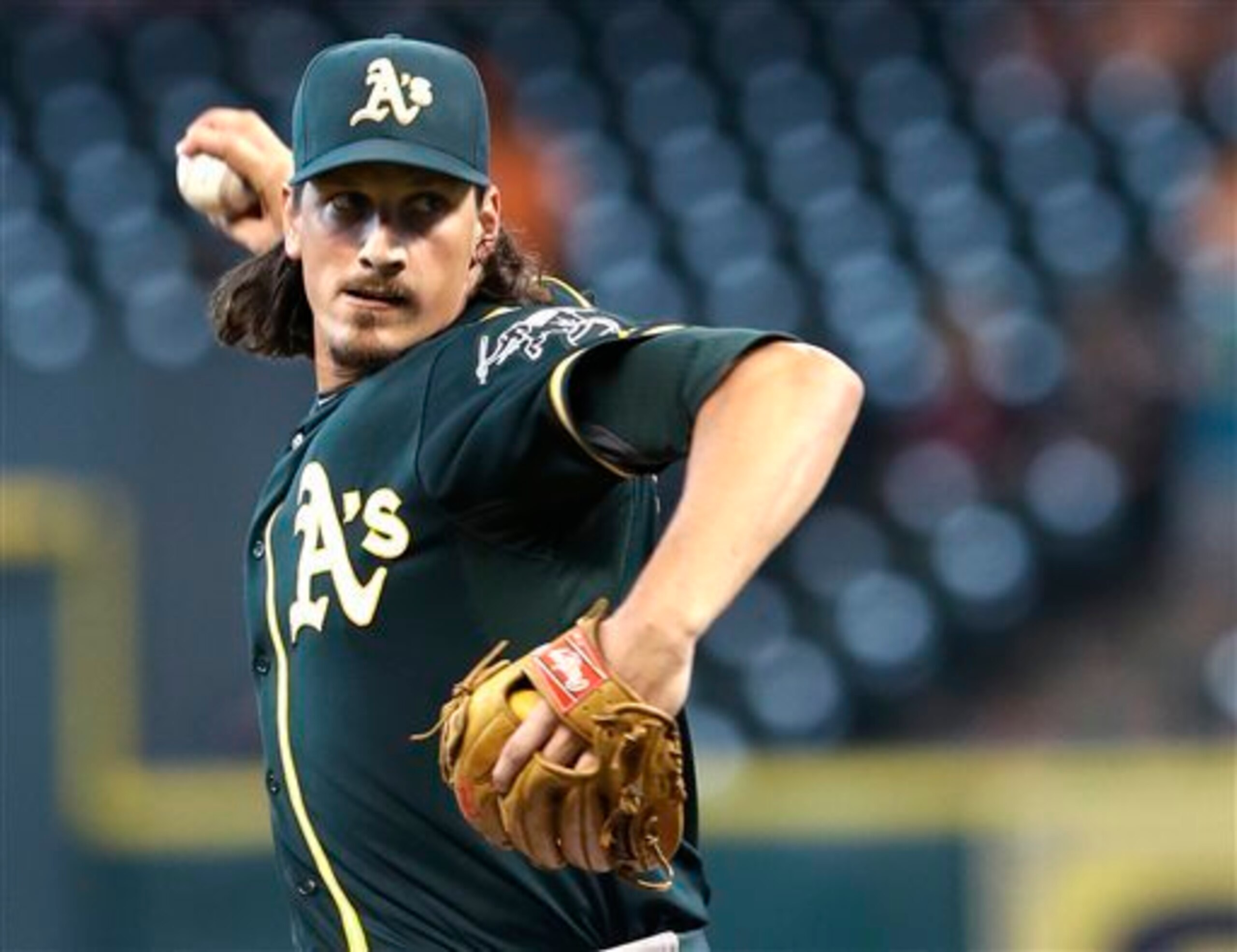
Control
Walks have gone from a weakness to a strength for Samardzija, in part because a more hard-heavy approach has allowed him to find the zone more consistently. His fastball command within the zone is still iffy, though, as he’s prone to missing down the middle and isn’t as good at locating his sinker against righties as he is against lefties. This is the next improvement he’ll have to make.
Whiffability
Samardzija is getting the same amount of swinging strikes in 2014 that he did in 2013, and it's once again been his slider and splitter doing the bulk of the work. Both are quite good at missing bats. But if there's a reason to be skeptical, it's in how Samardzija is now throwing his sinker more than his four-seamer and is slowly phasing out his splitter. If he keeps that up, whiffs won't be as easy to come by.
Hittability
While he's still known primarily for whiffs, Samardzija’s ground ball rate has been trending upward. That can be linked to the increased trust he's put in his sinker, as it’s easily his best ground ball pitch. However, his stuff has gotten easy to hit for line drives, and he’s not immune to well-hit fly balls. As such, his ground ball tendency comes with some catches.
Workhorse
Samardzija threw his name into the top workhorse discussion when he crossed 200 innings in 2013, and this year has seen him keep it up by being good for easily better than six innings on 100 pitches per start. That he’s becoming more efficient bodes well going forward, and the reality that he’s still relatively new to starting helps alleviate the concern that this is his final year on the good side of 30.
Overall
The best thing Samardzija has going for him is his steady transformation into a pitcher who’s going to get by on good control and a solid mix of whiffs and ground balls, and he has a much fresher arm than most guys do at his age. His command still needs fine-tuning, however, and he’s really not as downright overpowering as he was in his first two years as a starter.
28. James Shields, Kansas City Royals
52 of 79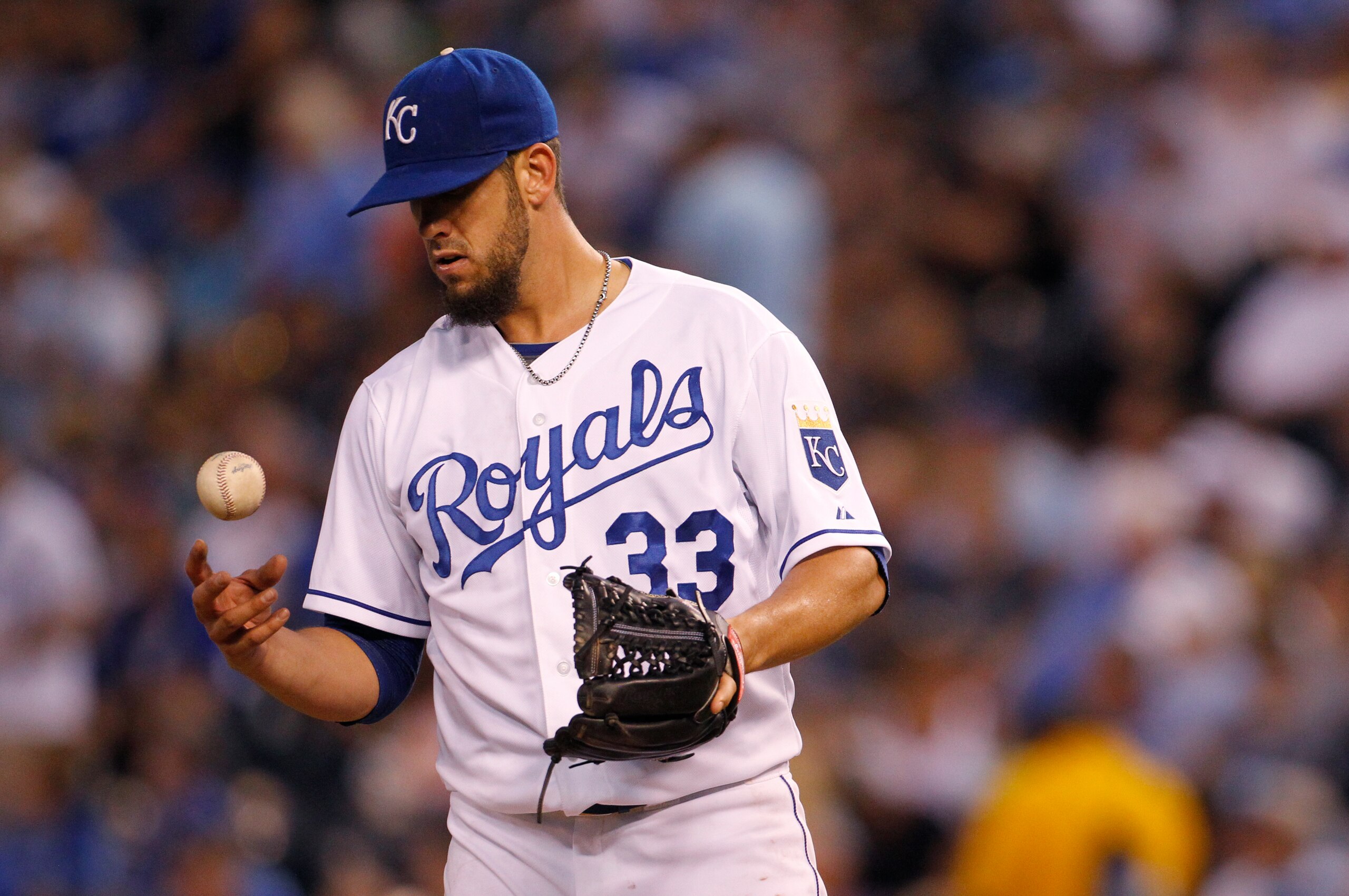
Control
To get his super-low walk rate, all Shields has had to do is throw more fastballs and cutters and more pitches in the strike zone. He’s also put more hard pitches at the bottom of the zone, which is saying something in his case. The catch is that he’s also put more heaters across the middle of the zone than ever, so this hasn’t quite been a career year for his control from that perspective.
Whiffability
After dipping in 2013, Shields’ strikeout rate and swinging-strike rate are now trending downward. He surprisingly isn’t losing velocity—he’s still in the 92-93 range—but his changeup isn’t the weapon it used to be. He’s not using it as much, and hitters aren’t missing it as much. The best swing-and-miss pitch he has now is his curveball, and he seems hesitant to use it as anything other than a show-me pitch.
Hittability
Shields’ ground ball rate is back up, as you’d expect from a guy who’s putting so many pitches at the knees while also increasing his trust in his cutter. But hitters are also having an easier time hitting his four-seamer on a line, and the return of his old home run problem should probably actually be worse knowing how many long fly balls he’s given up. This is probably where his decreased trust in his changeup is hurting the most, as he’s not having as easy a time keeping hitters off-balance.
Workhorse
Shields embodies the term “workhorse” as much as any other pitcher, and his assorted struggles this year haven’t stood in his way of being a lock for close to seven innings and 110 pitches. But he actually doesn’t hold his velocity well from inning to inning, and you can’t help but be at least a little concerned about how much longer Shields can keep this up now that he’ll be 33 next year.
Overall
Shields’ superior command is the base for his two primary strengths: limiting walks and attracting ground balls by spotting the ball low in the zone. But the decline of his changeup has made him easier to hit, both from a contact standpoint and (seemingly) from a good contact standpoint. Then there’s the obligatory question: How much longer can Shields keep handling such immense workloads?
27. Rick Porcello, Detroit Tigers
53 of 79
Control
It should be granted that one thing that’s helping Porcello keep his walk rate down is an increased amount of contact, but he’s also hitting the zone more often and doing a good job in particular of spotting his sinker. He really only pitches to his arm side, but he does a fine job of hitting the corner with it. It’s too bad his command of his four-seamer (which he uses more often these days) isn’t as sharp.
Whiffability
Porcello has actually been disappointing here in 2014. Both his strikeouts and swinging strikes had been trending up, but not anymore. That he’s lost some velocity hasn’t helped, and in general all the pitches he throws have become easier to hit. Given that his stuff was borderline whiffable in the first place, there’s likely no use in hoping for a turnaround moving forward.
Hittability
Porcello had been becoming an extreme ground ball pitcher, and his sinker and secondaries are helping his ground ball rate at least stay above average. But his success can also be traced to how he’s mixed in some pop-ups and medium-depth fly balls. Though there should probably be more home runs to his name, it’s safe to say he’s more than a one-trick pony with limiting hard contact.
Workhorse
Before 2014, Porcello was too prone to short outings to be a good workhorse. But he always had the efficiency for the task, and now he has the production to match it. That he’s averaging around seven innings per start speaks to how well he’s mixed his efficiency with a more disaster-proof style of pitching. Given that he’s still only 25 years old, this mix should continue to serve him well.
Overall
What’s been a career year for Porcello is not without cracks, particularly regarding to his diminished ability to miss bats. But he’s definitely grown as a pitcher, showing off superior command and pitching to contact more effectively. Finally, we can stop talking about the pitcher he might be and instead talk about the pitcher he is.
26. Henderson Alvarez, Miami Marlins
54 of 79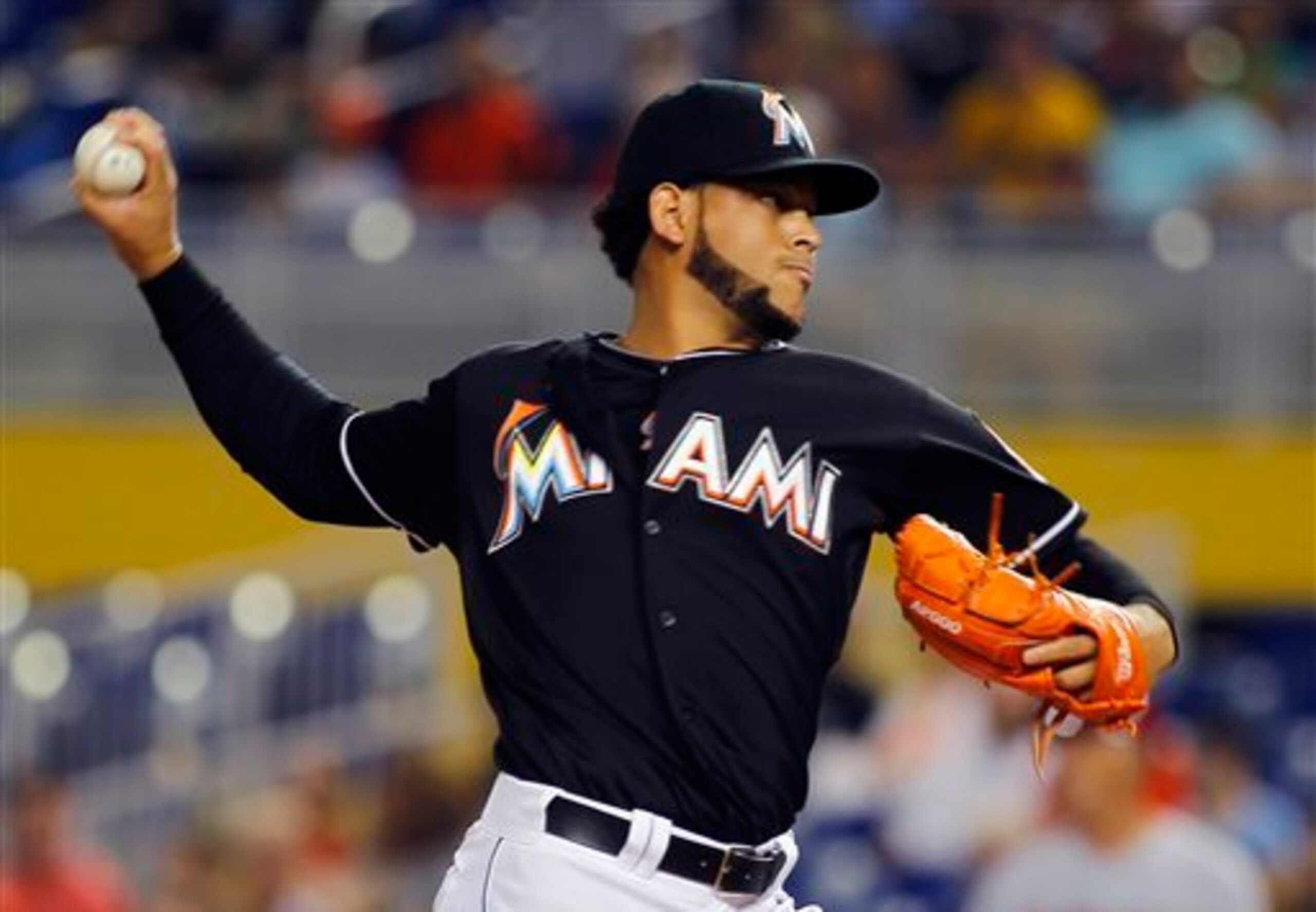
Control
Alvarez has launched an all-out attack on the strike zone in 2014, and things look even better if we focus on his sinker command. He’s mastered putting it on the outside corner against lefties, and has played with both sides of the zone against righties. Further, his increased use of his changeup has consisted mainly of him spotting it low and away against lefties. For a guy who’s still only 24, this is exciting stuff.
Whiffability
Whether Alvarez can ever become a great strikeout pitcher is doubtful. His swinging-strike rate has increased in 2014, however, and that’s tied to him going with less of a hard-heavy approach that’s allowed him to throw his slider and changeup more. Neither is a great swing-and-miss pitch, but they’re both solid enough to keep boosting his swinging-strike rate if he keeps downplaying his hard stuff.
Hittability
When you lean heavily on a sinker that you’re good at spotting, the ground balls are going to come. With him being well on his way to another season with a ground ball rate over 50 percent, Alvarez can vouch. But we can’t ignore how much Marlins Park suppresses his home run rate and how hitters are clearly on to his four-seamer. When he isn’t keeping the ball on the ground, things are dicey.
Workhorse
Alvarez has lost starts to shoulder injuries in last two years, and is now dealing with yet another injury. That, his modest size (listed at 6’0”) and high-velocity style make it hard to bank on him staying healthy. This makes the best thing Alvarez has gone for him his efficiency, as his good command and preference for ground balls help keep his pitch counts low. At least he has that.
Overall
The two big knocks on Alvarez are his ability to stay healthy and his general avoidance of strikeouts. There is some hope in the latter department, though, and there’s little to complain about regarding Alvarez’s ability to command the ball and get ground balls. That’s a fine recipe for success, and he executes it about as well as anyone.
25. Matt Harvey, New York Mets*
55 of 79
*Will return from October, 2013 Tommy John operation in 2015.
Control
Harvey’s excellent 1.56 BB/9 rate in 2013 was largely the product of a solid 47.3 zone rate. Goodness knows he wasn’t shy about attacking the zone with his 95-96 fastball. And though his command likely won’t be as sharp in his return from Tommy John, it’s notable that his approach with his fastball in 2013 often consisted of him challenging hitters right down the middle. That’s not a tough style to pick up again.
Whiffability
Only Yu Darvish got swinging strikes more frequently than Harvey in 2013, and no wonder. He often won the challenges he issued with his fastball, and his curveball, slider and changeup were also well above-average swing-and-miss pitches. But while surgery shouldn’t hamper his stuff, you do wonder if lesser command could translate to him having to rely on his heater more than he did in 2013. Even with his fastball being his fastball, that could cost him some whiffs.
Hittability
If Harvey does have to rely on his fastball more in 2015, he’s also likely to have trouble repeating his 47.7 ground ball percentage from 2013. But even if he only becomes an average ground ball pitcher, things should still be OK. While not hard to elevate against, Harvey was extremely hard to take deep in 2013. That’s life when you’re good at getting both pop-ups and medium-depth fly balls.
Workhorse
Harvey was a lock to go deep into games when he took the ball last year, averaging 6.9 innings per start on 104 pitches. Whether we’ll see that again is the question. Beyond Harvey likely being less dominant due to various factors in his comeback from Tommy John, there’s the matter of how much the Mets are going to be watching his workload. As such, this score is playing it safe.
Overall
We should pump our brakes on expecting to see the 2013 Harvey in 2015. Even a lesser version of that Harvey, however, should still be an outstanding pitcher. As long as he at least has his good stuff, he’ll be able to miss enough bats and jam enough hitters to get by fine. After being arguably MLB's best pitcher when he was healthy in 2013, him returning to be a top-25 pitcher is absolutely plausible.
24. Masahiro Tanaka, New York Yankees
56 of 79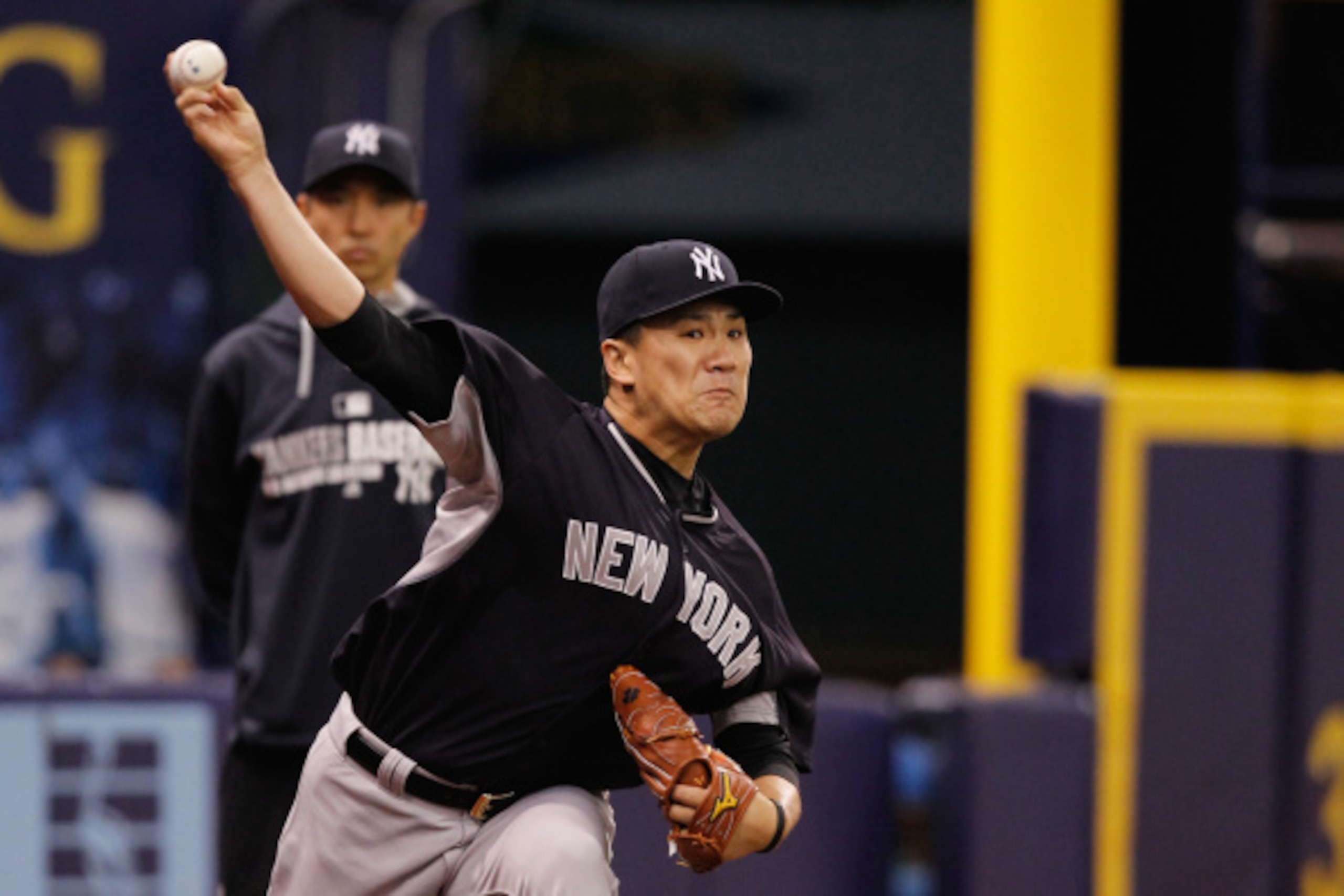
Control
That a pitcher can avoid walks so well without pounding the zone defies logic. But Tanaka’s really good at toying with the edges of the zone with his hard stuff against both lefties and righties, typically setting the latter up for sliders. Then there’s how he uses his splitter, consistently placing it both at and below the knees to get strikes via swings. It’s a smoke-and-mirrors approach, but he executes it perfectly.
Whiffability
The obvious thing to be noted is how much Tanaka’s splitter lived up to the hype. It’s not the only elite whiff pitch he has, though, as his slider is quietly a deadly assassin against right-handed hitters. There’s only one catch: Both pitches reached peak whiffability early. If hitters adjust to them, Tanaka will have to settle for being one of the best swing-and-miss pitchers instead of arguably the best.
Hittability
Just as much of a surprise as the whiffs is how good of a ground ball pitcher Tanaka turned out to be. Part of that has to do with how good his splitter is at getting ground balls, but his sinker can do its part too. Tanaka doesn’t have the easiest time limiting hard contact when the ball isn’t on the ground, though, as he isn’t immune to line drives and home runs that stem from all the long fly balls he gives up.
Workhorse
This is where we finally acknowledge that Tanaka’s right elbow may be a ticking time bomb. He’s managed to avoid Tommy John surgery since being diagnosed with a partially torn UCL in July, but it’s still fair to call him an injury risk. Especially knowing that all this is following over 1,300 innings in Japan. Him lasting through 2015 like nothing ever happened is an iffy proposal.
Overall
The big question with Tanaka now is whether he can avoid Tommy John surgery. If he can’t, it’s likely we won’t see him fully healthy until 2016. But right now, that he's still surprisingly avoiding Tommy John leaves us to ponder his fascinating outlook for 2015: We can't count on him being healthy, but we can count on him being terrific if he is.
23. Hisashi Iwakuma, Seattle Mariners
57 of 79
Control
Iwakuma’s working on an absurdly low walk rate, so you’ll be surprised to hear he’s not actually pounding the zone that much more than he did in 2013. But he is finding the bottom of the zone with his hard stuff more frequently, setting hitters up to swing over his slider and splitter. It’s a dandy approach that leaves room for only one gripe: Iwakuma goes right down the middle against righties too often.
Whiffability
Iwakuma hasn’t been more than an average strikeout artist since he came into the league, and that much hasn’t changed this year. His swinging-strike rate is actually down, in part because none of his pitches have become harder to hit. Even his splitter—which is a darn good one—isn’t particularly great at getting whiffs, as it’s cut out more for inducing weak contact. But on that note…
Hittability
Iwakuma’s splitter is a terrific ground ball pitch, resulting in a grounder about 70 percent of the time it’s in play. His sinker is also a good ground ball pitch, and is now his primary fastball. The catch is that he isn’t actually working with a hugely elevated ground ball rate, in part thanks to how all his offerings have been easier to hit for line drives. That and the reality that fly balls off him tend to be deep are red flags.
Workhorse
Iwakuma’s been maybe the most efficient pitcher in baseball this year, so it comes as no surprise that he hasn’t even needed 100 pitches to average seven innings per start. And even though he’s not unhittable, the efficiency with which he pitches shouldn’t go away. So why worry? Mainly because it’s easy to forget that Iwakuma’s a mid-30s pitcher who logged plenty of innings in Japan before coming over.
Overall
Watching Iwakuma pitch is fun, as he’s one of those guys who has both the mind and the command to toy with hitters for as long as he’s out there. The only complaints worth making is that it feels like he should be a better strikeout artist than he is, and then how he doesn’t have the stuff to get away with the rare mistakes he does make.
22. Cliff Lee, Philadelphia Phillies
58 of 79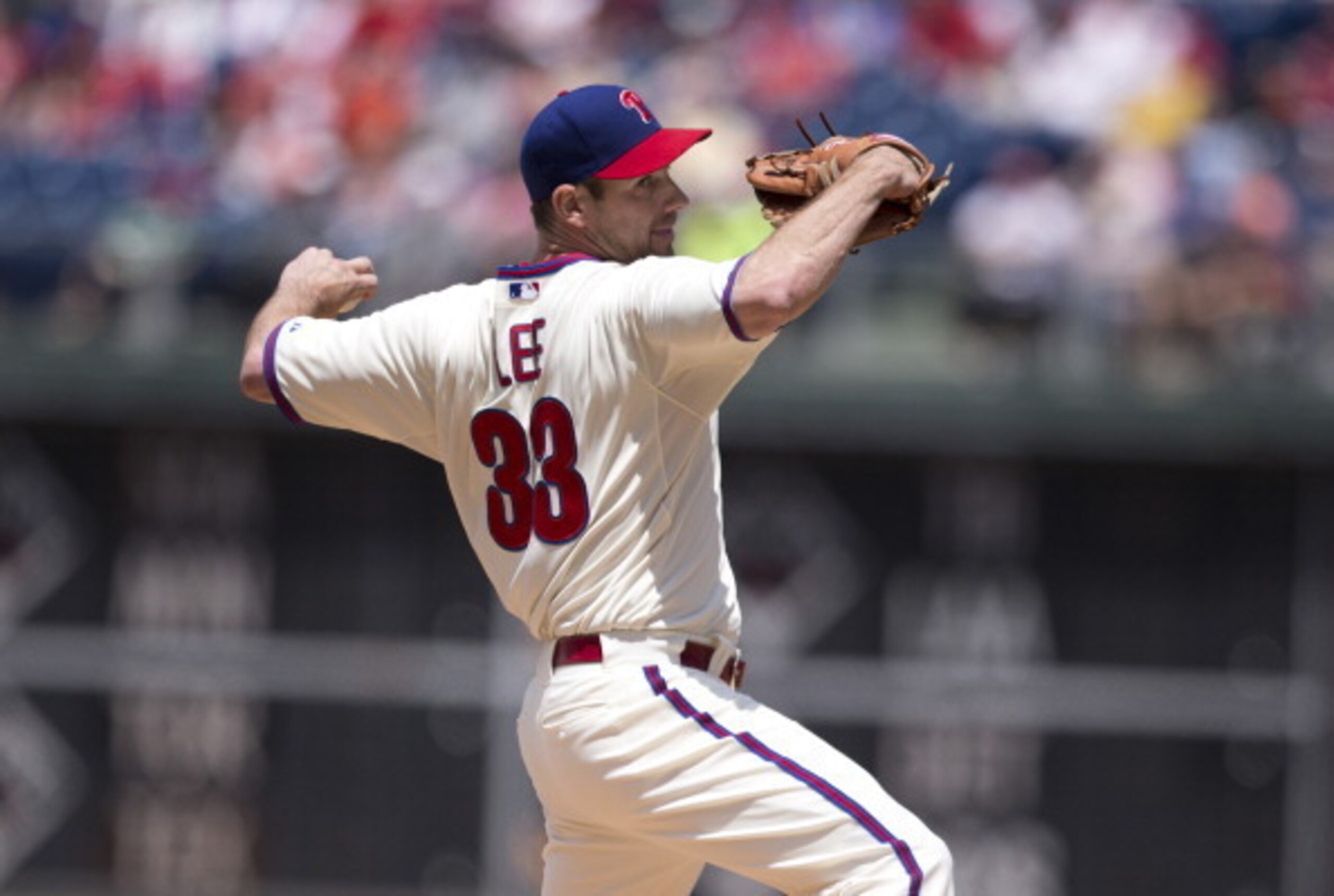
Control
When an elbow injury ended Lee’s season in August, that put a Cliff Lee-like 1.33 BB/9 rate in the books. He got it through his usual means of pounding the strike zone with a 51.5 zone rate, and he also did his thing of pitching at the knees with his sinker and burying his cutter mainly off the inside edge on his glove side. Though his health betrayed him, he was still himself from a command standpoint.
Whiffability
Lee didn’t have the easiest time getting strikeouts or swinging strikes. He dealt with lesser velocity across the board, and that hurt his sinker and cutter in particular. That Lee’s changeup was better than ever is a bright side, but the velocity concern is real. After losing velocity in an age-35 season that ended in an elbow injury, it’s hard to imagine it coming back next season at age 36.
Hittability
Lee finished his season with the best ground ball rate of his career, a gift brought to him mainly by his changeup and cutter. But since his sinker is his bread-and-butter pitch, it’s distressing that it’s only getting easier to hit on a line. He’ll have to mix and locate his pitches very well to avoid that becoming a problem. As such, I guess it’s a good thing this is Cliff Lee we’re talking about.
Workhorse
This is the first year that Lee wasn’t good for seven innings per start since 2009, but that’s thanks largely to a couple rough starts and his final injury-shortened start. If Lee’s healthy in 2015, I’d expect him to get back to being efficient enough to log seven innings on a regular basis. The only thing that bothers me is the “if” in that sentence, as it can’t be brushed aside in light of Lee’s age and elbow scare.
Overall
Because 2014 saw Lee struggle with lesser stuff and, ultimately, a season-ending elbow injury means we shouldn’t count on him being one of baseball’s elite pitchers going forward. But as long as he can come back with his same pinpoint command and general pitchability, he should at least still have a spot among baseball’s great pitchers.
21. Julio Teheran, Atlanta Braves
59 of 79
Control
Teheran may be throwing fewer fastballs, but upping the frequency with which he finds the zone with his slider, curveball and changeup has helped keep his walk rate low. He’s also good at locating his hard stuff on the edges, but that does come with one catch. He’s better at it against lefties than he is against righties. Since he had the same issue in 2013, maybe banking on improvement isn’t the best idea.
Whiffability
Teheran’s strikeout rate has declined, but he’s doing fine getting swinging strikes. That he has two breaking balls in his slider and curveball that are good, if not quite great, swing-and-miss pitches is a big help there. What’s iffier is whether his four-seamer can sustain its respectable whiffability going forward. Though he’s only 23, Teheran has always lost a mile per hour off his 2013 velocity.
Hittability
That Teheran is an extreme fly ball pitcher means home runs are a constant threat, especially given that he doesn’t exactly specialize in getting pop-ups. He’s able to largely avoid home runs, however. That he mixes and locates his pitches well helps, as it makes it tough for batters to really square him up. That shows up in his fly ball heat map, which is littered with can-of-corn fly balls.
Workhorse
After last year’s 185.2 innings, Teheran has come back to average just about seven innings on only 100 pitches this year. His efficiency—highlighted by his good control and modest strikeout habit—surely helps, and he’s also shown that he can maintain velocity well deep into games. And with him not even in his age-24 season yet, his arm should be a long way away from being overtaxed.
Overall
Teheran’s biggest fault is that his relatively modest ability to get swings and misses means he’s awfully dependent on his fly ball approach keeping the ball in the yard. But he does a fine job of making that approach work, and he’s quietly developed into one of the top innings-eaters in the league.
20. Phil Hughes, Minnesota Twins
60 of 79
Control
Hughes has always been good at attacking the zone, but this season is seeing him outpace everybody in zone percentage by a significant margin. It helps that about 85 percent of his pitches are fastballs or cutters. And while we could raise issue with how he tends to live in the middle of the zone, it seems pointless in light of how he rarely ever misses it. He’s a proverbial strike-throwing machine.
Whiffability
Hughes picks up no shortage of strikes, but he hasn’t been that much better than the average starter at picking up strikeouts. And he’s also been roughly average at getting whiffs. That he’s around the zone so much doesn’t help, and he doesn’t have overpowering velocity at 92-93. He also has just one secondary pitch, and it’s a curveball that isn’t hard to hit.
Hittability
Target Field isn’t entirely to thank for Hughes’ home run rate dropping, as deep fly balls haven’t been as frequent in 2014 as they were in 2013. It helps that he has his cutter to give hitters something to think about, and it’s also helped him by boosting his (albeit still very much modest) ground ball rate. So while you still worry about Hughes’ old gopheritis problem, he’s legitimately gotten it under better control.
Workhorse
Even getting as many as five innings out of Hughes was an accomplishment in 2013. That makes his new normal of six-plus innings on less than 100 pitches a huge upgrade. That’s a gift of his extreme efficiency and getting the home runs under control. He’ll keep it up if he maintains this year’s approach, and he still has another year to go before he hits 30.
Overall
The Twins had the right idea when they gambled on Hughes last winter, but even they probably didn’t think it would pan out this well. And give Hughes his share of the credit, as going for broke by assaulting the strike zone while also incorporating a cutter has worked like a charm.
19. Jake Arrieta, Chicago Cubs
61 of 79
Control
Arrieta has been throwing his slider (that’s what he calls it) more often, and has been very effective using it to play with the edges of the zone against both lefties and righties. Though his fastball command isn’t quite as sharp—especially against righties—it’s hardly bad. Between that and what he can do with his slider, Arrieta has the options to get strikes that he lacked when he arrived in Chicago.
Whiffability
Arrieta’s rebirth has also featured plenty of strikeouts and swinging strikes, and it’s not just because of his slider that he’s getting those. He has a 93-94 fastball that he can throw by hitters, as well as a changeup and a curve that boast borderline elite whiffability. With him still being on the good side of 30 and his arm relatively well-preserved, these weapons shouldn’t abandon him any time soon.
Hittability
Arrieta’s rebirth also features a career-best ground ball rate. You’d expect as much from a guy who leans heavily on his sinker and slider, and both pitches are pretty good at getting grounders. To boot, when he’s not getting grounders, Arrieta’s getting his share of pop-ups and shallow fly balls. When you mix good velocity with good movement and good location, this is basically what you get.
Workhorse
That Arrieta set a new career high for innings when he hit 119.1 innings says a lot about his lackluster track record—which has been shaped in part by elbow and shoulder injuries—and he’s only been about a six-inning pitcher besides. No wonder, as his inning-to-inning velocity chart shows he’s quick to tire. He’s made a solid first step toward becoming a top workhorse, but he still has work to do.
Overall
The Cubs made a good roll of the dice when they took on Arrieta as a reclamation project, but here’s guessing he’s probably surpassed even their expectations. Though durability is still something of a question mark, Arrieta has harnessed both his stuff and his command to become a pitcher who can carve up lineups in a number of different ways.
18. Yu Darvish, Texas Rangers
62 of 79
Control
The walks continue to become more infrequent for Darvish, and he’s earned it. His zone rate has climbed to a new high this year, in part because he's simplified things by going to his fastball more. The next step should be (hopefully) honing his fastball command, as he merely flirts with the zone against lefties and goes right down the middle too often against righties.
Whiffability
Darvish is still the game’s top strikeout artist, but he’s quietly not getting as many swinging strikes. A main problem is how his increased fastball usage has coincided with fewer whiffs on his fastball. That his velocity has gone down hasn’t helped. Still, it’s hard to doubt the guy. An increased presence in the zone means more strikes, period, and he still has his utterly devastating slider to put to good use.
Hittability
Darvish still isn’t easy to hit, but there are good reasons why he’s on track to post the highest batting average against of his brief career. His ground ball rate is plummeting, a byproduct of him going to his fastball more. It’s also become easier to hit everything he throws for line drives, and his fly ball heat map strongly suggests there should be more home runs on his record. Frankly, none of this bodes well.
Workhorse
Better control has meant more efficient outings for Darvish, and it shows in how he’s been good for close to seven innings on fewer pitches than usual. That makes the only real concern his injury track record. There are new additions on it seemingly every week, and his recent elbow scare is the scariest one yet. So despite his youth and growing efficiency, caution is necessary.
Overall
This is one of those scores that feels a lot lower than it should be, especially knowing that Darvish has only become more efficient with his pitches while remaining an elite strikeout artist. But the cracks are there. He’s become easier to hit, both in terms of making contact and making good contact, and his injury track record isn’t getting any cleaner. Moving ahead, these are some real concerns.
17. Zack Greinke, Los Angeles Dodgers
63 of 79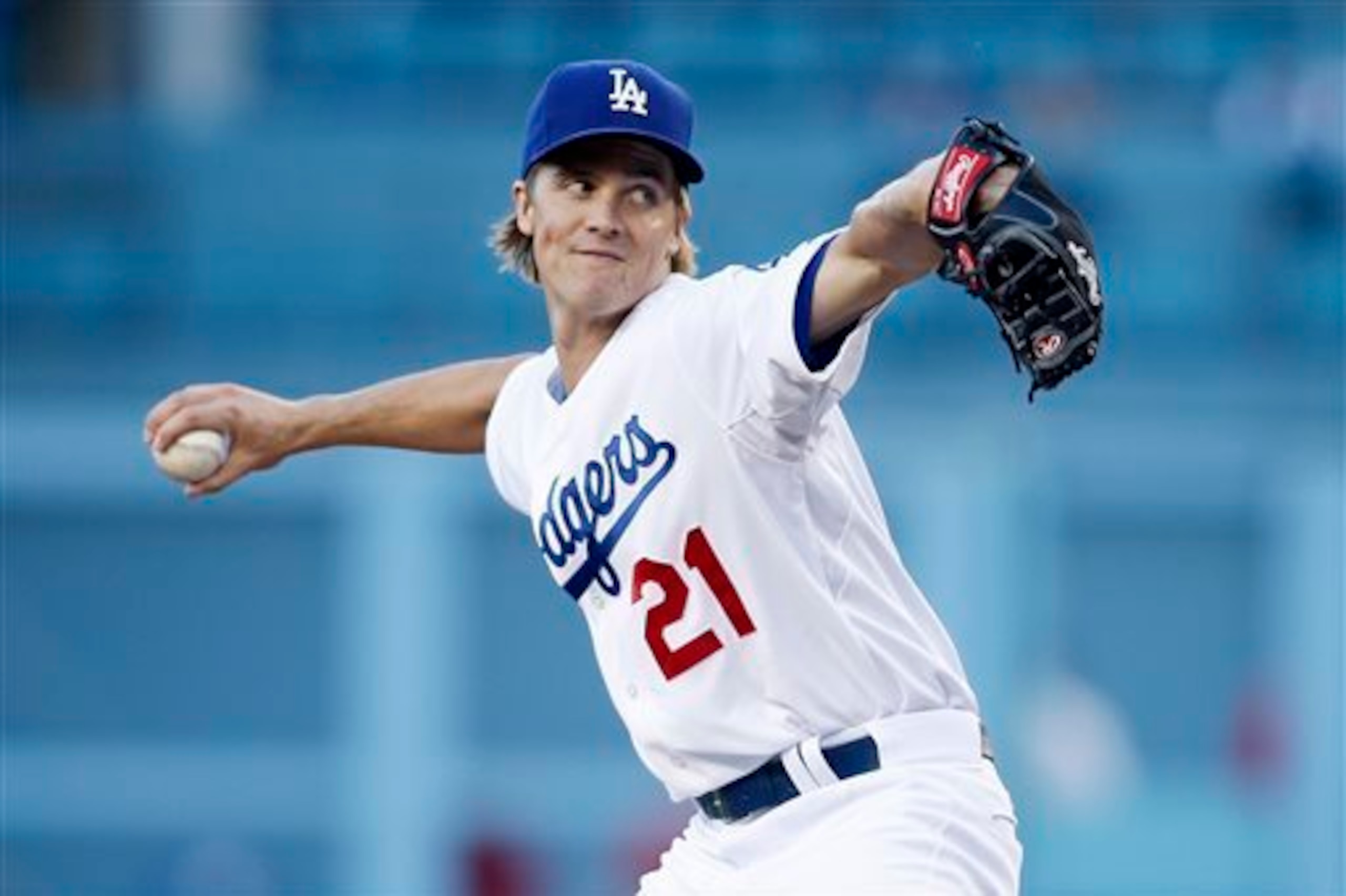
Control
Because fastballs account for just over 50 percent of Greinke’s pitches, it’s not a shock to see him hitting the zone less frequently than the average starter. And yet he’s having one of his more prolific years putting fastballs on the edge of the zone anyway, and that speaks to his pitching style in general. Take a look at everything he throws, and you notice he rarely gives lefties or righties anything good to hit.
Whiffability
Greinke’s strikeout rate has returned with a vengeance. It helps to have one of the highest chase rates in baseball, a byproduct of his ability to play with the edges of the zone. Trouble is that his slider is not the swing-and-miss pitch it used to be, and his four-seamer’s increased whiffability is suspect knowing that his velocity is now just 91-92. With his age-31 season on deck, keeping that up won’t be easy.
Hittability
Greinke has become a virtual lock for a ground ball rate in the 45-50 percent range, which isn’t surprising given how he can put an assortment of pitches in areas where they’re hard to elevate. But the line drive rates on his key secondaries are up this year, and he’s not immune to homers. When the smoke and mirrors fail, he can be hit.
Workhorse
This is preemptive caution. Greinke has been good for over six innings and 100 pitches once again, but he’s had elbow scares two years in a row. Because he’s now on the wrong side of 30 and he has a pitching style that involves throwing a fair number of breaking balls, this can’t be ignored. He’ll be fine if he stays healthy, but we shouldn’t rely too heavily on that.
Overall
Greinke has made the transition from fastball-slider power pitcher to everything-but-the-kitchen sink finesse pitcher look easier than it has any right to be. If he stays healthy, he should be able to keep it up. But that’s also our big concern, and a well-warranted one given his recent elbow scares.
16. Dallas Keuchel, Houston Astros
64 of 79
Control
Keuchel has taken a much-improved walk rate from 2013 and made it even better. Rather than do it by pounding the strike zone—which he doesn’t do much—he keeps batters on their toes by living on the edges. He’s especially good at sticking to the outside corner against lefties, and he frequently visits the outside corner against righties too. The one caveat is that his misses against righties have a tendency to be in hittable areas.
Whiffability
Keuchel’s a below-average strikeout artist, and it makes sense that he is knowing that his approach is primarily based on seeking ground balls with his sinker (more on this in a moment). But he’s not a below-average whiff artist thanks to one pitch in particular: his slider. It’s quietly one of the most whiffable sliders in the game, and it’s a fine tool for Keuchel to get whiffs.
Hittability
You’re looking at baseball’s top ground ball pitcher, and it’s not really close. This speaks to the quality of his sinker, which is the groundball-iest sinker among starters. That alone is worthy of some props, but we’ll stop short of calling Keuchel perfect. With velocity that only extends as high as 90 miles per hour, his home-run-per-fly-ball rate is a reminder that he can’t make mistakes with his stuffs them.
Workhorse
The one knock on Keuchel is that he lacks a track record as an innings-eater. But limiting walks and getting a lot of ground balls is a fine way to be efficient, and it shows in how he’s averaged about seven innings on barely over 100 pitches, with a handful of complete games to boot. He may not have a track record as an innings-eater, but this is the beginning of him building a good one.
Overall
A complete afterthought in 2013, Keuchel has made himself into one of the top starting pitchers in the game. All it’s taken is sharp control, a devastating slider and a sinker that basically nobody can hit. Other struggling pitchers should take note.
15. Alex Cobb, Tampa Bay Rays
65 of 79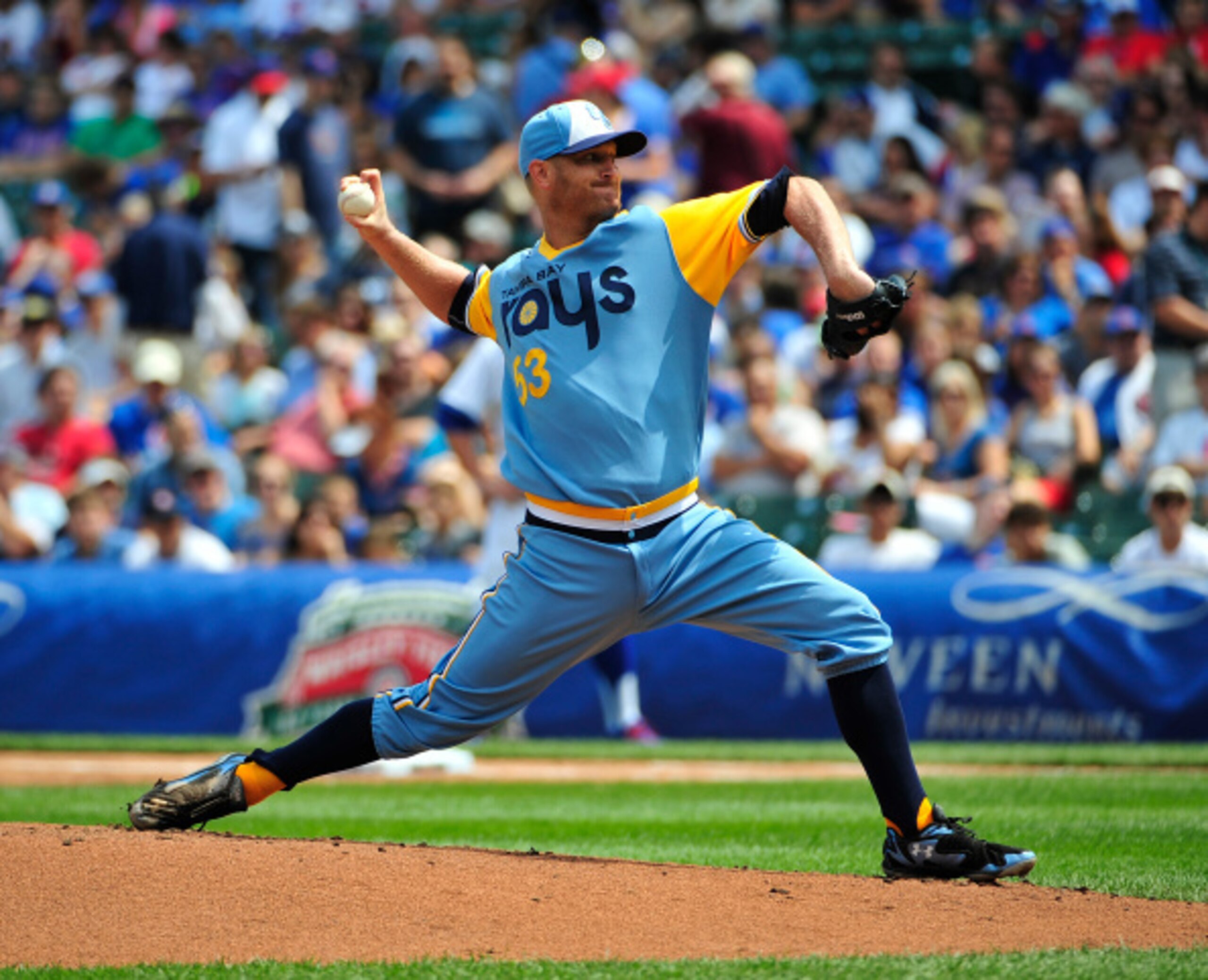
Control
There are two reasons Cobb is likely to never be elite at avoiding walks: He rarely throws fastballs, and he rarely visits the strike zone. And yet he makes it work thanks to an uncanny ability to live on the edges of the zone with his heat, and he basically never hangs either his curveball or his split-change. That puts his command in the “Better Than It Looks” file.
Whiffability
Because he throws just 91-92 and relies exclusively on his sinker, Cobb’s not one to blow hitters away. And truth be told, he’s not a great strikeout artist. But he is a swing-and-miss artist, as he buys himself plenty of swings outside the zone and both his curveball and his split-change are outstanding whiff pitches. With him putting more and more trust in these pitches, the whiffs should keep coming.
Hittability
Because Cobb goes heavy on the slow stuff while staying out of the fat part of the zone, that he’s an elite ground ball pitcher who also avoids line drives makes sense. But this is thanks mainly to his curve and split. His sinker is mediocre at getting ground balls by sinker standards and isn't impossible to take for a ride. And though he doesn’t like to throw it, it’s also a pitch he can’t avoid throwing entirely.
Workhorse
Injuries have helped to conspire against Cobb establishing himself as a top workhorse, and he didn’t get a reprieve this year when an oblique strain sidelined him for a month. He’s also only been about a six-inning pitcher when he has been healthy. This is partially thanks to his approach. It mainly works fine, but it can lead to high pitch counts and short outings when he’s not getting the swings he requires.
Overall
Cobb’s starts are worth watching if for no other reason than there aren’t many pitchers with a style like his. And it works well, as pitching off his slow stuff with good command can make for quite a few ugly swings throughout the course of an outing. Now all he needs is a full season to maximize his potential. Maybe he’ll get it in 2015.
14. Stephen Strasburg, Washington Nationals
66 of 79
Control
Strasburg has been limiting walks better than ever, and it’s no mirage. Already one to attack the zone, he’s been pouring more heaters into the zone and also hasn’t been shy about putting his secondaries in the zone. When he does, he frequently puts them at the knees. He’s not above making mistakes, however. Righty batters who have seen quite a few heaters down the middle can vouch.
Whiffability
When you have both a changeup and a curveball that rank among the hardest to hit in the game, you’re going to get your share of whiffs. When you can also blow hitters away with a fastball that sits 94-95, you’re going to get even more whiffs. The inevitable catch is that said fastball was 95-96 in 2012 and 2013. If it drops again in 2015, Strasburg will need even more out of his excellent change and curve.
Hittability
Making contact against Strasburg is difficult, but making hard contact isn’t. Particularly when it comes to his fastball, which has become easy to square up for line drives and hard-hit fly balls. That his secondaries get ground balls is his saving grace, but his fastball issues trace back to how major league hitters can time a fastball.
Workhorse
Whereas he didn’t even after six innings per start back in 2012, he’s now good for over six and around 100 pitches. His strikeout habit does elevate his pitch count, however, and Washington’s caution with him has helped make eight-inning starts few and far between. He’s also prone to shorter outings thanks to his increased hittability. It all makes 200 innings still the goal rather than the expectation.
Overall
There’s no question that Strasburg has the control and the stuff to be an elite pitcher. Especially the stuff, as his changeup and curveball in particular are simply sublime. It’s too bad he’s becoming easier to knock around on days when he’s not sharp, and he still hasn’t transformed into one of the league’s top workhorses.
13. Madison Bumgarner, San Francisco Giants
67 of 79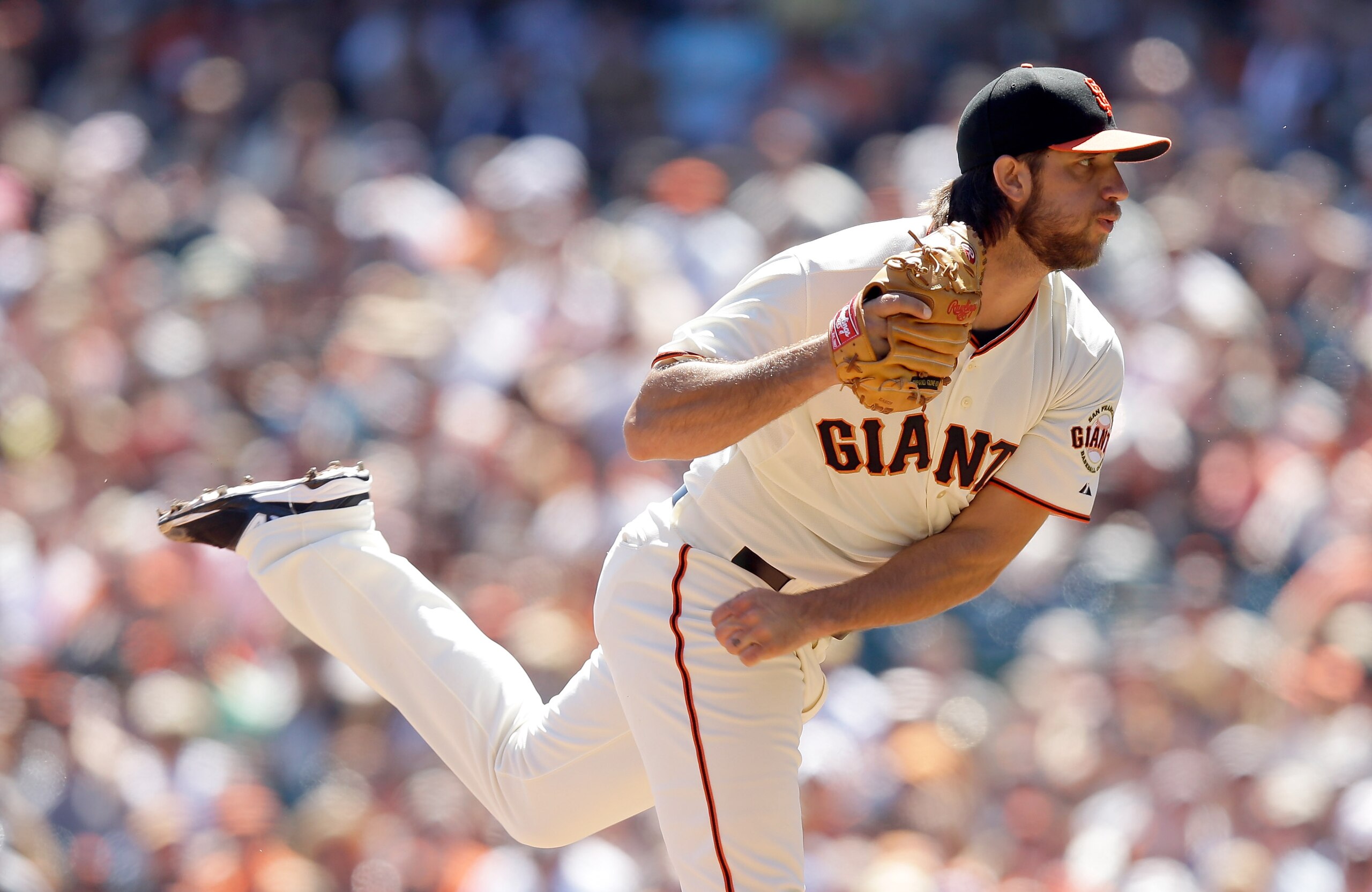
Control
Despite his funky delivery, Bumgarner’s better than the average starter at finding the strike zone. And his control is especially pinpoint with his slider/cutter/slutter thing, as he’s able to spot it off the same corner—outside to lefties, inside to righties—with regularity. His command with his four-seamer is less fine, however, as he rarely keeps it low and is prone to missing up and away on his arm side.
Whiffability
In addition to his usual deceptiveness, Bumgarner is now enjoying a spike in his fastball velocity. He sits 92-93, and his four-seamer’s whiffability has risen to a point where it rivals his curveball. That makes it two years in a row that his four-seamer has been an elite swing-and-miss pitch, and more whiffs do tend to be a benefit of pitching up in the zone as often as he does. As such, maybe he can avoid regression.
Hittability
You can count on Bumgarner’s ground ball rate being in the mid-40s like clockwork, mainly thanks to his slider/cutter/slutter thing and his ability to locate it. Many a hitter has been jammed by that pitch. But what you worry about is how his four-seamer is prone to both line drives and home runs even despite its rising velocity. As nice as whiffs are, that’s what you risk when you pitch up in the zone.
Workhorse
Bumgarner has provided his usual six to seven innings and 100 pitches per start this year and, perhaps more importantly, actually held his new-found velocity pretty well from inning to inning and month to month. With an efficient pitching style and a blank injury history heading into what will only be his age-25 season in 2015, there’s no reason to expect Bumgarner to become less reliable.
Overall
That Bumgarner isn’t impossible to knock around due to his insistence on pitching up in the zone is a concern, but it’s one of few. His funky delivery doesn’t keep him from having great control, and he’s hardly incapable of missing bats or inducing weak contact. Pretty good for a guy who only recently turned 25.
12. Adam Wainwright, St. Louis Cardinals
68 of 79
Control
Wainwright’s been at it again. He’s limited walks by actually pounding the zone more often than in 2013, and has consistently pounded lefties both in and out and righties around the outside corner. He has given us a cause for concern, however, as July and August saw him go through a stretch where he struggled to throw strikes from a slightly different arm slot. It could be nothing, but it's also nothing to ignore.
Whiffability
Wainwright’s strikeouts and swinging strikes are both down, with part of the problem being a dreaded velocity loss. Because he’s already 33, that velocity is likely gone for good. That’ll leave the responsibility of getting whiffs up to his curveball, and it’s unfortunately slowly losing some of its own whiffability. As such, Wainwright isn’t likely to stop being a modest whiff artist.
Hittability
With his ground ball rate descending amidst declining velocity, it’s no surprise that Wainwright’s line drive rate and fly ball rates are up. The reality that he hasn’t given up many deep fly balls, however, speaks to his ability to keep hitters off-balance. It also bodes well that he’s gone back to putting his trust in his sinker and cutter, which are harder to square up than his four-seamer. As such, this is a case where craftiness is visible, and very much a welcome sight.
Workhorse
Wainwright has picked up where he left off in 2013, putting in seven innings and 100 pitches every time he pitches. This is also a guy who pitched over 270 innings last year between the regular season and October, as well as a guy who’s the size of a horse at 6’7” and 235. But with his age-33 season coming and an elbow scare in his recent past, Wainwright’s track record may not be a blueprint for his future.
Overall
Though Wainwright's had a great season, he has provided reasons to worry. His typically superb control got less superb for a while there, he’s had issues missing bats and the elbow scare he had isn’t a good look in light of his age. But hey, as much as we may want to worry, we're still talking about one of the game's great pitchers.
11. Jon Lester, Oakland A's
69 of 79
Control
It’s a good sign when a guy’s walk rate is going nowhere but down. Lester’s getting it done by attacking the strike zone with his fastball and cutter like never before, and he does so without making mistakes. He adheres to the outside corner against lefties and pitches low and on both sides of the plate against righties. Behold a guy who’s become one of the game’s top control artists.
Whiffability
Lester’s painting has helped him rack up strikeouts, as he’s getting plenty of looking strikeouts. But he’s also gotten more swinging strikes, with more whiffs on his four-seamer and cutter being largely to thank for that. But because Lester’s average fastball velocity has already dropped from 92-93 to more like 91-92, keeping that going in 2015 will be tough knowing that another velocity drop is likely at age 31.
Hittability
Lester’s painting has also gotten him plenty of weak contact in 2014, with his four-seamer getting the pop-ups and his cutter getting the ground balls. His overall ground ball rate, however, is actually trending downward. Also, the four-seamer and cutter he relies on so much attract line drives. In light of that and how both pitches are likely due for a velocity loss, gathering weak contact may get more difficult.
Workhorse
Lester’s gone seven innings and thrown around 110 pitches like clockwork all year. This is what happens when you take a 200-inning pitcher and give him elite command. His velocity does peak early in games, however, and there does need to be at least some worry about him keeping it up in his age-31 season after having pitched so many innings between last season and this season.
Overall
We can quibble about whether Lester’s going to be able to maintain this year’s whiffability and general avoidance of hard contact, but there’s no denying that he’s made himself into a better pitcher. He’s never been in better control of his pitches, and it’s made every aspect of his game that much better.
10. Tyson Ross, San Diego Padres
70 of 79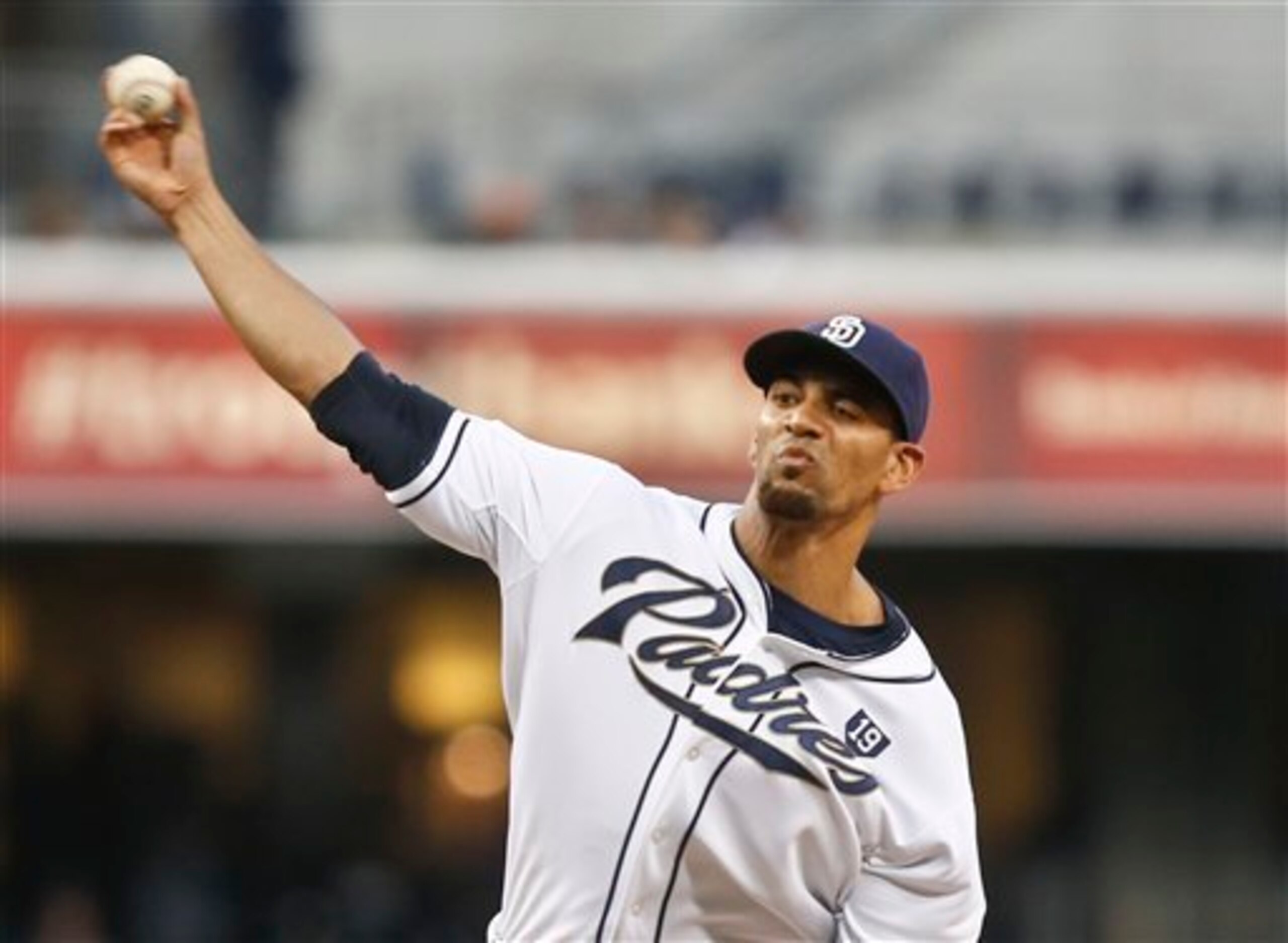
Control
Ross doesn’t have the easiest time limiting walks, and there may be no repairing that given his ever-growing reliance on his slider. But he’s also a case of a pitcher who’s command is better than his walk rate indicates, with his best talent being his ability to pound the outside corner against both lefties and righties. And for as much as he throws his slider, it’s good to know he rarely ever hangs it.
Whiffability
Ross’ slider is quietly one of the best sliders thrown by any starter, ranking up there among the best of the best in terms of whiffability. And since he goes to it so often, it’s a big reason his swinging-strike rate is as high as it is. His strikeout rate doesn’t match his swinging-strike rate, however, and that may be the case going forward too if his sinker continues to supplant his four-seamer.
Hittability
Ross was already an elite ground ball pitcher, and now he’s even better. That’s life when you have a sinker that’s hit on the ground roughly 70 percent of the time it’s in play, and it is indeed encouraging that he seems determined to use that sinker more often. But remember that part about him rarely hanging sliders? Well, they do happen, and the problem he has is that hitters don’t tend to miss them.
Workhorse
Ross has been one of the better innings-eaters in the National League this season, regularly going between six and seven innings and throwing 100 pitches. It’s also a good look that he’s throwing harder now than he was at the beginning of the year. But his velocity does tend to peak early in games, and you do have to worry about the elbow of a guy who throws so many sliders.
Overall
Maybe this comes off as being too high for Ross, but it should be hard to deny his talent. His ability to hit the corners is impressive, he has a slider that easily misses bats and a sinker that gets ground balls as well as any other sinker in the game. He looks like the next Corey Kluber: an emerging star who could soon become a superstar.
9. Jordan Zimmermann, Washington Nationals
71 of 79
Control
Zimmermann’s four-seam fastball accounts for roughly 70 percent of his pitches and sits at 93-94 miles per hour. So not surprisingly, few attack the strike zone with four-seamers as often as he does. His style involves challenging both lefties and righties up in the zone. Knowing that, it’s actually impressive how infrequently he misses down the middle. Behold a guy who knows what he’s doing.
Whiffability
Zimmermann’s finally getting the strikeouts that his stuff says he should be getting. That’s a gift of all of everything but his curveball gaining whiffability. It’s also helped that his sky-high first-pitch strike rate has allowed him to expand the zone for swinging strikes on his secondaries. He’s taken full advantage. It’s a precise process to repeat, but he has both the control and the stuff to do just that.
Hittability
As you would expect from a guy who relies so heavily on his four-seamer, Zimmermann’s not great at getting ground balls. But pitching up in the zone with good velocity does get him pop-ups, and fly balls off him are generally weakly hit. The key worry, however, is how his line drive rate has gone up thanks to the line drive rates on all his individual pitches going up. He’s tough to hit, but not impossible.
Workhorse
The best thing Zimmermann has gone for him is his efficiency, as he can easily breeze through six innings on fewer than 100 pitches. And because he’s still only 28-going-on-29 and showing no signs of decline, he should be able to continue doing so. What’s odd, however, is that six innings tend to be about his limit more often than not. Him getting to 200 innings is easy, but how far over 200 he can go is iffy.
Overall
As a pitcher, Zimmermann is more effective than exciting. His game is based on command and control, with swings-and-misses only being added to his bag of tricks this year. But it works, as there are few pitchers who are more reliable on a start-to-start basis than he is.
8. David Price, Detroit Tigers
72 of 79
Control
Price is among the elite at finding the zone for strike one, and he doesn’t stop hitting the zone from there. That fastballs and cutters account for about 70 percent of his pitches helps, but he’s also good at locating those pitches. He lives on the outside edge against lefties and against righties, straying over the middle relatively seldom against both. Simple, but definitely very, very effective.
Whiffability
For Price in 2014, the turnaround in both the strikeout and swinging strike departments has been immense, which is what happens when all your pitches gain whiffability. The sustainability of that is a question, though, especially with his heat slowly leaking velocity. A repeat performance will hinge on him continuing to blow fastballs by hitters with less velocity, which is an iffy bet.
Hittability
When Price has given up contact this year, it’s tended to be good contact. His ground ball rate has fallen once again from its 2012 peak. It’s been about as easy to hit his stuff for line drives as it was in 2013, and much easier to get his hard stuff in the air. And all around, elevating against Price has tended to mean homering off him. If he does indeed lose more velocity, things probably won’t get better.
Workhorse
Price has logged over seven innings and 110 pitches like it’s his job (which, yeah, I suppose it is) on his way to blowing past the 200-inning threshold once again. He’ll also still be on the good side of 30 next year. That leaves just one concern: that the decreased whiffability and increased hittability that likely lie ahead in 2015 will make pitching deep into games that much tougher.
Overall
If it’s right now you want to talk about, Price deserves better than the score I’ve given him. His control is unreal, and all the whiffs he’s getting are helping to make up for the louder contact he’s given up. But we’re looking ahead, and the picture there doesn’t look as bright as it does now. But hey, even a lesser David Price should still be a darn, darn good pitcher.
7. Johnny Cueto, Cincinnati Reds
73 of 79
Control
For Cueto, being a great command artist doesn’t mean living in the zone. He generally doesn’t. But he’s one of the best in the business at playing with the edges of the strike zone with his hard stuff—and he’s gotten especially prolific at it this year—particularly when it comes to facing right-handed batters. The catch is that this style bars him from being among the elite at limiting walks, but that’s about it.
Whiffability
One thing Cueto’s ability to paint has bought him is a whole bunch of looking strikeouts, which won’t be easy to repeat. This is not to say he doesn’t have swing-and-miss stuff, however. His four-seamer is one of the hardest to hit in the league, and his changeup and slider are both tough too. And with one more year to go before he hits 30, maybe he can maintain his velocity spike from 92-93 to 93-94.
Hittability
Cueto has let his four-seamer take over for his sinker in 2014, and that’s helped knock his ground ball rate down a peg. He’s still good at getting ground balls, though, and he’s also tough to square up for line drives and well-hit fly balls. That he lives on the edges is part of the equation, but his ability to mix up his many pitches also helps. Watch any start of his, and you’re liable to see a lot of ugly swings against him.
Workhorse
This is where Cueto’s hard to figure. He’s been a stupendous workhorse this year, regularly going seven innings and throwing 110 pitches while actually gaining velocity as games move along. But you just can’t rely on his shoulder to stay healthy, as he’s had issues with it seemingly every year. That makes it hard to project another season like this one.
Overall
Cueto’s been a beast from Day 1 this season, baffling hitters by painting on the edges, mixing his pitches and pitching deep into games. And though we can worry about his shoulder staying healthy and his strikeout rate coming back to earth, it’s hard not to view Cueto as one of baseball’s elite hurlers anyway.
6. Cole Hamels, Philadelphia Phillies
74 of 79
Control
By his 2011-2013 standards, Hamels has been walking more guys. However, he’s hitting the zone about as often as the average starter while (not so coincidentally) pumping more fastballs into zone than he has in years. That the majority are at the bottom of the zone is ideal, as it allows him to set batters up to swing over his changeup. Now if he would just stop missing down the middle against righties…
Whiffability
Hamels is missing bats about as well as he did in 2013, with his main weapon still being his delicious (and very much elite) changeup. His cutter and curveball are none too shabby either. One thing to raise issue with is how he’s gotten some extra whiffs from increased fastball velocity, as he’s gone from 91-92 to sitting at 92. For a guy who will be 31 soon, that doesn’t reek of sustainability.
Hittability
Hamels has pushed his ground ball rate toward its 2011 peak, and not just because his changeup is a good ground ball pitch. His sinker is too, and he’s putting more and more trust in it. To boot, Hamels is good at limiting hard contact even when he doesn’t get ground balls. By keeping hitters off-balance so consistently, he ensures that balls that are elevated off him don’t travel far.
Workhorse
Hamels has topped 215 innings three years in a row, and he’s been good for his customary 100 pitches and almost seven innings per start ever since his return from an early season shoulder injury. That he did battle that shoulder injury can’t be ignored, however, especially knowing that Hamels isn’t getting any younger. It’s likely that his most durable days are in the past.
Overall
Hamels’ success revolves largely around his changeup, which is still one of the deadliest offerings in the game. He’s also a good command artist, and you have to admire the adjustments he’s made to limit hard contact. This leaves age-related concerns—velocity and health chief among them—as the only real concerns.
5. Max Scherzer, Detroit Tigers
75 of 79
Control
Scherzer’s command potential is limited by a delivery that’s not easy to repeat, and stuff that moves like crazy. And yet he’s hitting the zone more often despite dropping his fastball usage to a new low. That he’s located his secondaries in the zone more often is a big factor there. The lone gripe is that Scherzer’s fastball command hasn’t been as sharp as in 2013, in which he lived at the bottom of the zone.
Whiffability
He’s Max Scherzer. That means more than a strikeout per inning and a whole bunch of swings and misses, largely courtesy of one of the game’s best sliders and a changeup that’s only getting harder to hit. The only catch is that his four-seamer is becoming easier to hit, which makes sense knowing that he’s gone from throwing 93-94 to 92-93. And now that he’s 30, another drop is likely to happen.
Hittability
Even despite his ever-decreasing fastball usage, Scherzer hasn’t quit being a fly ball pitcher. That’s life when your four-seamer isn’t hard to elevate. It’s also not impossible to take deep, which will only become more true if he keeps leaking velocity. But even if it does, here's guessing its primary function will still be helping Scherzer collect loads and loads of can-of-corn fly balls.
Workhorse
Scherzer’s been good for over 100 pitches and close to seven innings when he’s taken the ball these last two years. Him going more than seven innings, however, doesn’t happen especially frequently because of the high pitch counts his strikeout habit causes. We also have to take into account that he could be prone to more shorter outings in his age-30 season if lesser velocity does make life tougher.
Overall
That Scherzer’s getting up there means we naturally have to worry about how much longer his insane stuff is going to hold up, especially since the cracks are already starting to form. He should be a couple years away from completely losing his stuff, however, and his transformation into more of a pitcher than a thrower should help ensure he remains one of the game’s best.
4. Chris Sale, Chicago White Sox
76 of 79
Control
Sale finished with a BB/9 under 2.0 in 2013 and is on his way there again. A big key is how he’s been pumping more fastballs into the zone than in his previous two years as a starter, setting himself up nicely to expand the zone with his secondaries. What’s not so great is Sale’s fastball command in the zone, as he often strays down the middle against lefties and can be all over the place against righties.
Whiffability
Sale is now among the game’s very elite. That his swinging-strike rate has skyrocketed is the main ingredient, with improved fastball velocity being a big reason for that. Sale is now sitting at 94.0, and more easily blowing hitters away. Add in a Frisbee-like slider that’s one of the best in the game and an underrated changeup that’s only becoming more unhittable, and you get a whiff master.
Hittability
Sale’s increased whiffability does come with one catch, and that’s how it’s required him to exchange some sinkers for four-seamers. That’s hurt his overall ground ball rate and helped increase his fly ball rate, which should probably be leading to more home runs than it has...And yet, there's Mark Simon of ESPN Stats & Info saying that nobody has limited hard contact better than Sale. Hard to ignore, that.
Workhorse
On the surface, it’s hard to complain about a guy who’s been a strong bet for seven innings and well over 100 pitches the last two years. But Sale’s velocity has tended to peak in the first inning this year, and the thought of all those pitches is just as concerning as it is encouraging knowing that he’s had shoulder and elbow issues the last two years.
Overall
Exactly how many innings Sale can pitch in a given year is a question mark, but one of very few where he’s concerned. His herky-jerky delivery doesn’t bar him from finding the strike zone, and pretty much everything in his arsenal is unhittable from both a swing-and-miss and contact perspective.
3. Corey Kluber, Cleveland Indians
77 of 79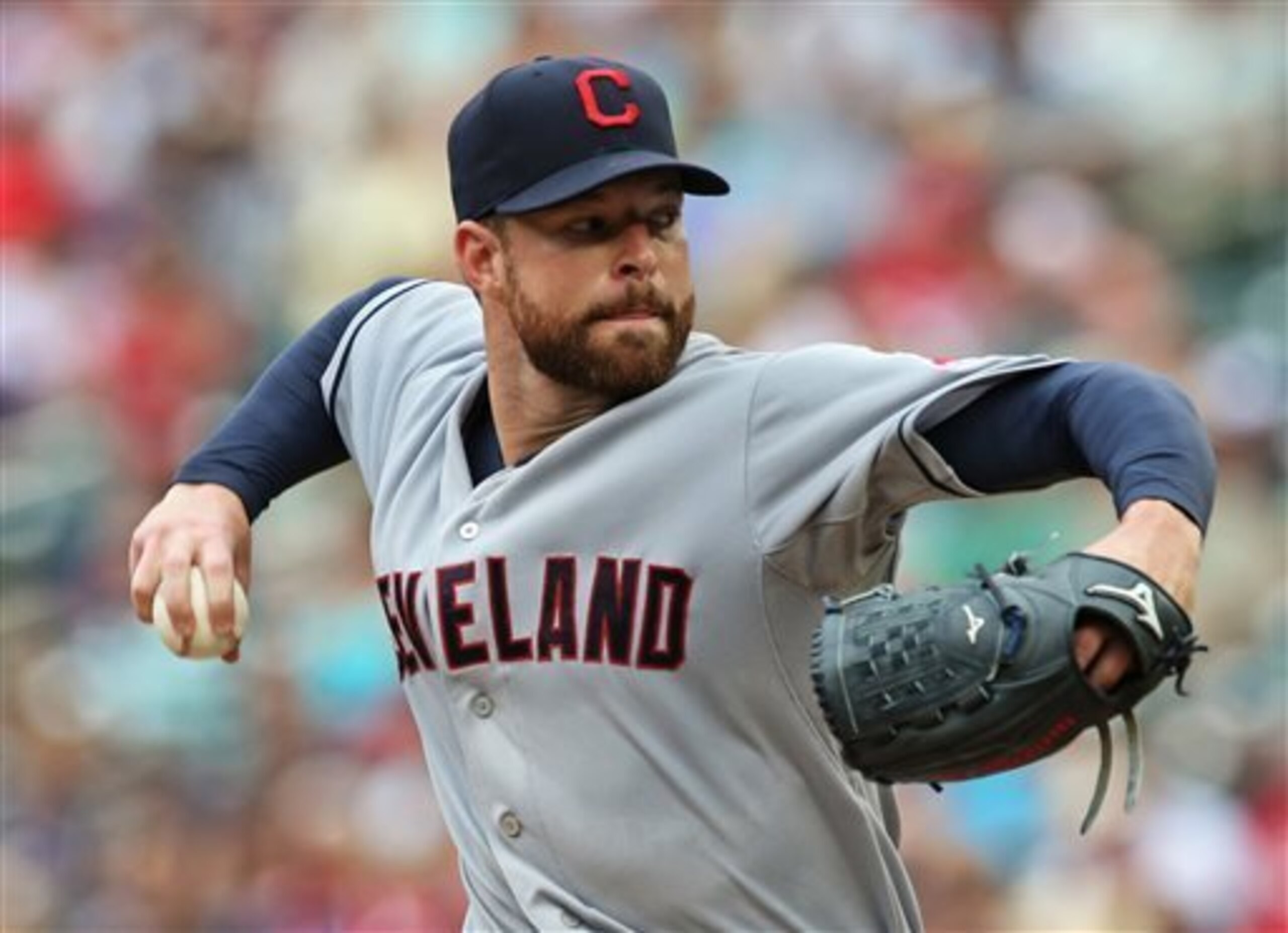
Control
That close to 80 percent of Kluber’s pitches are fastballs or cutters makes it easy for him to live in the zone, so it's actually somewhat surprising that he only hits the zone about as often as the average starter. But he doesn’t simply throw his hard stuff up there. He lives consistently on the edge against lefties and rarely strays from the outside corner against righties. But his really hidden talent? Nobody in the American League is better at back-dooring lefties with sliders.
Whiffability
Kluber was good at missing bats in 2013. He’s become great at it this year. That he sits in the 93-94 range with his heat gives him the velocity to blow batters away, but it’s his cutter and slider that do the heavy lifting. His cutter is arguably the hardest to hit in the game, and his slider is right up there with those of Garrett Richards and Max Scherzer. That’s some arsenal.
Hittability
Kluber’s only getting better at inducing ground balls, and you would too if you had a sinker, cutter and slider as good at getting grounders as his. He’s also gotten what was an absurdly high line drive rate off his four-seamer under control, and is now inducing more pop-ups than home runs. In so many words, he’s become very, very, very hard to square up.
Workhorse
Kluber lacks a track record in this department, but what he’s shown this year has been encouraging. He’s averaged roughly seven innings per start, and his efficiency has helped him do so on barely more than 100 pitches. He’s also shown he can kick up his velocity deep in games. So even despite the lack of a track record, it’s not hard to project him as an easy bet for 200 innings going forward.
Overall
It was clear in 2013 that Kluber was at least underrated. Now he’s one of the elite starters in the game, mixing top-notch control with nasty stuff and an ability to limit good contact. The presence of Felix Hernandez will make it tough for him to win the AL Cy Young this year, but it’s not hard to imagine Kluber emerging as the favorite in 2015.
2. Felix Hernandez, Seattle Mariners
78 of 79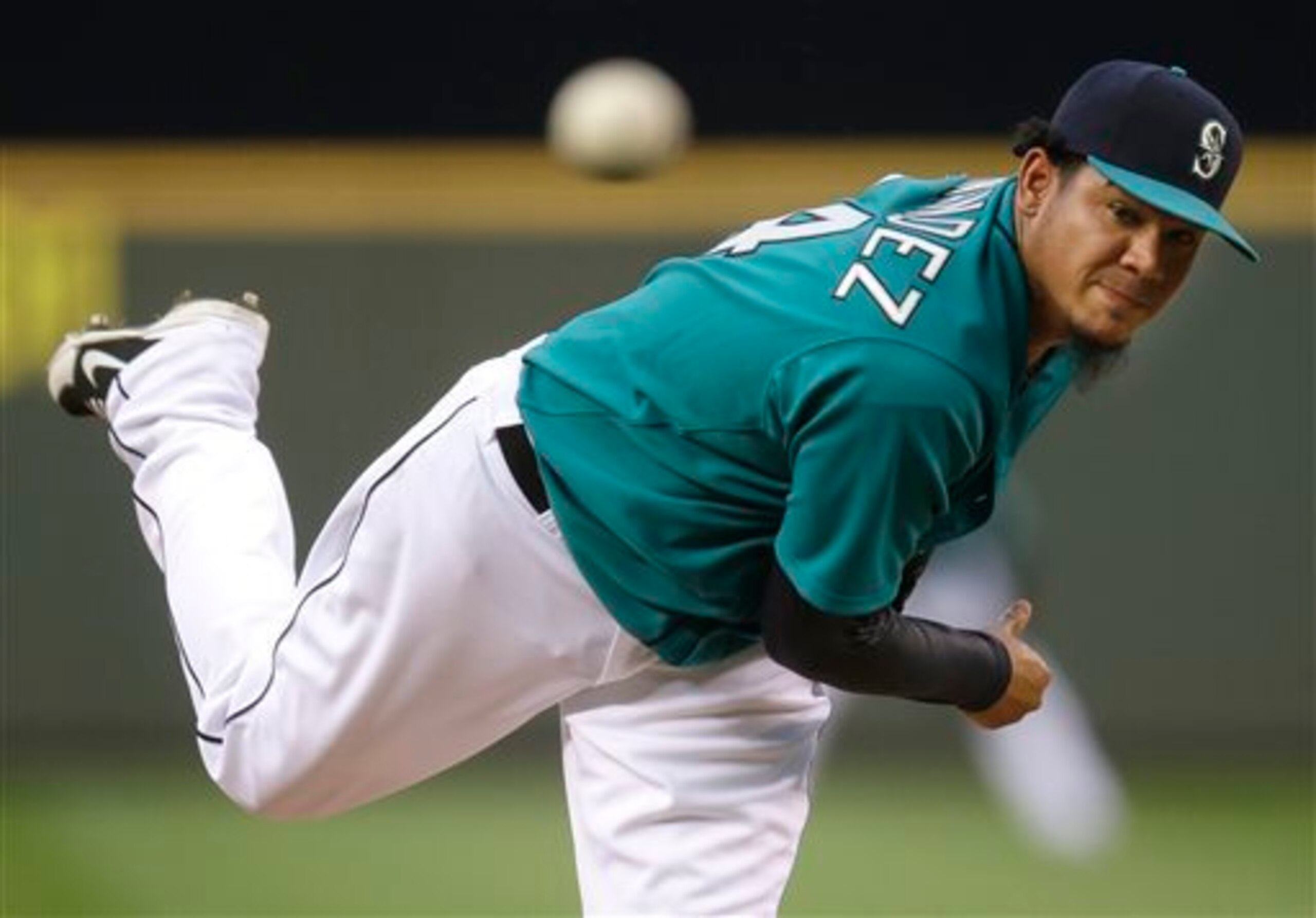
Control
King Felix now throws his heat less than half the time and is operating with a modest zone rate. But he does an excellent job of setting hitters up with his heat—toying with the outside corner against lefties and the bottom of the zone against righties—forcing them to protect the edges that he so often plays with. Also, mistake pitches have seldom happen, as nobody’s thrown more low pitches.
Whiffability
Hernandez has never been this good at missing bats. You’d expect as much from a guy who’s traded in fastballs for more secondaries, and his slider, changeup and curveball are all excellent at getting swings-and-misses. That he’s gone back to throwing 92-93 has also helped. But knowing that he’ll soon be 29 and is coming off a velocity drop in 2013, that’s likely not sustainable.
Hittability
Hernandez is steadily becoming a great ground ball pitcher, a benefit of him throwing both a lot of low pitches and fewer fastballs in general. It also helps that Hernandez’s primary fastball is a sinker that’s good, if not quite great, at getting ground balls. Yet another bonus of all of the above is that Hernandez isn’t getting any easier to take deep. Beating him means trying to single him to death.
Workhorse
Hernandez simply refuses to break down, as he’s been good for seven innings and 100 pitches per start like he always is. And though he’s asked more of his arm by pitching with more velocity, he’s held his velocity fine both in games and throughout the year. Maybe he’ll finally break down when he hits 30, but he still has another year to go before he gets there.
Overall
Hernandez is amazing. He’s showing no signs of running out of gas, and this year has seen him become a better command, strikeout and ground ball artist than he’s ever been. That’s what having good movement and location can do for you, and there’s nobody who mixes those two things better.
1. Clayton Kershaw, Los Angeles Dodgers
79 of 79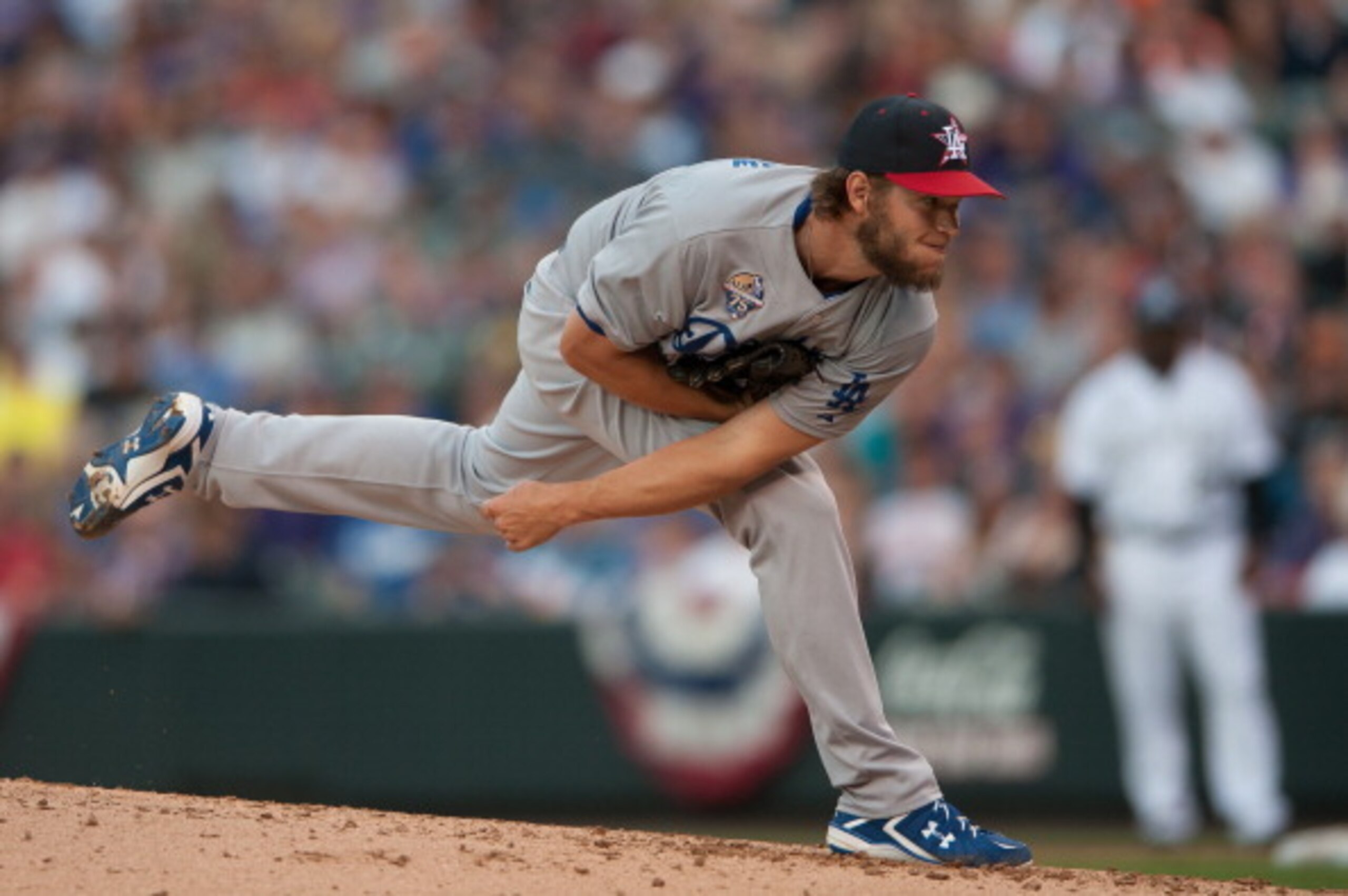
Control
Kershaw’s reliance on his heat is still trending downward, but he’s going to shatter last year’s career-best 1.98 BB/9 anyway. That he’s pounding the zone more is a factor, and a factor there is him putting more breaking balls in the zone. He also does an excellent job of pounding lefties away and righties inside with his heat, with the only gripe being that his misses are too often down the middle.
Whiffability
Beyond racking up strikeouts at a career-high rate, Kershaw also has the highest swinging-strike rate of any qualified starter. He has his 92-93 fastball to blow hitters away, and his curveball is still in fine form. But it’s his slider that’s taken center stage, as he’s throwing it at a higher velocity and getting whiffs with it like never before. So in addition to the best curveball in the game, he now has arguably the best slider.
Hittability
Suddenly, Kershaw is a legit ground ball pitcher. His slider is doing its part, as hitters can do little to tap it into the ground when they do hit it. But while that’s likely sustainable, the elevated ground ball rate of Kershaw’s fastball likely isn’t. Regular four-seamers like his aren’t good at getting ground balls, and his is a rising fastball to boot. Still, his ground ball rate will avoid a serious blow if his fastball usage continues to trend downward, and nobody ever said his four-seamer was easy to hit anyway.
Workhorse
That Kershaw missed a month with an injury earlier this year is going to bar him from a fourth straight 220-inning season, and is a cause for concern in this department. There’s not much else to complain about, though, as Kershaw is still good for seven innings and 100 pitches while holding his velocity fine every time he takes the ball. Nitpickery aside, he's awesome.
Overall
Kershaw has gone from being the best pitcher in the game to something else entirely. His command has gone from great to elite. The emergence of his slider gives him three pitches that can miss bats. He’s developed a ground ball habit. And ever since he returned from his injury, he’s been the same tireless worker he was before. You can’t ask for a pitcher to be more perfect than this.
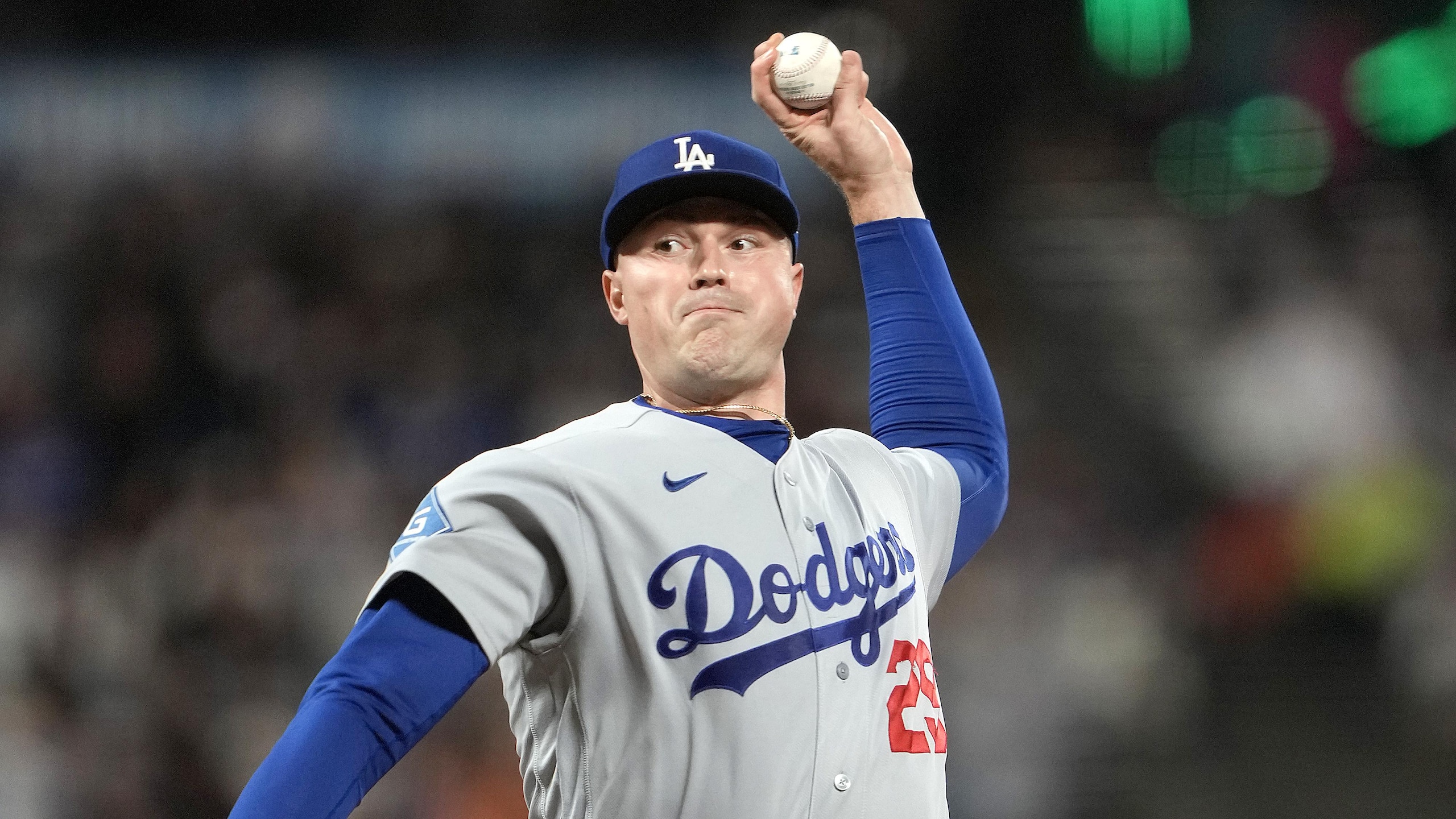


.jpg?w=2560 "Insiders: Cowboys Overpaid for Porter")
.jpg?w=2560 "Every Trade's Best Trade Asset 🔁")

.jpg?w=2560 "Top NFL Trade Targets")
.jpg?w=2560 "Daniels Eyeing Week 5 Return")
.jpg?w=2560 "No Rift Between Maye, Vrabel")