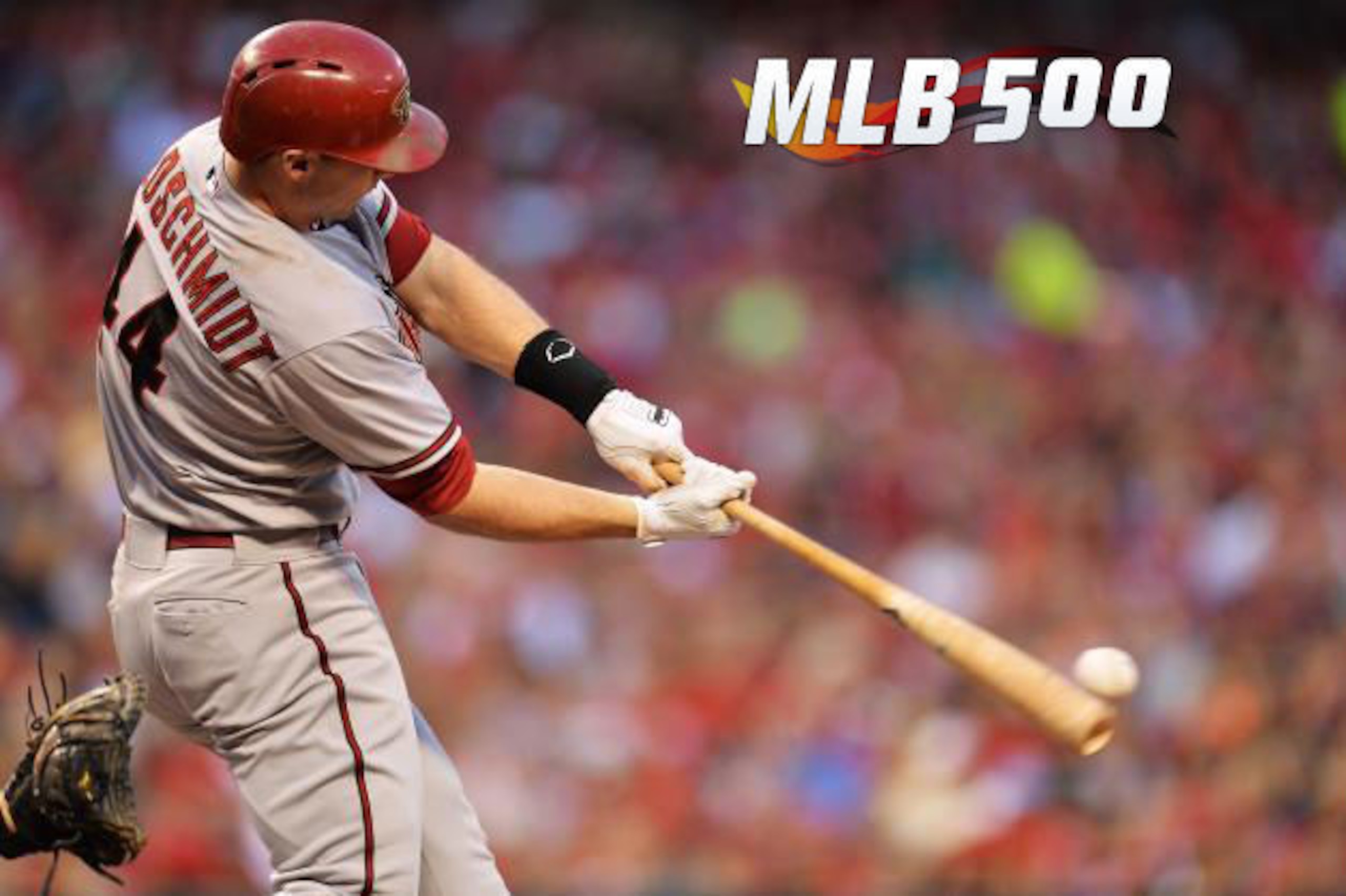

MLB 500 2014: Top 35 First Basemen
Since a trip around the bases begins at first base, we'll begin this year's B/R MLB 500 the same way.
First basemen will be scored like so: 35 points for Approach/Hitting, 40 points for Power, 10 points for Baserunning and 15 points for Defense for a total of 100 points.
The approach/hitting category involves not only looking at how good guys are at putting the bat on the ball and how they hit the ball, but also things like patience and plate discipline.
The power category is not so much about raw power. It's more of a look at how much power guys have in actual games, which involves looking into how they tap into their power for extra-base hits.
The baserunning category is one that could be complicated, but we're going to keep it simple by focusing on how good guys are at stealing bases, taking extra bases and avoiding outs on the bases.
As for defense, we're going to look at how sure-handed guys are and if they have the athleticism to make tough plays. For this, we'll be using a combination of defensive metrics and the eye test.
One thing we're not doing this year is a category for health. Rather than handle them separately, any health concerns we do have will be applied to a specific category that could be impacted.
Please note that a score in the middle (i.e. 20/40 or 17/35) denotes average, not failing. And while the discussion will be centered on 2014, we also have one eye on how things are shaping up for 2015.
Lastly, any ties will be resolved with the following question: "If we could pick only one, who would it be?"
When you're ready, you can read on.
A Note on Links and Sources
1 of 36
Before we begin, there are some things you should know about the many links you're about to see.
First and foremost is that CLICKING ON THEM IS NOT MANDATORY. The links are there in case you're curious where a given point (or points) is coming from.
They're not from the same place. The links will take you to Baseball-Reference.com, FanGraphs.com, BrooksBaseball.net, BaseballSavant.com or BaseballProspectus.com. All have different data to offer, the sum of which was the backbone for the research of this project.
However, just because this project was heavily informed by stats doesn't mean you're about to be hit over the head with sabermetric jargon in this space. There are really only a couple of terms to know.
One is XBT%. That stands for "extra bases taken percentage," and it's Baseball-Reference.com's way of tracking how often players advance more than one base on singles and doubles. It's a crude way to get a picture of how aggressive players are on the bases and you'll have to pardon us for being a day behind on the percentages, but it'll have to do.
I'm also going to be repeatedly referring to "the defensive metrics." This means Ultimate Zone Rating (UZR) and Defensive Runs Saved (DRS), which are both tracked by FanGraphs. They go about it differently, but the idea behind both is to evaluate how good players are on defense.
35. Justin Smoak, Seattle Mariners
2 of 36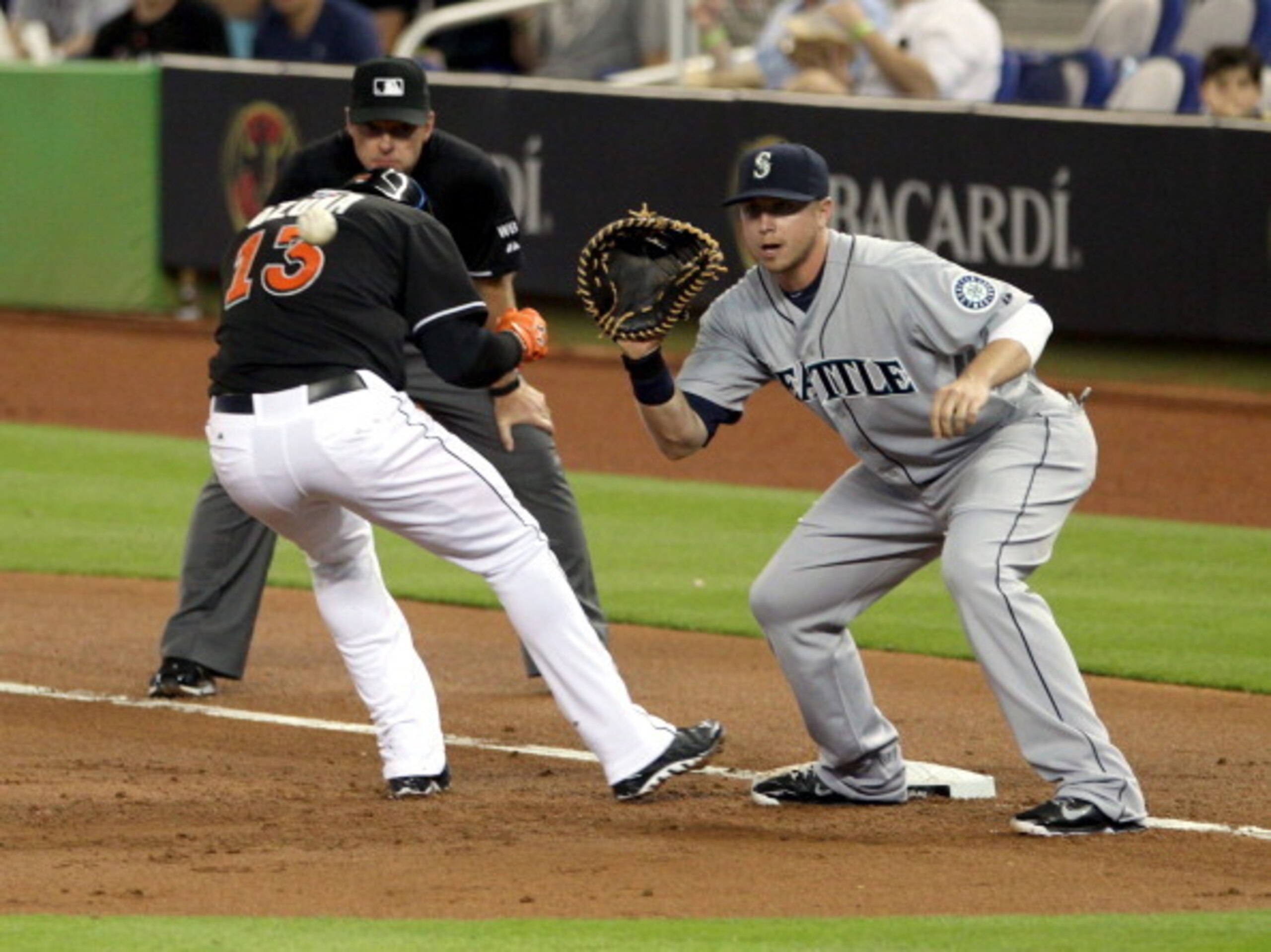
Hitting
Justin Smoak has gone back to a more passive approach, which really isn’t the best idea when pitchers are attacking you with more fastballs. He’s had no answer for those from the left side and has reacted to occasional off-speed pitches by pounding them into the ground. Ongoing leg troubles haven’t helped, but even that can’t excuse 2014 from being another chapter in the story of Smoak’s hitting troubles.
Power
After a career-high 20 homers in 2013, Smoak’s power production has gone back to being a source of frustration. This is partially because he hasn’t had the easiest time driving the ball to his pull side as a lefty. That it’s his left leg that’s been causing trouble is a likely factor there, and the hope there is that Smoak’s youth (he’s still only 27) will help him recover well enough to bring some power back in 2015.
Baserunning
Nobody’s ever accused Smoak of being a base-stealing threat, nor has he shown any signs that he could be. He’s also typically a station-to-station guy, making the 47 XBT% he has this year out to be highly suspect. In addition to being way out of character for him, it’s also hard to imagine a guy who’s battled leg trouble continuing to be that aggressive in the future.
Defense
The defensive metrics have tended to be cool on Smoak's defense, but in reality, he’s probably closer to average than he is to below average. His hands are at least decent, and he moves well enough to help make up for modest first-step quickness.
Overall
So much for the breakout Smoak teased in 2013, as the 2014 season has taken his bat back to pre-2013 levels. Given the way his season has gone, the only reason Smoak is on here at all is due to the possibility of good health making him at least a playable first baseman come 2015.
34. Ryan Howard, Philadelphia Phillies
3 of 36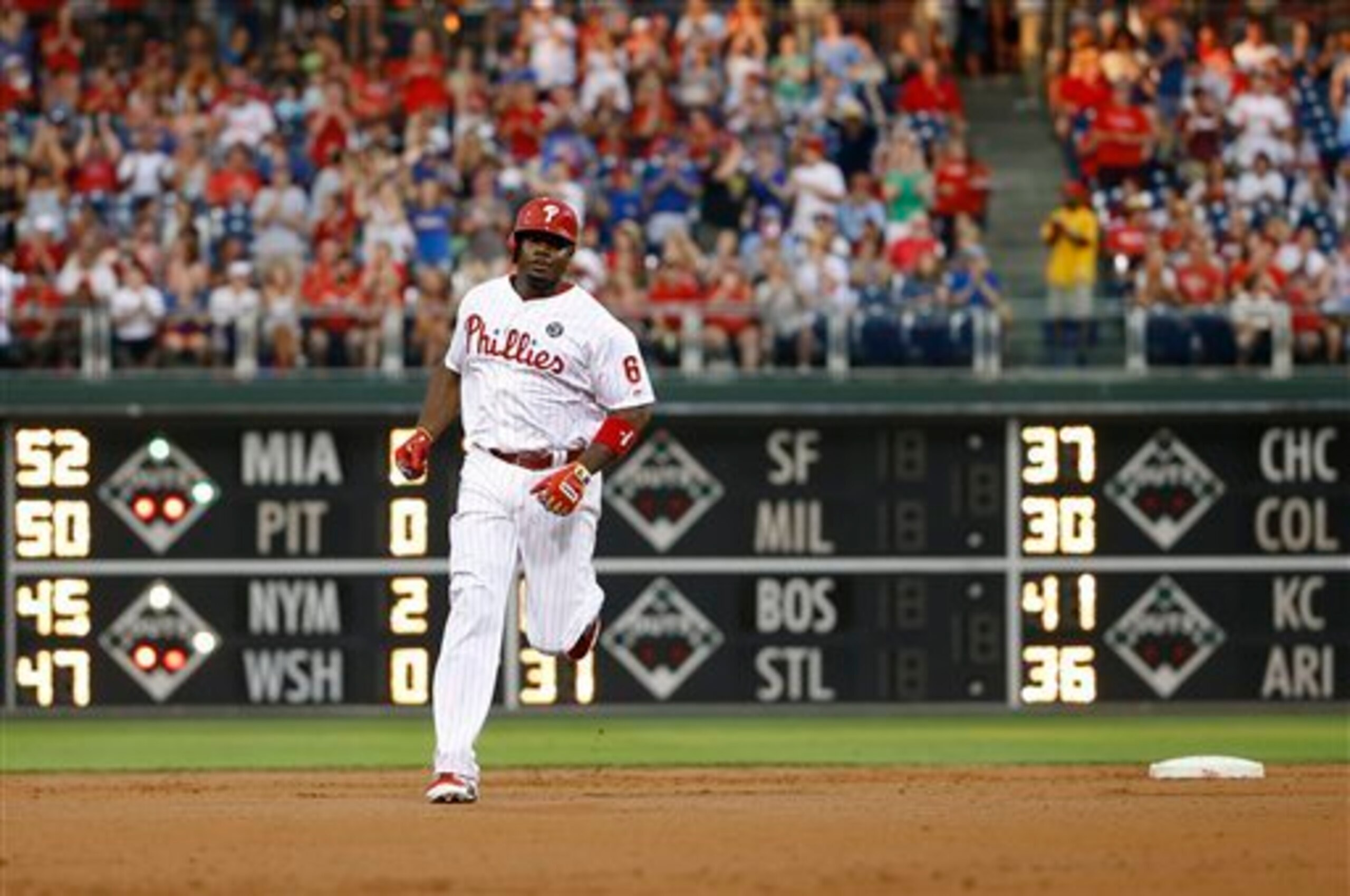
Hitting
It’s not all bad. Ryan Howard has actually held his own against lefties, and let’s give him some credit for cutting down on his whiffs. Trouble is he’s never been worse at hitting slow stuff, any right-hander who can throw over 90 can easily blow him away, and he still practically begs for teams to shift on him with his pull-heavy ground-ball habit. So while it may not be all bad, it’s still bad.
Power
Howard’s raw power is still there, but he’s having a tough time tapping into it. He’s only been able to drive the ball up the middle of the field, a tough way to go about racking up homers even if you do have Howard’s power. And while more pull power would solve a lot, waiting for it to come isn’t the wisest idea. If Howard is already having trouble turning on the ball at 34, it’s not likely to get easier at 35.
Baserunning
As if he wasn’t enough of a station-to-station guy before, Howard’s now the ultimate station-to-station guy. Stolen bases are out of the question, and his XBT% sitting at just 12 percent goes to show just how carefully he plays it on the basepaths these days. And again, if it’s this bad at 34, there’s no point expecting improvement at 35.
Defense
The defensive metrics have long thought of Howard as a subpar defender at first base, and anyone who’s watched him play the position can agree. He has virtually no range, so the amount of errors he’s made in 2014 is hard to excuse. The one nice thing to say is that his ability to scoop throws could be worse, as he’s actually found his way into the top 10 in that department this year.
Overall
Howard was a limited player even back when he was hitting 40 home runs on an annual basis. With his power now diminished by age and wear and tear, he’s essentially become a replacement-level player who barely passes for a viable option at first base.

33. Gaby Sanchez, Pittsburgh Pirates
4 of 36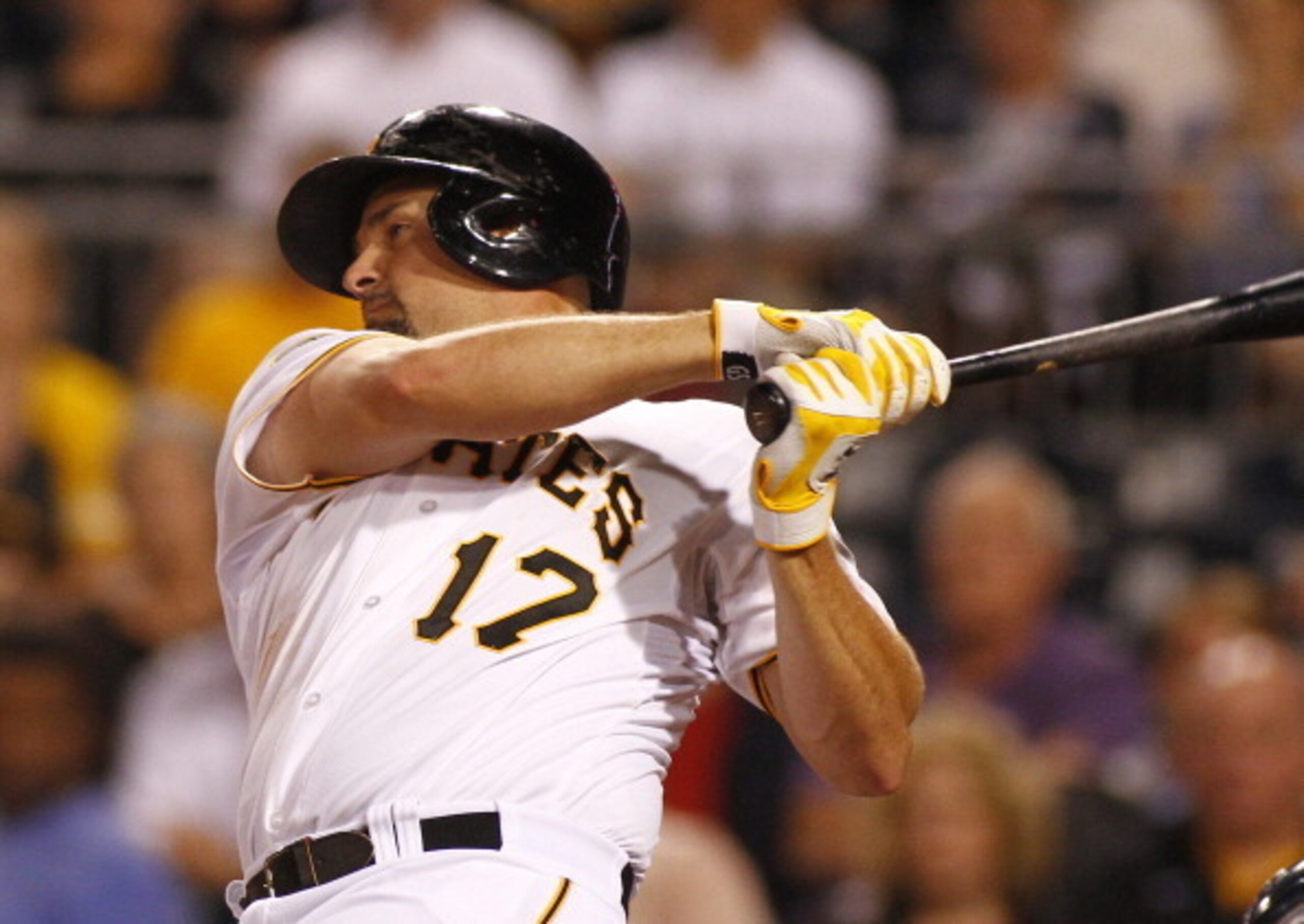
Hitting
Gaby Sanchez is a platoon hitter who’s met a serious challenge in 2014. Pitchers have been feeding him more breaking balls than usual, and his averages against both lefty and righty spinners say they’ve found a clear weakness. That he’s also a fly-ball hitter who’s gone back to his pre-2013 aggressiveness makes last year’s solid performance look like a one-time thing.
Power
As expected, this is an area where the extra fly balls Sanchez has hit in 2014 have helped. His power production has been more consistent because of it, and he’s further boosted things with his ability to turn on balls and whack line drives down the left field line. I wouldn’t call what Sanchez has to offer great power, but it’s solid power for a part-time player.
Baserunning
Sanchez has actually taken his age-30 season as an excuse to be more active on the basepaths, and it extends beyond the fact that he’s stolen multiple bases for the first time since 2011. After just a 20 XBT% in 2013, he’s up to 23 percent this year. Whether he can repeat this at age 31 with (presumably) regular playing time coming his way is the question.
Defense
The defensive metrics are viewing Sanchez as at best an average defender at first for a second straight season, but in reality the below-average ratings he got in 2013 are close to the truth. He has neither great hands nor great range, with the latter limited mainly by his lack of first-step quickness.
Overall
Due to the solid power he can provide and his ability to hit left-handers, there’s a role for Sanchez to play in the majors. It’s just not the role he teased he was capable of with his more impressive 2013 season.
32. Ike Davis, Pittsburgh Pirates
5 of 36
Hitting
Ike Davis is hardly wasted in his platoon role. His super-disciplined approach says he clearly sees right-handers well, and he doesn’t mind taking his walks. He also has the strike zone pretty well covered against their hard stuff, and he’s shown he can hit off-speed well. Where he’s limited is in how he invites shifts with his pull-heavy ground-ball habit, and he still hasn’t mastered the art of hitting breaking stuff.
Power
While Davis can clearly see right-handers fine, his ability to drive the ball went missing in 2013 and hasn’t returned in 2014. At least part of the problem is how seldom he’s hit the ball in the air to his pull side, with most of his long drives going to center field. Even with the kind of raw power Davis packs, it’s hard to be a consistent power producer when that’s your main power alley. Add in how Davis is a part-time player, and his power potential has become a real concern.
Baserunning
Davis might have let last year’s 4-for-4 showing in stolen bases go to his head, as his attempt to recreate that production in 2014 has been a massive failure. He’s been better doing the little things, highlighted by an XBT% over 40 since he arrived in Pittsburgh. If he can keep that up, he’ll pass for a solid baserunning first baseman.
Defense
The defensive metrics loved Davis' defense when he first broke in back in 2010, but not so much anymore. He’s as error-prone as he’s always been, and his range is very much limited by slow reactions and slow feet. That’s a bad combination for a first baseman.
Overall
The disappearance of Davis’ 30-homer power definitely lowers his appeal as a viable option at first base, especially knowing that he’s hardly a defensive whiz. But as far as platoon options against right-handers go, there are far worse options than him out there.
31. Logan Morrison, Seattle Mariners
6 of 36
Hitting
The increased aggressiveness Logan Morrison showed in 2013 has become overaggressiveness in 2014, and the price has been walks. But he’s also maintained a respectable strikeout rate while hitting slow stuff for line drives better than he ever has. And though he’s been confined mainly to a platoon role, he’s actually hit lefties quite well. In other words: It’s bad, but not as bad as it looks.
Power
Things aren’t as bad as they look here either. The results haven’t been there, but Morrison’s been driving the ball to his pull side with decent regularity and has narrowly missed some home runs in the process. Where things get iffy is that he doesn’t have much power to fields other than right field, and this is the second year in a row that his fly-ball habit has come with a bad pop-up problem.
Baserunning
This has actually been a solid year for Morrison baserunning-wise, as he’s established a new career high in stolen bases while posting a solid 35 XBT%. But he’s still prone to running into outs on the bases, and it’s hard to trust a guy with as many leg problems as Morrison has had to keep being a good baserunner.
Defense
The defensive metrics suggest Morrison is much more at home at first base than in the outfield. But that’s not saying much knowing how terrible he was in the outfield, and he’s not special at first base either. His range is limited by a slow first step and slow acceleration, and he’s not going to be confused for a fielder with good hands.
Overall
Though the promise Morrison showed in 2011 has since faded, he keeps teasing that he’s not a lost cause just yet. He’s highly prone to inconsistency, but he can handle the bat and still has some power to offer. As long as he’s healthy, he’s worth playing at first base
30. Mitch Moreland, Texas Rangers
7 of 36
Hitting
Before season-ending ankle surgery sidelined Mitch Moreland for good in June, he was having a hard time laying off breaking and off-speed pitches, he was little more than a mistake hitter against righty hard stuff ,and it was too easy to get him to roll ground balls to the right side of the infield. When he comes back in 2015, he’ll have two rough years to bounce back from instead of just one.
Power
The power Moreland showed off in 2013 didn’t appear in 2014. Part of that had to do with how he simply wasn’t hitting as many fly balls, and it didn’t help that he was having trouble making good use of his pull power. His ankle was surely a factor, as it robbed him of a strong base from which to generate power. Looking ahead to his age-29 season, things shouldn’t be as bad if that ankle is healthy.
Baserunning
Moreland’s last stolen base attempt happened in 2012, and his balky ankle didn’t make what was already an iffy hit advancement skill any better. He finished the year with just a 22 XBT%, low even by his standards. And after losing a year to a bad ankle, it will be surprising if Moreland returns eager to be more aggressive on the basepaths in 2015.
Defense
The defensive metrics have tended to see Moreland as roughly an average defensive first baseman, and not much was different while he was healthy. This is despite the fact that his ankle injury left him without the same spring in his step he has when healthy. If that spring returns in 2015, he’ll be able to provide solid defense at first base. Even if it might only be on a part-time basis.
Overall
Moreland’s bat has had holes in it for two years now, and that’s no small hang-up. But if we take it for granted that still being on the good side of 30 will allow him to make a strong comeback from ankle surgery, he should get back to being a part-time power supply and decent defensive first baseman.
29. Tommy Medica, San Diego Padres
8 of 36
Hitting
We haven’t gotten too big of a look at Tommy Medica in 2014, but we’ve learned that a pitcher who can throw him a good changeup or a good high fastball stands a good chance of getting a whiff, and a high ground-ball rate and pop-up rate say he has issues squaring the ball up. Add in how he’s a little too pull-heavy, and you get a complete picture of a guy with plenty of faults in his hitting game.
Power
Medica has put up some halfway decent power numbers in his limited time in the majors, but they’re a little misleading. His batted ball map can show that well-hit balls have been somewhat infrequent. What we can grant is that he does have good raw power, and he’s also done his part to live up to Baseball America’s report (subscription required) of a strong ability to find right-center field.
Baserunning
At 6’3” and 205 pounds, Medica isn’t your typical hulking first baseman. This is the area in which that shows the most, as he runs pretty well. Though it’s anyone’s guess whether he’ll get the chance, he could steal between five and 10 bases over a full season. And though he has only a 30 XBT%, he’s gone first to third a third of the time he’s gotten a chance.
Defense
Medica hasn’t logged a ton of innings at first base, but the defensive metrics like what they see. From what yours truly has seen, the best thing Medica has going for him is the range he gets from quick reactions and smooth movement after the fact. That he can also play left field doesn’t hurt his cause here, though it would help more if he played left as well as he plays first.
Overall
It’s hard to get excited about what Medica brings to the table from an offensive standpoint, as he has plenty of exploitable weaknesses and hasn’t displayed his raw power as much as the surface numbers indicate. But since he has some athleticism and a solid glove to offer, he’s not a bad fill-in first baseman.
28. Prince Fielder, Texas Rangers
9 of 36
Hitting
Prince Fielder was able to log just 178 plate appearances before a neck problem ended his season. And in those, he was overmatched by anything over 90 mph. He also developed a severe ground-ball habit, a virtual death sentence for a hitter with his speed. That he maintained a disciplined approach is a bright side, but the only other hope aside from that is that good health in 2015 could make a difference.
Power
After taking a turn for the worse in 2013, Fielder’s old power was pretty much nonexistent early in 2014. That half his batted balls were on the ground was a factor, but he also showed little ability to drive the ball to any other field except right field. A healthy neck in 2015 could make a difference, but there’s a limit to how much we can lean on that knowing that Fielder’s power was already trending downward.
Baserunning
When you’re 5’11” and 275 pounds, you’re just not going to run very fast. Hence the reason Fielder’s baserunning consists mainly of staying glued to the bases and generally taking only one base at a time. Case in point: His next season with an XBT% over 30 will be his first. And given that he’s now on the wrong side of 30, you’re better off hoping for more belly flops than hoping for that.
Defense
Whether you consult the defensive metrics or the eye test, the clear truth is that Fielder is a subpar defensive first baseman. It takes a lot of energy to move his body, and as such, range has always been a problem for him. That he also has hands like bricks is a double whammy. If there is one good thing to say, however, it’s that Fielder is at least better at anticipating throws in the dirt than he used to be.
Overall
In no time at all, Fielder has gone from being one of the most dangerous hitters in the game to a hitter who’s broken both literally and figuratively. I’m admittedly placing some level of hope that Fielder can recover enough to find some of his old form at the plate, which would make him at least playable on a daily basis. Fair warning, though: If he can’t do that, it’ll be ugly.
27. Garrett Jones, Miami Marlins
10 of 36
Hitting
After a rough year in 2013, a more disciplined and contact-oriented approach has helped Garrett Jones’ bat return to semi-respectability in 2014. That he’s pulled it off while seeing fewer fastballs is an even better look. But since Jones is still weak against hard stuff away and all breaking balls and is a lefty who invites shifts and hits a lot of fly balls, it’s best if nobody counts on him being a .300 hitter any time soon.
Power
Jones’ power isn’t as mediocre as his actual production makes it look. He plays in an even tougher park for power than the one he left, and his hit map reveals plenty of long drives to his pull side that just missed. But since Marlins Park won’t be going anywhere and he doesn’t have much besides pull power to offer, average is about as good as Jones’ power production is going to get.
Baserunning
Jones once stole 10 bases in a season, but that was a long time ago and not likely to happen again now that he’s headed for his mid-30s. If this season is any indication, he’s going to be a true station-to-station guy from now on. His 21 XBT% is on track to be the worst of his career and is iffy even by first base standards.
Defense
The defensive metrics usually don't favor Jones’ defense at first, and that much hasn’t changed this year. Jones has brought that on himself largely through errors, and that doesn’t come off as a fluke; after all, Jones can sometimes look like he’s throwing with his off hand. Add in how slow reactions and movement make for poor range, and you have a defensive liability at first base.
Overall
Living with Jones means living with poor baserunning and defense and a decidedly average bat when it comes to both hitting and power. But with even average bats in short supply these days, that Jones has one makes him at least a playable option at first base.
26. Yonder Alonso, San Diego Padres
11 of 36
Hitting
Yonder Alonso is still a hitter who can toe the line between being aggressive and also being selective, and 2014 was his best year for making contact before it came to an early end. But it’s never a good sign when a lefty batter who plays mostly against righties can’t hit their slow stuff, and Alonso also seemed a bit more pull-happy than usual. These are some real weaknesses he’ll have to correct in 2015.
Power
It says a lot that seven homers and a .397 slugging percentage are actually an improvement. This is where being more pull-happy helped, as Alonso pulled fly balls and line drives to right field more frequently than he did in 2013. But you wonder if he’ll keep this up given how trying to hit for power didn’t agree with his hitting approach. Then there’s the possibility that this year’s forearm injury could sap his power.
Baserunning
Alonso has carved out a niche as a deft base stealer in the last two seasons. After going 6-of-6 in 2013, he was 6-of-7 this year before his season ended early. He also upped his XBT% to 38 and made further strides in getting away from the serious issue he had running into outs back in 2012. For all that went wrong for Alonso in 2014, this is one area where things went very right.
Defense
The defensive metrics have Alonso pegged as one of the better defensive first basemen in the league, with part of the equation being good hands and another part being underrated range. He gets that by combining quick reactions with a quick first step, and his good legs allow him to accelerate more quickly than your average first baseman.
Overall
Whether Alonso can maintain this year’s power outburst is a question mark going forward and not the only one concerning his bat. But the good approach he has at the plate is worth something, and so are his baserunning and defensive skills.
25. Pedro Alvarez, Pittsburgh Pirates
12 of 36
Hitting
Pedro Alvarez has toned down the aggressive approach he was using in 2013 and has also been swinging and missing less often. He’s thereby allowed himself more walks and fewer strikeouts. However, he’s still weak against the slow stuff and against any fastball located above the belt, and this season has seen him be a bit too pull-heavy. So despite the improvements, his weaknesses are still clear and present.
Power
Whereas seemingly every fly ball Alvarez hit last year was a deep drive to some part of the yard, such drives have become considerably more rare in 2014. For what it’s worth, you do get the sense that this is a function of Alvarez trying to be more disciplined with his hacks rather than a legit loss of raw power. He’s better than a 15- to 20-homer guy, so he’s getting the benefit of the doubt here.
Baserunning
Alvarez moves better than you’d expect a 6’3”, 235-pound corner infielder to move. That’s never been more clear this year, as he’s shattered his career-best mark for stolen bases and teased double-digit steal potential. There’s just not much else to hang your hat on, as Alvarez’s XBT% has fallen from over 40 percent in 2012 to under 30 percent this year.
Defense
With Alvarez having (literally) thrown away his job at third base, first base is his likely home from now on. One thing he’s made clear is that the range that served him well at third is going to serve him very well at first. However, he’s also made it clear that he needs time to get a good feel for the position, as the situational awareness that we take for granted with other first basemen just isn’t there yet.
Overall
The 2014 season has been a lost year for Alvarez. It’s hard to knock him for the efforts he’s made to become a more consistent hitter, but in the process, he’s robbed himself of the power that made him a worthwhile player in the first place. Then there’s his defense, which has gone from being a problem at third base to a question mark at first base.
24. Mark Reynolds, Milwaukee Brewers
13 of 36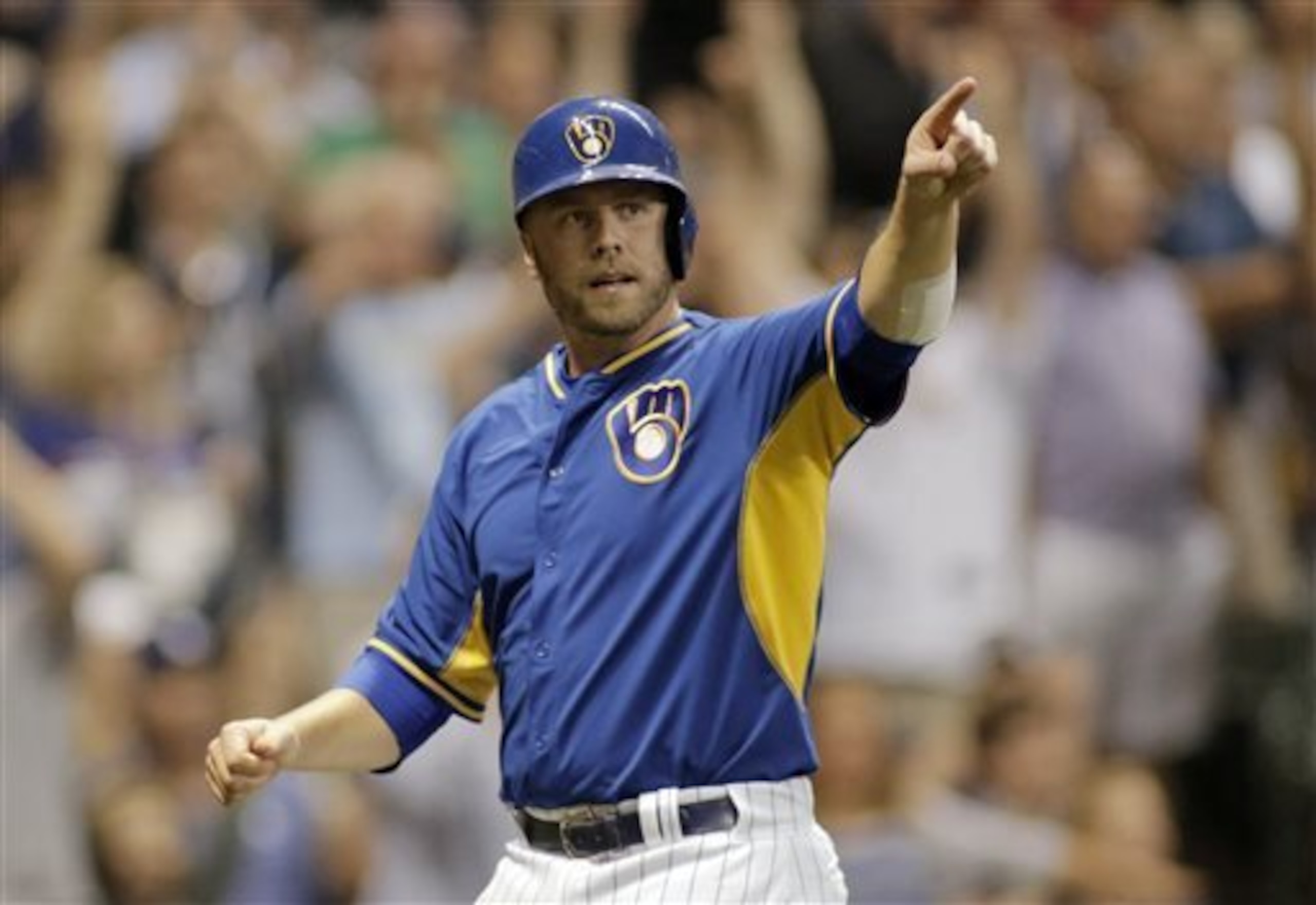
Hitting
Mark Reynolds is still Mark Reynolds. He’s a hitter with solid plate discipline but also a swing-and-miss habit that’s very much alive. And predictable too, as the one thing as certain as whiffs on high hard ones are whiffs on low slow ones. Reynolds digs an even deeper hole by having non-BABIP-friendly contact habits, favoring fly balls anywhere and pulled ground balls. So yeah.
Power
This is why Reynolds can still get work. Though his power potential is limited by his swing-and-miss habit, a lack of a consistent line-drive habit and his tendency to hit pop-ups, baseballs die when he squares them up. It’s a shame, however, that he still hasn’t developed any consistent opposite-field power, which is yet another thing rendering his 40-homer potential into something much less.
Baserunning
Reynolds is a pretty good athlete as far as corner infielders go, and he’s provided a reminder of that with his best stolen base production in a few years. And while not great, his 33 XBT% shows he’s still capable of taking the extra base. The only real shame is that he so seldom gets a chance to actually run the bases.
Defense
The defensive metrics say Reynolds is less of a disaster at first base than he is at third base, and they’re right. His issues with throwing accuracy aren’t as big a deal at first, and what was modest first-step quickness for third is good first-step quickness for first. That helps with the tough plays, which Reynolds is pretty good at making.
Overall
Reynolds is a guy who can hit you some home runs while playing a strong first base and holding his own on the basepaths. That would make him a darn good player if he was better at actually hitting the ball, but it’s pretty clear at this juncture that particular train isn’t coming.
23. Mark Teixeira, New York Yankees
14 of 36
Hitting
Mark Teixeira still has good patience and plate discipline that help keep his walk rate high and his strikeout rate low. But his issues are plentiful, ranging from a severe weakness against 90-plus heat to pull-heavy ground-ball habits from both sides of the plate to a frankly stunning inability to cover the strike zone as a lefty hitter. It all adds up to a hitter who’s very much past his prime.
Power
The biggest thing working against Teixeira’s power potential is the difficulty he has staying on the field, and that’s not something that’s likely to improve in his age-35 season and beyond. Beyond that, he suddenly doesn’t have much to offer besides home run power. That power’s not what it once was, but it’s still good due to how the fly balls he hits to right field rarely miss going out.
Baserunning
To my knowledge, Teixeira has never been mistaken for a fast runner. Nor is he about to be, as his best stolen base days are behind him and his mere 18 XBT% signals loud and clear that he’s not going to be pushing his aging and worn legs any harder than he has to on the basepaths.
Defense
Teixeira was the class of the league’s first basemen defensively once, but not anymore. The defensive metrics have him as a roughly average defender, and that can be traced in part to how he’s not covering as much ground as he used to. The eye test says his legs can’t keep up with his instincts anymore, which is true of both his first step and his quickness after the fact. Good thing he still has his good hands.
Overall
Teixeira still has some power and good defense to offer, but both those things are shadows of what they used to be. That description doesn’t even cover it for his hitting, which looks like a lost cause. Consider all this further support for the notion that old age is stupid.
22. Jon Singleton, Houston Astros
15 of 36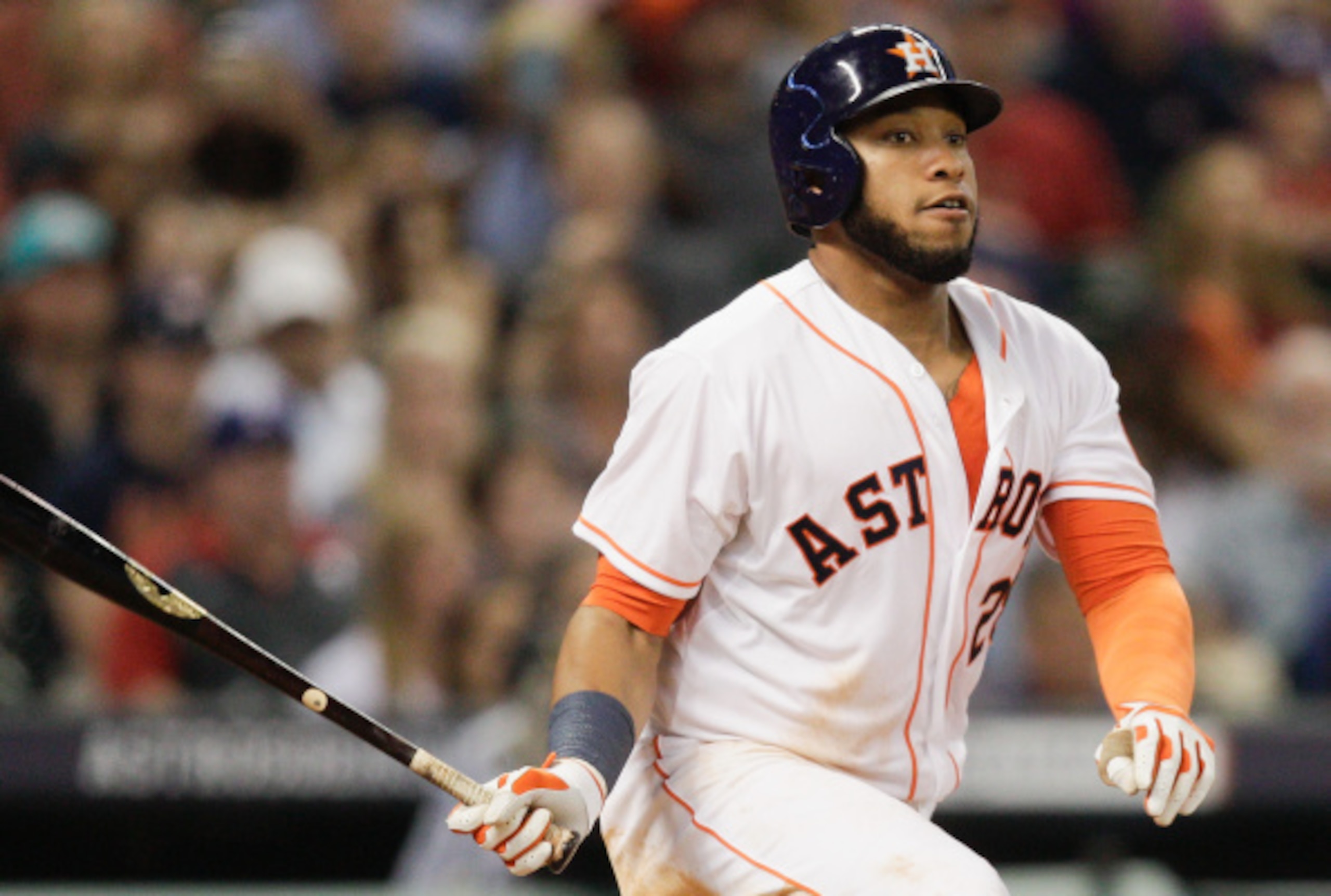
Hitting
You might have noticed that Jon Singleton has a whiff problem. He’s also too pull-happy, especially with ground balls, and he’s had trouble hitting heaters that aren’t right where he likes ‘em. If there’s hope, it’s in how he made an adjustment against off-speed in August and in how his approach isn’t too aggressive. He’s a long way from being a good hitter, but he’s getting further away from being a disaster.
Power
Singleton has largely lived up to his billing as a plus power hitter. The majority of his homers haven’t been cheapies, and he’s shown the ability to generate power toward Minute Maid Park's short left field porch. These things make him a 30-homer candidate over a full season, but those homers could be lonely knowing that he hasn’t shown much of an ability in exploiting the gaps for doubles.
Baserunning
Singleton packs 255 pounds on a 6’2” frame, and he runs about as well as you’d expect a guy like that to run. He shouldn’t be expected to be any sort of stolen base threat moving forward, nor does it look like he’s going to specialize in doing the little things. With a 29 XBT%, he hasn’t shown much interest in being aggressive on the basepaths.
Defense
We haven’t seen much of Singleton at first base, but the defensive metrics can vouch that what we’ve seen hasn’t been pretty. Errors have had a hand in that, and at least a couple of those occurred on makeable plays. There is hope, however, as Singleton has otherwise flashed quick reactions and a quick first step to go with them. With some work, he could easily be made into a passable defender.
Overall
Singleton’s power is definitely ready for the majors. There’s no doubt about that. What I’m banking on is that the experience he’s gained this year will help make him a better match for major league pitching come 2015 and that the ability he’s teased at first base might lead to increased defensive stability. If these things happen, the Houston Astros are going to have a solid first baseman on their hands.
21. Eric Hosmer, Kansas City Royals
16 of 36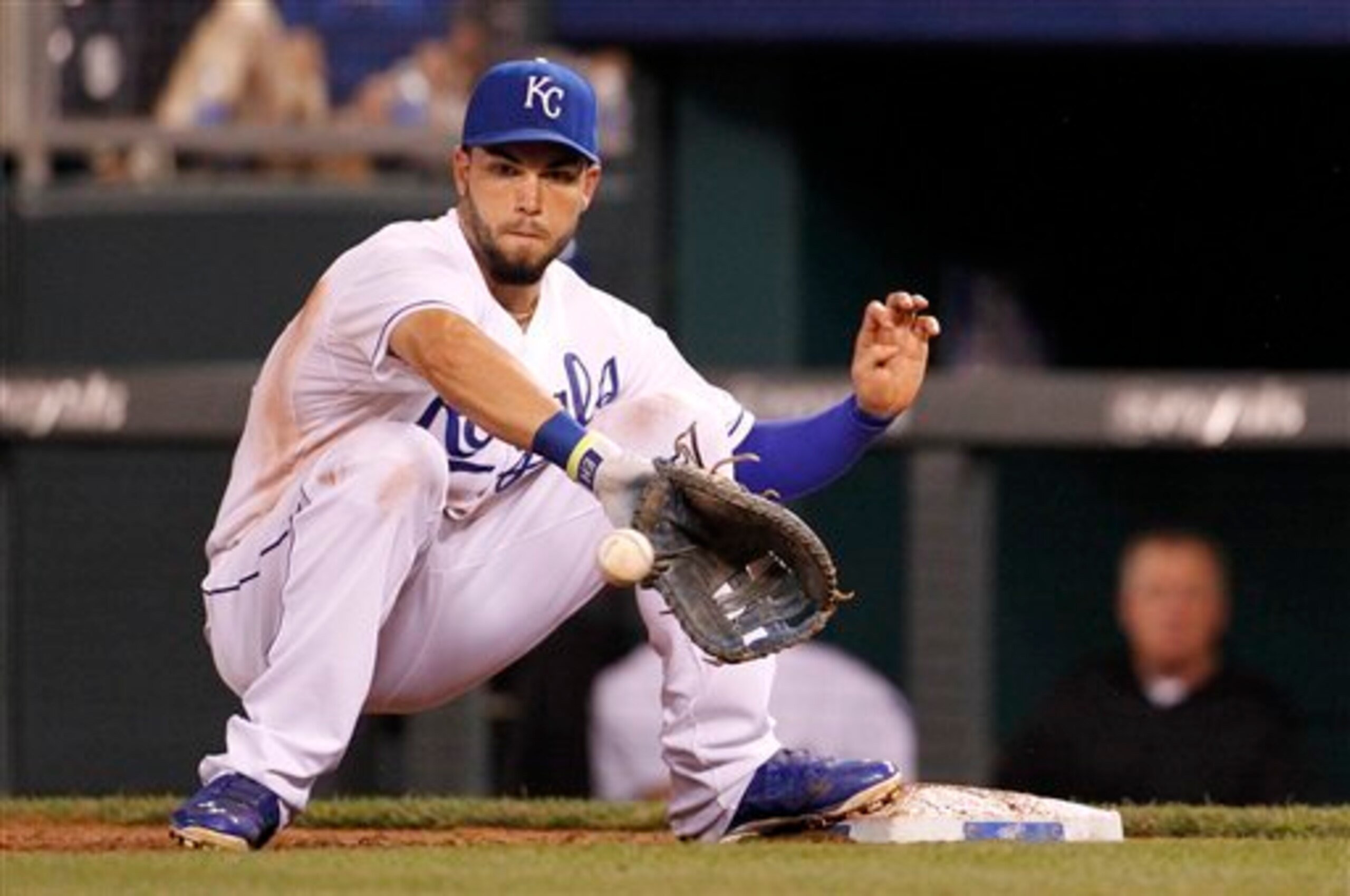
Hitting
The silver lining in Eric Hosmer’s 2014 struggles is that he’s never been a better contact hitter. But when your approach gets overaggressive, you can’t do anything with hard stuff above the knees and anything that’s not a ground ball is likely a shallow fly ball to left field, a strong ability to make contact is only worth so much. If Hosmer wants to be a .300 hitter again, he’ll need to head back to the drawing board.
Power
It looks like we can stop hoping that Hosmer will fix the severe ground-ball habit he developed back in 2012. That’s a natural cap on his power potential. Another is how his main fly-ball alley is to left field, where his ability to drive the ball is at best inconsistent. And looking ahead, there’s at least some concern the stress fracture he suffered in his right hand will be yet another drain on his power.
Baserunning
Hosmer established himself as a rare first basemen with double-digit steal potential in his first three seasons, but he’s going to fall well short of double digits this year. That his XBT% has fallen from well over 40 percent to under 30 percent is yet another not-so-awesome development. We’ll cut Hosmer a break based on his track record and youth, but his baserunning reputation has definitely taken a hit.
Defense
The defensive metrics don’t quite agree with Hosmer’s reputation as a Gold Glove-caliber first baseman, in part because they don’t like his range. But they don’t give Hosmer’s hands proper credit, as he’s arguably the best in the business at scooping throws and is generally a mistake-free fielder. I also hesitate to say Hosmer’s range is subpar, as there are far less athletic first basemen than him.
Overall
The good news is that Hosmer is a better baserunner than he’s shown in 2014 and a better fielder than the metrics give him credit for. But a bat that already had question marks now has even more question marks, as his ability to make contact has been wasted largely on bad contact. That’s not an easy fix.
20. Brandon Belt, San Francisco Giants
17 of 36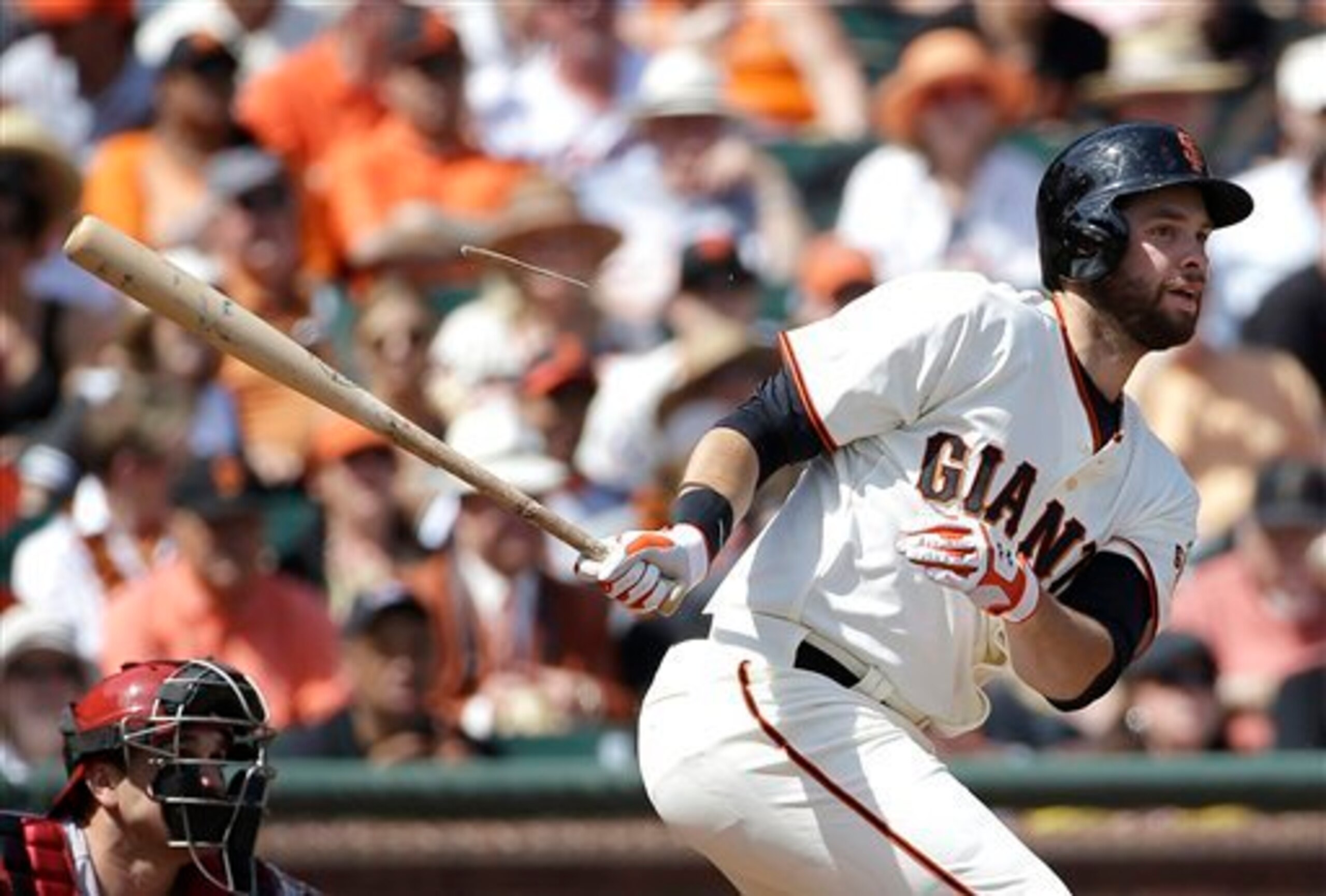
Hitting
When he’s been healthy, Brandon Belt has been a more anxious hitter than usual. He’s swung at a lot more fastballs, causing him to rack up whiffs on high hard ones and leaving him vulnerable to anything with spin. On top of this, he’s invited shifts by rolling over plenty of ground balls. These are all fixable problems, but the time Belt has lost to injuries in 2014 isn’t going to make that process any easier.
Power
Belt picked up where he left off in 2013, quickly putting himself on a course to shatter last year’s career high of 17 homers. Given the kind of raw power he’s working with, this is no fluke. But this year’s injury problems do complicate matters, and then there’s how Belt’s power to fields other than right is limited and how he hasn’t shown much interest in settling for line drives to open spaces.
Baserunning
Belt is quicker than your average first baseman, a byproduct of not having too much weight on a 6’5” frame that allows for long strides. Even in limited action this year, he’s shown he’s still a good bet for five to 10 steals. Take that and combine it with an acceptable 35 XBT%, and you get a pretty good baserunning first baseman.
Defense
The defensive metrics have been a fan of Belt’s since he first entered the league, even despite his hands hardly being the best in the world. The attraction is his range. Belt doesn’t have the quickest first step, but he accelerates quickly and makes good use of his tall frame. It’s probably a bit much to call him a game-changer defensively, but he’s definitely good.
Overall
For anyone with a good memory, this is where I admit I put too much faith in Belt breaking out in a big way this year. He quickly made good on his power potential, but he also picked up some bad habits falling in love with his power before the injuries came. The talent is still there, but the reset button needs to be pushed.
19. Joe Mauer, Minnesota Twins
18 of 36
Hitting
Joe Mauer’s approach hasn’t changed much from the approach that led him to his .324 average last year, and he’s still primarily a line-drive and ground-ball hitter with an ability to aim the ball. But he’s also been overmatched against 90-plus heat, and his increased whiff rate against off-speed makes you wonder if he’s realized that and is starting to cheat. For a guy who’s 31, these are real concerns.
Power
Mauer’s general disdain for fly balls is one thing standing in the way of his power production. Another is his disregard for his pull side. That was fine when he could drive the ball to left field at will, but he’s not that guy anymore. Only part of that guy still remains, and I’m frankly being generous in assuming that said part can provide enough doubles power to make up for Mauer’s lack of home run power.
Baserunning
This is one area where you can see Mauer’s move to full-time first base duty quietly paying off. He has sneaked a few stolen bases, and he has his XBT% at 50. Knowing that this part of his game was taking a turn for the worse in 2012 and 2013, it’s good to see it make a comeback. Mauer’s back to being one of the more underrated baserunners in the game.
Defense
The defensive metrics are somewhat split on Mauer’s defense at first base, but the general message is that he’s no worse than adequate. At least some of that is owed to how he’s been largely mistake-free on defense this year, though he’s not without weaknesses. First-step quickness is probably the biggest of those, and I wouldn’t say he’s mastered the art of the scoop just yet.
Overall
Mauer’s primary strengths can be linked to his general baseball IQ, which is still going strong. But whether it’s the lack of power or the very real cracks in his hitting, there are reasons to worry about the physical side. And though we’ve seen him bounce back from tough years before, it’s hard to count on him doing so again knowing that he’s no longer young.
18. Chris Davis, Baltimore Orioles
19 of 36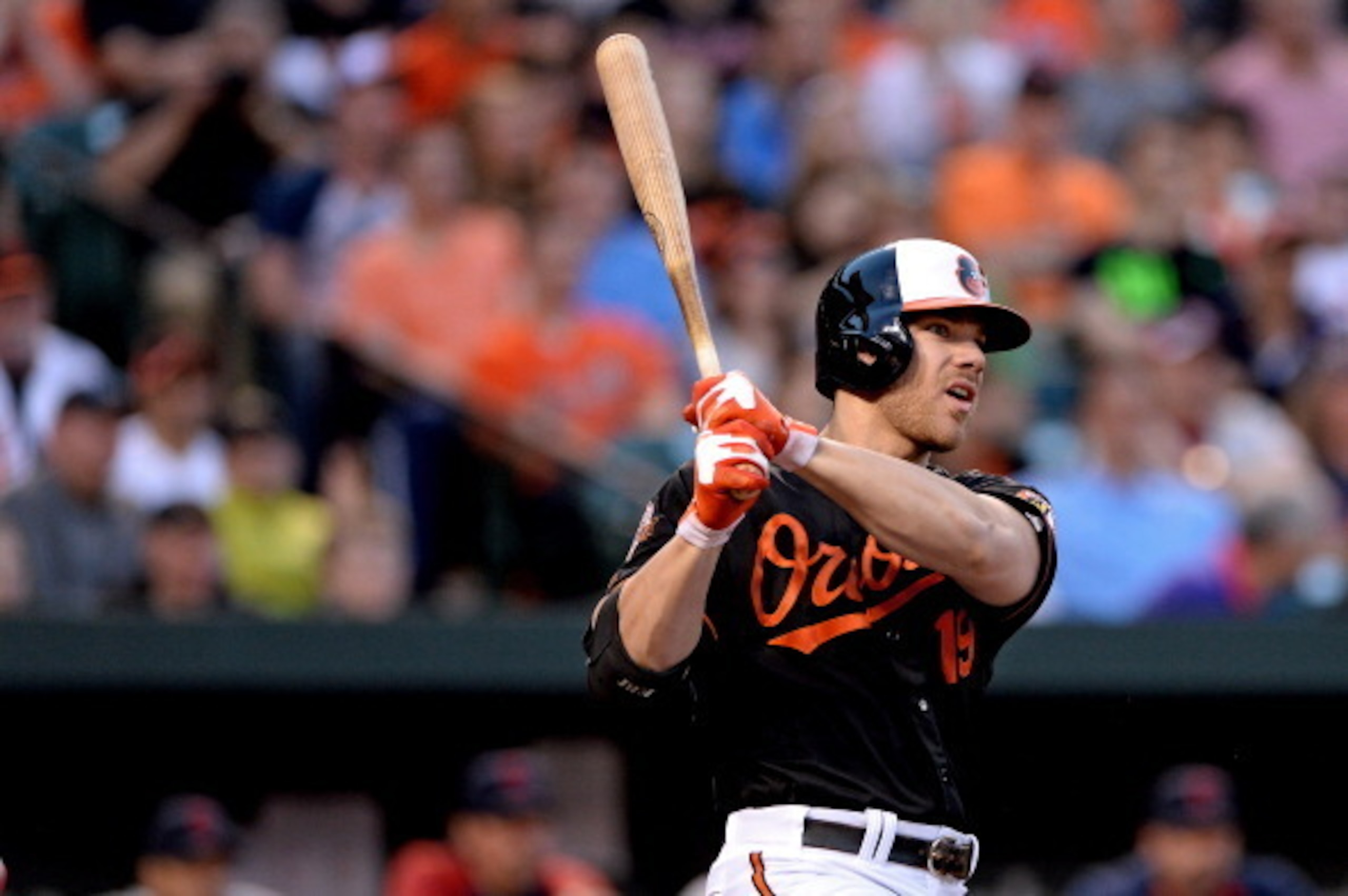
Hitting
Chris Davis has been more passive than disciplined, giving pitchers strikes that they’re gladly taking. Worse is how he’s gone back to being easy to fool with slow stuff. Rather than sit back and drive it like he was in 2013, he’s been pounding it into the ground. Aside from that, a swing-and-miss tendency that never got fixed has gotten worse than ever. In summary, the big improvements he made in 2013 have vanished.
Power
Davis can still make hitting the ball a long way look a heck of a lot easier than it really is, and he’s still good at getting the ball in the air, even despite his problem with rolling over on soft stuff. But you need only to compare his 2013 batted ball map to the 2014 version to notice that his opposite-field power has also vanished. He’ll need to recapture his 2013 approach to fix that. Count on that at your own peril.
Baserunning
This is yet another area where Davis improved in 2013. Unfortunately, it’s another area where he’s regressed. In addition to dropping his XBT% from 46 to 28, he’s run into a few too many inexcusable outs on the bases. That’s a bad mix and reminiscent of the kind of baserunner Davis was before he ran wild in 2013.
Defense
Though Davis was a Gold Glove finalist in 2013, the defensive metrics say he’s playing better defense at first base this year. Fewer errors is a point in his favor, and that mixes well with how he is still one of the top scoop artists in the game. What I’m not sold on is whether Davis is anything more than a good set of hands at first base, as it’s not often you see him making athletic plays away from the bag.
Overall
After a brilliant 2013 season, Davis has largely gone back to being what he was before his breakout. He’s a big ol’ bundle of raw power but also a guy who’s too easily fooled at a plate. There will be steady work for him as long as his power (and, to a lesser extent, his glove) are still strengths, but a return to superstardom is going to require him to do some hard work he’s already done all over again.
17. James Loney, Tampa Bay Rays
20 of 36
Hitting
James Loney hasn’t lost his ability to make contact. He also hasn’t gotten worse at hitting high fastballs, and he’ll be spraying line drives all over the yard until doomsday. The only thing that’s kept him from repeating his 2013 production is an increased fly-ball habit, but that’s been coming down in the second half. If the first half was him trying to hit for more power, it seems he’s realized that’s not his game.
Power
Loney’s power has basically returned to its 2012 level this season. Part of that is owed to how his main fly-ball alley is in left while his home run power is all to right field. He’s at his best when he’s relying on his line-drive habit to pick up doubles. That his line-drive habit has made a quiet comeback since the break is therefore encouraging, even if it only serves to rescue his score here from total oblivion.
Baserunning
Despite hitting 30 years old this year, Loney has shown that he’s still capable of swiping a base if you don’t keep an eye on him. Trouble is he hasn’t been doing much running outside of stealing bases, as this season has seen his XBT% fall below 30 for the first time in his career. Given his age, it’s at least a decent bet that this is going to be the new normal.
Defense
After long rating him as an above-average defender at first, the defensive metrics are finally down on Loney’s defense. But Loney looks better when you notice he’s near the top of the leaderboard in scoops, and his ability to make rangy plays really isn’t as diminished as the metrics think. He still has some spring in his legs, and you can still watch him play and see a knack for leaning the right way.
Overall
Loney hasn’t had the easiest time following up on his solid 2013 season, but he still resembles the player he was then. That’s a guy who knows how to handle himself at the dish and has a good glove to offer at first base, talents that help make up for well-below-average power for a first baseman.
16. Adam LaRoche, Washington Nationals
21 of 36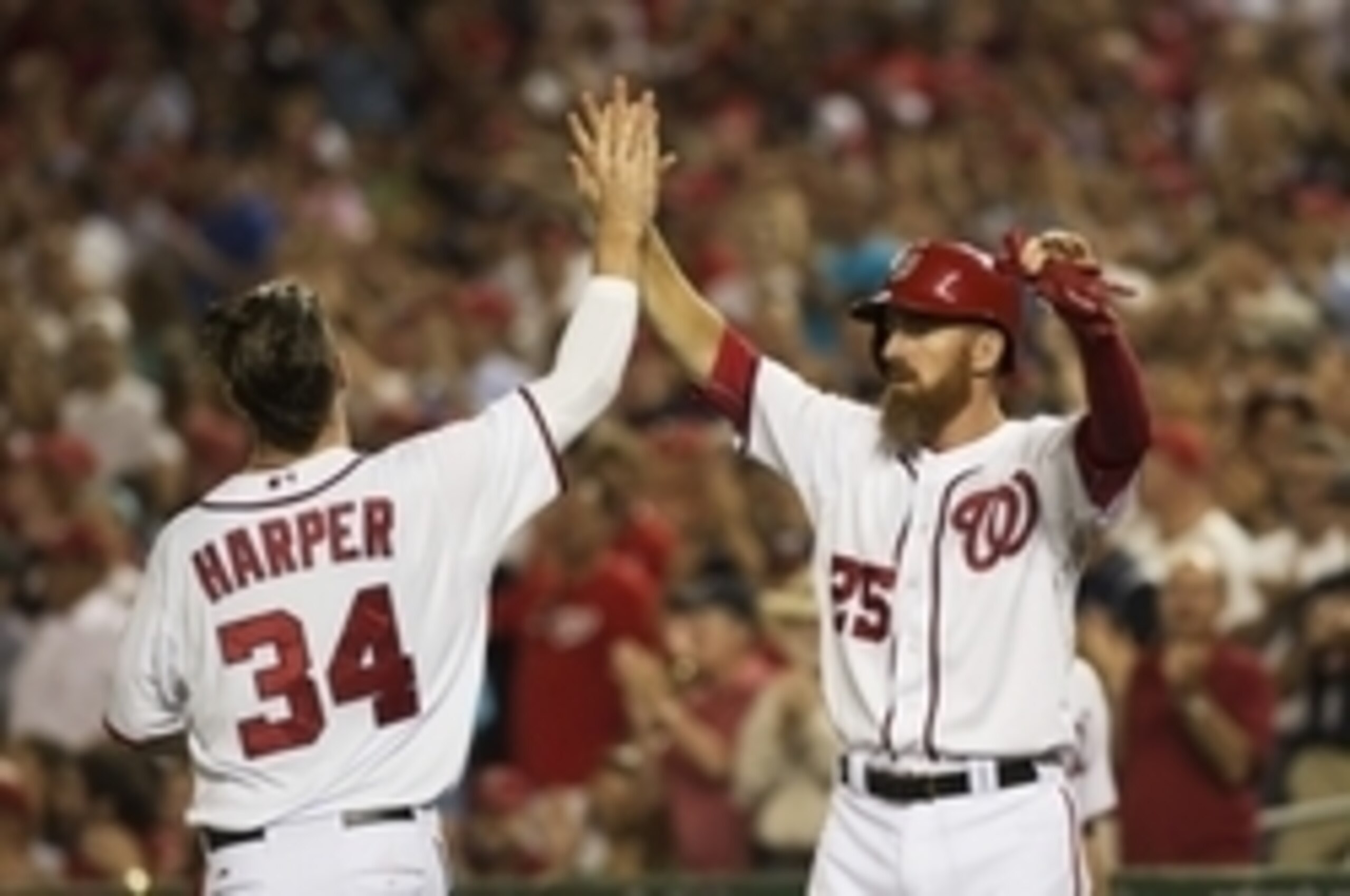
Hitting
Adam LaRoche has bounced back from a rough 2013 thanks to a more disciplined approach and an improved contact habit that’s included plenty of line drives. But the 34-year-old has also had a rough time hitting hard stuff away. Since that’s where pitchers pound him and LaRoche’s fastball percentage is going nowhere but up, that looks like an age-related weak spot that pitchers can and will exploit.
Power
This has been as much a bounce-back year for LaRoche’s power as it’s been for his hitting. But there are red flags here too. LaRoche hasn’t shown anything like the opposite-field power he had in 2012, and his warning-track power to center field may not be a fluke knowing that he’s 34 going on 35. He’ll be fine when he can tap into his pull power, but asking for more than that may soon be asking for too much.
Baserunning
Coming off a career-high four stolen bases in 2013, LaRoche has largely gone back to being a station-to-station guy in 2014. Steal attempts have been few and far between, and his 24 XBT% is low even by his standards. With him only going deeper into his mid-30s, this is how it’s going to be from here on out.
Defense
The defensive metrics fancied LaRoche as one of the top defensive first basemen in the league in 2012, but now they have him as at best average. That’s a bit harsh, as LaRoche still has his good hands working for him. But he is becoming more statuesque around the bag. His first step is still fine, but the burst after that first step is lacking. That’s age at work, and there’s not much to be done about that.
Overall
LaRoche’s situation right now is a tale of two directions. There’s plenty to like about how he’s bounced back from a rough 2013 season, but even his bounce back can’t hide the red flags that suggest he’s not going to be the same hitter or defender going forward.
15. Albert Pujols, Los Angeles Angels
22 of 36
Hitting
Albert Pujols has sharpened up his plate discipline while also dialing back the clock a bit on his contact habit. But the shortcomings are there. One is the frequency with which he pulls grounders, and another is how he hasn't had the easiest time handling 90-plus heat. And though it’s better, his discipline is still nowhere near what it was in his prime.
Power
Pujols has a shot at 30 homers and 40 doubles, which is perfectly acceptable power production for a first baseman. The catch is that he hasn’t regained any of his lost opposite-field power, as pretty much all of his hard-hit balls have been to the left of center. This matches what the eye test has to say, as putting a charge into the ball just doesn’t come as easily for Pujols as it used to.
Baserunning
Pujols’ legs must be healthy, as he’s back to being a respectable source of stolen bases. But it’s a good thing he is, as the problem he’s had with running into outs on the bases ever since 2009 is alive and well, and his 36 XBT% is low by his standards. It’s thus hard to call baserunning a strength even despite the steals, and another year isn’t going to make things any easier.
Defense
The defensive metrics like what they see from Pujols this season, and that’s largely owed to how his hands have been in fine form all season. But it’s easy to be sure-handed when you’re making only the easy plays, and Pujols is becoming that kind of first baseman. He still reacts quickly, but his legs don’t have the same spring that they once did. That’s age and wear and tear at work, and there’s no cure.
Overall
That biggest takeaways from Pujols’ 2014 season are that last year didn’t break his body beyond repair and that he can still be a capable hitter with good power when healthy. It’s just not a good idea to expect anything more than “capable” and “good” in those two departments. Pujols may have some life left, but he’s still far from the player he used to be.
14. Joey Votto, Cincinnati Reds
23 of 36
Hitting
Joey Votto’s batting eye is just fine, as his chase rate, walk rate and, by extension, OBP are all where they should be. However, the health of his legs is clearly hurting his hitting. Poking line drives to left field hasn’t been as easy for him as it was in 2012 and 2013, and he’s hit an alarming number of ground balls to the right side of the infield. Votto’s batting eye is good enough to keep his OBP afloat despite these problems, but it’s hard to count on these problems going away at this juncture.
Power
This is where Votto’s batting eye can’t help him. He needs healthy legs even more than other power hitters, as his approach is geared more toward driving the ball to left and center. He hasn't had an easy time doing that compared even to last year, and it’s not going to get any easier until his legs regain his former strength. And again, it’s hard to count on that happening.
Baserunning
Yeah, take a wild guess where this is going. Votto’s days of flirting with double-digit steals are likely gone forever, and even flirting with five steals is likely asking a lot of him given his wounded legs and his age (30 going on 31). We can expect to see him become more of a station-to-station guy as well, a process that’s already begun with his XBT% falling from 41 last year to under 30 in 2014.
Defense
The defensive metrics have tended to like Votto’s defense at first base, and that much hasn’t changed this year. But that’s because he’s been able to make up for his occasional fielding blunders by making tough plays, and that’s not going to get any easier. He’s already lost some of the quickness he used to have, and that quickness is yet another thing his health and age could rob him of.
Overall
There’s an “Oh, how the mighty have fallen!” vibe going on with this score, and it’s unfortunately justified. Even with his world-class batting eye, Votto can’t be much of a player without healthy legs. And for the umpteenth time, healthy legs should not be taken for granted going forward in light of how he's now on the wrong side of 30 and how shaky his legs have been in the last few years.
13. Adrian Gonzalez, Los Angeles Dodgers
24 of 36
Hitting
Adrian Gonzalez’s late-career aggressiveness is still going strong, and it’s not ideal how often he’s now chasing after slow stuff, with a high tendency to whiff on breaking pitches. Add in how he’s been less effective against 90-plus hard ones, and you have a strong checklist of concerns for a 32-year-old hitter. The bright side is that he hasn’t lost his all-fields approach, which is still worth something.
Power
Fortunately, Gonzalez’s power is one thing that doesn’t seem to be getting worse. His old opposite-field home run power has made something of a comeback in 2014, and it’s still a common sight to see him hit bullets into the right-center gap. These things will help ensure he remains a 20- to 25-homer candidate with good doubles power.
Baserunning
They don’t make ‘em much slower than Gonzalez, and I wouldn’t expect him to become any quicker and, thus, more of a stolen base threat as he advances deeper into his 30s. Credit where it’s due, however; Gonzalez is working on what would be a career-high 36 XBT%. Without putting too much stock into that figure being a sign of things to come, it’s at least a glimmer of hope.
Defense
The defensive metrics still see Gonzalez as an elite defender at first base, and there are still good reasons for that. He has some of the best hands around at first base, and watching him on a regular basis will give you an appreciation for his instincts. The catch is that what range he has is more about anticipation than athleticism, and that’s only becoming more true with age.
Overall
It turns out that Gonzalez’s old opposite-field power isn’t dead yet after all, and he still plays a mean first base. And as long as he can be a good defender with good power, he can be a productive player. He’ll need to rediscover his old hitting chops to be a star player, though, and it looks like we can give up waiting on that.
12. Justin Morneau, Colorado Rockies
25 of 36
Hitting
Justin Morneau has never been more aggressive, swinging and expanding the zone more often than ever before. And yet he’s been able to do it without sacrificing any contact, hitting more line drives with an elevated ground-ball habit that’s easily excused because of how he’s spread his grounders around. It’s also hard to chalk his success up to Coors Field, as he’s been productive everywhere. If only this new Morneau could draw some walks. Then he’d really be something.
Power
The degree to which the new Morneau has embraced ground balls hasn’t helped his power, and his continued health issues are another cap on his power potential. Even with regular action at Coors Field, 15 homers is likely as good as it gets. It’s not all bad, though, as Morneau has taken to hitting rockets in both gaps. That’s a habit that can ensure that his 15 or so homers come with plenty of doubles.
Baserunning
Stealing bases has never been a habit of Morneau’s, and he hasn’t done anything in his age-33 season to show he’s about to pick up the habit late in his career. But you can actually find worse baserunners on the Colorado Rockies, in part because Morneau’s 29 XBT% is better than you’d expect from an aging and injury-prone first baseman. He’s not a good baserunner, but he could be worse.
Defense
The defensive metrics like Morneau’s defense at first more than they have in some time, and there’s some merit to that. Morneau’s long been able to make the easy ones look easy, and this is the second year in a row he’s been one of the top scoop artists at first base. The only gripe worth raising is over his range, which is very much limited by a lack of spring in his aging legs.
Overall
Morneau’s old power looks like it’s long gone, but he deserves credit for adjusting so that his game doesn’t depend on his power as much. His new hyper-aggressive approach at the plate is working wonders, and he can still play a good first base.
11. Brandon Moss, Oakland A's
26 of 36
Hitting
Brandon Moss has been playing against type in 2014. He’s been doing a fine job hitting left-handers while dropping his strikeout rate. He hasn't been as wild a swinger as usual, and he’s done himself a favor by refusing to chase after off-speed as much. Trouble is that Moss’ swing-and-miss habit has hardly disappeared, and he’s still an extreme fly-ball hitter who’s only dangerous when he extends his arms.
Power
The good news about Moss’ fly-ball tendency is that he doesn’t have much trouble sending them a long way to right field. Based on those two strengths alone, he’s a 30-homer candidate. But that’s the ceiling of Moss’ power potential rather than the floor. Driving the ball the other way isn’t really his thing, so anything not to his pull side is more than likely going to end up as a wasted effort.
Baserunning
After a solid 4-of-6 effort stealing bases in 2013, Moss has turned his stolen base activity pretty much down to nil in 2014. Knowing that he’s 30 going on 31, it will likely stay there. And it’s not like the trade-off is more action doing the little things, as Moss’ XBT% is on a downward trend. This doesn’t make him a bad baserunner by first base standards, but it takes more than what he’s doing to be good.
Defense
The best thing Moss has going for him defensively is his versatility, as credit is owed to him for being able to play solid defense in left and right field when he’s not playing first base. This helps make up for what’s actually subpar defense when he does play first, according to the defensive metrics. And they’re not wrong, as Moss tends to be slow to react and isn’t among the elites when it comes to his hands.
Overall
Moss' transformation from a failed top prospect into a productive player over the last couple years has been built largely on his power. But with him tightening up his approach at the plate while also filling in at other positions defensively, we're seeing him become a more complete player.
10. Lucas Duda, New York Mets
27 of 36
Hitting
Lucas Duda’s score can only go so high here due to his status as a platoon hitter, but his reasonably disciplined approach says he does see right-handers well. Also, I like how he’s responded to a huge decrease in fastballs by aggressively swinging at the fastballs he does see and feasting on them. It’s too bad he’s a perfect shift candidate with an extreme fly-ball habit, making it hard for him to hit for average.
Power
Again, Duda’s status as a platoon player is a complication. But even with only semi-regular playing time, he’s still shown himself to be a 30-homer type by focusing his fly-ball habit largely on right field. And while he’s been less prolific to other fields, he’s hardly incapable of driving the ball to left and center. Over a full season, Duda has the goods to be one of the top power producers at first base.
Baserunning
Duda’s not exactly known for being a top athlete, and it shows in his baserunning. His success rate (or lack thereof) stealing bases the last two seasons should put an end to all future endeavors, and he’s gone from a 39 XBT% in 2013 to just 26 percent this year. Even by first-base standards, there’s not a lot to like about this part of his game.
Defense
Watching Duda stumble around the outfield in 2012 and 2013 was painful, but watching him play first base this season has been a different story. The defensive metrics rightfully agree that he’s an above-average defender. His range is limited by a slow first step and utter lack of acceleration, but Duda has been one of this year’s top scoop artists and he’s been virtually flawless making the easy plays.
Overall
Duda’s offensive game is based strictly on punishing right-handed fastballs and hitting for power, but his platoon role and raw power allow him to be pretty good at both of these things. He can also play a solid, if unspectacular, first base, making him one of the better platoon guys around.
9. Matt Adams, St. Louis Cardinals
28 of 36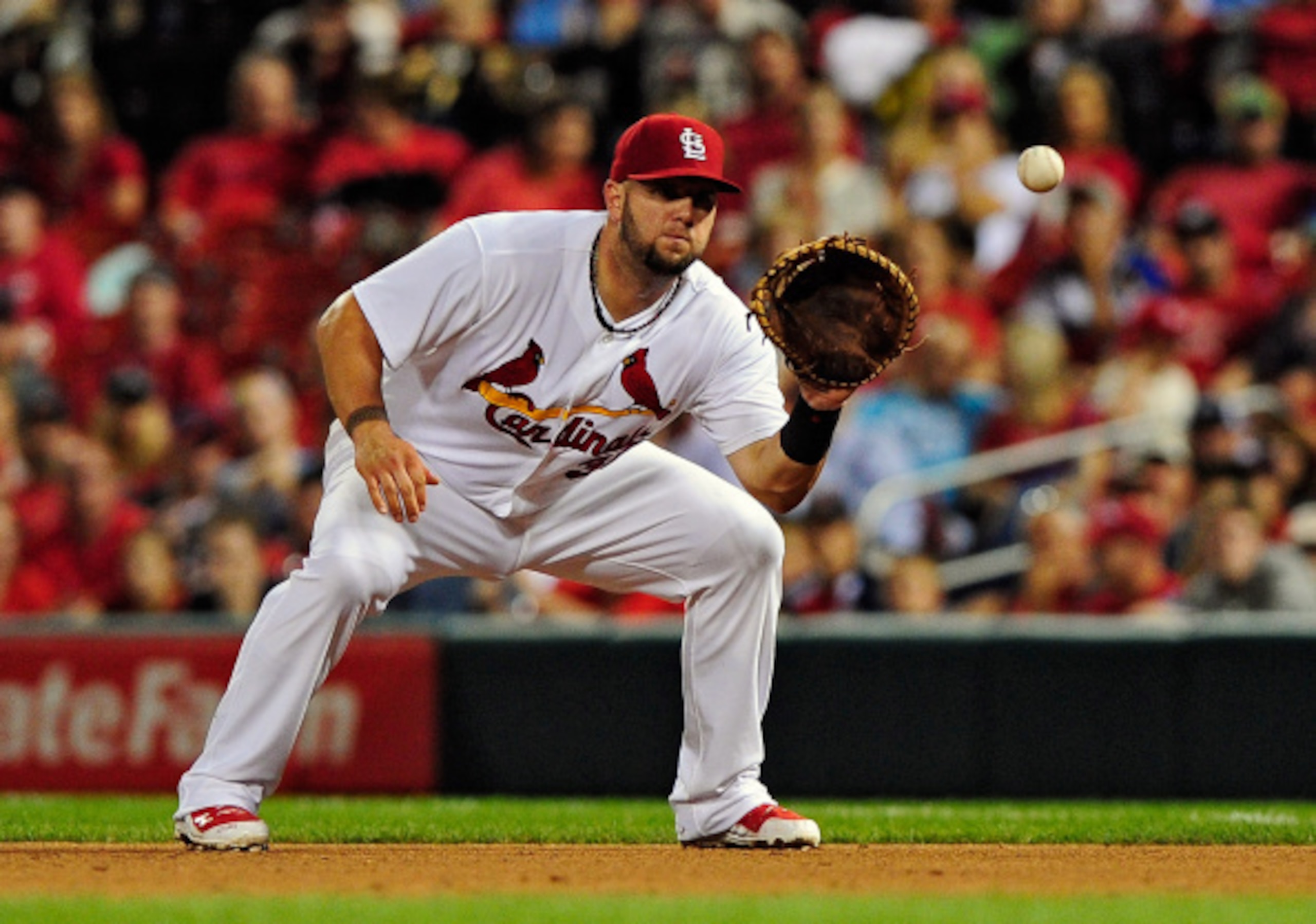
Hitting
Matt Adams has gone for a super-aggressive style in 2014, swinging at everything and frequently expanding the strike zone. He’s been able to pull it off because of surprisingly good plate coverage and bat control. In addition to hitting everything for line drives, he’s (somewhat famously) been willing and able to take what defenses have given him. That’s a decent way to be a .300 hitter, albeit one who rarely walks.
Power
Adams’ transformation into more of a hit-‘em-where-they-ain’t guy hasn’t helped his power, as he’s gone from being a possible 25- to 30-homer guy to being more of a 15-homer guy with doubles power. With that noted, Adams’ power potential isn’t quite hopeless, knowing that anything in the air to right field is likely to go, and it also doesn’t take much for him to flip line drives over the left fielder’s head.
Baserunning
You don’t see a good baserunner when you look at Adams’ 260-pound frame, nor do you see one when he’s actually running the bases. This should be the last season we even see him attempt as many as five stolen bases, and what’s a decent 33 XBT% is marred by a handful of outs at third base. You get the sense that he doesn’t want to be a station-to-station guy, but that’s what he should be.
Defense
You wouldn’t expect Adams to be a darling of the defensive metrics, but he is just that. And while the eye test says his hands still need some seasoning, there is something to be said about the sneaky-good athleticism Adams has working for him. He’s quicker on his feet than he looks, and it also looks like his anticipation has gotten better. The result: one of the better defensive first basemen in the game.
Overall
It's a shame that Adams has let his power go to waste by reinventing himself as more of a contact hitter, but that transformation could be going a lot worse. You also have to admire his defense at first base, a part of his game that really hasn’t gotten the attention it deserves.
8. Mike Napoli, Boston Red Sox
29 of 36
Hitting
The Mike Napoli of 2014 is more disciplined than ever and is swinging and missing less often. He’s also helped his BABIP potential by becoming less about fly balls and more about line drives and ground balls, and pitches over 90 mph aren't baffling him like in 2013. But he sometimes appears to be cheating on fastballs in order to make that happen, and he still strikes out more often than a typical hitter.
Power
It’s hard to transform into a contact-oriented hitter without sacrificing power—Napoli is now one of many who can vouch for that. Simply decreasing his fly-ball habit hasn’t helped, and he’s also made center field his main fly-ball hotspot. That means neglecting the Green Monster, and that means a natural cap on Napoli’s power potential. From now on, it’s going to have a tough time reflecting his raw power.
Baserunning
Napoli has been more active trying to steal bases than he was in 2012 and 2013, but both his age (32 going on 33) and his success rate say not to expect that to continue. Not that it’s all bad, though, as Napoli is working on a solid 38 XBT% that has already seen him double up last year’s first-to-third production. If he is indeed to be a lesser power hitter, more action like that is in the cards.
Defense
Though not quite as much as they liked it in 2013, the defensive metrics are still a fan of Napoli’s defense at first base. Likewise, the surprising range he showed off last year is still part of the equation, as he reacts quickly and is more athletic than he looks. The former catcher also has a good arm for first base and is good, if less than great, at picking throws in the dirt.
Overall
Napoli’s trademark power looks like it’s no longer going to be a trademark, but that’s fine if the trade-off is going to be a more advanced, more consistent approach at the plate with quality baserunning and defense on the side.
7. Carlos Santana, Cleveland Indians
30 of 36
Hitting
Carlos Santana’s plate approach boils down to swinging at as few pitches as possible, and you can tell from his hit map that he’s only interested in pulling the ball when he hits lefty. Factor in sub-.200 averages and his whiff rates on slow stuff, and his shortcomings are clear. What helps redeem them all, however, is how Santana’s extreme discipline helps him collect precious OBP-boosting walks.
Power
Home run power isn’t a problem for Santana, as he has loads of raw power and the fly-ball habit to make it to show up in games. Also, his lefty pull habit means anything he pulls in the air to right field is a potential homer. The only iffy thing is that his inconsistent line-drive habit and disregard for left and center from the left side means he may not have much else to offer besides homers.
Baserunning
While certainly less than prolific, Santana has been a sort of sneaky base stealer in the last two seasons. That’s something to keep an eye on, and then there’s the fact that he’s taking the extra base close to 50 percent of the time this season. He’s running the bases like a guy happy to be freed from the crouch, and he’ll also still be on the good side of 30 until 2016.
Defense
Santana was never strong on defense at catcher or at third base, but UZR has the right idea in thinking that his defense at first base is at least average. He’s shown off good athleticism and a very strong arm for the position, and he’s proven that blocking pitches in the dirt is good practice for scooping throws. Looking ahead, the Cleveland Indians should be able to count on good defense at first base.
Overall
If we still lived in the days when batting average was everything, Santana would be way down there in these rankings. But his approach is better than his average would have you believe, and he mixes in legit power, good baserunning and strong defense to go with it.
6. Freddie Freeman, Atlanta Braves
31 of 36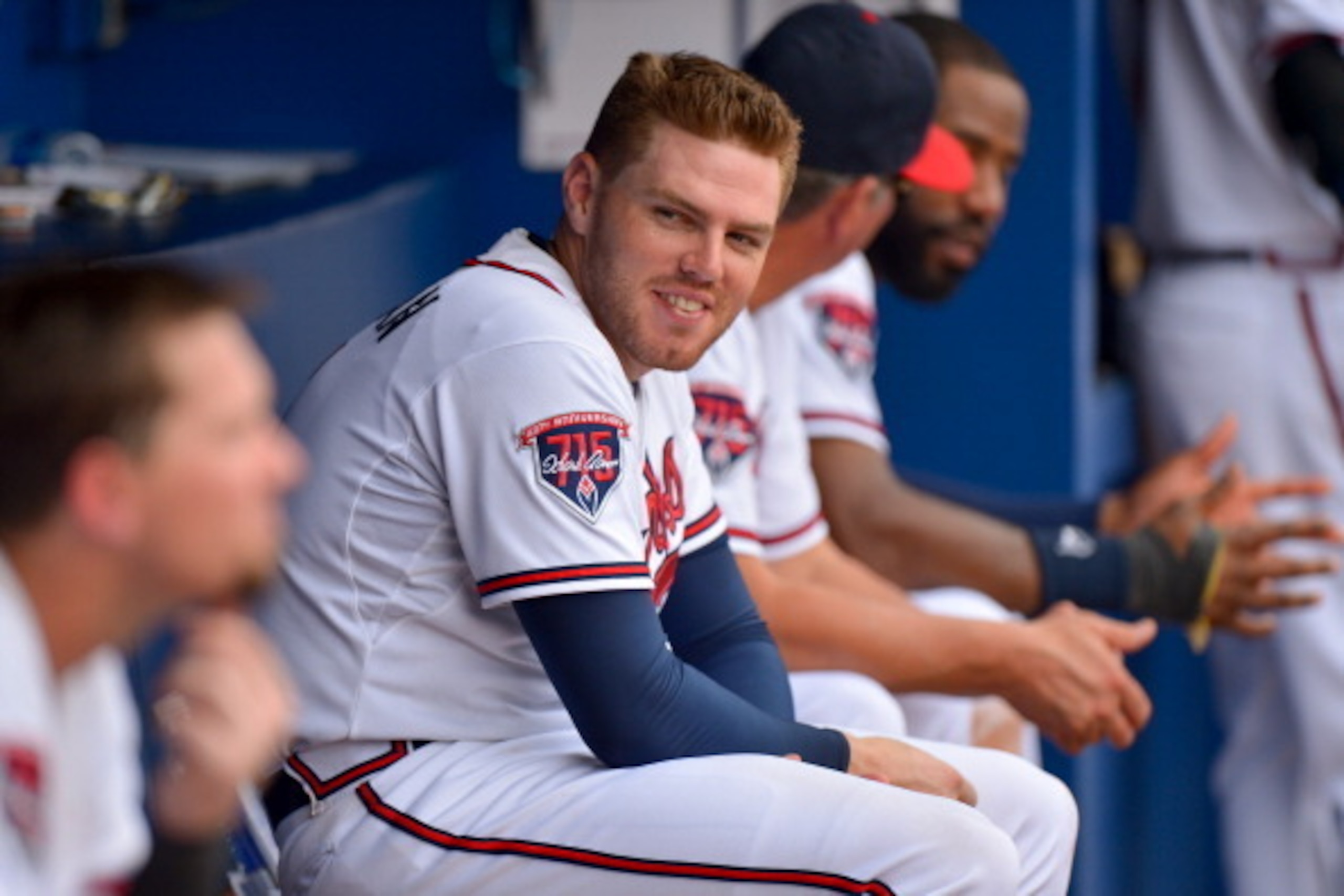
Hitting
There’s a bit of Miguel Cabrera in Freddie Freeman in that he manages to be a hyper-aggressive swinger and a discerning swinger at the same time. And though he can get out of whack against slow stuff and his zone coverage against hard stuff is somewhat lacking, Freeman’s freakish and ever-improving ability to hit line drives is a habit that will ensure his average never strays far from .300.
Power
The downside of Freeman’s line-drive approach is that it suppresses his fly-ball habit, helping to ensure that he’ll be more of a doubles-power guy than a home run hitter. So while he certainly has the raw power to hit 25 or more home runs on a consistent basis, it’s becoming less of a sure bet that he ever will. As such, it’s a good thing that his doubles power involves using every inch of the field.
Baserunning
It takes a lot to get Freeman’s 6’5”, 225-pound frame moving, so don’t expect him to become a base stealer anytime soon. However, he’s showing this year with a solid 39 XBT% that he can put his long strides to use taking extra bases. For a first baseman, that’ll do fine for progress.
Defense
The defensive metrics aren’t loving Freeman’s defense at first as much as they did in 2013, but this is a situation where the eye test disagrees. Freeman may not be quick on his feet, but his tall frame can help him in the range department. And while it may not be reflected in this year’s leaderboard, good anticipation and hands make Freeman one of the better scoopers in the business at first base.
Overall
Though Freeman has been inconsistent through 2014 and his home run power isn’t and may never be as good as it should be, he’s among the few high-ceiling hitters left in the game and can also play some dandy defense at first base.
5. Edwin Encarnacion, Toronto Blue Jays
32 of 36
Hitting
Edwin Encarnacion’s insistence on being an extreme fly-ball hitter makes it tough to hit for average. He’s a bit too pull-happy, and he’s also too willing to give pitchers the outer third of the zone. What makes his approach work is his selectiveness. He loves pitches on the inner two-thirds of the zone, and he’s not in the habit of missing them. Factor in how he doesn’t often expand the zone, and you get a quality hitter.
Power
The bright side about Encarnacion’s fly-ball style is how many of the fly balls he hits are deep drives to left field, which is largely a function of his in-zone selectiveness. What you worry about, however, is if he may not be done battling leg injuries now that he’s 31 going on 32. If not, his 30- to 40-homer power potential could suffer due to the lack of a consistently strong base.
Baserunning
Encarnacion was a double-digit steal guy as recently as 2012, but he didn’t keep it up in 2013 and very likely won’t even make it to five steals by the end of 2014. He’s also been more of a station-to-station guy, going from 45-ish XBT% rates in 2013 to under 40. Knowing his age and the warning his body just issued him about pushing his legs, I wouldn’t expect his baserunning to get any better.
Defense
Encarnacion is a DH disguised as a first baseman, and the defensive metrics say it shows. He’s had problems with errors, and he’s not one to save his fielders from errors with frequent scoops. What we can say in support is that he’s not a low-effort guy, as it’s common to see him diving this way and that to make tough plays. Another year on his age will make that tougher, but not too tough.
Overall
It's easy to view Encarnacion as a power-only player, and truth be told, that's what he is for the most part. But it's unfair to view him as some meatheaded slugger, as he has a plate approach that's perfectly designed to tap into his power without also putting him in a position to make too many outs.
4. Miguel Cabrera, Detroit Tigers
33 of 36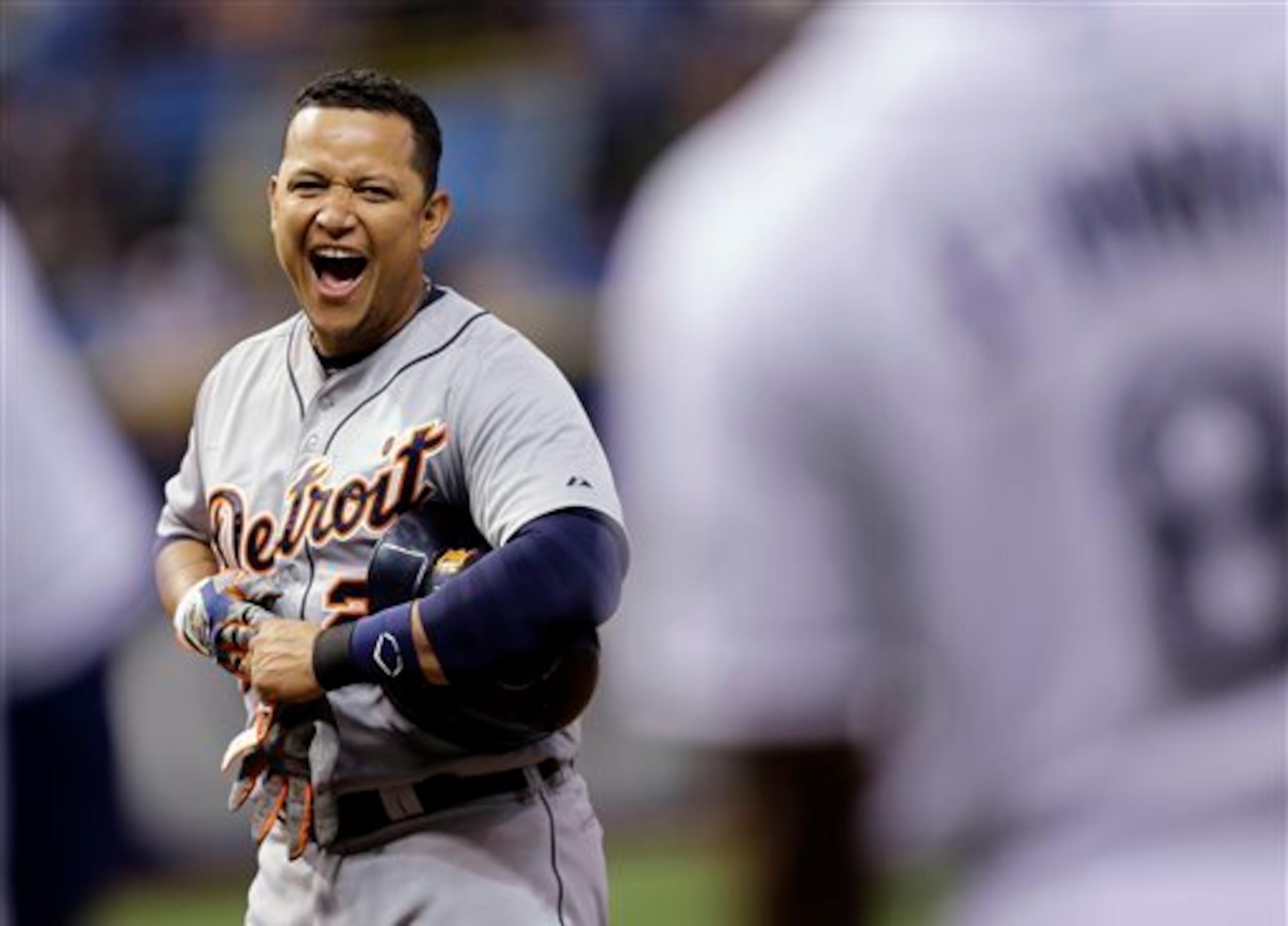
Hitting
For the most part, Miguel Cabrera is still a superb hitter. He deftly toes the line between discipline and aggressiveness, his plate coverage is still excellent, and he still has an Ichiro Suzuki-like ability to aim his hits. But he hasn’t fixed the elevated whiff rate against breaking balls he developed in 2013, and anything over 92 mph has become more of a challenge. Good health might fix that, but we should take neither that nor vintage bat speed for granted knowing that he’s headed for his age-32 season.
Power
This is where Cabrera’s assorted injuries have really hurt. Not having a healthy base has made both turning on the ball and driving it the other way difficult, rendering what was explosive power to all fields in 2013, well, less explosive power to all fields in 2014. And though we’re not taking a return to vintage form for granted, the bright side is 25-homer potential with lots of doubles is reasonable.
Baserunning
Cabrera was actually a sneaky base stealer in 2012 and 2013, but he’s wisely spared his body from the effort in 2014. Despite that, he’s moved quite well when he’s had to, with the main attraction being his XBT% rising from 28 to 39 percent. If the extra-base hits continue to be less frequent in 2015, it’s possible we’ll see him keep it up.
Defense
The defensive metrics like Cabrera more as a first baseman than they ever did as a third baseman, and that’s not surprising. Though he hasn’t been a master at picking throws out of the dirt and is still very much limited range-wise, his footwork and reactions have resembled those of a seasoned first baseman. While short of great, Cabrera’s defense at first base has at least been good.
Overall
Let’s acknowledge that Cabrera is still a fantastic baseball player and that he’s actually quietly improved in two areas (baserunning and defense) where he had been very weak. But his once-unrivaled bat has been diminished by lingering health issues, and he’s not about to get any healthier or younger.
3. Anthony Rizzo, Chicago Cubs
34 of 36
Hitting
The big change for Anthony Rizzo in 2014 involves his sudden ability to hit left-handers, which can be traced to his improvement against their breaking stuff. He’s further helped himself by becoming slightly more selective with the fastballs he swings at, and he’s solved last year’s BABIP troubles by hitting everything for line drives more consistently. There are still more holes in Rizzo’s zone coverage than you’d prefer to see, but overall, he’s made himself into a legit hitter.
Power
Rizzo has also improved his power tool in 2014, mainly by hitting more fly balls. That’s especially helpful in his case because of his considerable raw power, which he’s displayed by bombarding the bleachers in left-center as well as in right field. The only gripe worth making is that it’s odd to see a powerful lefty batter so rarely make use of the right-center gap.
Baserunning
Rizzo should probably give up trying to steal bases if he’s going to fail as often as he succeeds like he has these last two years. Then there’s how Rizzo’s XBT% has gone from 41 in 2012 to 38 in 2013 to 32 this year. It would appear that hitting like a slugger is causing him to run like one, too.
Defense
The defensive metrics aren’t going crazy for Rizzo’s defense like they did in 2013, and he can thank both an uptick in errors and less frequent rangy plays for that. The good news is you can still find him leading the way in first base scoops, and the good first step and easy burst that allowed him to make so many rangy plays in 2013 are still there.
Overall
Rizzo always had it in him to be a complete threat as a first baseman. Thanks to the improvements he’s made against left-handers and his enhanced abilities to hit line drives and make his raw power show up in games, that’s what we’ve seen him become. Good stuff for a guy who's barely 25.
2. Jose Abreu, Chicago White Sox
35 of 36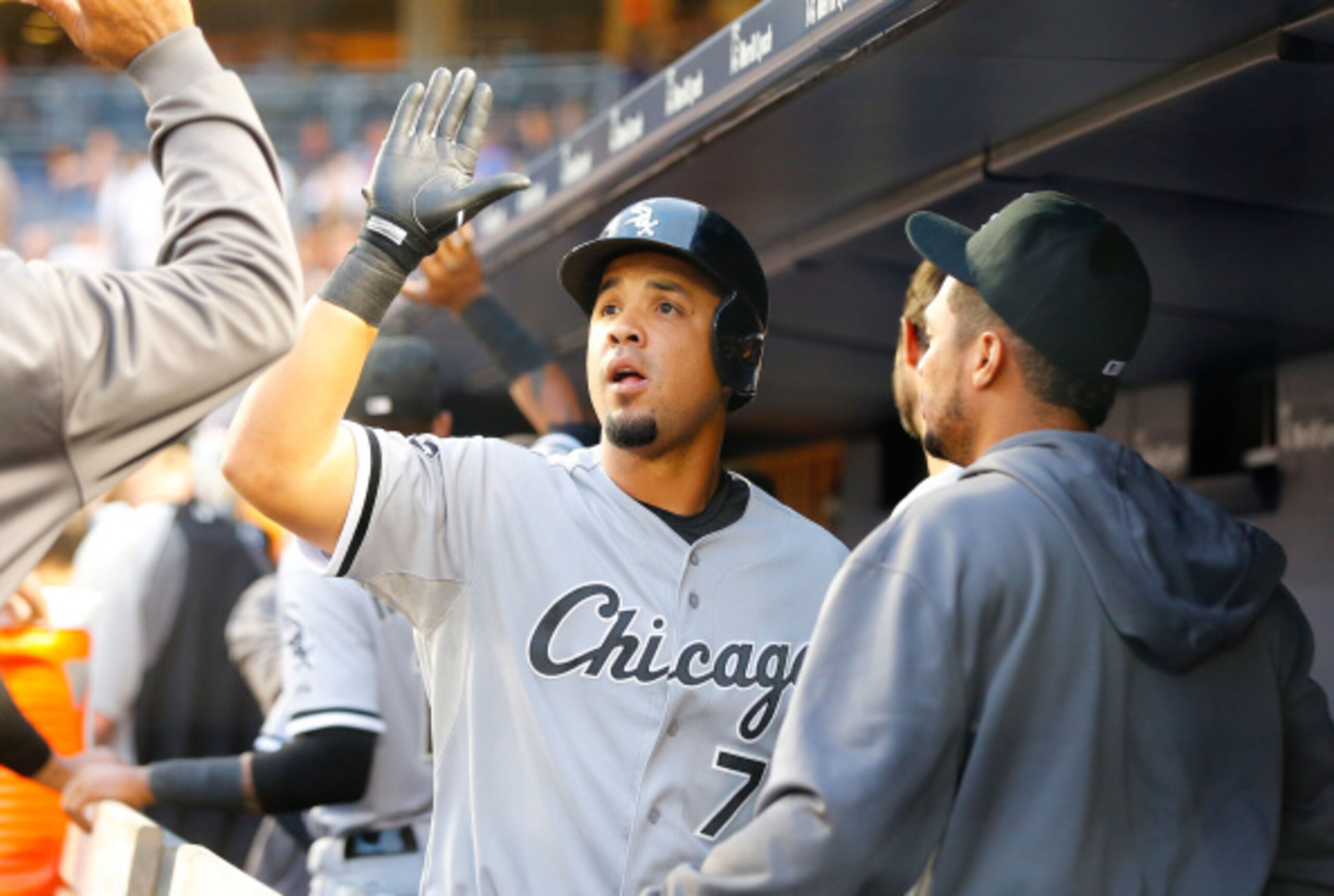
Hitting
It’s hard to look at Jose Abreu without noticing his extreme aggressiveness and swing-and-miss problem. And yet you can see him adjusting, as his worst whiff rates against hard, breaking and off-speed pitches are behind him and he’s generally gotten more consistent hitting all three for line drives. Then you can factor in how he has zero weak spots within the strike zone, making him out to be a guy who can be successful as a Vlad Guerrero-type hitter moving forward.
Power
Virtually any ball Abreu hits has a chance to go far. Though his power is mainly focused on left field, he’s shown that hitting the ball to and beyond the right field fence isn’t a problem. And while there is something to say about his power decline after the All-Star break, it’s not worth worrying about knowing that he’ll only be 28 and more prepared for a 162-game season in 2015.
Baserunning
Abreu is about as fast as you’d expect a 6’3”, 255-pound guy to be. He hasn’t been active stealing bases in 2014 and shouldn’t be expected to get any more active in the future. He’s also not of much use doing the little things, posting an unspectacular 28 XBT%. These things don’t make him a bad baserunner by first base standards, but they don’t make him a good one either.
Defense
The defensive metrics are split on how good Abreu is, with DRS seeing him as clearly below average and UZR seeing him as slightly above average. The eye test leans more toward the first opinion, as he’s without great hands and is generally slow to get after balls that require him to move more than a couple feet in any direction.
Overall
That Abreu has flashed the potential to be a 40- to 50-home run guy isn’t the biggest surprise. The real surprise is how well he’s been able to adjust to major league pitching, making it look a lot easier than it should be. He may be an offense-only player, but he’s made it clear that his offensive potential is no joke.
1. Paul Goldschmidt, Arizona Diamondbacks
36 of 36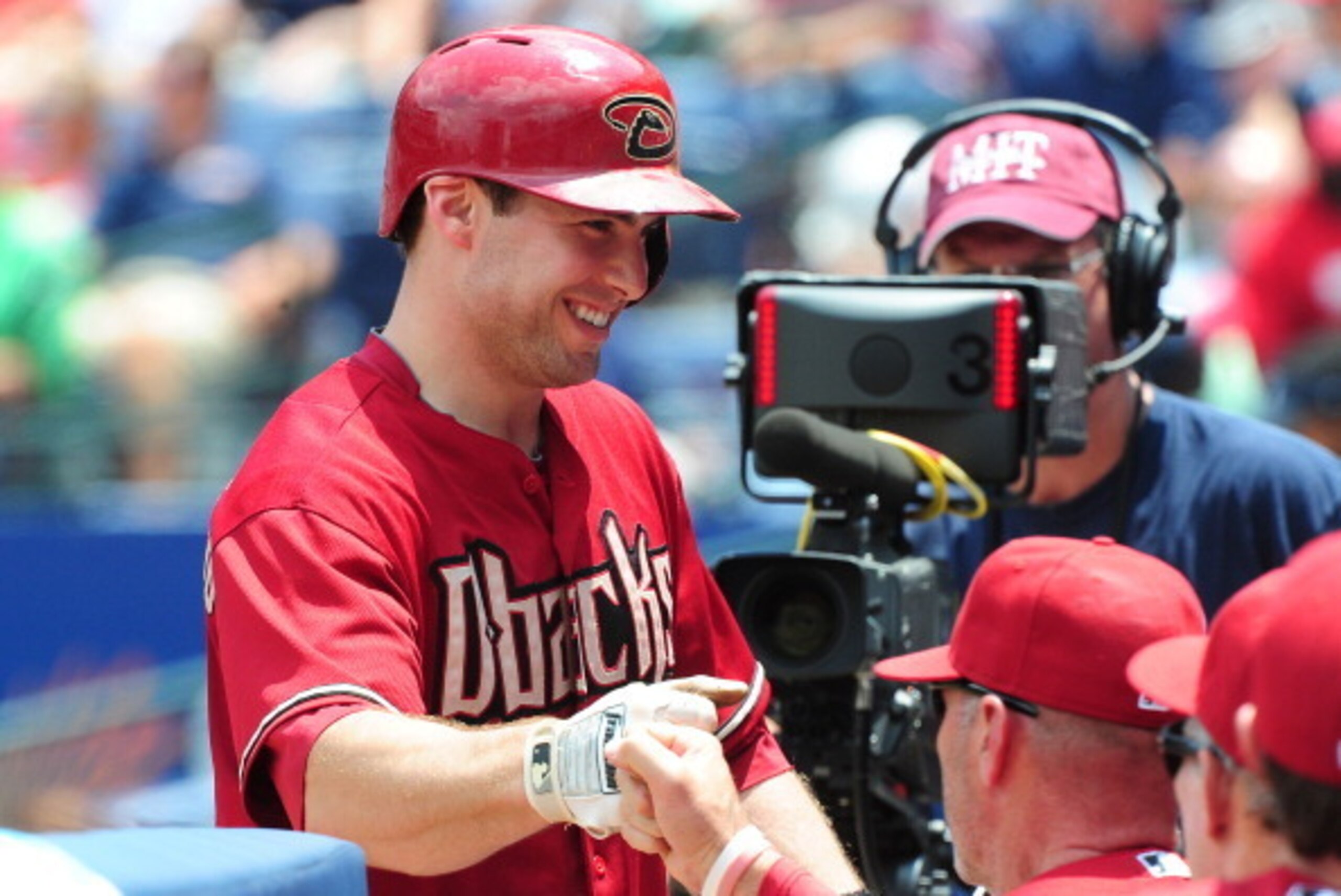
Hitting
It’s not by accident that Paul Goldschmidt finished 2014 hitting .300 with a .396 OBP. He actually got more disciplined, allowing him to more consistently show off his considerable zone coverage. To boot, he also maintained a strong a line-drive approach encompassing all fields. The only real concern is the whiff habit he developed against fastballs, but it’s a small concern in light of his strengths.
Power
Though home runs weren’t coming as easily as they did when he co-led the NL in homers in 2013, one look at Goldschmidt’s 2014 hit map is all it takes to know that he was still hitting rockets all over the field. His raw power was fine. The worry, however, is that the season-ending hand injury Goldschmidt suffered might do what hand injuries sometimes do and leave him with less than vintage power in 2015.
Baserunning
After topping 15 stolen bases in 2012 and 2013, Goldschmidt had at least a chance to get there again in 2014, with nine steals in 12 tries. Even that amount is good enough to highlight him as the top base-stealing threat among first basemen, and then you can further admire how he finished the season with a 55 XBT% and as the Arizona Diamondbacks' top-rated baserunner.
Defense
The defensive metrics went from seeing Goldschmidt as an elite defender in 2013 to an average defender this year. This is justifiable, as he made more errors and wasn’t as active scooping the ball or making rangy plays. The eye test says he didn’t lose his ability to do the latter two things well, though, so there’s a limit to how much we can think he might have overachieved defensively in 2013.
Overall
The possibility of his season-ending hand injury taking away some power is the big concern with Goldschmidt going forward. But even if it does, it’s only going to render elite power into great power, and Goldschmidt should still have the goods to be a .300 hitter who can also run and field his position. For as many great first basemen are in the game today, none can match his all-around skill set.

.jpg?w=2560 "Insiders: Cowboys Overpaid for Porter")
.jpg?w=2560 "Every Trade's Best Trade Asset 🔁")
.jpg?w=2560 "Top NFL Trade Targets")
.jpg?w=2560 "Daniels Eyeing Week 5 Return")
.jpg?w=2560 "No Rift Between Maye, Vrabel")