Best and Worst of the NFL Draft: Nos. 29-15
29. Marc Bulger QB, New Orleans Saints 168th overall (6th round) 2000
It’s a shame that the Saints couldn’t make room for Bulger. He was cut shortly after the draft and eventually caught on as the Rams’ No. 3 quarterback.
TOP NEWS
.jpg?w=2560 "Raiders Camp Football")
Jeanty Avoids Major Injury
.jpg?w=2560 "49ers Chargers Football")
Report: Saints Trade For 49ers RB
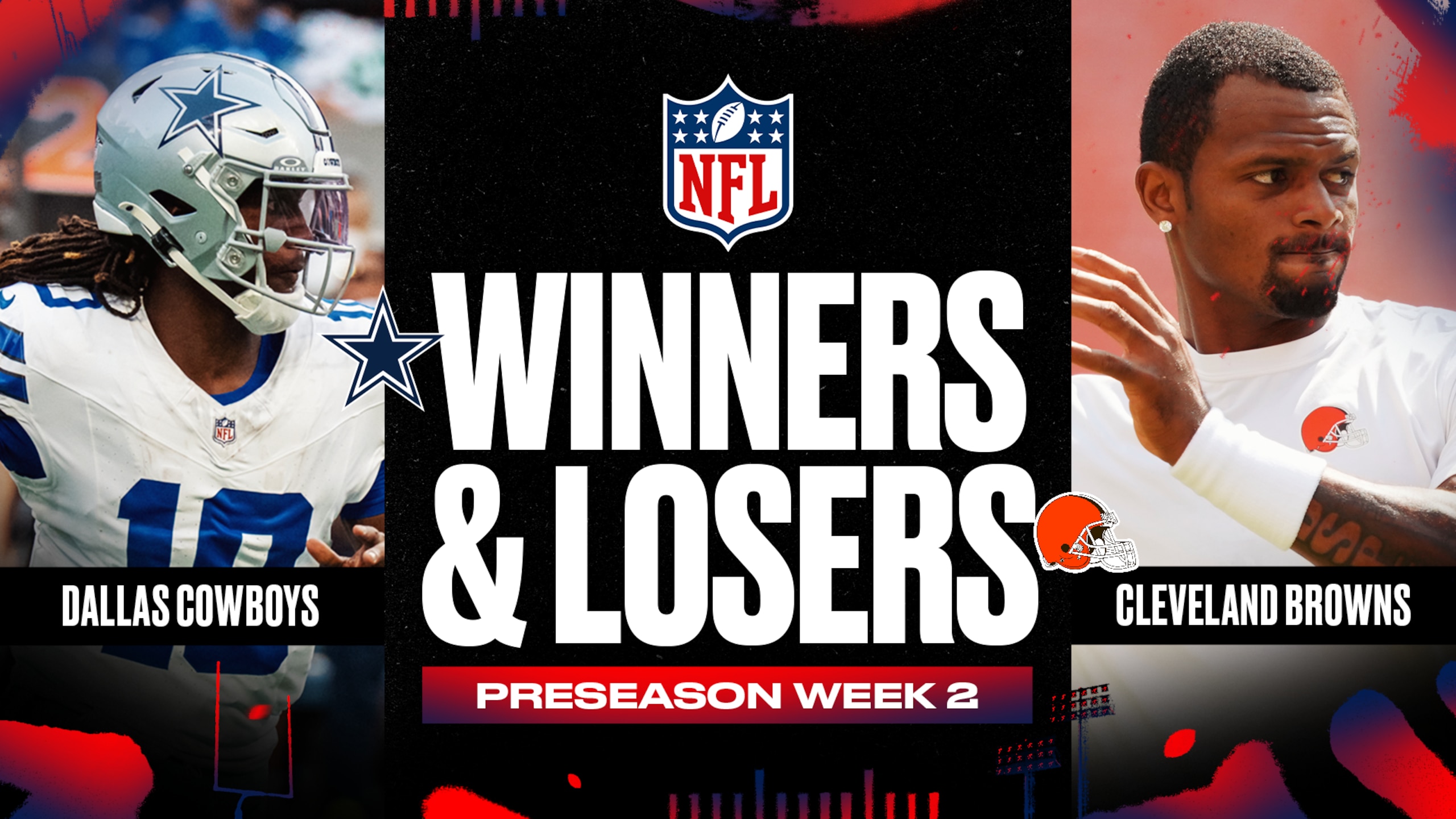
Preseason Week 2 Winners & Losers 📊
Thanks to injuries to Kurt Warner and Jamie Martin, Bulger got a chance to start in his second season and never looked back. West Virginia’s all-time leading passer threw for a league-high 4,301 yards and 24 touchdowns in 2006, and was elected to the Pro Bowl twice.
28. Matt Birk C, Minnesota Vikings 173th overall (6th round) 1998
Birk may not be the smartest guy out there, but he makes up for his embarrassing lack of general knowledge with raw strength and technique.
He slid on the draft board for two reasons: 1. Teams are reluctant to use a first-day pick on a center and 2. Teams are reluctant to draft a player with such immense off-the-field problems. Luckily for the Vikings, Birk was able to put his shoddy past behind him and become a six-time Pro Bowler.
27. Kabeer Gbaja-Biamila DE, Green Bay Packers 150th overall (5th round) 2000
KGB recently surpassed Reggie White as Green Bay’s all-time sack leader. Originally dubbed a pure speed rusher, the San Diego State product has developed into a reliable every-down defensive end.
26. Edgerrin James RB, Indianapolis Colts 4th overall (1st round) 1999
It’s not often that the fourth player chosen in the draft constitutes a “great pick,” but this is the case with James. Edge set records at Miami, but until a 299-yard, three-touchdown outburst against UCLA, James didn’t take much attention away from Ricky Williams and his chase for the all-time rushing record.
Williams was considered the best running back prospect in years, but Bill Polian instead selected James with Williams still on the board. At the time, it certainly wasn’t the popular pick, but it turned out to be the correct one. Edge led the NFL in rushing his first two years and brought a new dimension to the Indianapolis offense that helped it become the league’s dominant attack for James’ seven years with the team.
Of course, when James demanded a big money deal, Polian let him walk, drafted Joseph Addai, and won the Super Bowl. Nonetheless, the fact that Indy finally got over the hump as soon as James left is a mere coincidence. He has still succeeded in Arizona despite playing behind a sub-par offensive line, and is sure to be a Hall of Famer when his career is over.
25. (tie) Antonio Cromartie CB, San Diego Chargers 19th overall (1st round) 2006
Marcus McNeil T, San Diego Chargers 50th overall (2nd round) 2006
A few players away from becoming a serious contender, San Diego took a lot of heat for using a first-round pick on Cromartie, who started just one game in an injury-riddled career at Florida State.
Fortunately, Cromartie has lived up to the pressure of being a first-rounder and exceeded all expectations. At 6-foot-2, 205 lbs, he is essentially Randy Moss playing defensive back. Cromartie, one of the most athletic cornerbacks to ever play the game, set an NFL-record with a 109-yard missed field-goal return, snagged 10 interceptions, and was named First Team All-Pro in his second season.
McNeil unexpectedly was thrust into the starting left tackle spot as a rookie and excelled in the role. He received votes for Rookie of the Year, made the Pro Bowl, and helped lead the Chargers to a 14-2 regular season record.
24. (tie) Marion Barber III RB, Dallas Cowboys 109 overall (4th round) 2005 Brandon Jacobs RB, New York Giants 110 overall (4th round) 2005
Two of the most physical young running backs in the NFL were back-to-back day two picks in 2005. Barber flew under the radar after sharing carries with Laurence Maroney in college and Jacobs, considered to be a short-yardage specialist coming out of Northern Illinois, fell because teams doubted his ability to be a feature back.
Clearly, there aren’t many questions about either anymore. Both Barber and Jacobs have developed reputations for punishing defenders early in their careers and have seen their roles expand greatly each season. The best is yet to come for both youngsters.
23. Willis McGahee RB, Buffalo Bills 23rd overall (1st round) 2003
A possible No. 1 overall pick at the end of the regular season, McGahee’s gruesome knee injury in the Fiesta Bowl had NFL teams questioning whether he’d ever be able to play again. Somehow, McGahee, with a little help from agent Drew Rosenhaus, convinced several teams that he’d be able to return to his college form.
The Bills took a huge risk in spending first-round money on McGahee, who sat out his entire rookie season, but it paid off. He was one of the most consistent tailbacks in the NFL with Buffalo and earned his first Pro Bowl last season with Baltimore.
22. (tie) Lance Briggs LB, Chicago Bears 68th overall (3rd round) 2003
Jason Witten TE, Dallas Cowboys 69th overall (3rd round) 2003
Three years after drafting Brian Urlacher out of New Mexico, the Bears scoured the great southwest for another star linebacker, and they found one in Arizona’s Lance Briggs.
Most teams get top talent high in the first round, but what separates the average teams from the contenders is the ability to find standouts like Briggs deep in the draft.
One pick after the Bears nabbed Briggs, the Cowboys found a gem of their own. Witten has emerged as the second best pass-catching tight end in the NFL and responsible for much of the success Tony Romo has enjoyed in his two years as the Dallas starter.
21. Mike Anderson RB, Denver Broncos 189th overall (6th round) 2000
The 27-year-old rookie was one of the greatest stories in the last decade of football. Anderson, who was a member of the marching band in high school because the football coaches thought he was too big to play running back, spent four years in the marines before enrolling at Utah, where he teamed with Carolina Panther wide receiver Steve Smith.
Anderson came out of nowhere to win the NFL Offensive Rookie of the Year in 2000 when starter Terrell Davis and backup Olandis Gary went down and Anderson stepped in with 1,500 yards and 15 touchdowns.
20. Mike Vrabel OLB, Pittsburgh Steelers 91th overall (3rd round) 1997
If Pittsburgh had held onto Vrabel, he would have undoubtedly landed higher on this list. After four seasons with the Steelers, Vrabel signed with New England, where he anchored three championship defenses and discovered a talent for catching one-yard touchdown passes.
19. Brian Westbrook RB, Philadelphia Eagles 91th overall (3rd round) 2002
The Eagles didn’t have to go far to find Westbrook. A graduate of nearby I-AA Villanova, Westbrook was an unknown to most teams in the draft.
He didn’t play against top competition in college and because of his size, he wasn’t considered to be an every down back. In his five-year career, Westbrook has debunked all of those myths en route to becoming a top-five back in the NFL. His combination of speed, agility, and lower-body power is the closest thing the league has seen to Barry Sanders in years. Now if only Philly could find some receivers…
18. Cato June LB, Indianapolis Colts 198 overall (6th round) 2003
A standout at the University of Michigan, June was considered too small at 6-foot, 220 lbs to play linebacker in the NFL. His speed and quickness was a perfect fit in the Indianapolis defense, however, as June was voted All-Pro in 2005 and led the Colts with 142 tackles in their 2006 Super Bowl winning season.
Though June didn’t have nearly as much success in his first season with Tampa Bay after signing as a free agent, his contribution to the Colts’ Super Bowl run makes him a true draft-day steal.
17. Steve Smith WR, Carolina Panthers 74th overall (3rd round) 2001
It wouldn’t be outrageous to say that Smith is the best wide receiver in the NFL. Smith led the league in yards and touchdowns a few seasons ago while facing constant triple coverage, and even put up respectable numbers this year despite Jake Delhomme, David Carr, Vinny Testeverde, Matt Moore all going down with injuries
16. (tie) Tiki Barber RB, New York Giants 36th overall (2nd round) 1997
Ronde Barber CB, Tampa Bay Buccaneers 66th overall (3rd round) 1997
One will go down as the face of his immensely successful franchise. The other will go down as the running back that foolishly passed up a Super Bowl to take a job with NBC.
15. Marques Colston WR, New Orleans Saints 252nd overall (7th round) 2006
Everyone expected New Orleans’ top young talent to burst out of the gates with 2,240 yards and 19 touchdowns in his first two seasons. But no one expected that young talent to be Colston. For all the hype Reggie Bush has garnered, Colston has been the Saints’ most dangerous weapon since ’06.
29. (tie) Bryant Johnson and Calvin Pace Cardinals, 16 and 17 (1st round) 2003
The Cards missed an opportunity to draft can’t-miss pass rusher Terrell Suggs, and instead traded down to select two extreme reaches in Pace, an undersized defensive end, and Johnson, an unpolished wide receiver.
Neither panned out, although Pace is living more than comfortably after signing an inexplicable six-year, $42 million contract with the New York Jets. On a positive note, the Cardinals made up for their first-round debacles by drafting Anquan Boldin with their second-round choice (54 overall).
28. David Carr QB, Houston Texans 1st overall (1st round) 2002
It’s difficult to term this a “bad pick” because of the circumstances Carr was forced into, but the fact of the matter remains that he hasn’t produced anywhere regardless of his supporting cast.
Carr, who didn’t face major competition at Fresno State, had a rough transition to the NFL. He set the single-season record for sacks taken behind a woeful offensive line. Even when his protection improved and the Texans added playmakers (Andre Johnson, Dominick Davis), Carr still looked uncomfortable behind center. He posted a miserable 58.5 quarterback rating in six games with Carolina last year and has since signed on with the Giants to back-up Eli Manning.
27. Ron Dayne RB, New York Giants 11th overall (1st round) 2000
The all-time leading rusher in college football was far from a sure-thing on draft day; many teams were rightfully concerned with his weight and lack of speed. After a few seasons of splitting carries with Tiki Barber, the Giants’ backfield quickly became a lot of lightning and very little thunder. Dayne has since re-established himself as a serviceable back with the Houston Texans, but never has proved to be a capable full-time starter.
26. Andre Wadsworth DE, Arizona Cardinals 3rd overall (1st round) 1998
An elongated training camp holdout and several knee injuries quickly derailed the career of a defensive end so powerful and so athletic that nearly every draft expert dubbed him a “can’t miss.”
Wadsworth attempted a comeback as recently as 2007 with the Jets, but it’s safe to say he’ll never live up to the lofty expectations set upon him after his career at Florida State.
25. Jimmy Kennedy DT, St. Louis Rams 12th overall (1st round) 2003
It’s safe to say the Jimmy Kennedy experiment failed. The former Penn State standout had trouble finding time in a crowded defensive line and was eventually shipped out to Denver, where he was released early in the 2007 season.
24. Cedric Benson RB, Chicago Bears 4th overall (1st round) 2005
Like Curtis Enis seven years before him, Benson was drafted in the Top 5 to provide the Bears with a hard-nosed, between-the-tackles feature back. A camp holdout allowed Thomas Jones to win the job outright, and Benson never really got a chance until last season when Jones was dealt to the Jets.
We all knew the Bears couldn’t throw, but with Benson, we found out they couldn’t run either. Benson averaged a paltry 3.4 yards per carry before going down with a season-ending ankle injury. He still has time to resurrect his career, which is why he is only No. 24 on this list.
23. Travis Taylor WR, Baltimore Ravens 10th overall (1st round) 2000
Taylor flashed phenomenal potential at Florida, but like many other Gator receivers, he failed to fulfill it. Partially held back by poor quarterback play in Baltimore, Taylor has bounced around the league as a No. 3 receiver. His collegiate teammate, Darrell Jackson, has proved to be the better pro despite being selected with the 80th pick in the 2000 NFL Draft.
22. Jacquez Green/Ike Hilliard/Reidel Anthony
Note to GMs: Don’t draft wide receivers out of Florida.
Steve Spurrier’s system produced inflated stats for both receivers and quarterbacks, but over the years none of them—with the exception of third-round pick Darrell Jackson—have translated to the NFL.
Anthony and Green, both drafted by Tampa Bay, both flamed out of the league quickly, but Hilliard enjoyed a mildly successful career. Still, he did not come close to living up to expectations as the No. 7 overall pick.
21. Damione Lewis DT, St. Louis Rams 12 overall (1st round) 2001
Lewis was considered to be the best defensive lineman in the country at Miami (Fla.), so the Rams thought they were getting an absolute gem, but for whatever reason, Lewis never became a productive starter in his four years in St. Louis. To make matters worse, All-Pro nose tackle Marcus Stroud came off the board with the very next pick.
20. Michael Booker CB, Atlanta Falcons 11th overall (1st round) 1997
Booker never established himself and lasted just five seasons in the NFL. He was drafted over defensive backs Sam Madison, Ronde Barber, Chad Scott, and Darren Sharper.
19. Tom Knight CB, Arizona Cardinals 9th overall (1st round) 1997
Knight never established himself and lasted just five seasons in the NFL. He was drafted over defensive backs Sam Madison, Ronde Barber, Chad Scott, and Darren Sharper.
18. Wendell Bryant DT, Arizona Cardinals 12th overall (1st round) 2002
Bryant was drafted two picks ahead of Albert Haynesworth, who for all intents and purposes is the most dominant nose tackle in the game today. In just three seasons with Arizona, Bryant totaled an abysmal 29 solo tackles and 1.5 sacks.
17. Peter Warrick WR, Cincinnati Bengals 4th overall (1st round) 2000
Warrick was the Reggie Bush of the late ’90s. As a wide receiver at Florida State, no one could touch him. The man played at a different speed than everyone else. But once he reached the NFL, it seemed as though everyone figured him out. Warrick averaged less than 500 receiving yards per season in his six-year career.
16. Gerard Warren DT, Cleveland Browns 3rd overall (1st round) 2000
Warren didn’t perform terribly, but he certainly did not live up to being the third overall selection. He averaged 44.3 tackles 4.2 sacks per game in three seasons with Cleveland before being traded to Denver, but what made this a bad pick were the players taken after him.
At the time, the Browns needed any kind of playmaking they could get, and LaDanian Tomlinson, who came off the board two picks later, would have certainly qualified. Richard Seymour, the sixth pick, also would have been a better addition on defense.
15. Cade McNown QB, Chicago Bears 12th overall (1st round) 1999
As bad as Tim Couch and Akili Smith were, McNown may have been worse. In his three-year NFL career, McNown mustered only 3,111 yards passing while tossing 19 interceptions. Luckily for Chicago fans, the Bears solved their quarterback problems in 2002 when they drafted Rex Grossman. Oh, wait.
.jpg?w=2560 "Buccaneers Rookies Football")
.jpg?w=2560 "Chiefs Giants Football")
.png?w=2560 "MLB Playoff Picture Shaping Up")