Ranking the Best Home Run Landing Spots in Baseball
The home run has been an integral part of baseball games at any level for a very long time. Whether it's little league, college, minor leagues or Major League Baseball, fans love to see a baseball leave the park.
And, specifically in the Major League level, there are certain ballparks that make the home runs even more special. Even if you are not inside the stadium for a game, there are opportunities to retrieve home run balls at certain parks.
Here's a look at some of the best home run landing spots in Major League Baseball today.
No. 1. AT&T Park: McCovey Cove
1 of 5Past the right field bleachers at San Francisco's AT&T Park is a body of water known commonly as McCovey Cove. Named after Giants legend Willie McCovey, the Cove is often swarmed with kayakers and boaters armed with fishing nets, waiting for a home run splash. Once the ball made its splash, the boaters race after it, paddling feverishly and furiously to retrieve the ball.
On the facing of the right field wall inside the park exists a running tally of "Splash Hits". A Splash Hit is considered a home run that is hit by a Giants player, which lands in McCovey Cove on the fly without hitting the Arcade or Portwalk beyond right field.
To date, there have been 63 Splash Hits since the park opened in 2000—35 of which were courteous of Barry Bonds. The most recent (and only one of 2013) was Pablo Sandoval's round-tripper, which was hit on May 12 against the Atlanta Braves. This was Kung-Fu Panda's seventh Splash Hit of his career, which trails only Bonds for most all time.
There have also been 29 instances of a non-Giants player hitting a home run into McCovey Cove. The first such player was Todd Hundley, on June 30, 2000, then playing for the Dodgers. The latest one came from Carlos Gonzalez of the Rockies this season, on May 25.
Carlos Delgado and Adam LaRoche are tied for the all-time non-Giants leader in cove home runs with three. Ryan Klesko remains the only player to hit one into the cove both as a Giant and a visiting player.
No right-handed hitter has ever hit a home run into McCovey Cove, and only two American League players have ever reached the water—Boston's David Ortiz, and Texas' Mitch Moreland. Finally, there have only been two postseason water balls, one by Bonds, in '02, and one by Rick Ankiel (then of the Braves), in 2010.
No. 2. Wrigley Field: Waveland and Sheffield Avenue
2 of 5Chicago's Wrigley Field has a long, storied legacy in Major League Baseball lore. Home of the Cubs since 1916, the park has several features that have distinguished the stadium from others around MLB. Most notably, the entire outfield wall, which is comprised of brick, is covered in green ivy.
But one of the more popular traditions occurs outside of the stadium. During batting practices and live games, fans will congregate on Waveland Avenue (behind left field) and Sheffield Avenue (behind right field) in hopes of catching a home run ball. With the wild winds whipping out of Wrigley, baseballs are often seen flying out of the park and onto the street.
During the summer months, temperatures approach (and sometimes exceed) triple digits. But fans still gather on the streets for the off chance of collecting a souvenir without having to even enter the ballpark.
No. 3. Chase Field: RamTrucks.com Pool
3 of 5Since their inaugural season in 1998, the Arizona Diamondbacks have played their home games at Chase Field (formerly known as Bank One Ballpark, or "The BOB"). Playing baseball in the middle of the summer, in Arizona's desert, it was necessary for the stadium to have a retractable roof and air conditioning to keep inside temperatures down.
But the park also features Major League Baseball's first ever swimming pool and hot tub. The pool resides 415' from home plate, beyond the right-center field wall. The first player ever to hit a splash home run into the pool in Arizona was Mark Grace of the Chicago Cubs in 1998.
In 2011, Chase Field was the host to the All-Star Game and Home Run Derby. During the home run competition, Adrian Gonzalez launched a bomb towards the pool, and a fan (who was not appropriately dressed for swimming) leaped into the pool to make the catch on the fly.

No. 4. Fenway Park: Over the Monster
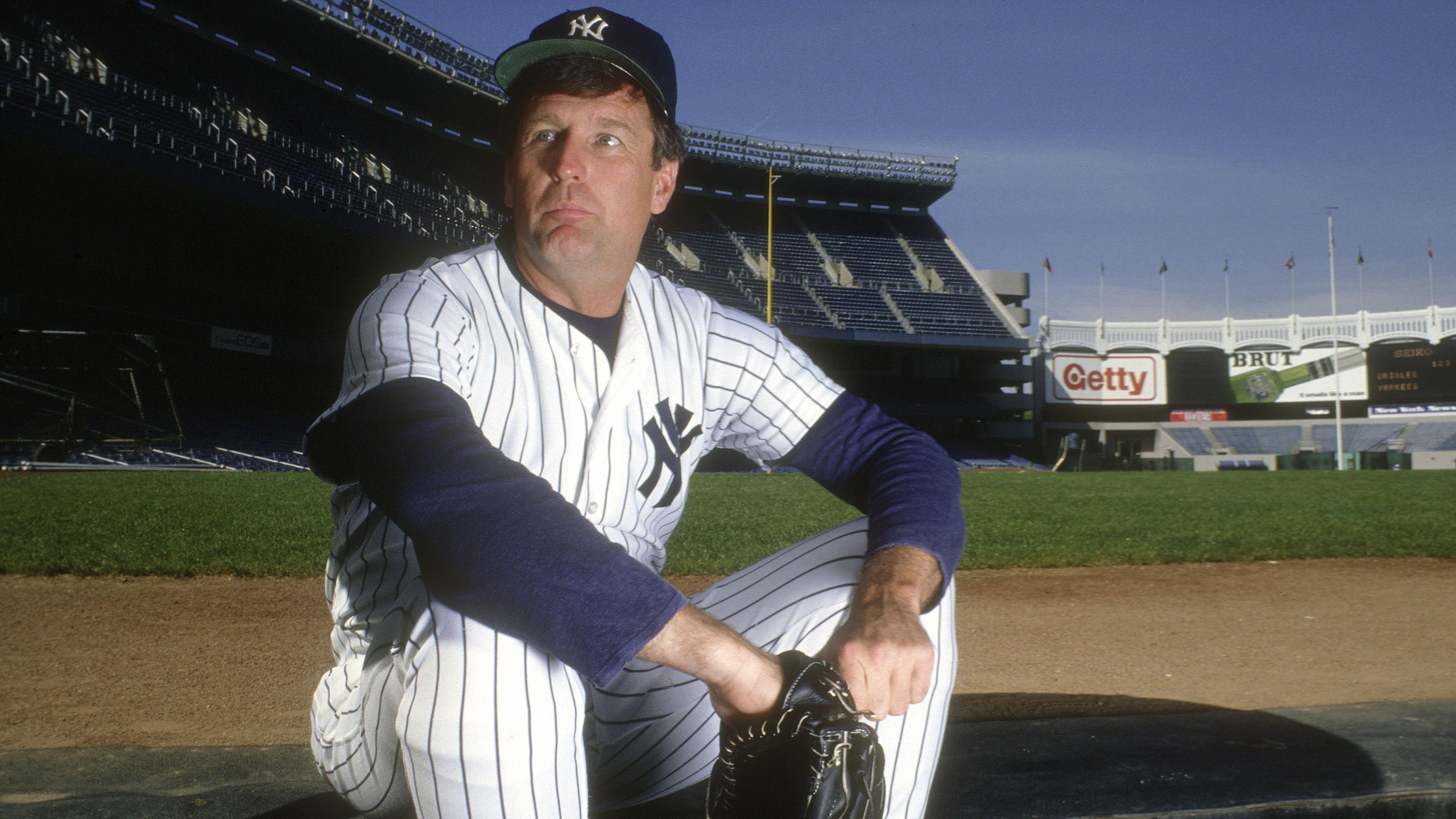
4 of 5Fenway Park is one of baseball's all-time cathedrals. Opened in 1912, the home of the Boston Red Sox is one of the oldest stadiums still standing in America.
One of the more distinguishable features in all of baseball, the Green Monster is a 37-foot high wall that looms over left field. The wall was built in 1934, and in 1947 it was painted green to match the rest of the ballpark.
In 2003, seats were installed on top of the Monster, adding an even more unique atmosphere to Red Sox home games.
And, of course, watching home runs lift off over the Green Monster is something to watch. When Fenway Park hosted the 1999 All-Star Game, Mark McGwire and Sammy Sosa each put on quite a show during the Home Run Derby, knocking baseballs into the next county.
No. 5. PNC Park: Into the Allegheny River
5 of 5The Pittsburgh Pirates' new home, PNC Park, opened in 2001. And while it doesn't have the allure nor as many boats as McCovey Cove in San Francisco, the Allegheny River sits just beyond the right field wall (443' from home plate at its closest point).
In the 11-plus years since its inaugural season, only two players have managed to reach the river with a home run on the fly. Daryle Ward was the first to do so, on July 6, 2002, when the Astros were visiting the Pirates.
Earlier this season, Garrett Jones became the first Pirate to accomplish the feat, smashing a towering home run on June 2 against the Reds.

.jpg?w=2560 "NFL Preseason Week 1 Winners/Losers 📊")
.jpg?w=2560 "Donald Practices Again 🤔")
.jpg?w=2560 "Kittle's Rehab Quote")

.jpg?w=2560 "NFL player rips Bills' new field")
.jpg?w=2560 "Jamal Adams Out for Season")
.jpg?w=2560 "Vrabel's Brady Quote 😅")