
MLB: 5 Reasons the Closer Role Is on the Brink of a Major Evolution
It's been a rough year for closers so far. A lot of closers have gotten hurt, including the seemingly indestructible Mariano Rivera. A few others, such as Heath Bell, have struggled mightily.
Given the circumstances, now is as good a time as any to take stock of the closer role in Major League Baseball. It's a position that has been the subject of debates for some time now, with some people insisting that having a good closer is vital to a team's success and others insisting that closers are the most overrated and overvalued players in baseball.
This season's storylines support the latter notion. With so many closers hurt and/or struggling this season, what we're getting this season is a sneak peak at changes that can be made to the definition of the term "closer."
Here's a look at some reasons why the closer role is on the verge of an evolution.
The Legends Are Not the Norm
1 of 6In a perfect world, all closers would be guys who very rarely falter in the ninth while enjoying very long professional careers.
So in this perfect world, closers would basically be clones of Mariano Rivera and Trevor Hoffman, who have 1,209 career saves between them that they racked up throughout very long careers.
We don't live in a perfect world. We live in a world where pitchers like Mo and Hoffman are few and far between. Both of them have over 600 career saves, but no other closer in history has more than 478.
In the wake of Rivera's recent season-ending injury, I think people are realizing just how lucky he was throughout the course of his career. Relievers have a tendency to come and go, but Rivera managed to stay on top for a very long time. When he finally suffered a major injury, you got the sense that it had been a long time coming.
Now take a step back and look at how many other closers have gotten hurt this year. The list of closers on the DL includes Andrew Bailey, Ryan Madson, Joakim Soria, Huston Street, Brian Wilson, Kyle Farnsworth, Sergio Santos and Drew Storen, most of whom have serious injuries.
The lesson learned? Rivera and Hoffman are freaks of nature, and all other closers are merely human. They are not special.
It's Not as Easy as Pressing a Button
2 of 6The question we should find ourselves asking this year, probably for the thousandth time, is where closers come from.
There's still no clear answer to this question, but what we're finding out (not for the first time) is that it's definitely not as easy as pressing a button.
Take what happened with the Boston Red Sox earlier this season. They had to place Andrew Bailey on the DL shortly before the start of the season, and Sox manager Bobby Valentine responded by naming Alfredo Aceves his interim closer.
"He loves competition," Valentine said, via ESPNBoston.com. "He's one of the better competitors I've seen. I could be wrong."
Sure enough, Bobby V was wrong. Aceves' first save chance against the Detroit Tigers was a disaster, and so was his next save chance against the New York Yankees. He's been okay since, but nothing can be taken for granted when he takes the mound in the ninth.
Other teams have gone through the same problem. Naming Javy Guerra as the team's closer hasn't worked out for the Los Angeles Dodgers, Grant Balfour has had his issues with the Oakland A's, and Francisco Cordero has had his issues closing games in place of Sergio Santos.
Lesson learned? A guy won't become a closer just because a manager chooses to call him one.
Mentality Is Less Important Than Stuff
3 of 6The cliche about closers is that they're guys with great stuff, but also guys with a few screws loose. Apparently, these loose screws are vital when it comes to handling the pressure of the ninth.
The 2009-2011 version of Heath Bell is a perfect example. In addition to boasting great stuff, this version of Bell was a bit of an eccentric character. He fit the profile of a good closer to a T.
The Marlins bought into the Bell hype, signing him to a three-year contract worth $27 million this offseason. What they failed to realize, or perhaps didn't care to realize, was that they were signing a pitcher who was on the decline.
As great as Bell was in 2009 and 2010, he was pretty human in 2011. His strikeout rate dipped, and he gave up more hard-hit balls than usual. The warning signs were clearly visible.
So nobody should be surprised by Bell's struggles this season. He hasn't been able to punch hitters out, his walk rate has spiked through the roof and he simply hasn't missed many bats.
Other eccentric closers who are struggling this season include Jose Valverde, and I would make a case for Balfour too given his tendency to scream at hitters when on the mound.
Lesson learned? Antics are all well and good, but they don't count for anything if you can't get hitters out.
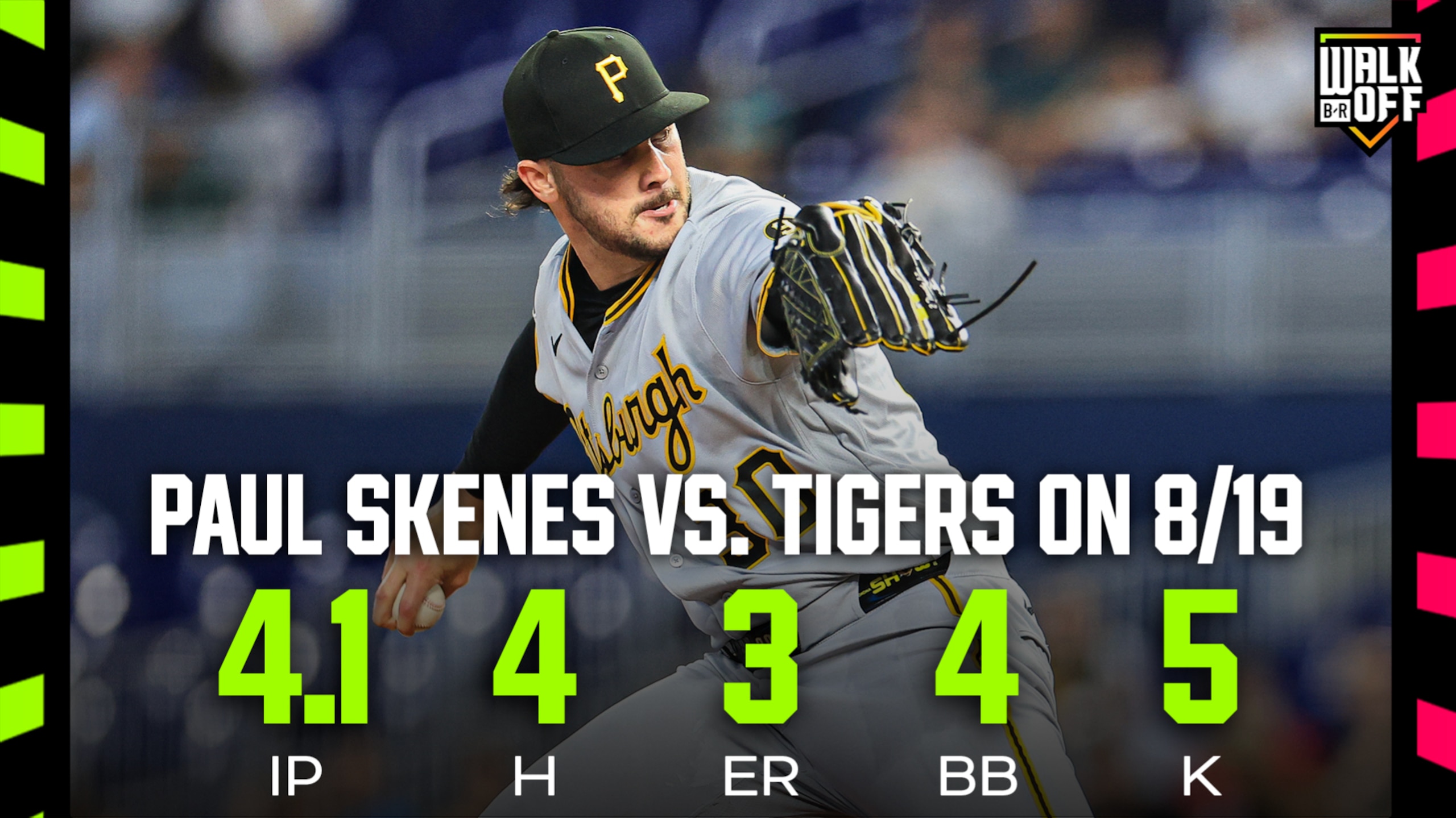


Best Relievers > Best Closers
4 of 6The idea behind having a closer is simply to have your best reliever finishing things off in the ninth inning.
The trouble is that "best" is assumed. Many of the best relievers in baseball are not used to close games.
To give you an idea, you can take a look at which relievers rank in the top 20 in baseball in ERA. Exactly 13 of them do not have a single save to their name, and only two of them have as many as eight saves.
You get the same thing if you look at FIP instead. Of the top 20 relievers in terms of FIP, 12 don't have any saves. Only three have as many as eight saves, and one of them has lost his closer's job (that would be Javy Guerra).
Arguably the best reliever in baseball at the moment is David Robertson. He hasn't allowed an earned run yet this season, and his K/9 checks in at a ridiculous 15.75.
Robertson is going to pick up a few saves now that Rivera is gone. But honestly, the Yankees should have considered using him over Rivera a while ago. Since the start of the 2011 season, the only reliever with a higher WAR than Robertson is Craig Kimbrel (no gripes about him).
Lesson learned? The best relievers in baseball are not always the guys who are getting the final outs in games.
Games Don't Always Need to Be Saved in the Ninth Inning
5 of 6The problem with the "save" is that it's restricted to the final inning of a given game. It therefore ignores the reality that high-pressure situations can happen earlier in games, most often in the seventh and eighth innings.
I could use Robertson's heroics to illustrate the point, but let's take a look at some of Aroldis Chapman's heroics instead. He's been outstanding for the Cincinnati Reds this season, and he's saved their bacon on several different occasions.
Take, for example, Cincinnati's game against the Chicago Cubs on April 22. The Reds were clinging to a 4-2 lead in the seventh inning, and the Cubs had the bases loaded with two outs. Chapman came in and punched out Ian Stewart to end the threat, and then pitched another scoreless inning. Sean Marshall came in and nearly gave the game away in the ninth, but walked away with a save anyway.
Stuff like this happens all the time, but the pitchers who do the dirty work oftentimes merely get holds for their efforts. Later on, some other guy will come in and get three easy outs, get a save, and he may get a ton of money if he saves enough games.
Lesson learned? Games aren't always saved in the ninth. The rule book just says they are.
Conclusion
6 of 6Adjustments are a huge part of the game of baseball, and they aren't restricted to the confines of single games that happen every day. Baseball is constantly evolving.
The save has been an official baseball statistic for just over 40 seasons, a pretty short amount of time in the grand scheme of baseball history. The idea of the "closer" is even younger. And like all young ideas, it hasn't been perfected yet.
It will be, though. A sort of paradigm shift is coming, and sooner rather than later. All it needs is a kick-start.
This season's events could very well serve as that kick-start. It hasn't been a good year for closers, and that's largely because the trends that have developed have cast light on the very real reality that closers are not what they seem to be.
Put simply, they're not the only relievers who can mean the difference between a win and a loss. We just think they are.
Here's hoping we can look back on our ignorance someday and laugh.
If you follow me on Twitter, I'll talk your ear off about how bullpen catchers aren't need anymore either.


.jpg?w=2560 "A.J. Addresses Hurts Relationship")

.png?w=2560 "Pic of LBJ-Maxey-JB Workout 🔥")
.jpg?w=2560 "Report: Seahawks Signing Trevon Diggs")
