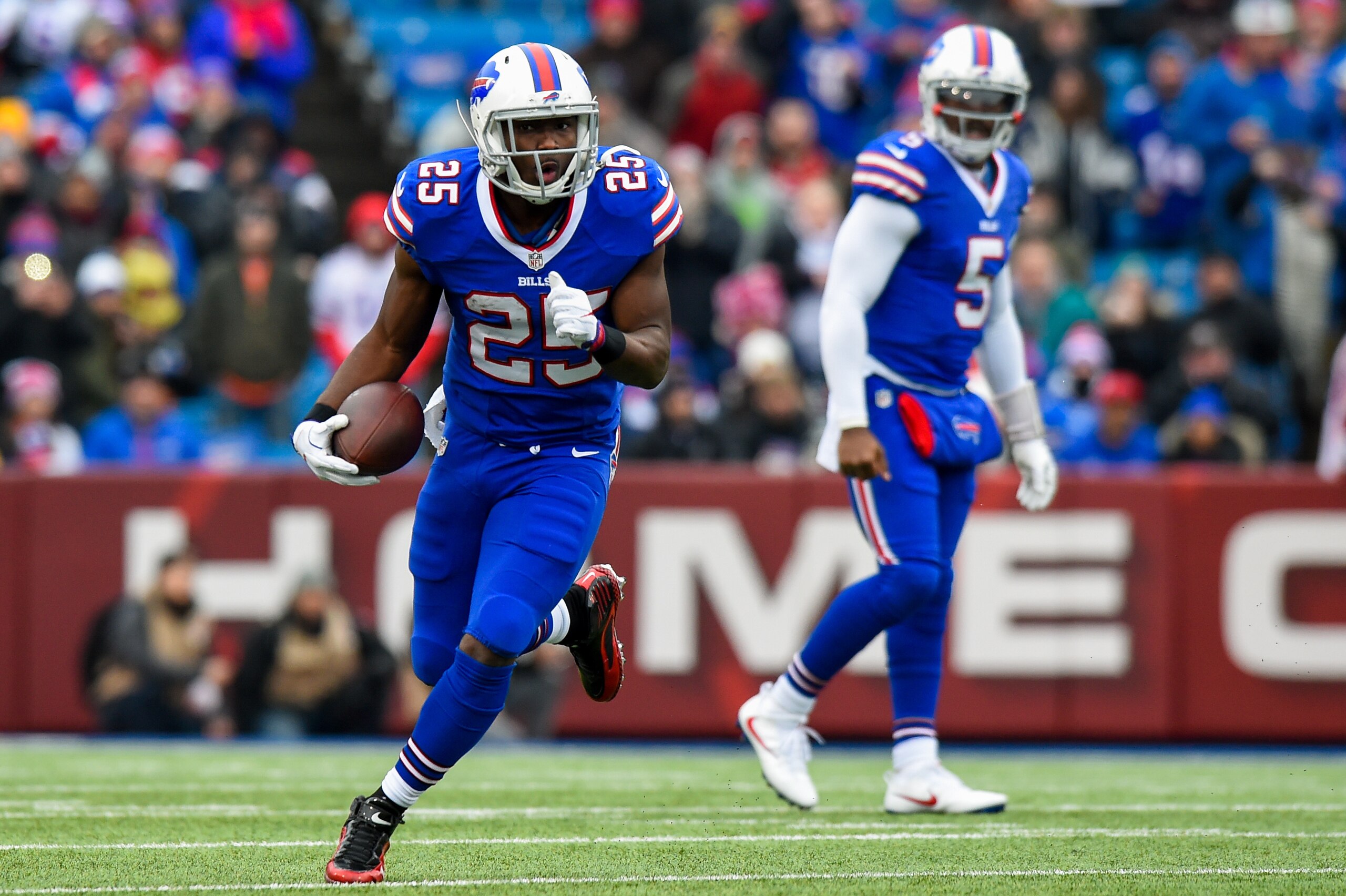

NFL1000: Buffalo Bills 2017 NFL Draft Preview
When the Buffalo Bills hired Rex Ryan as their head coach in 2015, the hope was that he would bring his defensive brilliance to a team in need of it, and that he would match that with a conservative, run-based offense that might take the franchise to the postseason for the first time in this millennium.
It didn't work out that way—the Bills actually improved more on offense than on defense in Ryan's two-year tenure—and multiple players on the defensive side of the ball balked at Ryan's schemes because they didn't seem to fit the personnel.
Enter longtime defensive coordinator Sean McDermott, a man who has demonstrated a clear ability to scheme to his players' strengths during his stints with the Eagles and Panthers as their top defensive coach. McDermott is known to favor a blitz-happy mindset, but the extent to which he succeeded in calling plays with a Panthers team that preferred to bring pressure with four defenders speaks to his versatility.
Of course, as Ryan eventually found out, being a defensive mastermind is one thing. Running a whole team is quite another. McDermott inherits a squad with an unstable quarterback situation beyond 2017—when Tyrod Taylor is the ostensible starter—a receiver corps without Robert Woods and Marquise Goodwin (both departed in free agency) and a secondary now without cornerback Stephon Gilmore, who signed a megadeal with the Patriots.
The Bills do have it together in the run game with LeSean McCoy and a solid offensive line, and the front seven should be to McDermott's liking, for the most part. In the draft, the Bills would do well to pay attention to all the playmaking receivers, cornerbacks and safeties they can find. And if there's a plan to move on from Taylor after this season—which his restructured contract would seem to indicate is in the cards—that's another obvious need.
In other words, the Bills find themselves flush at certain positions and low on marquee talent at others. It's a recipe for sustaining the mediocrity that the franchise has followed for far too many years.
Methodology
1 of 19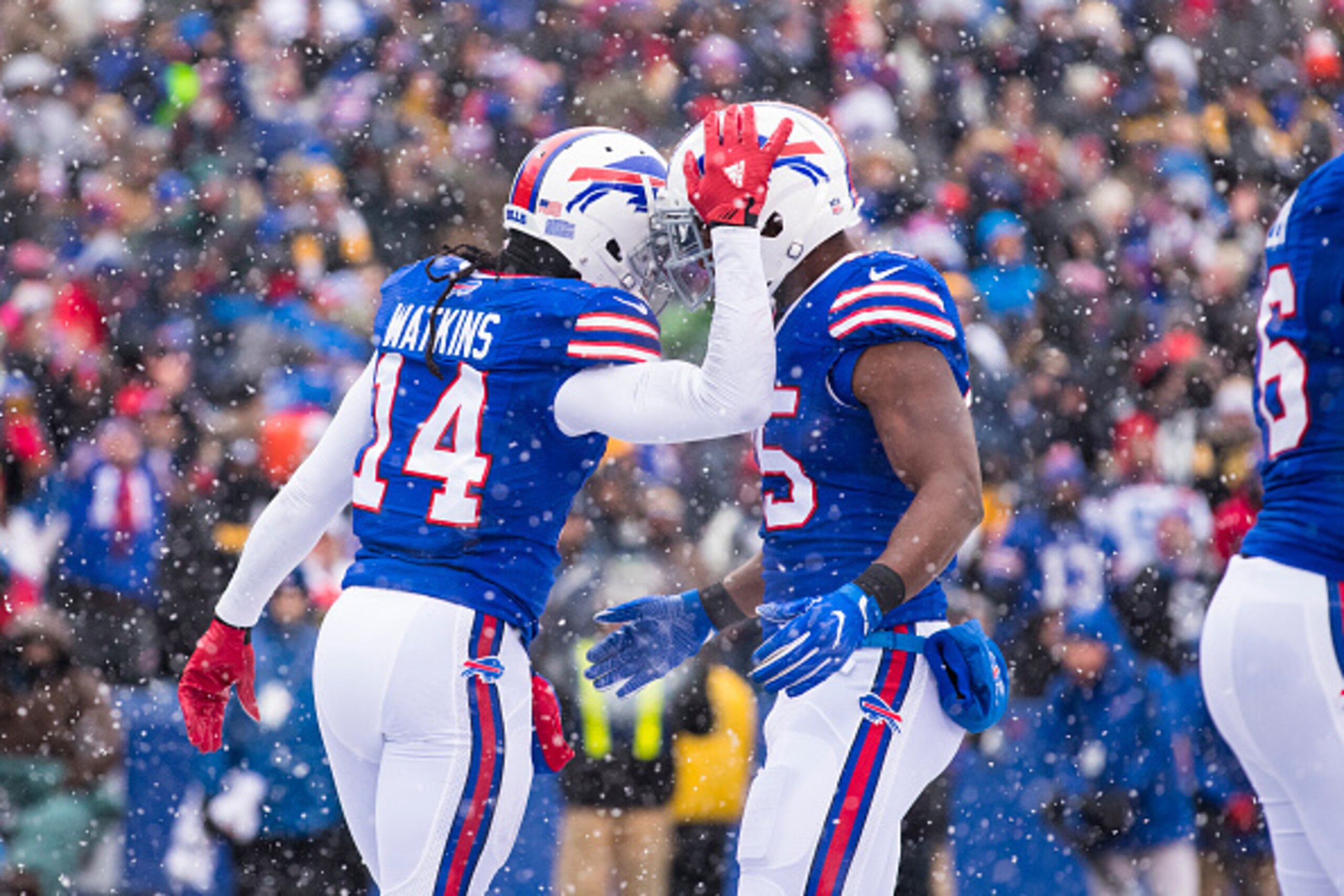
The NFL1000 team of scouts graded a series of important attributes for every player in their positional review. Using a scale starting at zero and going up to anywhere from five to 50 based on the position and the attribute, our scouts graded each player based on their own expertise and countless hours of tape review over the years. Our evaluators had specific positional assignments based on their proven fields of expertise.
- Doug Farrar: Lead scout/quarterbacks
- John Middlekauff: Running backs/fullbacks
- Marcus Mosher: Wide receivers/tight ends
- Mark Schofield: Wide receivers/tight ends
- Duke Manyweather: Offensive tackles
- Ethan Young: Offensive guards
- Joe Goodberry: AFC defensive ends
- Justis Mosqueda: NFC defensive ends
- Charles McDonald: Defensive tackles
- Zach Kruse: 3-4 outside linebackers
- Derrik Klassen: 4-3 outside linebackers
- Jerod Brown: Inside linebackers
- Kyle Posey: Cornerbacks
- Ian Wharton: Cornerbacks
- Mark Bullock: Safeties
- Chuck Zodda: Special teams
Each corresponding position slide was written by the assigned scout.
Quarterback
2 of 19
Scheme: West Coast/zone
Starter: Tyrod Taylor
NFL1000 Score: 72.4/100
NFL1000 QB Rank: 14/38
After two starting seasons in which he put up decent numbers in reductive passing offenses with inconsistent, mostly questionable targets, Tyrod Taylor was "rewarded" with a reworked contract that will pay him $14.5 million in 2017, and just $1 million guaranteed in 2018. There's a $6 million roster bonus next season in the deal, which basically makes this Taylor's prove-it season for the Bills.
Moreover, one NFL source recently told B/R's Matt Miller that the Bills are head-over-heels for Clemson's Deshaun Watson, a player who shares many of Taylor's attributes.
The difference is, of course, that Taylor has proved his ability to get things done at the NFL level. Taylor is a great runner who throws well in and out of the pocket, and he has a plus deep ball to all levels. He struggles when throwing short and intermediate passes into tight windows, and he doesn't consistently throw with anticipation.
Putting him in a new offense with a one-year deal seems to be asking him politely to fail in the most efficient way possible so both sides can move on. If that happens, some other team is going to get a talented and developable quarterback next season, and the Bills will still be looking for their defined starter over time.
Sometimes, you make your own bad luck.
Backup: Cardale Jones
NFL1000 Score: Did not have enough snaps to qualify
The Bills took Cardale Jones in the fourth round of the 2016 draft, hopefully understanding that while he has a great deal of athletic potential, there's a lot of work to be done before he's able to compete against NFL defenses.
He completed less than 50 percent of the passes he threw in the preseason, and his small bit of work in the regular season—6-of-11 for 96 yards and an interception—didn't reveal much development. He's a big athlete (6'5", 250 lbs) with an outstanding arm, but he didn't learn to read defenses across the field at Ohio State, and he still telegraphs his targets. If he's taken on a multiyear learning course in a vertical offensive system, there could be something here down the road.
Backup: T.J. Yates
NFL1000 Score: Did not have enough snaps to qualify
Signed by the Bills in April, T.J. Yates has a history with new Bills offensive coordinator Rick Dennison from their days with the Texans, and that gives him a leg up as a third starter.
Backup: Josh Woodrum
NFL1000 Scores: Did not have enough snaps to qualify
Josh Woodrum is a big guy (6'2", 236 lbs) with a decent arm, and the Liberty University alum flourished in a college offense that left open easy short reads.
Team Need: 6/10
Potential Draft Fits: Deshaun Watson, Clemson; DeShone Kizer, Notre Dame; Davis Webb, Cal
Running Back
3 of 19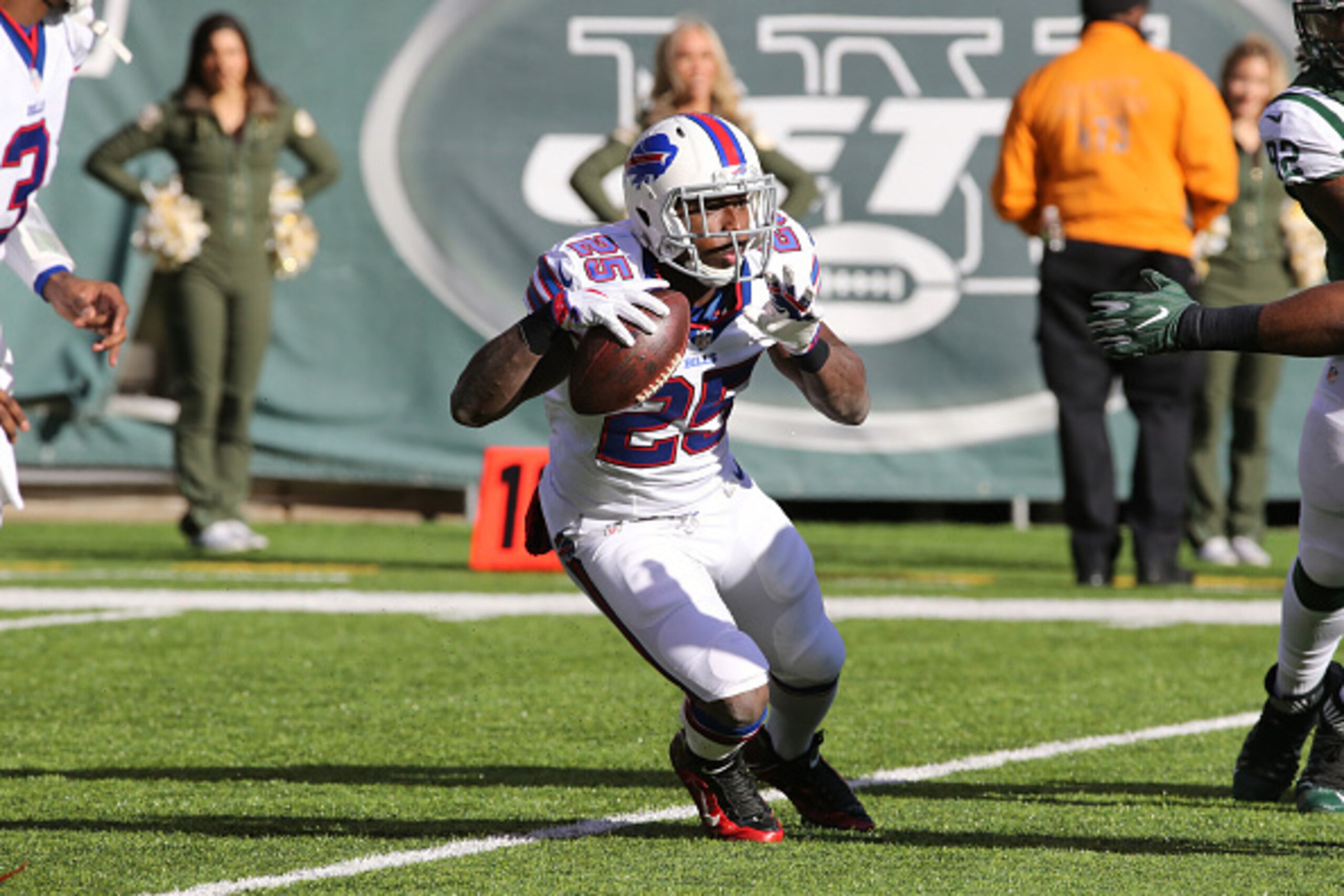
Scheme: West Coast/zone
Starter: LeSean McCoy
NFL1000 Score: 76.7/100
NFL1000 Position Rank: 4/82
With an MVP-type year in 2016, LeSean McCoy made Chip Kelly look dead wrong. McCoy re-established himself as one of the best offensive weapons in the NFL and carried an average team to playoff contention. McCoy was dominant after Rex Ryan fired Greg Roman in Week 2 and arguably played at the highest level of his career.
McCoy has Barry Sanders-level change-of-direction ability, with the skills to make even the best defenders miss in space. His speed and explosive short-area quickness were on full display all season. McCoy has great vision and special instincts in the open field. He also has the patience on the outside runs to let his blockers set him up.
Once in the open field, he has the game-breaking play speed to burst for long gains, as he had three 50-yard runs in 2017. McCoy is also dynamic in the passing game. He's a great route-runner with natural hands and is special in the open field. The Bills have one of the best running backs in the NFL and should ride him until the wheels fall off in 2017.
Backup: Mike Gillislee
NFL1000 Score: 69.2/100
NFL1000 Position Rank: 52/82
Mike Gillislee had a career year in 2016. While he only made one start, he averaged 5.7 yards per carry and added eight touchdowns. He was rewarded for his season with a $1.797 million tender, and NFL Network's Ian Rapoport reported in March the sides would continue to work on a long-term deal.
Gillislee was fantastic as an outside runner in 2016. He has excellent play speed and a second gear when he hits the open field. He runs hard, is a north-south player and can break through soft arm tackles. For a change-of-pace back, he is just a guy in the passing game, as he only has 15 career catches. But because of McCoy's dominance in that area, it doesn't matter.
Overall, Gillislee is a solid backup and will continue to add to one of the most productive backfields in the NFL.
Backup: Jonathan Williams
NFL1000 Scores: Did not see enough snaps to earn a grade
A fifth-round pick in 2016, Jonathan Williams saw limited action in a loaded backfield as a rookie. It is hard to imagine much will change with McCoy and Gillislee still on the roster. Williams is a power runner who will need to carve a niche as a short-yardage, goal-line back to increase his carries.
He does run hard, but he lacks the speed and explosion to consistently get on the field. He'll run hard on contact, but he struggles outside the tackles. He does not bring anything to the table in the passing game.
Team Need: 1/10
Potential Draft Fits: None
.jpg?w=2560 "Colts Football")
.jpg?w=2560 "Chiefs Giants Football")
.jpg?w=2560 "Titans Colts Football")
Fullback
4 of 19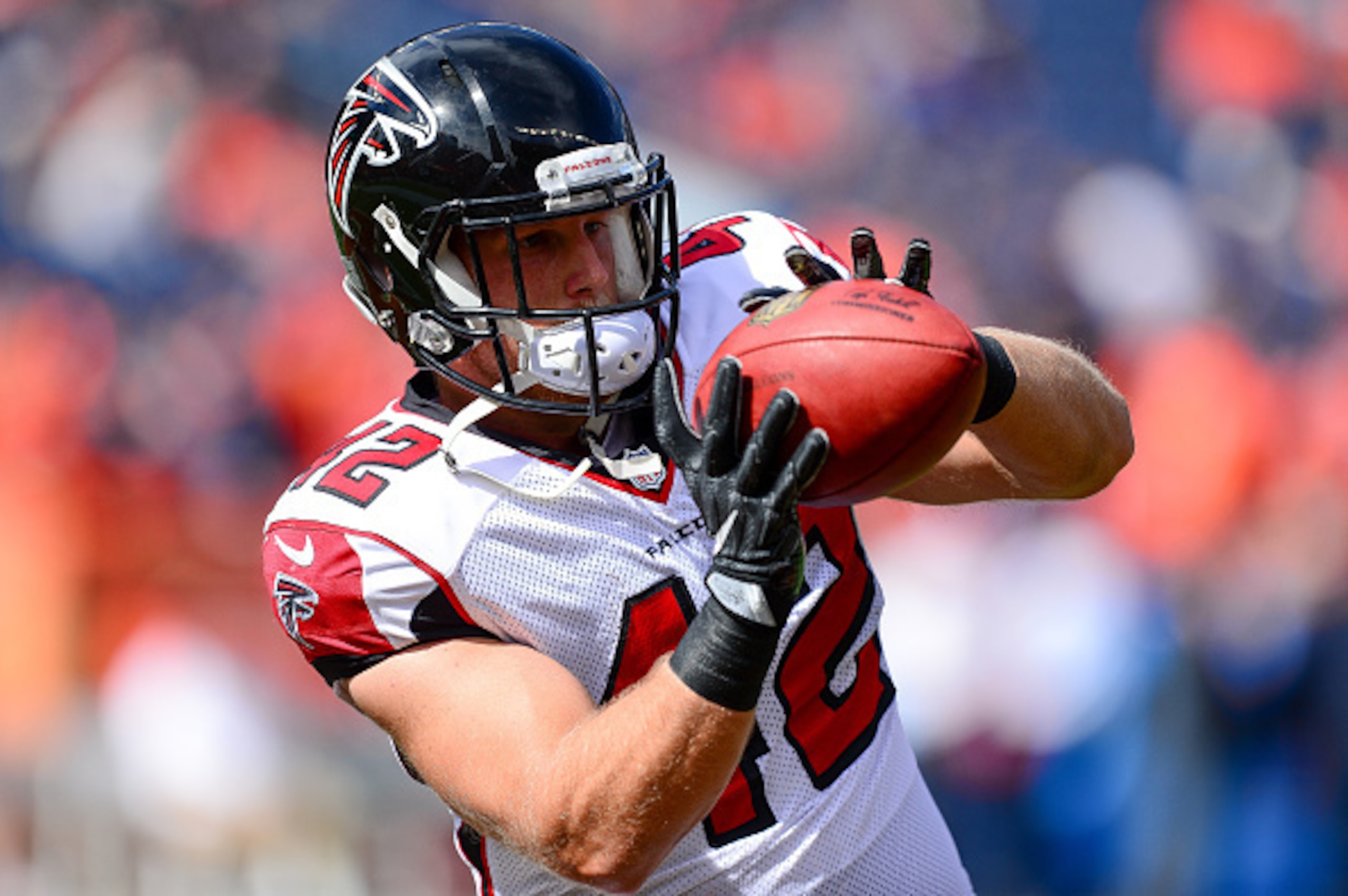
Scheme: West Coast
Starter: Patrick DiMarco
NFL1000 Score: 72.4/100
NFL1000 Position Rank: 7/20
Patrick DiMarco signed with the Bills as a free agent this offseason for four years and $8.5 million after his best campaign in the NFL. DiMarco helped clear holes all season in Atlanta and should immediately improve an already productive run game.
He is not just a physical player; he's also a good athlete and can locate defenders in the open field. He's not a threat to carry the ball, but that will not be his role on this team. DiMarco is solid in the passing game, as he kept defenses honest with seven catches in 2016.
The Bills added one of the more consistent fullbacks in the league to go with their already potent run game.
Backup: Mike Tolbert
NFL1000 Score: 71/100
NFL1000 Position Rank: 13/20
The 31-year-old Mike Tolbert had a down year in 2016, looking old and slow. But new Buffalo Bills head coach Sean McDermott has been around him for the last several years in Carolina, and he clearly thinks highly of the fullback.
With the addition of DiMarco, Tolbert will need to show in training camp he can still play to ensure a roster spot. Tolbert's burst has diminished, and he was not a productive runner in 2016. He also is not an ideal lead blocker. He does have value in the pass game but struggled to move last year in the open field. Father time and physical play looked as though they caught up with Tolbert; however, the Bills are hoping he rebounds to 2015 form.
Team Need: 0/10
Potential Draft Fits: None
Wide Receiver
5 of 19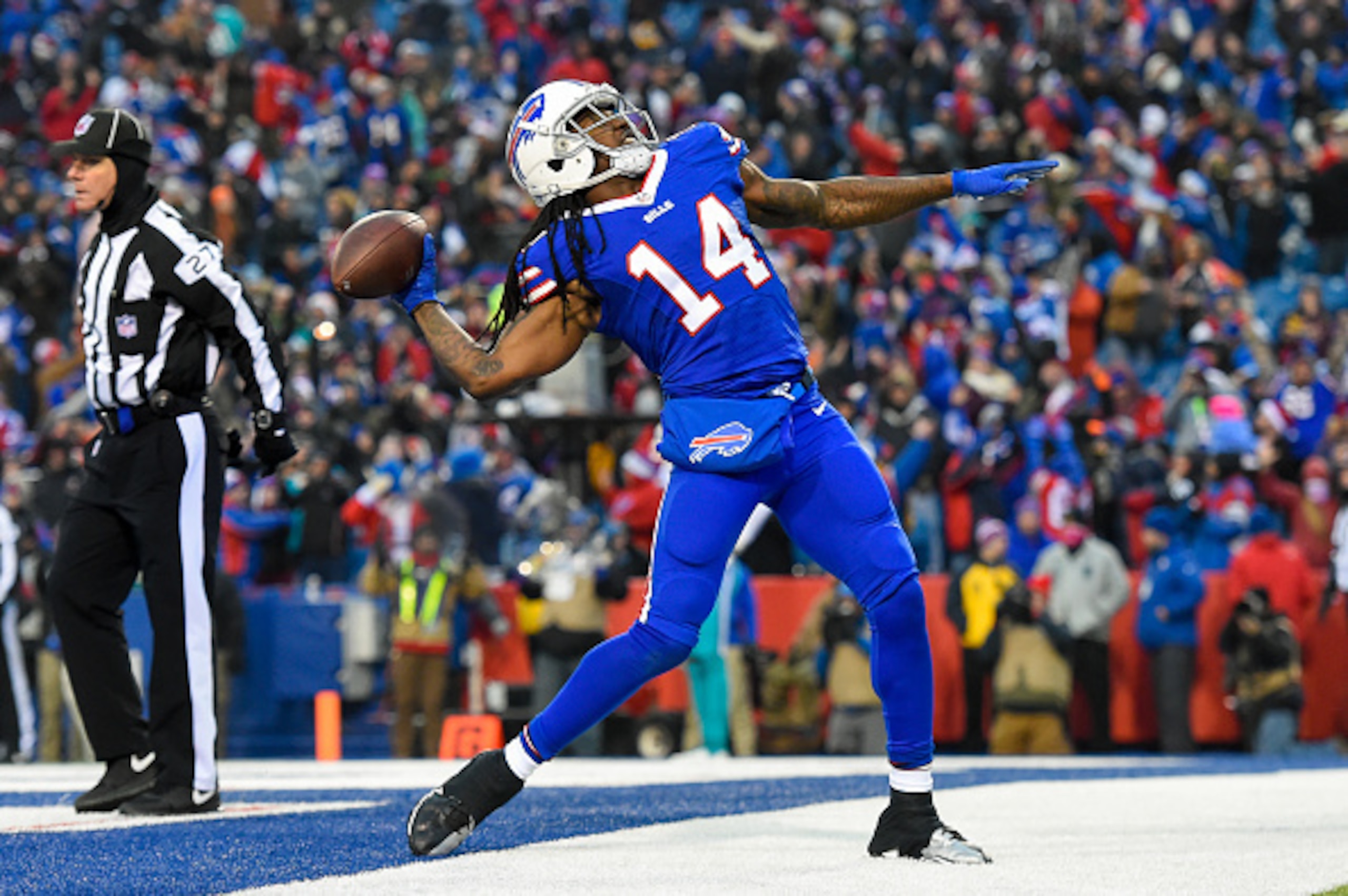
Scheme: West Coast
Starter: Sammy Watkins
NFL1000 Score: 68.5/100
NFL1000 Position Ranking: 31/155
In the 2014 NFL draft, the Buffalo Bills addressed the wide receiver position by trading up to the fourth overall selection to nab Sammy Watkins from Clemson. Injuries have plagued him in his NFL career, though, and 2016 was no exception.
A lingering foot problem caused him to miss half the campaign, and when he was available, Watkins caught 28 passes for 430 yards and two touchdowns. However, an impressive 20 of those 28 were for first downs, which highlights just how important Watkins is for Buffalo's hopes.
When healthy, he is a well-rounded, versatile receiver with the speed to beat defenders deep. But he also has the route-running skills to gain separation on a variety of routes in the passing tree. His play strength and change of direction are in the upper tier of players at the position, and this allows him to be effective against the press at the line of scrimmage.
Another area where Watkins excels (and perhaps is not given enough credit for) is as a blocker. He scored in the top 10 in that trait among all wide receivers this past season. Under the tutelage of new offensive coordinator Rick Dennison, Buffalo will likely implement more of a West Coast scheme, but Watkins' traits and skill as a route-runner should mesh well with the new designs.
Starter: Corey "Philly" Brown
NFL1000 Scores: 60.4/100
NFL1000 Position Ranking: 126/155
With the departures of Justin Hunter to Pittsburgh and Robert Woods to the Los Angeles Rams, the Bills needed to add another playmaker to their offense. Enter Corey Brown, formerly of the Carolina Panthers.
Brown emerged as an offensive weapon in the Panthers offense near the end of 2015, where he finished with four straight three-reception games, catching a touchdown against the Giants in Carolina's thrilling last-minute victory. However, much like the rest of the Panthers offense, Brown sputtered in 2016, catching only 27 passes for 276 yards and a sole touchdown.
Only 25 years old, Brown is a young player with room to improve as a wide receiver. His speed makes him a threat on vertical routes, but his quickness and change of direction make him an ideal slot or Z-receiver in a West Coast scheme. With Watkins likely drawing the main focus from opposing defenses, Brown will have chances to make plays in Buffalo.
Backup: Andre Holmes
NFL1000 Score: 61.7/100
NFL1000 Position Ranking: 112/155
Andre Holmes served as Oakland's fourth wide receiver during the 2016 season and saw marginal playing time. He tallied 14 receptions for 126 yards and a surprising three touchdowns, given the limited number of passes he caught.
Holmes' best 2016 effort came in Week 16, when he caught three passes for 33 yards and a score. During that contest against the Colts, he demonstrated perhaps his top-level potential. He was able to get separation on vertical routes and was an effective red-zone weapon. His scoring play came on a goal-line fade route, when he showed strength at the catch point to secure the pass for the touchdown.
Holmes was also an effective blocker in that game, including two back-to-back key blocks in the third quarter, the second of which led to a 22-yard touchdown run by DeAndre Washington.
Holmes has excellent size (6'4", 210 lbs), and as the touchdown against Indianapolis displayed, he can use his size, frame and play strength in some situations to provide a boost to the offense.
Making the move to Buffalo, Holmes likely provides depth behind Watkins at the X-receiver spot and can be utilized as a blocker when the Bills employ 11 offensive personnel. In addition, in three-receiver formations, he can step in as the X-receiver, allowing Buffalo to generate favorable matchups and/or free releases for Watkins.
Backup: Brandon Tate
NFL1000 Score: 60/100
NFL1000 Position Ranking: 131/155
The former Patriot and Bengal was scarcely used as a receiver and started only one game last year. He caught eight passes for 117 yards. An eight-year veteran, Brandon Tate's biggest contributions have come as a kick returner.
This past season for Buffalo, Tate returned 26 punts for 301 yards and 29 kickoffs for 662 yards. He served in this role both with the Patriots and the Bengals, and in 2011 he led the league with 51 punt returns for the Bengals. He gained 543 yards on those, including a touchdown.
Though he's a backup, Tate will likely continue to serve as a specialist in the return game.
Backup: Walter Powell
NFL1000 Score: 60/100
NFL1000 Position Ranking: 132/155
Because of the many injuries to Buffalo's receiving corps last season, Walter Powell was pressed into action and caught 14 passes for 142 yards, including a four-reception game against New England in Buffalo's Week 4 victory over the eventual Super Bowl champions.
Powell is also a contributor on special teams, with the ability to field both punts and kickoffs. In addition, he can be used on coverage teams as well, and he forced two fumbles last year.
Only 25 years old, Powell can still develop into more of a receiving threat and showed some of his potential against New England in Week 8. On a 35-yard reception, he ran a vertical route and made an impressive adjustment to a back-shoulder throw. In Dennison's West Coast scheme, Powell will perhaps have more chances to develop into an offensive threat.
Team Need: 6/10
Potential Draft Fits: Corey Davis, Western Michigan; Chris Godwin, Penn State; Curtis Samuel, Ohio State; Josh Reynolds, Texas A&M; Amara Darboh, Michigan; Isaiah Ford, Virginia Tech; Taywan Taylor, Western Kentucky
Tight End
6 of 19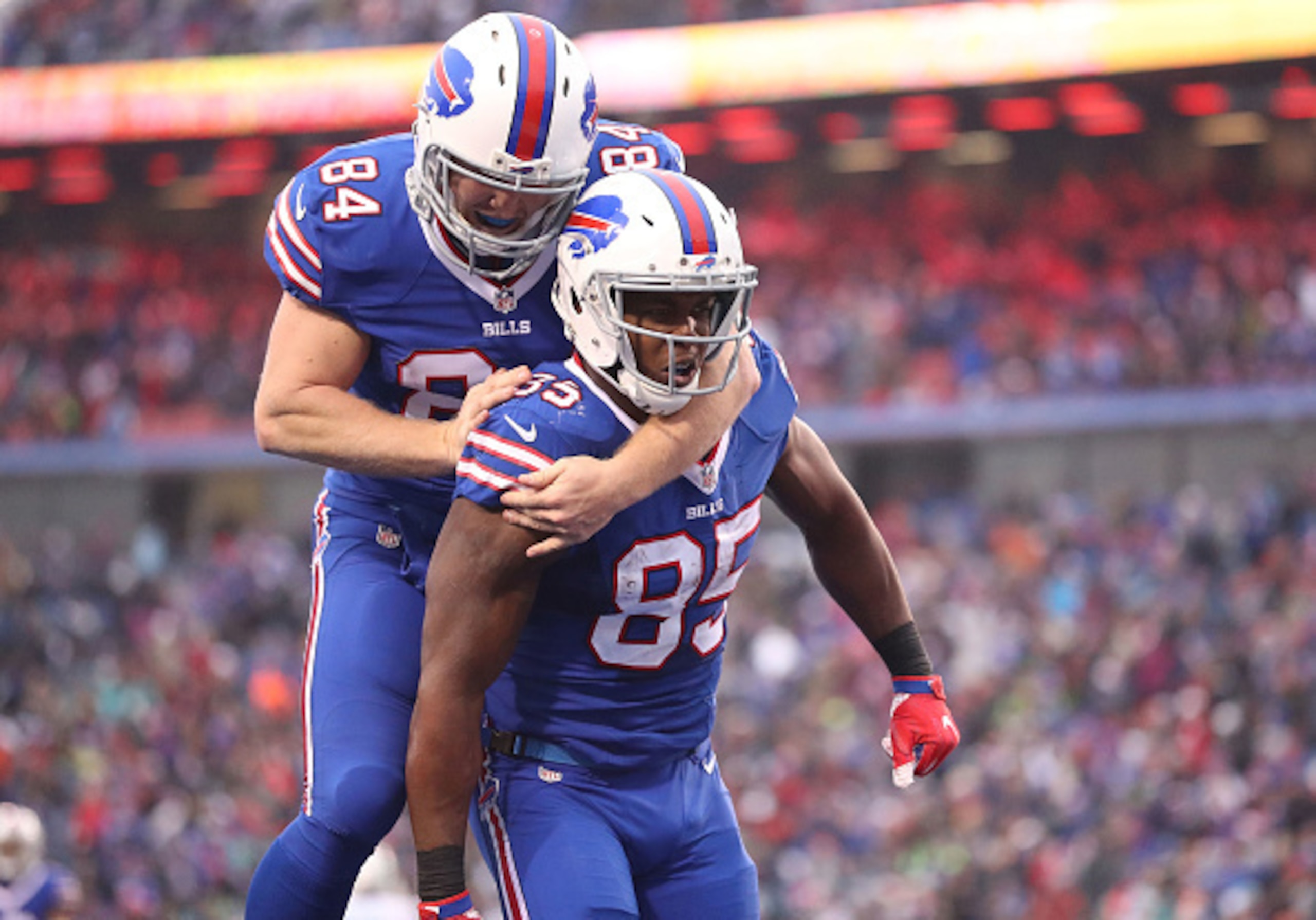
Scheme: West Coast
Starter: Charles Clay
NFL1000 Score: 67.7/100
NFL1000 Position Ranking: 13/96
One of the brighter spots for the Buffalo Bills offense in 2016 was the development of tight end Charles Clay. Now entering his seventh season out of Tulsa, Clay had his best campaign in a Bills uniform in 2016, catching 57 passes for 552 yards and four touchdowns. Two of those came in a Week 16 loss to his former team, the Miami Dolphins.
In that game, Clay displayed the traits that pushed him near the top 10 of all tight ends in the NFL1000 project, specifically his skills as a blocker and a route-runner, and his ability to track the football in flight and win at the catch point.
Clay is a savvy, adept route-runner and is effective on deeper patterns such as seam and corner routes, as well as quicker patterns such as out routes or plays to the flat. In Dennison's West Coast scheme, Clay should get a number of opportunities to contribute in the passing game. Only 28, he likely has a few good seasons ahead of him in an offense suited to his skill set.
Backup: Nick O'Leary
NFL1000 Score: 60.1/100
NFL1000 Position Ranking: 61/96
Entering his third season after a strong career at Florida State, Nick O'Leary has served more as a blocking end. He saw action in only four games as a rookie, catching a single pass for 37 yards. Last season, O'Leary saw action in every game, catching only nine passes for 114 yards. As a blocker, however, O'Leary is effective. He can block in both zone and gap schemes, and can even assist in pass protection as well.
Team Need: 2/10
Potential Draft Fits: Evan Engram, Mississippi; Jake Butt, Michigan; Bucky Hodges, Virginia Tech; Gerald Everett, South Alabama
Left Tackle
7 of 19
Scheme: Zone flex
Starter: Cordy Glenn
NFL1000 Score: 78.9/100
NFL1000 Position Ranking: 6/40
Cordy Glenn has flashed physical dominance his entire career—when he is in shape and healthy. Based on his body of work and a solid 2015 season, Glenn was given a massive five-year contract extension last offseason worth $65 million, with $36 million guaranteed.
In the first game of 2016, Glenn injured his ankle and played only half of the snaps against Baltimore. He would not play again until Week 4, but he played nearly every snap after until he was injured again in Week 14 against Pittsburgh.
Glenn was dominant when he was on the field, road-grading as a run-blocker and locking up the left edge in pass protection. The massive veteran left tackle only surrendered one sack and 16 hurries in the 657 total plays he notched.
Buffalo and Glenn hope his 2017 season is just as dominant—but through all 17 weeks.
Backup: Cyrus Kouandjio
NFL1000 Score: 73.7/100
NFL1000 Position Ranking: 20/40
In 2016 Cyrus Kouandjio saw significant game action at left tackle with Glenn battling injuries.
Kouandjio played in 12 contests with five starts and showed substantial improvement in his overall game compared to the small sample size we saw in 2015. Registering more than 400 plays on the season, Kouandjio surrendered just one sack and 12 pressures. He also showed good physicality, power and footwork in the running game.
He showed the traits of an excellent starting left tackle in 2016, and it will be interesting to see if the Bills throw him in the mix to compete at right tackle.
Team Need: 0/10
Potential Draft Fits: None. The team could consider bringing in camp competition via undrafted free agents.
Right Tackle
8 of 19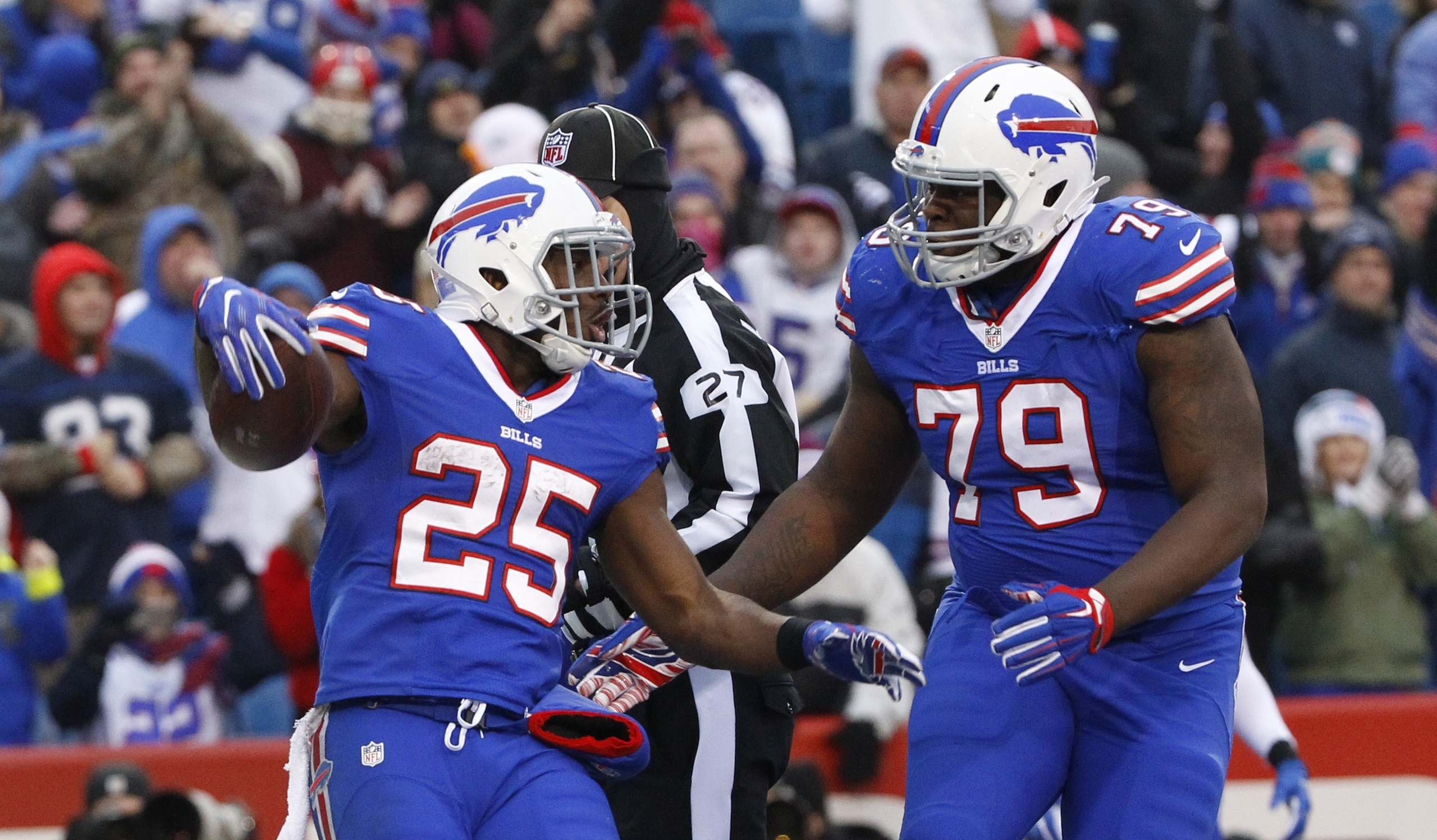
Scheme: Zone flex
Starter: Jordan Mills
NFL1000 Score: 70.8/100
NFL1000 Position Ranking: 19/38
Jordan Mills started all 16 games for Buffalo in 2016 and has 50 career starts entering his fifth season.
Mills is an adequate starting right tackle but has his limitations in pass protection—especially when his technique breaks down. He does have some success in the running game and doesn't mind mixing it up with defenders.
As we highlighted in our right tackle free-agency rankings, Buffalo learned it could count on Mills to be available and turn in steady production, which was probably a huge reason why he is back in Buffalo on a new two-year deal.
Backup: Seantrel Henderson
NFL1000 Score: Did not have enough snaps to qualify
Seantrel Henderson played just 34 snaps for Buffalo in 2016. He has had a rough road and hasn't been available for Buffalo between suffering from Crohn's disease and serving a suspension for violating the NFL's policy on substance abuse.
2014 was Henderson's last season as a full-time starter, and with the re-signing of Jordan Mills and the emergence of Kouandjio, it is unclear what the future holds for Henderson in Buffalo.
Team Need: 0/10
Potential Draft Fits: None. The team could consider bringing in camp competition via undrafted free agents.
Offensive Guard
9 of 19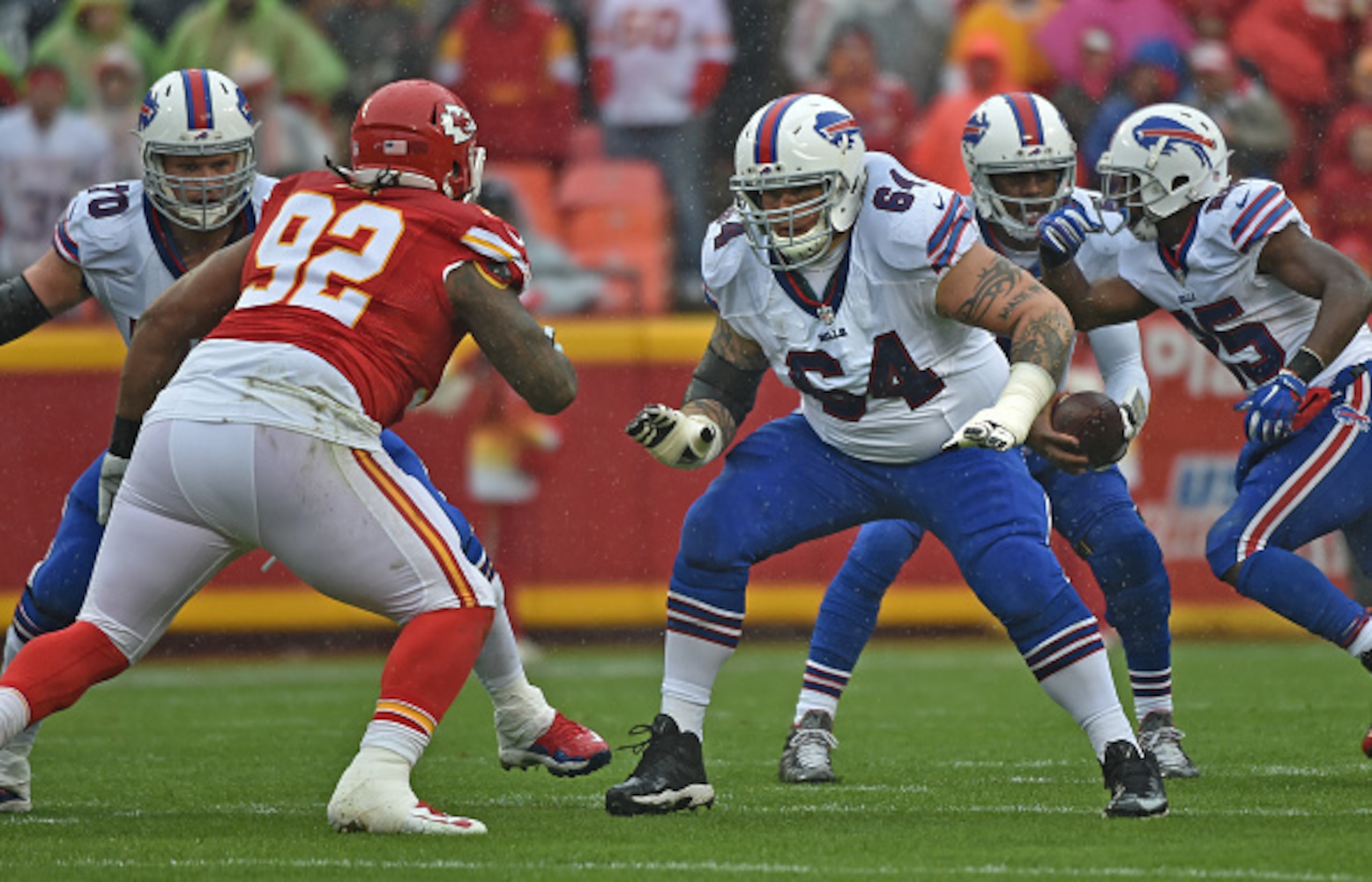
Scheme: Zone flex
Starter: Richie Incognito
NFL1000 Score: 74.7/100
NFL1000 Position Rank: 6/78
Richie Incognito has come a long way in his career, and over his time in Buffalo he's solidified himself as one of the premier guards in the league. As a player, Incognito fits the "brute" prototype some crave at guard, as his combination of play strength and ferocity sets him apart as a physical presence up front.
Incognito has become more consistent in his pass-protection technique as well in recent years, which has propelled him into the top-three guard conversation. Although he is getting up there in age (33) and the Bills may want to consider developing an eventual long-term replacement, guard is not an immediate need for next season and doesn't need to be addressed early.
Starter: John Miller
NFL1000 Score: 71.1/100
NFL1000 Position Rank: 25/78
John Miller took a huge step in his development last year, and his ability to hold the line on the strong side allowed the Bills to execute a lot of the pulling runs that made their rushing attack so effective. While he has a little work to do in cleaning up his footwork on pass protection, and the scheme transition may be rough initially for Miller, he looks like a nice young piece for the Bills offense long term.
Selecting a rookie high in the draft shouldn't be necessary.
Backup: Vlad Ducasse
NFL1000 Score: 69/100
NFL1000 Position Rank: 47/78
Recently signed Vlad Ducasse is a great fit as a depth option for the Bills, who needed a third guard pretty badly. Both Incognito and Miller played every game for Buffalo last year, but the options behind them were not inspiring, and addressing this before it rears its ugly head is smart.
Ducasse had a weird year in 2016 but managed to take hold of a starting job for Baltimore down the stretch. He put up decent tape as well, showing progress on some of the issues he has had before, such as overextending in pass protection.
Team Need: 3/10
Potential Draft Fits: Joseph Morgan, Walsh; Jake Eldrenkamp, Washington
Center
10 of 19
Scheme: Zone flex
Starter: Eric Wood
NFL1000 Score: 71.9/100
NFL1000 Position Rank: 7/38
Eric Wood was having a nice season before getting hurt in 2016, grading in the top 10 centers overall even after two bad weeks in a row right before his Week 9 leg injury. The biggest question here is the medical issues. If they're bad and the Bills decide to cut bait next year, drafting a center on Day 2 or early on Day 3 to develop behind Ryan Groy makes sense.
Backup: Ryan Groy
NFL1000 Score: 70.5/100
NFL1000 Position Rank: 19/38
Groy showed he has starter-level traits on tape last year, which is why the Rams offered him a contract as a restricted free agent. There are indications he could slide to guard and eventually replace Richie Incognito since he is sort of blocked from starting at center in Buffalo; but if so, that would mean a young center would need to be developed behind the injury-prone Wood as well.
Team Need: 3/10
Potential Draft Fits: Tyler Orlosky, West Virginia; Kyle Kalis, Michigan
Defensive End
11 of 19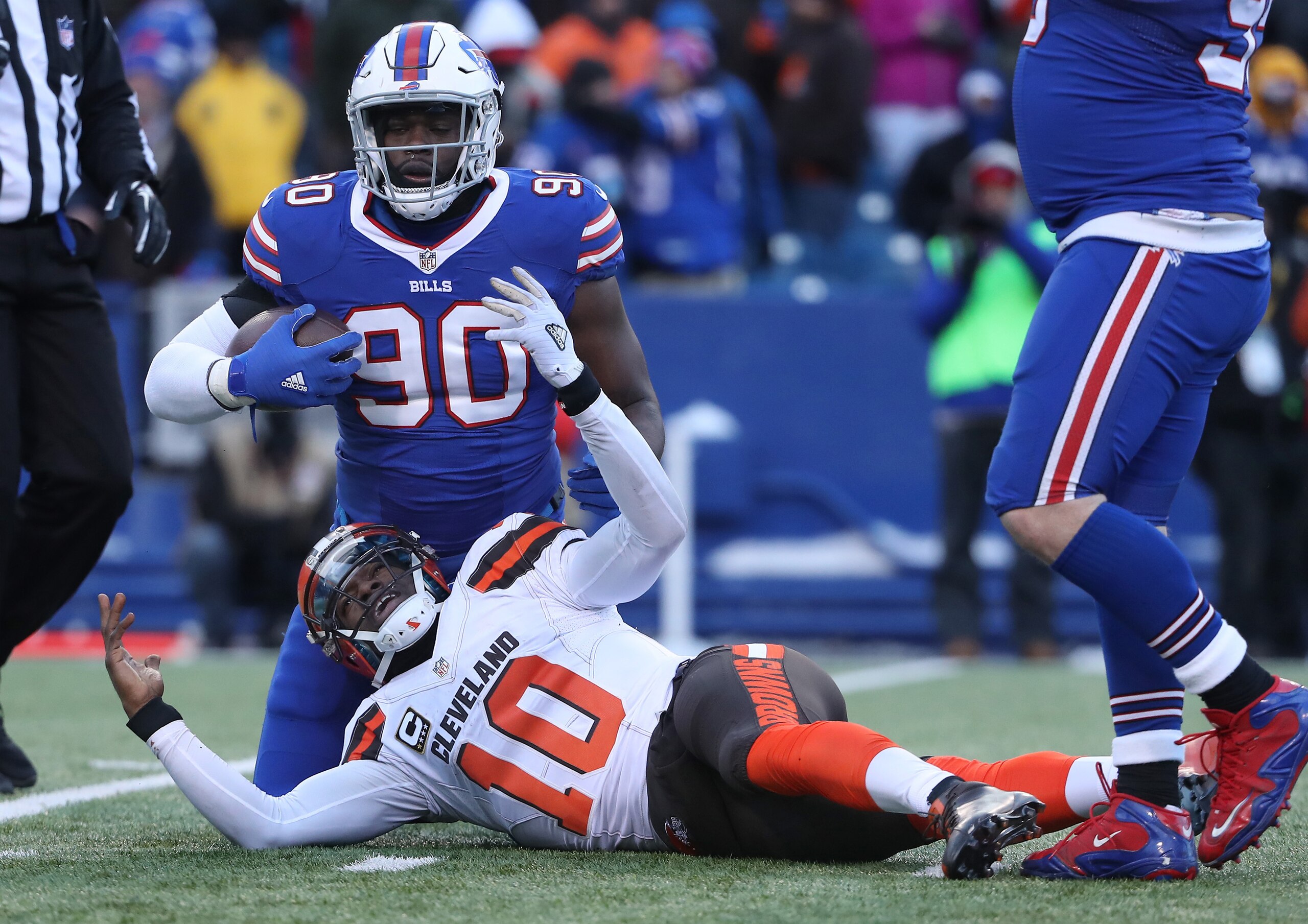
Scheme: 4-3
Starter: Jerry Hughes
NFL1000 Score: 70.4/100
NFL1000 Position Rank: 14/65
Jerry Hughes had another down year in terms of sack production (six) while playing as a 3-4 outside linebacker under Rex Ryan. Still a good player with high-end athleticism, Hughes can give most opposing linemen fits with his ability to rush around the arc in a flash.
He's an active, willing run defender who can, at times, be washed out due to size (6'2", 254 lbs). He'll throw in a few boneheaded plays in between some impressive efforts. Expect Hughes to start at left defensive end for the Bills' new scheme and get back to being a featured pass-rusher.
Starter: Shaq Lawson
NFL1000 Score: 65.9/100
NFL1000 Position Rank: 40/65
Shaq Lawson spent the first half of his rookie season rehabbing a bad shoulder, but when he got his chance, he flashed his upside. He only accumulated two sacks as a rookie but added a handful of pressures to give everybody hope. He should be Buffalo's starting right defensive end, and with Hughes, Marcell Dareus and Kyle Williams as teammates, Lawson won't have to shoulder the expectations of this defense.
Backup: Ryan Davis
NFL1000 Score: 65.0/100
NFL1000 Position Rank: 42/68
Ryan Davis was a backup in the Cowboys' four-man front in 2016, but before that, he was an underrated multi-gap lineman with the ability to generate pressure from the end and tackle positions. He'll be a good option in sub-packages, and he has the talent to sub in for Hughes and Lawson if they're injured.
Team Need: 4/10
Potential Draft Fits: Avery Moss (Youngstown State), Josh Carraway (TCU)
Defensive Tackle
12 of 19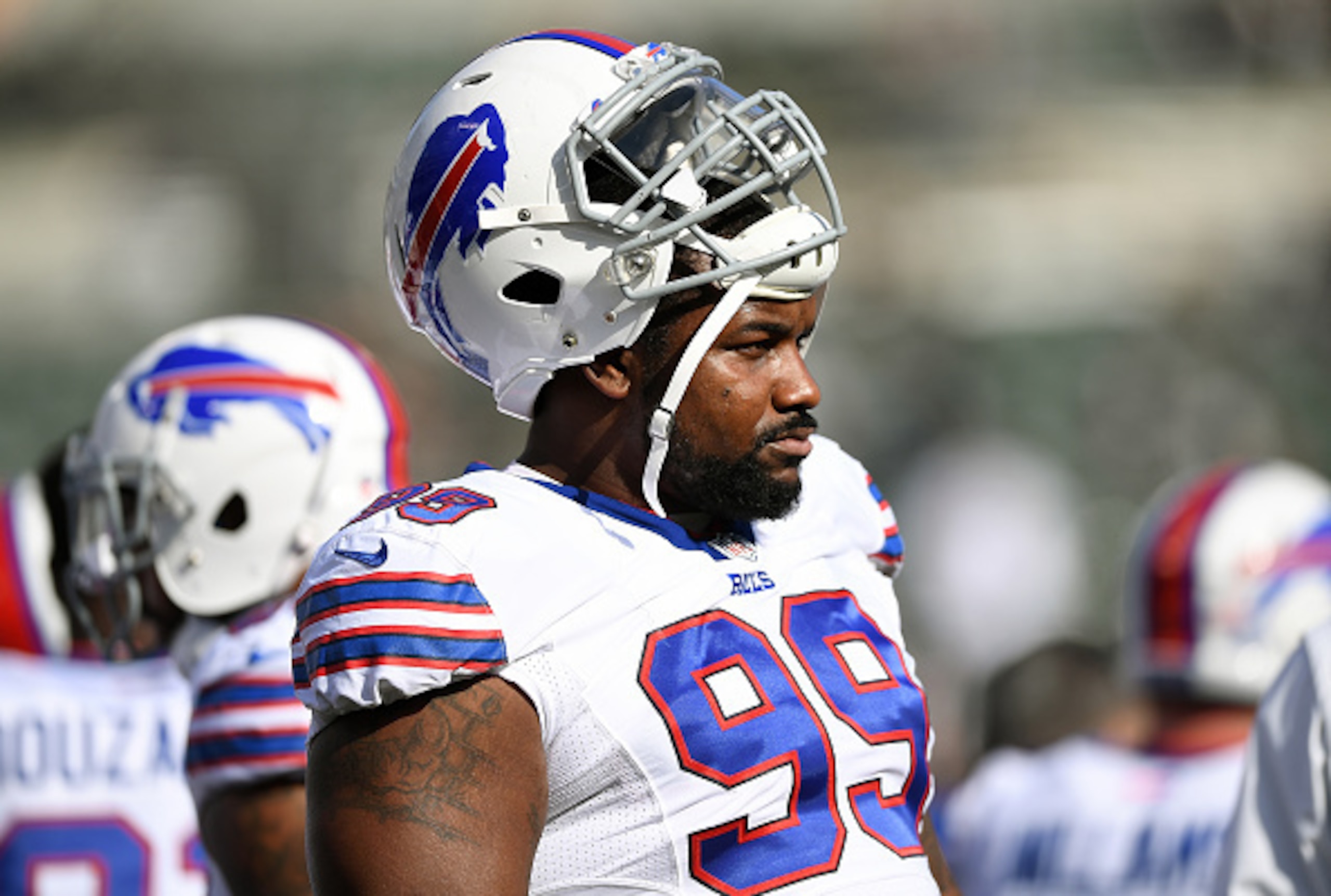
Scheme: 4-3
Starter: Kyle Williams
NFL1000 Score: 72.9/100
NFL1000 Position Rank: 7/99
Kyle Williams has been one of the most underrated defensive players in the league over the past decade. Williams is one of the elite defensive tackles in the NFL and he continued his strong play in the 2016 season.
Williams can be a game wrecker in every phase of the game. His elite technique has allowed him to keep his dominance as he enters his 12th season. He’ll be 34 at the start of the 2017 season, but if his play last season was any indicator Williams has yet to slow down.
Backup: Marcell Dareus
NFL1000 Score: 66.9/100
NFL1000 Position Rank: 28/99
When Marcell Dareus is on the field, he can be an absolutely dominant presence at three technique and nose tackle. The biggest issue for Dareus has been his struggle to stay on the field, whether it be injury or suspension. Constantly being in and out of the lineup makes it hard for Dareus to keep any level of consistency in his play. Hopefully he’ll be able to stay on the field for all 16 games and regain his dominant form that made him one of the highest paid defensive tackles in the league.
Backup: Adolphus Washington
NFL1000 Score: 61.8/100
NFL1000 Position Rank:: 60/99
Adolphus Washington is kicking inside to defensive tackle under new head coach Sean McDermott. Washington played defensive end in the Bills 3-4 front under Rex Ryan last season so the transition shouldn’t be too difficult for him.
Washington had a mixed performance in his first year in the league, as most rookies often do. He was typically a strong run defender while occasionally providing splash plays as a pass rusher. In year two he should have a stronger season in the pass rush department as he rotates with Kyle Williams and Marcell Dareus.
Team Need: 3/10
Potential Draft Fits: Jaleel Johnson (Iowa), Eddie Vanderdoes (UCLA), Caleb Brantley (Florida)
Outside Linebacker
13 of 19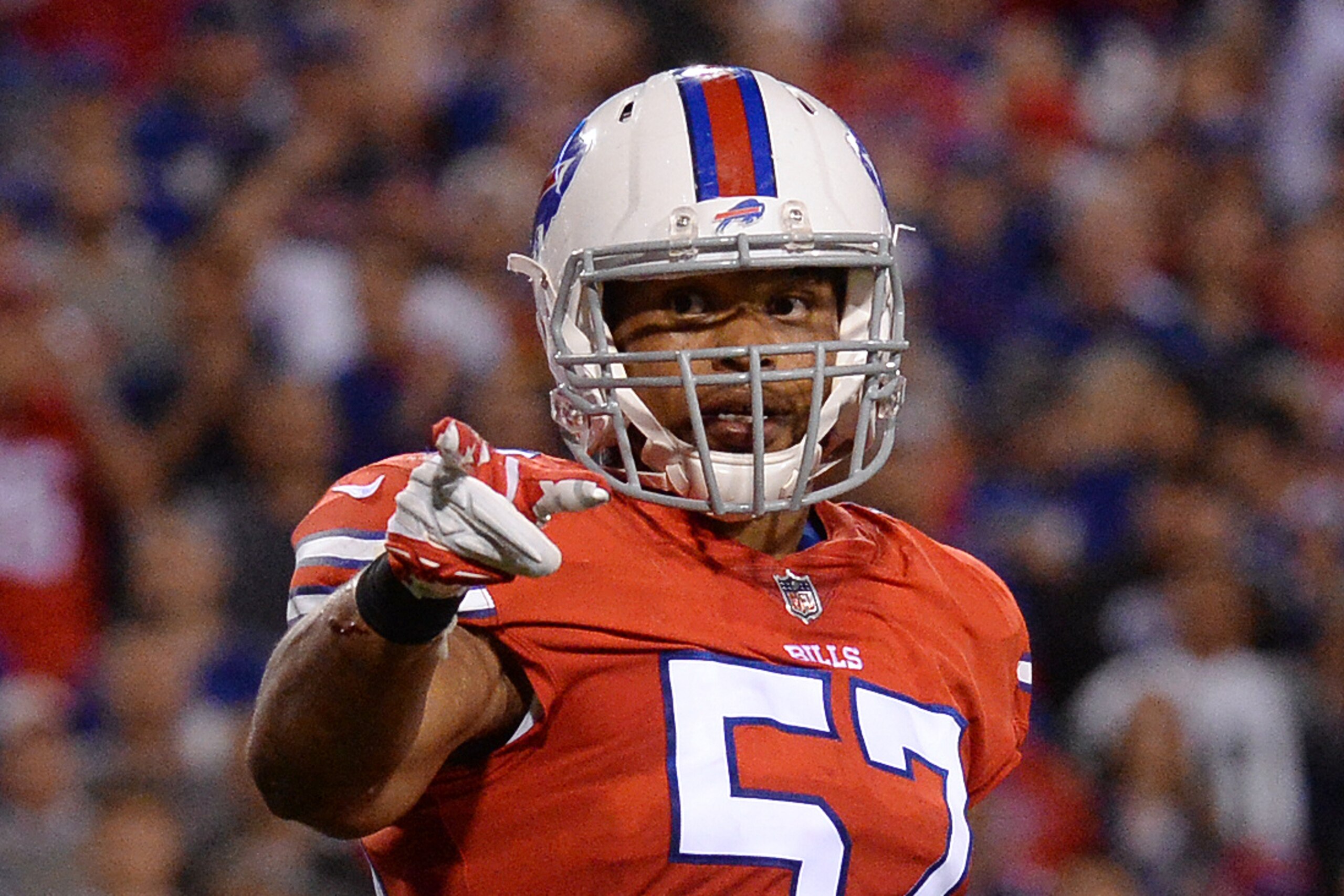
Scheme: 4-3
Starter: Lorenzo Alexander
NFL1000 Score: 70.9/100
NFL1000 Position Rank: 10/65 (Graded as a 3-4 OLB)
Lorenzo Alexander was one of the best stories of the 2016 season. A career backup with nine sacks in a nine-season span, Alexander produced 10 sacks during the year's first nine weeks. He's a hustle player with some bend around the edge. He's also got an ability to drop into coverage and play in space.
Another position change shouldn't hurt a veteran who has moved all over the defensive front seven during his career. Alexander, who turns 34 next month, signed a two-year deal to return to Buffalo in March.
Starter: Ramon Humber
NFL1000 Scores: Did not have enough snaps to qualify
Ramon Humber tallied 16 tackles while playing in all 16 games for the Bills in 2016. He was mostly a special teams player, with only 61 total snaps played on defense. He'll turn 30 years old in August, but the Bills brought him back for 2017 to provide more depth at linebacker.
He'll get snaps on the outside, but Buffalo will likely have a different starting option (maybe Preston Brown moving to outside linebacker?) in place by the start of the regular season.
Team Need: 6/10
Potential Draft Fits: Haason Reddick, Temple; Reuben Foster, Alabama; Jarrad Davis, Florida; Alex Anzalone, Florida
Inside Linebacker
14 of 19
Scheme: 4-3
Starter: Preston Brown
NFL1000 Score: 71.1/100
NFL1000 Position Rank: 24/65
Preston Brown is a relative unknown on his own team as his former teammate Zach Brown commanded most of the attention throughout 2016 in Rex Ryan's 3-4 defense. With a new head coach in town, it's unclear exactly how Preston Brown's role will change.
As a player, Brown excels using his athleticism as a sideline-to-sideline linebacker. He rarely demonstrates the necessary power and punch to stack and shed offensive linemen in the interior run game but can win against solid competition.
Brown finished the year on a much more consistent platform than his running mate. While the Buffalo Bills mold their roster to fit what new head coach Sean McDermott likes to do, they'll likely attack other more pressing needs over inside linebacker.
Brown is more than serviceable in a league that values speed on defense, minimizing the obvious lack of functional strength in his game. He's an average starter who can have strong outings and surprise performances throughout the year. With one more year on his rookie contract, Brown will be playing to remain in Buffalo or get a larger pact elsewhere.
Backup: Reggie Ragland
NFL1000 Score: Did not have enough snaps to qualify
Reggie Ragland could just as easily be listed as the starter. However, he missed his entire rookie season in 2016 with a torn ACL and, although he was a second-round selection, shouldn't be given the starting role quite yet.
Both Brown and Ragland are on cheap deals and give the Bills two players who, as a linebacker tandem, complement each other quite well. The issue is that the Bills are moving to a 4-3 and will only have room for one of the two at inside back.
Brown could see a move outside with Ragland commanding the middle linebacker role in 2017. Ragland is a traditional thumper, with a thick body and the hard-hitting attitude to fit a Bills defense that must compete with the New England Patriots every season.
Team Need: 3/10
Potential Draft Fits: Ben Boulware, Clemson; Riley Bullough, Michigan State; Hardy Nickerson, Illinois
Cornerback
15 of 19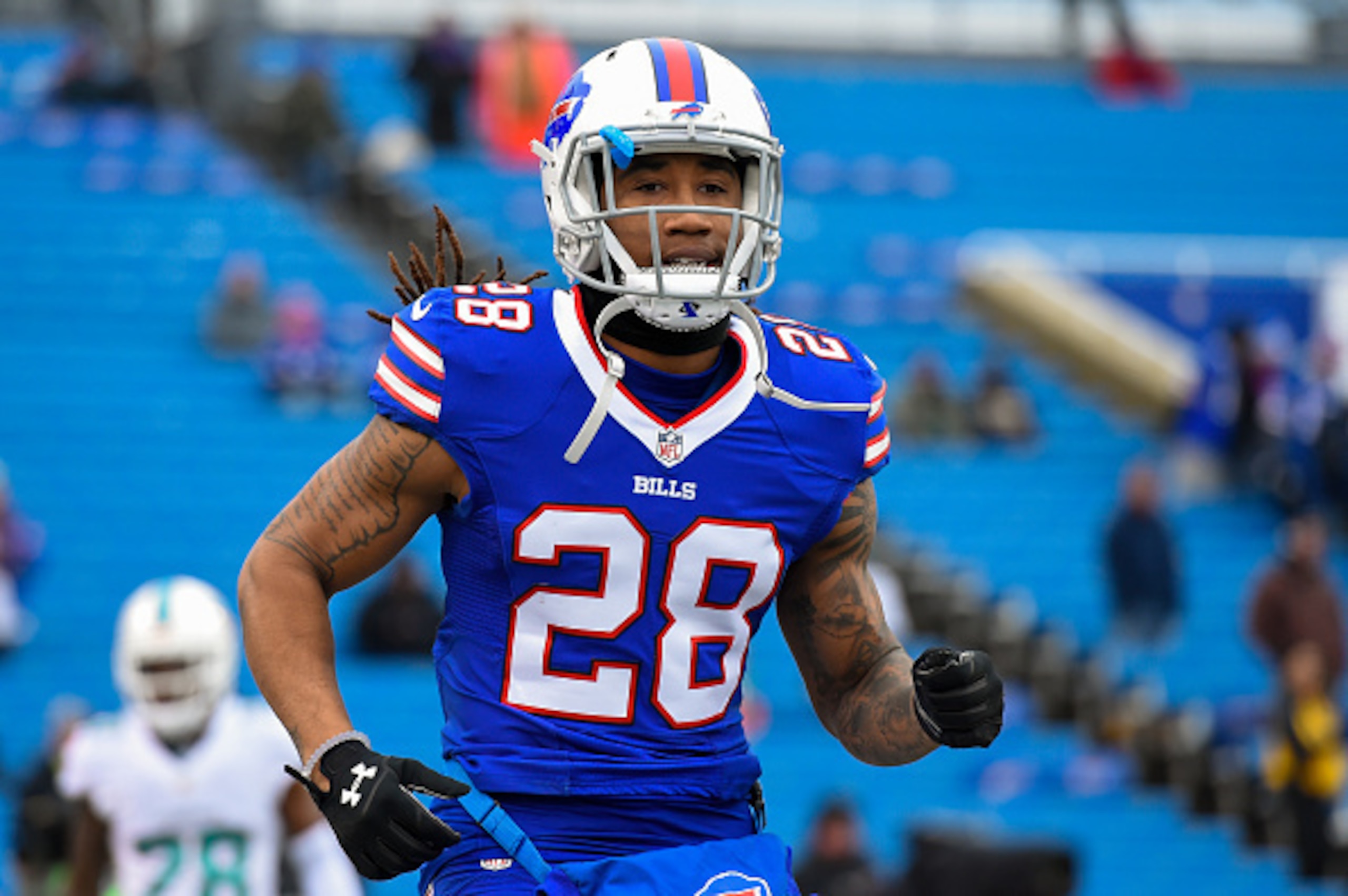
Scheme: Cover 3 and Cover 4
Starter: Ronald Darby
NFL1000 Score: 65.8/100
NFL1000 Position Ranking: 38/133
Ronald Darby's talent is obvious. The speedy corner had four games last year that qualified as excellent. He's still a bit reliant on his speed instead of technique and recognition, however. Darby was never going to be a ball hawk, and that showed last year. He didn't have an interception in 14 games.
He did, however, have 12 passes defensed. That was nine fewer than his rookie year. Darby has flashed the ability of a No. 1 corner at times but still has to be more consistent if the Bills are going to rely on him. At this point, he's a middle-of-the-pack No. 2 corner.
Starter: Kevon Seymour
NFL1000 Score: 60.5/100
NFL1000 Position Ranking: 88/133
Kevon Seymour rotated in the slot last year with a corner the Bills let walk. Size was likely a reason they parted ways with Nickell Robey-Coleman (5'8", 165 lbs) and chose to roll with the sixth-round rookie (6'0", 185 lbs).
As of now, Seymour would be the starter in Buffalo, but this likely won't be the case come training camp. Though Seymour appeared in 15 games, he only qualified to earn a grade in six of those. A 68 was his highest score. If you watched him against the Raiders in Week 13, you'd have wondered why they ever let Seymour touch the field again. He was beaten five times in coverage while allowing two touchdowns.
Seymour should be considered nothing more than depth at this point.
Nickel: Leonard Johnson
NFL1000 Score: 57/100
NFL1000 Position Ranking: 120/133
Only 13 corners in the league were worse than Leonard Johnson last year. Carolina, a team that has a hole at the position, let Johnson walk. He is small (5'10", 200 lbs) and slow. That's not a good combination to have at this position. He got his chance during the final six games of the season but wasn't able to score higher than a 58 in a game. Johnson will be lucky to make the final 53-man roster.
Team Need: 8/10
Potential Draft Fits: Marshon Lattimore, Ohio State; Gareon Conley, Ohio State; Sidney Jones, Washington; Quincy Wilson, Florida
Free Safety
16 of 19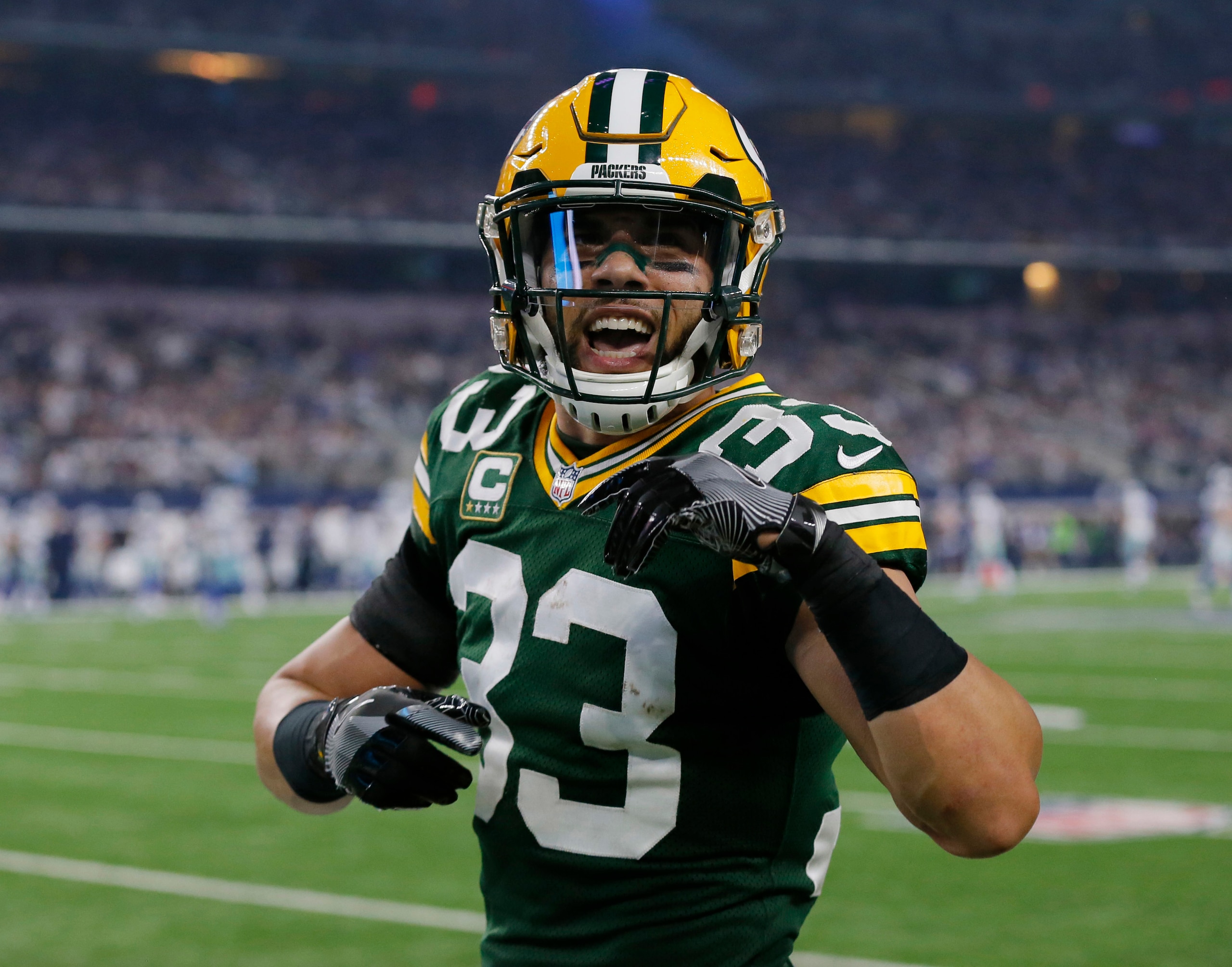
Scheme: Cover 3 and Cover 4
Starter: Micah Hyde
NFL1000 Score: 63.3/100
NFL1000 Position Rank: 60/133 (Graded at CB)
Micah Hyde is an incredibly versatile defensive back. With the Packers, he spent time at free safety, strong safety and even slot corner. In fact, when the Packers suffered multiple injuries to their secondary last year, Hyde took over the slot corner duties and remained there for the majority of the season.
Under new head coach Sean McDermott, the Bills should be able to keep Hyde at free safety in his zone coverage scheme. McDermott uses Cover 3 and 4 as his two main zone coverages. In Cover 3, Hyde is capable of playing the underneath zones and the deep middle third. With his experience in the slot, Hyde can also match up against tight ends and slot receivers in Cover 4 when they run up the seam and enter his zone.
Backup: Colt Anderson
NFL1000 Score: Did not play enough snaps to qualify
Colt Anderson is an NFL journeyman at this point of his career. He signed with the Bills, his fourth NFL team, last year but ended the season on injured reserve. The 2009 undrafted free agent has made a living as a special teams contributor and has rarely taken snaps on defense.
The Bills shouldn't expect anything different from the 31-year-old and should bring in competition for his backup spot.
Team Need: 5/10
Potential Draft Fits: Justin Evans, Texas A&M; Eddie Jackson, Alabama; Tedric Thompson, Colorado
Strong Safety
17 of 19
Scheme: Cover 3 and Cover 4
Starter: Jordan Poyer
NFL1000 Score: 72.2/100
NFL1000 Position Rank: 20/53
Jordan Poyer was a former cornerback who converted to safety with the Browns. He was playing well before he lacerated his kidney after taking a huge hit on a special teams play back in Week 6. Poyer has good coverage skills for a safety and understands his role in zone coverages.
In underneath zones, he knows how to sink to take away deep routes or when to bite up on underneath routes. Like Micah Hyde, he should fit in well with Sean McDermott's zone schemes. He can also draw on his past experience as a corner to help him in matchups in quarters coverage—which can essentially become man coverage in certain scenarios.
Team Need: 7/10
Potential Draft Fits: Budda Baker, Washington; Obi Melifonwu, Connecticut; Marcus Maye, Florida
Kicker
18 of 19
Starter: Steven Hauschka
NFL1000 Score: 68/100
NFL1000 Position Rank: 15/34
Steven Hauschka was the prize of the free-agent kicking class this year, with the Bills moving to lock him up quickly after it became apparent he would not re-sign in Seattle. Hauschka was excellent on field goals in 2016, making 89.2 percent of his attempts.
However, Hauschka has serious issues that need to be addressed on extra points, as he is just 69-of-79 on the longer attempts since they were instituted at the start of the 2015 season. Hauschka is clearly a capable kicker, but he has spent a significant amount of time working on this part of his game, moving from hash to hash during times when he struggles on extra points. It has not affected his ability to hit field goals, but for a team spending this kind of money on a kicker (three years, $8.85 million), it does raise a small concern.
That said, Hauschka is a top-five kicker when he is clicking, and while Buffalo can be a challenging place to kick, especially as the calendar turns to December, he has shown the ability to diagnose flaws in his game quickly. Expect him to have success with his new team.
Team Need: 1/10
Potential Draft Fits: None
Punter
19 of 19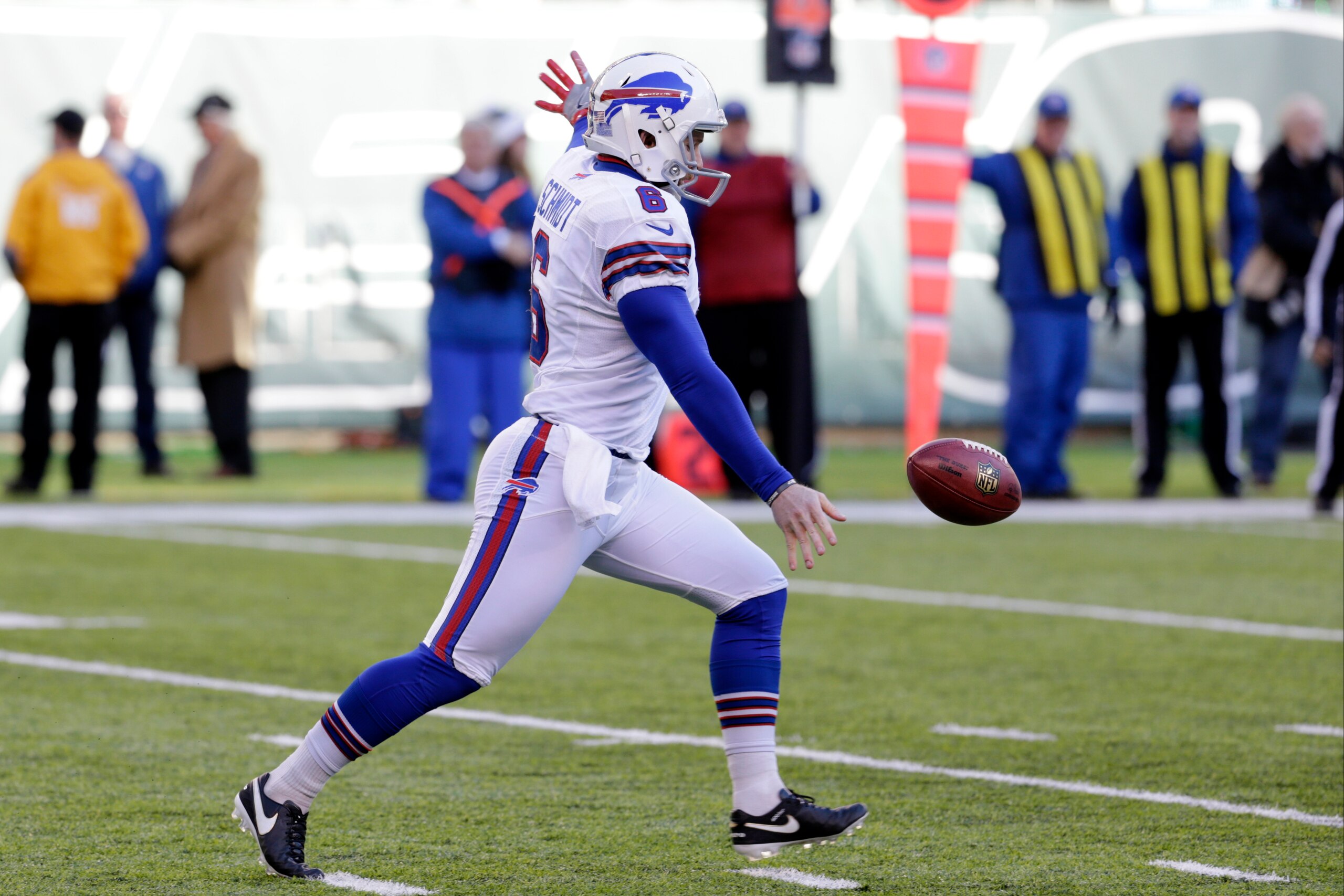
Punter: Colton Schmidt
NFL1000 Score: 63/100
NFL1000 Position Rank: 28/34
Colton Schmidt had a difficult 2016 season, though he showed flashes of above-average ability during a campaign where consistency was his main issue. Schmidt does not have a strong leg as far as distance is concerned, but he does generate good hang time and has a decent feel for the directional game.
His lack of distance may prevent him from being a long-term solution anywhere, but he could follow a path similar to Britton Colquitt in his development as he works to refine his game.
Buffalo had non-tendered Schmidt prior to free agency, so there is a good chance it'll bring in competition this summer, as he does not appear to have a firm hold on the job. With the Bills already bringing in Steven Hauschka at kicker this offseason, it is unlikely they'll use draft capital for this competition at punter, but one or two undrafted free agents may find their way to Buffalo by the start of May.
Team Need: 6/10
Potential Draft Fits: None
Advanced statistics provided by Pro Football Focus unless otherwise noted.
.jpg?w=2560)
.jpg?w=2560 "Cardinals Giants Football")







