Grizzlies' Dismissal of Dave Joerger Latest in Series of Broken NBA Partnerships
The Houston Rockets thought the world of Kevin McHale on the day they fired him.
Smart guy. Fine coach. Better person. There’s the door.
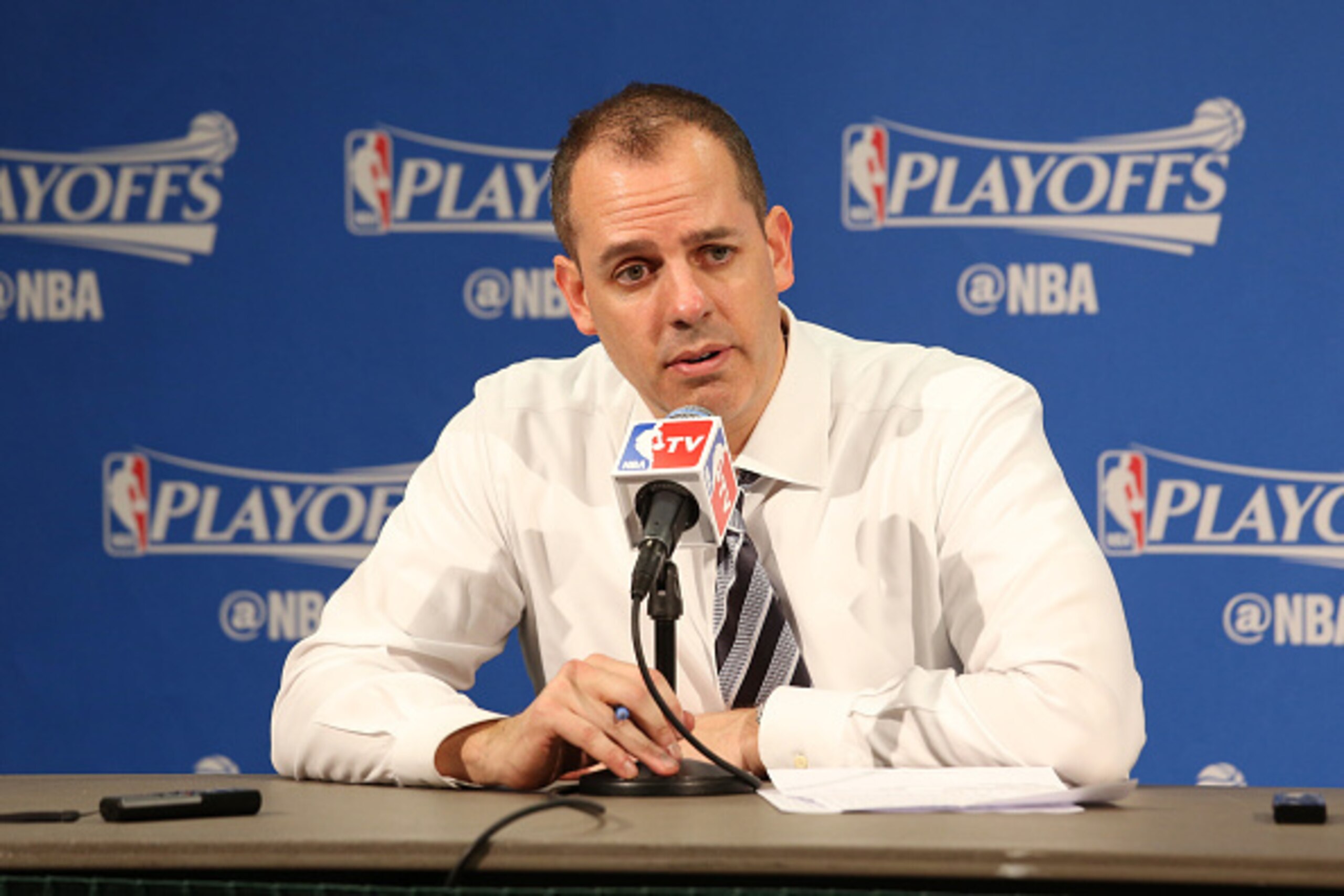
On the day Larry Bird canned Indiana Pacers coach Frank Vogel over the phone, he described him in a press conference as “the best.” He called him “a great man.” Vogel was, Bird said, “a great leader.”
TOP NEWS

J-Dub Suffers Gruesome Injury
Mazzulla Weighs In on Brown-Tatum Drama

Blockbuster Trade Idea To Shake Up the East
Dave Joerger’s dismissal, announced by the Memphis Grizzlies on Saturday, did not come with the same sort of warm and fuzzies, but it fit the pattern. A disconnect between employee and management led to another winning coach looking for a job—despite so many injuries that anyone who called “next” probably could get a 10-day contract—and yet another playoff team looking for a coach.
Joerger’s departure came in a sitcom kind of way, where one character says, “I quit,” and the other responds, “You can’t quit. You’re fired.”
Memphis saw a coach with unquestioned credentials coldly thanked for his contributions and wished the best of luck in his future endeavors.
Joerger wanted to be free to interview for other positions while keeping the one he had. Grizzlies general manager Chris Wallace, speaking to the team’s website, cited the quest for long-term “stability” for his decision to fire his coach.
Yet, in each case, successful coaches were fired to search for other successful coaches. Joerger and McHale had the best winning percentages in their franchise’s history. Vogel had the most wins in the Pacers’ NBA era.
(Bird preferred that his decision be described as choosing not to give Vogel a new contract, a distinction that does not matter on the first and 15th. At least McHale received $12 million to pay for a lifetime of greens fees.)
In each case, these people and their accomplishments were treated as expendable, replaced like flashlight batteries that had been drained of their usefulness.
Each worked with the lack of either the authority or stability—or both—needed to last through tough times. None were empowered in a way that could build a culture (the type of culture their bosses craved).
The Rockets fired McHale because they said players were “not responding” in the 11 games after the best Rockets season since the Rudy Tomjanovich-Hakeem Olajuwon partnership.

The players who were not responding to a Hall of Famer who led them to the Western Conference Finals remained.
The Rockets went 41-41 and barely slipped into the playoffs as the eighth seed before the Golden State Warriors demolished them in three of their four first-round losses.
Bird, as always, was more transparent. He said players typically tune out a coach after three seasons. That would probably come as a surprise to the Miami Heat's Erik Spoelstra, who, during his eight seasons as head coach, has eliminated the Pacers twice.
It could also be met with debate from Paul George, George Hill and Ian Mahinmi, three Pacers who had been with Vogel for more than three seasons. But Bird made his case for turnover over stability and told Vogel he was out.
Joerger’s divorce from the Grizzlies came as no surprise, and the bad feelings have been mutual before, according to ESPN's Marc Stein. But just as the Rockets did not back McHale through the early-season struggles and the Pacers did not empower Vogel to take them through the transition in playing style and personnel, the Grizzlies had not given Joerger authority over roster decisions.
There are five active coaches—Gregg Popovich, Steve Kerr, Rick Carlisle, Doc Rivers and Spoelstra—with championship rings. With their franchises, there is no debate about who is in charge.
Try “not responding” to Popovich. You would be treated like a sideline reporter who starts an in-game interview with “Talk about...”
San Antonio Spurs general manager R.C. Buford and Popovich might not agree on everything, but there is no power struggle. Beyond even the success of the "Spurs way" and the good fortune of having David Robinson and now Tim Duncan’s influence to establish a foundation, the best coaches are often those with the best partnership with management.

Rivers is, at least in the L.A. Clippers front office, his own boss. Spoelstra and Pat Riley have a seamless working relationship. Kerr and Golden State Warriors general manager Bob Myers, though admittedly not tested by on-court adversity, could not be closer.
It’s little wonder that Tom Thibodeau wanted the kind of clout with the Minnesota Timberwolves he never had with the Chicago Bulls, where the tensions grew so great they could not be overcome. Stan Van Gundy took on the rebuilding Detroit Pistons because he was put in charge of more than games and practices (as he had been in previous stops with the Miami Heat and Orlando Magic).
This is not Red Auerbach’s NBA. Owners invest millions, even billions. They rightly put together large front offices to seek every possible advantage, from the study of analytics to the scouting of Latvia. They employ executives who would fit as easily in a Fortune 500 boardroom.
That is all entirely appropriate to build the best organization possible. But part of that also has to be finding the best coach possible and then supporting him in a way that makes him better. More than supported, the best coaches need to be empowered.
By the start of next season, a third of NBA teams will have changed coaches since the start of the previous.
This is not unique to the NBA. Former Cleveland Browns owner Art Modell once said, “I believe to get to the next level, a change at head coach is necessary.” He said it on the day he fired Bill Belichick.
Most of the NBA teams that will have changed coaches in 2016 will be looking for their next coach again in a few years. It will not be because they make bad choices. It won’t be because players need a new voice every few years for their auditory abilities to function.
Most coaches will eventually fail because they were not given what they need to succeed. They need more than a center who can protect the rim, a shooter who can nail three-pointers or a star who can share the ball. They need a partnership with management that is built to last.
That can be harder to find than that superstar.




.jpg?w=2560 "Latest Peyton-Colts Rumors")
.jpg?w=2560 "Ugly Jets Scoring Stat 😳")
.jpg?w=2560 "Landing Spots for Trade Candidates 📍")