


What would happen if your favorite playoff-bound NBA team had a suggestion box for its postseason starting lineup?
This slideshow.
Stark changes to a playoff team's rotation, let alone its starting five, are unlikely as the postseason gets underway. But that doesn't mean every one of the league's playoff squads—which are listed in alphabetical order and determined by the standings as of April 5—is beginning games with the ideal combination of players.
Uncovering these optimal starting units will come back to team play styles and statistics. Bigger sample sizes are preferred but not necessary. Injured players will not be eligible for inclusion unless there's concrete evidence that their return is imminent.
Superstars and key players who have no chance of being benched will not be displaced. The Los Angeles Clippers, for example, won't be relegating the recently returned Blake Griffin to the second unit.
Other than that, all potential starting-lineup tweaks are fair game.
Fringe Squads
1 of 17
Chicago Bulls
Ideal Lineup: J. Butler, P. Gasol, T. Gibson, D. McDermott, D. Rose
Minutes Played: 69
Offensive Rating: 111.8
Defensive Rating: 102.8
On paper, this combination of Jimmy Butler, Pau Gasol, Taj Gibson, Doug McDermott and Derrick Rose appears to lack spacing. Placing McDermott at the 3 could also be a low-key defensive disaster.
But the Chicago Bulls are shooting 44.4 percent from beyond the arc whenever these five take center stage, while both the offense and defense statistically improve. And of the 20 Bulls lineups to see more than 27 minutes of court time, this unit owns the best net rating.
Houston Rockets
Ideal Lineup: T. Ariza, P. Beverley, J. Harden, D. Howard, D. Motiejunas
Minutes Played: 235
Offensive Rating: 110.0
Defensive Rating: 100.9
The Houston Rockets' five-man formation of Trevor Ariza, Patrick Beverley, James Harden, Dwight Howard and Donatas Motiejunas is also their most used overall lineup. This group scores like a top-three offense and protects the house like a top-seven defense.
Moral of the story? If Motiejunas didn't spend most of the season on the shelf, the Rockets would be playoff locks.
Atlanta Hawks
2 of 17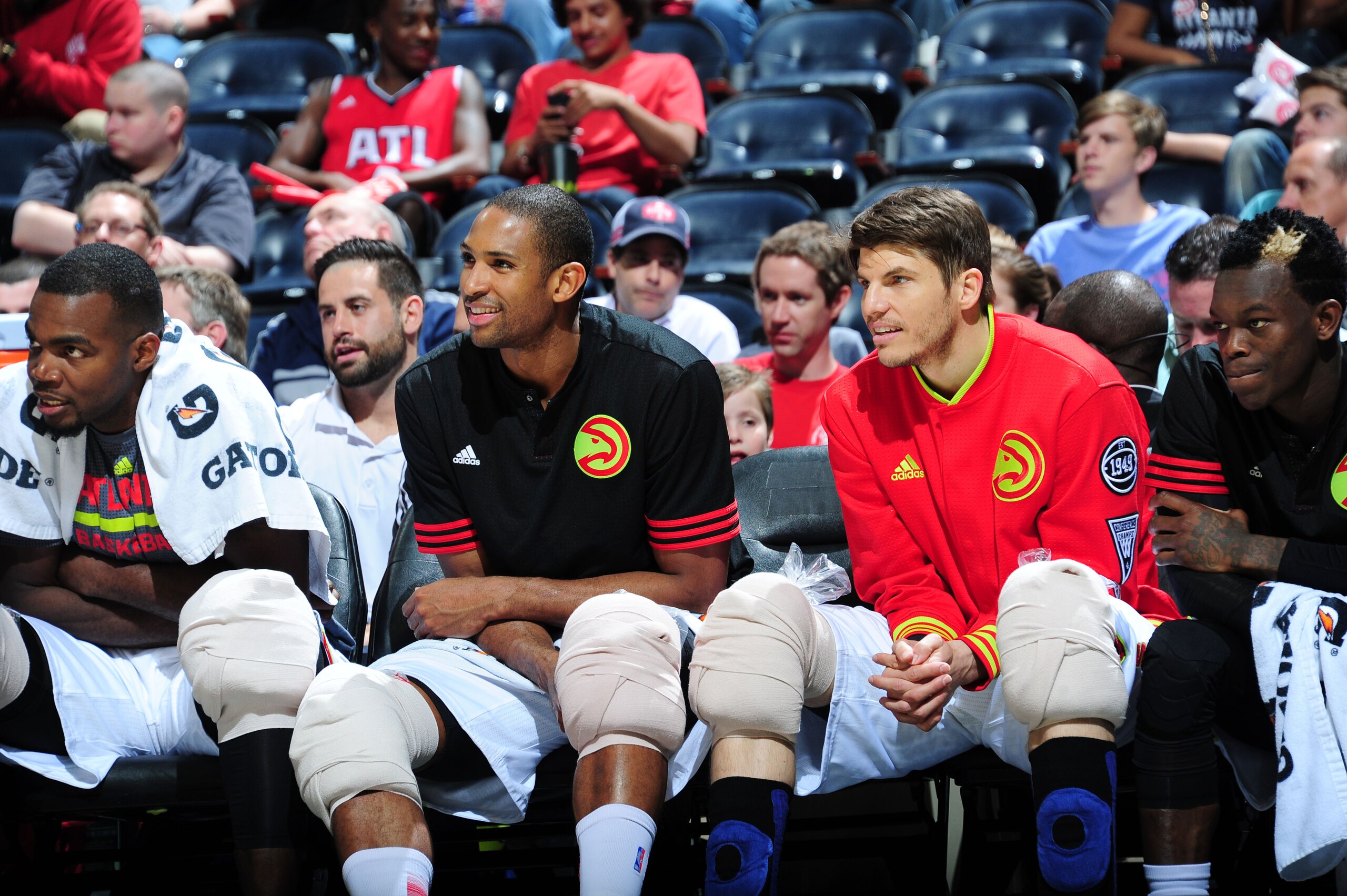
Ideal Lineup: K. Bazemore, A. Horford, K. Korver, P. Millsap, D. Schroder
Minutes Played: 73
Offensive Rating: 112.2
Defensive Rating: 100.1
Although the Atlanta Hawks' regular starting lineup of Kent Bazemore, Al Horford, Kyle Korver, Paul Millsap and Jeff Teague has been on a tear lately, it was a net minus leading into the All-Star break. Swapping out Teague with Dennis Schroder gives the team a more menacing dynamic.
Neither point guard has thrived as a pick-and-roll catalyst this season, and both struggle to finish at high clips around the rim. But Schroder is shooting way better on drives, and the Atlanta offense, a disappointment overall, is far more efficient with him running the show.
Most of the Hawks' starters are, not surprisingly, shooting better when playing next to him:
Schroder's added emphasis on paint attacks creates more opportunities for his orbiting running mates. And while his three-point accuracy doesn't yet stand up to Teague's, his defense against opposing point guards does.
Starting Schroder over Teague, then, allows Atlanta to beef up its offense without jeopardizing an elite defense.
Boston Celtics
3 of 17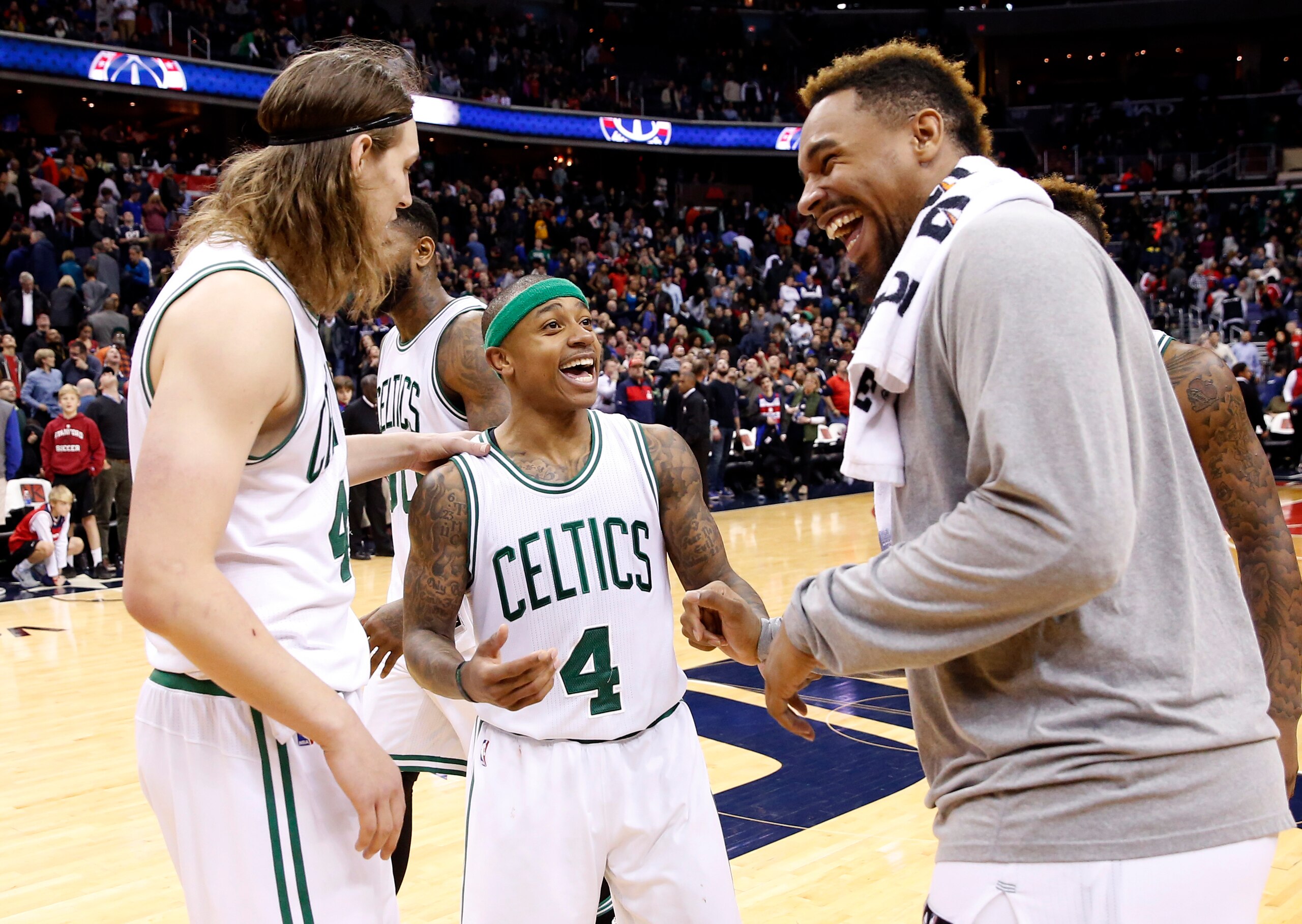
Ideal Lineup: A. Bradley, J. Crowder, K. Olynyk, J. Sullinger, I. Thomas
Minutes Played: 93
Offensive Rating: 115.7
Defensive Rating: 93.8
Avery Bradley, Jae Crowder, Kelly Olynyk, Jared Sullinger and Isaiah Thomas already make up one of the Boston Celtics' five most used lineups. They would sit even higher on that scale if not for midseason injuries to Olynyk and Crowder.
And for good reason.
This unit is outscoring opponents by roughly 22 points per 100 possessions while posting offensive and defensive ratings that comfortably outpace the NBA's best marks. These five play extremely fast, averaging just under 105 possessions per 48 minutes, and provide just enough spacing with a 35.2 percent clip from downtown to maximize Bradley's, Crowder's and Thomas' dribble drives.
Olynyk guarantees enough rim protection to ensure the Celtics don't get burned on defense, as many spacey lineups do, and Sullinger's offensive rebounding rate checks in at seventh among players standing 6'9" or shorter.
There isn't anything this lineup cannot feasibly do. It bends to small-ball tenets without sacrificing too much size and is built to contend with any championship favorite—the Cleveland Cavaliers, Golden State Warriors and San Antonio Spurs included.


Charlotte Hornets
4 of 17
Ideal Lineup: N. Batum, C. Lee, K. Walker, M. Williams, C. Zeller
Minutes Played: 382
Offensive Rating: 113.6
Defensive Rating: 105.0
No substantial changes to the Charlotte Hornets' rotation are necessary. Their ideal lineup is both the team's most used and everyday starting five.
In the 21 games Nicolas Batum, Courtney Lee, Kemba Walker, Marvin Williams and Cody Zeller have played together, the Hornets are 15-6. They score like the Association's best offense and are collectively shooting north of 40 percent from beyond the arc.
Defense becomes a slight concern, since Williams and Zeller aren't fit to chase around playmaking 4s and 5s. But both hold opponents to sub-48 percent shooting at the rim, and Williams offers enough offensive range of his own to pull rival bigs outside the paint.
Batum and Walker are interchangeable as lead distributors. The latter's progression as a shooter lets them play off one another effectively. Batum is hitting more than 38 percent of his threes when catching passes from Walker; Charlotte's point man is draining more than 44 percent of his triples when fielding bullets from Batum.
Lee ties this entire lineup together in his own understated way. He can survive on the toughest defensive assignments and doesn't need to dominate the ball on offense. He is putting down nearly 44 percent of his catch-and-shoot treys since arriving in Charlotte and fares equally well, if not better, when snagging feeds from Batum and Walker.
Cleveland Cavaliers
5 of 17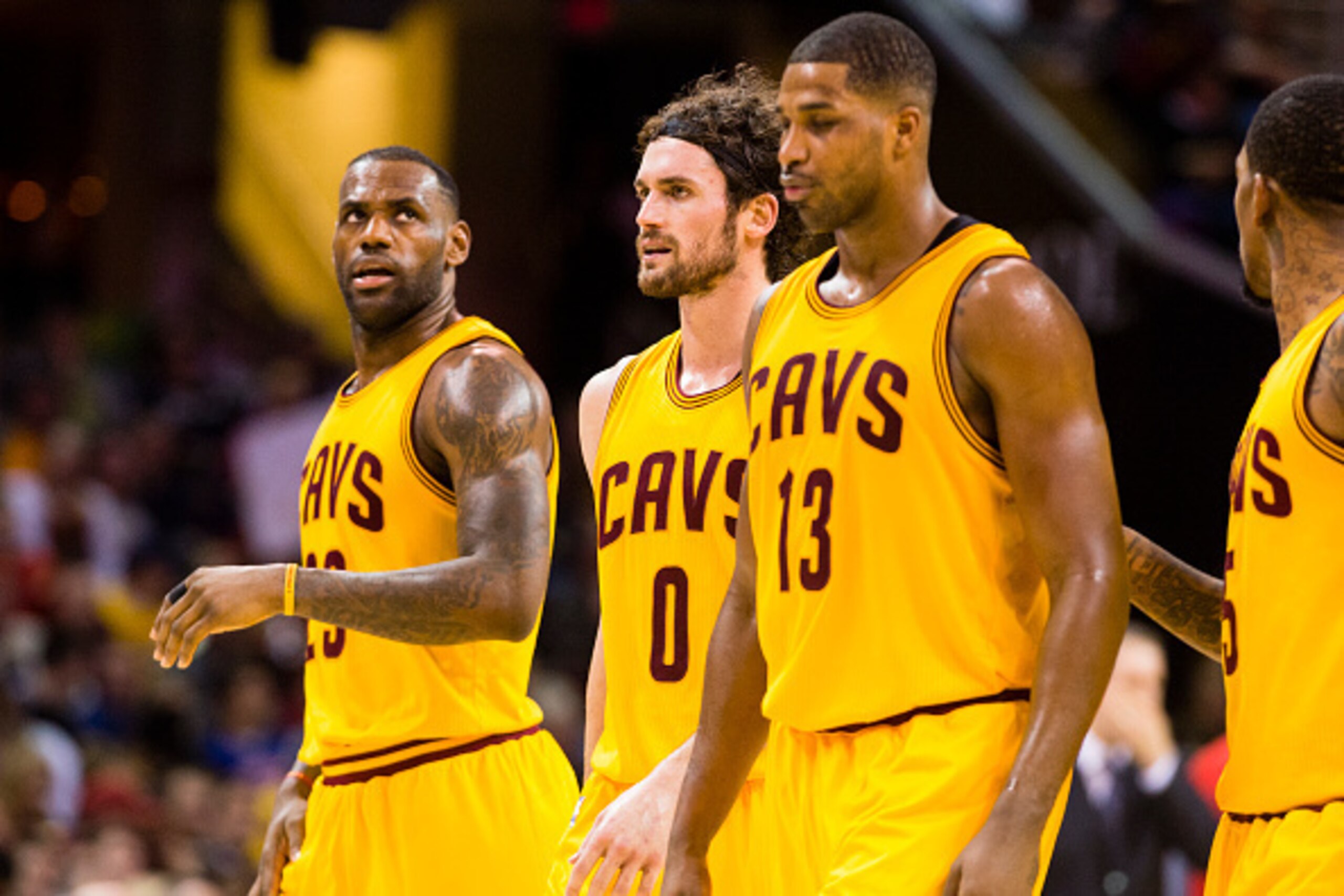
Ideal Lineup: K. Irving, L. James, K. Love, J. Smith, T. Thompson
Minutes Played: 423
Offensive Rating: 115.8
Defensive Rating: 103.1
No five-man combination has started more games for the Cavaliers than Kyrie Irving, LeBron James, Kevin Love, J.R. Smith and Tristan Thompson. But head coach Tyronn Lue, while still fielding this clique freely, has moved away from using them out of the gate.
The reasoning, it goes, is that Thompson remains best served coming off the bench. He still gets to play starter minutes and adds depth to a second unit that hovers around the bottom 10 of both offensive and defensive efficiency, according to HoopsStats.com.
Lue shouldn't try justifying this charade beyond the regular season. Rotations shorten during the postseason, and this unit, in addition to piling on points like the top-ranked offense, is too valuable defensively.
Cleveland is allowing 2.6 points more per 100 possessions since Lue last deployed these five as the starting lineup on March 9. If he wants to fiddle with the blueprint, he's better off subbing out Irving with Matthew Dellavedova and surrounding James with four players who don't need as many touches as a traditional No. 1 option.
Of course, benching any member of the Big Three is out of the question. So it makes more sense for the Cavaliers to favor the numbers and begin playoff tilts with their five best players.
Dallas Mavericks
6 of 17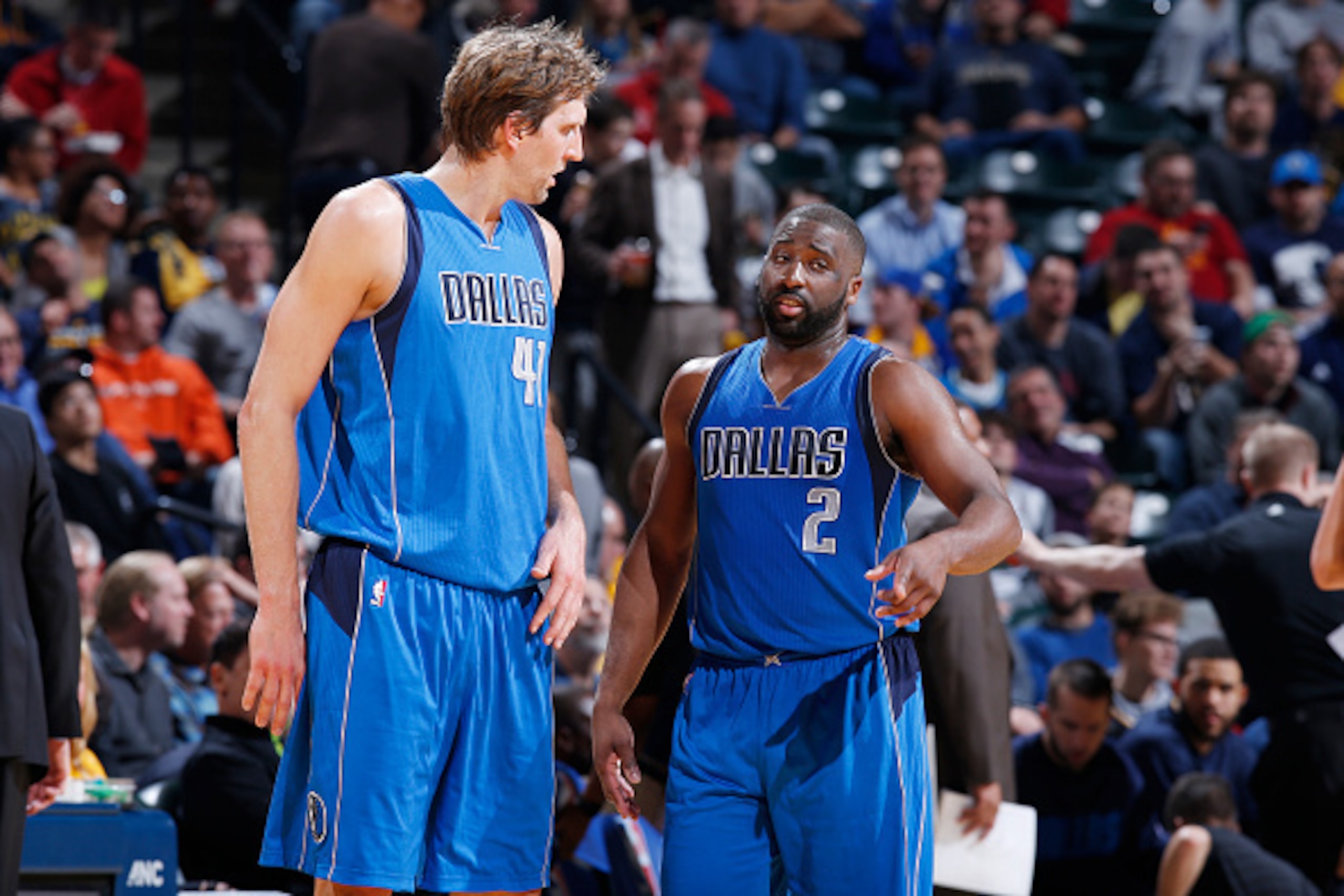
Ideal Lineup: J. Barea, R. Felton, W. Matthews, D. Nowitzki, D. Powell
Minutes Played: 39
Offensive Rating: 113.8
Defensive Rating: 92.2
Welcome to the inaugural edition of "Slim Lineup Pickings," featuring the 2015-16 Dallas Mavericks. Losing Chandler Parsons for the season to a torn right meniscus is one thing. Having no idea if Deron Williams will play again this season is another.
"I don't have any timetable," head coach Rick Carlisle said of Williams' return from a sports hernia, per the Dallas Morning News' Eddie Sefko. "I'd like to think he's getting better, but I'm not sure he's made enough progress to even talk about him playing anytime soon."
Any Mavericks lineup that doesn't include Parsons or Williams has failed to log even 60 minutes of action. And in lieu of adequate sample sizes, the key for Carlisle becomes keeping the Raymond Felton-Dirk Nowitzki-Wesley Matthews tricycle intact.
Yes, that is a real priority. In 2016. Bleacher Report's Adam Fromal previously touched upon why: "They don't miss shots. They don't ever turn the ball over. They run incredible pick-and-roll offense, and the Felton-Nowitzki combination has been so lethal that it often allows head coach Rick Carlisle to focus on surrounding them with defensive bodies."
Adding J.J. Barea and and Dwight Powell to this three-man mix makes the Mavericks a statistical juggernaut on both ends. A 39-minute sample is by no means gospel, but it beats the alternatives.
Subbing in either David Lee or Zaza Pachulia, instead of Powell, turns Dallas into an unmitigated defensive disaster, and Devin Harris hasn't seen enough time as an off-guard to get the nod over Barea.
Detroit Pistons
7 of 17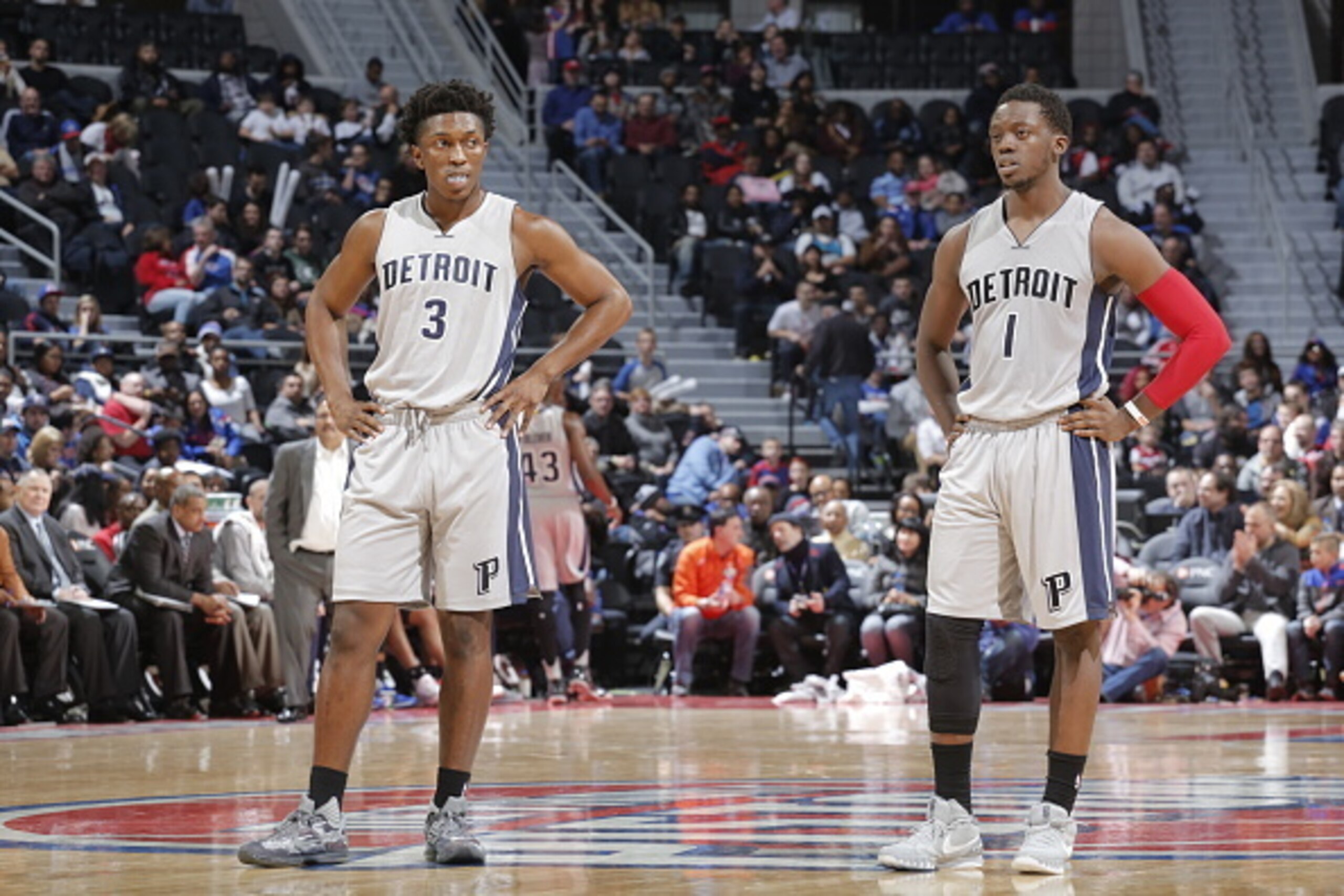
Ideal Lineup: K. Caldwell-Pope, A. Drummond, R. Jackson, S. Johnson, M. Morris,
Minutes Played: 80
Offensive Rating: 115.7
Defensive Rating: 98.9
Journeying off the beaten path stands to benefit the Detroit Pistons.
Coach and president Stan Van Gundy relies heavily on his starting five, a dependence that's not difficult to explain. The Detroit bench ranks 27th in defensive efficiency and dead last in offensive efficiency, per HoopsStats.com.
But the Pistons' new starting five is statistically inferior to the old one. Trading in Ersan Ilyasova for Tobias Harris has done little to move the offensive needle and absolutely nothing to strengthen the defense.
Marcus Morris, like Harris, is better off as a power forward. Playing them together forces one into the role of small forward, complicating matters for the Detroit defense.
Running out Kentavious Caldwell-Pope, Andre Drummond, Reggie Jackson, rookie Stanley Johnson and Morris frees the latter from assuming small forward responsibilities. Johnson is already better equipped to shimmy between forward spots, and staggering the minutes of Harris and Morris allows both to be used as small-ball 4s.
Bringing Harris off the bench is extreme. And though the end result is an unimpressive defense, Van Gundy can elect to slot Johnson alongside Harris over Morris. Either way, the Pistons must find new ways of catering to Harris' and Morris' positional strengths.
Golden State Warriors
8 of 17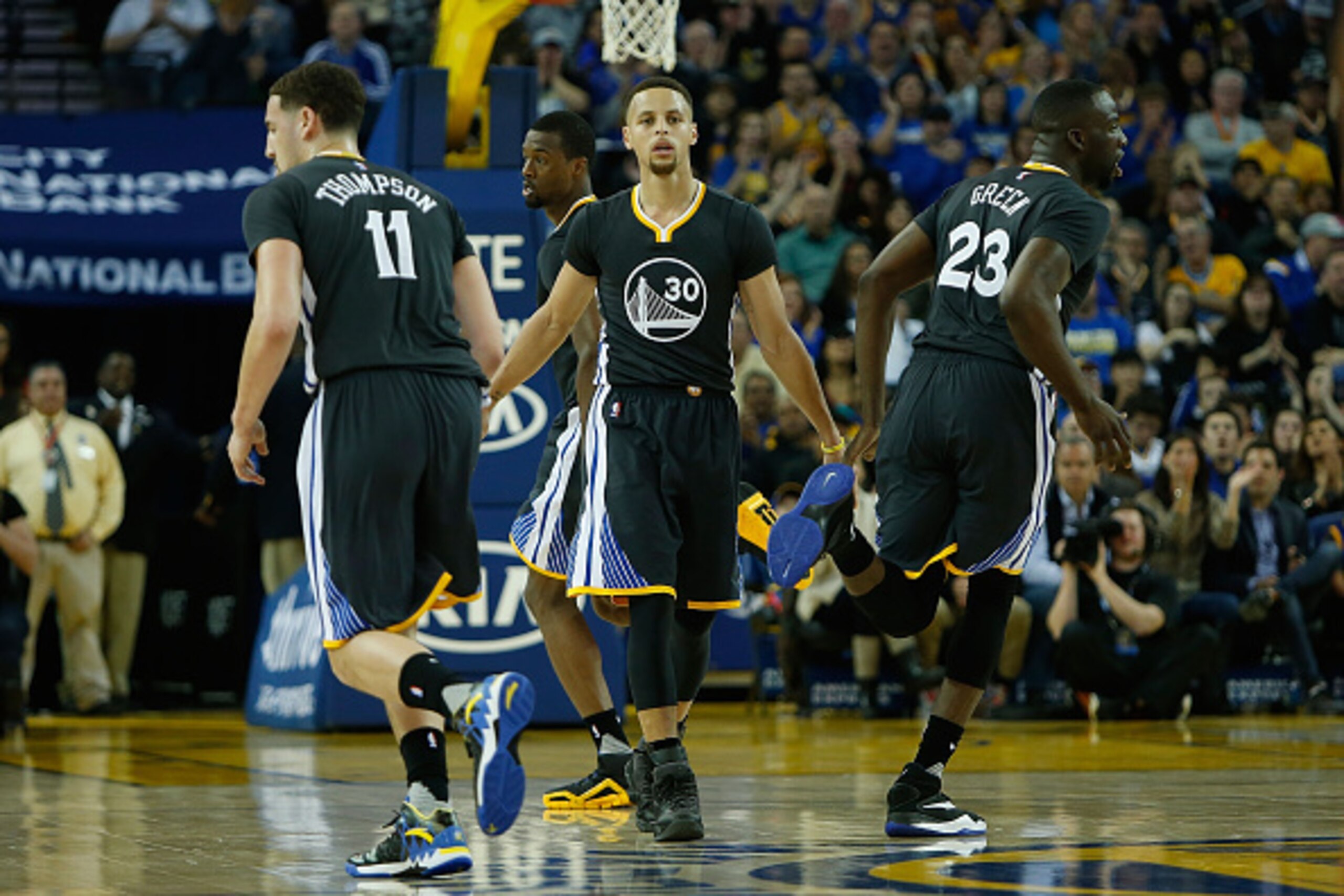
Ideal Lineup: H. Barnes, S. Curry, D. Green, A. Iguodala, K. Thompson
Minutes Played: 155
Offensive Rating: 144.1
Defensive Rating: 95.3
Something about bringing Andre Iguodala, the reigning NBA Finals MVP, off the bench just feels right. The Warriors can start the game with Andrew Bogut at center and then blitz opponents during the middle of the game with their small-ball Death Squad.
Then again, there are unparalleled advantages to ripping teams outside of their comfort zones early without ever looking back.
It's what Golden State did during the final three games of its NBA Finals bout with Cleveland: benched Bogut, started Iguodala and moved Draymond Green to center, before running off three consecutive wins by an average of 14 points.
That same lineup of Harrison Barnes, Stephen Curry, Green, Iguodala and Klay Thompson is obliterating defenses this season. These five have outscored opponents by a total of 157 points through 155 minutes of action, and the Warriors are an indomitable 31-2 when this unit sees time.
With Iguodala back from a sprained left ankle, Golden State shouldn't hesitate to destroy postseason foes from the jump. Bogut is battling sore ribs, and Festus Ezeli just returned from arthroscopic surgery on his left knee anyway.
The Warriors can use them as reserve bigs and have enough smaller replacements in Shaun Livingston and Brandon Rush to deploy Death Squad spinoffs throughout the postseason if they please.
Indiana Pacers
9 of 17
Ideal Lineup: M. Ellis, P. George, G. Hill, I. Mahinmi, M. Turner
Minutes Played: 452
Offensive Rating: 100.4
Defensive Rating: 95.2
Head coach Frank Vogel just recently ditched this assembly of Monta Ellis, Paul George, George Hill, Ian Mahinmi and Myles Turner as the Indiana Pacers starting five. Lavoy Allen was inserted in place of the rookie Turner, a shake-up that, despite two straight victories, is unimpressive at best.
Throwing Allen rather than Turner beside the starting lineup's Core Four only figures to harm the Pacers in the long run. They have struggled to carve out consistent offensive efforts all season, and the Allen-Ellis-George-Hill-Mahinmi quintuplet tethers even more of their livelihood to the defensive end.
Using Turner instead of Allen doesn't guarantee an offensive boom. He is a net minus on the more glamorous end overall, and the 100.4 points per 100 possessions this suggested unit tallies would rank in the bottom five of the league.
Still, the first-year tower lets the Pacers play small without actually playing small. Most of George's minutes aren't coming at the 4 anymore, and pairing Mahinmi with Allen or Jordan Hill makes for a spacing nightmare.
Turner isn't firing at will from deep just yet, but more than one-third of his looks come between 16 feet and the three-point line. His 41-plus percent clip within that range leads the team, adequately spreads defenses and gives the Pacers a puncher's chance of bolstering the offense without jeopardizing the defensive identity that's kept them in the postseason conversation.
Los Angeles Clippers
10 of 17
Ideal Lineup: B. Griffin, W. Johnson, D. Jordan, C. Paul, J. Redick
Minutes Played: 98
Offensive Rating: 106.0
Defensive Rating: 98.9
Digging up the Los Angeles Clippers' best possible starting lineup isn't particularly hard.
Blake Griffin, DeAndre Jordan and Chris Paul have to be involved, because, well, obviously. And head coach Doc Rivers shouldn't be benching J.J. Redick, who leads the NBA in three-point marksmanship, unless he hates winning.
These four have outscored opponents by 15.7 points per 100 possessions when sharing the hardwood. All they need is a viable small forward to join their party.
Finding that 3 is where things get tricky.
Jeff Green has no business playing small forward, and Paul Pierce isn't cut out for conventional 3 duty these days. In the 70-plus minutes Jamal Crawford has spent with Griffin, Jordan, Paul and Redick, the Clippers are at plus-18 points per 100 possessions, but there's no way their defensive performance holds long term with Crawford and Redick taking turns against rival small forwards.
Wesley Johnson is the guy. He has the physical chops to hang with opposing 3s, even though he's giving up a 34.8 percent success rate from three-point range. Most importantly, the Clippers enjoy the equivalent of a top-seven offense and top-three defense when he syncs up with Griffin, Jordan, Paul and Redick.
Memphis Grizzlies
11 of 17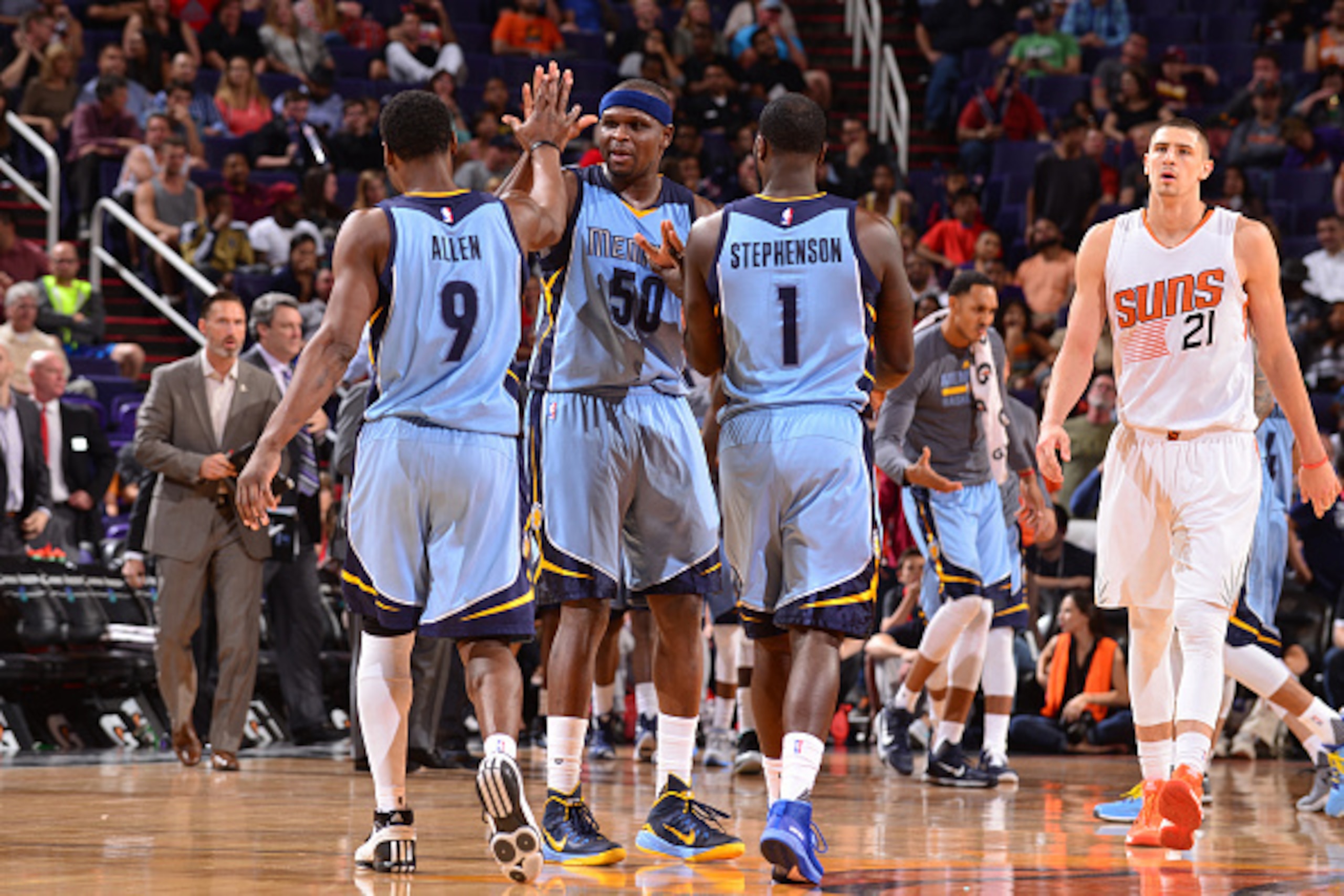
Ideal Lineup: T. Allen, M. Barnes, J. Farmar, Z. Randolph, L. Stephenson
Offensive Rating: 134.9
Defensive Rating: 78.7
Forget everything you know about the importance of sample sizes. The Memphis Grizzlies do not have the luxury of configuring lineups and rotation patterns with pre-existing knowledge.
Marc Gasol has already been ruled out for the rest of the year, and Mike Conley isn't far behind, per the Commercial Appeal's Ronald Tillery. There is no feasible scenario, regardless of their first-round opponent, in which these short-handed Grizzlies win a playoff series. They can only hope to surprise some people and grind out a couple of unexpected victories.
Lining up Tony Allen, Matt Barnes, Jordan Farmar, Zach Randolph and Lance Stephenson is Memphis' best shot at doing much of anything. They have appeared in just two games together this season, but the goal is to create as many mismatches as possible.
Randolph has more touch than traditional centers, and Barnes remains quicker than most power forwards. Allen's superb ball denial should make it so he doesn't miss a beat when guarding small forwards, and Stephenson can trade off running the offense with Farmar.
Ideal? Not at all. But the Grizzlies are, at this point, looking for the lesser of many evils, and this five-man throng could end up being an offensive plus when pitted against dual-big lineups.
Miami Heat
12 of 17
Ideal Lineup: L. Deng, G. Dragic, J. Johnson, D. Wade, H. Whiteside
Minutes Played: 39
Offensive Rating: 125.2
Defensive Rating: 97.6
Since head coach Erik Spoelstra moved Hassan Whiteside to the bench indefinitely, the Miami Heat have been firing on all cylinders. They rank inside the top 10 of offensive and defensive efficiency, and the addition of Joe Johnson after the trade deadline enabled them to field stretchy lineups that are matchup headaches on both sides of the court.
Leaving Whiteside to play starter's minutes off the bench would seem to be a well-reasoned approach. But the playoffs are a different animal, and the Heat don't get enough defense from billings that include Amar'e Stoudemire—especially if he's paired with Gerald Green or Josh Richardson in the absence of Dwyane Wade.
Inserting Whiteside into the Heat's new-look starting five is a more tantalizing option. And it seems Spoelstra may come to realize as much, if he hasn't already. As Ira Winderman wrote for the South Florida Sun Sentinel:
"I agree, and it was noticeable that the Heat's only early energy came when Hassan Whiteside entered. If you'll recall, Erik Spoelstra maintained early in the process while starting Amar'e Stoudemire that the plan was to eventually get Whiteside back with the starters. Actually, that's why I think a second part of Saturday's equation also was significant, the decision to play Josh McRoberts. If McRoberts can inspire enough confidence, then it could be Whiteside as a starter and McRoberts as the secondary big man, with Stoudemire shuffled to a lesser role in the rotation. The effectiveness of McRoberts, or lack thereof, could eventually dictate whether Whiteside again starts.
"
Even if McRoberts doesn't prove to be a legitimate second-unit headliner, the two-way dominance Luol Deng, Goran Dragic, Johnson, Wade and Whiteside display is too much of a potential playoff boon to ignore. They have yet to log an entire game's worth of minutes together but still own the fourth-best plus-minus of any lineup Miami has thus far fielded.
Oklahoma City Thunder
13 of 17
Ideal Lineup: S. Adams, K. Durant, S. Ibaka, A. Roberson, R. Westbrook
Minutes Played: 787
Offensive Rating: 112.9
Defensive Rating: 96.2
Consider the Oklahoma City Thunder an extension of the Clippers. They have four players in Steven Adams, Kevin Durant, Serge Ibaka and Russell Westbrook who absolutely need to start.
Enes Kanter truthers needn't make the argument that Adams should sit in favor of the Turkish tower. Oklahoma City gets torched defensively whenever he plays with Ibaka, relinquishing 109.1 points per 100 possessions, which would rank as one of the two worst marks in the league.
Shooting guard is the Thunder's only question mark, and they can answer it with Anthony Morrow, Andre Roberson or Dion Waiters. Not one of those options poses two-way upside, and Roberson, the most frequently used 2, can be especially harmful on offense.
"He's the type of defender that can change the game for the Thunder because he's just so good at playing on the ball and helping off the ball," Zach Harper wrote of Roberson for CBS Sports. "However, his jumper is completely broken. Synergy Sports has him shooting 30.1 percent on jump shots and 31.8 percent on unguarded catch-and-shoot shots."
And yet, the Thunder are rattling off points like the Association's best offense when Roberson plays with Adams, Durant, Ibaka and Westbrook. He becomes an average shooter from distance when catching passes from Durant, and his hounding perimeter defense helps Oklahoma City run five-out combinations that replace Adams with Morrow or Waiters.
There really isn't a wrong move for the Thunder. Adams, Durant, Ibaka and Westbrook can prop up just about anyone. But Roberson remains the fifth wheel most conducive to a deep playoff push.
Portland Trail Blazers
14 of 17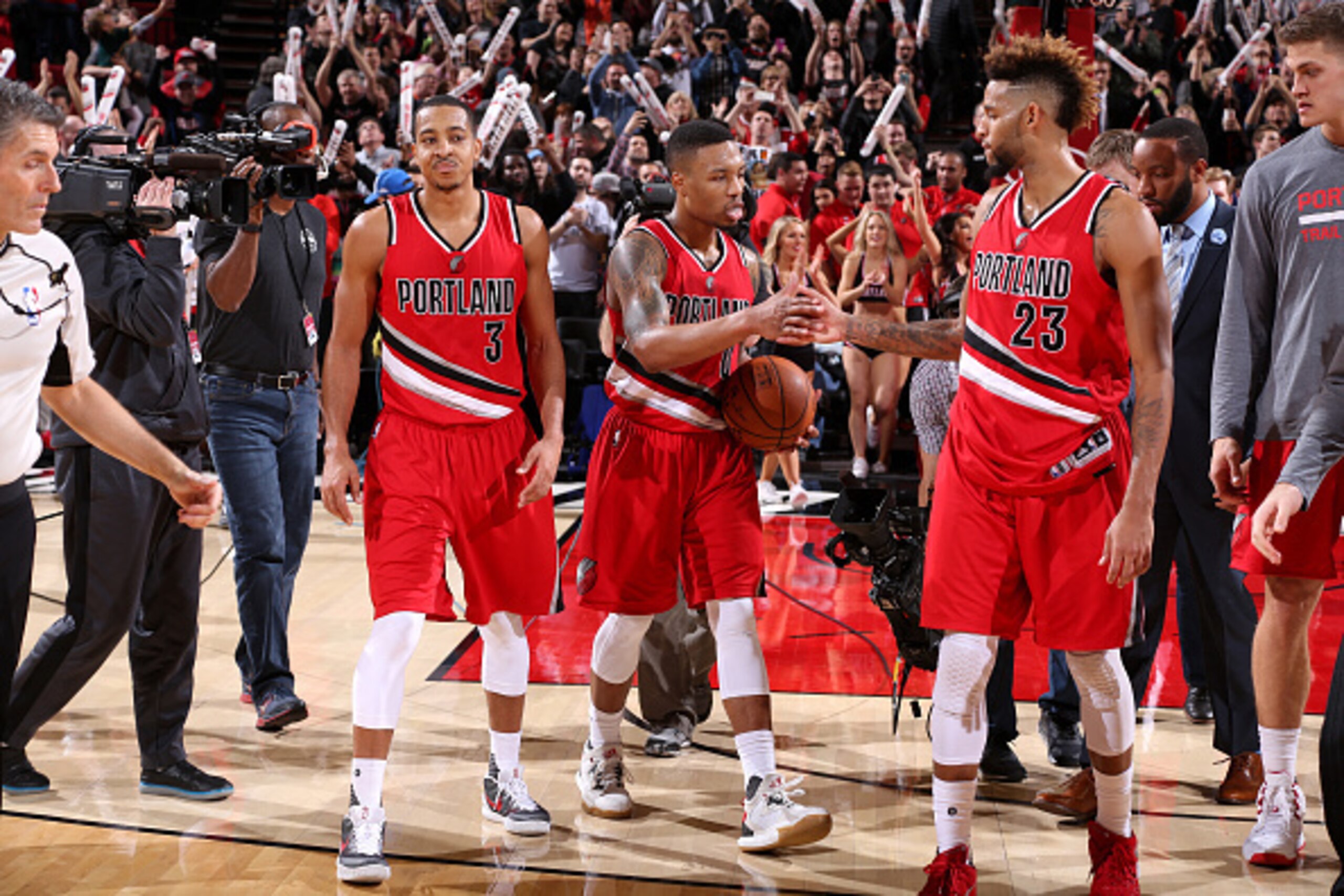
Ideal Lineup: A. Aminu, A. Crabbe, D. Lillard, C. McCollum, M. Plumlee
Minutes Played: 126
Offensive Rating: 108.0
Defensive Rating: 103.1
Al-Farouq Aminu is the Portland Trail Blazers' best, and only, stretch 4 option. Meyers Leonard couldn't get going before a shoulder injury cost him the rest of this season, and Noah Vonleh isn't yet ready to chuck three-pointers in volume.
Slide Aminu alongside Allen Crabbe, Damian Lillard, C.J. McCollum and Mason Plumlee, and the Blazers become an offensive dream. Plumlee is a better pick-and-roll finisher when he isn't dodging the inside presences of Ed Davis, Leonard or Vonleh. And Crabbe, Lillard and McCollum all shoot better than 40 percent on catch-and-shoot triples—a huge boost considering how many drive-and-kicks this group runs.
Any defensive concerns are minimized by Aminu and Plumlee. Aminu has the size at 6'9" to stand ground against pretty much any power forward, and opponents are shooting 6.4 percentage points below their season average when challenging Plumlee within six feet of the bucket. They make for a nice inside-out punch.
In the interest of full disclosure, this lineup's net rating jumps to a plus-25.8 per 100 possessions when using Davis instead of Plumlee. But Davis has played under 40 minutes next to his four other teammates, and the Blazers need him to chase around 4s ands 5s as a member of the second unit.
Rolling with Aminu, Crabbe, Lillard, McCollum and Plumlee, who have started exactly zero games together, makes Portland a tougher first-round out than it already is.
San Antonio Spurs
15 of 17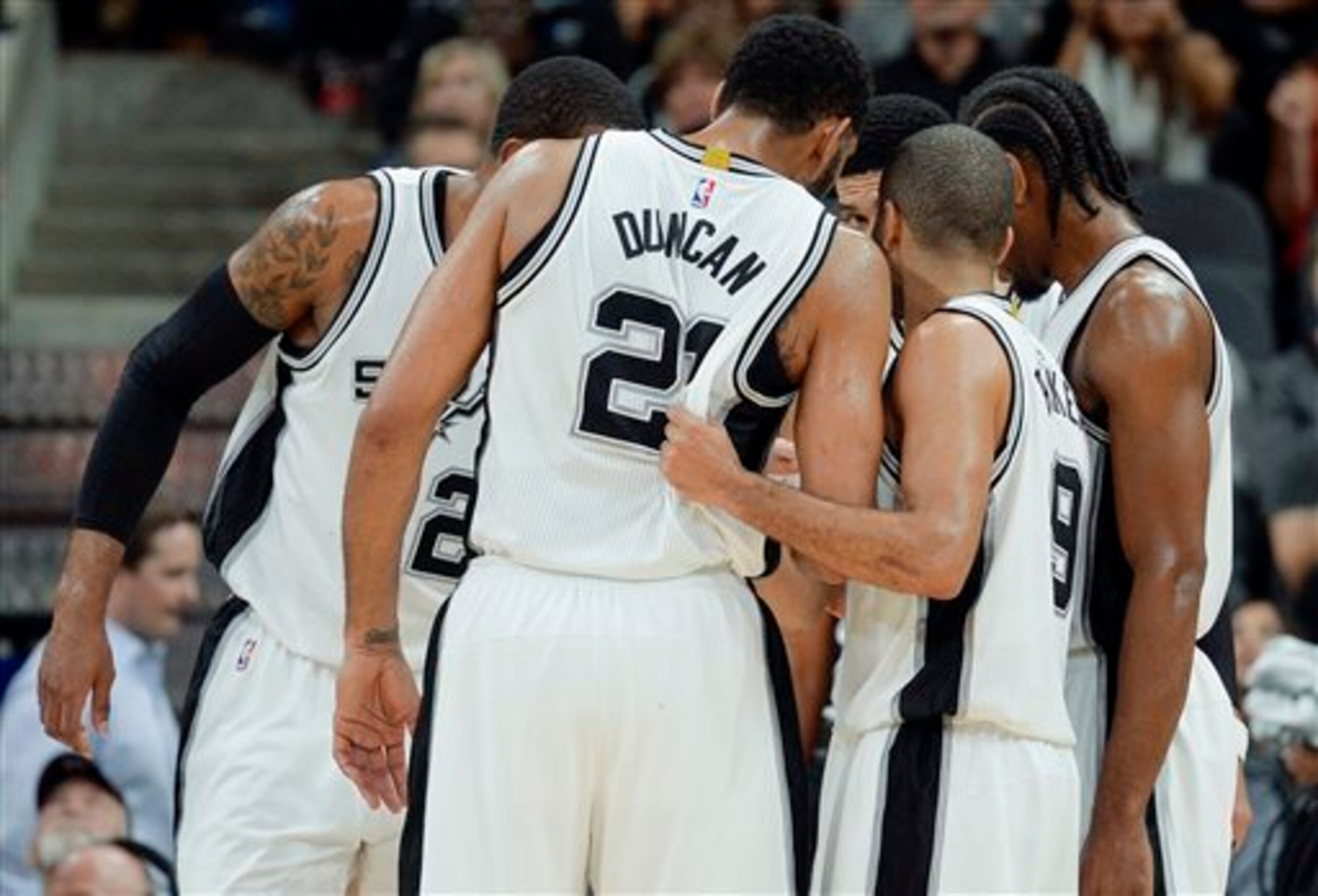
Ideal Lineup: L. Aldridge, T. Duncan, D. Green, K. Leonard, T. Parker
Minutes Played: 675
Offensive Rating: 104.8
Defensive Rating: 95.3
How does that age-old adage go?
Oh, right: If the Spurs have deemed a starting lineup fit for daily duty, don't you ever try to fix it or improve it or make it more appealing in any way. You'll fail.
LaMarcus Aldridge, Tim Duncan, Danny Green, Kawhi Leonard and Tony Parker are outgunning opponents by 9.5 points per 100 possessions when in the game. That number isn't as provocative as some of the others on this list, but it comes within a huge sample.
Five other units have logged as much playing time as San Antonio's usual starting lineup. And of the 10 total formations to see at least 500 minutes of action, only Golden State's and Oklahoma City's amalgams post a better net rating.
Head honcho Gregg Popovich may opt to tinker with this lineup if the Spurs meet the size-slighting Warriors in the Western Conference Finals. But there is no other reason to mess with this compound.
Every player has a purpose, right down to Green, who is shooting under 38 percent from the field but has a better defensive box plus-minus than Leonard.
Toronto Raptors
16 of 17
Ideal Lineup: D. Carroll, D. DeRozan, K. Lowry, T. Ross, J. Valanciunas
Offensive Rating: 116.1
Defensive Rating: 124.0
Pay no attention to the numbers on this one. This is absolutely the lineup the Toronto Raptors need.
DeMarre Carroll hasn't played since Jan. 3 after undergoing arthroscopic surgery on his right knee. But he is nearing a return, for real this time, according to the Toronto Sun's Mike Ganter.
Nothing can be gleaned from Carroll's initial stay with DeMar DeRozan, Kyle Lowry, Terrence Ross and Jonas Valanciunas. They saw just seven minutes together, and Carroll wasn't healthy at the time.
Putting Carroll at the 4 is a no-brainer for Toronto if provided the opportunity. He is, at his peak, a more lethal shooter than Patrick Patterson or Luis Scola, and the emergence of Norman Powell gives the Raptors some flexibility on the wing. So saving Carroll for small forward burn isn't a necessity.
If head coach Dwane Casey was willing to bring Valanciunas off the bench, there are even more options at Toronto's disposal. Moving him and Ross to the bench for Bismack Biyombo and Cory Joseph or Patterson makes the Raptors impossible to defend.
But again, we're dealing with negligible sample sizes. Valanciunas isn't someone Casey can bench on a whim, and Joseph gets to see ample time alongside DeRozan and Lowry as a spark plug off the bench.
Health permitting, this is the Raptors' ideal starting five. It's the one they were supposed to have all season. It is instead a mystery, but knowing Toronto's most used lineup overall is at minus-5.7 points per 100 possessions, that mystery is all part of the intrigue.
Utah Jazz
17 of 17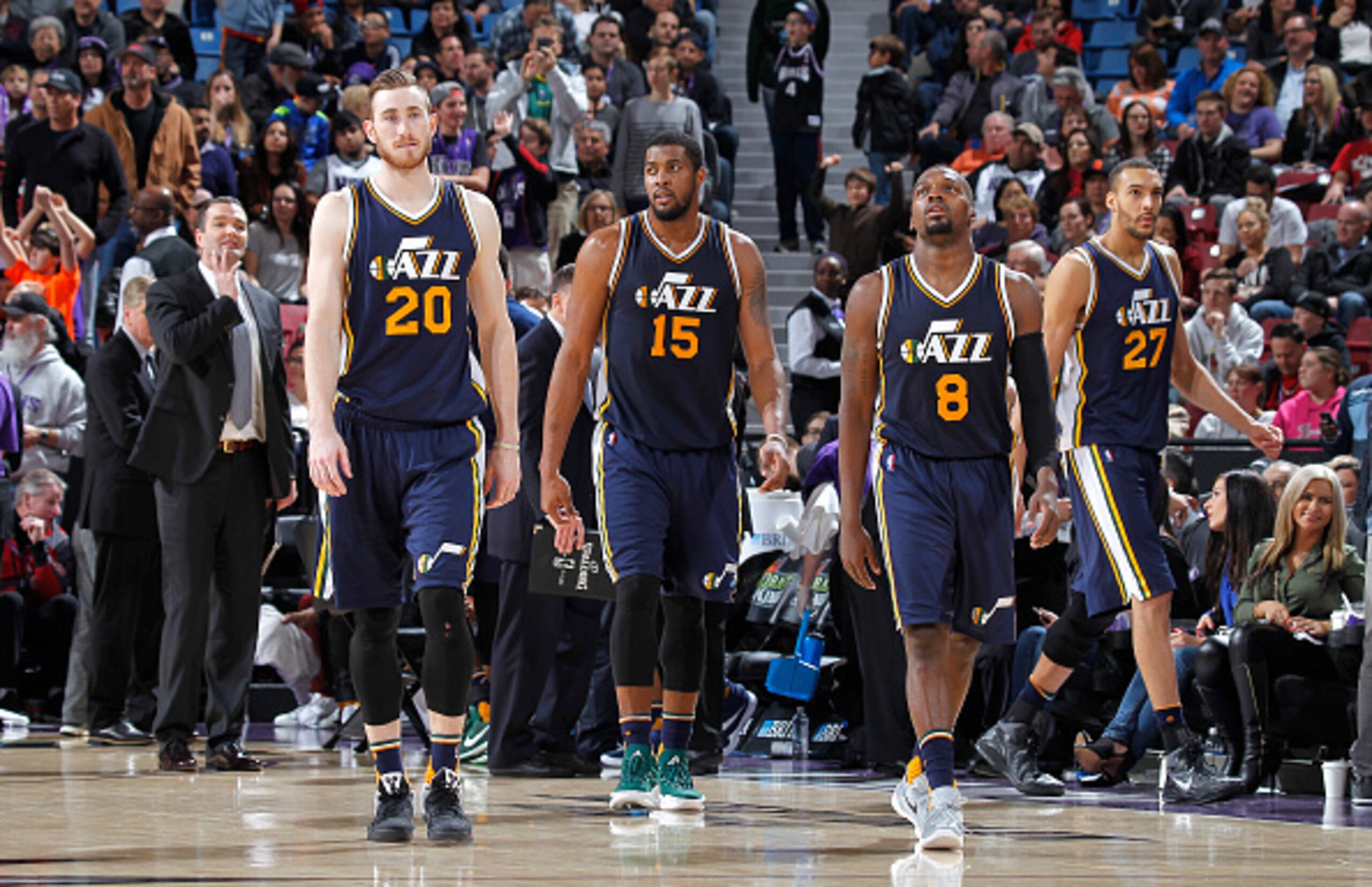
Ideal Lineup: D. Favors, R. Gobert, G. Hayward, R. Hood, S. Mack
Minutes Played: 247
Offensive Rating: 110.2
Defensive Rating: 98.5
Selecting the Utah Jazz's ideal postseason starting lineup was going to be an exercise in difficulty.
Then Shelvin Mack came along.
"The acquisition of Mack wasn't a splashy one, but it was the kind of savvy move that could mean the difference between a playoff berth and the lottery," SB Nation's Jason Patt explained. "He's provided not only a steady hand running the team, but also career-best production that's helped lift the Jazz offense to another level with him on the floor."
Alec Burks is expected to return from a fractured ankle soon, according to the Salt Lake Tribune's Aaron Falk and Tony Jones, which could cut into Mack's spin. But Trey Burke and Raul Neto are more likely to feel the impact. Mack as been that good.
Utah's lineup of Derrick Favors, Rudy Gobert, Gordon Hayward, Rodney Hood and Mack, though just 9-10 through its first 19 starts, performs like a top-two offense and defense. Mack directs the Jazz's points-piling machine without eating too much into Hayward's and Hood's touches, and his suspect defense hasn't thrown a wrench in Utah's stinginess.
Since Mack's arrival, in fact, the Jazz rank third in points allowed per 100 possessions. That their starting five maintains similar defensive integrity with Mack steering the ship is huge. He owns the team's highest offensive rating among rotation staples and adds balance to a Utah squad that must be clicking on all fronts to put up a fight worthy of its first-round opponent—that opponent being the Spurs or Warriors.
Stats courtesy of Basketball-Reference.com and NBA.com and accurate leading into games on April 6, unless otherwise noted.
Dan Favale covers the NBA for Bleacher Report. Follow him on Twitter @danfavale.




.jpg?w=2560 "Latest Peyton-Colts Rumors")


.jpg?w=2560 "Landing Spots for Trade Candidates 📍")
.jpg?w=2560 "Ugly Jets Scoring Stat 😳")