

Playing Keep or Cut with Oklahoma City Thunder's Free Agents
Keep or cut? If only it were that simple for NBA general managers.
The Oklahoma City Thunder have just two of their own free agents to deal with this offseason, but GM Sam Presti has to forecast all the possible ramifications and make a string of complex decisions before he decides whether or not to re-sign Enes Kanter and/or Kyle Singler.
First and foremost, it’s about the bottom line.
TOP NEWS

J-Dub, Wallace May Miss Entire Season
Melo's Quote on Confidence 😎
Celtics at Fault for JT-JB Beef? 🤔
How much is too much for Kanter and Singler? In an interview with Darnell Mayberry of the Oklahoman, Presti expressed interest in bringing both players back—a logical desire, since each would bring useful skill sets to this OKC roster. But nobody is quite sure what to expect from the free-agency market in the next few offseasons.
With the salary cap ballooning thanks to the league’s new TV deal, it’s in a team’s best interest to lock up players to long-term deals now. Even if you overpay for Kanter this season, the rocketing salary cap will make the contract look palatable (or even cheap) in a few seasons.
We saw this in a limited fashion last summer. The Utah Jazz, for example, signed Alec Burks to a sizable contract extension that looked foolish in the context of the current cap but made sense considering the changing financial landscape.
On the contrary, it’s in the players’ best interests to sign short-team deals and re-enter free agency with the chance to make more money. The risk of injury dampens that temptation to some extent, but we’ll probably see a few of this summer’s free agents signing one- or two-year deals to jump back into the fray and score a payday sooner rather than later.
Those are just the broad issues every GM will have to consider in free agency this summer, so let’s dive into the specific questions surrounding Kanter and Singler.
Enes Kanter
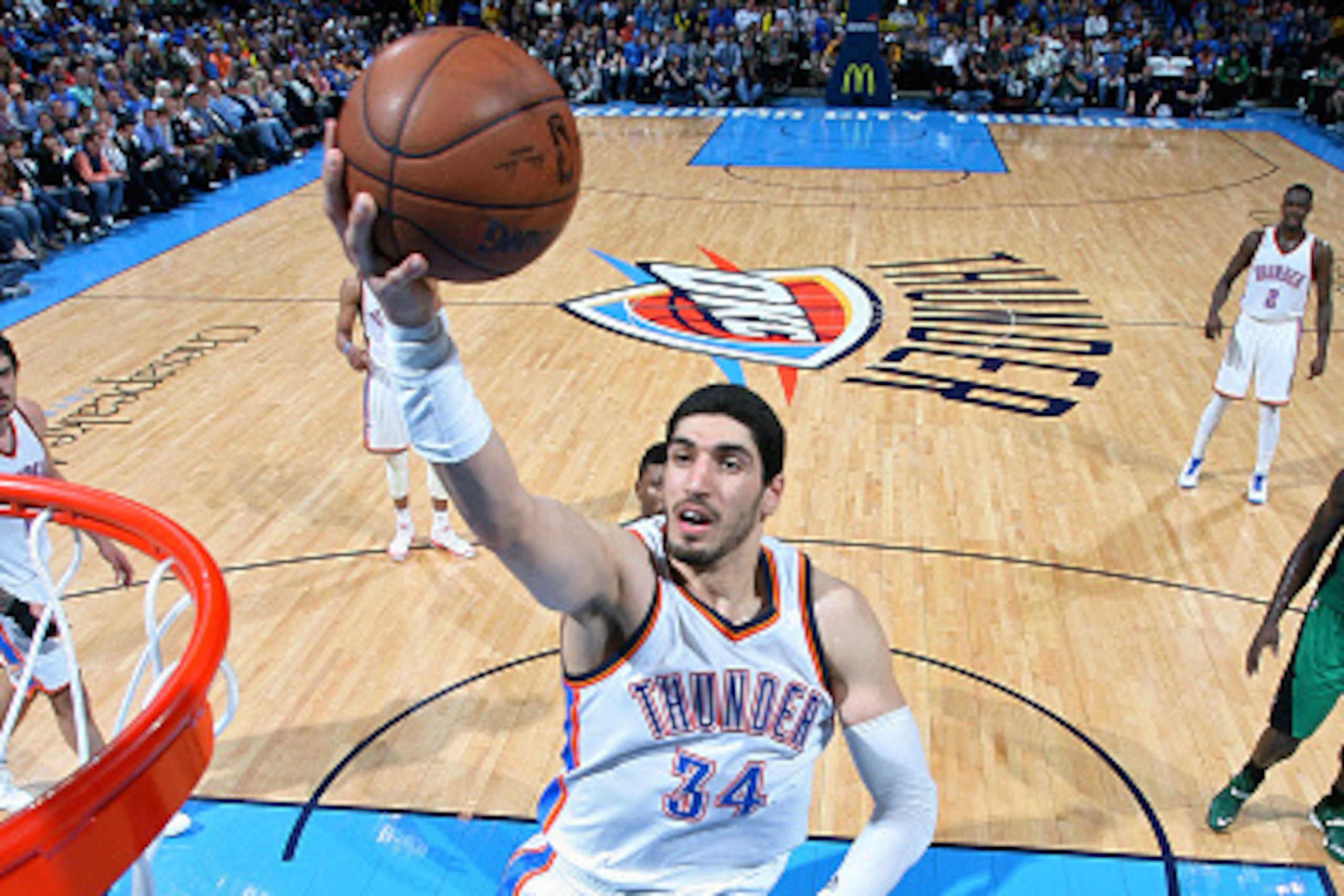
The first question regarding Kanter’s free agency is for the Thunder owner: Do you want to pay the luxury tax?
The team paid the tax for the first time in franchise history last season, and there’s no realistic way to re-sign Kanter and avoid paying it again (he’d have to take a massive pay cut and sign a deal worth around $3 million per year).
If Clay Bennett and Co. don’t want to pay the tax, Kanter is not coming back to OKC. That seems unlikely, since Presti presumably wouldn’t have made the trade if that were the case.
Writing that luxury tax check in two consecutive years may seem like a daunting proposition because of the menacing repeater tax, but Daniel Leroux of RealGM does a fantastic job of explaining why the repeat offender rate is somewhat overblown:
"While the new CBA established a heavily punitive repeater rate, it also made getting there incredibly difficult. After the current season, the only way for the repeater rate to come into play is if a team paid the luxury tax in three of the four previous seasons. That may sound more likely but remember that we are talking about “previous seasons” and not the current one since a team presently under the luxury tax line will not pay anything on it even if their prior history was living over the tax line every season. That means that a franchise must actually pay the tax four out of five years with the under year not being the current one.
"
With the growing cap, OKC will have the flexibility to get below the luxury tax threshold in either 2016-17 or 2017-18 and evade the repeater tax in the process. As a result, the tax will probably not be a significant factor in the Kanter decision.
Then it all comes down to how much the young center is worth to the Thunder. Offensively, it’s a no-brainer to re-sign him. He gives OKC the big-man scoring threat it's never had—a notion illustrated by this stat from NBA Bulletin:
Kanter finished the season with 11 of those 20-point, 10-rebound performances in just 26 games with the Thunder. His reputation as a low-post scorer is a tad overstated, but he’s still the best option (by far) OKC has in that regard, and dumping the ball to him on the block is a solid Plan B if the offense bogs down at times.
He’s better as a pick-and-roll man and developed some excellent chemistry with Russell Westbrook as his partner in crime (for more on that, check out this fantastic breakdown of the combination by Kevin Yeung of SB Nation).
He’s a good passer, an elite offensive rebounder (his five offensive boards per game in OKC ranked second to only Andre Drummond) and has the shooting range to become a pick-and-pop release valve for Westbrook or Kevin Durant if the lane is too congested. But all his offensive contributions may be negated by his defensive flaws.
He is too slow to corral ball-handlers and struggled to defend the pick-and-roll as a result. Teams started to single him out, choosing to make whomever he guarded the screener and abusing Kanter’s inability to wall off the paint. It didn’t get any better at the rim, either, which was one of reasons the Jazz were willing to part with the former No. 3 pick. Of the Thunder’s big men, Kanter was by far the worst rim defender:
| Serge Ibaka | 9.3 | 40.8% |
| Kendrick Perkins | 4.7 | 45.5% |
| Steven Adams | 6.7 | 48.8% |
| Nick Collison | 3.2 | 51.7% |
| Mitch McGary | 4.1 | 53.1% |
| Enes Kanter | 6.3 | 56.4% |
The thinking was that Serge Ibaka would be able to cover those shortcomings, but that wasn’t the case. The duo played 238 minutes together, and the result was a ghastly defensive rating of 109.2, according to NBA.com. For comparison’s sake, that would tie the Sacramento Kings for the fourth-worst defense in the league.
There are a few caveats with that statistic. It came from a very small sample size spanning only nine games. Furthermore, as a midseason addition, Kanter didn’t have the benefit of a training camp or practice time to really get to grips with OKC’s defensive scheme and his teammates.
With an offseason to practice and more reps working alongside Ibaka and Steven Adams, Kanter would surely improve on that end, but by how much? He’s solid as a one-on-one post defender with the strength to hold off opposing big men, but he completely falls apart in a team concept.
He doesn’t have the mobility to be an excellent pick-and-roll defender, but he has the physical tools to at least be an average NBA stopper if he’s focused and more energetic on that end. That’s all the Thunder really need to make it worth their while to re-sign him.
Kanter is just 23 years old, and he didn’t even get to practice at Kentucky after being ruled ineligible by the NCAA, so he still has time to learn the nuances of defense and how to become a better team defender.
Those concerns are glaring, but the reality is that there aren’t a whole lot of big men with his combination of size and skill—especially at the age of 23. Another factor to consider is that OKC will not be able to replace him with anything close to equal value if it lets him walk.
The Thunder would re-sign him with the benefit of his Bird rights, meaning they can exceed the cap to keep him. They cannot do this for other free-agent centers. The team is already over next year’s projected cap right now, so it can only use the taxpayer mid-level exception (approximately $3.3 million) to sign another center.
If OKC can re-sign him to a deal in the neighborhood of $10-14 million in Year 1, it’s a gamble worth taking. Such a contract would still leave around $8-12 million in cap space (if they waive Anthony Morrow’s non-guaranteed deal) next summer after Durant’s maximum contract—enough to potentially sign an impact wing player.
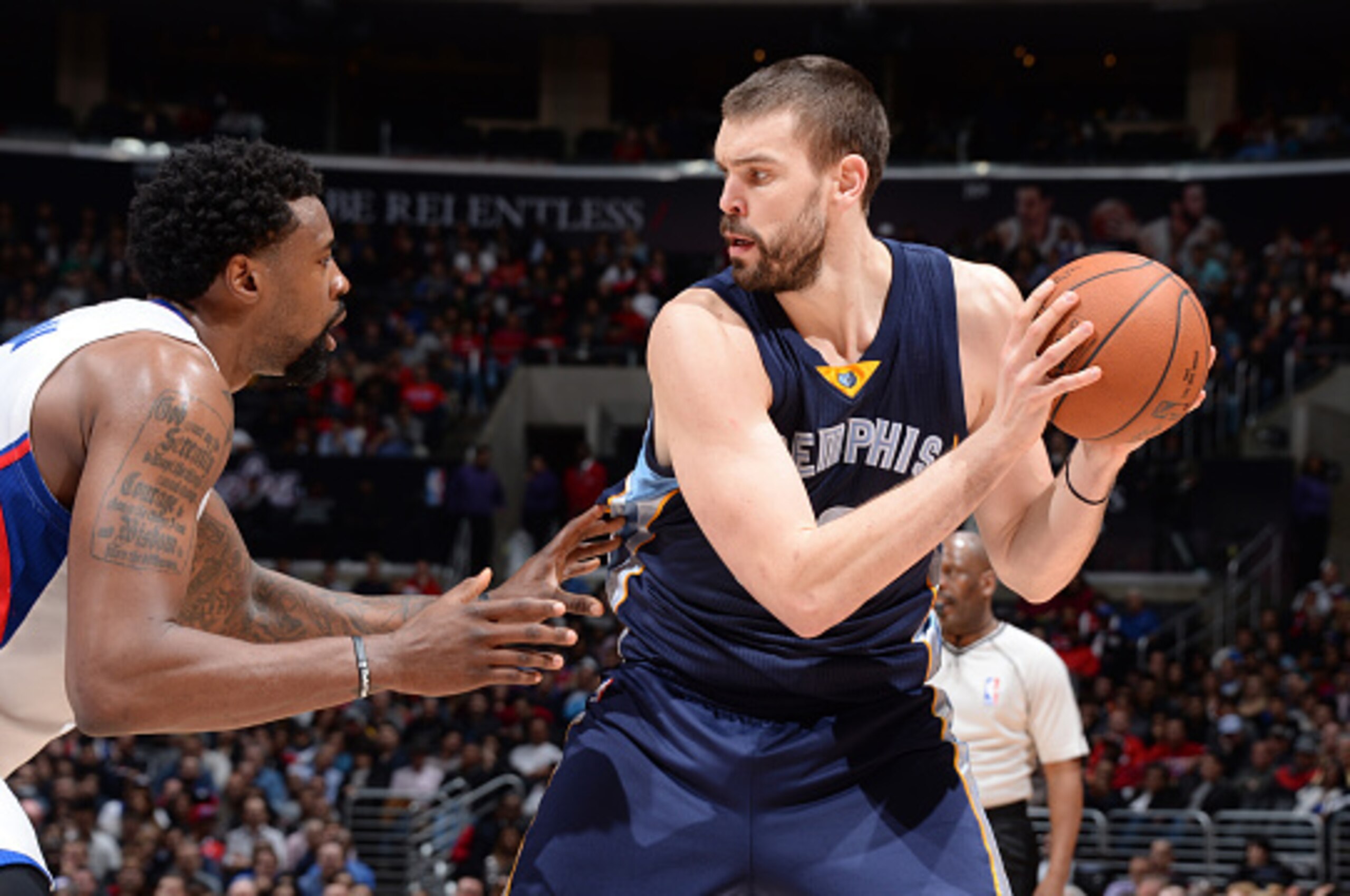
Of course, the Thunder are in an enviable position since Kanter is a restricted free agent. OKC can try to negotiate a team-friendly deal but be content to let the market dictate his value. There are a number of centers hitting the market this offseason (e.g. Marc Gasol, Tyson Chandler, DeAndre Jordan, Omer Asik, Robin Lopez) and a few others who can opt out (e.g. Brook Lopez, Roy Hibbert, Al Jefferson).
Kanter is the youngest of that group, but most of the teams with cap space and a need at center will probably be looking for rim protection (e.g. Boston Celtics, Dallas Mavericks, Los Angeles Lakers, Orlando Magic). The sheer number of starting-caliber centers could hurt Kanter's chance of landing a massive contract.
Even if a team signs Kanter to an offer sheet starting at $15 million per year, the Thunder are in a position to walk away. Adams is a starting-caliber center, and not having Kanter on the books will leave them room to sign a max-level player in 2016 in addition to Durant.
Kyle Singler
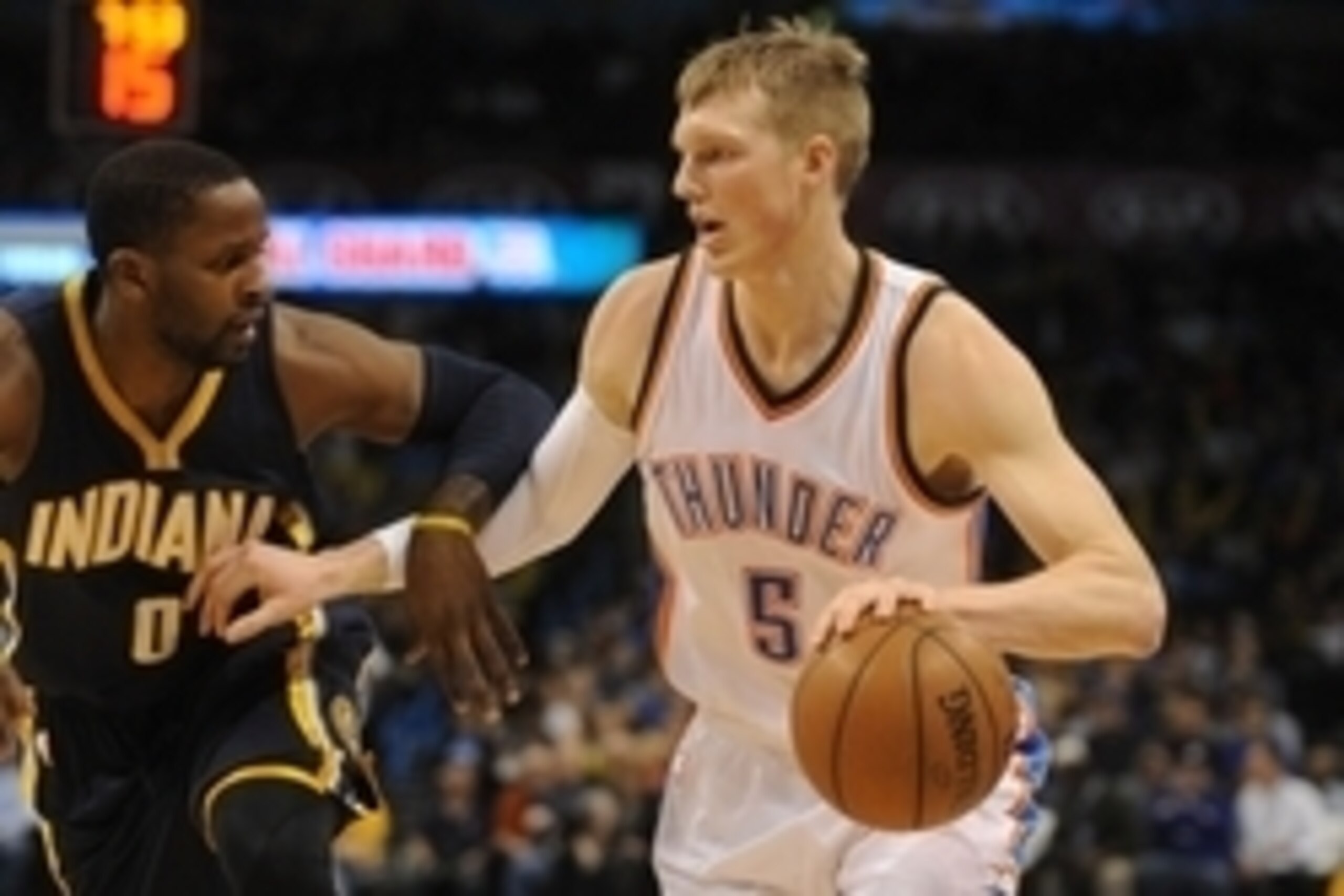
The Kyle Singler decision is much simpler for OKC. A backup SF is necessary, but re-signing Singler is a matter of roster space and how all the dominoes fall. Right now, the Thunder have 13 players under contract for next season. There are a number of potential roster moves to be made, but the team won’t be able to make all of them:
- Re-sign Enes Kanter
- Re-sign Kyle Singler
- Draft someone with the 14th pick
- Promote Josh Huestis from the D-League
Something has to give. For OKC to do all of those things, it'll have to trade away (or release) two players (Steve Novak and Perry Jones seem like the prime candidates).
If that happens, then the Singler decision is just a matter of who provides the most value to OKC as Durant’s backup. We haven’t seen Huestis yet, and it’s risky to bet on such an unproven player to be the primary relief.
Maybe the team can lure a proven veteran like Mike Dunleavy Jr. with the mid-level exception. Or maybe Singler is the best option available, since he’s unlikely to cost more than $3 million per year and already has some familiarity with his teammates.
Singler struggled after relocating to OKC, but his larger body of NBA production suggests he could be the best option as the reserve 3. The former Duke star has adjusted well to life as a role player, shooting 38 percent from downtown over his three seasons in the league. He's more than just a floor-spacer, however. Teammate D.J. Augustin talked to Darnell Mayberry of the Oklahoman about Singler, explaining why he struggled initially and how he got his groove back:
"It’s hard to find a rhythm. As basketball players, when you’re out there, a lot of people don’t know if you don’t have a rhythm you’re not going to look good or play good. And I think for him he was just trying to find a rhythm and eventually he found it I think through playing defense. That kind of fired him up. He’s a great defender. He kind of does all the little things, kind of like a glue guy. And he can score. If you give him the opportunity, I think Kyle can score a lot. And I think next year he’ll bring that.
"
Singler may have the ability to score a lot, but that's not what makes him valuable to OKC. The "glue guy" part of Augustin's statement is his best trait. He can defend, he moves the ball and he's generally a very smart basketball player. In addition, his shot started to fall toward the end of the season. He connected on 47 percent of his threes in a string of eight consecutive starts, finally arriving as the player Presti traded for.
Whether or not Singler returns to OKC will be determined by the events listed above and the backup SF free agents willing to sign for the taxpayer mid-level exception. If all else fails, however, he's a very good backup plan that should come cheap and maintain continuity.
Unless otherwise noted, all statistics are courtesy of NBA.com and Basketball-Reference.com, and all salary information is from Spotrac.
To argue about this article or hoops in general, follow me on Twitter: @Kawhiser_Soze

.jpg?w=2560 "Chiefs, Steelers Eye WR Trades")





.jpg?w=2560 "Raiders Sticking with Cousins")