Tristan Thompson or Iman Shumpert: Who Is More Critical Fill-in for Cavaliers?

Tristan Thompson and Iman Shumpert have been the Cleveland Cavaliers' most valuable reserves all season.
Now, with Kevin Love (surgery) and J.R. Smith (two-game suspension) sidelined, their importance is magnified even more against the Chicago Bulls in the second round.
Thompson, a 6'9" rebounding machine, is Cleveland's best big man off the bench. He plays his role perfectly by setting hard screens, being active on defense and providing plenty of extra chances with his offensive rebounding.



Shumpert is the Cavaliers' premier perimeter defender. He can knock down the step-back jumper, guard three different positions and never take a play off.
While they've had the luxury of playing against second units for the past three months, one, or both, may now have to take on a starting role.
We know both are crucial if Cleveland still expects to win a championship this season, but which is more valuable to the suddenly short-handed Cavs?
The Case for Shumpert
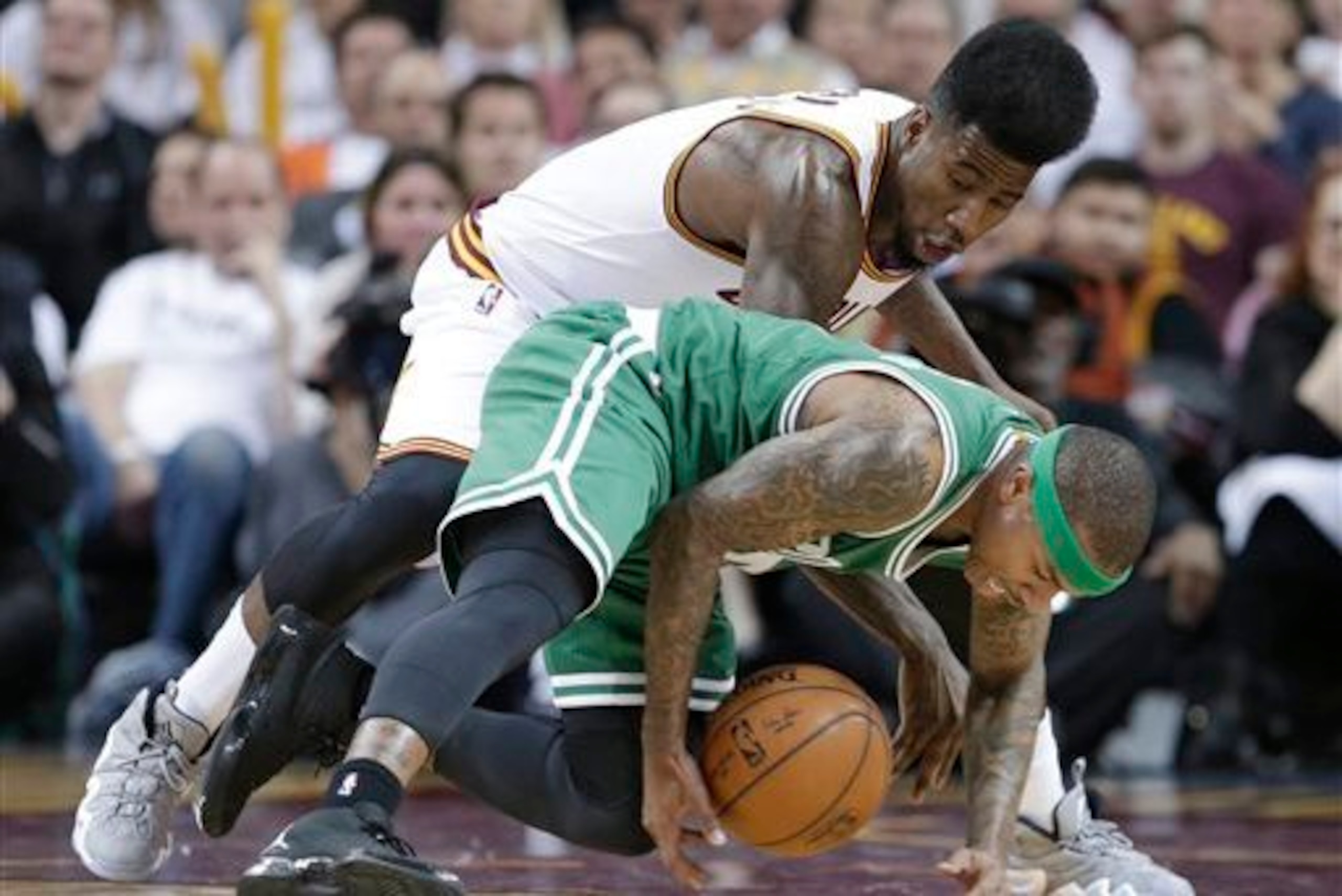
Regular-Season Stats: 7.2 points, 3.8 rebounds, 1.3 steals, 11.1 PER, .410/.338/.667 shooting
Playoff Stats: 7.0 points, 5.5 rebounds, 1.0 steals, 13.9 PER, .467/.250/1.000 shooting
Shumpert has become the Cavaliers' defensive stopper, something every playoff team needs.
This list includes players such as Tony Allen for the Memphis Grizzlies, Kawhi Leonard with the San Antonio Spurs and DeMarre Carroll of the Atlanta Hawks. They consistently guard the opponent's best wing, often sacrificing effort and energy that others save for the offensive end.
The role may not be glorious, but it is necessary for team success.
Luckily for the Cavaliers, Shumpert has embraced this title after being asked to both score and defend as a starter on the New York Knicks.
Against the Boston Celtics in the Cavs' first-round series, he was tasked with covering Isaiah Thomas, the Celtics' leading scorer and best offensive option. After Thomas averaged 22.0 points on 42.9 percent shooting in the first two contests, Shumpert shut him down, holding him to 13.0 points on 23.1 percent shooting over the final pair of games.
Thomas was a nice first test for Shumpert, although the latter faces far stiffer competition moving forward.
Now that the Bulls have advanced past the Milwaukee Bucks, it will be a pick-your-poison situation for Shumpert.
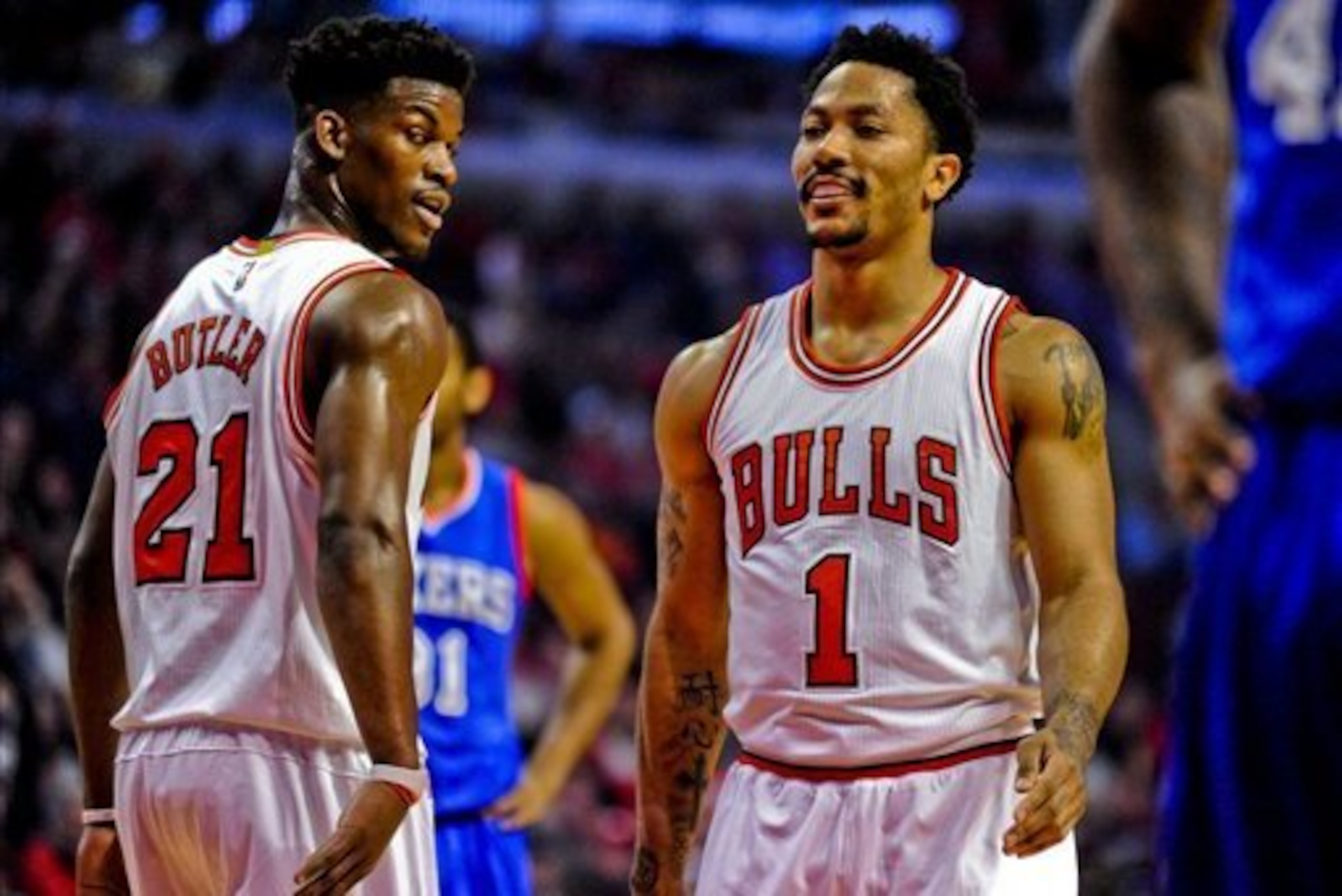
When healthy, the Bulls possess one of the NBA's best and most explosive backcourts. The combination of point guard Derrick Rose and shooting guard Jimmy Butler put up 43.8 points, 9.8 rebounds and 10.3 assists per game in the first round.
Guarding either won't be an easy task. With Smith out, the Cavaliers' best bet would be placing Shumpert on Rose and James against Butler, and letting Kyrie Irving chase Mike Dunleavy around the three-point line. When Rose needs a rest, Shumpert would likely slide down to Butler, giving James a break.
The Celtics had a steep drop-off from Thomas to their second-best offensive weapon. With Chicago, there's hardly a drop, if any. Shumpert could see well over 30 minutes a game, easily.
Should the Cavaliers advance, they'll face the winner of the Washington Wizards and Atlanta Hawks, where things likely won't get any easier. This means going up against either the backcourt combo of John Wall and Bradley Beal or Jeff Teague and Kyle Korver. That's a whole lot of speed and shooting to contend with, if Cleveland makes it that far.
Offensively, the Cavs need Shumpert to chip in a little more with Smith and Love out. Unfortunately, scoring isn't exactly his strong suit.
He's not the three-point gunner that Smith is, nor can he replicate Love's low-post touches. Shumpert does have his sweet spots, however.
For example, he's quick enough to get by the initial defender and into the 10-15 foot area. Shumpert then relies on a solid pull-up jumper, one in which he's 64.3 percent on this season.
If the Cavaliers choose to go small-ball and use James at power forward, Shumpert would be a good pick to take a spot in the starting five, especially during the second round's first two games.
The Case for Thompson
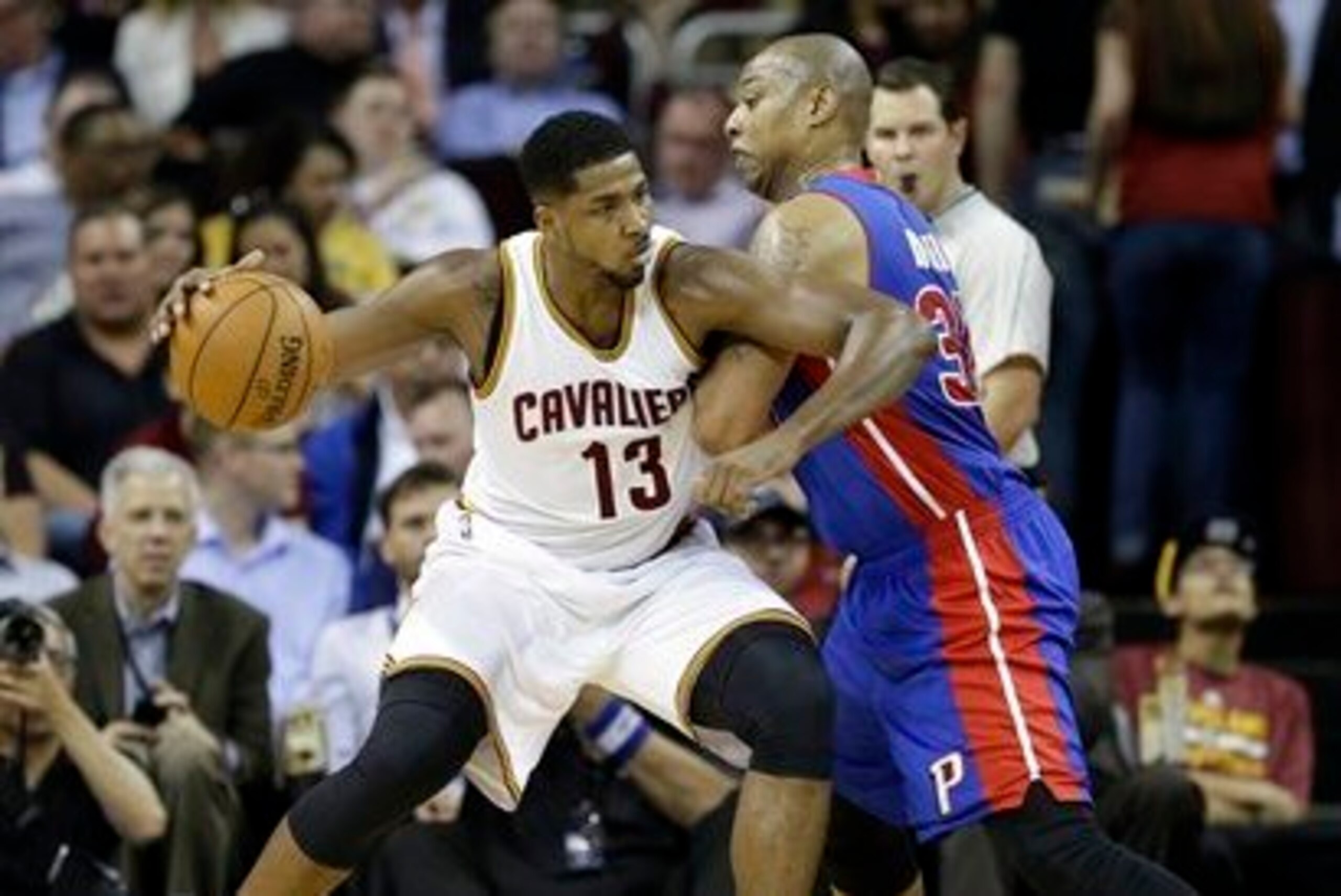
Regular-Season Stats: 8.5 points, 8.0 rebounds, 0.7 blocks, 15.6 PER, .547/N/A/.641 shooting
Playoff Stats: 7.3 points, 6.8 rebounds, 0.5 blocks, 17.1 PER, .643/N/A/.611 shooting
The only silver lining to Love's injury is that Thompson will see the court more often after enjoying a quietly superb season for the Cavaliers.
As Chris Haynes of the Northeast Ohio Media Group wrote, power forward is an area of strength thanks to Thompson.
"Thompson doesn't possess Love's offensive repertoire, but he's just as vicious on the boards. Most teams aren't fortunate to have two starting-quality power forwards. Of the Big 3, Love's position is the only spot where the team can make due without completely falling apart.
"
Haynes is right, but only partially. Thompson helps fill Love's rebounding void, but he certainly can't make up for his offensive prowess. The Cavs won't crumble with Thompson in for Love, but their spacing will suffer a bit.
This isn't meant as a slight to Thompson, however. He's fantastic in so many other areas that Cleveland won't need him to transform into a major offensive threat, but rather continue to help others that are.
His screening is among the best on the team, while his 3.8 offensive rebounds in the playoffs have given the Cavaliers valuable second looks. As hard as it is to stop James, Irving and company, doing it twice is nearly impossible.
James scores almost 10 more points (40.1 to 30.4) per 100 possessions when he shares the court with Thompson. His plus-minus rating (plus-11.9 to plus-9.8) and above the break three-point shooting (36.9 percent to 33.1) see a nice increase with Thompson as well.
Chicago features a plethora of talented big men to contend with.
From Pau Gasol and Joakim Noah to Taj Gibson and Nikola Mirotic, Thompson will certainly have his hands full.
The toughest individual matchup will come against Gasol, who had a phenomenal first season with the Bulls. The 34-year-old averaged a career-best 11.8 rebounds to go along with his 18.5 points and 1.9 blocks per game.
Again, if the Cavs advance to the Eastern Conference Finals, big men such as the Wizards' Nene and Marcin Gortat or the Hawks' Al Horford and Paul Millsap will be waiting. Even a Finals appearance could mean an assignment against Zach Randolph or Blake Griffin.
Shumpert could have an off night defensively and still get lucky if his opponent misses shots. Thompson doesn't have the luxury of a bad game or his matchup will devour him in the paint. As he told Haynes about his new expanded role on the Cavaliers:
"Everyone still has to do more and has to get adjusted to whether they're starting or coming off the bench. We got to be able to still do our roles. We got to be ready for whatever coach throws at you and you have to be productive.
"
Thompson was the Cavs' most consistent reserve throughout the season and would eventually finish fifth in Sixth Man of the Year voting.
Conclusion
We know Shumpert and Thompson play with great energy and defend at a high level. Given the quality of their opponents, starting with Chicago, they will be needed for 30-35 minutes of action a night.
The answer to which Cleveland needs more lies in the rest of the roster.
While no one can match Shumpert's defensive abilities, the Cavaliers do have a number of wing players who can help out. Shawn Marion can guard multiple positions, Mike Miller remains a threat from deep and Matthew Dellavedova started in 13 contests this season. Also worth noting: Smith will return after just two games while Love won't be back at all in the playoffs.
The Cavaliers' only alternative option to Thompson is Kendrick Perkins. While Perkins brings plenty of playoff experience and knowledge, he moves with the grace of a dump truck. Thompson's game is based on activity, something Perkins simply cannot provide. The rest of Cleveland's power forward dilemma will be a mixture of James, Marion and Jones.
When deciding which is more critical, the question becomes, who would be more difficult to replace?
The answer is clearly Thompson.
Greg Swartz has covered the Cleveland Cavaliers and NBA for Bleacher Report since 2010. All stats provided by Basketball-Reference.com unless otherwise noted.

.jpg?w=2560 "Raiders Could Start Mendoza")

.jpg?w=2560 "Rodgers Iced Out on Plane 💎")
.jpg?w=2560 "Packers Safety Slams Refs 🤬")
.jpg?w=2560 "🚨 Week 8 AP Top 25 Poll")