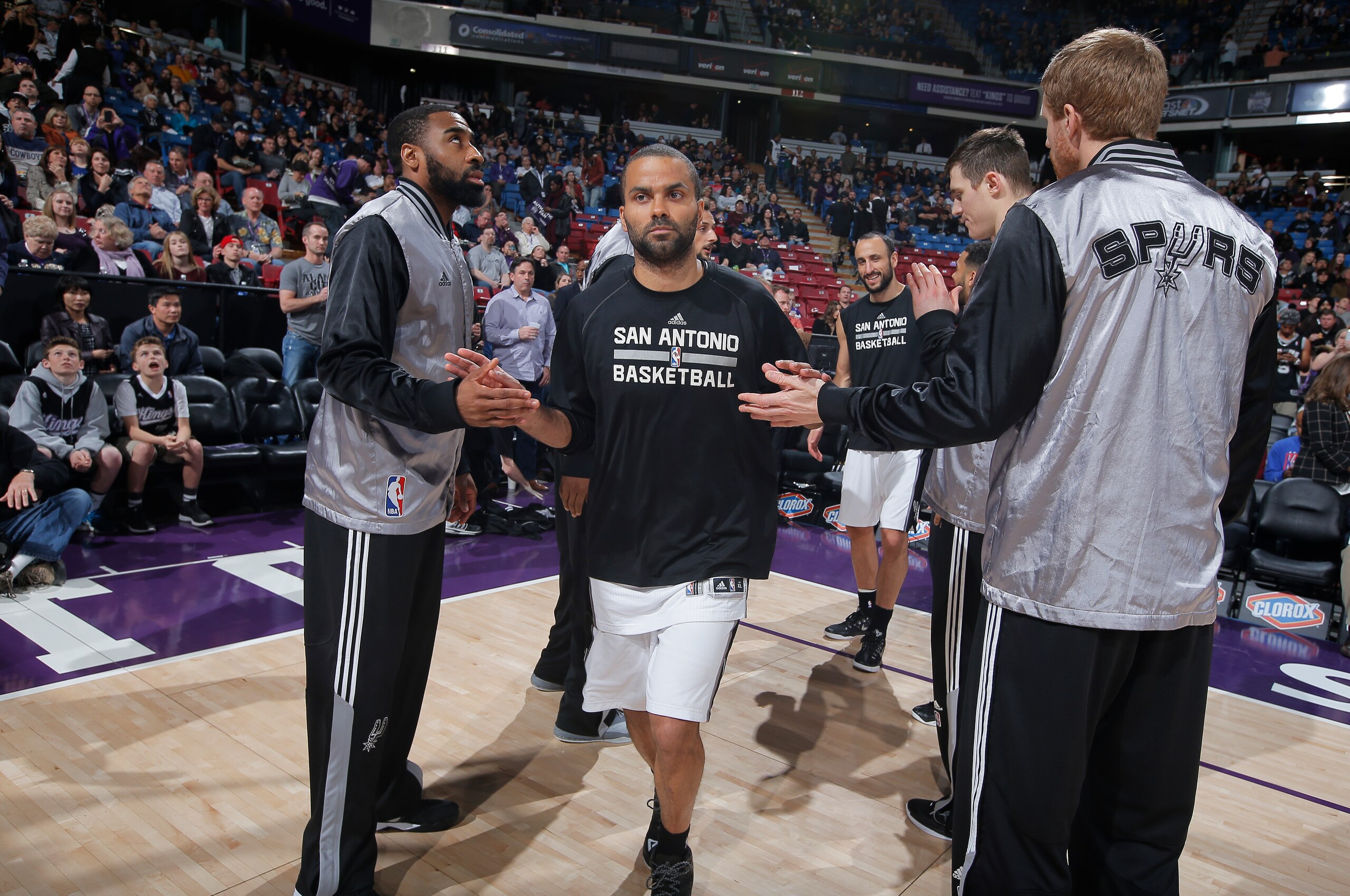

Ranking the Biggest Concerns Facing San Antonio Spurs Heading into 2015 Playoffs
Have the San Antonio Spurs finally emerged as top-tier title contenders or not?
That narrative has dominated the Spurs' post-All-Star-break campaign, with the sudden resurgence of Tony Parker prompting the entire team's return to greatness after a disappointing start to the 2014-15 season.
But with the playoffs looming, San Antonio's status as a contender is more ambiguous than it has been in years. Despite flashes of brilliance, the team has showcased a number of imperfections and flaws that darken the prospect of a second straight title run.
5. Age and Health
1 of 5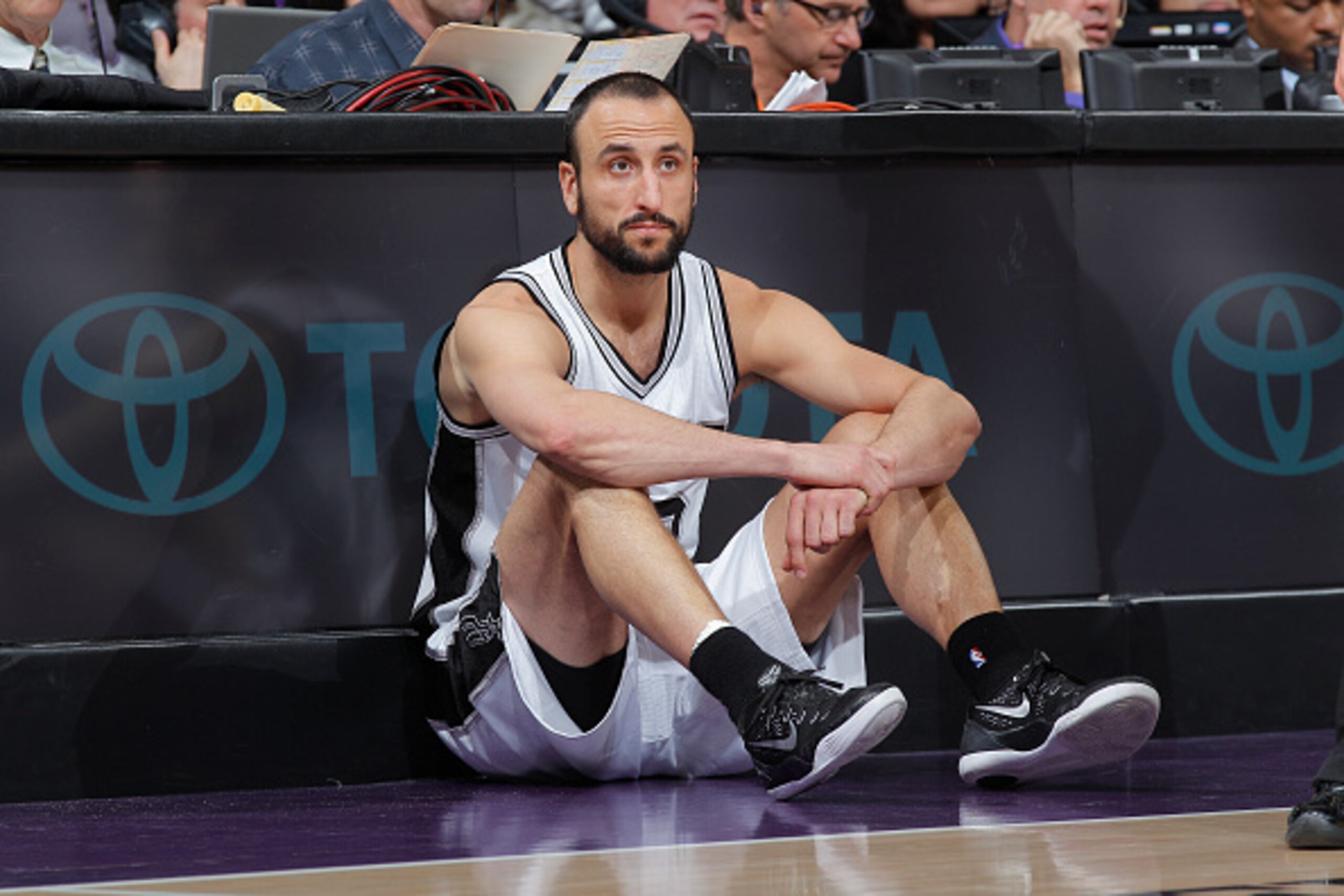
Are the Spurs too old to win a championship?
No; of course not. Their dominant playoff run last season proved that they're perfectly capable of winning a title as a veteran team.
Even so, I'd be remiss to not entertain the thought.
Tim Duncan remains a dominant force at times, playing at a level that belies his age. However, there have been moments this season when he's looked the part of a 38-year-old.
Offensively, he continues to be limited, having logged his first career NBA game without a made field goal. He's shooting the ball less from mid-range and expending a lot more energy down low, and with less rest than in years past—both due to his increased usage and the lack of rest games San Antonio has been privileged to have—the prospect of his tank running low in the playoffs is worrisome.
Manu Ginobili continues to be volatile and recently had an ankle scare. Tony Parker has been in a statistical decline for the past two seasons and has noticeably struggled since suffering a hamstring injury early in the season that continued to limit him even after he returned.
Younger pieces like Kawhi Leonard (hand) and Tiago Splitter (calf) haven't avoided the injury bug, either.
As a whole, the Spurs are set to enter the playoffs with less rest and more injury concerns than in prior campaigns. Throw in the the regular-season dominance of teams with younger stars and the overall increased competition of the league, and San Antonio faces a historically difficult path to the Finals.
That the veteran team is going to run out of energy is anything but a sure thing, but the idea warrants discussion this season more than ever before.
4. Depth
2 of 5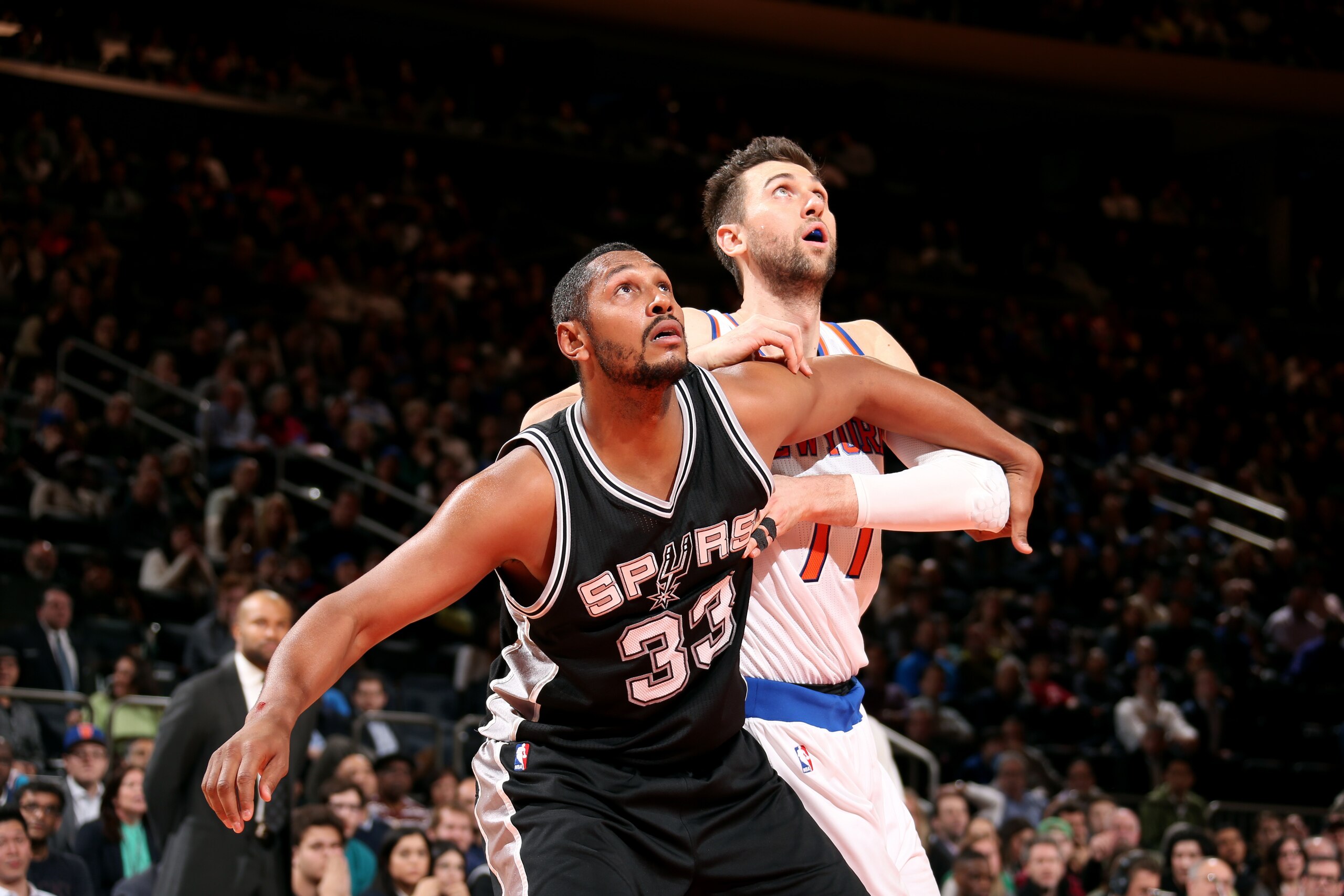
One of the Spurs' biggest advantages has consistently been their knee-deep bench. With Manu Ginobili headlining the group, the second unit has developed a reputation as one of the league's best.
In last year's postseason, both Patty Mills and Boris Diaw emerged as lethal options off the pine, while Marco Belinelli strengthened an already deep rotation.
However, the dominance of San Antonio's reserve corps has swayed this season, with an overreliance on Manu Ginobili's ball movement and regressions from Mills and Diaw taking away the Spurs' advantage.
Diaw is slowly improving after struggling through much of the season. Even so, his shot is far less consistent than last year—he is posting a 42 percent clip this season after managing 52 percent in 2013-14—and his overall level of dominance falls short of high expectations set by last postseason's remarkable campaign—particularly in the Western Conference Finals.
Patty Mills, who missed the season's opening chunk after receiving offseason shoulder surgery, isn't the consistent spark that the team needs him to be. Compared to last season, his scoring average has dropped from 10.2 to 7.4, his field goal percentage from 46 to 38 percent. His three-point stroke has also suffered, as he's gone from 43 to 35 percent from long range.
Ginobili's campaign has seen its ups and downs, but the bench has developed a growing need for his services as a playmaker. With the veteran guard having recently missed a short stretch with a sprained ankle, the second unit has struggled to make a consistently positive impact.
The bench scored just 29 on 10-of-31 shooting in a loss to the New York Knicks and 26 on a 10-of-34 clip against the Boston Celtics. They played well against the Milwaukee Bucks, and while Boris Diaw and Marco Belinelli combined for 30 against the Atlanta Hawks, the rest of the bench went for a combined six points on 3-of-10 shooting.
With Ginobili out, the team has come to rely on hero ball from Diaw and Belinelli, something that cannot continue going forward. Ginobili himself is simply too volatile in the postseason to be relied on as a backbone, and neither Diaw nor Belinelli have the individual ability to carry the bench for extended stretches going forward.
With rest hard to come by and the potential for multiple long, drawn-out series, San Antonio is going to need its depth to avoid an early exit.
3. Road Woes
3 of 5
What is going on with the Spurs on the road?
It's written in the name that home-court advantage gives the home squad an edge, but the discrepancy between the Spurs' success in San Antonio and on the road takes that idea to new extremes.
To date, the team boasts a 26-8 record at home, but has gone .500 through 36 road games thus far. As a team, they shoot sub-40 percent in away games, scoring 8.5 less points than in home contests.
A deeper look suggests that the field-goal-percentage discrepancy is the fault of the team's shooters rather than its interior players, whose scoring stats are relatively consistent regardless of venue.
The four-man tandem of Tony Parker, Kawhi Leonard, Danny Green and Manu Ginobili averages a combined 12.7 less points on the road, with their home-field goal clips (.527, .514, .431, .459) dropping to .461, .421, .399 and .402 respectively when playing elsewhere.
As discussed in an article highlighting the team's away-game struggles, the biggest culprit is simply more missed uncontested shots. But with the playoffs quickly approaching, the Spurs still haven't solved their road problem, going 2-2 in their last four road contests and dropping games to the bottom-feeding New York Knicks and the Dallas Mavericks, one of the West's less-imposing squads.
Seemingly bound for a bottom-four seed, the Spurs will neither begin their first-round series at home nor host a potential Game 7.
That, combined with their track record on the road, spells disaster for San Antonio if the problems go unfixed before the postseason.


2. Competition
4 of 5
One of the biggest concerns for San Antonio has virtually nothing to do with its own success. Rather, it deals with the talent surrounding the Spurs in what appears to be the deepest Western Conference ever.
In previous seasons, San Antonio had established itself as a title favorite out of the gate. But with just weeks remaining before the playoffs arrive, the Spurs don't simply fail to headline the list of Western Conference contenders—they're not even in the undisputed top five.
The emergence of the Golden State Warriors as a talent-filled, two-way powerhouse add a new elite team into the mix, while annual players like the Memphis Grizzlies, Dallas Mavericks and the Houston Rockets have significantly improved their rosters.
The Portland Trail Blazers and Los Angeles Clippers have sky-high ceilings, and the Oklahoma City Thunder—if they pull through with an eighth seed and get healthy before the first round—remain dangerous.
San Antonio, meanwhile, hasn't upgraded its roster significantly and has seemingly regressed since last season. Posting a 23-19 record against all Western Conference teams—lottery-bound squads included—the strength and depth of the West is of particular concern.
And even if San Antonio manages to make it out of the conference, it will face an East squad whose route to the Finals will likely have been far less strenuous.
With aging stars and consistent health problems, the Spurs aren't built for the demanding playoff road that this season promises.
1. Tony Parker's Inconsistency
5 of 5Is Tony Parker officially back? Can he once again be relied upon as a superstar scorer and playmaker?
Parker struggled through much of the season. An early hamstring injury exacerbated the issue, as the former All-Star posted a statistical output lower than any since his rookie campaign.
As noted by Bleacher Report's Stephen Babb in early March, his struggles had a negative impact on the rest of the team:
"But the six-time All-Star hasn't been himself lately, failing to tally double-figure points four times in five games—a stretch during which he made just 5 of 34 field-goal attempts. The 32-year-old is posting his lowest per-game scoring average (13.8) since his rookie campaign, and his ordinarily electric scoring ability hasn't found consistent rhythm.
Parker's struggles have become emblematic of his team's, one of several explanations for a 36-23 record and an enduring attachment to that No. 7 seed.
"
However, over the past few weeks, Spurs fans have been treated with vintage Parker performances far more consistent with the standards set by him.
He's averaging 18.8 points on 56 percent shooting in his last 10 games, having hit the peak of his resurgence in early March when he posted scoring totals of 19, 24, 32, 23 and 31 that saw San Antonio win four games and play beautiful basketball in a loss to the Cleveland Cavaliers.
But since then, his struggles have re-emerged, seen most recently in a 3-of-11 shooting performance in a loss to the Dallas Mavericks, per NBA.com.
If his early-March hot streak was fools' gold, the Spurs are in trouble come playoff time. Gregg Popovich told the San Antonio Express-News' Jeff McDonald in February, "If he’s not the Tony Parker of past years, we’re not going anywhere."
San Antonio's entire performance has correlated with Parker's slumps and streaks, and with consistency still a concern for the veteran point guard, San Antonio's title contention is not nearly as definitive as many would have expected.



.jpg?w=2560 "Love's Body Already 'Tired'")

.jpg?w=2560 "Tyreek Deal May Come Soon")
.jpg?w=2560 "Ward Nearly Walks Out of Presser ▶️")
