Breaking Down the Kawhi Leonard Effect on the San Antonio Spurs
In just seven games since his return to the lineup, Kawhi Leonard is already reaffirming his immense value to the San Antonio Spurs' machine.
Their 30-17 record, which ties them for sixth in the Western Conference, isn't exactly comfortable with the mess of talent lurking nearby. The Dallas Mavericks, Phoenix Suns and New Orleans Pelicans are nipping at their heels in the seventh, eight and ninth spots in the conference while the top five teams—the Golden State Warriors, Memphis Grizzlies, Portland Trail Blazers, Houston Rockets and Los Angeles Clippers—are securely locked into playoff contention.
San Antonio can no longer rest on their laurels in the regular season and turn on the jets come playoff time. The West is too good for sustained mediocrity. With Leonard sidelined by a torn ligament in his right hand, the Spurs stumbled their way to a 7-8 record.

Part of that was schedule related—the Spurs had to wade through a difficult stretch that included the Oklahoma City Thunder, Houston, Memphis, New Orleans (twice) and Phoenix. Even the East threw its best punches at San Antonio, with the Washington Wizards squaring off against them twice and the surging Detroit Pistons escaping on a Brandon Jennings game-winner.
But a bigger part was the simple fact that Leonard's effect on team efficiency is staggering. According to NBA.com, the Spurs sport a +10.8 net raging when he is on the floor. That's the best on the team (not including oft-injured Patty Mills) by a mile. When he's not playing, it drops to a more reasonable +4.4.
And Leonard isn't just impacting one end of the floor. His individual offensive rating (106.1) and defensive rating (95.2) both rank second on the team.
Defense
What Leonard brings defensively has always been obvious. His strength, length and athleticism allow him to guard multiple positions. Depending on the opponent's perimeter strengths, he can lock up everyone from Chris Paul to LeBron James.
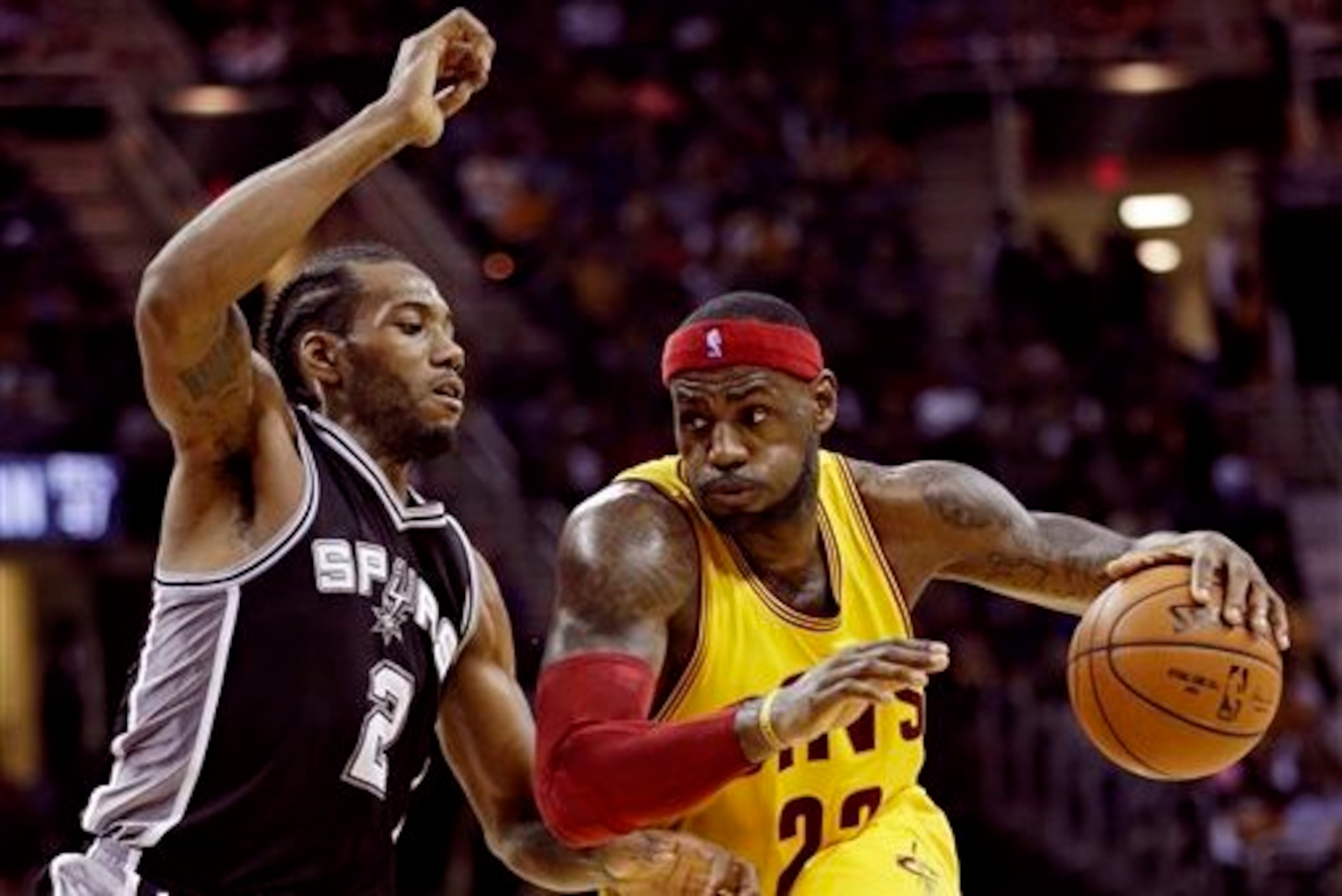
Playing straight up, man-to-man defense is particularly crucial during crunch time. Offenses tend to simplify the play calls and run actions that hand the basketball to the team's best offensive player. With Leonard, the Spurs have a stopper to call upon.
Leonard's real value, however, lies in his secondary defensive capabilities. If an opponent rolls out one superstar and a handful of mediocre role players, it might be of value to have Leonard focus on the star while mostly ignoring help rotations and responsibilities.
During the playoffs, most quality teams threaten opponents with multiple offensive playmakers. Shifting a defensive scheme to stifle one particular player, therefore, can actually have the reverse effect. It opens up space on the floor by essentially creating a four-on-four game, thereby allowing secondary stars to thrive.
This can be even more dangerous because primary stars usually find a way to score anyway. Boosting the confidence of his teammates only creates further problems.
Leonard's defensive stardom lies in his ability to help and recover without the usual cost. Specifically in pick-and-roll, he's able to fulfill his duties to muck up the play without giving up anything to the man he momentarily abandons.
On this Houston pick-and-roll from earlier in the season, Isaiah Canaan slices into the lane after Tony Parker tries, but fails, to keep Canaan from penetrating middle.
Aron Baynes is in a deep drop pick-and-roll coverage, meaning he's barely venturing out toward the ball and staying home at the rim. His goal is to prevent a layup and discourage a potential pocket pass to the roller, Dwight Howard.
In these situations, Baynes is momentarily defending two players as Parker scrambles to recover.

That's why Leonard is tucked in with a foot on the opposite block. Even though he's not in a realistic guarding position to stop the ball, middle-leaning help means Canaan sees two sets of eyes between himself and the rim.
Canaan makes the unselfish play by kicking it out to Trevor Ariza, assuming Leonard's closing distance is too far to prevent an open catch-and-shoot three-pointer.
But Leonard's closes back to the ball in a flash and with picture-perfect technique.

Notice how he shifts 180 degrees while closing out to Ariza's inside shoulder. He also doesn't completely fly by Ariza and take himself out of the play. "Run shooters off the three-point line" is a common refrain in the NBA because teams prefer to give up twos over threes.
But running shooters off the line is a consequence of most players not being athletic enough to close out under control. Accelerating to top speed in 10 feet, stopping on a dime and sliding your feet defensively is a near impossible task.
Leonard is one of the few players capable of this feat. Not only does he force Ariza to pump fake with his closeout, but he completely cuts off the middle of the floor and guides the ensuing penetration baseline.
Leonard bodies back against Ariza enough to slow down his speed, giving Parker time to slide into another help position. The resulting shot is an air ball.
Allowing middle penetration off pump fakes is a huge threat to the defense because it forces more defenders to suck in. This in turn opens up the three-point line even more, leading to even more wide open penetrate-and-pitch opportunities.
Leonard, defensive monster that he is, prevents all of this by himself.
Offense
On the other end of the floor, Leonard has become something of an offensive everyman. He doesn't have a particularly devastating skill, but he doesn't have a weakness either.
His biggest asset has been his reliability as a secondary wing scoring option. Head coach Gregg Popovich has always been a generous user of his bench players, and the emergence of Leonard as an offensive creator allows for maneuverability with bench-heavy units.
No longer does Popovich have to play one of either Parker or Ginobili all the time. The development of Leonard's pick-and-roll and post game, both as a scorer and creator, relieves pressure on San Antonio's bench to be a primary source of offense.
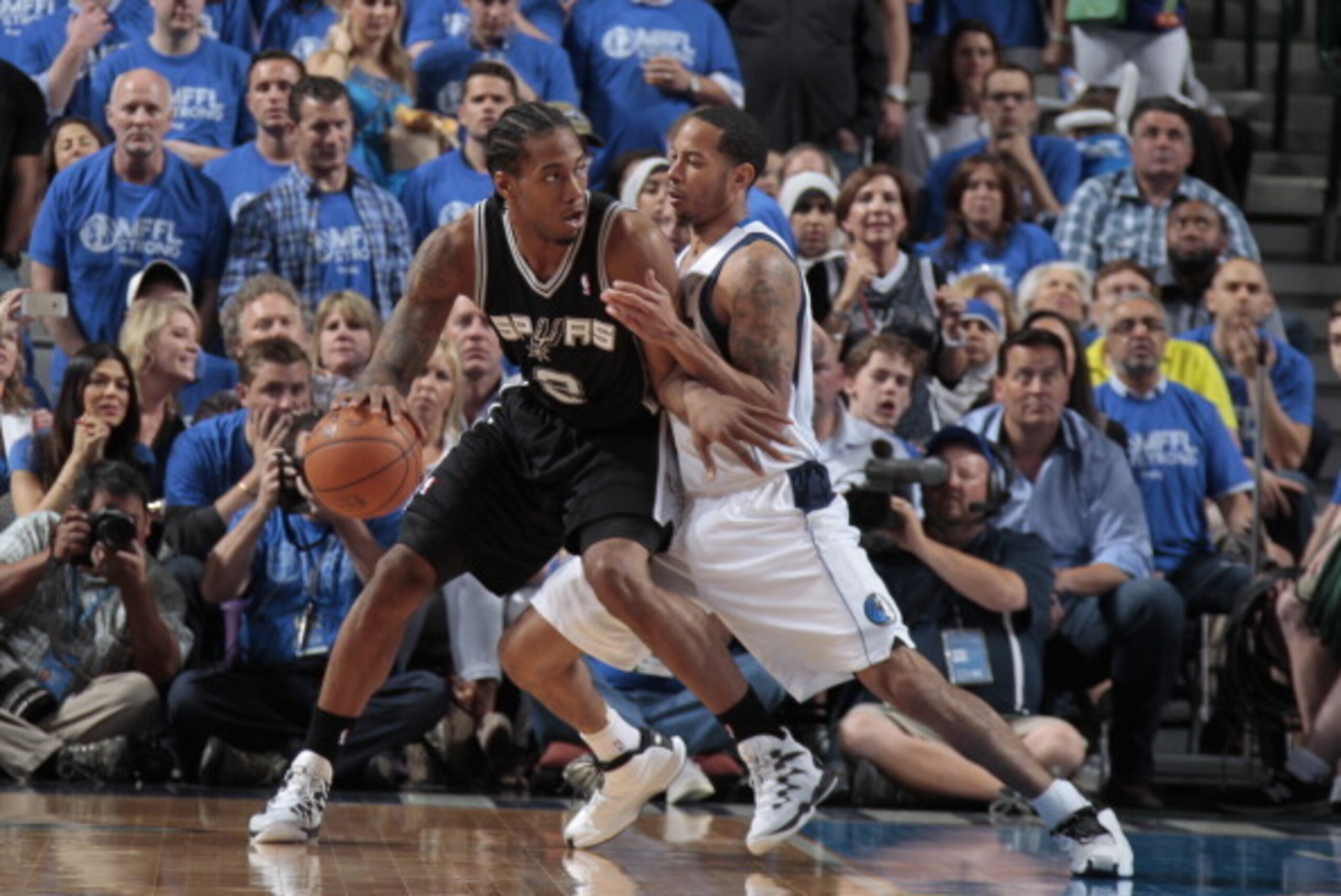
Even though the Spurs favor ball movement and playing within the system over exploiting specific mismatches, Leonard's size and speed usually create a favorable scoring opportunity. If he's guarded by an undersized small forward, they'll drop it down to him in the post. If he has a distinct quickness advantage, he'll work off the bounce, either in isolation or pick-and-roll.
The biggest change within Leonard's offensive game is his ability to read the pace of a pick-and-roll. Younger players tend to attack all pick-and-rolls at a breakneck speed. Their eyes light up at the sliver of space created by the screen.
Most NBA defenses, however, encourage this type of attack. They'll drop the big back near the rim, encourage these reckless drives and live with the percentages of a difficult touch shot at 6-10 feet. If the guard wants to challenge the rim protector, so be it.
Either way, the big is not going anywhere unless the guard has proven to be a more-than-capable shooter from the mid-range. Though this is a typically vilified shot, players that can hit it consistently are virtually unstoppable in pick-and-roll.
Leonard is both learning how to hit this shot consistently as well as react to how defenses play him. Because he entered the league primarily as a driver, defensive guards would slide underneath the screen against him and encourage a jumper.
Instead of attacking a waiting defense, Leonard is now shooting the ball when the space is given. But he's also being clever about inching an extra step closer by showing greater patience. A typical offensive counter to the defense going under the screen is to re-screen, which is to say the offensive big flips around and screens the guard again on the other side.
The idea is to continually push the defender lower on the floor to create a better shot.
As Gordon Hayward of the Utah Jazz tries to go underneath this ball-screen by Tim Duncan, he gets trapped too far below the ball.
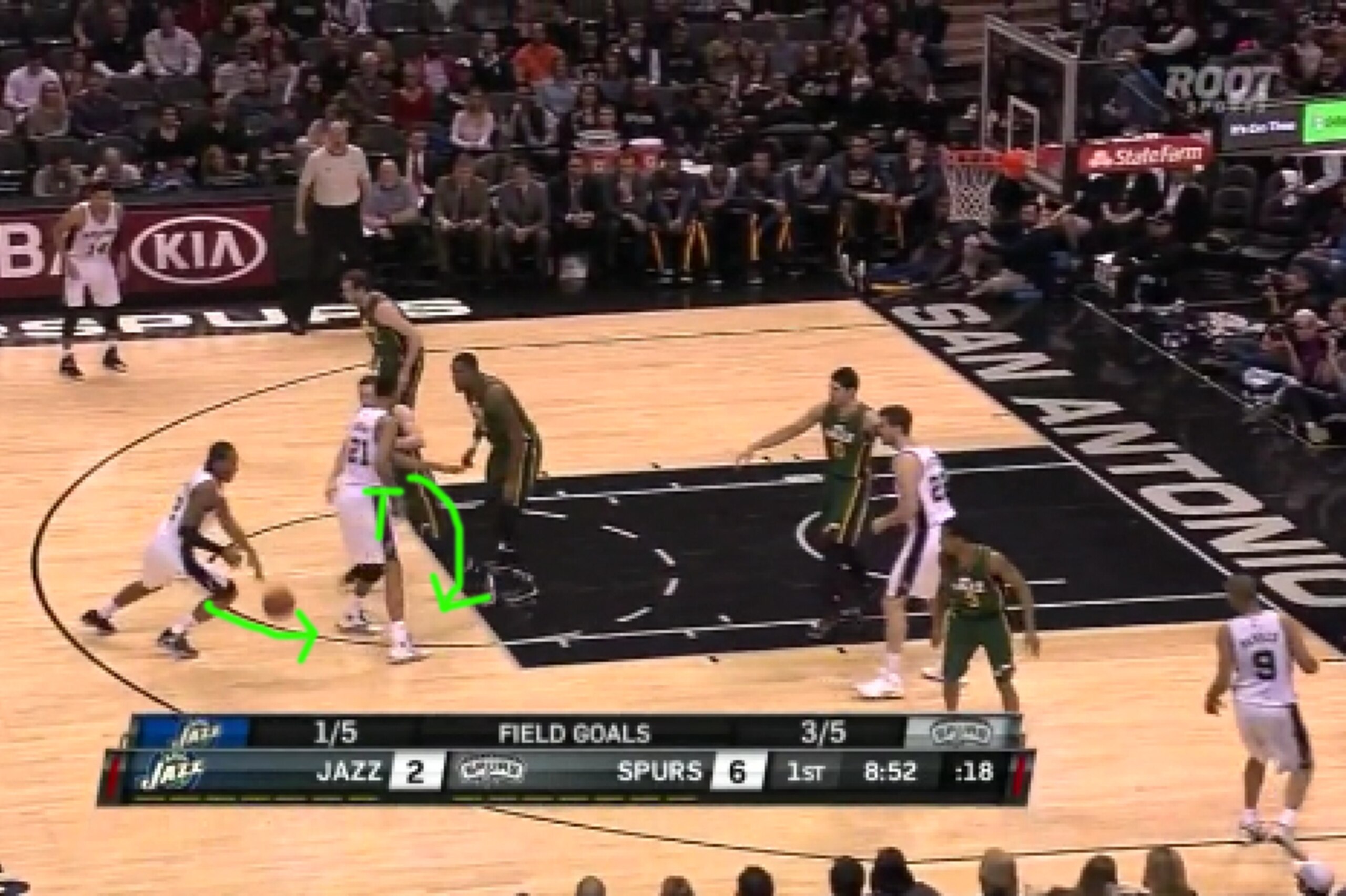
The old Leonard would have attacked the rim anyway. The smarter play—and the one Leonard makes here—is to wait patiently as the action develops. Once Hayward makes the mistake of trying to go underneath the second screen, Leonard pulls up for the wide open jumper.
Total Effect
Whether Leonard is the Spurs' best player is up for debate, but his value to the team's efficiency on both ends of the floor is without question. He's the chameleon of the squad, able to shift from spot-up shooter to lockdown defender to primary scorer on a moment's notice.
Great teams need this type of player. Rosters filled with stars sometimes cannot coexist because no one understands how or when to become secondary players; teams with only role players don't have anyone able to shoulder a greater burden.
Leonard is able to balance the tightrope and fulfill his role, however big or small it may be. And that's why he's a perfect fit in San Antonio.
.jpg?w=2560 "Chiefs, Steelers Eye WR Trades")