Should Cleveland Cavaliers Explore Trade Market or Stand Pat with Roster?
The Cleveland Cavaliers have assembled one of the most impressive rosters in the league with LeBron James, Kyrie Irving, Kevin Love and Co.
The question is are they done?
The Cavs still have plenty of needs. Both the team defense and bench have disappointed thus far. James and Irving have been forced to play big minutes and could use some extra help behind them.
TOP NEWS

Pic of LeBron's Helicopter Commute 🚁

Duren Calls Out 'False' Rumors

NBA Power Rankings Entering Preseason 🔢
Despite these needs, one has to keep in mind that Cleveland has played just 26 out of 82 games, not even a third of the entire year. On a team with 10 new players, a new coach and a new system, shouldn't they be patient and wait for all the pieces to mesh?
General manager David Griffin has yet to pull the trigger on any moves this season, despite being linked to multiple trade rumors.
Should the Cavaliers stay with the roster as is, or make a move before the February trade deadline to improve the team?
Argument for a Trade
Cleveland is clearly interested in swinging a deal, as evidenced by recent reports by Sam Amico of Fox Sports Ohio.
Among the names mentioned as possible targets are Kosta Koufos of the Memphis Grizzlies, Timofey Mozgov of the Denver Nuggets, the Portland Trail Blazers' Wesley Matthews and twin big men Brook and Robin Lopez of the Brooklyn Nets and Blazers, respectively.

The Cavaliers were also in on the Corey Brewer sweepstakes before he was eventually dealt from the Minnesota Timberwolves to the Houston Rockets.
Clearly, Griffin is at least participating in trade conversations.
Some of Cleveland's weaknesses can be attributed to chemistry, sure. It's not easy to throw 10 new players on a team and expect them to click automatically.
The Cavaliers defense is a real problem, however. Cleveland is 23rd in defensive efficiency and ranks 26th in opponent field-goal percentage, per ESPN. Better chemistry and practice will help shore up some defensive rotations, but by how much?
Coming into the season, interior defense was a concern. Thus far, those fears have become reality.
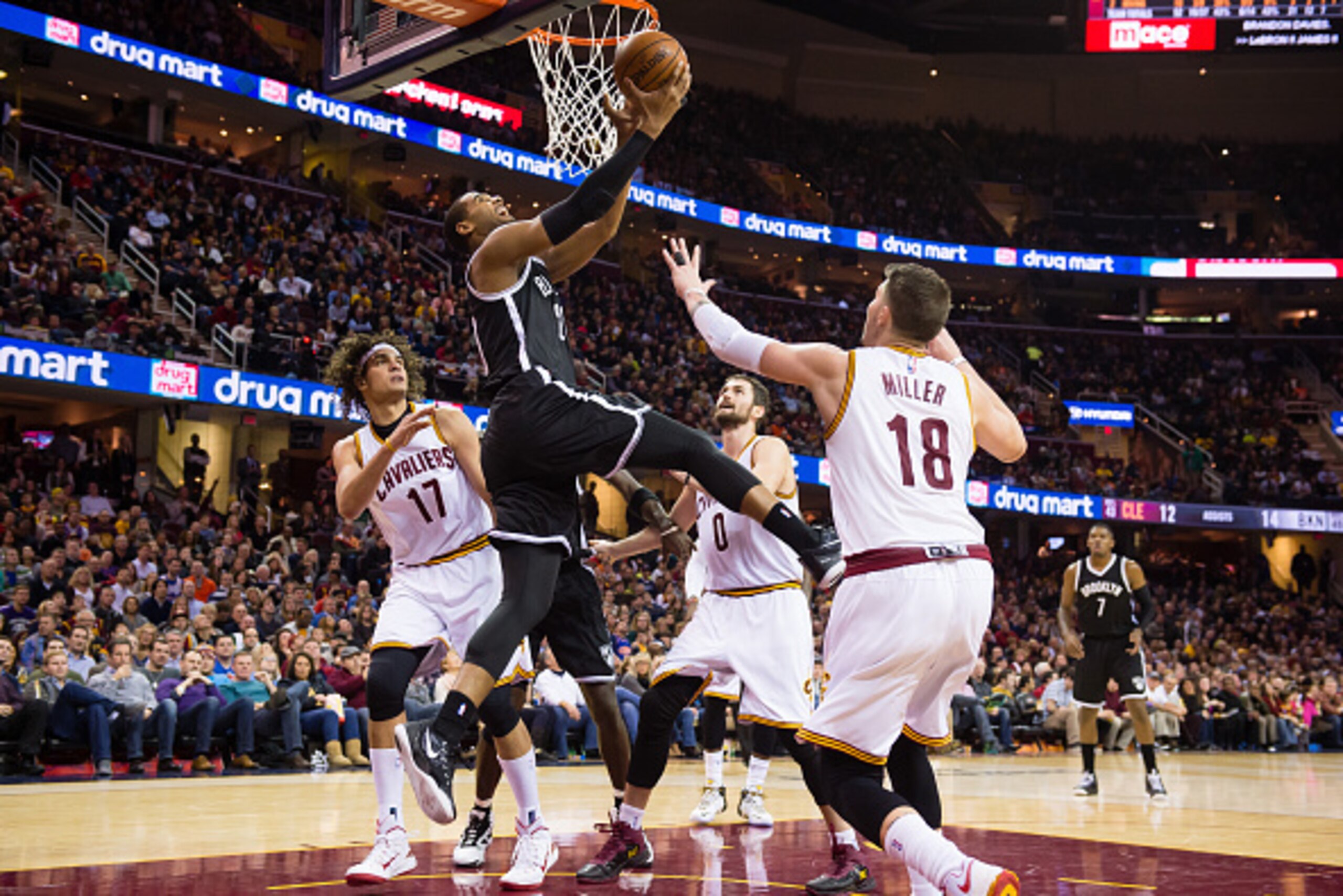
Love is a notably poor defender who's limited vertically. Anderson Varejao and Tristan Thompson are adequate in the post, but neither will be confused with a true rim protector. Brendan Haywood may be the best shot-blocker on the roster, but he's 35 and has appeared in just five games all season.
When it comes to protecting the paint, the Cavaliers are among the worst in the league.
Opponents are converting at a 57 percent clip at the rim, a mark that ranks Cleveland 29th in the NBA, per NBA.com. Only the Minnesota Timberwolves (57.8 percent) have been worse.
This is precisely why Griffin has been asking about Mozgov, Koufos and likely other bigs that can help provide some defense inside. The Cavs block just 4.2 shots a game, 22nd overall.
The Plain Dealer's Terry Pluto says that while Griffin has remained patient, he certainly is looking at making additions to the Cavaliers if possible:
"Griffin has decided to wait, his goal being to add another big man -- one who can block some shots and rebound. The trading deadline is February 19, and there may be some big men available close to the deadline.
If Griffin had made a strong bid for Brewer, that would have been the Cavs main in-season move. The salary cap would have prevented most other deals. The trade option is the key because it allows a team to get rid of a contract (as Minnesota did with Brewer), but not take back much money.
"
When talking about trade assets, Cleveland has a few routes they can take.
Thanks to moving some contracts around this offseason, the Cavs were able to acquire Keith Bogans, who they then traded to the Philadelphia 76ers to create a $5.28 million trade exception. They can use it to acquire a player who makes the same amount or less this season without having to send back one of their own guys in return. This exception expires next September.
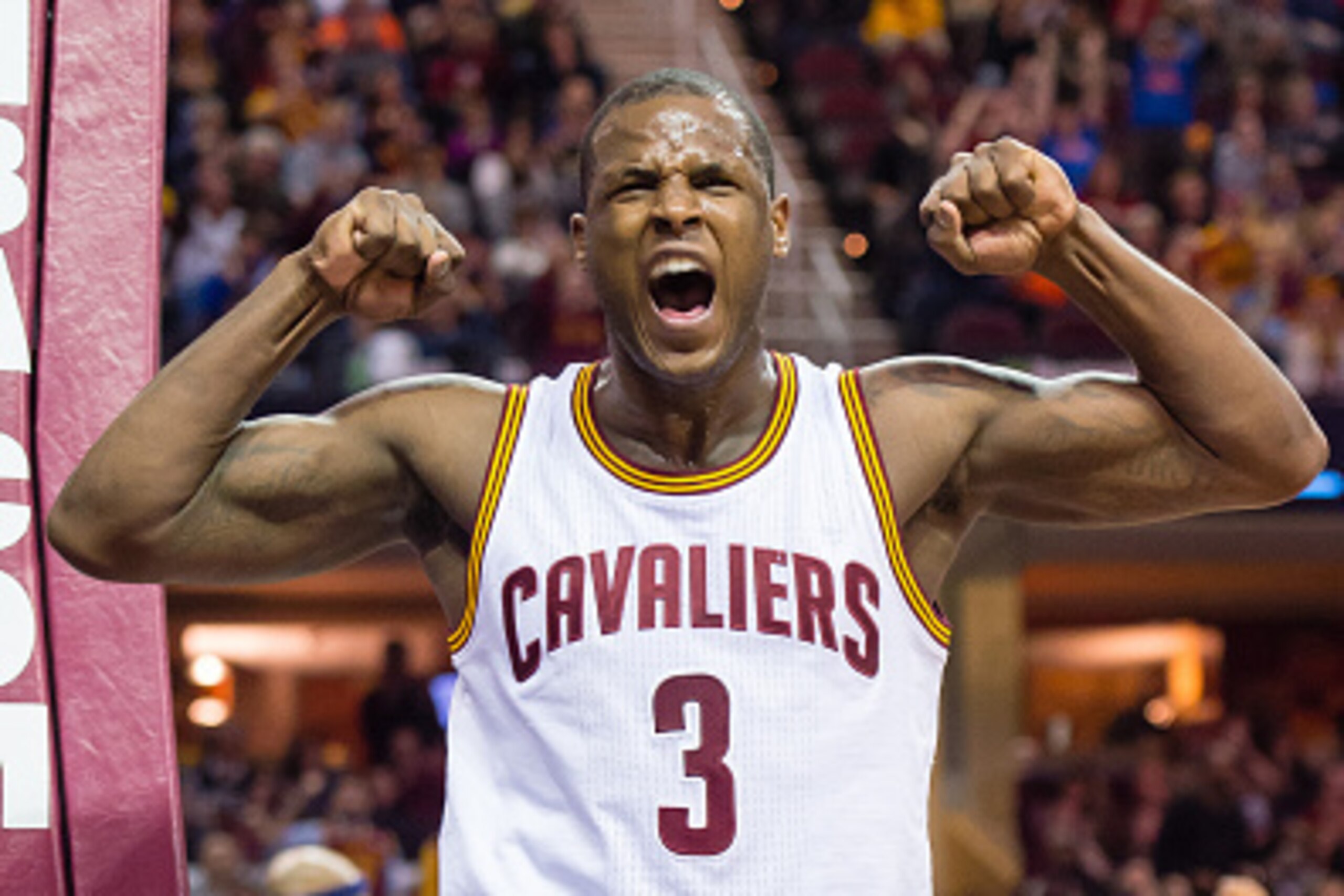
Shooting guard Dion Waiters will continue to pop up in trade conversations. Although he's been better in December (11.2 points and 2.3 assists in 20.7 minutes), it remains to be seen how Waiters fits in alongside James, Irving and Love. Still just 23 years old with remarkable upside, Waiters is the Cavaliers' best trade bait for teams looking to acquire talent rather than just picks or to clear salary.
In terms of draft picks, Cleveland is limited but still has one key piece to offer: They own the Memphis Grizzlies' 2015 first-round pick (Nos. 1-5 and 15-30 protected). Veterans Haywood, Lou Amundson and rookie Joe Harris could all be used at trade bait as well.
Cleveland needs help defensively, assistance that may have to come from an outside source.
Argument to Stand Pat
Winning takes time in nearly every sport, and one midseason trade likely won't make the difference between taking home a title this year for the Cavaliers.
What's essential to them is the same thing James' previous star-laden squad needed: Time.
As James told Bleacher Report's Ethan Skolnick:
"It's a learning experience for us every day. Offensively, we want to move the ball, share the ball, and whoever is the recipient at the end of the possession, you take the shot. And defensively, we have to get a little bit tougher in our interior, all of us. But I think the communication is picking up. We're starting to be a little bit more active with our hands, getting deflections, and that helps too.
"
After beginning the season a measly 5-7, the Cavaliers have since gone 11-3. They won eight straight games from Nov. 24 to Dec. 11, knocking off two Eastern Conference powers, the Washington Wizards and Toronto Raptors (twice), in the process.

Remember, the 2010-11 Miami Heat team began the season just 9-8 before finishing 49-16. They didn't panic and hope a midseason trade would solve their early issues. Instead, Miami fought through, finishing the season strong with the players they had and likely created a stronger bond because of it.
For their steady efforts, the Heat went on to appear in four straight NBA Finals, taking home two trophies in the process.
The good news for Cleveland is that they actually enjoyed a better start to the season than the 2010-11 Heat. While Miami was 9-8 through their first 17 games, Cleveland jumped out to a 10-7 start.
Sure, there are going to be growing pains now, but that's to be expected. This isn't a 2007-08 Boston Celtics-style team where everyone is already in or is slowly exiting their prime. Even though James turns 30 this month, Love (26) and Irving (22) still have plenty of time left to improve. Cleveland doesn't need to make any panic moves in order to win now, as tempting as it may be.
The Cavs may not have a proven shot-blocker on their roster, but one of their young reserves could develop into one. Thompson is up to 0.9 blocks in his 25.8 minutes, his highest total in three years. He's also playing some nice individual defense this season, holding opposing centers (14.0) and power forwards (9.6) to below-average PERs, via 82games.com.
Would trading for a player like Koufos really help the Cavs, or would it just stunt Thompson's development?
Pulling off a trade certainly isn't easy, either.
As Jason Lloyd of the Akron Beacon Journal notes, the Cavaliers' trade options are limited based on what they can offer:
"For now, the Cavs have two areas of need: a wing who can defend and an athletic big man. The field for both has been thin thus far, and the majority of players who would fit into their $5.3 million trade exception is underwhelming.
One thing is clear: If the Cavs are going to make a move between now and February’s trade deadline, it will cost them Waiters, Haywood, Harris or the pick from the Grizzlies. For now, they are the Cavs’ only realistic options that hold any value.
"
Since Cleveland is over the salary cap, they have to swap contracts for anyone over their exception value of $5.3 million.
This means players like Brook Lopez ($15.7 million, via ESPN) would force the Cavs to package multiple contracts together to even out the salaries.
Other players that they have reported interest in—such as Robin Lopez and Matthews of the Trail Blazers—are starters for contending teams. Why would Portland, 22-7 and second in the Western Conference, want to deal some of its best players?
As Griffin put it this summer to Chris Fedor of the Northeast Ohio Media Group, "I can't just talk people into getting (rid) of centers."
Cleveland has to be careful not to appear desperate and overpay for someone who may just end up blocking the progress of a current player anyway.
Maybe the Cavaliers don't need extra bodies, but rather just time instead.
So, Which Is It?
The great thing about being in Griffin's position right now is that he doesn't have to do anything.
The Cavaliers are getting better day by day as they develop more chemistry and a better feel for each others' games.
Now, that doesn't mean he shouldn't be paying attention to who's being made available on the trade block. There's also the free-agency wire to keep an eye on.
Veteran free-agent big men like Emeka Okafor and Jermaine O'Neal are intriguing options and could look to sign with a club after the start of the new year. Signing either to a minimum deal wouldn't cost the Cavs much of anything and could make a nice impact on their interior defense.
The Cavaliers should stand pat for now, instead monitoring the wire for a potential deal closer to the February trade deadline. Griffin needs to let things play out and see if Thompson can continue to transform into a defensive force inside.
Whatever the Cavs decide to do, keeping the current core intact is key for the team's chemistry and morale.
Shaking up the roster with a major move now would be a mistake.
Greg Swartz has covered the Cleveland Cavaliers for Bleacher Report since 2010.
All stats provided by Basketball-Reference.com unless otherwise noted.
.jpg?w=2560 "OBJ Calls Out Giants After Release")