Buying or Selling the Atlanta Hawks as Legitimate Eastern Conference Threat
Even those most ardent and delusional of Atlanta Hawks fans probably wouldn't have predicted these kind of results after the first month of regular-season action. Now that trends and sample sizes are actually starting to mean something, it's only natural to ask whether this team is for real.
In a sense, the answer is absolutely.
The Hawks may even be good enough to make a surprise appearance in the conference finals—at which point almost anything can happen. While they don't have the feel of a traditional contender, here are the facts.
TOP NEWS
.jpg?w=2560 "NBA Gambling Charges")
Malik Beasley Negotiating Plea Deal (AP)

Yaxel: Luka Not MJ 🗣️
Knicks, Spurs On Wrong Side of History
Through its first 20 games, head coach Mike Budenholzer's club is 14-6 and tied with the Washington Wizards for the second-best record in the Eastern Conference. Currently winners of seven consecutive games, the Hawks have a better record than both the Cleveland Cavaliers and Chicago Bulls, preseason Finals favorites who've suffered some early ups and downs.
According to Hollinger Team Stats, Atlanta ranks seventh in offensive efficiency with 106.9 points per 100 possessions. It has the league's fourth-best field-goal percentage (47.5) and third-best mark from beyond the three-point arc (38 percent).
And in the San Antonio Spurs tradition from which Budenholzer comes, this team averages 25.4 assists per contest, good for fourth-best league-wide.
The numbers paint an incredibly consistent picture. Atlanta can score with the best of them, even without a superstar core on par with teams like Cleveland or Chicago.
Defense hasn't been the Hawks' strong suit, but they've held opponents under 100 points five times during their seven-game streak.
"I think our defense is superb right now," swingman DeMarre Carroll told The Associated Press (via ESPN) after Atlanta's most recent victory, a 108-92 outing against the Indiana Pacers.
Though the club's most recent success can be credited in part to a stretch against fairly modest opposition, it's becoming increasingly difficult to discount its ability to make noise in a conference whose balance of power is in flux at the moment.
Thanks to an underrated rotation and some smart system basketball, Atlanta could very well be something of a Cinderella story in the making. While the roster lacks a superstar scorer, dominant rim protection and any approximation of name recognition in the average household, it seems to have the kind of fight needed to make up for all that.
"Our guys' activity and energy on both ends of the court was good," Budenholzer told the Associated Press (via ESPN) after the Pacers contest. "We just need to keep getting better and build off that."
Effort will be an essential ingredient to a deep playoff run. On paper, the Hawks don't have the individual talent to hang with the Bulls or Cavaliers. They're probably a step behind the Toronto Raptors and Washington Wizards as well.
But Atlanta's entire starting five is averaging double-figure scoring. That lineup has been relatively injury-free, and it's getting strong contributions from reserves like Dennis Schroder, Mike Scott, Pero Antic and Thabo Sefolosha.
It's a testament to the team-first foundation Budenholzer has built. Now instilling those principles in his second season at the helm, the increasingly electric offense is no accident. The Hawks ranked second in assists a season ago, and the patient pursuit of quality looks remains a hallmark of this team's identity.

During the preseason in October, Budenholzer told The Atlanta Journal-Constitution's Chris Vivlamore his team's approach wasn't unlike passing the football:
"We practice and drill. I like to think of it as a quarterback in football. There are different reads, and there are different coverages that most of the league uses, and there are different things that they are going to see and have to make quick, split-second decisions. They get a lot of reps in making those decisions and seeing those cuts and seeing those shooters...I think we have players that have that ability to make good, quick decisions. We practice it. We work on the reps. We work on the spacing. We work on the reads. Then they have the ability to go out and execute it.
"
Without plenty of ball movement and the synergy that comes therewith, the Hawks would be pretty average. Spot-up shooters like Kyle Korver are at their best when they can catch the ball in their sweet spots.
Fluid, selfless offenses will produce those kind of looks, making the most of solid role players in the process.
It's the formula that's kept San Antonio in the title conversation, turning shooters like Danny Green or Patty Mills into serious weapons. Budenholzer worked as an assistant under Gregg Popovich from 1996 to 2013, so he's been living and breathing this philosophy for some time.
Atlanta may not boast a player of Tim Duncan's iconic pedigree, but point guard Jeff Teague is doing a pretty decent Tony Parker impression. Add multifaceted big men Al Horford and Paul Millsap to the mix, and you can see why this team has adopted the Spurs-way so effortlessly.
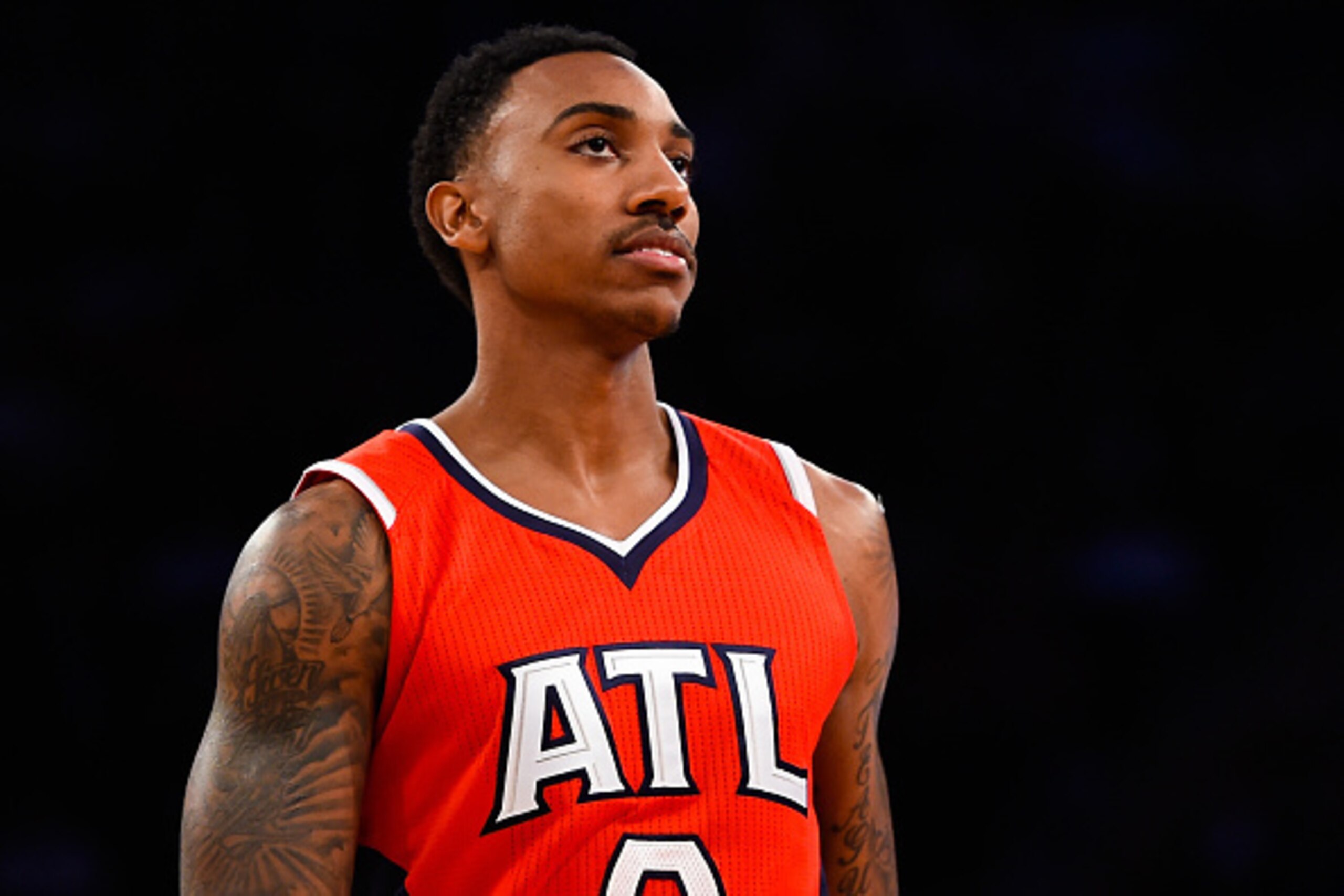
Now in his sixth season, Teague's on pace for career-high scoring (17.5 points per contest) and shooting efficiency (49 percent).
He also has full arsenal with which to work. Limited by injury to just 29 games a season ago, Horford now comprises half of one of the league's very best front lines.
As Fox Sports South's Cory McCartney recently noted:
"Among power forward/center combinations, where Horford and Millsap are tied for 19th in PER, only the Mavericks with Brandan Wright (second at 27.2) and Dirk Nowitzki (tied for seventh at 22.6) and Grizzlies' Marc Gasol (tied with Nowitzki) and Zach Randolph (15th at 20.1) match Atlanta with two players in the top 20.
"
Horford and Millsap may not be the biggest or most athletic interior duo, but skilled players can work wonders when given the right system.
Now healthy and more connected, it should come as no surprise the Hawks are really starting to click. They came into the season with the same good-to-great (shot attempts) mindset that's typified most recent contenders—from the Spurs to the Miami Heat or Dallas Mavericks.
"The more we do it, the better we get at our reads and the more we don't overdribble the ball," Korver told Vivlamore in October. "Passing is contagious. If you are on a team where there are three, four, five, six, seven, eight passes down the court, no one wants to be the one guy the ball sticks with if you have that kind of team. It turns contagious. You can still over-pass, but I feel like we still have a lot to get better at, but we have a good start of willing passers and a system where guys are making good reads."
That's the X-factor for this team, what differentiates it from more talented or established counterparts.
There remain some very real obstacles to Atlanta's loftier ambitions. The vaunted system is susceptible to malfunction, and the Hawks don't have enough individual star power to survive offensive breakdowns.
And while this defense currently ranks ninth in efficiency (allowing 101.9 points per 100 possessions, according to Hollinger Team Stats), it's given up 127 points to the Cavaliers and another 126 against the Raptors—both lopsided losses.
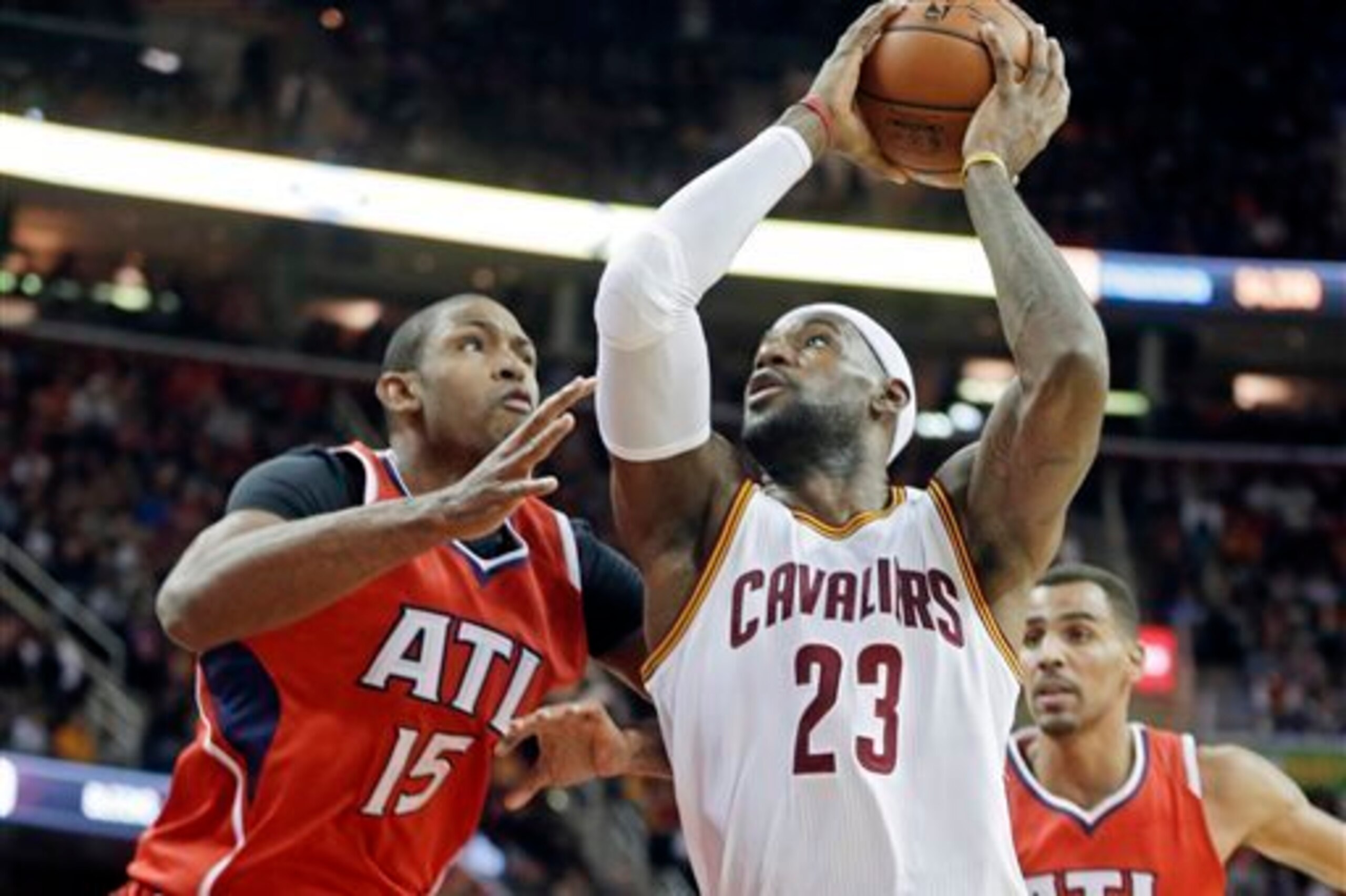
The Hawks even allowed 114 points to the Los Angeles Lakers in what initially ranks as one of the season's more disappointing losses.
Those kind of defensive efforts won't suffice against elite teams, so it's hard to completely get on board with the most optimistic of projections for Atlanta's playoff ceiling. Unless everything is humming to perfection on both ends of the floor, the Hawks may not be able to get enough stops against teams like Cleveland and Toronto. We've also yet to see how Atlanta's powerful offense fairs against the Bulls defense.
There are serious tests ahead for Budenholzer and Co., but they just might have what it takes to pass them.



.jpg?w=2560 "Aikman Blasts Cowboys WR 🫣")
.jpg?w=2560 "Jonathan Taylor Landing Spots")