

9 Failed Moves That Contributed to Los Angeles Lakers Downfall
Over the course of their preseason slate, the Los Angeles Lakers have looked every bit a lottery-bound team—a collection of ill-fitting pieces and cast-off talent few believe is capable of crashing the Western Conference playoff party.
Lack of stakes aside, L.A.’s poor play is merely the latest in what’s been a cascading wave of discouraging dominoes for the once-dominant franchise.
In the wake of a 27-win season—percentage-wise, the team’s worst in nearly six decades—the Lakers are at something of an organizational crossroads. Do they continue building around the aging, atrophying Kobe Bryant? Or do they clean house as soon as possible and find new cornerstones through lotteries and free-agent feeding frenzies?
More compelling still is how such a time-tested, Finals-forged franchise got here in the first place.
Today, we’ll look (in no particular order) at the nine moves most responsible for L.A.’s downfall—the bad contracts, shortsighted signings and caustic chemistry issues that turned a perennial title contender into a league laughingstock.
Storied as the Lakers are, getting back to the top is more a matter of when than if. Assuming, of course, that some of the franchise’s more egregious errors aren’t replicated.
The Derek Fisher Trade
1 of 9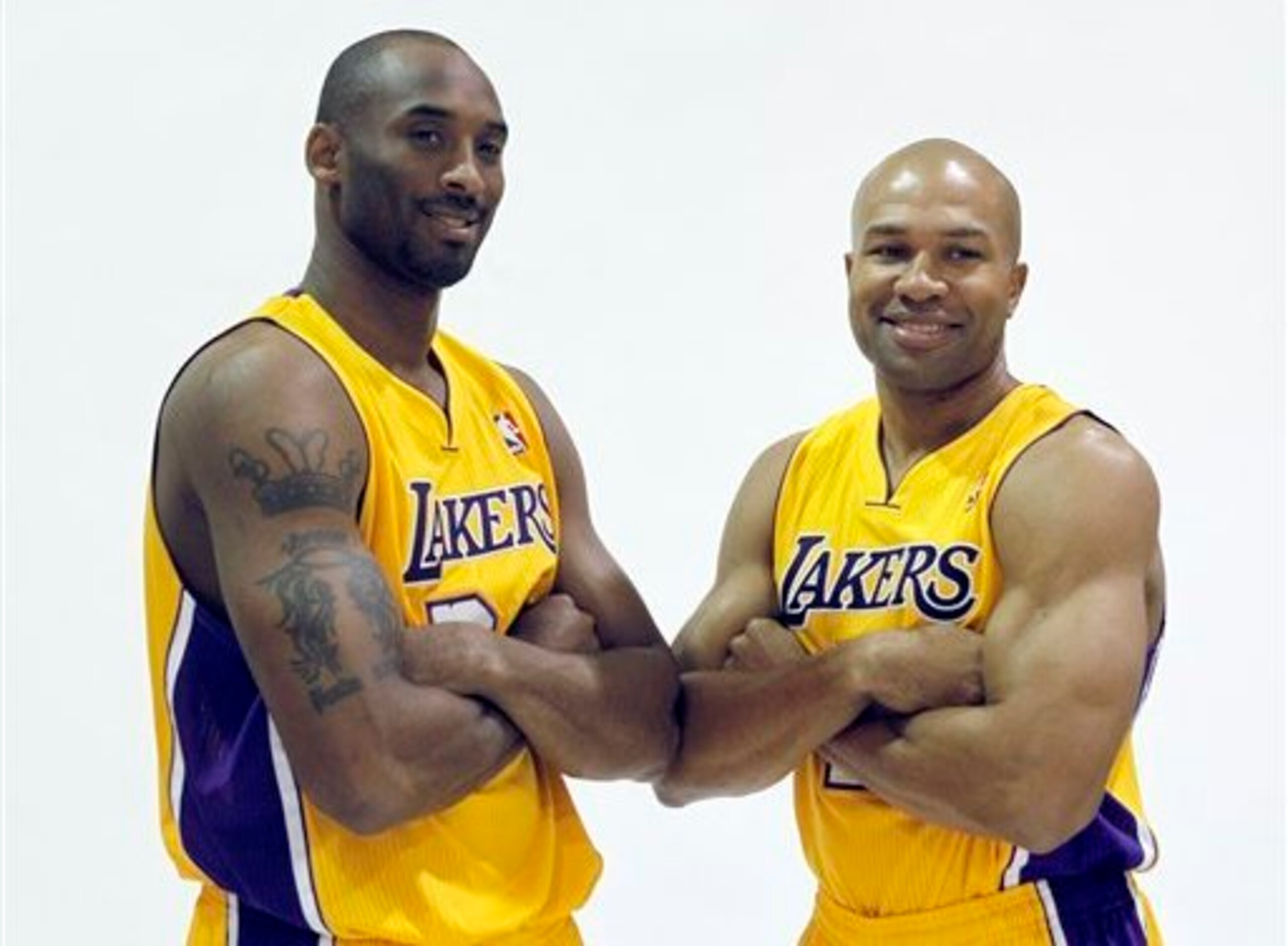
How can trading a guy with career averages of 8.3 points and three assists come back to haunt you?
Draft picks, draft picks, draft picks.
At the 2012 trade deadline, the Lakers dealt longtime stalwart Derek Fisher and a 2014 first-round pick to the Houston Rockets in exchange for quasi-draft-bust center Jordan Hill. That pick could’ve come in handy a few months ago.
Granted, L.A. probably had no idea it would fall on such hard times so quickly. Still, and for as serviceable as Hill has been, you have to wonder how much brighter L.A.’s future would look right now had they had two first-rounders at their disposal in what is looking like one of the best draft classes in recent memory.
Burning the Phil Jackson Bridge
2 of 9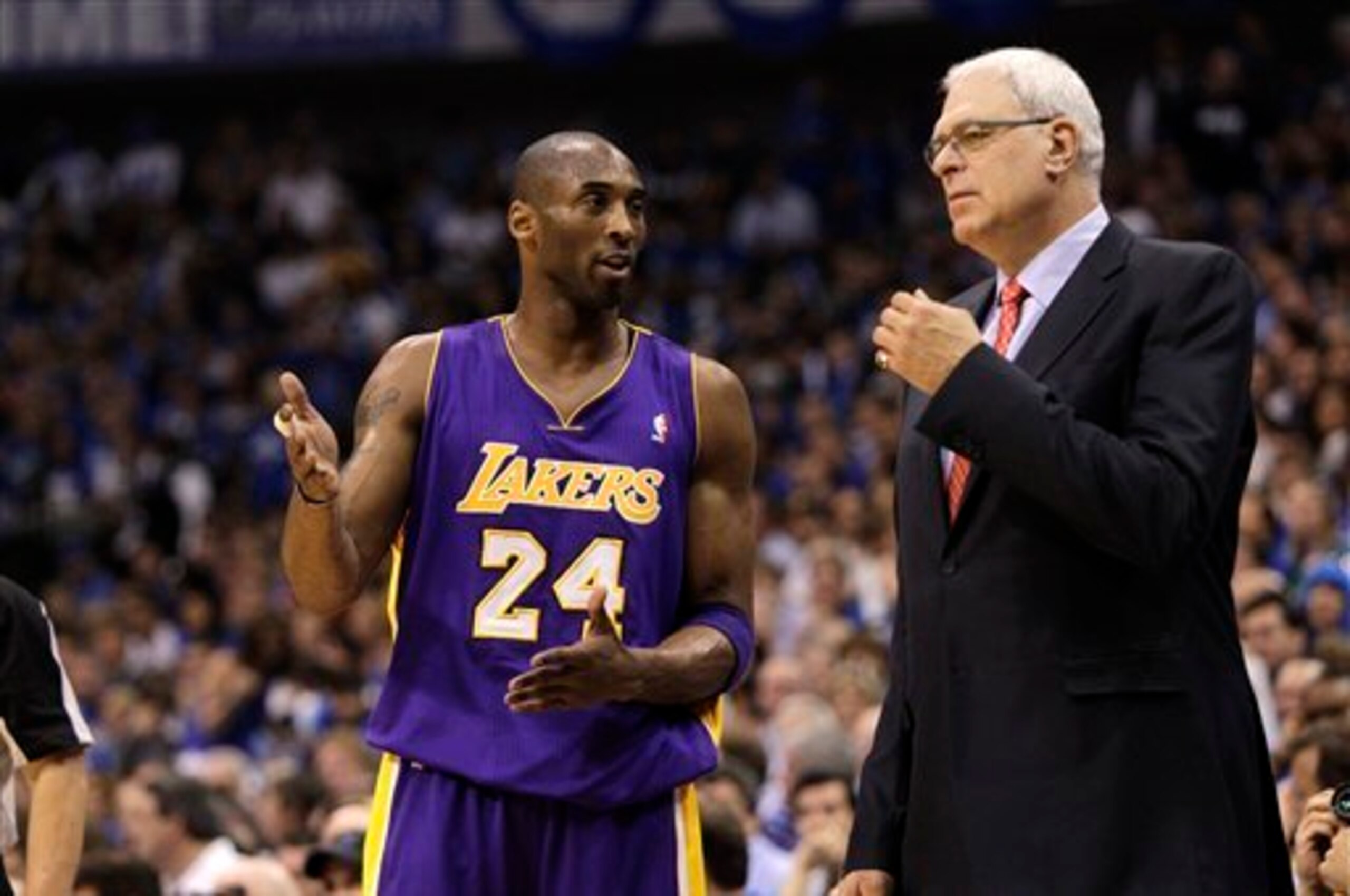
You know, when a guy who’s won 11 NBA championships as a head coach—five of them at the helm of your ship—seems even remotely available for an opening after a two-year hiatus, you should probably just hire him. Just a thought.
Granted, as Bleacher Report’s Kevin Ding reported for the Orange County Register back in January of 2013, Phil Jackson and the Lakers brass did engage in a kind of back-and-forth following the firing of Mike Brown early in the 2012-13 season.
Sadly, however, the internal chasms caused by the death of long-time owner Jerry Buss were simply too much to overcome. Ultimately, L.A. settled on Mike D’Antoni, who tallied a woeful 67-87 record before being let go following the 2013-14 campaign.
Jackson has since been handed the reins of the New York Knicks, a team desperate to recapture their decades-long glory days.
Could Jackson’s triangle offense have withstood L.A.’s seismic roster overhauls? It’s impossible to say. But if there’s one person for whom karma can prove a potent ally, it’s probably the guy nicknamed The Zen Master.
The Ramon Sessions Trade
3 of 9
Another seemingly low-risk move that wound up backfiring rather badly.
Eager to replace Fisher, the Lakers went out and nabbed the speedy Ramon Sessions from the Cleveland Cavaliers. The price: Jason Kapono (of course, you do that trade every time), Luke Walton (still perfectly acceptable), a 2012 first-rounder (now it’s getting a little steep—particularly for a guy who’s about to be an unrestricted free agent) and a 2013 first (OK, that's probably going to come back to haunt you).
Engaging in draft-pick hindsight is always tough; it’s simply impossible to say if a given team would’ve done things differently (or better). What really stung, though, is when Sessions walked, agreeing to a two-year deal with the Charlotte Bobcats rather than returning to the Lakers, who in all fairness had their sights set squarely on Steve Nash.
Another trade, another pair of potential assets gone down the drain.


Hiring Mike D'Antoni
4 of 9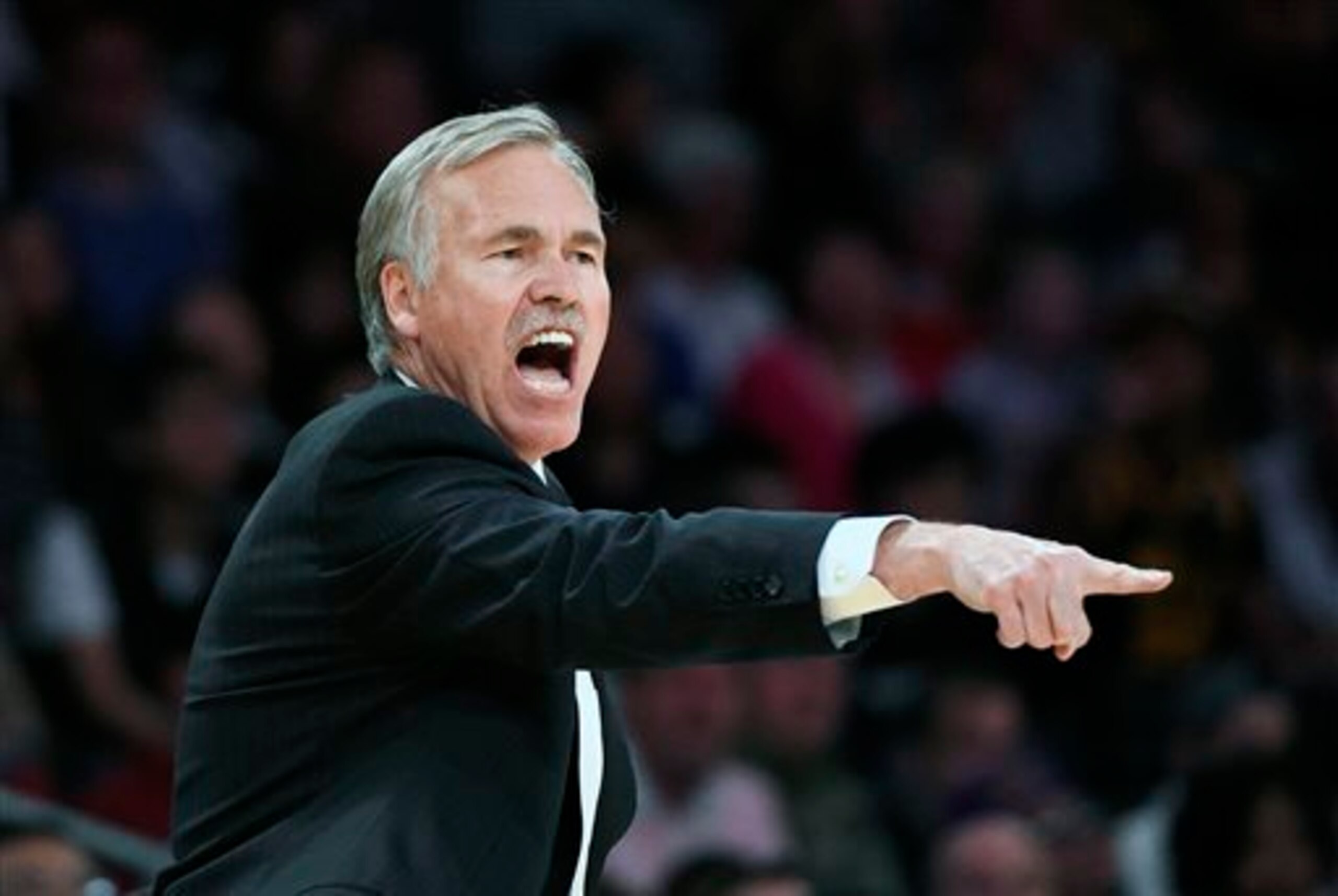
Your team just fired its head coach. The roster, while aging and incredibly slow, is a force to be reckoned with. Who should you hire? The guy who once constructed an offense nicknamed “Seven Seconds Or Less,” of course!
To call Mike D’Antoni a bad fit for the Los Angeles Lakers would be an understatement. Accomplished as D’Antoni had been as the mad scientist behind the hyper-fun Phoenix Suns of the mid-2000s, the Lakers he inherited couldn’t have been a more polar opposite.
Despite a passable 40-32 finish to the 2012-13 season, the writing was on the wall for a Lakers collapse the following season. Dwight Howard had bolted under a cloud of ill will; Steve Nash was withering before our eyes; and—worst of all by a country mile—Kobe Bryant had suffered a serious, season-ending Achilles injury.
Bryant would go down again early the following year, ending the perennial All Star’s 2013-14 campaign after just six games. Twenty-seven wins and 55 losses later, D’Antoni was gone, replaced—after what felt like a decade-long search—by Lakers legend Byron Scott.
Think fans of the forum blue and gold would like a do-over on all that?
The Failed Chris Paul Trade
5 of 9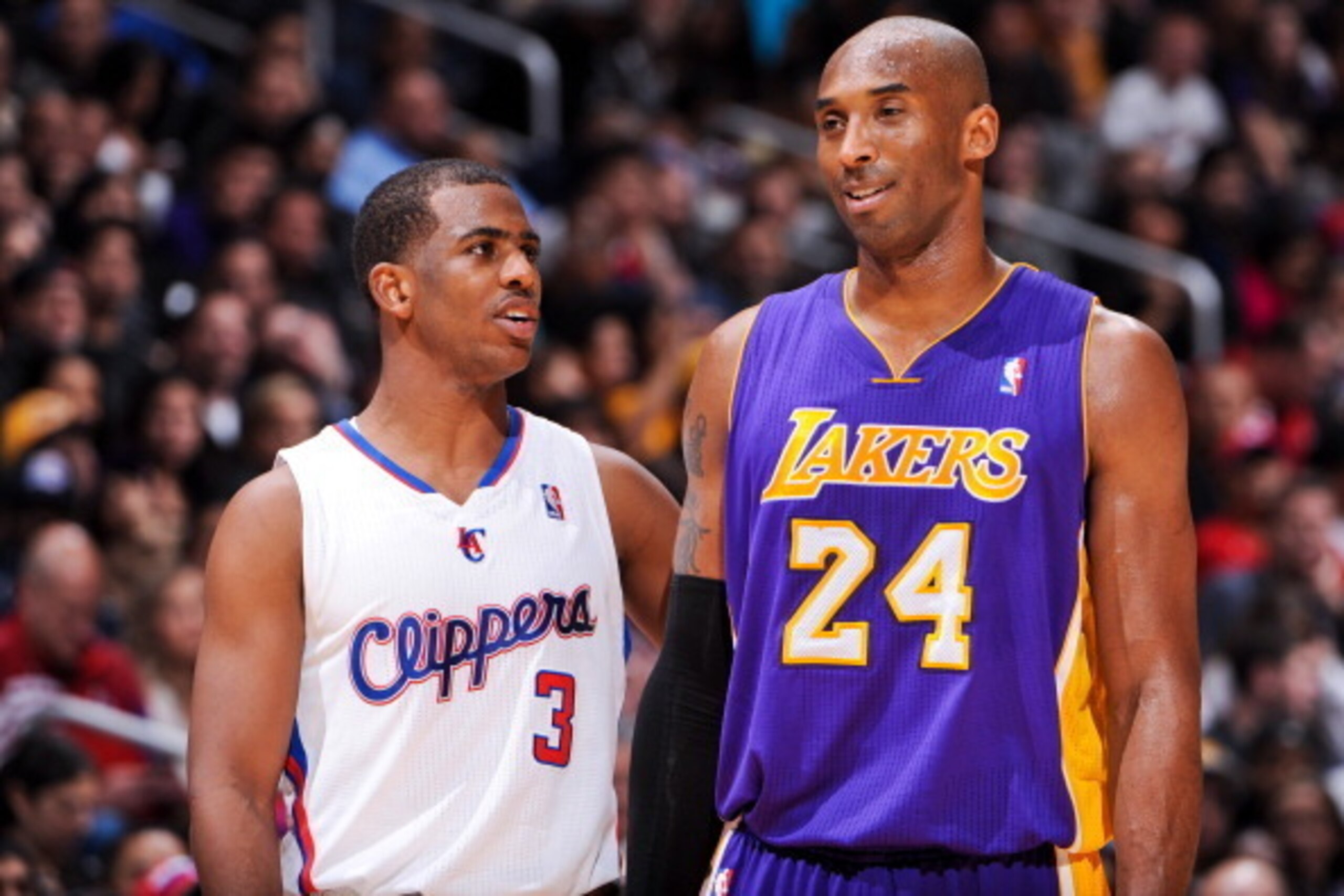
For all their hapless gambits, you can’t blame the Lakers for this one.
On December 11, 2011, two weeks before the lockout-shortened season was set to begin, the New Orleans Hornets agreed in principal to a trade that would’ve delivered All-Star point guard Chris Paul to the Staples Center steps.
Instead, then Commissioner David Stern nullified the deal, arguing the trade was too lopsided for the league—who at the time had a controlling interest in the Hornets—to accept.
The next day, Paul wound up being dealt to the Los Angeles Clippers, teaming up with Blake Griffin to form one of the league’s foremost duos. Since then, the Clippers—long a league laughingstock—have become the toast of Tinseltown.
The Lakers, meanwhile, never fully recovered, what with Ramon Sessions bolting and Steve Nash commencing a full-on bodily breakdown.
Was what happened to L.A. fair? Probably not. Did the Lakers brush themselves off and handle it like the forward-thinking, class-laden organization they’ve always been? No. No they did not.
The Dwight Howard Trade
6 of 9
By August of 2012, the Lakers appeared poised to reclaim their rightful place among the NBA elite. Key to said resurgence was Dwight Howard, the peerless defensive force acquired from the Orlando Magic in a massive four-team trade on August 12.
Howard hadn’t exactly been mum about his desire to join the L.A. fray. So it seemed a foregone conclusion that the All-Star center would re-up following the 2012-13 season.
By now you all know the dirty details: a feud between Howard and Kobe Bryant; an offensive system that seemed at odds with the personnel at hand; Mike Brown’s lightning-quick dismissal at the start of the 2012-13 campaign; and an ill-fated attempt by D’Antoni to right a fast-sinking ship.
But in case you didn’t, here’s just a little taste from Phil Jackson’s own memoir, 11 Rings (courtesy of the New York Daily News):
"The Lakers invited Kobe and Steve (Nash) to the final pitch meeting to help persuade Dwight to come on board. It sounded like a good idea. Steve sent out an amusing tweet before the meeting: ‘Dwight Howard we’re coming for you. You’re going to love the statue we build for you outside Staples in 20yrs!’ And Kobe made a moving speech during the pitch, promising to teach Dwight the secret of winning championships that he’d learned from the best in the game.
If the meeting had ended there, it might have worked. But after the presentation, Dwight asked Kobe what he was planning to do after he recovered from his Achilles injury. Was this going to be his last year? ‘No,’ replied Kobe. ‘I’m planning to be around for three or four more years.’
At that point, according to others in the room, Dwight’s eyes went blank and he drifted away. In his mind, the game was over.
"
The following summer, Howard rejected L.A.’s offer of five years, $118 million, opting instead for a cool, tax-free $88 million from the Houston Rockets.
Is it just us, or does Kobe have a problem with centers not named Robert Sacre?
Hiring Mike Brown
7 of 9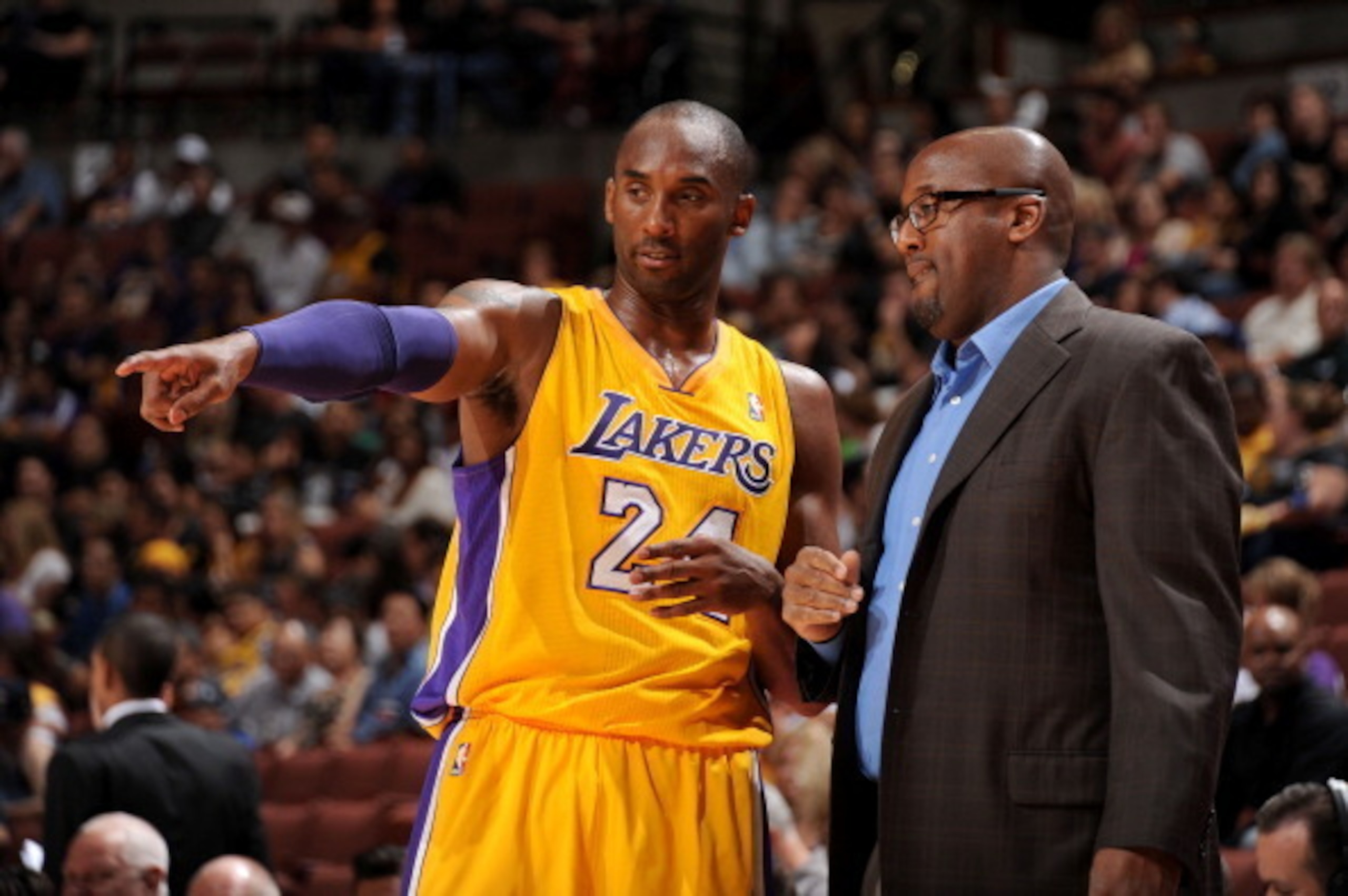
We’ve been pretty passive-aggressive up to this point when talking about Mike Brown—his name floating on the conversational periphery like an ominous waxing moon.
So let’s be blunt: Mike Brown was not a good choice to replace Phil Jackson. His track record was too incomplete; his Princeton system too ill fitting; and his personality far, far too sheepish to effectively deal with some of the biggest egos in the NBA.
In desperate need of a schematic sea change, the Lakers opted to replace Brown with the hyper-offensive-minded Mike D’Antoni. And while D’Antoni’s own shortcomings were arguably equally as detrimental, one could make the argument that L.A. wouldn’t have made such a polar-opposite move had the front office not bungled the Brown hiring so badly.
Was Brown an unmitigated disaster? That may be putting it a bit too strongly. What the hire showed, however, was how one of the league’s most respected organizations had gone from hitting bull’s-eye after bull’s-eye to aiming—and firing—in the blind.
The Steve Nash Trade
8 of 9
Four draft picks—two firsts, two seconds—for one of the greatest point guards of his generation? Most NBA general managers wouldn’t hesitate but a second.
Should that point guard happen to be 38 years old with lingering injury concerns, however, it would probably be wise to think twice. And then three times. Then a fourth. And then not do the deal at all.
It’s been two years since the Lakers sent a quartet of assets to the Phoenix Suns in exchange for Steve Nash, and the returns have been nothing short of disastrous: two disappointing seasons, a revolving door of coaches and—worst of all—a broken-down former great now on the brink calling it quits entirely.
From L.A.’s perspective, the picks sent Phoenix’s way were supposed to be late first- and second-rounders. That’s what happens when you have Kobe Bryant, Dwight Howard and Steve Nash on the same team: your draft picks stink so you don’t have to.
Ten years from now, we’ll look back on Nash’s career as one of the greatest an NBA point guard ever authored. Just forgive us for forgetting this sordid interlude.
The Kobe Bryant Extension
9 of 9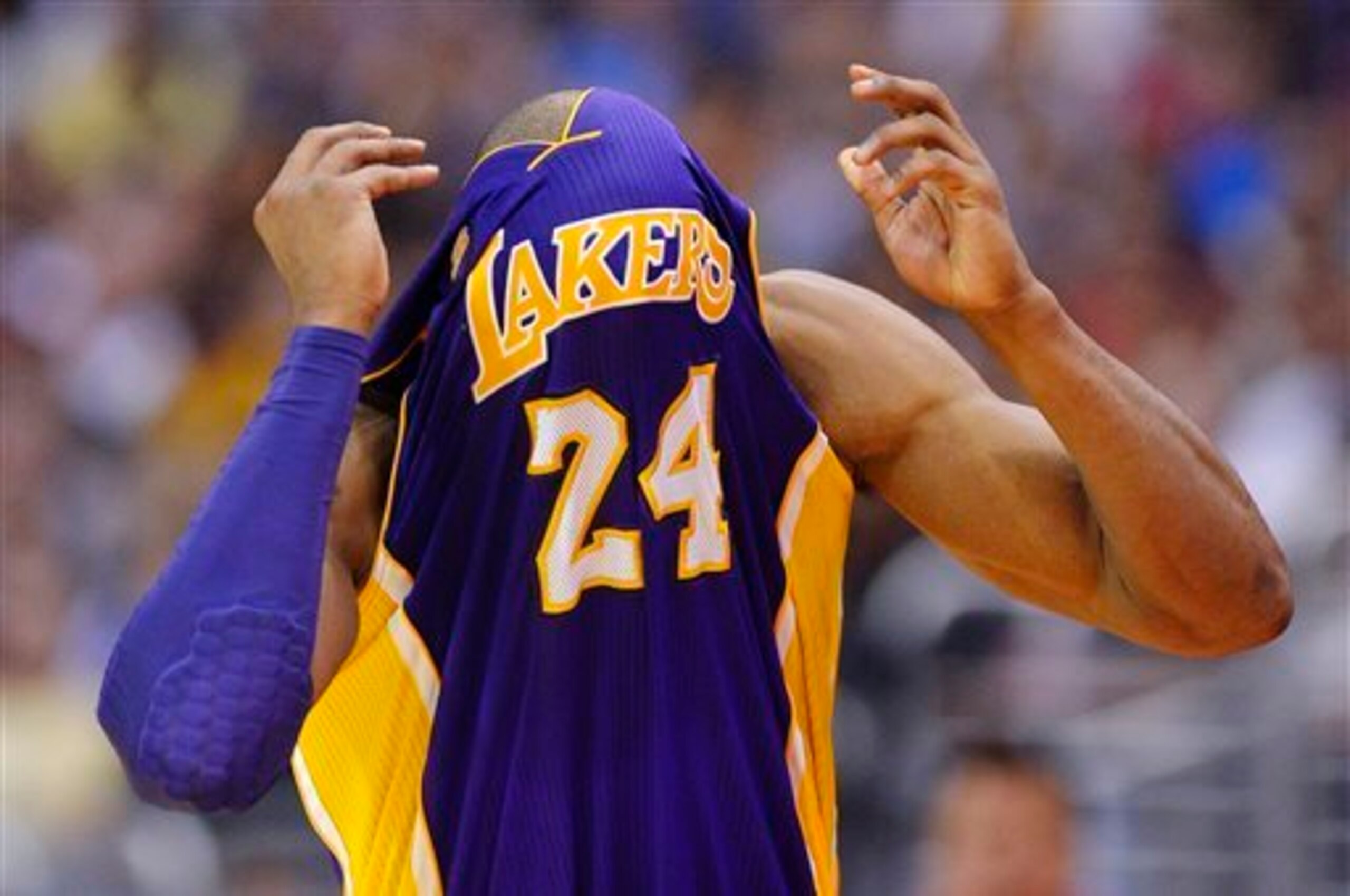
In November 2013, Shaun Powell of Sports on Earth used Bryant’s two-year, $48.5 million extension (penned early in the 2013-14 season) as a springboard to the following:
"We know what this does for Kobe. It keeps him in the high tax bracket and his kids in private school. What does keeping Kobe in a Laker uniform for two more seasons do for the Lakers, if anything?
The easy answer is "nothing" unless the Lakers have a reasonable plan in place to surround Kobe with players who are not named Smush Parker. Next summer, the only major contracts on the Laker salary cap will belong to Kobe and Steve Nash, provided Nash doesn't retire first, which is a possibility. With money to spend, it's the Lakers' last chance to take advantage of Kobe and make a run at a championship, however faint that idea might sound right now.
"
Not exactly high praise.
Whatever the underlying strategy, it’s pretty hard to deny how badly Bryant’s extension has hamstrung the Lakers—at least in the short term. And while L.A. stands to have truckloads of cap space next summer, if the remarks of Abbott’s source can be believed, it might not matter one iota.
"Deserve" is a tricky word in the world of sports. On the one hand, it’s impossible to deny the sheer pull and power Bryant’s presence has meant; not only for the Lakers, but for the league writ large as well.
On the other hand, if another championship is really as important as Bryant has said it is, he could’ve made the degree of difficulty a little easier on his front-office friends.

.jpg?w=2560 "NFL House in Paris Closes for Protests")
.jpg?w=2560 "Trevon Diggs Cut by Seahawks")


