Why Paul Pierce Will Have a Resurgent Season with the Washington Wizards
From a distance, Paul Pierce’s decision to sign a two-year, $11 million deal with the young, upstart Washington Wizards might've seemed the stuff of swan songs—aligning with the ascendant for one last spin around the NBA circuit.
But such cynicism misses a more pressing point: The Wizards, with their youth-laden core and usurper’s designs, offer Pierce a very real shot at a post-Brooklyn Nets resurgence.
What a difference a year makes.

Indeed, it seemed like such a perfect fit for both sides: The Boston Celtics launched their rebuild with a war chest of draft picks, while Paul Pierce and Kevin Garnett joined Brooklyn’s contention-ready core.
Sixteen months later, the Nets’ championship dreams seem all but squashed, with Garnett—on the cusp of his 20th NBA season—doomed to bide his time in Brooklyn’s high-priced purgatory.
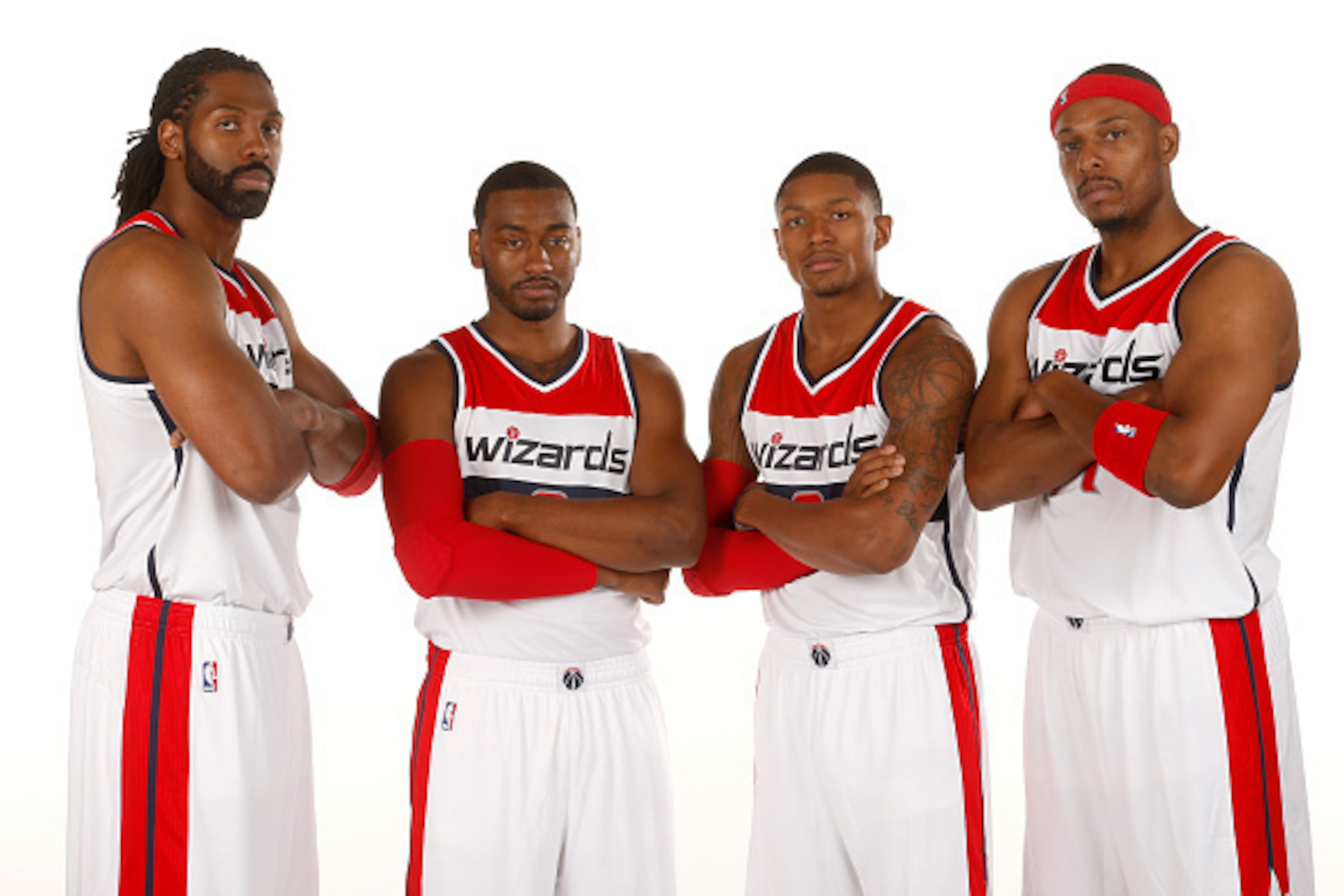
For the 37-year-old Pierce, meanwhile, a change of scenery couldn’t have been better timed. Not only were the Wizards younger and more talented; with three-and-D specialist Trevor Ariza defecting to the Houston Rockets, Washington had an immediate need for a reliable starting wing.
Pierce is nothing if not that, even given a slight—but predictable—drop in production in recent years.
| Season (age) | Points | TS% | 3P% | PER |
| 2011-12 | 19.4 | .567 | .366 | 19.6 |
| 2012-13 | 18.6 | .559 | .380 | 19.1 |
| 2013-14 | 13.5 | .595 | .373 | 16.8 |
Back in September, Bleacher Report’s Jared Dubin explored how the Wizards will seek to utilize Pierce, particularly as it concerns Ariza’s former role in the offense. The conclusion was that while Pierce was always more than capable of making up for Ariza’s catch-and-shoot abilities from distance, the 10-time All-Star actually offers much more than that:
"The Wizards, presumably, did not bring Pierce in to just do his best Ariza impression; they want to see that herky-jerky, off-the-bounce game that has made Pierce a future Hall of Famer as well.
Even while attempting fewer mid-range shots as his career winds down, Pierce still ranked in the top third of the league in conversion rate among those who took as many or more mid-range attempts, per NBA.com. ...
Adding another player who can create separation allows for more diversity in the offense. Specifically, it provides another backup option if things break down in the initial action for Wall or Beal. ... Pierce provides the additional skill of being able to create for himself off the bounce, or even to make a dribble-drive and dish to a teammate.
"
In John Wall, the Wizards boast one of the NBA’s quickest point guards, a blistering blur capable of breaking down a defense in a split second. What that means for Pierce—and to an arguably larger extent, third-year shooting guard Bradley Beal—is all too obvious: plenty of open looks and lanes ready-made for dribble-drive carving.
Pierce’s value certainly isn’t lost on Wall, who at a recent Baltimore Orioles game told Monumental Sports that "[Pierce] gives us another versatile guy who can put the ball on the floor and attack the basket, and also knock down shots."

How much bearing all this will have on Pierce’s overall efficiency is, at this point, anyone’s guess. But it’s certainly feasible to think we could see the 16-year veteran’s true shooting percentage trend north of 60 percent for the first time in three seasons, subsequently pushing Pierce’s player efficiency rating (PER) closer to his career mark of 20.4.
That in turn should help push Washington’s 16th-ranked offense more solidly into the league’s upper tier.
Where the Wizards may backslide a bit is on defense, where Pierce—while certainly no sieve—doesn’t nearly possess the quickness and versatility of Ariza.
Still, some silver linings abound. Foremost among them: Pierce’s stout 92.9 defensive rating (and robust 5.7 net rating) last season while manning the power forward slot, where he spent 44 percent of his time on the floor per 82games.com.
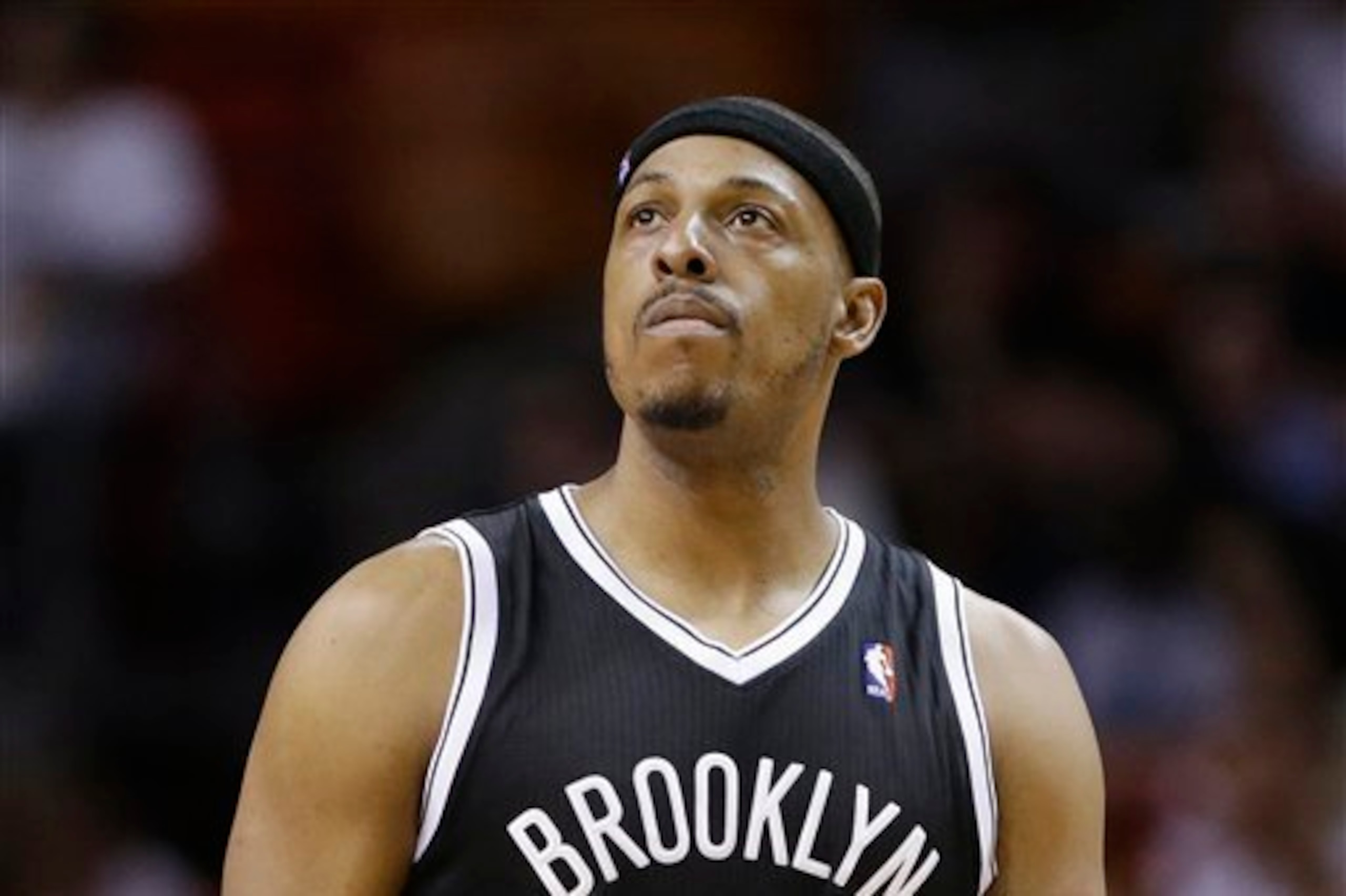
Owing in no small part to Brook Lopez’s season-ending foot injury, last year’s Nets often utilized Pierce as a small-ball power forward, with surprisingly positive results. Ariza, meanwhile, tallied only six percent of his minutes at the 4 spot.
For head coach Randy Wittman, the strategic boon is all too obvious: By utilizing Pierce more at power forward, Washington can spare Nene and Marcin Gortat—the team’s not-so-indestructible big men—the burden of too many minutes, while giving the Wizards more in the way of rotational flexibility.
Just how good can the Wizards be? If you ask Pierce, the postseason sky’s the limit. From an interview with NBA.com's David Aldridge (h/t Slam Magazine):
"I was like, they have one of the best backcourts in basketball. They’re lacking experience, a guy in the locker room and on the court that can help end games. I was like, I probably can fit in. After LeBron said he was going back to Cleveland, the dynamics of the Eastern Conference, with Indiana, I was like, this is a team that could be in the Eastern Conference finals, or possibly the Finals, based on what’s here. And adding me to some of the other veterans they added, I was like, why not?
"
For a fading star fast approaching 40, the Wizards represent a nearly perfect confluence of circumstances: a team that could use Pierce’s brand of veteran leadership, but not so devoid of talent that he’s asked to contribute more than he’s capable of doing.
The net result being a team that, given its place in the top-heavy but shallow East, is on the short list of potential No. 3-seed candidates. Given the right Round 2 matchup, there’s no reason to believe the Wizards can’t even crash the conference finals party.
The emergence of the Chicago Bulls and Cleveland Cavaliers will likely render Pierce's chase for a second ring hopelessly moot. But that doesn't mean he can't make his final NBA stop a stint worth remembering—more than the one before it, anyway.

.jpg?w=2560 "NFL House in Paris Closes for Protests")
.jpg?w=2560 "Trevon Diggs Cut by Seahawks")