

Why the Orlando Magic Are Poised to Be the NBA's Next Upstart
The Orlando Magic might not look like it now, but they’re on the road to being the next franchise to ascend the standings. The moves they’ve made since the Dwight Howard trade have them on the road to the playoffs.
You can look at last season’s 23-59 record and laugh at that statement, but this isn’t an assessment of where the Magic are, it’s about where they’re going.
They are a rebuilding team, not a mismanaged one. That’s a meaningful distinction because there are different kinds of bad. There’s bad because of being badly managed for years (e.g. the Sacramento Kings), and there’s bad because of making a decision to gut the team and start over from the ground up using high draft picks to do so.
TOP NEWS
Luka 50 Piece in Win 🔥

Embiid Out vs. Pistons

Power Ranking Every NBA Team's Starting Lineup 🔢
In the modern NBA, this strategy—derogatorily referred to as “tanking”—is becoming commonplace because it’s sensible. It’s step one of the rebuilding process, but it’s a necessary step. The tactic is to land and develop young players, who in turn impress veteran stars enough to join forces.
That can happen through free agency or trade, but it mandates that cap space be maintained. That’s why rebuilding teams, in addition to acquiring young stars must also adequately manage their spending.
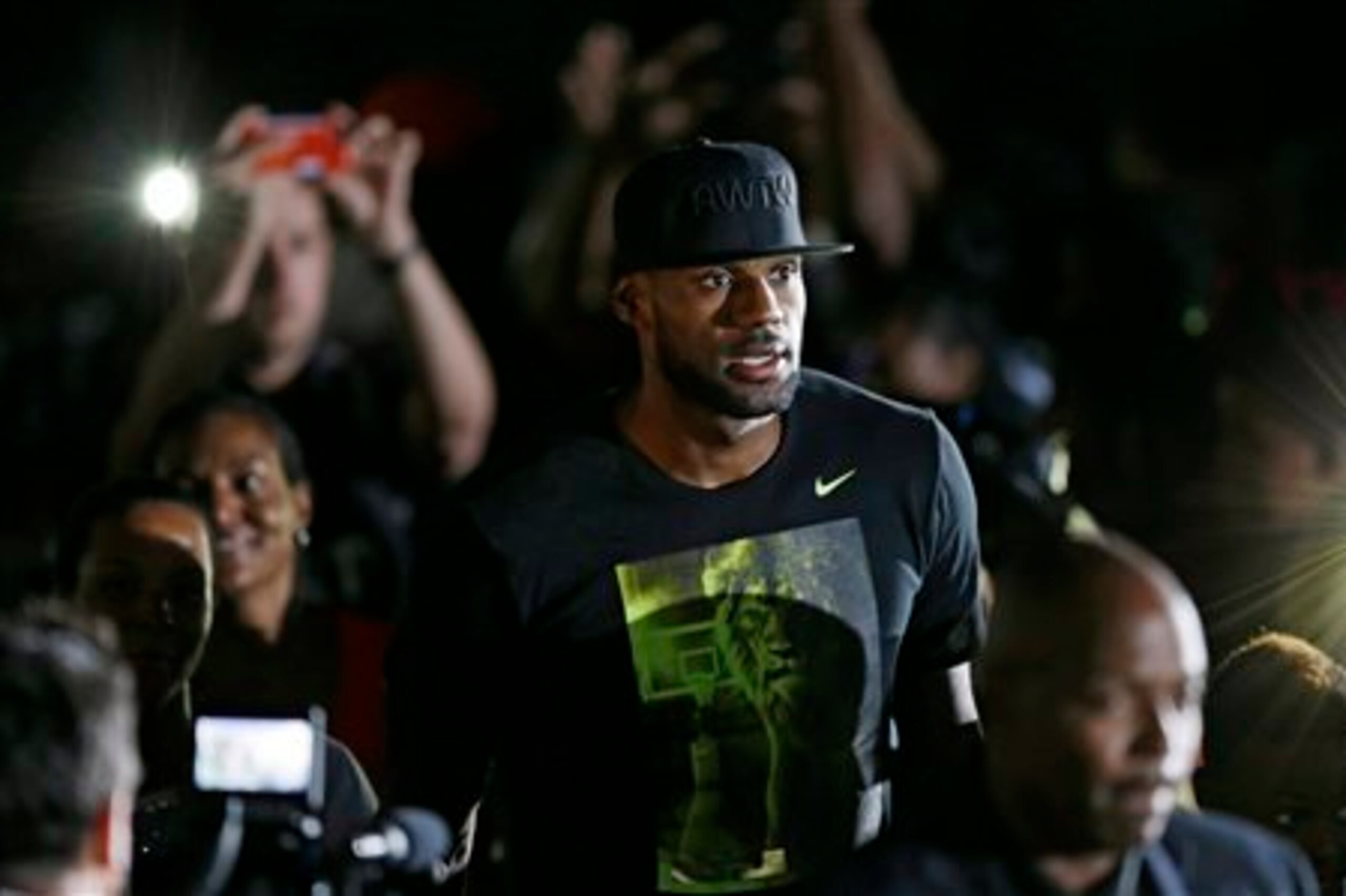
It’s the map followed by the Los Angeles Clippers, adding Chris Paul in to Blake Griffin in 2011-12. The Cleveland Cavaliers utilized that strategy last in combining first LeBron James, then Kevin Love with Kyrie Irving.
Under the current collective bargaining agreement, which assesses such punitive taxes to teams who are well over the tax or repeatedly paying it, this is the ideal strategy. It keeps talent up and cost down.
So, a rebuilding team can’t be graded based on where it is in terms of winning; it needs to be evaluated based on where it is in regards to cap space and young talent. In those areas, the Magic are legitimately impressive.
Young Talent

The Orlando Magic are positively flush with star potential, including the backcourt of the future: Elfrid Payton and Victor Oladipo.
Payton was acquired from the Philadelphia 76ers on draft day, in exchange for Dario Saric and the Sixers’ pick Orlando received in the Howard trade.
While they are both currently listed as point guards, Oladipo doesn’t have the handles of a true point guard. His more natural position is shooting guard. Orlando signing Luke Ridnour also points in that direction.
That combo gives the Magic off-the-charts athleticism in the backcourt. According to Draft Express.com, Payton is long for a point guard, 6’3.75” with a 6’8” wingspan. He has a 35.5-inch vertical. Oladipo is 6’4.25” with a 6’9.25” reach and a 42-inch bounce.
Both players are absolute freaks in transition, and the pairing will make it worth buying a League Pass subscription.
Here’s a taste of what that could look like:
The dynamic backcourt will have an enticing frontcourt to play with as well. Nikola Vucevic, just 24 years old, came back to the Magic in the Howard trade. He is a rebounding beast.
During his two seasons in Orlando he’s averaged 13.6 points and 11.5 boards. His 10.1 win shares are the most any player involved in the four-team transaction has contributed to the franchise he was dealt to. That alone suggests that Orlando won the trade.
Combo forward Tobias Harris set high expectations for 2013-14 after exciting fans with a taste of what he could do when he came over from the Milwaukee Bucks in a trade in 2012-13. While he came a bit short of those expectations, he posted respectable averages of 14.6 points and 7.0 rebounds.
And there’s the No. 4 pick in this year’s draft, Aaron Gordon. He is another transition monster, with the athleticism of a point guard. Per Daniel O’Brien of Bleacher Report:
"Fortunately, he's spring-loaded with a 39-inch vertical and lateral quickness that most guards envy (his 10.81 lane-agility time is better than what Marcus Smart, Russell Westbrook and Chris Paul registered). To top it off, he's got a 220-pound frame that looks like it could put on more muscle.
"
You read that right, better than Russell Westbrook. Add him to Oladipo and Payton on the break and light the fireworks.
Gordon promises to be a great defensive player as well. O’Brien predicts he’ll be the best stopper in this year’s draft:
"With apologies to Marcus Smart, Andrew Wiggins and others, Aaron Gordon will probably be the best defender to emerge from the 2014 draft class.
His blend of explosive quickness and textbook fundamentals allows him to keep even the best attackers in front of him. In addition, he holds his own against interior scorers with his strength and vertical bounce.
"
Pairing Gordon next to Vucevic, whose 2.4 DRPM was 32nd among players who logged at least 20 minutes a game, should allow for an imposing defensive frontcourt.
When you put those pieces together, it means the Magic have four players with an All-Star ceiling in Payton, Oladipo, Gordon and Vucevic. In addition, the versatility and scoring ability of Tobias Harris gives them Sixth Man of the Year potential.
And on top of all that, the Magic have retained all their first-round picks and have the Lakers’ top-five-protected selection in 2017 as well.
Right now, they might not be winning games, but give this group a couple of years together, and it's going to be one of the most promising squads in the league. Think the Oklahoma City Thunder circa 2009-10.
The Thunder, while still in Seattle, were the worst team in the league, but drafting smartly they landed Kevin Durant, Westbrook, James Harden and Serge Ibaka. They ran into a problem, though. They ran out of cap space. That's a problem the Magic can avoid.
Cap Space
The other half of the equation is cap space, and the Magic have that too. In two years, the cap is going to get a giant boost from the reported $2 billion TV deal. According to Zach Lowe of Grantland, some executives are even penciling in a 30 percent bump in the cap over the next two years, but the league may try and smooth that out:
"And that’s where things get interesting: Executives on lots of teams have gotten the sense from the league office that the NBA will try to smooth the increase of the cap level to minimize the impact of any massive one-year jump in revenue. Exactly how it would do that is unclear. The precise team salary cap — $58 million last season, $63 million this season — is tied to overall league revenues; the two rise and fall together. Players are guaranteed about 50 percent of the league’s “basketball-related income,” and the league and union set the cap figure so player salaries add up to a number in that 50 percent ballpark.
"
Thirty percent of $63 million comes out to $18.9 million. Let’s say, for the sake of argument, the cap goes up another $5 million this year, and the NBA splits the difference in two. That would set the cap in 2016 at $75 million.
That number has a sneaky significance that no one is talking about. Under the CBA the most a team can offer an unrestricted free agent with seven to nine years’ experience is 30 percent of the cap. That means a max deal for such a player would start at $22.5 million.
The CBA also stipulates the maximum raise for a player in the first year of their extension is a 7.5 percent. That means the most the Thunder could offer Durant under the Bird Rule in 2016 is $21.7 million.
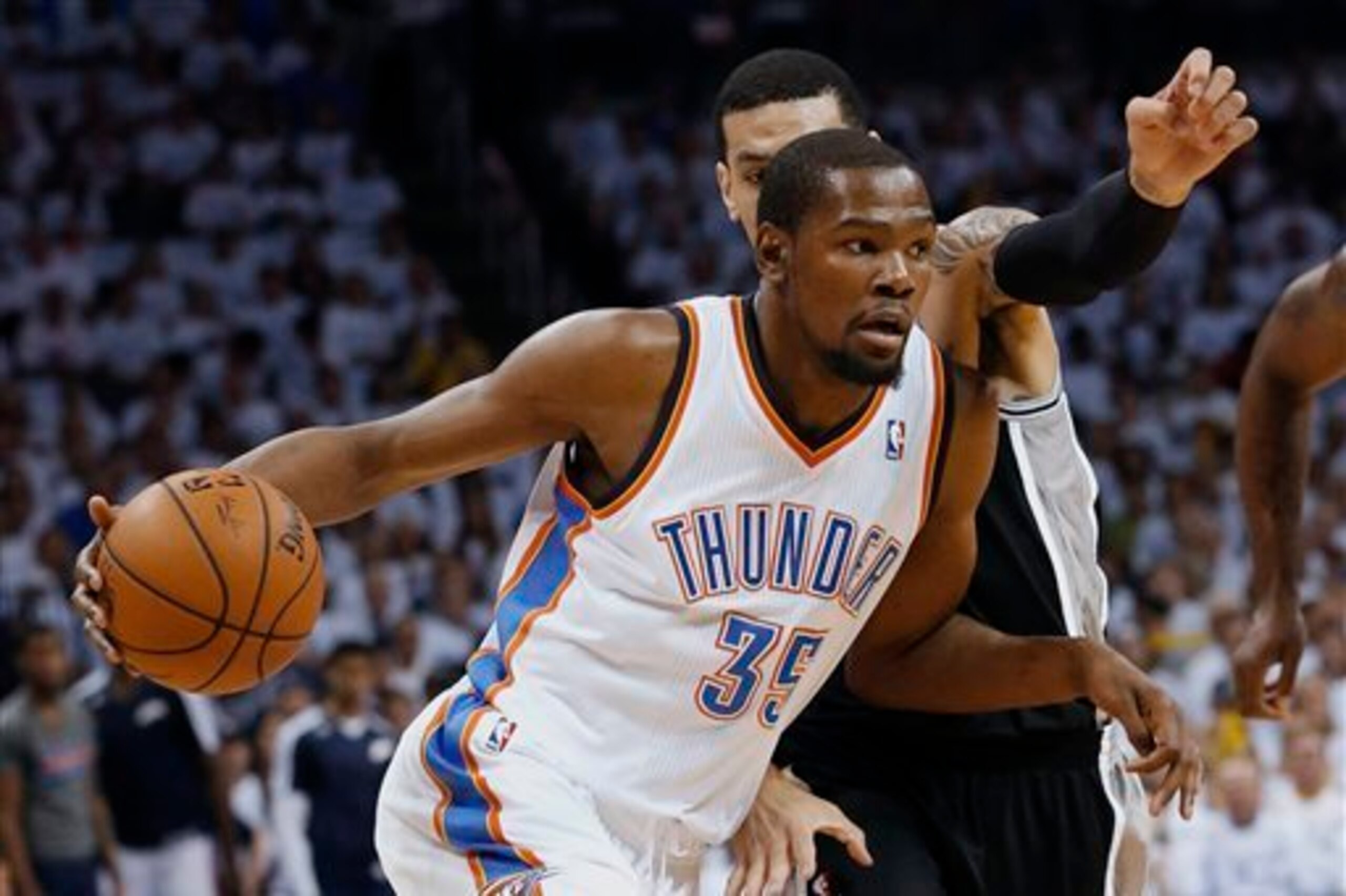
You don’t need to be a mathematician to realize that $22.5 million is more than $21.7 million. A team offering an extension suddenly has no monetary advantage. They aren’t obligated to use the Bird Rule, and with the fifth year guaranteed, you could argue there is a slight advantage, but even that’s dicey.
A five-year, $118 million deal or a four-year $96 million deal is only better if a player doesn't think he’ll be worth max money in that fifth year. If he is, he’d project to about $27.5 million in the first year of his next contract, or $5.3 million more than what he’d get in a five-year deal.
This is the part where things look incredibly appealing for the Magic. Their current salary structure in the summer of 2016 allows them a max contract.
Assuming Vucevic gets an extension in the neighborhood of Nikola Pekovic’s contract, they give Harris a contract in the Taj Gibson range (I estimated both extensions on the high side) and let Moe Harkless walk, this is what the Magic ‘s cap room looks like:
| Player | Salary |
| Channing Frye | $7,806,971 |
| Victor Oladipo | $6,552,960 |
| Aaron Gordon | $4,351,320 |
| Nikola Vucevic | $12,000,000 |
| Elfrid Payton | $2,613,600 |
| Tobias Harris | $8,000,000 |
| Andrew Nicholson | $3,394,725 |
| Evan Fournier | $3,278,996 |
| Devyn Marble | $980,431 |
| Dewayne Dedmon | $1,215,696 |
| Total | $50,194,699 |
While they have the first-round picks to deal with, they’ll also have some wiggle room with team options. In fact, apart from Channing Frye and the projected extensions, Orlando holds a team option on the rest of the roster. And, if they need to, Frye's three-point skills at the 4 make him an easily traded asset.
So here’s the gist: The Magic can easily offer a max contract and invite that player to come play with a roster loaded with young talent. That’s what makes them so intriguing. They'll be stacked at four of the five positions, with an opening at the small forward position. And they’ll have the advantage of being in Florida, which means no state tax. Because of the particulars of the CBA outlined above, that means Durant would actually make more money in Orlando than in Oklahoma City.
Who needs a Big Three when you can have a Big Five?
Sure there are a couple of questionable decisions the Magic have made: notably Ben Gordon’s two-year, $9 million deal. But, to be fair, the Magic are so set on cap space, they needed that just to get up to the floor.
Frye’s four-year $32 million is a little debatable, too, as some wonder whether his numbers are a product of the Phoenix Suns’ system. But having his three-point shooting will help stretch the court for Payton and Oladipo. It may not be a great contract, but it’s not an egregious one.
And, to be fair, the bulk of Orlando's young talent hasn't played enough to assure they will blossom. Other teams, such as the aforementioned Kings, have stayed near the top of the draft and collected busts. That said, the early returns on the Magic seem more "Oklahoma City" than "Sacramento."
Overall, the Magic are extremely well set. They are ripe with young talent, picks and money. They will be one of the most well-situated, tantalizing destinations for free agents in the summer of 2016.
Orlando’s young stars promise to put on a show in their transition game this year. But the franchise is in transition too. Its fans should just sit back and enjoy both. The outlook is brighter than last season’s record indicates.

.jpg?w=2560 "Rodgers Iced Out on Plane 💎")
.jpg?w=2560 "Raiders Could Start Mendoza")
.jpg?w=2560 "Mahomes Told Teammate to Leave Meeting")
.jpg?w=2560 "🚨 Week 8 AP Top 25 Poll")


.jpg?w=2560 "Lamar Being Out Shocked Ravens")
.jpg?w=2560 "Lions Outlast Packers")