
Clippers Defensive Anchor DeAndre Jordan Breaks Down the Art of Shot Blocking
All around Los Angeles Clippers defensive star DeAndre Jordan is art.
He owns roughly 12 unique art pieces—about five of them depicting his favorite superhero, Batman (because he's "kick-ass," Jordan says). He goes to charitable art events throughout the year and has multiple tattoos, which he also calls art. Even his cartoonish game faces, like the one he posed after emphatically dunking over Brandon Knight last year, are artistic.
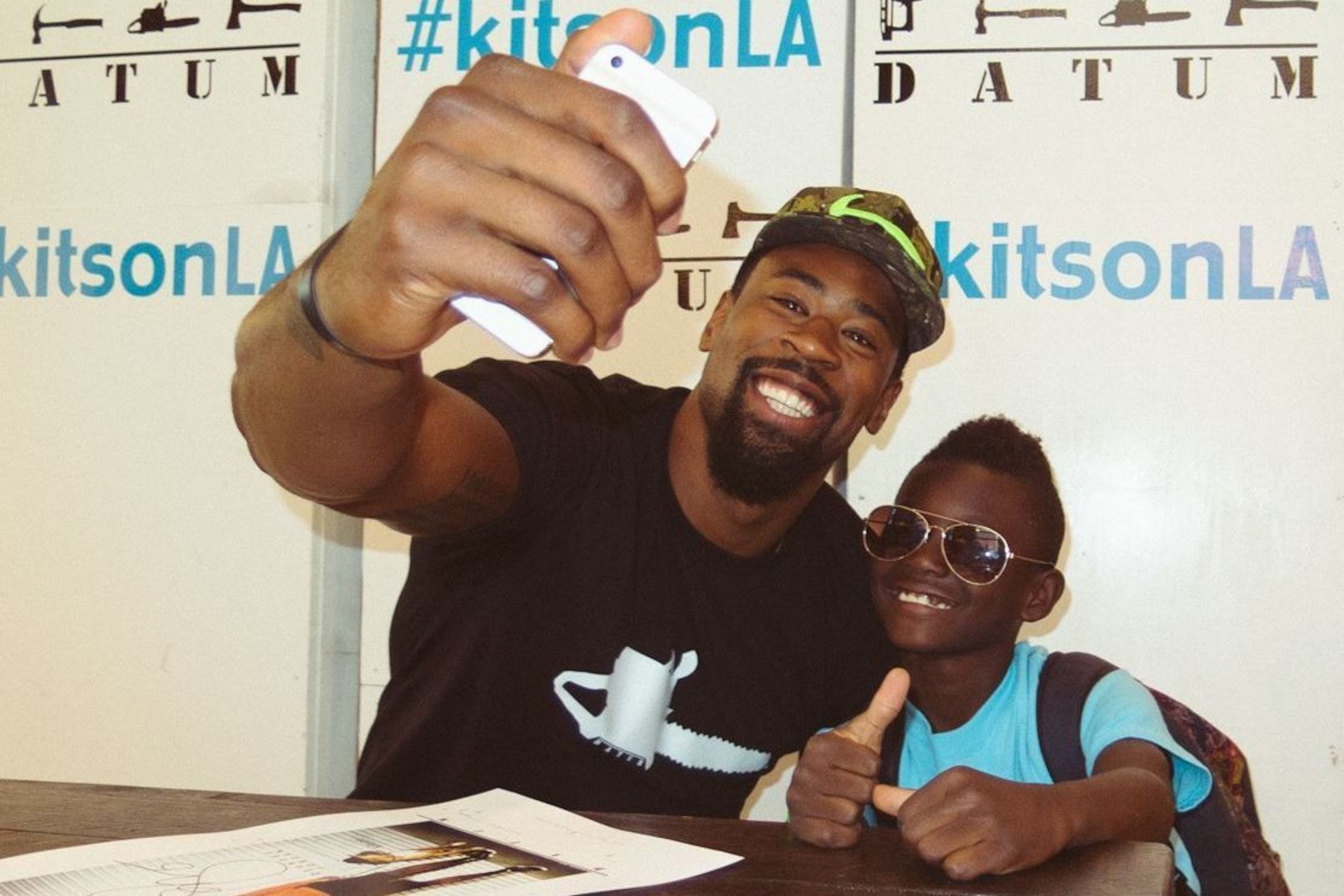
Over the summer, Jordan added something new to his portfolio: collaborating with artist and fashion designer Jared Brunk on a new lifestyle brand called Datum, which features images of different tools—a chainsaw, crowbar, hammer, nail gun, shovel and wrench—that are meant to represent one's work personality.

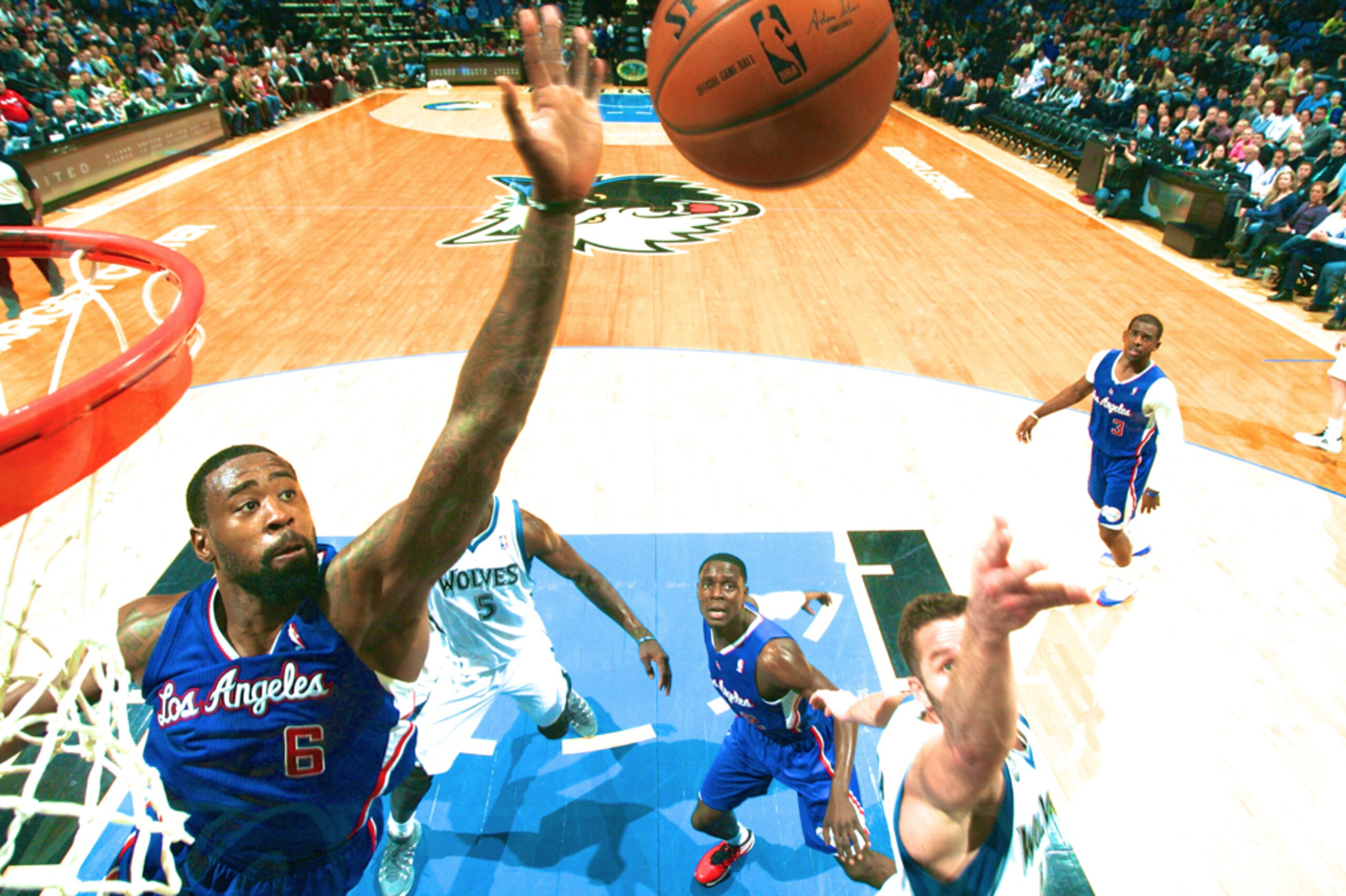
Speaking with Bleacher Report at the September launch event in Santa Monica at the Third Street Promenade, Jordan likened his style of play to a hammer, and fittingly so. This past season, the 26-year-old big man delivered more hits to basketballs than he had ever done in his six-year career, swatting 2.5 shots per game—third-best in the NBA.
"Everybody's different," Jordan said. "My art is to block shots, defend and rebound, and I definitely take pride in that."
While in Southern California, B/R chatted with Jordan about his shot-blocking evolution, as the Clippers have increased their win total each season he's been in town since 2008. Below are 12 takeaways on how one of the league's most athletic big men became a defensive craftsman, presented here in a first-person perspective and edited for clarity and length.
1. Everyone can be a scorer, but only few can be great shot-blockers.
When I was growing up, I was in Houston for those back-to-back championships in 1994 and '95. So I was always a huge fan of Hakeem Olajuwon; the same with Kevin Garnett when I was in high school. They just had that high motor and high energy. They were nonstop. Intensity and defense was their thing. When I got to the NBA in 2008, I realized that some guys aren't going to be scorers on the team, some guys are going to be the role players and some guys have to get their hands dirty. I took pride in that, and now it's worked out to my favor.
2. Two main shot-blocking fundamentals: individual timing and opponent tendencies.
I'm 6'11", my arms are long as hell, and I'm pretty athletic, so I can alter a shot or get a piece of it. But a lot of it is timing and knowing your personnel. If I'm playing against a player who I know is going to attack the rim every time, and he's not going to back down—like a Russell Westbrook—I'm going to have to try to get his shot at the rim. Those types of players are athletic and fearless.
Then there are other guys who are a little trickier. They know that there's a shot-blocker in the paint, and they may drive in and try to lay the ball up just to get you off your feet with a pump fake, like Stephen Curry. I have to realize that when I'm jumping, or I'll be in foul trouble early. If I was playing against Chris Paul, I'd be in foul trouble the entire game because he's crafty with drawing fouls and getting into guys' bodies to create and draw that contact. I'm happy we're on the same team.
Overall, the toughest shots to block are floaters and sky hooks, even though I've gotten a couple before.
3. The team's best shot-blocker also needs to be the loudest player on the court.
Even though I'm talkative off the court, that's different than directing guys on the court, calling out plays, letting guys know where they need to be. And my teammates definitely respect that. If they're on the perimeter guarding somebody and I'm saying from the back, "Hey, I'm here, send them my way," that's going to give them confidence knowing that they have me back there to try to clean up mistakes.
Doc Rivers told me that when he coached in Boston, Kevin Garnett was always the loudest player on the floor—that you could hear him no matter how loud the game was. When he came in last year, Doc said, "We don't need you to be Kevin offensively. We need you to take some defensive things from him to help our team win a championship." So the first thing was being the loudest communicator, being a chief out there on defense because I am in the back seeing everything. I felt like this was my job. I need to be that guy. And every game, I learned something new.

4. As the defensive backbone, communication needs to extend to help coverages.
With our defense, we're somewhat connected on a string. So if I move, I feel like our whole team is going to move. If Chris moves, we're all going to move because we need to be able to pick up and trust each other. That's something that is communicated.
If I'm going to go block a shot, I'll tell my teammates, "Hey, I'm going, so somebody help me." Our defense is so intense that those shifts have become second nature now. We were playing five-on-five recently, and I felt like our defense was snapping just like it was during the season. That stuff never leaves you.
5. Intimidation can unfold naturally, but it never hurts to add some attitude after a block.
You can sense intimidation a little bit, especially if a player gets in the game and you block his shot early. Guys will think twice about coming in the paint, or they'll shoot the ball quicker than they usually do so they don't get their shot blocked again.
Sometimes in practice, I'll do Dikembe Mutombo's famous finger-waving to mess around, but never in the game. I may make a face or sometimes scream, like this one time on March 17, 2013, when we were playing the New York Knicks and Marcus Camby.
Marcus is a close friend of mine. He was one of my teammates when I was a rookie, and we live about five minutes from each other back in Houston.
When we played together, he taught me about timing, defense and trying to be as dominant as possible. In his day he was a great shot-blocker, a great rebounder and a Defensive Player of the Year in 2007, so I wanted to learn as much as I could from him.
So when he was with the Knicks, he came in and tried to lay the ball up, and I sent that s--t into the stands. I looked at him, and I screamed so loud. After the game, he kind of got on me a little bit. Then I found the play on YouTube, and I videotaped it, and I sent it to him. I can't even tell you what he told me.
6. The true measure of a successful blocked shot is where the ball goes on the court.
When I was younger and in my first couple of years in the NBA, I tried to block the ball into the stands. I wasn't thinking that if I block it out of bounds, then it's still the other team's ball. I just thought about the intimidation factor. But as I got older and watched a lot more film in the NBA, I started to realize that there was an art to shot blocking. I watched guys who came before me, like Tyson Chandler and Bill Russell, and they blocked the ball to a teammate or they kept it in play.
Right before you go up to block the ball, you need to watch your teammates. It's a quick read. Let's say one of my teammates gets beat off the dribble from the three-point line. Then I know that he may head to the elbow area as the defense collapses, so I'll try to tip the ball somewhere in that vicinity to where somebody on our team can get it.
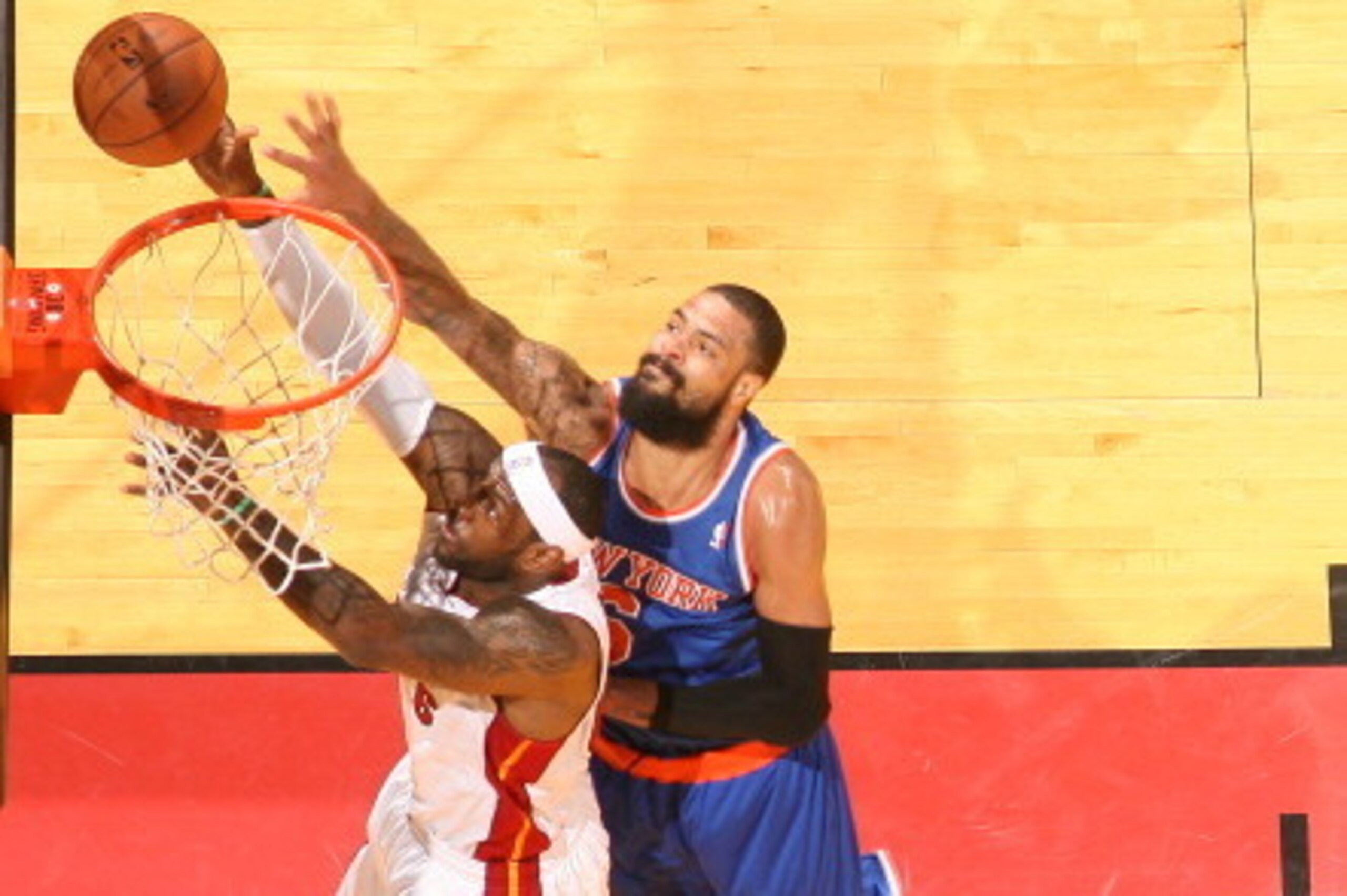
7. Facilitating a fast-break bucket is the ultimate goal of a blocked shot.
What I really want to do on a block is not only keep the ball in play, but block the ball far enough to where I know Chris, Matt Barnes or even Blake Griffin can grab it, run the court and get us a bucket. Blake is so damn strong that he can go down and get us a three-point play. And that changes the entire game. I'm getting better at blocking a shot and getting that rebound so we can go out on the break. But everything is a work in progress.
8. The blocks-per-game statistic is only half the story.
Altering a shot should be a stat, but we don't keep those numbers. In a game you can block some shots, but you may have altered another eight. That's just as good as a block because you've made a player take a tougher shot. Averaging four blocks per game—Hakeem, Dikembe and David Robinson were the last to do it around 20 years ago—is pretty tough nowadays. Those guys were a lot more athletic than others were at the time. Now everybody is athletic.
When I was younger and somebody would come into the lane, I would get frustrated if I felt like I should have gotten the block. But now if I make a player alter his shot and I get the rebound, I kick the ball up, and J.J. Redick hits a three, Blake gets a dunk or Chris goes in there and gets an and-one. Then my teammates all look at me as if to say, "You did that. You were the reason why we got the bucket, because you altered that shot." It's good to know what your teammates realize.
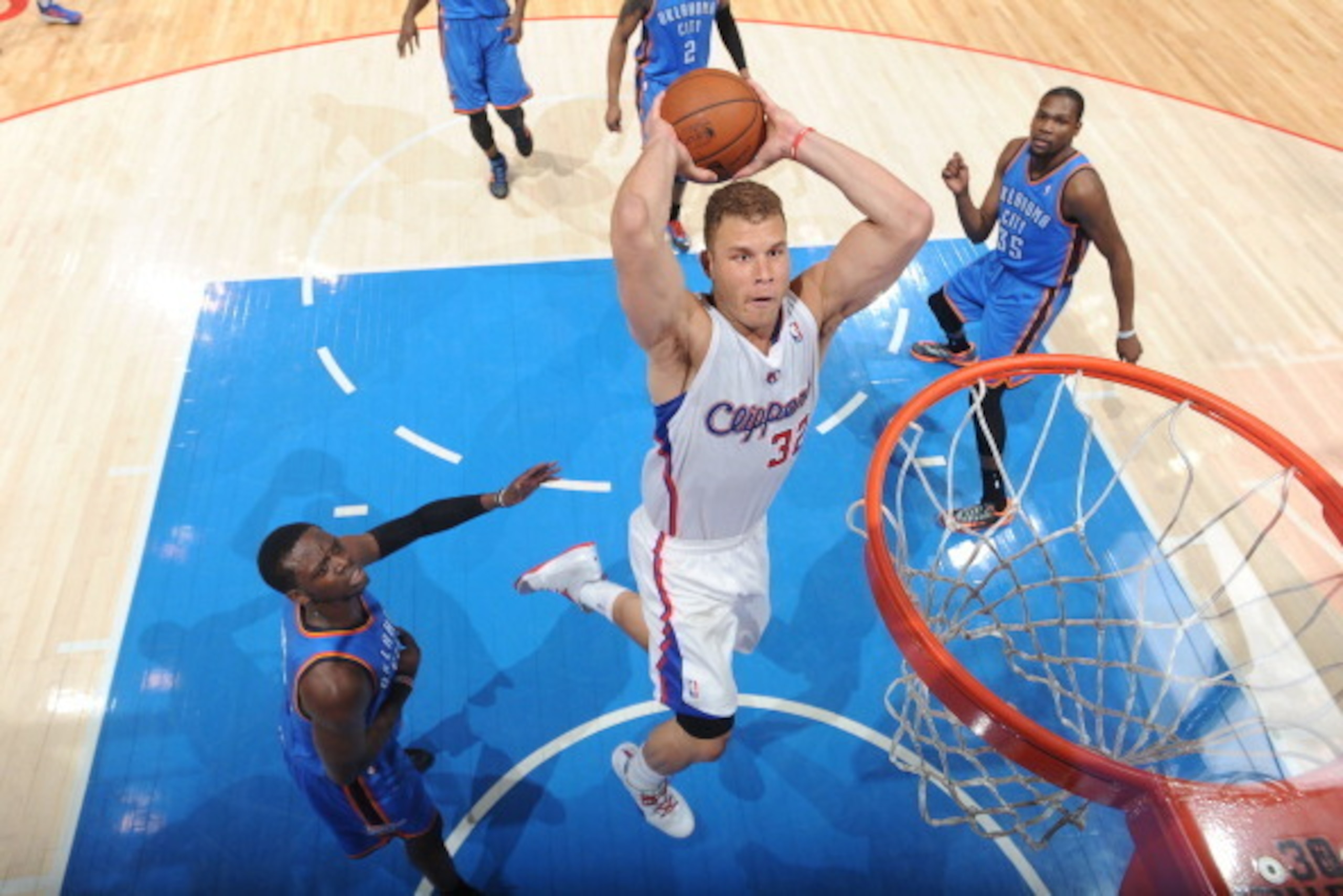
9. The unconventional triple-double—points, rebounds and blocks—is still a special accomplishment.
That's tough. I never had a triple-double in the NBA yet, but last year I got close. I had nine blocks against the Sacramento Kings on November 29, 2013, and I got the game ball that night. That probably was my most memorable moment because the whole time in the locker room after the game and on the bus, I was just thinking, Damn, if I would've went for that block that I didn't go for because I thought I was in foul trouble, I would've gotten it. My teammates gave me a hard time about it, but it was all fun. I'll get it soon.
When it comes to funny moments, I've blocked a couple shots that have hit people in the face. I remember one time I knocked this lady's popcorn out of her hands. I thought it was hilarious.
10. While some might balk over the enforcement of the NBA's verticality rule, there are benefits to it.
While the rule says that guys can't turn their bodies sideways when jumping to block a player, I don't really think that affects what we do. That's because guys are still allowed to keep both their hands up and contest shots at the top of a jump. When somebody is coming full speed at you and you're standing under the rim, there's not really much you can do. You just go straight up and vertical, and put both of your hands up in the air. Guys are getting better and better at it every game.
11. Continued development for shot-blockers is based on the second jump.
With blocking shots, it's about being quicker than the other guy, getting off the ground faster. I'm trying to work on my second jump, where if I block a shot and the opposing team gets the rebound and tries to shoot it again, I'm there to block it, or I'm ready to jump again. All of that is just quick firing everything. This summer, I've been working on my body and core every day, trying to keep myself as fresh and as in shape as I can for our team.
12. You can never forget about offense to be a dominant two-way anchor down low.
This summer, I've also been working on my offense, so that I can be a bonus down in the post. My teammates already feel comfortable giving me the ball down low to make the right basketball play for our team. But I'm trying to tighten up things.
I've been working on my go-to moves: my jump-hook and my counter. I'm also working on my jump shot, which is going to be used this season, as well as my free throws, and they've gotten a lot better. I'm shooting 82 out of 100 in the gym, and I want to do that when the lights are on. You've just got to keep getting reps up, so it becomes muscle memory, and I can go up there and knock them down.

.jpg?w=2560 "NFL House in Paris Closes for Protests")
.jpg?w=2560 "Trevon Diggs Cut by Seahawks")