
Justin Verlander 2011 AL MVP: 10 Reasons This Is a Horrible Choice by Writers
Justin Verlander won the 2011 AL MVP award Monday. No pitcher had won the award since Dennis Eckersley in 1992, though in the interim, Pedro Martinez, Greg Maddux and Roger Clemens had all laid very legitimate claims to the trophy.
Verlander is more like Eckersley. His selection, like Eckersley's nearly two decades ago, was demonstrably wrong. The Baseball Writers' Association of America, who vote on the award, blew it. There was no single player more deserving than Verlander; there were three.
Here are 10 reasons Verlander should not be holding the hardware today.
Jose Bautista Was Better
1 of 10How better to demonstrate that Verlander ought not to have won than to illustrate the superiority of other candidates? Here's the first such argument.
Bautista was a mere power hitter in 2010. He clubbed 54 home runs and drew a ton of walks, but also played poor defense at third base and got few hits that stayed inside the park.
In 2011, he took a leap far beyond that level. He hit 11 fewer homers, but in 28 fewer plate appearances, he had 13 more hits and 32 more walks than in 2010. He posted a .447 on-base percentage, and that was the only important offensive category in which he did not lead the league.
A midseason move to right field also made Bautista more valuable. He's a better outfielder than he is a third baseman, largely because the position gives greater value to his rocket arm. He was 1.3 wins better than Verlander according to WAR, and (file this under 'interesting,' not 'critical') he has two doubles, a homer and a walk in 11 career plate appearances against the new MVP.
Jacoby Ellsbury Was Better
2 of 10Of all the candidates for any award this winter, no snub will have a better beef than Jacoby Ellsbury. The award, after all, is called the Most Valuable Player, and Ellsbury's 9.4 WAR suggest he was some 30 percent more valuable than Verlander and a win and a half better than Bautista.
He hit 32 home runs; he stole 39 bases. He batted .321/.376/.552, played all but four of the Red Sox's games and had the best defensive numbers of any centerfielder in baseball. He was an everyday impact player.
Not since Alex Rodriguez's wild 2007 romp has any player had a better season, according to FanGraphs's calculation of WAR. Ellbury's well-roundedness should have been impossible to overlook. Not so.
Dustin Pedroia Was Better
3 of 10When Pedroia won the 2008 AL MVP, it turned some heads. He was, after all, a non-slugging second baseman. Most of the time, the award goes to an outfielder or corner man who hits 30-plus home runs and has some secondary skills.
If he won in 2008, though, he ought just as well to have gotten top consideration for this award. He was his usual, extraordinarily balanced self at the plate, posting a .307/.387/.474 batting line, walking a shade under 12 percent of the time and striking out a shade less than that. He also stole 26 bases in 34 tries, which in the lower run environment of 2011 was a net positive to the Red Sox.
At second base, Pedroia was even more than his usual stellar self with the leather. He was better than anyone has been since Chase Utley in 2008, according to UZR. Pedroia's defensive value behind a ground-ball friendly pitching staff is a critical element that was clearly taken too little into consideration.


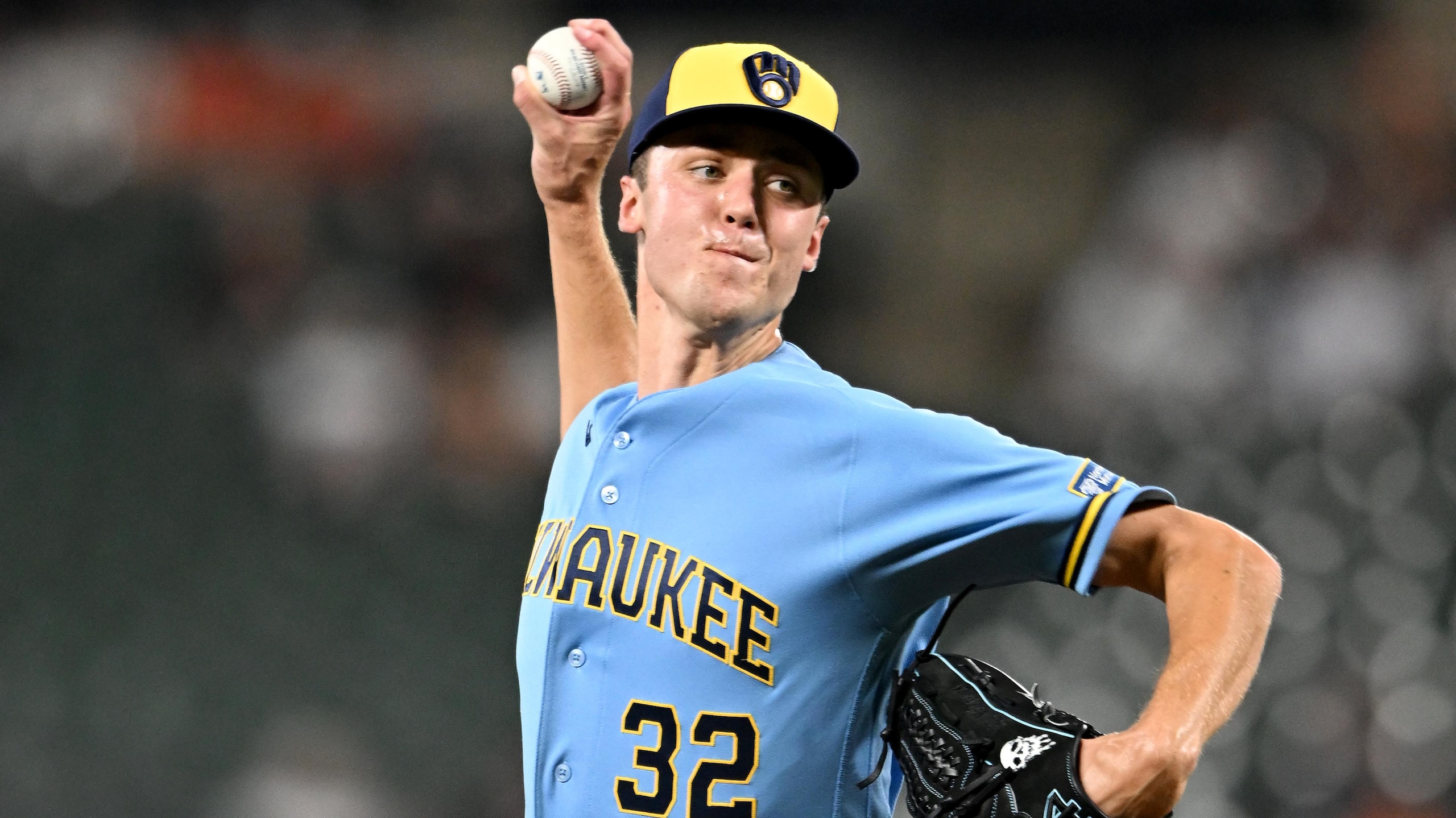
Pitcher Wins Are Meaningless
4 of 10Justin Verlander led baseball with 24 wins in 2011. As he pursued 25, it was frequently mentioned that no pitcher had made it to that plateau since 1990. Less well-reported was the fact that the pitcher who did it was Bob Welch.
Should Welch also have won the MVP? Certainly not. It's become harder and harder to writers to resist, as pitcher usage trends toward fewer and fewer starts per season, from celebrating counting numbers they remember elite pitchers reaching when they were young men.
It's cool that Verlander won 24 games, but it tells us nothing. Ian Kennedy won 21 games, after all, and was not the best pitcher on his own team.
In seven of his victories, he gave up three or more earned runs. Roy Halladay, by contrast, got only two such wins all year. In 14 wins, the Tigers supported him with five or more runs, giving him a large margin for error. The bullpen blew not one lead for Verlander all season, and the offense saved him from four losses.
Park Factors
5 of 10Justin Verlander calls Comerica Park home, and it's a very good thing for him. Verlander is a fly-ball pitcher; Comerica is not a good place for hitters who like to hit flies, especially if those batters are left-handed. The park depresses home run rates by 12 percent for left-hitting batters. Lefties had a measly .504 OPS against Verlander this season, partially thanks to the miserable proposition of batting left-handed at Comerica.
Even so, Verlander gave up 24 home runs on the season, with a below-average fraction (8.8 percent) of his total flies (which made up only 40 percent of batted balls against him) leaving the park. CC Sabathia, who gets some 46 percent of his batted balls on the ground, would surely have loved to have pitched in Detroit as often as did Verlander.
ERA, and the Definition of the Earned Run
6 of 10Just as wins are an overrated stat for pitchers, ERA is becoming increasingly obsolete. We have much better ways to measure the quality of a pitcher.
Verlander led the AL in ERA at 2.40, over half a run better than that of CC Sabathia.But that does not tell us everything traditional evaluators (like baseball writers) think it does.
First, there is the problem of defining an earned run. Errors themselves are sometimes nebulous, but leaving them aside, runs are assigned as earned or unearned on what can be very spurious bases. The inning reconstruction asked of an official scorekeeper in order to determine whether or not a run would have scored if not for the error is a bit too much.
For that matter, what are we to make of unearned runs? Is a pitcher lucky to have allowed a run that will not count against his numbers or unlucky to have the run standing against him in the game? And what of errors the pitcher commits himself? Collectively, it's clear errors are detrimental, but from an individual perspective, the waters are muddy.
For what it's worth, Verlander allowed six earned runs for a UERA 0.215, barely 60 percent of the league UERA of 0.376, and he committed five errors on the year.
ERA Vis-a-Vis Stranded Runners
7 of 10The ERA stat also holds a pitcher accountable in full for runs his bullpen lets in if he leaves with runners on base and fails to penalize him at all if he leaves those runners and the bullpen covers him.
Here, we have a clear measure of the impact on Verlander's ERA: He bequeathed 11 runners to relief pitchers, and none scored. Michael Pineda of the Mariners left the same number of men on when leaving games, but watched eight of them cross the plate. Roy Halladay left only seven runners to his bullpen, but two scored.
Baseball Prospectus takes each of these two flaws with ERA (defining an earned run and bullpen support) into account as it formulates Fair Run Average. Verlander's is 2.95, which trails both Jered Weaver of the Angels and teammate Doug Fister.
Advanced Numbers
8 of 10Having established that ERA is an unhelpful number, we now need to answer the question: How should pitchers be judged?
A number of very good new stats capture the value of pitchers more effectively than the standard ones, and it's not all about WAR.
FIP: This stat takes into account only strikeout, unintentional walk and home-run rates, avoiding the vagaries of batted-ball luck and bullpen support issues. According thereto, CC Sabathia was better than Verlander in 2011. So were Dan Haren and Brandon McCarthy.
xFIP: Theorizing that even home-run rates are sometimes beyond a pitcher's control (ballparks have a big influence; so does weather), xFIP adjusts the pitcher's homer rate based on the percentage of his total flies that leave the park. By this measure, Verlander again trails Sabathia, and Felix Hernandez pulls roughly level.
WAR: I said it wasn't all about WAR. It's hard to compare ballplayers. Ballparks, team support and schedule all play a tough role to judge. Even if we can prove Verlander is better than all other AL pitchers, is he the best PLAYER in the league?
WAR comes as close to answering that question as any number we have, and it responds to the above question emphatically: No.
Bautista, Ellsbury and Pedroia were all a full win better than Verlander, or more. Sabathia was marginally better. For that matter, Ian Kinsler, Miguel Cabrera and Curtis Granderson were as good or better than Verlander, and Alex Gordon was within WAR's margin of error. Verlander simply did not dominate the league the way the writers thought he did.
The Competition
9 of 10David Price of the Tampa Bay Rays faced batters with an average OPS of .773 in 2011. Matt Garza of the Chicago Cubs faced .755 competition. The average batter who faced Verlander had an OPS of .739.
That's only a symbol of Verlander's good fortune. It runs deeper. He pitched for the Tigers, the best team (and ESPECIALLY the best batting team) in baseball's worst division. He faced the White Sox six times and the Indians, Royals and Twins three times apiece.
Through 11 starts, he had faced the Yankees (twice), the Red Sox, the Blue Jays, the Rangers and the Rays. He was 4-3 and his ERA was 3.42. Over his final 23 starts, he faced those five teams just twice more (once Boston, once Tampa) and had a 20-2 record with a 1.94 ERA. He allowed a .540 OPS and had 4.58 WPA (a win-based stat in the WAR family) over that span. His WPA in those first 11 starts was 0.333.
Dominating weak competition is a good thing to do in sports. Too many players and teams stoop top the level of inferior opponents. Still, it's only right to note that Verlander faced Boston and Texas just three times combined, whereas Sabathia had to run those ringers five and three times, respectively.
He Won His Award
10 of 10Despite all the arguments I've presented about Verlander's lack of dominance, it's still probably true that he was the best pitcher in the American League this season. He was fantastic.
But he still did not deserve the MVP, because the MVP should not go to pitchers. That's not a knock on the value of an ace; Greg Maddux and Pedro Martinez well deserved MVP honors in the 1990s. But that's true only insofar as pitchers are considered for the award in the first place.
They ought not to be. It's simply too hard to determine whether a batter (like Bautista and Ellsbury) or a pitcher is more valuable. They derive their value utterly differently. Whereas a starting hurler pitches just 35 times a year, when he does, he has an exponentially greater impact on the game than any batter does.
That difference—concentrated versus long-view value—is fundamental, not incremental. Closers like Dennis Eckersley NEVER deserve the MVP. Beyond that, until we simply make the Cy Young award the MVP for pitchers and take them out of regular MVP running, we'll always have this sort of muddle.
.jpg?w=2560 "Buzz: Teams Monitoring MHJ Trade")
.jpg?w=2560 "Breaking News")

.jpg?w=2560 "Report: Dart Out For Season")

.jpg?w=2560 "Best Sports Families of All Time 🤩")