MLB Trade Rumors: Five Arms the Texas Rangers Might Acquire for Elite Prospects
Fans of the Texas Rangers are just a few days away from the anniversary of one of the most important (and polarizing) dates in the franchise's history.
July 9, 2010, is important because it's the day that the Rangers put together the trade to get Cliff Lee that ultimately fueled the Rangers' first-ever World Series run.
The date is polarizing today, because some Rangers fans still feel duped by Cliff Lee and his (now crystal-clear) offseason agenda.
To Lee's defense, who wouldn't want to make (essentially) the same money and not have the burden of being the No. 1 stud, the go-to ace?
That's a comfort you can have when you're on a Phillies team that has arguably the best starting staff of the decade, if not the last two or three.
Think of the Miami Heat—but with less attitude, and a better chance to win a championship.
Cliff did create an awareness—first hand—of the utterly unequivocal importance of having an ace atop your rotation. Especially if you want a sustainable postseason run.
If the Rangers want to ensure a postseason berth for a second consecutive season (something not done since the '99 season) they most certainly will need to make a move a for a front-line starter.
Cliff Lee is out. And many key pieces in the Rangers farm system went out with him just to rent him away from the Mariners for a few months.
Was it worth it?
You'd better believe it. Texas Rangers fans have now felt the rush of the World Series, and they want to do whatever it takes to get back.
If the Rangers do go out and get a solid starter, who might they procure? A word of warning: there won't be a Cliff Lee-type pitcher coming to the Lone Star State this time—there are some quality options available, however...
No. 5: Carl Pavano, Minnesota Twins
1 of 6During last year's off-season, Carl Pavano was there for the taking. The Rangers' attention (as was the New York Yankees') was firmly placed on Cliff Lee. Then Zack Greinke. Minnesota re-signed the right-hander to little fanfare.
Pavano is certainly not in the same league as Cliff Lee. But he is a serviceable starter and if acquired by Texas, he could slip right into the No.. 2 or 3 slot.
The Minnesota Twins have struggled this season. It will be tough for them to earn yet another AL Central title this year, but certainly not out of the question.
A trade of Pavano would ultimately signify a wait-until-next-year approach for the Twins. They might not be ready to give up yet; but with Joe Mauer's injury issues, it might be best if they did.
Like Lee, Pavano is a playoff-savvy veteran. He's 3-2 for his career in the postseason with a 2.51 ERA. During the 2003 Florida Marlins run to the World Series Championship, he was 3-0.
The Twins' farm system was ranked 13th by Baseball America, two slots ahead of the Rangers'. If a deal was put in place with the right players, Pavano could certainly find his way on the flip-side of I-35 in the Dallas/Fort Worth Metroplex as a Ranger.
PROS: Pavano is a leader—a proven workhorse (when healthy) and postseason winner.
CONS: The asking price might be too high, and Pavano has a large contract and is no spring chicken at 35.
No. 4: Chris Carpenter, St. Louis Cardinals
2 of 6Chris Carpenter and Carl Pavano are both right-handed, over 6'5" tall and have each won a World Series ring.
That's where the similarities end. Carpenter is a classic power pitcher, and aside from injury was most likely headed towards a Hall of Fame-type career.
Like Pavano in '03, Carpenter was undefeated in the Cardinals World Series run of 2006. Overall, he's 4-2 with a 2.91 ERA in postseason play.
The Cardinals were playing excellent baseball for most of this season, despite the fact that they lost last year's ace, Adam Wainwright, to a torn elbow ligament before the Cardinals broke camp last spring.
But a recent injury to star Albert Pujols (broken left forearm, out 4-6 weeks) might be what makes Carpenter available to the Rangers. That, plus he's in the last year of a contract and his departure would save the Cardinals quite a bit of cash in the long run.
His price would be high undoubtedly, as the Cardinals will certainly seek pitching. They'd look to pry Martin Perez, plus Matt Harrison or Derek Holland (or both) away from Texas to make this trade happen.
PROS: Carpenter, stuff-wise is much better than Pavano. He has a World Series ring as well, but also has a 20-win season ('05) and a Cy Young Award ('05). At his best, he's an innings-eating and often overpowering presence on the mound.
CONS: Chris Carpenter is 36 years old and has had numerous injuries—which wiped out 2003 in it's entirety and limited him to just 5 games in '07 and '08 combined.
No. 3: Scott Baker, Minnesota Twins
3 of 6Scott Baker would be a great fit in the Texas Rangers rotation. He'd be an ideal target for a Rangers trade for three reasons:
1. Baker is a solid No. 2 starter, but he doesn't have the name recognition that a Pavano or a Carpenter carries.
Ultimately, this means less money will be needed to sign him long-term, and fewer prospects will be needed to obtain him in a trade.
2. Baker isn't old (he'll be 30 in September), but he's not so young as to be labeled an "up-and-comer."
This puts leverage on the side of the Rangers, for the same reasons.
3. He's having a good year, but not a great one.
At 5-5 and with a 3.39 ERA thus far in 2011, his ERA is considerably lower than Pavano's but not so awe-inspiring as to label him "untouchable."
With the right contract, he could be a key starting pitcher for the Rangers for a long time. The Rangers need a long-term quality starter, especially since the prospect of signing ace CJ Wilson to a deal deteriorated last off season.
PROS: Baker would benefit from having an elite-level offense (like the Rangers) providing some run support.
CONS: Honestly, with his contract status and relatively clean bill of health I can't really see any drawbacks aside from what the Twins might require in terms of prospects to make this happen.


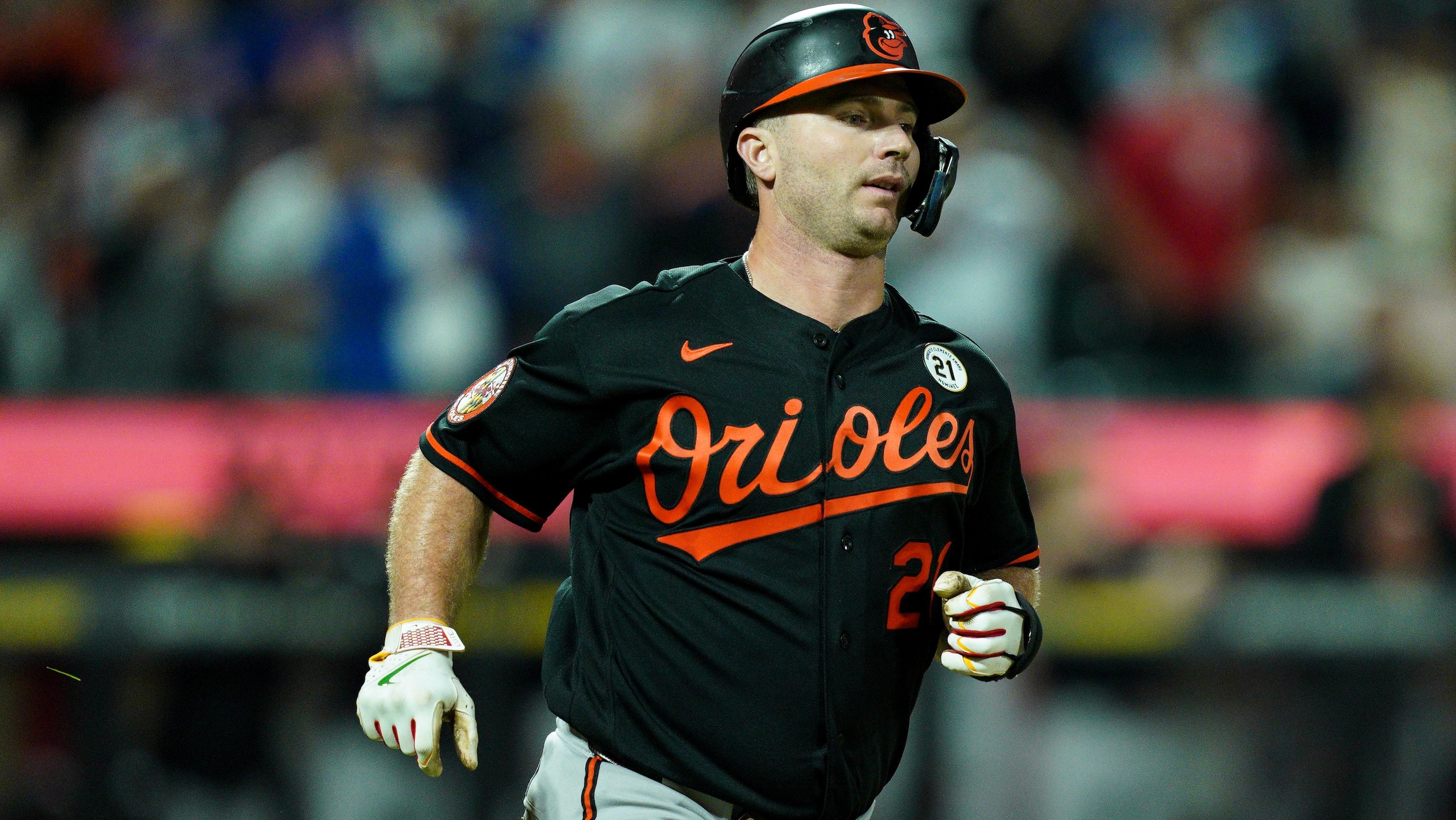
No. 2: John Danks
4 of 6Second chances are so hot right now—and atonement is always trending. Just ask Jason Kidd of the NBA Champion Dallas Mavericks—an additional tour of duty from the team that originally drafted you is where it's at.
John Danks was originally drafted in the first round by the Rangers back in 2003.
He was one of the "D's" in the "DVD boys" moniker that gave Rangers fans something to look forward to at a time when the big league club at that time didn't exactly inspire hope.
Traded to the White Sox for Brandon McCarthy in December 2006, it'd be great to have him back.
His numbers this year don't look so great: 3-8, 4.29 ERA. However, he's a ground-ball pitcher, perfect for a home-run happy home field like Rangers Ballpark in Arlington.
Undoubtedly, this would be a costly trade in terms of prospects for the Rangers.
It bears noting that he isn't currently signed beyond this year which may make him more expendable for the White Sox.
The White Sox's lack of depth in their farm system would most likely mean that they would ask the questions that the Rangers don' t want asked—which of course involves the Rangers' "Killer P's": Profar and Perez.
Much like when Danks was traded for McCarthy—the Rangers could trade a hot prospect (Perez) with no big league experience for a quantifiable big-league success.
Maybe this time it would work out better for the Rangers.
PROS: Danks is a ground-ball pitching machine and the fact that he's left-handed is always a plus when pitching in general—and even better at the Rangers Ballpark in Arlington.
CONS: It won't be easy to pry him from the White Sox. They're a good but not great team—just 3.5 games out of the AL Central. It would take a lot (perhaps too much) for the Rangers to re-acquire him.
No. 1: Jeremy Guthrie, Baltimore Orioles
5 of 6Jeremy Guthrie is a good pitcher. His numbers are somewhat suspect in terms of wins and losses for his career (40-57).
This is what happens when you play for a Baltimore Orioles team that has averaged right around 65 wins per season since he's been there.
Drafted in the first round in 2002 by the Cleveland Indians, Guthrie was finally given a chance to be a part of a Major League rotation in 2007 with Baltimore.
Another new start with a new team would perhaps revitalize the very talented Guthrie. If he was to become a Texas Ranger, he'd be surrounded by other talented pitchers and an excellent offensive club—one that will be fighting hard to hang onto last year's AL pennant.
Plus, a deal could be struck after the year that wouldn't break the bank.
Baltimore's farm system was ranked 21st in the big leagues by Baseball America and is the worst in the AL East. They'll need some pitching and their asking price won't be met easily.
In all likelihood, the Rangers would probably have to at least entertain the idea of moving Derek Holland, Matt Harrison or Tommy Hunter.
Jurickson Profar's name would be dropped, perhaps making the asking price too steep. Martin Perez is as close to untouchable as any name the Rangers have on their farm and should be effectively left out of this equation.
PROS: Guthrie is a solid, and talented pitcher. He's never played for a winner and that opportunity could help him blossom from good to great.
CONS: No playoff experience, and he has a tendency to surrender too many long balls (he led the AL in '09 with 35 HRs allowed). He also can struggle with control—a fly-ball pitcher with a penchant for allowing free passes winds up like Chan-Ho Park. That's not good.
Bonus Possibility: Jonathan Sanchez
6 of 6Jonathan Sanchez would be a nice fit for the Texas Rangers. He's arbitration-eligible after 2013 but doesn't have a contract in place after this season.
For many teams he'd be an ace. But when you have a rotation like the defending World Series Champion Giants have, you can move a front-line starter.
He would undoubtedly be costly, both in terms of players required for the trade to happen as well as in terms of money if they wanted to sign him to a long-term deal.
The fact that he has no contract in place beyond this year like Guthrie (and Lee last year) is not necessarily a bad thing: if you don't want to sign him or can't, then you can simply part ways.
Obviously, you'll be bereft of whatever talent was traded, but you won't have to have any more fiscal involvement.
PROS: Left-handed pitcher who can be dominant when he's on.
CONS: Isn't always on and certainly isn't always dominant.


.jpg?w=2560 "Best Fits for Top NFL FAs 🧩")
.jpg?w=2560 "Week 2 Rankings 📊")
.jpg?w=2560 "Mock NBA Expansion Draft 🤔")
.jpg?w=2560 "Look: New Commanders Stadium Pics")