
NFL Draft 2011: Ryan Leaf and the Biggest Draft Busts Ever by Position
It is almost that time of year again: The NFL Draft is rapidly approaching. Experts and fans alike are speculating over which prospects will be the best and which will disappoint.
Nothing is certain in the NFL, except one thing: there will be some busts.
There have always been players surrounded by hype, poised to become the next best *insert said position here.* There have also always been players that could not live up to the hype they faced.
There are many reasons that a player may not be able to live up to the hype and become a bust. Some players peak in college and some cannot handle the speed or pressure that comes in the NFL, for example.
Here is a list of the biggest draft busts, distinguished by position.
Punter: B.J. Sander
1 of 15
B.J. Sander played his college career at Ohio State University. He only started one year, but for that year won the Ray Guy Award, the award for the best punter in the country.
As the so-called best punter in the country going into the 2004 draft, Sander was a hot commodity. He was taken in the third round of the 2004 Draft by the Green Bay Packers.
At first, he played in NFL Europe, where he put up solid numbers. Unfortunately, the harsh Green Bay weather did not allow him to do the same for the Packers. He ended up towards the bottom of the punter rankings.
Sander was released by the Packers in August 2006. He was picked up by the St. Louis Rams for a month during the offseason of 2007.
He has been a free agent ever since.
Kicker: Mike Nugent
2 of 15
The New York Jets did not have a first-round pick in the 2005 NFL Draft. Their first draft pick was a second-round pick, Mike Nugent, a kicker from Ohio State University.
It is not often that a team would select a kicker that high, especially as their first draft pick. However, the Jets were coming off of a playoff elimination due to a missed field goal, so they were looking for a talented kicker.
Nugent seemed to fit the bill. At OSU, he was a dominant force. He won the Lou Garza Award, as the best kicker in the country, in 2004. He was also the first kicker in OSU history to win the team MVP.
Unfortunately for Nugent and the Jets, he did not stand out so much in the NFL. He is regarded as average, at best and certainly not worth the second-round pick.
After four seasons with the Jets (the last of which he spent injured), Nugent entered free agency. He has since played for the Tampa Bay Buccaneers, Arizona Cardinals and his current team, the Cincinnati Bengals.
Defensive End Honorable Mention: Courtney Brown
3 of 15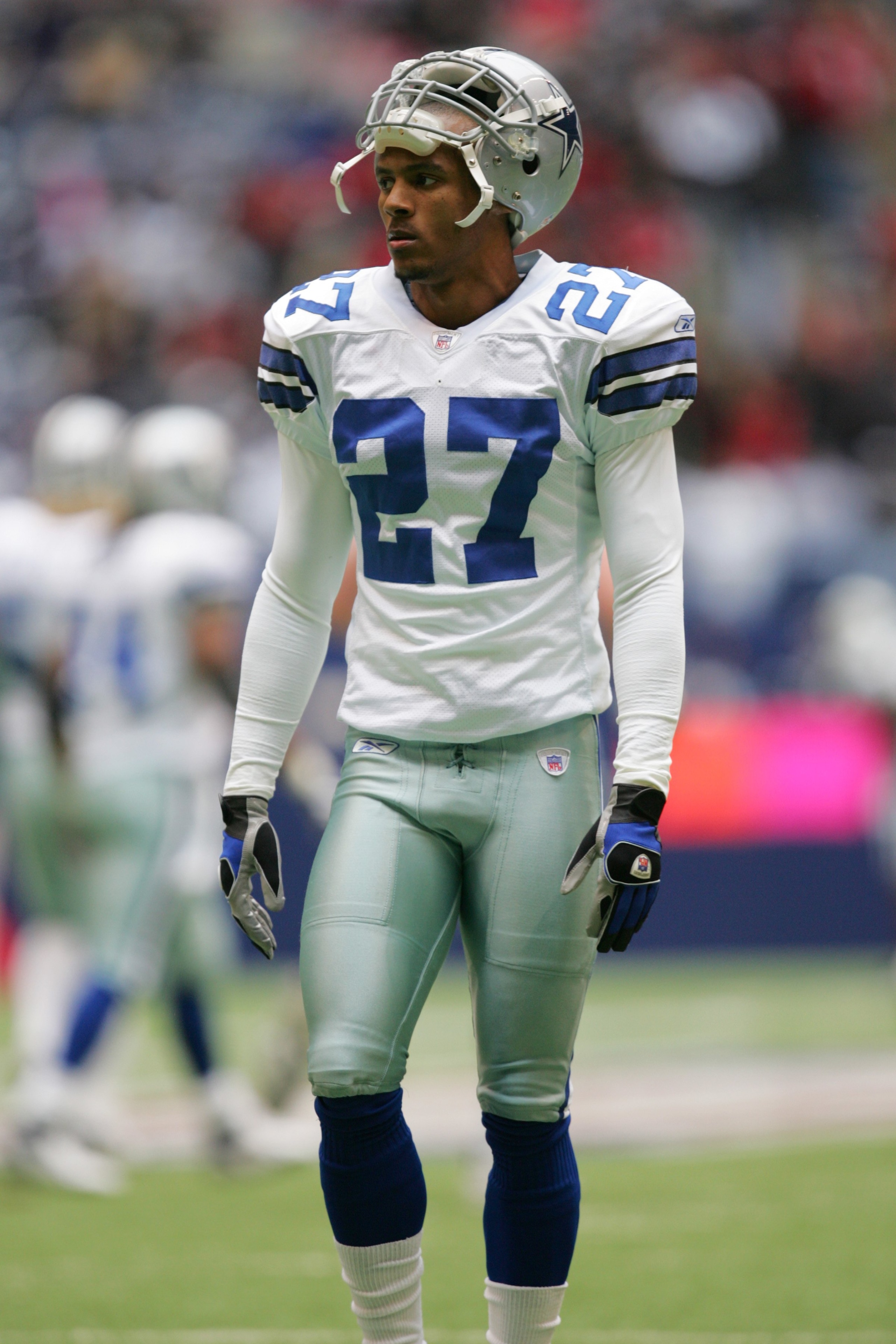
Courtney Brown was the Cleveland Browns' number one pick in the 2000 NFL Draft. It also happened to be the number one pick overall.
First picks are expected to perform. Brown was excellent during his time at Penn State and he was expected to transition that into a successful NFL career.
Unfortunately, it did not happen. Brown started out well, with 70 tackles as a rookie, but became injured during his second season and could never bounce back.
He accumulated a mere 17 sacks in four years with the Browns.
.jpg?w=2560 "49ers Rams Football")
.jpg?w=2560 "Broncos Raiders Football")
Defensive End: Vernon Gholston
4 of 15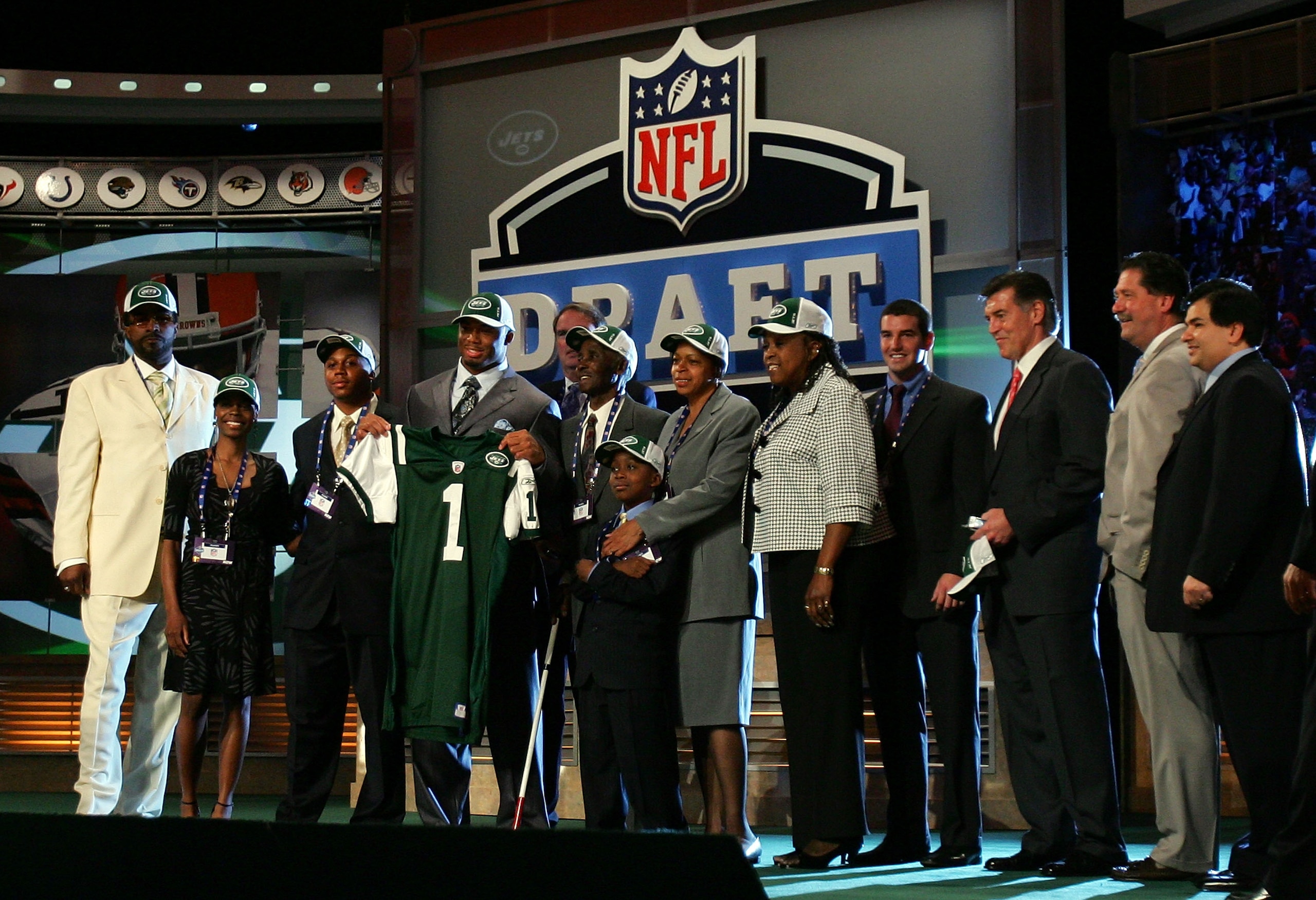
Vernon Gholston was drafted number six overall in the 2008 NFL Draft by the New York Jets.
It seems premature to label someone drafted that recently a bust, but in Gholston's case it appears to be true.
This month Gholston was cut by the Jets. Gholston has yet to record a single sack in the NFL, since his debut in 2008.
He is the only defensive end drafted within the top ten overall of a draft to not record a single sack.
Defensive Tackle: Steve Emtman
5 of 15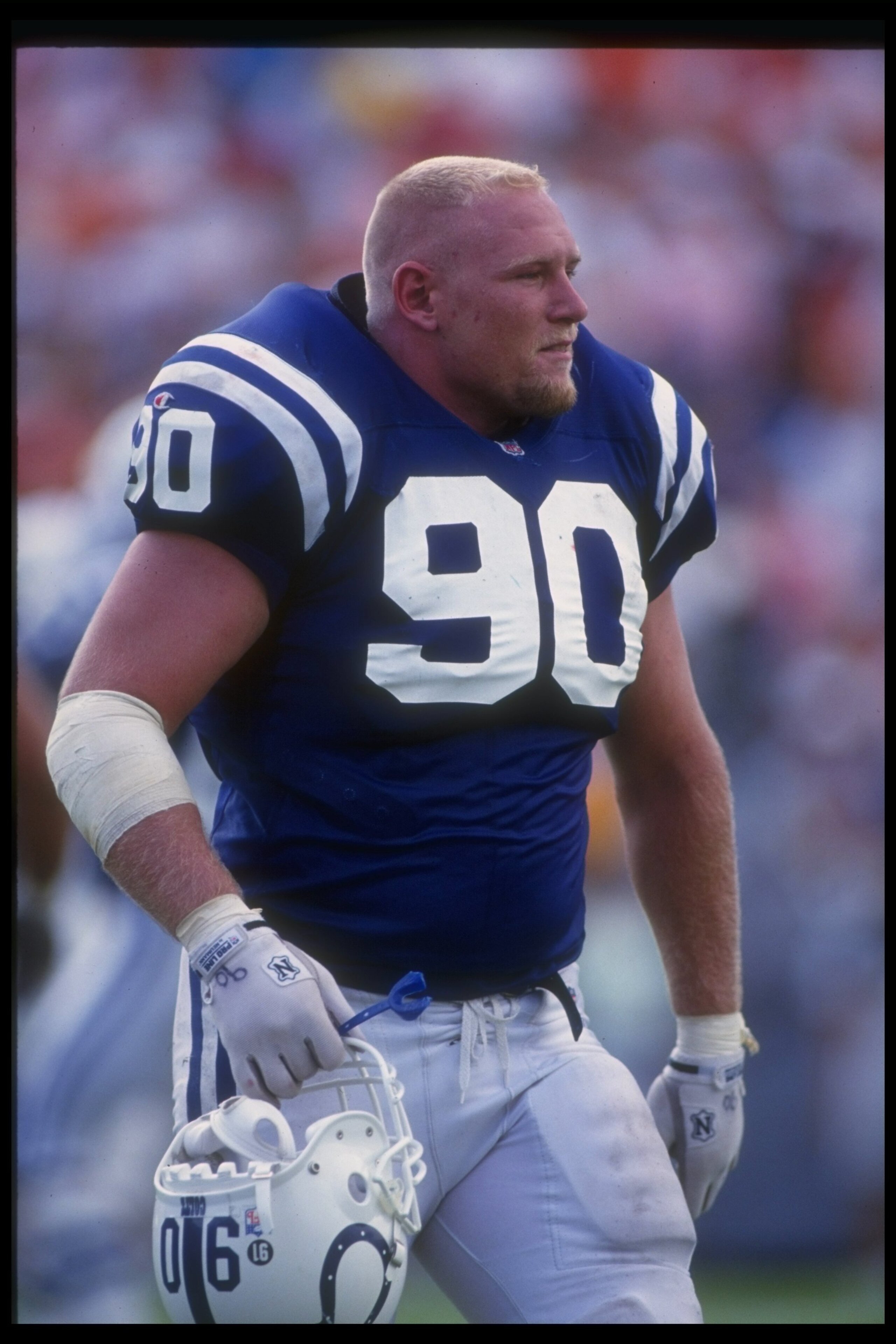
Steve Emtman was the first selection of the 1992 NFL Draft, drafted by the Indianapolis Colts.
Following his success in college, where he won many awards and helped the University of Washington clinch a national championship, Emtman was voted in the College Football Hall of Fame in 2006.
Unfortunately that collegiate success did not translate into professional success. Emtman became injured in each of his first three seasons, all with the Colts.
Since his career was plagued with injuries, Emtman could not accumulate the numbers expected of him.
In a six-year career, Emtman had 134 tackles and eight sacks, hardly the kind of numbers the Colts had anticipated when drafting him.
Cornerback: Adam "Pacman" Jones
6 of 15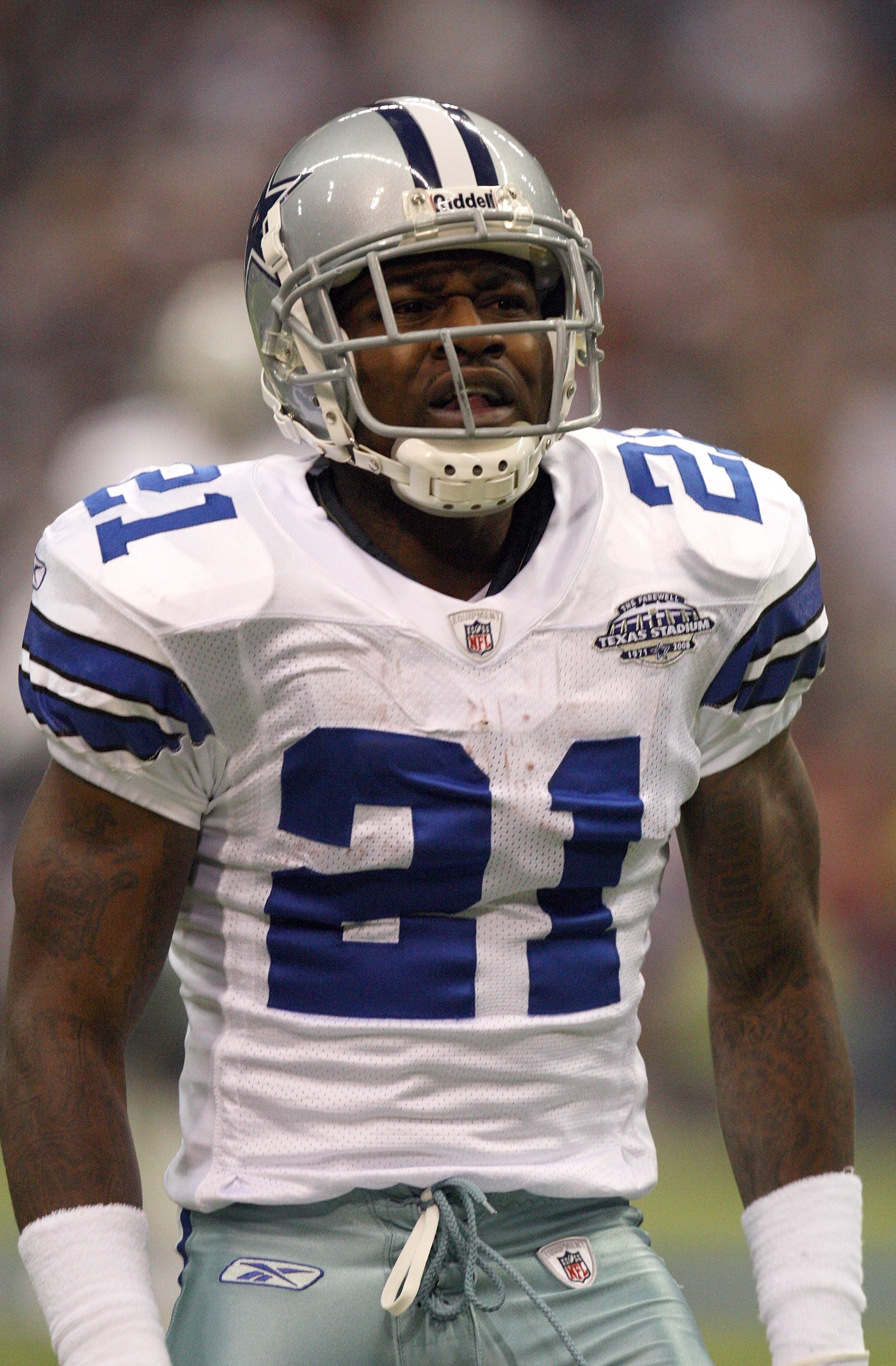
Adam "Pacman" Jones was great during his time at West Virginia University, finishing second in kickoff yardage in the school's history.
Jones opted out of his senior year at WVU and entered the 2005 NFL Draft, where he was selected sixth overall by the Tennessee Titans.
The Titans' trouble with Jones started early. First, he missed training camp while in a contract dispute with the team. The dispute was over a clause in his contract that he would give up bonuses if ever convicted of a crime, following an incident at WVU.
Over the summer of 2005, Jones again got into trouble with the law. He went on to have a successful rookie season that year though, after agreeing to the terms the Titans had laid out.
However, Jones has yet to reach his full potential since he has missed so much time due to off-the-field problems.
The 27-year-old could still make a comeback, but he seems to be a draft bust at this point, for wasting his talent.
Linebacker: Brian Bosworth
7 of 15
Brian Bosworth was excellent during his tenure at the University of Oklahoma. He won the Butkus Award for best linebacker twice, also the first two years that the Award existed. Bosworth is still the only player to date to accomplish that.
Bosworth's negatives were his steroid use, causing him to be banned him from an Orange Bowl appearance, and his vocal criticism of the NCAA.
Bosworth was drafted in the 1987 NFL supplemental draft by the Seattle Seahawks. He had a short-lived career, being forced to retire after suffering a shoulder injury in just his second season.
Since his retirement, Bosworth has made a name for himself in show business.
Offensive Guard: Tony Mandarich
8 of 15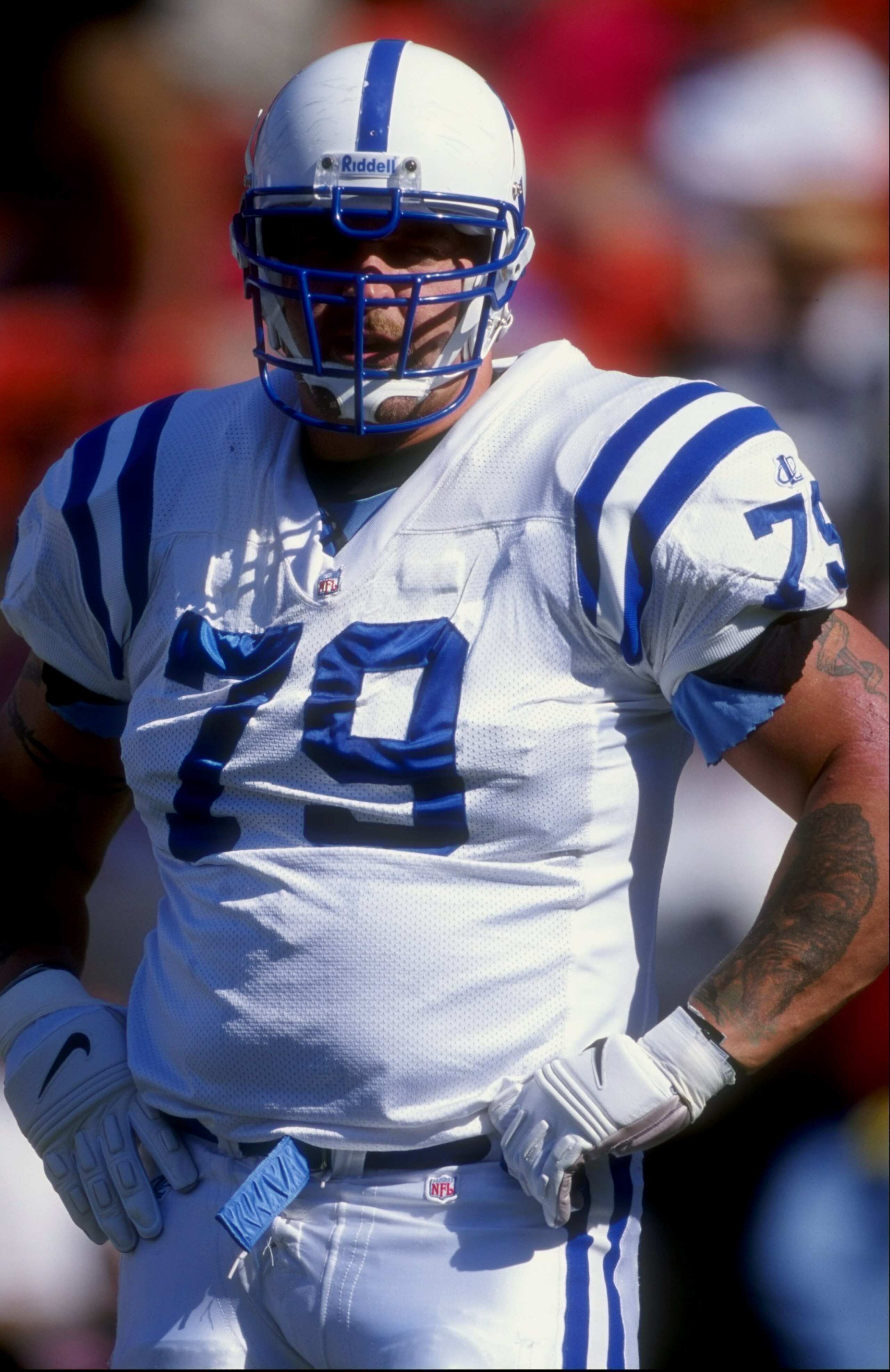
Tony Mandarich played at Michigan State, obliterating opponents everywhere, just by sheer size difference.
Prior to the draft, Sports Illustrated portrayed Mandarich on the cover, claiming he would go down as the best offensive linesman.
He was drafted second overall by the Green Bay Packers. He was over 300 pounds and cold bench press almost 40 reps of 225 pounds. The NFL and the Packers salivated at the thought of Mandarich on the field.
Only problem? The key to his collegiate success was steroids. It could have carried over to success in the NFL as well, but Mandarich stopped while he was ahead, afraid of getting caught.
Mandarich never achieved success in the NFL, going down as one of the biggest draft busts of all time.
Offensive Tackle: Mike Williams
9 of 15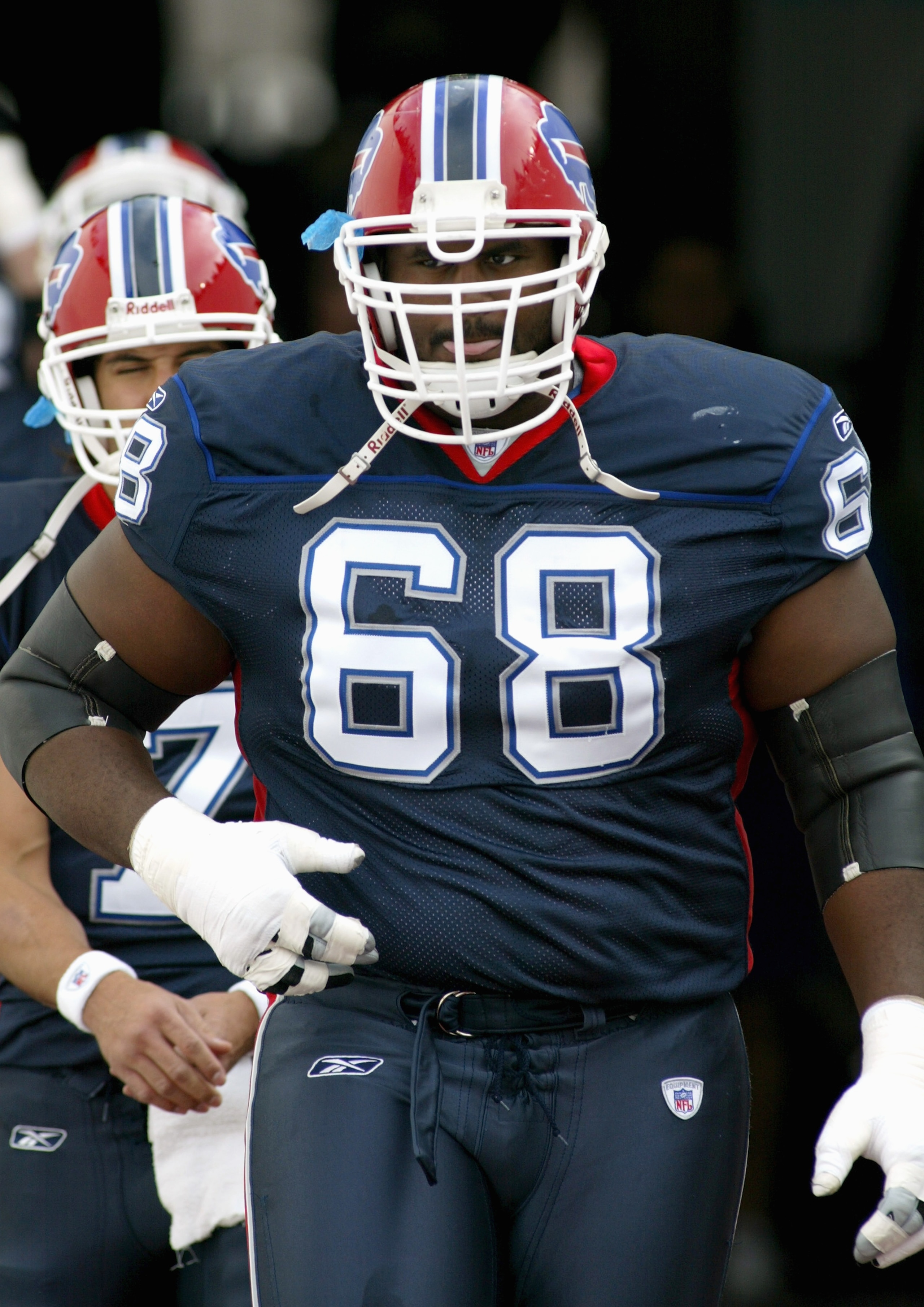
Mike Williams, the offensive tackle, played college football at the University of Texas. He gained fame by protecting Longhorn quarterbacks Major Applewhite and Chris Simms.
Since Williams had protected the left-handed Simms, it was speculated that he would make for a great left tackle in the NFL. Thus, he was touted as one of two top prospects in the 2002 NFL Draft.
Williams was drafted fourth overall by the Buffalo Bills. He started at right tackle, then moved to left, impressing at neither position. He never fulfilled the lofty expectations and was cut by the Bills in 2006.
He has since played for the Jacksonville Jaguars and his current team, the Washington Redskins.
Tight End: David LaFleur
10 of 15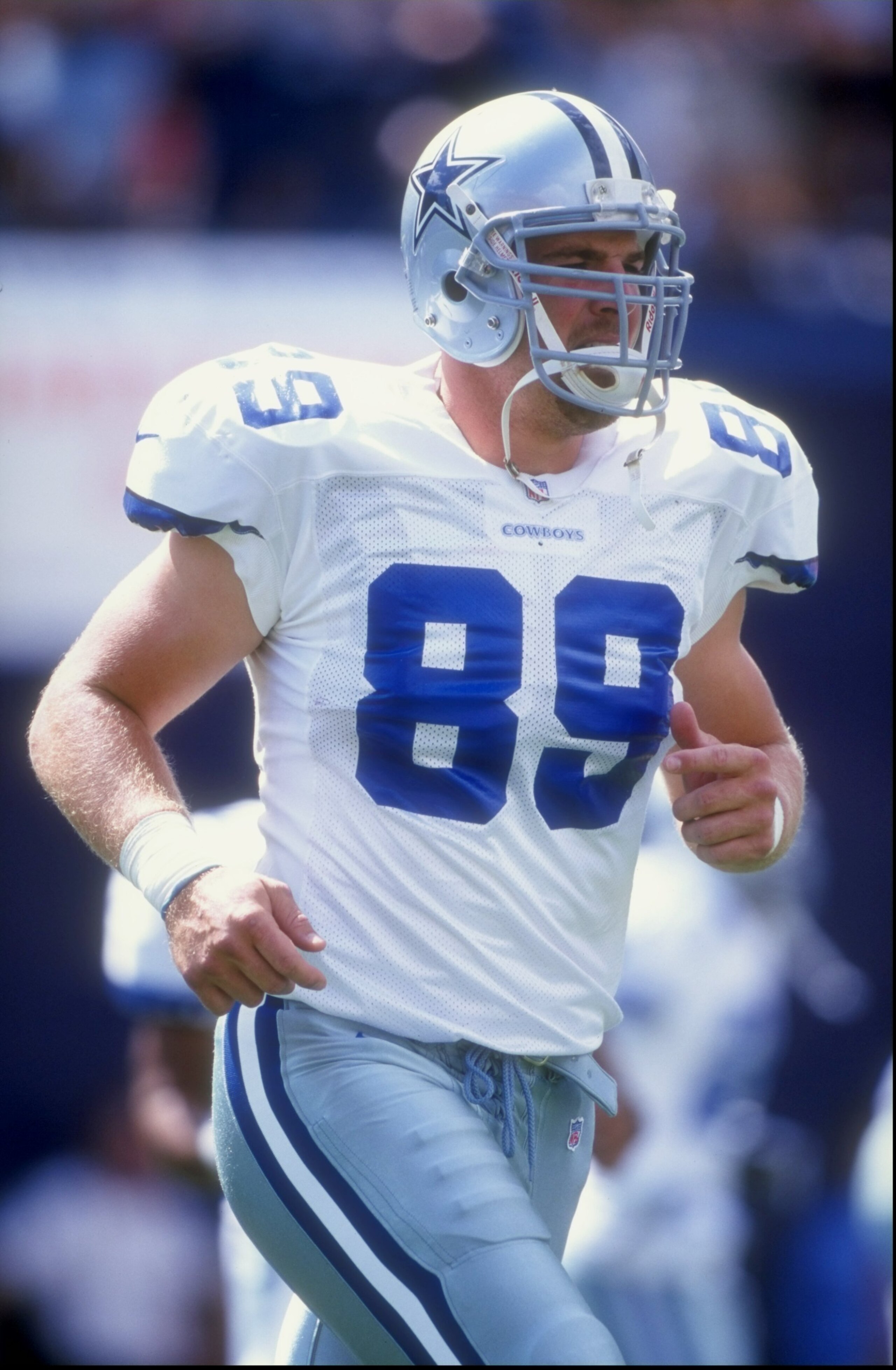
David LaFleur played college football at Louisiana State University. He was the Dallas Cowboys' first-round pick in the 1997 NFL Draft.
LaFleur was huge- 6'7", 272 pounds- and was expected to make a great tight end for Dallas. Unfortunately, LaFleur could not live up to the expectations.
He spent four seasons with the Cowboys, accumulating only 729 yards and 12 touchdowns.
Runningback: Lawrence Phillips
11 of 15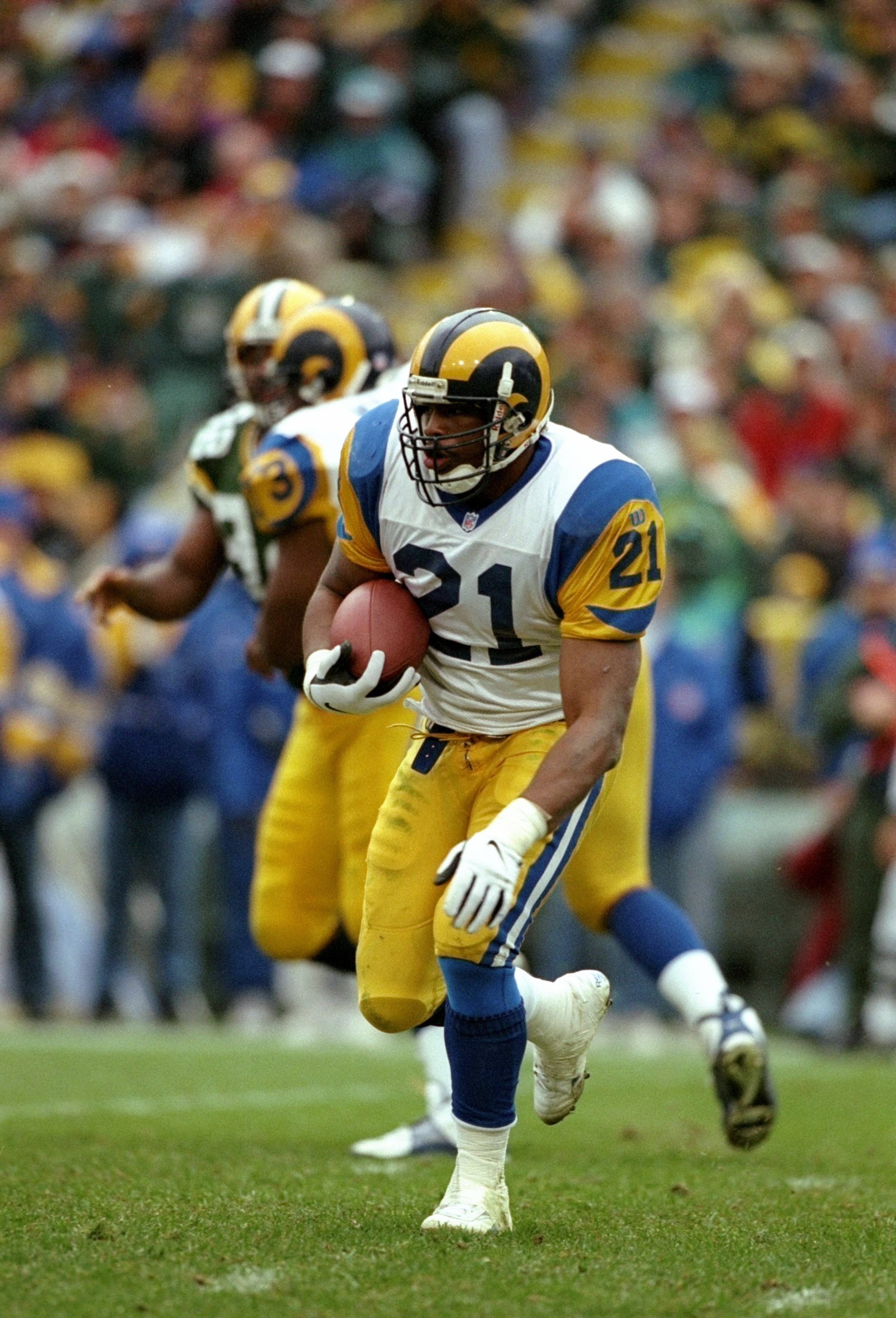
Lawrence Phillips was drafted sixth overall by the St. Louis Rams in the 1996 NFL Draft. It was speculated that Phillips would go higher, but many teams passed on him because of problems off-the-field.
The day the Rams drafted Phillips, they traded their former running back, Jerome Bettis, to the Pittsburgh Steelers. Bettis obviously went on to have a great career in Pittsburgh. The same cannot be said of Phillips' tenure in St. Louis.
Phillips only spent two years in St. Louis. He did not perform as expected and was subsequently cut by the Rams.
He moved around quite a bit after that, playing for the Miami Dolphins and San Francisco 49ers for a short period, as well as dabbling in NFL Europe, the AFL and finally finishing in the CFL in 2003.
Phillips continued to have numerous personal issues as well, including problems with the law.
Wide Receiver: Charles Rogers
12 of 15
There was a lot of hype surrounding Charles Rogers coming out of Michigan State. There were comparisons to Randy Moss, after Rogers broke Moss' previously-held NCAA record of 13 consecutive games with a touchdown reception.
Rogers was selected second overall by the Detroit Lions in the 2003 NFL Draft. He started off well in his rookie year, but it was cut short by a collarbone injury.
When he returned the next season, he again broke his collarbone.
While recovering, Rogers became addicted to painkillers, leading to abuse of other substances as well. He was suspended by the NFL, under the substance-abuse policy and was eventually released by the Lions in 2006.
He worked out with the Dolphins, Patriots and Buccaneers, but did not receive any offers and has not played in the NFL since. Instead, he has experienced numerous personal problems.
Quarterback Honorable Mention: JaMarcus Russell
13 of 15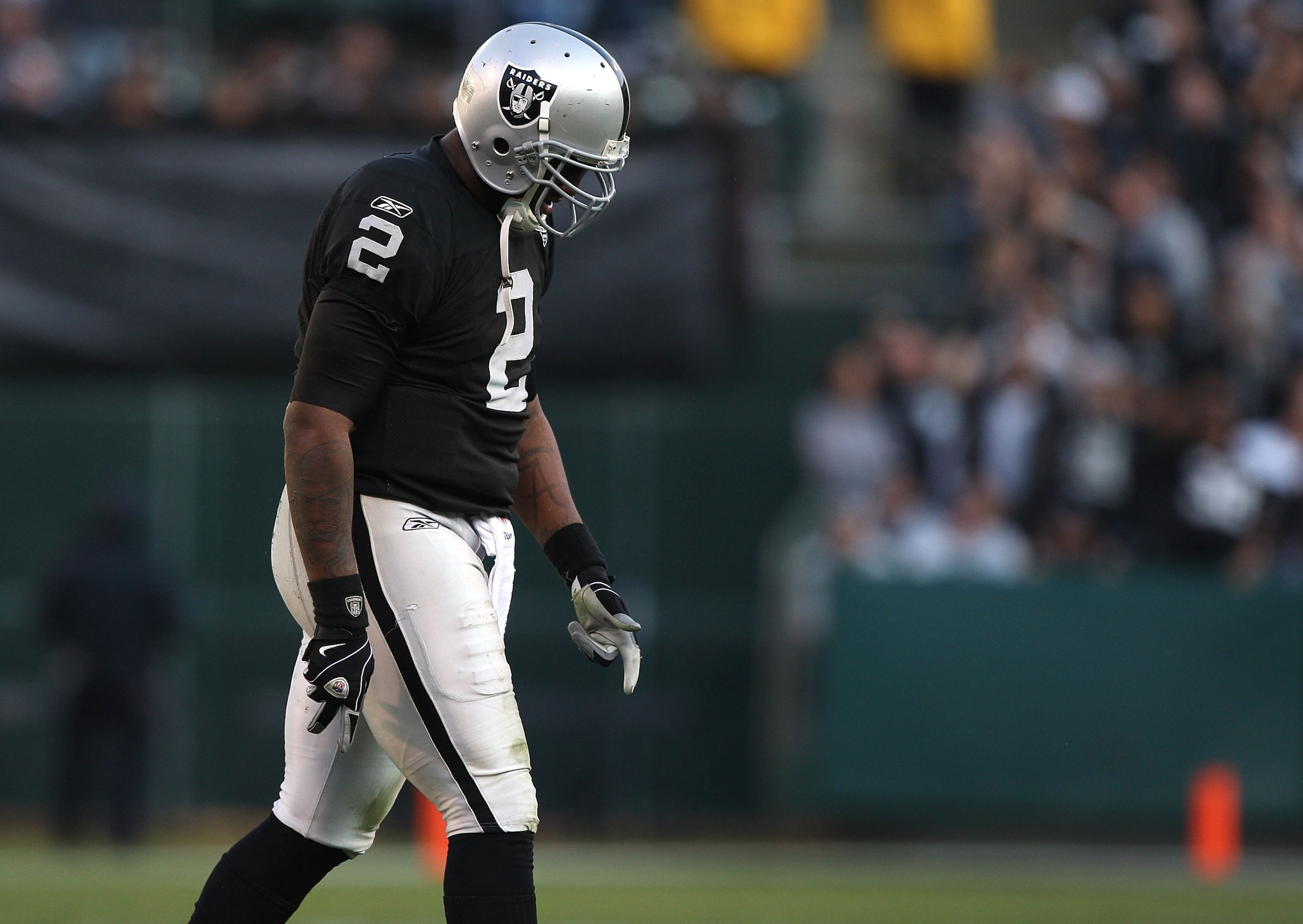
JaMarcus Russell was the starting quarterback for the Louisiana State University championship team and was named MVP of the Sugar Bowl.
After that season, Russell decided to forego his senior season and become draft eligible. He was 21-4 as a Tiger and was expected to be successful in the NFL.
The Oakland Raiders selected Russell as the first overall pick of the 2007 NFL Draft. Russell demanded a $61 million contract, before he would report to them.
In just two starting seasons for the Raiders, Russell had abysmal numbers. He was released by the team in 2009, finishing with a 52.1 percent pass completion, interceptions outnumbered touchdowns 23-18, a passer rating of 65.2 and 15 lost fumbles.
His short tenure in Oakland is the shortest tenure of a number one drafted quarterback with their draft team, according to Bill Williamson of ESPN.
All of this combined has some claiming that Russell is the biggest draft bust of all time. However, there is a slight chance that he could sign with another team and fare better, so for now, he should be the runner-up.
Quarterback: Ryan Leaf
14 of 15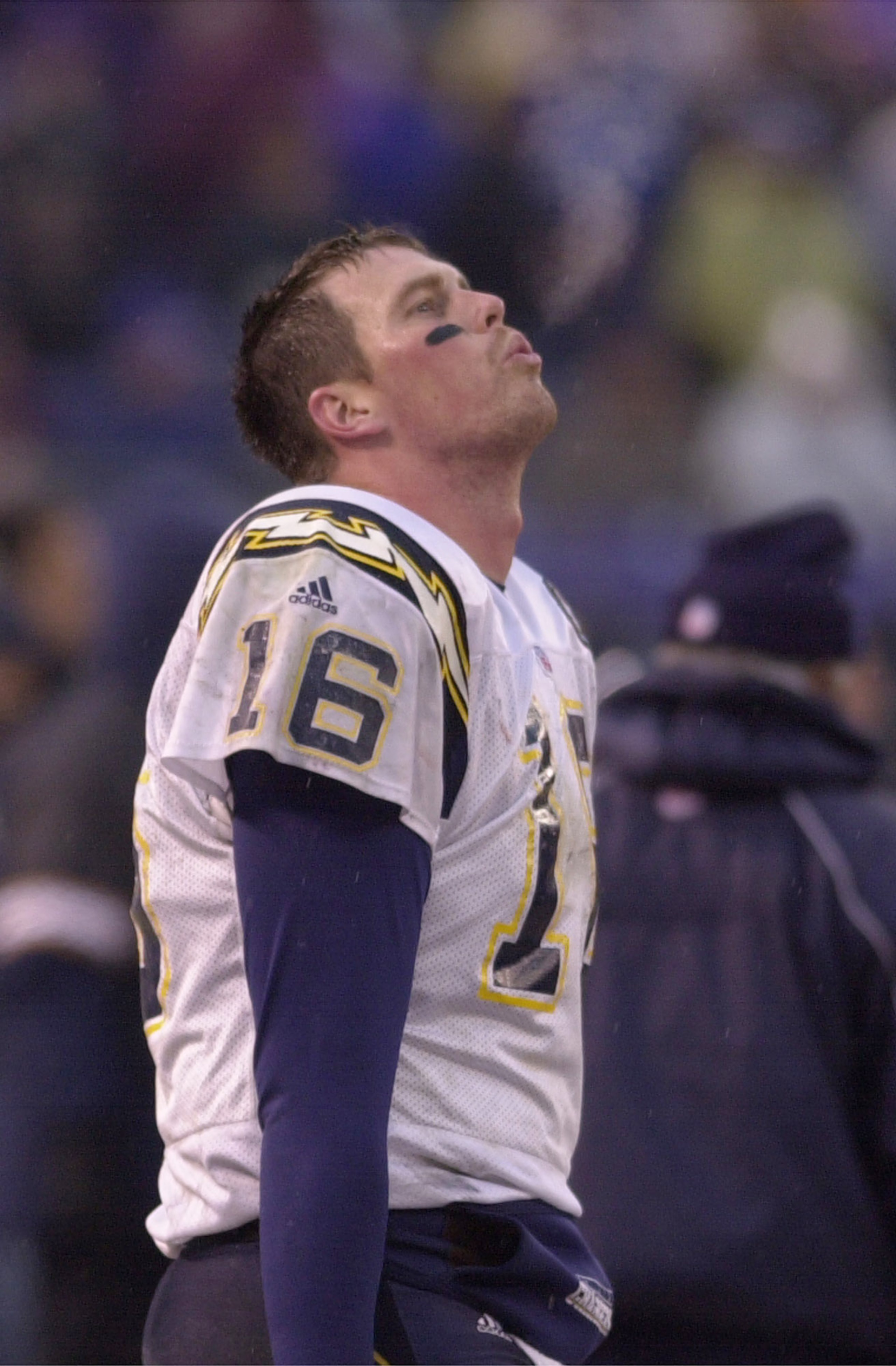
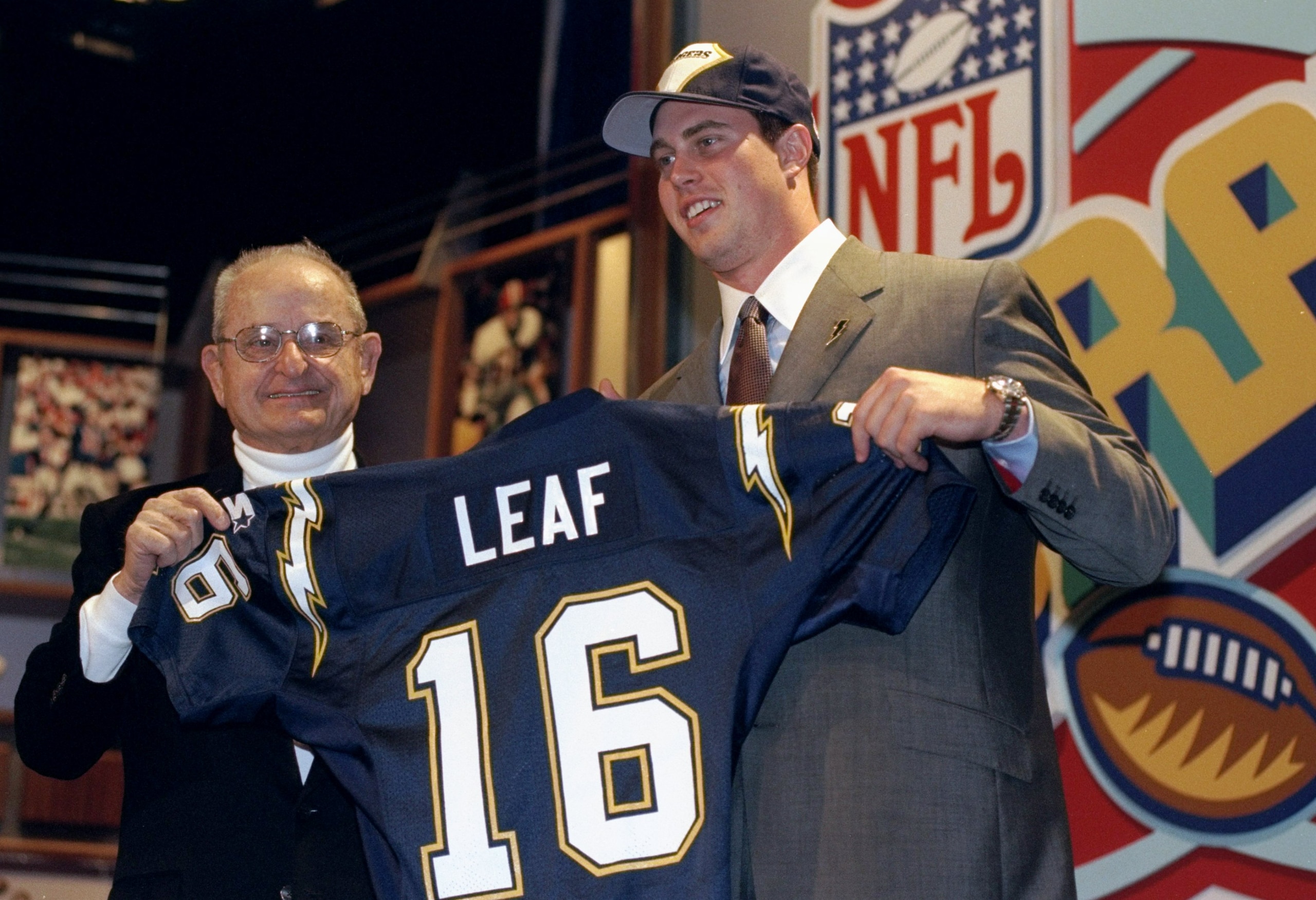
Ryan Leaf has to take the cake as the biggest quarterback draft bust of all time. He was drafted in the same class as Peyton Manning. In fact, there was a lot of debate over which would be the first round draft pick, as they were considered to be equal choices.
The Colts should be proud that they passed on Leaf. The San Diego Chargers traded two first-round picks, a second-round pick and Pro Bowler Eric Metcalf to get the second overall pick that year and draft Indy's castoff.
After the Colts selected Manning, the Chargers selected Leaf. Leaf signed a $31.25 million contract and became a Charger.
Leaf's numbers were abysmal in San Diego. His pass completion was 48.4 percent, four wins in 21 games and his interceptions outnumbered his touchdowns 36 to 14.
Leaf was also known for his poor behavior off-the-field. He had poor relationships with teammates, coaches, the media and even fans. He was frequently caught on camera screaming at members of the media or members of the Chargers' organization.
After being waived by the Chargers, Leaf had brief stops in Tampa Bay, who claimed him off of waivers, Dallas and Seattle. None worked out.
Feedback
15 of 15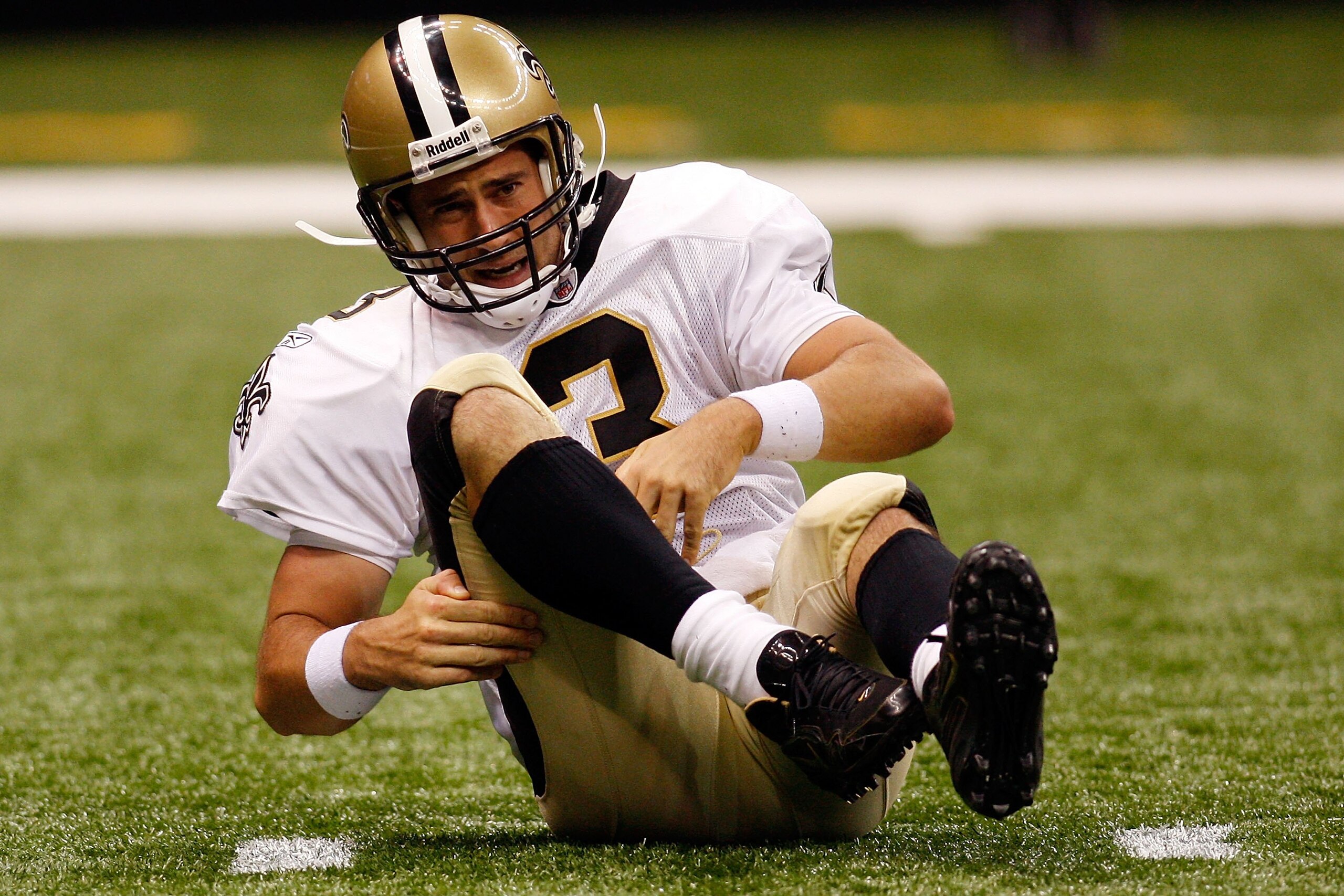
You may notice that some positions were not covered.
Who do YOU think is missing from this list? (Whether it is a position missing or an alternative choice for a position listed).
.jpg?w=2560 "Photos of the NFL season opener, a rare Super Bowl rematch between the Seahawks and Patriots")
.jpg?w=2560 "Falcons Jets Football")
.jpg?w=2560 "De'Zhaun Stribling Out Month")
.png?w=2560 "Week 2 Top 25 Rankings 📈")