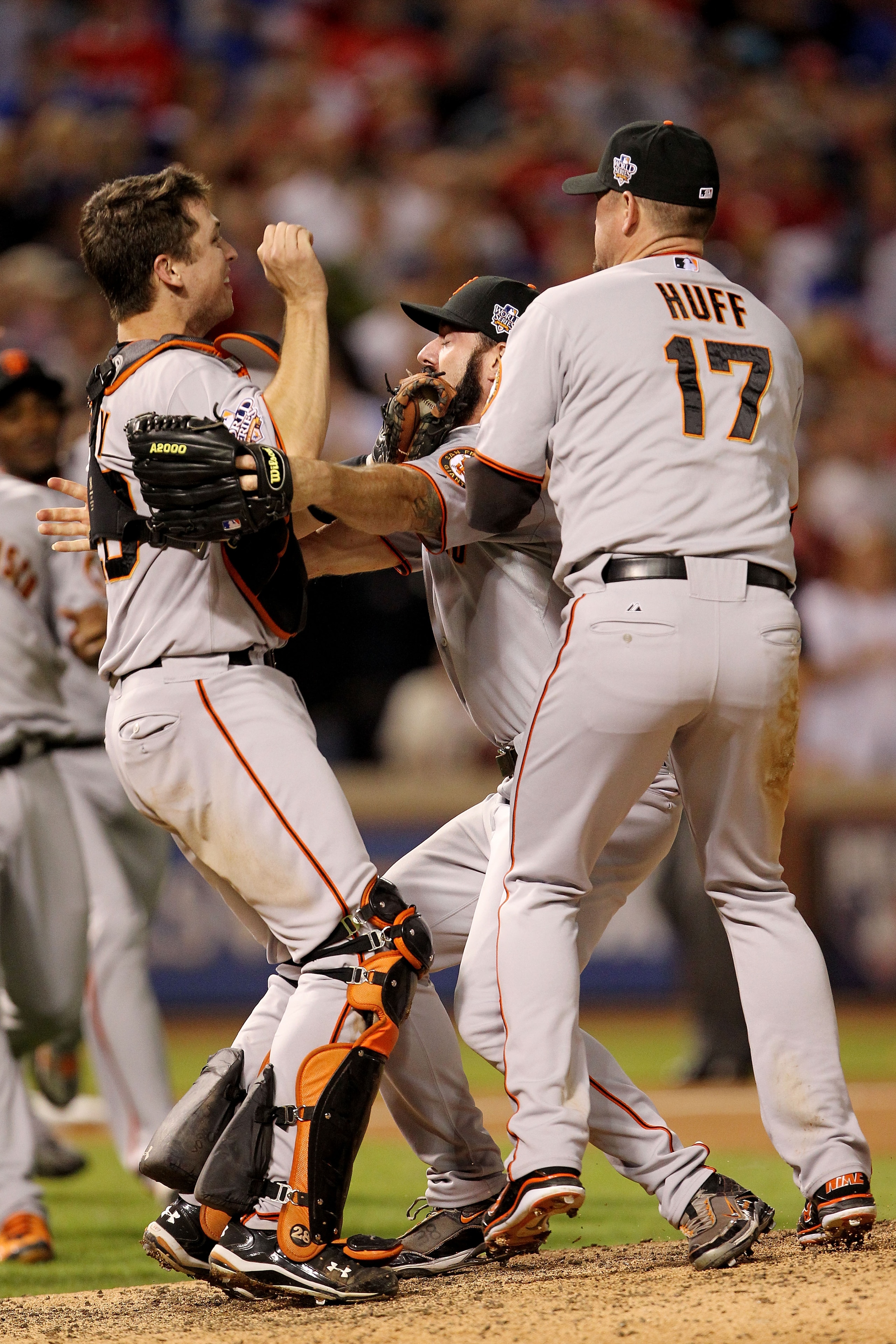

Finding Success: Keys To the San Francisco Giants Chances at a Repeat
While no Giants' fan will ever forget the playoff and World Series run that the team had in 2010, it means nothing in 2011.
Many factors will dictate whether or not the Giants have another successful run in 2011. Some of them had successful runs in 2010, some were just good when it mattered, while others were a bit disappointing. What they all have in common is that they are all important to the Giants and their chances of becoming the first National League team to repeat since the Reds of 1975 and 1976.
Andres Torres
1 of 12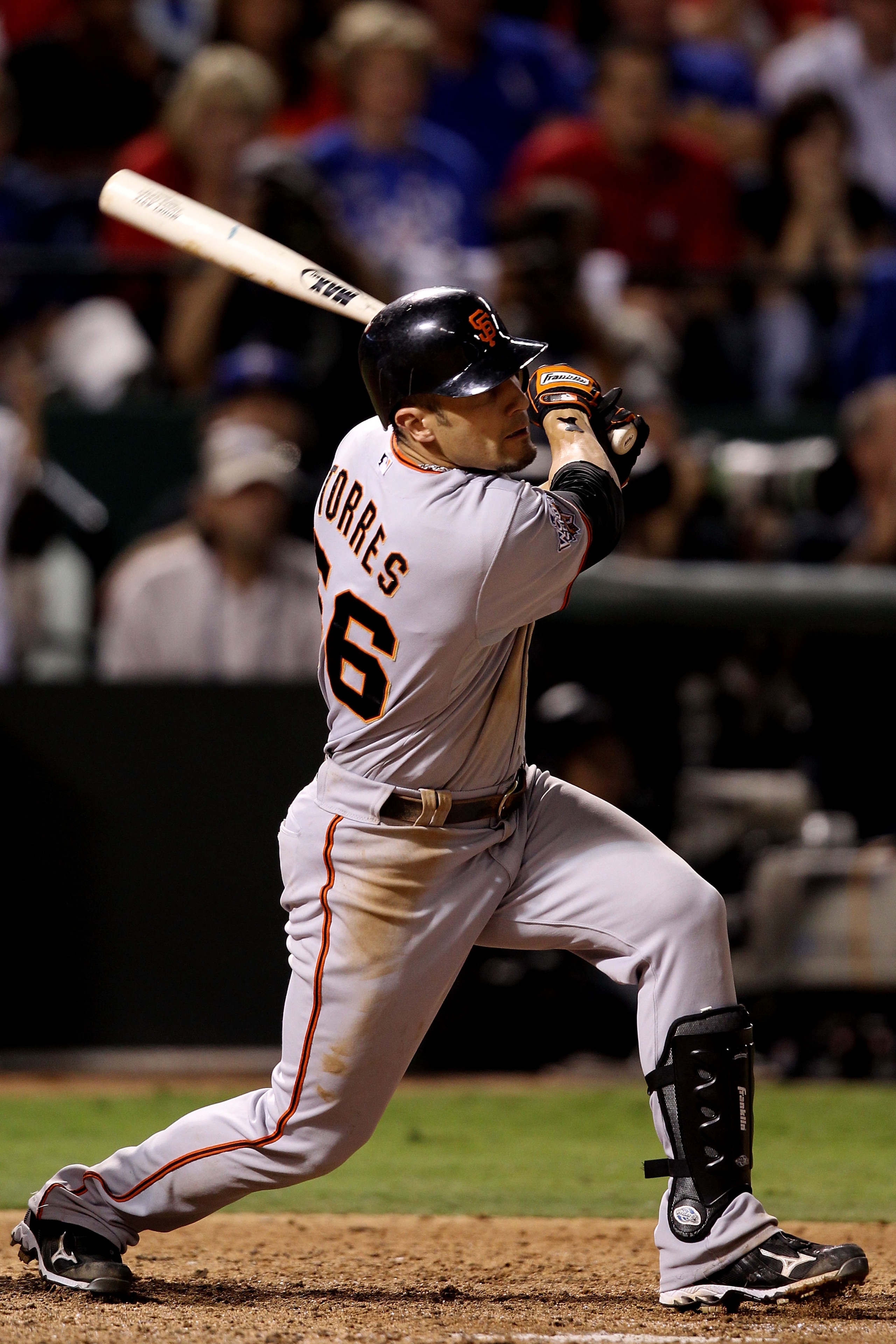
The Good: While many were surprised by his success in 2010, he was a strong fourth outfielder for the Giants in 2009 before getting hurt so his success in 2010 was not wholly unexpected. He is by far the fastest starting player on the Giants, and hit 16 home runs from the lead spot in 2010.
The Bad: While last season was the first time Torres played more than 100 major league games, he is 33 years old. For a player who relies heavily on his speed, that is not insignificant. Torres also struggled at times in the postseason, hitting only .125 against Atlanta before having strong series’ against the Phillies and Rangers.
The Promising: It could be argued that 16 home runs from the lead off position are too much to repeat. That may be true but will not need to do that again. The .268 average, .343 on base percentage, 26 steals, and strong defense are not too much to ask from a lead-off man and center fielder and he will need to at least repeat those totals.
The Utility Men
2 of 12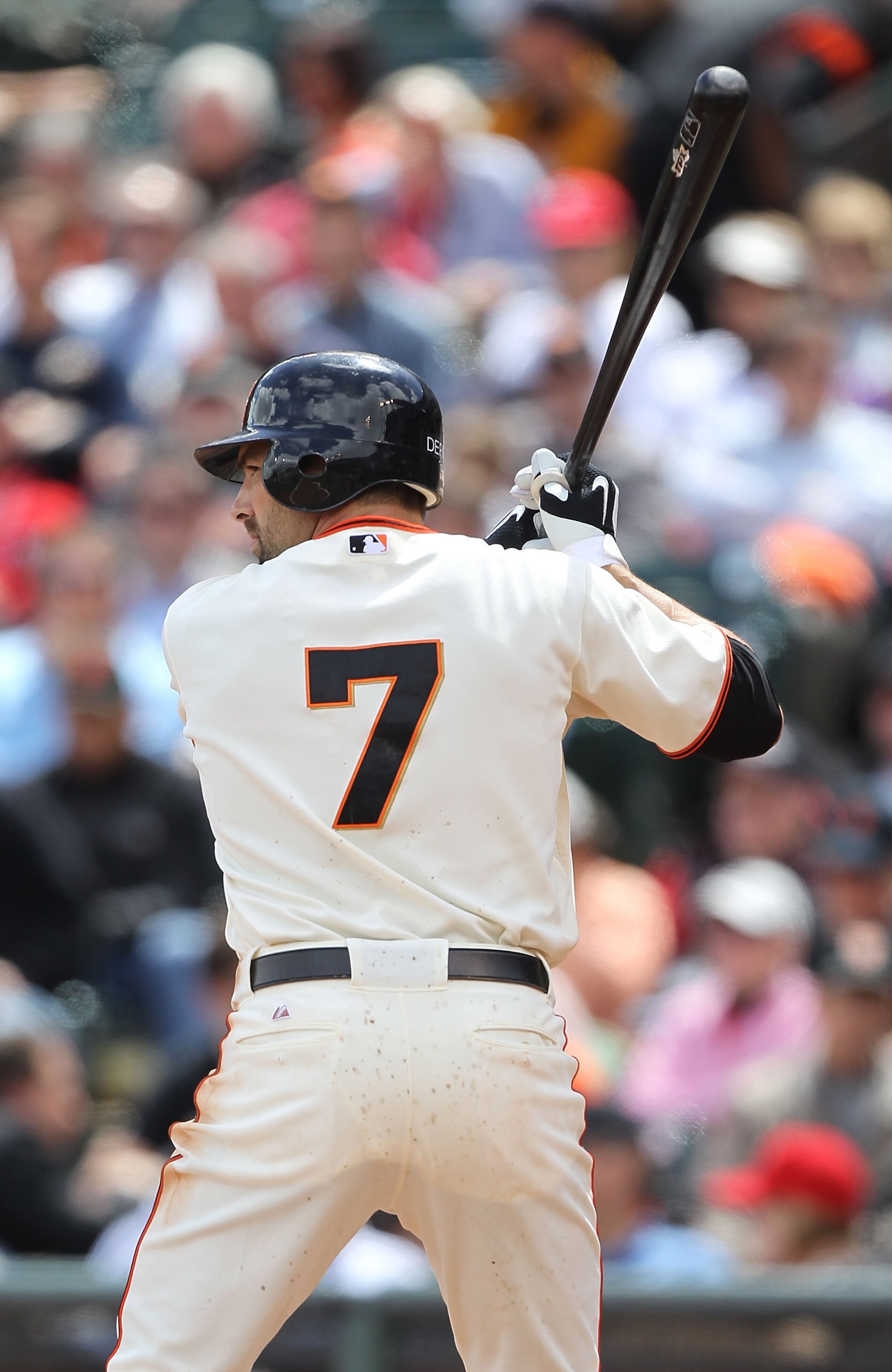
The Good: Mark DeRosa and Mike Fontenot are versatile major league veterans. If called upon, they aren’t genuine concerns, at least not with the glove. Fontenot is more confined to the infield, specifically short if Tejada fails. DeRosa could play third if Sandoval struggles, second if Freddy Sanchez struggles or gets hurt again, and can play either corner outfield position. Their flexibility in the field will allow for Giants players to struggle.
The Bad: DeRosa is 36 and Fontenot will be 31 in mid-season. Fontenot has never played more than 135 games in a season and doesn’t bring much in the way of power. He hit .283 last season for the Cubs and Giants but with only one home run. Defensively, he may be an upgrade but he provides virtually no power.
DeRosa is coming off an injury plagued season. He seems healthy but at his age, injuries are likely to reoccur. He is the opposite of Fontenot in that he delivers power when he is in the lineup but his average leaves a little to be desired, as he hit only .250 in 2009.
The Promising: While DeRosa’s average in 2009 wasn’t good, he is a career .272 hitter. Better yet, his career on base percentage is .341. Both of them bring versatility so the aging veterans on the team will be able to have days off. The rest provided to the veteran starters should help ensure that they do not falter.
Aubrey Huff
3 of 12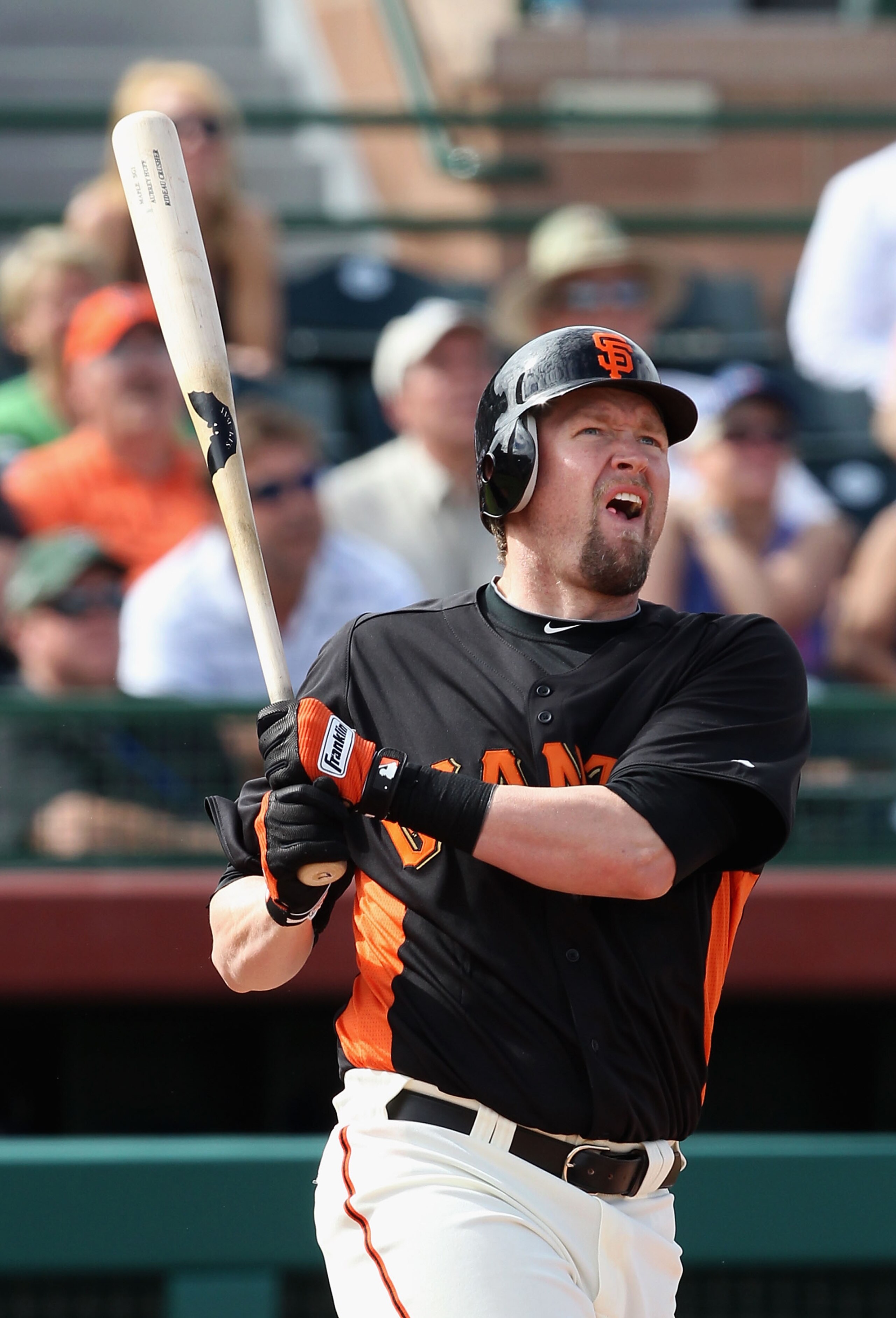
The Good: Many people in the baseball world view Aubrey Huff as a regression candidate, but those thoughts don't have too steady a foundation. In 2009, Huff hit only .241 between Baltimore and Detroit but he still drove in 85 runs. Other than that season, he has hit .280 or higher every season since 2007. Hitting in the third spot in the Giants order should give Huff plenty of good pitches to hit.
The Bad: Huff did struggle towards the end of 2010. He carried a .300 average for most of the year but faded to hit .290. He hit only .268 in the postseason with only one home run.
The Promising: What a home run it was, as it gave the Giants a 2-0 lead in the fourth game of the World Series. Huff also drove in the tying run in game 3 of the NLDS with two outs in the ninth inning. The Giants will have the services of Buster Posey, Pat Burrell, Cody Ross, and Freddy Sanchez for the entire season so Huff will not be expected to carry the Giants offense in the early season anywhere near as much as he did last year.

Miguel Tejada
4 of 12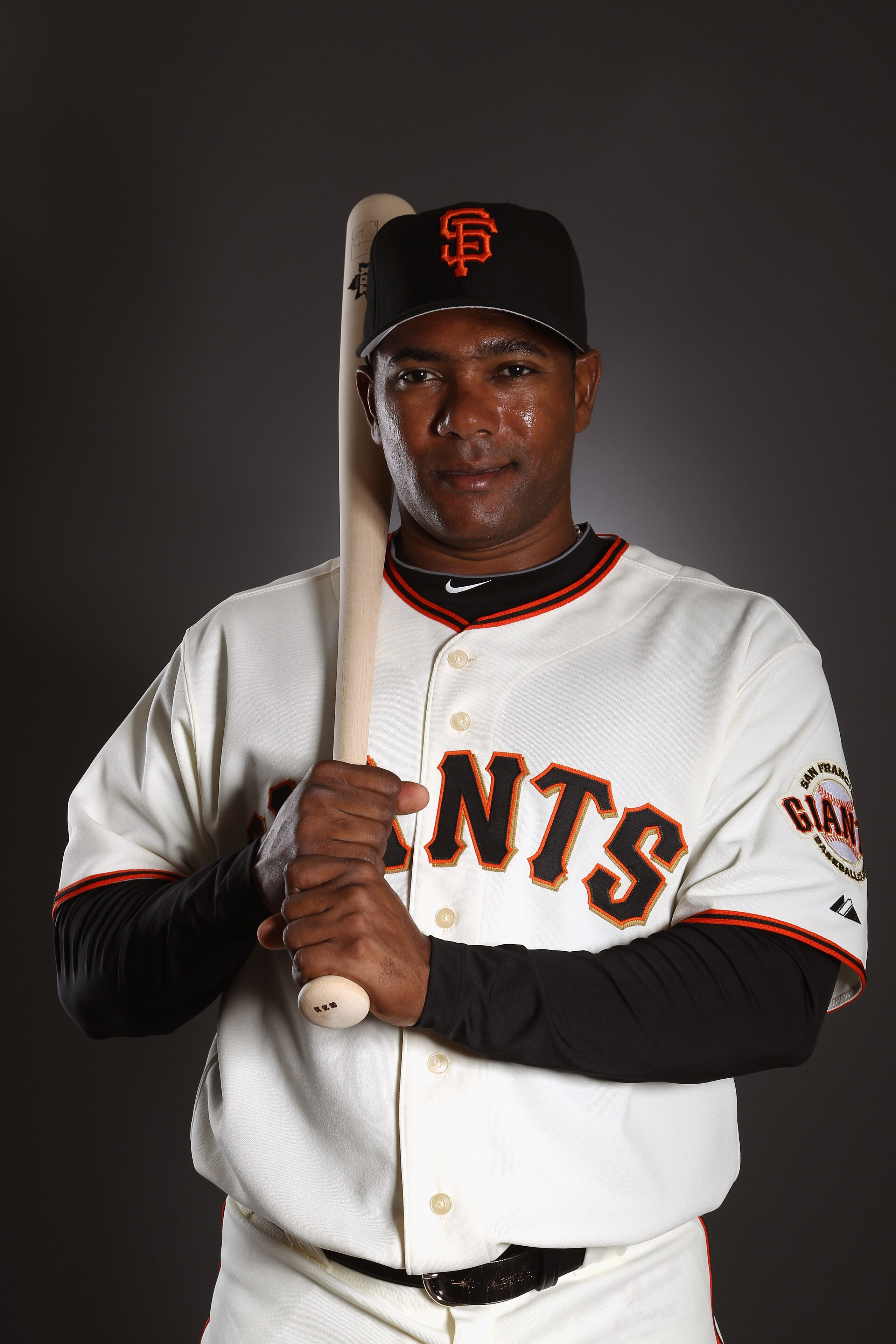
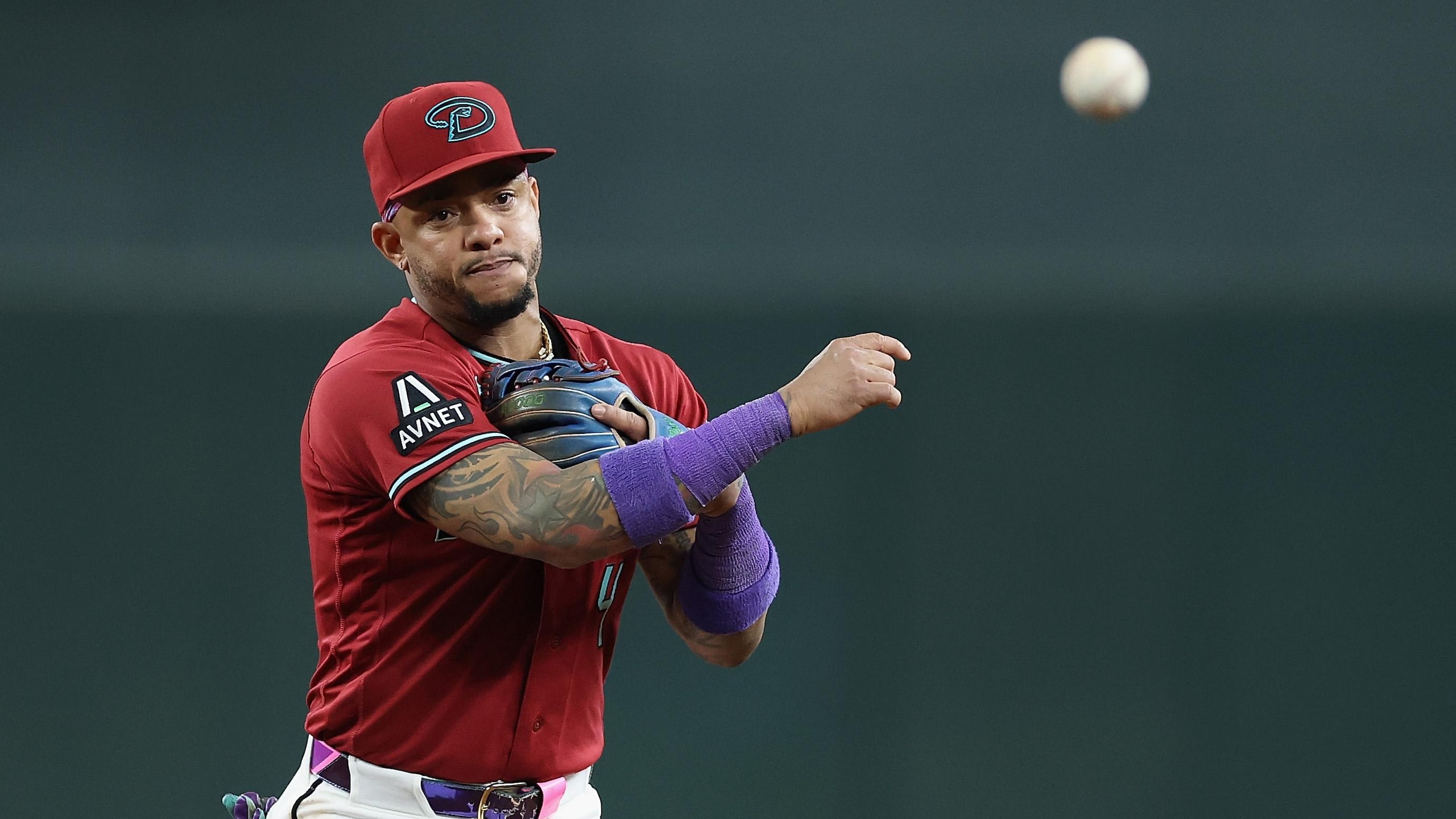
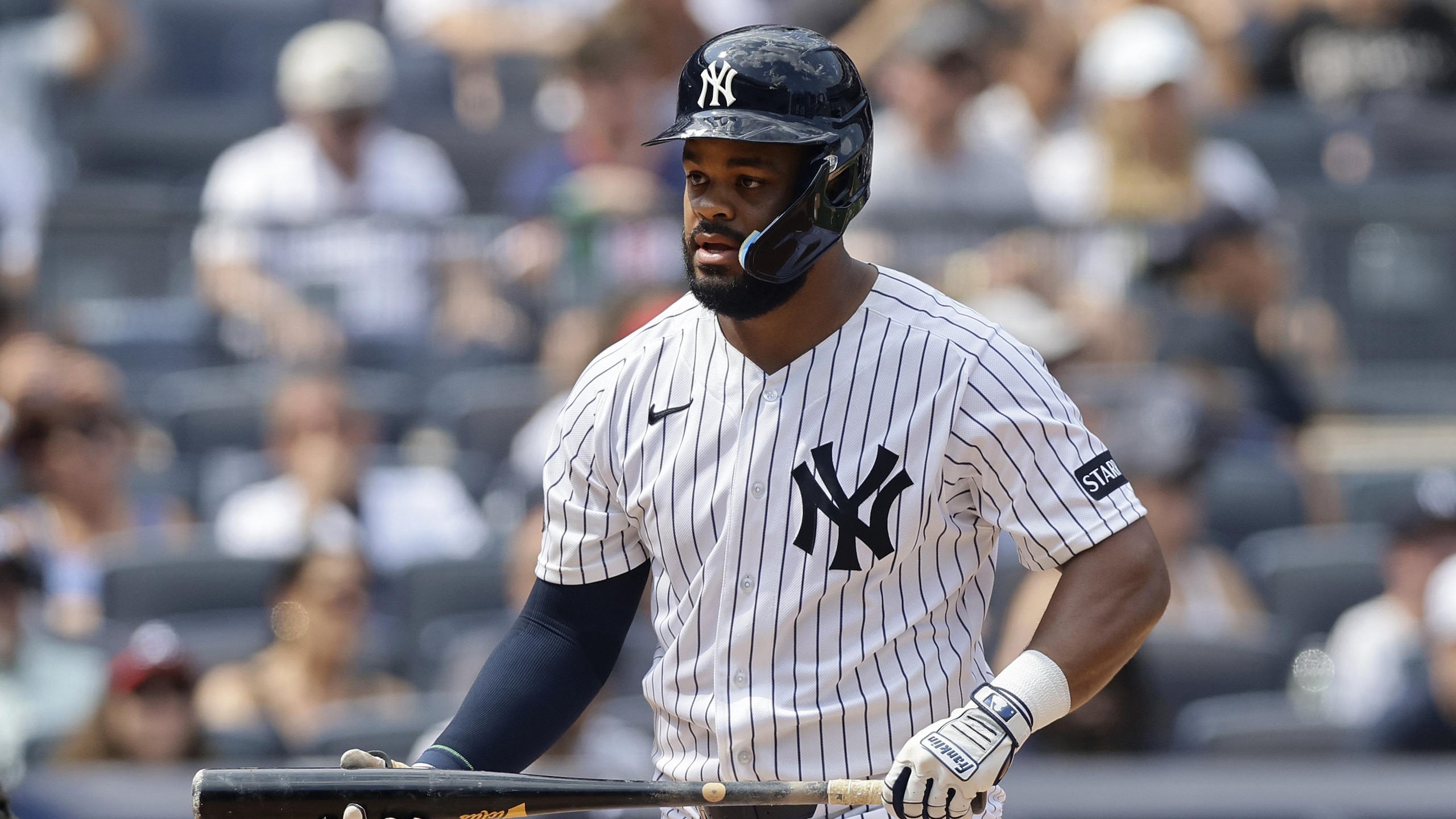
The Good: Tejada has proven to be a durable player in his career. Other than 2007, he has played at least 156 games in every season of his career. While they will lose Juan Uribe’s power, Tejada is a better hitter (Tejada is a .287 career hitter, Uribe is a .256 career hitter).
The Bad: This will not be the Tejada that was the MVP of the American League in 2002 and he won’t be the same player that drove in 150 runs for Baltimore in 2004. Despite all of that, it cannot be denied that the Giants organization is razor thin at short shop, so Tejada cannot be considered a liability.
While someone like Brandon Crawford might be a viable option with the glove, his bat will be nothing more than an automatic out, and the Giants offense will not be good enough to afford that. Between Single A San Jose and Double A Richmond, Crawford hit only .266 in 2010.
The Promising: In 59 games Tejada played for the Padres last year, he hit .268 with 8 home runs. AT&T Park is no worse for right handed hitters than Petco Park. Tejada isn’t likely to bat above the six-spot in the lineup. He won’t need to be the Tejada that was one of baseball’s best hitters in the early 2000’s; he just can’t be a liability at the plate or in the field.
Pat Burrell
5 of 12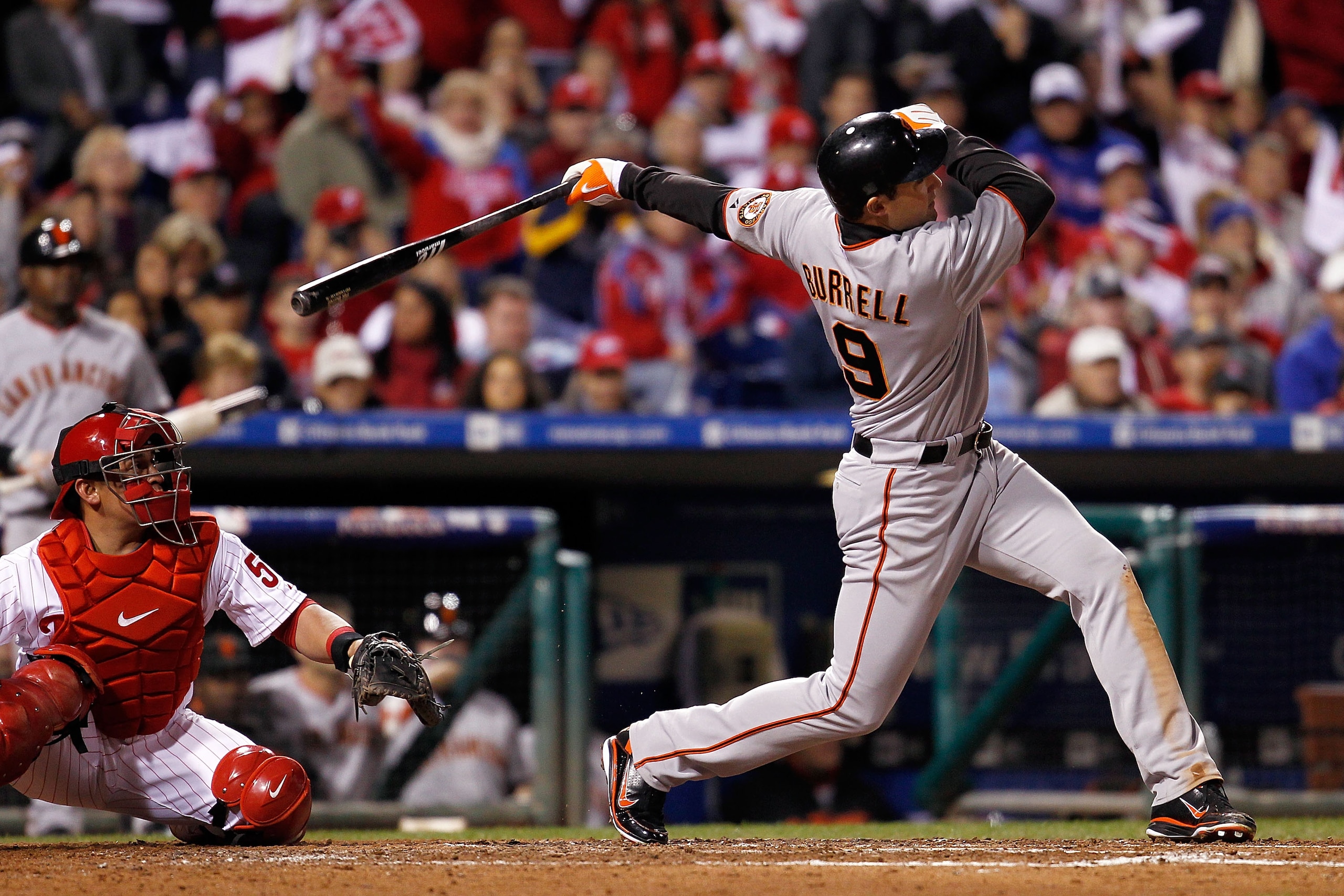
The Good: His postseason struggles seem to have made fans forget that Burrell was by far the Giants best power threat in 2010. Despite playing only 96 games in black and orange, Burrell was tied for third on the team in home runs.
While they were frustrating, Burrell's postseason struggles shouldn't be overstated. In the regular season, he consistently came through with late inning home runs. The playoffs tend to feature better pitching so guys like him often struggle once there but he has never been a high on base guy or a guy who uses his speed on the base path. He has always been a masher, which is why his age (34) isn't of particular concern.
The Bad: Burrell hit .281 in 2005 and hasn’t cracked .260 since. He hit .200 in the NLDS, .211 in the NLCS, and .000 in the World Series. Edgar Renteria's World Series clinching home run helped the Giants and their fans forget about Burrell striking out in an RBI spot right before him. While that shouldn’t be overstated, it can’t be completely overlooked for a heart of the order guy. His average isn’t likely to get any better and he is a poor defender.
The Promising: With the emergence of Brandon Belt, Burrell has often been rumored to be a potential odd man out, which would not be a good idea. Belt doesn’t need to make the Opening Day roster; the Giants can start the season with him in Triple A and bring him up in season if Burrell struggles, like they did with Posey last year.
The Giants have the depth in the outfield depth to fill the defensive void that Burrell brings to the late innings but Burrell's job is to mash the ball. The rest of the Giants offense and pitching should be good enough to win without significant contributions from Burrell in the playoffs, but they will not even sniff the postseason without consistent power from him in the regular season.
The National League West
6 of 12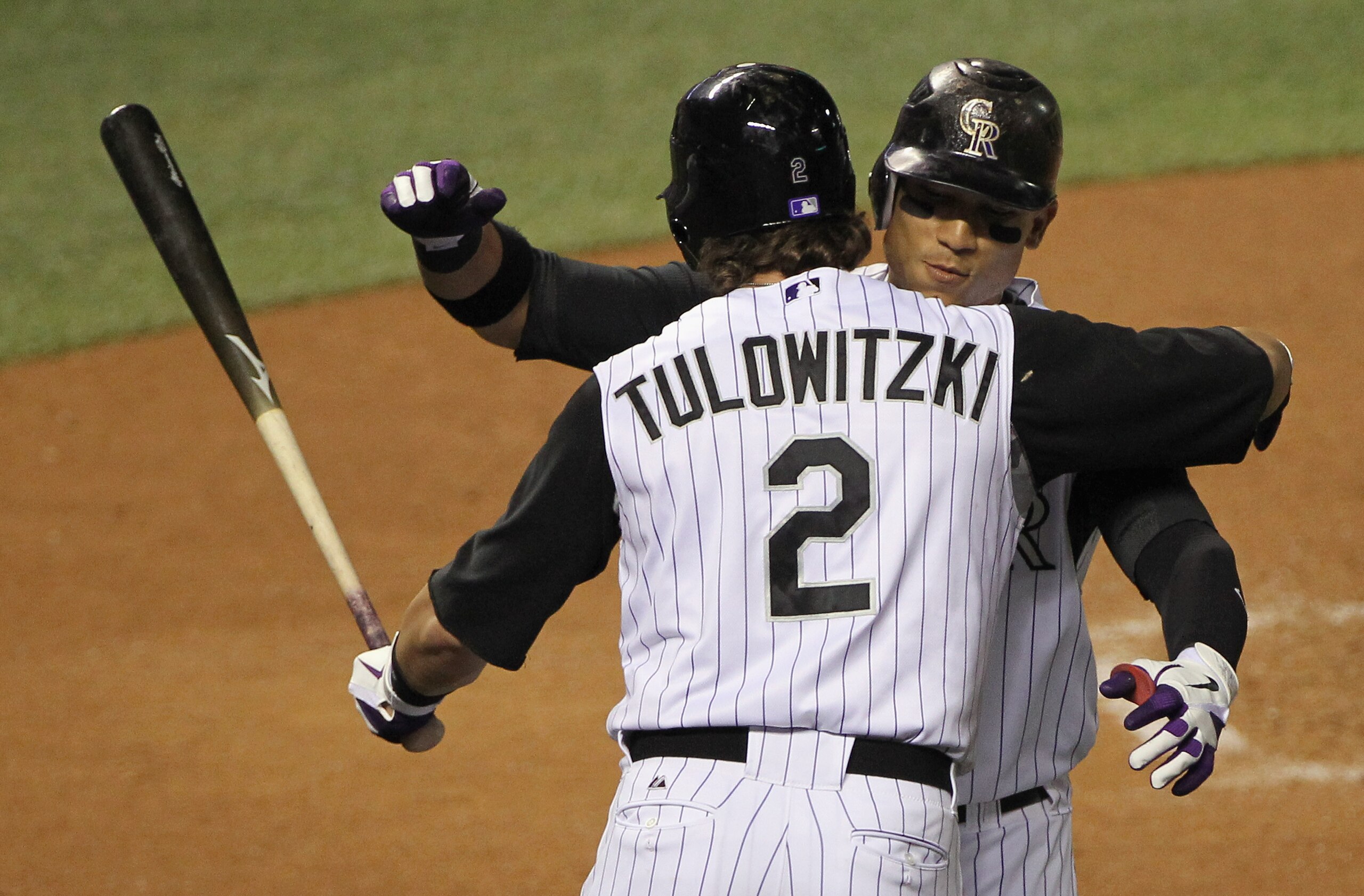
The Good: The San Diego Padres gave the Giants more trouble than any team in 2010. They can still pitch but the loss of Adrian Gonzalez will cripple an offense that didn't score runs at an alarming rate with him. The Dodgers are still an organizational mess and the Diamondbacks will be improved but their offense is still raw and they don't have a strong top-to-bottom pitching rotation.
The Bad: The Rockies are a different story. When Troy Tulowitzki gets hot, he is as good as anyone and Carlos Gonzalez was a legitimate triple crown threat in 2010 before getting hurt. If the hitters around those two do well, that offense is by far the best in the National League West. If the Rockies pitch well, they are scary. Should the Rockies succeed; the Giants will have a hard time reaching the postseason as the wild card is not likely to come from the National League West.
The Promising: Playing at Coors Field has always taken its toll on pitchers as the season grows, so pitching there is easier said than done. The Giants withstood Colorado last year, beating them in two September series. Gonzalez also can be pitched to and other than Tulowitzki, the Rockies lineup has a lot of question marks.
Jonathan Sanchez
7 of 12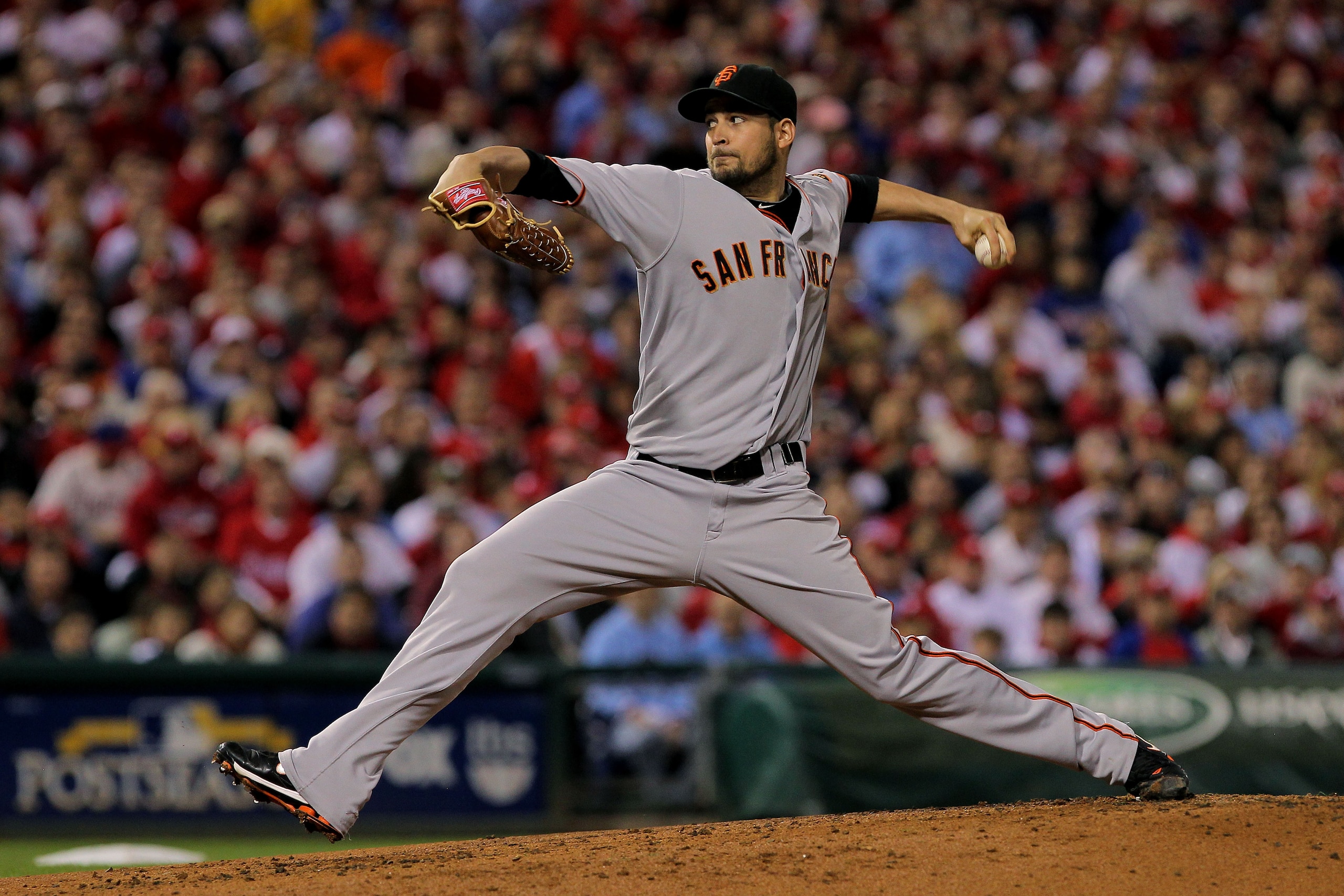
The Good: There may not be a more Jekyll-and-Hyde pitcher in all of baseball than Sanchez.. We know for a fact that he has no-hit stuff and in the big money starts, he can thrive. He was the winning pitcher in the game 162 clincher against San Diego and had a no-hitter through seven innings against the Braves in game 3 of the NLDS. His numbers have improved every season, and when he is on, he is as good as anyone
The Bad: He also had trouble early in game 2 of the NLCS against Philadelphia, taking a loss, and didn't make it out of the third inning in game 6. His start in game 3 of the World Series wasn't bad after his second inning three-run home run against Mitch Moreland, but Moreland was the Rangers’ ninth place hitter and a lefty, not exactly someone Sanchez should be surrendering a home run to.
The Promising: Even in his bad starts, Sanchez showed that he can be a dominant pitcher. He is a high strikeout guy, which allows him to pitch his way out jams. Tim Lincecum and Matt Cain have been consistently good and if they stay healthy, there is every reason to believe that they will have continued success. While Barry Zito is a question mark, the Giants proved that they didn't need too much from him to succeed, as long as Sanchez and Bumgarner deliver.
Madison Bumgarner
8 of 12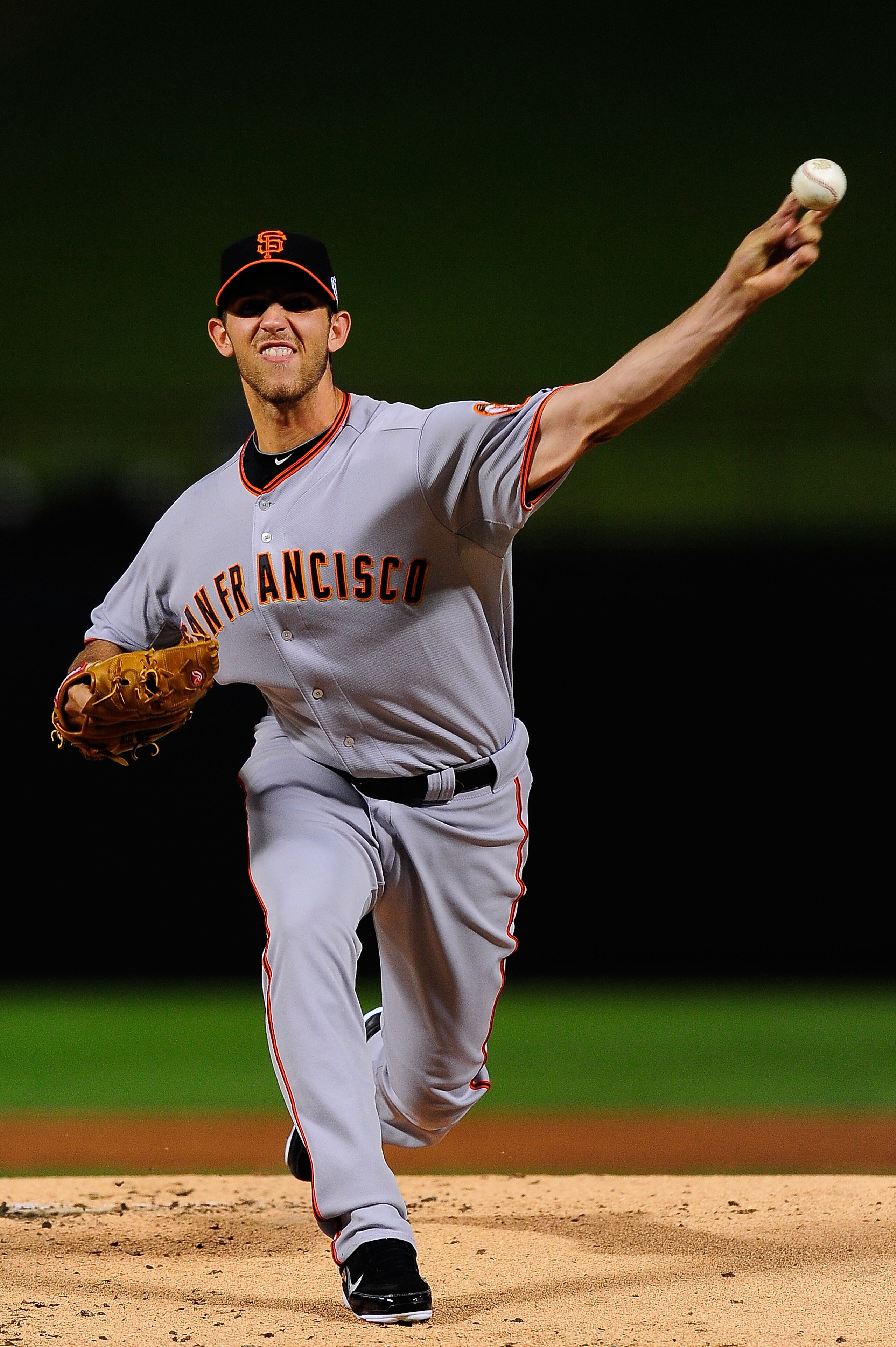
The Good: Giants fans will always remember Bumgarner's performance against Texas in game 4 of the World Series but it didn't exactly come from left field. Bumgarner kept the Braves off balance in game 4 of the National League Division Series to put away a pesky Atlanta team. After a shaky start against the Phillies in game 4 of the National League Championship Series, the rookie came back and pitched two strong innings in relief in the game 6 clincher.
The Bad: Because of his calm demeanor, it is easy to forget that Bumgarner is only 21 years old and has less than a full season of big league service. As we have seen in baseball, players are susceptible to having down second seasons. They take the world by fire in their first year and the league adjusts to them in the second year. Additionally, the Giants need to pay attention to the potential toll that the extended innings of 2010 don’t hurt his arm for 2011.
The Promising: Bumgarner is built for innings; his body isn’t exactly frail. Additionally, putting him in the number five spot in the rotation will allow the Giants to skip his turn when off days occur early in the year. In addition to his calm, he also has the benefit of a pitching coach who clearly knows what he is doing in Dave Righetti and an accomplished staff of older pitchers to help with their advice. The sophomore slump may come but don’t expect it to be prolonged.
The Bullpen
9 of 12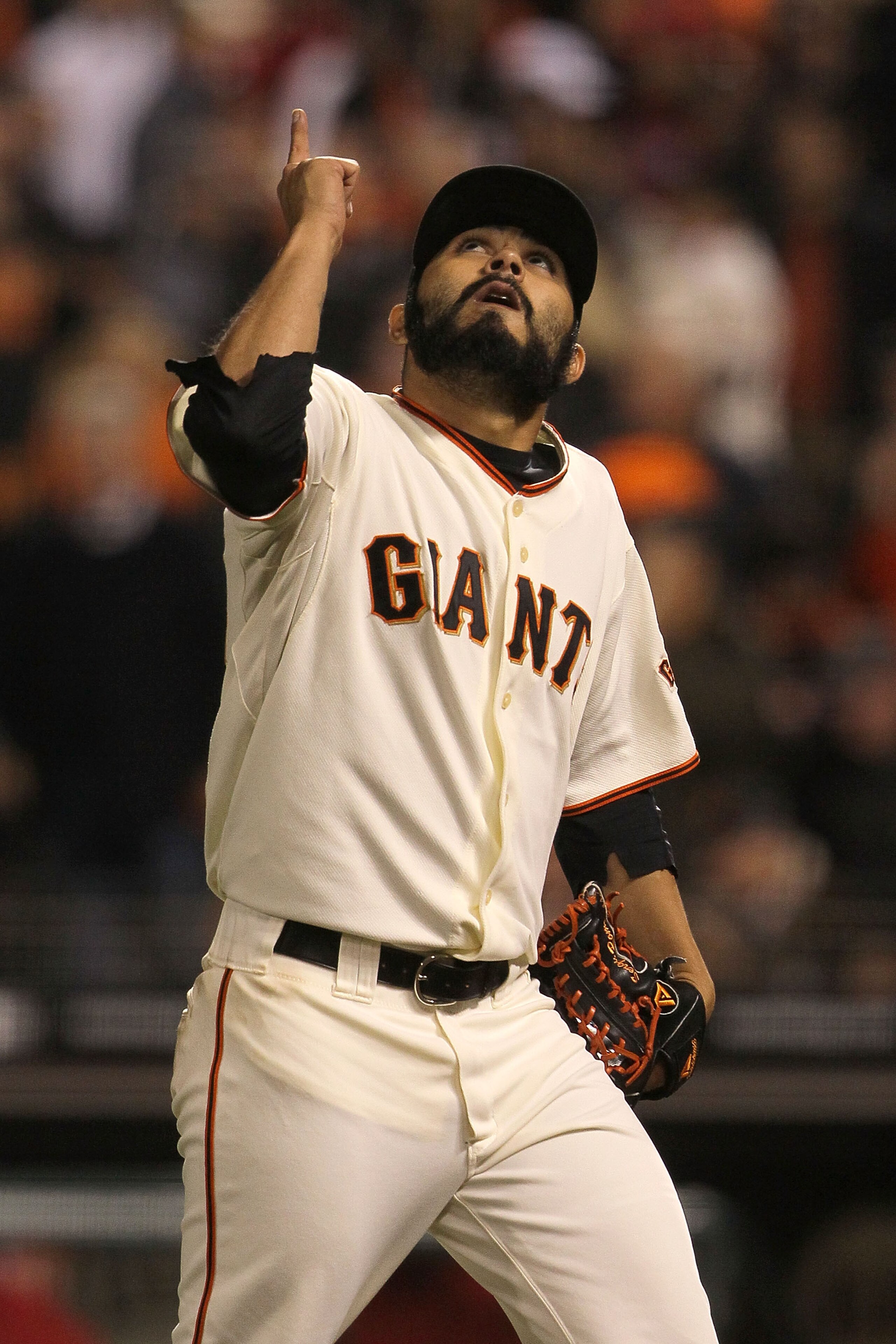
The Good: Since 2008, Brian Wilson has been about as good as any closer in the game. While his recent oblique injury is slightly troublesome, he is not a major concern. As far as getting to Wilson, while Sergio Romo struggled in the playoffs last year, his regular season was top notch. His 62 innings nearly doubled his previous career high yet he had a 2.18 ERA and a sub 1.00 WHIP.
From the left side, few left handed relievers have ever had a playoff run that matched what Javier Lopez did in 2010. Jeremy Affeldt, who battled injuries throughout 2010, is now healthy and likely to return to his 2009 form where he was one of the best set-up men in the game.
The Bad: The Giants' starting rotation features Barry Zito. While Zito is capable of a good start, he also has many starts where he doesn’t make it out of the third inning. The Giants bullpen does not have a strong long reliever. Santiago Casilla and Ramon Ramirez are built for short outings and Dan Runzler is more of a left handed specialist than he is a long man.
The Promising: Bullpen help can generally be found via in-season trades. For all of the criticism that Brian Sabean has earned over the years, he needs to be given credit for the acquisitions he made in 2010 that bolstered the bullpen, especially Lopez. If the need for a good long man presents itself, Sabean will likely pull the trigger on a trade.
Buster Posey
10 of 12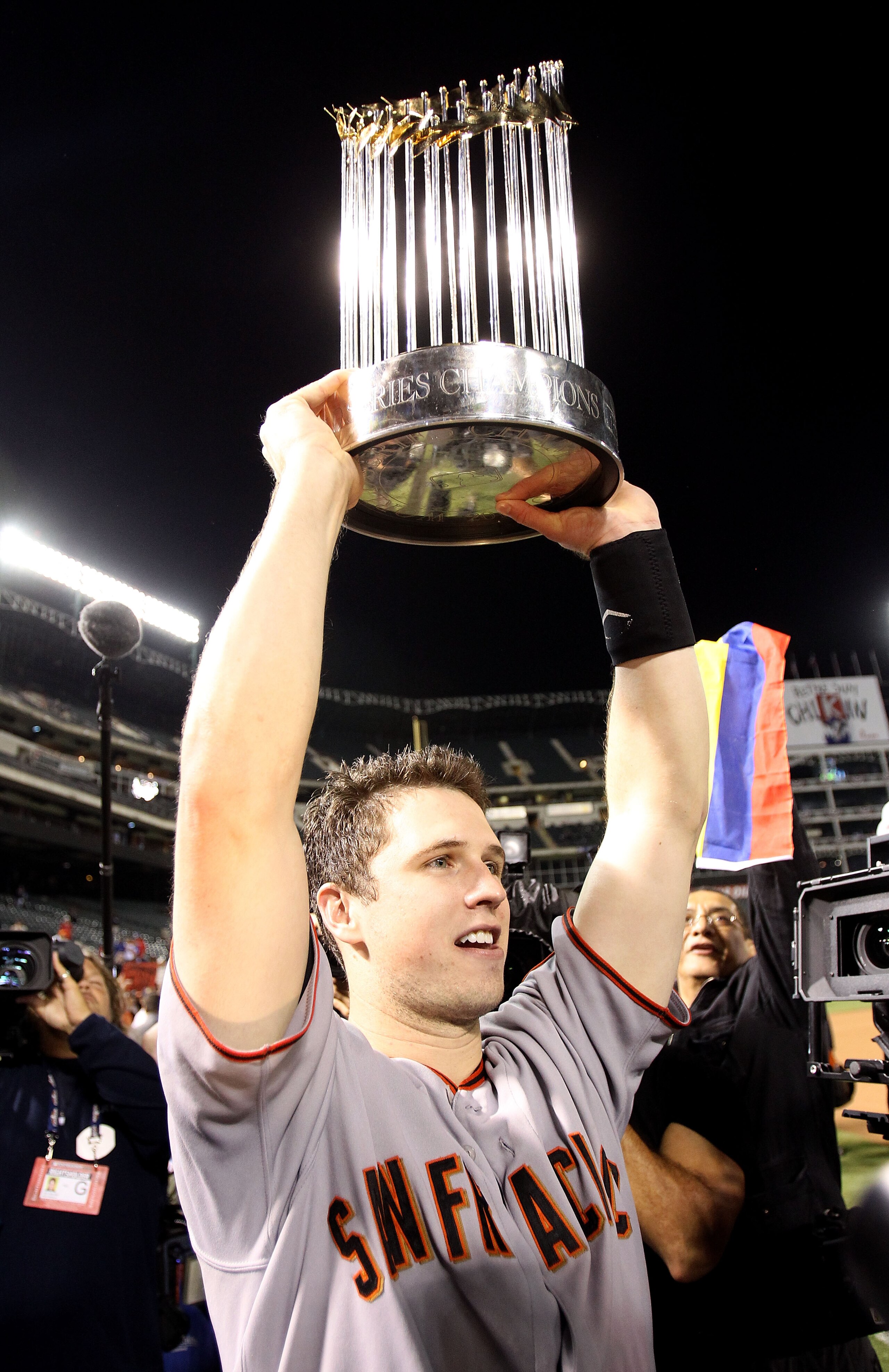
The Good: With the possible exception of the Twins and Joe Mauer, there may not be a team in the league whose success depends more on one player than the Giants with Posey. The Giants will go as far as their pitching takes them, and Posey handles the rotation. That is the case with every team's catcher, but not many of those rely on their catcher to be their best hitter.
Posey was the undeniable Rookie of the Year in 2010. Playing fewer games and playing a more demanding position, his power numbers were right at Jason Heyward's level and his average was far better.
The Bad: If his bat has a sophomore slump, the Giants could be in some trouble. Batting in the middle of the order, Posey should have men on base to drive in. If he fails in those spots, the Giants will have a hard time scoring runs.
The Promising: As been pointed out by various pundits, Posey's swing goes a long way in preventing slumps. That will need to be true in 2011. The pitchers like throwing to him and that is not likely to change.
Pablo Sandoval
11 of 12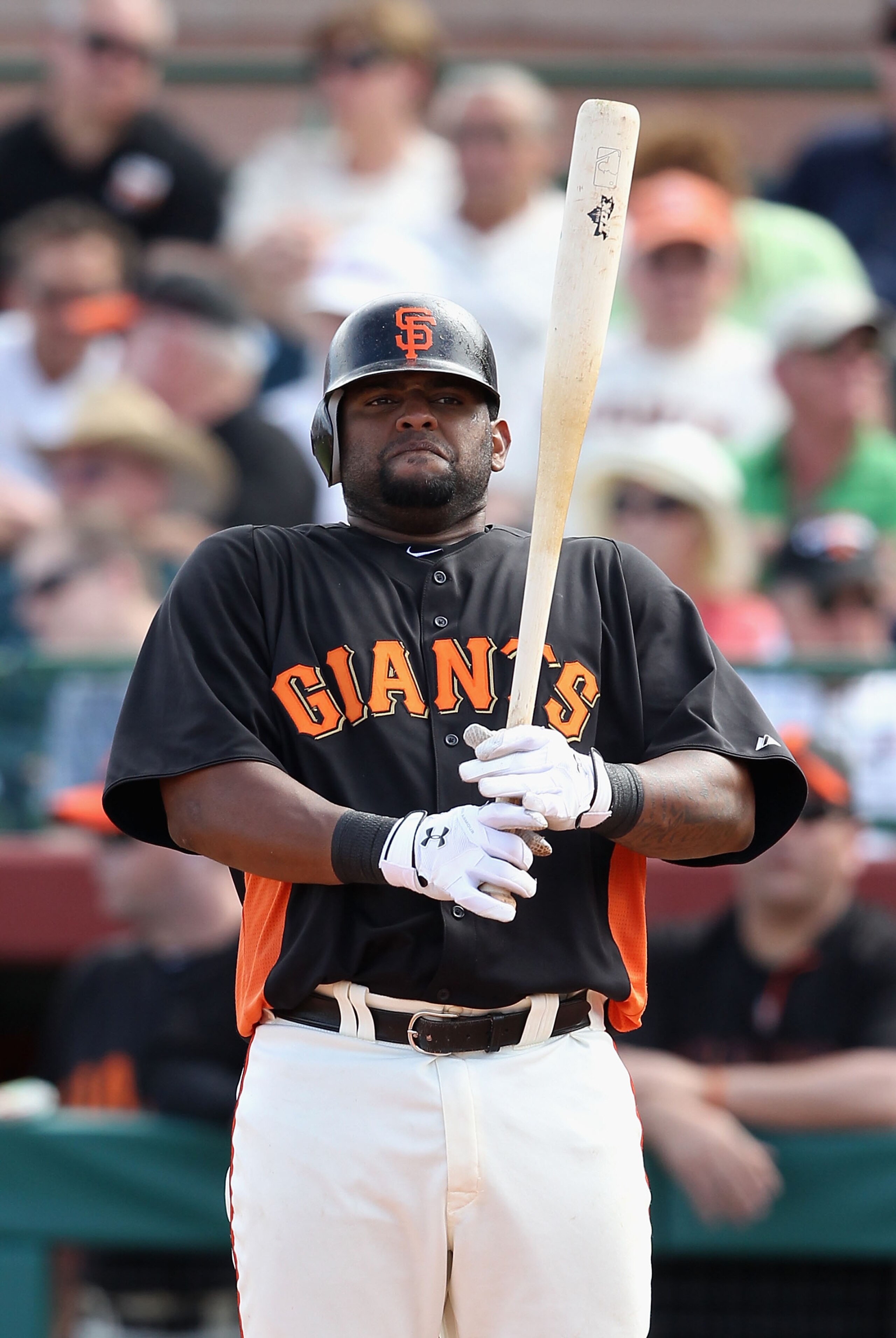
The Good: Losing Juan Uribe for Miguel Tejada looks to be a downgrade, especially in terms of power. Additionally, even with good seasons, most of the Giants top hitters are possible slump candidates, if only by a little. That can all be made up if Pablo Sandoval's 2011 is closer to his 2009 than his 2010. He has lost a lot of weight, which is a really good sign. He should be able to move around the bases better and play a solid third base.
The Bad: His weight was not the only reason that he struggled in 2010. Even in 2010, Sandoval didn't record many strikeouts, especially for a hitter as aggressive as he is. But pitchers did seem to figure out how to keep him off balance. If Sandoval’s struggles continue, the Giants will have a few options at third base. Option one is to play DeRosa at third base. Option two to is to move Huff to third and have Belt play first. The former is the better defensive option; the latter is the better offensive option.
The Promising: If he can keep the weight off and learn to be a little more selective at the plate, Sandoval should have a good season. It might not be as good as 2009 but it doesn't need to be. He may not hit .330 again but 25 home runs is not an outrageous goal. If Sandoval hits, the Giants should be able to fill in the other gaps and win the National League West and their playoff pitching rotation is as good as anyone so if they get back to the playoffs, they can absolutely repeat.
Conclusion
12 of 12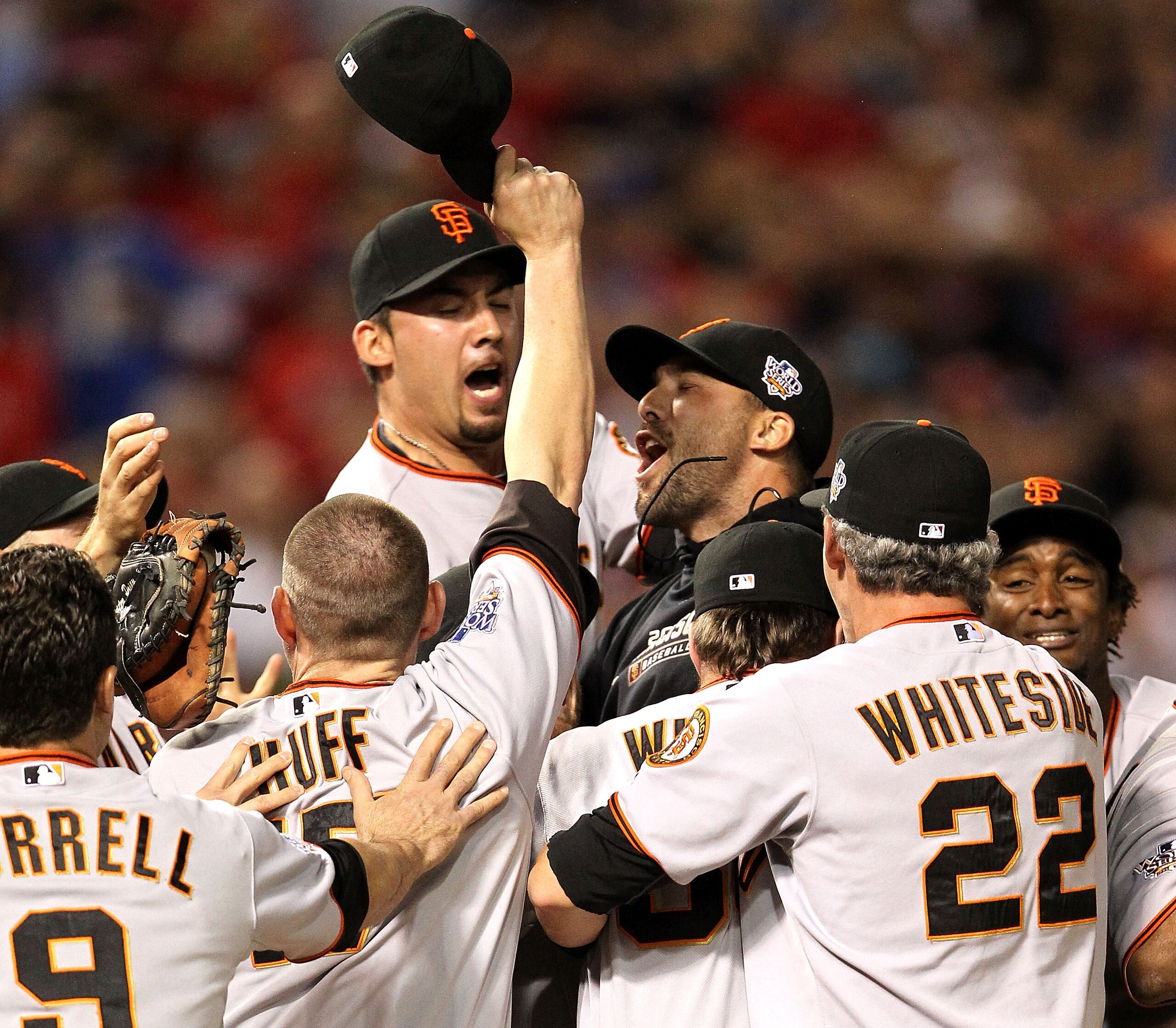
The Giants are a team built more for the sprint than the marathon. If they reach the playoffs again, they can repeat. While the Giants have received plenty of hype this off-season, they are a West Coast team and have received far less hype than a Northeast team would. Additionally, both the Phillies and Red Sox made vast improvements and received a lot of attention from them.
Any champion is vulnerable to getting an inflated head but the Giants situation makes them less susceptible to that. They are a veteran team and a lot of people still don't believe that they were as good as they showed in the playoffs last year. That will work to their advantage. For anyone who experienced it, no season will ever match the magic that 2010 gave us, but 2011 could prove just as successful.
.jpg?w=2560 "Grading Monday Night Raw 🔠")
.png?w=2560 "Early 2027 NFL Mock Draft ✍️")
.jpg?w=2560 "Colts Sign Keenan Allen")
.jpg?w=2560 "Jordyn Tyson Out 2 Months")


.jpg?w=2560 "CMC Injury Update")