
Albert Pujols Rumors: How Important Is His Age to His Market Value?
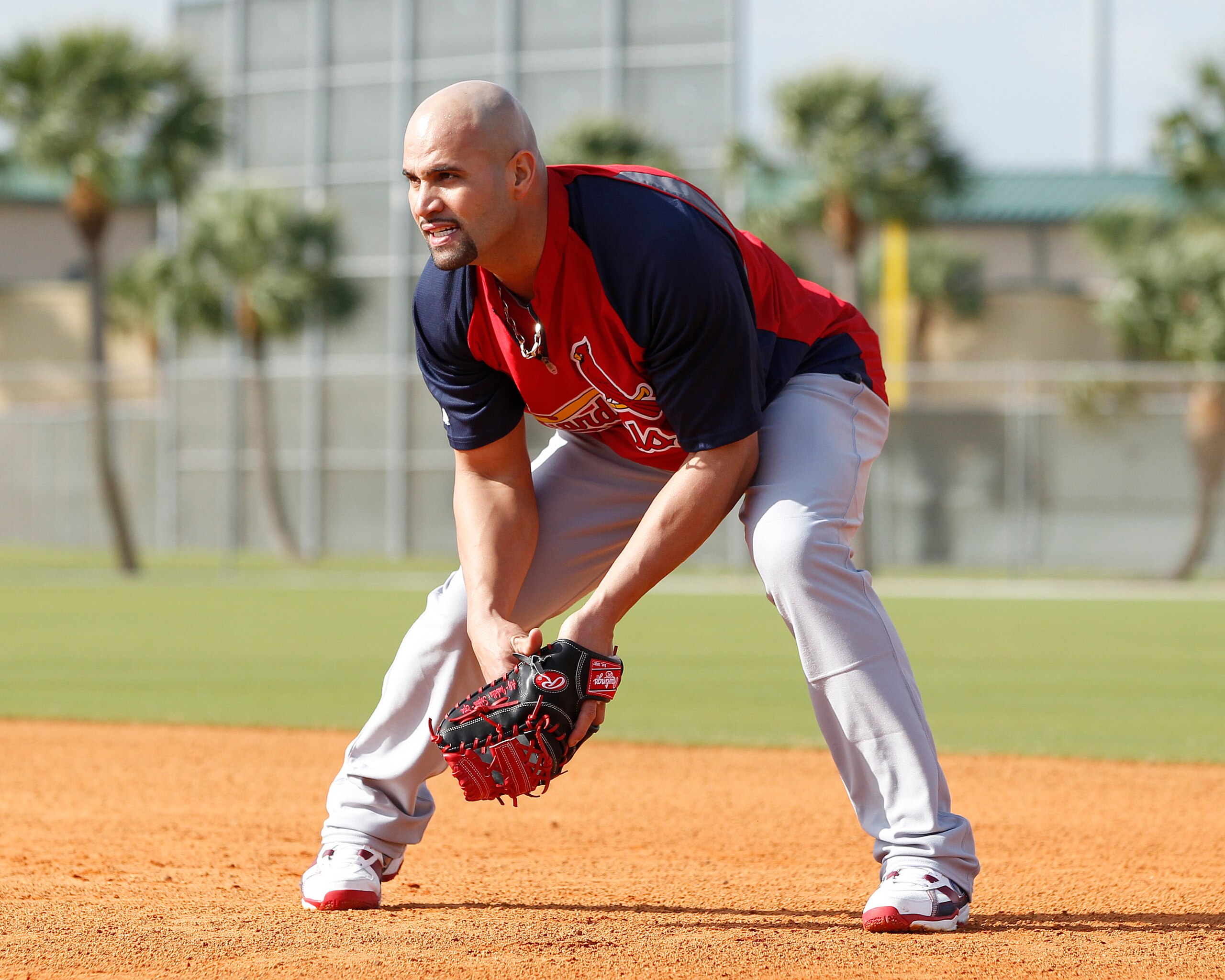
Albert Pujols was born on January 16, 1980, or so he and the St. Louis Cardinals would have us all believe. Pujols was born in the Dominican Republic, though, and would not move to the United States until 1996. Because of the negligent (and frequently downright deceitful) methods of record-keeping in the Dominican Republic when it comes to dates of birth, Pujols' age is therefore in question. In fact, numerous key figures in baseball today believe Pujols to be 33 or 34 years old, rather than 31.
The question is not moot, since Pujols has made clear he wants a 10-year contract that would carry him into his 40s even if his birth date is accurate. If he is only 31, that demand might be reasonable: Alex Rodriguez's current contract will carry him through his 42nd birthday. If Pujols is older, though, it introduces a lot of variables into the equation for would-be suitors. Let's examine what's at stake.
Is He Already in Decline?
1 of 10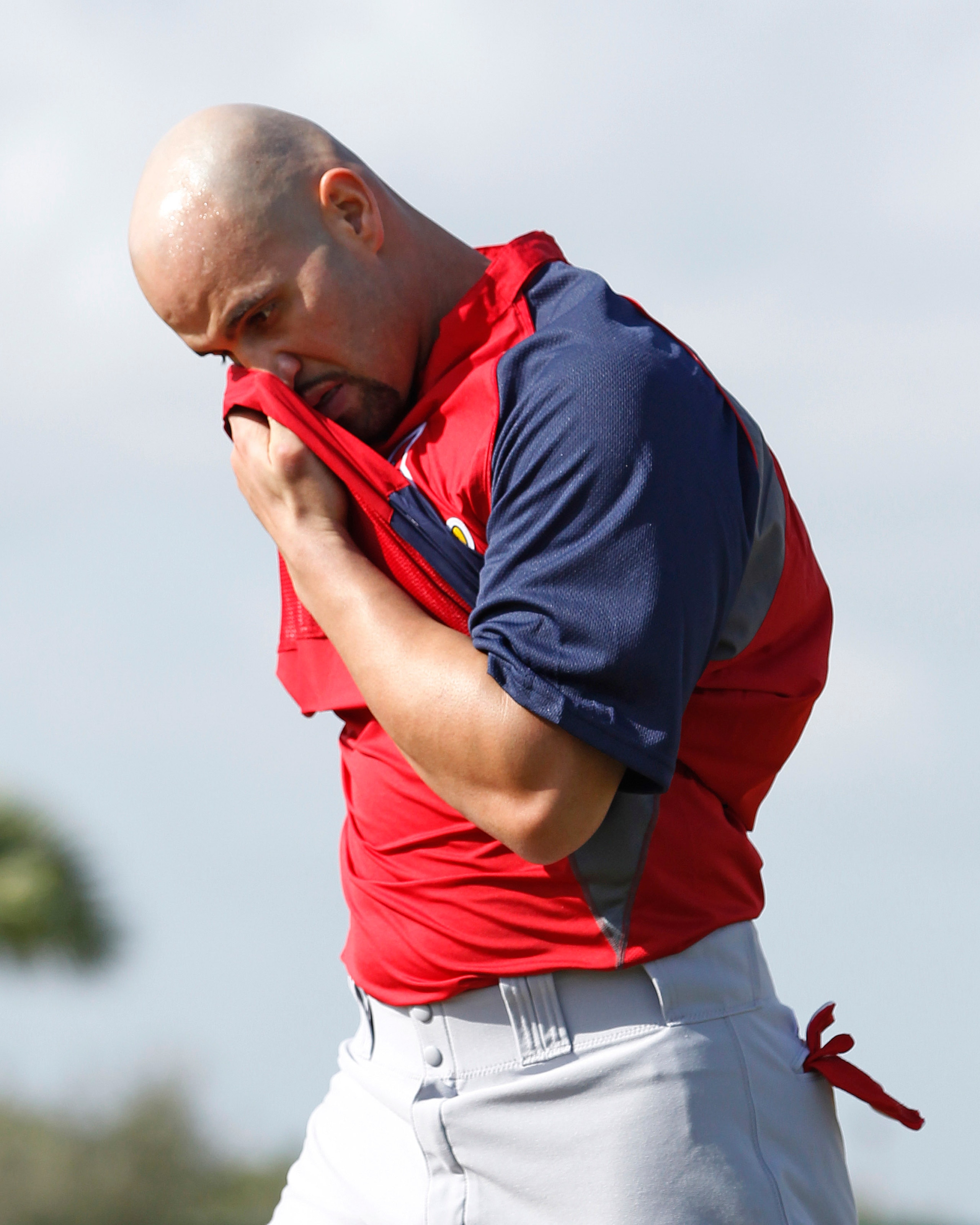
Pujols finished with a sparkling .312/.414/.596 batting line in 2010, good enough for a second-place MVP finish and not at all incommensurate with his superstar asking price. The only problem is this: All of those numbers fall short of Pujols' usual performances.
The batting average is the lowest mark of Pujols' 10-year career. The on-base percentage marks the third-worst showing of his carer, and the worst since 2002. His slugging average also ranked third from the bottom for his career.
Overall, his Wins Above Replacement have fallen in each of the past two seasons, and 2010 was his second-worst overall campaign by that measure, according to FanGraphs. Pujols remains an elite player, then, but for how much longer?
Is He a Juicer?
2 of 10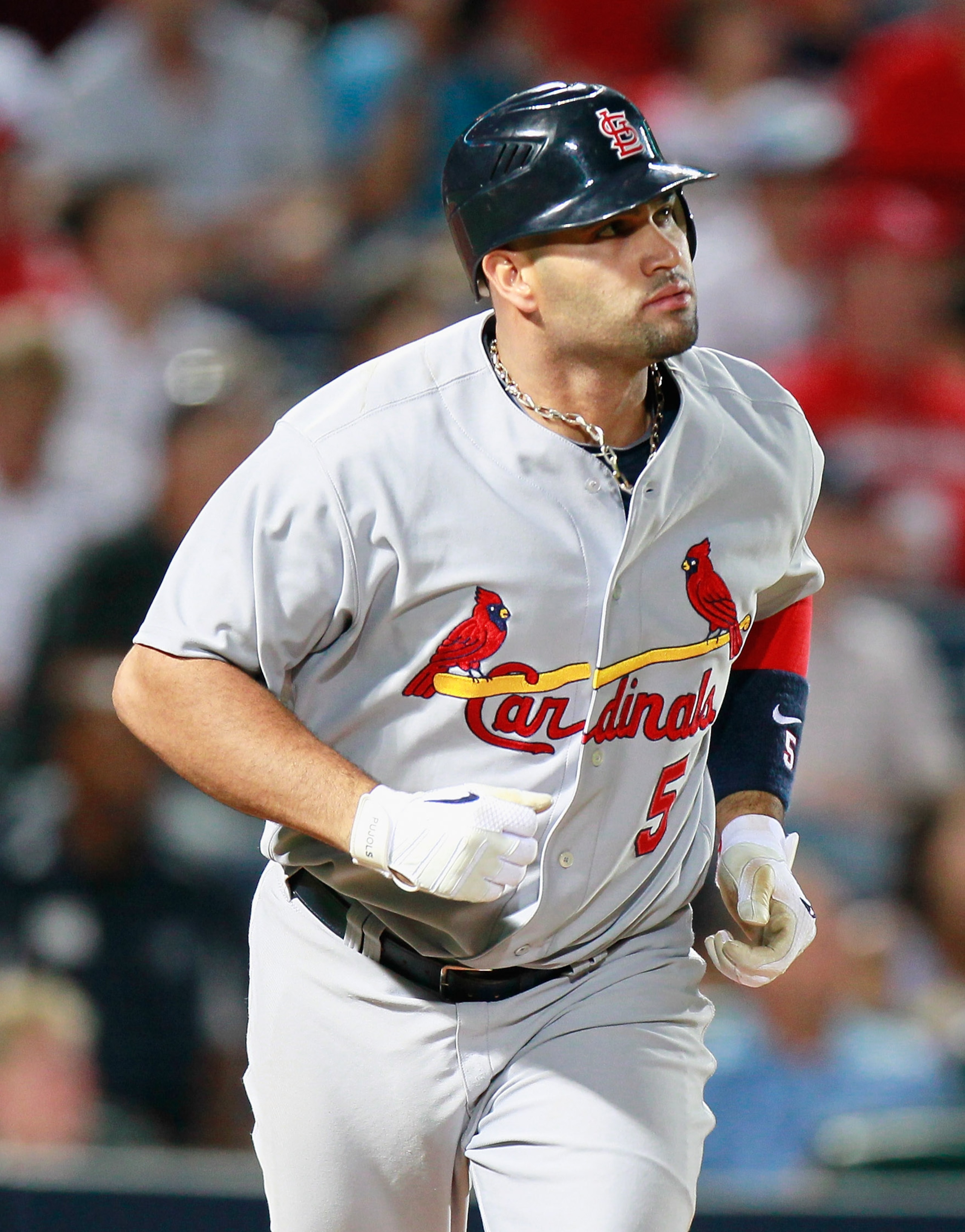
It seems a cruel question to ask, but to whom shall we extend the benefit of the doubt? If Jose Bautista can be forced to deal with such implicit suspicion after a 2010 breakout, why ought Pujols (whose best years came during the height of the steroid era in the early 2000s, and who came up through collegiate and minor-league ranks in the late 1990s) be exempted?
It's almost certain that he is clean now—especially since it has become all but impossible to avoid detection as a user under new testing procedures and policies. But did he once use? For how long?
Pujols shaves his head to disguise aggressive premature baldness: that is a known side effect of some steroids. More common ones, like joint pain and irregular heartbeat, can linger years after discontinuing use. Could those things come home to roost and cost Pujols years at the tail end of his career?
Once Bitten, Twice Shy
3 of 10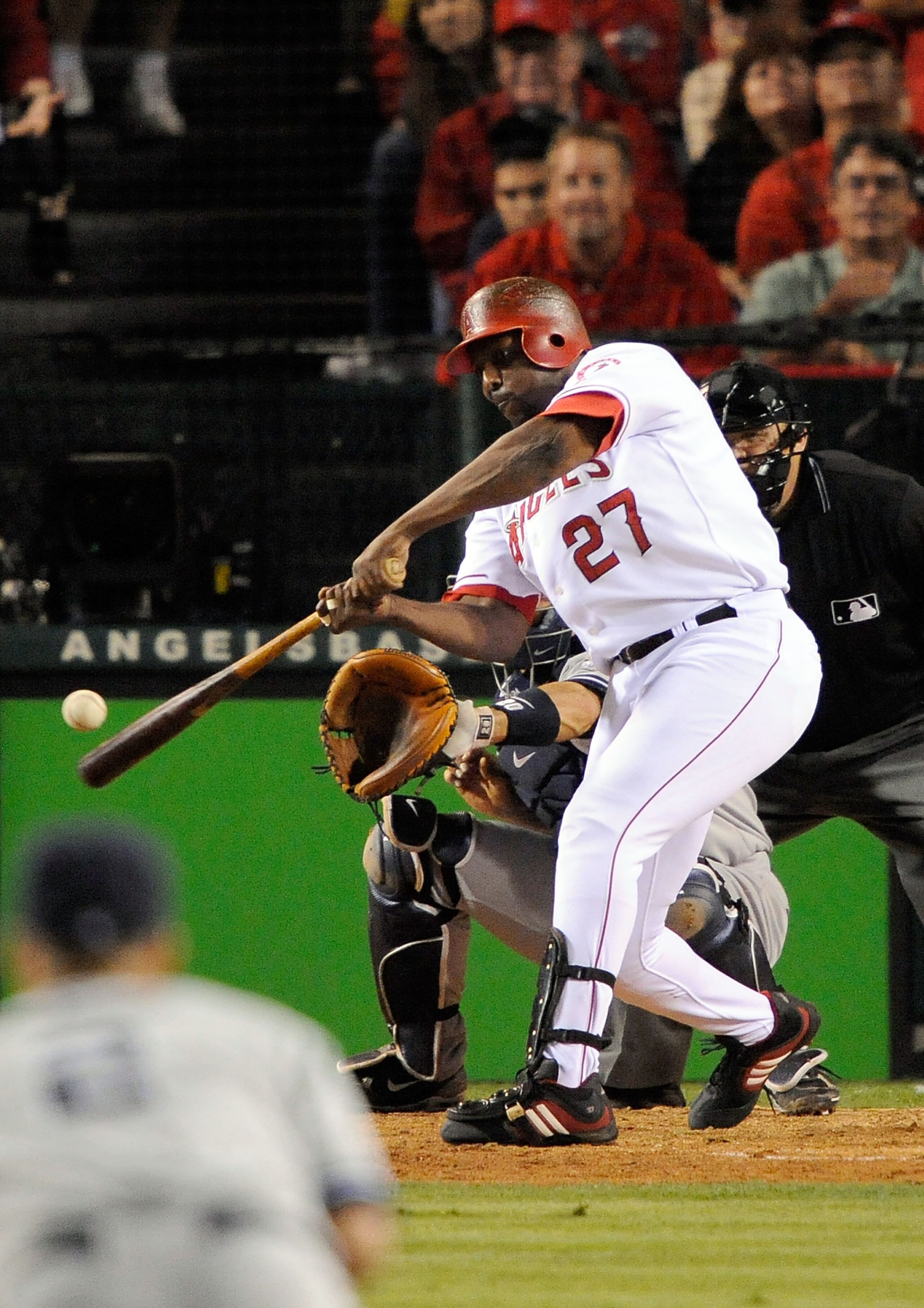
In October 2008, the Los Angeles Angels of Anaheim had a choice to make. Star outfielder Vladimir Guerrero's contract expired at season's end, but the Angels held a $15-million option for his services in 2009.
Guerrero was and is one of the best pure hitters of his era; the Angels viewed him as a franchise cornerstone. He had won the American league MVP award in 2004. In his first four years as an Angel of Anaheim, Guerrero's average season looked like this:
151 games played
.327 batting average
.392 on-base percentage
.566 slugging average
33 home runs
119 runs batted in
100 runs scored
11 stolen bases
In 2008, Guerrero had taken a modest step back. He played in only 143 games, hit .303/.365/.521, slugged only 27 homers and drove in just 91 runs. Nagging injuries forced him to come in from the outfield and perform designated hitter duties 44 times, and he stole only five bases.
Still, unfazed, the Angels exercised their option. After all, Guerrero was only going to be 33 in 2009, and had every chance to bounce back from the tough year in 2008.
Months later, and before the first pitch of the 2009 season, Guerrero would reveal that he was actually a year older than his reported age. He would be 34 that season, and it would be a nightmare: Hampered by injury and a slow bat, Guerrero hit .295/.334/.460 in only 100 games for the 2009 Angels. He took to the outfield only twice all season.
With that kind of mishap still bitter in the mouths of executives around the league, Pujols will need to demonstrate his age very clearly or risk being viewed very skeptically.


How Much Time Have You Got?
4 of 10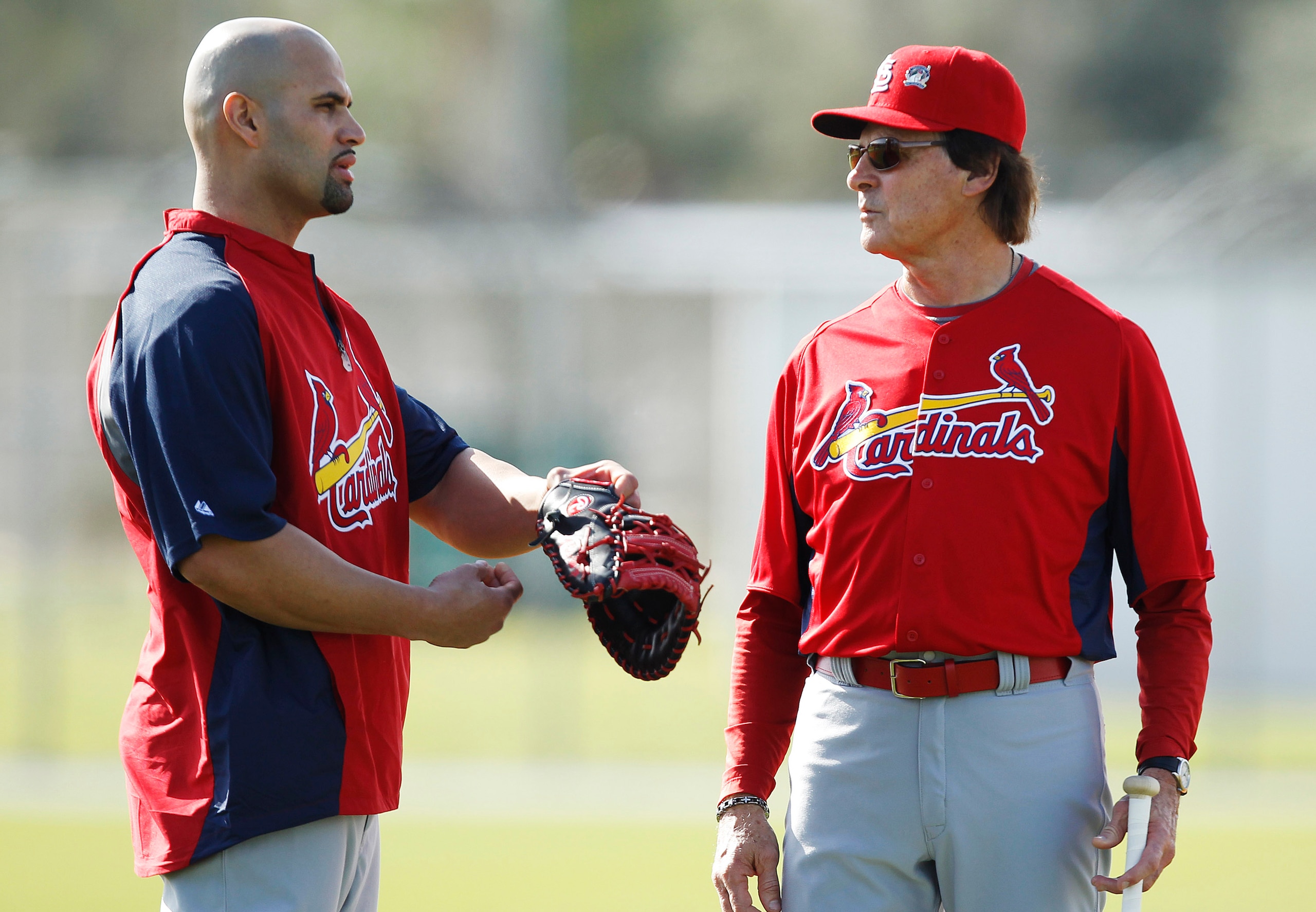
When an organization makes the sort of fiscal and contractual commitment Pujols is seeking, they do so with their eyes on long-term success. The Cubs and Yankees might make huge free-agent splashes in the name of trying to win right away, for very different reasons but with equally compelling rationale. For the other 28 teams in the league, though, a long-term contract is a long-term investment.
If the Cardinals re-sign Pujols, does it make them 2012 contenders for a World Series berth? Hardly. Adam Wainwright may or may not be back by then, but Chris Carpenter is sure to be one year older, and Shelby Miller is not as sure to be one year more ready for the rotation. Meanwhile, the farm system lacks the depth to supplement this team substantially, and so the Cardinals would need to widen their wallet even further in order to put a true contender in place by next spring.
More realistically, they could build for 2013 or 2014...but if Pujols is two years older than he says, that door of opportunity may close even as the team tries to hold open the window. The uncertainty about Pujols' age makes it more difficult for any suitors to clearly define a long-term strategy centered around his signing.
In essence, it makes it impossible to build a franchise around him, which is certainly what any executive making this sort of outlay would prefer to do. The only undeterred suitor may be Chicago, who need to win a World Series as soon as humanly possible to put an end to their fans' interminable suffering. They would likely bid big bucks just to have Pujols help take the monkey off their backs by 2012 or 2013.
Is He Marketable?
5 of 10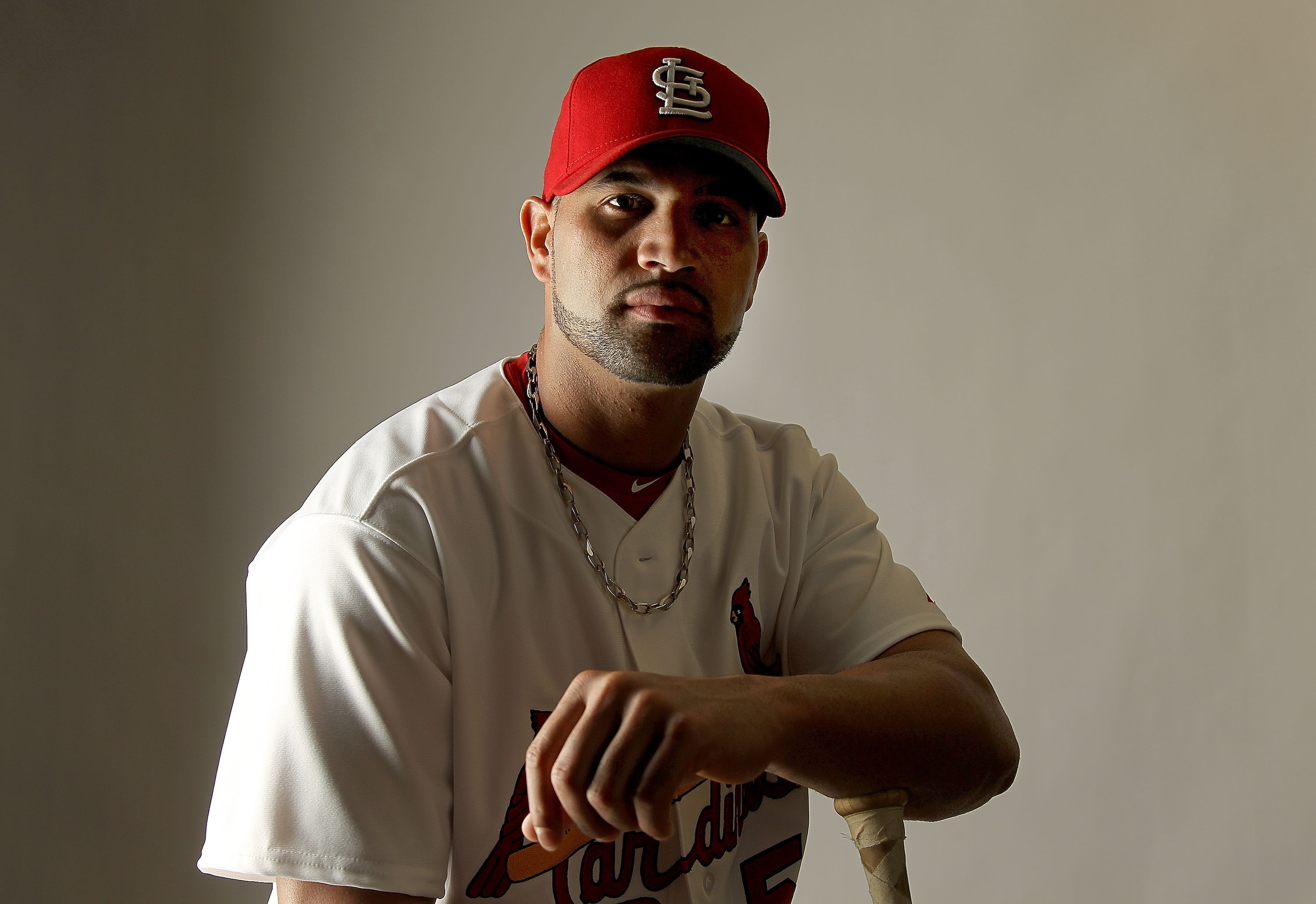
Part of the argument for spending such big money on Pujols could be one of pure monetary return on investment: Pujols is a popular figure, the kind who puts butts in seats and sells jerseys. This is one case in which his age appears to be not all that important. Pujols has one of the most popular jerseys in the league, and the guys who share that honor with him (Derek Jeter, Manny Ramirez, David Ortiz) are hardly up-and-comers.
Crucially, though, there is a hook for each of those men that Pujols lacks. Jeter still authors flashy defensive plays and is the face of the most beloved and hated franchise in sports. Ramirez has the new number (99, which looks very cool on a t-shirt), and the dreadlocks and the general goofiness. Ortiz is the folk hero of Boston, and his personality is as big as his smile.
Pujols lacks panache. If he is not a great hitter, he is not much fun to watch at all. If Pujols is nearing the end of his reign of dominance over opponents, he may also be nearing the end of his intangible economic value. That goes double if he defects to a new team, where he will not identify as closely with the fanbase as Jeter and Ortiz do with theirs.
Numbers Game: The Home Run Record
6 of 10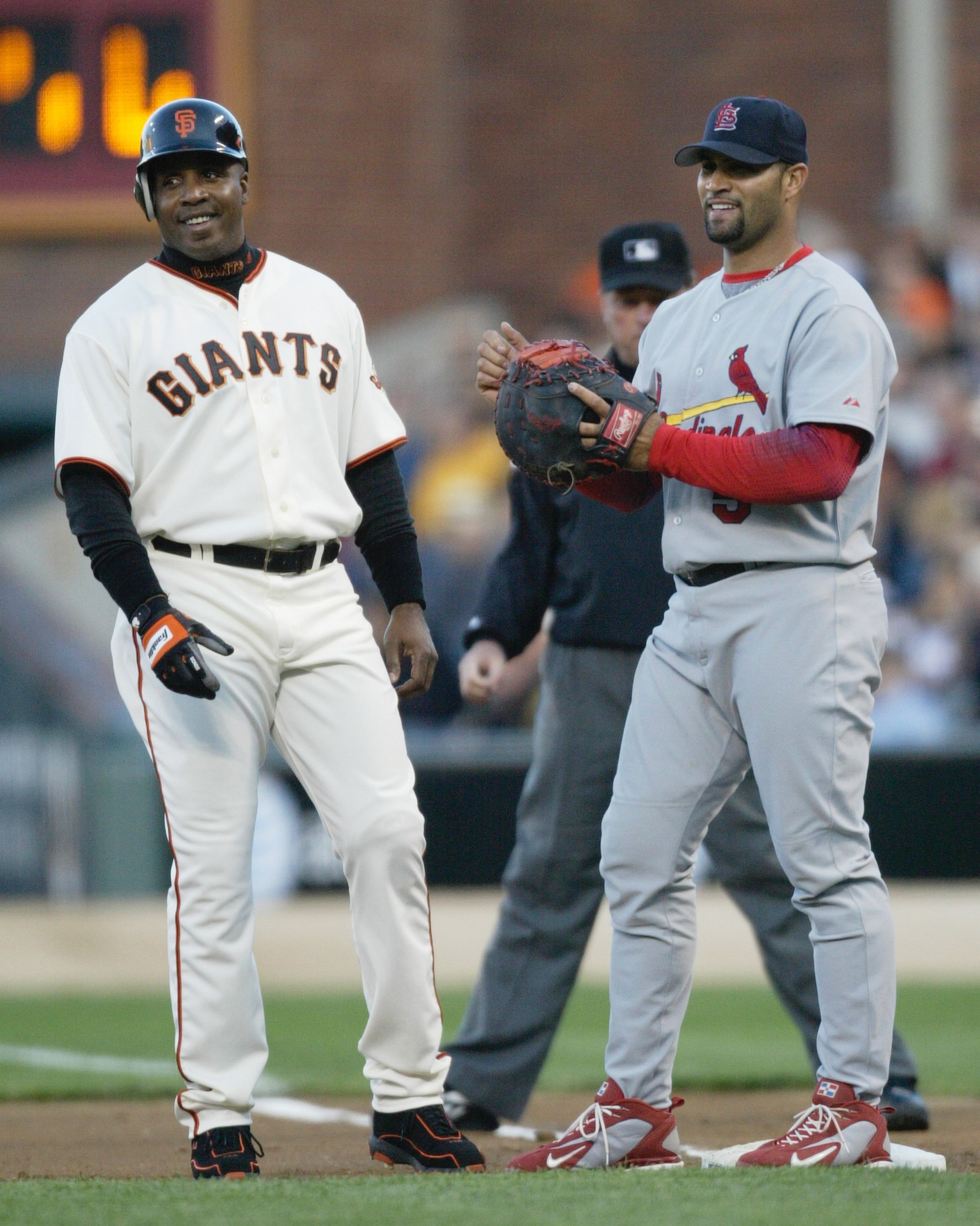
Look, Pujols does not figure to break Barry Bonds' all-time home run mark at 763. Bill James' Career Assessments, available at ESPN.com, give Pujols a 20 percent chance to do so if he is the age he says he is. All told, the Assessments project Pujols for 656 career home runs and six more full and productive seasons given current data.
If Pujols is one year older than he claims, the Assessments suggest he will hit 635 homers before all is said and done, and his chances to catch Bonds drop to 14 percent.
If he is two years older, the odds are just eight percent and the Assessments expect 614 career bombs, giving him almost no chance to catch even Willie Mays. These are rough estimates, but the point is clear: One easy Pujols selling point is the chance to watch him topple records, but if he is older than he says, the chances of him actually making that history (and the money that goes with it) diminish drastically.
What About 3,000 Hits?
7 of 10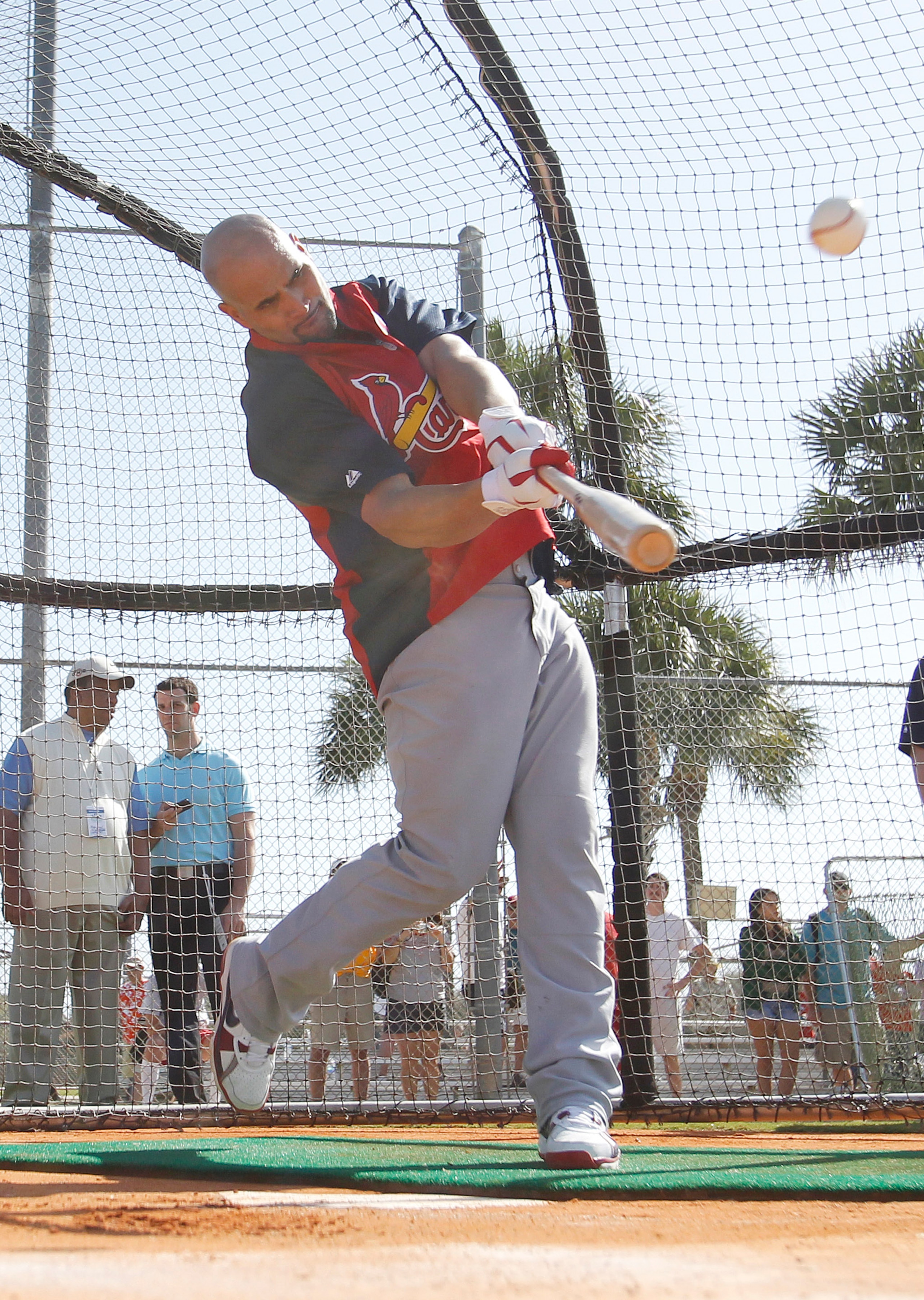
Home runs are not the only milestone hits Pujols will collect over the life of his next deal. He seems a shoo-in for 3,000 hits, and perhaps he is. But perhaps not.
If Pujols is the age he claims to be, the Assessments give him a 51 percent chance to reach 3,000 hits. If he is actually 32 already, the chances drop to 43 percent. If he is 33, the chances are 35 percent, according to the Assessments. It could well be, then, that the truth about Pujols' age is the difference between his prospective employer getting to promote his milestone hit, or never seeing it come.
Could He Score 2,000 Runs?
8 of 10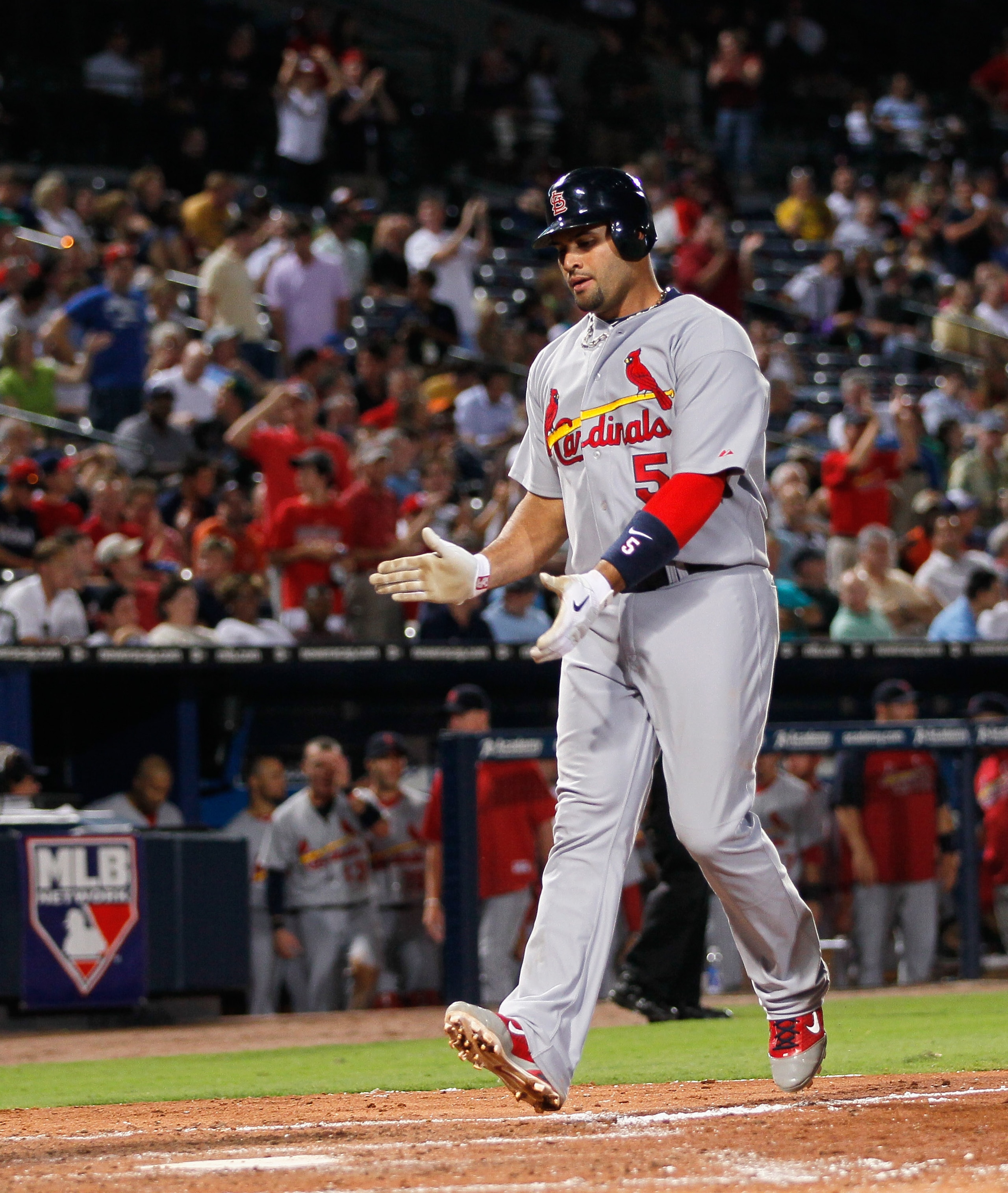
Only seven players in baseball history have scored over 2,000 runs in their careers. Not even the great Stan Musial, whom Pujols so admires, did it—he came up 51 runs short. The Assessments say Pujols, 31, has a 31 percent chance to reach that rarefied air. If he is 32, though, he has only a 25 percent chance. If he is 33, make it 18 percent.
Can He Drive in 2,000 Runs?
9 of 10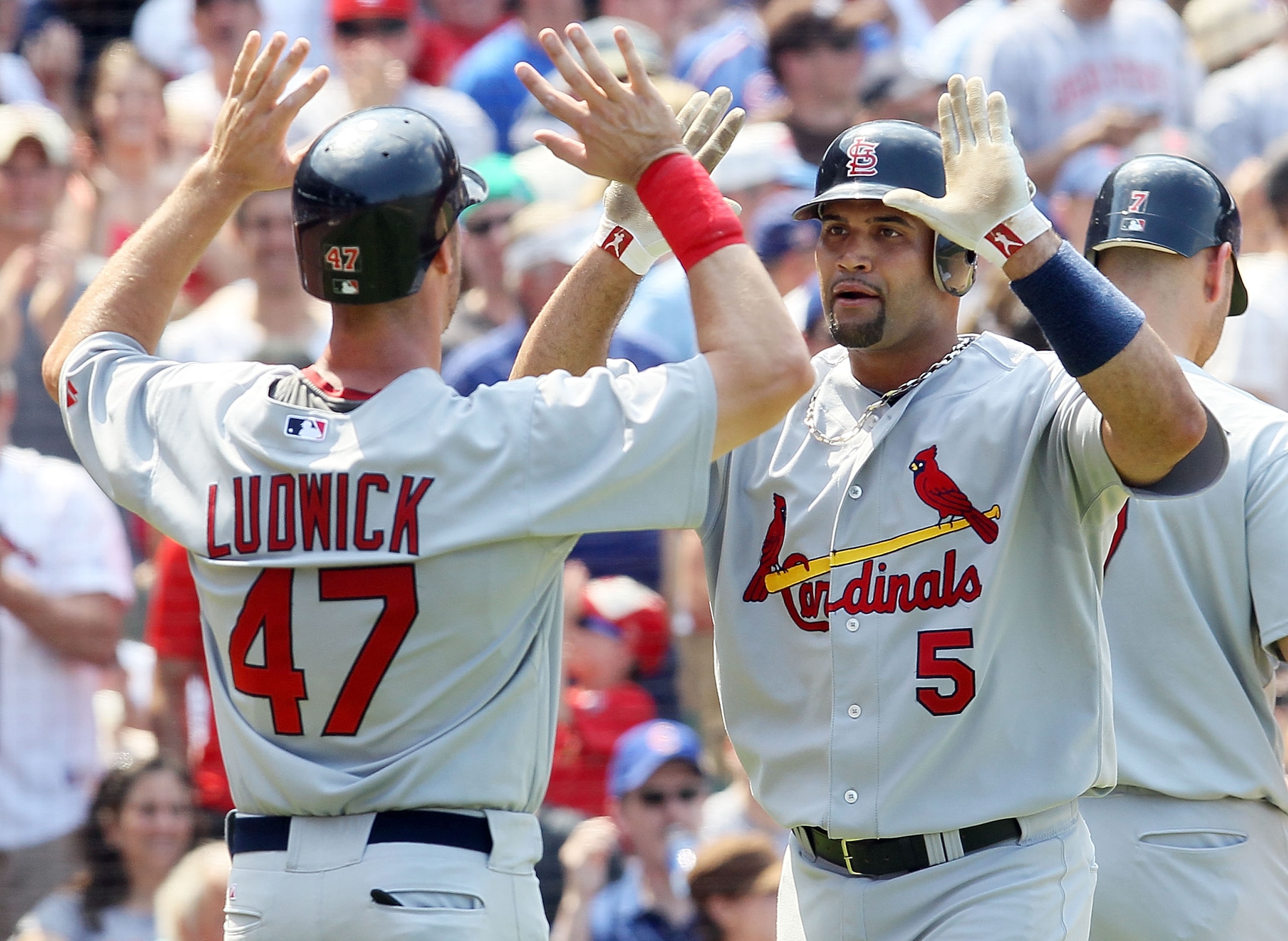
This is the really exclusive company: Only Babe Ruth, Hank Aaron and Cap Anson have 2,000 or more RBI in big-league history. James' system give Pujols less than an even chance of reaching that figure anyway, but his chances range from 46 percent to 30 percent based on his actual age.
Musial finished with 1,951 RBI (by the way, that he walked away from the game so close to both milestones says a great deal about Musial). Will Pujols eclipse that number? Sure, says James' system of Pujols as we know him. He has a 52 percent chance. But what if he were two years older? Not likely, the Assessments say: a less encouraging 35 percent.
Will Someone Please Cut This Man Open and Count the Rings?
10 of 10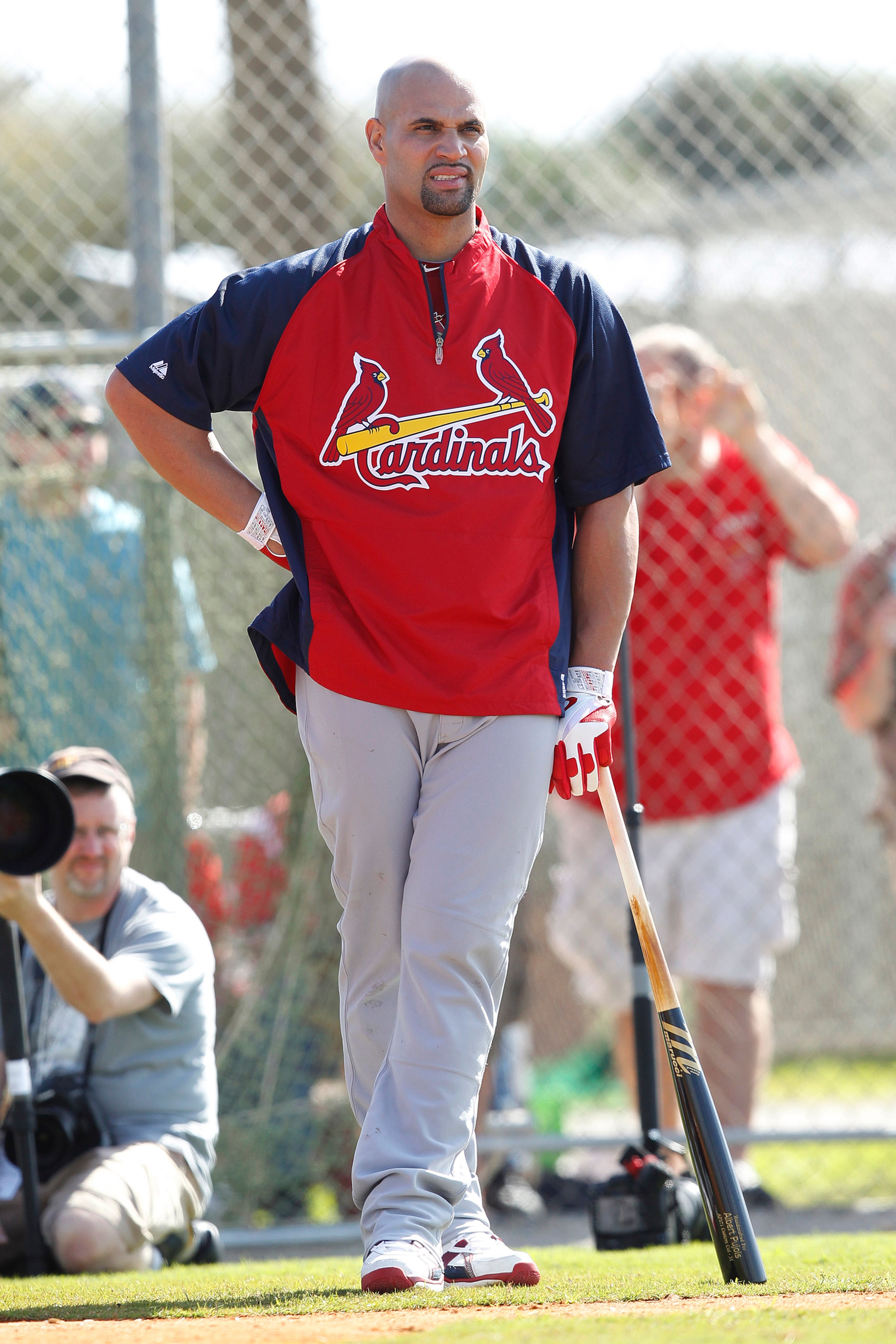
What does a good private detective charge for 10 straight months of tedious fact-finding and daily inquiries in a foreign country? Maybe $300,000?
Someone ought to ring that up on a corporate card somewhere in MLB. Pujols' age is a critical datum and it may be, not mildly, but grossly inaccurate. This has implications for the organization who signs Pujols, the fans who root for him, the league that so needs him and for Pujols himself, especially his statistical legacy.
Yet, for monetary purposes, Pujols has no motivation to tell the truth, or even to reveal that there is a different truth to tell. No team has ever spent much time or effort investigating a player's background before. Then again, no team has ever had as much motivation as has every potential suitor for Pujols beyond 2011.
Remember that $300,000 for a private eye to get a firmer handle on when Pujols was born? That is one thousandth of what Pujols wants to make over the next decade. The Chicago Cubs, St. Louis Cardinals and others might want to spend the money.
.jpg?w=2560 "Grading WWE Raw 🔠")



.jpg?w=2560 "Nabers' Recent IG Post 👀")