
MLB Preview: David Wright and the 25 Most Overrated Defenders
It’s that time of year again.
The fields are being cut, the dirt is getting watered, and the mounds are being built up and pounded down.
Spring Training 2011 is upon us, and along with it a whole new flood of young players, free agent signings, offseason trades, and, of course, the prognostication and prediction as to where each team and player will stack up against their peers.
Pitchers will be looked at for their ability to win games and strike players out. Hitters will be analyzed for holes in their swing and their talent in both contact and power hitting. Speedsters and leadoff men will practice their leadoffs and jumps in the hopes of a good season of stealing bases and going first to third on singles.
But who is looking at the fielders?
Every player in the league—minus the 14 designated hitters in the American League—will be taking ground ball, fly ball, bunt, and every other kind of fielding practice that their managers and coaches can devise. Considering that every position player will spend around nine times as long playing defense than offense, it’s a small wonder that we rarely take the time to separate the Gold Glove gems from the solid defensive backstops—and also from the pure Fungo failures.
With Opening Day 2011 a little over a month away, we at Bleacher Report thought it was time to dust off the leather and rank not the 25 worst defenders, but the 25 most overrated defenders.
These are the players whom everyone seems to be watching when they make that one Gold Glove play that runs on ESPN for weeks, but they’re buying a hot dog for the Bill Buckner-esque plays they make time and time again.
Hopefully this year they can get the elf out of their glove, catch a can of corn, and throw it around the horn.
Don’t hold your breath.
25. Ryan Howard, 1B
1 of 25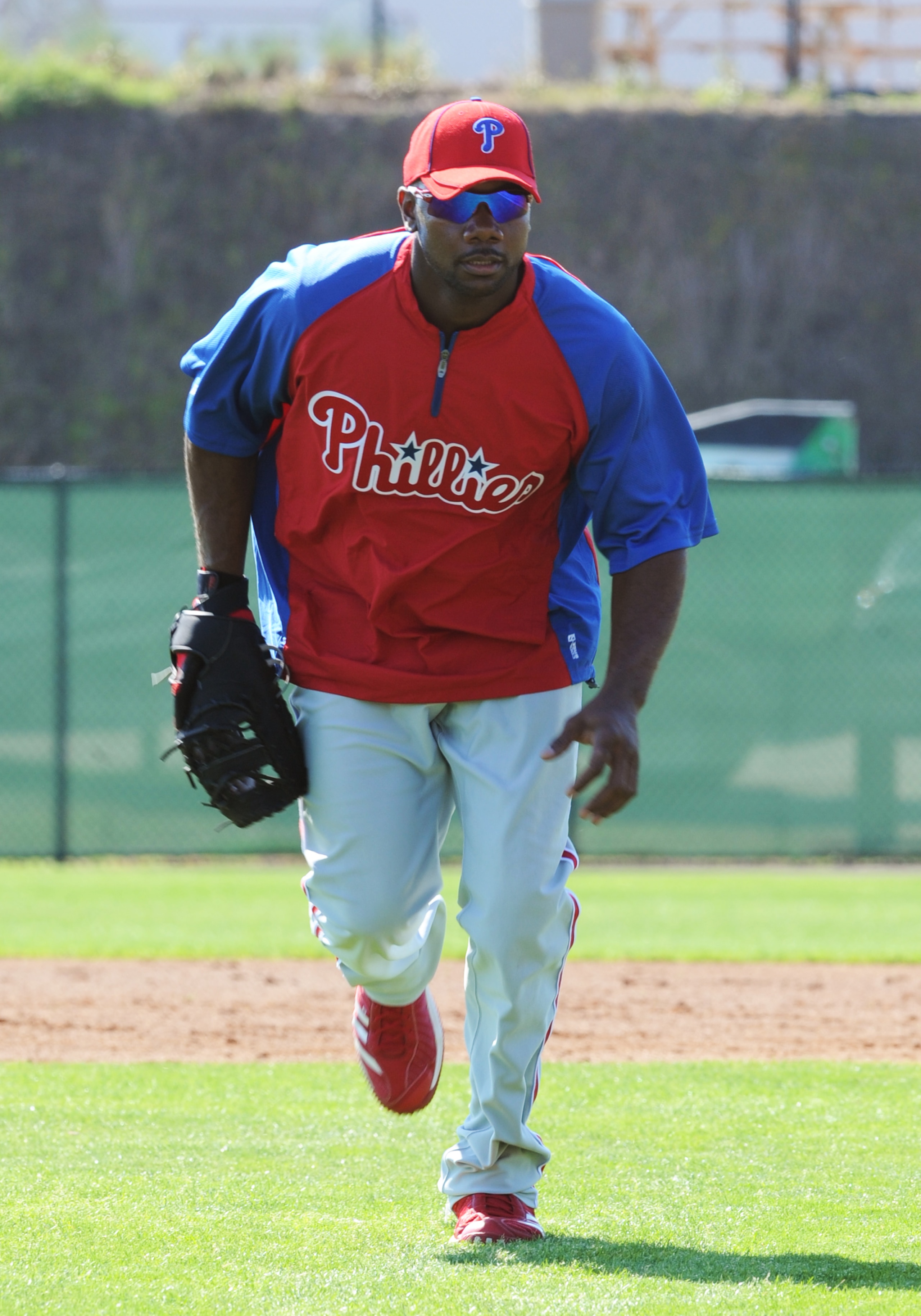
Ryan Howard is one of the best pure power hitters in the game today. He is a perennial first round fantasy draft pick, and is exciting to watch every time he steps up to the plate.
When he puts on that big first base mitt, however, all bets are off.
Granted, he has averaged a .990 fielding percentage over his career, but playing at first base makes him look much better than he actually is on defense.
92 percent of his outs are putouts on throws from other players around the field. I’m not saying it's easy, but all he has to do is catch the ball when it's thrown to him. Moreover, if he doesn’t catch it due to a bad throw, the player throwing the ball almost always gets the error, not him.
How he has managed almost 80 errors over only 495 assists is baffling. That’s one error every six throws or so. Sure, not all of his errors are throwing errors, but even if we double that, any other position player would be benched for making a throwing error every 10, 15, or even 20 throws.
Good thing he has averaged 138 RBI over that same span, because otherwise he’d be giving all the runs he scores right back to the Phillies’ opponents.
24. Alex Rodriguez, 3B
2 of 25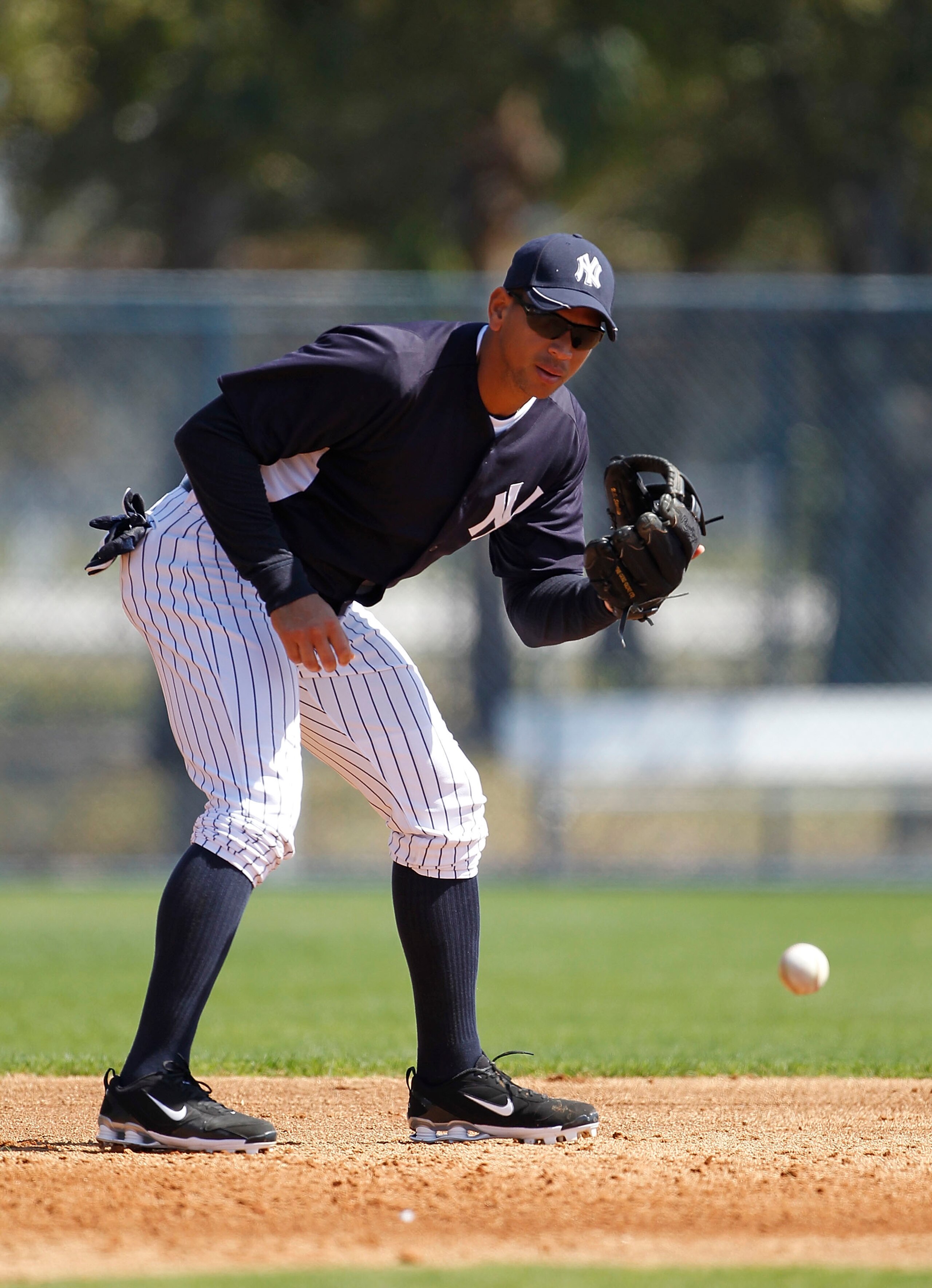
I’m going to use this slide as a chance to preface all future third basemen’s slides. The hot corner is easily the most error prone position on the diamond. They get the lowest number of chances for both putouts and assists in the infield and often have the shortest time to react.
This also makes determining the difference between a hit and an error at third base extremely difficult. I’ve played the position, I understand it.
That being said, there are some seriously overrated defensive third basemen out there, and A-Rod is only the beginning.
Say what you will about his hitting ability, but A-Rod needs some position work this offseason. Even when he was playing shortstop for Seattle, he rarely averaged a fielding percentage over .970, and has a third base career percentage of .964.
Yes, maybe he was always a shortstop and Derek Jeter’s status at SS in the Bronx pushed him over to the hot corner, but there’s still no excuse for having 88 errors over 2443 total chances in seven seasons at third base.
Considering that he gets paid $33 million a year; goes to the Midsummer Classic almost every year; and won two Gold Gloves at shortstop, I’m surprised that Yankees fans don’t expect more from him in the field. Maybe they signed six-time Gold Glove winning third baseman Eric Chavez for a reason?
23. Miguel Cabrera,1B
3 of 25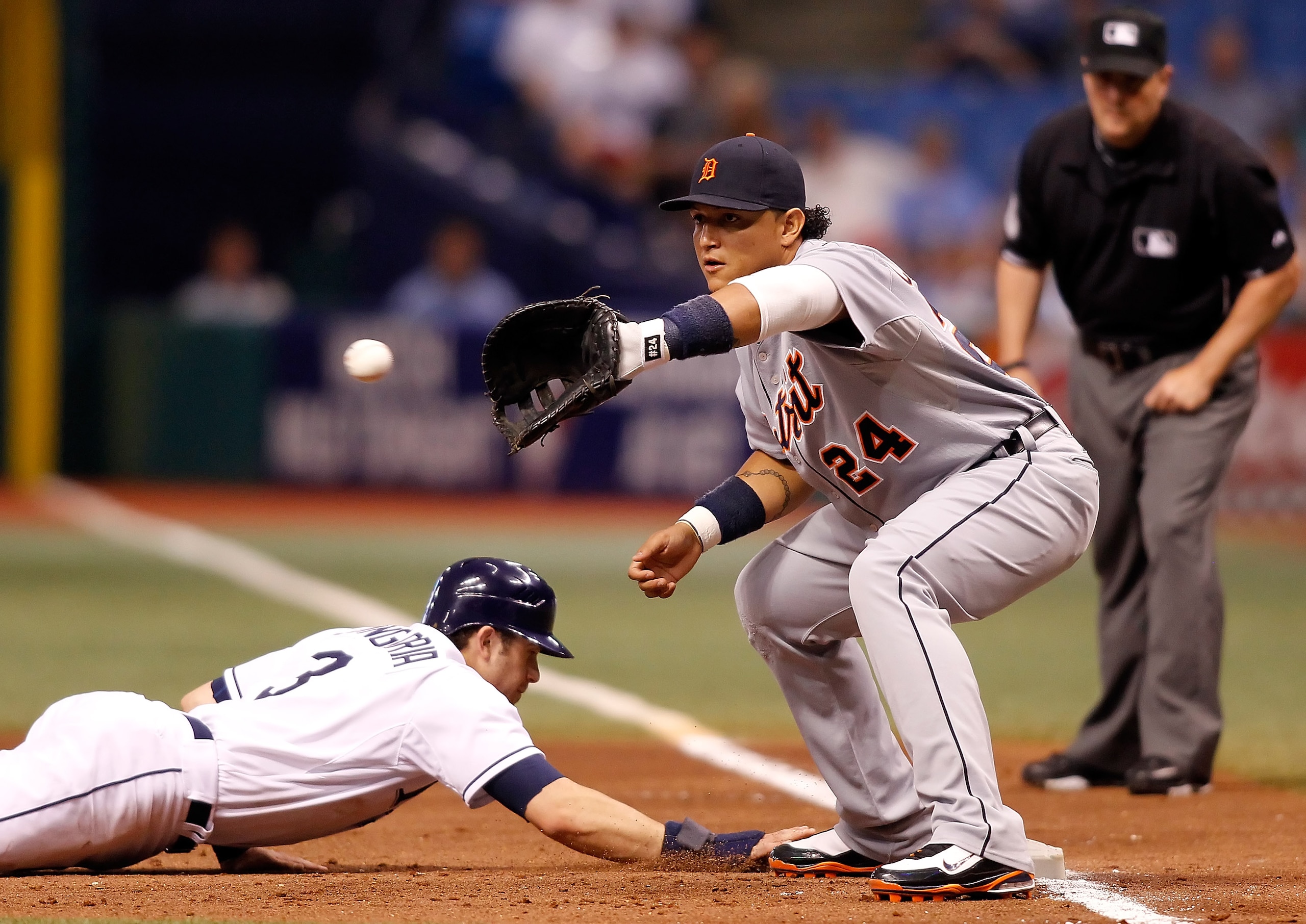
Before you attack me for including him even though his position has been juggled around more often than the average Las Vegas flaming torch, hear me out. I will grant that he is a solid first baseman. Not stellar, but he isn’t a fielder you often have to worry about.
That is, if he stays at first base—and I sure hope he does.
He has made some great plays in his career, but put him seemingly anywhere else on the field and you might as well open the floodgates. He averaged a measly .951 fielding percentage at third base, and in almost as many games in the outfield, he didn’t fare much better—only .971 percent.
The third base numbers look worse than they are because, again, third base is a tough position where averaging even .980 percent is elite fielder territory. What is concerning is the outfield play where many players who are simply decent average a 1.000 fielding percentage.
Please Detroit, keep him at first base so that we can ignore the fact that his non-first baseman’s gloves came with “Added Hole Technology®.”


22. Jose Reyes, SS
4 of 25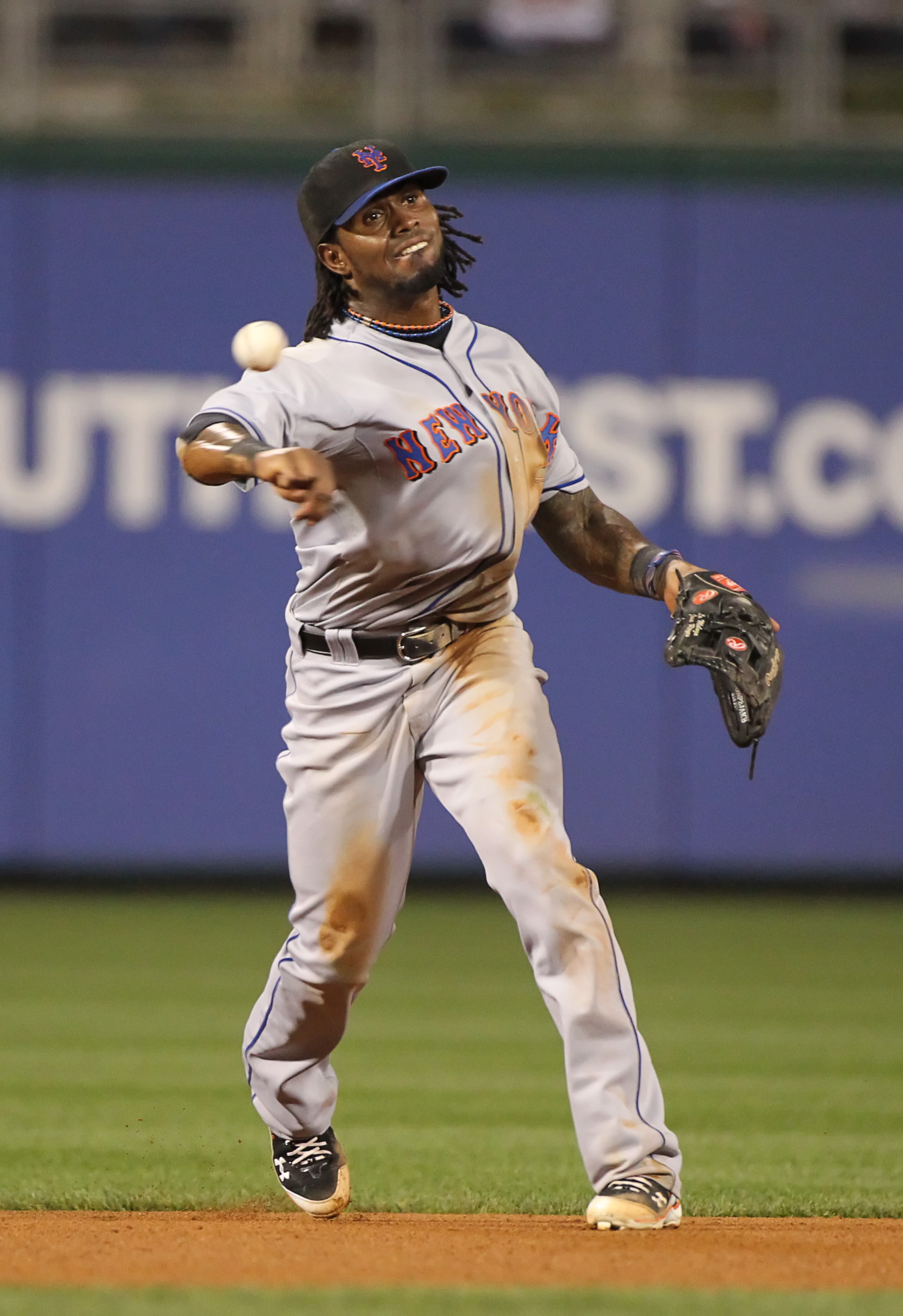
Much of a middle infielder’s job is speed and quick reactions, much like base stealing. They have to cover a large area in a very short amount of time, and some of them just aren’t up to the task.
How the 6'1", 200 pound lightning bolt that is Jose Reyes can steal almost 60 bases a season and still be as average as he is at shortstop is a mystery unto itself.
Case in point: his .973 fielding percentage last season was 11th best in the league, but when you Google “Jose Reyes Diving” or “Jose Reyes Defense,” you find an awful lot of videos for such a mediocre defender.
Maybe, like plenty of other people in the Big Apple, he’s only really on when the cameras are.
21. Jason Kendall, C
5 of 25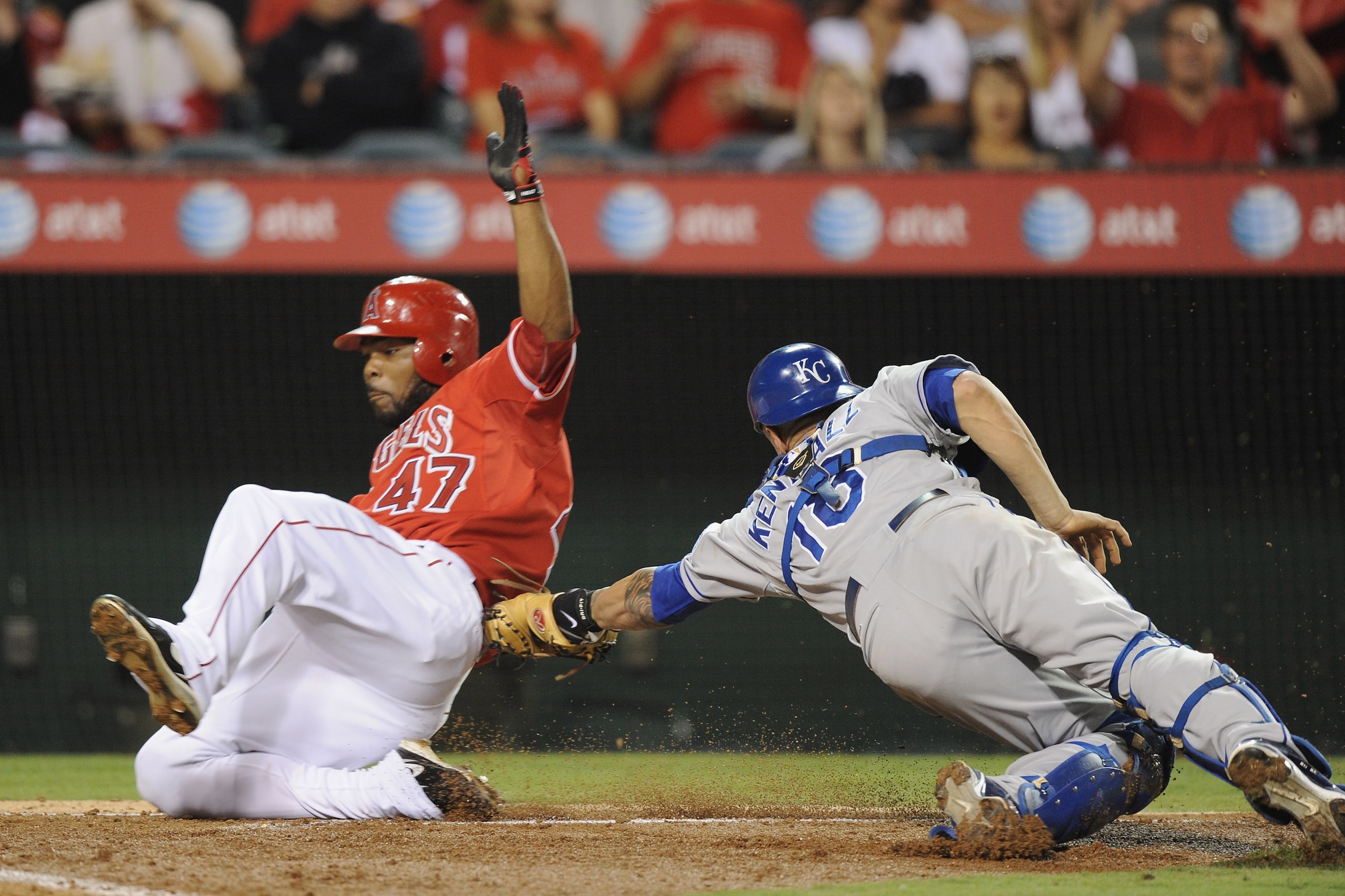
Maybe it’s just me, but I like my defensive minded catchers to be, well, defensively minded.
Clearly that's who Jason Kendall is. He isn’t playing in the majors for the average of six homers and 56 RBI he brings to the plate each year.
His place is behind the plate catching the pitches, not trying to hit them. So how is he so disappointing at the one job he is paid over $2 million to do?
For catchers, fielding percentage doesn’t tell the whole story. A third strike that is caught by the catcher is counted as a putout, so their total chances are flooded with outs that they had little factor in, discounting strategy.
So if we don’t look at fielding percentage, where do we look? Errors are a good place to start, and in 13 seasons, Kendall has 144 miscues. Where does a defensive catcher find almost 12 errors each season? I’m not sure either.
Then we look at passed balls and runners caught stealing. These best capture a catcher’s ability behind the plate because they cover both main functions. They are there to keep pitches from rolling to the backstop so runners can’t advance and when runners try to advance anyway, they are there to throw them out.
A defensive catcher with 13 years in the majors has only a .276 caught stealing percentage? I’ll admit that his 104 passed balls—six last season—is decent, but when players know they can run on you regardless of whether or not you catch pitches cleanly, does it really matter if you catch it at all?
I know that catcher is not the most glamorous defensive position, and that many people have never heard Kendall’s name, but can’t teams find anyone for the same price who can either play better defense or hit better for the same play behind the plate?
One of them already did, and his name is Geovany Soto.
20. Orlando Hudson, 2B
6 of 25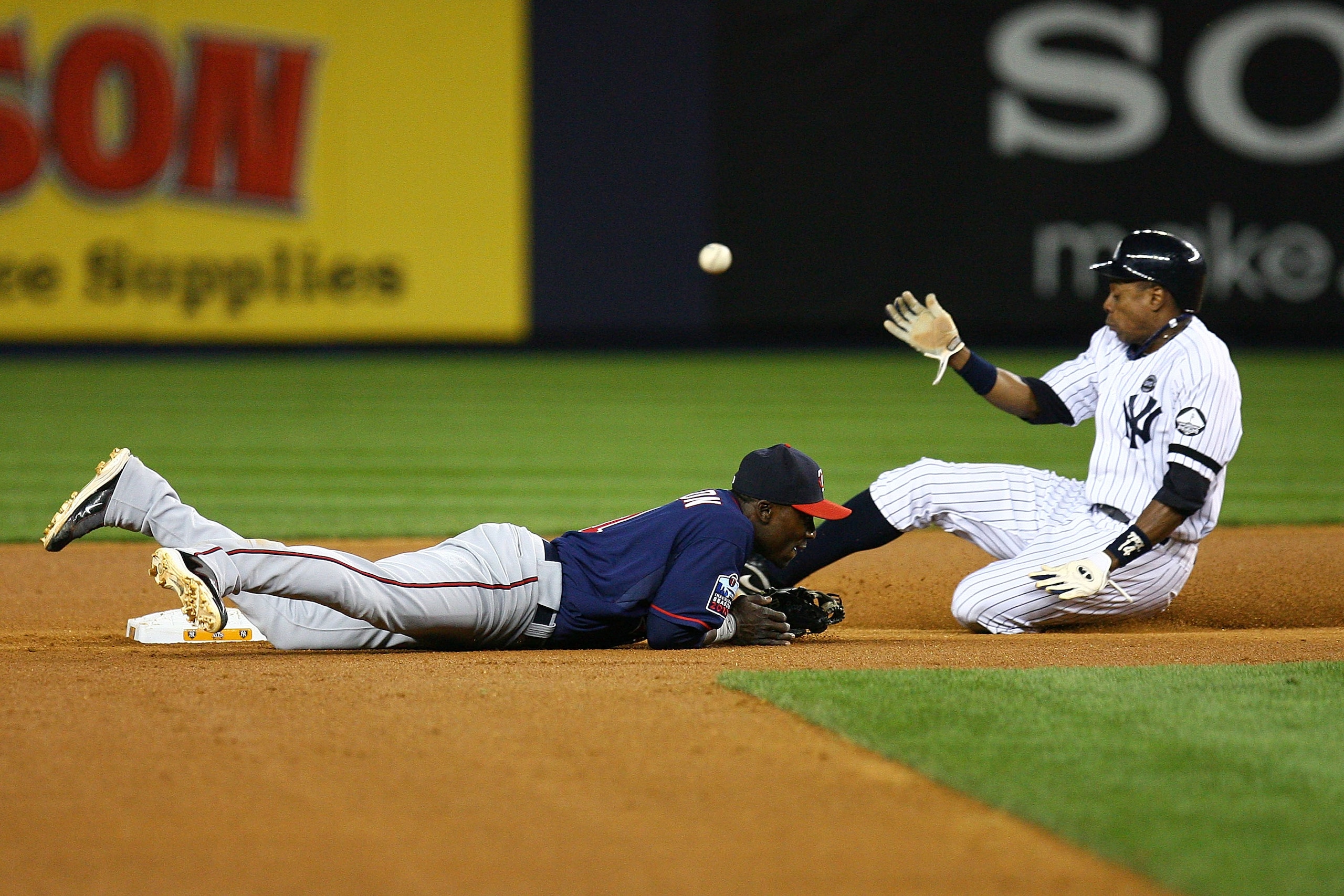
Maybe a change of scenery is just what the doctor ordered for 33 year old Orlando Hudson.
Don’t hold your breath though.
Hudson’s appeal has dropped off since his peak years in Arizona, which might be why he only lasted one year in both LA and Minnesota.
His defensive career has had patches of brilliance, but in the end I still feel that his middle two Gold Gloves were soft wins, and he hasn’t quite lived up to the hype he's garnered.
Granted, he is one of the few fielders on this list who are actually good, he just isn't nearly as good as the legend of O-Dawg that everyone tells.
19. Hanley Ramirez, SS
7 of 25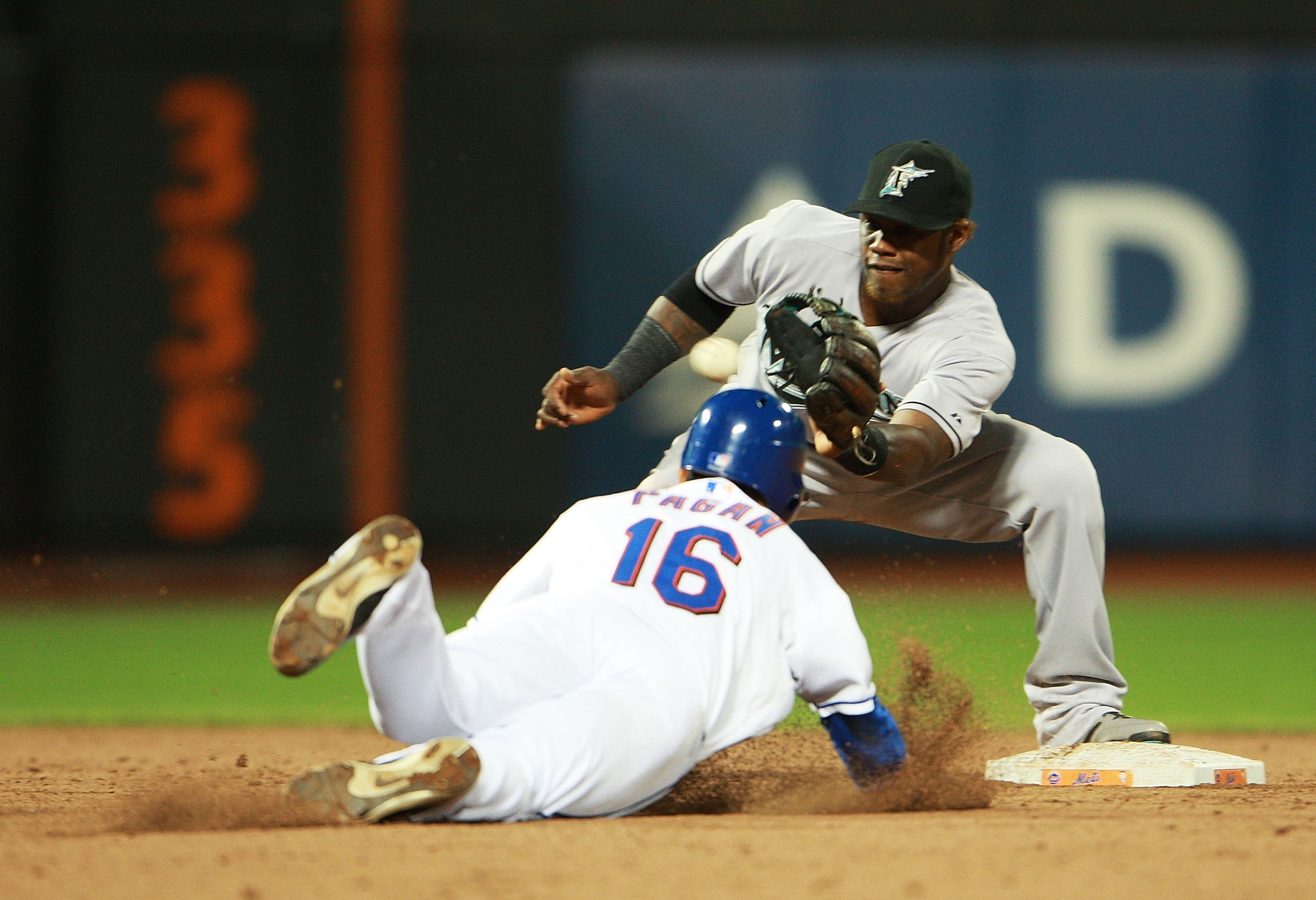
Here we have the first contestant in the Jose Reyes lookalike contest.
Hanley Ramirez is an extremely talented young shortstop who is quick, swings a strong bat, and runs the bases better than most anyone in the National League.
That being said, he struggles when he takes the batting gloves off and puts on the fielding one.
Just shy of 100 errors in five full seasons is a tough pill to swallow. He has improved over the last two seasons, averaging over .970 fielding percentage for the first and second seasons of his career, but he still has a long way to go to be a reliable middle infielder.
18. Rickie Weeks, 2B
8 of 25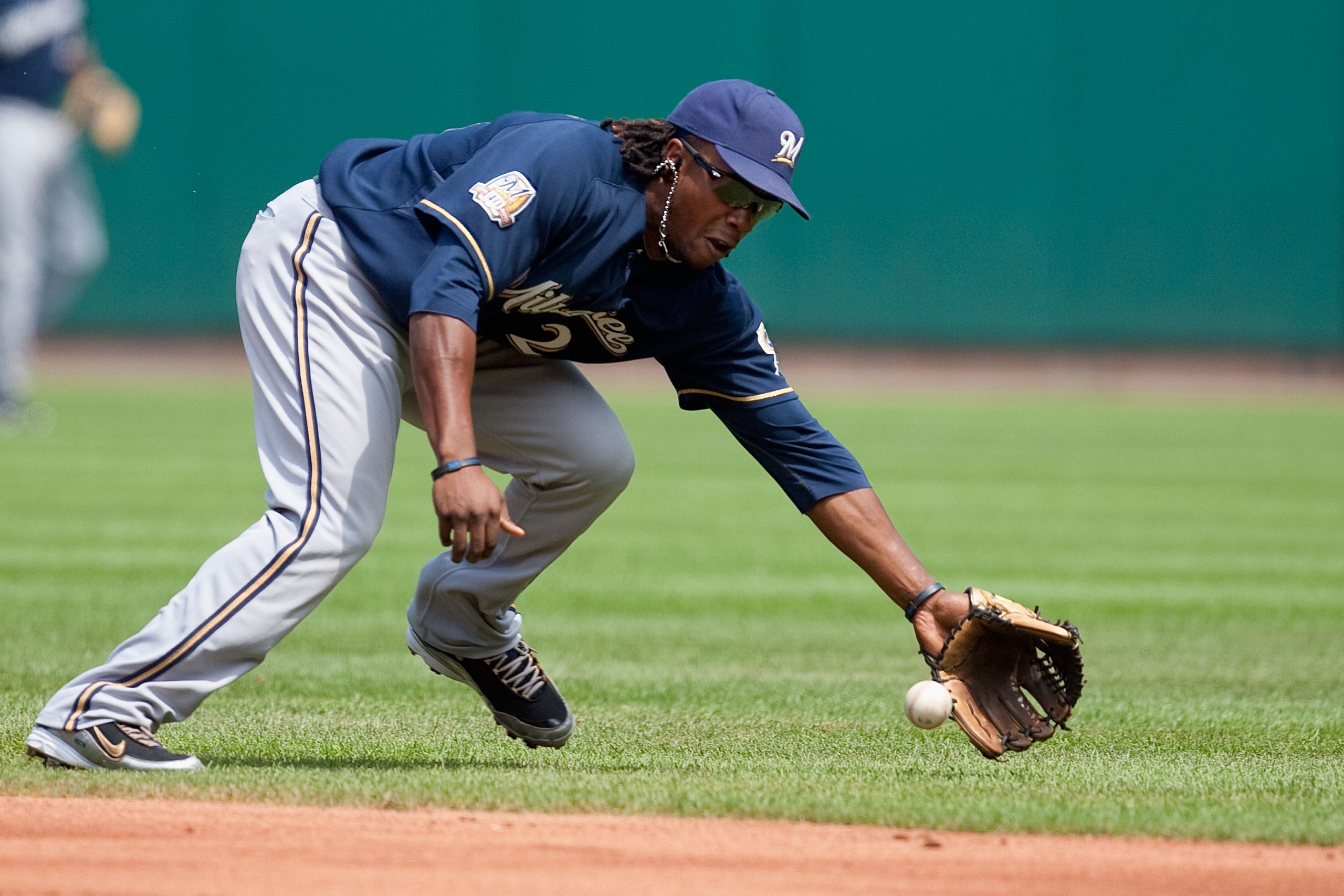
Rickie Weeks is on the small side—even for a second baseman—but he makes some fantastic plays up the middle.
However, he also suffers from camera-itis, just like Reyes and Ramirez before him.
In what is the equivalent of four years in the big leagues, he has committed 98 errors at second base and has a career fielding percentage of .968. That is hardly acceptable for a third basemen, and certainly not for a second baseman.
Weeks did step up his play in 2010 with a .980 fielding percentage, bouncing back from a 2009 that saw him out for the season after tearing a muscle in his hand in May.
Like so many young infielders before him, though, he needs to grow up quick if he wants to stay in the majors for much longer.
17. Michael Young , 3B
9 of 25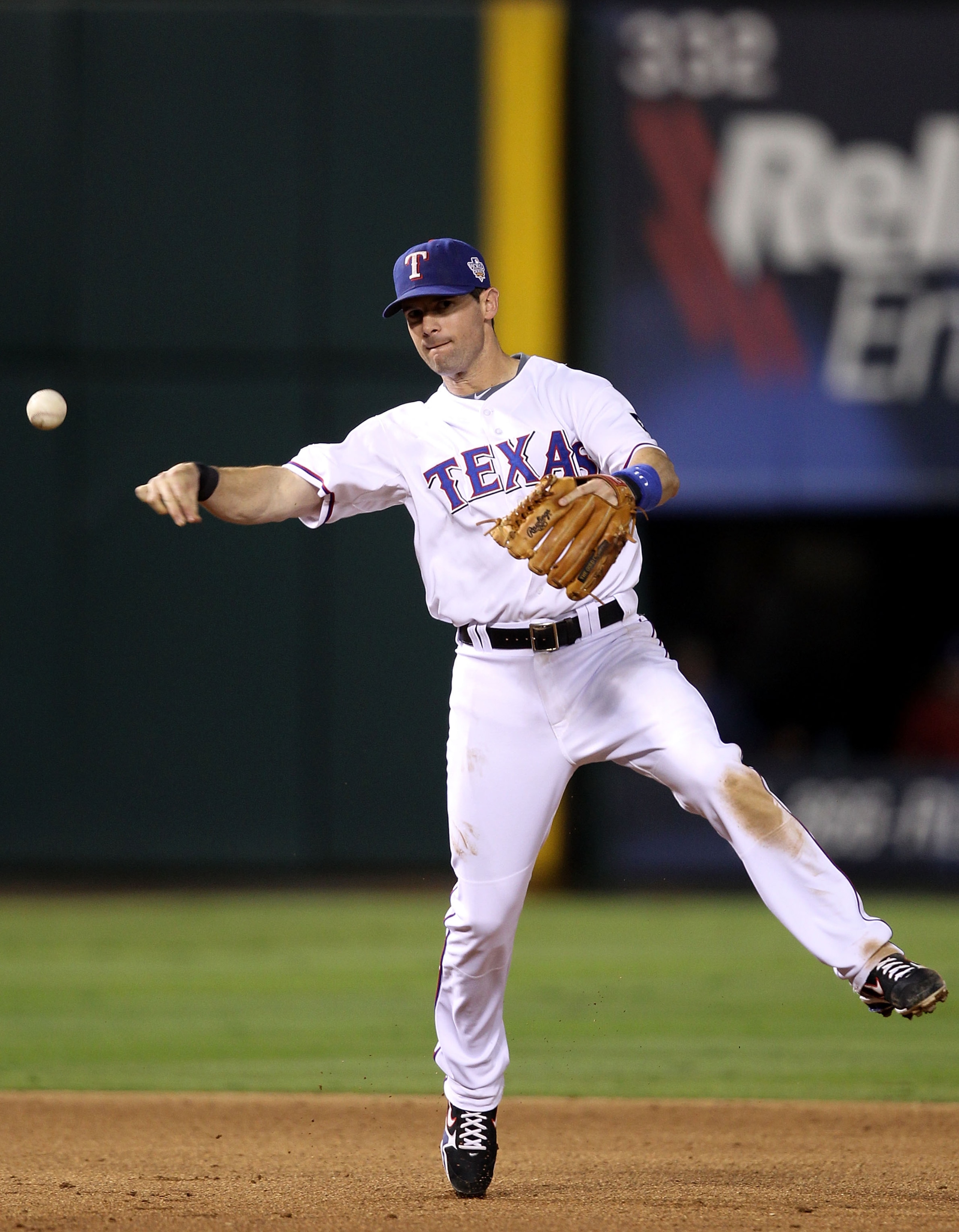
When will the American League learn not to convert shortstops into third basemen?
Michael Young is the second Texas Rangers shortstop to be converted to third base with disastrous consequences for his fielding. He won the AL Gold Glove at shortstop in 2008 with a .984 fielding percentage.
And then the floor dropped out.
The Rangers brought Elvis Andrus in at the shortstop position in 2009 at the spry age of 20, and moved Young over. The shame in booting one of the better shortstops in the game out of his position is that Andrus is such a poor fielder that the only reason he missed this list entirely is that he was never good and no one has ever thought he was.
Young went .969 and .950 in 2009 and 2010 fielding percentages respectively, and unless he or Andrus is traded soon, he has seen the only Gold Glove he ever will, when he likely could’ve won at least one more in the peak of his career.
16. Chone Figgins, 2B
10 of 25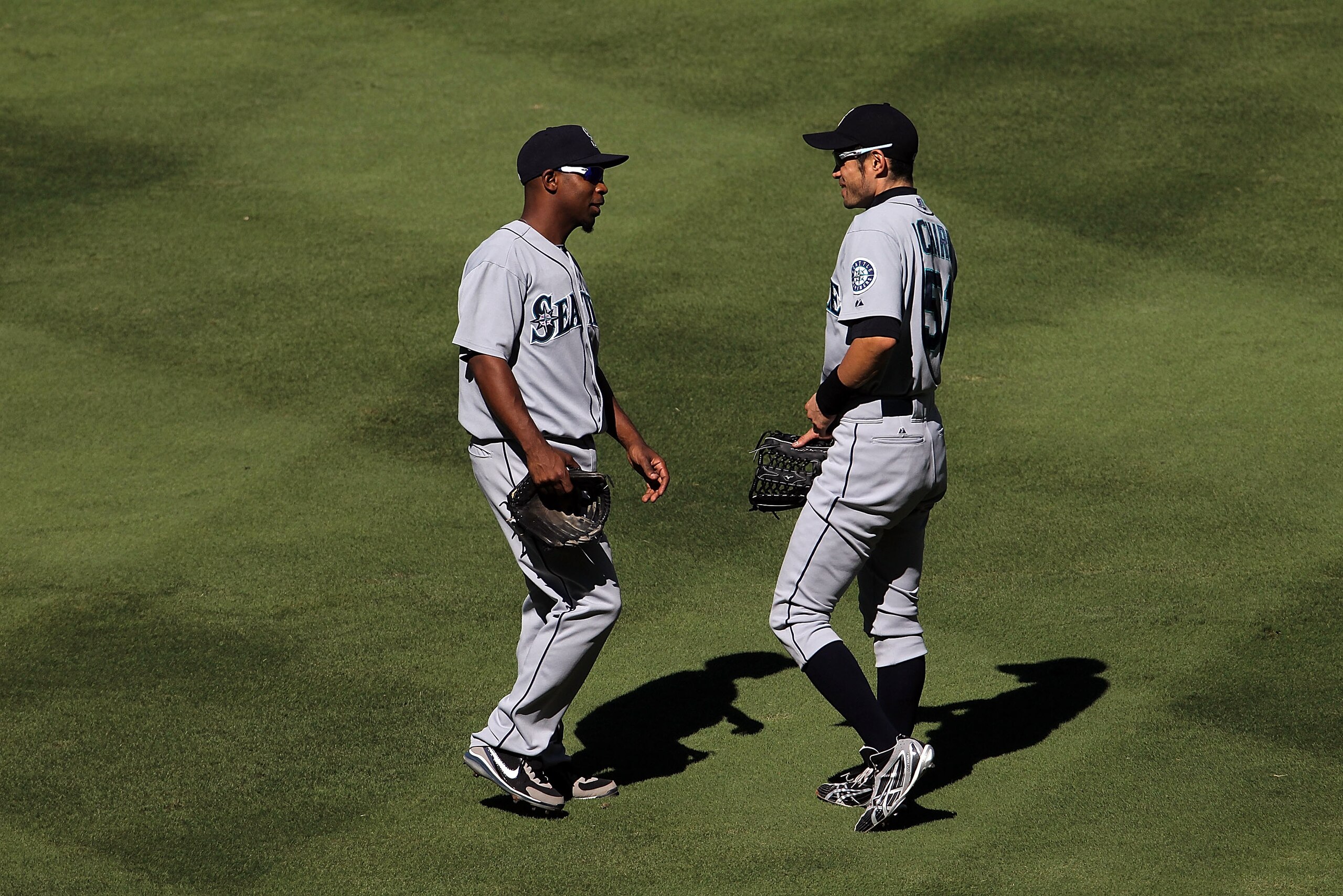
There are two molds for fast middle infielders: those players who swipe lots of bases and can play defense, and those players who can’t.
Chone Figgins is one of the latter. He averages 48 stolen bases a season and a healthy .359 on base percentage—an important stat for a speedster.
However, when you hit ground balls to him, it's downright sad. He has career fielding percentages of .952, .958 and .974 at shortstop, third base and second base respectively.
Put him in the outfield and he’s a different player altogether. He has committed only 8 errors in the outfield—all in the labor intensive center field—in almost 700 total chances in right, center and left fields.
He is just on the far side of his prime; this is when he should be flourishing in defense with all his experience, even though his hitting production will likely suffer over the next few seasons.
Hopefully someone can remind him of this or permanently move him to left field.
15. Ryan Zimmerman, 3B
11 of 25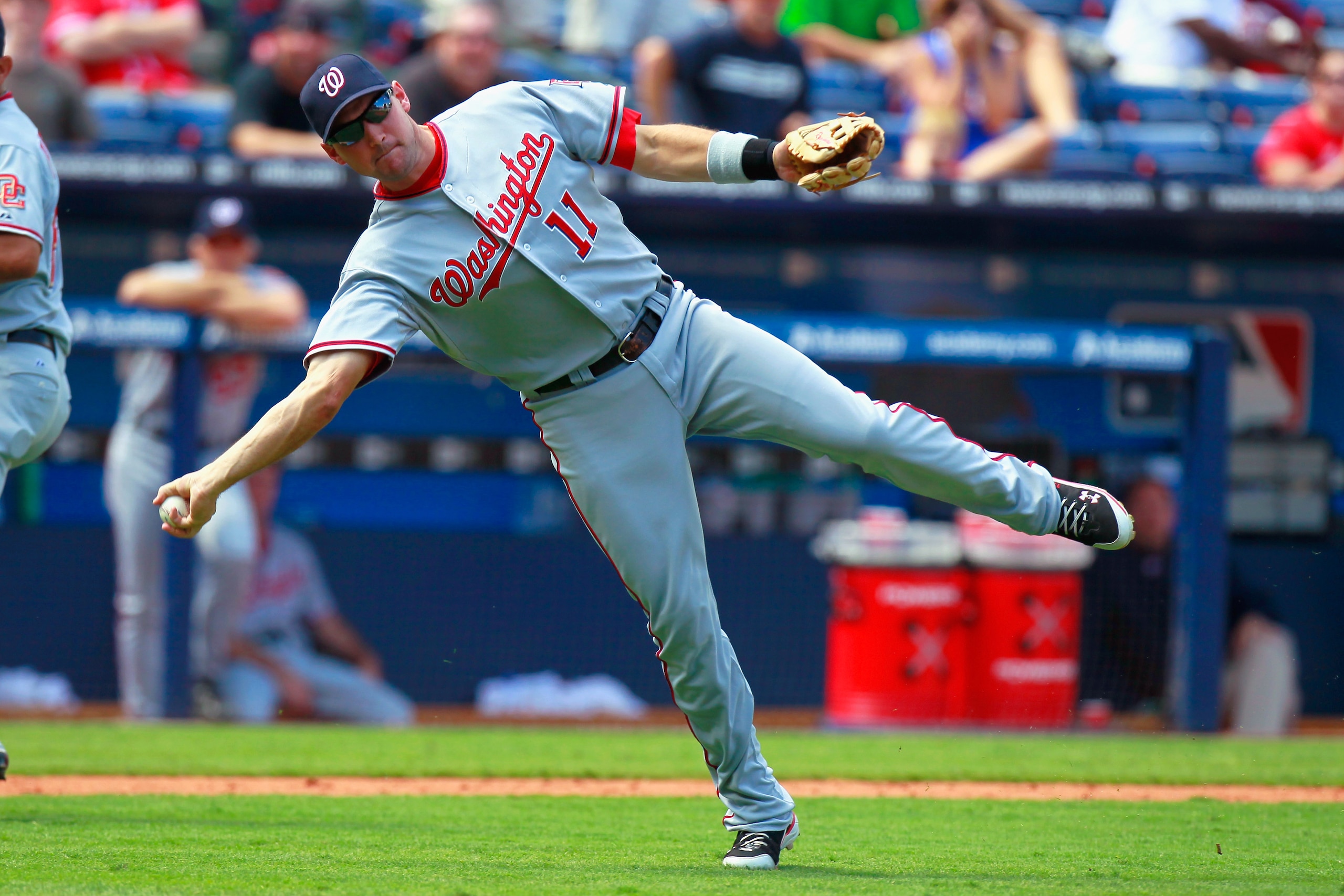
Ryan Zimmerman is still young and still has time, should he choose to work on his fielding.
Otherwise his .961 career fielding percentage will continue to haunt him and the Washington Nationals.
Yes, he is a strong hitter, and that usually excuses a subpar fielder, but in his case he can still be taught the proper methods and should be open to learning them. That he won the NL Gold Glove award in 2009 still shocks me. Was there really no other better choice over his .963 fielding percentage and 17 errors? I find that hard to believe.
He is not another A-Rod, after committing two errors on nine chances in his one career game at shortstop.
Clearly he will be a career third baseman and can hit like one, but it is time for him to play the hot corner like it's his job—because it is.
14. Adam Dunn, 1B/OF
12 of 25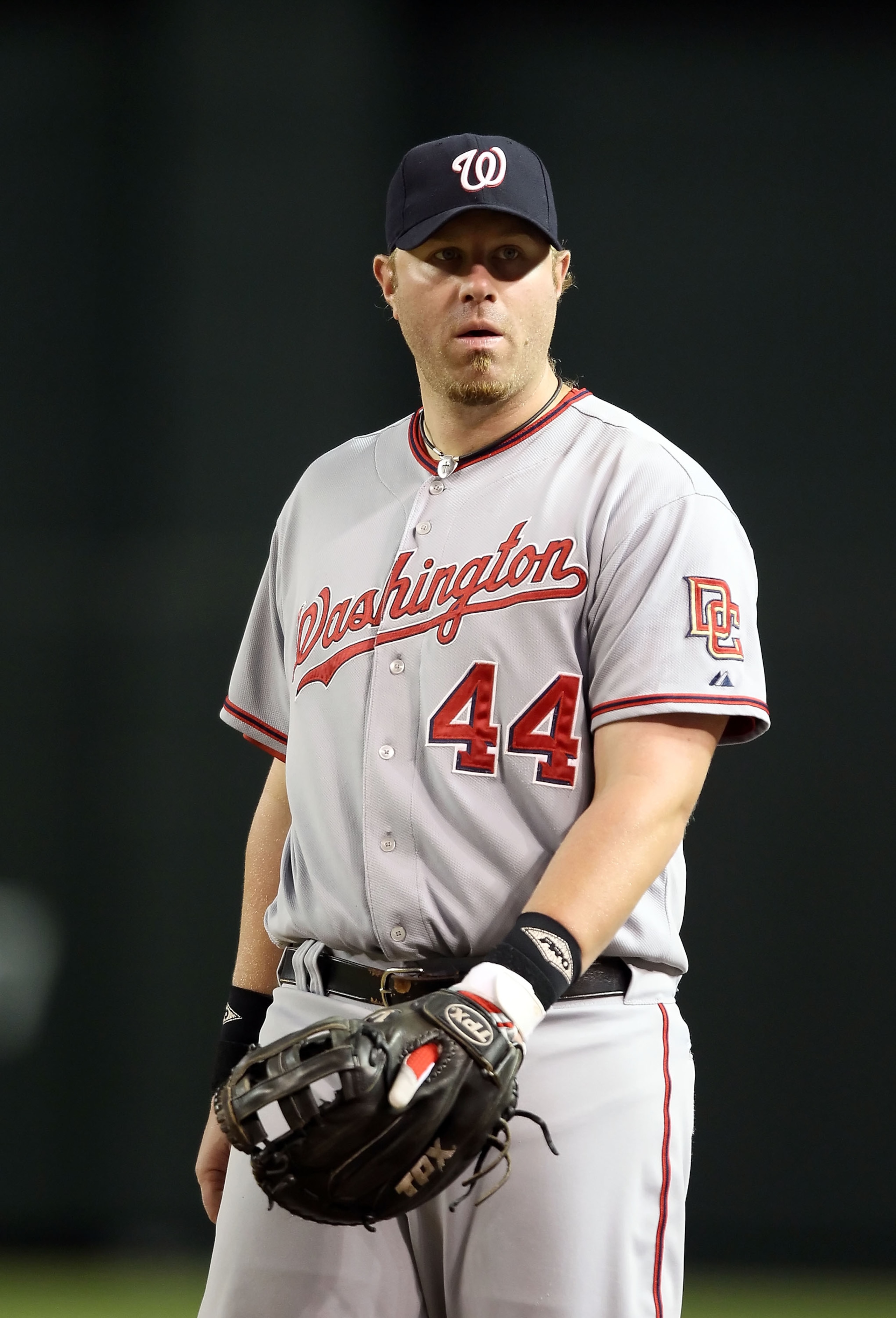
Before you cry out that he is a DH now for a team that has an untouchable first baseman, let me say that this coming season isn’t the entire point of this article.
The fact is, people have long thought that the 6’6”, 285 pound Dunn was a strong, if not All-Star caliber, first baseman.
Whether or not his hitting backs up those claims is not the debate here. The great thing about his move to the American League is that hopefully no one will ever have to bear witness to his defensive play ever again.
If it can even be called that.
His .987 career fielding percentage in over 2500 innings at first base is atrocious enough. What really takes the cake is his .956 percentage in right field in 469 innings and his .968 percentage in over 8000 innings in left field.
How does anyone who calls themselves a professional baseball player and wears a mitt in the outfield make 60 errors in less than 2000 chances?
That’s 11 more than the next closest active left fielder, Pat Burrell, and he has had 300 more chances than Dunn.
Dunn would be much, much, MUCH higher on this list if not for the fact that almost no one who is 6’6” and nearly 300 pounds belongs in the outfield today. Outfielders need to be quick, agile, and able to hang on to a little white ball in a big leather glove.
Mr. Dunn has none of these qualities.
13. Alexei Ramirez, SS
13 of 25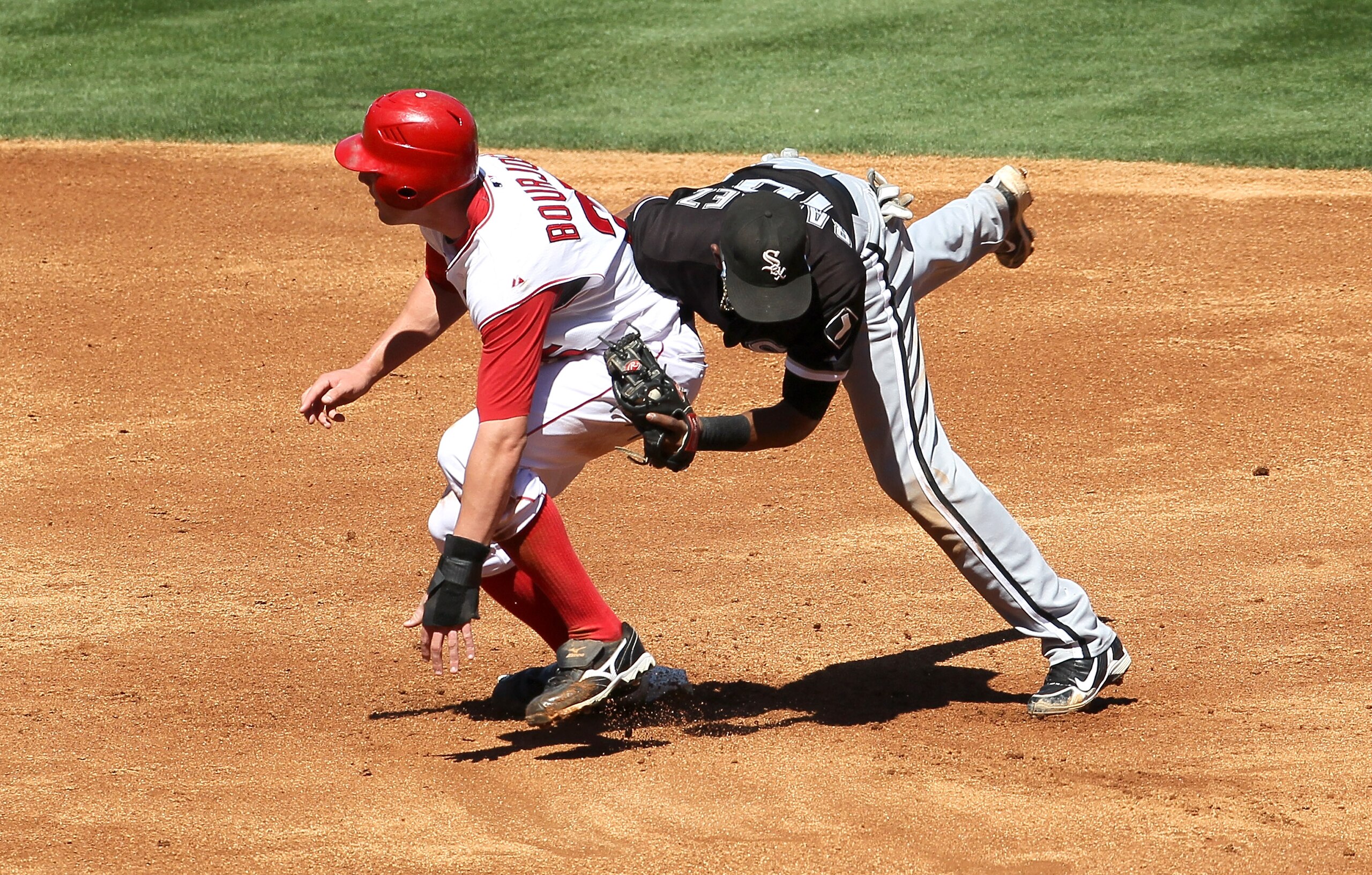
You know the drill by now. Small, fast middle infielder who steals bases; can hit for average and some power; and who drops the ball like a hot potato when it's hit to him.
Not quite in this case.
The latter two are true, and with a career batting average of .283 and 54 home runs and 215 RBI over essentially three seasons in the majors, Ramirez has good pop.
He does also drop the ball like a hot potato, but the worst part is that he doesn’t even have the speed to help him make up for it. He averages an anorexic 15 stolen bases per season, which many big, power hitting first basemen nowadays can do.
White Sox fans love this kid. As a Chicagoan, I hear about him all the time from my Sox fan friends and I have to say that I just don’t see it.
They are eager—as Mets fans are about Reyes, or Yankees fans about A-Rod—to point out when he makes a great diving play, but they are never watching when he commits one of his 41 career shortstop errors.
I will grant that 41 isn’t a ton, but he has a total of 53 in three years of almost exclusive middle infield work. I’m not sure when a mid .970s fielding percentage became okay for a middle infielder who doesn’t drive in 100+ runs a year, but I’m not okay with it.
His bright spot is that he can turn a mean double play, a valuable skill for a shortstop. Maybe he could just start playing at that level all the time?
12. Alfonso Soriano, LF
14 of 25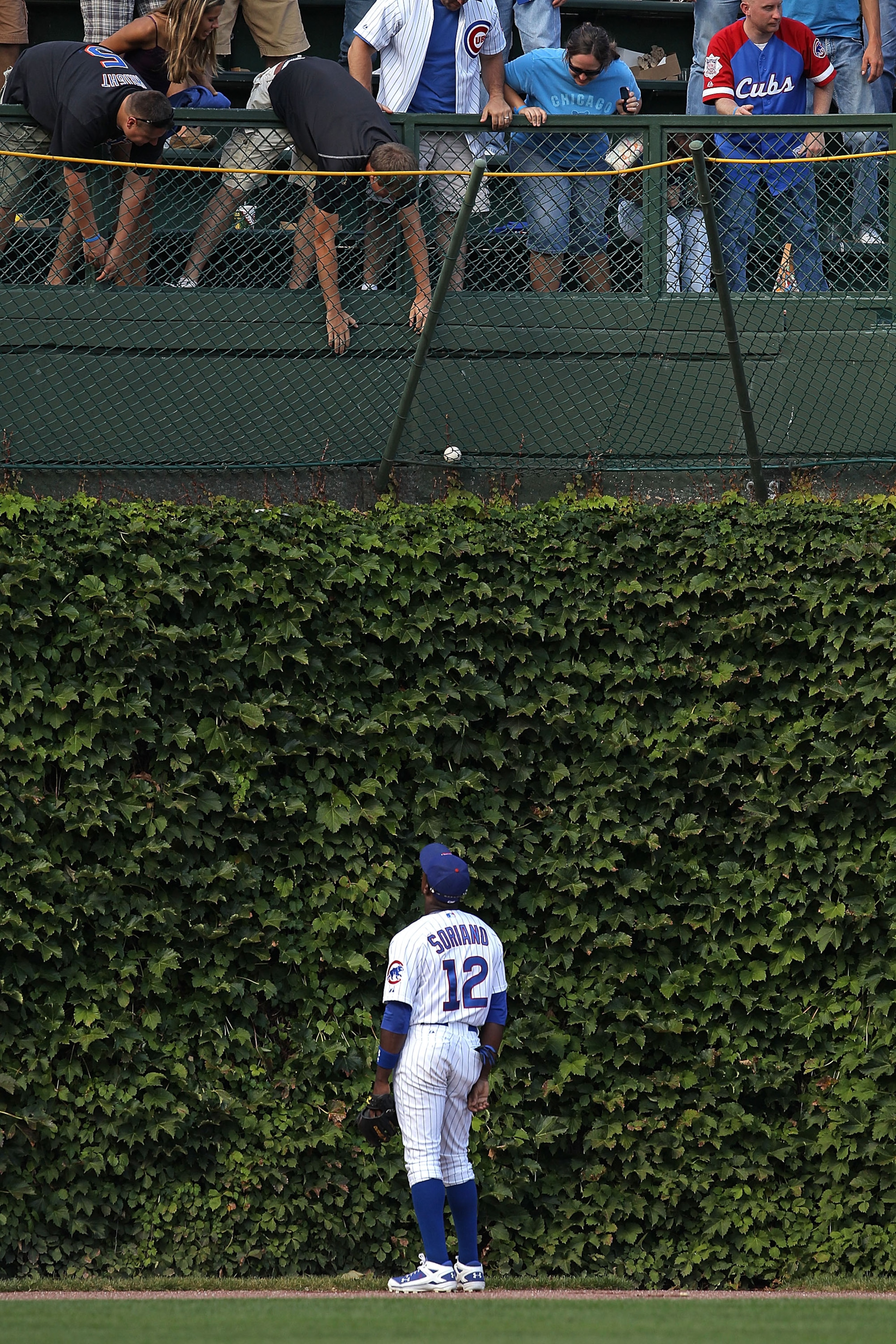
A St. Louis Cardinals fan told me a joke once. It went like this:
“What do you call an outfielder who can’t hit, can’t catch, can’t run, and injures himself skipping?”
“Alfonso Soriano.”
I am a die hard, life-long Cubs fan, but I’m inclined to agree with her. The Cubs pulled an Al Davis and paid tip top dollar for a bust.
Since joining the team after his 40-40-40 season, Soriano has only managed to repeat one of those 40s with 42 doubles in 2007.
I know he has been plagued with injuries, but how are there not warning signs for an aging fielder who hurts himself skipping?
As for his defense, it's nothing short of depressing. Maybe if he could stand on solid ground and let the ball come to him, he might not have the issues he has.
As it is, he is lucky to have averaged a .968 fielding percentage in nearly 5500 innings at left field.
40 errors in just over 1200 chances is bad; 206 in 3690 chances at second base is disgraceful.
I’m sure he had some great years with New York, but he and Cubs fans alike need to accept that almost every shred of that old Soriano was left in the Big Apple and our nation’s capital when he left the Nationals after his 40-40-40 season.
11. Hunter Pence, RF
15 of 25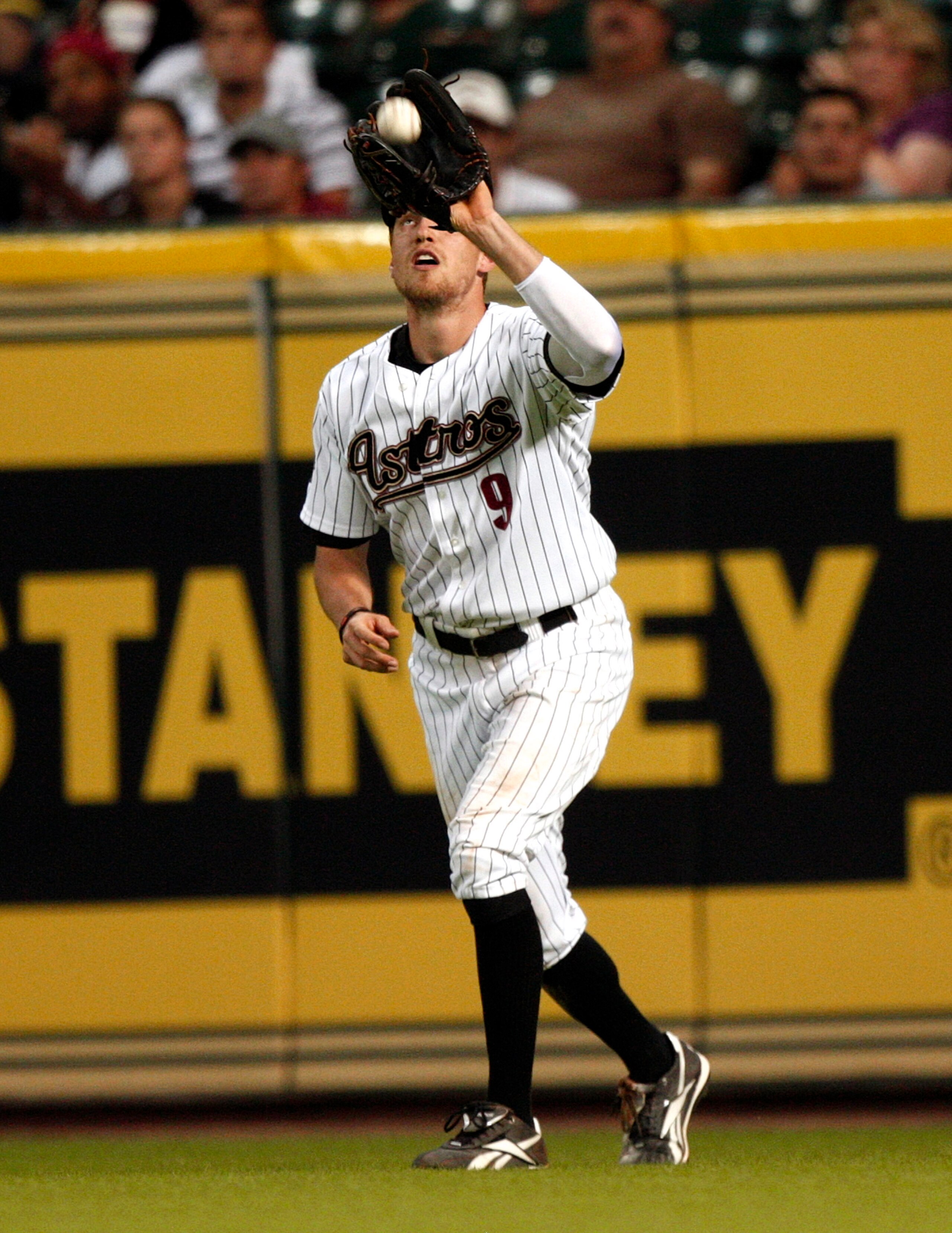
Considering how few poor outfielders there are, it may be surprising to see two marquee outfielders so high on this list.
Surely Soriano’s placement was understood, and Pence’s will quickly become obvious.
There’s no doubt that Pence is a solid young hitter with a strong work ethic and a will to win. What he needs is to direct some of that will towards willing the ball into his glove. I will, however, admit that he has played better defense than Soriano and some of the other players below him on this list.
That being said, he is declining quickly and is still touted by some as one of the best young right fielders in the game.
Pence has gone from one to five to nine errors in his last three seasons, respectively, and his fielding percentage has dropped from .997 to .983. A drop of this magnitude is a concern with a young fielder.
Houston needs to keep an eye on him, lest he become the next Soriano.
10. Evan Longoria, 3B
16 of 25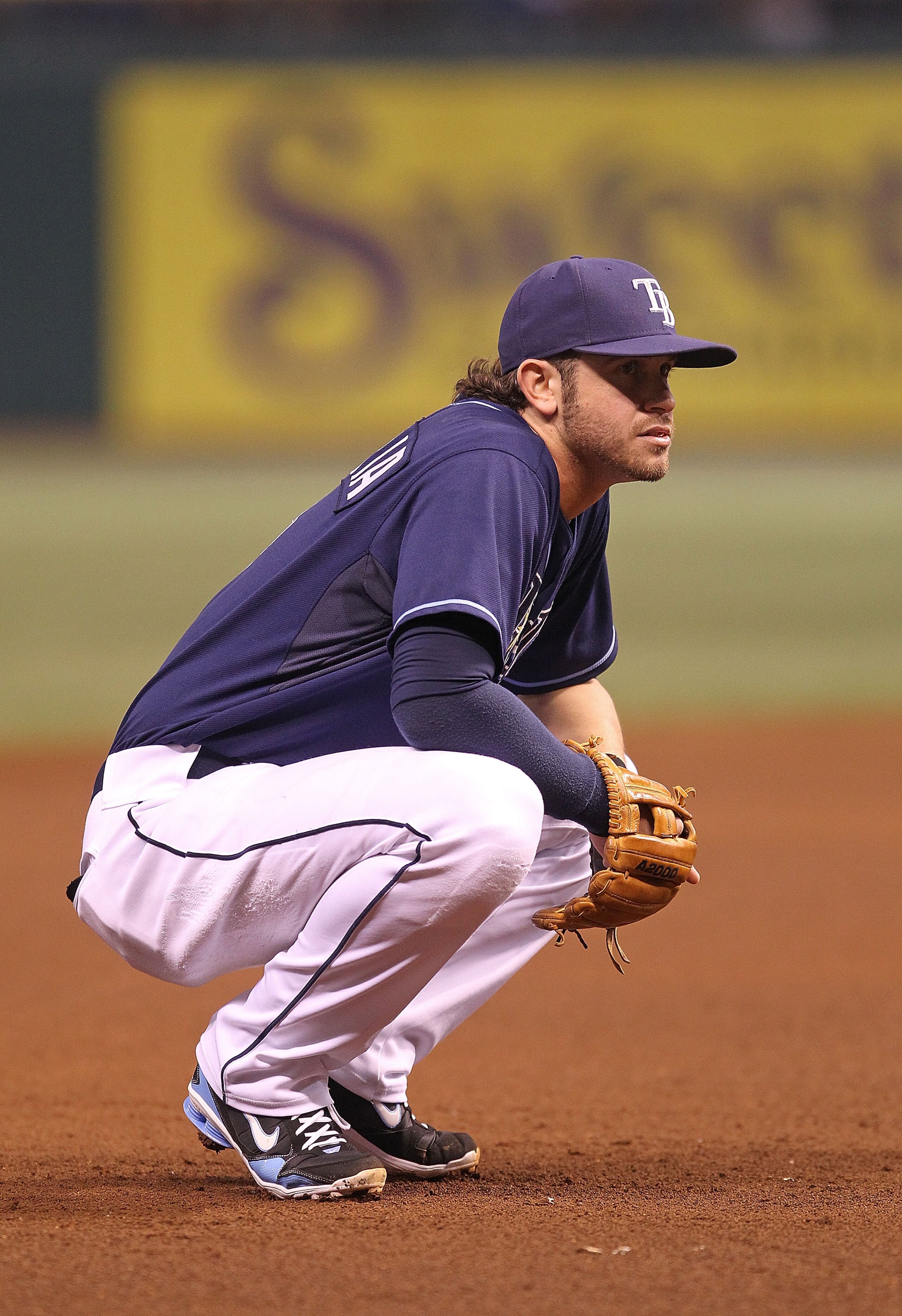
At last we come to the opener of the top 10: Evan Longoria.
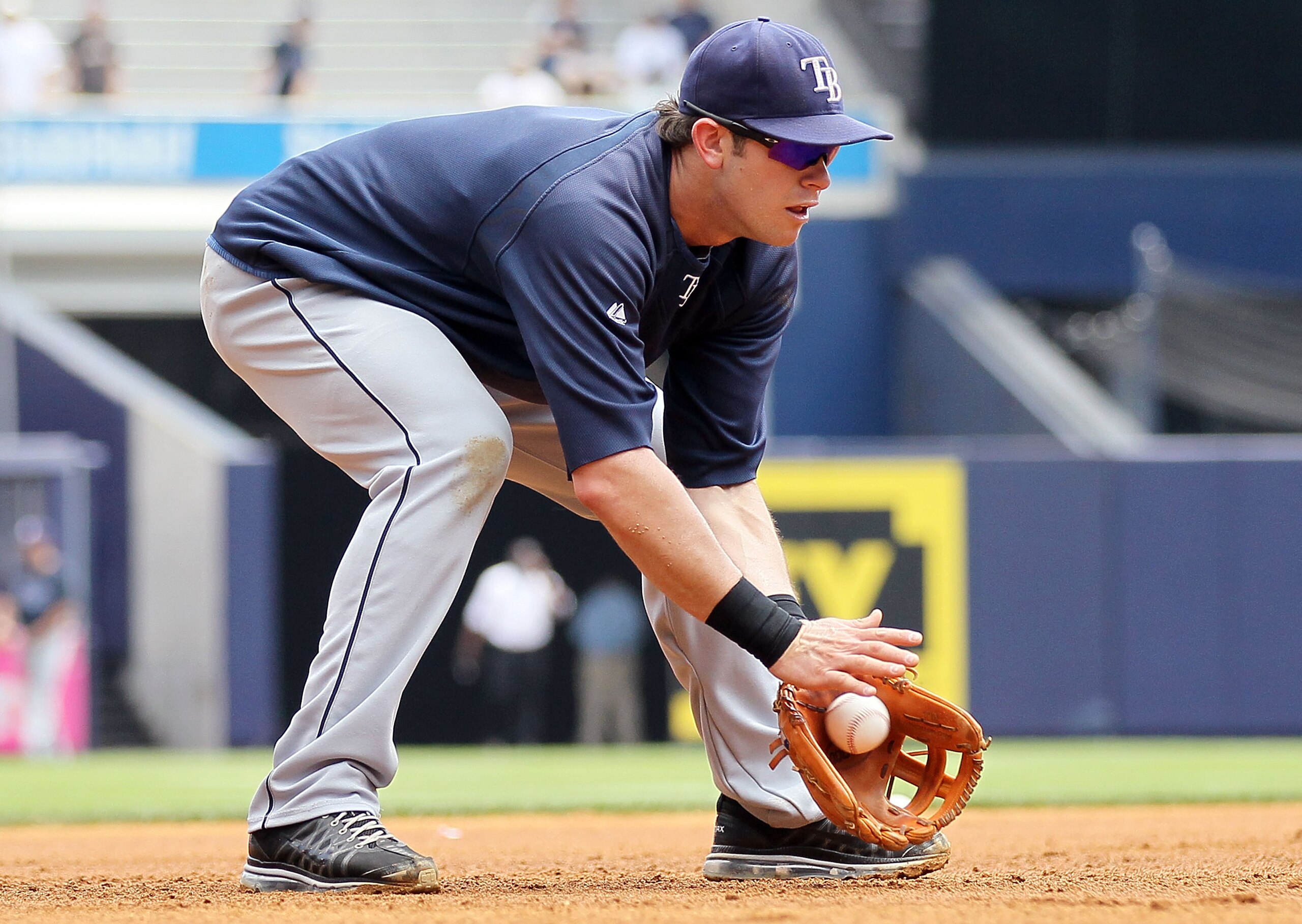
Longoria has amassed 39 errors in just three seasons and 1172 total chances at third base for the Tampa Bay Rays.
How that was ever considered Gold Glove caliber play once is befuddling. Twice and now, Rawlings, I’m afraid you’ve lost me.
I know he’s the rising star on a relegated team rising from the ashes of their former Devil Rays moniker, but really? An average fielding percentage of .967 is what does it for you?
By that logic, why didn’t he win it in 2008? I know he played less innings, but he averaged the same number of errors in his rookie season as he did in his two Gold Glove winning seasons.
I find it hard to believe that when Rawlings chose their AL Gold Glove third baseman, no one else came to mind. It is a shame that Eric Chavez fell off the map in recent years, because he has the kind of defensive talent that deserves this award.
9. Adrian Beltre, 3B
17 of 25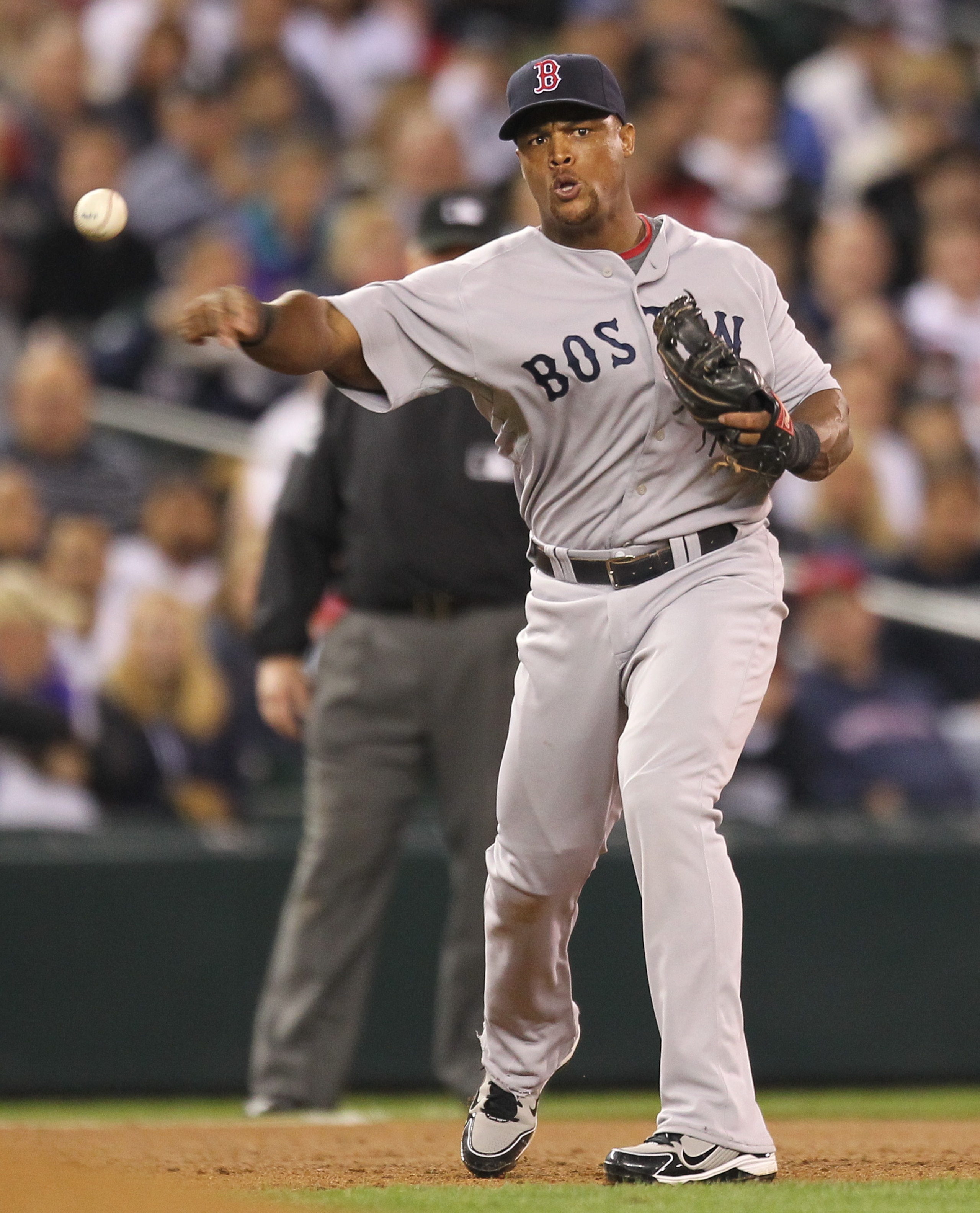
I feel like I am writing about the same third baseman twice, except that this one is older.
There isn’t a whole lot that I even need to say about why Beltre is vastly overrated on defense. His two Gold Glove seasons at third, he committed a combined 32 errors and around a .960 fielding percentage.
If that was the best they can find that season, they shouldn’t have even given out the award. It cheapens it for all the other Gold Glove winners before and after him.
8. Edwin Encarnacion, 3B
18 of 25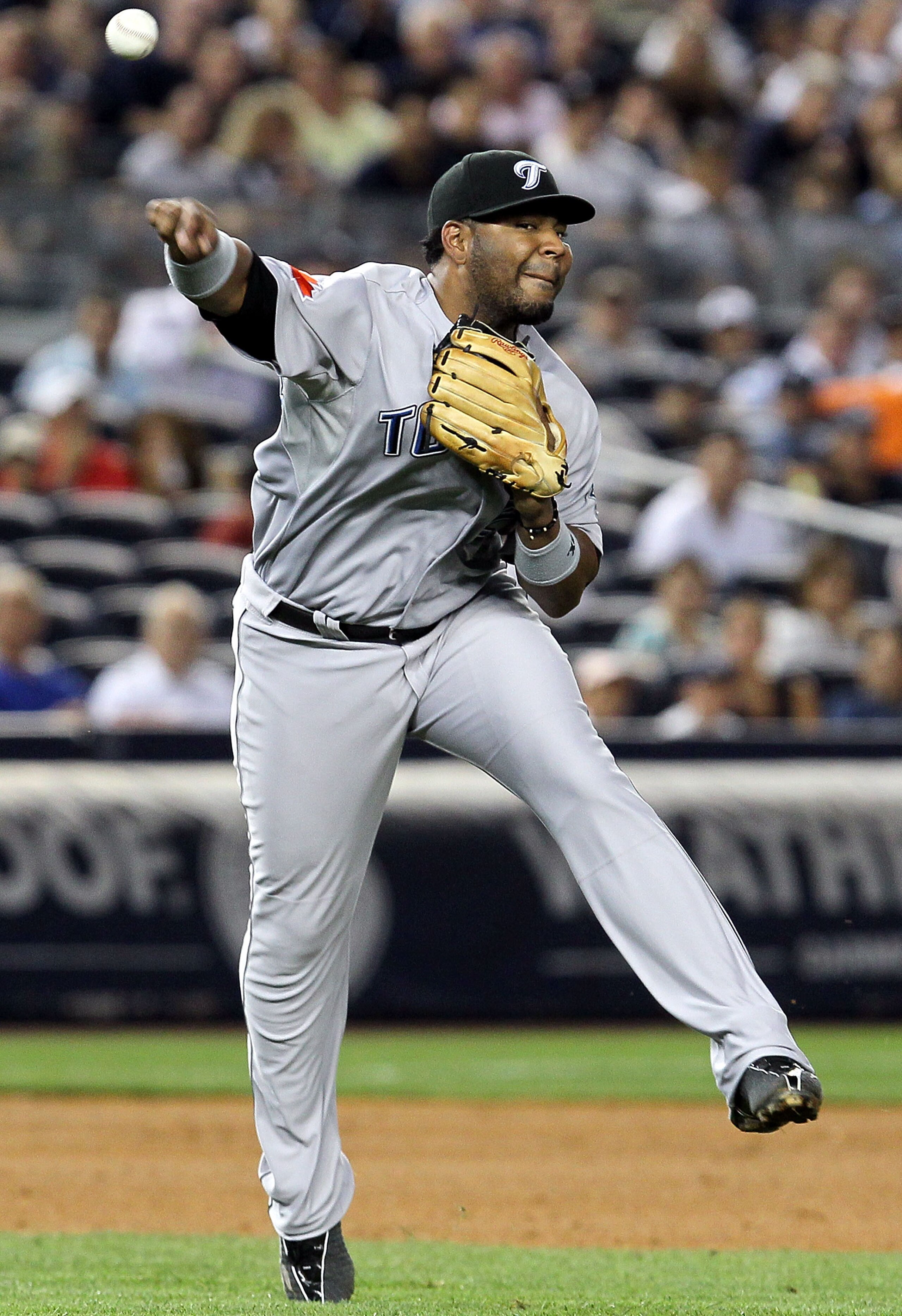
I know that the Blue Jays plan on playing him as a first baseman and I also know that he has never been seen as an elite fielder.
The reason he is at number eight is because he’s not a very good hitter; is one of the few players in recent memory to field under .920 percent over essentially a full season’s work; and has never fielded over .960.
He is the epitome of the worst of the worst third basemen.
He can hardly get the bat on the ball, and yet teams keep playing him. They can't expect his hitting to improve drastically, so they must see something in his defense that I don’t see. $5.175 million worth of somethings I hope.
7. Rafael Furcal, SS
19 of 25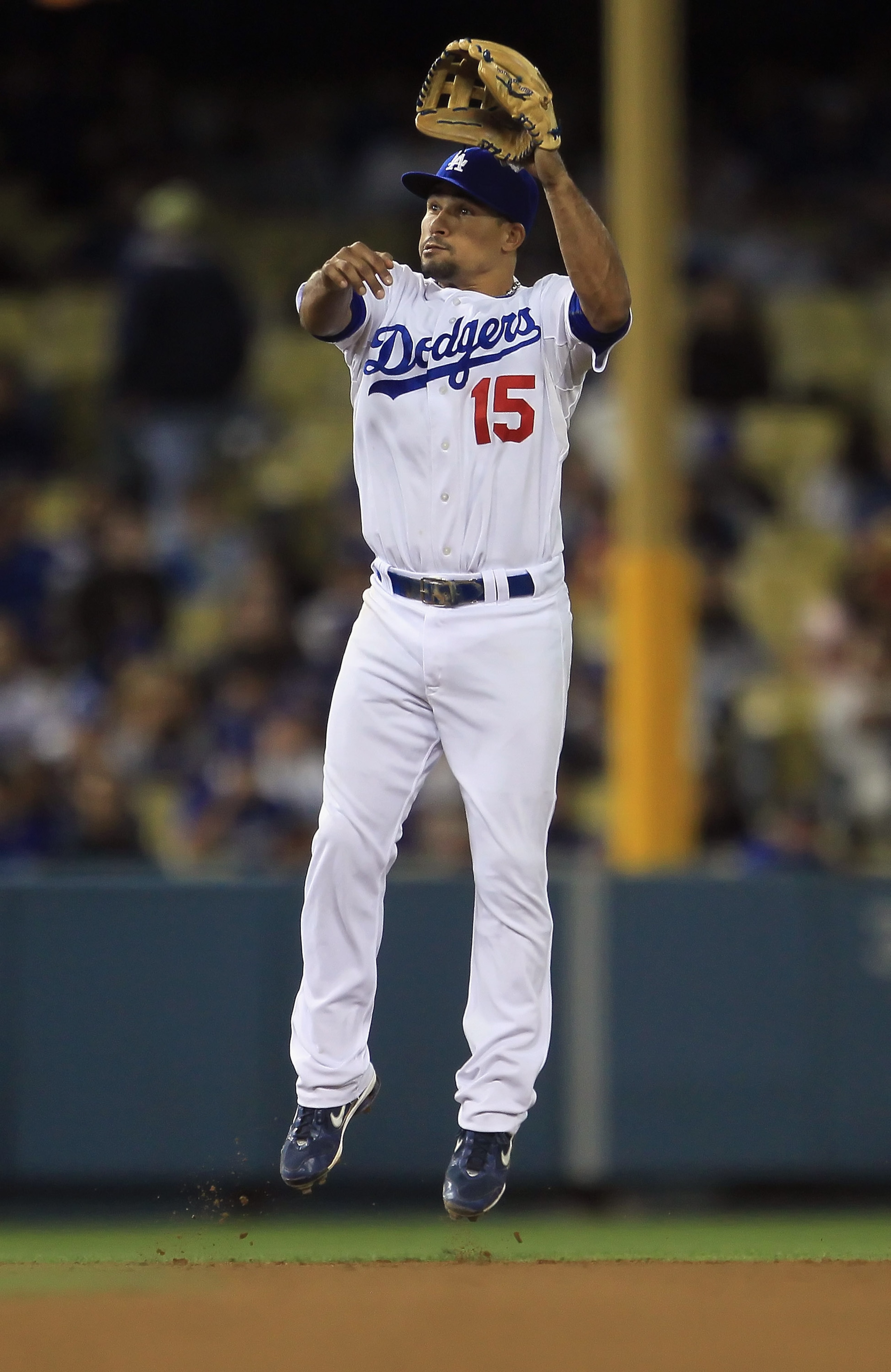
Furcal is another one of those fast, strong hitting middle infielders who would be a better fielder if he had webbed hands instead of a leather mitt.
In over 10,000 innings at shortstop, Furcal has committed 220 errors. That’s one every 50 innings, or nearly one every five games.
Thank the baseball gods that he only averages about one chance every other inning, or the Dodgers would be in real trouble up the middle. Well, more real than The Hills anyway.
You’re right, bad analogy.
6. Erick Aybar, SS
20 of 25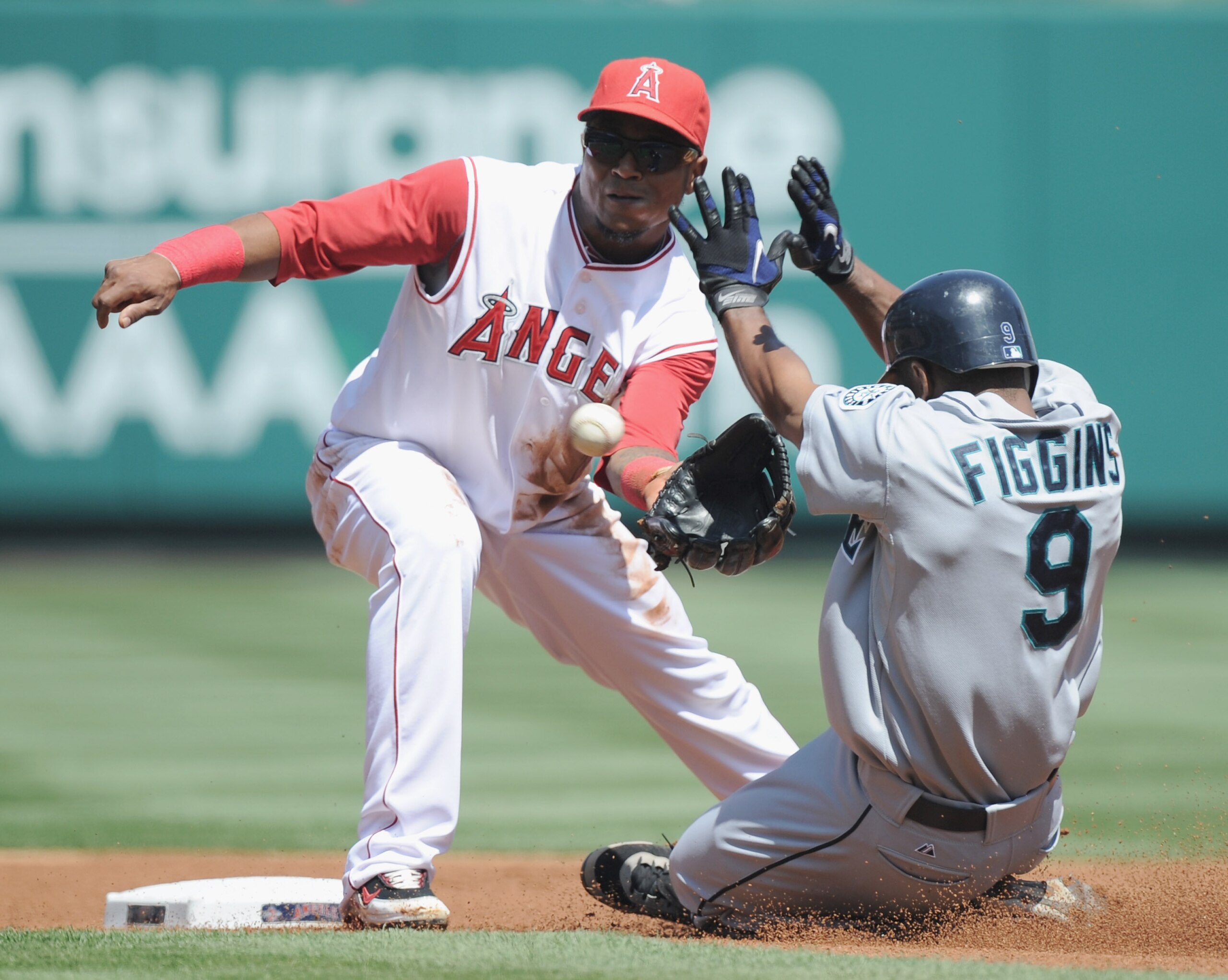
What are the chances of having two of these defensive hacks in one city?
I guess LA is sympathetic towards their defense.
The hope with Aybar, like so many before him, is that he will improve with age—like a fine California wine.
Starting from his .967 fielding percentage at shortstop, he doesn’t have much of anywhere to go but up.
I’ll stick with Napa Valley’s finest, though, if I’m looking for a return on my investment—or at least something that doesn’t leave a bad taste in my mouth every time it gets the chance.
5. Matt Holliday, OF
21 of 25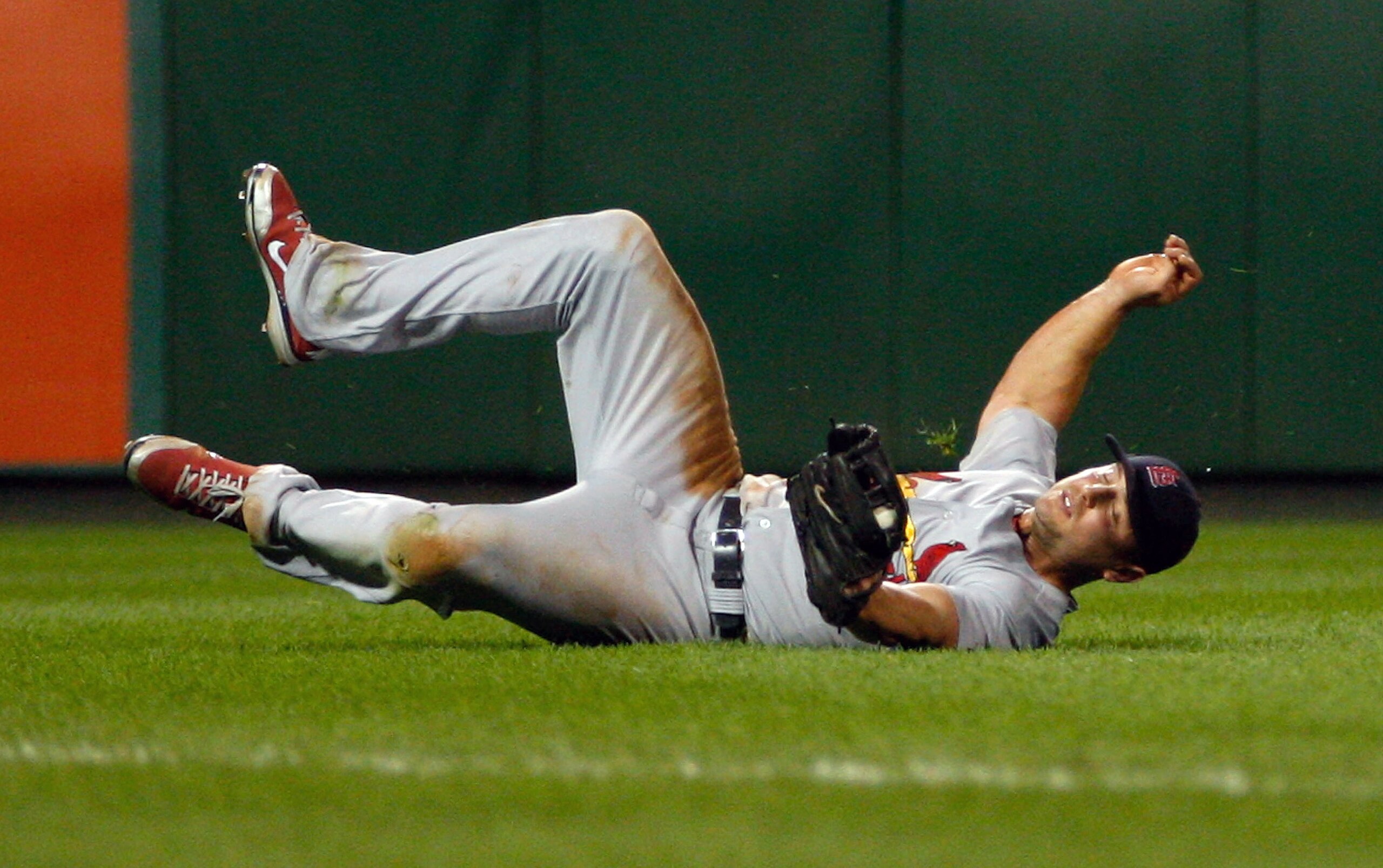
I believe this video is what Rockies fans would call Karma.
Holliday is a decent fielder, but not as great as we all thought he would turn out to be.
A perennial member of the .980s club, Holliday cemented his place on this list with this epic postseason failure against the Dodgers in 2009.
As a Cubs fan, I can honestly say that I’ve never laughed harder at the Cardinals—or at one of their players—as hard as I did when I first saw this replay. It is the classic, “I got it. I GOT IT! I don’t got it.”It never, EVER, gets old.
Unless your last name is Holliday.
4. Aramis Ramirez, 3B
22 of 25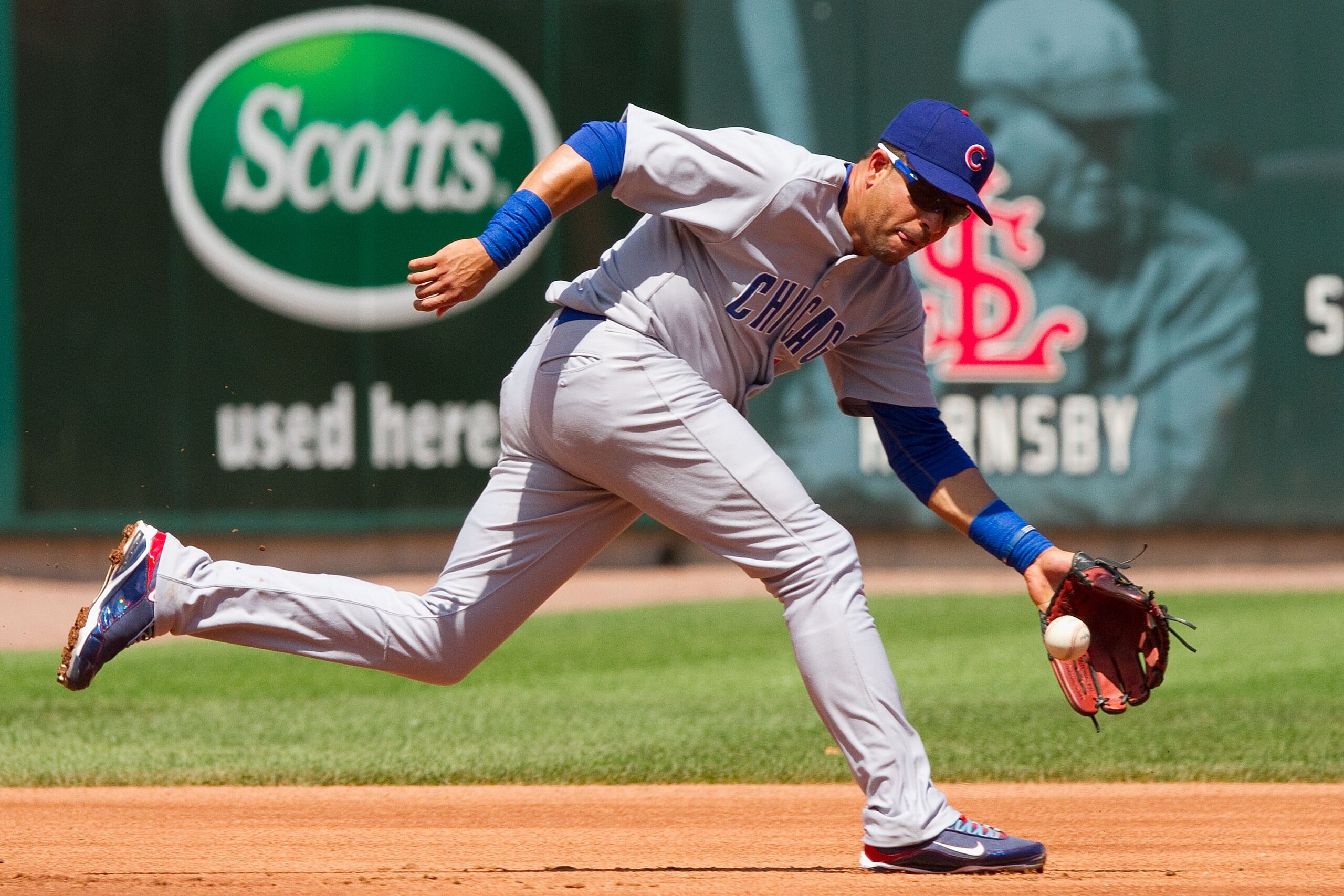
Now, from the team I loathe to the team I love.
I really like Aramis Ramirez. All Cubs fans do. We just need to accept that he will never be our modern day Ron Santo.
Unlike the immortal—and soon to be Hall of Famer—Santo, Ramirez just doesn’t have the skill at the hot corner. He is a slugger, that is for sure and he had one standout season on defense in 2007.
Since then—and with the exception of twice, every year before—he has failed to post a fielding percentage over .950. Even at third base that's sad.
He was never meant to be a perennial Gold Glover, but that one good season has given some of the more bandwagon Cubs fans hope that he could win a few.
His defense is just not that good, Northsiders. Move on.
3. David Wright, 3B
23 of 25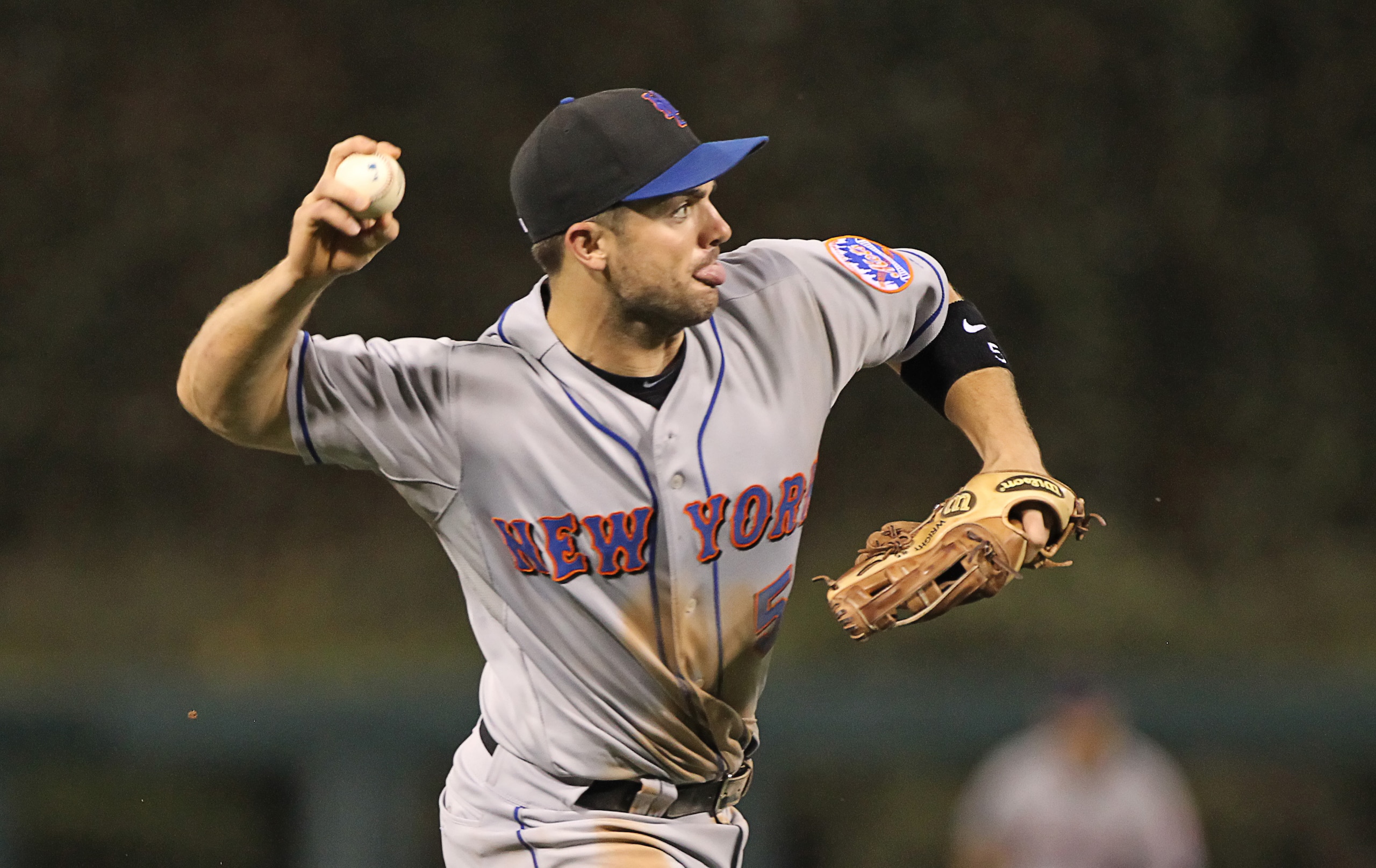
How can Wright possibly be more overrated than Ramirez, you ask?
How about two Gold Gloves?
2007 and 2008 must have been the two weakest years for third base defense in the history of the MLB. Both years went to players on this list, Beltre in the AL and Wright in the NL.
His career .953 fielding percentage and 129 errors are among the worst third basemen of all time, and he has essentially only played for six seasons.
With his inability to catch the ball, and Reyes trying to catch his errant throws at second base, it is a miracle that he has recorded any double plays, much less 162.
I still don’t see it though.
I don’t see how .954 and .962 fielding percentages are good enough for the 2007 and 2008 Gold Gloves respectively.
I’m still baffled years later that he was ever voted for at all.
2. Dan Uggla, 2B
24 of 25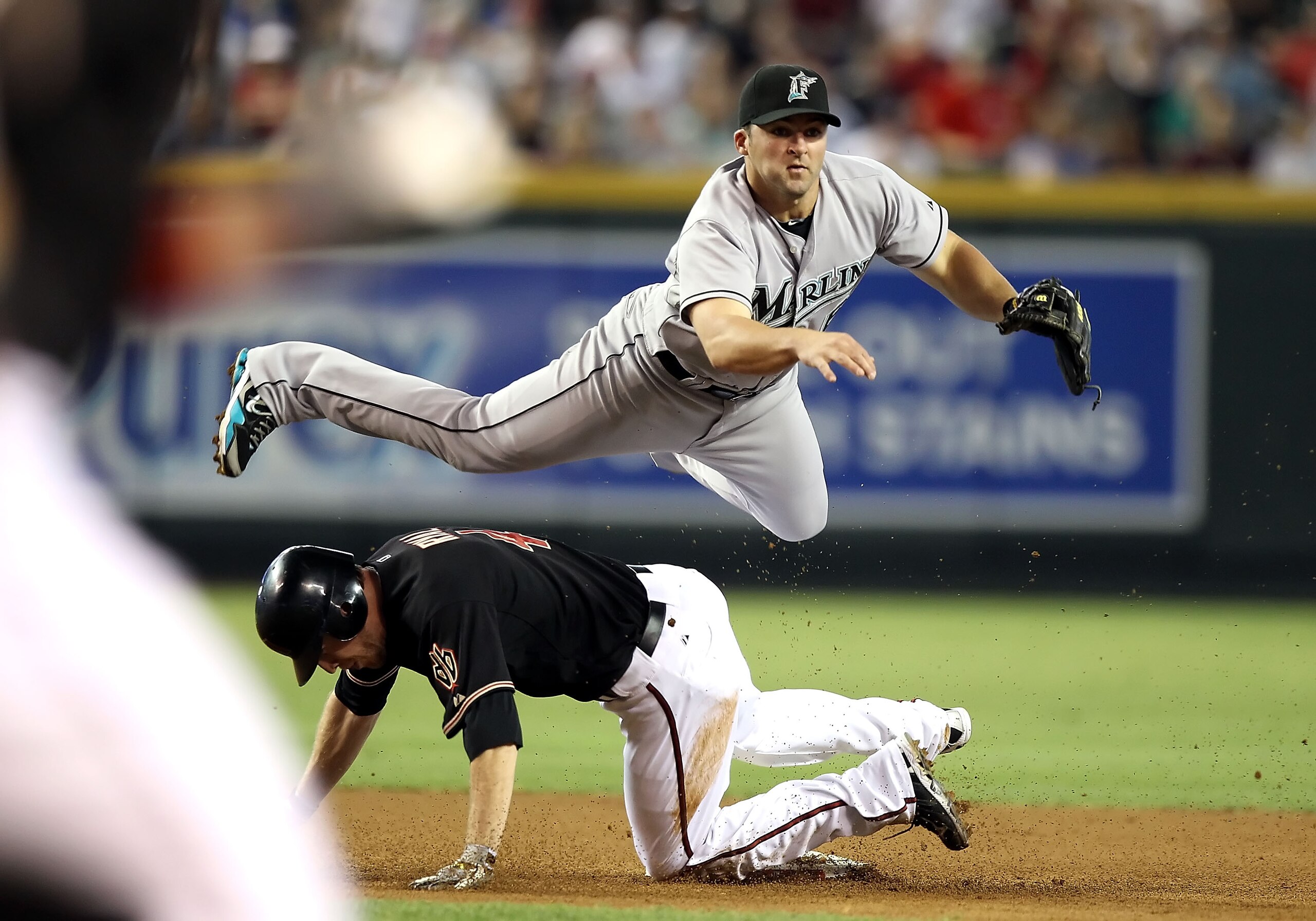
My case for Uggla:
He is one of the best hitting middle infielders in recent memory, and even though he is 30 years old, he has plenty of power years left in him.
However, he can’t make the kind of fielding mistakes that he has in the last two years this year in Atlanta.
This is for one simple reason: people actually go to Braves games to watch them play.
He is a solid middle infielder, but simply isn’t the elite fielder, as of late, that he is believed to be.
In the past two seasons he has committed 16 and 18 errors; both career highs in their respective seasons. The real issue is that in those two seasons he saw two of his three lowest defensive chance totals in his career while playing 158 games. He has also declined from a great .985 to an okay .976 percentage over the last four seasons.
I won’t go into the math behind it, but suffice it to say that that gap has a much larger effect on a team than the .009 percent difference suggests.
Atlanta better dust off the Fungo bat for Uggla this season, lest he slip even farther into his defensive slump.
1. Miguel Tejada, SS
25 of 25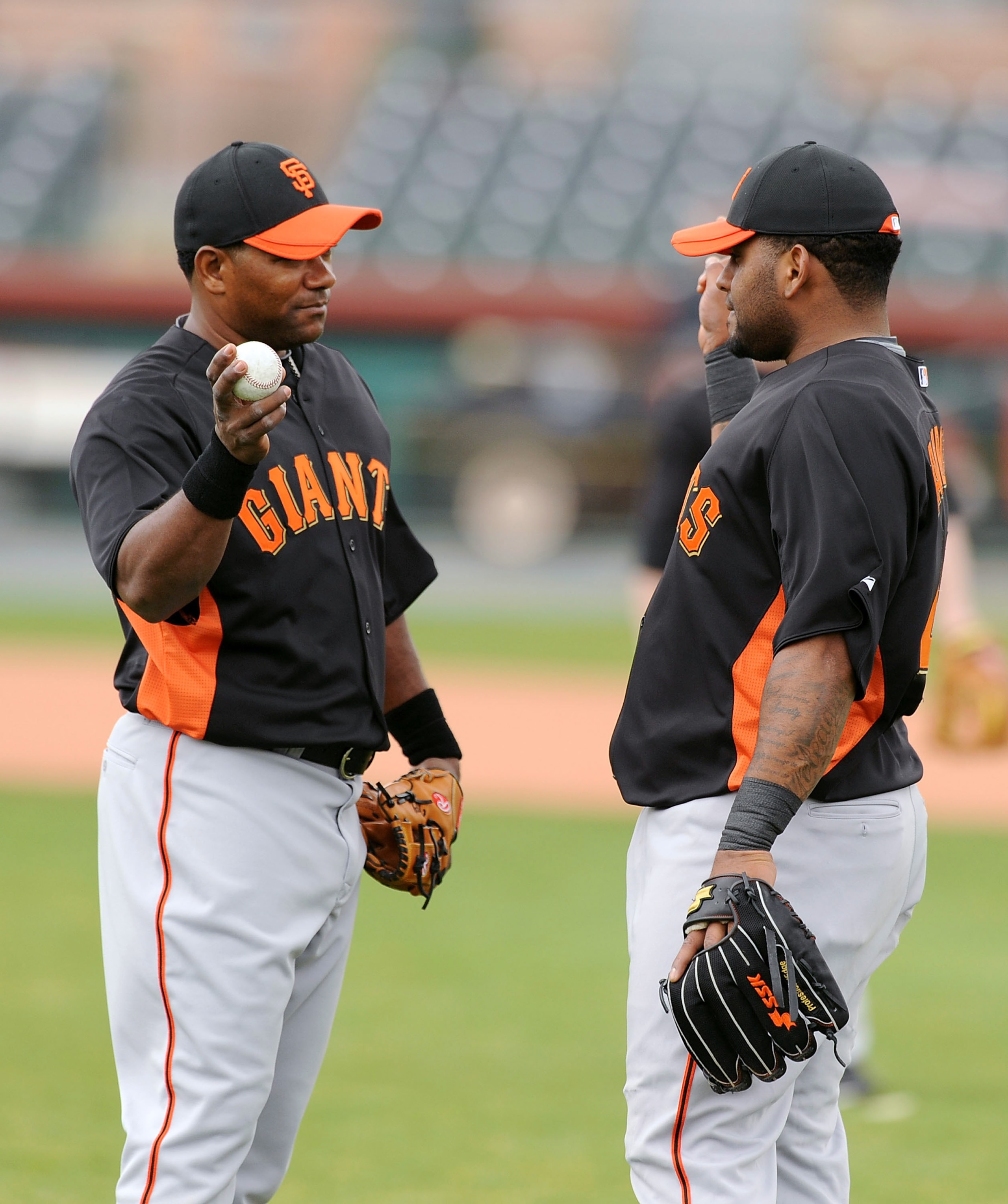
The 36 year old Dominican Miguel Tejada is an MLB icon and a household name in a sport that has declined in its national popularity over the years. He has missed very few games in his 13 year career, and has hit almost 450 doubles and exactly 300 homers. His career .287 batting average is nothing to laugh at either.
Though he has never won a Gold Glove, Miguel Tejada has long been considered by fans around the league to be one of the more entertaining defensive shortstops, which is true in some ways. He is a small guy who has quick reactions and can make spectacular plays look easy.
He has only managed an anemic .972 career fielding percentage however, which leads me to believe that we have finally found Patient Zero, the source of camera-itis.
When he knows the flashbulbs are popping, he can make fantastic dives, throws from his knees, and high flying double plays. On routine ground balls, though, he often looks stiff and unsure of what to do; sometimes even bored.
Tejada may be a Hall of Famer someday, but today he’s number one on a different list—the 25 most overrated defenders in the league today.
.jpg?w=2560 "J.J. McCarthy Linked to Giants")

.jpg?w=2560 "Amon-Ra Fined $60K")
.jpg?w=2560 "NFL Brazil Game Field Update")