
2011 NFL Mock Draft: San Francisco 49ers First-Round Study Guide
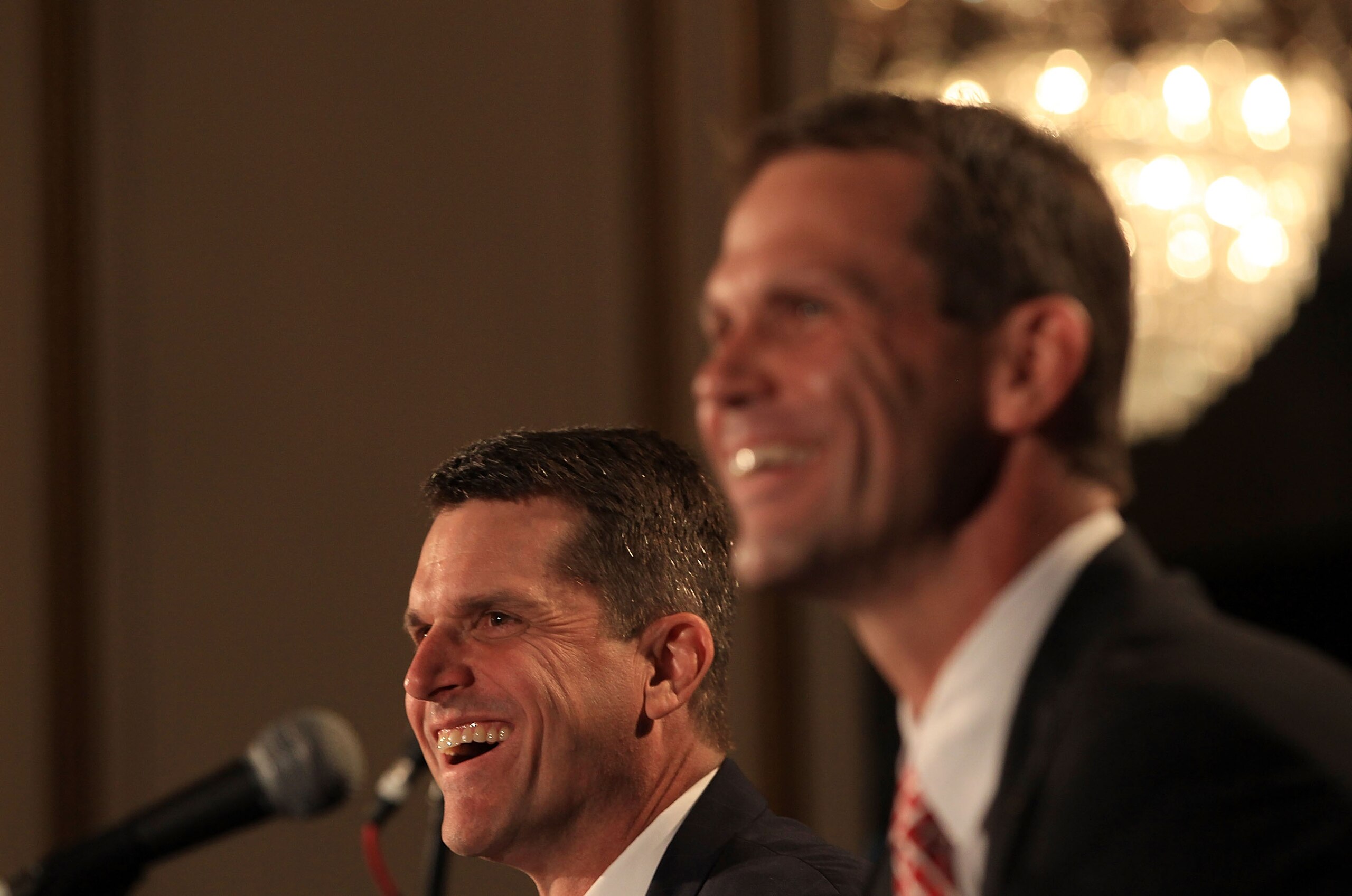
Only two weeks after the 49ers ended a fairly accelerated coaching search, new head coach Jim Harbaugh has basically completed his coaching staff and the team can now prepare for the first draft of the Jim Harbaugh Era. While nobody really knows what direction Harbaugh and his staff will go in the draft, there has been plenty of speculation.
As I have pointed out before, the 2011 offseason marks a critical opportunity for the 49ers, as they try to capitalize on the enthusiasm surrounding the Harbaugh signing and improve their roster on their quest to return to the playoffs.
Free agency and trades will be integral in this process, but the NFL Draft remains the focus of the offseason calendar for teams trying to add critical pieces (with good reason).
A Critical Draft Awaits
1 of 10
Every round of the draft is important, and year after year late-round selections and undrafted free agents emerge to make names for themselves at the NFL level. But the first round of the NFL Draft carries added significance for a variety of reasons.
Most of these boil down to the fact that the stakes are sky-high in the first round—choose wisely and you could land the next franchise player; choose poorly and you could be hemorrhaging money to a player who does not produce.
No matter who you take in the first round, it will constitute a major investment. Thus, it is wise to invest this money on a player who is ready to contribute right away, unless your team is already two-deep with bona fide starters at every position (we can all agree the 49ers are not).
It is generally held that Mike Nolan's mistake of taking quarterback Alex Smith in the first round in 2005 set up the demise of Nolan's administration right from the start. Harbaugh needs to avoid a repeat performance.
As Harbaugh and the 49ers approach this critical draft, they must consider their options with the utmost vigilance. Typically the merits of a team's draft choices are only discussed after the fact. But what if we considered grades for potential options ahead of time?
Here is a look at how the 49ers might make each grade in the first round—from fantastic to failure, and everything in between:
Grade A: Draft a Cornerback
2 of 10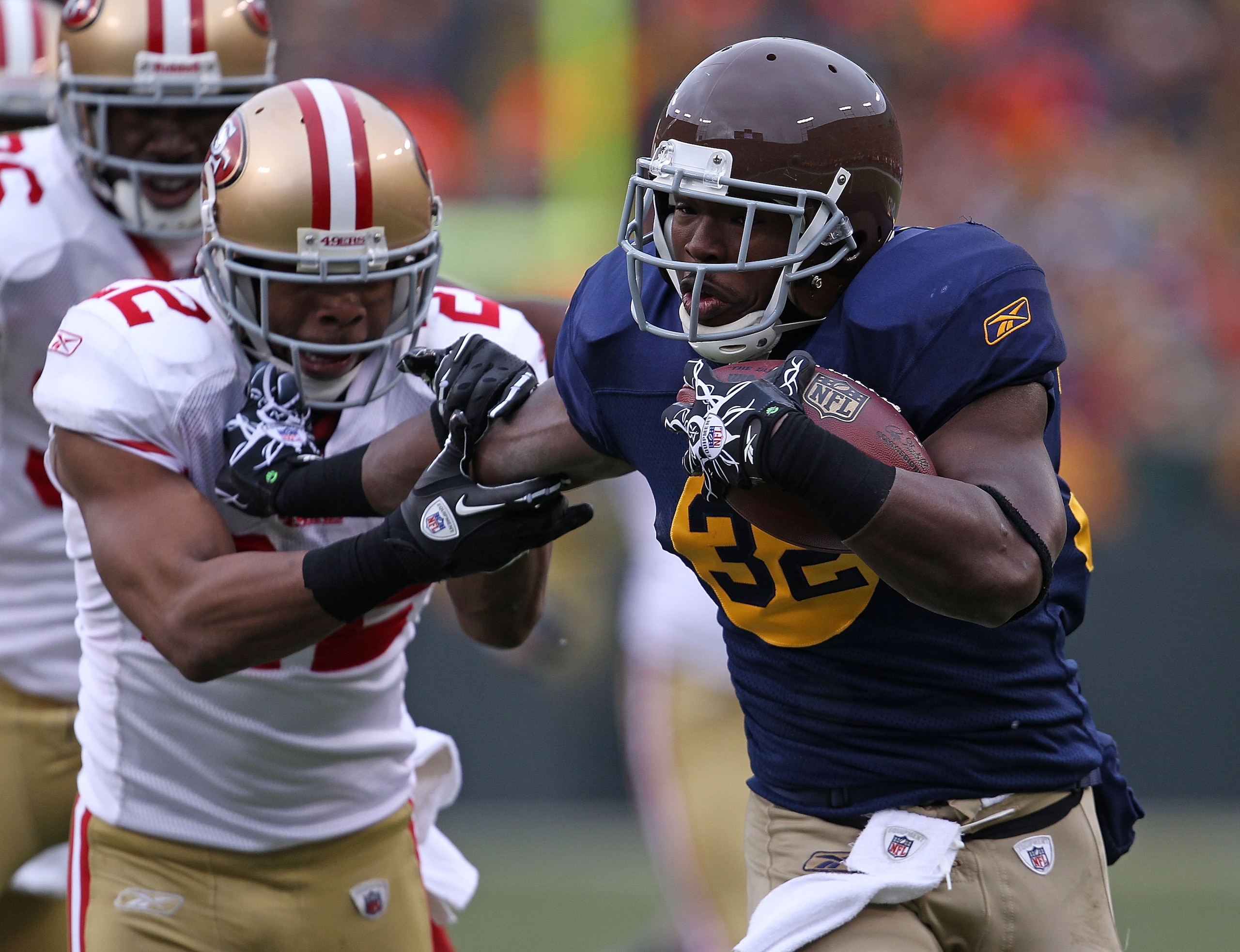
As I noted in a recent article, the secondary stands out strongly as the No. 1 issue facing the 49ers leading in to 2011. They largely ignored the secondary last offseason, and it cost them dearly.
Nate Clements has fallen out of favor, having failed to live up to his mammoth free-agent contract signed prior to the 2007 season. Shawntae Spencer is a question at the other corner slot, and even the safety position is fairly unsettled.
No. 1 need does not always translate to No. 1 pick, but in this case it ought to. The draft offers two premiere, NFL-ready corners at the top of the board in LSU's Patrick Peterson and Nebraska's Prince Amukamara. Peterson should be gone by No. 7, but Amukamara should be available, barring an early run on defensive backs.
Whether the 49ers sit on the seventh pick and target Amukamara (or possibly trade down a spot or two), or decide to trade up for Peterson (unless he falls significantly down the board), landing one of these men will not solve the secondary problem outright. In order to truly elevate this weak spot on the roster, they need to add veteran help so that they can replace Clements.
Nnamdi Asomugha is at the top of the wish list for every team hoping for secondary help, but even if the 49ers miss out there, other options exist. Adding Champ Bailey or Antonio Cromartie (who could also contribute in the return game) could give them the stability they seek, while giving help to the prospect on the opposing side as he adjusts to the NFL.
All in all, CB would be a great use of the first-round pick.
Grade B: Draft an Elite Pass Rusher
3 of 10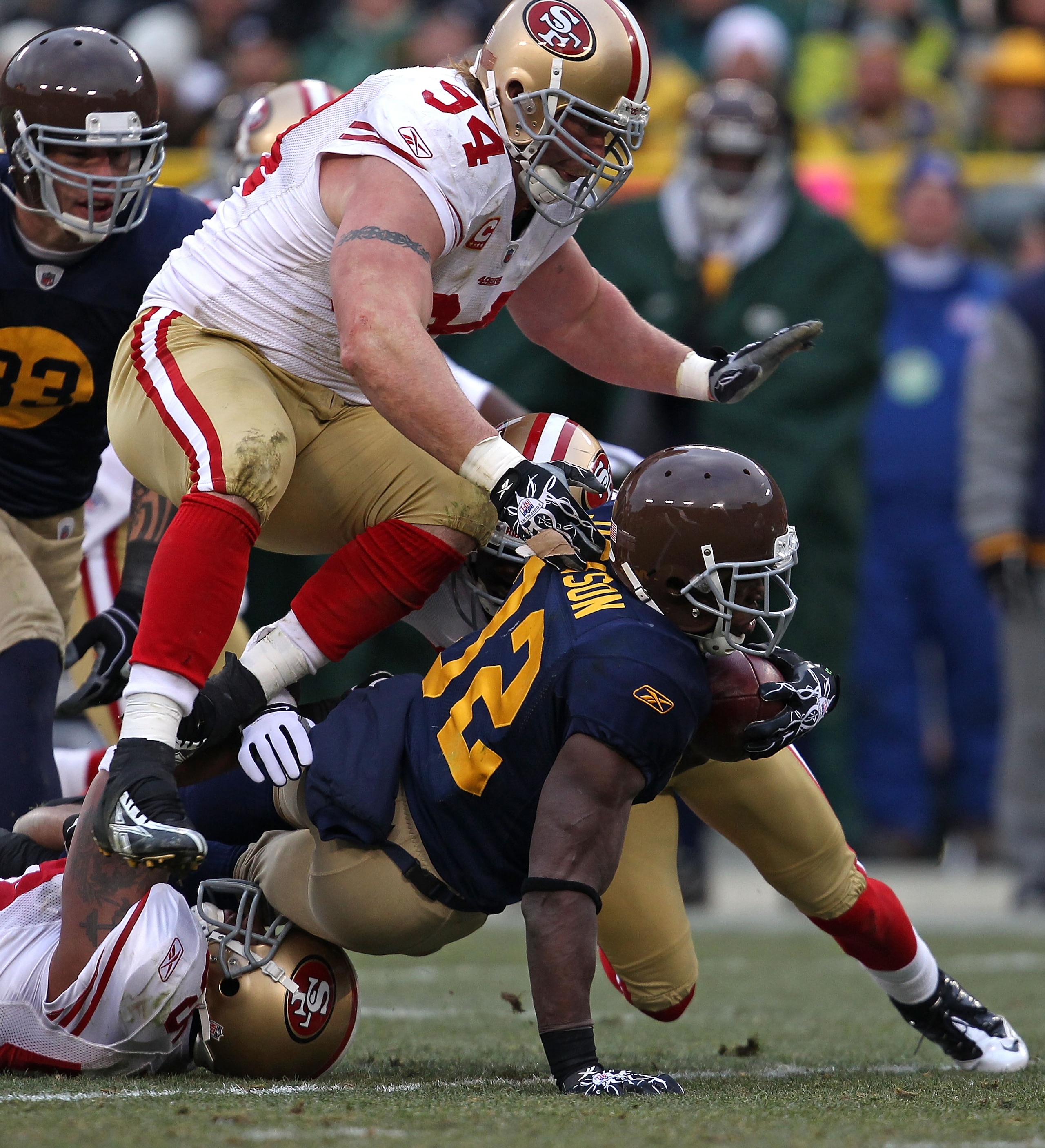
After the secondary, there is a close battle between QB and the pass rush for the claim of second-biggest team weakness. In terms of a first-round focus, however, the pass rush has to win out.
The 49ers have had issues getting pressure on the opposing QB for several seasons, allowing even mediocre QBs to post big numbers and lead game-winning drives against a supposedly stout defense with embarrassing ease.
This problem has been closely tied to issues with the secondary, as their inability to effectively cover receivers forces the defensive coordinator to drop would-be rushers into coverage; conversely, problems pressuring the QB have made the secondary's job much more difficult.
Still, with the personnel in hand, the secondary is in greater need of new blood, as the pass rush could probably benefit greatly from the mere ability to blitz more aggressively. Couple that with the incumbent presence of Justin Smith and potentially available free agents like Richard Seymour, and pass rush in the draft falls to a second priority.
Nonetheless, there are a variety of good options in the first round to bolster the pass rush. If there is an early run on DBs or if the 49ers can acquire other pieces by trading down in the first round and still wind up with someone like Alabama’s Marcell Dareus or North Carolina’s Robert Quinn, it would not be a bad addition.
Bottom line: Above-average move, if the price is right.

.jpg?w=2560 "Eagles Titans Football")
Grade C: Get Offensive Early
4 of 10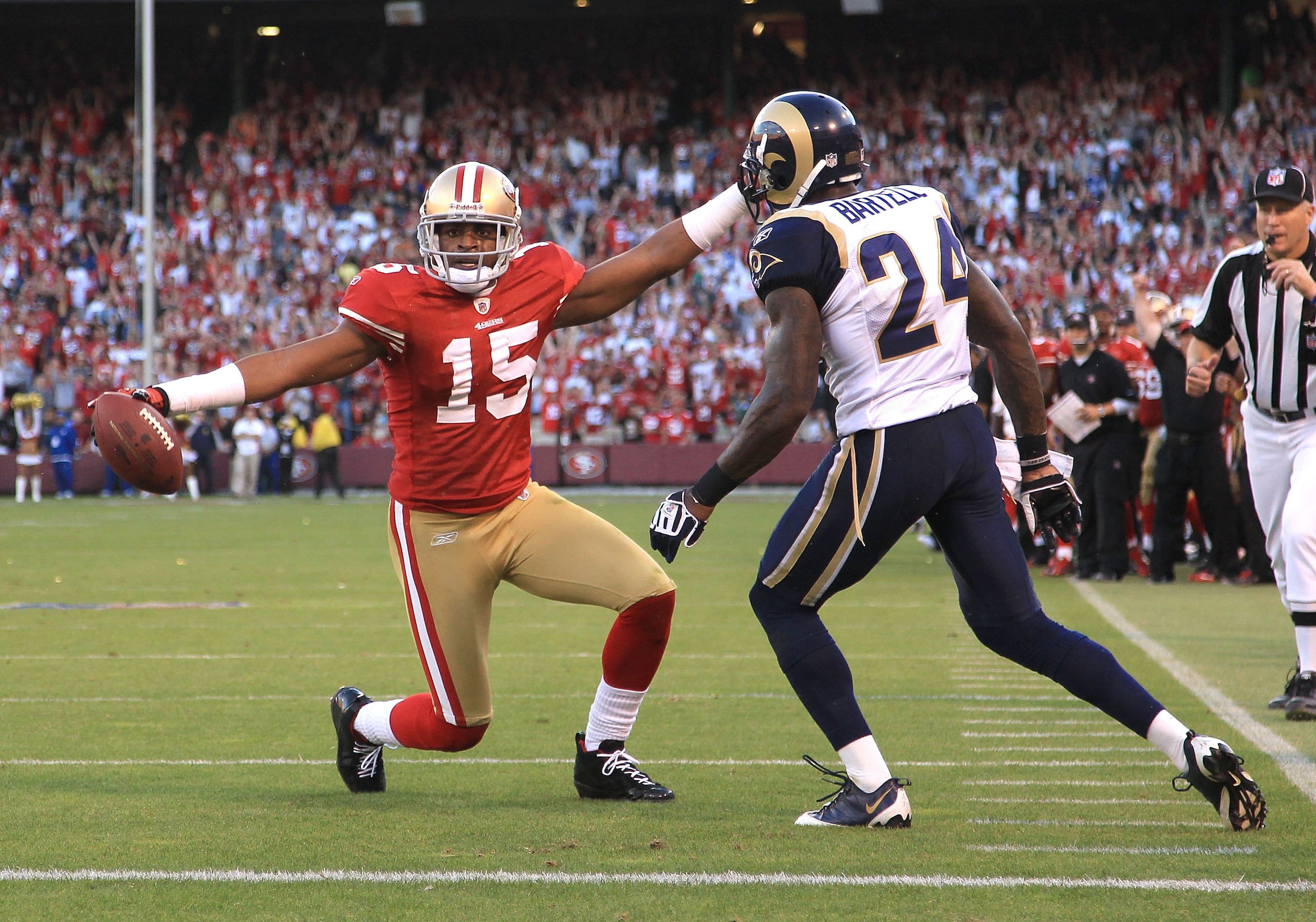
Make no mistake about it: The 49ers are not set at running back or receiver.
Frank Gore should be back healthy the next time the 49ers take the field, and everyone knows what he can do. Michael Crabtree and Vernon Davis continue to provide solid threats through the air.
However, beyond these notable stars, questions linger. Brian Westbrook may or may not be back, and even if he returns, his limited action last year coupled with a new offense leave his potential far from certain. Anthony Dixon showed some promise as a rookie, but also raised concern with footing that looked uncertain at times, hands that were not quite as sure as you would like, and a proclivity for dancing behind the line a little too much.
At receiver, Josh Morgan has started to show some signs of fully recovering for the health problems that held him back in previous years, but his route running was not always sharp and he continued to look fragile at times and shied away from some contact. Ted Ginn Jr. and Kyle Williams could become studs from the slot, but until they get more snaps on offense it is hard to know what the 49ers have in them.
Depth issues certainly exist at RB and WR, but is it worth a first-round investment? Probably not.
Why WR and RB Don't Make Too Much Sense
5 of 10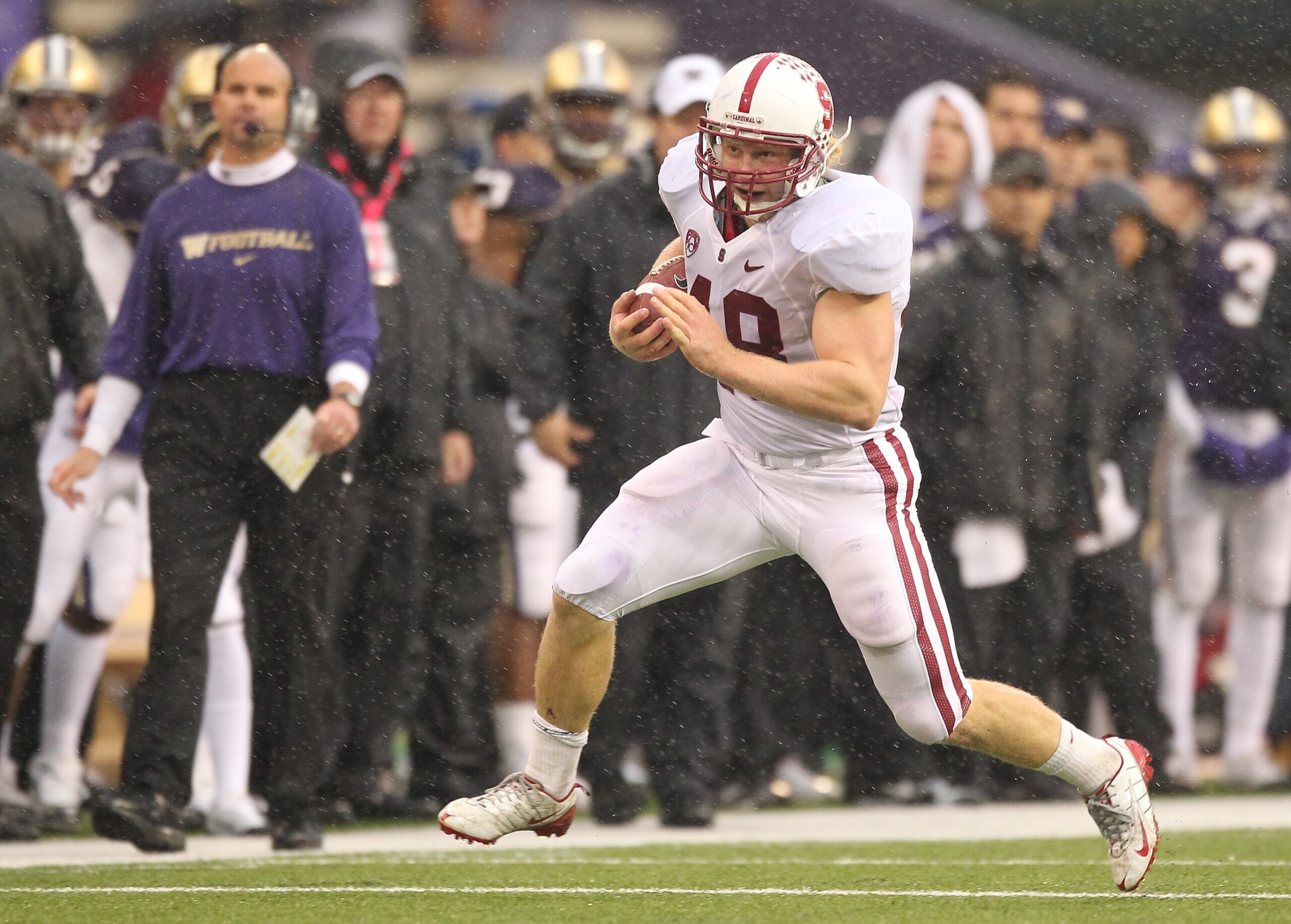
The primary reasoning here is that the 49ers already have solid No. 1 options and at least serviceable No. 2s. The argument against the adding a first-rounder at RB/WR is strengthened when you consider the draft board.
While there are few if any bona fide Top 10 options available—except Georgia’s A.J. Green and Alabama’s Julio Jones—there are plenty of solid options in the later rounds. Alabama's Mark Ingram would be a nice addition, but would probably be a reach at No. 7. Furthermore, is he clearly that much better than someone like Oregon State's Jacquizz Rodgers or even Stanford's Owen Marecic (considering the need at FB), especially for a team that already has a clear No. 1?
The story is similar at WR. It is never a terrible move to add a potential playmaker, and if everything were to fall apart ahead of the 49ers on draft day, they might be able to trade down and cut their losses by adding a nice offensive prospect later in the first.
In the end, this would not be the worst move they could make, especially under the right set of (admittedly strange) circumstances.
Grade D: Continue to Invest in the Offensive Line
6 of 10
The 49ers used three picks last year (two firsts and a fourth) to acquire offensive linemen and then convinced themselves they had solved a major liability. As such, they refused to add veteran help to a porous offensive line, passing on veterans like Chester Pitts.
Both rookies had some success, showing glimpses of what led the 49ers to draft them so highly. But they both went through their fair share of growing pains adjusting to the NFL as well. Mike Iupati fared better than Anthony Davis, making the NFL All-Rookie team despite some struggles, while Davis ranged between promising and the reincarnation of 2003 draft blunder Kwame Harris.
Due partially to injury (the 49ers lost center Eric Heitmann in training camp), partially to an unstable system, but largely to the overinvestment and overconfidence in Iupati and Davis, the 49ers offensive line was only marginally better at best in 2010 than the line in 2009. Trying to insert another rookie into the fold is not the way to go.
The 49ers would be better served by adding some veteran help to afford some protection behind Iupati and Davis as they continue to develop. They still have a great chance to grow into the dynamic tandem the 49ers envisioned when they draft them, but that will not happen if they have to play around more inexperience in their formative years.
Spending two first-round picks on the offensive line last year was an overinvestment. Spending the only one the 49ers have on another lineman this year would be a major mistake. But they could do worse yet...
Grade F: Draft the Next “Franchise” QB
7 of 10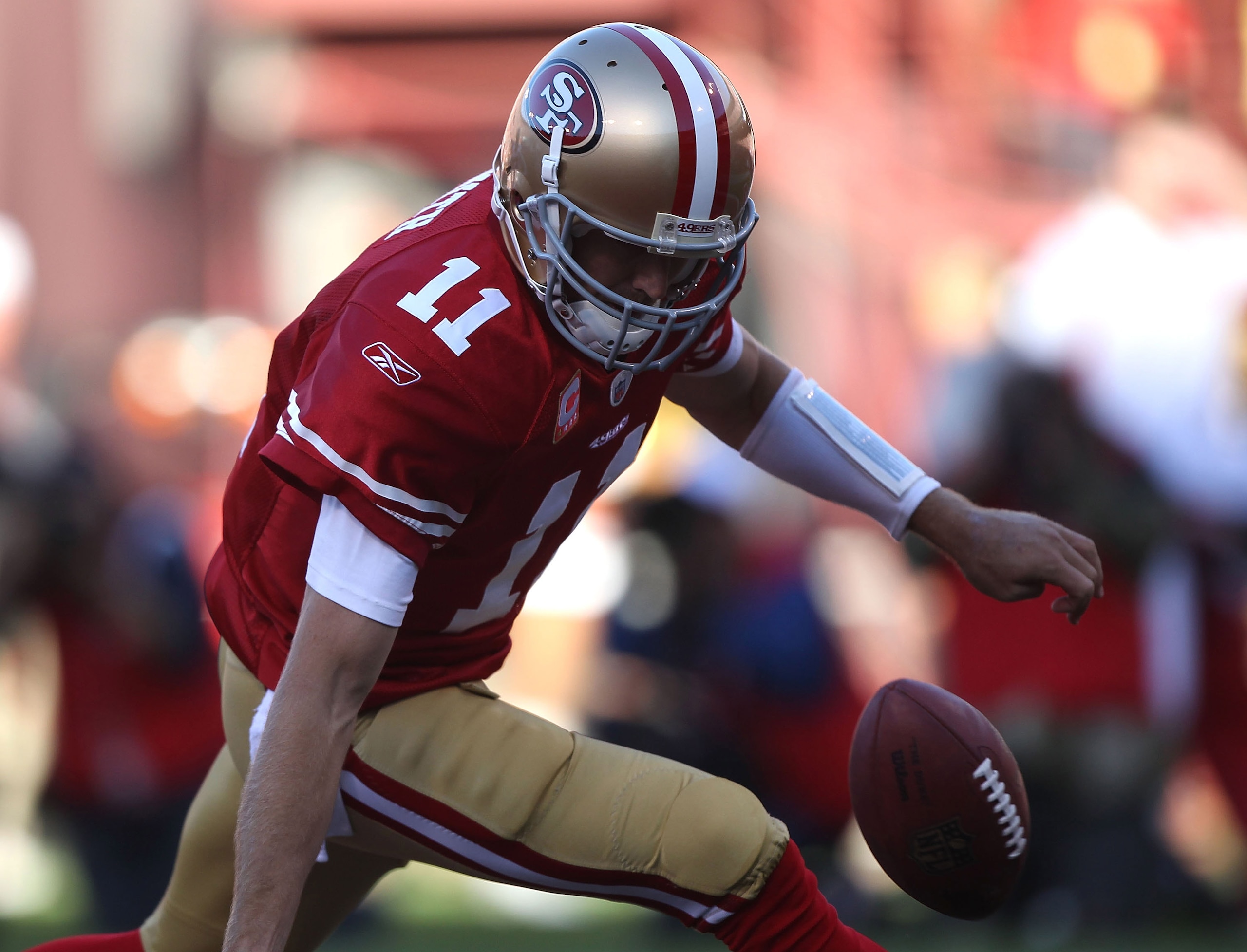
There is no doubt that the 49ers have deep issues at QB. They need to find a long-term solution and that solution is almost certainly not on the 2010 roster.
Alex Smith has all but worn out what little shreds of welcome and sympathy he had left to cling to, and reported recent comments suggest he has no interest in continuing his relationship with the team.
David Carr took less than one half of football to go from the lesser of two evils to bona fide bust, and despite a previous relationship with new offensive coordinator Greg Roman should be gone by next season.
Troy Smith is worth a second look and could provide some cheap insurance for the 49ers in the event a CBA impasse keeps players from practicing this offseason, but his odds of being the long-term answer are not great.
Having a reliable QB is certainly important. Peyton Manning, Drew Brees and Tom Brady have long proven that—by and large—consistently good teams have consistently good QBs. However, the first round of the draft—especially this draft for this 49ers team—is not the place to find one.
Why not?
I thought you would never ask.
Many Reasons to Avoid a No. 1 QB
8 of 10
Unless the 49ers acquire a proven veteran like Donovan McNabb or Kyle Orton or choose to re-sign Troy Smith, they have literally no viable options for a starter next season. Taking a first-round QB would instantly make him the best QB on the team, and the pressure to start him immediately would be astronomical.
That is where the trouble starts.
Putting a rookie QB behind a still-developing offensive line playing for a first-year head coach in a shifting offense trying to learn a new system is a recipe for disaster. This potential rookie would be surrounded by a stronger supporting cast than Alex Smith was in 2005, but he would still struggle immensely, no matter how talented he is.
Couple that with the fact that all the top QB prospects in this draft have major question marks tied to them. Auburn’s Cam Newton won the Heisman and rightfully so, but is still very young and very raw with a ton of off-field baggage following him around. Missouri’s Blaine Gabbert and Arkansas’s Ryan Mallett are also young and both come from spread offenses with many questioning their ability to take snaps under center (sound familiar?). Washington’s Jake Locker seems to have most of what you would look for, except that he has been grossly inconsistent since his sophomore season.
A Better Option?
9 of 10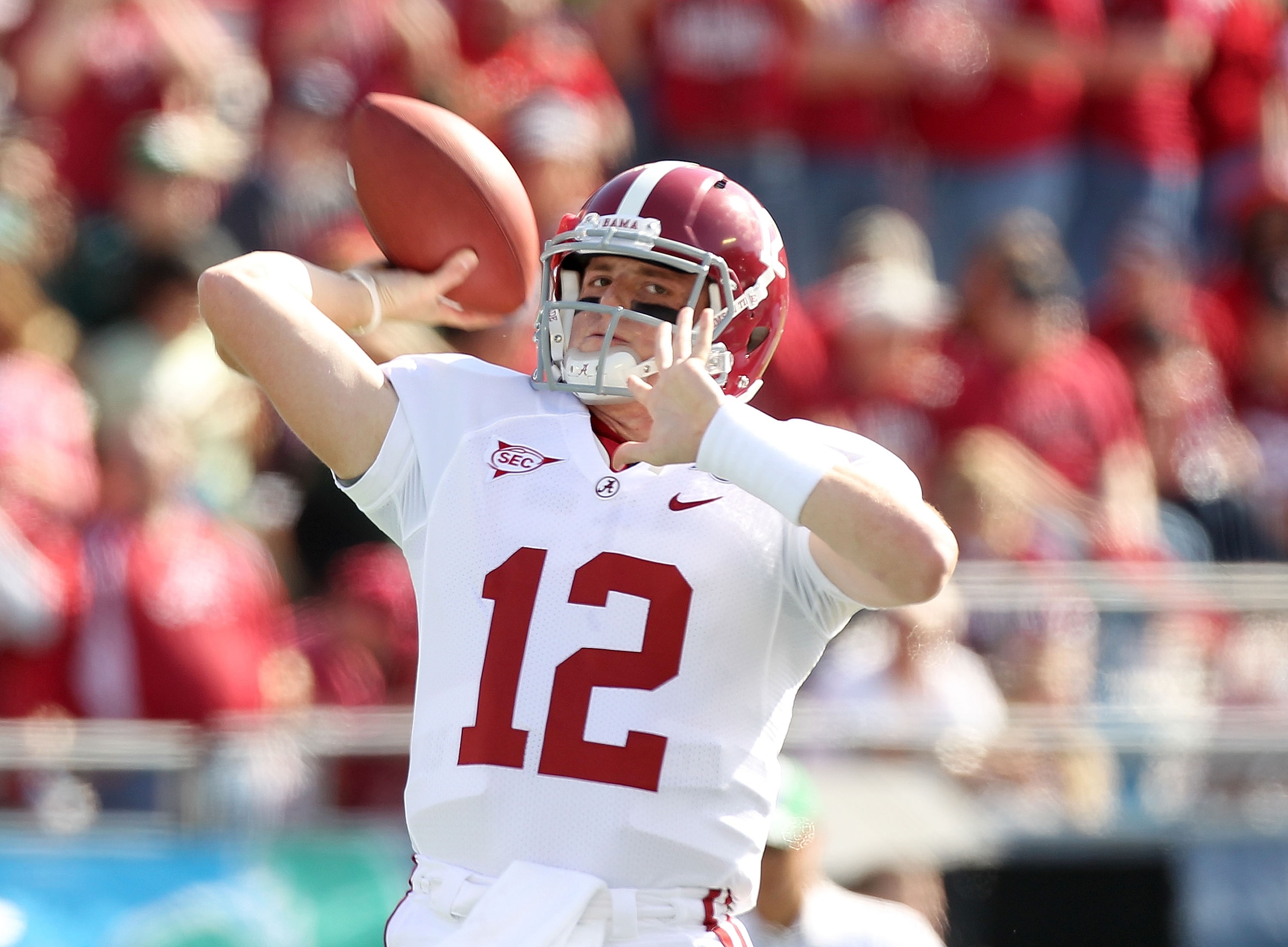
Harbaugh has a major challenge in trying to find a franchise QB for a team with an unparalleled legacy at the position seeking to rise out of one of their worst stretches in the history of the franchise. The margin for error is incredibly thin. Why then run the risk of investing in a first-round prospect with significant red flags, only to plant him in a situation that is far from ideal?
The 49ers would do much better to bridge the gap at QB with a known commodity and take a later-round QB at a much more reasonable price. Alabama’s Greg McElroy, Iowa’s Ricky Stanzi, Florida State’s Christian Ponder, TCU’s Andy Dalton or Delaware’s Pat Devlin could all make reasonable choices.
McElroy is likely the biggest name. While people have questioned his arm strength, they said the same about a guy named Joe Montana in 1979. If the 49ers do return to the West Coast Offense under Harbaugh, arm strength will not be a major issue. McElroy can throw an accurate ball long enough to be a vertical threat, and that is all that matters.
The big names at the top of the board are too big a risk and the 49ers are not set up to develop a young QB on the field.
In a word: AVOID, AVOID, AVOID!
A Quick Word About Trades
10 of 10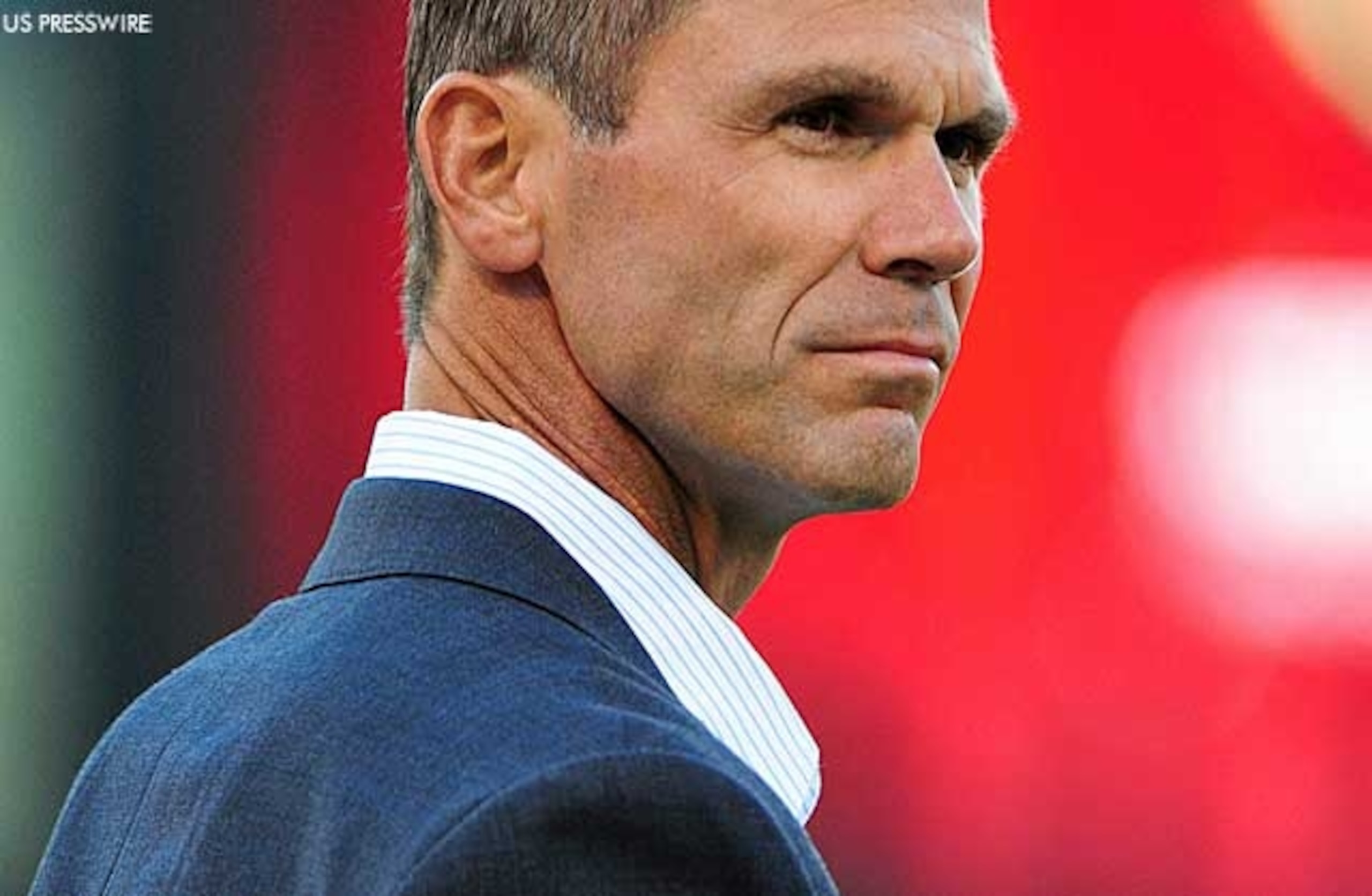
Trades are an inevitable part of every NFL Draft. Whether teams decide to swap players for picks or simply jostle for position on the big board, GMs seem to get restless on draft weekend.
Given the 49ers’ draft position this year, and the way the board is shaping up, I cannot see much motivation to trade up. Trading up is expensive, and there is little to gain. The 49ers needed a fourth-round pick just to move up one spot in the first round last year to land Davis. While they have seven picks in Round 4 through Round 7, what do they really have to gain?
With the exception of Clemson’s Da’Quan Bowers and LSU’s Patrick Peterson, nobody projecting to go above No. 7 is worth the cost it will take. Targeting either of those players will likely cost more than a couple late-round picks. If the 49ers had to move up a spot to ensure they land Amukamara, those late-round picks could come in handy.
Moving down could be an option, though with so many late-round picks they would likely be targeting veterans in return. I expect Trent Baalke to be open to suggestions, but if the price is not right, he should not have too much motivation to move on draft day.
This of course does not take some more exotic options into account—like packaging the first-round round pick with a veteran role-player of appreciable trade value like Takeo Spikes to target critical needs. Only time will tell.
Keep the Faith!