

Bullpen Bonanza: Projecting the 2011 Philadelphia Phillies Bullpen
Winning the World Series requires the perfect balance between pitching and hitting.
When the Philadelphia Phillies won the World Series in 2008, they did so on the strength of their bullpen, anchored by Brad Lidge, and an offense that went unrivaled in the National League.
When they returned to the World Series in 2009, the balance wasn't perfect. Lidge crumbled, and the bullpen followed suit. The powerful offense wasn't able to keep up with the bullpen's woes.
In 2010, the tide turned. The bullpen was strong, at least at the back end, by the time the playoffs rolled around, but the injured, slumping offense drifted into oblivion.
What will the balance look like in 2011?
The offense will gain some internal boosts. Despite losing Jayson Werth, perennial All-Stars like Ryan Howard, Chase Utley and Jimmy Rollins look to stay healthy and return to form. Players like Shane Victorino and Raul Ibanez look to capitalize on healthy seasons once again, and Carlos Ruiz looks to continue his 2010 success.
Though the right field puzzle remains in pieces, the Phillies play host to a few breakout candidates in Ben Francisco and Domonic Brown.
Health will be the key, and if the Phillies remain healthy, the offense will not be a concern.
The rotation, with aces galore, has already taken shape, and the bullpen is beginning to follow suit. With many roles already filled, health will play a major role in this area as well. Relievers like Brad Lidge and Ryan Madson, who had great success during last year's stretch run, will look to solidify a bullpen that has been somewhat of an Achilles heel in the past.
In order to obtain balance, the Phillies' bullpen must match the strength of a healthy offense. Can it be done?
Here is an in-depth look at the Phillies' bullpen as it projects to shape up in the 2011 season.
Young Guns Trying to Break In
1 of 10
Scott Mathieson
Mathieson, 26, isn't exactly a "young gun" any longer, but injuries have slowed his progress through the Phillies' system.
In September 2006, Mathieson had Tommy John surgery to repair his pitching arm, and just a little over a year later he had an injury categorized as "inflammation to his ulnar nerve."
Since then, he has set out to prove he is healthy, and in 2010, he did just that. He had a very successful season with the Lehigh Valley IronPigs, posting a record of 3-6 with an ERA of 2.94 in 64.1 innings, the most since his first professional season in 2006, serving primarily as the IronPigs' closer. He earned a brief call-up for the Phillies, throwing just 1.2 innings.
If anything at all, Mathieson proved that the fastball is still his best pitch: He averaged 95 mph on his fastball.
Justin De Fratus
The 23-year-old De Fratus turned more than a few heads in 2010. He split time between the Phillies' Rookie club, A-ball and AA and dominated the opposition on every level. Combined, he posted a record of 3-0 with an ERA of 1.33 in 72 innings. He was especially impressive with the AA Reading Phillies, where he struck out more than 10 batters per nine innings and walked under two, finishing with an ERA of 2.19.
The Phillies added him to the 40-man roster to protect him from the Rule 5 Draft in December, and if any of these young guns has a shot at making the major league club, it is a toss-up between he and Mathieson.
Michael Schwimer
Schwimer, 24, was another reliever that impressed the Phillies in 2010. He split time between AA and AAA, posting a combined record of 7-5 with an ERA of 2.70. Like the last two guys, he put up good strikeout numbers, striking out close to 14 batters per nine innings in AA and close to nine at AAA, while displaying good control.
Since he isn't on the 40-man roster, the Phillies would have to make a corresponding roster move to bring him with them to Philadelphia on Opening Day, so breaking with the big league club doesn't seem likely at this point. That could change with a great spring, however.
Mike Stutes
Stutes, 24, also split time between AA and AAA in 2010, his first season as a full-time reliever. Out of the guys listed, he may have the most to prove in spring training. His combined record from 2010 was 7-1, and he posted an ERA of 3.45. He struggled with command, however, walking more than five batters per nine innings at each level.
He'll have to have a very impressive spring and show that he can control all of his pitches if he wants to break camp with the major league club. It doesn't seem likely at this point.
On the Periphery
2 of 10
David Herndon
Herndon, 25, spent the 2010 season with the Phillies, serving as the long reliever after being selected in the Rule 5 Draft from the Los Angeles Angels of Anaheim.
Having served his time with the big league club, the Phillies now have the right to option him to the minor leagues, and thanks to the chain of events triggered by the Cliff Lee signing, he may have been pushed right out of the bullpen.
He posted respectable numbers—a record of 1-3 and an ERA of 4.30 (3.56 FIP)—but it was clear that he could use more time developing his pitches, especially his sinker, which he'll need to retire major league hitters since he doesn't have overpowering "stuff." He was a serviceable arm in 2010, but the Phillies can do better.
Mike Zagurski
Now 27, you have to assume that the big left-hander is running out of opportunities. He's displayed an unnerving trend over the last couple of seasons of pitching extremely well in the minor leagues and showing poor control once being called up.
He had another good showing with the AAA club in 2010, posting a record of 2-3 and an ERA of 3.27 (2.89 FIP). Control was the sticking point once again, as he walked more than four batters per nine innings, but he also showed the potential to punch out hitters with ease, striking out more than 12 batters per nine innings.
Once arriving in the major leagues, he appeared in seven innings, none of them very good, and left-handed hitters fared better against him than right-handed hitters—not a good situation to be in when you're trying to crack the bullpen as a left-handed specialist.
Vance Worley
If the Phillies don't trade Joe Blanton before Opening Day, moving Worley to the bullpen wouldn't be doing him any justice. The Phillies have starting pitching depth for the first time in a long time, and sending him to the minors to throw as a starter as opposed to moving him in and out of the bullpen makes much more sense.
Though he was impressive with the Phillies in 2010, having both he and Herndon in the minors gives the Phillies flexibility should they have an injury.
Dan Meyer
Out of all of those "on the periphery," Meyer is the longest shot. The 29-year-old New Jersey native will come to spring camp with the Phillies as a non-roster invitee, and if he wants to pitch with the big league Phillies, he'll need to convince them that he is more effective against left-handed hitters than Antonio Bastardo. At this point that doesn't seem likely, though he has had some success doing just that in the past.
Long Reliever: RHP Kyle Kendrick
3 of 10
Age: 26
Bill James' 2011 Projection: 9-11, 4.47 ERA, 4.18 K/9, 2.44 BB/9
Now, on to the major league club.
Bill James' projections are going to be a bit inaccurate for Kendrick, seeing as they are projecting him as a starting pitcher.
The Phillies' bullpen ultimately hinges on whether they decide to hold on to Joe Blanton or trade him before Opening Day. As of now, Blanton is penciled in as the fifth starter, and Kendrick will slide into the bullpen.
With Roy Halladay, Cliff Lee, Roy Oswalt, Cole Hamels and Blanton manning the rotation, the need for a long reliever isn't as great as in years past, and that may be a good thing for Kendrick.
At first glance, you would think the Phillies have several different options for this spot in the bullpen, such as Drew Carpenter and Worley. However, a bevy of circumstances sort of force the Phillies' hand with Kendrick.
Firstly, the aforementioned pitchers have options and can benefit from time spent in the minor leagues. Kendrick, on the other hand, does not. He is also arbitration eligible as a Super Two, which guarantees him an extra year of salary arbitration, and since he is slated to make at least $2 million next season, and maybe more, the Phillies will most likely keep him with the big league club.
If used correctly, Kendrick can be very effective. Right-handed hitters managed to hit just .252 against him. Left-handed hitters, on the other hand, hit .311. He isn't the ideal long man because of his drastic splits, but as stated, the need for a long man isn't as great with the Phillies' rotation. He can also be used against situational right-handed hitters and provide several innings should the Phillies need him to do so.
Middle Reliever: RHP Danys Baez
4 of 10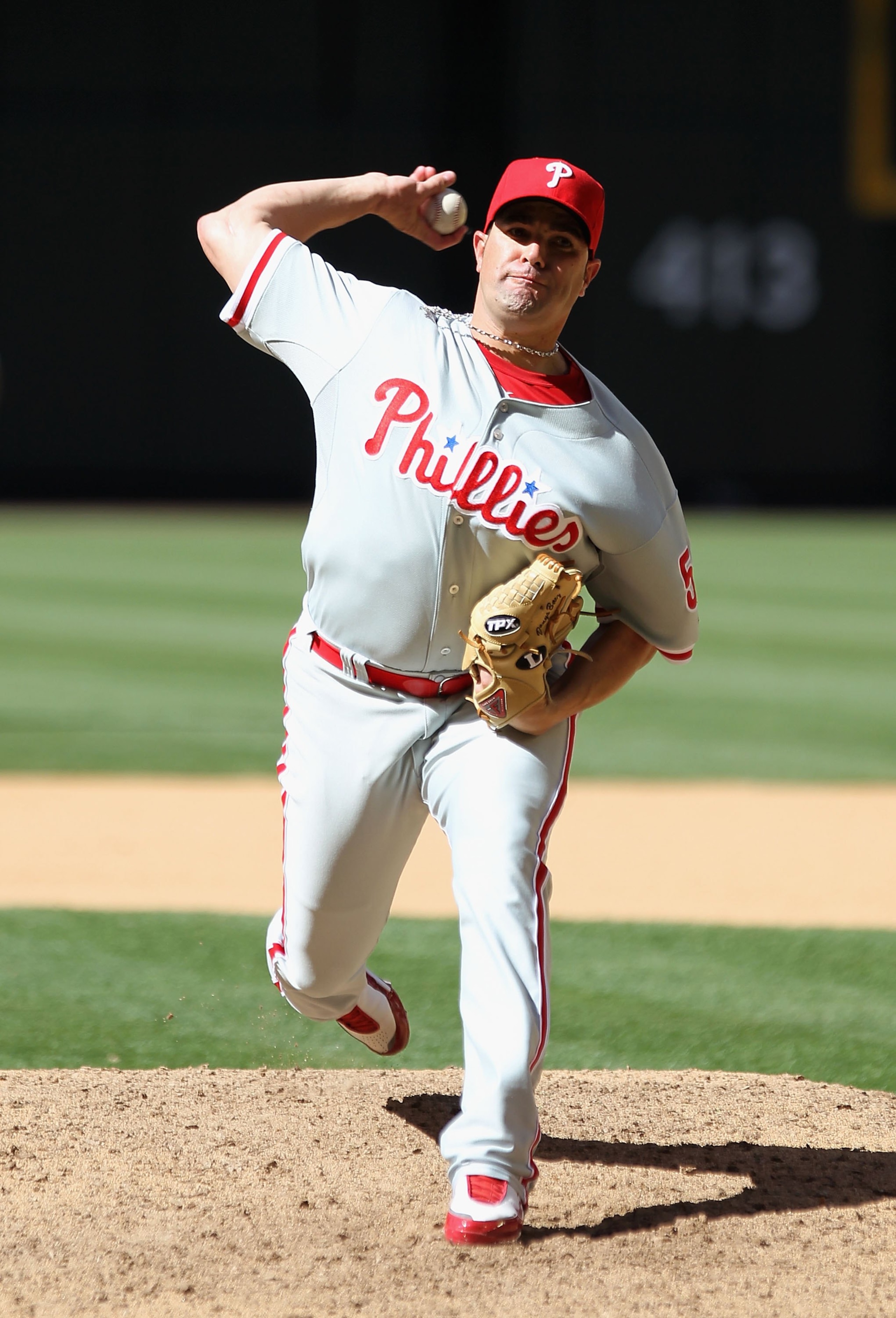
Age: 33
Bill James' 2011 Projections: 2-2, 4.17 ERA, 5.29 K/9, 3.51 BB/9
In many ways, Baez and Kendrick are in the same situations with the Phillies. When Baez signed his two-year, $5.25 million deal with the Phillies after the 2009 season, many people believe that he was overpaid in both years and dollars, and it turns out they were right.
As soon as the signing was made official, general manager Ruben Amaro began taking flak for giving out unnecessary contract years, and if he could take one deal back, it would be this one.
Baez is going to have to be pretty terrible not to make the bullpen in 2011. Though there are probably better options, the Phillies will likely ride this deal out and hope to get some production out of Baez instead of cutting ties with him and being on the hook for the remainder of his contract: $2.75 million.
Unlike Kendrick, however, Baez wasn't particularly effective against left-handed or right-handed hitters. Lefties managed to knock him around to the tune of .302, and right-handers hit .283 against him.
Though it's hard to remain positive about Baez, he was actually very effective in the past. He hasn't had a great season since 2006, but he made the All-Star team in 2005, so the talent is there. The Phillies will just hope to catch lightning in a bottle and the better side of the streaky tendencies of relievers.
Left-Handed Specialist: LHP Antonio Bastardo
5 of 10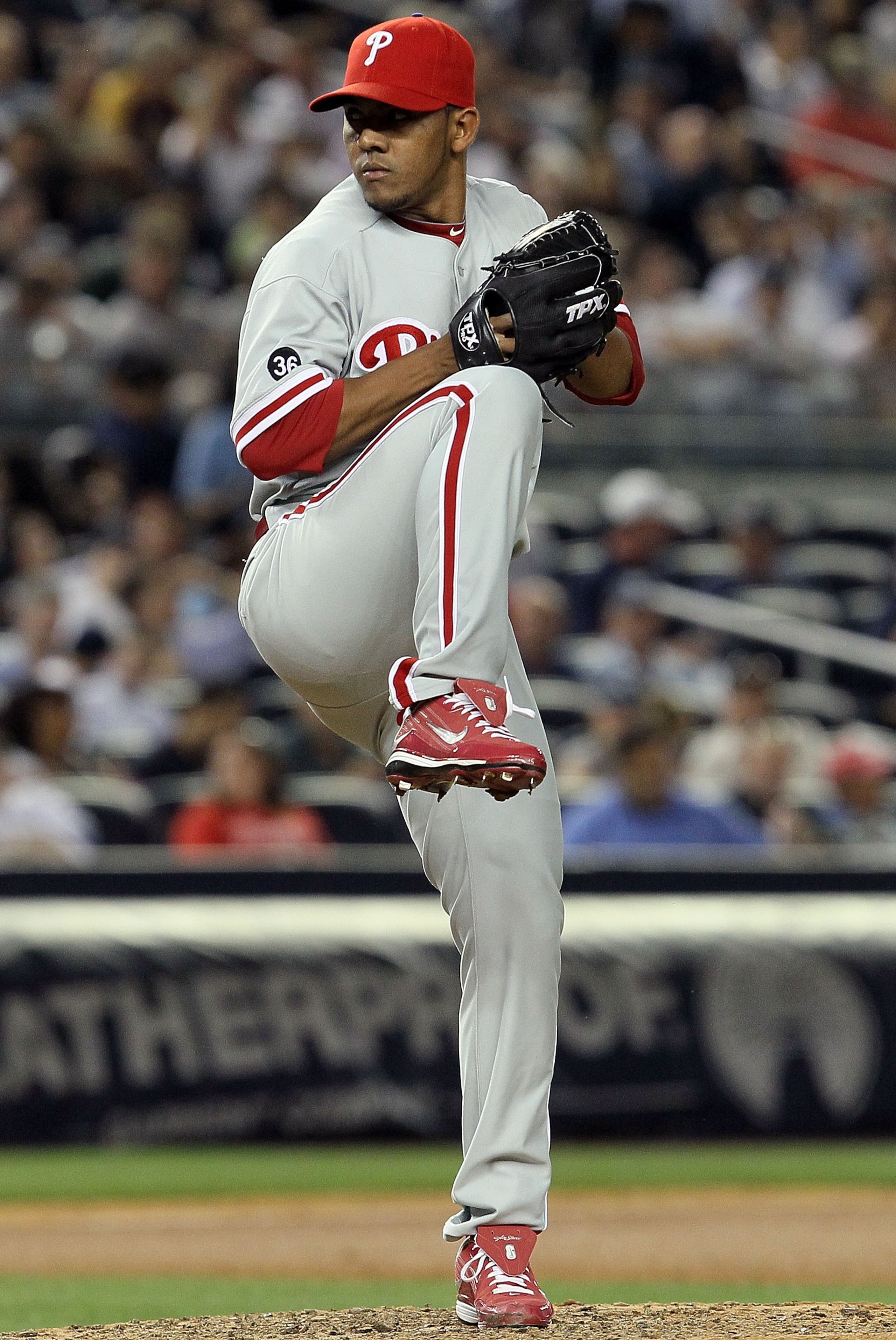
Age: 25
Bill James' 2011 Projections: N/A
After several years as a top prospect in the Phillies' system and transitioning to a full-time reliever, Bastardo's time to shine is finally upon us.
After completely dominating AAA hitters in 2010, he earned a call-up with the Phillies, posting a record of 2-0 with an ERA of 4.34. Don't let that ERA mislead you. He also posted a FIP of 2.76, suggesting he was much better than his traditional stats suggest.
Though his control wasn't perfect, walking more than four batters per nine innings, he struck out more than 12 batters per nine innings in a small sample size of 18.2 innings.
The Phillies are more interested in how Bastardo fares against left-handed hitters, however, and he has all the tools to be a very good left-handed specialist. He has a fastball that can overpower hitters, averaging 93 mph, and a late-breaking, sharp slider that moves away from lefties. With a refined change-up, he can be very tough to hit.
He was good against left-handed hitters in 2010, showing the ability to strike them out with ease, but as has always been with Bastardo, he showed poor control. Despite posting a FIP in the mid-3s against lefties, the Phillies would like to see more production out of him against lefties and weren't comfortable calling him the top lefty out of their bullpen. He looked good at the end of 2010 and should create an impressive tandem with another left-handed pitcher in the Phillies' bullpen.
Left-Handed Specialist: LHP J.C. Romero
6 of 10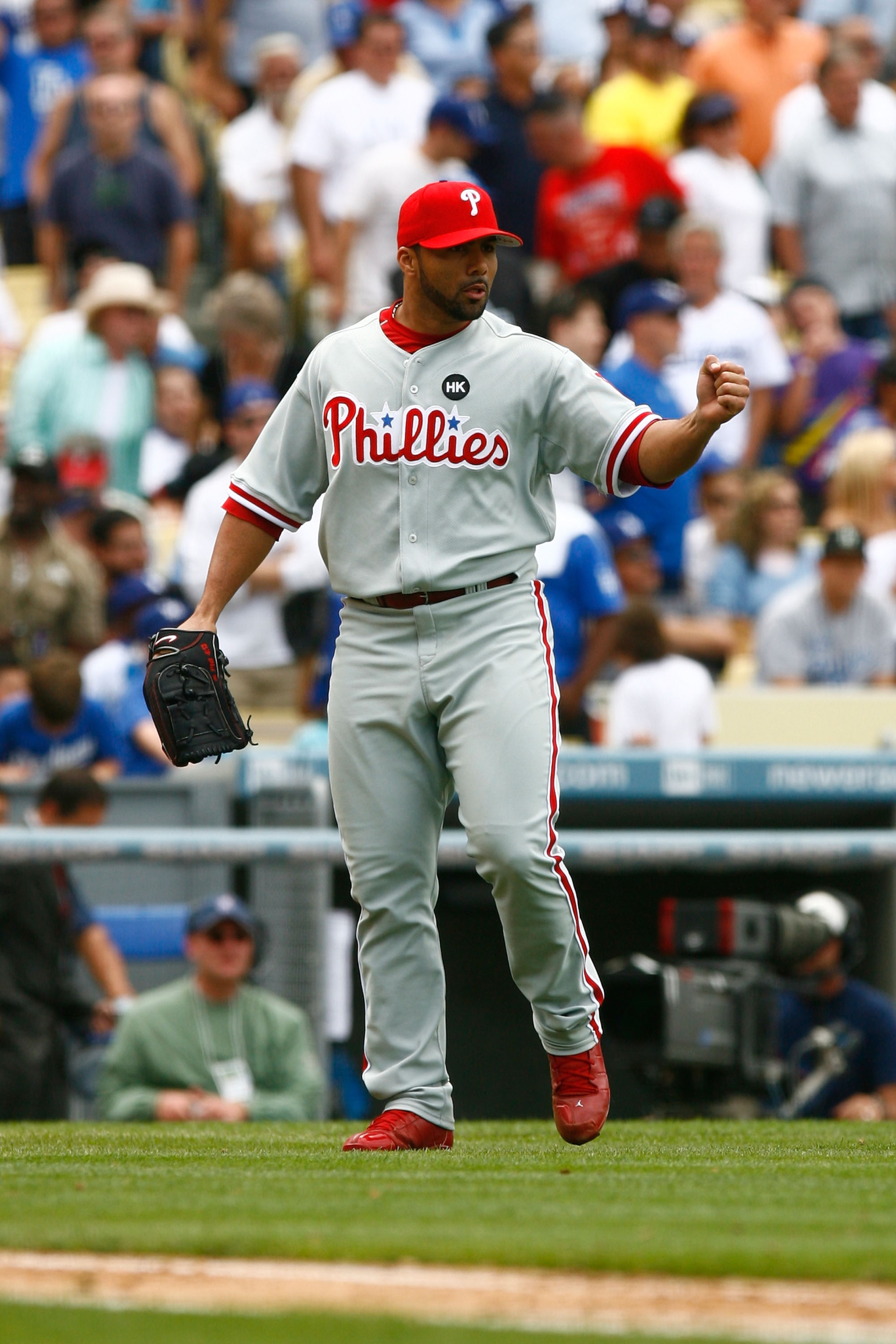
Age: 34
Bill James' 2011 Projections: 2-2, 4.26 ERA, 7.11 K/9, 5.92 BB/9
Coming into the offseason, the Phillies and Romero were expected to part ways, and part ways they did. The Phillies held a $4.5 million club option that they simply couldn't justify exercising.
A few months later, after testing the market and watching the Phillies fail to sign his replacement, Dennys Reyes, because of a failed physical, Romero and the Phillies agreed to a one-year, $1.35 million contract.
So, the new left-handed specialist is the old left-handed specialist.
One of the old habits that Romero will attempt to break in 2011 is his tendency to give up the free pass. Romero walked over seven batters per nine innings in 2011, among the worst in baseball. Elbow troubles that are now behind him played a big part in his inability to find the strike zone, and the Phillies were willing to take a small risk on a guy they were familiar with.
Despite his walk numbers, Romero was very successful against left-handed hitters in 2010. They managed to hit just .217 against him, and he punched out more than seven left-handed hitters per nine innings, using much of the same repertoire that Bastardo is developing. Part of the reason the Phillies re-signed Romero was to tutor their young left-handed specialist.
If Romero can manage to stay healthy, he'll give left-handed hitters fits all season, and the Phillies will have found a bargain.
Seventh Inning Role: RHP Jose Contreras
7 of 10
Age: 39
Bill James' 2011 Projections: 3-3, 4.12 ERA, 6.56 K/9, 3.20 BB/9
After spending several years as a starting pitcher with the New York Yankees and Chicago White Sox, Contreras found great success as a reliever with the Phillies in 2010. In 56.2 innings, he posted a record of 6-4 with an ERA of 3.34.
He settled into the seventh inning role particularly well, finding that he can use his filthy splitter with more frequency in this situation. He struck out more than nine batters per nine innings, very close to his career high, and walked just over two.
He was slightly better against right-handed hitters, as righties hit .256 against him and lefties hit just .240 against him. His FIP against right-handed hitters was 2.39—against left-handed hitters, 4.42. His ability to get outs against hitters from both sides of the plate is what makes him the ideal reliever to pitch in the seventh inning.
Setup Man: RHP Ryan Madson
8 of 10
Age: 30
Bill James' 2011 Projections: 5-4, 3.62 ERA, 7.95 K/9, 2.69 BB/9
The Phillies have one of the best setup men in the league in Ryan Madson. Despite missing time with with a self-inflicted broken toe, Madson put up career-best numbers as the eighth inning specialist in 2010, posting a record of 6-2 with an ERA of 2.55.
Like Contreras, Madson's success against both right-handed and left-handed hitters is nearly equal, thanks in large part to a devastating change-up that comes from the same arm slot as his fastball.
Left-handed hitters hit just .223 against Madson. He struck out more than 10 left-handed hitters per nine innings and walked just over two. Right-handed hitters didn't fare much better, as he struck out more than 11 per nine innings while walking under two, as they managed to hit just .216 against him, effectively setting the stage for the closer, Brad Lidge.
I believe that Bill James was way off on this one. Entering a contract year, Madson can earn top dollar as a closer, or more likely a setup man, in next year's free agent market. He'll pitch his tail off.
Closer: RHP Brad Lidge
9 of 10
Age: 34
Bill James' 2011 Projections: 4-3, 3.45 ERA, 11.40 K/9, 4.20 BB/9
Brad Lidge's struggles have been well documented. Though many of those struggles have been injury-related, Lidge still has something to prove in 2011.
Like Madson, he is entering a contract year (the Phillies hold an expensive club option that is unlikely to be exercised) and could increase his stock with a return to his 2008 form. He showed signs of doing so over the final three months of the season, when he posted an ERA of just 0.76.
His 2010 totals weren't much worse. He finished the season with a record of 1-1 and an ERA of 2.96. He began to return to the Lidge of old, throwing his slider more to both sides of the plate and using his fastball as a complementary pitch. He punched out more than 10 batters per nine innings and, also very Lidge-like, walked over four.
One of his greatest improvements from his disastrous 2009 season was limiting the home run ball.
I wrote about Lidge in-depth earlier in the offseason here. If he can follow some of those trends he displayed at the end of the 2010 season, we should see a Lidge more akin to 2008 than 2009.
Summary
10 of 10
The Cliff Lee signing made the Phillies' bullpen incredibly deep.
Take this into consideration: In 2010, the first four starters of the Phillies rotation—Halladay, Lee, Oswalt and Hamels—each averaged seven innings per start. That means that four out of every five games, the likelihood of the Phillies needing a reliever to pitch more than eight out of 36 innings is slim.
This allows them to max out their bullpen's potential by throwing their best relievers: Romero, Contreras, Madson and Lidge—with more frequency.
The fifth starter in the Phillies rotation, Blanton, also averaged six innings per start. While the Phillies still have the option of using the aforementioned relievers, they also have options in Kendrick, who can throw multiple innings, Bastardo and Baez.
The Phillies bullpen features relievers that have each excelled in their current roles in the past. In short, the balance is incredible. With the depth of the rotation, the underrated strength of the bullpen and an offense on the rebound, the Phillies will undoubtedly be the scariest team to come out of the National League in 2011.
.jpg?w=2560)
.jpg?w=2560 "Von's Wild Offer for Jersey Number")
.jpg?w=2560 "Broncos Practice Fight 😳")

.jpg?w=2560 "Cowboys-Saints HEATED Fight 😮")
.jpg?w=2560 "Brock Rechsteiner Slams Cowboys Player in Fight Video")