
Johnny Damon and 12 Other AL Players Who Would Struggle in the NL
The Designated Hitter—home of the offensively talented and the defensively challenged players. By not having to play the field many players have been able to prolong, or even make, a career through offensive contributions alone.
American League teams use the DH position for a variety of different reasons: from protecting a player's health to finding a role for an aging player and everything in between. Despite the variety of reasons a particular player is used as a DH most of these players have a common trait—they can all hit but, usually, they are also a major liability in the field.
Unfortunately, NL teams are not afforded this luxury; since there is no DH in the National League every player in the lineup must be on the field (so instead of a DH, who takes the place of the pitcher, in the NL, the pitcher must hit for himself). Because of this, NL teams must be more judicious in deciding which players to carry on their 25-man roster.
Even if a player can undoubtedly contribute offensively he may not make a NL team because he will either not get many at bats (if he is used solely a pinch-hitter so to avoid him playing the field) or he becomes a major weakness in a team's defense (if he is put in the field—either as a starter or to play more than a few innings...Pat Burrell started for the Giants in 2010 but when the Giants had a lead past the sixth inning Burrell would usually be pulled from the game for a defensive upgrade).
While some NL teams opt to have these type of players on their roster (Prince Fielder of the Brewers and Pat Burrell of the Giants, for example) most of these type of players are found in the American League.
To help us look at fielding abilities, I use the sabermetric stat of Range Factor Per Nine Innings (I use this stat, rather than Range Factor Per Games so playing nine innings versus playing one inning is waited more equal).
Let's take a look at some American League players who could not, and should not, play for a National League team because their poor defensive would hurt the team more than their offense would help.
Johnny Damon
1 of 12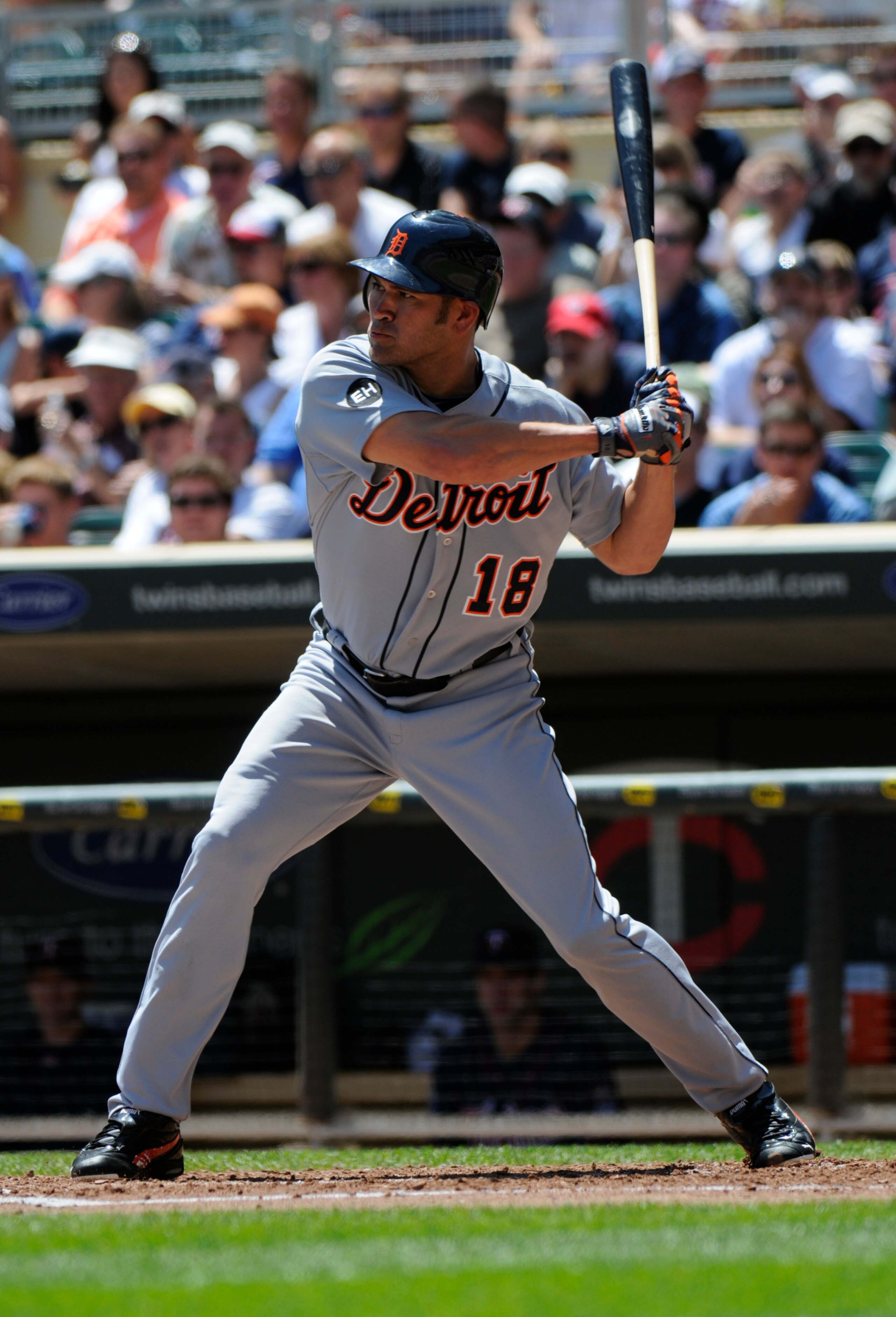
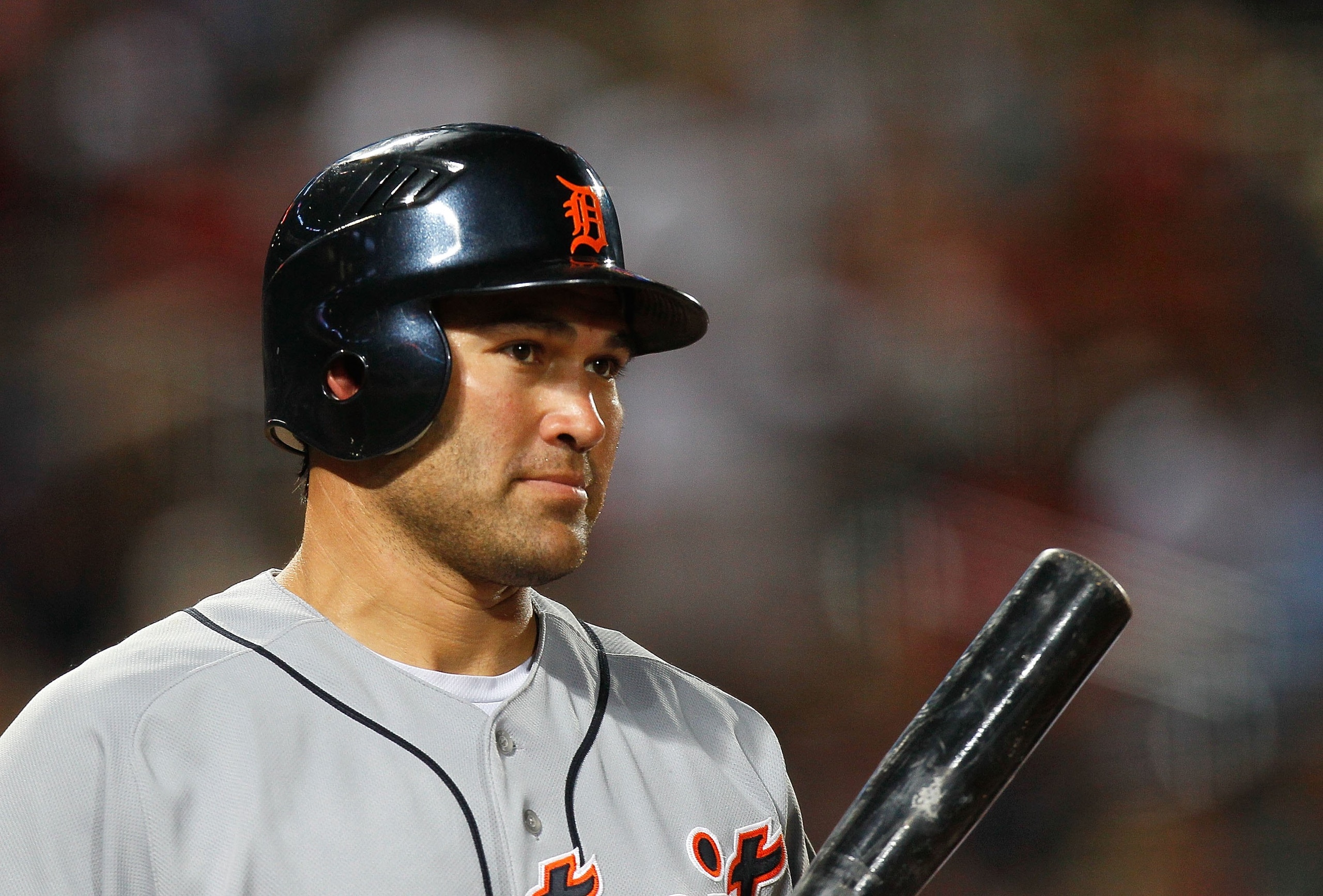
While Johnny Damon's HR production dropped significantly in 2010, which can be attributed to not being on the Yankees/not playing in the small Yankee stadium, he still produced solid numbers that most teams could find useful (.271 BA, 81 runs, 36 doubles).
On the defensive side, however, Damon is not very attractive. Aside from his notoriously weak arm he also failed to reasonably patrol the outfield grass during the 2010 season; Damon's Range Factor Per Nine Innings (9 x (Putouts + Assists)/Innings) was 1.98 while the league average was 2.30.
Ultimately, the 37-year-old has shown he still has some value at the plate but putting him in the field is not an option; thus he, like everyone else on this list should not, play for a National League team.
David Ortiz
2 of 12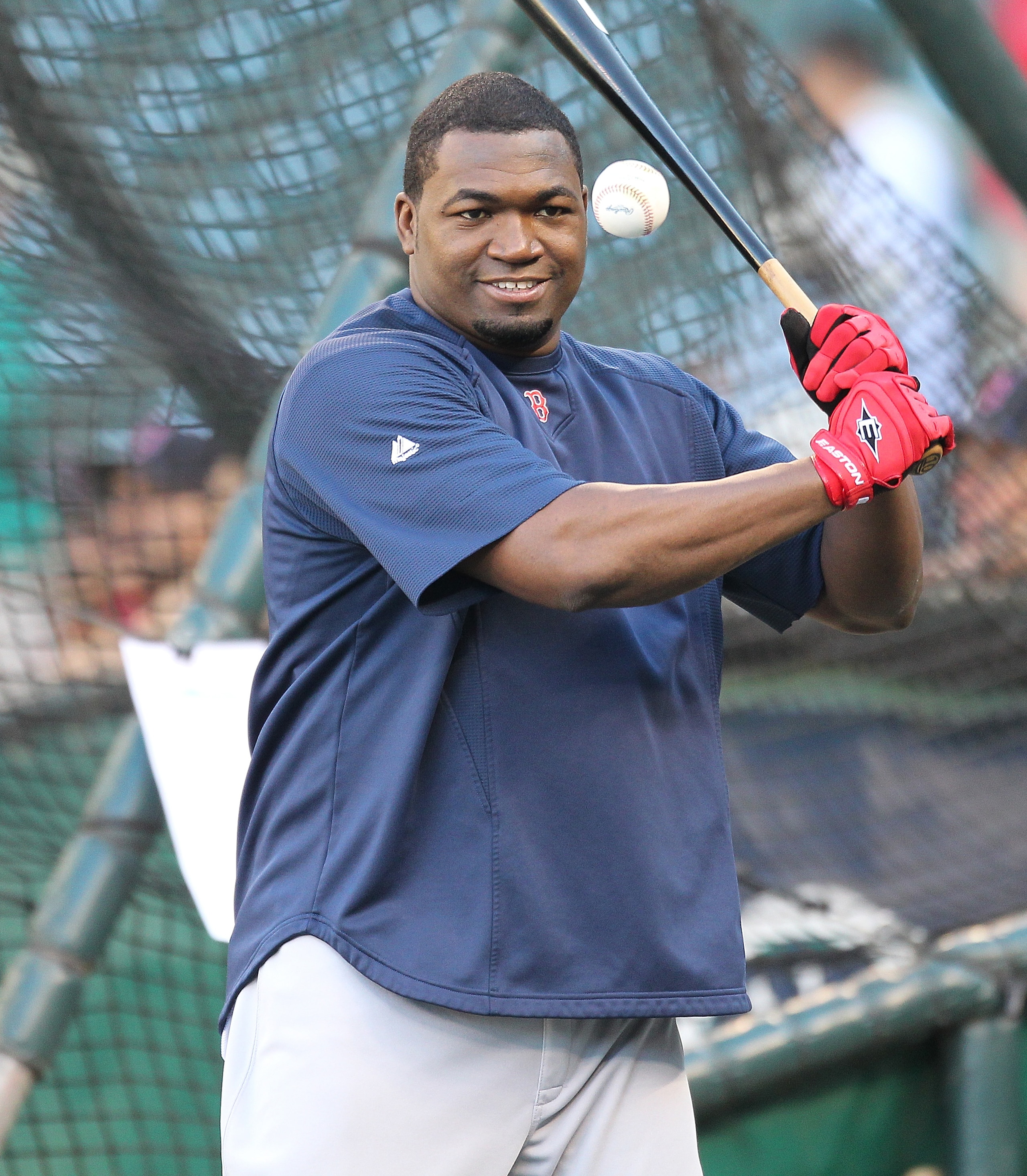
Perhaps the best example of a 'typical' DH, David Ortiz embodies all the qualities of how to most effectively use the DH position on a team: a horrendous fielder but a solid hitter; in addition he also commands the respect and admiration of his teammates, opponents, and fans.
After much speculation that Ortiz was no longer able to produce at an effective level, his 2010 season was a solid year (.270 BA, .370 OBP, 32 HR, 102 RBI). With that said, however, his fielding abilities are less than satisfactory...and that's being kind.
Since 2007, Ortiz has played a total of 17 games at first-base (the position he would play if he was in the lineup and not the DH). It's no surprise that a big man like Ortiz isn't the most agile and, thus, his range is severely limited.
Without question Ortiz can still have a big impact for his team with his bat but, unlike with his bat, Ortiz's big impact with his glove is highly in favor of his opponents.
Jim Thome
3 of 12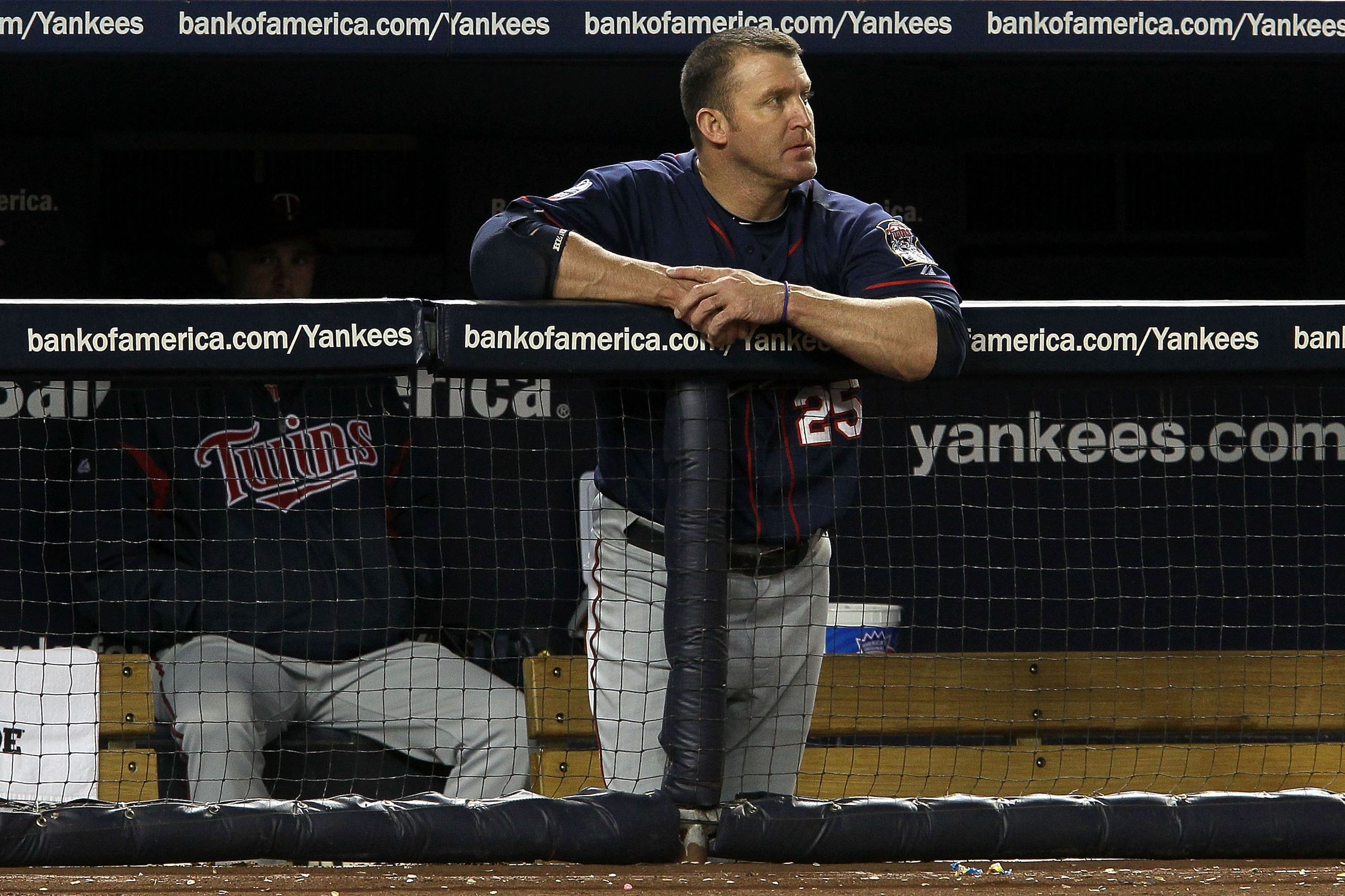
Jim Thome is another clear example of a player who belong in the American League. Although the Dodgers had him for some of 2009, his use was limited to only pinch-hitting (Thome did not play a single pitch in the field for the Dodgers).
Of course, it is helpful to have a bat like Thome's on the bench, however, the minimal at bats he gets as a bench player is a waste of his hitting talent and, as such, he belongs in the American League.
Thome's 2010 offensive numbers: .283 BA, .412 OBP, 25 HR.
Thome has played the field, like Ortiz at first-base, a meager four times since 2006; however, in 2005, when he played 52 games at first for the Phillies, Thome's RF/9 was 8.98 while the league average was 9.65.

Vladimir Guerrero
4 of 12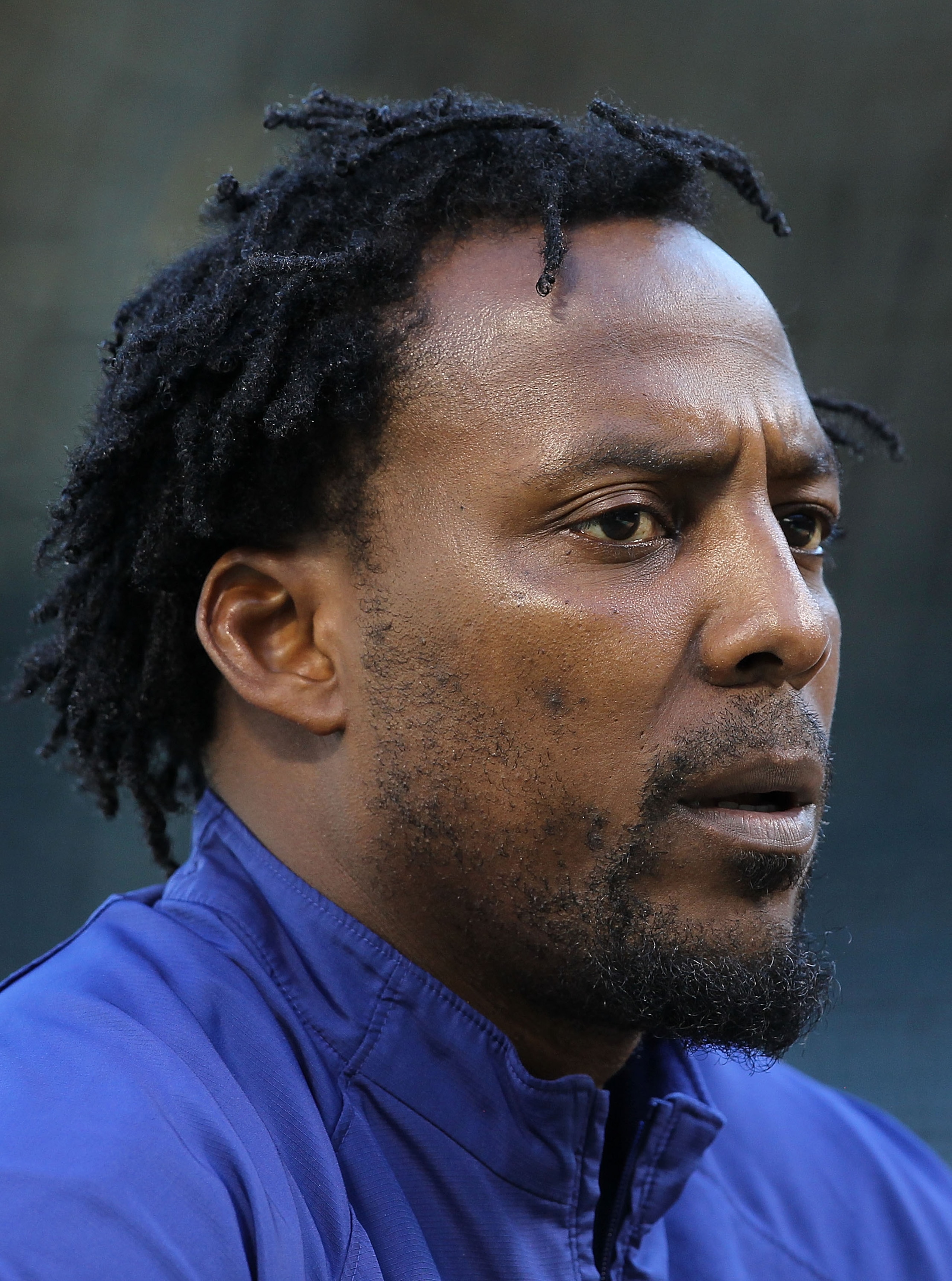
There was a time when Vladimir Guerrero was a top defensive outfielder—especially thanks to his powerful arm that runners wouldn't dare to run on—but that time has come and gone.
Vlad still have a lot of pop in his bat, just see his 2010 stats (.300 BA, 29 HR, 115 RBI), but his time in the field has clearly passed, just see Game 1 of the 2010 World Series where he made two crucial errors in right-field. Also, we can see his diminished defensive capabilities in his 2010 RF/9, which was below the league average of 2.30 as his was 2.08.
I will always have fond memories of Vlad throwing bullets from right-field to both third-base and home-plate; if you are too young to remember how great Vlad was in the field better check YouTube for the clips because we won't be seeing Vlad making plays like that anymore.
Jason Kubel and Michael Cuddyer
5 of 12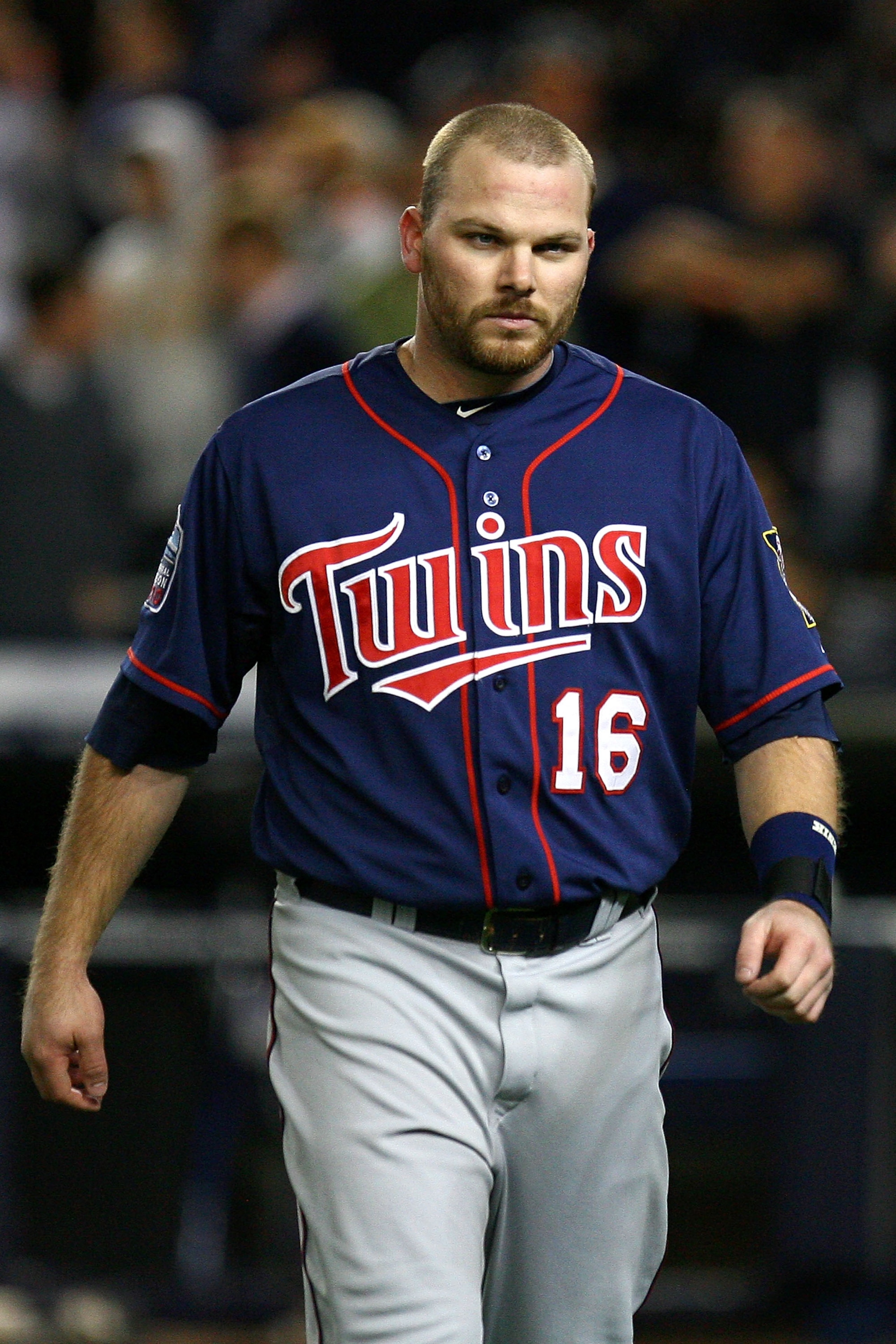
The riddle for the Minnesota Twins - trying to figure out which of Jason Kubel or Michael Cuddyer is the better of the two evils; both players are, essentially, meant to be DHs but only one of them can be.
Kubel, offensively, in 2010: 21 HR, 92 RBI.
Kubel, defensively, in 2010: 1.98 RF/9 (League Average = 2.30).
Cuddyer, offensively, in 2010: 14 HR, 81 RBI.
Cuddyer, defensively, in 2010: 2.01 RG/9 (League Average = 2.30).
It is important to note, however, that Cuddyer's RF/9 in right-field is 2.04 and the average right-fielder's RF/9 in 2010 was 2.10. He's still below but, at least, it is getting closer to the rating of an average OF.
With Kubel providing more power and Cuddyer being better, albeit almost as slightly as possible, the Twins seem determined to allow Cuddyer to play the field while having Kubel be their main DH.
Dan Johnson
6 of 12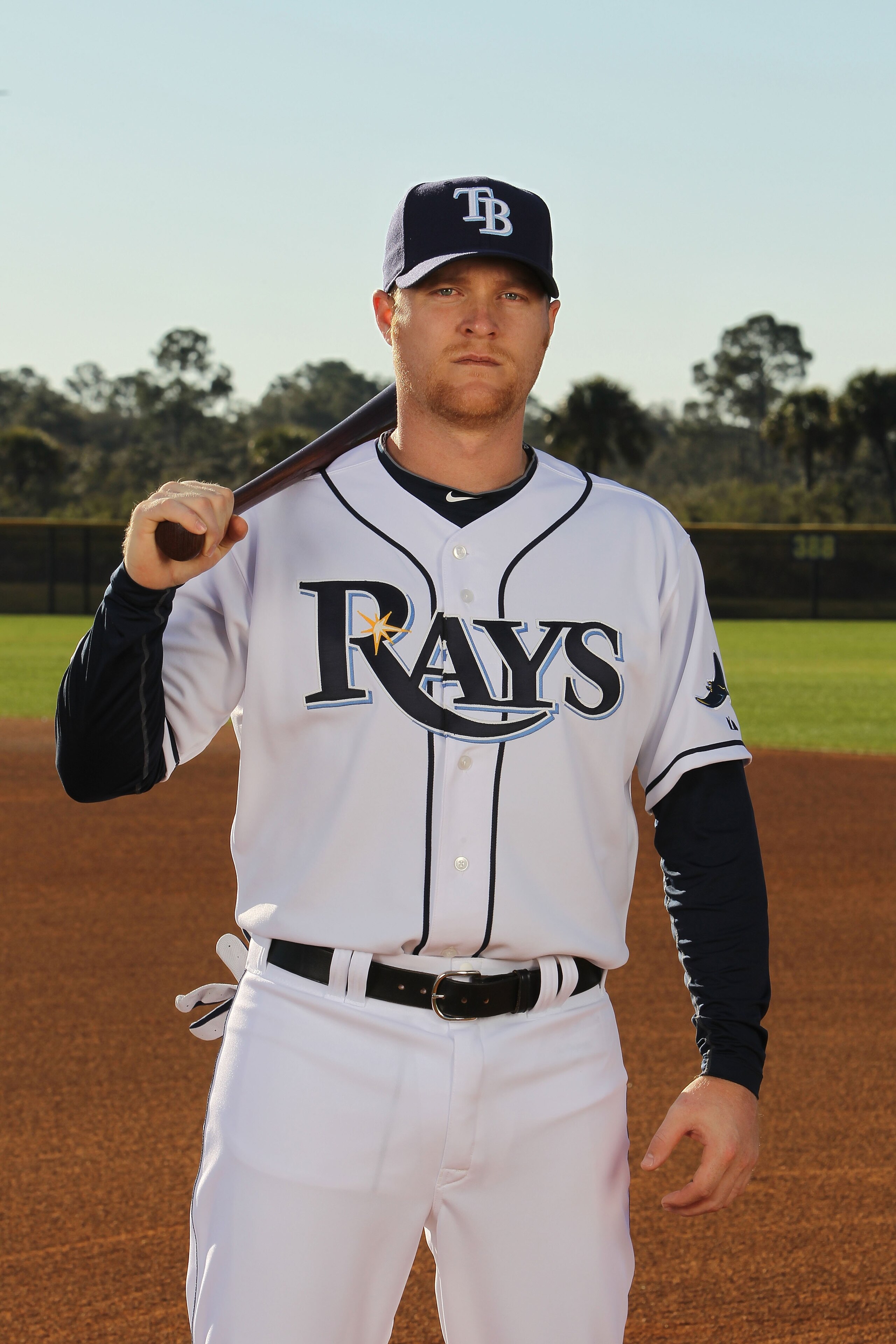
Dan Johnson is the most unique player on this list because his hitting (2010: .198 BA) certainly doesn't make up for his lack of defense as other players on this list do.
Okay, so although Johnson's main fielding position would be first-base, the Rays used him in the OF three times in 2010; and, to be honest, I'm not sure how he ever got a chance beyond the first. Johnson's OF RF/9 was 1.12 (the league average is 2.30). That's just scary bad.
Even at his main position, Johnson failed to be an average defender as his 1B RF/9 was 8.32, with a league average of 9.32.
Forget not being able to make it in the National League, Johnson better figure out how to hit or play the field better otherwise he will be out of baseball altogether—if he isn't headed there already.
Adam Lind
7 of 12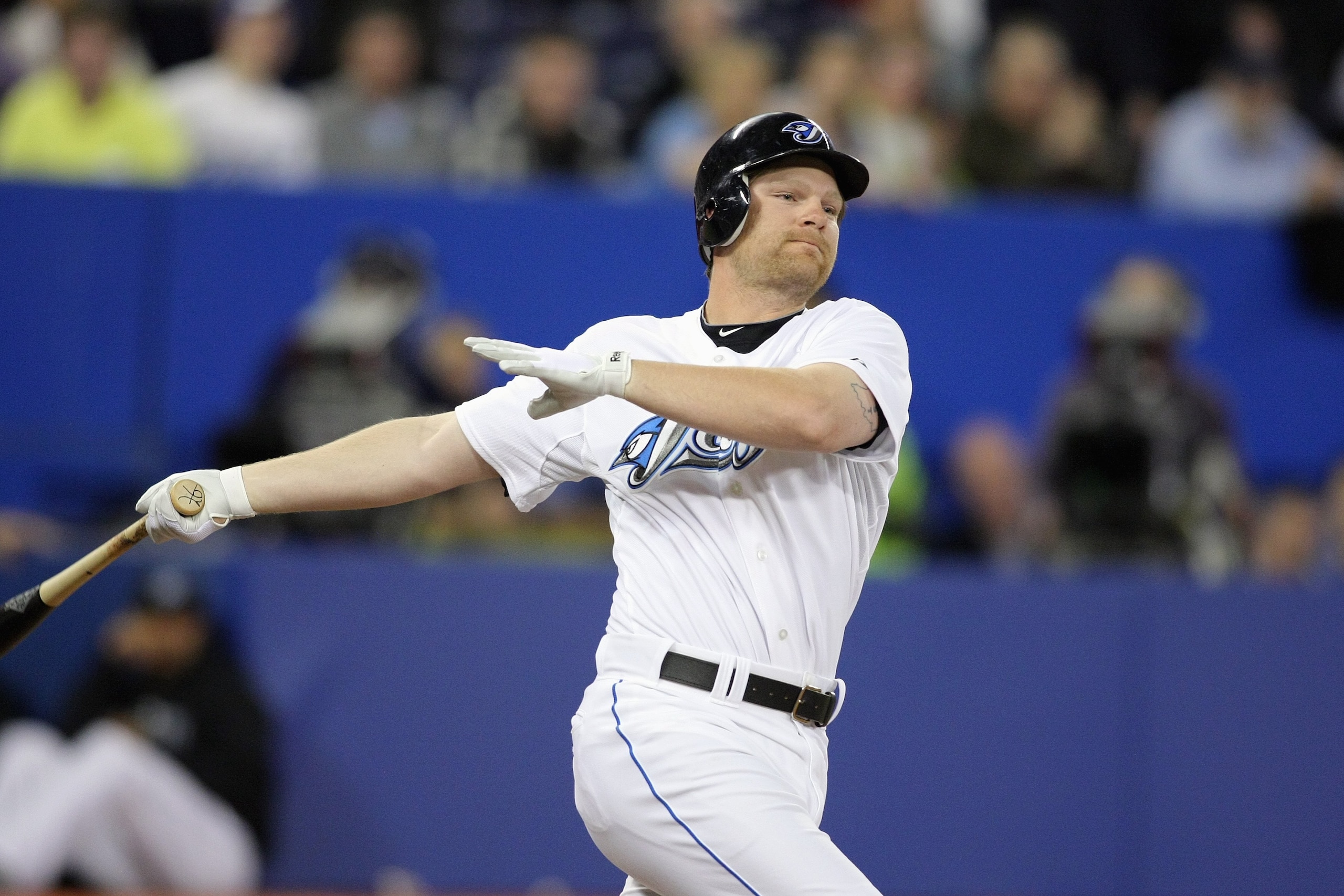
Adam Lind...
2009 Offensive Stats:.305 BA, .370 OBP, 35 HR.
2010 Offensive Stats: .237 BA, .287 OBP, 23 HR.
2009 Defensive RF/9: 1.53 (League Average was 2.33).
2010 Defensive RF/9: 1.61 (League Average was 2.30).
Maybe Adam should consider going back to the 2009 model where he is a little worse in the defensive department but is much more dominant in the offensive? Ultimately this is the DH usually found on most teams—a poor defender and decent hitter, but with superb power.
For all you fantasy baseball players, Lind could be a cheap source of power; don't expect him to repeat 2009, but I'd expect a .270 BA with 25-30 HR and 90+ RBI.
Luke Scott
8 of 12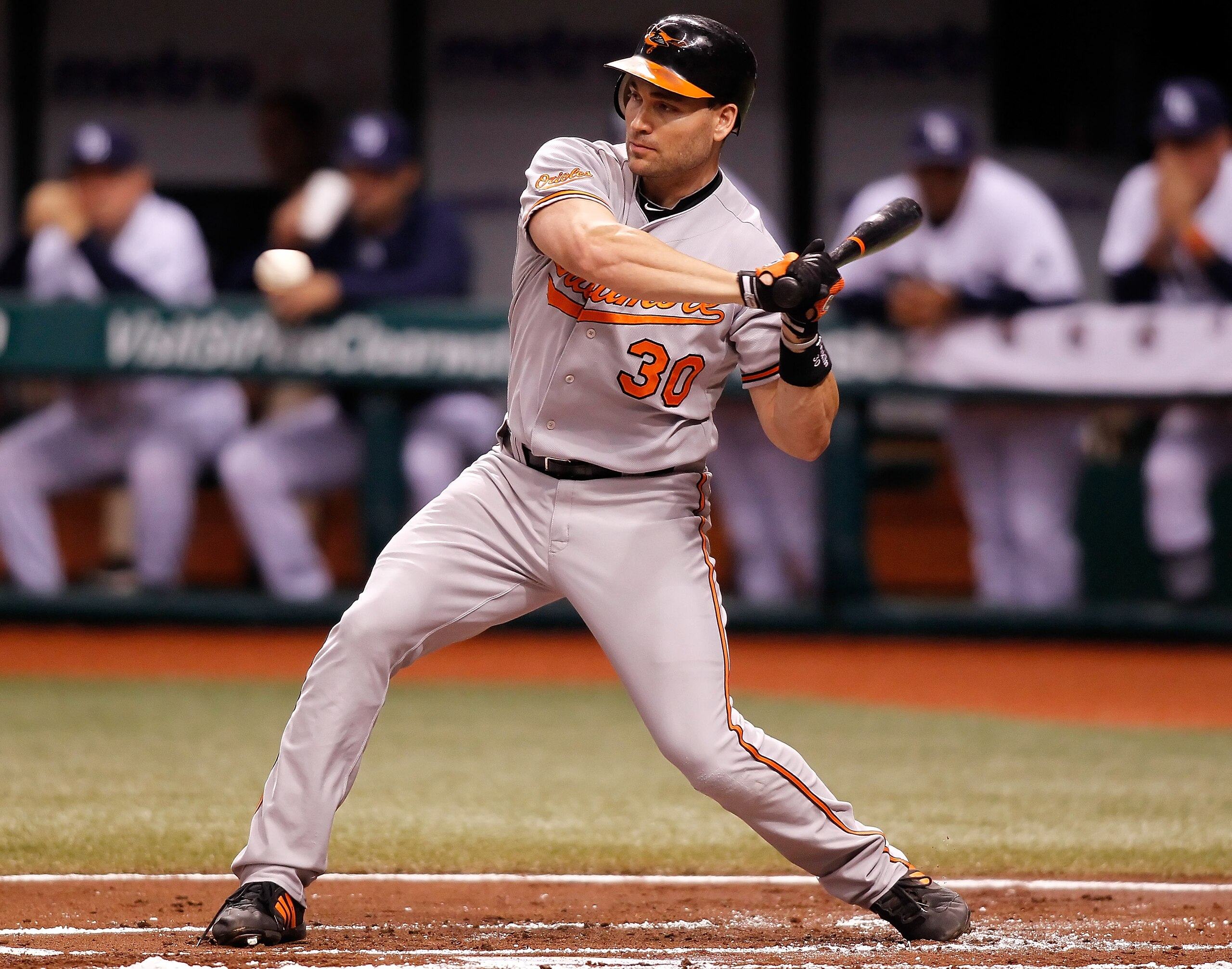
Luke Scott is another typical DH as he has a lot of power (25+ HR in each of the last four seasons—and on the Orioles where there is limited protection). At the same time, however, he struggles in the field, posting a 1.92 OF RF/9 (again, the league average was 2.30).
Ultimately, Scott is a great example of a player who can make a better career in the AL than in the NL as his hitting is obviously superior but his fielding ability inferior; this drastic imbalance makes him a fantastic option for the DH position on AL teams.
This is also what has kept him from bouncing around the league. As long as his eye and power remain intact the Orioles will want to keep him on as their DH. An AL team can afford to do this, however, a NL team would have to consider moving him more seriously (especially if the team is built around pitching and fielding).
Jorge Cantu
9 of 12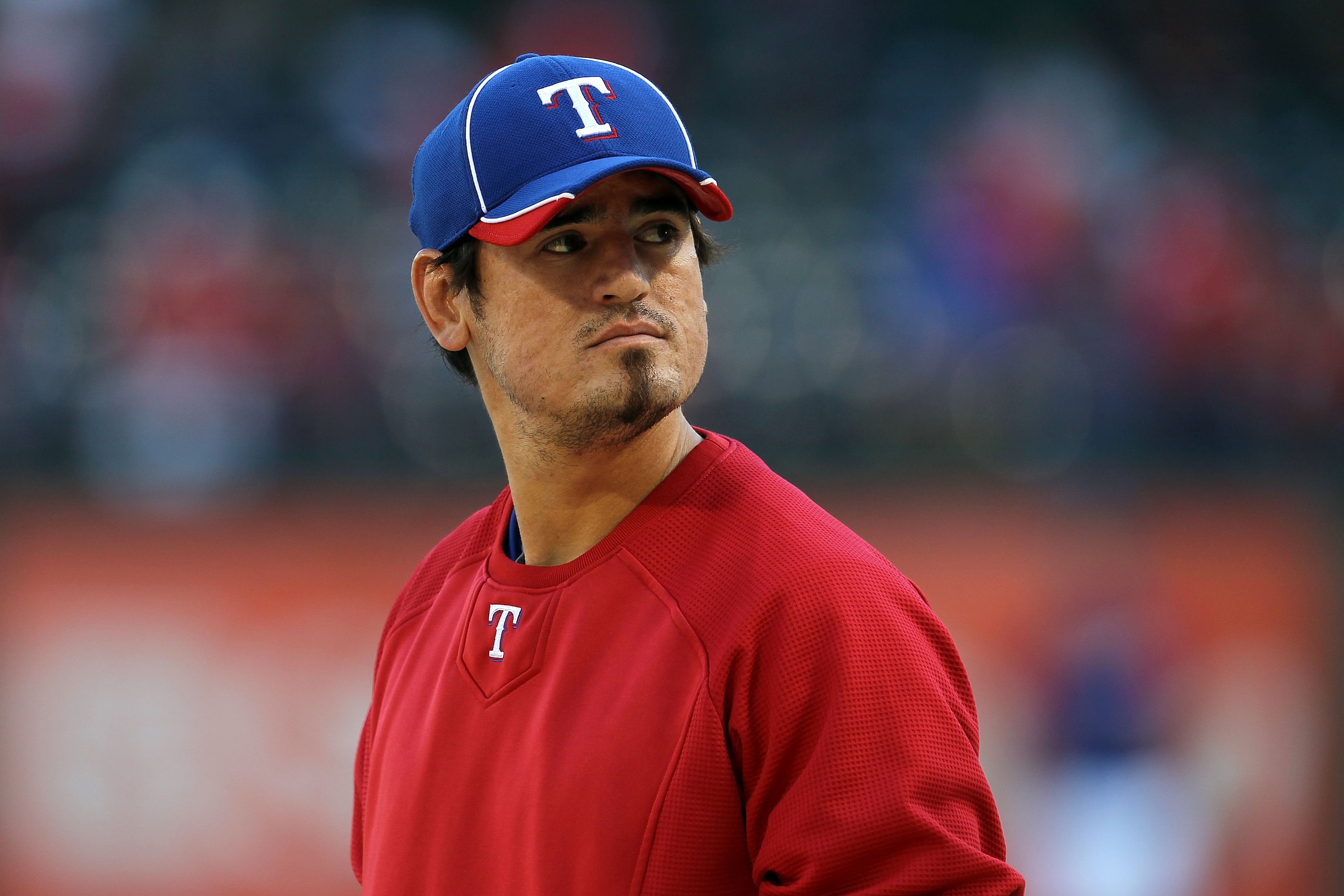
Okay, so Jorge Cantu has spent a few seasons in the National League and didn't fall out of baseball (although he did get sent to the minors a few times). Four-and-a-half seasons in the American League and during all of them Cantu was slotted in the DH for at least a bit.
Ultimately, he is consistently rating below average, at both first and third-base, in the RF/9 stat.
Cantu's 2010 season was nothing to brag about (.256 BA, .304 OBP, 11 HR) and, to me, he is living on the past with his team hoping he rediscovers his swing from both 2008 (.277 BA, .327 OBP, 29 HR) and 2009 (.289 BA, .345 OBP, 16 HR).
I personally do not believe Cantu will ever rebound to those numbers and I expect that he will start struggling to obtain a roster spot on a team over the next few years. With his consistently poor defensive numbers, Cantu must put up solid offensive numbers to keep his roster spot—and 2010 certainly was not good enough.
Better off then Dan Johnson but far from being guaranteed a position on a 25-man roster, Cantu has shown the ability to be a fierce hitter but will that ever show again? An AL team, because of the DH, can better afford to take a chance on him than an NL team; this is because at the DH position he only would negatively effect the offensive production—in the NL he could negatively effect both the offense and defense (since pinch-hitting usually never allows enough at bats for a player to 'rebound').
Hideki Matsui
10 of 12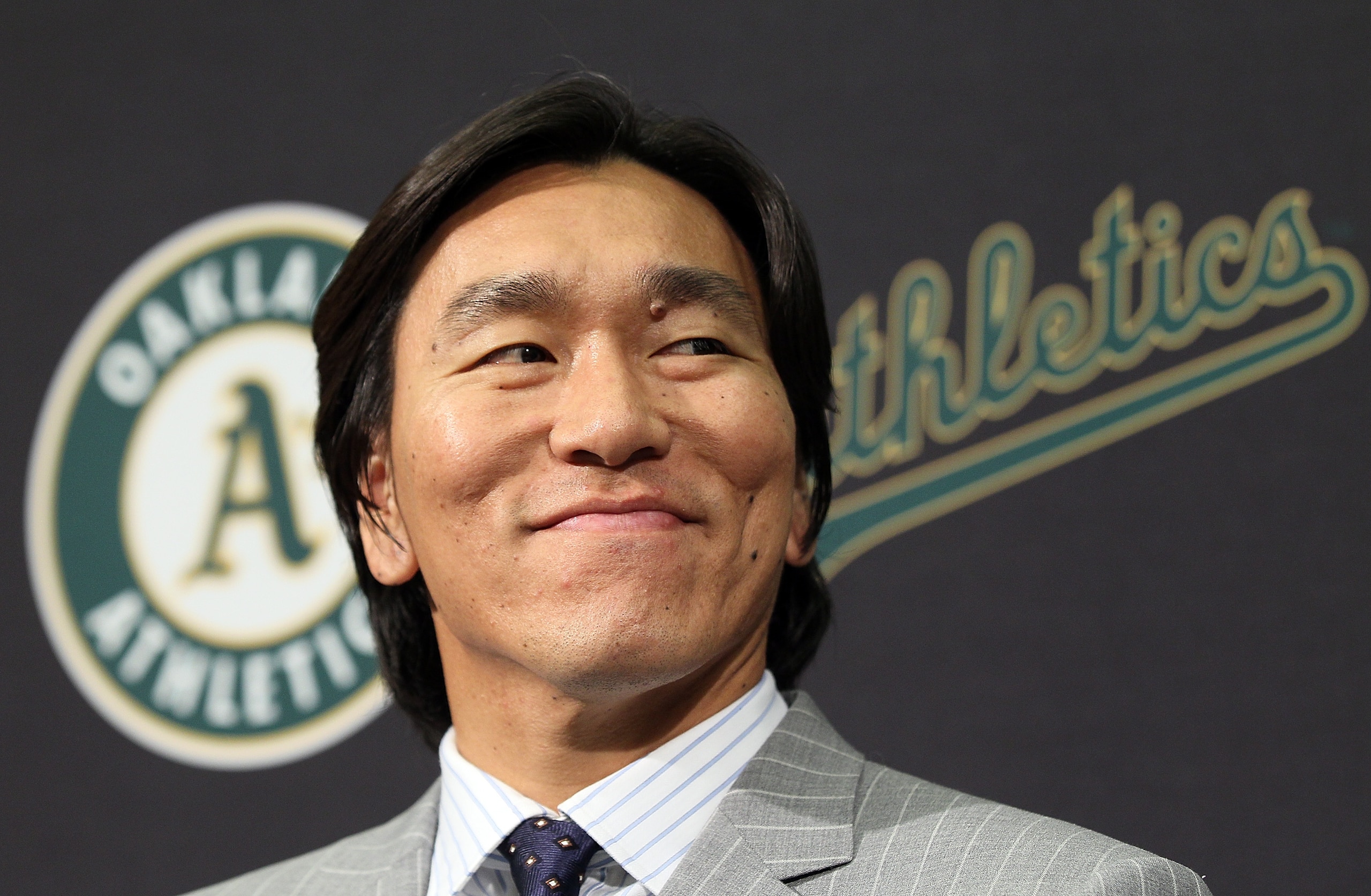
The new DH for the Oakland Athletics, Hideku Matsui continues to put up good offensive numbers. In 2010 Matusi hit .274 with a .361 OBP while hitting 21 HR and driving in 84 RBI.
With offensive numbers like those teams are willing to overlook his 1.24 OF RF/9 (League Average: 2.30).
Ouch. That number suggest Matsui has a pretty sub-par...But, as we have seen, for an American League team he is a perfect player because he can be the DH and never spend any time on the field as a defender.
Also, as a DH, the aging and injury-prone Matusi can have less 'wear and tear' on his body to stretch his health/games played as far as possible.
Jorge Posada
11 of 12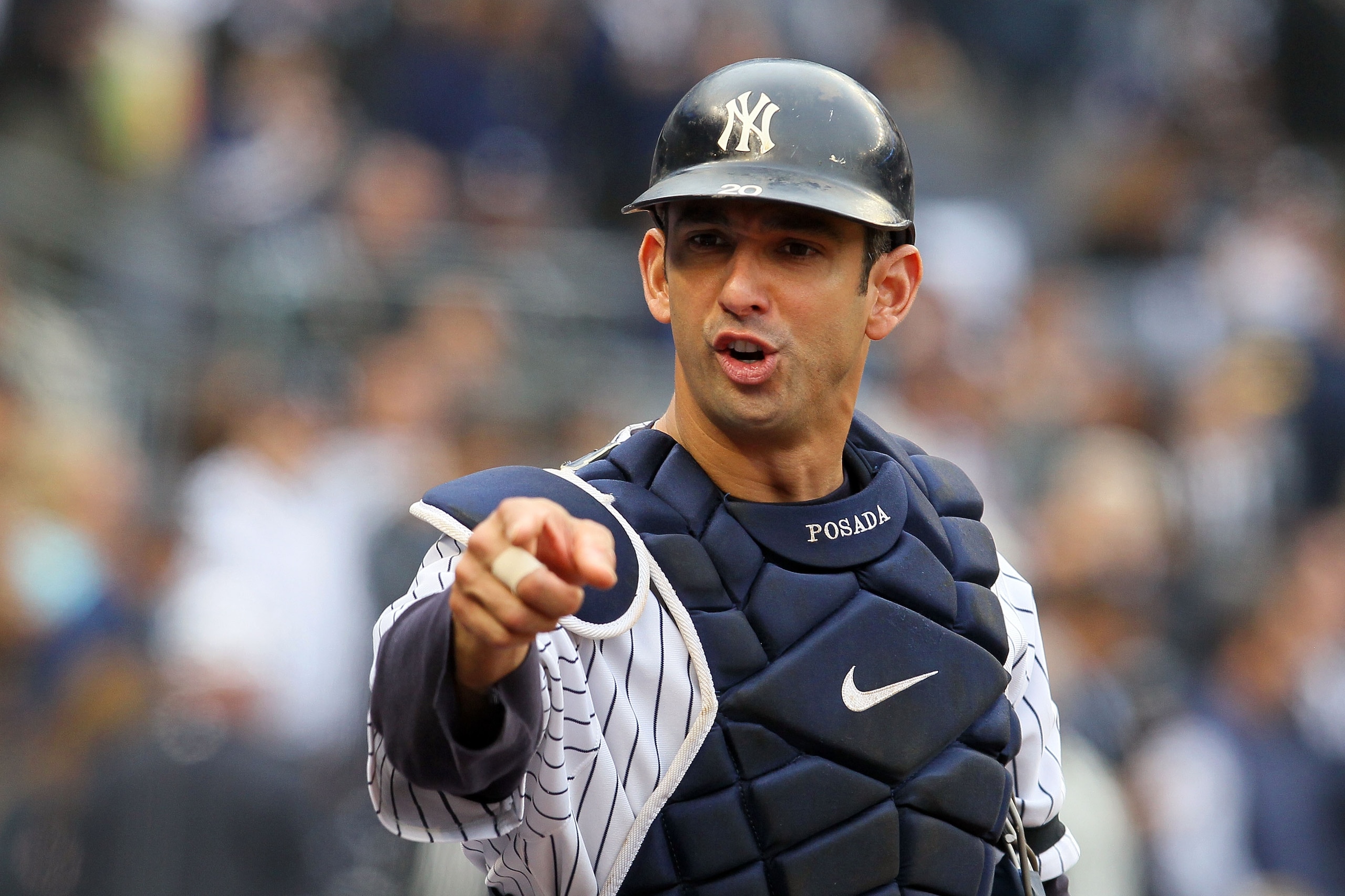
A DH through and through, Jorge Posada is an aging, injury prone, poor defensive catcher who still has value as a hitter (especially since he can switch-hit).
In addition to RF/9, another useful stat is Defensive Runs Saved, which tells the number of runs above or below average a player was worth based on the plays he made. Posada, in 2010, posted a negative-eight in this category.
At the same time, however, Posada managed to hit 18 HR in an injury-shortened season. With young catchers coming up the Yankees seemed poised to make Posada a DH; and that should only help his batting performance as he will get significantly more rest as a DH then he would in the field (especially as catcher, which is the most physically demanding position).
This is an example of how older players can end up being a DH and, as such, why they are most suited for an AL team than a NL one—a NL team would either have to absorb the poor defense or sit a player like this while an AL team can get the good and not the bad.
Travis Hafner
12 of 12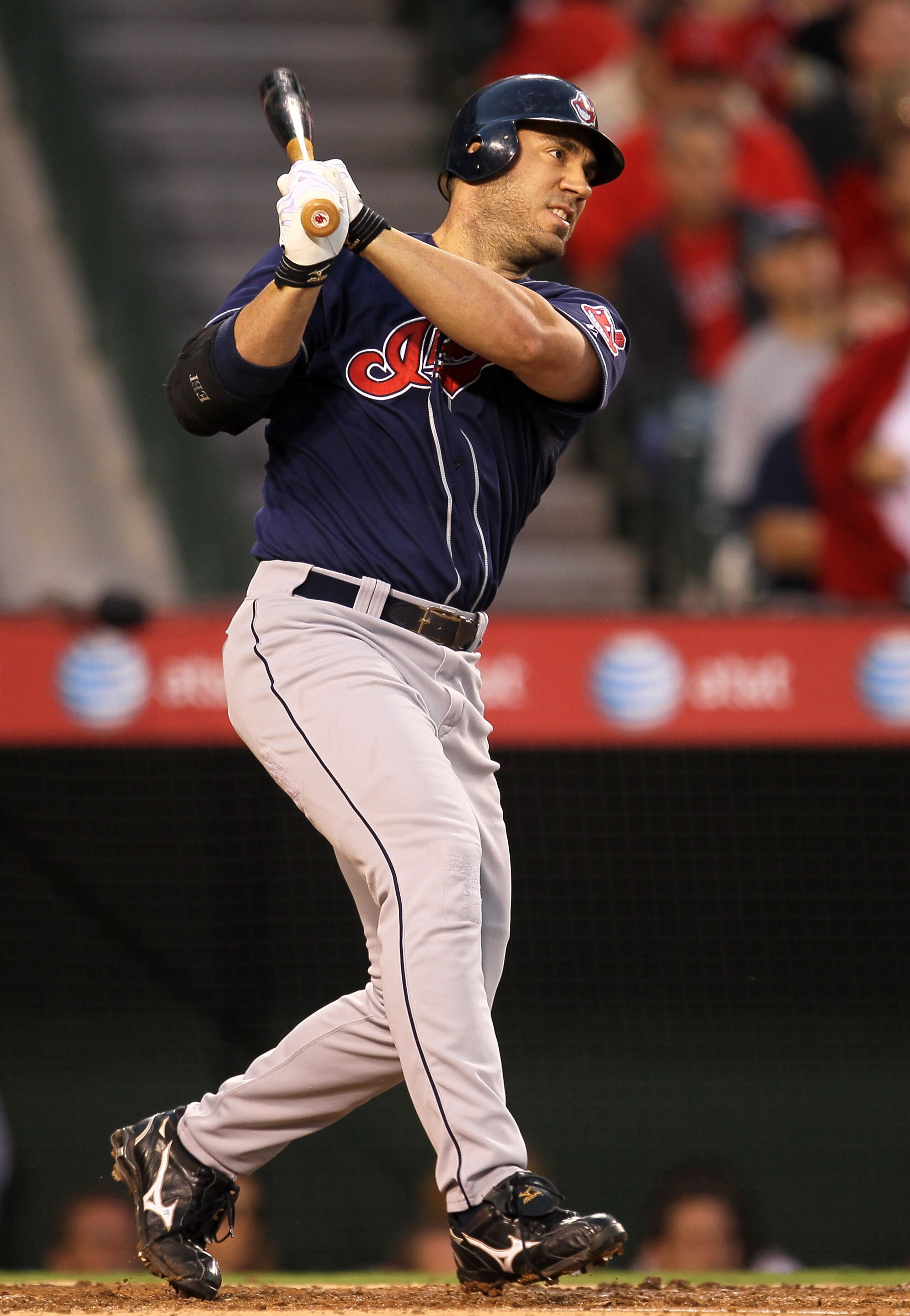
The year was 2003—that was the last time Travis Hafner played more then 11 games at first-base in a regular season. Hafner fits into the group with David Ortiz and Jim Thome as classic examples of the DH and a player who belongs solely on an AL team.
When healthy, Hafner is a fantastic hitter capable of hitting 30+ HR and having an OBP of .400+. Unfortunately for the Indians, even in the least physically taxing position, the DH, Hafner has not been able to stay healthy for an entire season since 2007.
Also, for as good as Hafner can be at the plate, at first-base, saying Hafner is a terrible fielder may be giving him too much credit. In 2006, the average 1B RF/9 was 9.53 while Hafner was only able to post a 5.94! That has to hurt a team...
Maybe that's one of the reasons why he hasn't played in the field much since 2006?
It's definitely the reason as to why Hafner, and players like him, belong on an AL team.
Now that isn't to say no defensively challenged players exist in the NL—far from it. However, most of these type of players that play for a NL team are limited to pinch-hitting (like Thome was with the Dodgers or Matt Stairs was with the Phillies), and ultimately, they will most likely end up in the American League as a DH (Prince Fielder has this written all over him).
.jpg?w=2560 "Top 10 2027 NFL Free Agents")
.jpg?w=2560 "NFL Extends Roger Goodell")

.jpg?w=2560 "Puka Likely to Play Week 1")
.jpg?w=2560 "LSU Crowd's JD5 Reaction 😟")