
Minnesota Twins: The History Of Their Double Play Combinations
The Minnesota Twins appear to have a revolving door that their middle infielders continue to step into, only to exit on another team's roster.
When Minnesota opens the 2011 season it will be five consecutive years with a different tandem starting at second and short.
The Twins traded J.J. Hardy to Baltimore, and Gold Glove second baseman Orlando Hudson has signed with the San Diego Padres.
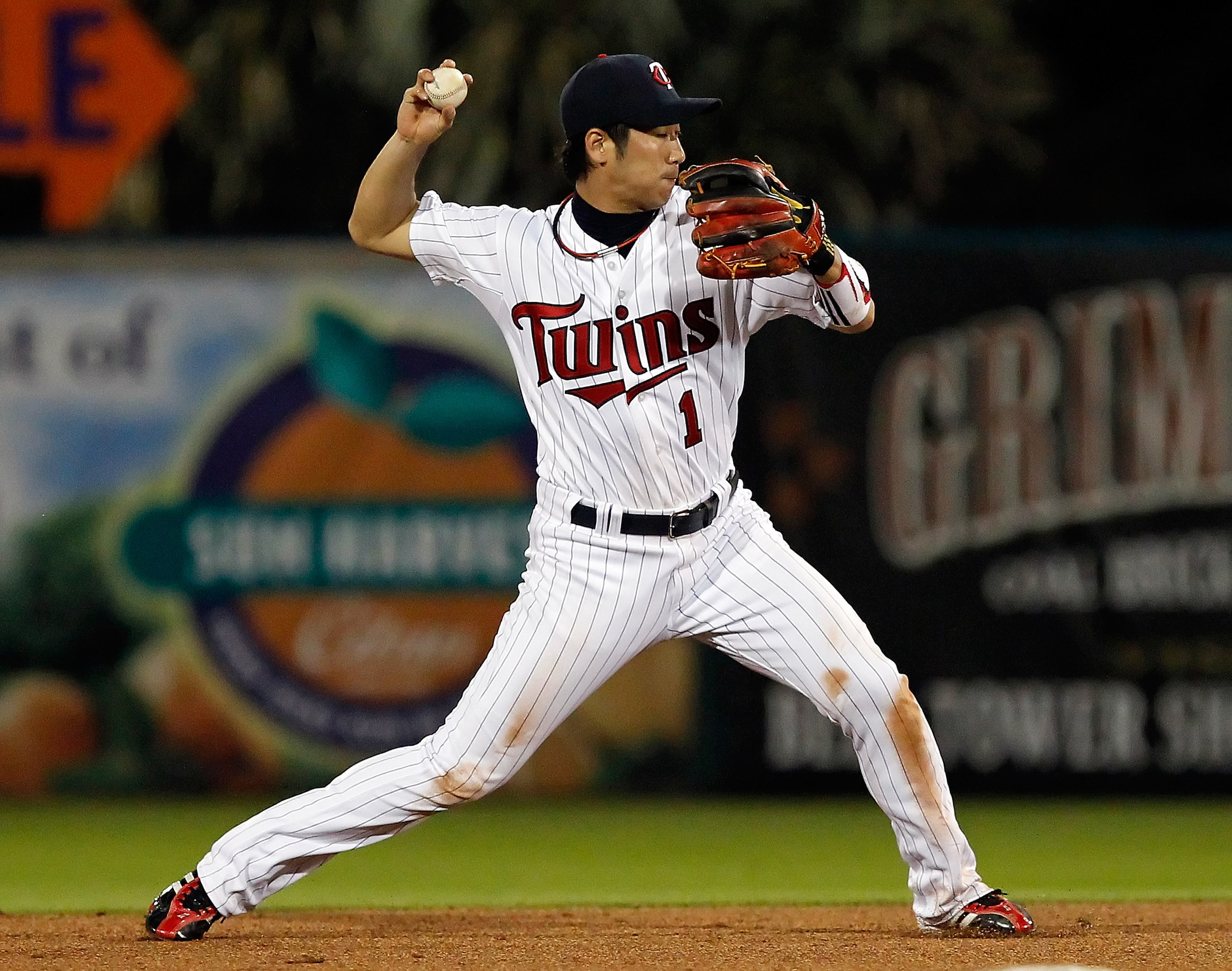
Currently, the leading candidates to replace Hudson and Hardy are Alexi Casilla and Japanese import, 26 year-old Tsuyoshi Nishioka.
Casilla and Nishioka can both play either position, although some reports suggest Nishioka would be better suited as a second baseman in North America.
At this point the Abbott and Costello routine can kick in with the question, "What's the guy's name on second base?"
I looked over the 50-year history of the Minnesota Twins and compiled the following list of middle infield duos who have fielded ground balls, and turned double plays.
Included are only those duos that started next to each other for at least two consecutive years. Surprisingly there are only nine combinations that qualify in the history of the Minnesota Twins.
1962-1964: Bernie Allen and Zoilo Versalles
1 of 10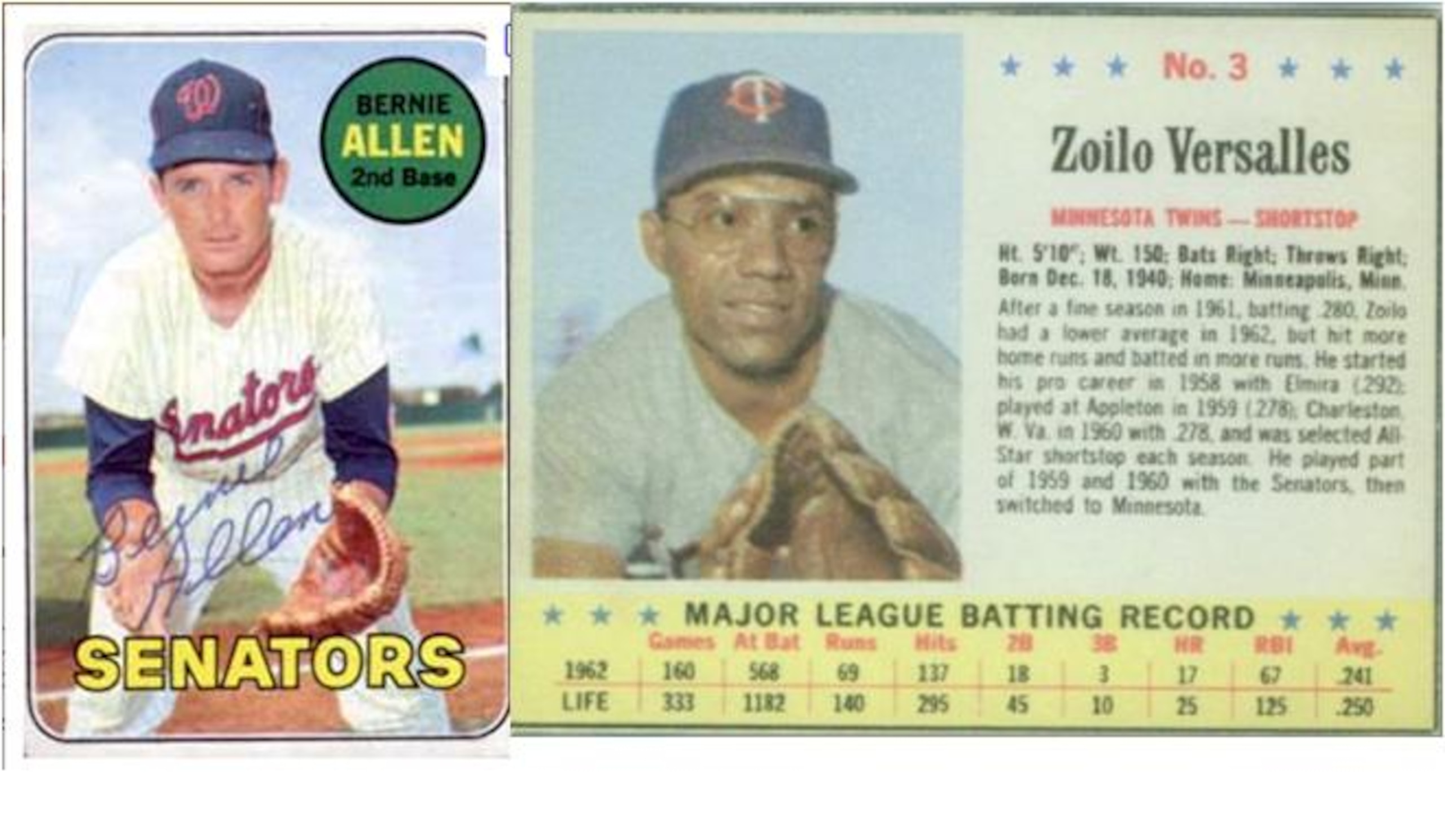
Bernie Allen was signed by the Twins as an amateur free agent out of Purdue in 1961.
The following year he would replace Billy Martin as the Twins' second baseman, and play five seasons with the Twins before being traded to Washington, where the Minnesota franchise had come from.
For three of those years he would team up with shortstop Zoilo Versalles.
Versalles, whose career started in 1959 with the Senators, would move with the team to Minnesota in 1960 and play nine seasons with the organization before being traded away in 1967.
Versalles would later be reunited with Allen in 1969 in Washington, his last year in the majors.
Incredibly Versalles was awarded a Gold Glove for his play at shortstop in 1962 when he committed 30 errors and had only a .961 fielding percentage.
In 1962 and 1963 Allen and Versalles were part of a Twins' squad that would win 91 games each year, only good enough for second and third place in the AL respectively.
1972-1975: Rod Carew and Danny Thompson
2 of 10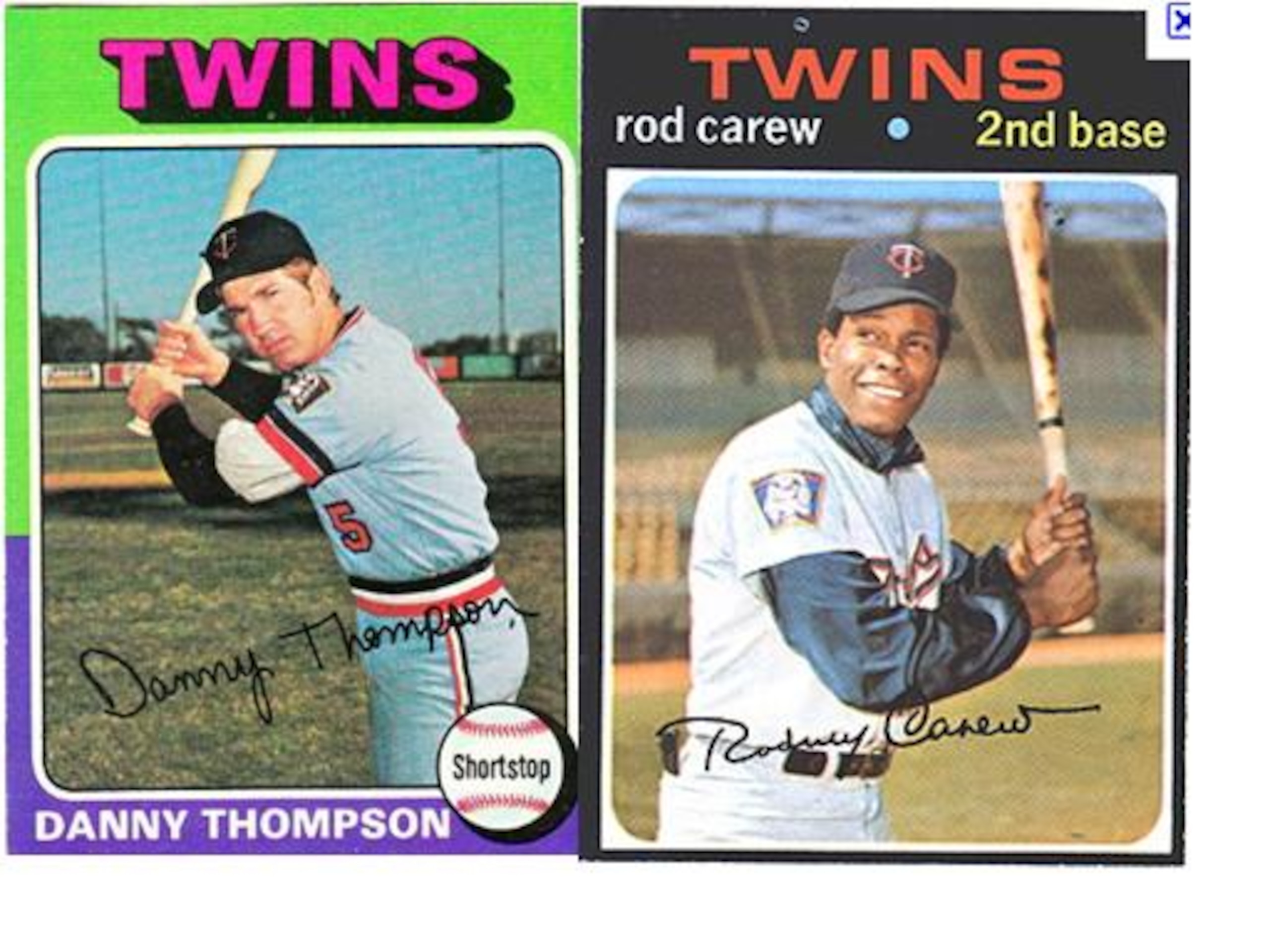
It would be eight years before the Twins would have the same double play combination in consecutive years.
Danny Thompson was drafted in 1968 in the first round by the Twins. It only took two years for the Oklahoma State product to break into the Twins' starting lineup.
Minnesota signed Rod Carew as an amateur free agent in 1964.
Although they would play two years together in 1970 and 1971, it was the '72 season when Carew was at second and Thompson would make the regular start at shortstop.
Maybe there was some magic in this combination that spread to their bats as Carew would lead the AL in hitting for all four seasons.
Carew would play 12 seasons in Minnesota before signing as a free agent with the California Angles in 1979. Throughout Carew's career in Minnesota, Thompson is the only middle infielder he played alongside for more than a season.
Carew's eight seasons as the Twins starting second basemen is the longest streak of any second baseman in Minnesota history.
In 1974 Thompson was diagnosed with leukemia. He would continue his major league career for the next three seasons, and batted .270 in 1975, leading all American League shortstops.
Ironically, the last game he would start in was September 29, 1976 as a member of the Texas Rangers against the Twins at Metropolitan Stadium. He would pass away about 10 weeks later at the Mayo Clinic in Rochester.
1976-1979: Bobby Randall and Roy Smalley
3 of 10
In 1976 the Twins would start a new double play combination. Rod Carew would make the move from second to first, and Bobby Randall would take his place.
Danny Thompson would only play 34 games in 1976 for Minnesota before being traded to Texas on June 1st. Along with Thompson, starting pitcher Bert Blyleven was traded away.
In exchange the Twins would receive four players, including the Rangers first round pick of 1974, shortstop Roy Smalley.
In their first season together, Randall would play in 153 games at second, and Smalley 103 at shortstop.
In his 103 games, Smalley and Randall would turn 70 double plays.
Ironically, like Blyleven, Smalley would be traded away from the Twins in 1982, but both would return and be a part of the Twins' first World Series Championship in 1987.

1979-1981: Rob Wilfong and Roy Smalley
4 of 10
In 1978 Rob Wilfong would share the second base duty with Bob Randall starting 69 games at second base.
In 1979 their roles would reverse as Wilfong would start 130 games and play alongside Roy Smalley for the next three years.
In 1980 Wilfong would commit only three errors in 120 games at second—an incredible .995 fielding percentage.
Unfortunately for Wilfong this coincided with Frank White's fourth Gold Glove in six consecutive years for the Kansas City Royals. While White played in 33 more games than Wilfong, he committed a total of 10 errors and had a .988 fielding percentage.
In 1982 both Wilfong and Smalley would be traded away.
Wilfong would be part of a package that was sent to California. In exchange the Twins would receive right fielder Tom Brunansky.
Smalley would be part of a package deal that sent him to the Yankees. As part of the deal the Twins would receive minor league shortstop Greg Gagne.
Both Brunansky and Gagne would be instrumental in the Twins World Series Championship in 1987.
1986-1988: Steve Lombardozzi and Greg Gagne
5 of 10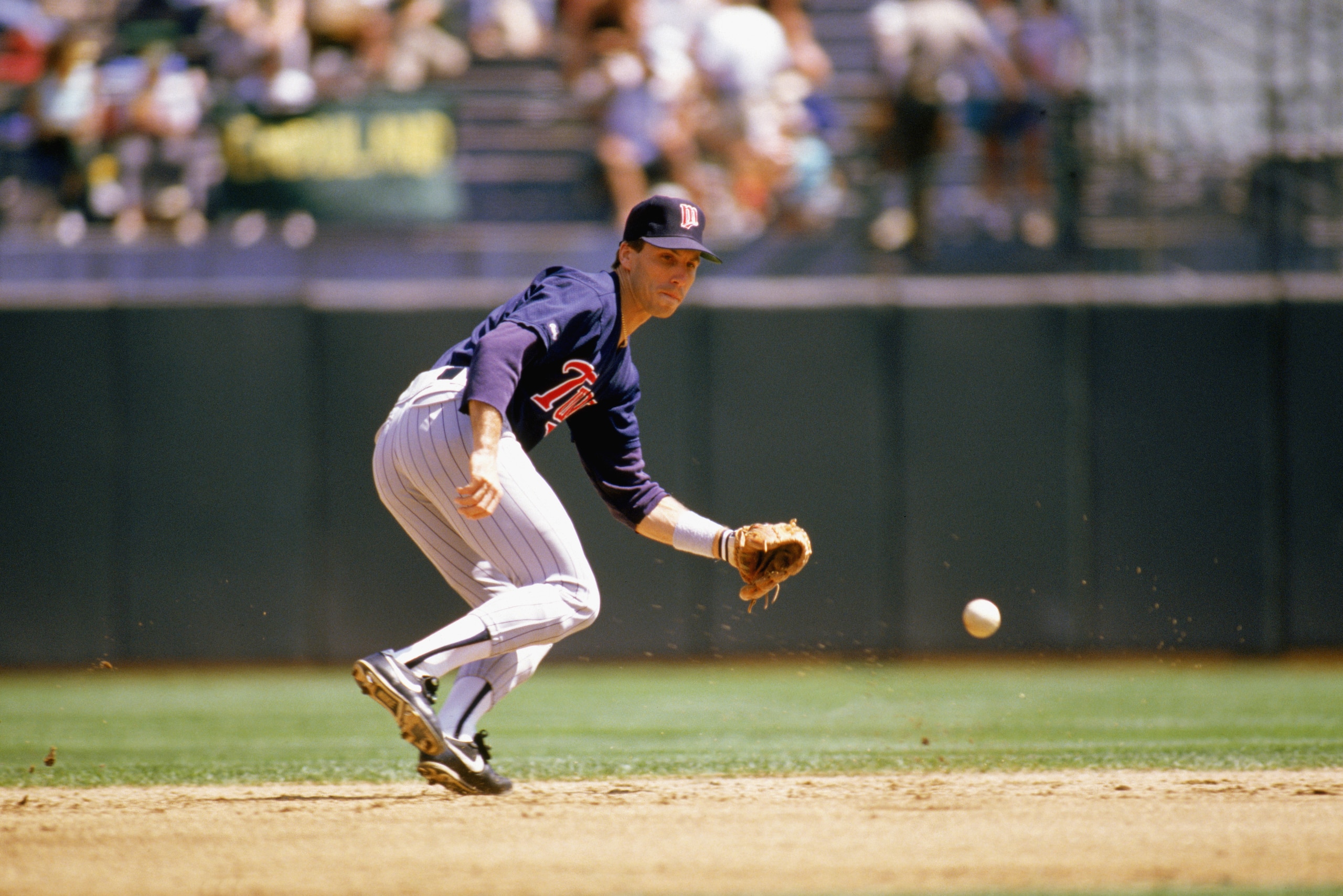
In 1985, his third year with the Twins, Greg Gagne would take over the starting shortstop position. He would start at shortstop for eight years, the longest tenure of any Twins' shortstop.
Also in 1985, Steve Lombardozzi would make his major league debut.
In 1986 they would become the Twins' double play combination for the next three years.
In 1986 both men would play in 156 games. Between the two they would turn 96 double plays.
Gagne and Lonbardozzi would be the double play combination that was on the field for the Twins' first World Series Championship.
I will always remember Lombardozzi's quote after the Twins won the World Series in 1987: "We are no longer the Twinkies!"
In 1989 the Twins traded Lombardozzi to the Houston Astros where he only played in 23 games the next two seasons before leaving baseball.
1991-1992: Chuck Knoblauch and Greg Gagne
6 of 10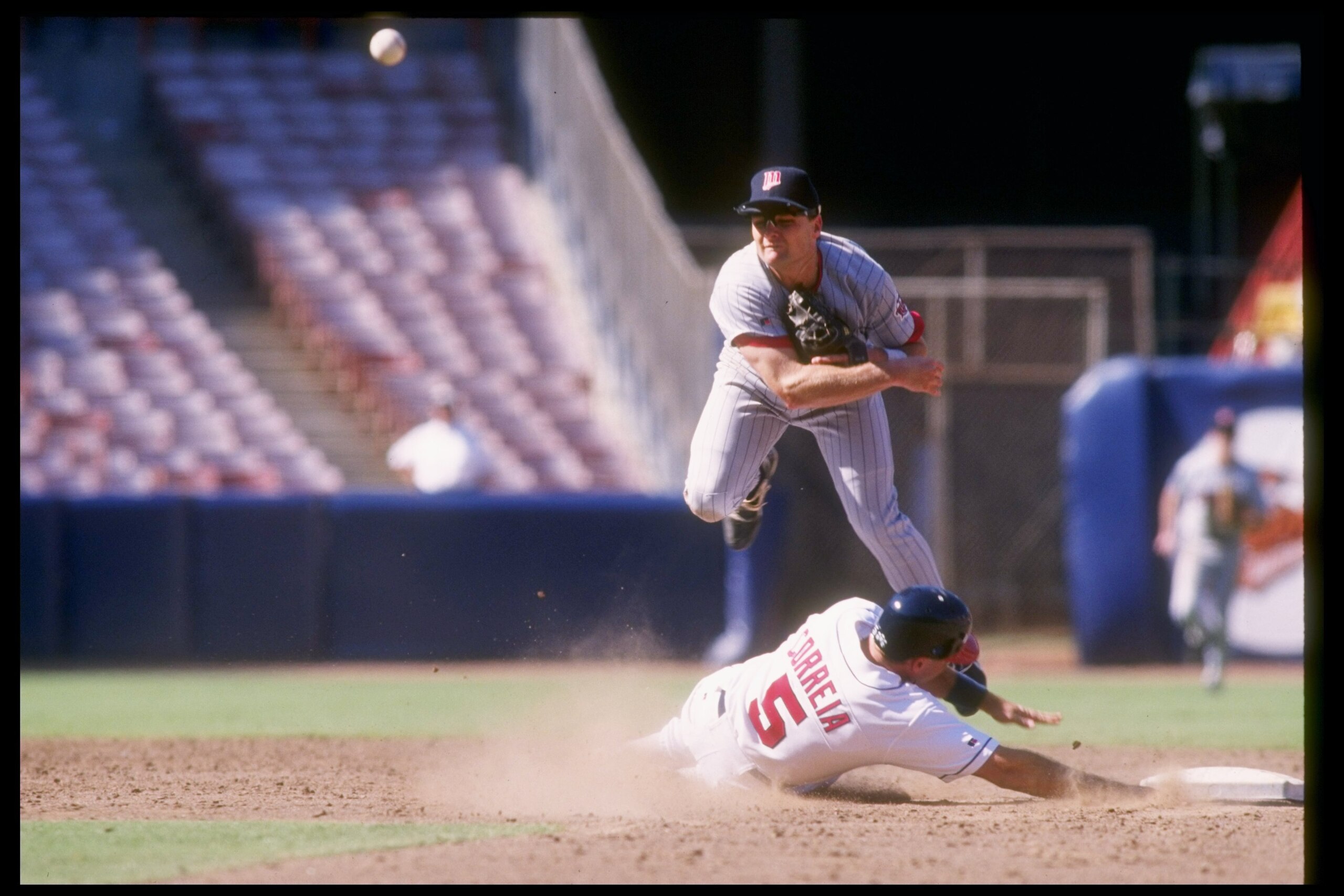
In 1991, Twins' rookie second baseman Chuck Knoblauch, must have thought this game is easy.
He broke into the starting lineup at second base and batted second in the order.
Not only did Minnesota win their second World Series, but Knoblauch was named the American League Rookie of the Year.
Knoblauch would play alongside Greg Gagne for two years, the last two of Gagne's career with Minnesota.
While Gagne would have the longest tenure of any Twins' shortstop, starting for eight consecutive years, Knoblauch's seven years as the starting second baseman would be second only to Rod Carew's eight.
In 1992 Knoblauch would play 154 games at second and Gagne 141 at shortstop. Combined they would commit only 24 errors in almost 1,400 chances.
After the '92 season Gage would sign with the Kansas City Royals as a free agent.
1993-1997: Chuck Knoblauch and Pat Meares
7 of 10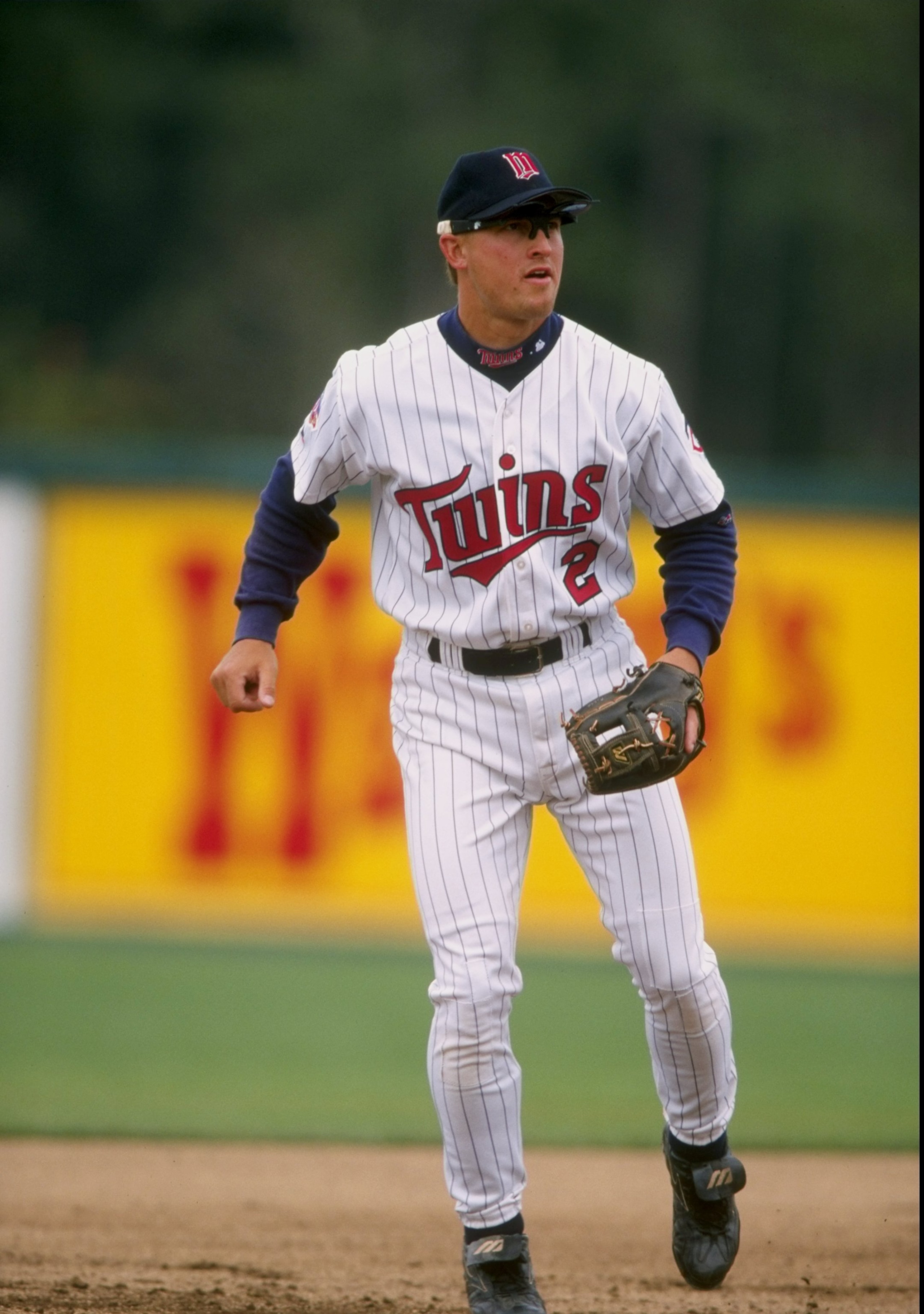
It may surprise some Twins fans to learn that the longest tenured shortstop-second baseman combination is Pat Meares and Chuck Knoblauch.
For five years these two would man the middle infield positions for the Twins.
In 1997, Knoblauch would be traded to the New York Yankees for four players including shortstop Cristian Guzman and pitcher Eric Milton.
A year later, Guzman would become the Twins' starting shortstop for the next six years, and Eric Milton would throw the Twins' most recent no-hitter in 1999.
For Knoblauch and Meares, the time together in Minnesota was not the most successful.
The Twins would not have a winning record and never finish higher than fourth place in the AL Central.
In Knoblauch's last season with Minnesota, he would win his only Gold Glove for his play at second base.
The year after Knoblauch was traded to New York, Meares would leave via free agency, signing with the Pittsburgh Pirates where he would play three more years before retiring.
2001-2004: Luis Rivas and Cristian Guzman
8 of 10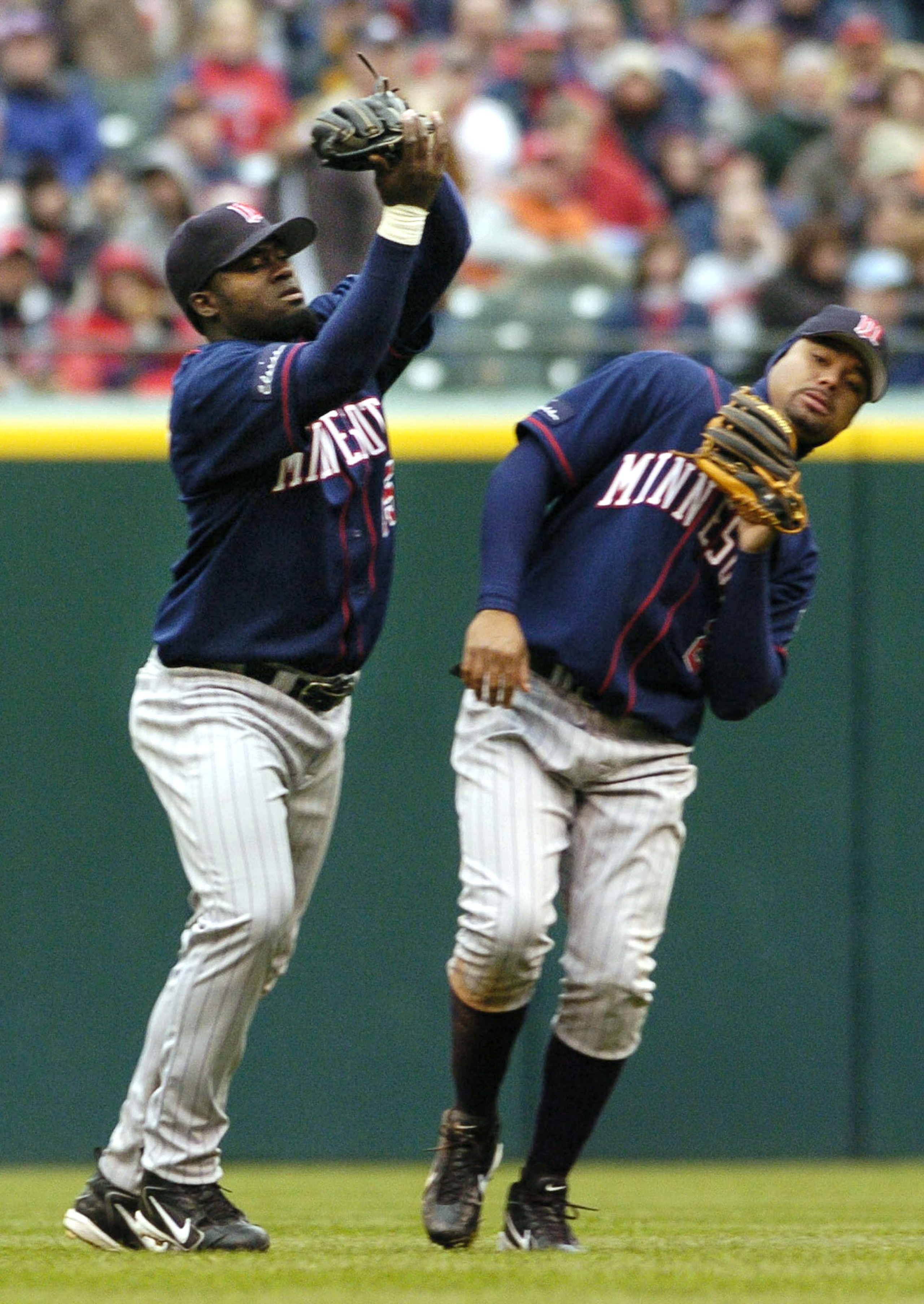
Cristian Guzman took over at shortstop from Pat Meares in 1999.
In his third season as the starter, Guzman was partnered with his third second baseman, Luis Rivas.
Neither infielder would be known for their defense as Guzman, a .970 career fielding percentage at shortstop and Rivas finished with a .985 percentage as a second baseman.
In 2001 and 2003 Guzman would lead the AL in triples, and in their four years together in Minnesota Guzman and Rivas would combine for 62 three-baggers.
After the 2004 season the Twins would allow both Rivas and Guzman to leave as free agents. Rivas would retire after the 2008 season and Guzman would finish the 2010 season as a backup on the Texas Rangers, playing in only 15 games.
2006-2007: Luis Castillo and Jason Bartlett
9 of 10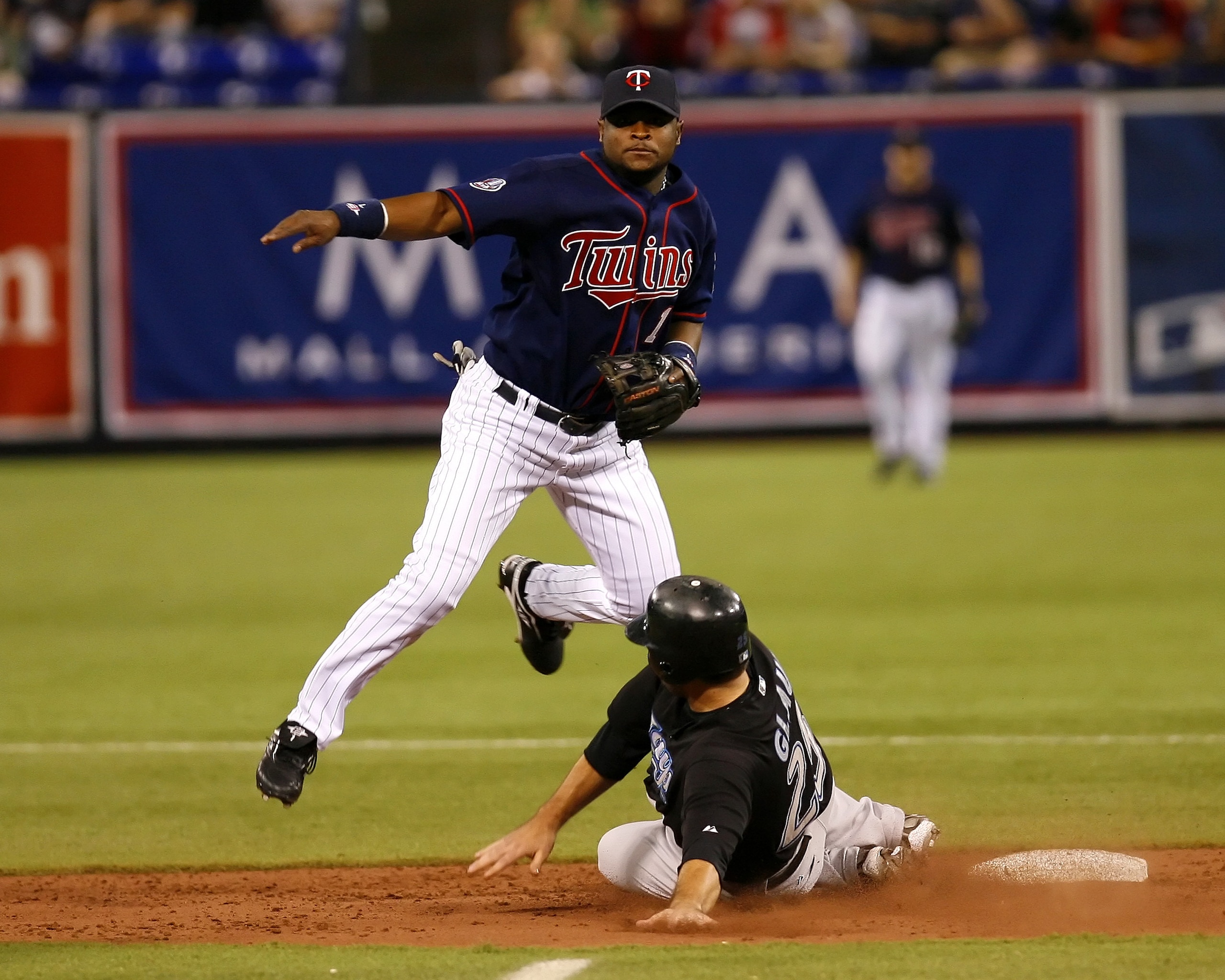
This brings us to the last double combination for the Twins that played in consecutive seasons.
In December of 2005 the Twins traded for Luis Castillo, a three-time Gold Glove second baseman with the Florida Marlins.
For the most of the next one and half seasons he and Jason Bartlett would cover the middle of the infield.
In 227 games Castillo would commit only nine errors—a .991 fielding percentage.
2007 would be the last season for both Castillo and Bartlett with the Twins.
It is also the only year Ron Gardenhire has not finished above .500 as manager of the Minnesota Twins.
On July 30th, 2007 with a 54-51 record and in third place in the AL Central, the Twins traded Castillo to the Mets. The move did not sit well with fans or players, especially center fielder Torii Hunter who was critical of the move.
After the 2007 season Bartlett, along with starting pitcher Matt Garza, were traded to Tampa Bay. In return the Twins received outfielder Delmon Young.
Technically, since Castillo only played in 85 games for the Twins in 2007, this duo does not qualify based on the initial criteria. Excluding Castillo and Bartlett would mean it will be eight seasons without a consistent tandem up the middle on defense.
2011-? Tsuyoshi Nishioka and Alexi Casilla
10 of 10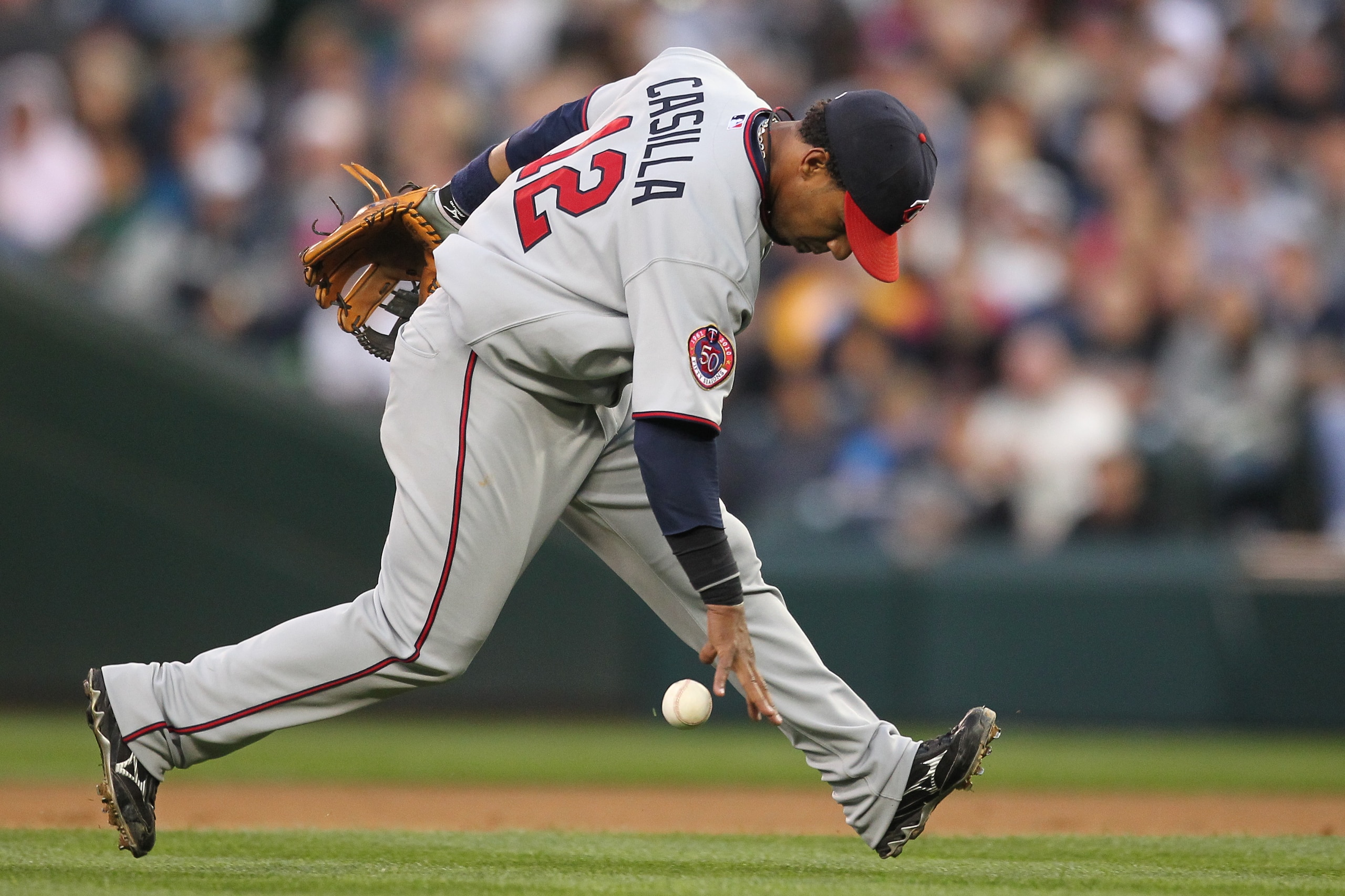
Last season the Twins appear to have found the long-term answer at third base in Danny Valencia.
Now they need to find some stability at shortstop and second base.
Perhaps the duo of Alexi Casilla, who will be 26 next season, and Tsuyosi Nishioka, who turns 27, can become the next long-term double play combination for the Minnesota Twins.
If history is any indication, don't bet on it.

.jpg?w=2560 "Goodell Explains Pro Bowl Decision")
.jpg?w=2560 "Steelers Rework DK's Deal")


.jpg?w=2560 "Biggest Draft Risers 📈")
