
NFL Draft 400: Ranking the Draft's Top Running Backs
After 11 months of evaluation, conversations with scouts and coaches and endless nights on the road or at games, our staff is finally ready to answer the burning questions surrounding the 2019 NFL draft.
Who is the best overall player? How about the best at each position?
The goal of the NFL Draft 400 series is to figure that out.
The top 400 players were tracked, scouted, graded and ranked, with help from scouting assistants Marshal Miller and Jerod Brown. Together, we viewed a minimum of three games of tape per player—the same standard NFL teams use.
Oftentimes, we saw every play from a prospect over the last two years. That led to the grades, rankings and scouting reports you see here.
Players were graded on strengths and weaknesses, with a pro-player comparison added to match the prospect's style or fit in the pros. The top 400 players will be broken down by position for easy viewing before the release of a top-400 big board prior to the draft.
In the case of a tie, players were ranked based on their overall grade in our top 400.
Grading Scale
1 of 30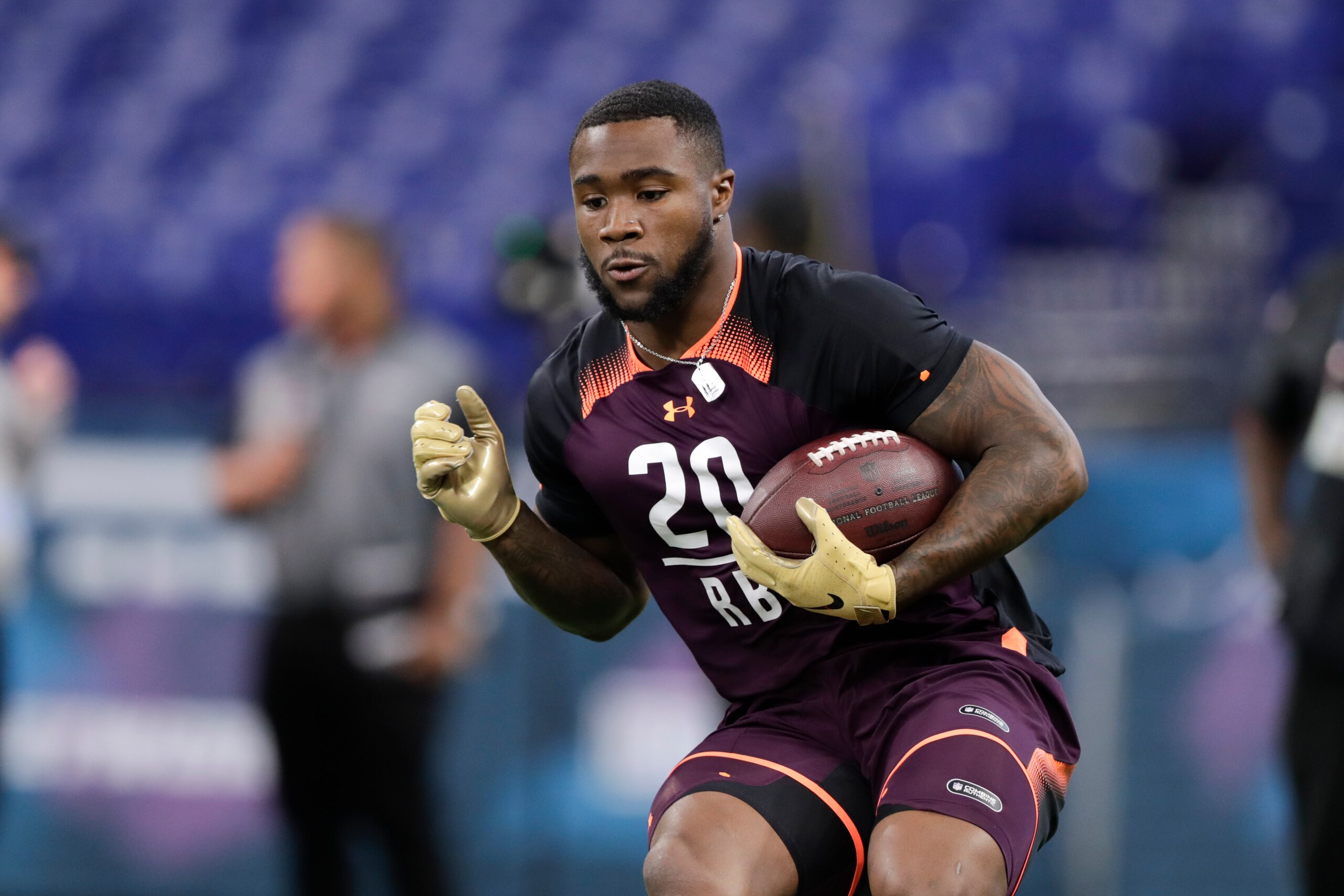
At the end of each scouting report, you'll see a final grade that falls somewhere between 4.00 and 9.00. This scale comes from the teaching I received from Charley Casserly, Michael Lombardi and other former or current front-office personnel in the NFL.
This applies to all positions across the board.
| Grade | Label |
| 9.00 | Elite—No. 1 pick |
| 8.00-8.99 | All-Pro—Rare Talent |
| 7.50-7.99 | Round 1—Pro Bowl Potential |
| 7.00-7.49 | Round 1—Top-15 Player Potential |
| 6.50-6.99 | Round 2—Rookie Impact/Future Starter |
| 6.00-6.49 | Round 3—Rookie Impact/Future Starter |
| 5.80-5.99 | Round 3-4—Future Starter |
| 5.70-5.79 | Round 4—Backup Caliber |
| 5.60-5.69 | Round 5—Backup Caliber |
| 5.30-5.59 | Round 6—Backup Caliber |
| 5.10-5.25 | Round 7—Backup Caliber |
| 5.00 | Priority Free Agent |
| 4.50-4.99 | Camp Player |
29. James Williams, Washington State
2 of 30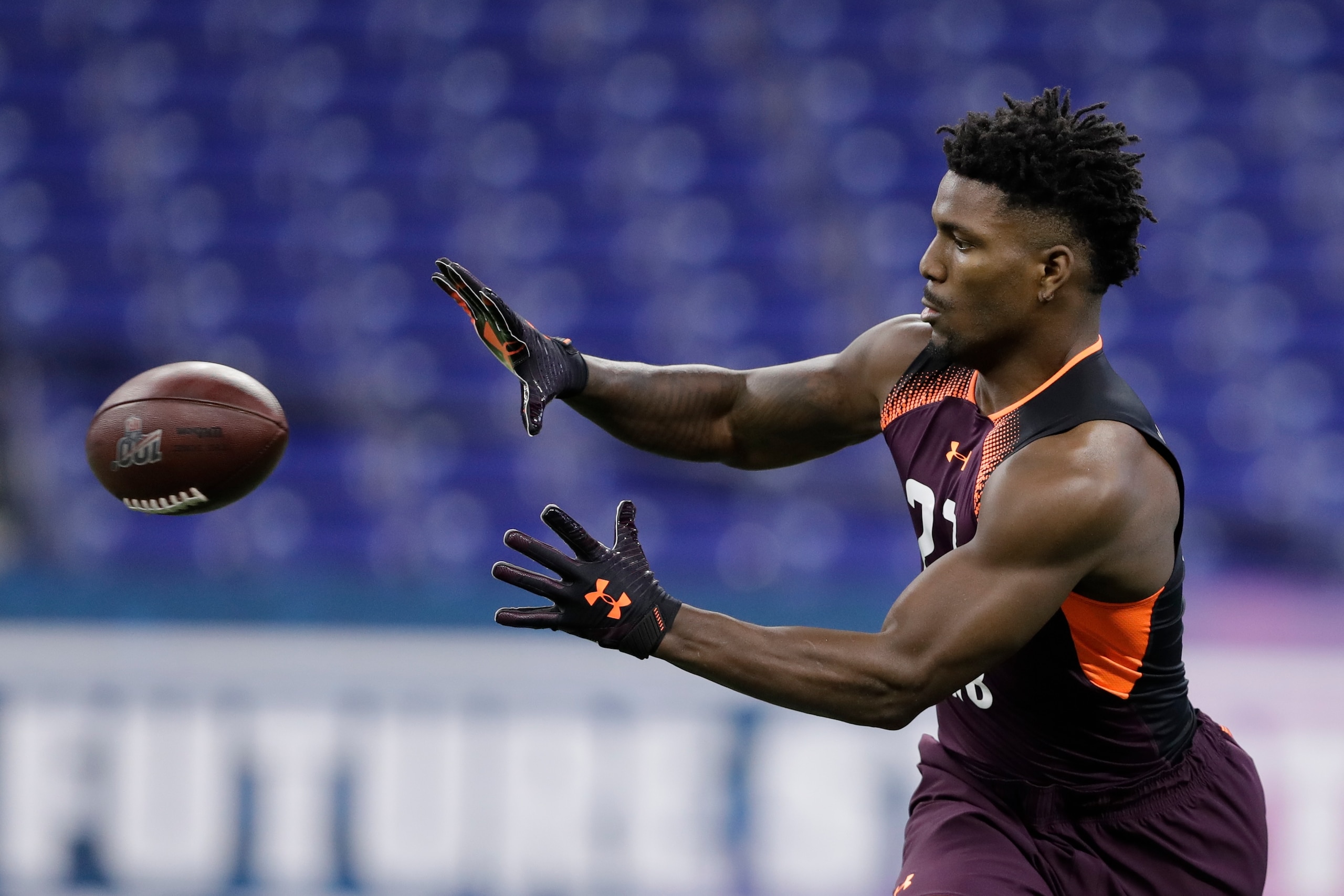
POSITIVES:
—Small, shifty outside runner with good production despite an offense that doesn’t rely much on the running back.
—Asked to be reliable in the passing game as an option out of the backfield and has good tape proving experience picking up pass rushers in protection.
—Can make defenders miss in space with quick cuts and good hip movement; is able to plant and get to top speed quickly.
—Has enough moves to be an elusive runner and isn’t afraid to throw a stiff-arm at a defender, his best move to keep would-be tacklers off his frame.
—Determined runner who will fight for extra yards, but does his best work shaking defenders who try to square up.
NEGATIVES:
—Undersized back who lacks the speed NFL teams want from a player whose size profile suggests third-down
back.
—Thin frame with limited definition in his lower body, which shows when attempting to break tackles or power cut in space.
—Vision is below-average between the tackles and was not developed at Washington State. Exclusively an outside runner.
—Offensive scheme design called for large line splits which gave him easy, clear rushing lanes.
—Determined to get to the outside and will bypass rushing lanes between the tackles for a potential bounce opportunity.
OVERALL:
Williams has decent tape and good production, but he’s a small back who lacks the speed to be a home run hitter and the vision to be more than a bounce runner. Teams might see his value as a third-down specialist and potential return man, but his poor showing at the Scouting Combine could end that talk.
GRADE: 5.00 (UNDRAFTED FREE AGENT)
PRO COMPARISON: Jalen Richard
28. LJ Scott, Michigan State
3 of 30
POSITIVES:
—Great NFL frame at 6’0”, 227 pounds with power to match.
—Tough inside runner with downhill speed and strength; can make a defender miss in the hole with the burst to get through before the hole closes.
—Quick feet and juiced-up hips allow him to make fast, smooth moves through space.
—Saw a ton of stacked boxes and still managed to find rushing lanes; is able to create on his own, making openings where there are none.
—Has experience as a receiver out of the backfield and is a good dump-off target.
NEGATIVES:
—Banged up throughout 2018 with an ankle injury that kept him off the field for all but five games.
—Production never matched the traits or hype; failed to hit 1,000 rushing yards in any season and was at his best in a limited short-yardage role.
—Gets too tall and will take on too many hits; must learn to run with better pad height and make himself a smaller target.
—Fumbles are an issue; likes to hold the ball away from his body.
—Despite being a big back, didn’t look very interested in pass protection.
OVERALL:
Scott has all the traits to be a lot better in the NFL than he was in college. Biggest questions are his drive to be great and the recovery of his ankle. If he can get into the right system where a coach will push him, Scott could end up the steal of this running back class.
GRADE: 5.25 (ROUND 7—BACKUP CALIBER)
PRO COMPARISON: TJ Yeldon
.jpg?w=2560 "Cardinals 49ers Football")

27. Wes Hills, Slippery Rock
4 of 30
POSITIVES:
—Possesses an ideal NFL frame (6’2”, 218 lbs) for a starting running back with high-cut, long legs and thick shoulders.
—Has the vision and balance to take an inside run and bounce it outside where he can hit a second gear.
—Finishes runs with power and great pad lean. Will get his head and shoulders down to take on contact and go over defenders.
—Shows good ball security to change hands and tuck it away when taking on contact.
—Determined, hard-charging runner who doesn’t go down on first contact.
NEGATIVES:
—Can be erratic in space and doesn’t run with a natural, smooth gait.
—Dominated small school competition but didn’t have a chance to show up against true NFL talent.
—Has to throttle down and gather himself to change directions; hips sink and his feet can get stopped too often.
—Questionable long speed with no NFL combine times to verify.
—Has a herky-jerky running style that doesn’t look smooth or fluid.
OVERALL:
Hills was the talk of the NFLPA Collegiate Bowl and got the call up to the Senior Bowl, where he showed very good power and determination throughout the week. Teams willing to invest in a small-school power back with good upside could hit on Hills as a late-rounder.
GRADE: 5.25 (ROUND 7—BACKUP CALIBER)
PRO COMPARISON: Josh Adams
26. Darwin Thompson, Utah State
5 of 30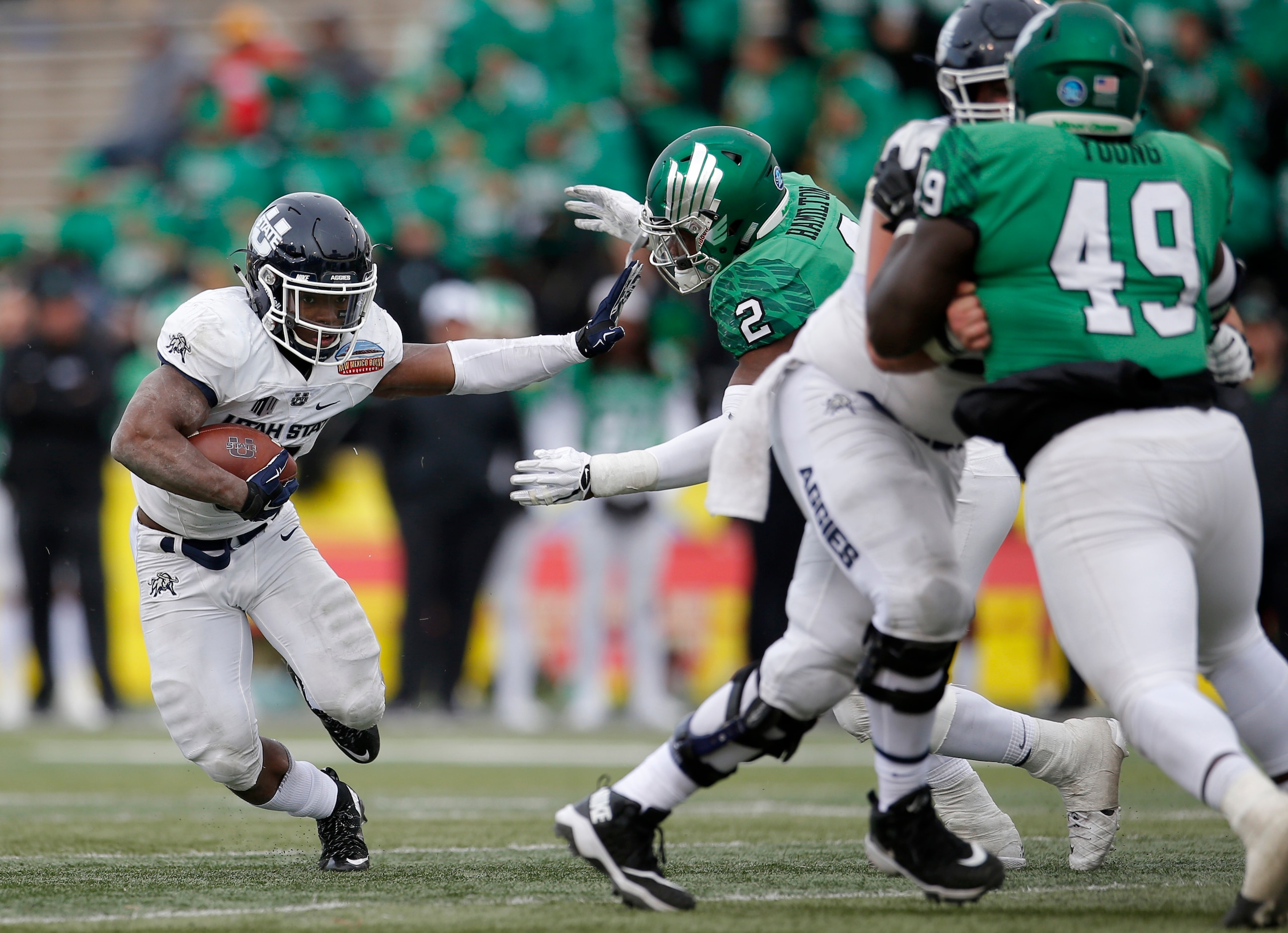
POSITIVES:
—The most elusive back in the 2019 draft class, Thompson can stop and start on a dime and breaks out a full toolbox of moves to leave defenders hanging in air.
—Natural receiver out of the backfield with soft hands. You won't see drops or struggles with the ball on his tape.
—Excellent ability to break first contact with agility and balance; runs through contact well and maintains his balance to keep going.
—Home run speed with a ridiculous 765 yards after first-contact.
—No fumbles on his 2018 tape despite 151 carries; added 23 catches in his 9 starts.
NEGATIVES:
—Small body at 5'8", 200 pounds and a frame that looks maxed out based on his muscle tone and bulk.
—One-year wonder who rushed for 1,044 yards and 14 touchdowns but only started nine of 13 games; why was a player this good on the bench?
—JUCO transfer from NEO in Miami, Oklahoma; very limited tape against NFL prospects.
—Vision is not developed enough for him to handle duties between the tackles; looks to bounce every run outside and stay in space.
—Might be viewed as a third-down back only.
OVERALL:
Teams looking for a change-of-pace back with elite skills at evading tacklers and home run speed should take a flier on Thompson in a low-risk, high-reward move. He's a fantastic bounce and cut back but is truly a situational threat only given his size and lack of inside the tackles vision.
GRADE: 5.25 (ROUND 7—BACKUP CALIBER)
PRO COMPARISON: Tarik Cohen
25. Travis Homer, Miami
6 of 30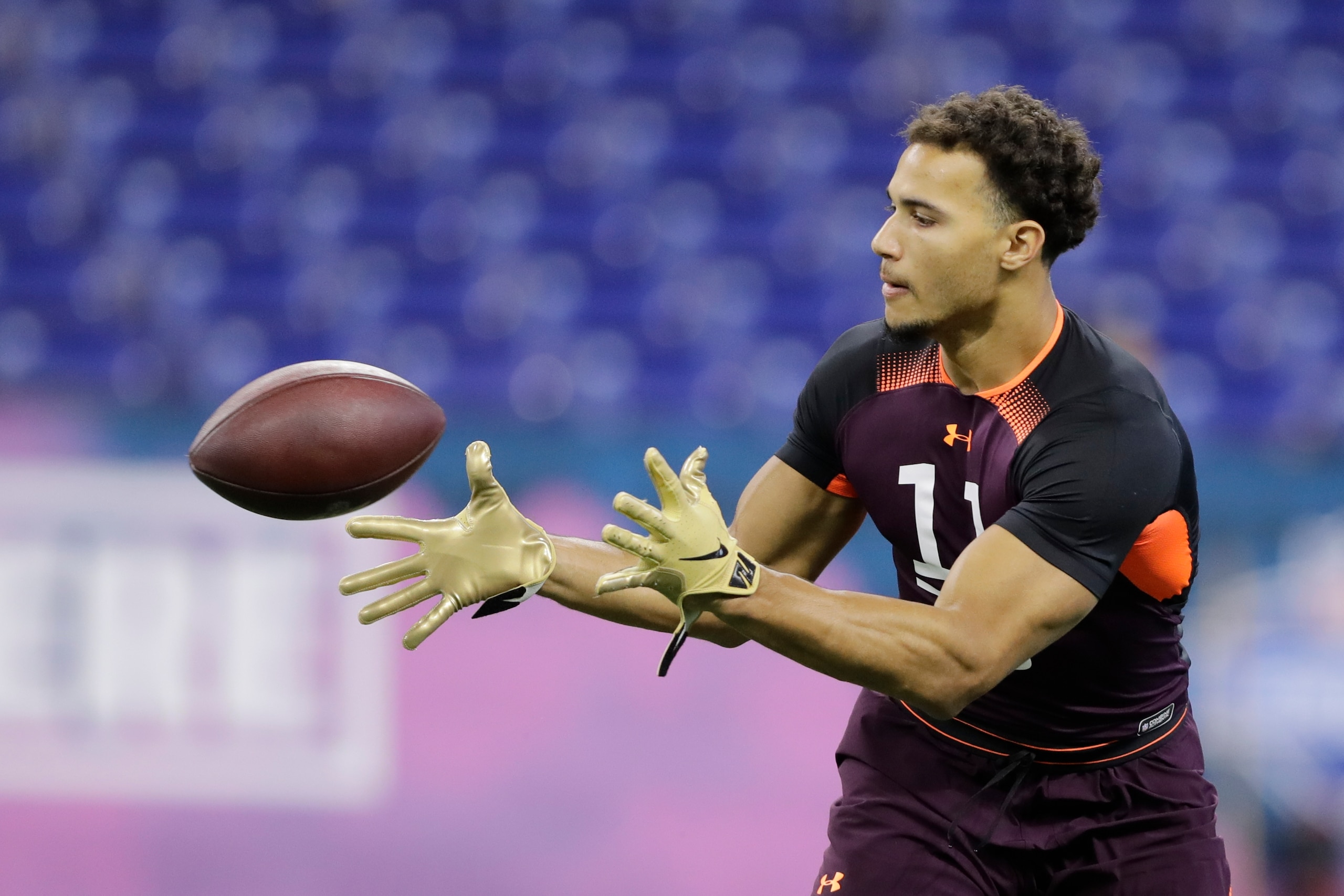
POSITIVES:
—Showed off top-end speed (4.48s) at the NFL combine and throughout the last two seasons at Miami; excellent chunk play runner who finds openings on the outside and has the speed to make defenses pay.
—For a smaller back, he seeks and plays through hits. Has no shyness about running through contact
and shows good ability to bounce off and maintain his rushing lane.
—Has a nice jab step that lets him set up moves; dynamic runner when working to the corner.
—Is not afraid of pass protection; will step up and put a hat on a blitzer.
NEGATIVES:
—Below-average NFL build at only 201 pounds.
—Play strength was uninspiring; won’t break tackles and is too easily wrapped up at the point of impact.
—Agility is average. Doesn’t shake defenders in tight spaces and has trouble making smooth, quick cuts.
—Fumbles are a major concern throughout his time as a starter.
—Vision can be hit-or-miss; will see cuts he can reach on the outside, but too easily misses inside cutbacks.
OVERALL:
Homer is an excellent outside runner who can set up shifty moves and then explode with home run speed. Where he struggles is between the tackles. He’s not afraid of contact, but his fumbling issues will give teams major pause when asking him to do more than run outside.
GRADE: 5.30 (ROUND 6—BACKUP CALIBER)
PRO COMPARISON: Ameer Abdullah
24. Tony Pollard, Memphis
7 of 30
POSITIVES:
—Swiss army knife in the Memphis offense who showcased a skill set as a runner, receiver and return man.
—One of the best return men in college football; returned seven kicks for touchdowns during his time at Memphis.
—Slasher who can get to the second level in a hurry and does a good job finding openings outside. Has some scoot to his game to run away from defenders.
—Very good receiver out of the backfield; can be used on dumps, wheels or even split out as a wide receiver. Can be dangerous on jet sweep options.
—Instant impact special teams player who has upside as a runner or receiving option.
NEGATIVES:
—Lacks strength as a runner and doesn’t have the gear to push the pile.
—Limited reps as a true running back due to the play of Darrell Henderson. Might be more of a gadget guy.
—Tweener prospect who will only be a fit in some schemes due to lack of power and vision as a runner and undeveloped route-running ability.
—Jack of all trades, master of none. Teams who don’t value his return skill set will have little use or value for him.
—Didn’t wow with speed or agility. Has average long speed, average burst and average juice in his hips to make defenders miss.
OVERALL:
Pollard is the answer if NFL teams are looking for a return specialist, but he lacks value as a straight-up running back prospect. Pro teams will have to find a role for him, but if they do want a highly productive return man and upside third-down option, Pollard is a good value late in the draft.
GRADE: 5.40 (ROUND 6—BACKUP CALIBER)
PRO COMPARISON: Joe Williams
23. Bruce Anderson, North Dakota State
8 of 30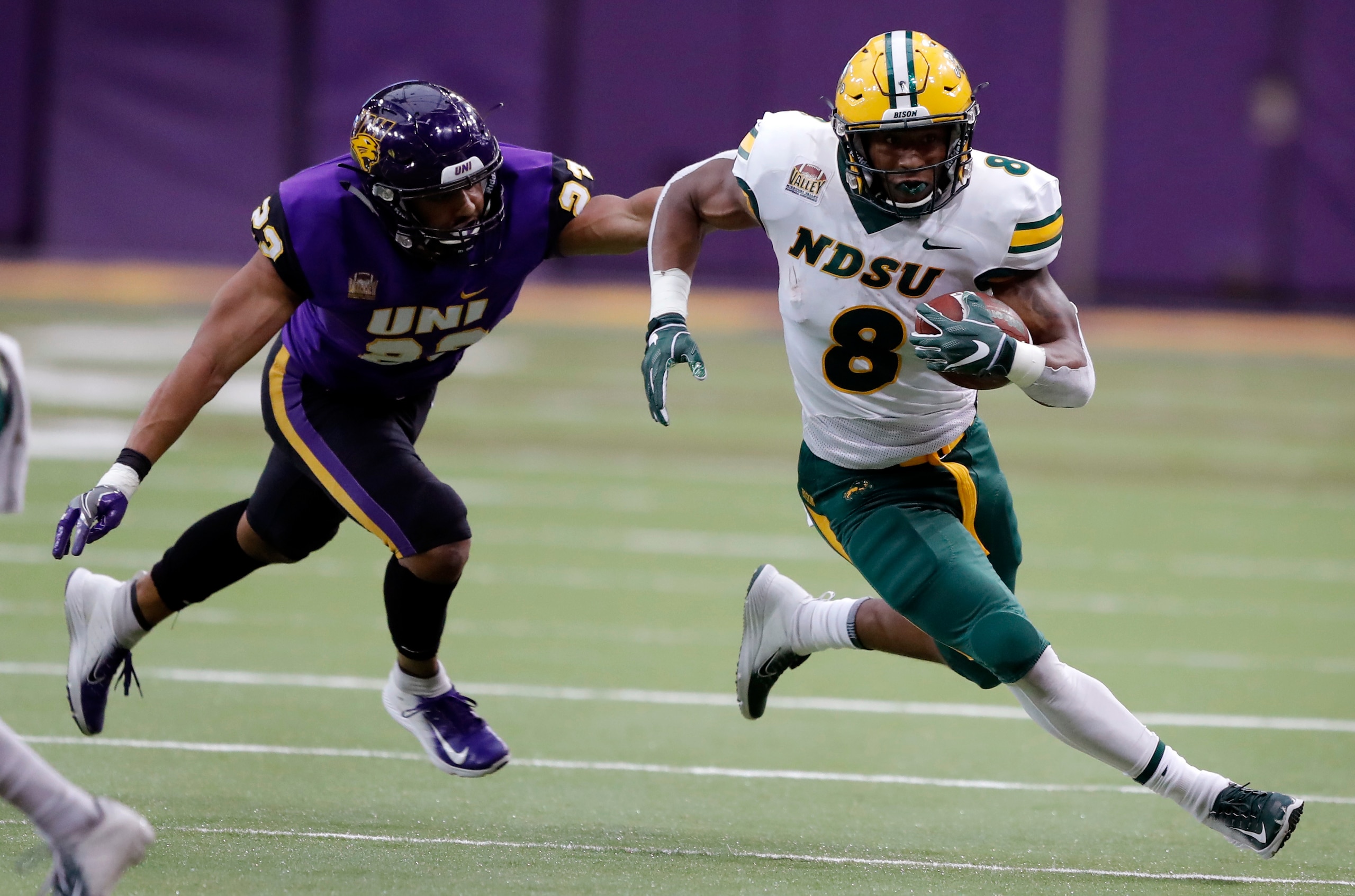
POSITIVES:
—Productive, well-built running back who made an impact as a runner, receiver and return man at NDSU.
—Catches the ball well out of the backfield and has very good instincts in that role; plucks the ball out of the air with soft hands to make plays in the receiving game.
—Quick cutter who benefits from being “quicker than fast” in the open field, making defenders miss with his low center of gravity and loose hips.
—Has a quick gear to accelerate in space. Might not have elite long speed, but he is shifty and will surprise defenders with how he hits top speed.
—Has the tools to be a third-down contributor thanks to his hands and experience in blocking situations. That could be where he sells teams on his value.
NEGATIVES:
—Spent much of his 2016 sophomore season battling injuries.
—Doesn’t pop off the tape with the athleticism to carry a high grade in those areas: limited agility, lacks burst and has stiff joints.
—Vision was not great despite lower-level competition; questions about his ability to find creases and slip through cracks to find daylight. More of a “take what you get” runner who lacks dynamism.
—Presses the line of scrimmage to find openings instead of patiently letting blocks develop.
—Was not invited to the NFL Scouting Combine, which generally shows how teams view a player’s draft status.
OVERALL:
Anderson doesn’t have one elite trait as a prospect, but he does many things well. His quickness, hands and readiness on third downs are marketable skills that teams could like well enough late in the draft.
GRADE: 5.59 (ROUND 6—BACKUP CALIBER)
PRO COMPARISON: Kenneth Dixon
22. Alex Barnes, Kansas State
9 of 30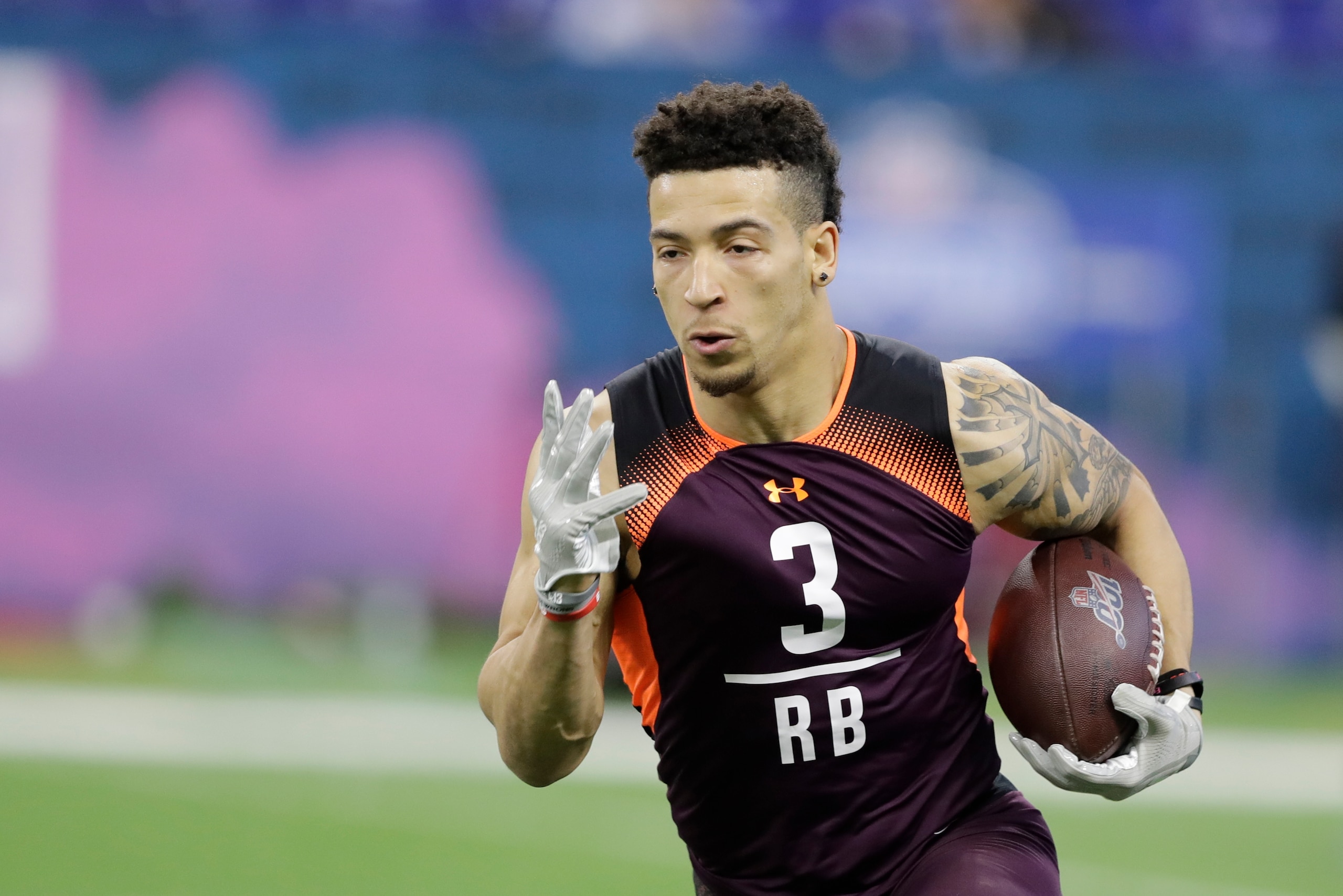
POSITIVES:
—Tested like an elite athlete: has a great build at 6’0”, 226 pounds and showed fantastic strength and agility in tests and drills.
—Developed serious third-down skills at Kansas State thanks to their option offense. Can block, catch and run routes.
—Tacklers in the Big 12 bounced off him regularly thanks to big, broad shoulders and nice body lean.
—Chops his feet and will drive through tacklers; can effectively push the pile as a short-yardage runner.
—Meets contact with bad intentions and has very good balance to absorb and explode off it.
NEGATIVES:
—Makes no one miss in the hole; lacks the lateral agility to adjust his rushing path, despite top-end athleticism.
—Doesn’t have the juice to reach the corner and turn upfield against NFL defenses.
—Like an old-school Alabama back who takes what’s given and lacks the creativity to elude or redirect.
—Not much burst to his game; plays at one speed and is more of a build-up runner.
—Offensive system in college did not prepare him for rushing paths in the NFL; was often the secondary rush threat after the quarterback.
OVERALL:
Barnes is an impressive-looking running back with good production and some sellable traits. His lack of agility, long speed or dynamic moves make him less of a prospect than many would expect given his size, testing and stats. Barnes could be a good backup runner and special teams player.
GRADE: 5.59 (ROUND 6—BACKUP CALIBER)
PRO COMPARISON: Kalen Ballage
21. Jordan Scarlett, Florida
10 of 30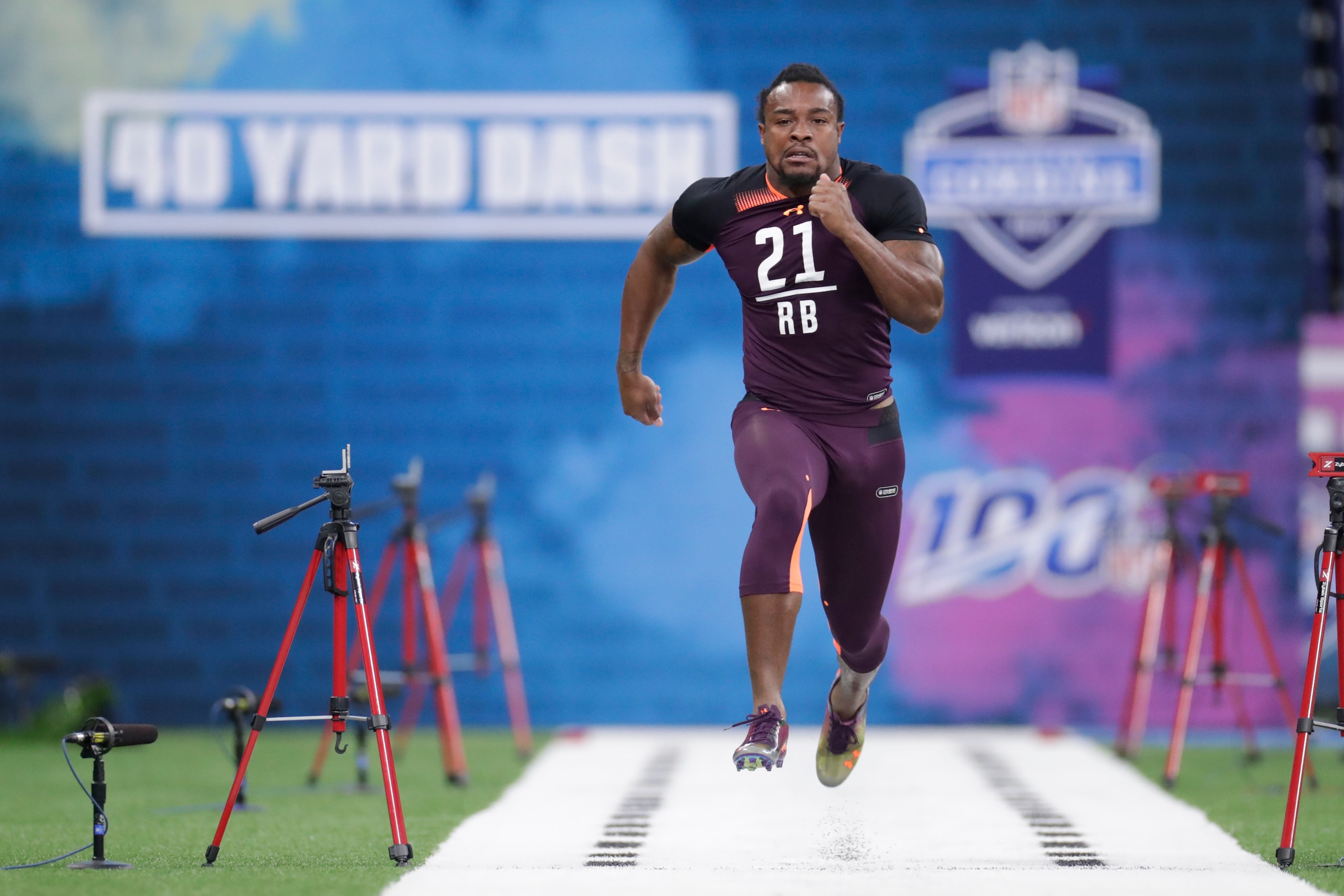
POSITIVES:
—Runs hard and fast for a 208-pound back. Lives in the weight room and has an impressive physique and strength profile.
—Downhill strength and mentality; looks to get into his cuts and will punish a tackler if one gets in his path.
—Excellent at breaking tackles when a tackler comes at him without a commitment to bringing him down.
—Has enough lateral agility to shake defenders and get to space.
NEGATIVES:
—Host of issues away from the field: misdemeanor marijuana arrest (2015) and part of a credit card fraud scandal that resulted in season-long suspension (2017).
—Rarely used as a receiver and needs to show improved hands and route-running skills.
—Very little urgency to his game; too patient behind the line of scrimmage and is delayed at seeing and attacking a rushing lane.
—Athletic testing times in agility were abysmal; which is echoed by stiffness and heavy feet on tape. Three-cone (7.37) and short shuttle (4.63) are among the worst times for a running back in years.
—Does not pop off the tape as a speedy, athletic back. More of a big body that runs over tacklers.
OVERALL:
Scarlett has moments on tape that impress, but overall he is not athletic or fast enough to profile as a starting back. He might be able to carve out a rotational role as a short-yardage back.
GRADE: 5.59 (ROUND 6—BACKUP CALIBER)
PRO COMPARISON: Chris Ivory
20. Benny Snell, Kentucky
11 of 30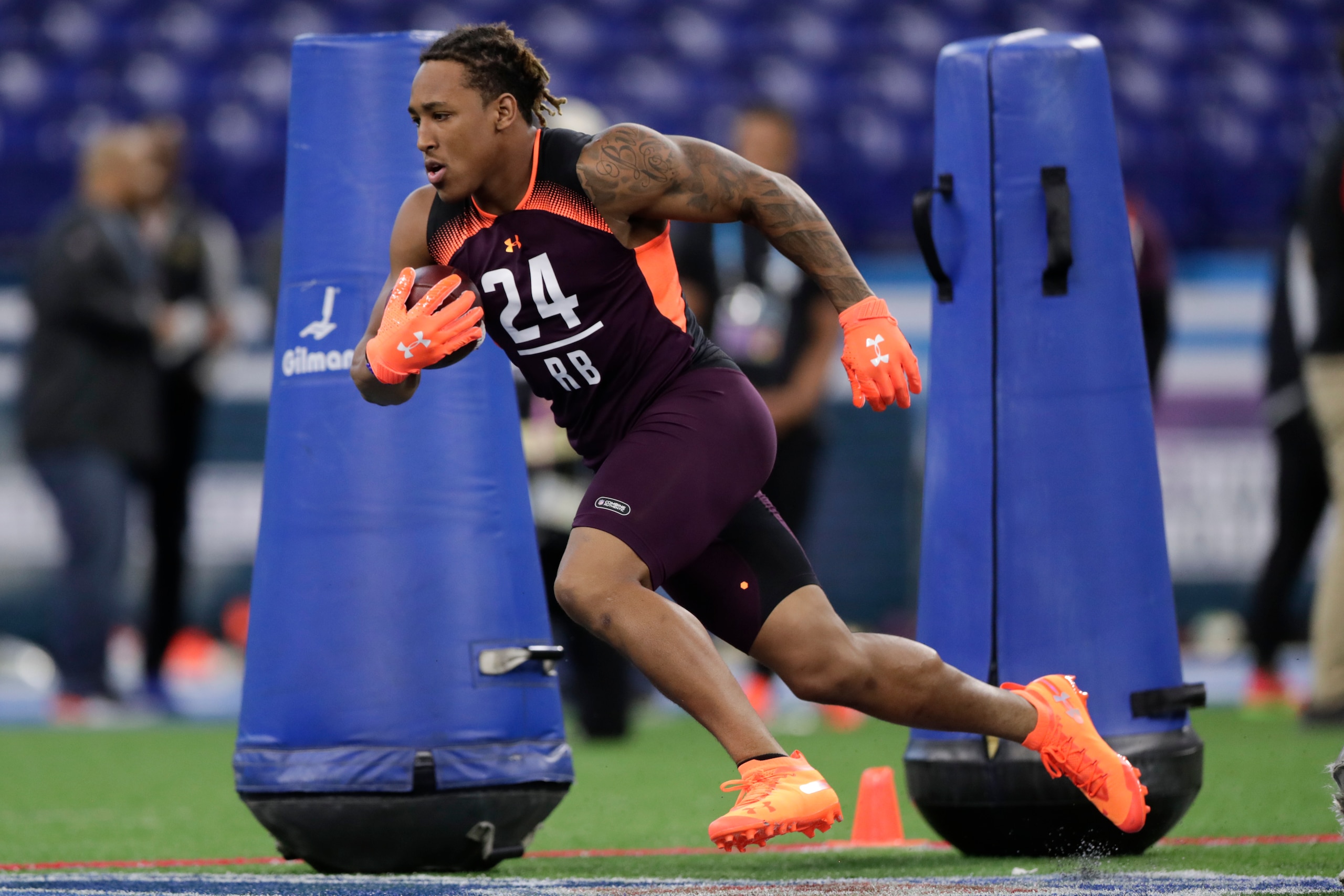
POSITIVES:
—Built like a truck at 5’10”, 224 pounds with excellent upper and lower body strength.
—Productive runner who, in three seasons, became the all-time leading rusher at Kentucky.
—One-cut, downhill back who gets a full head of steam early in his rush; will drop his shoulders and run with good power between the tackles.
—Patient and smart with good vision; lets the play develop and trusts his blockers.
—Fantastic short-yardage and goal-line back who will get his shoulders square and use his strength to pick up tough yards.
NEGATIVES:
—Not as explosive as a power back should be; limited burst in his game and failed to test as an athlete with suddenness.
—Timed speed (4.66 40-yard dash) is poor for a starting running back and will make scouts re-check his tape looking for chunk plays.
—Looks stiff with limited hip flexibility and slow, heavy feet.
—Has the build of a tough guy, but doesn’t stand his ground as a pass-protector.
—Won’t run away from defenders; lacks the speed to reach and turn the corner.
OVERALL:
Snell was incredibly productive at Kentucky and captured the attention of fans with his dominance in the SEC. But scouts see a tight, slow, limited runner who profiles as a rotational back who can win in short-yardage situations.
GRADE: 5.60 (ROUND 5—BACKUP CALIBER)
PRO COMPARISON: Carlos Hyde
19. Myles Gaskin, Washington
12 of 30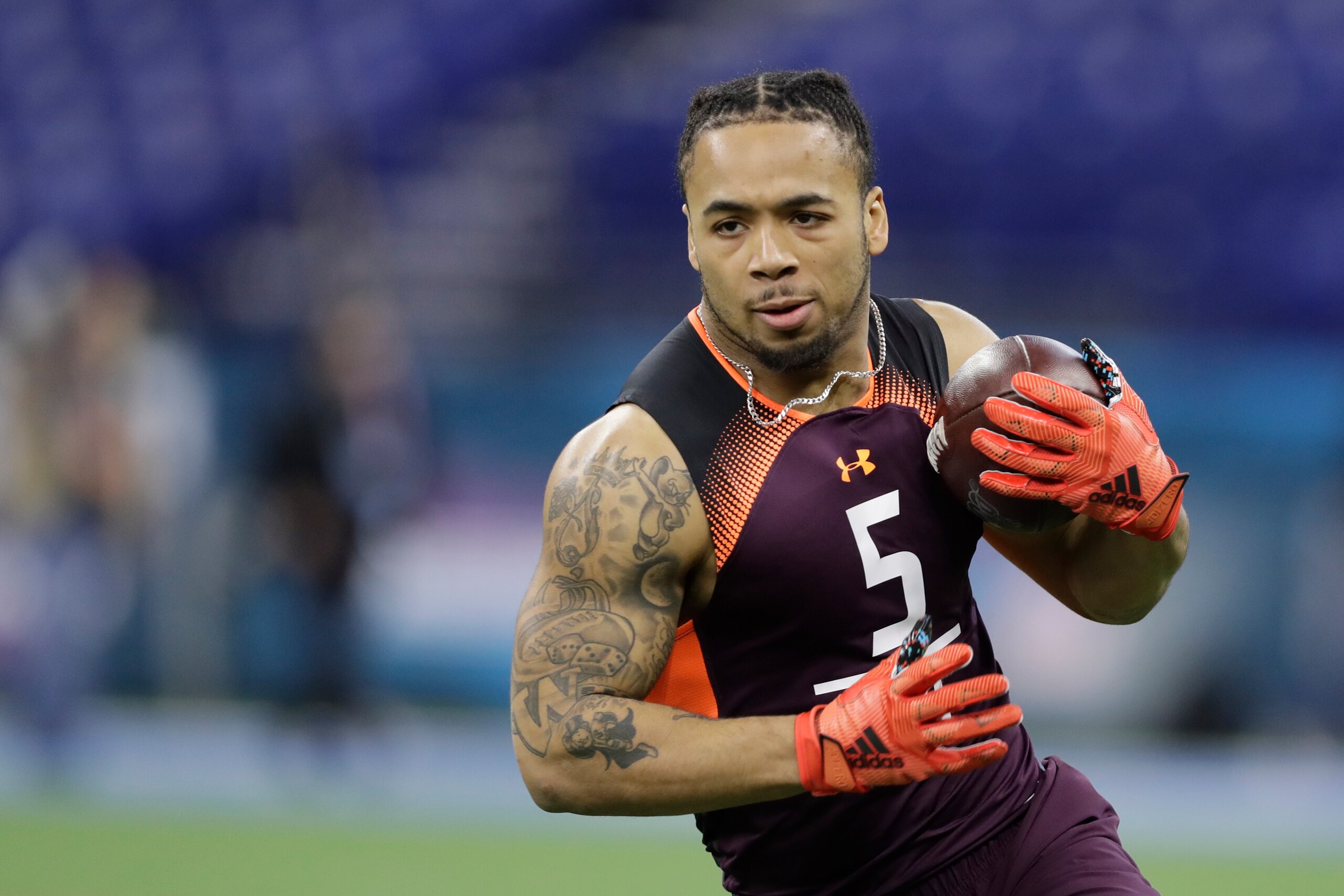
POSITIVES:
—Super-productive runner with developed vision, instincts and patience.
—Excellent receiver out of the backfield with soft, natural hands and a defined ability as a route-runner. Understands space and angles.
—Shows no fear as a runner or blocker; does a good job lowering his pads to take on tacklers and is willing to stand and fight against pass-rushers.
—Has enough burst to turn the corner and find daylight.
—Tape shows a natural runner with quick movements and good agility.
NEGATIVES:
—Undersized back that fails to meet NFL thresholds for starting back size (5’9”, 205 lbs); extra small hands at 8 ¾” and sub-30” arms.
—Timed speed (4.58s) was very bad for a small back generally categorized as a scatback; agility drills were also substandard for his size.
—Not a valuable runner between the tackles. Doesn’t seek out tight running lanes and has no power or pop to his game.
—A non-dynamic runner; where the path dictates, he goes. Doesn’t plan moves on defenders.
—Sub-package runner who will struggle to outrun defenses or find space in the NFL.
OVERALL:
If drafted for a third-down role, Gaskin could have success in the pros. Teams who look at him must be willing to accept what he is and what he isn’t. He isn’t Tarik Cohen, but is an average athlete runner with good hands and a durable, consistent profile.
GRADE: 5.69 (ROUND 5—BACKUP CALIBER)
PRO COMPARISON: Giovani Bernard
18. Karan Higdon, Michigan
13 of 30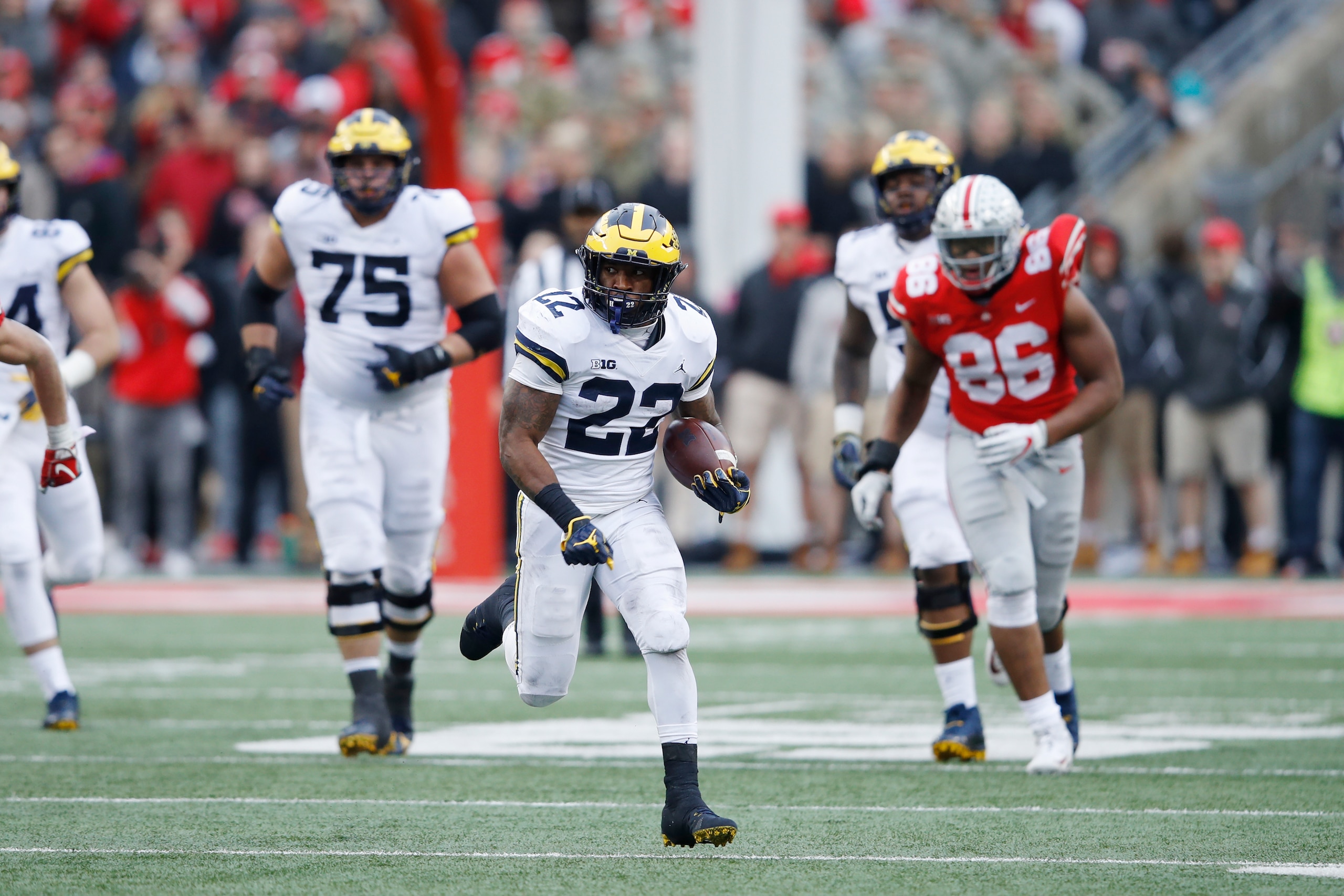
POSITIVES:
—Productive runner with one-cut vision, balance, enough speed to get free and good power to run through contact.
—Team captain with excellent grades from coaches at Michigan.
—Gets downhill in a hurry and runs with good power through would-be tacklers; has a low center of gravity that makes him hard to bring down.
—Not a trace of fumbling issues; ball security is a major plus.
—Does a great job limiting losses; is a fall-forward back who uses balance, lower-body power and a tough mentality to always push forward instead of bouncing, dancing or taking risks that might cost yards. Class change-of-pace back.
—Tested well at 4.49 in the 40-yard dash and showed the burst and top-end speed that flashed on film.
NEGATIVES:
—Undersized at 5’9” and 206 pounds.
—Can get stuck taking unnecessary steps when attempting to cut upfield. Doesn’t have great footwork or foot speed.
—Looks like a receiving back, but doesn’t have production or established traits catching the ball; inexperienced route-runner.
—Tends to be a one-trick runner: If his jump cut or stiff arm fails, he goes down. Not very creative as a runner.
—Lacks the wow factor of a starting running back; average all-around traits that fail to inspire.
OVERALL:
Higdon was the savior of the Michigan offense early in the season when the passing game couldn’t get going. He was productive and consistent, but a lack of physical traits are an issue when watching his tape. He has the look of a solid rotational back, but isn’t a likely top-end player at the next level.
GRADE: 5.69 (ROUND 5—BACKUP CALIBER)
PRO COMPARISON: Andre Ellington
17. Jalin Moore, Appalachian State
14 of 30
POSITIVES:
—Tough, hard-nosed runner who isn’t afraid of contact; will get his pads down and attack a defense.
—Big, muscular build at 212 pounds on a 5’10” frame. Rocked out 27 reps of 225 pounds on the bench press.
—Very good pass blocker. Stands in, absorbs contact and will give bruises to pass-rushers who get close to his quarterback.
—Does his best work between the tackles, moving well to find lanes and creases; shows good vision and enough burst to accelerate through the hole once something opens up.
—Could be a valuable addition to a backfield that has a speed back in place.
NEGATIVES:
—Ankle injury in October kept him limited throughout predraft process.
—Doesn’t look like he has great acceleration on tape due to lack of chunk and runaway plays.
—More of a one-cut, downhill runner who could be limited to outside zone schemes.
—Doesn’t pop off the tape as a third-down contributor.
—Could get lost in the mix of a very deep running back class due to injury and no predraft speed or agility times.
OVERALL:
On tape, Jalin Moore looks the part. He’s explosive, strong, patient and productive. The injury suffered in October is the biggest question mark. If he gets a clean bill of health from team doctors, Moore could be an ideal fit in a zone blocking scheme like Kansas City, Chicago or Philadelphia's.
GRADE: 5.69 (ROUND 5—BACKUP CALIBER)
PRO COMPARISON: Damien Williams
16. Devine Ozigbo, Nebraska
15 of 30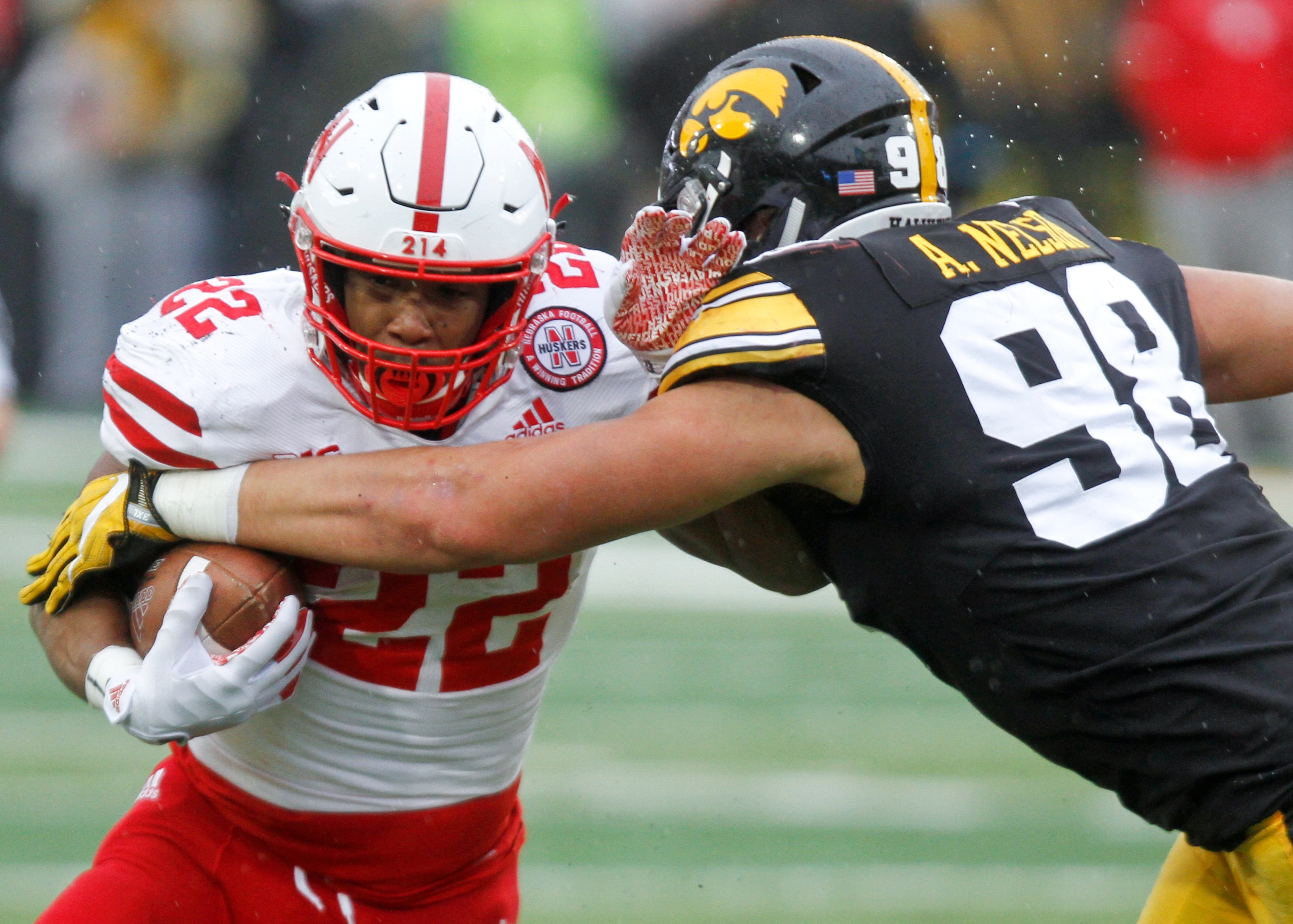
POSITIVES:
—Tough, aggressive runner who looks to hurt tacklers who get in his path; ideal short-yardage or inside-zone rusher.
—Much faster than expected from a 222-pound frame.
—Great lower body power; drives through tacklers and has the strength to generate a great push in short-yardage situations.
—Excellent production under new head coach Scott Frost after being a bit player his first three years.
—Big back who showed the speed to rip off long runs and produce big plays.
NEGATIVES:
—Did not receive an invite to the NFL Scouting Combine.
—Better teams shut him down as he wasn’t able to find rushing lanes or use his speed to turn the corner when facing NFL talent on defense.
—Takes a lot of hits with his up-and-down, head-up running style.
—Can be too aggressive pressing the line of scrimmage.
—As a one-cut runner, he will often miss easy cutbacks or secondary rush lanes because he’s put his head down to plow through the line.
OVERALL:
Ozigbo is a very talented back who had a fantastic season at Nebraska, but for some reason wasn’t valued by the NFL Scouting Combine committee. He has tools to be an impactful inside runner and potential starter as a steal on Day 3.
GRADE: 5.69 (ROUND 5—BACKUP CALIBER)
PRO COMPARISON: James Conner
15. Bryce Love, Stanford
16 of 30
POSITIVES:
—One of the nation’s best running backs in 2017 with over 2,000 rushing yards thanks to excellent patience and good burst.
—Knows how to make himself small to avoid hits and squeeze through tight lanes.
—Vision is top-notch. Can see cutback lanes on the fly and will spot holes he can pop through.
—Before injuries, showed really good burst and open-field speed to run away from defenders and rip off long runs. A master of the chunk play and maximizing the yards in front of him. Rarely left plays on the field.
—Coaches gave him a great report: Was willing to fight through injuries and try to play in 2018 when most players would have sat out to get healthy for the NFL.
NEGATIVES:
—Injured in 2018 season, which was a lost year for him.
—Limited reps as a pass-catcher; doesn’t look natural bringing the ball in. Almost no impact as a blocker.
—Small frame and injury history is a concern; can he hold up for a season in the NFL?
—Tip-toes through cuts instead of being aggressive and hitting the hole; gets too patient waiting for the play to develop. (Might be a product of the line in front of him.)
—Doesn’t have the size or strength to run effectively between tackles.
OVERALL:
Love had a day two grade from us in 2018 but opted to return to school for his senior season. That move didn’t work out as planned once injuries hit. He never got back to his old self and only made 10 starts. If Love can get back to his 2017 form, NFL teams will have a steal on their hands.
GRADE: 5.70 (ROUND 4—BACKUP CALIBER)
PRO COMPARISON: Mark Walton
14. Alexander Mattison, Boise State
17 of 30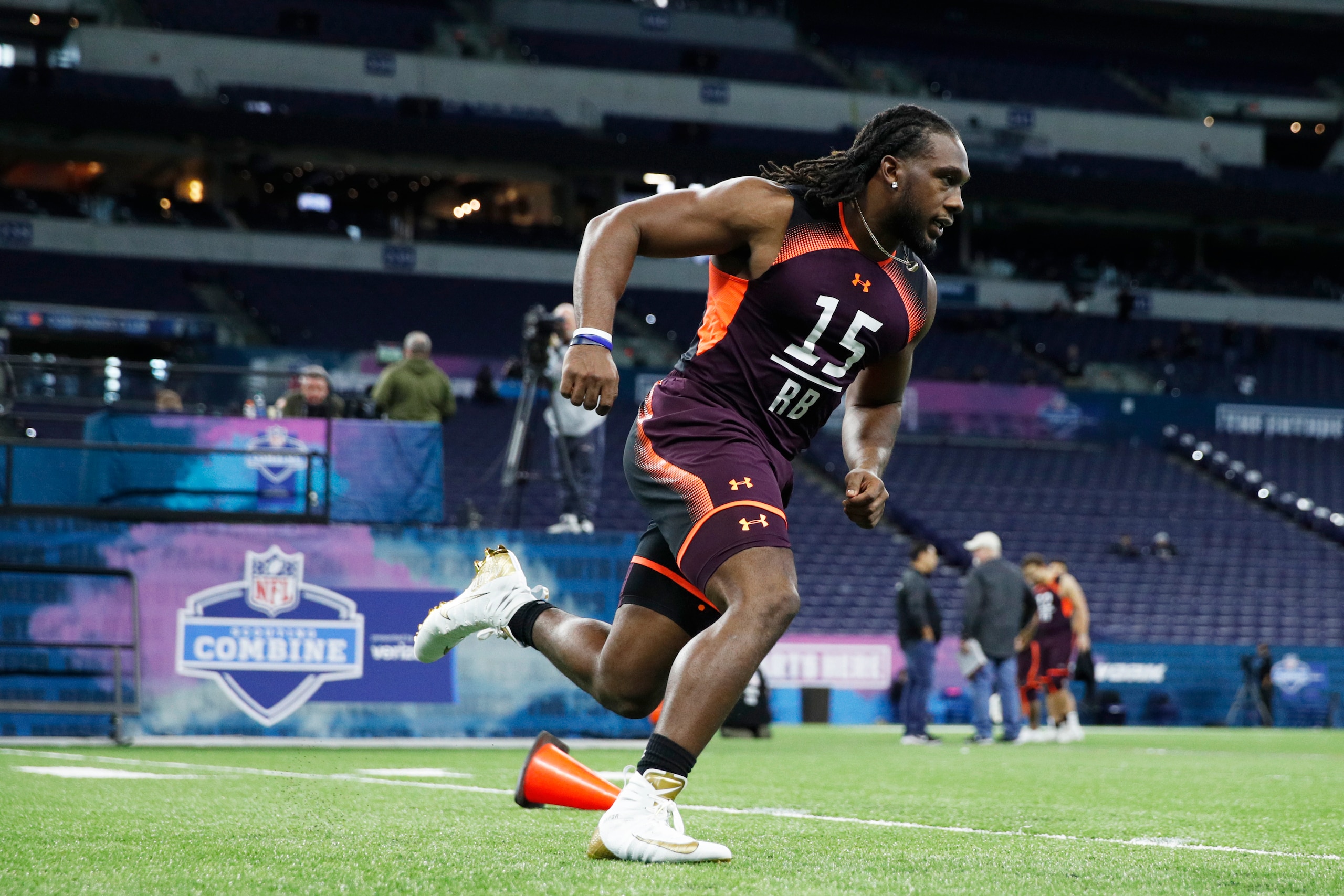
POSITIVES:
—Thick, well-built running back at 221 pounds on a 5’11” frame.
—Runs with a forward lean and good power at the point of contact.
—Productive, bell-cow running back who showed he can handle a heavy workload and not fall apart.
—Good instincts and ability on third-down plays. Willing, effective blocker.
—Above-average burst out of his stance; has value in short-yardage and goal-line situations.
NEGATIVES:
—A lack of speed is a major issue on tape; won’t run away from defenders and is limited to one gear in space.
—Stiff hips prevent him from shaking defenders; doesn’t have juice in his hips and has heavy feet. Change of direction is below-average.
—Does not produce long runs or chunk plays.
—Runs upright and will take a lot of hits.
—Maxed-out frame and skill set with little upside.
OVERALL:
Mattison is a good power back with instant value as a short-yardage player, but he doesn’t bring upside in terms of plus-athleticism or undefined traits. He is who he is: a solid backup running back and potential sub-package runner.
GRADE: 5.75 (ROUND 4—BACKUP CALIBER)
PRO COMPARISON: Jeremy Hill
13. Rodney Anderson, Oklahoma
18 of 30
POSITIVES:
—Ideal NFL build at 6’0”, 224 pounds with excellent strength throughout his body.
—Powerful runner with the instincts to find rushing lanes and punish a defense coming downhill.
—Good receiver out of the backfield; proficient in the screen game.
—Refined moves, with a stiff-arm and spin move to get away from tacklers.
—When healthy, incredibly productive with a three-down skill set that. Has starting traits: power, vision, speed and balance.
NEGATIVES:
—Three major injuries in four seasons; broken leg (2015), fractured vertebra (2016), knee (2018)
—Doesn’t make defenders miss and takes a high number of hits.
—Legs look dead at times; can get stuck in his rushing lane and won’t adjust or make lateral moves to shake defenders.
—Runs straight and makes himself a big target.
—Medicals will dictate whether or not Anderson is drafted; high potential, high risk player.
OVERALL:
Injuries are the story with Anderson. If he checks out at the NFL Scouting Combine, he could be a top five running back in this class. But with so many injuries in his history, scouts may also look at Anderson and decide he simply cannot stay healthy enough to spend a draft choice on.
GRADE: 5.80 (ROUND 4—POTENTIAL STARTER)
PRO COMPARISON: Jay Ajayi
12. Ryquell Armstead, Temple
19 of 30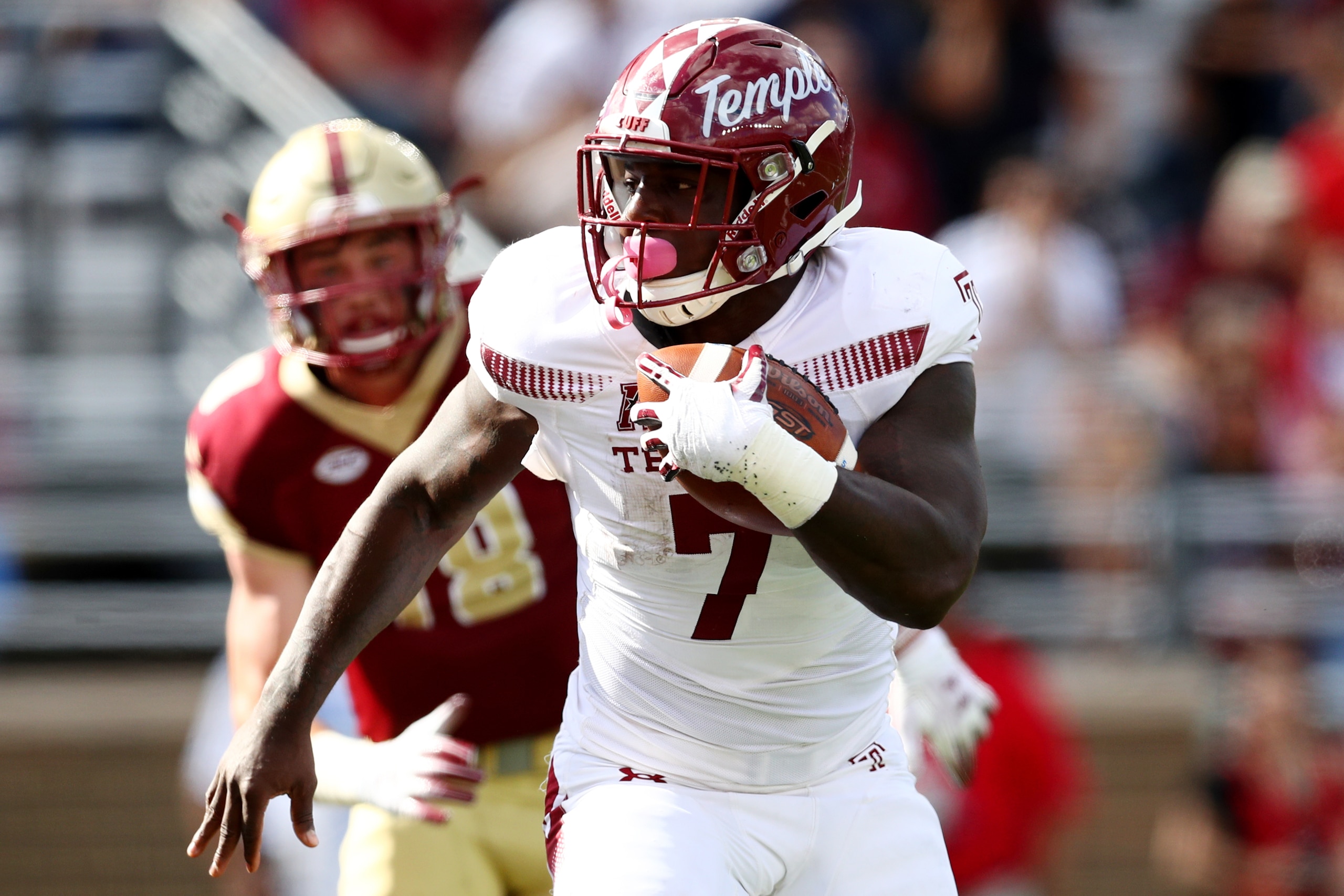
POSITIVES:
—Big (5’11”, 220 lbs) runner with power and physical mentality.
—Downhill speed with the juice to hit a second gear and pull away from defenders in the box.
—Limited wear and tear after being a spot starter his first three seasons.
—Violent, explosive runner who will look to run over tacklers in the hole or the open field. A determined, punishing back.
—Great feet, pad height and competitiveness.
NEGATIVES:
—Very impatient and presses the line of scrimmage.
—Vision is limited in the open field.
—No impact as a third-down back; lacks experience as a route-runner and has questionable ability as a receiver.
—Lacks an elusive factor.
—Injured throughout his career and sat out games in 2018 with an ankle injury.
OVERALL:
Armstead could be dangerous in a zone-blocking scheme with his one-cut ability, downhill speed and power game. He profiles well as a short-yardage back, too. For a team that’s already settled with a speed back, Armstead could come in and play well right away.
GRADE: 5.90 (ROUND 4—POTENTIAL STARTER)
PRO COMPARISON: Jordan Howard
11. Elijah Holyfield, Georgia
20 of 30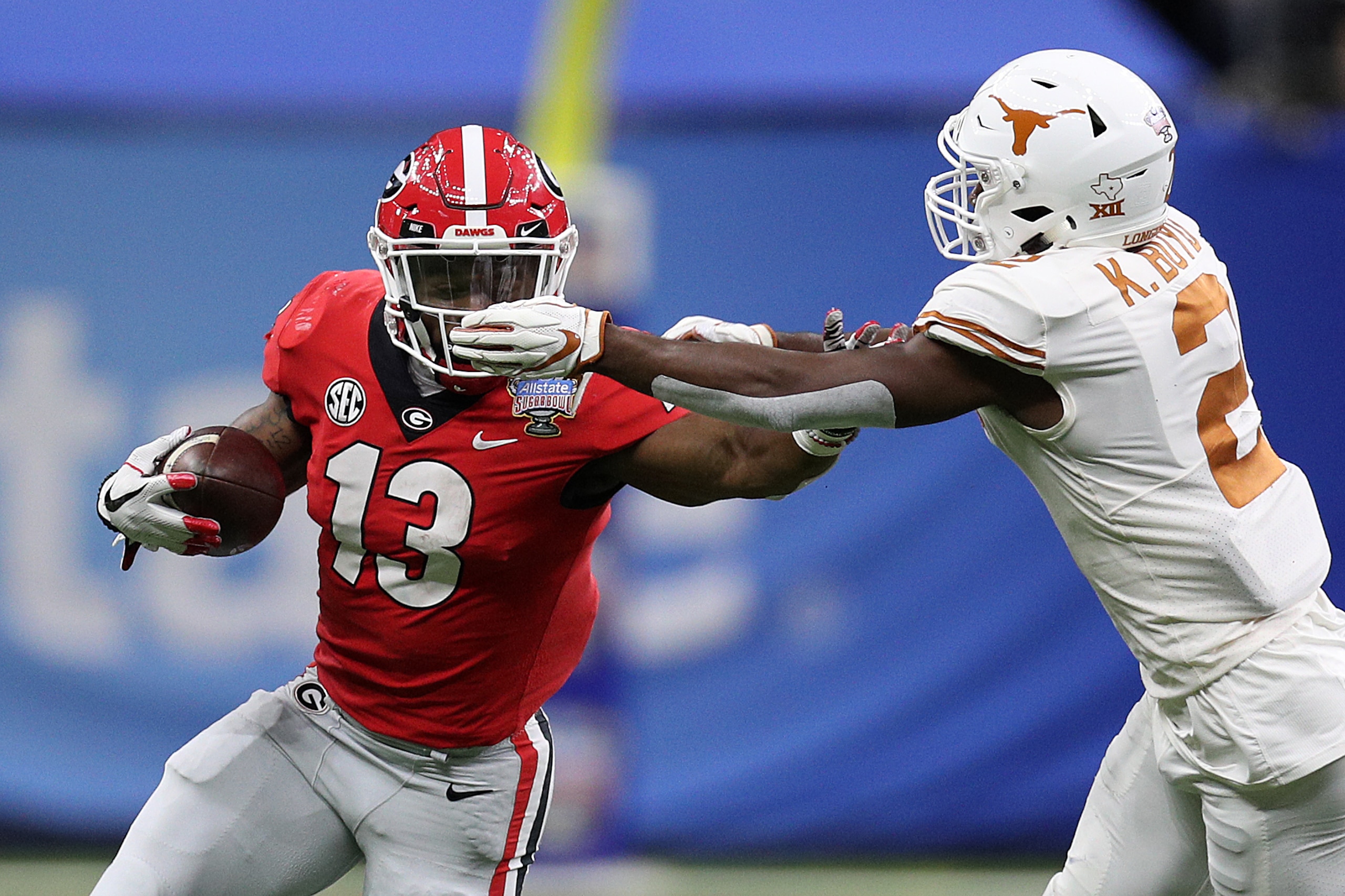
POSITIVES:
—Has an athletic build with excellent bloodlines: his father is former heavyweight boxing champion Evander Holyfield.
—A tough runner who looks to put his pads down and run over defenders in the hole or in the open field.
—Has the vision and patience to find secondary rushing lanes. Once he identifies his path, he shows very good burst and quickness. Acceleration receives a high grade.
—Body type and mentality to be a serious yards-after-contact player. The first defender rarely brings him down; a prime example of balance through contact.
—Limited wear and tear after sharing reps with Nick Chubb, Sony Michel and D’Andre Swift in a crowded Georgia backfield.
NEGATIVES:
—Doesn’t show the speed to run away from defenders in the open field; lacks chunk plays on film.
—Is not always patient enough to let the play develop and will run up the backs of his blockers.
—Short legs with choppy, jerky footwork when changing directions.
—Lacks hip agility to shake defenders, which could result in a high number of hits in the NFL.
—Disastrous showing at NFL combine with slowest 40-yard dash for any running back.
OVERALL:
Holyfield was never the primary back at Georgia but would have been at most Power 5 schools. He’s a fantastic power back who may need to work in tandem with a faster receiving option out of the backfield, but has the strength and vision to be an impactful rookie. If he can overcome poor testing times, he has the patience and vision to break out.
GRADE: 5.90 (ROUND 4—POTENTIAL STARTER)
PRO COMPARISON: Darrel Williams
10. Dexter Williams, Notre Dame
21 of 30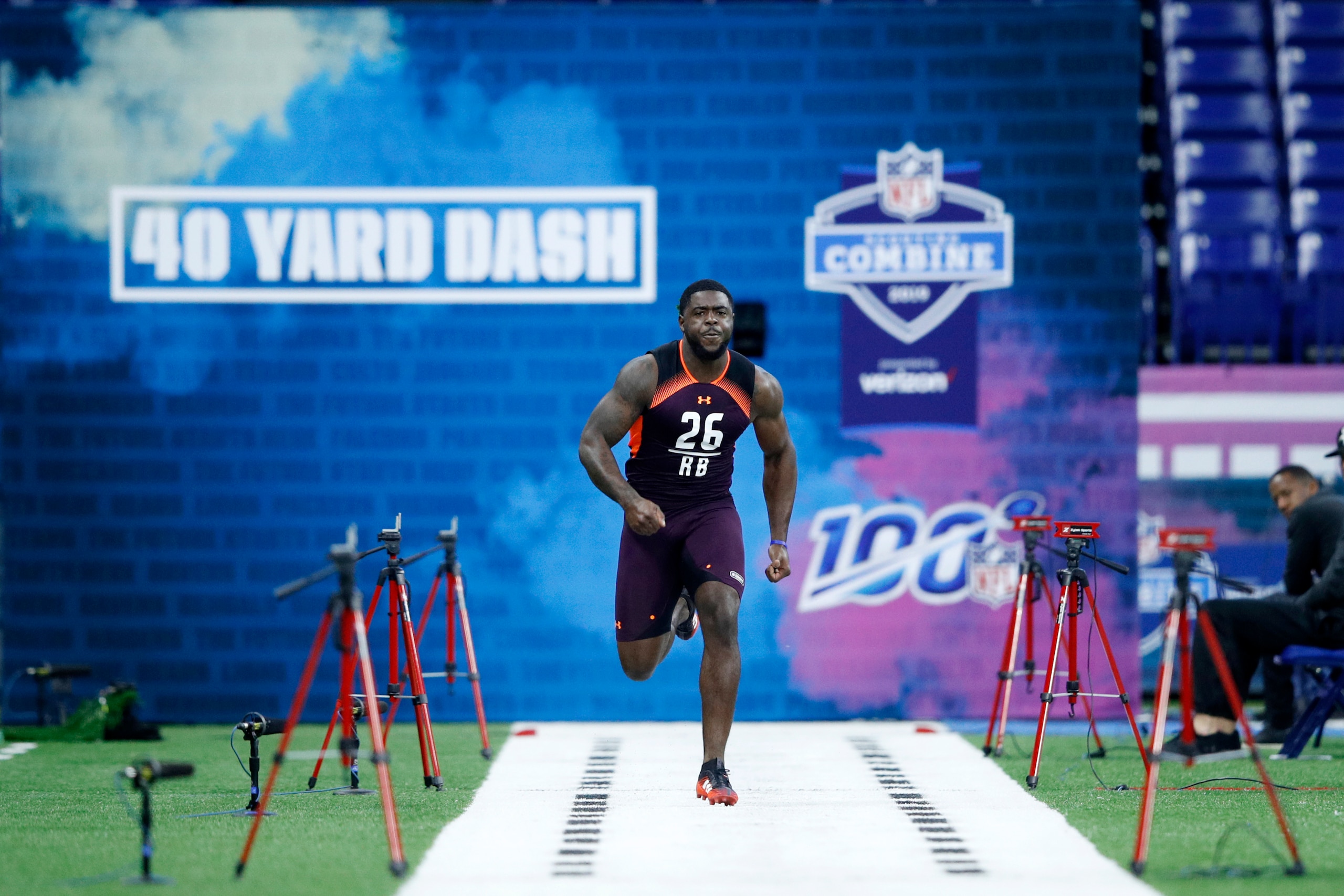
POSITIVES:
—Very good NFL size (5’11”, 212 lbs) with great production once stepping into the RB1 role at Notre Dame in Week 5.
—Has NFL vision and power to go with his frame. Will do work between the tackles and can absorb contact and bounce off with balance.
—Accelerates well before and after he makes a move; finds his lane and explodes through it with good lean and quickness.
—Power runner mentality and ball security with no fumbling issues. No wear and tear.
—Agility and flexibility are obvious on tape.
NEGATIVES:
—Suspended four games to start the 2018 season (undisclosed reason)
—Arrested in 2016 (possession of a handgun, marijuana possession)
—Never the go-to guy in the Notre Dame offense and struggled to produce against top-tier competition.
—Not much juice to his game; doesn’t shake defenders in the hole or make tacklers miss.
—Limited experience or production as a third-down back; average receiving history and limited pop as a blocker.
OVERALL:
NFL teams will have to check the background of Williams when making school visits, but if his 2018 suspension is cleared he could be a valuable mid-round runner with NFL starter traits. He flashed an ability to be a game-changing back at times during games against Stanford, Virginia Tech and Florida State.
GRADE: 5.90 (ROUND 4—POTENTIAL STARTER)
PRO COMPARISON: Jamaal Williams
9. Justice Hill, Oklahoma State
22 of 30
POSITIVES:
—Excellent production and almost no fumbles in three seasons; tough, dependable back with high character and football IQ.
—Shaky, quick, agile runner who can make defenders miss and showed the speed to turn the corner and explode into the second level in the Big 12.
—Impressed with more bulk on his frame at the NFL combine when weighing in at 5’10”, 198 pounds and still running a 4.40 in the 40-yard dash.
—Tape and workouts showed good lower-body agility and flexibility. Points to an ability to cut in the open field and make defenders miss.
NEGATIVES:
—Must work on developing more patience as a runner, especially between the tackles.
—Struggled in 2018 against top competition once he lost the trio of quarterback Mason Rudolph and receivers James Washington and Marcell Ateman.
—Quicker than fast and might struggle to produce long runs in the NFL.
—Can get caught taking too many steps to set up his moves. Will get caught outside the tackle box from trying to three-step a move instead of being decisive.
—Doesn’t have the speed on tape to produce chunk plays. More of a grind-it-out runner.
—Vision can be hit-or-miss as he presses the offensive line.
OVERALL:
Hill’s skill set is somewhat scheme-specific but for those clubs wanting a good receiver with third-down running traits, he’s a fit. He doesn’t profile as a future NFL starter at running back but could come in immediately as a high-level contributor in a back-by-committee offense.
GRADE: 6.00 (ROUND 3—ROOKIE CONTRIBUTOR)
PRO COMPARISON: Duke Johnson
8. Trayveon Williams, Texas A&M
23 of 30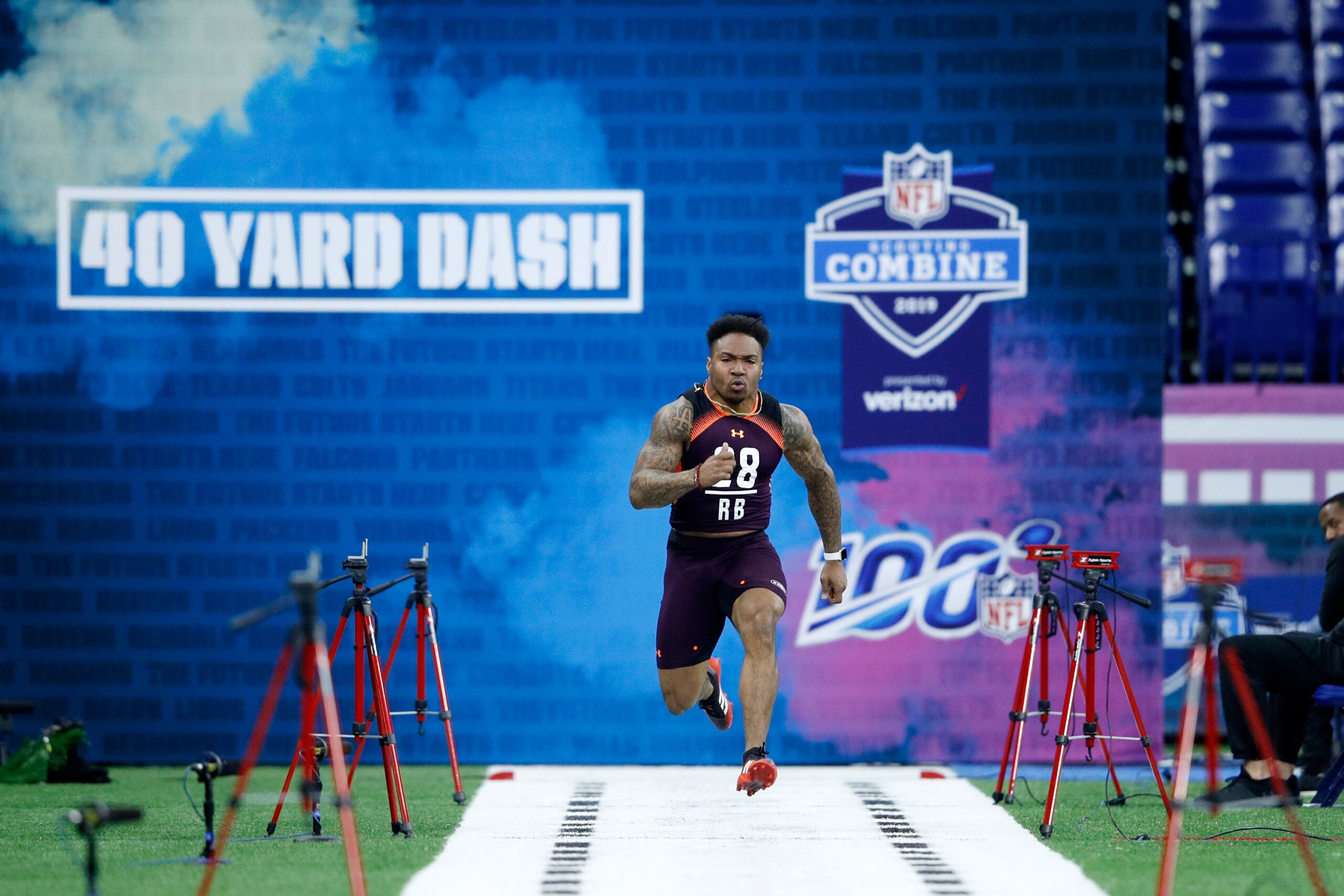
POSITIVES:
—Excellent third-down option as an outside runner, receiver and pass protector.
—High-cut, long-limbed prospect with good downhill speed and burst out of the backfield.
—Short but strong frame with enough power in his game to break off tackles and work through contact.
—Excelled in a pro-style offense under new Texas A&M coach Jimbo Fisher and showed he has the tools to be an every-down back.
—Patient runner with good vision, agility and balance.
NEGATIVES:
—Shorter build than ideal for an NFL back (5’8”).
—Lacks juice to shake defenders in the open field and can be caught from behind due to a lack of top-end speed.
—Burst looks average at times. Plays with a lack of urgency.
—Scouts worry he benefited from the system and would struggle to find rushing lanes without a great offensive line.
—Can be too patient and will get tackled behind the line of scrimmage.
OVERALL:
Williams might not be a fit for every team, but he does rank as the best third-down back in the 2019 draft class. He might not have great speed, but he’s balanced and agile while bringing top-notch hands and receiving ability. He’s perfect, paired with a bigger, power back, as a third-down option.
GRADE: 6.00 (ROUND THREE—ROOKIE CONTRIBUTOR)
PRO COMPARISON: Nyheim Hines
7. Mike Weber, Ohio State
24 of 30
POSITIVES:
—A reliable pass-catcher out of the backfield with soft hands and skilled routes.
—Solid frame with low center of gravity allows him to bounce off tacklers.
—Has enough speed to pull away from defenders; he can accelerate to reach the edge and run past tacklers.
—Instincts, vision, patience and balance are all very good and underrated qualities of his game.
—Doesn’t go down on first contact and will look to break tackles, fall forward and keep the run going.
NEGATIVES:
—Inconsistent production after his freshman season; lost carries to J.K. Dobbins.
—One-move back without the ability to set up tacklers with his feet or hips.
—Runs look tight at times; won’t beat a tackler with hip looseness or quick cuts.
—Straight-line fast with average agility in and out of cuts.
—Couldn’t hold onto the starting job at Ohio State and has a history of getting banged up.
OVERALL:
Mike Weber looked like a future starting running back after his freshman season, but the following two years were disappointing as he struggled to stay on the field or take over the RB1 job. Still, he projects as a solid NFL running back who has the speed, vision and hands to, at least, contribute early on if not become an outright starter in the right scheme.
GRADE: 6.15 (ROUND 3—ROOKIE CONTRIBUTOR)
PRO COMPARISON: Aaron Jones
6. Darrell Henderson, Memphis
25 of 30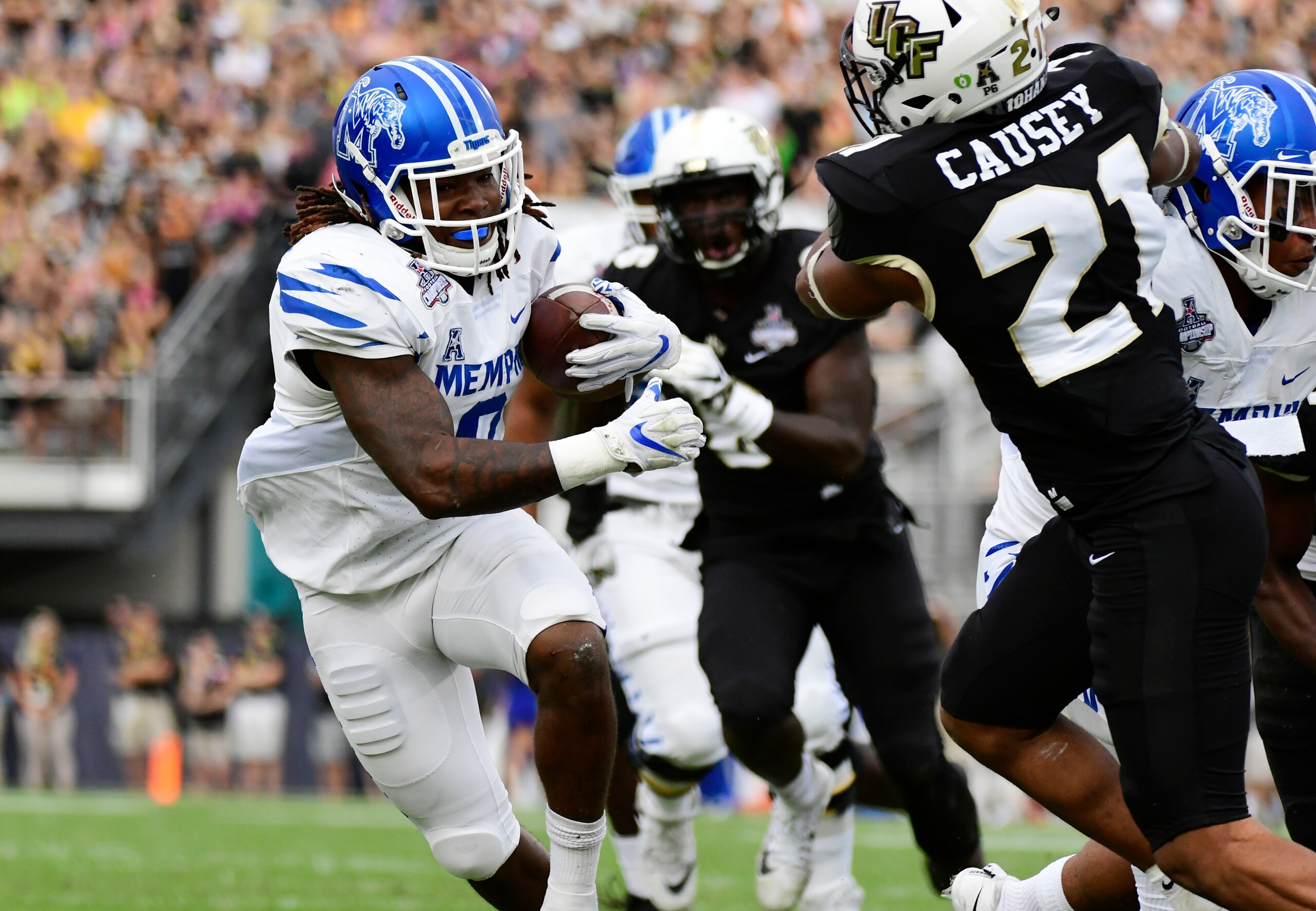
POSITIVES:
—Explosive, fast runner with pull-away speed and the production to match. The best long-run back in the 2019 class.
—Top-tier acceleration; never lets his feet stop moving and doesn’t give up on a rush.
—Fluid hips and feet that show a full toolbox of moves; will hit defenders with a juke, spin or stutter step.
—Has experience as a receiver out of the backfield and as a blitz protector.
—Naturally low center of gravity makes it hard for defenders to get a solid hit on him; he will bounce off and pick up yards after contact.
—Has shown the skills to be an impact runner, receiver and return man.
NEGATIVES:
—Lacks ideal size, at 5'8", 208 pounds, to be a primary back in the NFL.
—Does not look smooth when cutting and is more reliant on open-field moves instead of footwork.
—In the open field he will get too tall and too cute trying to dance around defenders.
—Average hands for a back and might never be more than a safety valve in the passing game.
—Isn’t an accomplished runner between the tackles; concerning vision and patience when asked to hit a hole. Might never be more than a scatback.
OVERALL:
Darrell Henderson’s highlight tape looks like a Round 1 talent, but his week-to-week tape is more concerning as it highlights interior running and the inability to beat pro-level defenders in space. He’s fast and has electric acceleration, but his all-around game is limited when compared to the other top backs. In the right scheme, he could have an impact and become a productive rusher.
GRADE: 6.25 (ROUND 3—ROOKIE CONTRIBUTOR)
PRO COMPARISON: Jerick McKinnon
5. Devin Singletary, FAU
26 of 30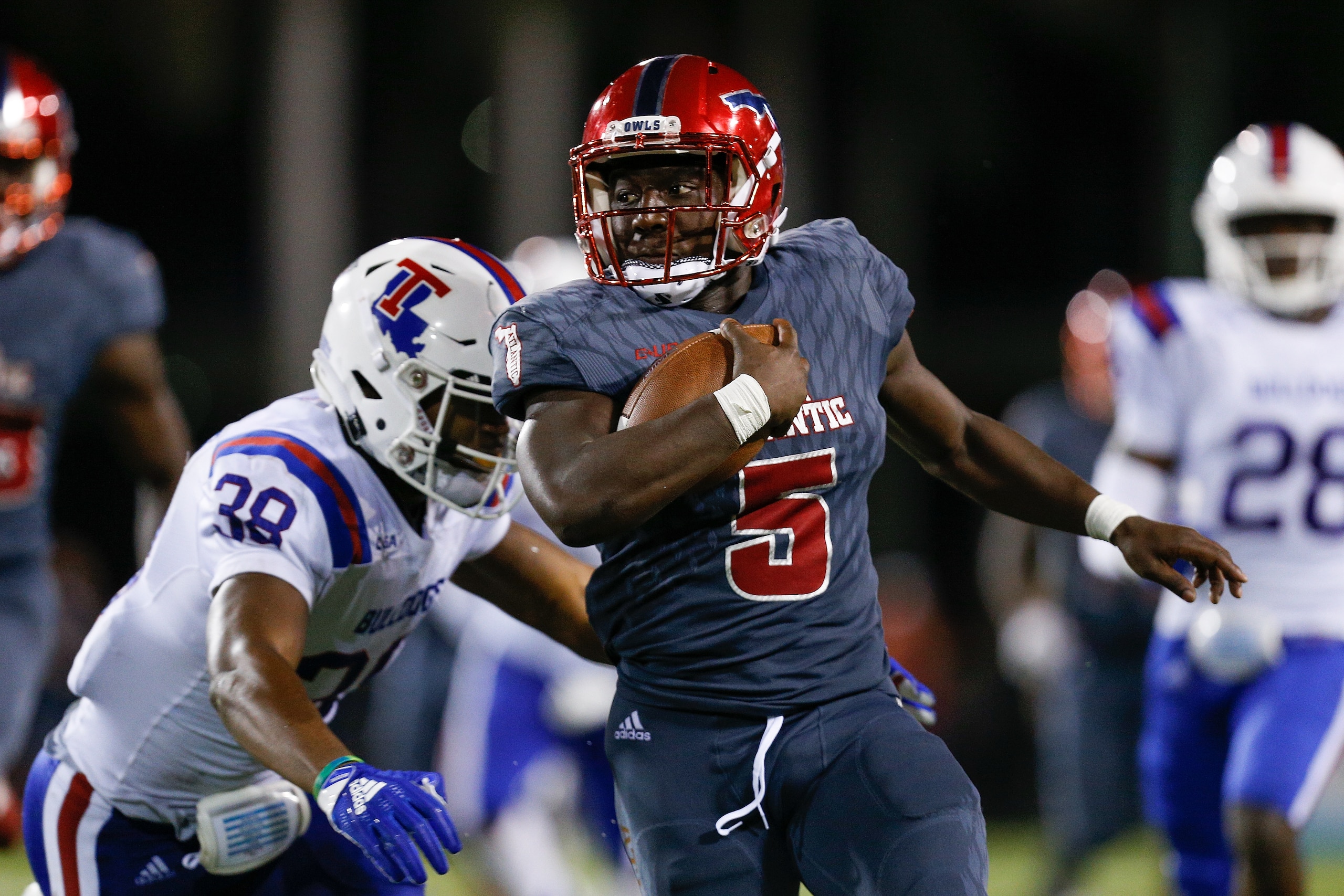
POSITIVES:
—A natural three-down back with the juice to bust into the open field and pick up yardage in chunks.
—Very explosive short-area speed with the hips to shake defenders or make sudden cuts.
—Is rarely squared up and hit by a defender; can juke and spin his way to freedom. Agility is special.
—Isn’t afraid of contact and will look to run or jump over defenders.
—Has the speed to be dynamic as a route-runner out of the backfield or split out to the slot.
—Will stand in and pass protect; has immediate value in passing situations.
NEGATIVES:
—Had a ton of touches at FAU and may be worn down as a smaller-bodied, 5'7" back.
—Is more agile than fast; doesn’t have as many runs where he beats defenders downfield.
—Can be spastic and look to cut back against the grain instead of playing patient football.
—Lacks power at the point of attack; isn’t a push-the-pile back.
—Might be limited to third-down or rotational roles due to his lack of size, power and between-the-tackles acumen.
OVERALL:
Singletary won’t be a fit for every team, but those clubs that take advantage of his agility and receiving skills will have a threat in their backfield. Teams running an outside zone scheme would be preferred for Singletary (Philadelphia, Kansas City). He has the look of an early starter or high-rep contributor depending on the situation he’s drafted into.
GRADE: 6.40 (ROUND 3—ROOKIE CONTRIBUTOR)
PRO COMPARISON: LeSean McCoy
4. Damien Harris, Alabama
27 of 30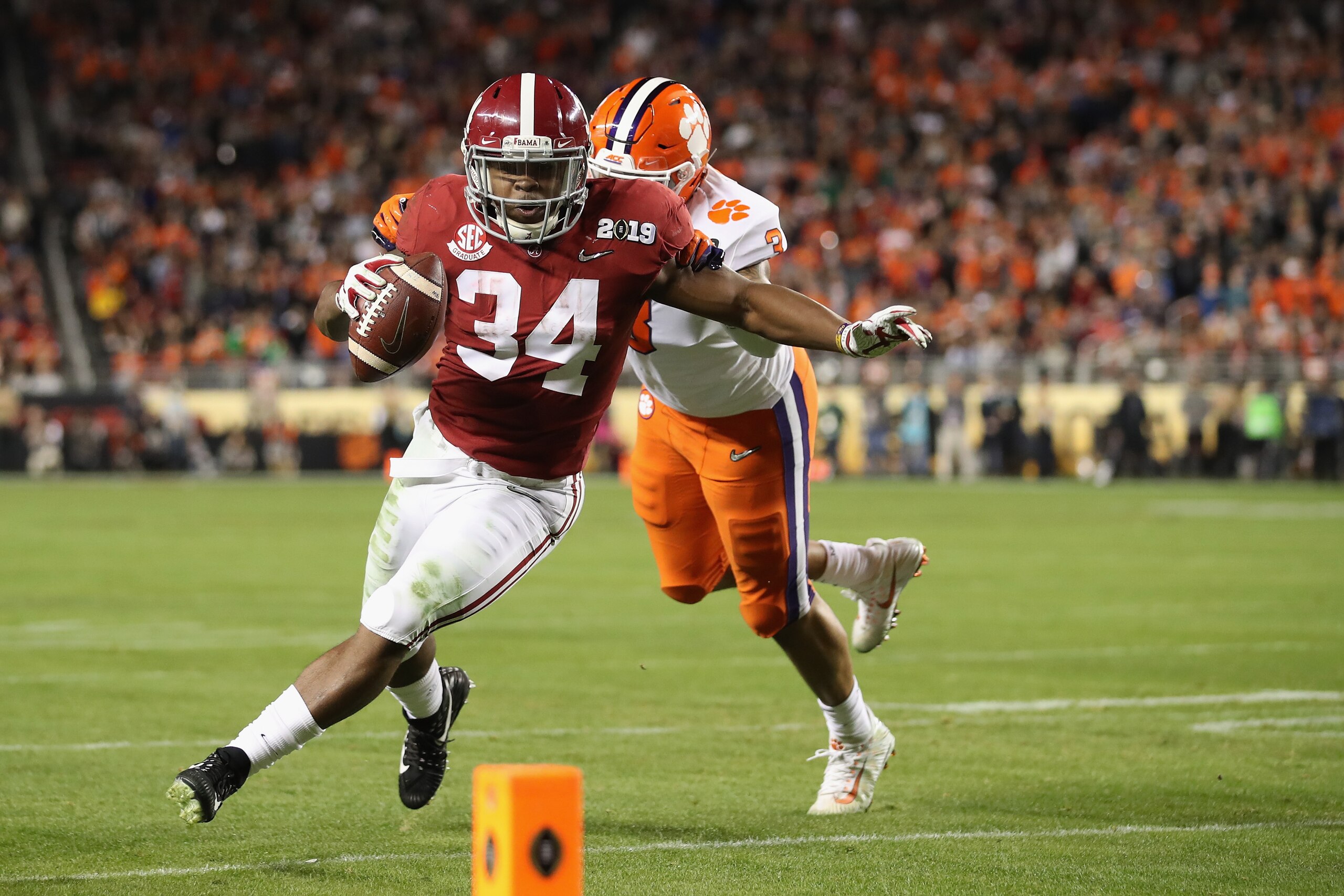
POSITIVES:
—Physical runner between the tackles who has the vision to pick his way through traffic.
—Straight-ahead, in-your-face runner with toughness complemented by quick, agile moves and feet.
—Is patient while still being physical, which can be hard to find.
—Has no issues with ball security despite being a between-the-tackles runner.
—Can get skinny and use his feet to step through the mess and find running lanes.
—Third-down-ready as a receiver and blocker. Has soft hands but will stand in and take a lick for his quarterback.
—Didn’t see many hits at Alabama thanks to a shared backfield with two other backs.
NEGATIVES:
—Lacks top-end speed and acceleration. Will struggle to hit the corner against NFL defenses. Has limited pull-away ability.
—Shows hip tightness that limits his ability to shake defenders in the open field. Does not make anyone miss, but instead looks to run them over.
—Has a short, compact frame at 5'10", 216 pounds, that doesn’t show much ability to grow; is maxed out physically.
—Likes to duck his head and plant it into the chest of defenders.
OVERALL:
Harris has some traits that make you sit up in your chair, but he lacks the burst and wiggle that teams want outside the tackle box. He might top out as a rotational back if not drafted into a system that values interior rushing yardage. What he offers as a third-down back makes him a potential value in Rounds 2-3.
GRADE: 6.50 (ROUND 2-3—ROOKIE STARTER)
PRO COMPARISON: Alex Collins
3. Miles Sanders, Penn State
28 of 30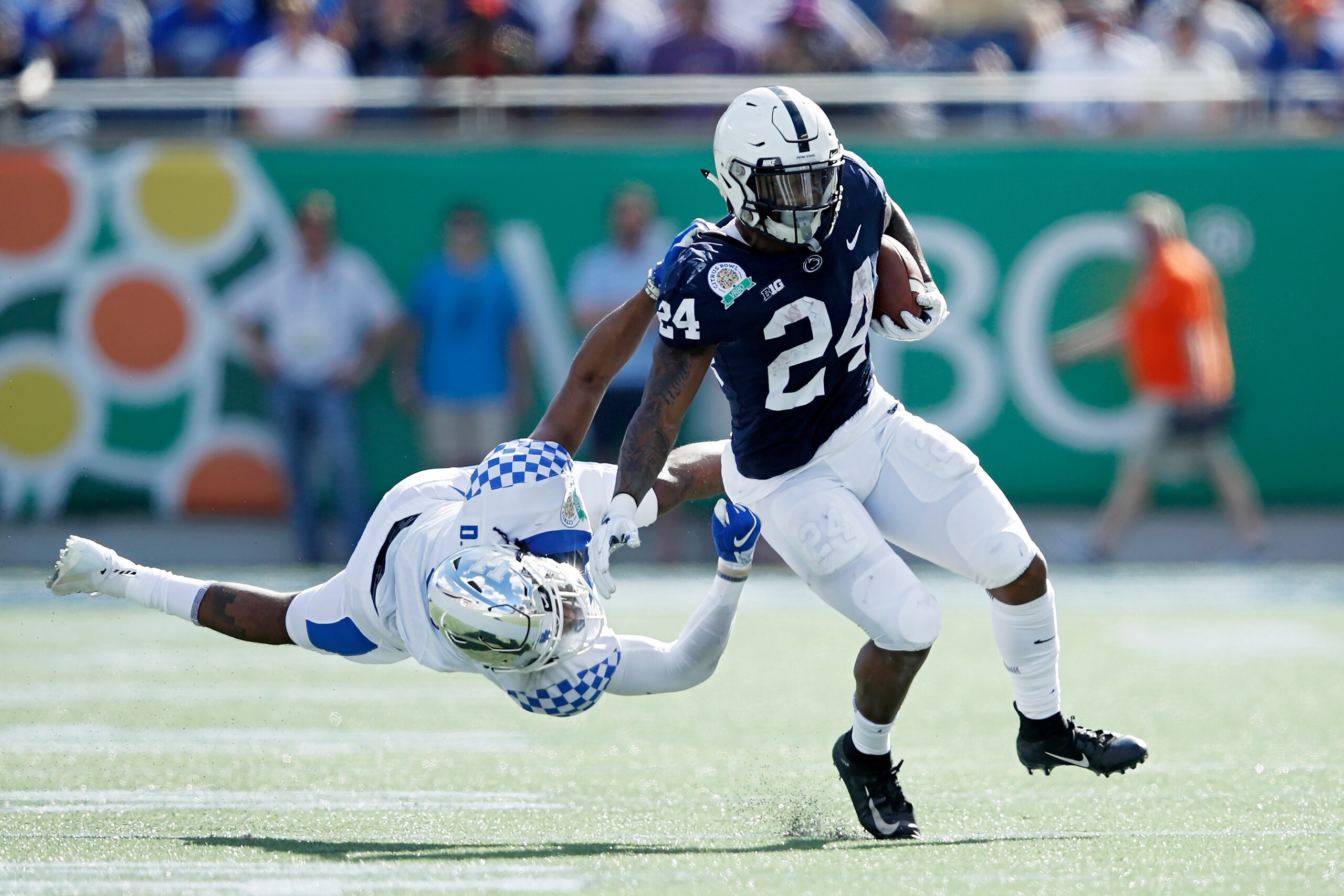
POSITIVES:
—Limited wear and tear after sitting behind Saquon Barkley at Penn State for two seasons.
—Very talented receiving back with natural hands and a good understanding of route concepts and space.
—Well-built (5’11”, 211 lbs) with good speed (4.49 40-yard dash) and agility; also showed ideal strength as a runner on tape and in workouts.
—Has a developed processor and runs with good instincts, patience and vision; but he will also put his pads down and attack when needed.
—Squeezes through rushing lanes and can make himself small to get through cracks and creases. Pops out the other side with balance.
NEGATIVES:
—Isn’t explosive in the open field and will get caught from behind.
—Fumbles were a major issue in his lone season as the go-to back.
—Burst is average and doesn’t show him turning the corner to pull away from the edge. Will get caught dancing in the backfield and lose yards.
—Average commitment and effort as a blocker.
—Struggled against good competition.
OVERALL:
Sanders had an impressive showing at the NFL Scouting Combine, but his tape puts him in the middle of the pack as a running back prospect, albeit in a weak running back class.. He has positive traits—power, balance, hands—that could turn him into a starting back, but the fumbles and lack of production against good defenses are concerning enough to keep him out of the first round.
GRADE: 6.60 (ROUND 2—ROOKIE STARTER)
PRO COMPARISON: Sony Michel
2. David Montgomery, Iowa State
29 of 30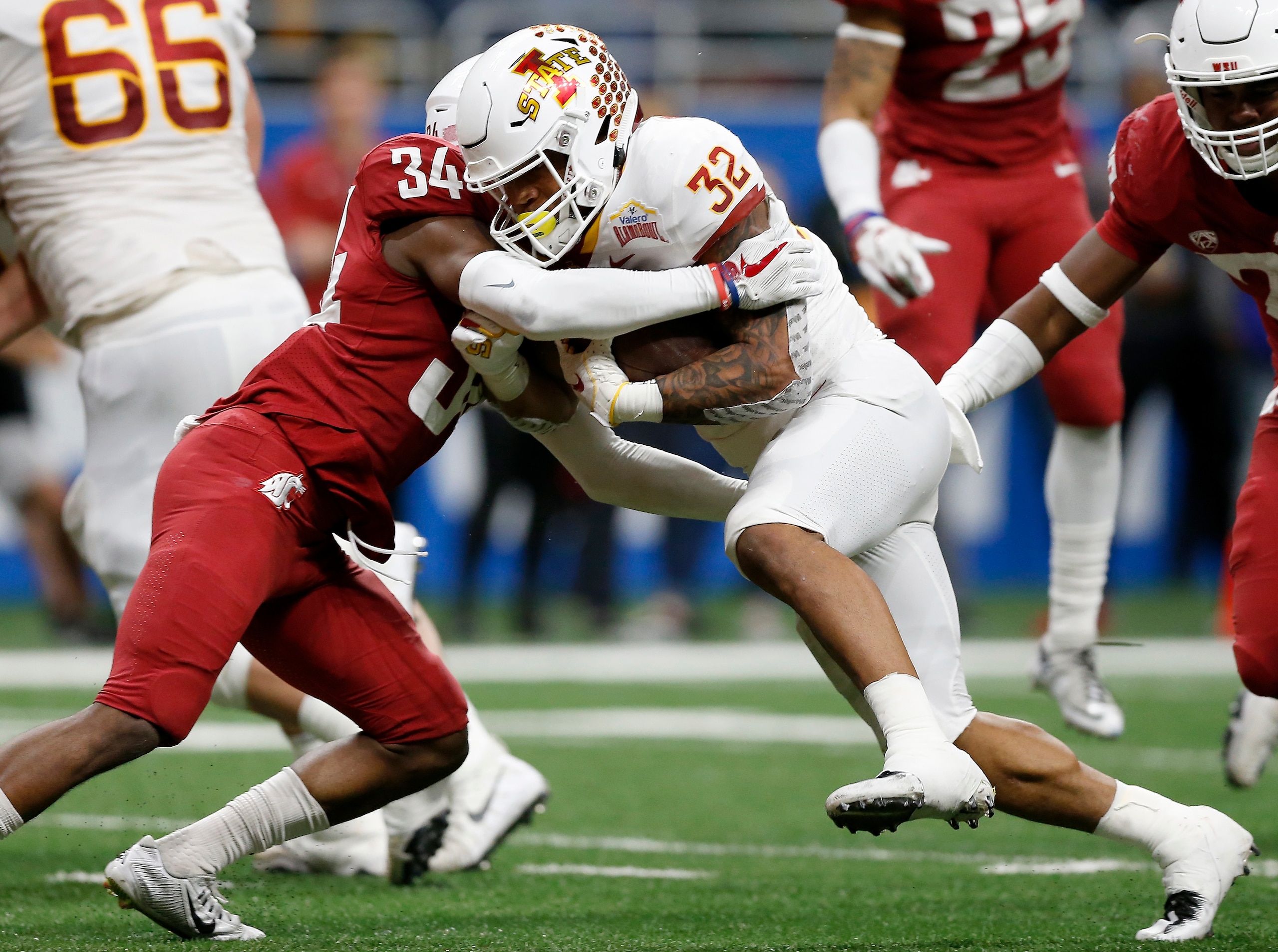
POSITIVES:
—Built like a starting running back with thick thighs and big shoulders.
—Very good blend of power, vision, balance, hands and agility.
—Will cut back against the grain and can spot creative openings on the fly. He’s patient with well-developed vision.
—Runs with equal power and balance; won’t go down on first impact and can bounce off tacklers without losing his footing.
—Will hurt those looking to tackle him head-up.
—Fantastic, natural receiver out of the backfield with soft hands.
—Carried the load behind a bad Iowa State line and didn’t show issues with ball security.
NEGATIVES:
—Lacks home-run-hitter speed and won’t pull away from defenders.
—Took a lot of hits in college and could be susceptible to breaking down physically with his running style.
—Can look uninterested as a blocker, which doesn’t mesh well with his ability as a receiver.
—A lack of burst will lead to being caught from behind when trying to bounce to the corner.
—Could struggle to separate as a receiving option due to lack of speed.
OVERALL:
An immediate NFL starter in a zone scheme that will utilize his mix of power, balance, vision and agility. Montgomery can step right in and contribute as a receiver, too. Teams like the Kansas City Chiefs and Philadelphia Eagles could turn him into a Pro Bowl caliber back with their running back usage and his talents.
GRADE: 6.95 (ROUND 2—ROOKIE STARTER)
PRO COMPARISON: Kareem Hunt
1. Josh Jacobs, Alabama
30 of 30
POSITIVES:
—Powerful, violent runner with the mindset to lower his pads and run through contact while giving maximum effort on all runs.
—Excellent build with thick, powerful legs.
—Smart, patient runner who waits for the play to develop and then uses his acceleration and power to crash through openings.
—Has loose hips and can cut back across the plane and bounce runs outside the tackle box.
—Rarely loses yards and is a fall-forward kind of back who will get skinny or truck his way through an opening.
—Looks patient but does everything fast.
—Experience as a receiver out of the backfield with soft, natural hands.
—Limited wear and tear after only 251 career carries.
NEGATIVES:
—Doesn’t have run-away speed to rip off explosive chunk plays.
—Will sometimes take multiple steps when just one is needed to cut and change direction.
—Tape does not show him blocking; could be due to a lack of talent or a coaching decision.
—Will not make defenders miss in the open field and could be susceptible to a high number of hits.
OVERALL:
Jacobs is the unquestioned top back in the 2019 draft class with excellent vision, balance, power and tools as a receiver out of the backfield. Teams will rightfully question his breakaway speed, but it’s rare to get a back with this much talent and so little damage done to his body coming out of college. Jacobs has early Pro Bowl potential.
GRADE: 7.25 (ROUND 1—TOP 15 PLAYER POTENTIAL)
PRO COMPARISON: Frank Gore
.jpg?w=2560 "APTOPIX Panthers Browns Football")
.jpg?w=2560 "Dolphins HC on Achane Injury")