New NFL Catch Rule Marks the Beginning of a Let 'Em Play Revolution
Most football fans don't know what a catch is. But we know what we like.
We like touchdowns. Big plays. Long bombs. Fades in the corner of the end zone. We like breathtaking deep passes when they are caught, when they are intercepted, even when they are batted away by an alert cornerback at the last second. We liked the Super Bowl (not everything is about you, Patriots fans) because it was full of highlight-reel plays, and those plays were not voided by forensic-video technicalities.
We also know what we don't like: endless replay reviews, philosophical discussions about what phrases like "completing the catch" or "going to the ground" mean, Monday morning controversies after an apparent Jesse James game-winning, playoff-landscape-altering touchdown was nullified in accordance with Paragraph X and Subsection Y. We like football, not Rulebook Ball.
TOP NEWS
.jpg?w=2560 "Seahawks Camp Football")
NFL Rookies Who Could Earn Starting Jobs 🌟
.jpg?w=2560 "Titans Football")
Will Levis Thinks He's QB1 🗣️

Former NFL Star Rips Jake Paul
The NFL may never know what a catch is, but it finally figured out what fans want. The catch rule has been relaxed and simplified. League owners unanimously ratified new language recommended by the competition committee on Tuesday. That means we'll spend less time next autumn parsing definitions like second-year law students and more time watching football players play football.
Viva la Let 'Em Play Revolution!
Commissioner Roger Goodell promised an overhaul of the catch rule during his state-of-the-shield address at the Super Bowl in late January. But the commissioner's problem-solving track record is less than spectacular, so his hands-on involvement wasn't exactly a selling point. It was easy to pessimistically think that the NFL would overcorrect one set of rules mired in strictly interpreted legalese by ordering the strict interpretation of a second batch of legalese.
Last week, Senior Vice President of Officiating Al Riveron tweeted the revised catch-rule language proposed by the competition committee. Again, there was plenty of cause for skepticism. The dreaded "football move" returned to the lexicon, and the disturbingly vague phrase "or the ability to perform such an act" has been tacked onto the end of the proposed language. It sounded like we were in for 20-minute replay reviews next autumn, with officials debating what a player might have done.
Luckily, Friday's conference call with NFL Executive Vice President Troy Vincent and competition committee chairman Rich McKay brought clarity to the most existential question in American sports.
"We tried to simplify the rule," McKay said. "We tried to make it a very definable process, which is: control, making a clean catch of the ball; two feet down or a body part; and then do anything with the ball that shows that it's a football act.
"That can be reaching for the goal line like Jesse James did. That could be reaching for a first-down line. That can be tucking the ball away. That can be a number of things."
Even the "ability to perform" clause at the end of Riveron's slide makes more sense once it's explained. "What if he had enough time to do it and he just didn't do it, because he didn't need to?" McKay hypothesized. "For instance, he could be in the end zone and caught the ball and held it. He could have done something with it." In other words, weird technicalities a second or two after the fact would not be used to negate a catch.
The newly ratified language also gets rid of the pesky "going to the ground" language, and it will decriminalize letting the nose of the ball wiggle slightly while securing it, a pair of bugbears that have caused many apparent catches to be overturned for submolecular reasons in recent years.
Tuesday's 32-0 vote offers real hope that plays that look like catches in real time will have a much higher probability of counting as catches from now on. There will still be controversies, and we will howl and gnash our teeth across the internet at the first bobbled ball that slips through the cracks of the new rules. But when in doubt, the next Dez Bryant catch or Jesse James catch will actually be a highlight to cherish, not Exhibit A in a Monday morning mock trial.
Relaxing and simplifying the catch rule will be the NFL's smartest decision since it revised the touchdown-celebration rule last year. Remember the fear that easing back unsportsmanlike conduct fouls would result in post-touchdown taunting and twerking? Instead, players channeled their heretofore-unknown improv-troupe urges, giving us a season of unexpected whimsy.
In the same way, a relaxed catch rule won't exchange one set of problems for another. But they will result in more touchdowns (great for fantasy gamers), more sharable highlights (perfect for the modern fan watching five screens and streams at once) and unforgettable moments (the stuff sports dreams are made of).
The NFL could finally be getting a little less stuffy and, as a result, a lot more fun when it comes to its on-field product. Tuesday's news was as encouraging for the new ideas the NFL tabled as for the ones it ratified.
The league scrapped a proposal to reduce pass interference from a spot foul to an NCAA-style 15-yard penalty. The change was popular in some league and fan circles, but Vincent, a former Pro Bowl cornerback, expressed skepticism about it on Friday.
"Professional defensive backs are too skilled and too smart," Vincent said. "And you can play the play. You don't want a defensive back being able to strategically grab a guy." Vincent's warning of unintended consequences was a likely reason many owners were wary of supporting such an extreme change.
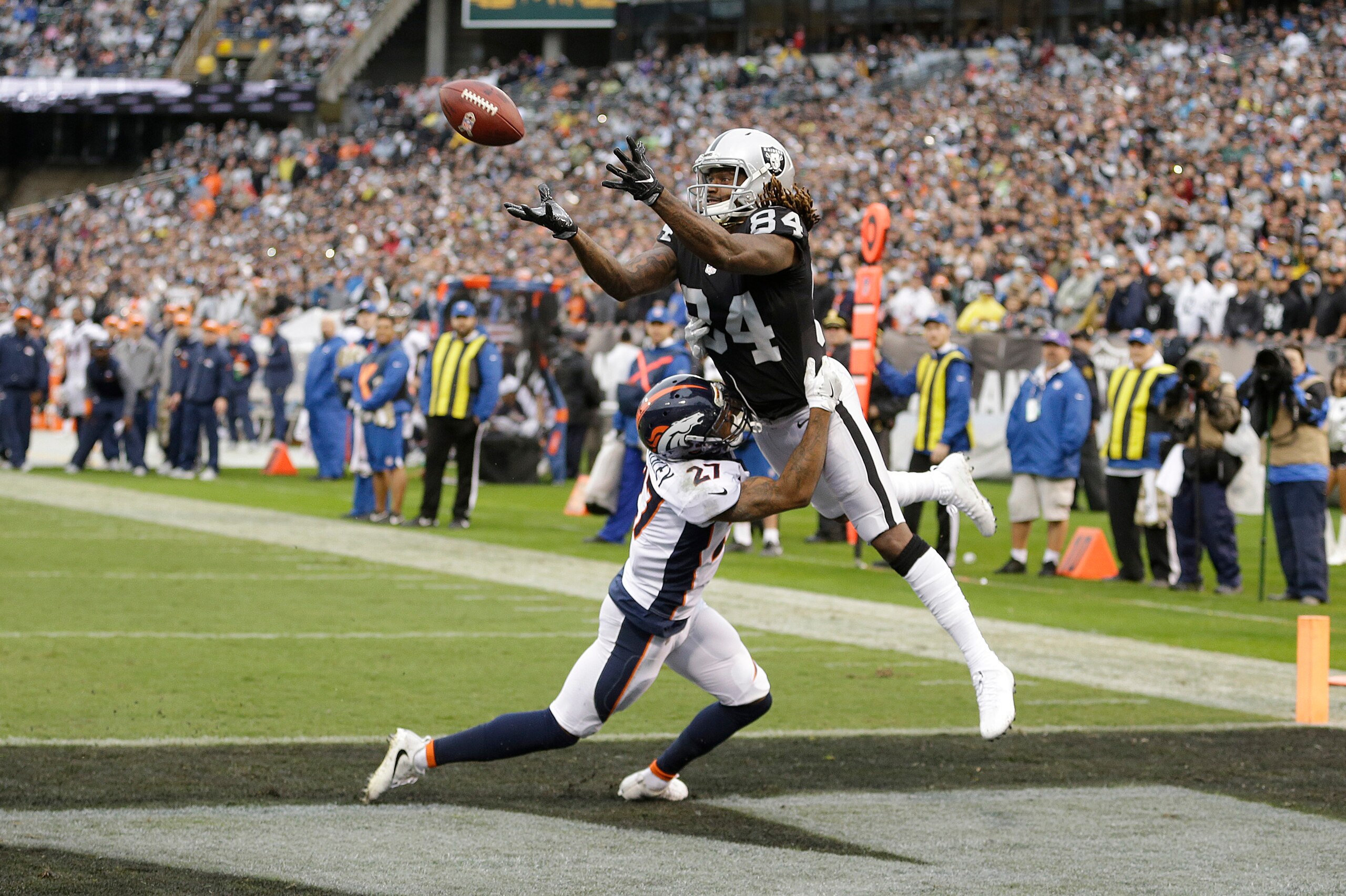
Vincent feared that the 15-yard pass interference penalty would replace touchdowns with penalties. He's right. Let's use a bad pass interference call like Ken Crawley's "foul" against a stumbling Stefon Diggs in the Vikings-Saints playoff game as an example. Replace the spot foul with a 15-yard penalty, and defenders like Crawley either tackle Diggs if he fears getting beat, or receivers like Diggs start flopping after incidental contact, hoping officials are less reluctant to award 15 yards on a borderline call than 34 yards.
The real solution to the problem of ticky-tack pass interference penalties is to let 'em play and only call the most flagrant fouls. Football is at its best when both the receiver and defender go all-out to play the ball. It will help that neither will be required to fill out mortgage paperwork to prove that he caught it.
Tuesday's decisions mean that we'll get more receptions, more interceptions, fewer flags and fewer stoppages by September. And that sounds marvelous after what we have seen on the hardwood this March.
The NCAA basketball tournament has been chock-full of historic upsets, overtime duels and inspirational nonagenarian nuns this year. But every year, more and more college basketball games are marred by interminable replay reviews, as officials obsessively try to correct every late-game call.
Yes, a billion brackets hang on every close call, and we'd love March Madness even if the clock stopped every possession for a commercial. But we'd love it even more if it didn't take 15 minutes to play the final minute of a game.
The NCAA hasn't gotten the message yet. The NFL may finally be onto the fact that turning every catch into a senate confirmation hearing is detrimental to the game, especially when most fans are dissatisfied with the results.
Let 'em play. Let us watch them play. It's pretty simple when you don't go out of the way to overcomplicate things.
Mike Tanier covers the NFL for Bleacher Report. He is also a co-author of Football Outsiders Almanac and teaches a football analytics course for Sports Management Worldwide. Follow him on Twitter: @MikeTanier.
.jpg?w=2560 "49ers Cardinals Football")
.jpg?w=2560 "Buccaneers Mayfield’s Future Football")