Calvin Johnson's Retirement Reveals Pain Impossible to Ignore for NFL Players
On the phone is a former teammate of future Hall of Fame receiver Calvin Johnson. The player remembers a conversation he once had with a small group of Lions teammates, including Johnson. It was about concussions.
The man on the phone says some Detroit offensive players had felt—going back several years—Johnson was going to retire not last season, but the season before. He was, the player said, showing more effects from the wear and tear of playing the most violent sport in the world than in the past. He was limping more. Spending slightly more time with the medical staff, the player said.
TOP NEWS
.jpg?w=2560 "Texans Steelers Football")
🚨 Joey Porter Jr. Traded to Cowboys
Mike Tomlin Debuts Minecraft City 🏗️
.JPEG?w=2560 "Seahawks Giants Football")
Marshawn Reveals Scary Stat 🚗
Johnson never complained about those various aches, the player said. Why? "He's the greatest leader I've ever seen," said the player, who asked not to be identified, "and leaders don't complain. He was also the toughest son of a bitch I ever saw."
Then came that one conversation, sometime last season, when a small group of Lions players were speaking about concussions.
It was a casual chat, and what struck the player was that Johnson wasn't sure how many he'd had.
"Calvin thought it may have been a dozen or more," the player remembered, "but he wasn't sure."
A dozen?
"Maybe more," the player repeated.
Some players remember exactly how many concussions they had in a career. Yet it's not terribly unusual for a player to not remember the exact number. Or even approximately. And that is what makes it so scary.
I called the Lions player once ESPN released portions of an interview Johnson conducted with Michael Smith for the network's E:60 program. The show wasn't just a window into Johnson's decision to leave the game he adored, it was yet another look at the brutality of the sport, a brutality that many of us still can't possibly understand or appreciate.
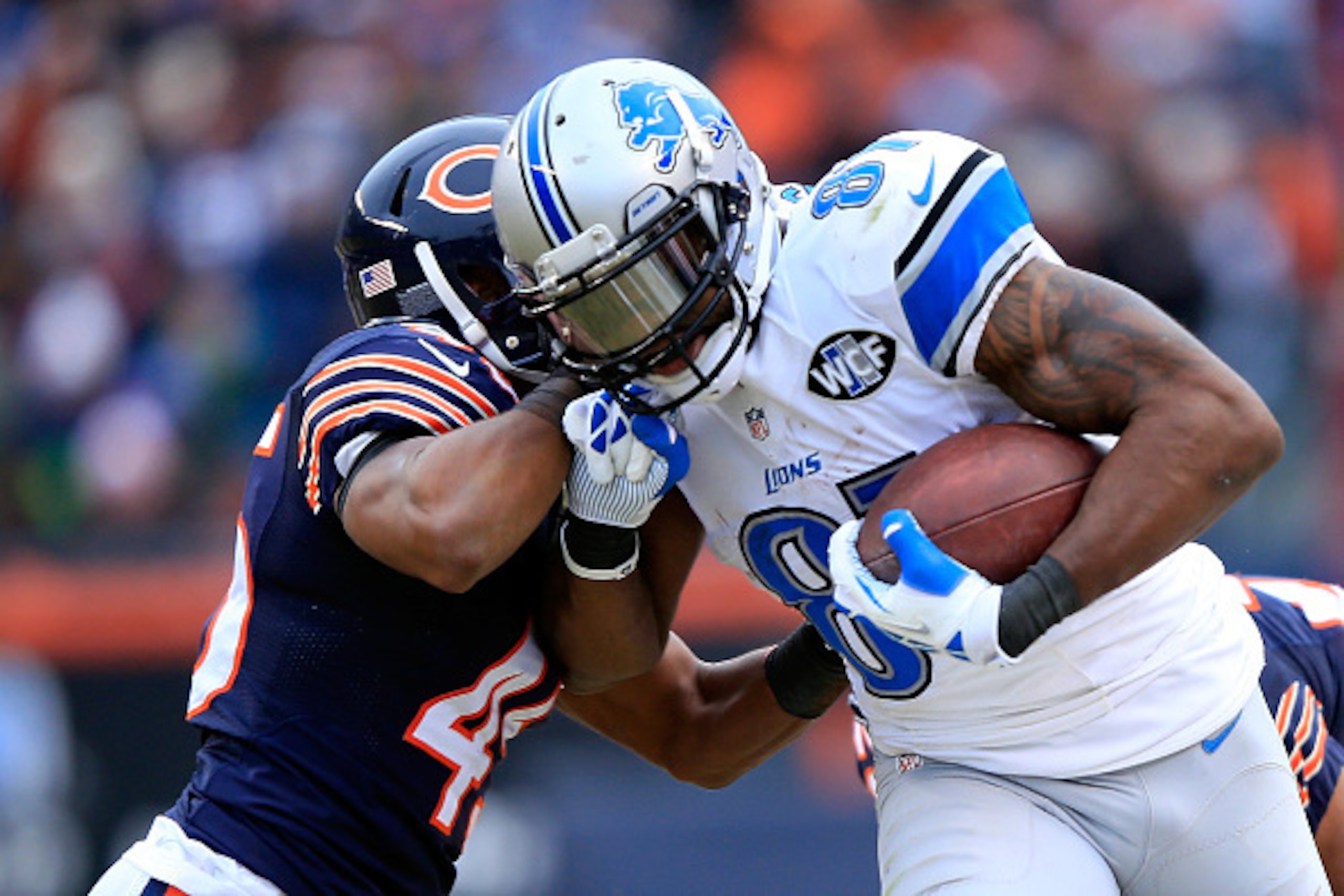
"It's clear to see when you get a concussion," Johnson told Smith. "In football, it's—concussions happen, if not on every play, then they happen like every other, every third play, you know. With all the helmet contact, guys hittin' the ground, heads hittin' ground. It's simply when your brain touches your skull from the movement or the inertia, man. It's simple to get a concussion, you know. … I don't know how many I've had over my career, you know, but I've definitely had my fair share."
Still, ESPN says Johnson was never once listed on an injury report with a concussion.
His words about painkillers were also troubling.
"I guess my first half of my career before they really, you know, before they were like started looking over the whole industry, or the whole NFL," he said, "the doctors, the team doctors and trainers they were giving them out like candy, you know?
"If you were hurting, then you could get 'em, you know. It was nothing. I mean, if you needed Vicodin, call out, 'My ankle hurt,' you know. 'I need, I need it. I can't, I can't play without it,' or something like that," he added. "It was simple. That's how easy it was to get 'em, you know. So if you were dependent on 'em, they were readily available."
Johnson played in the NFL from 2007 through last season, so he's not talking about ancient history. If it was the first half of his career, as he stated, that's just four or five years ago.
The NFL recently instituted tighter restrictions on how painkillers are distributed on gamedays, trying to address an issue that goes back decades. The Lions player on the phone call told me what Johnson said about past painkiller use was true. Repeatedly, the player said that overuse of painkillers was not a unique problem in the Lions locker room, and it remains a problem across the NFL.
"Just the ability to be able to perform at the way I'm used to performing," Johnson told E:60 when asked about his reason for using the drugs. "You know, to play with the pain, and to have to take medicine and stuff like that to play through it…I don't wanna keep on playin' like that.
"Medications I took for pain while I was playin' were simply just to cease the pain…and so you could do your job more effectively. And, whether it be Toradol, Tylenol, T3s—you know, gettin' cortisol shots, things like that. Those are the main things that I did, or that I took."
He added:
"The team doctor, the team trainers, they work for the team. And I love 'em, you know. They're some good people, you know. They want to see you do good. But at the same time, they work for the team, you know. They're trying to do whatever they can to get you back on the field and make your team look good. So if it's not gonna make the team look good, or if you're not gonna be on the field, then they're tryin' to do whatever they can to make that happen.
"
To hear one of the toughest players I've ever covered speak like this says a great deal. None of it good.
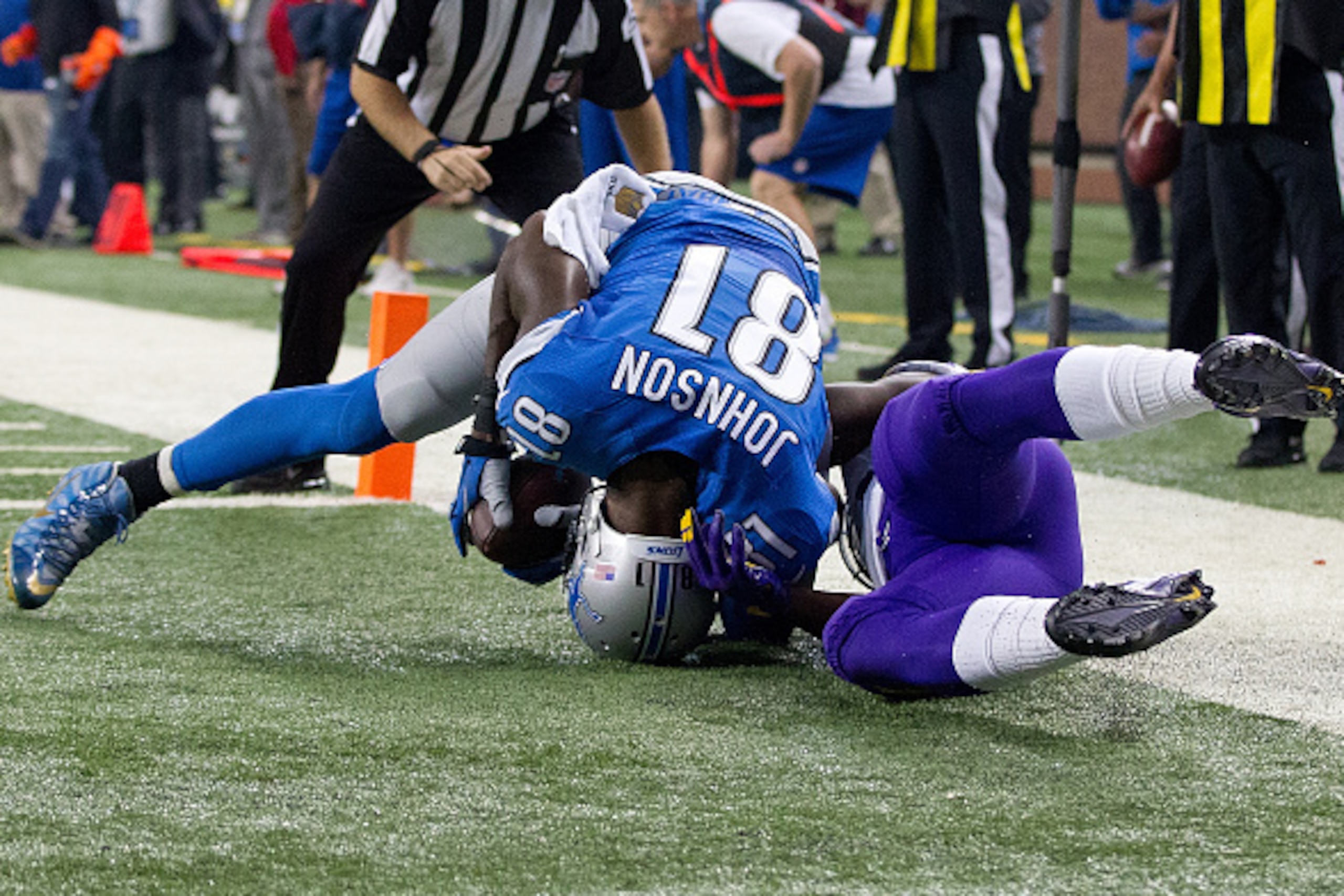
Few players in history took the kind of shots Johnson did. There are a handful I can think of: Ken Stabler, Larry Csonka, Earl Campbell, Terry Bradshaw and a few others. Johnson was right there, though, mainly because he was fearless, but also because he was a massive target. Johnson stood 6'5" and weighed 237 pounds. He was the only scary offensive weapon in Detroit for years, which allowed defenses to target him even more. He was hit—hard—again and again and again, but he kept getting back up and never complained.
We think we understand the violence of football, but despite all of our technology and breakdowns of the X's and O's and film work, we still have no clue. Despite all of the knowledge we have about what football does to the body and mind, it still wreaks havoc in ways we can't understand.
Johnson was just 29 years old at the beginning of last season. Twenty-nine. He used to run over defensive backs; now he has trouble climbing out of bed.
Players leaving the game in their 20s is becoming more common than ever before. Former Giants safety Kenny Phillips just retired after only six NFL seasons. Why?
"It wasn't tough to come to grips with it because physically I can't [do it]," Phillips told 247Sports' Christopher Stock, speaking of his retirement. "It wasn't like, 'OK, you're not good enough.' Physically, it hurts to do this and it hurts to do that. It was a like a no-brainer."

He had surgeries on both knees and a microfracture procedure on his left knee in 2009. He's just 29.
While I don't hear players express regrets about being in the NFL, increasingly, players are voicing their concerns about what exactly football is doing to their bodies, despite having more medical knowledge than any generation of players before them. These players I've spoken to believe that playing in the NFL is damaging them in ways that can't be predicted or charted.
This isn't about feeling sympathy for players. You can feel what you want. And yes, they are well-paid, making more than most of us ever will in multiple lifetimes. Indeed, many of us would make that deal with that particular devil.
Yet as more players leave the game and speak honestly about the sport, we also see their careers are full of pills, busted joints and scrambled synapses.
"When you wake up in the morning, you can't walk," Johnson said. "You know, you're shufflin' across the floor. … I gotta go through, like, a little routine when I wake up in the morning to get everything functioning and ready to go. But, the only thing is everything just goes back to gridlock so fast once I sit down…"
All at the ripe age of 30.
No, we don't have a clue. Not a one.
Mike Freeman covers the NFL for Bleacher Report. Follow him on Twitter @mikefreemanNFL.
.jpg?w=2560 "AEW Dynamite Recap 🔠")
.jpg?w=2560 "WWE X AAA Worlds Collide Highlights & Reaction 💥")