
Ugly and Meaningless Prime-Time NFL Games Creating Need for True Flex Scheduling
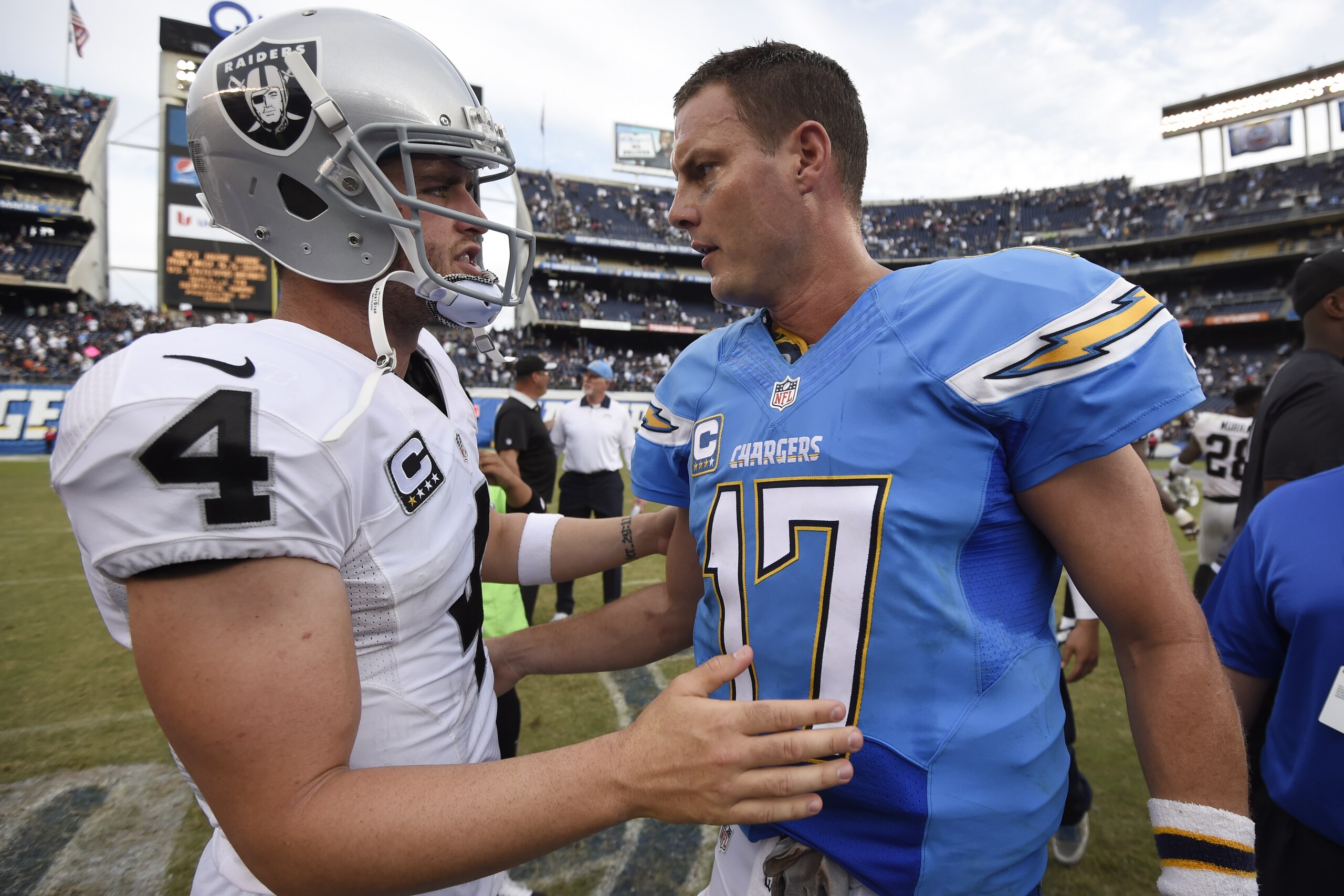
The NFL’s Christmas present to its fans Thursday night is the awe-inspiring matchup of two teams that are not only out of playoff contention but also trying hard to get out of their hometowns.
Aptly dubbed the U-Haul Bowl by San Diego radio personality Dan Sileo, the battle of the 4-10 San Diego Chargers at the 6-8 Oakland Raiders is a matchup only a Daily Fantasy Sports fan could love.
Even that might be a stretch. Especially on Christmas Eve. You’d hope.
TOP NEWS
Predicting NFL Roster Cuts ✂️
.jpg?w=2560 "Bills Browns Football")
Shedeur's Reaction to Browns' QB Decision
Biggest Rumors Ahead of Roster Cuts 👀
What the Chargers-Raiders game represents for the NFL is more of a cry for help. A cry the NFL has ignored for years. But after highlighting games such as Tampa Bay vs. St. Louis on Thursday, the Jets vs. Dallas on Saturday and Detroit vs. New Orleans on Monday, the NFL needs to open its eyes to a solution.
So here’s a possible solution that caught the eye of NFL and TV executives this week: Truly flexible scheduling—or at least flexibility in the final weeks of the season.
What the NFL needs to do is write up a schedule that is firm through the Thanksgiving weekend. That is roughly the first 12 weeks of the NFL season—which is fair for the teams, fans and networks.
After that, the schedule can be open-ended.
By that, I mean you can assign the matchups and locations for games but leave the day of the week to be announced at a reasonable time.
For instance, the Monday night game between the Lions and Saints could have been left as slated for some time on the 15th week of the season. Then, roughly three weeks in advance, the league could look at the slate of games in Week 15 and figure out which ones should be in prime time. That might have saved the football-loving world from watching meaningless games played in half-filled stadiums, such as what happened in St. Louis and then New Orleans.

The same could apply to San Diego at Oakland this week. To have a chance to move those games again, the NFL could simply announce in April that Chargers at Raiders would be slated for Week 16 of the season. What day and what time would be determined later.
Instead of trying to make the most of a game of minor historical significance (it might be the last game ever played in Oakland), fans might get a chance to see a more important matchup. For instance, the New York Jets vs. New England or Green Bay vs. Arizona are far more compelling encounters. Even Pittsburgh vs. Baltimore is more compelling than Chargers-Raiders with the Steelers fighting for a playoff spot.
While nothing is perfect, it gives the NFL a chance to highlight games such as Denver vs. Pittsburgh or Carolina vs. the New York Giants. Bottom line, it gives the NFL a chance to put its best product on display at the most important time.

Some people may say this is irrelevant. The NFL is the ratings king of television and doesn’t need to adjust for anyone. Fact is, ESPN has been begging the NFL to have more flexibility with the Monday night game. The league has turned a deaf ear to the request.
That’s the kind of arrogance that kills a business over time. While the NFL can point out the Saturday and Monday games this week are meaningful (Washington is at Philadelphia and Denver hosts Cincinnati), that’s more random luck than intelligent design.
This may sound like a great business pitch for CBS and ESPN, which host the Thursday, Saturday and Monday games. It’s not meant to be for the networks.
It’s about the league, which needs to stay ahead of problems and find ways to make every prime-time event a must-see moment. The past weekend was a disaster in terms of prime-time games.
This Thursday is a continuation of that. That’s unacceptable.
The counterargument is that it doesn’t give fans a great chance to set up their travel schedule. Fair point, but we’re really talking about three games a week at most (Thursday, Saturday and Monday) being altered from Sunday. In addition, a three-week advance warning should be adequate time for everyone involved.
More than anything else, avoiding sub-prime games in prime-time slots is too important for the NFL to not consider.
.png?w=2560 "Bills Browns Football")
.jpg?w=2560 "Grading WWE Raw 🔠")
.jpg?w=2560 "Source: Freedom, White Not Eligible for WNBA Draft (AP)")